
Discussion questions: What factors contribute to the complexity of eliminating banned Xinjiang cotton from the apparel supply chain? How can the current efforts be enhanced to better address the situation and by whom? Feel free to share any other reflections on the video and the graphs.
Further reading:
- CBP Uyghur Forced Labor Prevention Act Statistics (you may choose “industry”–“Apparel, footwear and textiles”)
- How A.I. and DNA Are Unlocking the Mysteries of Global Supply Chains (NY Times)
- Hinrich Foundation Study: Impact of US anti-forced labor laws on Vietnam’s textile industry

 FASH455 Global Apparel & Textile Trade and Sourcing
The YouTube video caught my attention when it emphasized the struggle to really know where cotton is coming from. In China specifically, trade restrictions and tariffs can be worked around because the industry has such a complicated supply chain. This on its own is worrisome to me. Forced labor is part of the reason there was a cotton ban. If China can avoid the ban, then they will continue utilizing forced labor. This is why transparency is so important.
I believe we as consumers are becoming more educated on the true cost of fashion. If we start to demand more transparency from brands and shopping based on these ideals, we will see a difference. Brands will have to meet the consumer’s desires to be successful.
Another thing that made me frustrated was the fact that U.S. is in a way, allowing for the cotton ban loopholes too. De Minimis is a rule that allows shipments under $800 to be imported to the U.S. with less paperwork, tariffs, and ultimately proper testing. China can slip banned cotton into these shipments without worry. The U.S. made the ban, but then failed to properly back it up.
I think simply being transparent about the supply chain can ultimately clear up uncertainty about where our cotton is coming from. Consumers are starting to see the importance of the supply chain, specifically the injustices regarding forced labor and unethical practices. Having such a complicated supply chain system allows brands to work around certain restrictions and continue these practices. It’s best to be transparent so consumers know what is actually going into their product and where it’s from.
Reflecting on this video and what I have learned in past courses, it always baffles me how humanity and different cultures approach forced labor. As the video explains how the U.S. is making efforts to stop forced labor, China, the largest cotton exporter, has repeatedly denied the use of forced labor – taking no responsibility for their actions or effect on the world trade system.
In response to a previous comment, I do think that the public opinion of consumers is very important in terms of making a change with the use of forced labor. With that being said, I feel that as consumers we are infiltrated with the pressure to keep up with trends (which change daily). Unless consumer behavior changes, which would be incredibly difficult to do overnight, we are left to trust the companies that we purchase from to be transparent about where they import their products.
This brings me back to our recent discussion in class asking “Is globalization a good or bad thing?” At first glance, one might think that it’s a good thing. Being a consumer and a person living in the 21st century, we want products that fit our needs whether that be good quality, cheap pricing, or the newest “it” product on the market. Not to mention globalization has, in a way, greatly benefitted multiple economies worldwide. However, looking at the negatives of globalization [forced labor, lack of transparency, environmental impact, etc.] we can see that there are severe issues that must be addressed.
In the meantime, we can appreciate initiatives that try to mend globalization issues surrounding cotton such as the International Cotton Advisory Committee which has developed standards and guidelines for cotton production, trade, and sustainability. Additionally, there are certifications that organizations can acquire such as the Better Cotton Initiative (BCI) and Fair Trade cotton certification which both promote sustainable and ethical cotton production.
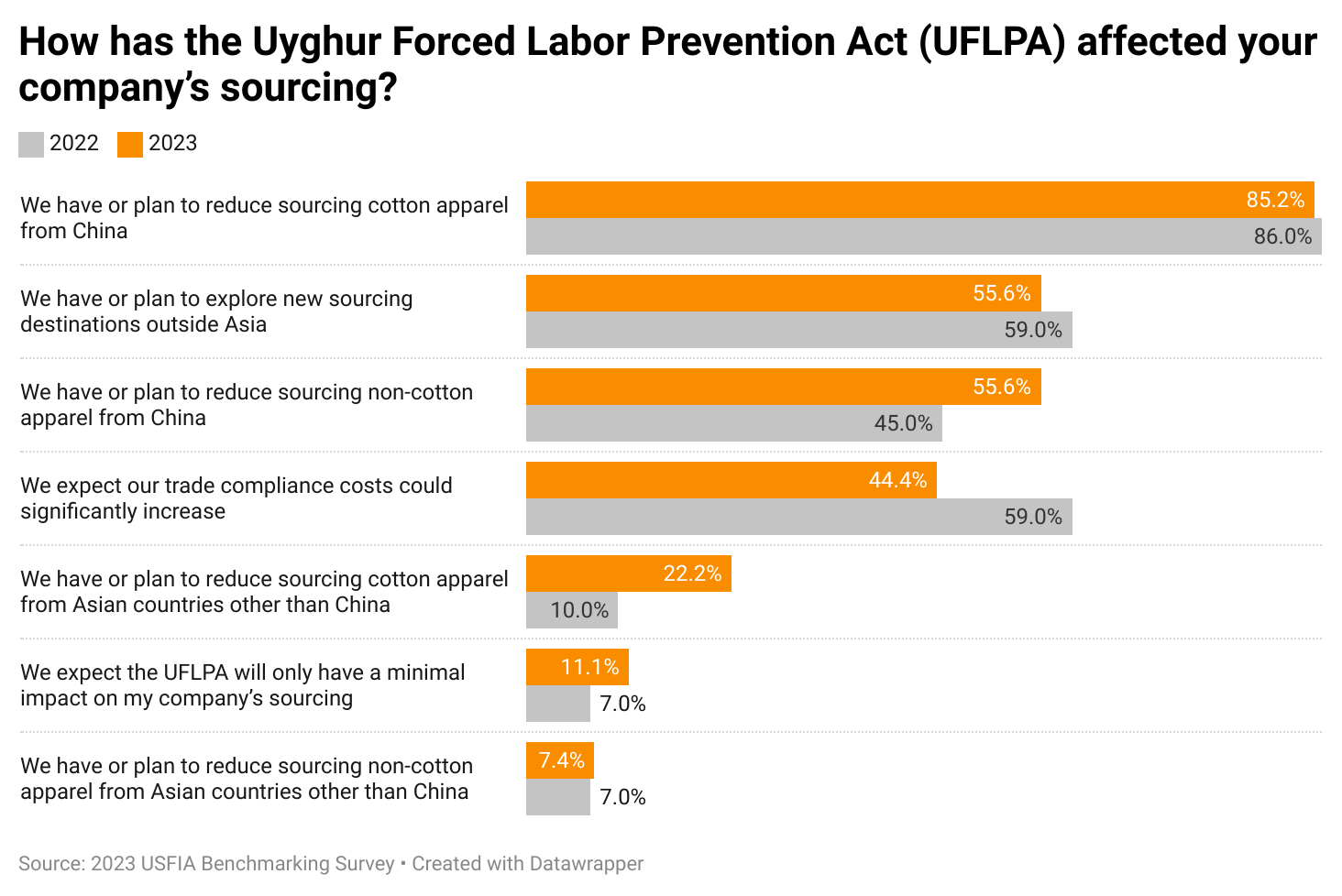
Based on the 2023 USFIA benchmarking survey, over 80% of brands planned to reduce cotton sourcing from China in 2022 and 2023. However, the biggest problem lies with Chinese retailers who use Uyghur forced labor cotton and then export product to the US.
I think the de minimis policy is the greatest contributing factor to allowing cotton produced by Uyghur forced labor in China. For example, Shein produces most of its products in China and exports them to the US. Although they claim that they do not used forced labor in any of their products, they take advantage of the de minimis policy. This policy allows small imports to make their way across the border without being checked by customs. Shein exports packages in very small quantities to take advantage of this rule. This is also how they sell clothes for so cheap, because they do not pay taxes at customs. We need to impose stronger regulations regarding apparel imports from China.
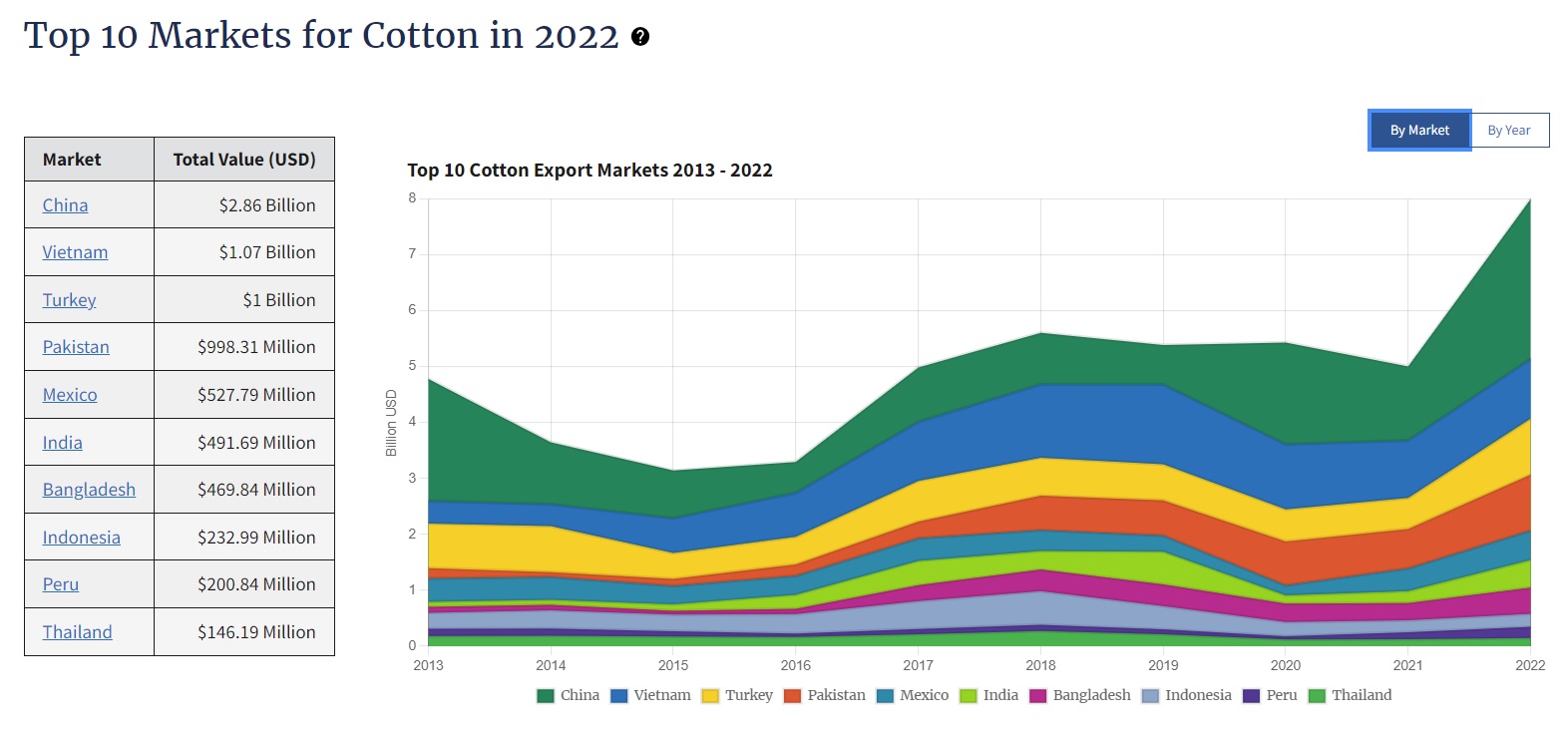
US exports most of its cotton from China. But the balance of their relationship has shifted due to the unethical labor practices in Xinjiang. Since US cotton suppliers are struggling, many of the cotton from China is making its way to the US. Until there is reform to this issue, brands are left with not many options, which makes it complicated for the US to completely eliminate Xinjiang cotton from the apparel supply chain. Another issue is that the cotton supply chain is very complex, therefore making it more difficult to determine the origin of the cotton. This makes it easier for companies to dodge import restrictions. I think there needs to be more transparency amongst the supply chain in order for companies to source cotton ethically. Brands are turning a blind eye to the deep rooted forced labor issues and I believe we as consumers should hold brands accountable into researching deeper into their sourcing.
As shown in the video, two of the factors are transparency and the complexity of tracing the origin of the cotton. The same style of cotton shirt but in two different colors was tested to find that one was from Brazilian cotton and the other was Xinjiang cotton, while the label said that they were both made from Brazilian cotton. The blending and the source mixing complicate the elimination of the region’s cotton because they can slip it in. Many supply chains lack the ability to trace the origins of cotton and need to be requested from a third party to do so. This is an added step to the procedure of sourcing goods, which can be tedious. Another factor is the relationship between US and China and their cotton sourcing. US sourced a lot of cotton from China but due to the unethical practices of Xinjiang region’s cotton suppliers there had to be action taken to restrict and avoid sourcing from there. Based on the USFIA graph above, we can see that more than 80% of companies want to stop sourcing cotton apparel from China and more than 50% plan to source in other countries in Asia, however, these companies still have difficulties getting around Chinese retailers using Uyghur forced labor. So many companies want to do the right thing but the lack of transparency on the other end is making it difficult.
Current efforts can make it easier for companies and suppliers to be able to check the origins of their cotton through advanced technology and testing equipment.
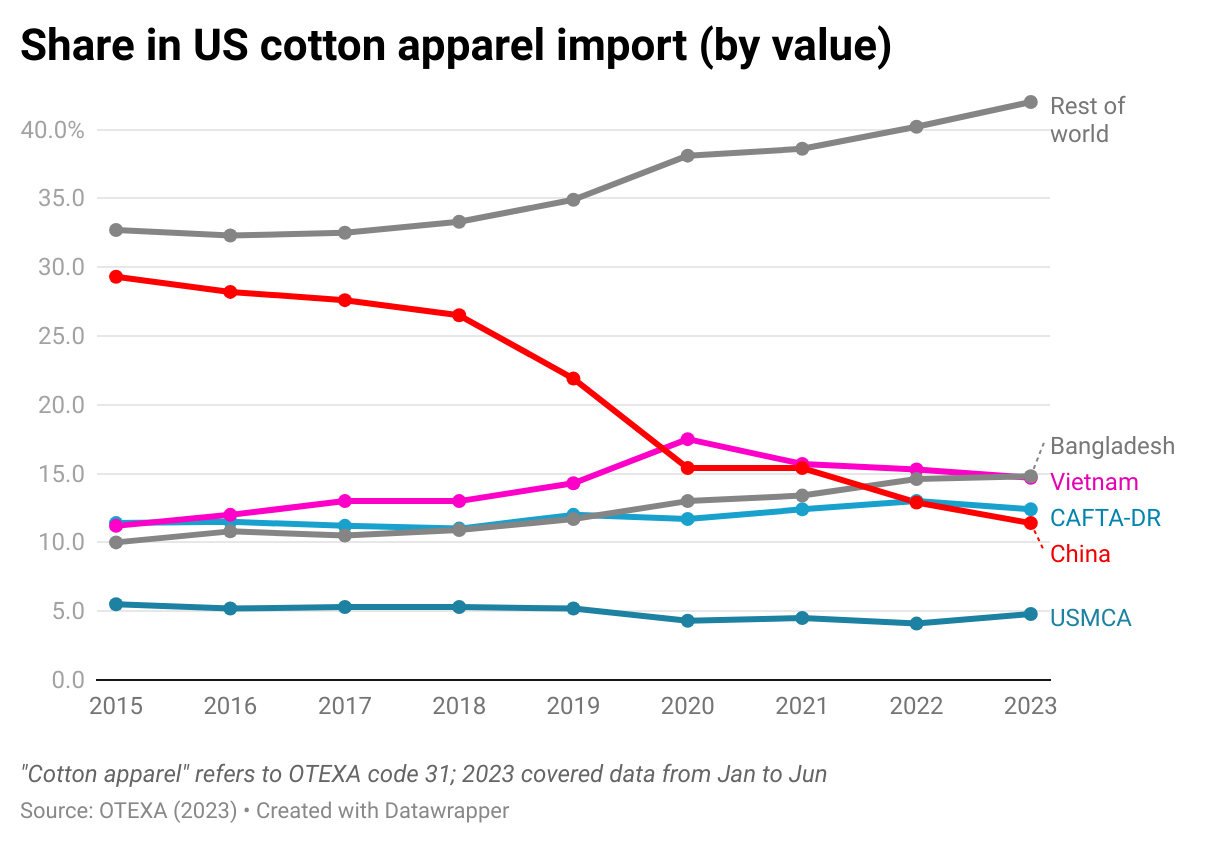
One of the biggest factors that contribute to the ongoing use of cotton from the region of Xinjiang in the United States despite the UFLPA being in effect, is the interdependent trade that exists between countries. For example, neighboring countries to China like Bangladesh and Vietnam rely on importing cotton from other regions, often from China, as they do not have the resources to produce raw textiles themselves. As the cotton goes through processing and is taken from country to country, it becomes more and more difficult to determine where exactly the cotton originated from. A way to counter balance the importing of this cotton in to the United States is to make it mandatory for brands to get their products tested, either through third party companies like DNA Sciences as shown in the video, or by doing their own in house testing.