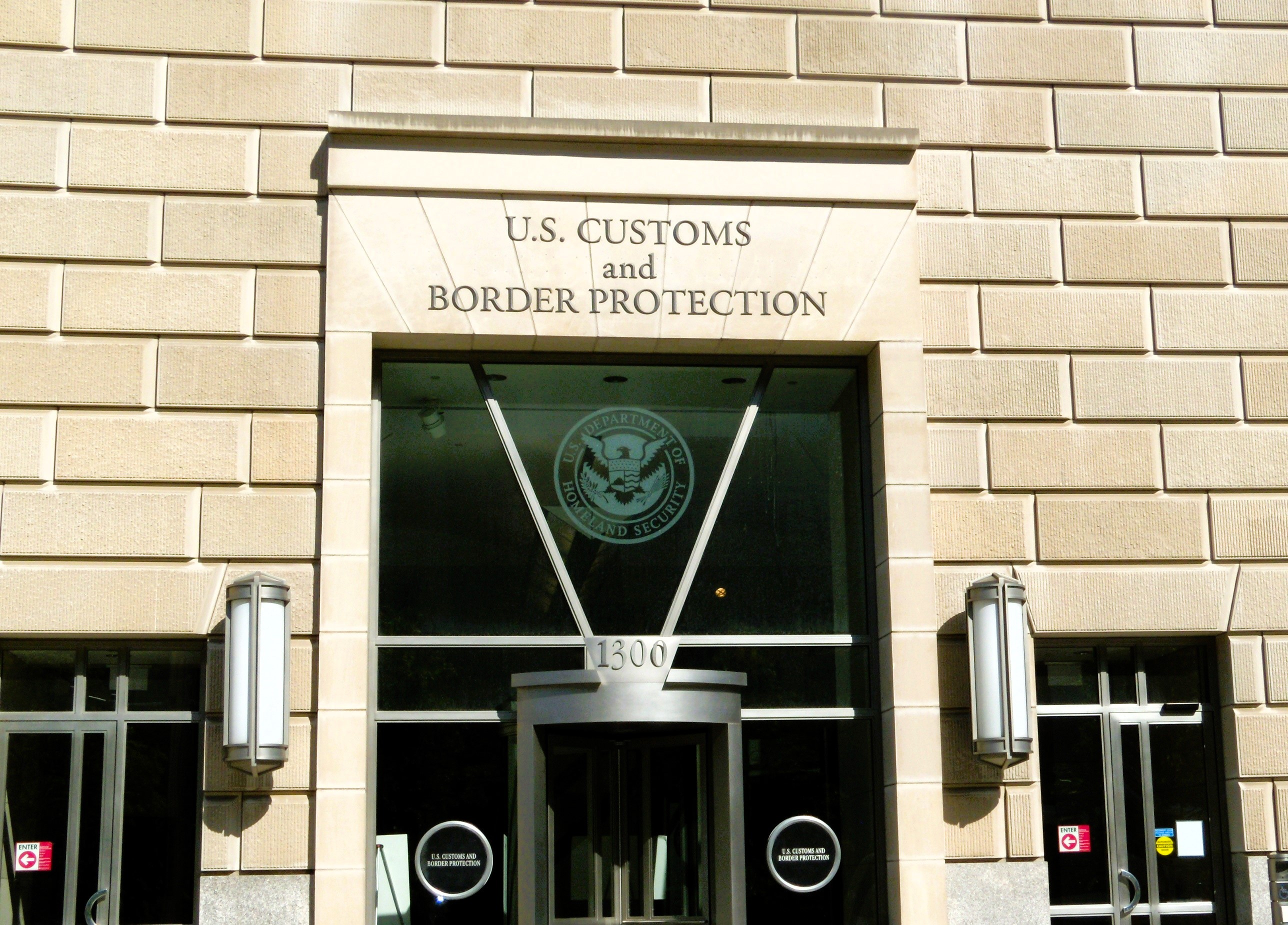
FASH455 Exclusive Interview with the Office of Trade at U.S. Customs and Border Protection (CBP)

Question 1: We know that nearly 98% of clothing consumed in the U.S. is imported. Can you give our students a quick overview of U.S. Customs and Border Protection (CBP)’s role in regulating international trade, particularly textiles and apparel products?

  • CBP’s Office of Trade facilitates legitimate trade, enforces U.S. trade laws, and protects the United States economy to ensure consumer safety and create a level playing field for American businesses.
  • CBP is responsible for regulating clothing and/or textiles products imported into the United States, ensuring that all trade aspects of the importation are correct at the time of entry. These include, but are not limited to the classification, valuation, country of origin markings, and qualification for preferential duty treatment under a free trade agreement and/or program. 
  • Textiles and wearing apparel are recognized as a Priority Trade Issue as codified in the Trade Facilitation and Trade Enforcement Act (TFTEA) of 2015. As such, this issue is one of the primary drivers for risk-informed investment of CBP resources as well as our enforcement and facilitation efforts. This includes the selection of audit candidates, special enforcement operations, outreach, review of free trade agreements and/or trade preference programs claims, and regulatory initiatives.

Question 2: Ensuring no forced labor in the supply chain is a top priority for U.S. fashion companies. Specifically, the Uyghur Forced Labor Prevention Act (UFLPA) officially came into force in June 2022. For our students who may not be familiar with the UFLPA, what essential information should they know about this legislation and the issue of forced labor? Additionally, could you recommend any helpful online resources?

  • CBP is the leading federal agency in the enforcement of forced labor laws and the UFLPA. The agency achieves this through two approaches – the first is through forced labor investigations and issuance of Withhold Release Orders (WROs) and Findings, which require CBP to prevent the release of goods made with forced labor into the U.S. commerce. The second is through the implementation of the UFLPA rebuttable presumption.
  • CBP enforces U.S. law on forced labor within Section 307 of the Tariff Act of 1930, which says any “goods, wares, articles, and merchandise mined, produced, or manufactured wholly or in part in any foreign country” by convict or forced labor is not permitted entry into U.S. commerce. 
  • In 2016, the U.S. Government enacted the Trade Facilitation and Trade Enforcement Act (TFTEA), which removed the “consumptive demand” clause that was in the original statute. This change allowed CBP to set up its own investigative unit, where CBP receives allegations of forced labor, investigates them using the 11 indicators of forced labor, and issues WROs or Findings when applicable. CBP issues a WRO if there is a reasonable suspicion of forced labor conditions by a particular foreign manufacturer, and it issues a Finding if there is probable cause that forced labor conditions exist.
  • The relatively recent UFLPA establishes a rebuttable presumption that any goods made wholly or in part from the Xinjiang Uyghur Autonomous Region (XUAR) are prohibited from entry into U.S. commerce, as they are presumed to be made with forced labor unless the importer can provide clear and convincing evidence the goods are not made from forced labor or sourced from the XUAR.
  • When goods are exported directly from the XUAR, CBP applies the rebuttable presumption and excludes the goods from entry. Importers then must prove by clear and convincing evidence that the goods are not made with forced labor before they can be released into U.S. commerce. For goods not imported directly from the XUAR, CBP evaluates the risk that the producer uses inputs from the XUAR in the production of the final product and will stop any shipments it deems as high risk of containing materials produced from the XUAR.
  • CBP is committed to identifying products made by forced labor and preventing them from entering the United States. CBP’s enforcement of 19 U.S.C. § 1307 supports ethical and humane trade while leveling the playing field for U.S. companies that respect fair labor standards. The UFLPA is a major shift for importers as it requires them to know their entire supply chains from the raw materials all the way to the end product and to ensure no materials made with forced labor are included at any step along the way. Information on all of these topics and many more are available on CBP’s Due Diligence in Supply Chains webpage.
  • Students can visit our Forced Labor webpage for updated information and resources on CBP’s efforts to prevent goods produced with forced labor from entering U.S. commerce. There is also a specific UFLPA webpage, which explains CBP’s roles and responsibilities and links to the UFLPA Entity List; an UFLPA Statistics Dashboard with information on the number of shipments stopped by CBP by fiscal year, industry, or country of origin; due diligence documents and reports; CBP’s Operational Guidance for Importers, frequently asked questions on UFLPA enforcement and the Department of Homeland Security (DHS) Strategy; and additional links to the DHS Forced Labor Enforcement Task Force Agency Related Resources.    

Question 3: Our students are also intrigued by the so-called ‘de minimis rule,’ which has been a topic of heated debate in the news. Why was this rule proposed initially, and how does it relate to the fashion and apparel trade?

  • De minimis shipments, also referred to as Section 321 low-value shipments, are goods that are exempt from duty and tax under 19 U.S.C. § 1321(a)(2)(C) and 19 C.F.R. § 10.151. De minimis eligibility is based on the value of all goods imported by one person, in one day. The de minimis exemption allows CBP to pass, free of duty and tax, merchandise imported by one person on one day that has an aggregate fair retail value in the country of shipments of $800 or less. This provision was first enacted in 1938 to avoid administrative expense to the government from inspecting low-value goods disproportionate to the amount of revenue realized and was subsequently raised multiple times.  
  • The passage of the Trade Facilitation and Trade Enforcement Act (TFTEA) in 2016 raised the de minimis threshold from $200 to $800.
  • In 2015, CBP processed 139 million de minimis transactions. By 2023, this increased to more than 1 billion, representing a 662% growth in eight years. Now, in Fiscal Year 2024, nearly 4 million de minimis shipments arrive at CBP facilities for targeting, review, and potential physical examination each day. Although these packages are low value, they pose the same potential health, safety, and economic security risks as larger and more traditional containerized shipments.  
  • As long as a good is not subject to duties, taxes or fees (such as anti-dumping/ countervailing duties, excise taxes such as those required for alcohol and tobacco products, or any interagency fees that have not been waived for informal entries), it is eligible for de minimis clearance.
  • Significant attention is being placed on the de minimis administrative process for new business models, such as those used by e-commerce and fast fashion companies, which leverage the de minimis process for direct-to-consumer shipments. 

Question 4: Building on the previous question, in April 2024, the Department of Homeland Security (DHS) announced its new textile enforcement actions. How will CBP contribute to the new enforcement strategy?  

  • CBP is responsible for the management, control, and protection of U.S. borders and ports of entry, acting on the frontline of textiles and trade agreements enforcement. The U.S. textile industry is a vital domestic industrial base for U.S. national security, health care, and economic priorities. U.S. textile production is the foundation of the western hemisphere textile and apparel co-production chain, representing over 500,000 U.S. jobs, 1.5 million western hemisphere jobs, and $39 billion in annual shipments. Members of the textile industry have raised concerns with CBP regarding a decline in business momentum affecting their ability to maintain productivity and jobs. 
  • In response to these concerns, CBP is increasing its efforts to detect, interdict and deter illicit textiles trade and promote a level playing field for the domestic textiles industry given the ever-changing threat landscape and recent proliferation of allegations.
  • CBP is conducting coordinated and unified intelligence and data-driven operations to target and interdict textile imports that are not compliant with U.S. trade laws. Efforts include, but are not limited to, running special operations, carrying out Textile Production Verification Team visits at foreign factories and raw material providers, examining cargo, conducting compliance reviews and verifications, completing trade audits, and performing laboratory analysis on imported products with a heighted focus on imports that are subject to the U.S.-Mexico-Canada and Dominican Republic – Central America trade agreements, imported under the de minimis provision, and/or potentially in violation of forced labor laws, including the Uyghur Forced Labor Prevention Act.
  • You can learn more about CBP’s textile enforcement work in a recent CBP Reports video. You can also find information on our website.

Question 5: We know technology is significantly affecting and shifting how international trade is conducted. At CBP, there is an initiative called “21st Century Customs Framework.” Can you provide our students with more information about this program? For example, what is it about, what do you plan to achieve, and why does the program matter for fashion apparel companies?

  • The 21st Century Customs Framework (21CCF) is CBP’s effort to update its Title 19 authorities and underlying statutes, which have not seen comprehensive updates in more than 30 years.
  • Since 1993, trade volumes have increased dramatically, trade practices have changed, and new threats have emerged, which means CBP needs new tools and capabilities to do its job.
  • 21CCF matters for fashion apparel companies in two key ways: (1) the framework identifies updates that would better enable CBP to facilitate lawful trade more efficiently, so that goods can get to consumers, warehouses, stores, and other destinations as quickly as possible; and (2) the framework identifies updates that would enable CBP to bolster detection and enforcement against goods that threaten the well-being of American businesses and consumers—counterfeits, goods produced with forced labor, anti-competitively priced goods, and goods that violate environmental or consumer safety laws.
  • For example, 21CCF includes concepts that would authorize CBP to furnish industry stakeholders with information generated by market platforms regarding compliance with intellectual property rights laws—such as product origin and manufacturer—in importations where intellectual property violations are suspected. 
  • By sharing additional information with the private sector, CBP will be able to utilize its private sector partnerships to more readily identify illicit sellers using online marketplaces to import intellectual property rights-infringing goods into the United States.
  • Additionally, these proposed updates would better position the private sector to make more informed business decisions and eliminate high-risk actors from their supply chains.
  • Overall, in pursuing 21CCF, CBP envisions a trading system where legitimate goods move swiftly and securely; ethical production methods are used throughout the global supply chain; domestic industries compete on a level playing field; and the United States helps lead the world with innovative trade practices.
  • Private sector input has been instrumental throughout the development of the 21CCF statutory concepts, and the framework is now undergoing an interagency review process before eventually being cleared to be formally transmitted to Congress for consideration.

Question 6: As members of Generation Z, our students deeply care about fashion sustainability. Studies also show that fashion companies are increasingly concerned about climate change and its significant business implications. In your view, how can international trade contribute to sustainability and foster a more sustainable fashion industry? How might CBP support and assist in these efforts?

  • Sustainability in fashion concerns more than just addressing textiles or products. It involves the entire product lifecycle process, which includes the way the clothing is produced, consumed, and disposed of in landfills.
  • Sustainability in fashion encompasses a wide range of factors, including cutting carbon dioxide emissions, addressing overproduction, reducing pollution and waste, and supporting biodiversity.
  • CBP has a responsibility, as part of our mission, to keep people safe and protect the economy; that includes supporting the fashion industry. As noted, the fashion, textile, and apparel industries are crucial parts of the U.S. economy. The work CBP does is key in seizing suspect and potentially illegal fashion goods at the border, issuing penalties to bad actors, and protecting the health and safety of the American people.  
  • Due to CBP’s direct influence over trade processes, we see ourselves as a facilitator across the government to start conversations about sustainability and where government can remove barriers or add value to existing environmental efforts in trade.
  • CBP has developed strategies aimed at promoting environmental sustainability within trade. CBP’s Green Trade Strategy, for instance, is designed to champion the reduction of pollution and waste while encouraging the adoption of green technologies and practices. Such initiatives reflect a broader commitment to advancing circularity, recycling, and reuse in the fashion industry that can enable fashion companies to produce and sell their products more sustainably.
  • CBP launched the Green Trade Strategy in 2022 to further enable CBP to fight the negative impacts of climate change and environmental degradation in the context of the trade mission.
  • The strategy focuses on four main pillars:

o Incentivize Green Trade;
o Strengthen Environmental Enforcement Posture;
o Accelerate Green Innovation; and
o Improve Climate Resiliency and Resource Efficiency.

  • Thousands of CBP employees work toward making international trade more sustainable and transparent. The strategy touches every office and every employee at CBP.
  • With these four pillars, the strategy provides a framework for future action. Success requires buy-in and collaboration with all our stakeholders, including the fashion industry, and especially you, the future of fashion. We want your help because we cannot do this alone, and you offer unique perspectives that we need in order to fight and mitigate climate change.
  • Students who are interested in learning more about CBP’s green trade efforts can visit our Green Trade Strategy webpage.

Question 7: Additionally, some of our students are considering a career in international trade. What career opportunities at CBP might be a fit for our undergraduate and graduate students? 

  • There are a number of paths for college students and recent graduates to gain experience and begin to build their careers at CBP, including our recent graduate programs and the Pathways Program.
  • Some positions that recent graduates can pursue include the following:
  • Administrative – CBP has administrative roles in various business functions, such as finance, budget, personnel, logistics, and asset management. Position titles include Staff Assistant and Management and Program Analyst.
  • Law Clerks – This role is for those with recent JDs that expect to pass the Bar Exam within 14 months.
  • Auditors – This is for students pursuing the auditor career (Interns) or those expecting to complete the required unit of Auditor courses (Auditor, GS-11).
  • CBP prioritizes facilitating legitimate trade in textiles and wearing apparel and protecting the intellectual property rights of fashion and apparel brands as a part of its trade mission.
  • CBP employees help protect the wearing and apparel industry from counterfeit merchandise and other unfair or harmful trade practices.
  • Learn more about career opportunities at CBP on our careers page.

–END–

Disclaimer: This interview is intended exclusively for educational purposes in the FASH455 class and shall not be considered an official policy statement of the U.S. Customs and Border Protection (CBP).
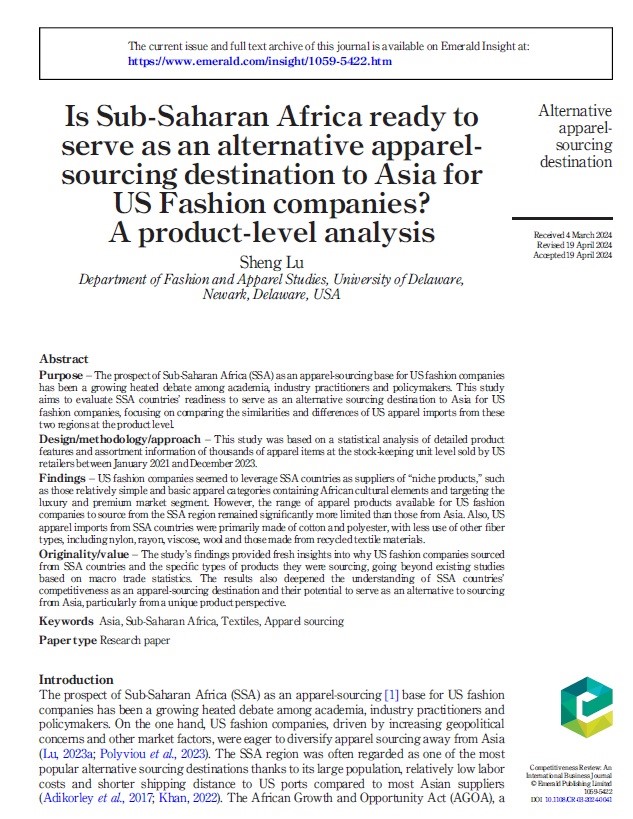
New Study: Is Sub-Saharan Africa Ready to Serve as an Alternative Apparel Sourcing Destination to Asia for U.S. Fashion Companies? A Product-Level Analysis

Full paper: Lu, S. (2024), “Is Sub-Saharan Africa ready to serve as an alternative apparel-sourcing destination to Asia for US Fashion companies? A product-level analysis“, Competitiveness Review, Vol. ahead-of-print No. ahead-of-print. https://doi.org/10.1108/CR-03-2024-0041

Summary:

The prospect of Sub-Saharan Africa (SSA) as an apparel-sourcing base for U.S. fashion companies has been a growing heated debate. On the one hand, U.S. fashion companies, driven by increasing geopolitical concerns and other market factors, were eager to diversify apparel sourcing away from Asia. The SSA region was often regarded as one of the most popular alternative sourcing destinations thanks to its large population, relatively low labor costs, and shorter shipping distance to U.S. ports compared to most Asian. The African Growth and Opportunity Act (AGOA), a trade preference program enacted in 2000, in particular, allowed eligible apparel exports from SSA countries to enter the United States import duty-free, creating substantial financial incentives for U.S. fashion companies to source from the SSA region.

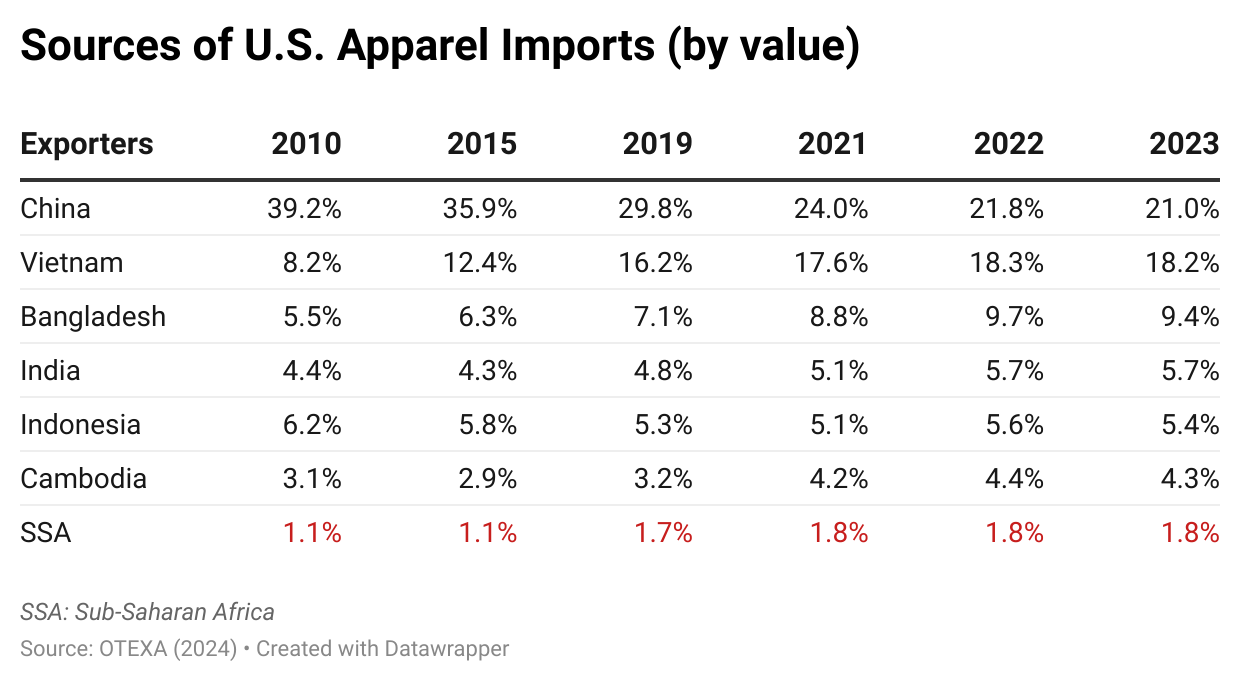
However, empirical trade data shows that U.S. apparel imports from SSA members have stagnated over the past decades without evident growth. Notably, with little change from 2010, SSA countries collectively accounted for only 1.8% of U.S. apparel imports in 2023, with no single SSA member achieving a market share of more than 1%. In contrast, over the same period, despite China’s declining market shares, the following five largest Asian suppliers—Vietnam, Bangladesh, India, Indonesia, and Cambodia—jointly accounted for 43.0% of U.S. apparel imports in 2023, a notable increase from 27.4% in 2010.

This study aims to evaluate SSA countries’ capacity to serve as an alternative apparel sourcing destination to Asian suppliers for US fashion companies. Specifically, the study examined the detailed product information of a total of 10,000 stock keeping units (SKUs) of clothing items sold in the U.S. retail market from January 2021 to December 2023. Half of these items were sourced from the six largest apparel-exporting countries in SSA: Lesotho, Kenya, Mauritius, Ethiopia, Madagascar, and Tanzania. Together, these countries accounted for over 96% of the value of U.S. apparel imports from the SSA region between 2021 and 2023. The remaining half came from China, Vietnam, Bangladesh, Cambodia, India, and Indonesia, the six largest Asian apparel exporters, which stably accounted for approximately 90% of U.S. apparel imports from Asia over the past decade.

Key findings:

First, the results revealed that U.S. fashion companies’ sourcing strategies for SSA countries appeared more subtle and complicated than simply treating the region as another low-cost sourcing destination, as suggested by previous studies. Instead, according to the results, U.S. fashion companies seemed to leverage SSA countries as suppliers of “niche products,” such as those relatively simple and basic apparel categories containing African cultural elements and targeting the luxury and premium market segment. Meanwhile, the demand for such products could be much smaller than regular apparel items sold in the value and mass market. This allows SSA countries to fulfill these smaller orders despite their limited production capacity, often family-owned or involving handmade processes.

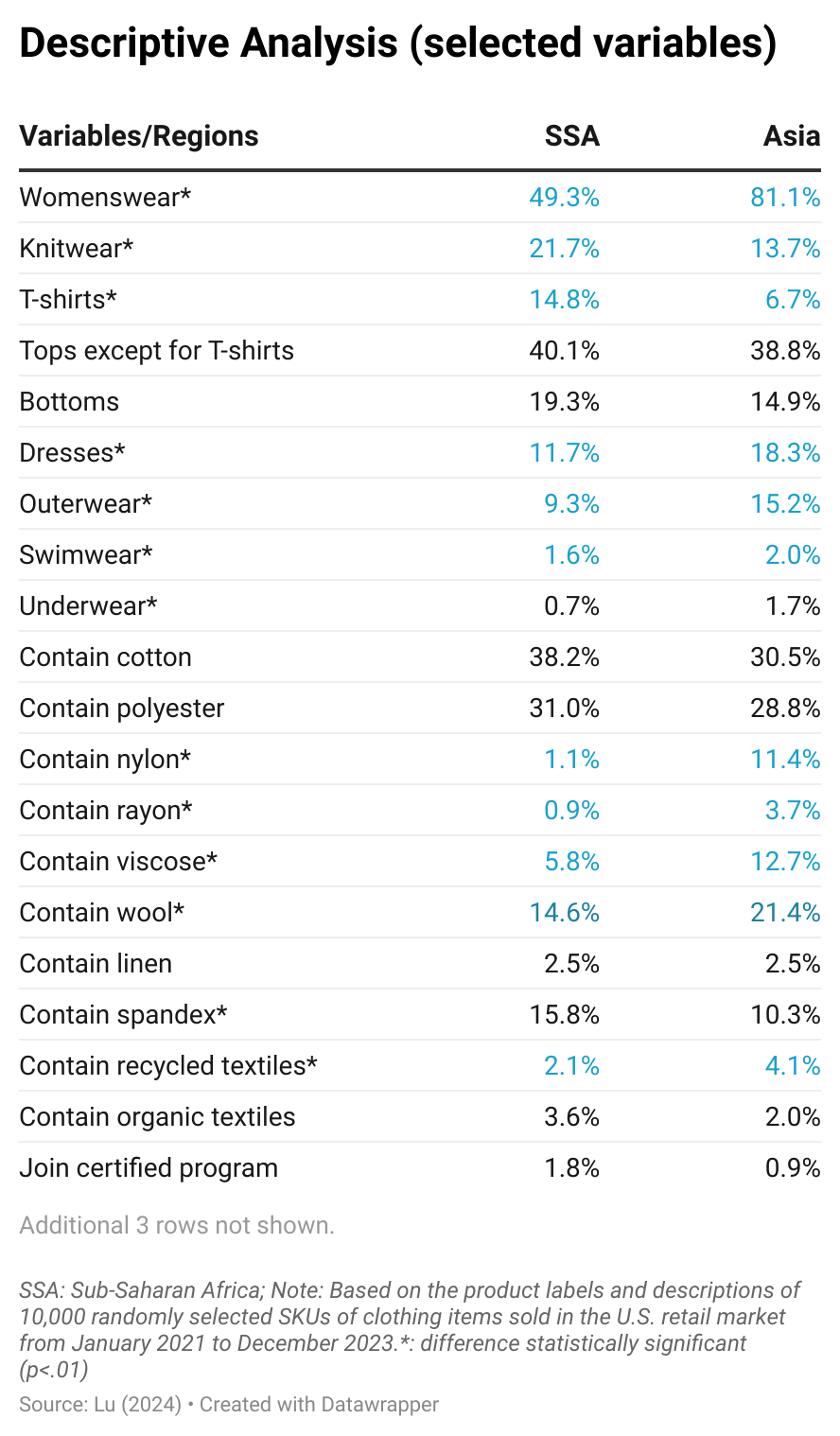
Second, the study’s findings identified significant challenges for SSA countries serving as immediate alternatives to sourcing from Asia for U.S. fashion companies. While SSA countries could offer relatively low sourcing costs, the range of apparel products available for U.S. fashion companies to source from the SSA region remained significantly more limited than those from Asia. For example, results show that U.S. fashion companies preferred sourcing relatively basic and technologically simple categories like knitwear, T-shirts, and bottoms from SSA countries. However, imports from SSA countries offered more limited sizing and color choices and were less likely to include womenswear and relatively more sophisticated or specialized product categories such as outerwear and swimwear. As another example, U.S. apparel imports from SSA countries were primarily made of cotton and polyester, with less use of other fiber types, including nylon, rayon, viscose, wool, and those made from recycled textile materials (see table below).

Third, building on the previous point, the results call for new thinking on strengthening SSA countries’ genuine competitiveness as an apparel-sourcing destination. Over the past decades, trade preference programs such as AGOA have mainly focused on improving the price competitiveness of SSA countries’ apparel exports. However, as this study’s findings illustrate, AGOA and other trade preference programs seemed inadequate in assisting SSA countries in developing capacity beyond basic apparel categories and securing a sufficient variety of textile materials. As U.S. fashion companies have placed greater emphasis on factors beyond price in their sourcing decisions, such as flexibility, agility, sustainability, and vendors’ capability to make a wide variety of products, this could put SSA countries at even more significant disadvantages down the road to being considered alternatives to Asia for apparel sourcing.

The results also reminded us that AGOA’s liberal rules of origin, which allowed least-developed SSA countries to use textile materials from anywhere worldwide, cannot replace the crucial need to develop the local textile manufacturing capacity within the SSA region. Without a robust local textile manufacturing sector, SSA countries would encounter significant challenges in diversifying their product offerings to include more complex and versatile clothing categories, such as outerwear and women’s dresses. These categories typically require a wide variety of raw textile materials and accessories, making it highly impractical and inefficient to rely solely on imports for their supply.

On the other hand, the findings reveal the necessity of creating a stable and foreseeable business environment, such as the long-term renewal of AGOA, to attract more long-term investments in SSA. For example, investing in and strengthening SSA countries’ local supply of sustainable textile materials, such as recycled or organic fibers, could strategically enhance SSA countries’ competitiveness in meeting the increasing demand from U.S. fashion companies for sustainable apparel products.

Additional reading:

Explore Egypt, Morocco, and Tunisia as a Sourcing Base for Clothing Made from Recycled Cotton

The full article is available HERE and below is the summary:

With consumers’ growing demand for sustainable apparel products, fashion companies increasingly carry clothing made from recycled textile materials and seek additional supply bases. Recycled cotton has great potential for use in garments because of the wide availability of cotton-made secondhand clothing and the perceived positive environmental impacts of effectively recycling post-consumption cotton waste.

This study explores Egypt, Morocco, and Tunisia’s potential as sourcing bases for clothing made from recycled cotton. North African countries, including Egypt, Morocco, and Tunisia, have a long history of making and exporting cotton and cotton-made finished garments. The “developing country” status and membership in trade agreements or trade preference programs, such as the African Growth and Opportunity Act (AGOA) and the EU-Mediterranean Association Agreement, allow apparel products from these three countries to enjoy preferential duty benefits in the world’s top import markets. Therefore, there is great potential to capitalize on recycled cotton apparel and “green exports” to further promote economic development in the region.

About 13,000 Stock Keeping Units (SKUs) of clothing items made by these three countries newly launched to the world retail market between January 2022 and April 2024 were randomly captured from fashion brands and retailers’ websites. About half of the items were made of regular cotton, and the other half explicitly mentioned using “recycled cotton” in the product label or description. The results show that:

#1: Egypt, Morocco, and Tunisia have gradually expanded their clothing exports made from recycled cotton since 2022. For example, as estimated, about 1,300 SKUs of clothing using recycled cotton from these three countries were newly launched to the US and EU retail markets in 2023, a substantial increase from only 150 SKUs back in 2022 (or a sevenfold increase). Similarly, in the first four months of 2024, clothing using recycled cotton accounted for 10.2% of total cotton apparel from the three countries in the US and EU markets, a substantial increase from only 1.1% in 2022.

#2: Of the collected samples, apparel using recycled cotton from Egypt, Morocco, and Tunisia was destined for as many as 49 countries, reflecting the global demand for such products. However, possibly restrained by the limited supply, the export market for clothing using recycled cotton remained less diverse than that for clothing made of regular cotton, which spanned 72 countries.

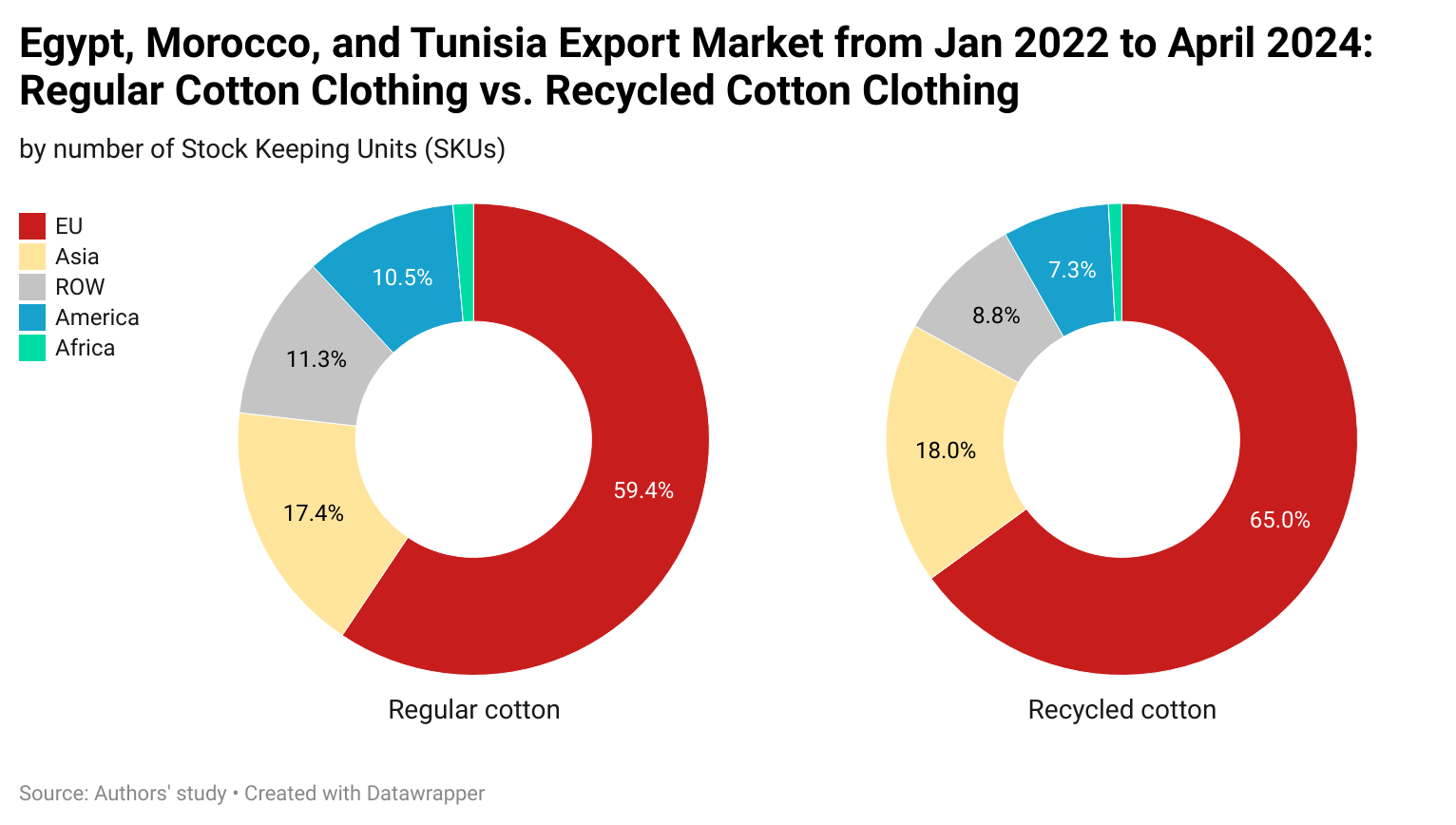
#3: Geographically, the European Union (EU) was the top clothing export market for Egypt, Morocco, and Tunisia, accounting for over 75% of these countries’ export value in 2022, according to UN trade statistics (UNComtrade). This was also the case for recycled cotton products. Specifically, the EU accounted for 65% of these three countries’ total recycled cotton clothing exports measured in SKUs in the collected samples, higher than 59.4% of regular cotton clothing products.

#4: Egypt, Morocco, and Tunisia focused on different product categories for clothing using recycled cotton than those made from regular cotton. Specifically, of the sampled items, clothing using recycled cotton had a notable concentration on bottoms (52.9%), followed by tops other than T-shirts (23.8%). Recycled cotton clothing also was more commonly used for outerwear (7.5%) than those using regular cotton (3.8%). In comparison, only about 7.9% of clothing using recycled cotton were T-shirts, much fewer than nearly 30% of those using regular cotton. Similarly, specific product categories, such as underwear and hosiery, rarely use recycled cotton. Likely, the concerns for quality and durability and the difficulty of absorbing higher production costs make using recycled cotton for these relatively simple categories more challenging.

#5: Even though cotton apparel made in Egypt, Morocco, and Tunisia already commonly mentioned their sustainability attributes (86%), phrases such as “sustainability” and “sustainable” appeared even more frequently in clothing using recycled cotton (94.6%). For example, some producers highlighted that they “worked with suppliers, workers, unions and international organizations” to ensure their recycled cotton clothing contributed to “the United Nations Sustainable Development Goals.” Likewise, some labels intentionally remind consumers about the positive environmental impact of using recycled cotton, “The use of recycled cotton helps to limit the consumption of raw materials.” Another added, “The production of recycled cotton recovered cotton, mainly from the production of other garments, thus reducing the production of virgin spring and water consumption, energy and natural resources.”  

Meanwhile, compared to clothing using regular cotton, those made with recycled cotton in Egypt, Morocco, and Tunisia reported much higher participation in certification programs, such as the Recycled Claim Standard (RCS), which verifies the recycled content and tracks it from source to final product.

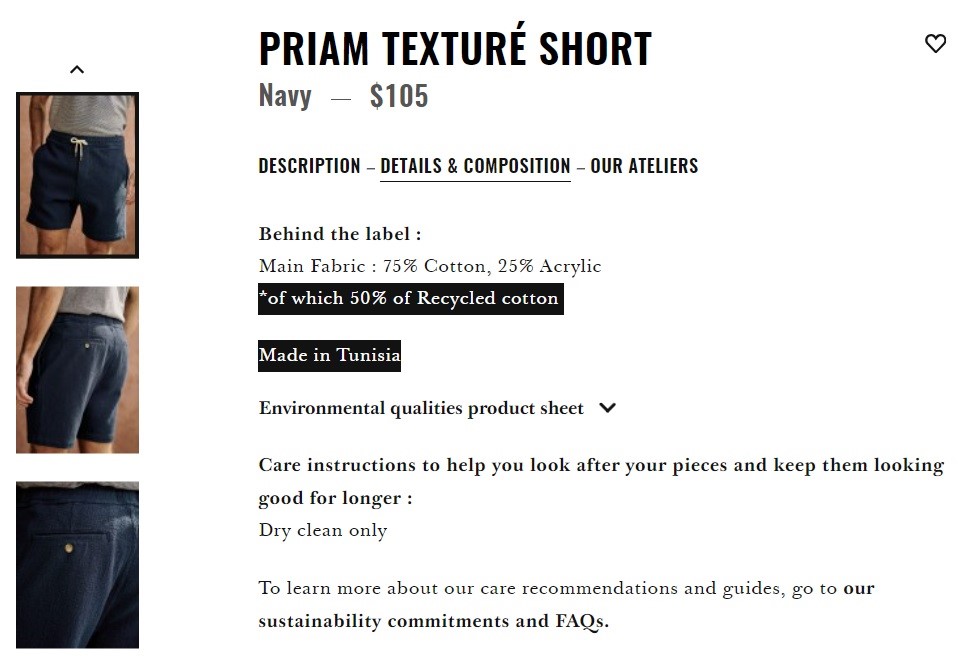
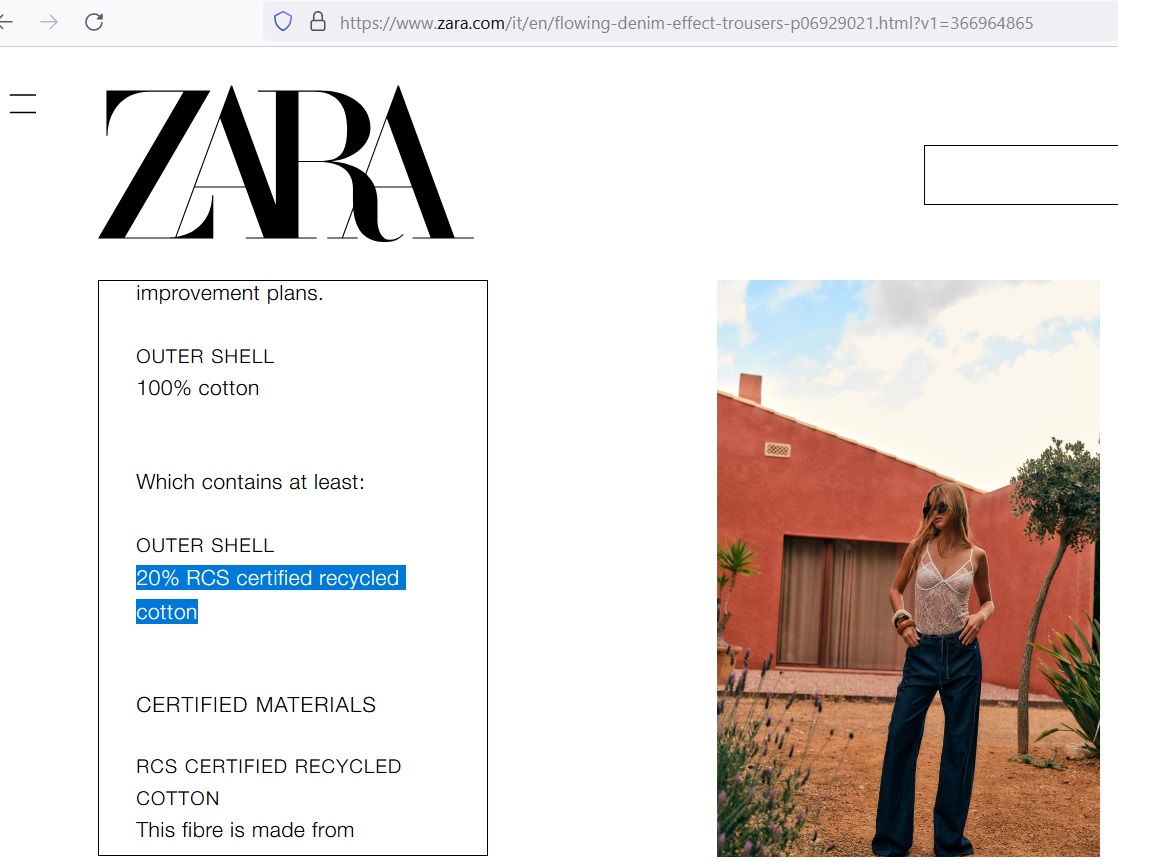
#6: Reflecting the technical limitations of the fiber property, it remains rare to have clothing that is 100% made from recycled cotton. According to industry experts, longer cotton fibers generally indicate higher quality. Since the recycling process shortens cotton fibers, regular virgin cotton or other fibers like polyester are typically used alongside recycled cotton to make fabrics smoother, stronger, and more durable. For example, common labels include descriptions such as “80% virgin cotton, 20% RCS certified recycled cotton” and “55% RCS certified recycled polyester, 45% RCS certified recycled cotton.”

#7: Except for T-shirts, in most cases, clothing made from recycled cotton in Egypt, Morocco, and Tunisia was priced lower than their equivalent using virgin fiber in the market. This is particularly the case for the premium and luxury market segments, where clothing using recycled fiber typically was 20-30% lower priced than regular clothing. The results echo the findings of numerous studies indicating that consumers are generally unwilling to pay higher prices for recycled fiber clothing as they perceive such products as lower quality and less “valuable.” Also, more needs to be done to create more financial incentives for producers in Egypt, Morocco, and Tunisia to expand the production scale and increase the use of recycled cotton in their products.

By Emilie Delaye and Sheng Lu

New Report: Reimagining the Apparel Value Chain amid Volatility

The new study released by Mckinsey & Co. was based on a survey of chief procurement officers (CPOs) from “apparel companies that collectively spend about $110 billion annually on sourcing” and follow-up in-depth interviews with 25 CPOs conducted in late 2023. Key findings:

#1 Fashion companies face increasingly challenging sourcing scenarios complicated by “ongoing supply disruptions caused by shifting demand, material price volatility, geopolitics, global trade issues, rising competition, and regulatory changes.” Compared to many other sectors, the apparel supply chain is particularly volatile, and disruptions can have amplified ripple effects throughout the supply chain. For example, an 11% decline in yarn exports could lead to a 30% drop in the production utilization rate of fabric mills.

#2 Fashion companies further prioritized “end-to-end” process efficiency in response to the shifting sourcing environment. For example, nearly 70 percent of respondents expect to “improve sourcing cost in the near term,” they plan to “improve efficiency across all facets of sourcing, including lower product costs, reduced sourcing expenses, and accelerated go-to-market processes.” Other practices to control sourcing costs include “using analytics to examine product cost breakdowns and identifying opportunities to improve fabric unit costs and material consumption,” “using digital platforms and data-driven insights to inform sourcing decisions and collaborating with suppliers to pinpoint cost savings opportunities.”

#3 Strengthening relationships with key suppliers remains critical. About 71 percent of surveyed brands consider “consolidating the supplier base” a medium to high priority for their strategy in the next five years. Surveyed fashion companies also indicate that deeper relationships, including “long-term volume commitments, shared strategic three- to five-year plans, and collaboration partnerships,” accounted for 43 percent of their total apparel supplier base in 2023, up from 26 percent in 2019. In comparison, suppliers based on “transactional relationships” only accounted for 3% of the total in 2023, a substantial decrease from 22% in 2019.

As the report noted, building strategic partnerships with core suppliers and “innovative niche suppliers” based on trust and transparency “resulted in a more robust, resilient, and agile supplier base” for fashion companies. More importantly, deeper importer-supplier partnerships extend beyond cost-saving measures but increasingly emphasize “sustained value creation.”

#4 Fashion companies continue to diversify their sourcing base geographically and pursue nearshoring to “improve speed, cost, and agility.” Specifically, between 2019 and 2023, respondents reduced their sourcing value from China (down from 30% to 22%) and sourced more from South Asia (up from 23% to 34%). At the country level, more than 40 percent of respondents plan to further increase sourcing from Bangladesh, India, and Vietnam. That being said, the report found that nearshoring remains “flat” in sourcing value in the US (about 17%) and in the EU (about 25%) from 2019 to 2023.

#5 To expand apparel nearshoring, several bottlenecks remain to be solved: 1) lower labor productivity in the region resulting in higher “total landed costs,” 2) challenges with yarn and fabric availability, and 3) the supplier bases in nearshoring countries can manufacture a more limited array of products.

The report also noted that “both local suppliers and Asian companies with a presence in Central America and Mexico have invested in improving their productivity and building local capacity for making yarns and fabrics,” which is helpful in addressing the challenges.

#6 Sustainability will continue to affect fashion companies’ sourcing decisions. For example, 80 percent of respondents said that “environmental, social, and governance certifications; transparency and traceability; and sustainable material usage have become prerequisites in supplier selection.” Fashion companies commonly used scorecards (92 percent) and third-party audits (78 percent) to ensure suppliers’ compliance with sustainability requirements. There is also an increasing need for data transparency on sustainability. However, “data is important, but organizations must understand how to use it to create value.”

Further, 86 percent and 70 percent of respondents said they would use recycled polyester and recycled cotton in their apparel products over the next five years.

#7 Digital innovation will deepen further in the sourcing and product development area. Popular tools include 3D modeling and digital sampling, Fabric libraries, and Product Lifecycle Management (PLM) system. However, prioritizing process redesign, data quality enhancement, and the integration of systems are essential to enable efficient operations. For example, one company developed a single material ID library with more than 30,000 materials from approximately 300 suppliers, allowing the company to aggregate more than 6,000 cost sheets in less than a minute.