2026 OECD Garment Forum Session-Supply chains 4.0: Due diligence implications of e-commerce driven business models

Thursday, February 12, 2026|10:30 AM – 12:00 PM CET (4:30 AM – 6:00 AM EST)

Watch the live stream here

About the session

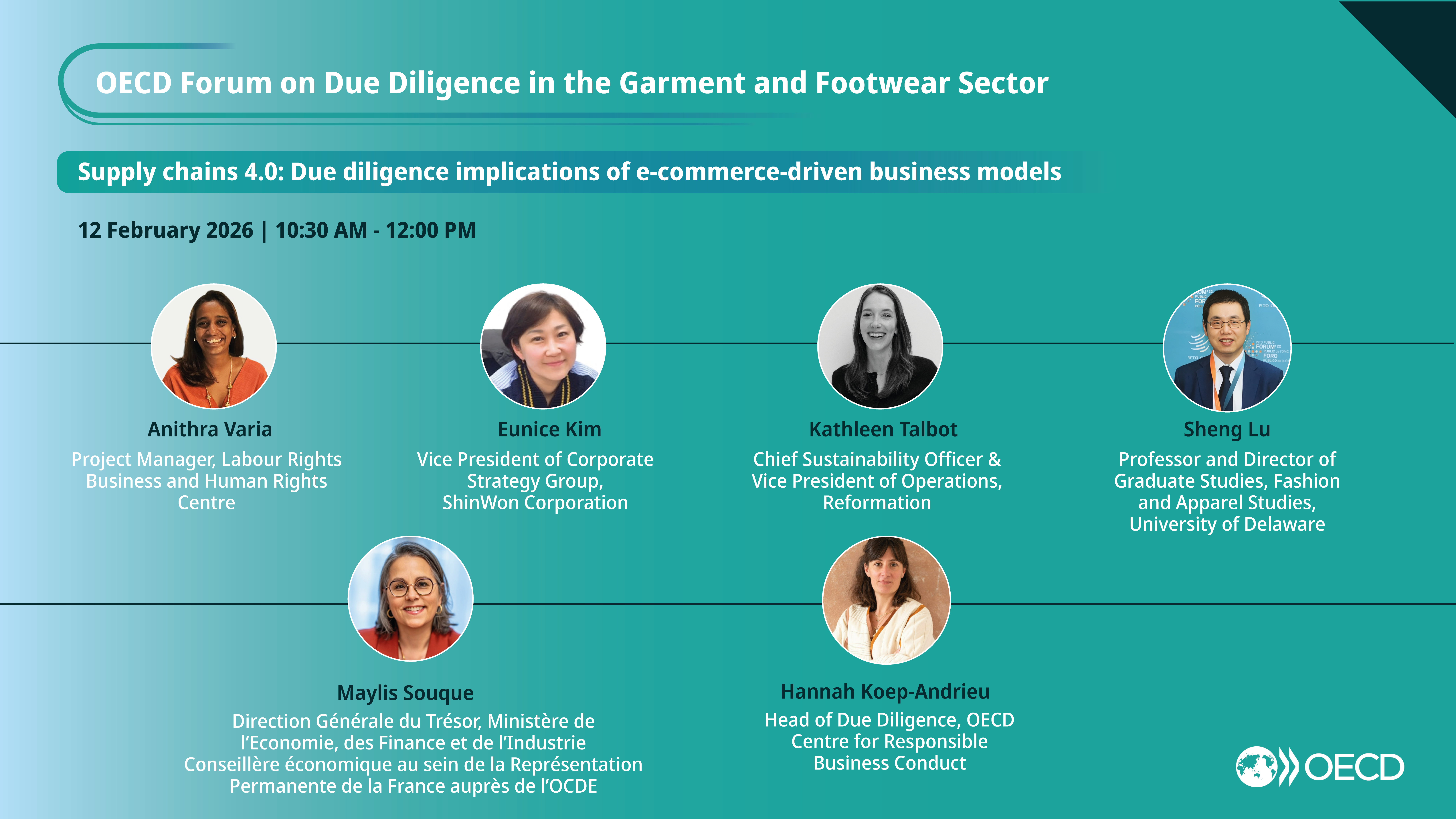
As part of the 2026 OECD Forum on Due Diligence in the Garment and Footwear Sector conference to be held in Paris, this session will explore how the growth of e-commerce and demand-driven business models is reshaping supply chain structures and dynamics across the sector. The session will examine how these shifts have operationally enabled new production and sourcing models, including ultra-fast fashion, and how increasing expectations around speed and flexibility are transforming production cycles, supplier relationships, and sourcing practices. Panellists will discuss what these changes mean in practice for responsible business conduct (RBC), how their characteristics may challenge existing trade and regulatory frameworks, and what policy or collaborative approaches may be further needed.

Speakers

FASH455 Exclusive Interview with Leah Marsh, Research Associate, Better Buying at Cascale, about Fashion Companies’ Purchasing Practices

About Leah Marsh

Leah Marsh is a Research Associate at Cascale Better Buying. She first joined Better Buying as a research intern before transitioning into a full-time role, bringing fresh perspectives and a strong academic background in sustainable sourcing and compliance.

Leah holds both a B.S. and M.S. in Fashion and Apparel Studies from the University of Delaware, where she graduated from the FASH 4+1 graduate program. During her studies, she conducted extensive research on European retailers’ sourcing strategies for clothing made from recycled textile materials. [See Leah’s publication in Sustainability based on her Master’s thesis]

Originally from the U.S., Leah is currently working from New Zealand. She continues to engage with suppliers and collaborate with the Cascale team to advance responsible purchasing practices worldwide.

Sheng: Can you provide an introduction to Cascale and Better Buying, and describe your role there?

Leah: Cascale is a global nonprofit that fosters collaboration across the consumer goods industry to advance climate action and decent work. In 2025, Cascale acquired Better Buying tools and methodologies, reinforcing its commitment to responsible purchasing and socially just supply chains.

As a Research Associate with Cascale Better Buying, I lead global supplier outreach and support data analysis, helping transform purchasing practices data into actionable insights. I also manage the Local Ambassador program during the Better Buying Purchasing Practices Index (BBPPI) rating cycles, coordinating five ambassadors across key regions and driving increased supplier participation over the two-month survey period.

Sheng: You have been directly involved in researching and drafting the Better Buying Purchasing Practices Index Report (2025). Based on your observations, what are the key trends in the purchasing practices of fashion brands and retailers? For example, what are the major improvements, and where can further progress be made?

Leah: We observed a decline in the overall BBPPI score and across several category scores compared to last year. I believe this reflects the impact of an unstable global trade environment on brands’ ability to sustain responsible purchasing practices. For example, increased U.S. tariffs forced many brands to rapidly restructure their supply chains, often under significant time and cost pressure, making sustainable decisions more difficult.

In contrast, suppliers in Central and South America continued to rate their buyers above the industry benchmark in six of seven categories. This highlights the region’s ability to maintain strong, stable relationships between buyers and suppliers despite global uncertainty.

Moving forward, buyers should adopt more proactive strategies, such as improving forecast accuracy and implementing fairer, more flexible payment terms. These measures can strengthen alignment with suppliers and help mitigate the impact of future disruptions.

Sheng: My research shows that fashion companies increasingly prefer suppliers that offer sourcing flexibility and agility, like the ability to handle last-minute order changes. However, as noted in Better Buying’s report, suppliers consistently rank buyers’ “Planning & Forecasting” as their main concern. What is your perspective on these seemingly competing expectations, and what can be done to improve mutual understanding and partnership?

Leah: While brands and retailers often rely on supplier flexibility, this is not the model Better Buying advocates. Truly sustainable partnerships are built on detailed forecasts, reserved capacity, and formal commitments. Suppliers can be flexible to a degree, but when flexibility consistently undermines their interests, it becomes unsustainable. There is a clear difference between occasional last minute adjustments and the chronic unpredictability driven by fast fashion.

Practical solutions could include joint forecasting and scenario planning, fair compensation for last minute changes, and clearer expectations around flexibility. Ultimately, agility and responsibility should not be competing goals. Instead, they can be managed collaboratively to reinforce more sustainable buyer-supplier relationships.

Sheng: What is your perspective and vision regarding the increasing use of AI tools and data to enhance social responsibility in the fashion apparel industry? If there were no limitations in technology or resources, what bold AI-driven innovation would you most want to see in sourcing and purchasing practices, and why?

Leah:AI is increasingly used to streamline global supply chains, and in the fashion industry, 3D sampling stands out as a particularly impactful innovation. Several suppliers highlighted it in the BBPPI as a way to improve design and development processes while reducing inefficiencies in buyer-supplier interactions.

Traditional sampling often involves extensive back and forth, generates excess textile waste, and  places uncompensated costs on suppliers. By contrast, 3D sampling can significantly reduce materials waste and financial burdens while accelerating decision-making.

However, many suppliers report that despite investing in 3D technology, buyers still primarily request physical samples. This gap between innovation and adoption suggests that the industry’s challenge is no longer technological availability, but buyer commitment to fully integrating these tools into their sourcing practices.

Sheng: As a graduate of the FASH 4+1 program, what experiences at UD do you find most beneficial and memorable? Do you have any suggestions or advice for our current students interested in pursuing careers in sustainability, social responsibility and related areas?

Leah: Use thesummers to intentionally build your professional network. Whether through research or internships, each experience adds distinct value to your portfolio. I participated in a UD Summer Scholar research project in my junior year,  completed a UD-Macy’s student research partnership project in my senior year, and interned with the Better Buying Institute during my graduate year.

I also recommend “adopting a professor” early in your studies, especially for graduate students (including those in the 4+1 program). While each faculty member offers valuable expertise, identifying those whose work aligns with your interests can help shape your academic focus and open meaningful opportunities.

–The End–

Additional reading: Cascale Better Buying Responsible Purchasing Practices Snapshot Survey 2025 (Released on January 30, 2026)

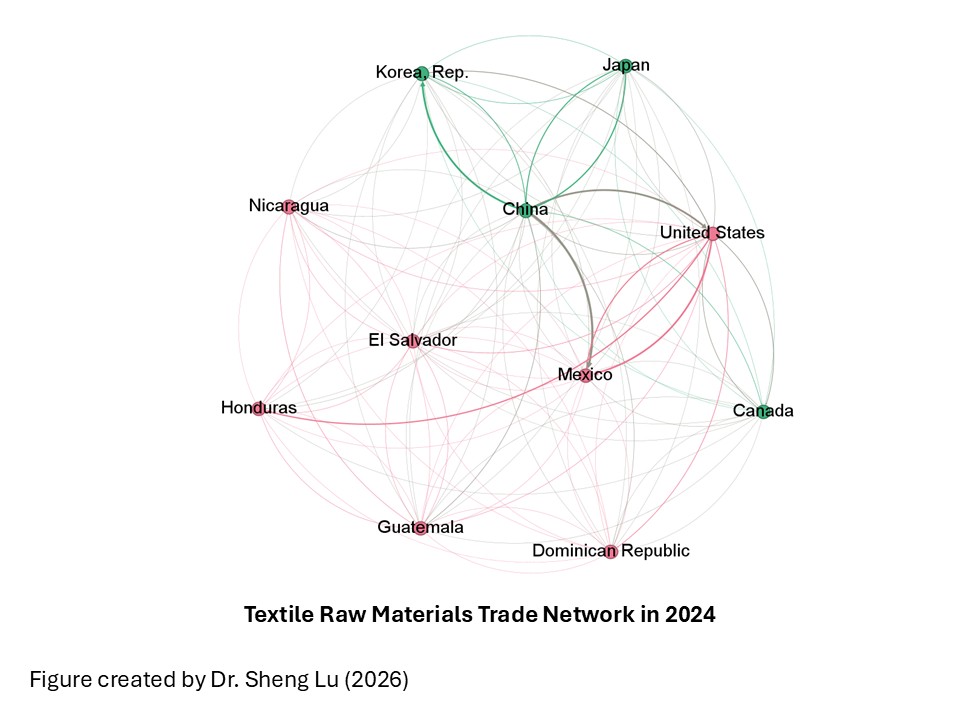
Evolving Patterns of Trade in Textile Raw Materials in the Western Hemisphere (2010-2024)

Based on data from UNComtrade, this new study analyzed the evolving patterns of trade in textile raw materials (i.e., yarns, fabrics, and textile accessories*) in the Western Hemisphere from 2010 to 2024. Note: textile raw materials included products under SITC codes 651, 652, 653, 654, 655, and 656. Below are the initial findings:

First, the value of closeness centrality (i.e., how close a country is to all others in the network) consistently exceeded 0.8 for most countries in the Western Hemisphere, including the US and other CAFTA-DR and USMCA members, from 2010 to 2024. This indicates that a highly connected regional network of trade in textile raw materials existed among Western Hemisphere countries during the examined period. However, the closeness centrality results also indicated that Nicaragua, whose closeness centrality score declined from 0.9 in 2015 to 0.83 in 2024, and Honduras, whose score declined from 0.77 in 2015 to 0.67 in 2024, appeared to be relatively “marginalized” in recent years. The result can be attributed to the political and social instability in these countries over the past few years, which has negatively impacted trade.

Second, while the U.S. has been a highly influential and well-connected hub for textile raw material trade in the Western Hemisphere, it is never a “chokepoint.” Specifically, from 2010 to 2024, the U.S. consistently held the highest eigenvector centrality score in the region, confirming its role at the center of the trade network. However, the U.S. betweenness centrality score, measuring its role as a bridge in the trade network, was always low and even declined from 0.033 in 2010 to 0.019 in 2024. Other Western Hemisphere countries showed similarly low betweenness centrality scores. This pattern indicates that CAFTA-DR and USMCA members mostly engaged in direct bilateral trade in textile raw materials rather than routing it through the U.S. as an intermediary. Thus, the U.S. functions as a central trading partner, not a bottleneck, in this regional supply chain.

Third, the U.S. is no longer a dominant supplier of textile raw materials to the Western Hemisphere. Interestingly enough, when evaluating all major traders, including key Asian textile suppliers, namely China, South Korea, and Japan, the U.S. consistently ranked between 5th and 6th as a supplier (Hub score) and between 3rd and 6th as a receiver (Authority score) from 2010 to 2024. In contrast, Asian countries, particularly South Korea and Japan, not only achieved higher Hub scores but saw those scores gradually rise between 2015 and 2024. In other words, while the U.S. remains a major player, CAFTA-DR and USMCA members have increasingly diversified their textile import sources, including from Asian suppliers.

Additionally, the results show that the textile raw material trade network in the Western Hemisphere is highly resilient and self-reinforcing. This was demonstrated by the consistently higher PageRank scores of CAFTA-DR and USMCA members, such as Guatemala, El Salvador, Mexico, and the U.S., compared to Asian suppliers like Japan, South Korea, and China from 2010 to 2024. This pattern means that trade in textile raw materials among Western Hemisphere countries, including the U.S., operates like a closely connected “small town,” with strong, mutual internal links. Meanwhile, Asian suppliers, even though they are becoming more important sources of material, remain on the periphery as “outsiders” to this central regional network.

Overall, the results emphasize the success of a resilient regional textile raw material trade network in the Western Hemisphere, supported by regional trade agreements like the CAFTA-DR and USMCA. It can be explored further how to better balance deeper regional integration with strategic openness to improve access to textile raw materials for countries in the region.

By Sheng Lu

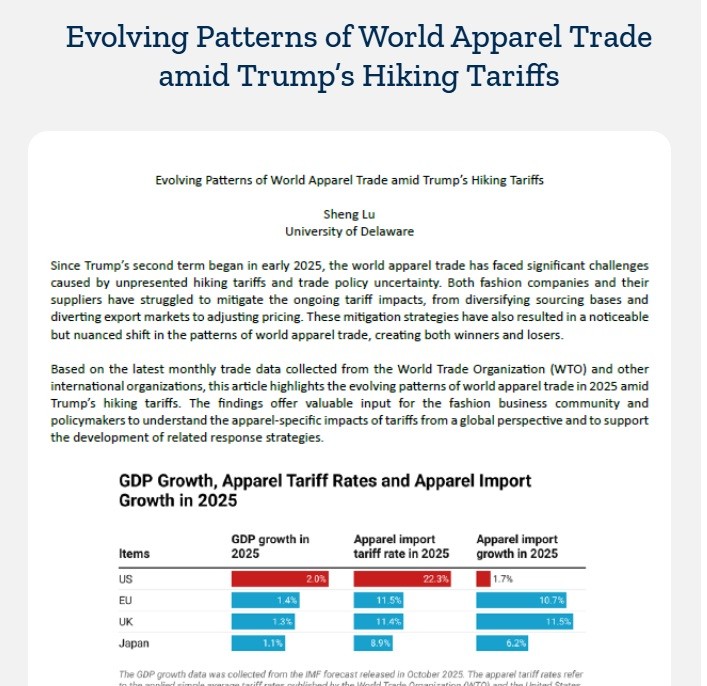
New Paper: Evolving Patterns of World Apparel Trade amid Trump’s Hiking Tariffs

Since Trump’s second term began in early 2025, the world apparel trade has faced significant challenges caused by unprecedented high tariffs and trade policy uncertainty. Both fashion companies and their suppliers have struggled to mitigate the ongoing tariff impacts, from diversifying sourcing bases and diverting export markets to adjusting pricing. These mitigation strategies have also resulted in a noticeable but nuanced shift in the patterns of world apparel trade, creating both winners and losers.

Based on the latest monthly trade data collected from the World Trade Organization (WTO) and other international organizations, this article highlights the evolving patterns of world apparel trade in 2025 amid Trump’s hiking tariffs. The findings offer valuable input for the fashion business community and policymakers to understand the apparel-specific impacts of tariffs from a global perspective and to support the development of related response strategies.

Overall, the findings indicate that Trump’s hiking tariffs have impacted the world apparel trade far beyond the U.S. market. As high tariff rates are expected to remain in 2026, we might see trade diversion and price competition among key suppliers become more evident in the new year. On the other hand, the findings call for greater attention to the tariff’s impacts on small and medium-sized apparel exporting countries, especially those in Asia, South America, and Africa that are less competitive than established, mature suppliers. The ripple effects of the hiking tariffs could increase competition pressures on these small players, resulting in more vulnerability in their export-oriented garment sector and millions of workers.

Key findings:

  • Pattern 1: Trump’s hiking tariffs appeared to suppress the U.S. import demand for clothing compared with other major import markets.
  • Pattern 2: Facing higher tariff barriers in the U.S. market, several leading apparel-supplying countries have been diverting exports to the EU and the UK to mitigate tariff impacts. 
  • Pattern 3: Except for the case in the U.S., China’s market share remained relatively stable in other key apparel import markets in 2025.
  • Pattern 4: Apparel-producing countries in Asia, South America, and Africa faced growing pressure from Chinese products in the domestic market.
  • Pattern 5: No evidence suggested that Trump’s hiking tariffs have benefited near-shoring.

Read the full paper HERE (Global Textile Academy, International Trade Centre, Geneva, Switzerland)

Patterns of U.S. Apparel Imports (updated January 2026)

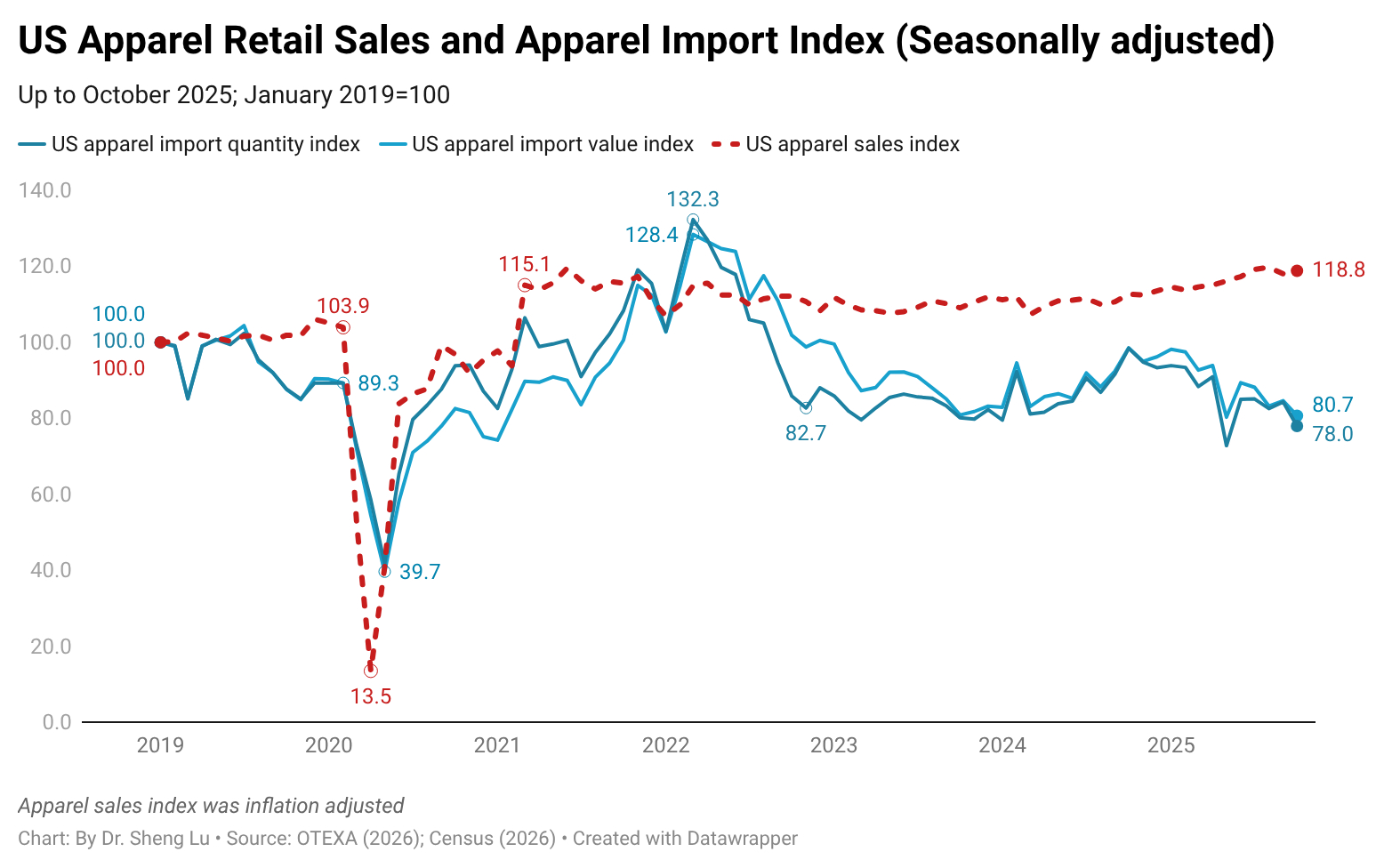
Jointly affected by weak import demand and rising tariffs, US apparel imports in October 2025 sharply declined by 18.5% in value and 21.1% in volume compared to a year earlier. This was the worst performance so far in 2025 and marked a third consecutive month of decline in US apparel imports. Notably, the volume of US apparel imports has become more volatile in 2025 than in previous years, as fashion companies rushed to adjust their original shipping schedules and bring products in early to offset tariff impacts. It is likely that US apparel imports will stay at lower levels in the coming months, especially from December to January, the usual slow import season. (see detailed import data here)

US apparel imports from China experienced another significant decline in October 2025, reflecting US fashion companies’ ongoing strategy of “reducing China exposure.” Specifically, in October 2025, US apparel imports from China dropped by 53.3% in value and 43.1% in quantity year over year, performing much worse than the world average. As a result, in October 2025, China accounted for only 11.3% of US apparel imports in value (down from 19.8% in October 2024) and 25.3% in quantity (down from 35.1% in October 2024), one of the lowest levels in decades. (see detailed market share data here)

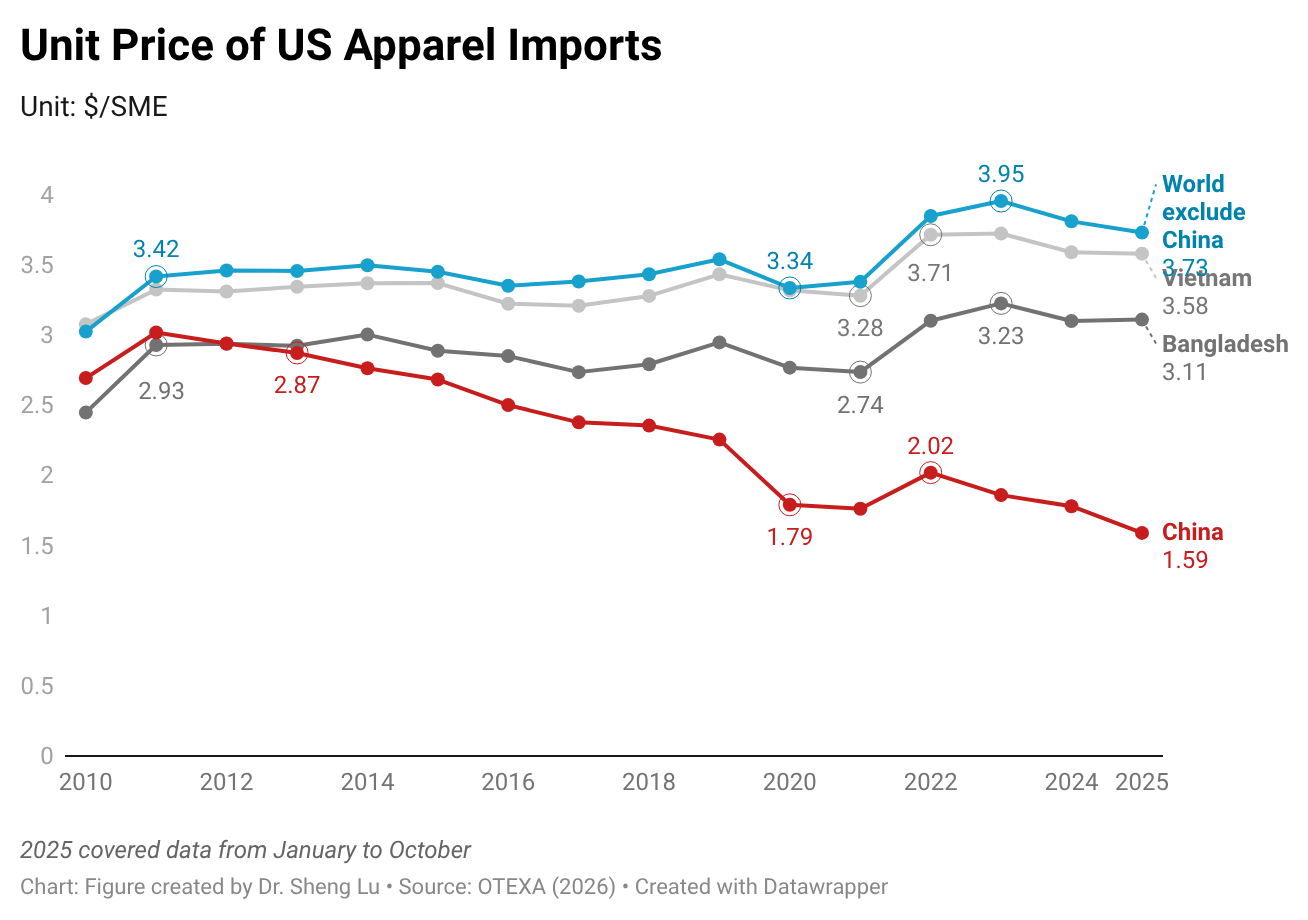
It should also be noted that, measured in dollars per square meter equivalent (SME), the unit price of US apparel imports from China decreased by 10.6% so far in 2025 (January to October), whereas the unit price of total US apparel imports increased by 1.6%. (see detailed unit price data here) These apparently “contradictory” results suggest that the decline in US apparel imports from China may not be driven solely by pricing or even tariffs. Instead, they might also be influenced by US fashion companies’ assessment of sourcing risks and geopolitical issues involving China. 

US apparel imports from Asia continued to demonstrate resiliency overall. So far in 2025 (January to October), in value, Asian countries together accounted for 73.0% of US apparel imports, higher than 71.6% in 2024 over the same period. (see detailed Asia market share data here) In October 2025, the value of US apparel imports from top Asian suppliers, excluding China and India, remained relatively stable and even increased. Countries including Vietnam, Bangladesh, Cambodia, Indonesia, and Pakistan also gained additional market share in October 2025 compared to a year ago. These results revealed US fashion companies’ sourcing diversification strategy amid hiking tariffs and policy uncertainty, as well as the competitiveness of these Asian countries in meeting importers’ demand.

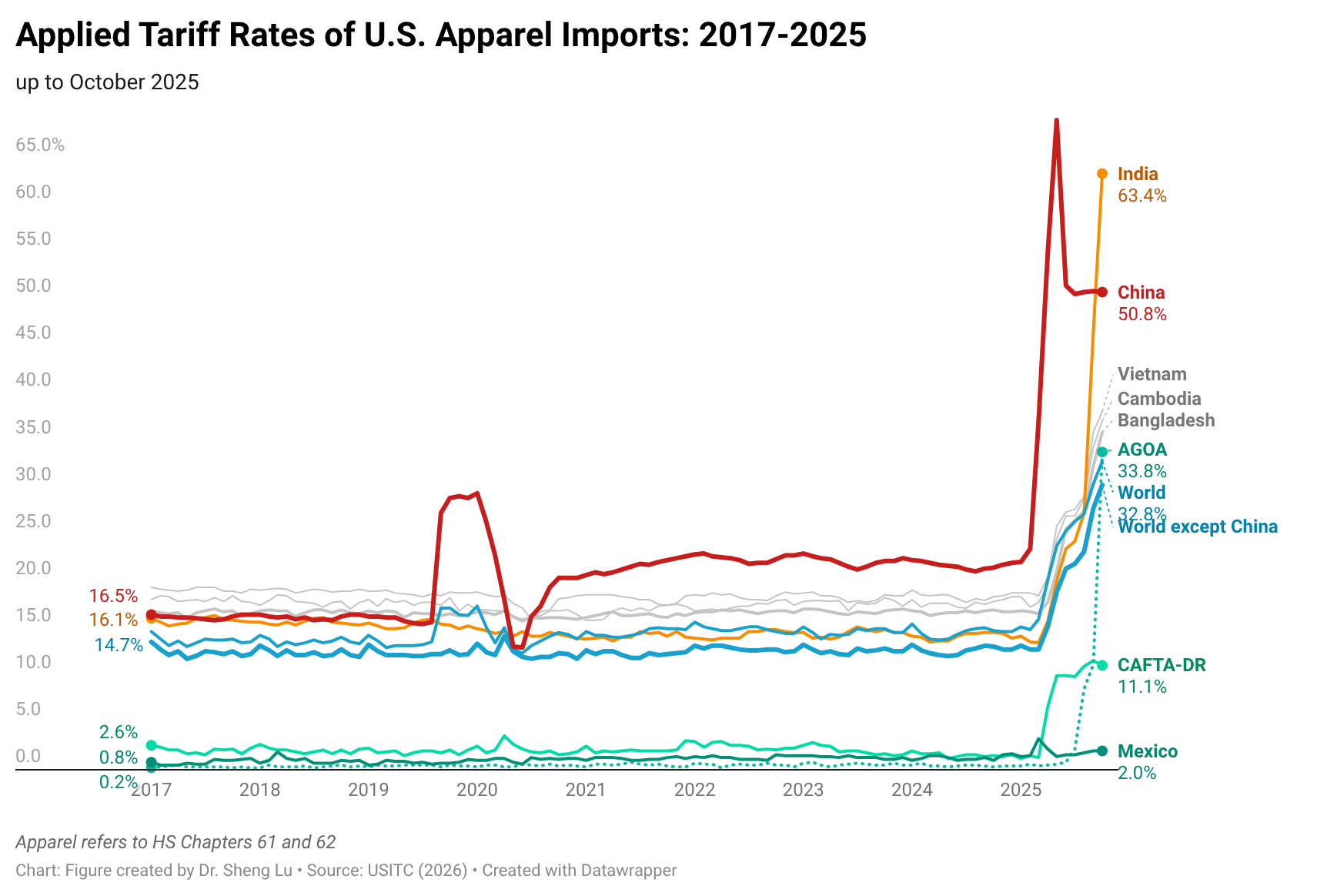
US apparel imports from India declined by nearly 30% in October 2025, highlighting the negative impact of high tariffs on the country’s appeal as a sourcing destination for U.S. fashion companies. Notably, U.S. apparel imports from India were subject to an average tariff of 63.4% in October 2025, even higher than the 50.8% tariff on Chinese products. (See the detailed tariff rates data here) Considering President Trump’s recent comments on sanctioning countries that buy Russia’s oil, the prospects for reducing the punitive tariffs on U.S. apparel imports from India remain uncertain.

In relative terms, Western Hemisphere suppliers gained a small share in US apparel imports in October 2025, including Mexico (rising from 3.1% to 3.5%) and CAFTA-DR members (up from 9.1% to 9.5%). However, in absolute terms, U.S. apparel imports from Mexico and CAFTA-DR still dropped by 8.5% and 15.3% in October 2025, respectively. It also remains uncertain how the recent turmoil related to Venezuela might impact US fashion companies’ assessment of trading and geopolitical risks in the region and their willingness to expand sourcing from the Western Hemisphere in the coming year. 

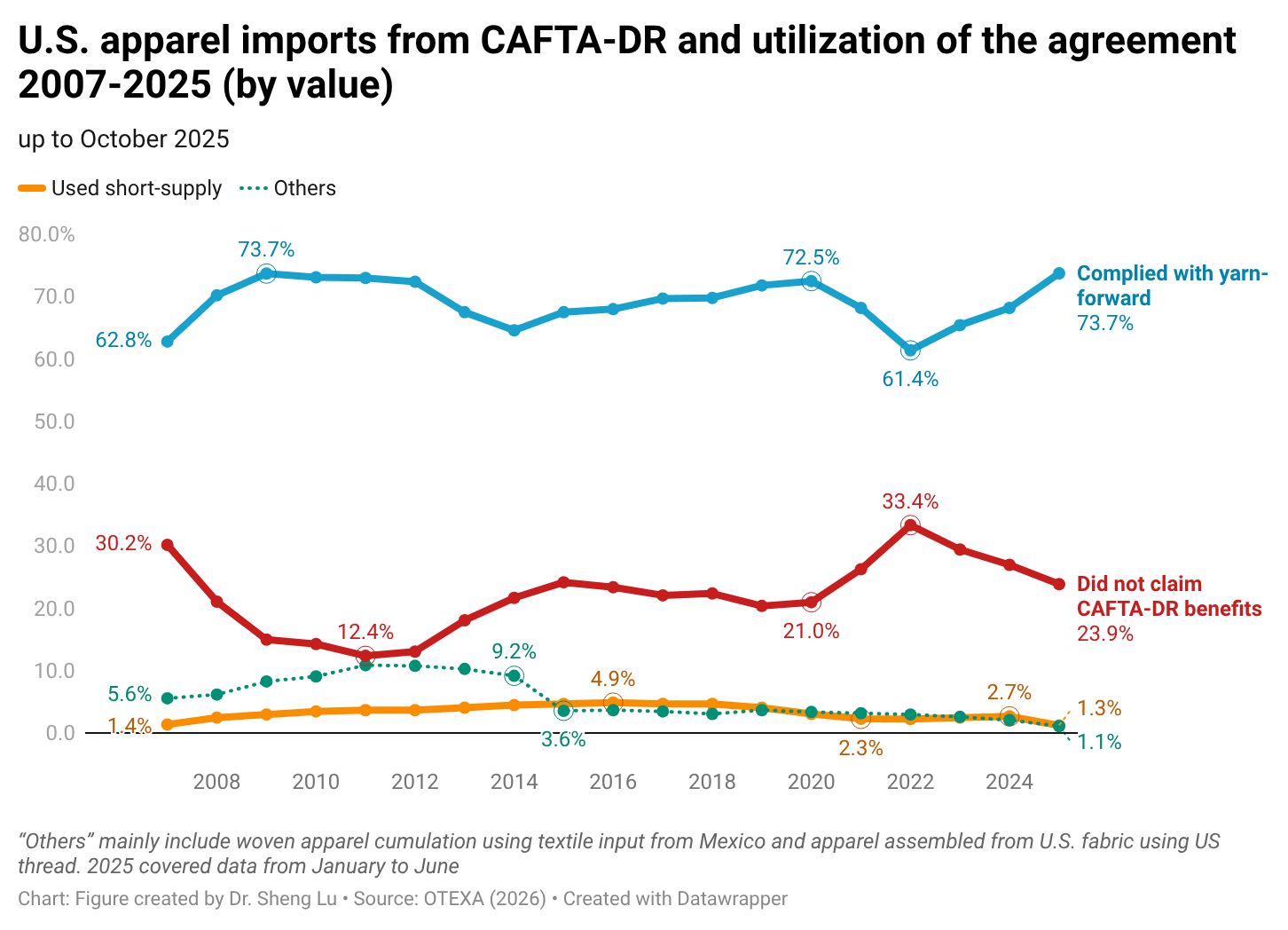
As a silver lining regarding near-shoring from the Western Hemisphere,so far in 2025 (January to October), about 76.1% of US apparel imports from the CAFTA-DR claimed duty-free benefits under the agreement, up from 72.9% in 2024 over the same period. The improved CAFTA-DR utilization so far in 2025 was driven by a higher volume of imports that complied with the yarn-forward rules of origin. However, the utilization rate of the agreement’s short supply mechanism decreased from 2.8% to 1.2% despite more products being added to the list. (See detailed CAFTA-DR utilization data here).

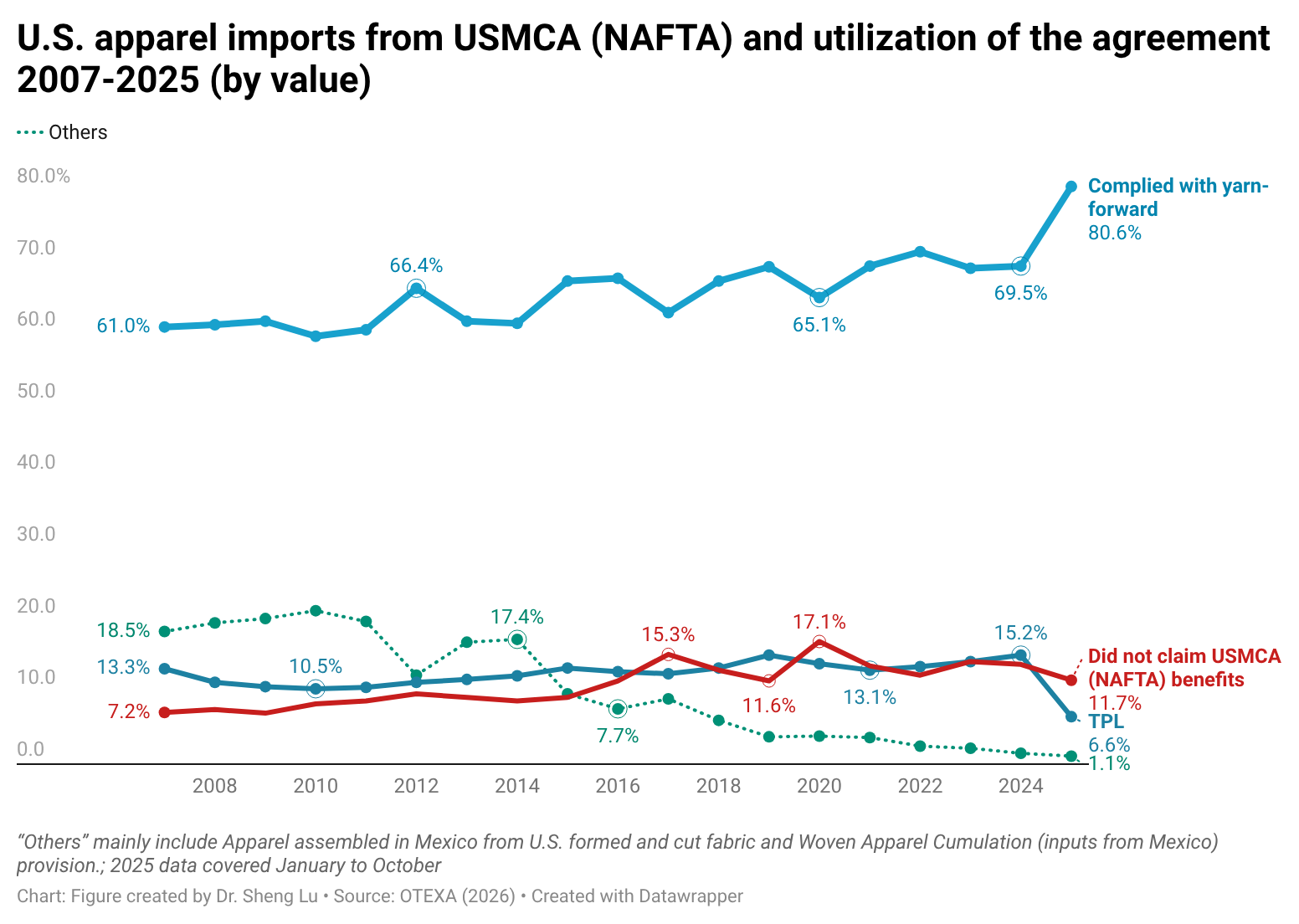
Likewise, in the first ten months of 2025, about 88.3% of US apparel imports from the USMCA claimed duty-free benefits under the agreement, up from 86.4% over the same period in 2024. Notably, in the past, only about 20% of US apparel imports from Canada met the yarn-forward rules of origin; however, this rate increased significantly to 63% in 2025. (See detailed USMCA utilization data here)

by Sheng Lu

Additional reading: Geopolitics Will Shake Up Sourcing—Again—In 2026 (Sourcing Journal)