Apparel Sourcing and Trade Outlook for 2026

Top challenges in 2026

I believe the global fashion apparel industry will continue to face two macro-level challenges in 2026. One is the relatively weak consumer demand for clothing amid sluggish economic growth and persistent inflationary pressures. For example, according to the International Monetary Fund’s (IMF) October 2025 forecast, global GDP growth in 2026 is expected to decrease from 3.2% in 2025 to 3.1% in 2026. Specifically, U.S. GDP growth will be around 2.1% (down from 2.8% in 2024), and growth in the EU could drop to 1.1% (down from 1.2% in 2025).

Likewise, several consulting firms forecast that clothing retail sales in key apparel import markets, including the United States and Western Europe, could be stagnant or even decline in 2026. Notably, while Gen Z (i.e., those born between 1997 and 2012) has increasingly become a key customer group for many fashion brands and retailers, analysis shows that this generation has turned more cautious about shopping for clothing, especially for new items. The tariff-driven price increases could further discourage these groups from buying new clothing in the new year ahead.

Meanwhile, the trade policy environment facing the global fashion apparel industry could remain highly uncertain in 2026. Notably, in addition to tariffs, several trade agreements could create new uncertainties for fashion companies when sourcing from affected regions. Specifically:

The U.S.-Mexico-Canada (USMCA) trade agreement will begin its formal six-year review process in 2026. Despite broad industry support for upholding the existing agreement and calls to “do no harm,” we cannot rule out the possibility that the Trump administration might seek significant renegotiation or even replace the USMCA with separate bilateral trade deals.

Likewise, the outlook for the African Growth and Opportunity Act (AGOA) and the Haiti HELP/HOPE program, both of which expired in September 2025, remained highly uncertain. Because both programs play a critical role in supporting U.S. apparel sourcing from Sub-Saharan Africa and Haiti, whether and under which conditions they are renewed will directly influence fashion companies’ sourcing decisions and the long-term competitiveness and investment prospects of these regions.

Furthermore, even with several “trade deals” reached between the US and major trading partners like the EU, Vietnam, Cambodia, and potentially China and India, their implementation and enforcement will warrant close attention. In particular, the meaning and definition of critical terms like “transshipment” in these “trade deals” remain largely unclear. However, the impact could be significant for apparel sourcing if the Trump administration ultimately decides to revisit or set new rules of origin in these agreements to reduce the “China content” in products imported into the United States. Notably, according to OECD’s newly released “trade in value-added database,” apparel exports from Asian countries, including Vietnam and Cambodia, commonly contain 20-30% of value created in China.

Key apparel sourcing trends to watch in 2026

First, trade and economic impacts of tariffs could become more visible and significant in 2026. In particular, almost all U.S. apparel imports will be subject to the higher tariffs in 2026, leaving fashion companies with fewer options to use existing inventory to mitigate the effects. Consequently, fashion companies will face increased pressure to control their sourcing costs and protect their profit margins.

Second, fashion companies will continue to leverage sourcing diversification to navigate market and trade policy uncertainties. For example, according to the 2025 Fashion Industry Benchmarking Study released by the U.S. Fashion Industry Association (USFIA), a record-high percentage of surveyed U.S. fashion brands and retailers (i.e., over 80%) reported sourcing from 10 or more countries. Nearly 60% of respondents plan to source from even more countries in 2026. In a recent study I conducted, some leading U.S. and EU fashion companies mentioned in their 2025 Q2 earnings call transcripts that they intentionally seek vendors with production capacity across multiple countries to achieve sourcing diversification and mitigate risks.

Third, in addition to seeking competitive sourcing costs, fashion companies will increasingly look for vendors that can offer speed to market, flexibility, and agility. As one leading fashion company noted, “increasing the speed” does not necessarily mean “nearshoring,” but also refers to vendors that can deliver products quickly and at scale. Meanwhile, fashion companies increasingly expect suppliers to accommodate last-minute order changes, accept low minimum order quantities (MOQs), arrange raw material sourcing, and offer other value-added services. This shows why, based on trade data, Asian suppliers overall are more competitive and have captured more market share in the U.S. and EU markets in 2025 than “near-shoring” suppliers.

Additionally, China and Asia’s role in apparel sourcing could continue to evolve in 2026. I recently attended an industry event featuring textile and apparel manufacturers in Southeast Asian countries (ASEAN) and China. A few observations from the event stood out to me.

  1.  While the tariff was a top concern for most U.S. fashion companies, the conference mainly focused on facilitating investment and creating a more integrated, resilient, and sustainable textile and apparel supply chain in Asia. In other words, Asia-based textile and apparel suppliers did not seem panicked by the tariffs, nor do they believe the tariffs fundamentally challenge their long-term growth trajectory or hurt their export competitiveness.
  2. The Asia-based textile and apparel industry is becoming ever more global, mature, and advanced. Consistent with recent trade data, Asia-based fashion brands today commonly conduct global sourcing. They are investing heavily in new sustainable textile materials and digital technologies. They remain the largest buyer of the most sophisticated textile machinery in the world. Therefore, it is reasonable to expect that Asian suppliers as a whole will continue to dominate textile and apparel production and export into 2026 with no near competitors. 
  3. China’s leadership and influence within the Asia-based textile and apparel supply chain are increasingly visible. At the conference, ASEAN-based textile and apparel associations see China as a vital partner and source of investment. Through China’s Belt and Road Initiative (BRI), collaboration is extending from trade and investment to education and skills training. Overall, industry sentiment toward China in ASEAN differs significantly from the “decoupling” and “reducing China exposure” narratives that are gaining traction in the United States.
  4. An interesting question that I took away from the conference was whether China truly worries about losing market share in the U.S. and other markets for final apparel products. Perhaps not. Chinese industry leaders appear confident because they know that many Asian garment-producing countries remain heavily dependent on Chinese textile inputs, and many garment factories are funded or owned by Chinese investors. Given these dynamics, it will be interesting to observe how China’s confidence and its broader leadership role in Asia’s regional textile and apparel supply chain will continue to grow in 2026.

Opportunities in 2026

In 2026, we may see a significant increase in AI use in apparel sourcing. For example, fashion companies could use new AI tools to help optimize inventory levels and logistics, identify and evaluate new suppliers, and improve operational efficiency. AI may also play a more crucial role in supporting efforts around supply chain mapping, traceability, and sustainability data collection. Overall, we could see a more digitalized and data-driven sourcing process in the new year ahead.

On the other hand, in 2026, fashion companies could benefit from investing in and exploring new business models that support designing, making, sourcing, and selling sustainable apparel products. For example, a recent study of mine found that, by stock keeping units (SKUs) count, the number of clothing items made with recycled textile fibers increased by about 24% from 2024 to 2025 (August to October) in the U.S. retail market. Similarly, clothing items made with “regenerative” textile fibers surged by nearly 90% over the same period. These figures represent consumers’ increasing demand and fashion companies’ growing business interest in offering these products. New sustainability legislation, such as the Extended Producer Responsibility (EPR) at the state, regional, or international levels, will also create new incentives and pressure for fashion companies to revisit many of their current business practices. That said, balancing the sustainability benefits with other key sourcing metrics, such as costs, quality, and traceability, for these sustainable apparel products, will require ongoing efforts and improvements by fashion companies and their supply chain partners in 2026.

by Sheng Lu
Patterns of U.S. Apparel Sourcing and Imports (updated April 2025)

The following analysis was based on the latest trade statistics from the Office of Textiles and Apparel (OTEXA) under the U.S. Department of Commerce.

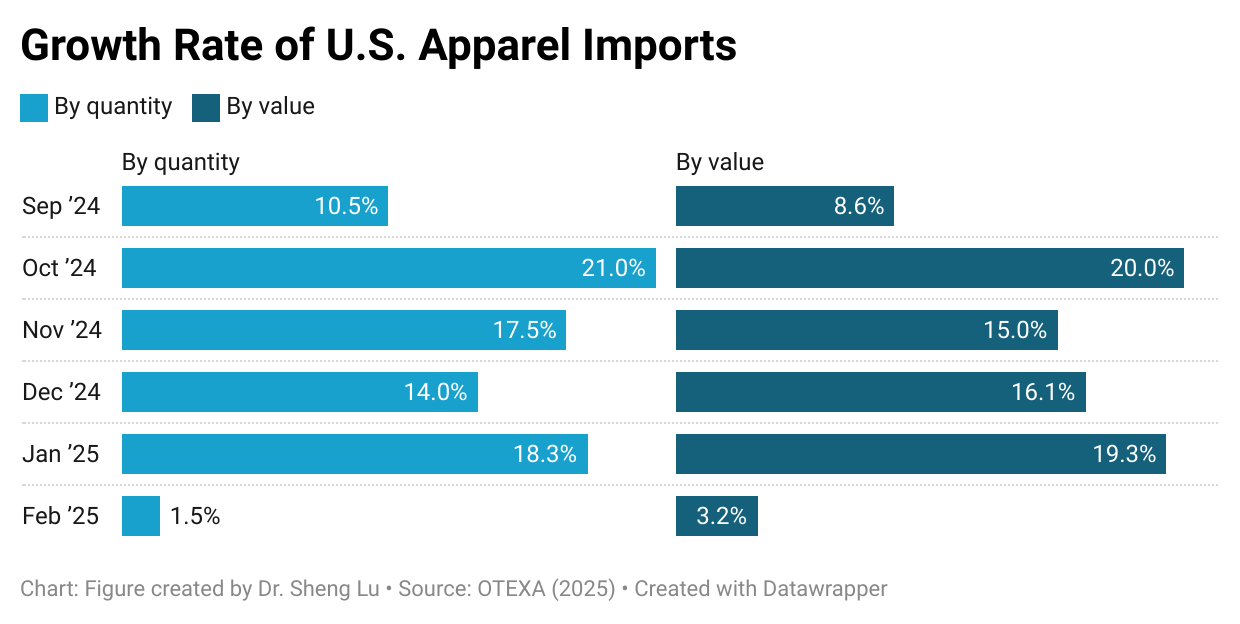
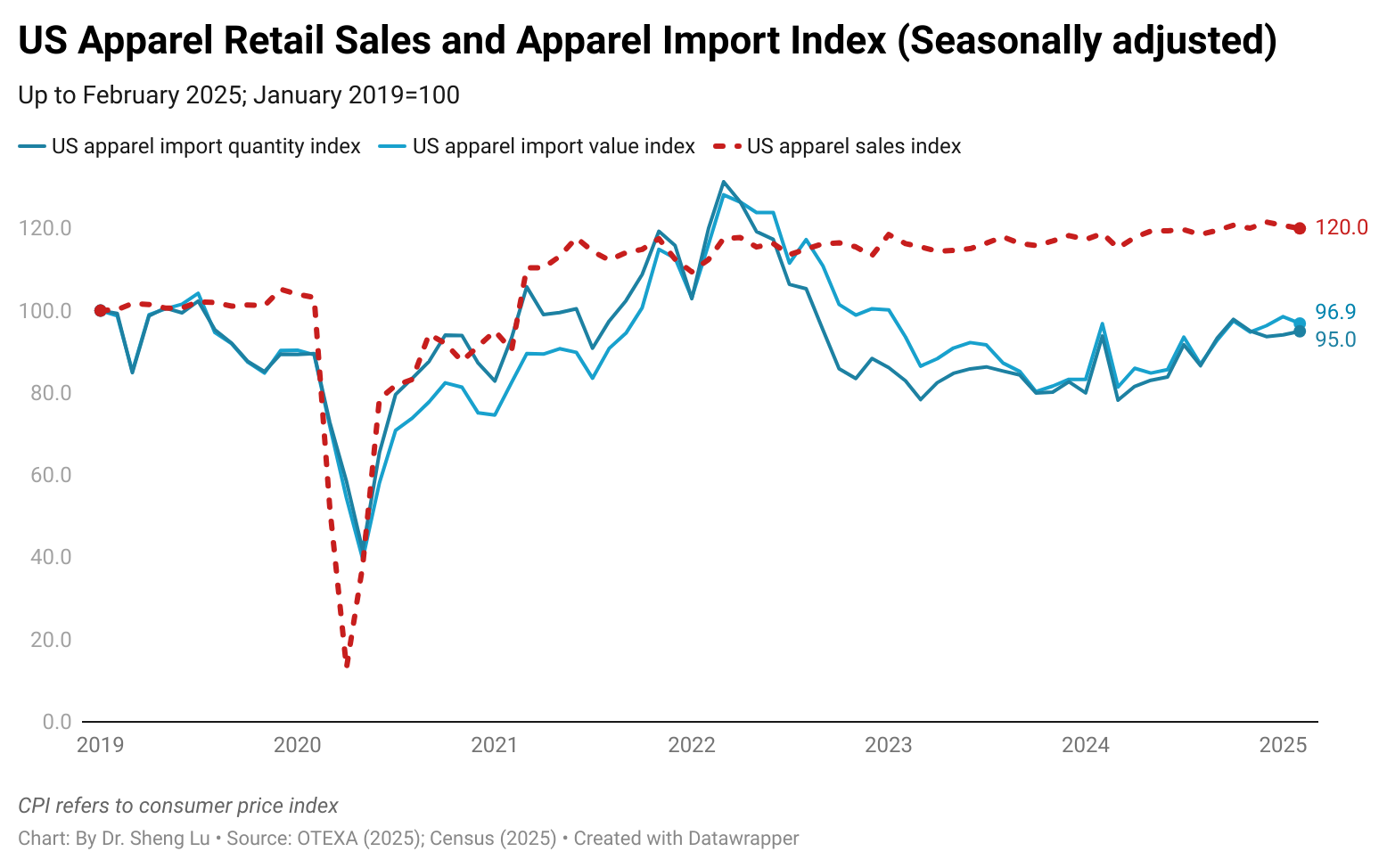
First, the growth of U.S. apparel imports significantly slowed as fashion companies shifted from eagerly piling up stock to the wait-and-see mode. Specifically, in February 2025, U.S. apparel imports moderately went up 3.2% in value and 1.5% in quantity, much lower than the 18-19% increase seen in late 2024 and January 2025. The much-slowed growth confirmed that the earlier U.S. apparel import surge was largely driven by fashion companies’ worries about the upcoming tariff hikes rather than an actual increase in consumer demand.

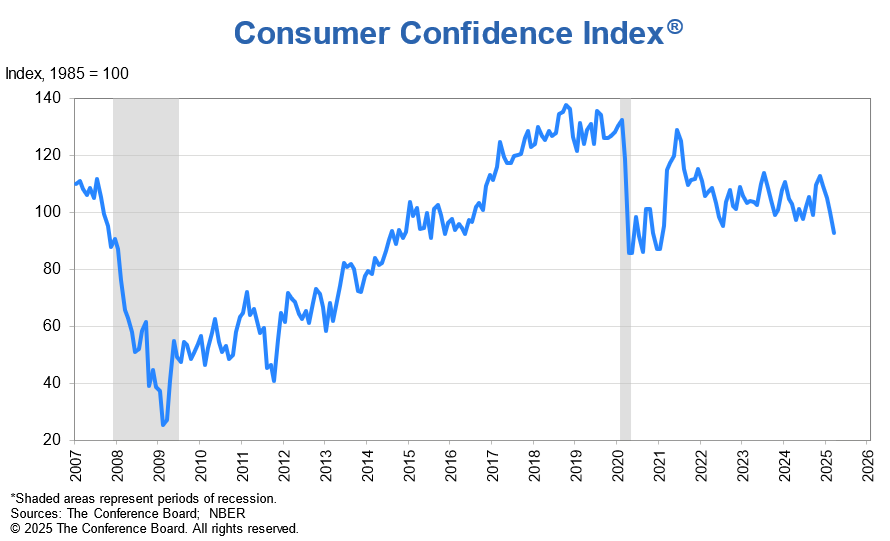
Adding to the concern, U.S. consumer confidence fell sharply, which could lead to a steep drop in U.S. apparel imports ahead. For example, the Consumer Confidence Index dropped to a two-year low of 92.9 in March 2025, down from 100.1 the previous month (1985=100). Similarly, the Expectations Index—which measures consumers’ short-term outlook for income, business, and labor market conditions—plunged to 65.2, marking its lowest level in 12 years. With the announcement of reciprocal tariffs and the growing likelihood of an economic recession, U.S. consumer demand for clothing may decline significantly, potentially leading to the cancellation of many sourcing orders.

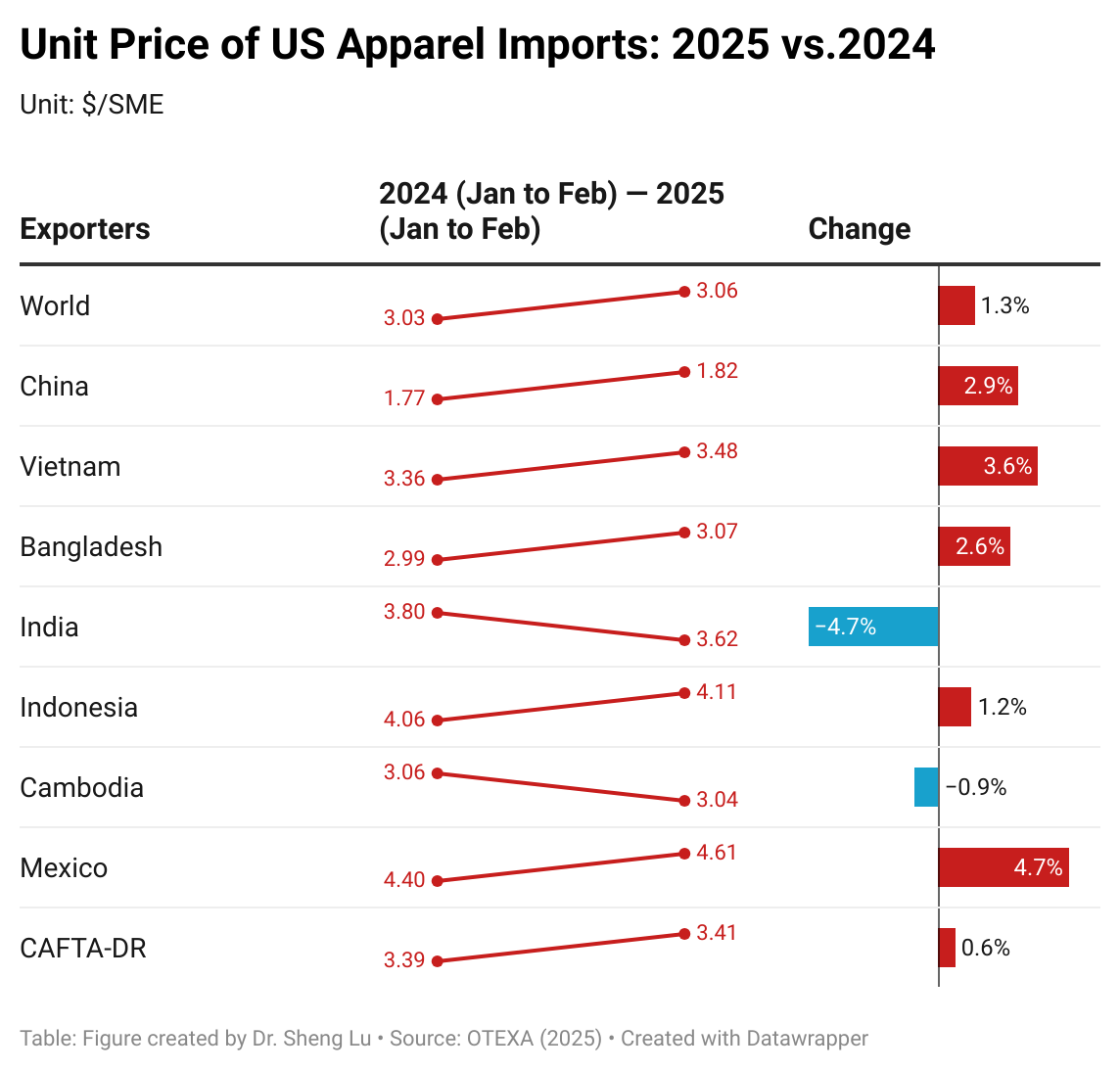
Second, apparel imports have become more expensive. Measured in dollars per square meters equivalent (SME), the unit price of U.S. apparel imports averaged $3.06/SME in the first two months of 2025, up from $3.03/SME a year ago (or a 1.3% increase). The unit price of U.S. apparel imports from many leading Asian countries rose at a notably higher rate, including China (up 2.9%), Vietnam (up 3.6%), and Bangladesh (up 2.6%), as well as those from Mexico (up 4.7%) and CAFTA-DR (up 0.6%). This result reflected the growing pressure of sourcing and production costs facing U.S. fashion companies and their suppliers, driven by rising labor costs and raw material prices among other factors. Indeed, if Trump’s reciprocal tariffs ultimately take effect, import prices could increase even more significantly.

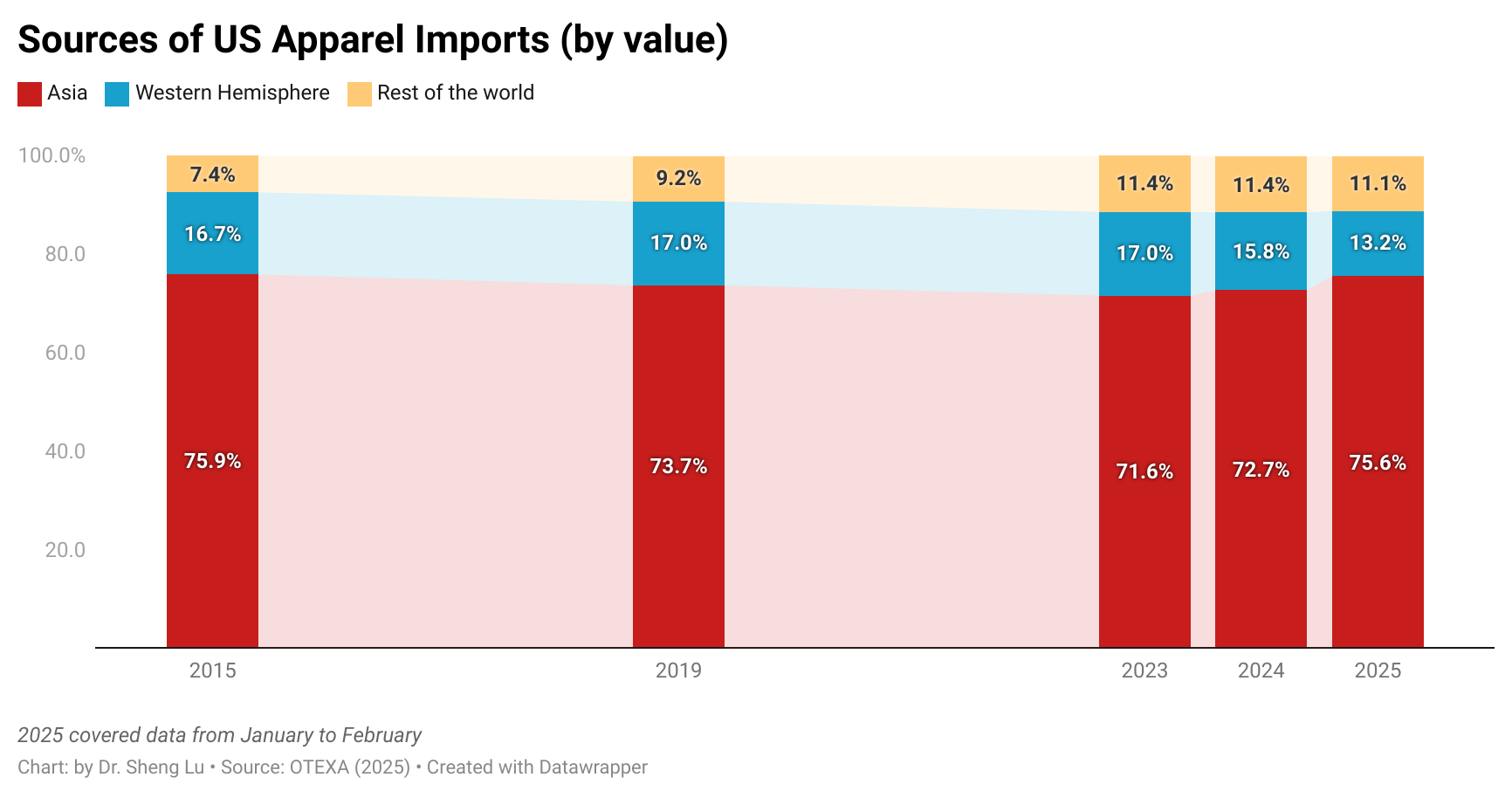
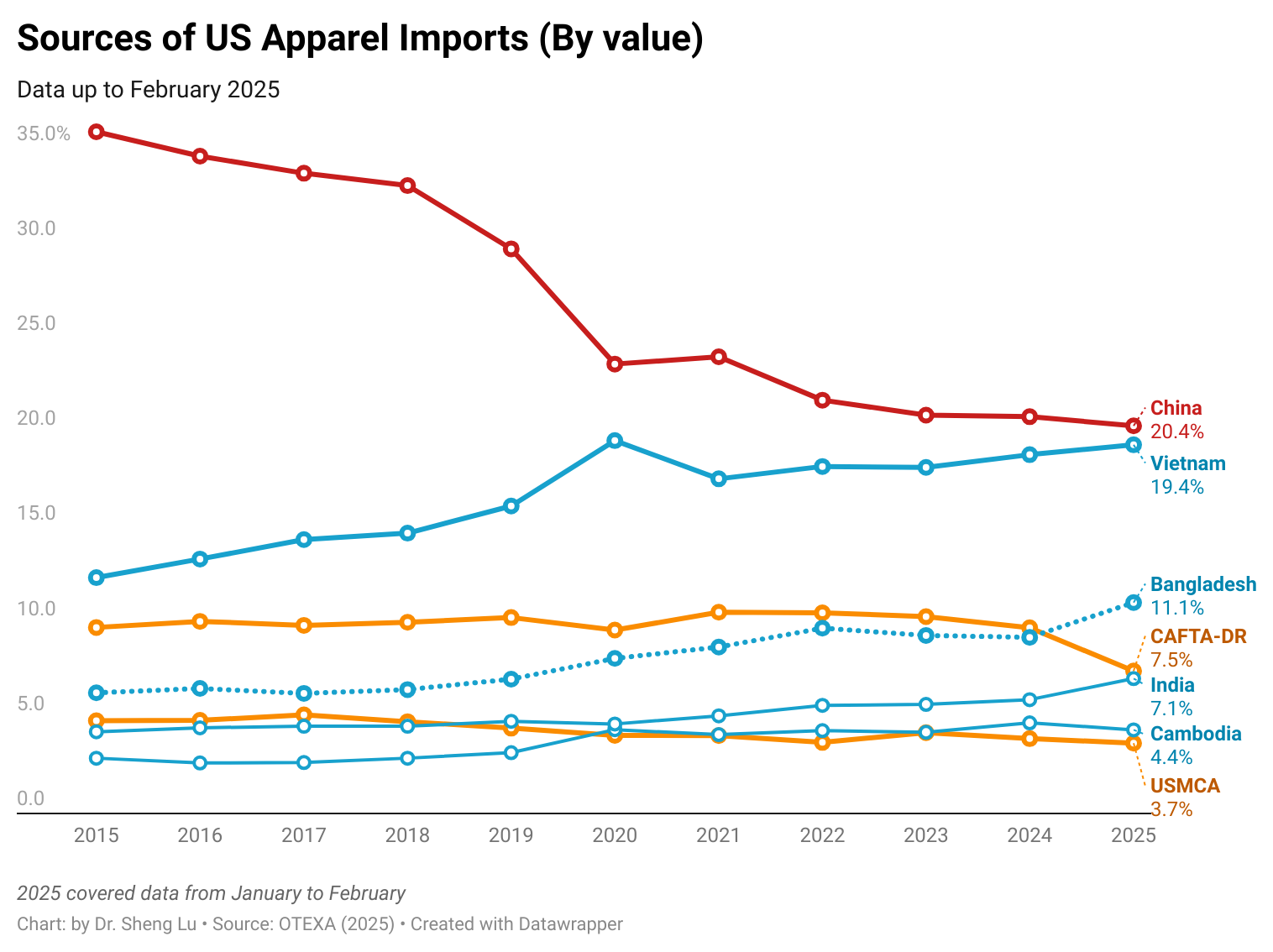
Third, U.S. fashion companies’ sourcing diversification efforts appeared to slow amid rising uncertainty. In February 2025, Asian countries collectively accounted for 71.5% of the total value of U.S. apparel imports—unchanged from a year earlier. Similarly, in the first two months of 2025, the top five suppliers (China, Vietnam, Bangladesh, Cambodia, and India) made up 63.7% of total apparel imports by value, up from 59.7% during the same period in 2024. Even China’s market share remained largely stable at 18.4% in value and 32% in quantity, compared to a year ago.

These figures suggest that U.S. fashion companies somehow have become more hesitant to adjust their sourcing base in response to the universal tariffs imposed by the Trump administration, which target nearly all U.S. trading partners. As a result, U.S. fashion companies may find the sourcing diversification strategies no longer as effective as in the past in effectively mitigating their sourcing risks.

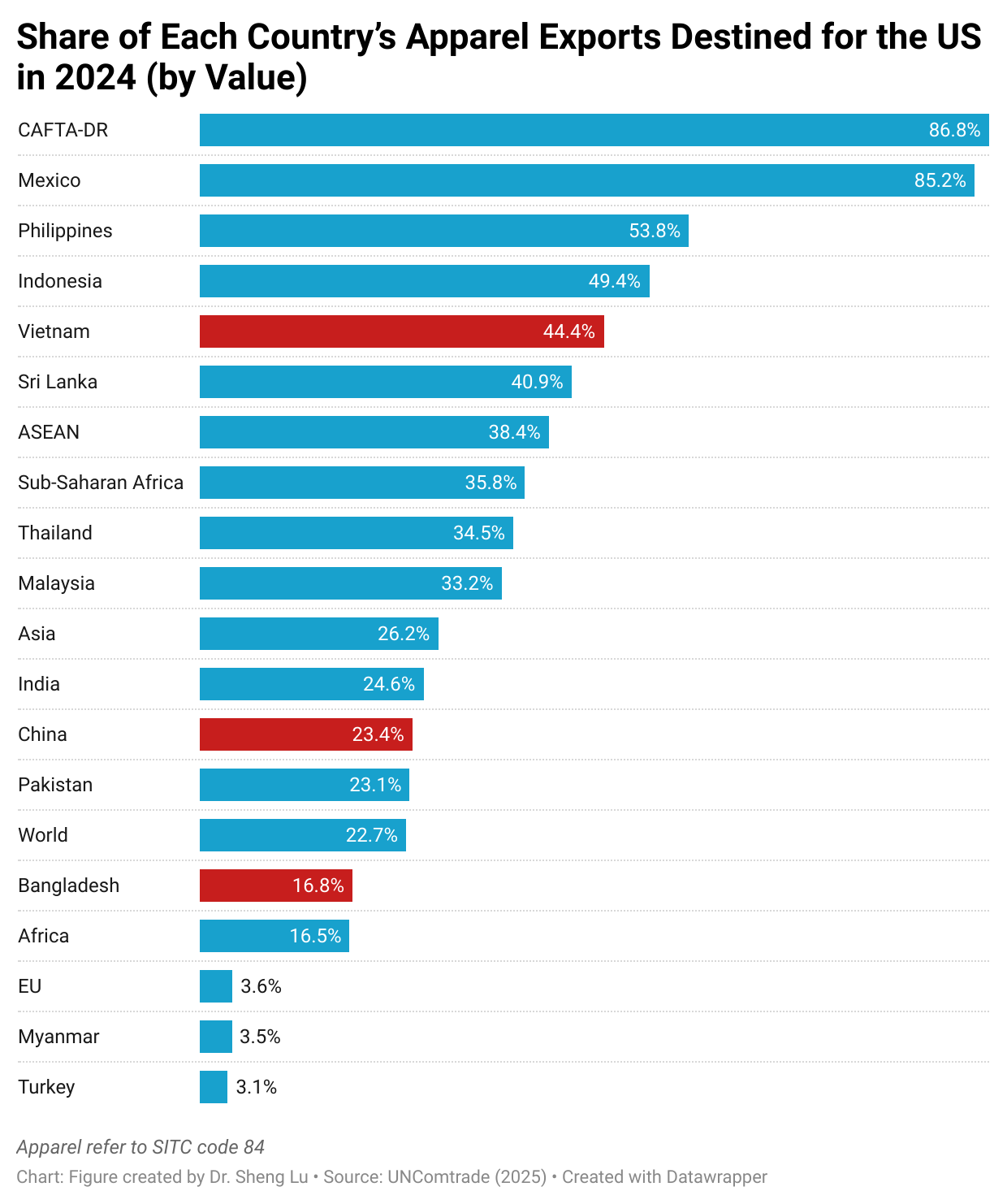
Meanwhile, data from the United Nations (UN Comtrade) show that Asian countries’ dependence on the U.S. market for apparel exports varied. In 2024, Vietnam, Sri Lanka, and ASEAN members exported about 40% of their apparel to the U.S., whereas the U.S. accounted for only about 20% of China’s and Bangladesh’s total apparel exports to the world. At the same time, the U.S. remained the single largest export market for Mexico and CAFTA-DR members, due to the integrated Western Hemisphere textile and apparel supply chain.

Fourth, no evidence shows that the current trading environment has benefited from near-shoring from the Western Hemisphere. On the contrary, measured in quantity, in February 2025, only 7.6% of U.S. apparel imports came from CAFTA-DR members, a notable drop from 9.6% a year ago. Similarly, Mexico accounted for 2.3% of U.S. apparel imports in February 2025, also lower than 2.4% a year earlier.

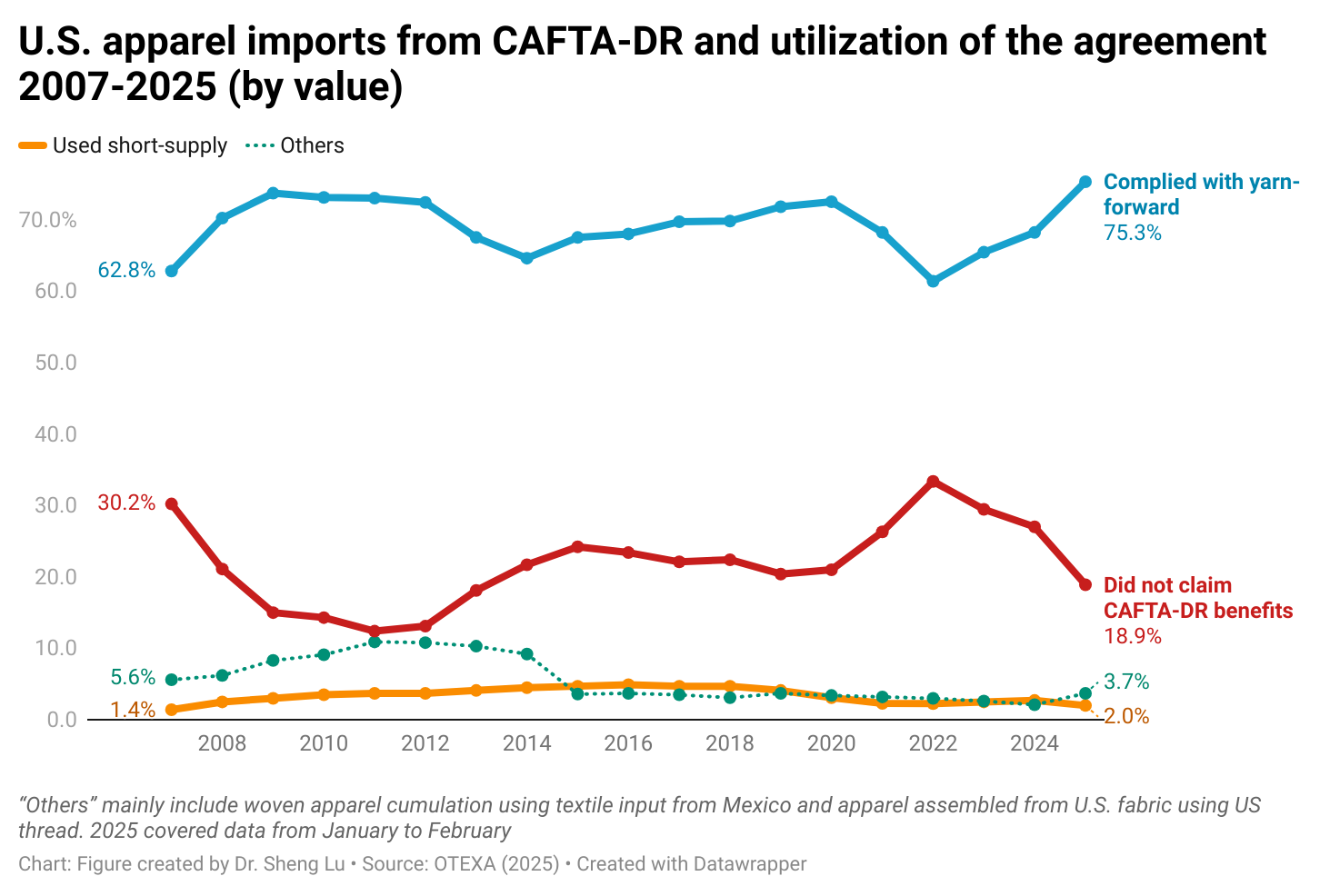
As a silver lining, the utilization rate of CAFTA-DR reached 81.1% in 2025 (January to February), much higher than 73.8% over the same period in 2024. About 75.3% of U.S. apparel imports from CAFTA-DR in 2025 (January to February) complied with the yarn-forward rules of origin compared to 67.4% a year ago. However, the use of “short-supply” remained low–only about 2.0% in 2025 so far.

by Dr. Sheng Lu

Related analysis: Lu, S. (2025). Patterns of U.S. Apparel Imports in 2024. Global Textile Academy, International Trade Centre, Geneva, Switzerland.

Patterns of US Apparel Imports (Updated June 2023)

Please also see the updated analysis: Patterns of US apparel imports in 2023 (Updated February 2024)

The latest OTEXA trade data suggests several US apparel import patterns:

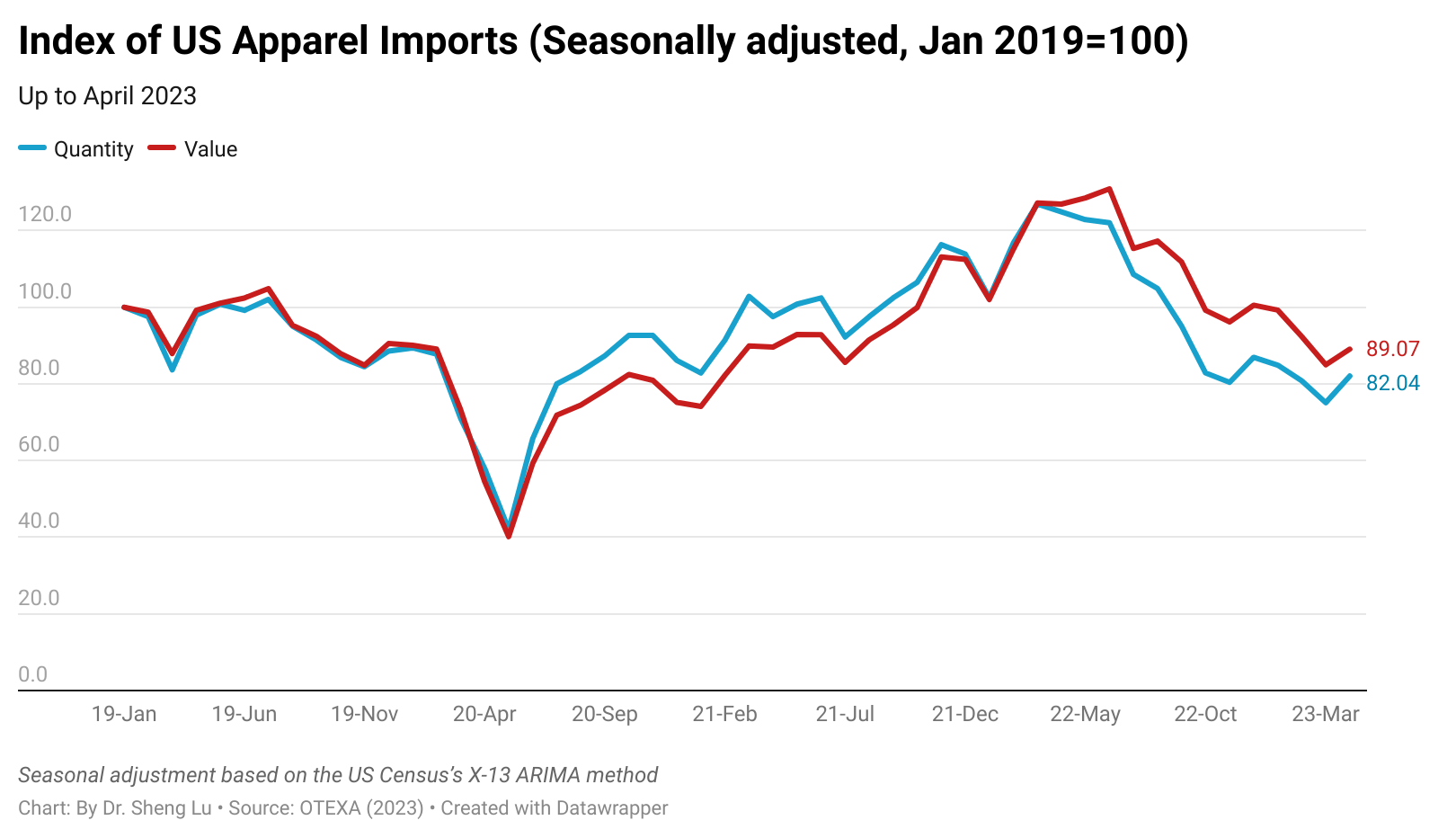
First, US apparel imports indicated a slow improvement in April 2023 but remained weak this year. For example, measured in quantity, US apparel imports fell by 33.9% in April 2023 from a year ago, but it was less significant than in March (i.e., down 40.2% YoY*). Likewise, measured in value, US apparel imports fell by 29.3% YoY in April 2023, which improved from a 32.7% YoY decline in March 2023. (*YoY: Year-over-year)

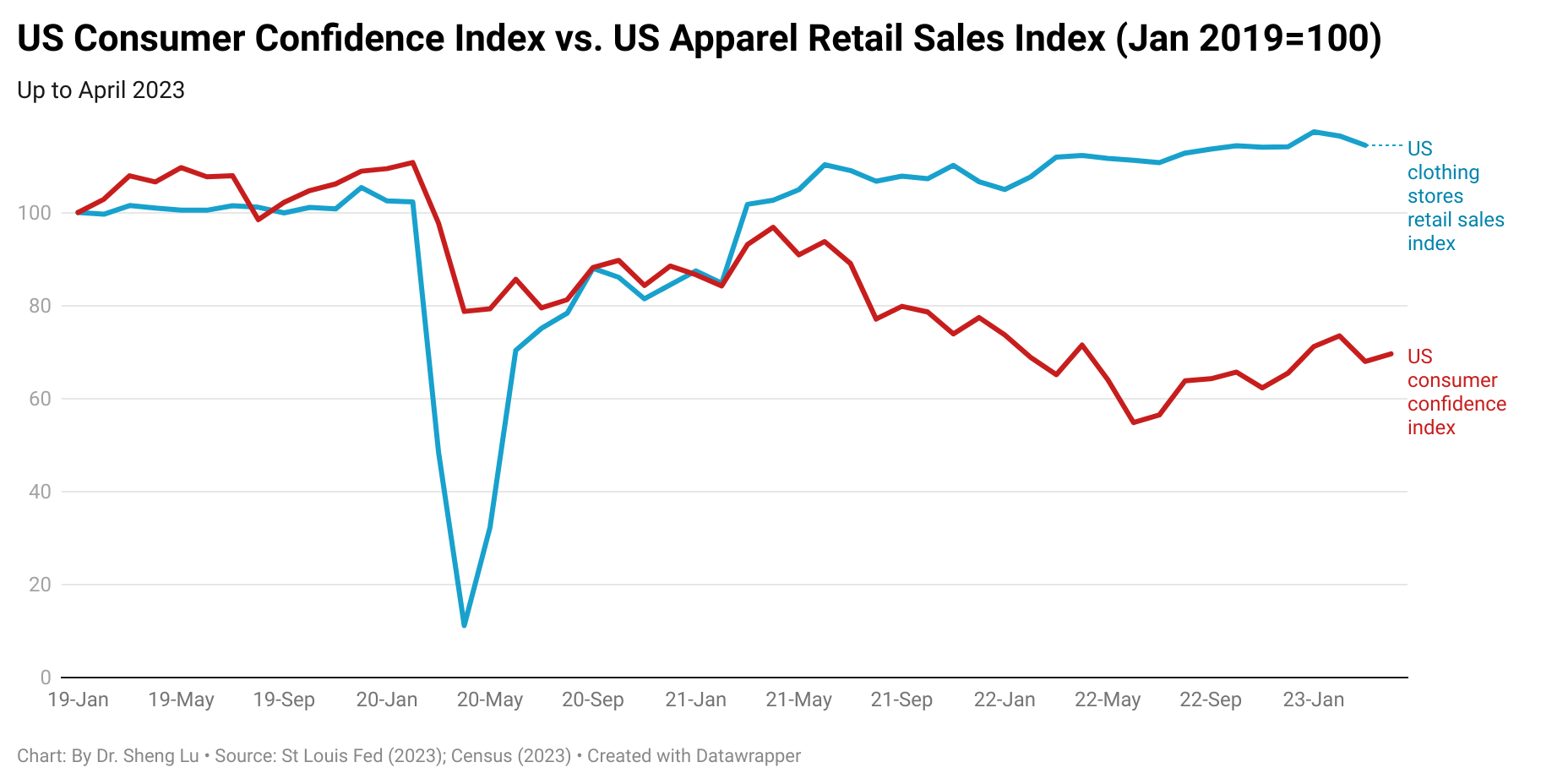
Overall, the shrinking US apparel import volume reflected the headwinds in the US economy and consumers’ hesitancy to purchase clothing amid financial uncertainties and high inflation. Recent economic indicators also present a mixed picture of the US economy’s growth trajectory. For example, while the US consumer confidence index slightly went up from 68.0 in March to 69.6 in April 2023 (January 2019=100), the advanced clothing store sales index in April fell to 115.6 (Jan 2019=100), the lowest so far in 2023 (e.g., was 120.6 in January 2023). However, since summer is traditionally a peak season for clothing sales, followed by events like back-to-school shopping, there remains hope that US apparel imports may experience a slight recovery at some point in the second half of the year.

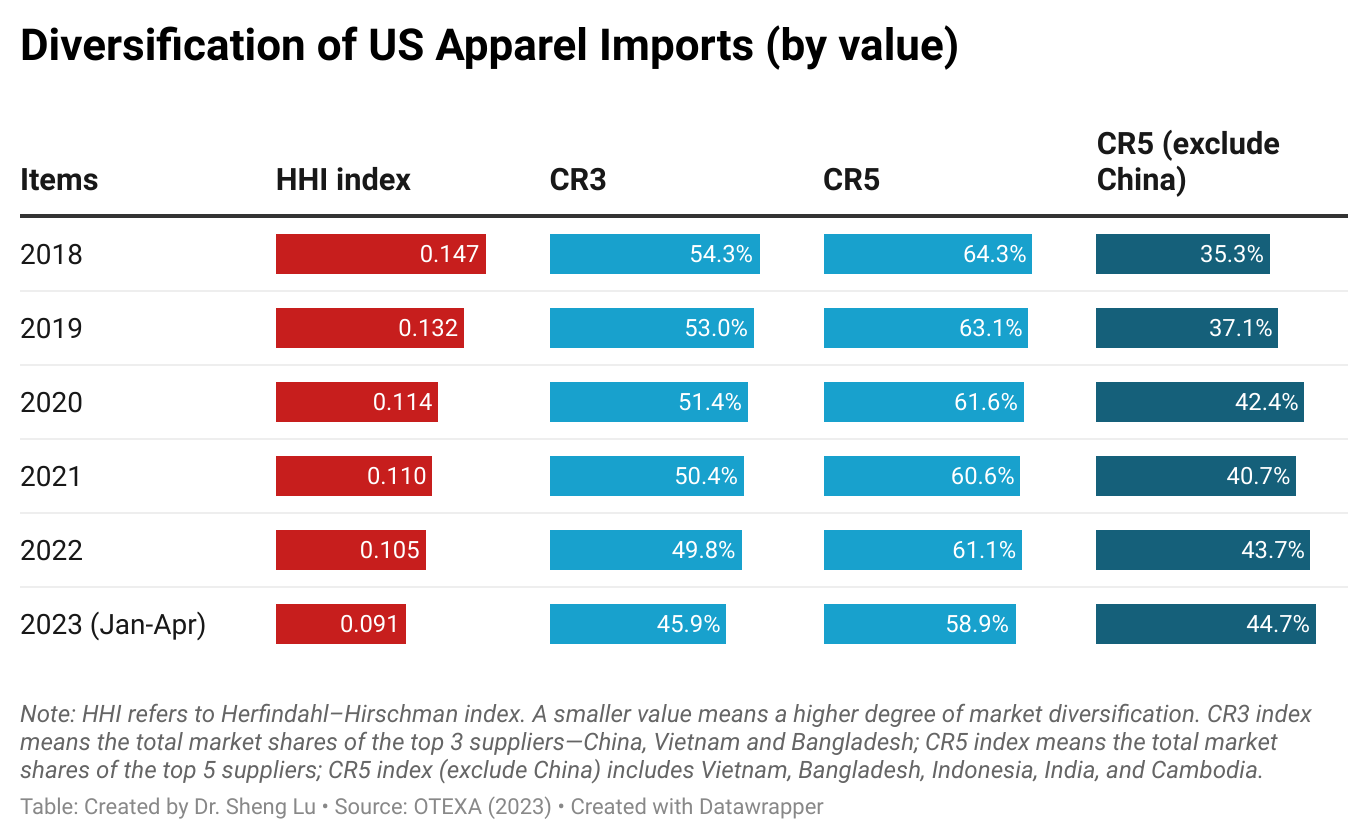
Second, trade data suggested that US apparel imports came from more diverse sources. For example, the Herfindahl–Hirschman index (HHI) fell below 0.1 in the first four months of 2023. Likewise, the market shares of the five largest suppliers (CS5) fell below 60% for the first time since 2018. The result suggested that leveraging sourcing diversification is a prevalent strategy among US fashion companies to mitigate supply chain risks and address market uncertainties.

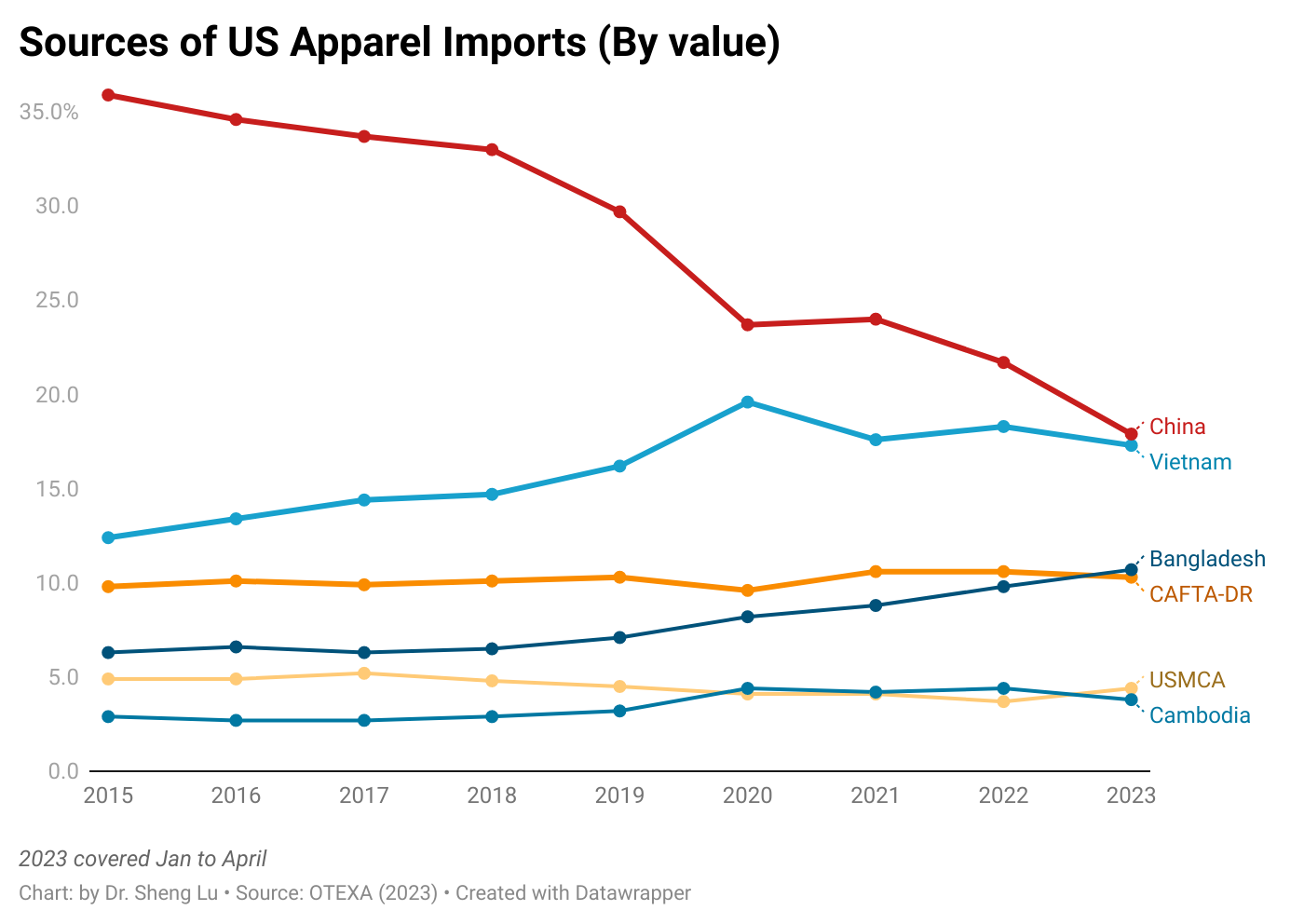
Third, US fashion companies are serious and eager to further reduce their “China exposure.” Although China remained the top apparel supplier to the US, its market share fell to a new low of 17.9% in value and 30.6% in quantity in the first four months of 2023. Notably, for the first time in decades, less than 10% of US cotton apparel imports came from China in March/April 2023, revealing the significant impact of the Uyghur Forced Labor Prevention Act (UFLPA) on US fashion companies’ China sourcing strategies.

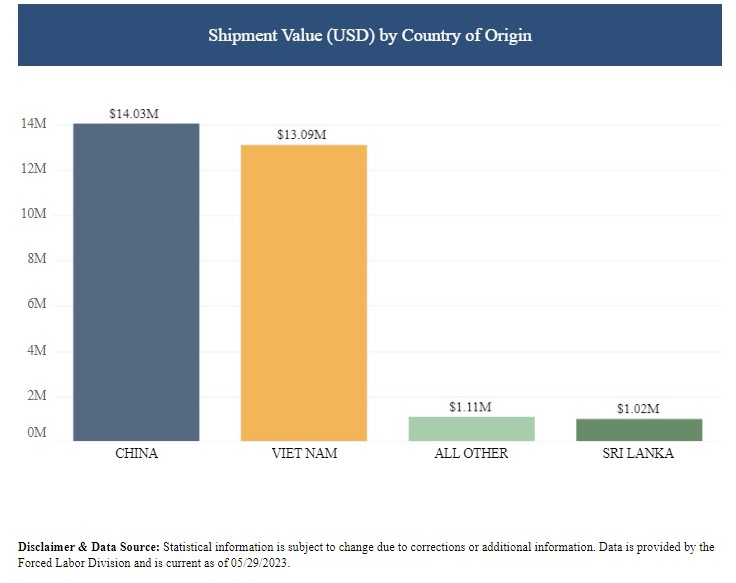
Related, US fashion companies appear to be increasingly cautious about sourcing apparel from Vietnam as its supply chain is too exposed to China, raising concerns about forced labor risks. In value, Vietnam accounted for 17.3% of US apparel imports in the first four months of 2023, down from 18.6% a year ago. Notably, almost the same amount of Vietnam’s textile and apparel products were subject to the CBP’s UFLPA investigation as China in FY2023.

CBP UFLPA enforcement statistics—FY2023—Apparel, Footwear and Textiles—All investigated (denied+ pending+released) see https://www.cbp.gov/newsroom/stats/trade/uyghur-forced-labor-prevention-act-statistics

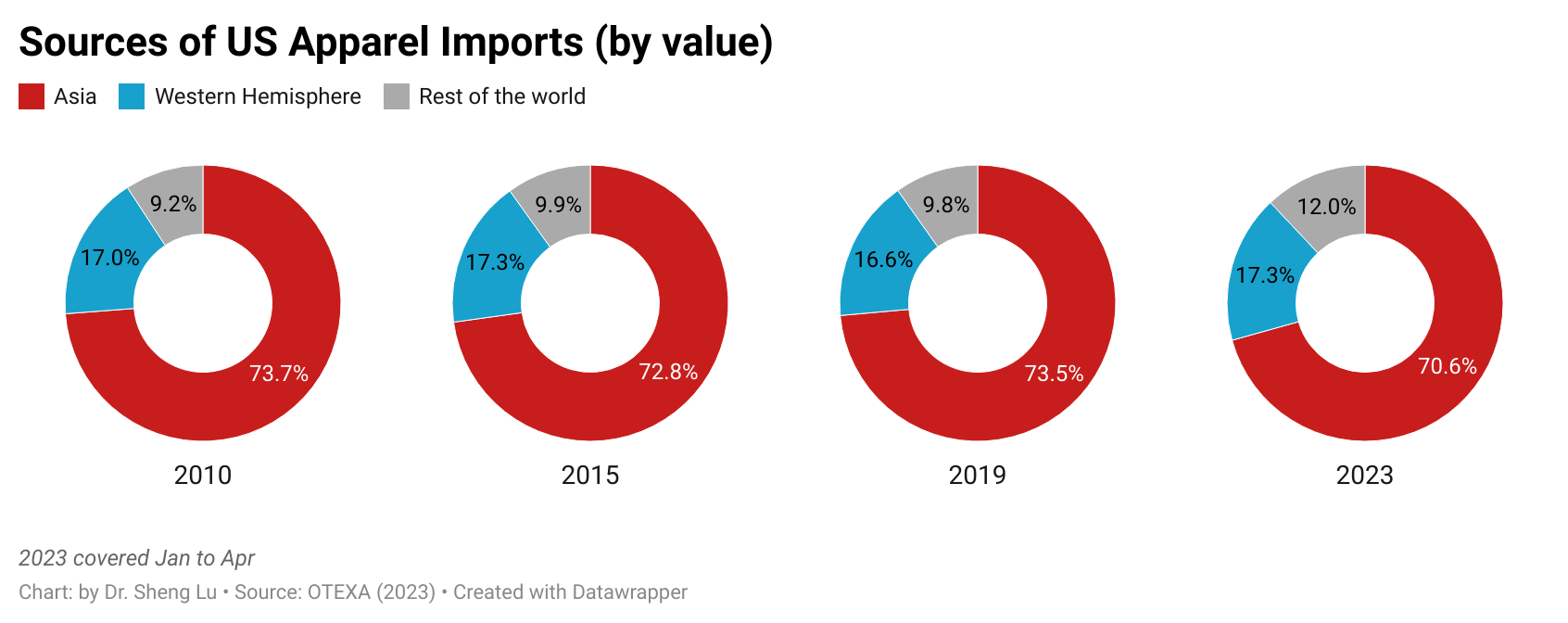
Fourth, large-scale Asian countries benefited the most as US fashion companies looking for China’s alternatives. Specifically, measured in value, about 70.6% of US apparel imports came from Asia in the first four months of 2023, down from 74.9% in 2022. However, the five largest apparel exporting countries in Asia other than China (i.e., Vietnam, Bangladesh, Indonesia, India, and Cambodia) accounted for 44.7% of US apparel imports in the first four months of 2023, a new high since 2018 (i.e., was 35.3%). These countries are among the most popular “alternatives to China” because of their balanced performance regarding production capacity, cost, flexibility, and compliance risks.

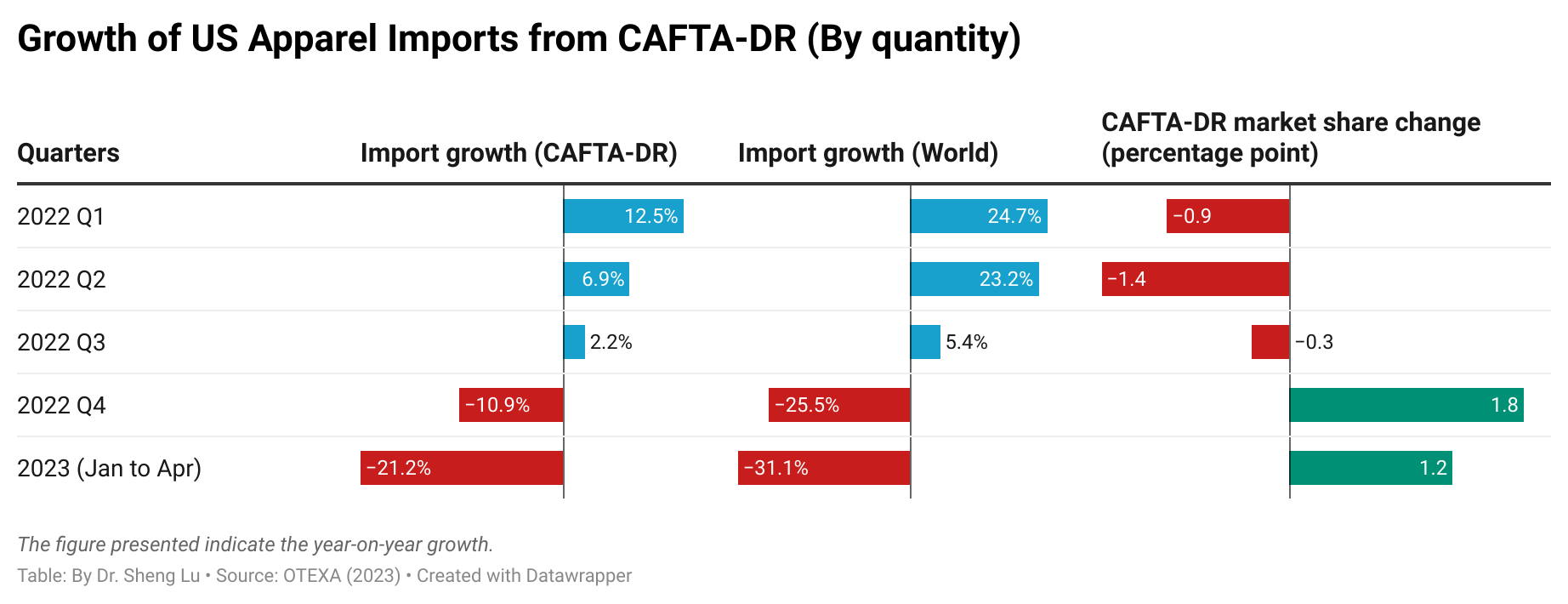
Fifth, US fashion companies are also actively exploring new near-shoring opportunities from the Western Hemisphere. For example, about 17.3% of US apparel imports came from Western Hemisphere countries in the first four months of 2023, up from 15.6% in 2023. That being said, measured in quantity, US apparel imports from Mexico and CAFTA-DR members fell by 13.0% and 21.2% in the first four months of 2023 from a year ago due to the struggling US economy. It will be interesting to see whether CAFTA-DR and Mexico can keep or enhance their market shares when the US import demand recovers.

By Sheng Lu

Outlook 2023– Key Issues to Shape Apparel Sourcing and Trade

In December 2022, Just-Style consulted a panel of industry experts and scholars in its Outlook 2023–what’s next for apparel sourcing briefing. Below is my contribution to the report. All comments and suggestions are more than welcome!

2023 is likely another year full of challenges and opportunities for the global apparel industry.

First, the apparel industry may face a slowed world economy and weakened consumer demand in 2023. Apparel is a buyer-driven industry, meaning the sector’s volume of trade and production is highly sensitive to the macroeconomic environment. Amid hiking inflation, high energy costs, and retrenchment of global supply chains, leading international economic agencies, from the World Bank to the International Monetary Fund (IMF), unanimously predict a slowing economy worldwide in the new year. Likewise, the World Trade Organization (WTO) forecasts that the world merchandise trade will grow at around 1% in 2023, much lower than 3.5% in 2022. As estimated, the world apparel trade may marginally increase between 0.8% and 1.5% in the new year, the lowest since 2021. On the other hand, the falling demand may somewhat help reduce the rising sourcing cost pressure facing fashion companies in the new year.

Second, fashion brands and retailers will likely continue leveraging sourcing diversification and strengthening relationships with key vendors in response to the turbulent market environment. According to the 2022 fashion industry benchmarking study I conducted in collaboration with the US Fashion Industry Association (USFIA), nearly 40 percent of surveyed US fashion companies plan to “source from more countries and work with more suppliers” through 2024. Notably, “improving flexibility and reducing resourcing risks,” “reducing sourcing from China,” and “exploring near-sourcing opportunities” were among the top driving forces of fashion companies’ sourcing diversification strategies. Meanwhile, it is not common to see fashion companies optimize their supplier base and work with “fewer vendors.” For example, fashion companies increasingly prefer working with the so-called “super-vendors,” i.e., those suppliers with multiple-country manufacturing capability or can make textiles and apparel vertically, to achieve sourcing flexibility and agility. Hopefully, we could also see a more balanced supplier-importer relationship in the new year as more fashion companies recognize the value of “putting suppliers at the core.”

Third, improving sourcing sustainability and sourcing apparel products using sustainable textile materials will gain momentum in the new year. On the one hand, with growing expectations from stakeholders and pushed by new regulations, fashion companies will make additional efforts to develop a more sustainable, socially responsible, and transparent apparel supply chain. For example, more and more fashion brands and retailers have voluntarily begun releasing their supplier information to the public, such as factory names, locations, production functions, and compliance records. Also, new traceability technologies and closer collaboration with vendors enable fashion companies to understand their raw material suppliers much better than in the past. Notably, the rich supplier data will be new opportunities for fashion companies to optimize their existing supply chains and improve operational efficiency.

On the other hand, with consumers’ increasing interest in fashion sustainability and reducing the environmental impact of textile waste, fashion companies increasingly carry clothing made from recycled textile materials. My latest studies show that sourcing clothing made from recycled textile materials may help fashion companies achieve business benefits beyond the positive environmental impacts. For example, given the unique supply chain composition and production requirements, China appeared to play a less dominant role as a supplier of clothing made from recycled textile materials. Instead, in the US retail market, a substantial portion of such products was “Made in the USA” or came from emerging sourcing destinations in America (e.g., El Salvador, Nicaragua) and Africa (e.g., Tunisia and Morocco). In other words, sourcing clothing made from recycled textile materials could help fashion companies with several goals they have been trying to achieve, such as reducing dependence on sourcing from China, expanding near sourcing, and diversifying their sourcing base. Related, we are likely to see more public dialogue regarding how trade policy tools, such as preferential tariffs, may support fashion companies’ efforts to source more clothing using recycled or other eco-friendly textile materials.

Additionally, the debates on fashion companies’ China sourcing strategy and how to meaningfully expand near-sourcing could intensify in 2023. Regarding China, fashion companies’ top concerns and related public policy debates next year may include:

  • How to fully comply with the Uyghur Forced Labor Prevention Act (UFLPA) and reduce the forced labor risks in the supply chain?
  • What to do with Section 301 tariff actions against imports from China, including the tariff exclusion process?
  • How to reduce “China exposure” further in sourcing, especially regarding textile raw materials?
  • How should fashion companies respond and mitigate the business impacts of China’s shifting COVID policy and a new wave of COVID surge?
  • What contingency plan will be should the geopolitical tensions in the Asia-Pacific region directly affect shipping from the region?

Meanwhile, driven by various economic and non-economic factors, fashion companies will likely further explore ways to “bring the supply chain closer to home” in 2023. However, the near-shoring discussion will become ever more technical and detailed. For example, to expand near-shoring from the Western Hemisphere, more attention will be given to the impact of existing free trade agreements and their specific mechanisms (e.g., short supply in CAFTA-DR) on fashion companies’ sourcing practices. Even though we may not see many conventional free trade agreements newly launched, 2023 will be another busy year for textile and apparel trade policy deliberation, especially behind the scene and on exciting new topics.

By Sheng Lu

Discussion question: As we approach the middle of the year, why do you agree or disagree with any predictions in the outlook? Please share your thoughts.