New USITC Report: Apparel: Export Competitiveness of Certain Foreign Suppliers to the United States

The United States International Trade Commission (USITC) released its new fact-finding report examining the competitiveness of Bangladesh, Cambodia, India, Indonesia, and Pakistan as apparel suppliers to the United States. The study was conducted in 2024 based on input from secondary sources (e.g., trade statistics, public hearings, and desk studies) and fieldwork. Below are summaries of the key findings regarding apparel export competitiveness.

Factors that affect export competitiveness in the global apparel sector

One key issue the study explored is what factors affect a country’s apparel export competitiveness and how to become a preferred apparel sourcing base for U.S. fashion companies.
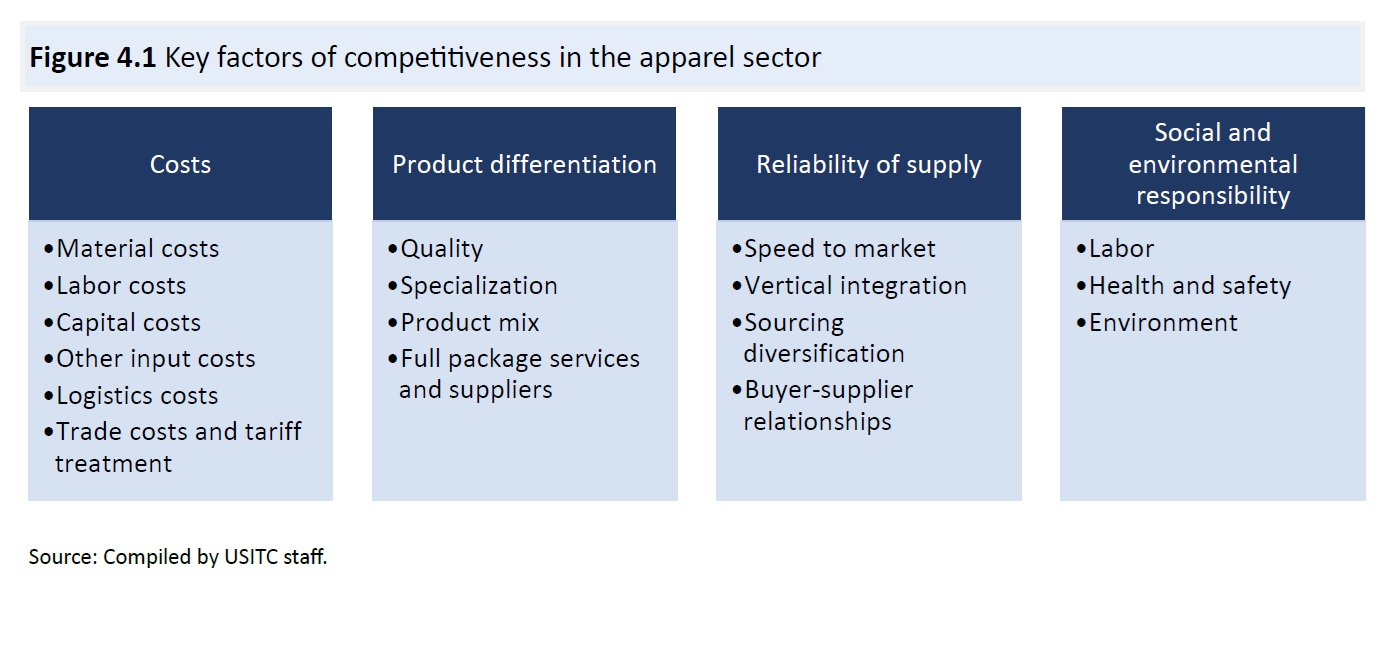
The studies suggest that four types of factors are most important (see the figure above). However, consistent with existing literature, the USITC report could not determine which factor is decisive in fashion companies’ apparel sourcing decisions. For example, the report found that:

  • cost—the price buyers pay their suppliers—plays a key role in sourcing decisions, although opinions vary regarding the importance of cost relative to other factors.
  • Depending on the product, target consumer, and identity of a brand or buyer, apparel buyers will place varying degrees of importance on product differentiation factors such as quality, specialization, product mix, and full package offerings, which include design services, finishing, packaging, and logistics.”
  • The emphasis on reliability has particularly grown in response to various recent disruptions to global apparel supply chains such as a global pandemic, geopolitical conflicts, and trade policy.”
  • Although emerging research suggests that compliance programs concerning wages, social inclusion, and climate change mitigation may increase competitiveness, buyers and brands remain divided on the topicthe relative importance, or “weight,” of such compliance in sourcing decisions remains a topic of active study and discussion within the industry.

Cost and export competitiveness

The USITC report highlighted the complex and nuanced relationship between “costs” and a country’s apparel export competitiveness. Several patterns are noteworthy:

  • Apparel is a buyer-driven industry, meaning “the global apparel supply chain gives buyers the power to negotiate based on price, which can push down prices and transfer greater costs to the supplier.”
  • The ability to produce textile raw materials locally can provide cost advantages in garment production—“Material inputs are widely recognized as the largest component in the cost of a final apparel product, and these prices are largely determined by the presence of a domestic textile industry or costs of importing textiles.”
  • It is difficult to compare wages across countries to measure labor competitiveness. In particular, low labor costs “do not reflect the true cost of doing business (e.g., via wage suppression)” in a country and “they can harm a country’s reputation for social compliance and negatively affect labor productivity.”

Buyer-supplier relationships in apparel sourcing

The USITC report revealed some positive developments in the buyer-supplier relationships involving U.S. fashion companies.

  • Fashion companies increasingly recognize the value of building long-term relationships with their vendors. Buyers emphasize that maintaining these relationships is a key factor in sourcing decisions, largely due to the cost and time involved in finding and establishing relationships with new suppliers.
  • Fashion companies’ efforts to improve supply chain transparency and traceability also need  “suppliers who will act in line with their brand’s values.”
  • Suppliers benefit from the long-term relationship, too. As the USITC report noted, some fashion companies guarantee suppliers a particular profit margin to ensure their continued operation. Additionally, some buyers gain a deep understanding of their suppliers’ cost structures, enabling them to calculate the costs of compliance with various standards and assist suppliers in reducing costs where possible.
  • Subcontracting is still regarded as necessary for the garment industry. As noted in the USITC report, apparel orders fluctuate seasonally, making it impractical for suppliers to hire additional permanent workers or invest in machinery for peak demand. To meet buyer expectations during busy periods, manufacturers often subcontract parts of orders and increase overtime or rely on temporary contract workers. This practice is seen as essential for ensuring a reliable supply of apparel.

Social and environmental responsibility and apparel sourcing

The USITC report acknowledged the growing importance of social and environmental compliance to a country’s apparel export competitiveness. However, the relationship remains complex.

  • The extent to which voluntary social and environmental responsibility programs and their associated auditing practices have influenced outcomes, especially regarding worker rights, remains unclear.
  • Suppliers report that the increased frequency of flooding and high temperatures due to climate change negatively affect their ability to meet labor and environmental standards.
  • Increased compliance with social and environmental standards raises supplier costs, negatively impacting their cost competitiveness. Many stakeholders note that while brands and consumers demand greater responsibility, this often does not come with a “price premium” for suppliers, who ultimately absorb these increased costs.

Note: The USITC report also evaluated the export competitiveness of each apparel-exporting country it examined, including their respective competitive advantages and issues to address.

Merchandising and Sourcing: FASH455 Exclusive Interview with Natalie Kaucic, Global Merchant for Dockers at Levi Strauss & Co.

About Natalie Kaucic

Natalie Kaucic is a Merchandising professional currently in the role of Global Merchant for Dockers Men’s Tops at Levi Strauss & Co. She graduated from the University of Delaware in 2019 with a Fashion Merchandising Degree and Business Admin minor. During her studies, she was awarded the Fashion Scholarship Fund scholarship, studied at John Cabot in Rome, participated in the Disney College Program, and was a leader for the Delaware Diplomats. Natalie’s research on the global market for sustainable apparel was published in Just-style, a leading fashion industry trade publication. Post university, Natalie started as an assistant at Minted as a Merchandiser, where she worked in the Wedding category and faced the adverse challenges of the wedding industry during COVID-19. Levi’s was her next endeavor where she started as an assistant, and has since been promoted to run the Dockers Men’s Tops Category for the Globe.

Disclaimer: The comments and opinions expressed below are solely my own and do not reflect the views or opinions of any company.

Sheng: What are your primary job responsibilities as a global merchant? What does a typical day or week look like for you? Which part of the job do you find most exciting? Were there any aspects of the position that surprised you after you started?

Natalie: My primary responsibility is to create a brand-right and consumer-focused product assortment. Under the covers, this looks like a vast variety of tasks that I do on a seasonal basis. I regularly listen and work with regional merchandising to understand their regional specific needs, collaborate with design on new product ideas and fabrics, and meet with product development to work on new fabric innovations and product costing. Every week looks dramatically different for me in my work. Sometimes, I’m heads down in assortment strategy; other weeks, I work on creating templates and calendars for process improvement.

What I find most exciting is seeing the product in person. Most Dockers Tops are not sold domestically, so it’s really fun to see a product you worked on in the wild! I am also grateful to be able to manage an assistant. Seeing things click for her and watching her succeed is incredibly motivating.

What surprised me the most was the number of different teams I work with, including planning, regional merchants, product development, marketing, styling, design, garment/fit development, copy, IT, analytics, sales, business operations, and e-commerce. Learning what everyone does and who to go to was the most significant learning curve and the biggest shock coming into my role.

Sheng: Based on your observation and experience, how do the merchandising, product development, and sourcing teams collaborate in a fashion apparel company? Could you explain their respective responsibilities and how they support one another?

Natalie: In my role, I have more direct contact with our product development team than the sourcing team. I work very closely with product development as they are the team that helps produce our product. They manage fabric & garment development, costing negotiations, and innovation development/testing. They also work through some more micro-sourcing strategies, for example, moving the production from one factory to another to get better duty rates. As a hypothetical example, we sell a poplin shirt primarily in Europe. Pretend we produce the shirt in India at a cost of $10/each. However, shipping it to Europe incurs a 40% import duty, bringing the cost of goods sold (COGS) to $14. If we could produce the shirt in Mexico, where the duty rate to Europe is only 5%, even if the production cost is higher—say $12—the overall cost to Europe would still be lower. There are endless complexities to this that I’m sure you will learn more from FASH455—topics like free trade agreements, yarn forward rules of origin, etc.

Sheng: Fashion companies need to balance various factors such as cost, quality, speed to market, and compliance risks when deciding where to source their apparel products. Could you share your experiences and reflections on managing these challenges in the real world?

Natalie: Below is an example of natural fibers and the cost challenge with cotton-forward apparel products.

Currently, linen is in high demand, but there isn’t enough crop to meet industry needs—it’s a classic case of supply and demand. Not only does this drive up costs (COGS), but it also complicates the process of securing raw materials. It’s easy to overlook that the apparel industry is fundamentally tied to agriculture, making it vulnerable to factors like bad weather, natural disasters, and inaccurate demand forecasting. These challenges force us to make critical decisions. With rising garment costs, should the company absorb the expense to keep prices steady for consumers? Our product development team might ask if we need to pre-book fibers to lock in pricing—when is the right time to do that, and how much should we purchase?

This isn’t a new challenge. For example, cotton, our primary raw material for clothing, fluctuates in price like oil, making agility in sourcing essential!

Sheng: Studies show that consumers want to see more “sustainable apparel products” in stores. How are fashion companies responding to this demand? What opportunities and challenges does this trend present for fashion companies’ business operations, especially in merchandising, supply chain, and sourcing?

Natalie: This is such a complicated question. I think about this often as I am personally really passionate about this topic!

In my day-to-day work, I focus on sustainable fibers, as the fabric content of a garment is something I can directly influence. Working on a global scale, I collaborate with regions worldwide, each of which—along with their retailers—has different values regarding sustainable products. Europe, for instance, is relatively ahead of the US in sustainability and often requires a certain percentage of sustainable fibers (e.g., organic cotton, recycled cotton) in our products. In Europe, items using 100% organic cotton hold significant value and can command a higher price in stores such as Galeries Lafayette or Zalando. However, not all retailers and consumers globally share the same commitment to sustainability. In some cases, we may need to use synthetics for functional purposes, such as in activewear. In those instances, we prioritize using recycled polyester or nylon to meet our sustainability goals. Regardless of the consumer or price point, our goal is to integrate sustainability at every level and for every product.

One challenge I find particularly interesting is working with “recycled cotton.” As you may know, recycling cotton typically involves breaking down the fibers, which shortens and weakens them. Because of this, there’s usually a limit to how much recycled cotton can be used before fabric quality is affected. That’s why you often see recycled cotton blended with virgin cotton in the same garment. However, newer recycling methods that aim to preserve the staple length are emerging, offering hope for improvements as the technology becomes more mature and accessible.

Ultimately, heavy consumption, regardless of the fabric being recycled or organic, isn’t truly sustainable. The focus should be on choosing pieces you love and investing in items that are made to last.

Sheng: Are there any other major trends in the fashion industry that we should closely monitor in the next 1-3 years?

Natalie: In the next 1-3 years, I’m eager to see what AI-driven tools will be introduced to assist merchants in making smarter, data-backed decisions. In merchandising, we are constantly trying to predict the future. A lot of research and data analysis go into decision making,  but also a big handful of going with your gut. Will AI be able to help us find trends in the past that can better help us make decisions for the future?

It’s not exactly a trend, but I’m really curious about the future of fast fashion giants over the next decade. With growing interest in sustainability and new regulations emerging from Europe, will we eventually see a decline in these dominant players, or will demand for fast, cheap apparel always persist?

Sheng: Last but not least, is there anything you learned from FASH455 or other FASH courses that you find particularly relevant and helpful in your career? What advice would you offer current students preparing for a career in the fashion apparel industry?

Natalie: I felt really prepared coming out of the FASH program for my corporate job. I picked this degree, as I’m sure many have because it combined the necessary key concepts of a business degree with the skills and knowledge to build a career in apparel. I think the classes I reference the most in my day-to-day life are product development classes, textile classes, and apparel buying. As a merchant, I need to be able to talk about fabric types with designers, cost engineering with product developers, and financial metrics with planners. FASH455 was one of my favorite classes because sourcing, trade, geopolitics, and policy constantly pull the strings behind the scenes in the apparel sector. FASH455 gives you insight into how these factors create ripples in the apparel sector.

When it comes to advice, it’s tried and true: network! Talk to teachers, reach out to alumni, sign up for the UD Job Shadow Program, and talk to the career center. There are so many services to take advantage of while at UD. Other than networking, I would highly recommend steering the subjects of your papers to companies and topics you are interested in. I worked on a few reports about Levi Strauss & Co., which confirmed it as a target company for me and helped me succeed in the interview process.

Lastly, be flexible! You might come in, as I did, thinking you want to be a buyer, only to realize it’s not the best fit. Or, you could start with greeting cards and stationery merchandising and pivot to apparel. Or even move out of apparel entirely! Nothing is set in stone, and that’s both the most stressful yet reassuring lesson I’ve learned since graduating.

–The End–

New Study: PVH Corporation’s Evolving Apparel Sourcing Strategies (updated Septmeber 2024)

PVH Corporation (PVH), which owns well-known brands including Calvin Klein, Tommy Hilfiger, Van Heusen, Arrow, and Izod, is one of the largest US fashion companies with nearly $9.2 billion in sales revenues in 2022.

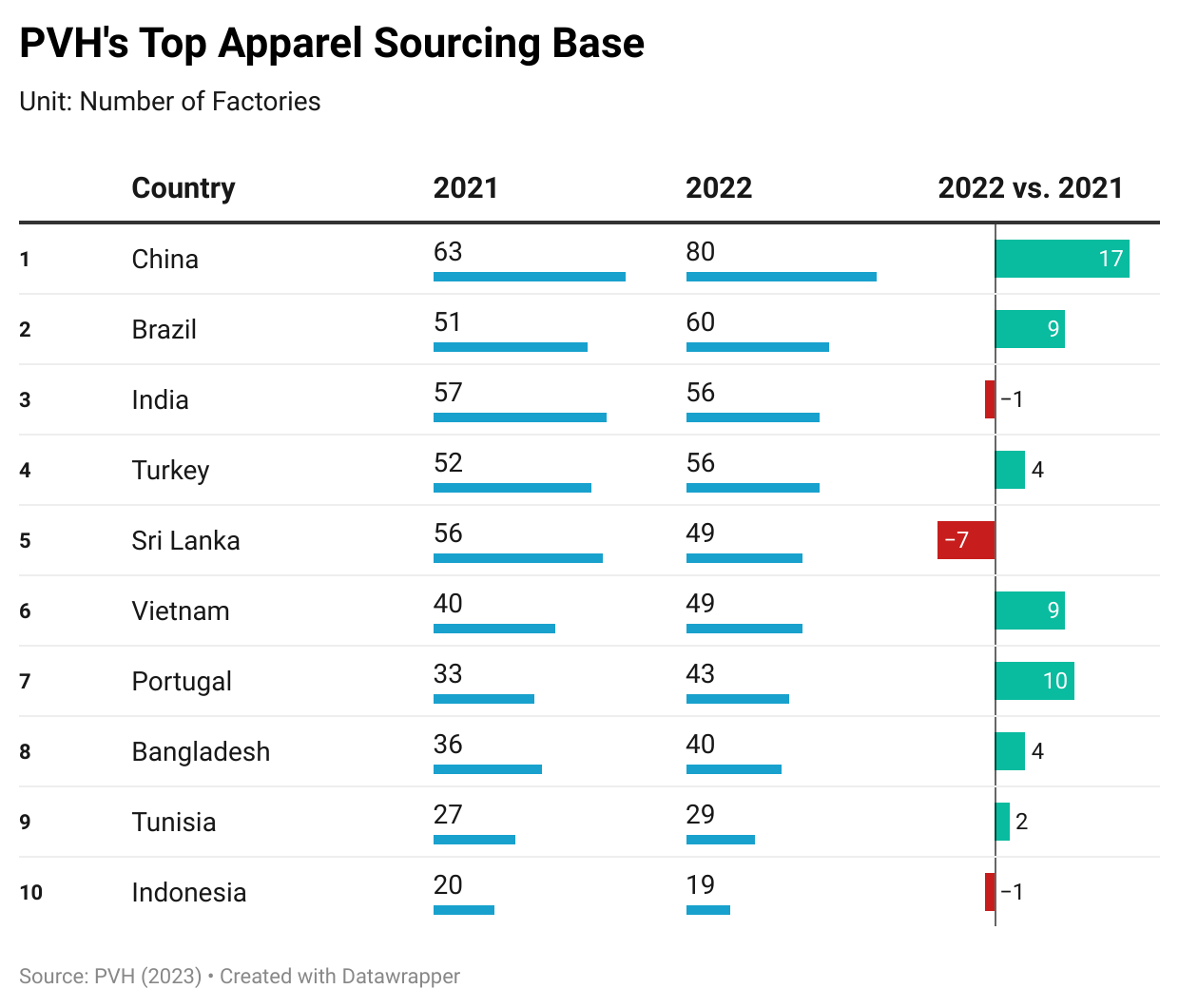
By leveraging PVH’s publically released factory lists, this article analyzes the company’s detailed sourcing strategies and changes from 2021 to 2022. Key findings:

Trend 1: PVH adopts a diverse apparel sourcing base and continues to work with more vendors. Specifically, in 2022, PVH sourced apparel from as many as 37 countries in Asia, Europe, America, the Middle East, and Africa, the same as in 2021. Despite not expanding the number of countries it sources from, PVH increased its total number of vendors from 503 in 2021 to 553 in 2022, highlighting the company’s ongoing commitment to diversifying its sourcing base.

Trend 2: Asia is PVH’s dominant sourcing base for finished garments and textile raw materials.

Specifically, about 56.2% of PVH’s apparel suppliers were Asia-based in 2022, followed by the EU (20.3%). Compared with a year ago, PVH even added twenty new Asia-based factories to its supplier list in 2022, suggesting no intention of reducing sourcing from the region. Moreover, From 2021 to 2022, as many as 83% of PVH’s raw material suppliers were Asia-based, far exceeding any other regions.

Trend 3: PVH’s China sourcing strategies are evolving and more complicated than simply “reducing China exposure.”

  • First, PVH continued to work with MORE Chinese factories. Specifically, between 2021 and 2022, PVH added 17 Chinese factories to its apparel supplier list, more than other countries. However, the expansion could be because of PVH’s growing sales in China.
  • Second, PVH’s garment factories in China are smaller than their peers in other Asian countries. For example, in 2022, most PVH’s contracted garment factories in top Asian supplying countries, such as Bangladesh (87.5%), Vietnam (63.3%), and Sri Lanka (65.3%), had more than 1,000 workers. In comparison, only 11.3% of PVH’s Chinese vendors had 1,000 workers, and more than 62.5% had fewer than 500 workers. The result suggests that PVH treats China as an apparel sourcing base for flexibility and agility, particularly those orders that may include a greater variety of products in relatively smaller quantities.
  • Further, PVH often priced apparel “Made in China” higher than those sourced from the rest of Asia.

Trend 4: PVH actively used “emerging” sourcing destinations outside Asia. Other than those top Asian suppliers, PVH’s apparel sourcing base includes several countries in America, the EU, and Africa that deserve more attention, including Portugal, Brazil, Tunisia, and Turkey. Overall, PVH sourced from these countries for various reasons, from serving local consumers, seeking sourcing flexibility, accessing raw materials, and lowering sourcing costs.

by Sheng Lu and Ally Botwinick

Further reading: Lu, Sheng & Botwinick, Ally (2023). US fashion companies’ evolving sourcing strategies – a PVH case study. Just-Style. Retrieved from https://www.just-style.com/features/us-fashion-companies-evolving-sourcing-strategies-a-pvh-case-study/

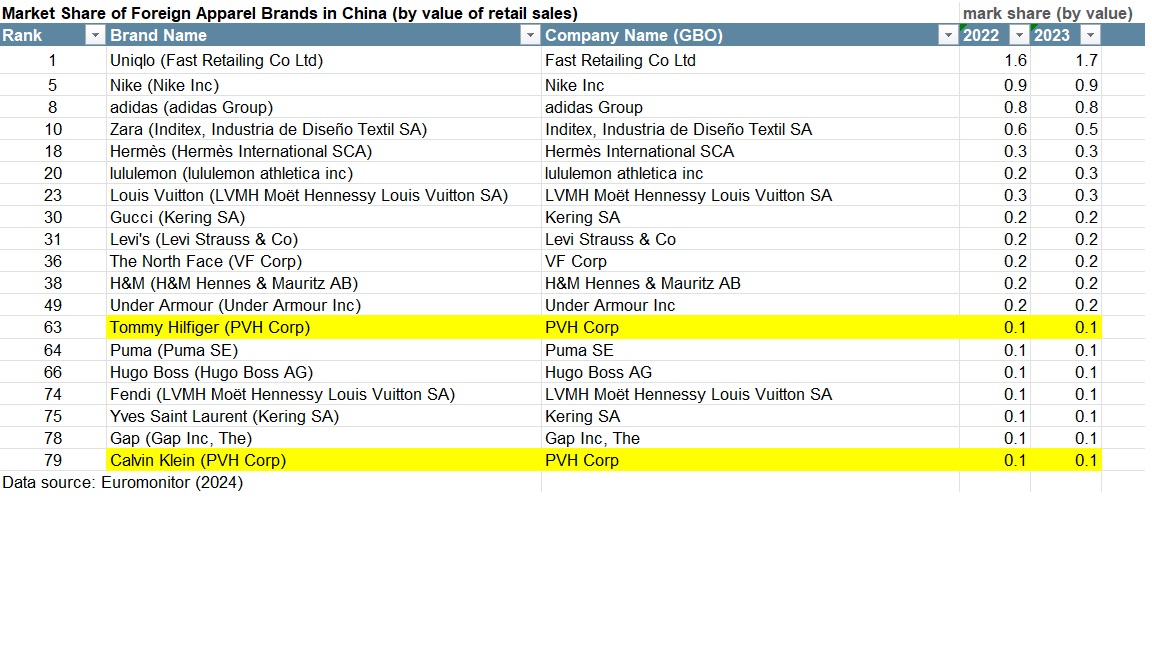
PVH’s market shares in the China apparel retail market

(discussion for this post is closed)

FASH455 Exclusive Interview with Michael Lambert, Executive Director of Global Trade and Compliance of Urban Outfitters, about Trade Compliance and Global Apparel Sourcing

About Michael Lambert

Michael Lambert is the Executive Director of Global Trade and Compliance at Urban Outfitters (URBN). He also serves as the Vice Chair of the Board of Directors of the United States Fashion Industry Association (USFIA).

Michael has spent over 30 years in the retail fashion business, primarily in the import/export and Customs compliance area. At URBN, Michael is responsible for Customs, Social, Vendor and Regulatory Compliance. Urban Outfitters has a global footprint, with stores in the U.S., Canada, Europe and the United Kingdom.  Urban Outfitters designs and develops products throughout the world, working with a core vendor base across more than thirty countries. Prior to Urban Outfitters, Michael spent nine years with Limited Brands as head of their Import Planning department.  He spent his last two years with Limited Brands in London, setting up Compliance activity for Limited Brands as they expanded overseas.

Michael has been a Licensed Customs Broker since 1998 and is a graduate of Pennsylvania State University, with a Bachelor of Arts in International Politics and Foreign Service.

About Emilie Delaye (Moderator)

Emilie Delaye is a 2024 UD entrepreneurship graduate and an incoming UD graduate student in fashion and apparel studies. Emilie is the recipient of the 2024 UD Alumni Association Alexander J. Taylor Sr. Awards for Outstanding Seniors.

FASH455 Learning Activity: Exploring US Import Tariffs

Part I: Watch the following two videos on tariffs—one from an economic perspective and the other from a political perspective.

Part II: Check the respective tariff rate for the following products by copying and pasting the HS code into the search box

  • Product 1 (men’s and boys’ overcoat, cotton): HS code 6101.20.00
  • Product 2 (cotton): HS code 5201.00.05
  • Product 3 (smartphone): HS code 8517.13.00

Discussion question: Based on the videos and your findings, how would you explain the differences in tariff rates for these products? Do you think tariffs are still necessary in the 21st century?

Additional readings (RT≠ endorsement):

FASH455 Learning Activity: Exploring US Trade Patterns

(note: please click the section title to access interactive data)

Part 1: U.S. Goods Trade by Industry Sectors and Trading Partners (Source: USITC Trade Shifts 2024 Report)

  • Observe the top U.S. export and import trading partners for goods, noting any changing patterns
  • Observe the top U.S. export and import product sectors, noting any changing patterns
  • Do the trade patterns overall align with the trade theories discussed in class?
  • Should it be a concern that textiles and apparel are NOT among the top US exports of goods?

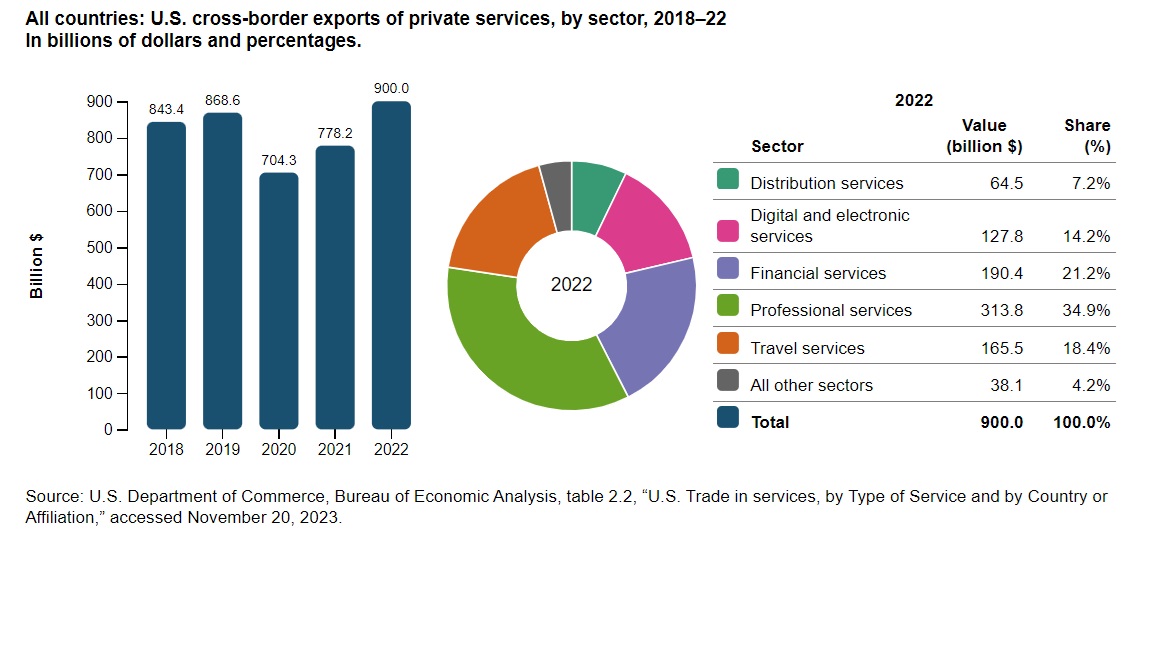
Part 2: U.S. Trade in Services (Source: USITC Recent Trends in US Services Trade 2024 Report)

  • Observe the sectors covered by trade in services
  • Compare the value of US service exports and imports
  • Observe the trading partners of US services trade
  • Why do politicians often focus more on trade in goods rather than services? Should they?

Part 3 (Optional): Revealed Comparative Advantage Index (Source: UNCTAD)

Note: The revealed comparative advantage (RCA) index measures a country’s relative export performance of a particular product compared to the world average. It helps identify sectors in which a country holds a competitive edge in international trade. RCA =(Country’s exports of product X/Country’s total exports)/(World exports of product X/World total exports).

  • RCA > 1: A value greater than 1 indicates that the country has a revealed comparative advantage in the product, meaning the product has a higher export share in the country’s portfolio compared to the global average. This suggests the country is more competitive in exporting that product relative to the rest of the world.
  • RCA < 1: A value less than 1 means the country has a revealed comparative disadvantage in that product. It indicates that the country is less competitive in exporting that product compared to the global average.

Observe the sectors in which the U.S. enjoyed a revealed comparative advantage (i.e., RCA > 1) in 2023. How does this compare with Bangladesh? What is your explanation for the observed differences?​