Textile and Apparel Industry Stakeholders Comment on Trump’s “Reciprocal Tariffs”

Background: Pursuant to the America First Trade Policy Presidential Memorandum and the Presidential Memorandum on Reciprocal Trade and Tariffs, the Office of the U.S. Trade Representative (USTR) solicited public comments on the proposed “Reciprocal Tariffs” from February to March 2025. Below is a summary of comments submitted by stakeholders in the textile and apparel industry.

The United States Fashion Industry Association (USFIA), whose members include many leading U.S. fashion brands and retailers, opposes raising tariffs and argues for lowering tariffs on textile and apparel products where the U.S. imposes a higher tariff rate than its trading partners. According to USFIA, higher tariffs on apparel and textiles would disproportionately impact lower-income U.S. consumers:

  • “A true ‘reciprocal’ trade policy would lower tariffs on the products of trading partners that maintain lower tariffs than the United States.”
  • “We recommend that the most successful policy to achieve trade reciprocity would be for the United States to lower the tariff rates of products for which our trading partners apply lower tariff rates. For consumer products such as textiles and apparel, this would help combat inflation and assist consumers who struggle to afford basic necessities.”​

The American Apparel and Footwear Association (AAFA), representing U.S.-based “apparel, footwear and other sewn products companies”, opposes broad tariffs on apparel, footwear, and textiles. It is of concern to AAFA that the apparel and footwear sector already faces some of the highest tariffs in the U.S., and tariffs are a “hidden, regressive tax that falls harder on lower-income Americans.” Even worse, AAFA worries that higher tariffs would benefit “Illicit traders” and tariff threats would undermine the regional textile and apparel supply chain in the Western Hemisphere:

  • “Illicit traders are better positioned to escape paying proper duties or any duties at all. Higher tariffs end up maximizing the profit and market access they can gain at the expense of legitimate shippers.”
  • “Recent tariff threats particularly on our neighbors, Canada and Mexico, are especially concerning as the U.S.-Mexico-Canada Agreement (USMCA) review is about to begin. Canada is a key export market for U.S. made apparel and footwear while Mexico is a major source of a wide variety of apparel, including denim imports. Not only does the threat of tariffs cast uncertainty but it also undermines future investment and nearshoring opportunities.”

National Council of Textile Organizations (NCTO), representing U.S. textile mills, supports targeted tariffs against “unfair trade” but opposes penalties on Western Hemisphere trading partners:

  • “We strongly recommend that the Trump administration take a targeted approach to raise tariffs on specific countries that disrupt markets through the use of blatantly unfair and often illegal trade practices, while simultaneously operating in home markets that remain mostly closed to our products.”
  • “We must preserve and strengthen existing trade relationships with U.S. free trade agreement (FTA) countries in the Western Hemisphere that offer valuable markets for U.S.-made textiles.”
  • “We strongly believe that reciprocity should not mean a race to the bottom with lower tariffs on imports from other countries into our market. Rather, reciprocity should hold bad actors accountable for systemic unfair trade practices that have hurt domestic manufacturers.”
  • “We urge the Trump administration to take several actions immediately to make textile and apparel trade more reciprocal and to support the domestic industry…Aggressively raise tariffs on imports of textile and apparel products from China and other trade predators in Asia…Close the de minimis loophole for all countries…”

SMART (Secondary Materials and Recycled Textiles Association), representing businesses engaged in the collection, reuse, conversion, and recycling of textiles and other secondary materials, advocates for addressing trade barriers that affect U.S. secondhand clothing exports. SMART also opposes CAFTA-DR members using the “yarn-forward” rules of origin for imports of secondhand clothing (HTS 6309) from the U.S. under the agreement.

National Retail Federation (NRF), generally representing all types of U.S. retailers, opposes broad-based tariffs, arguing that they increase consumer costs, disrupt supply chains, and hurt retailers. NRF supports targeted measures against unfair trade practices but warns against policies that could lead to unnecessary retaliation from U.S. trading partners.

  • “We believe that high, across-the-board tariffs will undermine the economic growth signaled by the other features of the president’s agenda and have lasting negative consequences for consumers and workers. If the goal of reciprocal tariffs is to enter into negotiations to remove barriers to trade, this will unlock economic growth and reduce prices for consumers. However, if the goal is primarily to raise tariffs, then the opposite is true.”
  • “There are plenty of areas where U.S. tariffs are actually much higher than our trading partners, for example, especially when you look at U.S. tariffs on low value apparel and footwear. These regressive tariffs hurt low- and middle-income consumers the most.”
  • “The administration should also consider the potential for retaliation from our trading partners on any reciprocal tariffs that are established. We are already witnessing our trading partners respond to strong tariff actions by the administration. This will further impact our farmers and manufacturers who are looking to gain access to those foreign markets.”
  • “We need to focus on key high-priority sectors where it makes sense to return manufacturing home or areas where there is strategic competition. High tariffs on everyday household goods, which could raise consumer prices, should not be the focus of such a policy.”

Parkdale Mills, a leading producer of spun yarns based in North Carolina, expressed concerns about “unfair trade practices” from its Asian competitors. Parkadel also calls for closing the “De minimis” loophole.

  • Each week millions of pounds of product move through our free trade agreement partner countries illegally causing significant damage to the domestic textile industry. Non qualifying goods are shipped using false HTS codes, False Certificates of Origin, and illegal inputs to circumvent the required duty for US entry.”
  • “Section 321 De Minimis (imports)…are shipped into the US each day without inspection or any type of customs enforcement causing millions in lost revenue and again, thousands of lost jobs. This loophole must be closed.”

FASH455 Exclusive Interview with Ally Botwinick, Textile Assistant at The Kasper Group, about Textile Raw material Sourcing and Management

About Ally Botwinick

Hi! My name is Ally Botwinick, and I am a University of Delaware alum who studied Fashion Merchandising and completed the 4+1 master’s program in Fashion and Apparel Studies. I am currently working as a Textile Assistant at The Kasper Group in NYC. The Kasper Group is a portfolio of global fashion brands such as Nine West, Anne Klein, Kasper, Le Suit, and Jones New York. I work on fabric sourcing and production for the Jones New York brand as well as denim fabrics for all brands within the Kasper Group.

Note: During her studies in the FASH 4+1 program, Ally participated in several research and experiential learning projects. She co-authored Explore PVH Corporation’s Evolving Apparel Sourcing Strategies, published in Just-style, a leading industry publication focusing on apparel trade and sourcing. Her master’s thesis, which examined US retailers’ merchandising strategies for clothing made from recycled textile materials, was published in the International Journal of Fashion Design, Technology, and Education. Ally was also a UD summer scholar and a key member of the FASH students team that helped Macy’s develop a vision of its sustainable apparel sourcing strategy (see featured UDaily story and Yahoo).  Additionally,  Ally was a policy intern for the American Apparel and Footwear Association (AAFA) in Washington, D.C. in the summer of 2022.

Disclaimer: The views expressed in this interview are those of Ally Botwinick and do not reflect the views or positions of her employer or any affiliated organizations.

Sheng: What are your main responsibilities as a textile assistant? What does a typical day look like? What aspects of the job do you find particularly interesting or unexpected before taking on the role?

Ally: My main responsibility as a Textile Assistant is to help buy and keep track of all fabric orders for Jones New York as well as denim for multiple brands within the Kasper Group. Jones New York has both a mainline division, which is sold at retailers such as Macy’s and Dillard’s, as well as an off-price division called Jones New York Signature which is sold at off-price retailers such as TJ Maxx, Marshall’s, Burlington, Ross, etc..

During a typical day, I communicate with textile mills/factories overseas about fabric approvals or rejections based on fabric color, quality, and hand feel. For each fabric order that we place, we have the mills submit fabric references to our New York office for review. Each morning, I process these submissions and work with my team to release comments to the mills. The color must match the color standard we send them at the beginning of production. The fabric quality must match the fabric standard that we approved upon booking the fabric.

We keep track of all these approvals and rejections in what is called a fabric WIP (work in progress) chart, where we keep track of each order for each season and division. This WIP chart includes key fabric information, price, production timelines, and fabric submit status, among other order details. Creating and updating these fabric WIPs is something I do continuously throughout the day as I receive updates from mills and factories.

I frequently work with cross-functional partners, like members of the design, production, costing, and color teams, and touch base about any changes to design boards, production schedules, costing, or color issues that may arise.

One of the most interesting aspects of the job is the number of teams that collaborate on a daily basis, especially when there are updates made to the fashion collection, such as changes to color names, production units, production schedules, fabric details, and costs.

Sheng: In general, what factors should be considered when selecting textile raw materials, such as fabrics, in product development and sourcing?

Ally:Some important factors to consider when selecting fabrics are hand feel (whether the fabric feels soft, dry, smooth, rough, etc…) and price.  We want to ensure the fabric provides comfort to the consumer and that it will drape well according to the garment design. We work very closely with the design and costing teams when sourcing fabrics as we must ensure fabrics are functional, stylish, on-brand, and meet margin goals.

We highly consider the fiber content as well. Fiber costs can be influenced by a multitude of factors, even including the weather or occurrence of natural disasters which can affect supply and demand. We also closely monitor cotton traceability as there are forced labor concerns with cotton grown in parts of China. We require each mill supplying fabrics made with cotton to submit a cotton traceability certificate for us to track the cotton’s origins. This way, we can ensure no cotton is being produced in association with forced labor.

Sheng: What are the main processes involved in selecting and sourcing textile raw materials like fabrics?

Ally:At my company, the Fabric Research & Development team is more involved in finding new fabrics, whereas my team is more involved in fabric buying and production. The design and R&D team usually hand off the desired fabrics to us after sourcing, and we go ahead and buy the fabric. We buy fabric yardage according to the number of units (garments) in the collection, accounting for the different sizes and colorways.

However, we do occasionally get involved in the sourcing aspect as well. When we source fabrics, we consider the factors I mentioned such as cost, quality, and fiber content. We also think about how we may want to elevate and bring newness to the brand.

When adding certain washes or finishes to fabrics, the appearance can change, so this is something we consider as well. When purchasing a new novelty fabric such as a new jacquard, velour, or cross-dye, we expect the mill to tell us if there is a certain inherent characteristic we should know about prior to booking. For example, a mill might tell us the fabric is known to flare a bit, and this is hard to control, or it tends to shrink a little when washing. This way, we can decide whether the fabric is acceptable based on our needs. If we decide to purchase, we then collaborate with internal cross-functional partners about creating a level of tolerance accounting for these inherent characteristics.

Upon booking any fabric, we always require mills to fill out a fabric detail sheet with information such as cuttable width, weight, price, MOQ (minimum order quantity), lead time, etc… and we have them send us a fabric header which becomes our fabric standard. The design team will also request a sample garment to ensure the fabric is suitable for the garment. All these processes are essential for booking fabric.

Sheng: Where do textile raw materials typically come from, or which countries or regions mostly supply textile raw materials for US fashion companies today?

Ally:Some of the top countries supplying fabric for U.S. fashion companies include China, Vietnam, South Korea, and India. Also, from my observation, Asia plays a significant role as a leading textile raw material supplier for many leading U.S. apparel brands and retailers.

Sheng: From your observation, how has sustainability influenced the selection and sourcing of textile materials for fashion companies? What emerging trends are worth watching?

Ally:From my observation, sustainability is becoming more and more important to brands and consumers alike. Recycled polyester is on the rise as more consumers are paying attention to the materials in their clothing and trying to lessen their environmental impact. Recycled polyester seems easier to incorporate rather than, say, recycled cotton, which is harder to trace back to the source and has quality concerns. I see recycled materials on the rise in my company, and as someone who wrote my master’s thesis on this topic, it is very exciting and encouraging to see.

Sheng: Based on your experience, can you offer any advice to our students regarding preparing for a career in the fashion apparel industry? What could they do at UD?

Ally:Some advice I would give to students preparing for a career in the fashion industry is to think about what classes at UD most intrigued and inspired them. There are so many different career paths within the fashion industry, whether it be design, product development, sales, merchandise planning, costing, garment sourcing, fabric sourcing, merchandise buying, etc… Whatever you are most passionate about, go after it. Also, keep an open mind. You may find a great opportunity that you hadn’t previously considered, and you may end up loving it. There is so much to be learned in any given role, especially when starting out. Throughout my role, I have learned not only the ins and outs of the fabric production cycle, but also the entire garment life cycle. I can see how all the teams within my organization work together to achieve a common goal.

UD has so many amazing resources to utilize for planning your future career. First, take advantage of the career center by meeting with a career counselor and updating your resume and LinkedIn. Next, consider doing a research project with a professor on a topic you are passionate about. There are so many professors in the fashion department who would be happy to chat about research opportunities, and having this experience can really help you stand out during the job search and interview process. Internships and retail experience are also great ways to gain work experience while in school. Lastly, lean on your network. If an alum you know has a career that sounds interesting to you, reach out to them and ask them for a quick phone call to learn more about it. It is great to build your network and learn more about different potential career paths. Overall, my greatest advice is to truly enjoy your college years- they go by so fast. Make the most of your time at UD, pursue your passions, and remember that exciting opportunities lie ahead!

–The End–

Apparel Import Tariff Rates around the World (updated March 2025)

Apparel products are often subject to high tariffs for various reasons. In developed countries such as the United States, apparel has long been considered an “import-sensitive” sector, with relatively high tariff rates imposed primarily to “protect” specific domestic interest groups with political influences.

However, as importers, not exporters, pay the tariffs, heavy import duties have been a significant concern for US fashion companies for decades. According to data from the US International Trade Commission (USITC), in 2024, apparel (HS chapters 61 and 62) accounted for about 2.5 percent of total US imports but contributed approximately 15.6 percent of total tariff duties. Likewise, US fashion companies paid $11.9 billion in tariffs on apparel imports in 2024, an increase from $11.6 billion in 2023. The average applied tariff rate for apparel items reached 14.6% in 2024, a notable increase from 13.7% before the imposition of Section 301 tariffs on Chinese products. Additionally, due to retail markups, every $1 in tariffs could result in a $1.50 to $2 increase in the final retail price.

Meanwhile, developing countries, especially those least developed, also often impose high tariffs on apparel—either to protect their nascent domestic industries from import competition or to generate government revenues. For example, in Africa, the apparel import tariff rate commonly exceeds 35% as of 2023 (the latest data available).

In February 2025, President Trump announced the imposition of a so-called reciprocal tariff,” aiming to  “match” the tariff rates that other countries impose on US exports, thereby promoting “fairer trade practices.” However, the details of the “reciprocal tariff” idea remain highly uncertain.

In theory, if strict “tariff matching” is required on a product-by-product basis, US apparel imports from most leading sourcing destinations—particularly those in Asia without a free trade agreement with the US–would face a significant increase in tariffs. Similarly, beneficiary countries under the African Growth and Opportunity Act (AGOA) could face a similar issue, as AGOA is a trade preference program that does not provide duty-free market access for US products in Africa. If apparel exports from AGOA-member countries to the US were subjected to the same 35%+ tariff rates that US products currently face in their markets, it would be a devastating scenario.

By Sheng Lu

(note: this post is not open for comment/discussion)

How Tariffs Affect U.S. Apparel Import Prices and Retail Prices? Evidence from Monthly Trade Data (2015-2024)

According to the “America First Trade Policy” released in January 2025, the Trump administration aims to leverage tariffs to achieve various policy objectives, from reducing the U.S. trade deficit to countering “unfair” trading practices.

On February 1, 2025, the Trump Administration further announced the implementation of a 25% punitive tariff on imports from Canada and Mexico, along with an additional 10% punitive tariff on goods from China, in addition to the existing duties. With over 98% of clothing sold in the U.S. imported from abroad, U.S. fashion apparel companies are likely to be among the hardest hit by the tariff increase, particularly since Mexico and China are two of the leading apparel-sourcing destinations for the country.

This study aims to explore the dynamic relationship between U.S. apparel import tariffs, U.S. apparel import prices, and U.S. apparel retail prices. Since tariff rates, import prices, and retail prices are interrelated, a vector autoregression model (VAR) was used to analyze their interactions. The analysis was based on monthly data from January 2015 to November 2024 (latest data available), including:

  • U.S. apparel tariff rate (data source: USITC; tariff rate=value of calculated duties/custom values)
  • Price index of U.S. apparel imports (data source: St. Lous Federal Reserve; January 2015=100)
  • Price index of U.S. apparel retail price (data source: St. Louis Federal Reserve; January 2015=100)
  • Index of U.S. apparel retail sales (data source: St. Louis Federal Reserve; January 2015=100)
  • Consumer Price Index for all U.S. urban consumers (data source: St. Louis Federal Reserve; January 2015=100)

The results show that:

First, from January 2015 to November 2024, the average U.S. apparel tariff rate ranged from 12% to 17%. The fluctuation of the tariff rate during that period was primarily caused by the U.S. imposition of Section 301 punitive tariffs on imports from China, along with fashion companies shifting their sourcing from China to other countries, including members of U.S. free trade agreements.

Second, the average price of U.S. apparel imports rose by approximately 6% from January 2015 to November 2024, which aligns with the U.S. apparel retail price increase of 4%. However, this increase was significantly lower than the 34% rise in the U.S. Consumer Price Index (CPI) over the same period. This pattern shows that despite overall inflation and higher operational costs, apparel exporters and U.S. retailers remained cautious about increasing prices due to intense market competition.

Third, the impulse response function (IRF) indicates that a positive tariff shock (i.e., a tariff increase) would lead to a rise in the U.S. apparel retail price. However, the magnitude of this effect is moderate, with the impact being most felt two months later. Specifically, a one-standard-deviation increase in tariffs would result in a 0.16 standard deviation increase in retail prices during Period 3. In other words, the price effect of the tariff increase typically appears in about two months. However, U.S. fashion retailers usually do not transfer the entire burden of tariffs to consumers, likely because of fierce competition in the market.  

Fourth, the impulse response function (IRF) indicates that a positive tariff shock (i.e., a tariff increase) would lead to a slight decline in U.S. apparel import prices. This price decrease would also persist for about three months. Specifically, a one-standard-deviation increase in tariffs would result in approximately a 0.01 standard deviation decrease in apparel import prices through Period 4. This result aligns with previous studies indicating that following the implementation of Section 301 punitive tariffs in 2018, some Chinese exporters agreed to reduce their selling prices to keep sourcing orders.

Fifth, the impulse response function (IRF) further shows that a positive tariff shock (i.e., a tariff increase) could hurt U.S. apparel retail sales in the short to medium term. Specifically, a one-standard-deviation increase in tariffs would lead to approximately a 0.82-2.33 standard deviation decrease in U.S. apparel retail sales from Period 3 through Period 5. This result may be driven by higher selling prices, suppressing consumer spending on clothing.  

Additionally, the variance decomposition analysis reveals that, in the short to medium term, about 50% to 80% of the variation in U.S. retail prices is explained by its own past values, underscoring the persistence of retailers’ pricing practices. Meanwhile, U.S. apparel retail sales account for about 27% of the changes in U.S. apparel retail prices. In comparison, apparel tariff changes explained only about 5% of the retail price fluctuations. In other words, market factors, particularly consumer demand, play a more significant role in shaping fashion companies’ pricing decisions than tariffs.

In summary, the study’s findings confirm the interconnections between apparel tariff rates, U.S. apparel import prices, and U.S. retail prices, although these relationships turn out to be more complex and nuanced than previously suggested. It is important to note that only apparel imports from China were subject to tariff increases during the examined period in this study. If tariffs were to increase on apparel products from a broader range of countries during Trump’s second term, the economic impact on U.S. apparel retail prices could be much more significant and persistent.

By Sheng Lu

Gap Inc.’s Evolving Apparel Sourcing Base: 2021-2024

Gap CEO talks tariff impacts (Feb 2025)

Established in 1969, Gap Inc. is a leading American clothing retailer that operates several prominent brands, including Old Navy, Gap, Banana Republic, and Athleta, catering to diverse consumer segments.

The following analysis is based on Gap Inc.’s publicly released factory list. Only factories identified as producing “apparel” products were included in the analysis.

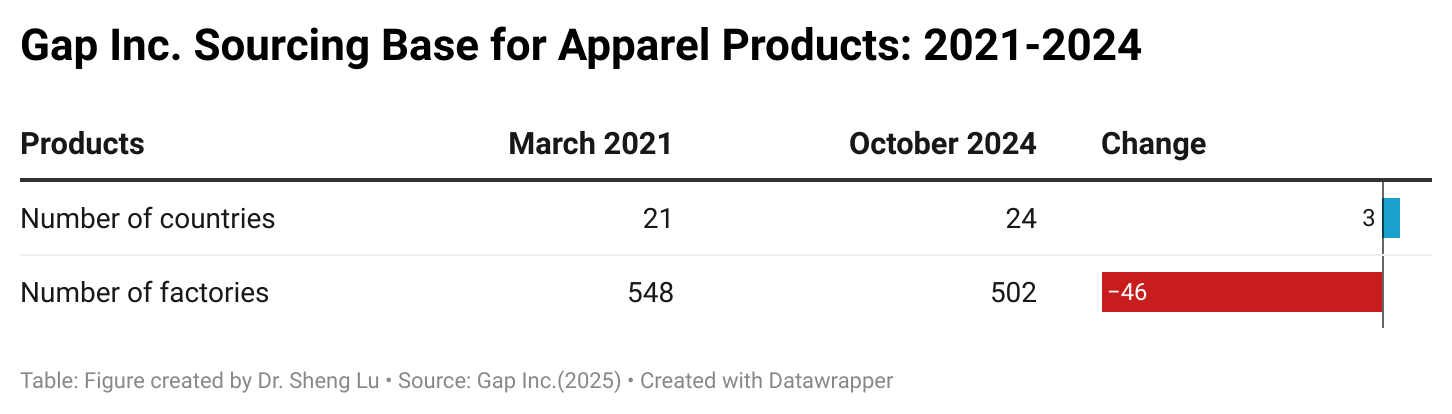
First, like several other leading U.S. fashion companies, Gap Inc. maintained a geographically diverse global sourcing base but reduced the number of factories it sourced from between 2021 and 2024. Specifically, as of October 2024 (the latest data available), Gap Inc. sourced apparel from 24 countries, an increase from 21 countries as of March 2021. Gap Inc.’s apparel sourcing reached almost all continents, including Asia, the Americas, Europe, and Africa.

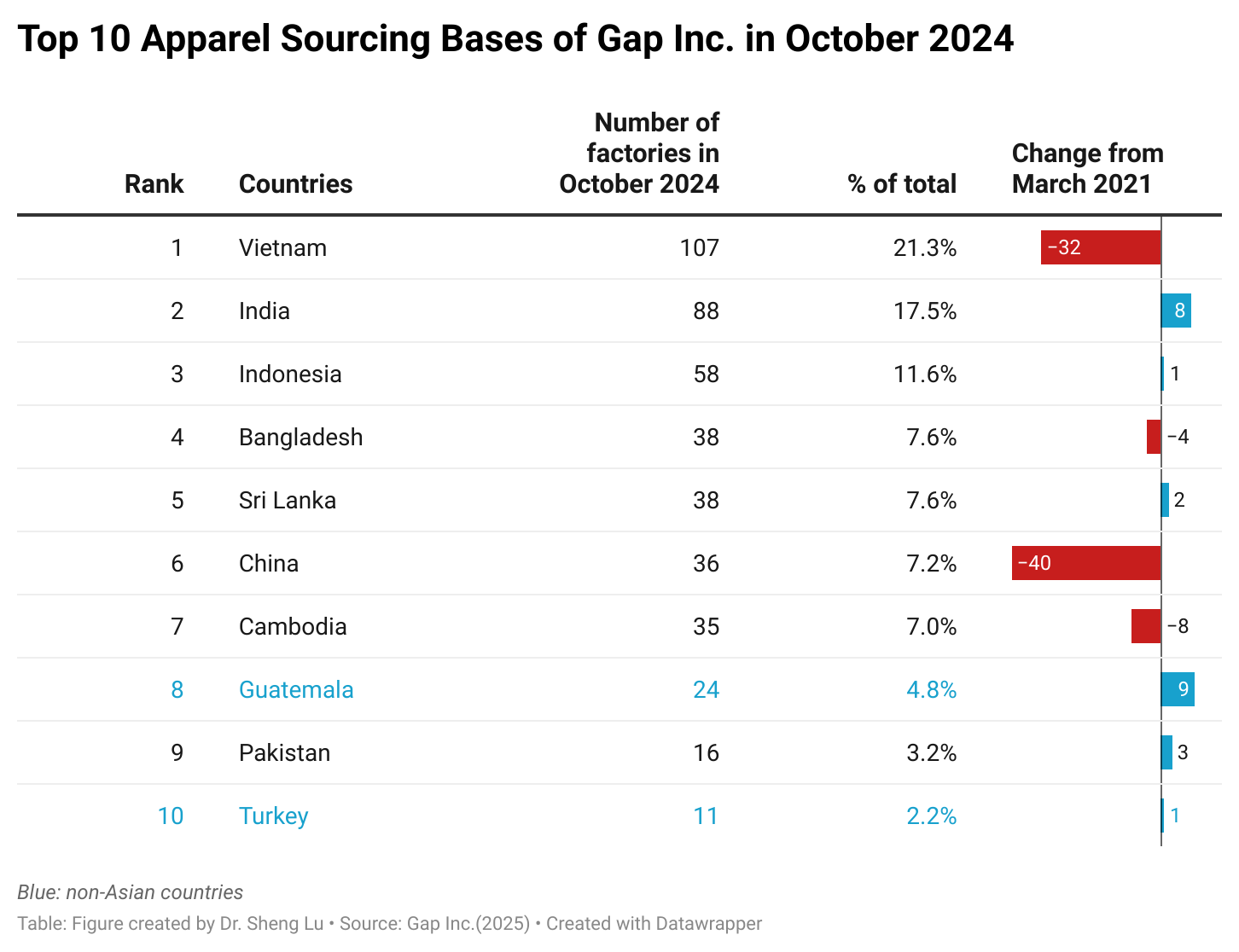
However, between March 2021 and October 2024, Gap Inc. decreased the number of apparel factories it contracts with from 548 to 502, a reduction of 46. Most of the cuts occurred in China (down 40 factories), Vietnam (down 32 factories), and Cambodia (down 8 factories).  This pattern aligned with the findings of other industry studies, which indicate that many U.S. fashion companies, particularly larger ones, are consolidating their vendor base to prioritize operational efficiency and strengthen the relationships with key vendors.

Second, Gap Inc. has significantly reduced its reliance on China and actively explored emerging sourcing destinations in the rest of Asia, Central America and beyond. According to Gap Inc.’s 2023 annual report (the latest available at the time of writing), its two largest vendors represented approximately 9 percent and 7 percent of the total dollar amount of the company’s purchases. In value terms, in 2023, approximately 29 percent of Gap Inc.’s products were sourced from Vietnam, followed by Indonesia (18 percent).

While China remained the largest source of U.S. apparel imports according to official trade statistics, China now plays a relatively minor role in supplying finished garments for Gap Inc. As of October 2024, the company sourced apparel from 36 factories in China, representing just 7.2 percent of its total apparel sourcing base, making China only the sixth-largest supplier after Vietnam, India, Indonesia, Bangladesh, and Sri Lanka. In an interview conducted in early 2025 (the video above), Gap Inc.’s CEO disclosed that less than 10 percent of the company’s products are sourced from China.

On the other hand, between March 2021 and October 2024, Gap Inc. expanded its sourcing network beyond the traditional top three (China, Vietnam, and Bangladesh), with significant growth in other parts of Asia and Central America, led by India (added 8 more factories) and Guatemala (added 9 more factories).  In 2022, Gap Inc. pledged to source around $150 million in apparel products each year from Central America by 2025.

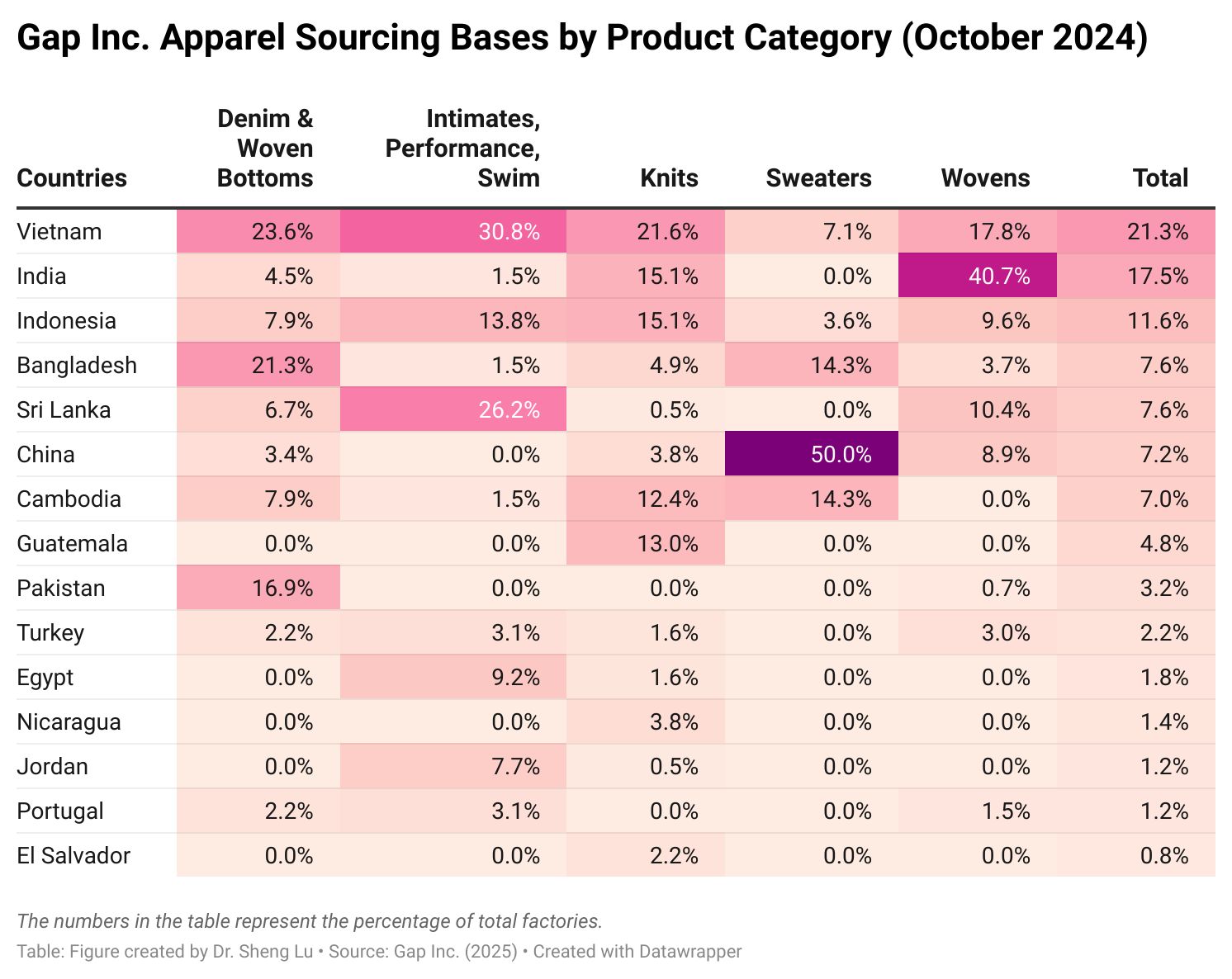
Third, Gap Inc.’s apparel sourcing base varies by product category. For example, approximately 45% of the company’s contract factories producing denim and woven bottoms were located in Vietnam and Bangladesh, likely due to the availability of cotton and a relatively abundant low-cost labor force. In contrast, factories in Sri Lanka primarily manufactured intimates, performance wear, and swimwear (IPSS) for Gap Inc. Meanwhile, half of the company’s sweater factories were located in China, largely due to the complex manufacturing process and raw material requirements for these products. Additionally, India played a critical role as a sourcing base for Gap Inc.’s woven apparel.

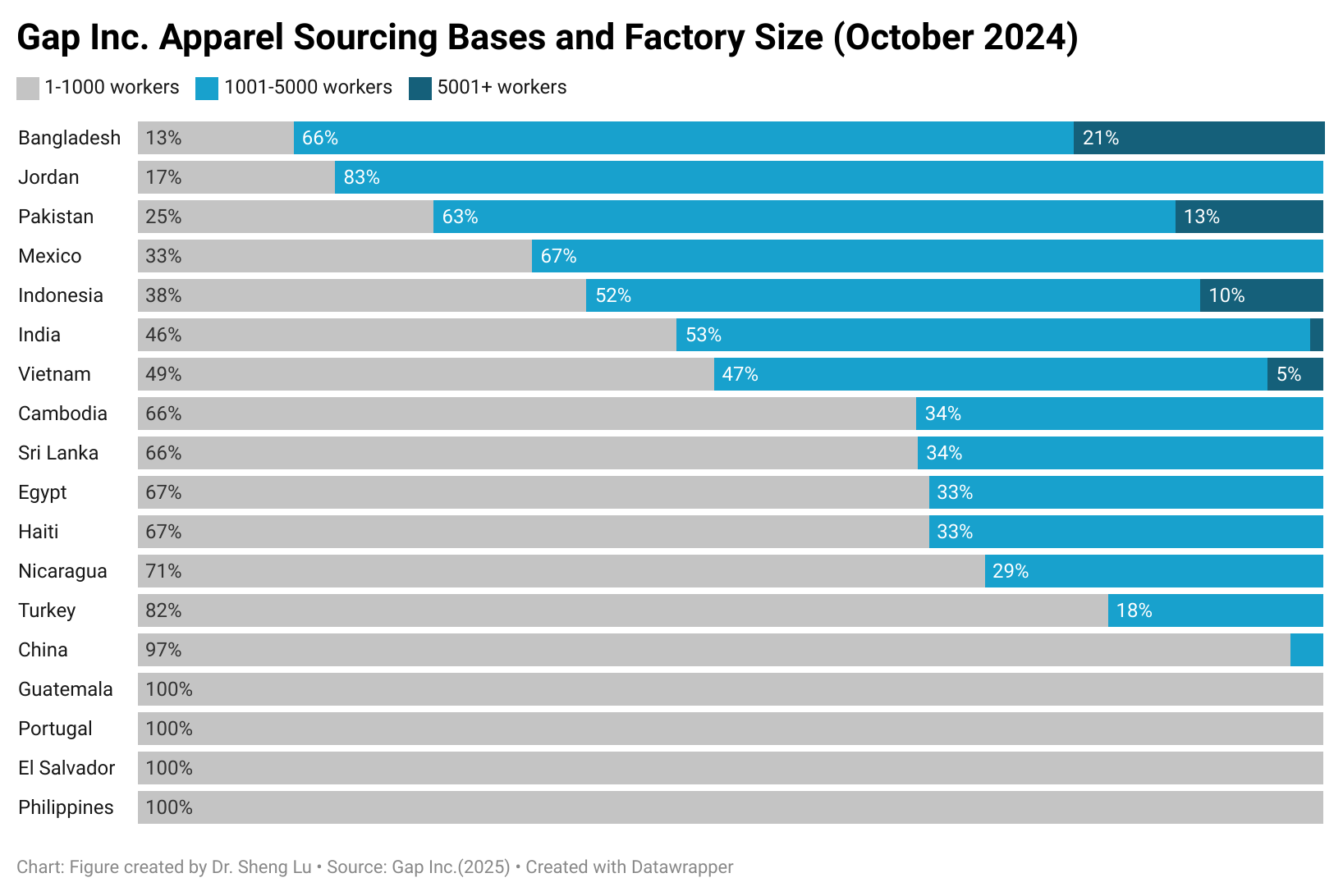
Furthermore, Gap Inc.’s contract garment factories worldwide vary in size, reflecting the company’s diverse sourcing needs. Specifically, in Asia, garment factories in China are typically small or medium-sized, with fewer than 1,000 workers (94.3%). In contrast, nearly 80% of Gap Inc.’s contract garment factories in Bangladesh have more than 1,000 workers, with similar patterns observed in Vietnam (48.7%), India (50%), Indonesia (63.2%), and Pakistan (57.1%). This pattern aligns with other industry studies suggesting that U.S. fashion companies source apparel products from China primarily for orders with relatively small minimum order quantities (MOQs) and those requiring a great variety.

Meanwhile, most garment factories in Central American countries producing products for Gap Inc. have fewer than 1,000 workers, such as Guatemala (100%), Nicaragua (71%), Haiti (67%), and El Salvador (100%). A similar pattern is observed in other regions, such as Egypt (67%) and Turkey (82%). This result suggests that Gap Inc. may still need to rely on Asia to fulfill orders for large-volume items, as it takes time to expand production capacity in other regions.

by Sheng Lu

Used Clothing Trade Debate Continues in Kenya (updated March 2025)

A new study by the Changing Markets Foundation suggests severe negative environmental and social, economic impacts of used clothing exports to Kenya. However, the Textile Recycling Association, based in the UK, argues strongly in favor of the benefits of the used clothing trade.

Concerns about the used clothing exports to Kenya (viewpoints from the Changing Markets Foundation)

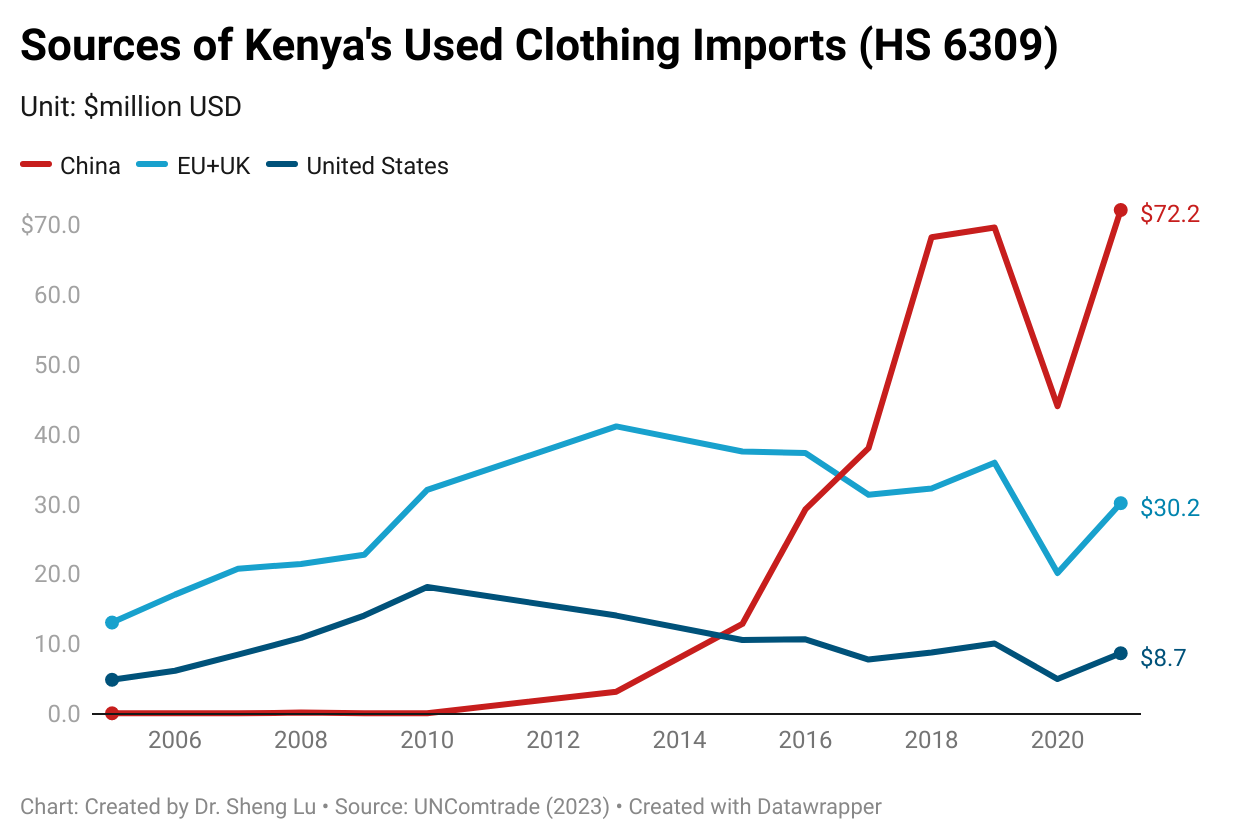
  • Data from the United Nations (UNComtrade) shows that Kenya’s used clothing imports surged by over 500% from 2005 ($27 million) to 2021 ($172 million).
  • An overwhelming volume of used clothing shipped to Kenya is waste synthetic clothing, a toxic influx creating devastating consequences for the environment and communities. It is estimated that over 300 million items of damaged or unsellable clothing made of synthetic or plastic fibers are exported to Kenya each year, where they end up dumped, landfilled, or burned, exacerbating the plastic pollution crisis.
  • Interviews with used clothing traders in Kenya show that 20–50% of the used clothing in bales they purchased was unsellable due to being damaged, too small, unfit for the climate or local styles, and sometimes even with clothing that is covered in vomit, stains or otherwise damaged beyond repair.
  • European sorting companies often skimmed off high-quality used clothing for resale in the local EU market. They exported the lower-quality and lower-graded ones to developing countries like Kenya.
  • It remains challenging to recycle synthetic clothing as it often contains harmful additives or other materials that make the recycling process difficult or impossible. Additionally, the quality of the recycled synthetic fibers is typically lower than that of the original fabric (i.e., using virgin fiber).

Defend the used clothing exports to Kenya (viewpoints from the Textile Recycling Association, TRA)

  • Sorting, trading and selling used clothing “directly employs two million people in Kenya alone , with tens of millions employed globally and supporting many more employment positions in ancillary sectors.”
  • “Used clothing and textiles collected in the UK, should go through a detailed sorting process and can be sorted typically into 130 plus re-use and recycling grades and sometimes this can be more than 200 grades. In the sorting process each garment is picked up and individually assessed by highly trained experts*.  The good quality re-useable products are segregated from the recycling grades.” [*According to Changing Markets Foundation’s report, about 36 million pieces of used clothing were exported from the UK to Kenya in 2021; All EU countries exported about 112 million pieces to Kenya]
  • “It is the buyers in these countries (note: countries like Kenya) that dictate the flows of (used clothing) textiles and which import the goods into their countries.”
  • “TRA members are required to ensure that only good quality re-usable clothing products are sold onto countries in Africa and other non-OECD countries.   Recycling grades and other non-textile/clothing items have to be removed… However, the majority of countries are not subject to the same tight restrictions on trading as the UK..  This is to the extent that some countries allow unsorted used textiles containing a complete mix of re-usable items, recycling grades, and waste to be sold into African countries as a product.” “The qualities of (used clothing) items originating from different countries is likely to vary significantly.”
  • “Kenyan’s buy more than 10 times as much used clothing from China than they do from the UK.”

Discussion questions proposed by FASH455 class:

  • #1 What is your stance on the used clothing trade? Should the government impose more export or import trade restrictions on used clothing?
  • #2 After considering both sides of the debate, what is your decision regarding donating used clothing? What factors influenced your choice?
  • #3 Any other thoughts or comments on the used clothing trade debate?
  • #4 As we learned in class, developing countries like Kenya are supposed to rely on making and exporting labor-intensive garments to develop their economies. Can importing used clothing lead to similar economic growth? Any evidence that can support the argument?
  • #5 What are the ethical issues involved in the used clothing trade? Should government policies play a role in regulating these ethical concerns?
  • #6 Could restricting the used clothing trade discourage fast fashion and reduce textile waste generation? Why or why not?
  • #7 Should developed countries like the U.S. voluntarily restrict used clothing exports to lessen the economic and environmental pressures on developing countries like Kenya? What are the potential benefits and drawbacks of such a policy?
  • #8 Based on the reading, what critical questions remain unanswered, and what further studies could be conducted to gather valuable information for informed decision-making on regulating the used clothing trade?

(Note: For students in FASH455, please answer at least two of the questions above. Be sure to mention the question number in your response, but there is no need to repeat the question.)

Additional reading:

VF Corporation’s Evolving Apparel Sourcing Base: 2023-2024

VF Corporation (VF) is one of the largest apparel companies in the US, with an estimated global sales revenue to exceed $10 billion in 2024. VF owns several well-known apparel and outdoor performance brands, including The North Face, Timberland, and Icebreaker. VF also has a global presence. According to its latest annual report, in Fiscal 2024, “VF derived 52% of its revenues from the Americas, 33% from Europe, and 15% from Asia-Pacific.”

The following analysis is based on VF’s publicly released supplier list. Only factories identified as producing “apparel” products and related textile raw materials are included in the analysis.

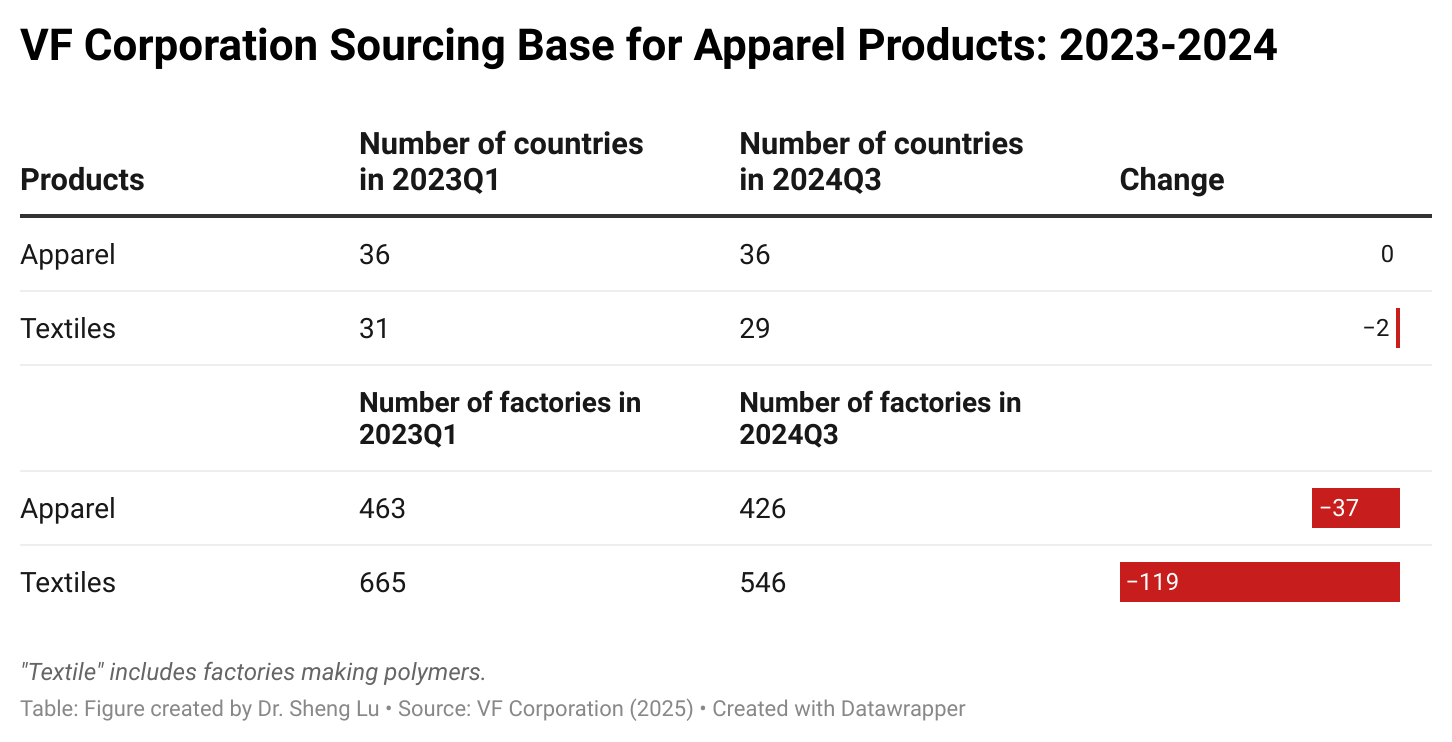
First, while VF maintained a geographically diverse global sourcing base, it reduced the number of factories it sourced from between 2023 and 2024. Specifically, as of Q3 2024 (the latest data available), VF sourced apparel from 36 countries, the same number as in Q1 2023. These countries spanned almost all continents, including Asia, the Americas, Europe, and Africa. Similarly, over the same period, VF sourced textile raw materials for apparel production—including factories producing polymers—from approximately 30 countries.

However, between Q1 2023 and Q3 2024, VF reduced the number of apparel factories it contracts with from 463 to 426. The number of textile mills VF contracts also declined, from 665 to 546. This pattern aligned with the findings of other industry studies, which indicate that many U.S. fashion companies, particularly larger ones, are consolidating their vendor base to reduce sourcing risks and enhance operational efficiency.

Additionally, VF’s annual reports indicate that no single supplier accounted for more than 6% of its total cost of goods sold during Fiscal Year 2024, the same as in 2023, but lower than 7% in Fiscal Year 2021.

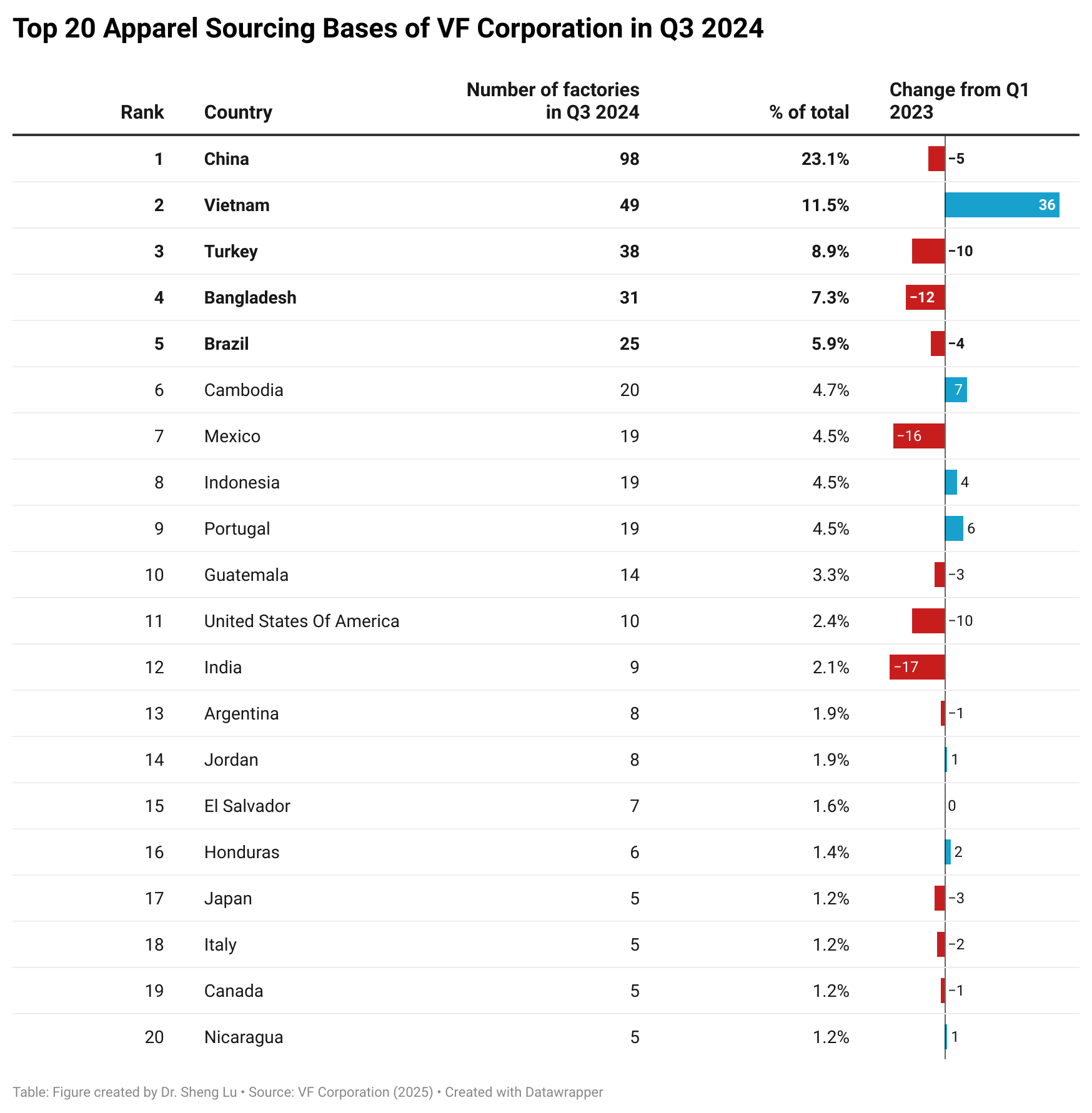
Second, in line with macro trade data, Asia served as VF’s largest apparel sourcing base in Q3 2024, led by China (23.1 percent) and Vietnam (11.5 percent). Specifically, as of Q3 2024, approximately 55.3 percent of VF’s garment factories were located in Asia, an increase from 48.8 percent in Q1 2023. Meanwhile, VF is also adjusting its apparel sourcing strategy within the Asia region. For example, between 2023 and 2024, VF decreased the number of garment factories it worked with in China (down 5), Bangladesh (down 12), and India (down 17), while adding more contract factories in Vietnam (up 36), Cambodia (up 7), and Indonesia (up 4).  The pattern indicates that while VF may attempt to reduce its “China exposure,” it also actively seeks new sourcing opportunities within Asia. 

Conversely, in Q3 2024, around 21.2 percent of VF’s garment factories were based in the Western Hemisphere, a decrease from 27.0 percent in Q1 2023. In most situations, VF worked with about 10-20 garment factories in each Western Hemisphere country. Furthermore, from 2023 to 2024, VF cut the number of garment factories in Mexico (down 16) and the United States (down 10), indicating that expanding near-shoring and on-shoring was not the company’s preferred strategy in the current environment. 

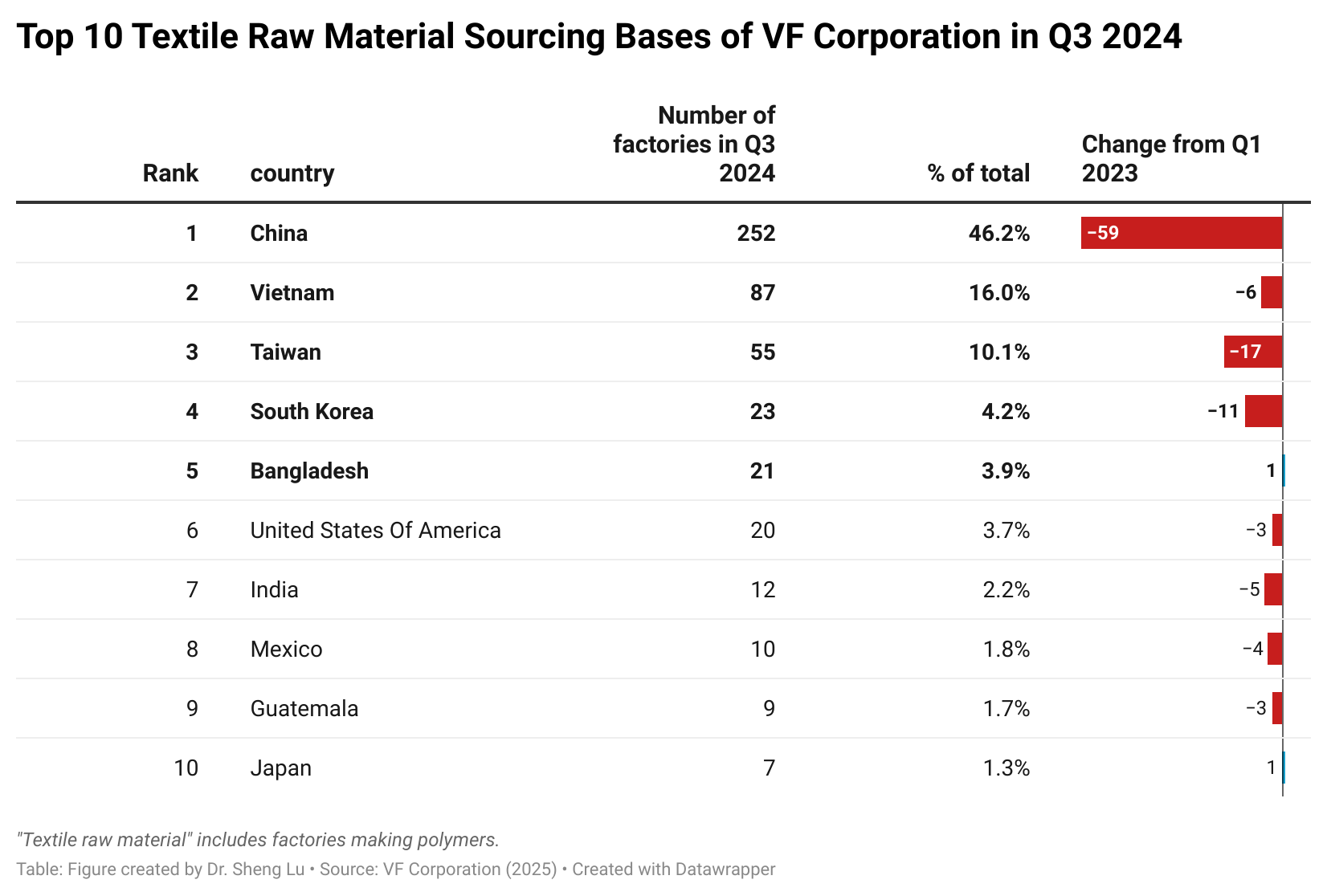
Third, compared to garments, VF’s supply of textile raw materials relies even more heavily on Asia, especially China. Specifically, as of Q3 2024, approximately 83.5 percent of VF’s textile raw material suppliers were located in Asia, the same as in Q1 2023. Notably, China represented nearly half of VF’s textile material suppliers in Q3 2024, including 41.2 percent of textile yarn and fabric mills and 50.9 percent of trim mills. Although VF reduced the number of textile mills in China from Q1 2023 to Q3 2024, China’s share of VF’s total textile raw material supplier base remained the same. Overall, the pattern aligns with previous research suggesting that finding alternative sourcing bases for textile raw materials outside of China and Asia will be more difficult and time-consuming for US fashion companies, considering the capital-intensive nature of making textile products.

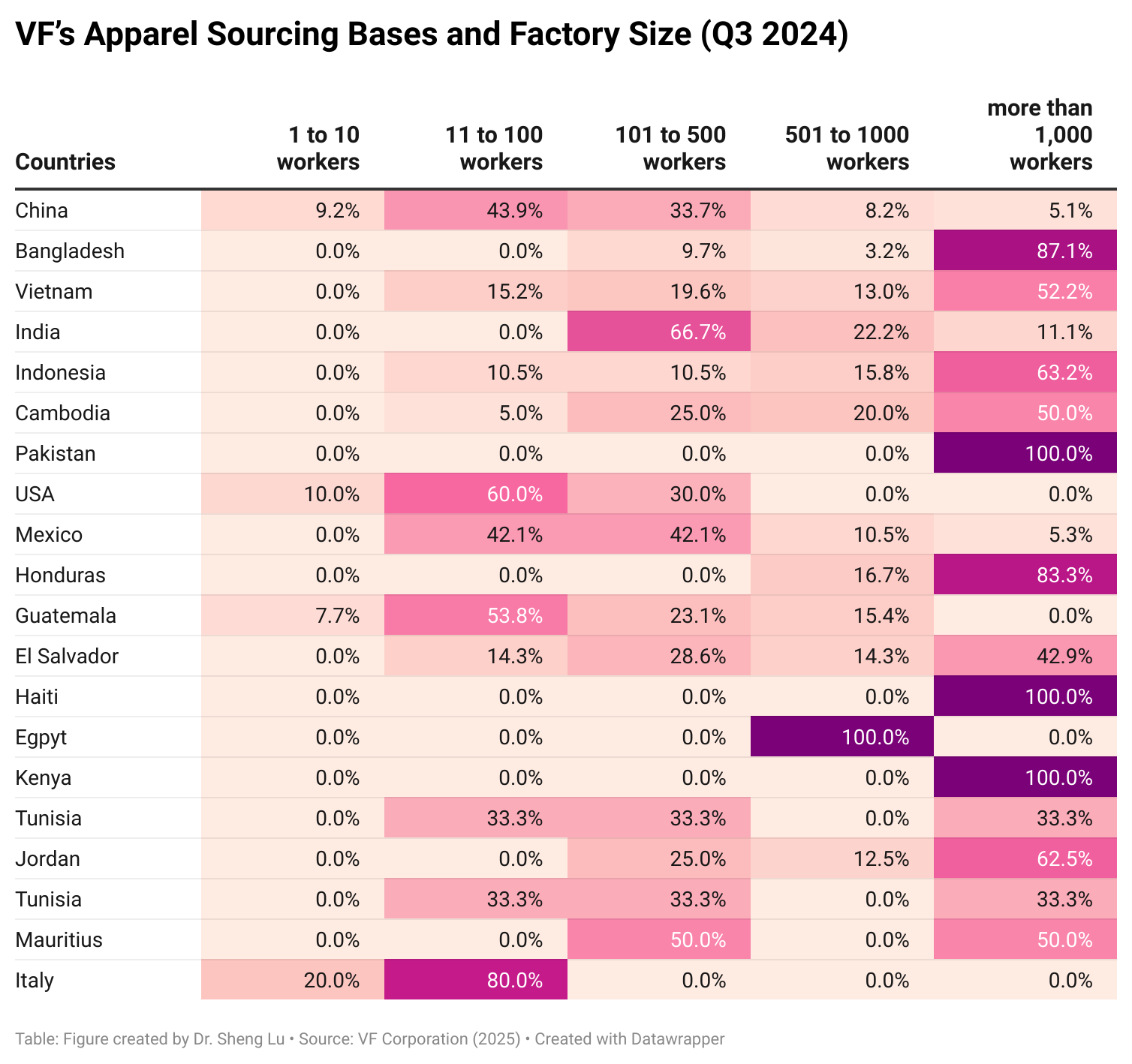
Fourth, VF’s contract garment factories worldwide varied in size, reflecting the company’s diverse sourcing needs. Specifically, in Asia, garment factories in China typically were small and medium-sized, with 11-100 workers (43.9 percent) or 101-500 workers (33.7 percent). In contrast, nearly 90 percent of VF’s contract garment factories in Bangladesh had more than 1,000 workers, with similar patterns observed in Vietnam (52.2 percent), Cambodia (50.0 percent), Indonesia (63.2 percent), and Pakistan (100 percent). These findings suggest that VF may use China as a sourcing base for relatively small, diverse orders while relying on other Asian countries with lower labor costs for high-volume production.

Meanwhile, in the Americas and Africa, VF’s contract garment factories in Haiti, Honduras, El Salvador, Kenya, and Jordan included more large-scale operations with over 1,000 workers. These locations could serve as emerging alternatives to sourcing from Asia, especially for specific categories. In contrast, VF’s contract garment factories in Mexico, the US, and Guatemala featured many medium and small operations, which are more likely to fulfill replenishment orders or produce specialized products.

by Sheng Lu

FASH455 Exclusive Interview with Hannah Laurits, Fabric Lab Textile Coordinator at Swim USA, about Fabrics and Apparel Sourcing

About Hannah Laurits

Hello! My name is Hannah Laurits, and I am currently working as a Textile Lab Fabric Coordinator at Swim USA. I graduated from the Master of Science program in Fashion and Apparel Studies at the University of Delaware in 2024. Through the program, I had the opportunity to work on various research projects, ranging from adaptive apparel to sustainable textiles. During my time at UD, I also had the privilege of teaching Fash133 Foundations for Fashion Innovation, which was an incredibly rewarding experience.

In addition to my master’s degree, I hold a Bachelor of Science in Apparel Design and Fashion Merchandising from the University of Delaware. Throughout my academic journey, I completed internships related to textiles and sourcing, which played a significant role in shaping my career and led me to my current position at Swim USA. I am passionate about the intersection of textile innovation, sustainability, and sourcing, and I’m excited to share insights from my experiences in the industry.

Disclaimer: The views expressed in this interview are those of Hannah Laurits and do not reflect the views or positions of her employer or any affiliated organizations.

Sheng: What are your main responsibilities as a fabric lab textile coordinator? What does a typical day look like? Which aspects of the job do you find particularly interesting or unexpected before taking on the role?

Hannah: As a Fabric Lab Textile Coordinator, I work to ensure that the fabrics that go into our products meet both our internal quality standards as well as the standards of our customers and the global textile industry. In the lab, we mainly focus on quality control, which includes ensuring that the fabrics we use in production meet specific quality standards.

In my role, a typical day may include visually and/or digitally reviewing colors to ensure that they align with our established standards. Additionally, each day consists of a variety of testing and analysis of results to ensure that they meet brand requirements. I also assist with raw materials development, particularly in the areas of color and fabric testing for various brands. One key aspect of my work is analyzing testing data to identify risks, areas for improvement, and potential delays in production. The best part of my role is the variety of tasks I’m involved in, the opportunity to work on multiple brands, and the extensive cross-functional collaboration I get to participate in. From color matching and testing to analyzing data and working directly with various teams, no two days are ever the same. The level of collaboration across departments has been extremely helpful, allowing me to learn from different areas of the business and broaden my skill set.

Sheng: In general, what factors should be considered when selecting fabrics in product development and apparel sourcing?

Hannah: When selecting fabrics for product development and sourcing, there are many factors to consider, including but not limited to cost, quality, durability, color and dyeing process, fiber content, intended use, sustainability, lead times, availability, and compliance with regulations. In my role, understanding the fabric composition, color, and dyeing process, as well as the intended final use is essential. Different fibers and dyestuffs have inherent properties that can affect the fabric’s appearance and colorfastness, so it’s crucial to understand how they will perform in the final product. This knowledge helps determine whether achieving a specific color while maintaining the desired quality is feasible. By carefully considering these factors, we ensure that the product meets both aesthetic and performance standards.

Sheng: Part of your job involves testing fabrics. What needs to be tested, and what are the main issues involved in the quality control of fabrics?

Hannah:A large part of my role involves testing fabrics to ensure they meet the required standards. There are a variety of tests that need to be completed, and they generally fall into two main categories: color fastness and physical properties. Color fastness testing is conducted to ensure that the fabric retains its color and/or does not run when exposed to various factors, such as washing, sunlight, or exposure to chlorine. Physical property testing helps ensure that the fabric will meet the required performance standards. This includes testing for qualities like weight, stretch, and dimensional stability. These tests are essential to make sure the final product fits well and performs as expected for the consumer.

Sheng: From your observation, how has sustainability impacted the selection and sourcing of textile materials for fashion companies? How is “sustainability” assessed for fabrics? What emerging trends are worth watching?

Hannah: Sustainability is a major focus in the textile and apparel industry, continuously evolving and shaping how fashion companies approach textile research, development, and sourcing. There is a noticeable shift towards prioritizing eco-friendly materials and minimizing environmental footprint. Sustainability can be assessed in many ways in fabrics throughout a fabric’s entire lifecycle – from raw material sourcing to end-of-life disposal. It is important to consider not only the environmental impact but also the social and ethical aspects of fiber cultivation and fabric production, ensuring that workers’ rights are also prioritized. From what I have observed in the market, the most accessible and widely adopted sustainable fabrics tend to be recycled, organic, or plant-based materials. However, there are many other emerging trends worth watching. These include waterless or low-water dyeing technologies, eco-friendly finishes and treatments, regenerative agriculture, and innovative fiber development

Sheng: Following up on the previous question, is it true or a myth that sustainable fabrics are typically more expensive and increase production costs? If so, how can companies balance sustainability with cost-effectiveness?

Hannah:While sustainable fabrics can sometimes be more expensive, it’s not always the case. Factors such as higher initial investments in sustainable technologies, costs of production, the smaller scale of production, and the costs associated with certifications can make sustainable fabrics more costly. However, it is still possible for companies to balance sustainability with cost-effectiveness. Sustainable practices often bring long-term benefits, such as risk reduction, improved durability, and increased brand value. Further, as more brands shift towards and invest in sustainable material innovation, we can expect these fabrics to become more affordable and available over time.

Sheng: Based on your experience, can you offer any advice to our students regarding preparing for a career in the fashion apparel industry? What could they do at UD? What is the benefit of getting a master’s degree in fashion and apparel?

Hannah: My advice to students is to get involved as much as possible. Internships are a great way to gain hands-on experience. If internships aren’t available, networking and learning from professionals in the industry are invaluable. At UD, there are numerous opportunities to take advantage of, like research projects, clubs, and career fairs to build connections and expand your knowledge. I have found that a master’s degree in Fashion and Apparel has provided me with a strong foundation which has helped me secure a career and be successful in the industry. I often find myself referring to course topics and key skills I learned in graduate school such as data analysis.

Additionally, if any students soon graduating are interested in Swim USA, below is information from our HR department on how they search for talent. “For entry-level roles, we typically use Handshake as a great way to reach upcoming graduates or recent alumni. I would advise them to register and look at opportunities there. If they haven’t already, they should also ensure their LinkedIn profile is up to date and has a nice professional picture. Start following companies that you might be interested in, like SWIM USA, to see new or open roles first. They are also welcome to follow our Swim USA careers page for more information.”

–The End–