New Study: PVH Corporation’s Evolving Apparel Sourcing Strategies (updated Septmeber 2024)

PVH Corporation (PVH), which owns well-known brands including Calvin Klein, Tommy Hilfiger, Van Heusen, Arrow, and Izod, is one of the largest US fashion companies with nearly $9.2 billion in sales revenues in 2022.

By leveraging PVH’s publically released factory lists, this article analyzes the company’s detailed sourcing strategies and changes from 2021 to 2022. Key findings:

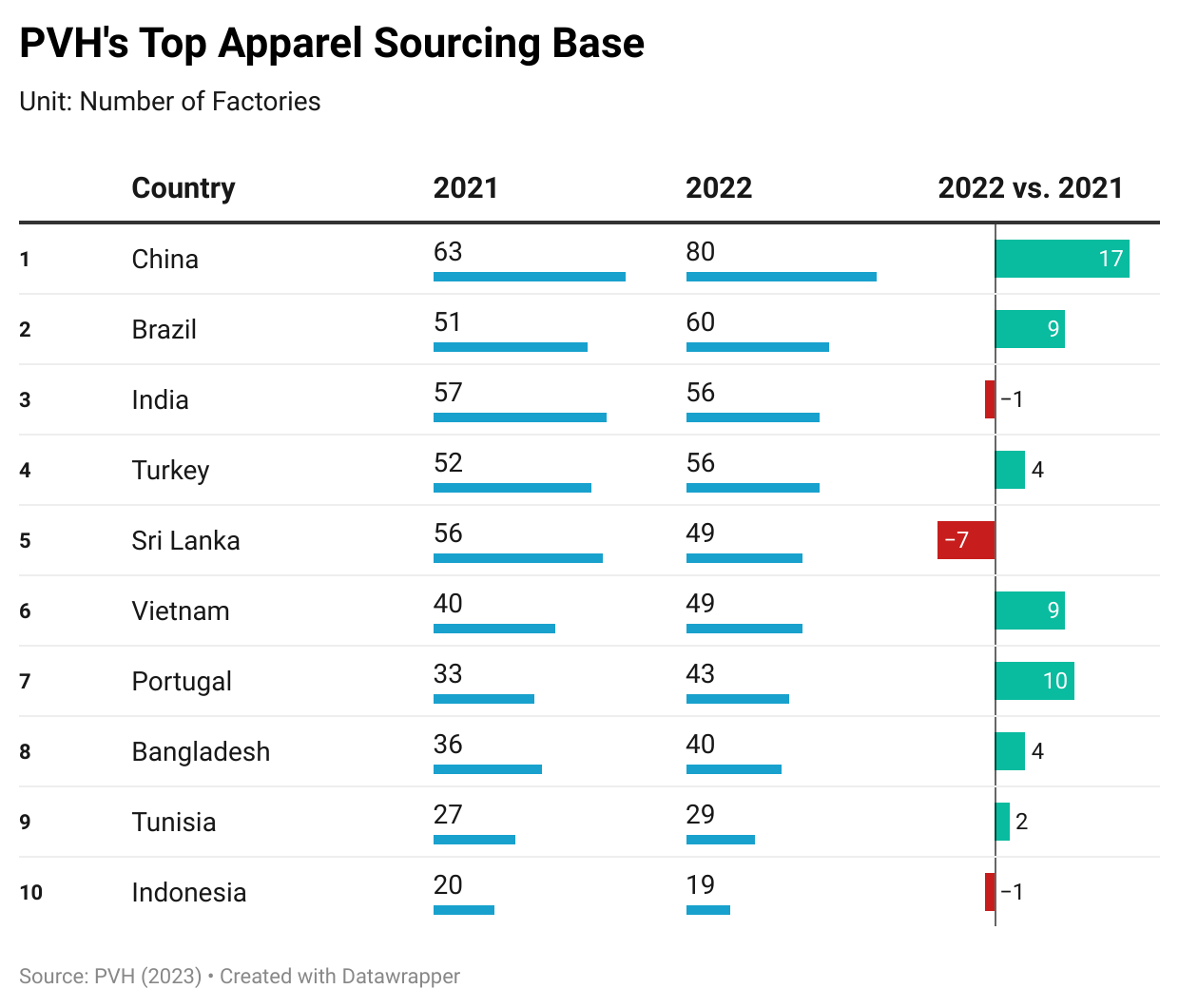
Trend 1: PVH adopts a diverse apparel sourcing base and continues to work with more vendors. Specifically, in 2022, PVH sourced apparel from as many as 37 countries in Asia, Europe, America, the Middle East, and Africa, the same as in 2021. Despite not expanding the number of countries it sources from, PVH increased its total number of vendors from 503 in 2021 to 553 in 2022, highlighting the company’s ongoing commitment to diversifying its sourcing base.

Trend 2: Asia is PVH’s dominant sourcing base for finished garments and textile raw materials.

Specifically, about 56.2% of PVH’s apparel suppliers were Asia-based in 2022, followed by the EU (20.3%). Compared with a year ago, PVH even added twenty new Asia-based factories to its supplier list in 2022, suggesting no intention of reducing sourcing from the region. Moreover, From 2021 to 2022, as many as 83% of PVH’s raw material suppliers were Asia-based, far exceeding any other regions.

Trend 3: PVH’s China sourcing strategies are evolving and more complicated than simply “reducing China exposure.”

  • First, PVH continued to work with MORE Chinese factories. Specifically, between 2021 and 2022, PVH added 17 Chinese factories to its apparel supplier list, more than other countries. However, the expansion could be because of PVH’s growing sales in China.
  • Second, PVH’s garment factories in China are smaller than their peers in other Asian countries. For example, in 2022, most PVH’s contracted garment factories in top Asian supplying countries, such as Bangladesh (87.5%), Vietnam (63.3%), and Sri Lanka (65.3%), had more than 1,000 workers. In comparison, only 11.3% of PVH’s Chinese vendors had 1,000 workers, and more than 62.5% had fewer than 500 workers. The result suggests that PVH treats China as an apparel sourcing base for flexibility and agility, particularly those orders that may include a greater variety of products in relatively smaller quantities.
  • Further, PVH often priced apparel “Made in China” higher than those sourced from the rest of Asia.

Trend 4: PVH actively used “emerging” sourcing destinations outside Asia. Other than those top Asian suppliers, PVH’s apparel sourcing base includes several countries in America, the EU, and Africa that deserve more attention, including Portugal, Brazil, Tunisia, and Turkey. Overall, PVH sourced from these countries for various reasons, from serving local consumers, seeking sourcing flexibility, accessing raw materials, and lowering sourcing costs.

by Sheng Lu and Ally Botwinick

Further reading: Lu, Sheng & Botwinick, Ally (2023). US fashion companies’ evolving sourcing strategies – a PVH case study. Just-Style. Retrieved from https://www.just-style.com/features/us-fashion-companies-evolving-sourcing-strategies-a-pvh-case-study/

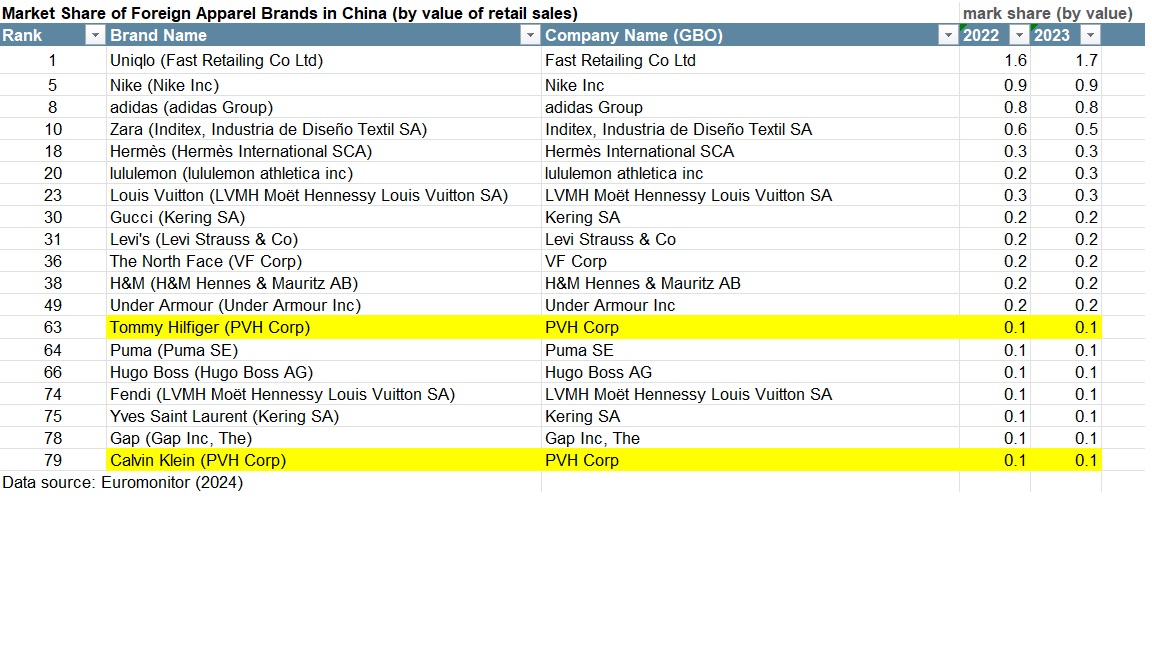
PVH’s market shares in the China apparel retail market

(discussion for this post is closed)

US Fashion Companies’ Evolving Sourcing Strategies and the Future of the US Textile and Apparel Industry: Discussion Questions from FASH455

Students in FASH455 have proposed the following discussion questions based on the readings about the US textile and apparel industry and fashion companies’ sourcing strategies. Everyone is welcome to join the online discussion. For FASH455 students, please address at least two questions and mention the question number (#) in your reply.

#1 As a developed country, should the US prioritize further strengthening highly capital-intensive yarn manufacturing, or should we rebuild a vertically integrated textiles and apparel supply chain (e.g., yarns, fabrics, and garments) at home? What is your recommendation, and why?

#2 In FASH455, we discussed how the US textile industry has experienced a decline in employment despite increasing production volumes, largely due to advancements in technology. However, why is import competition often cited in the media as the single largest threat to the US textile industry?

#3 While studies show that US fashion companies are reducing “China exposure,” measured in quantity, China still accounted for 36.1% of US apparel imports in 2023, even higher than 34.7% in 2022. How can we explain this phenomenon? What factors have made US fashion companies hesitant to move away from China?

#4 How will US fashion companies’ growing interest in carrying more sustainable textiles and apparel affect their sourcing destinations and supply chains? Will developing countries with cheap labor and/or developed countries with the right capital and technology be the winners in the sustainability movement? Please provide your thoughts.

#5 Will the growing demand for supply chain transparency and traceability reduce the incentives or add additional burdens for fashion companies to diversify their supply chain further? What are the benefits of pursuing sourcing diversification other than mitigating the potential sourcing risks?

#6 What is your vision for the use of AI in apparel sourcing? What key sourcing and supply chain problems facing fashion brands and retailers can AI potentially solve?

Sourcing Sustainable Fashion Products (I): FASH455 Exclusive Interview with Julianna Alfieri, Senior Global Sourcing Specialist at Amscan (UD & FASH BS22)

About Julianna Alfieri

Julianna Alfieri is the Senior Global Sourcing Specialist for Amscan, which serves over 40,000 retail outlets across the globe and owns Party City Holdings Inc. Born and raised in Long Island, Julianna has always had a passion for all things fashion. This passion led her to pursue a Bachelor’s degree in Fashion Merchandising and Management, with a minor in Sustainable Apparel & Textile Innovation, from the University of Delaware. Julianna furthered her expertise with a Graduate Degree from Parsons School of Design in Fashion Sustainability. Her diverse background includes experience in fashion styling, retail, marketing, and indexing, all of which have shaped her approach to global sourcing. With these educational and professional experiences, Julianna has built a solid foundation and acquired the necessary tools to excel in the industry.

Disclaimer: The views expressed in this interview are those of Julianna Alfieri and do not reflect the views or positions of her employer or any affiliated organizations.

Sheng: What does a Senior Global Sourcing Specialist do? What does your typical day look like? Also, what makes you love your job, or what is the most exciting part of it?

Julianna: As a Senior Global Sourcing Specialist, my role revolves around fostering cross-functional collaboration and maintaining strong relationships with vendors and suppliers. I oversee specific categories of the company’s business, ensuring effective communication and negotiation to maximize the quality of goods while meeting financial objectives. This involves working closely with my sourcing team, global offices, and utilizing various systems to streamline sourcing processes.

On a typical day, I work closely with my sourcing team and global partners to analyze costs, manage vendor relationships, and collaborate on major projects within my designated categories. Additionally, I assist in updating data in relevant systems and ensuring smooth transitions for new suppliers while also contributing to major projects aimed at enhancing redundancy categories and diversifying our supplier base.

The dynamic nature of the role keeps me engaged and continuously learning, allowing me to apply my education to real-world scenarios and witness the tangible outcomes of our efforts, such as seeing products I’ve contributed to in stores. What I find most exciting is the opportunity for constant growth and the collaborative aspect of working with our global partners!

Sheng: Can you walk us through the sourcing process—for example, the main procedures, who will be involved, and the general timeline?

Julianna: The overall sourcing process is an extremely collaborative effort involving multiple teams and stakeholders. It begins with identifying the need for specific products, which could stem from various reasons such as new product development, transitioning from existing suppliers, or finding vendors offering better cost or quality.

Once the product to be sourced is determined, we engage with suppliers from our matrix. Communication is managed internally for domestic vendors, while for international vendors, our global partners are involved. We evaluate potential suppliers based on their capability to produce the desired product and then proceed to cost negotiations.

Sample gathering is a crucial step where we collect samples from all potential vendors to assess quality and cost-effectiveness. This decision often involves input from both sourcing and product development teams. Using Product Lifecycle Management (PLM) systems, we then generate artwork for the product, collaborating closely with the art team.

Once artwork is finalized, it is shared with the chosen vendor to facilitate production specifications. Lead times for sample creation and production are negotiated with the vendor. Once we receive a pre-production sample, either our global partners or product development teams evaluate its quality and suitability.

Upon pre-production sample approval, the sourcing team updates our systems to indicate the selected vendor for the product. Throughout this process, sourcing manages communication between cross-functional teams and partners.

The timeline for this process typically spans 3 to 6 months, varying on factors such as the country of sourcing, vendor payment terms, lead times, and sample production quality.

Sheng: We know retailers today need to “balance” many sourcing factors today, from costs and speed to market to compliance risks. In practice, how do these factors actually affect companies’ sourcing decisions? For example, are there any specific factors that hold particular importance or are given significant weight in the decision-making process?

Julianna: Sourcing decisions within companies are deeply influenced by a number of factors. Among these factors, cost stands out as a primary consideration, directly impacting the financial health and competitiveness of the company. Balancing cost-effectiveness with other factors is essential to ensure optimal value for the organization.

Quality is another factor that holds significant weight in sourcing decisions. Maintaining specific standards of quality is essential to uphold the brand reputation, customer satisfaction, and overall product integrity. Innovation also drives sourcing decisions, as companies look for suppliers with advanced products, technologies, or processes to stay competitive and meet changing consumer needs.

Other critical factors include supplier reliability and supplier diversity. Dependable suppliers ensure consistent delivery schedules, minimize disruptions, and foster trust, while diversification enhances resilience and flexibility. Building strong relationships with suppliers encourages working together, coming up with new ideas, and achieving long-term success!

Finally, sustainability is now a crucial factor in sourcing decisions, driven by increasing consumer and regulatory demands for environmentally and socially responsible practices. Companies favor suppliers committed to sustainability, such as reducing waste and upholding fair labor standards. Embracing sustainability not only reflects a company’s corporate values, but also ensures long-term business success and resilience in a market that values conscious practices.

Sheng: From your observation, what are the critical sourcing trends and key issues to watch in 2024?

Julianna: In today’s climate, it is evident that there are several critical sourcing trends and key issues to keep a close eye on in 2024. Among these, prioritizing resilience, sustainability, and diversification stands out as essential for companies aiming to navigate the evolving sourcing landscape successfully!

The COVID-19 pandemic has led to a renewed emphasis on strengthening supply chain resilience. Companies are actively diversifying their suppliers and improving risk management to ensure operational continuity. Based on my personal experience in this industry, I’ve recognized the essential role adaptability plays in keeping operations running smoothly without interruption.

Additionally, there is growing attention on sustainability and ethical sourcing. Companies are under pressure to be transparent and accountable due to increased consumer awareness about environmental and social issues. In our organization, we maintain standards through the use of supplier audits to ensure sustainability compliance. Initiatives such as sustainable packaging and collaborations with suppliers certified by reputable organizations like the Forest Stewardship Council (FSC) reflect our efforts to advance sustainability goals.

One of the key challenges I’ve encountered in my sourcing career is the reliance on a limited supplier base. This became evident during our paper bag project when antidumping duties significantly impacted our sourcing strategy. The imposition of antidumping duties on paper bags from certain regions prompted us to explore alternative suppliers globally. This highlighted the importance of diversifying our supplier matrix to reduce dependence on specific regions and mitigate risks associated with geopolitical tensions or trade regulations.

Lastly, uncertain economic climates have significantly influenced what warrants close attention. Our company’s experience with Chapter 11 bankruptcy served as a pivotal moment, illuminating the crucial paths forward. As repeatedly emphasized, maintaining a diverse and resilient supplier base is essential for mitigating risks linked to potential disruptions in the supply chain. Additionally, closely monitoring costs and implementing cost-saving measures becomes imperative for navigating through uncertain economic times. Lastly, fostering robust supplier relationships and enhancing communication and collaboration with suppliers emerge as essential strategies for navigating challenges and ensuring continuity in the sourcing process, especially amidst economic uncertainty.

Sheng: Many retailers have adopted PLM (product life cycle management) and other digital tools to manage sourcing and the supply chain. From your observations, what changes have these tools brought to sourcing?

Julianna: Digital tools are vital for global sourcing as they streamline processes, enhance communication, and provide real-time insights, enabling companies to make informed decisions. Some important tools I work with closely include PLM (Product Lifecycle Management), BPCS (Business Planning and Control System), and Datamyne, as they help to optimize efficiency and mitigate risks in the complex global marketplace.

PLM helps to centralize information and documents, which ensures that all stakeholders have access to real-time data, updates, and feedback, leading to improved alignment. This helps for history purposes and checking previous decision making done by other team members. PLM also assists with processes such as supplier onboarding, product specifications management, and artwork/sample tracking.

BPCS provides a wide range of tools for managing inventory, procurement, and production planning. It helps ensure that inventory levels are optimized, procurement processes are efficient, and production activities are scheduled according to demand forecasts and inventory data. This visibility into inventory levels also allows sourcing partners to access crucial information, such as the amount of inventory on hand, helping us prioritize sourcing efforts based on urgency.

Lastly, Datamyne provides valuable insights into global trade data, including import and export information, tariffs, and compliance requirements. Datamyne also allows users to search for potential suppliers, thus mitigating risks associated with geopolitical factors and trade regulations. In response to the antidumping tariffs affecting our paper bags (previously mentioned), I utilized Datamyne to identify alternative vendors exempt from these tariffs. I thoroughly researched and explored these potential vendors to determine if they could serve as viable alternatives for sourcing paper bags, thereby circumventing the tariffs.

Sheng: Any reflections on your experiences at UD and FASH? What advice would you offer current students preparing for a career in sourcing after graduation?

Julianna: Reflecting on my experiences through the UD fashion program, I am grateful for the comprehensive education and real-world projects that have shaped my understanding of the fashion industry and the global sourcing world. UD provided me with valuable insights into various aspects of the industry and encouraged me to explore my interests deeply. Through specialized courses for my focus on sustainable apparel and textile innovation, I gained practical knowledge that is directly applicable to the sourcing realm. The exposure to relevant case studies and global issues was instrumental in honing my skills and preparing me for my career in global sourcing, and UD has paved the way for the inevitable challenges and opportunities ahead.

For current students preparing for a career in sourcing after graduation, my first piece of advice would be to prioritize networking and building relationships with peers and faculty members. Business is personal, and these connections can open doors to opportunities in the industry! Additionally, dedicating oneself to school projects and seeking any type of industry experience can provide clarity on career paths and offer invaluable insights into different work environments, and help in understanding one’s preferences within the industry.

Developing strong presentation skills and the confidence to speak up in team settings are essential for standing out as a leader and effectively communicating with vendors, global partners, and cross-functional teams.

Finally, staying informed about current events, especially in the sourcing landscape, is crucial for making informed decisions and staying ahead in the industry.

Feel free to reach out anytime if you’d like to connect, chat, or discuss industry insights – I am always here and eager to engage!

–The END–

2023 USFIA Fashion Industry Benchmarking Study Released

The full report is available HERE

USFIA webinar (Aug 2023)

Key findings of this year’s report:

#1 U.S. fashion companies are deeply concerned about the deteriorating U.S.-China bilateral relationship and plan to accelerate “reducing China exposure” to mitigate the risks.

  • Respondents identified “Finding a new sourcing base other than China” as a more prominent challenge in 2023 than the previous year (i.e., 4th in 2023 vs. 11th in 2022).
  • This year, over 40 percent of respondents reported sourcing less than 10 percent of their apparel products from China, up from 30 percent of respondents a year ago and a notable surge from only 20 percent in 2019. Similarly, a new record high of 61 percent of respondents no longer use China as their top supplier in 2023, up from 50 percent of respondents in 2022 and much higher than only 25-30 percent before the pandemic.
  • Nearly 80 percent of respondents plan to reduce apparel sourcing from China over the next two years, with a record high of 15 percent planning to “strongly decrease” sourcing from the country. This strong sentiment was not present in past studies. Notably, large-size U.S. fashion companies (with 1,000+ employees) that currently source more than 10 percent of their apparel products from China are among the most eager to de-risk.

#2 Tackling forced labor risks in the supply chain remains a significant challenge confronting U.S. fashion companies in 2023.

  • Managing the forced labor risks in the supply chain” ranks as the 2nd top business challenge in 2023, with 64 percent of respondents rating the issue as one of their top five concerns.
  • Most surveyed U.S. fashion companies have taken a comprehensive approach to mitigating forced labor risks in the supply chain. Three practices, including “asking vendors to provide more detailed social compliance information,” attending workshops and other educational events to understand related regulations better,” and “intentionally reducing sourcing from high-risk countries,” are the most commonly adopted by respondents (over 80 percent) in response to forced labor risks and the UFLPA’s implementation.
  • Since January 1, 2023, U.S. Customs and Border Protection (CBP)’s UFLPA enforcement has affected respondents’ importation of “Cotton apparel products from China,” “Cotton apparel products from Asian countries other than China,” and “Home textiles from China.”
  • U.S. fashion companies are actively seeking to diversify their sourcing beyond Asia to mitigate the forced labor risks, particularly regarding cotton products.

#3 There is robust excitement about increasing apparel sourcing from members of the Dominican Republic-Central America Free Trade Agreement (CAFTA-DR).

  • CAFTA-DR members play a more significant role as an apparel sourcing base this year. Over 80 percent of respondents report sourcing from CAFTA-DR members in 2023, a notable increase from 60 percent in the past few years. Also, nearly 30 percent of respondents placed more than 10 percent of their sourcing orders with CAFTA-DR members this year, a substantial increase from only 19 percent of respondents in 2022 and 10 percent in 2021.
  • About 40 percent of respondents plan to increase apparel sourcing from CAFTA-DR members over the next two years. Most respondents consider expanding sourcing from CAFTA-DR as part of their overall sourcing diversification strategy.
  • With U.S. fashion companies actively seeking immediate alternatives to sourcing from China and Asia, respondents emphasize theincreased urgencyof improving textile raw material access to promote further U.S. apparel sourcing from CAFTA-DR members. “Allowing more flexibility in sourcing fabrics and yarns from outside CAFTA-DR” was regarded as the top improvement needed.

#4 US fashion companies demonstrate a solid dedication to expanding their sourcing of clothing made from recycled or other sustainable textile fibers:

  • Nearly 60 percent of respondents say at least 10 percent of their sourced apparel products already use recycled or other sustainable textile fibers. Another 60 percent of surveyed companies plan to “substantially increase sourcing apparel made from sustainable or recycled textile materials over the next five years.”
  • Addressing the higher sourcing costs and the low-profit margins are regarded as the top challenge for sourcing clothing using recycled or other sustainable fiber.
  • About 60 percent of respondents also call for policy support for sourcing clothing using recycled or other sustainable textile materials, such as preferential tariff rates and guidance on sustainability and recycling standards.

#5 Respondents strongly support and emphasize the importance of the early renewal of the African Growth and Opportunity Act (AGOA) and extending the program for at least another ten years.

  • Respondents sourcing from AGOA members are typically large-scale U.S. fashion brands or retailers (with 1,000+ employees). Generally, these companies treat AGOA as part of their extensive global sourcing network and typically source less than 10 percent of the total sourcing value or volume from the region.
  • About 40 percent of respondents view AGOA as “essential for my company to source from AGOA members.
  • About 60 percent of respondents say the temporary nature of AGOA “has discouraged them from making long-term investments and sourcing commitments in the region.” Many respondents expect to cut sourcing from AGOA members should the agreement is not renewed by June 2024.
  • About one-third of respondents currently sourcing from AGOA explicitly indicate, “Ethiopia’s loss of AGOA eligibility negatively affects my company’s interest in sourcing from the entire AGOA region.” In comparison, only about 17 percent of respondents say they “have moved sourcing orders from Ethiopia to other AGOA members.

Other topics covered by the report include:

  • 5-year outlook for the U.S. fashion industry, including companies’ hiring plan by key positions
  • The competitiveness of major apparel sourcing destinations in 2023 regarding sourcing cost, speed to market, flexibility & agility, and compliance risks (assessed by respondents)
  • Respondents’ qualitative comments on the prospect of sourcing from China and “re-risk”
  • U.S. fashion companies’ latest social responsibility and sustainability practices related to sourcing
  • U.S. fashion companies’ trade policy priorities in 2023

Background

This year’s benchmarking study was based on a survey of executives from 30 leading U.S. fashion companies from April to June 2023. The study incorporated a balanced mix of respondents representing various businesses in the U.S. fashion industry. Approximately 73 percent of respondents were self-identified retailers, 60 percent self-identified brands, and 65 percent self-identified importers/wholesalers.

The respondents to the survey included both large U.S. fashion corporations and medium to small companies. Around 77 percent of respondents reported having more than 1,000 employees. And the rest (23 percent) represented medium to small-sized companies with 100-999 employees.

US Apparel Import and Sourcing Trends: Asia vs. Near-shoring from the Western Hemisphere (Updated February 2023)

Trend 1: US fashion companies continue to diversify their sourcing base in 2022

Numerous studies suggest that US fashion companies leverage sourcing diversification and sourcing from countries with large-scale production capacity in response to the shifting business environment. For example, according to the 2022 fashion industry benchmarking study from the US Fashion Industry Association (USFIA), more than half of surveyed US fashion brands and retailers (53%) reported sourcing apparel from over ten countries in 2022, compared with only 37% in 2021. Nearly 40% of respondents plan to source from even more countries and work with more suppliers over the next two years, up from only 17% in 2021.

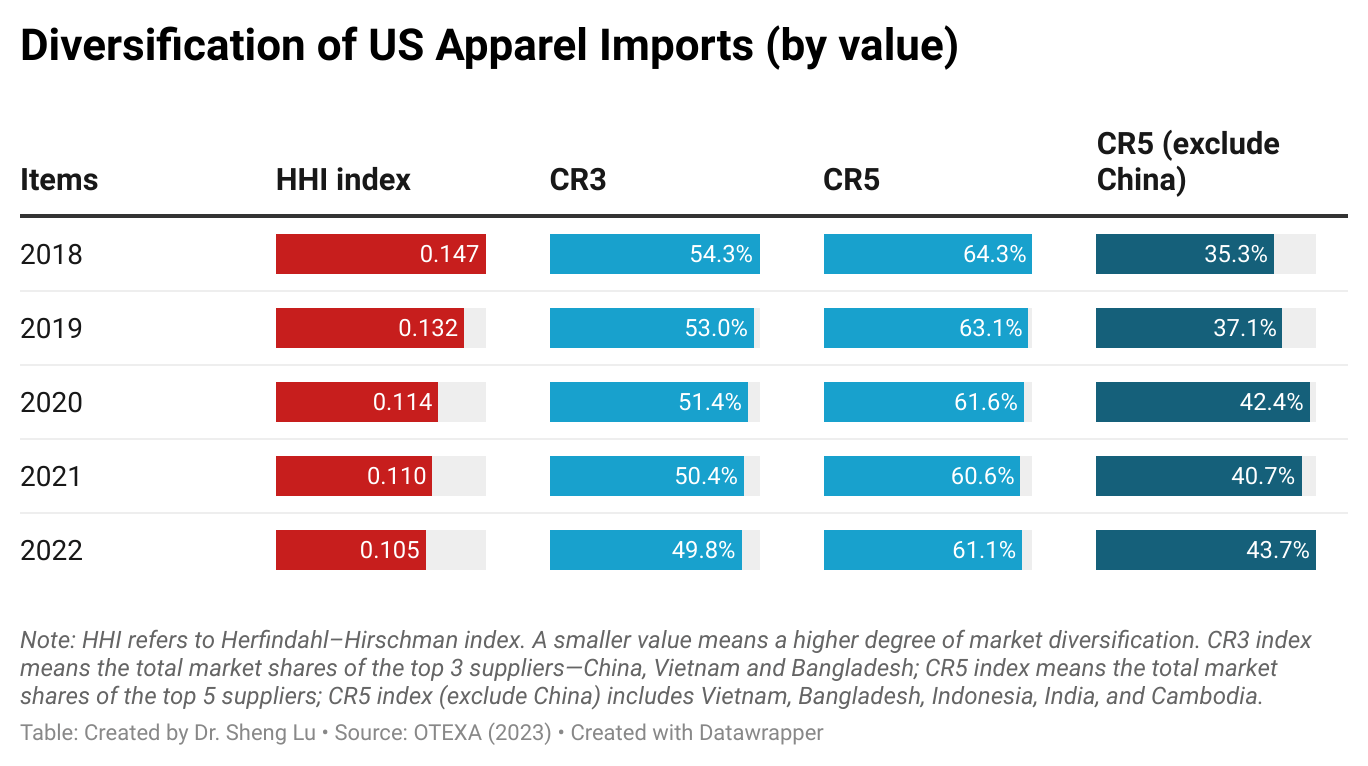
Trade data confirms the trend. For example, the Herfindahl–Hirschman index (HHI), a commonly-used measurement of market concentration, went down from 0.110 in 2021 to 0.105 in 2022, suggesting that US apparel imports came from even more diverse sources.

Trend 2: Asia as a whole will remain the dominant source of imports

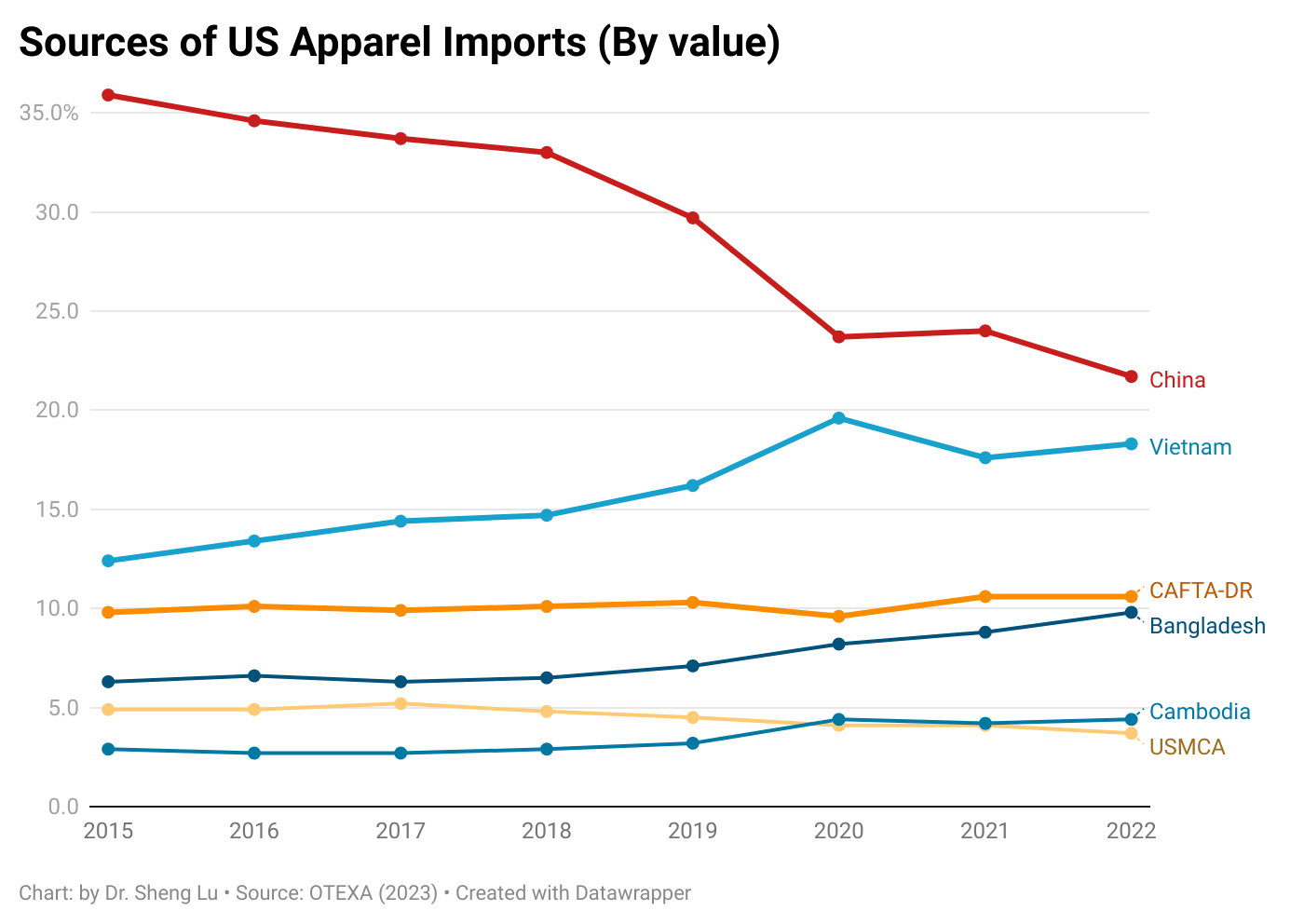
Measured in value, about 73.5% of US apparel imports came from Asia in 2022, up from 72.8% in 2021. Likewise, the CR5 index, measuring the total market shares of the top five suppliers—all Asia-based, i.e., China, Vietnam, Bangladesh, Indonesia, and India, went up from 60.6% in 2021 to 61.1% in 2022. Notably, the CR5 index without China (i.e., the total market shares of Vietnam, Bangladesh, Indonesia, India, and Cambodia) enjoyed even faster growth, from 40.7% in 2021 to 43.7% in 2022.

Additionally, facing growing market uncertainties and weakened consumer demand amid high inflation pressure, US fashion companies may continue to prioritize costs and flexibility in their vendor selection. Studies consistently show that Asia countries still enjoy notable advantages in both areas thanks to their highly integrated regional supply chain, production scale, and efficiency. Thus, US fashion companies are unlikely to reduce their exposure to Asia in the short to medium term despite some worries about the rising geopolitical risks.

Trend 3: US fashion companies’ China sourcing strategy continues to evolve

Several factors affected US apparel sourcing from China negatively in 2022:

  • One was China’s stringent zero-COVID policy, which led to severe supply chain disruptions, particularly during the fall. As a result, China’s market shares from September to November 2022 declined by 7-9 percentage points compared to the previous year over the same period.
  • The second factor was the implementation of the Uyghur Forced Labor Prevention Act (UFLPA) in June 2022, which discouraged US fashion companies from sourcing cotton products from China. For example, only about 10% of US cotton apparel came from China in the fourth quarter of 2022, down from 17% at the beginning of the year and much lower than nearly 27% back in 2018.
  • The third contributing factor was the US-China trade tensions, including the continuation of Section 301 punitive tariffs. Industry sources indicate that US fashion companies increasingly source from China for relatively higher-value-added items targeting the premium or luxury market segments to offset the additional sourcing costs.

Further, three trends are worth watching regarding China’s future as an apparel sourcing base for US fashion companies:

  • One is the emergence of the “Made in China for China” strategy, particularly for those companies that view China as a lucrative sales market. Recent studies show that many US fashion companies aim to tailor their product offerings further to meet Chinese consumers’ needs and preferences.
  • Second is Chinese textile and apparel companies’ growing efforts to invest and build factories overseas. As a result, more and more clothing labeled “Made in Bangladesh” and “Made in Vietnam” could be produced by factories owned by Chinese investors.
  • Third, China could accelerate its transition from exporting apparel to providing more textile raw materials to other apparel-exporting countries in Asia. Notably, over the past decade, most Asian apparel-exporting countries have become increasingly dependent on China’s textile raw material supply, from yarns and fabrics to various accessories. Moreover, recent regional trade agreements, particularly the Regional Comprehensive Economic Partnership (RCEP), provide new opportunities for supply chain integration in Asia.

Trend 4: US fashion companies demonstrate a new interest in expanding sourcing from the Western Hemisphere, but key bottlenecks need to be solved

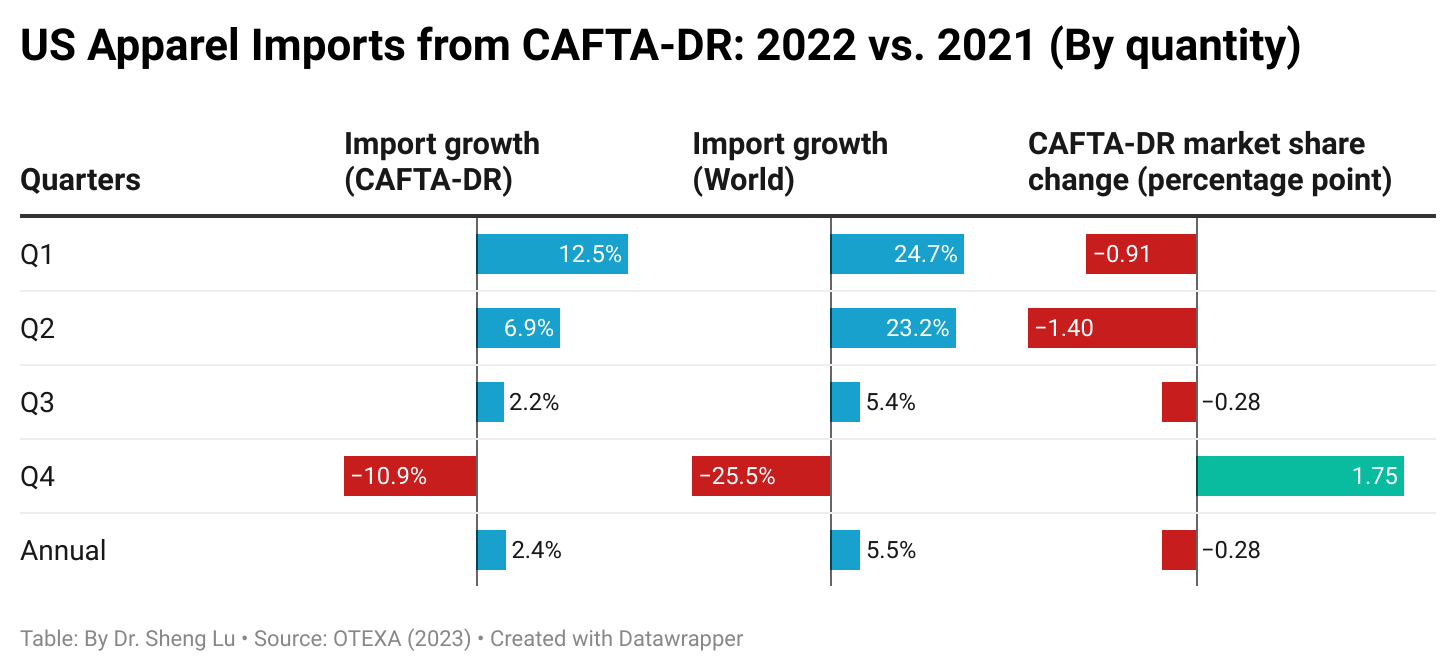
Trade data suggests a mixed picture of near-shoring in 2022. For example, members of the Dominican Republic-Central America Free Trade Agreement (CAFTA-DR) and US-Mexico-Canada Trade Agreement (USMCA) accounted for a declining share of US apparel imports in 2022, measured in quantity and value. While CAFTA-DR and USMCA members showed an increase in their market share of US apparel imports in the fourth quarter of 2022, reaching 10.7% and 3.1%, respectively, this growth was not accompanied by an increase in trade volume. Instead, US apparel imports from these countries decreased by 11% and 15%, respectively, compared to the previous year. CAFTA-DR and USMCA members’ gain in market share was mainly due to a sharper decline in US apparel imports from the rest of the world (i.e., decreased by over 25% in the fourth quarter of 2022).

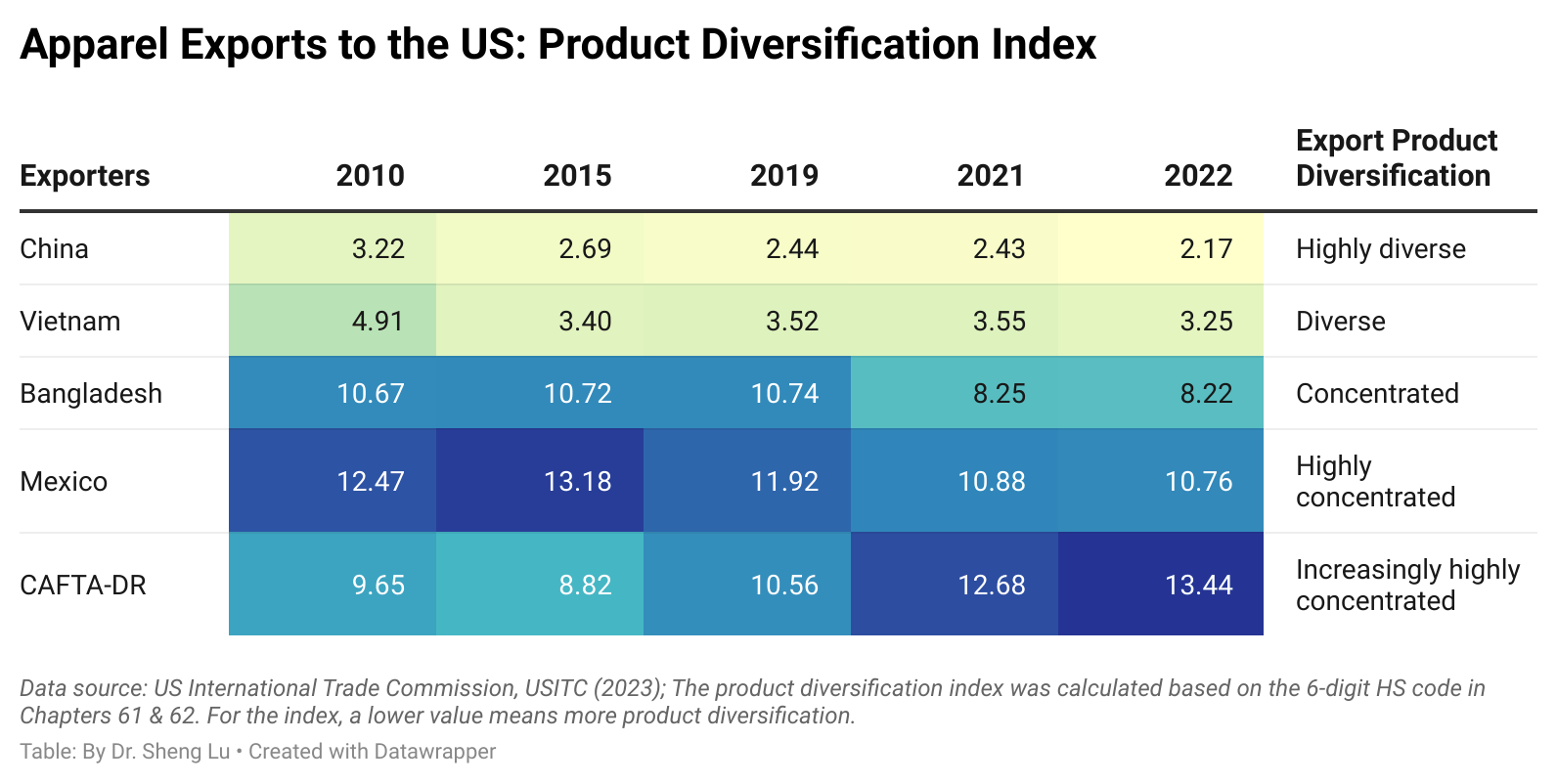
Trade data also suggests two other bottlenecks preventing more US apparel sourcing from CAFTA-DR and USMCA members. One is the lack of product diversity. For example, the product diversification index consistently shows that US apparel imports from CAFTA-DR members and Mexico concentrated on only a limited category of products, and the problem worsened in 2022. The result explained why US fashion companies often couldn’t move souring orders from Asia to CAFTA-DR and USMCA members.

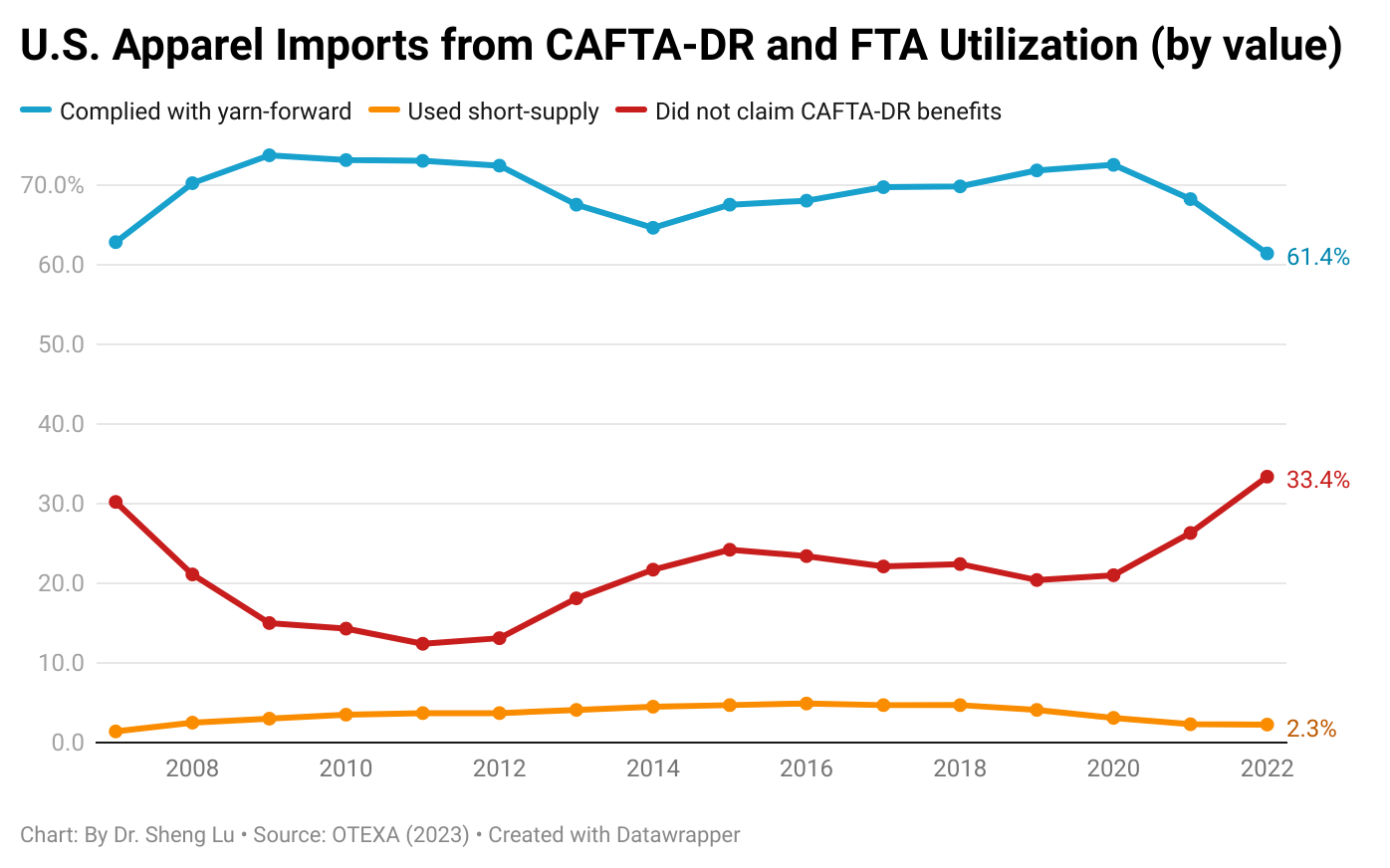
Another problem is the underutilization of the trade agreement. For example, CAFTA-DR’s utilization rate for US apparel imports consistently went down from its peak of 87% in 2011 to only 74% in 2021. The utilization rate fell to 66.6% in 2022, the lowest since CAFTA-DR fully came into force in 2007. This means that as much as one-third of US apparel imports from CAFTA-DR did NOT claim the agreement’s preferential duty benefits. Thus, regarding how to practically grow US fashion companies’ near-shoring, we could expect more public discussions and debates in the new year.

by Sheng Lu

Further reading: Lu, Sheng (2023). Key trends to watch as US apparel imports hit record high in 2022 but slow in 2023. Just-Style.

FASH455 Debate: Should US Fashion Companies Continue to Diversify their Apparel Sourcing Bases in 2022?

(The following comments are from students in FASH455 based on the readings)

Yes, US fashion companies should continue to diversify their apparel sourcing bases in 2022 because…

“It is said that you never keep all your eggs in one basket. If something happens in one of the countries that brands are sourcing from, whether it’s economically or politically, their business could be in jeopardy because they have no other sourcing bases anywhere else. As we see now with the Russian and Ukraine War, anything can happen at any time, and huge businesses like Mcdonalds and Starbucks have shut down their stores in Russia. Having connections in the business world is what takes a company further and makes them wealthier.

“The demand for sustainability and transparency is only rising from consumers and this is causing brands to need to take accountability and action for more ethical sourcing. In order for brands to find factories that will work with the stricter regulations and policies, it may require them to find different and new locations and countries to work with.”

“The pandemic proved to be detrimental to brands only sourcing from a few countries. Pandemic lockdowns and government restrictions were harmful to companies that did not have a diverse sourcing base… A diverse sourcing base will allow companies to have the ability to continue to source new products in case of government lockdowns in other sourcing nations.”

“I think that US fashion companies should continue to diversify their sourcing base in 2022 to benefit other developing countries who are looking to build their economy. The majority of apparel sourcing is done out of China and Vietnam. A diverse apparel sourcing base would be a great way to take the heat off of these countries and benefit others.”

“I think fashion companies should continue to diversify their sourcing bases because it can help them remain competitive while still keeping costs down. Keeping costs down can also help prevent giant unpredictable spikes. Lastly, the company will have more flexibility if they are diverse because they won’t be relying on a single source and won’t run into issues if that single source fails.”

“I understand the argument that it is easier for smaller companies to produce solely in China seeing as it can be seen as a one-stop-shop. I also understand why some companies are looking to bring their sourcing closer together and closer to home to mitigate some of the sourcing costs. However, I find this view to be short-sighted and will be detrimental to companies in the long run. As we saw with the pandemic, diversification is helpful in the wake of disaster. If one country is suffering from a natural, economic, or political disaster it would be helpful to have production capabilities in other countries. This way if production is shut down in one country, it is not as detrimental to obtaining products because you can lean on the factories in other countries. I personally would rather wait out the incredibly high costs, which will hopefully go down soon, and keep my sourcing base diversified to be better prepared for unforeseen challenges in the future.”

No, US fashion companies should consolidate their apparel sourcing bases in 2022 because…

 “US companies need to work on reducing the number of factories to increase sustainability and labor efforts. It would not be beneficial for the industry to continue to expand their sourcing bases, as that allows for less transparency with consumers. By diversifying their sourcing base they are proving to their consumers they only care about costs and how their clothing is affecting the environment.”

“I do not think US fashion companies should continue to diversify their sourcing base in 2022. These fashion companies should rather focus on nearshoring and local-to-local supply chain. Many retailers are interested in nearshoring as it helps eliminate the need to order months ahead, as the merchandise will have a shorter distance to travel. On top of this, many consumers want transparency and fast delivery. By sourcing more locally, fashion companies will be able to provide shorter shipping times as well as be more aware of sustainability in the supply chain and will then be able to relay the information to the consumers.”

The very diverse sourcing base is exactly why some fashion companies struggled with supply chain disruptions and shipping delays. As the business environment remains highly uncertain, why not cut ties with some high-risk countries and only source products from the most secure and stable sourcing bases?”

“The present sourcing techniques used by US fashion corporations need to be refined and improved. The number of factories used for sourcing has to be reduced in order to improve sustainability and labor efforts. Increasing the number of sourcing bases does not benefit the industry since it reduces customer trust in the supply chain.”

“From trade data, it seems the top apparel suppliers to the US market barely changed—China, Vietnam, Bangladesh, Cambodia, Indonesia, or India. So, realistically, if a company intends to diversify sourcing, where else can they go?”

“During the pandemic, many US companies focused on strengthening their relationships with key vendors to gain a competitive advantage to achieve more flexibility in sourcing. It worked, then why companies should give up this strategy in 2022? Also, I think it would be wise for fashion companies to give MORE rewards to business partners that helped them survive the difficult times, rather than give sourcing orders to “new vendors”…further, using long-term loyalty and fiscal leverage with strategic business partners as an advantage could prove to be a good option for companies looking to obtain high production capacity, low prices, flexibility, and speed to market from their suppliers.”

Discussion questions:

Which side do you agree with or disagree with and why? What is your recommendation for US fashion companies regarding their apparel sourcing diversification strategies in 2022? Please join our online discussion and leave your comments.

[discussion is closed]