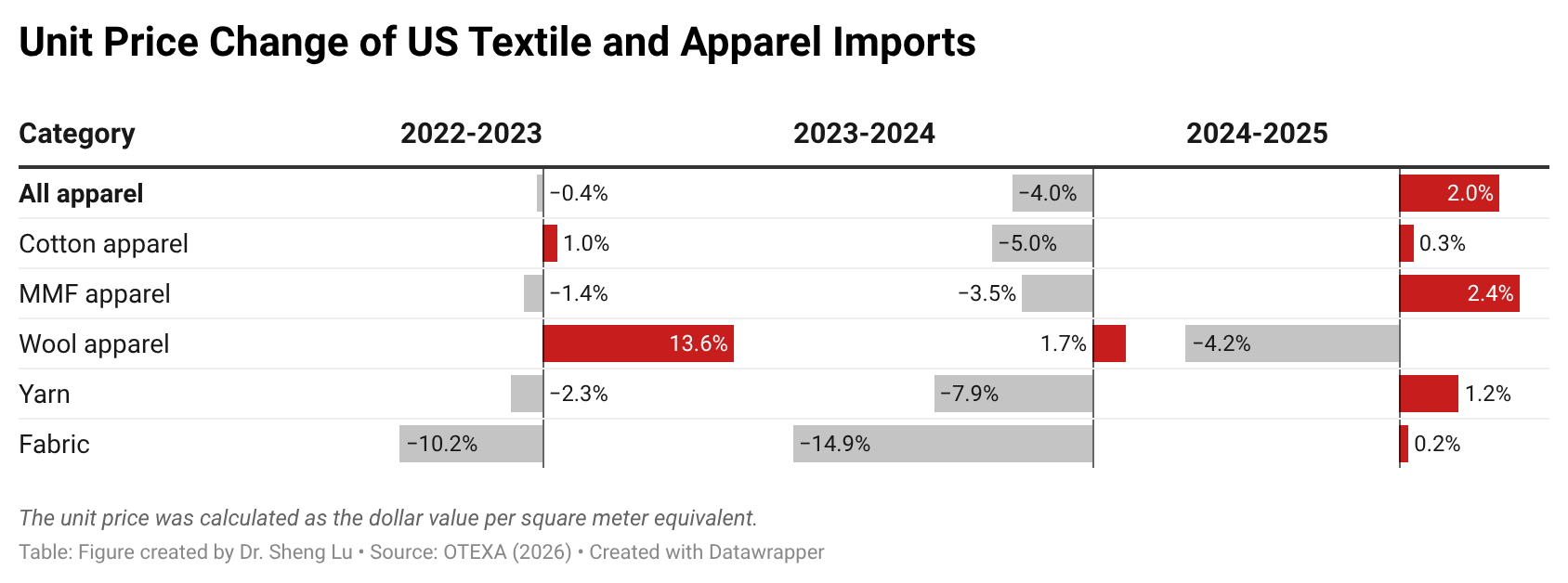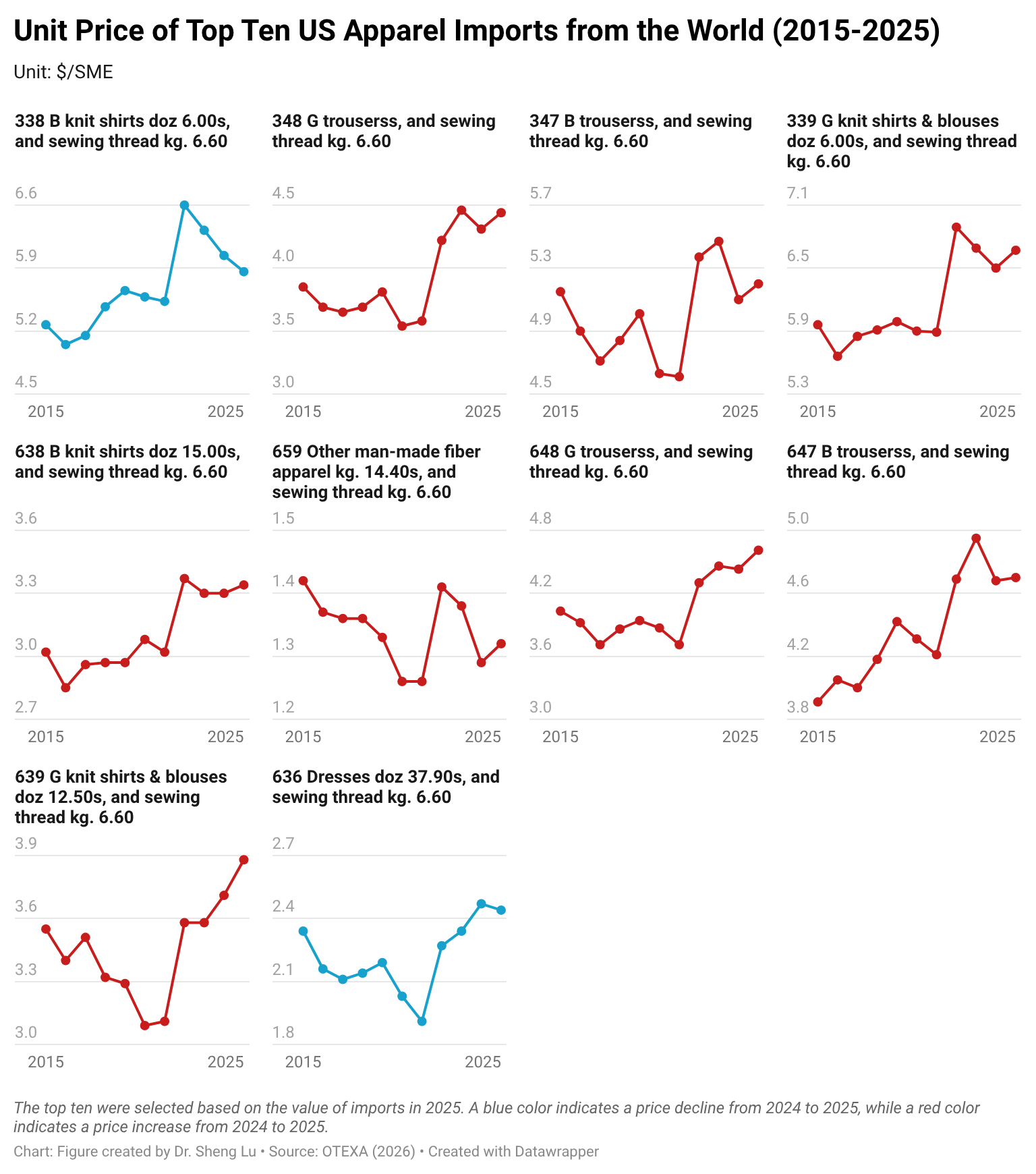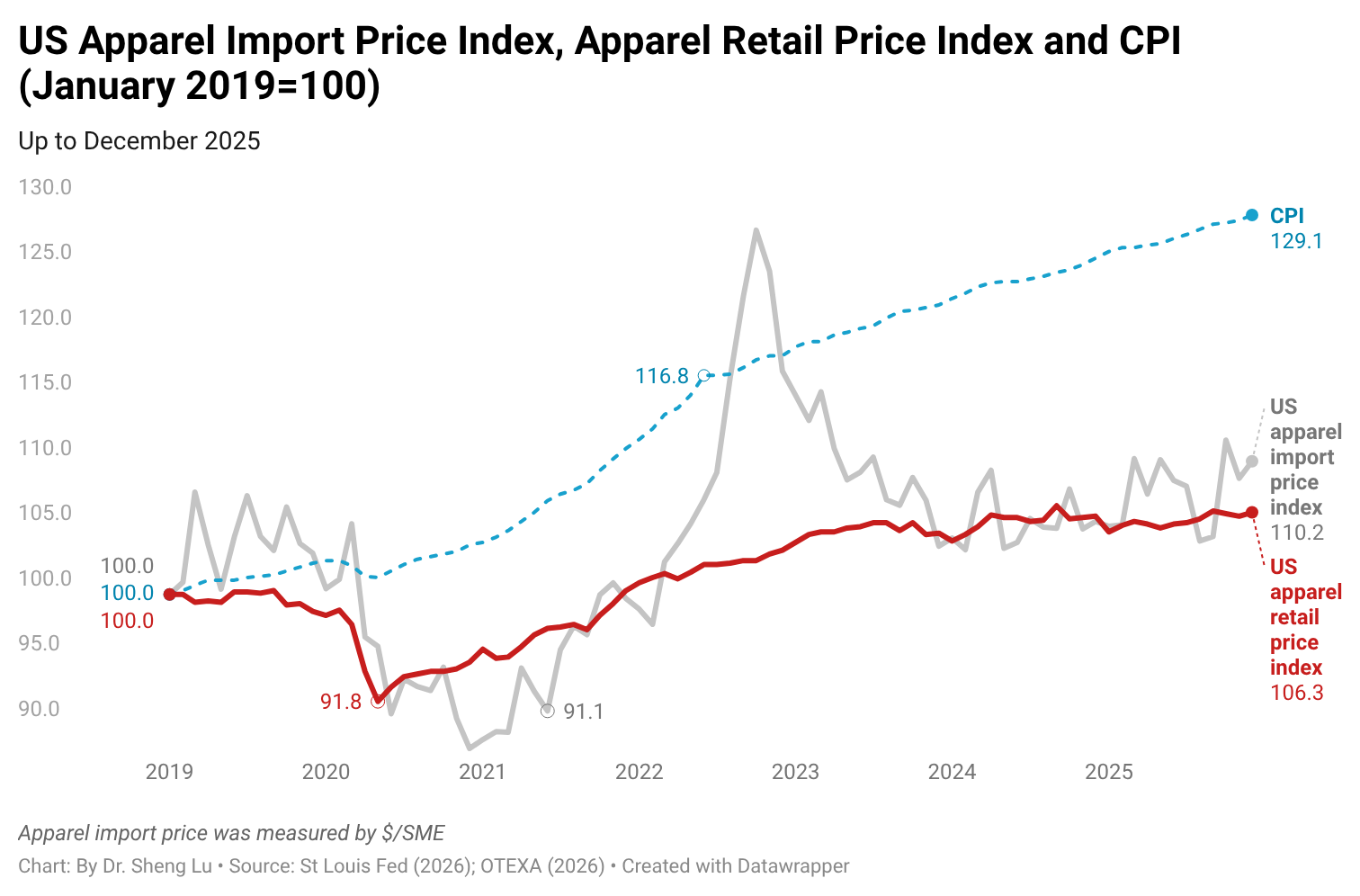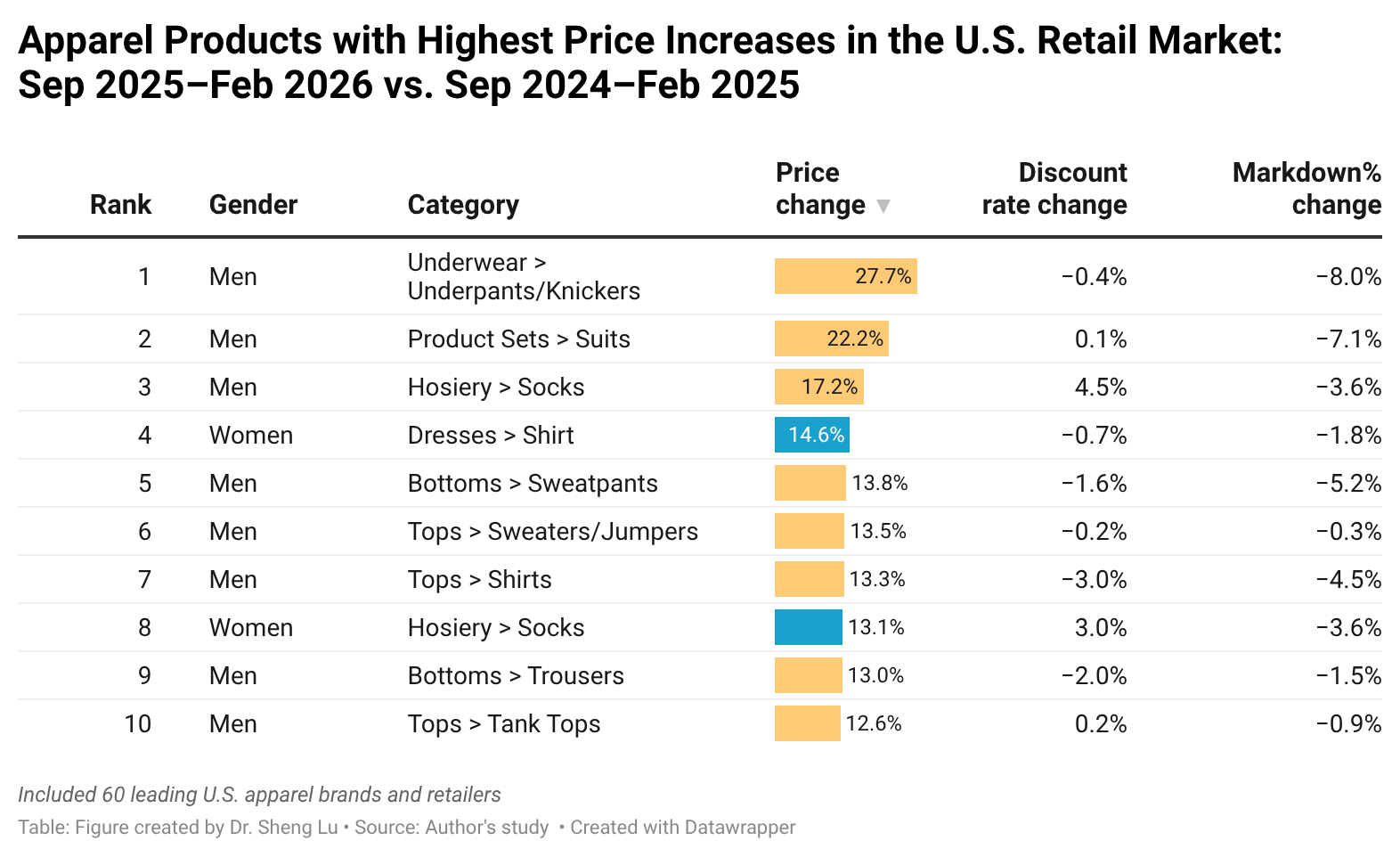
Apparel Sourcing and Trade Outlook for 2026

Top challenges in 2026

I believe the global fashion apparel industry will continue to face two macro-level challenges in 2026. One is the relatively weak consumer demand for clothing amid sluggish economic growth and persistent inflationary pressures. For example, according to the International Monetary Fund’s (IMF) October 2025 forecast, global GDP growth in 2026 is expected to decrease from 3.2% in 2025 to 3.1% in 2026. Specifically, U.S. GDP growth will be around 2.1% (down from 2.8% in 2024), and growth in the EU could drop to 1.1% (down from 1.2% in 2025).

Likewise, several consulting firms forecast that clothing retail sales in key apparel import markets, including the United States and Western Europe, could be stagnant or even decline in 2026. Notably, while Gen Z (i.e., those born between 1997 and 2012) has increasingly become a key customer group for many fashion brands and retailers, analysis shows that this generation has turned more cautious about shopping for clothing, especially for new items. The tariff-driven price increases could further discourage these groups from buying new clothing in the new year ahead.

Meanwhile, the trade policy environment facing the global fashion apparel industry could remain highly uncertain in 2026. Notably, in addition to tariffs, several trade agreements could create new uncertainties for fashion companies when sourcing from affected regions. Specifically:

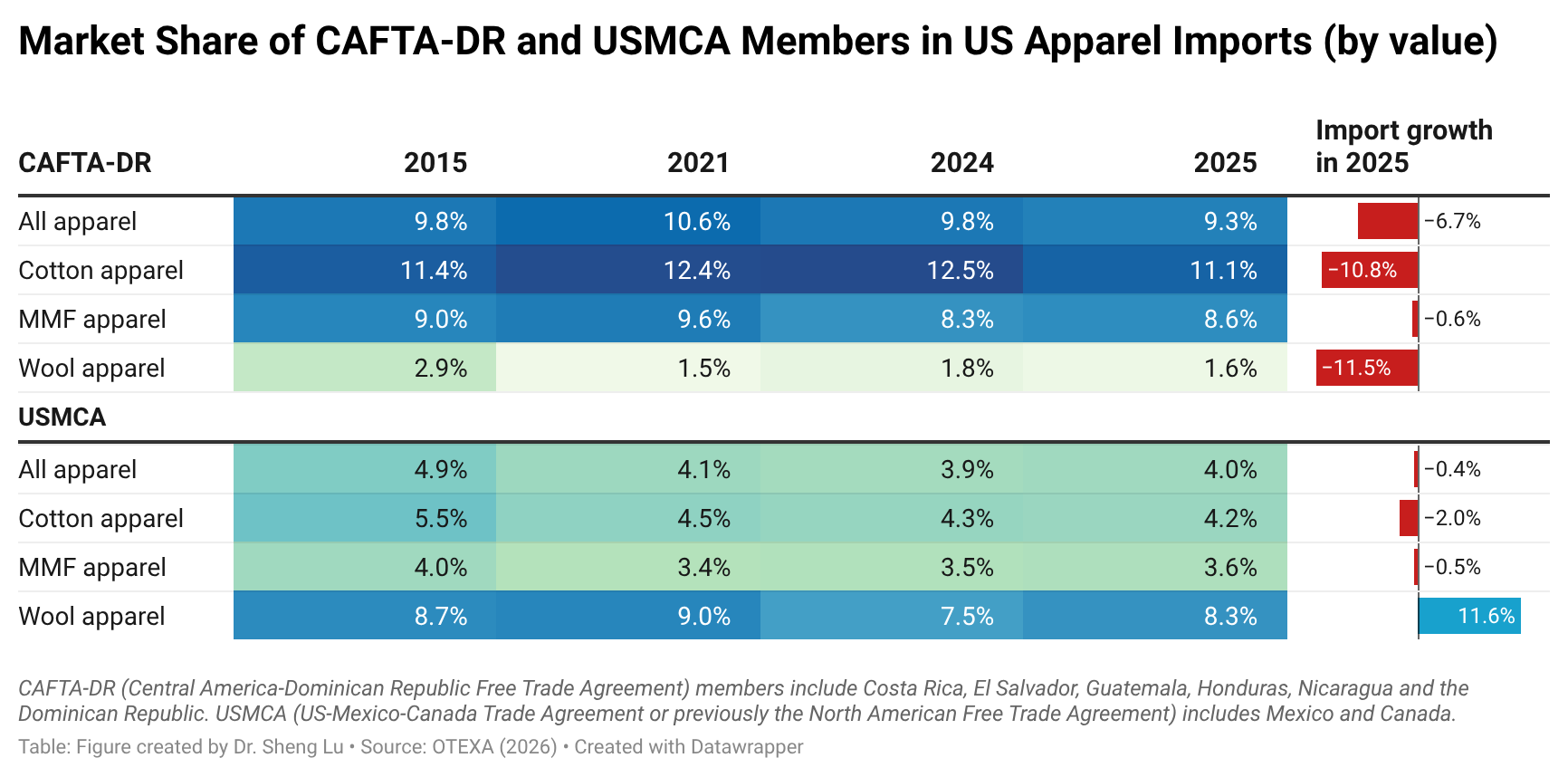
The U.S.-Mexico-Canada (USMCA) trade agreement will begin its formal six-year review process in 2026. Despite broad industry support for upholding the existing agreement and calls to “do no harm,” we cannot rule out the possibility that the Trump administration might seek significant renegotiation or even replace the USMCA with separate bilateral trade deals.

Likewise, the outlook for the African Growth and Opportunity Act (AGOA) and the Haiti HELP/HOPE program, both of which expired in September 2025, remained highly uncertain. Because both programs play a critical role in supporting U.S. apparel sourcing from Sub-Saharan Africa and Haiti, whether and under which conditions they are renewed will directly influence fashion companies’ sourcing decisions and the long-term competitiveness and investment prospects of these regions.

Furthermore, even with several “trade deals” reached between the US and major trading partners like the EU, Vietnam, Cambodia, and potentially China and India, their implementation and enforcement will warrant close attention. In particular, the meaning and definition of critical terms like “transshipment” in these “trade deals” remain largely unclear. However, the impact could be significant for apparel sourcing if the Trump administration ultimately decides to revisit or set new rules of origin in these agreements to reduce the “China content” in products imported into the United States. Notably, according to OECD’s newly released “trade in value-added database,” apparel exports from Asian countries, including Vietnam and Cambodia, commonly contain 20-30% of value created in China.

Key apparel sourcing trends to watch in 2026

First, trade and economic impacts of tariffs could become more visible and significant in 2026. In particular, almost all U.S. apparel imports will be subject to the higher tariffs in 2026, leaving fashion companies with fewer options to use existing inventory to mitigate the effects. Consequently, fashion companies will face increased pressure to control their sourcing costs and protect their profit margins.

Second, fashion companies will continue to leverage sourcing diversification to navigate market and trade policy uncertainties. For example, according to the 2025 Fashion Industry Benchmarking Study released by the U.S. Fashion Industry Association (USFIA), a record-high percentage of surveyed U.S. fashion brands and retailers (i.e., over 80%) reported sourcing from 10 or more countries. Nearly 60% of respondents plan to source from even more countries in 2026. In a recent study I conducted, some leading U.S. and EU fashion companies mentioned in their 2025 Q2 earnings call transcripts that they intentionally seek vendors with production capacity across multiple countries to achieve sourcing diversification and mitigate risks.

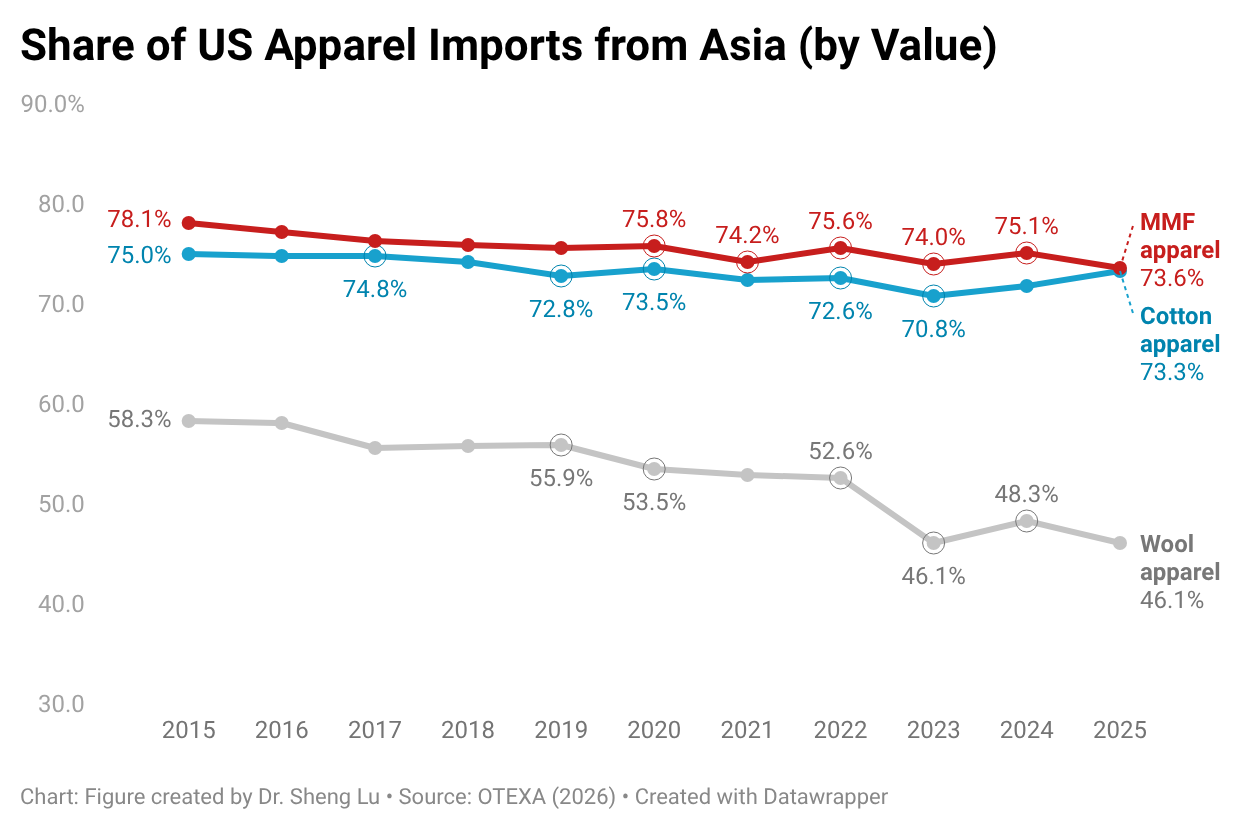
Third, in addition to seeking competitive sourcing costs, fashion companies will increasingly look for vendors that can offer speed to market, flexibility, and agility. As one leading fashion company noted, “increasing the speed” does not necessarily mean “nearshoring,” but also refers to vendors that can deliver products quickly and at scale. Meanwhile, fashion companies increasingly expect suppliers to accommodate last-minute order changes, accept low minimum order quantities (MOQs), arrange raw material sourcing, and offer other value-added services. This shows why, based on trade data, Asian suppliers overall are more competitive and have captured more market share in the U.S. and EU markets in 2025 than “near-shoring” suppliers.

Additionally, China and Asia’s role in apparel sourcing could continue to evolve in 2026. I recently attended an industry event featuring textile and apparel manufacturers in Southeast Asian countries (ASEAN) and China. A few observations from the event stood out to me.

  1.  While the tariff was a top concern for most U.S. fashion companies, the conference mainly focused on facilitating investment and creating a more integrated, resilient, and sustainable textile and apparel supply chain in Asia. In other words, Asia-based textile and apparel suppliers did not seem panicked by the tariffs, nor do they believe the tariffs fundamentally challenge their long-term growth trajectory or hurt their export competitiveness.
  2. The Asia-based textile and apparel industry is becoming ever more global, mature, and advanced. Consistent with recent trade data, Asia-based fashion brands today commonly conduct global sourcing. They are investing heavily in new sustainable textile materials and digital technologies. They remain the largest buyer of the most sophisticated textile machinery in the world. Therefore, it is reasonable to expect that Asian suppliers as a whole will continue to dominate textile and apparel production and export into 2026 with no near competitors. 
  3. China’s leadership and influence within the Asia-based textile and apparel supply chain are increasingly visible. At the conference, ASEAN-based textile and apparel associations see China as a vital partner and source of investment. Through China’s Belt and Road Initiative (BRI), collaboration is extending from trade and investment to education and skills training. Overall, industry sentiment toward China in ASEAN differs significantly from the “decoupling” and “reducing China exposure” narratives that are gaining traction in the United States.
  4. An interesting question that I took away from the conference was whether China truly worries about losing market share in the U.S. and other markets for final apparel products. Perhaps not. Chinese industry leaders appear confident because they know that many Asian garment-producing countries remain heavily dependent on Chinese textile inputs, and many garment factories are funded or owned by Chinese investors. Given these dynamics, it will be interesting to observe how China’s confidence and its broader leadership role in Asia’s regional textile and apparel supply chain will continue to grow in 2026.

Opportunities in 2026

In 2026, we may see a significant increase in AI use in apparel sourcing. For example, fashion companies could use new AI tools to help optimize inventory levels and logistics, identify and evaluate new suppliers, and improve operational efficiency. AI may also play a more crucial role in supporting efforts around supply chain mapping, traceability, and sustainability data collection. Overall, we could see a more digitalized and data-driven sourcing process in the new year ahead.

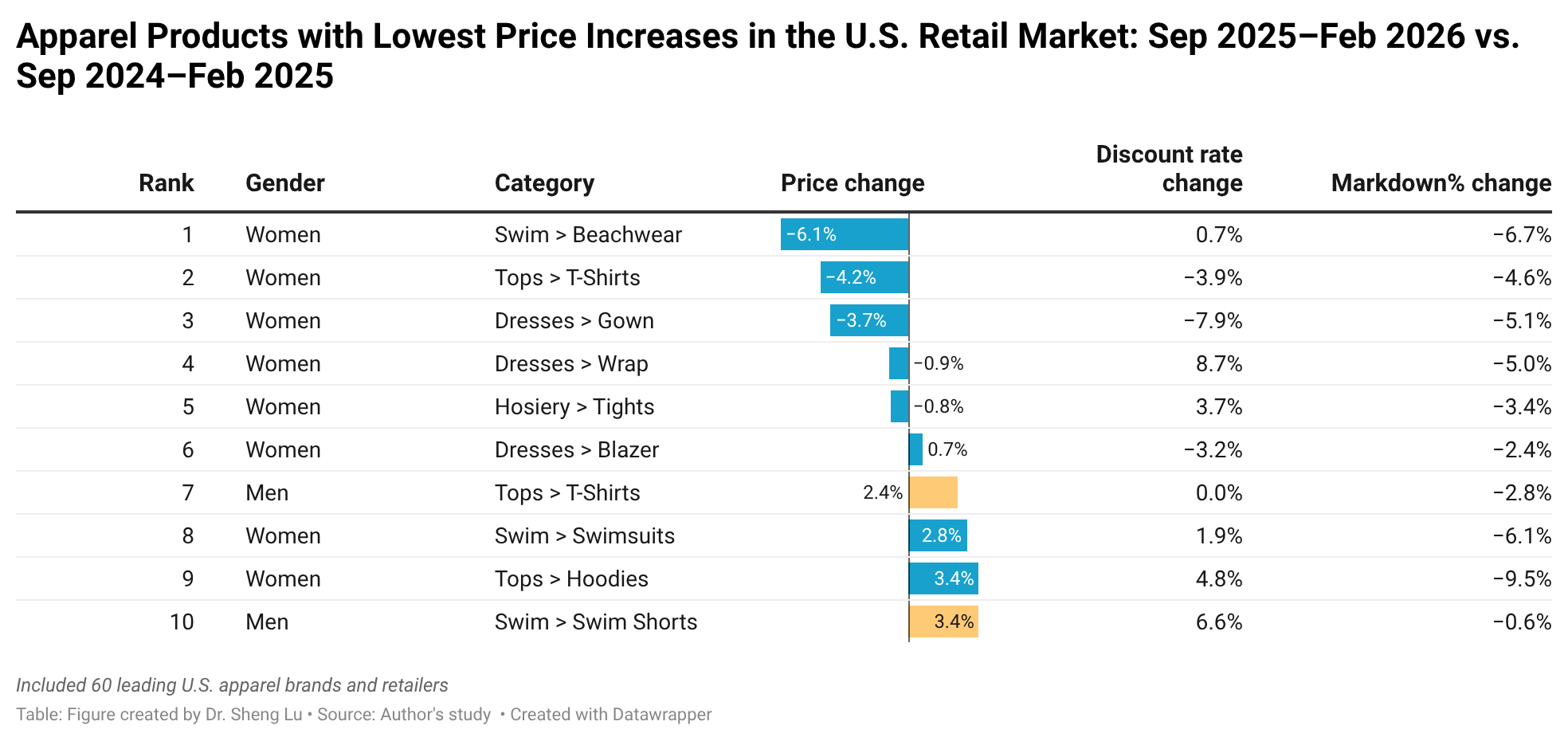
On the other hand, in 2026, fashion companies could benefit from investing in and exploring new business models that support designing, making, sourcing, and selling sustainable apparel products. For example, a recent study of mine found that, by stock keeping units (SKUs) count, the number of clothing items made with recycled textile fibers increased by about 24% from 2024 to 2025 (August to October) in the U.S. retail market. Similarly, clothing items made with “regenerative” textile fibers surged by nearly 90% over the same period. These figures represent consumers’ increasing demand and fashion companies’ growing business interest in offering these products. New sustainability legislation, such as the Extended Producer Responsibility (EPR) at the state, regional, or international levels, will also create new incentives and pressure for fashion companies to revisit many of their current business practices. That said, balancing the sustainability benefits with other key sourcing metrics, such as costs, quality, and traceability, for these sustainable apparel products, will require ongoing efforts and improvements by fashion companies and their supply chain partners in 2026.

by Sheng Lu

Updated Impact of Increasing Tariffs on U.S. Fashion Companies’ Sourcing and Businesses

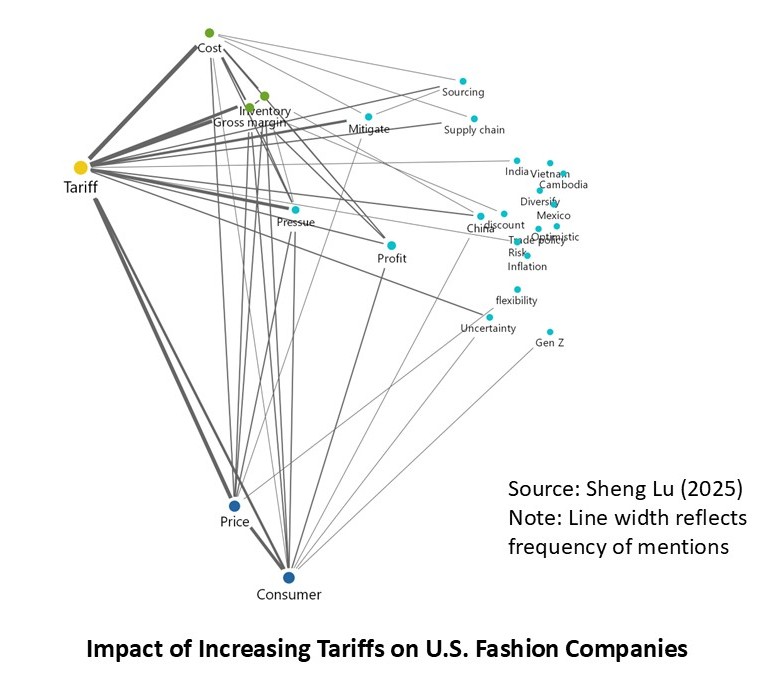
This study aims to examine the impacts of the Trump administration’s escalating tariffs on U.S. fashion companies’ apparel sourcing practices. Based on data availability, transcripts of the latest earnings calls from about 30 leading publicly traded U.S. fashion companies were collected. These earnings calls, held between August and October 2025, covered company performance in the second quarter of 2025 or later. A thematic analysis of the transcripts was conducted using MAXQDA.

Key findings:

First, U.S. fashion companies reported a more significant impact of the increasing tariffs on their financial performance as the tariff increase expands from China to other countries. Many companies regarded tariffs as one of their top-most pressing external challenges to profitability in 2025, especially in the second half and beyond.  For example:

  • G-III Apparel: “We expect the total incremental cost of tariffs to be approximately $155 million, up from the $135 million original estimate, and this is based on the latest tariff increases implemented for Vietnam, India and Indonesia, among others.”
  • American Eagle: “On tariffs, yes, we are providing the guidance here for the third and fourth quarter. About $20 million of impact from Q3. $40 million to $50 million in Q4. So that will pressure gross margin a bit.”
  • Hanesbrands: “When you think about tariffs and the impact on our business, first of all, we won’t be really experiencing that cost until Q4 because of the inventory that we have and the way cost flows off of our balance sheet.”
  • Victoria’s Secret: “Our projected net tariff impact of $100 million in 2025 is up $50 million versus our assumption embedded in our previous guidance. With approximately $10 million of net tariff impact already recognized in the first half of the year, our guidance assumes approximately $20 million of net tariff pressure in the third quarter with $70 million impact in Q4.”
  • Tapestry: “We are facing greater than previously expected profit headwinds from tariffs and duties, with the earlier-than-expected ending of de minimis exemptions being a meaningful factor. In aggregate, the total expected impact on profitability this year from tariffs is $160 million, representing approximately 230 basis points of margin headwind.”
  • Carter’s: “We’ve assessed the higher incremental tariffs, which have already been implemented, an additional 10% duty for all countries and higher incremental duties for products from China, Vietnam and Indonesia. Relative to a few months ago, we’re preparing for a world with higher and more permanent tariffs above the over $100 million in duties, which we have paid historically. Our estimate of the additional baseline tariffs is that it would represent a gross additional tariff amount between $125 million and $150 million on an annualized basis.”

Second, despite the higher tariff burdens, most U.S. fashion companies still try to avoid across-the-board price hikes due to concerns about losing consumers. Instead, most companies opt for selective price increases, value-based pricing, and closely monitor consumers’ price sensitivity. However, price increases could be more noticeable down the road. For example:

  • Oxford industries: “We’ve not done sort of an across-the-board approach to pricing. We’ve really looked at it on an item-by-item basis and balanced the need to protect our margins and try to recover some of the tariff impact with not wanting to get too far ahead of ourselves because that tariff number…as we get into spring ’26… And on average, that’s led to sort of low to mid-single digit or low mid-single-digit price increases…we’re just being very cautious about increasing the price too much before we really know where things are settled out.”
  • URBN: “our pricing strategy…is really to look at some gentle price increases where we feel like there’s the value that contributes to that. So making sure that we’re protecting some of the opening price points that the customer counts on and some programs that we know drive a lot of volumeRecognizing the value equation is really important to all of our consumers.
  • TJX: “I think you’re gonna see a more of a little bit of a gradual increase in pricing as the tariffs come in…I don’t think you’ll see step all of a sudden Right. With the tariffs set,because I don’t wanna, I think, turn off customers immediately by seeing a dramatic price shift. So I think they might they might they might absorb it initially for a little bit, and eventually, they’ll get there.
  • Columbia Sports: “We expect higher prices for many consumer goods will negatively impact consumer demand…In fall ’25, we’re working with our retail partner to deliver value to consumers and keep inventory and dealer margins healthy. As a result, we’re not making any significant price changes to our fall ’25 product line and expect to absorb much of the incremental tariff costs this year…Our goal is to offset higher tariffs over time through a combination of actions, including price increases, vendor negotiations, SG&A expense efficiencies and other mitigation tactics.”
  • Ralph Lauren: “The big unknown sitting here today is the price sensitivity and how the consumer reacts to the broader pricing environment and how sensitive that consumer is. And that’s what we’re watching very closely as we head into the second half.”
  • Ross stores: “Some of the India tariffs, especially if the 25 goes to 50…I think that you’ll see this go into next year, and I think we would expect to see price increases. And — but over time…we think it will reach equilibrium, and it will be business as usual.”
  • Burlington stores: “we are seeing that competitors are taking up retail prices. So far, though, I would say that those price increases have been quite selective and quite restrained…Part of it may just be the time lag between imports arriving in the country and those goods showing up in stores. But also my sense is that wholesalers and retailers have been reluctant to make decisions on raising prices until they know what the final tariff rates are going to be. Now it does feel like there is more clarity on this now than there was a couple of months ago. So it wouldn’t be surprising if retail prices were to go up across the industry in the back half of the year. Now of course, we know that our customer is very, very price sensitive.
  • VF Corporation: “we have actions in place to mitigate the tariff impact through sourcing savings and pricing actions that will take effect later this year.”

Third, while U.S. fashion companies overall continue to reduce their apparel sourcing from China amid the current tariff and geopolitical tensions, some companies still regard China as a viable sourcing base given its many unique advantages, such as speed to market, production efficiency, and well-developed supply chain infrastructure. For example:

  • Carter’s Inc: “We’ve meaningfully reduced our exposure to China manufacturing over the last number of years. And now, as summarized here, our largest countries of origin are Vietnam, Cambodia, Bangladesh, and India.”
  • Abercrombie & Fitch: “Our approach and underlying principles for tariff mitigation remain unchanged, supported by a deep playbook and experience. We continue to expect China sourcing share in the U.S. will be in the low single digits for the year.”
  • Steve Madden: “Since the last call…We have moved certain production for fall back to China, where we felt it would be difficult to ensure on-time delivery, appropriate product quality and/or reasonable pricing in an alternative country. For fall 2025, we currently expect to source approximately 30% of our U.S. imports from China, down from 71% for the full year 2024..
  • Oxford industries: “With the recent tariff increases announced during the second quarter, including increased tariffs in countries like Vietnam and India that were included as part of our shift away from China, largely offset by the mitigation efforts we have undertaken, including accelerated inventory receipts and quickly shifting our sourcing network.”
  • American Eagle: “If you start with all the country of origin remixing…China where we know we were at a higher penetration coming into the year is mid-single digit now in a full year.”

Fourth, establishing a geographically diverse sourcing base continues to be a crucial strategy employed by U.S. fashion companies to mitigate tariff impacts and policy uncertainty. U.S. fashion companies are also intentionally adding speed, flexibility, and agility to their sourcing base and supply chain. However, given the complex sourcing factors fashion companies have to consider, plus the broad scope of “reciprocal tariffs, there is no clear winner. For example:

  • Kohl’s: “We have a diversified sourcing strategy from a country standpoint. We’re not heavily reliant on any one particular country, and we have the flexibility and agility to actually move production to other countries if necessary.
  • PVH: “We work closely with an established network of global sourcing partners across more than 30 countries, and we continue to leverage our deep long-standingrelationships to further optimize our sourcing and production costs.”
  • American Eagle: “If you start with all the country of origin remixing…India is small for us. Rebalancing some things out of Vietnam.”
  • Steve Madden: “we were focused on moving a lot of product to Brazil. We’re going to have to wait and see what happens. I think that really goes not just for Brazil, but for a lot of the countries that we work with. So we’ve tried to create a more diversified sourcing footprint. And — but there’s obviously a lot of uncertainty still about where the ultimate tariff rates will land by country. And so we’re going to have to wait and see what happens and then react accordingly. That’s all we can do.”
  • Hanesbrands: “when you think about tariffs and the impact on our business…not only do you have the Q4 impact, but you have to think about those other offsets about meaningful U.S. content that we have in our products that are exempt from reciprocal, the good East-West balance that we have in our supply chain…”
  • Land’s End: “With regard to sourcing…we have been intentionally repositioning our sourcing network to better serve the business we are building leading to a more balanced supply chain that enables us to bring new solutions to customers with more speed and frequency throughout the year. For example, our licens epartners are becoming part of our sourcing network…By tapping into the full breadth of our sourcing matrix, we are able to swiftly and strategically reposition fabric and manufacturing as tariff conditions evolve.”

Fifth, as part of their tariff cost mitigation strategy, many U.S. fashion companies have been strategically but cautiously building preemptive stock, adopting a data-driven approach to optimize inventory, and simplifying product assortment. For example:

  • Levi’s: “And for Q4, we declared a dividend of 14¢ per share, which is up8% to prior year. We ended the quarter with reported inventory dollars up 12%, driven by purposeful investment ahead of the holiday and higher product cost than a year ago due to tariffs. In unit terms, inventory was up 8% versus last year. As of today (October 9, 2025), we have 70% of the product in the US needed for holiday.”
  • Ralph Lauren: “So we feel good about our inventory levels as we head into the fall season. So we ended Q1 (2025), as you know, with inventories up 18% versus Q1 of last year (2024)…if you think about sort of our Q2 revenue guide of up high single digits, relates to the strategic acceleration of largely core inventory receipts into the U.S. in Q1 during the tariff pause period…So if you back out that tariff-related strategic pull up, our inventory growth is actually a little behind our double-digit top line growth for Q1 and right in line with our expected high single-digit top line growth for next quarter, Q2. And…for the year to go, we expect inventories to moderate as we move throughout the fiscal year, and we plan on ending fiscal ’26 with levels generally in line with demand.”
  • PVH: “Inventory at quarter end (Q2, 2025) was up13% compared to Q2 last year (2024), including a 1% increase due to tariffs, and reflects a planned improvement compared to up 19% in Q1.”
  • Hanesbrands: “we’re leveraging advanced analytics with the use of AI to drive operational improvement around the globe, including inventory and assortment management as well as demand planning and forecasting.”
  • Tapestry: “We’re bringing more innovation to the assortment while we streamline our offering, reducing handbag styles by over 30% by fall, allowing us to stand behind our big ideas with clarity and intention.

by Sheng Lu

Patterns of U.S. Apparel Imports (updated September 2025)

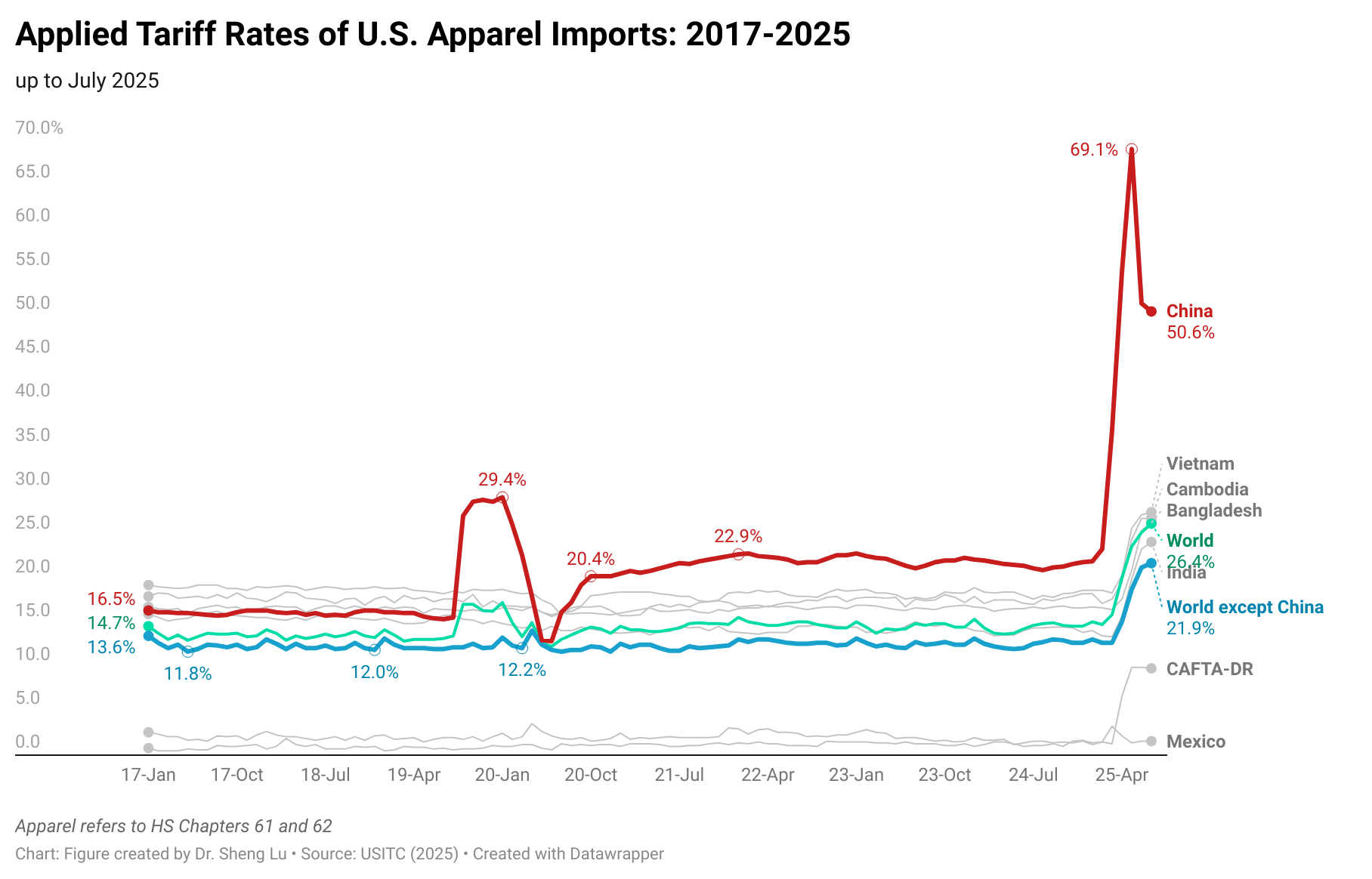
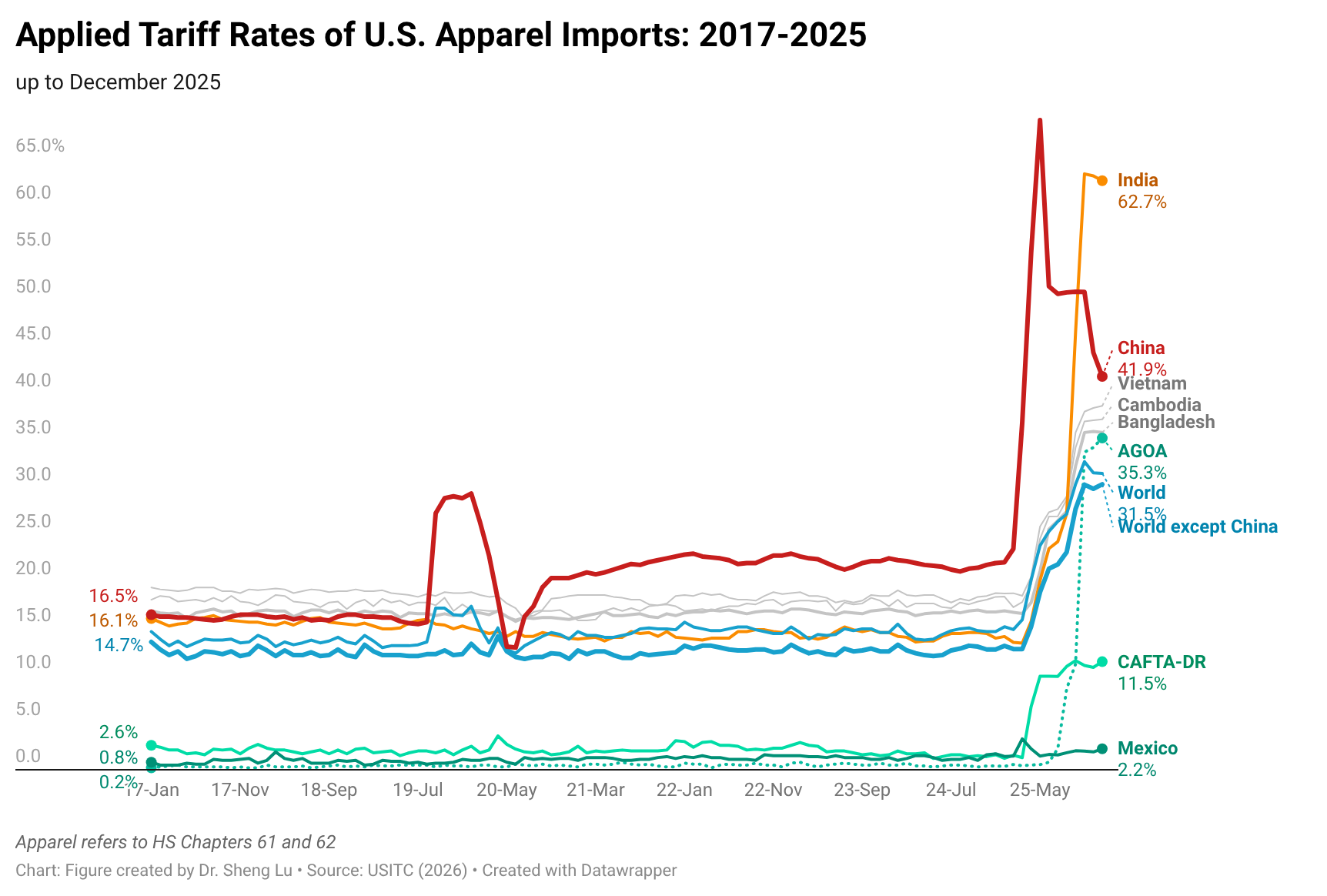
First, as a result of the IEEPA reciprocal tariff, the average tariff rate for U.S. apparel imports (HS Chapters 61 and 62) reached 26.4% in July 2025, marking a new high in decades (note: was 25.4% in June, 23.8% in May and 20.2% in April 2025), and a substantial increase from 14.7% in January 2025, prior to Trump’s second term. Even apparel imports from traditional U.S. free trade agreement partners, such as CAFTA-DR members, now have to be subject to about 10% applied tariffs. And apparel imports from Mexico still enjoyed a relatively low 1.6% tariff rate in July 2025. [Check the applied US apparel import tariff rate here]

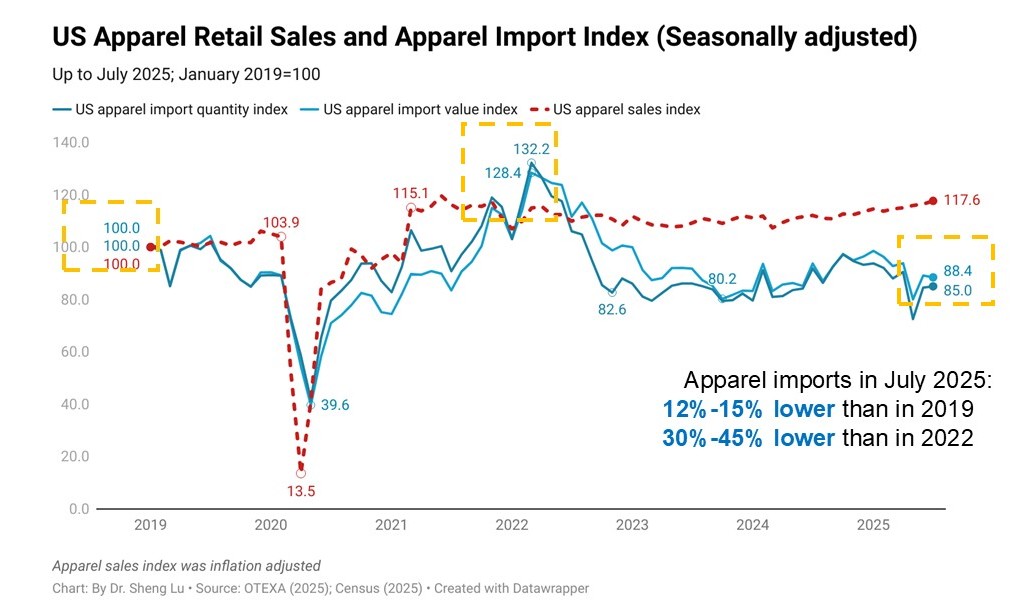
Second, U.S. apparel imports fell in July 2025, negatively impacted by the hiking of tariffs and consumers’ growing hesitancy in clothing spending amid uncertainty about their household financial outlook. Specifically, U.S. apparel imports in July 2025 decreased by 3.0% in value and 5.2% in quantity from a year ago, indicating both an overall shrinking import demand and a more notable import price increase. [Check U.S. apparel import index here]

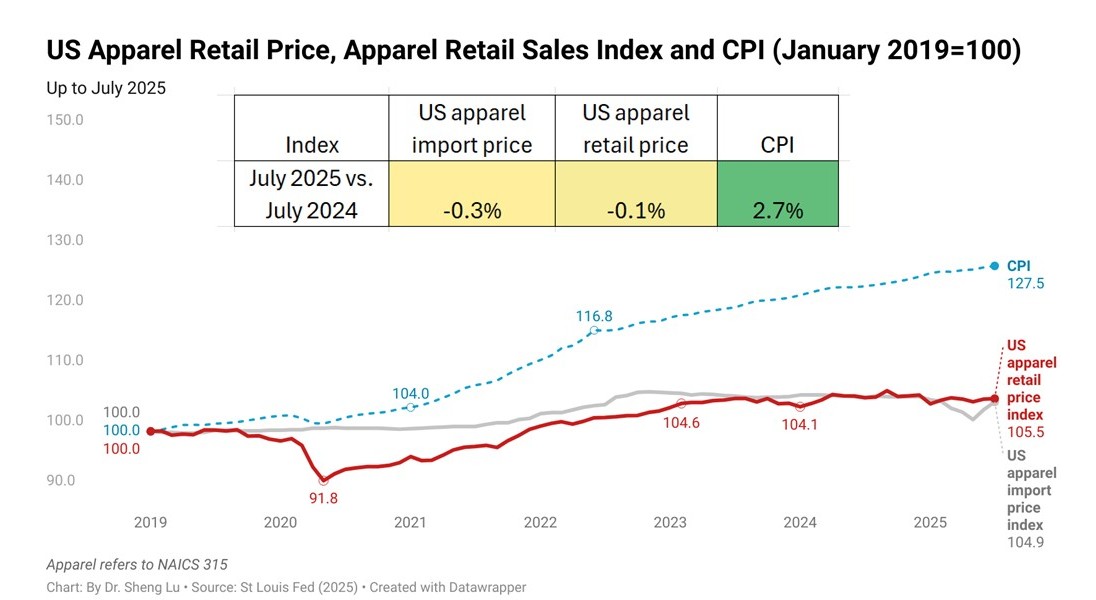
Statistics also show that after removing the seasonal factor, the average U.S. apparel import price went up by nearly 3% from April to July. This trend could become even worse in the coming months as more countries face even higher “reciprocal tariffs” starting from August 2025. However, the average U.S. apparel retail price has not significantly increased, likely because fashion companies fear losing sales at a time when consumers’ clothing spending is already weak. [Check the U.S. clothing retail price index here]

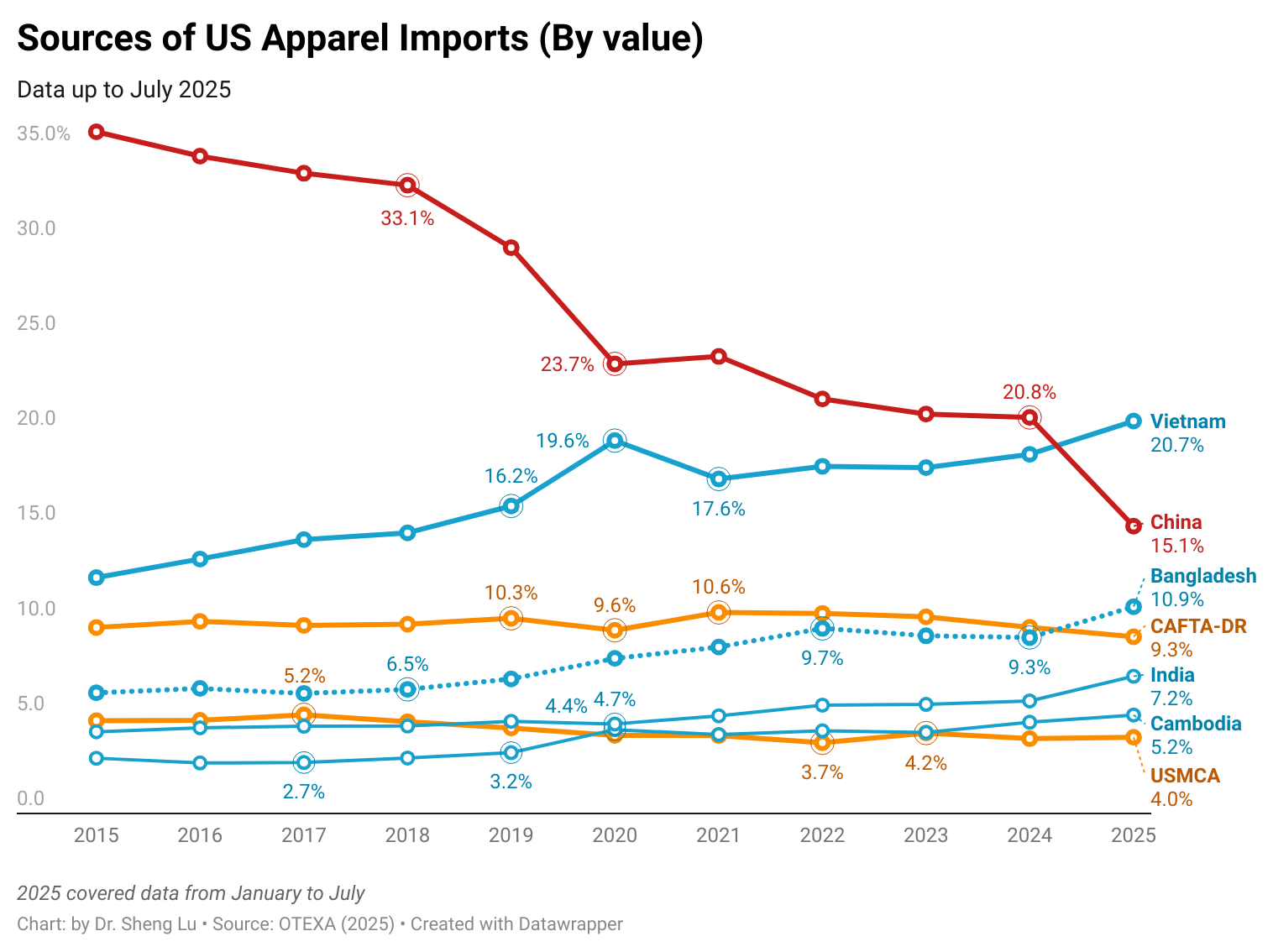
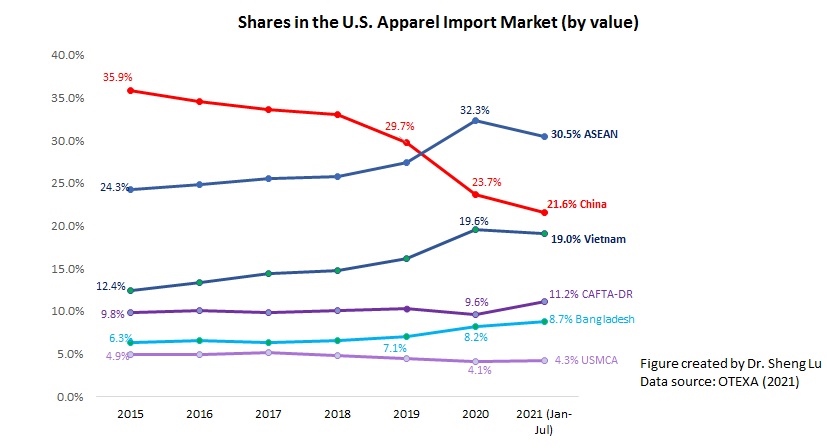
Third, continuing the trends from previous months, U.S. apparel imports from China again fell sharply in July 2025. Facing nearly 50% tariff rates—much higher than those applied to other sourcing countries—U.S. apparel imports from China decreased by 38.4% in value and 27.3% in quantity in July 2025 from a year ago. As a result, in value, China’s market share fell to just 15.6% in July 2025 (was 24.6% in July 2024), significantly lower than Vietnam’s 22.1% (was 19.1% in June 2024). In other words, it may signal a new era where China is no longer the top source of U.S. apparel imports. [Check market shares in U.S. apparel imports here]

Fourth, while Asia as a whole still dominates, trade data suggests more notable trends of sourcing diversification. In July 2025, about 72.9% of U.S. apparel imports came from China, far exceeding the Western Hemisphere (14.8%) and the rest of the world (12.4%). However, Asia’s market share in July 2025 was slightly lower than 74.7% a year ago, suggesting that more imports came from other regions. For example, at the country level, US apparel imports from several emerging Asian suppliers and those in the Middle East and Africa enjoyed fast growth, including Vietnam (up 12.5%), Cambodia (up 25.2%), Pakistan (up 14.7%), Jordan (up 21.6%), and Egypt (up 30.3%).

Meanwhile, U.S. apparel imports from India in July 2025 also increased by over 15%, although the newly imposed higher tariffs on India could alter the trend in the next few months.

Additionally, there is still no evidence that Trump’s tariff policy has meaningfully boosted nearshoring from the Western Hemisphere. On the contrary, in July 2025, U.S. apparel imports from Mexico grew by just 0.5%, despite the significant tariff advantage offered to USMCA-qualifying products. Similarly, imports from CAFTA-DR members decreased by 2.7%. The results revealed the adverse effects of uncertainty in the Trump administration’s tariff policy on encouraging long-term sourcing and investment commitment to the region.

(note: this post is not open for discussion)

By Sheng Lu

Impacts of Tariffs: Gen Z’s Perspective

In a new Just-Style mini series, students from FASH455 and the FASH department at the University of Delaware shared their valuable Gen Z perspectives on the impact of the recent tariff increases.

Students’ responses reveal that the impacts of the tariff increase on ordinary U.S. consumers are real, direct, and significant. Like other consumer groups, our Gen Z students express deep concern about the adverse effects of tariffs on the U.S. economy, market uncertainties, and the fashion industry’s growth prospects this year. While shopping for clothing, many students have noticed price increases and reduced product availability due to tariff hikes and related disruptions.

On the other hand, as Gen Z consumers, students send a strong message to fashion brands and retailers—sustainability still matters. In fact, in this environment, students have become ever more conscious of sustainability, asking critical questions such as: Do I really need to buy more clothing? Where was the clothing made? Was the clothing produced ethically? In other words, we may see a growing shift toward “slow fashion” among Gen Z consumers, who expect apparel brands and retailers to make even stronger commitments toward sustainability and social responsibility, instead of compromising these values for “cost mitigation.”

Likewise, students expect higher-quality products or items that can last longer to justify the higher price they pay. Regularly shopping for secondhand clothing, driven by its affordability, environmental benefits, and unique styles, could also become increasingly popular. This leaves an interesting question about the future of cheap but low-quality fast fashion and its attractiveness among Gen Z consumers.

The mini series is available through Just-style. Below are selected comments from students:

Gen Z consumers care about tariffs in the news

Rachel Zemel (Fashion Merchandising and Management major): As a Fashion Merchandising and Management major, I’ve definitely been paying closer attention to how tariffs impact what we see on the sales floor. Learning about global sourcing and trade agreements in class has made me more curious about where products are coming from and how political or economic shifts can directly affect the retail industry. I’ve caught myself checking clothing labels more often to see where things are made and understand why certain brands are shifting their production away from countries like China. I think what used to feel like a distant conversation now feels very connected to the way I shop and think about product availability.

Annabelle Gensler (Fashion Merchandising & Management and Fashion Design & Product Innovation double majors): The tariff discussion has been far more impactful on my shopping habits than I would have imagined…I’d like to consider myself a thoughtful consumer in that I rarely make impulse purchases, and I do what I can to avoid feeling any sense of buyer’s remorse. This has become exceptionally true in today’s evolving state of trade policy and manifests itself in a few ways…As a fashion student, I have a good understanding of what constitutes a fair price for fashion and apparel goods. I try to use these strengths of mine by paying close attention to fiber content, care instructions, origin of materials, and manufacturing location. Overall, I’d say the tariff discussion makes me think twice, three times, ten times before making a purchase.

Alexandra Untu (Fashion Merchandising and Management and Philosophy double majors): As a fashion student and fashion lover, I closely follow tariff updates and actively try to educate myself to gain a more objective and informed perspective on the changes introduced by the current administration. Although I started shopping more consciously a while ago, I’m now more intentional than ever with my purchases…I pay attention to where clothes are made and take the time to research their country of origin and production practices. I’ve also been focusing on buying pieces made from high-quality materials, with timeless styles that are versatile enough to be worn in different outfits and settings.

Lola Kulis (Fashion merchandising and management major and 4+1 graduate student): As a Fashion Merchandising student, I’ve been especially invested in the ongoing discussion around tariffs and their impact on retail pricing. From an industry perspective, it’s scary; as someone preparing to enter the field, I feel uncertain about what the future holds. And as a consumer, I feel frustrated. We’re facing the direct impact of global trade decisions influencing the pricing and accessibility of apparel. The worst part is the uncertainty. The constant policy changes and back and forth are only putting more stress on business owners, consumers, the working class, etc.. The media coverage surrounding these trade policies has made me realize how interconnected global sourcing and retail pricing really are. I’ve started paying closer attention to where garments are manufactured and how those origins might impact cost, availability, and even quality. I’ve shifted my perspective, not only as a student but also as a consumer. 

Madison Toth (Fashion Merchandising and Management major): The tariff discussion in the media has definitely increased my interest in where exactly my clothing is being made. As I shop, I have started to check labels on where these apparel items are being manufactured. It is fascinating to me that the most popular and successful U.S retailers are globally sourcing apparel, yet the increase in tariffs is being thrown into policy. Admittedly, I struggle to keep up with the news, but I’m very intrigued by the current tariff discussion. I follow closely because it will affect my job in the future as I enter my career in the fashion industry, but also as a consumer.

Price hikes and reduced product availability due to tariffs concern Gen Z consumers

Rachel Zemel (Fashion Merchandising and Management major): Since April, I’ve definitely noticed price increases…I’ve also noticed a shift in product availability, especially when I shop online. Certain sizes and styles are gone faster than usual and don’t seem to get restocked. In stores, the selection feels limited too. It seems like brands are being more careful with how much they’re producing, maybe to avoid excess inventory or reduce risk. As someone who shops a lot and also studies this industry, it’s interesting to see how these challenges are playing out in real-time. It makes me think differently about what goes into every piece I buy.

Annabelle Gensler (Fashion Merchandising & Management and Fashion Design & Product Innovation double majors): The majority of the shopping I’ve done since April has occurred online, and the biggest difference I’ve noticed since the tariff discourse has started, is the stock of goods available. It’s rare that I stumble upon a product offering that has all sizes and colors in-stock. Now, when I filter my search for a graduation dress in the size and color I prefer, fewer and fewer items populate. In the past, retailers might have been able to bulk order goods to maintain stock domestically, or ship from international locations directly to the consumer; tariffs have halted these practices. Items I’m considering purchasing no longer feel safe in my cart because of how quickly stockouts are occurring. This, paired with an expectation of drastic increases in price, has created an internal sense of urgency when I have items in my cart. I know it’s unlikely that the item will be available at a certain price point, or at all, and so the conscious consumerism I try to practice is really being put to the test.

Alexandra Untu (Fashion Merchandising and Management and Philosophy double majors): Based on my own and my friends’ experience, the changes have been subtle so far, but noticeable. Prices have been going up gradually across all types of products, including clothing, but the availability of products hasn’t yet turned into a cause for concern. While the current situation is not dramatic as of now, there is undoubtedly a change that is happening, and we are expecting more striking changes in the near future that could affect our shopping behavior quite significantly.

Madeline Osbourn (Fashion Merchandising and Management major): The tariff increase has affected merchandise orders for my sorority. The tariffs have made the prices rise on orders that we planned on making. This creates an issue with prepaid and future orders, keeping in mind the members’ willingness to transition and conform to the higher-priced merchandise that is designed.

Lola Kulis (Fashion merchandising and management major and 4+1 graduate student): Because inflation has been on the rise for some time now, it’s hard to differentiate the cause of these price changes. Prices for basics, like denim, cotton tops, and even activewear, are outrageously high. Over the past year, I’ve observed a significant decline in promotional activity. Retailers are offering fewer discounts, and even Black Friday, once known for major deals, felt noticeably underwhelming. Considering the current global trade and policy changes, I only see this worsening. On the availability side, popular sizes and color options tend to sell out much more quickly, leading to a more competitive shopping experience.

Madison Toth (Fashion Merchandising and Management major): To be honest, I have been reluctant to shop with popular fashion retailers because of the current tariff discussions. I have strayed away from shopping online and in-store due to the uncertainty of the economic climate. While apparel prices are increasing, as well as other products, it is vital for me to take all of that into consideration. Tariffs affect more than apparel, and as a college student, some purchases take priority over clothing. Because of this, I am unable to comment on price and product availability since the tariff discussion began. I have simply decided that, for me personally, in the current economic climate, apparel shopping should be placed on the back burner.

Sustainability matters even more

Rachel Zemel (Fashion Merchandising and Management major): Sustainability matters even more to me now. When prices go up, it forces me to think about the long-term value of what I’m buying. I want to spend my money on items that are made with quality materials and with people and the planet in mind. It’s hard to justify spending more on something that was cheaply made or won’t last beyond a few wears. I think price increases actually help push the conversation toward more conscious consumption. Even with a student budget, I try to prioritize brands that are transparent about their production or at least make some effort toward ethical practices. It’s not always possible to buy 100% sustainably, but I try to balance things. thrifting, supporting small designers, and not overconsuming are just a couple of changes that can have a big impact. Sustainability isn’t just about buying the “right” thing, it’s about shifting the way we shop. That mindset doesn’t go away just because prices are rising.

Alexandra Untu (Fashion Merchandising and Management and Philosophy double majors): Sustainability has always been a core value for me, and that won’t change, even if prices rise. Sustainability isn’t just a trend; it goes far beyond money – it’s a life-or-death issue. It’s a moral responsibility we have to future generations, and we shouldn’t treat it lightly or abandon it. Shopping with sustainability in mind isn’t always the easiest or the cheapest route, but it’s the right one. Now, more than ever, we should be doing -or learning to do – the right thing. Every purchase sends a message about the change we want to see. Every purchase is a small step toward a better, more responsible future for us and for our children.

Lola Kulis (Fashion merchandising and management major and 4+1 graduate student): Sustainability matters even more to me in the face of rising prices. As clothing becomes more expensive, we become more hesitant in purchasing. I think more about what I’m investing in, starting with being intentional about supporting brands that are transparent, responsible, and committed to reducing their environmental impact. I’d rather buy less and choose more wisely than spend more on items that contribute to overproduction and waste. I’ve realized more than ever that sustainability is not a trend, it’s our future. As I prepare to enter the fashion industry, it’s important that I practice what I preach and support the long-term goals.

Madison Toth (Fashion Merchandising and Management major): Sustainability is something that I do genuinely care about. When shopping, I tend to lean more towards brands that practice ethical sourcing and are more transparent about where their items come from. From my time as a student, I have learned many of the horrible outcomes of the fashion industry related to sustainability. From seeing videos of workers begging for higher wages, seeing dyes dumped into bodies of water, and looking at the incredibly tall piles of textile waste, it sticks with me both as a student and a consumer…If a price increase meant that apparel manufacturers were getting paid fair wages, I would purchase those items. However, now, due to tariffs, I am more likely to dodge popular retailers. Sustainability is very important to my generation, and I value the efforts that brands have made to become more sustainable. But it raises the question, when is a price so high that sustainability no longer matters? To that, it’s hard to say. I think it depends on the economic status of each consumer. From sustainable companies with higher prices, there are purchases that I just cannot justify paying. I do care about sustainability, but there does come a point where it becomes financially unattainable.

Katie Yasik (Fashion Design and Product Innovation major): Yes, sustainability still matters to me, even with rising prices. It’s not always easy to prioritize, especially on a student budget, but I try to make more conscious choices like buying fewer, longer-lasting pieces or shopping secondhand. I think it’s important to consider the environmental and social impact of fast fashion, and if prices are going up anyway, I’d rather invest in something that aligns with my values.

Isabella DiGiulio (Fashion merchandising and management major and 4+1 graduate student): I think that the tariffs may bring a new wave of interest in sustainability, specifically for donation-based, second-hand clothing stores. These stores will likely be able to maintain their low pricing because they do not need to account for operational expenses in apparel production. Even if there is to be a price increase, their prices may still remain relatively lower and more affordable compared to first-hand clothing brands…Furthermore, sustainable shopping doesn’t solely refer to purchasing second-hand goods or buying from brands with biodegradable fabrics or ethical labor practices. Sustainable shopping can also refer to the abstinence from shopping. With influences such as social media and fast fashion, overconsumption has become an extremely normalized practice through which many people, especially Gen Z, feel compelled to consistently refresh their wardrobes to follow trends and keep up with the ever-changing standards of style and identity.

Explore more:

How Tariffs Affect U.S. Apparel Import Prices and Retail Prices? Evidence from Monthly Trade Data (2015-2024)

According to the “America First Trade Policy” released in January 2025, the Trump administration aims to leverage tariffs to achieve various policy objectives, from reducing the U.S. trade deficit to countering “unfair” trading practices.

On February 1, 2025, the Trump Administration further announced the implementation of a 25% punitive tariff on imports from Canada and Mexico, along with an additional 10% punitive tariff on goods from China, in addition to the existing duties. With over 98% of clothing sold in the U.S. imported from abroad, U.S. fashion apparel companies are likely to be among the hardest hit by the tariff increase, particularly since Mexico and China are two of the leading apparel-sourcing destinations for the country.

This study aims to explore the dynamic relationship between U.S. apparel import tariffs, U.S. apparel import prices, and U.S. apparel retail prices. Since tariff rates, import prices, and retail prices are interrelated, a vector autoregression model (VAR) was used to analyze their interactions. The analysis was based on monthly data from January 2015 to November 2024 (latest data available), including:

  • U.S. apparel tariff rate (data source: USITC; tariff rate=value of calculated duties/custom values)
  • Price index of U.S. apparel imports (data source: St. Lous Federal Reserve; January 2015=100)
  • Price index of U.S. apparel retail price (data source: St. Louis Federal Reserve; January 2015=100)
  • Index of U.S. apparel retail sales (data source: St. Louis Federal Reserve; January 2015=100)
  • Consumer Price Index for all U.S. urban consumers (data source: St. Louis Federal Reserve; January 2015=100)

The results show that:

First, from January 2015 to November 2024, the average U.S. apparel tariff rate ranged from 12% to 17%. The fluctuation of the tariff rate during that period was primarily caused by the U.S. imposition of Section 301 punitive tariffs on imports from China, along with fashion companies shifting their sourcing from China to other countries, including members of U.S. free trade agreements.

Second, the average price of U.S. apparel imports rose by approximately 6% from January 2015 to November 2024, which aligns with the U.S. apparel retail price increase of 4%. However, this increase was significantly lower than the 34% rise in the U.S. Consumer Price Index (CPI) over the same period. This pattern shows that despite overall inflation and higher operational costs, apparel exporters and U.S. retailers remained cautious about increasing prices due to intense market competition.

Third, the impulse response function (IRF) indicates that a positive tariff shock (i.e., a tariff increase) would lead to a rise in the U.S. apparel retail price. However, the magnitude of this effect is moderate, with the impact being most felt two months later. Specifically, a one-standard-deviation increase in tariffs would result in a 0.16 standard deviation increase in retail prices during Period 3. In other words, the price effect of the tariff increase typically appears in about two months. However, U.S. fashion retailers usually do not transfer the entire burden of tariffs to consumers, likely because of fierce competition in the market.  

Fourth, the impulse response function (IRF) indicates that a positive tariff shock (i.e., a tariff increase) would lead to a slight decline in U.S. apparel import prices. This price decrease would also persist for about three months. Specifically, a one-standard-deviation increase in tariffs would result in approximately a 0.01 standard deviation decrease in apparel import prices through Period 4. This result aligns with previous studies indicating that following the implementation of Section 301 punitive tariffs in 2018, some Chinese exporters agreed to reduce their selling prices to keep sourcing orders.

Fifth, the impulse response function (IRF) further shows that a positive tariff shock (i.e., a tariff increase) could hurt U.S. apparel retail sales in the short to medium term. Specifically, a one-standard-deviation increase in tariffs would lead to approximately a 0.82-2.33 standard deviation decrease in U.S. apparel retail sales from Period 3 through Period 5. This result may be driven by higher selling prices, suppressing consumer spending on clothing.  

Additionally, the variance decomposition analysis reveals that, in the short to medium term, about 50% to 80% of the variation in U.S. retail prices is explained by its own past values, underscoring the persistence of retailers’ pricing practices. Meanwhile, U.S. apparel retail sales account for about 27% of the changes in U.S. apparel retail prices. In comparison, apparel tariff changes explained only about 5% of the retail price fluctuations. In other words, market factors, particularly consumer demand, play a more significant role in shaping fashion companies’ pricing decisions than tariffs.

In summary, the study’s findings confirm the interconnections between apparel tariff rates, U.S. apparel import prices, and U.S. retail prices, although these relationships turn out to be more complex and nuanced than previously suggested. It is important to note that only apparel imports from China were subject to tariff increases during the examined period in this study. If tariffs were to increase on apparel products from a broader range of countries during Trump’s second term, the economic impact on U.S. apparel retail prices could be much more significant and persistent.

By Sheng Lu

COVID-19 and US Apparel Imports: Key Trends (Updated: January 2022)

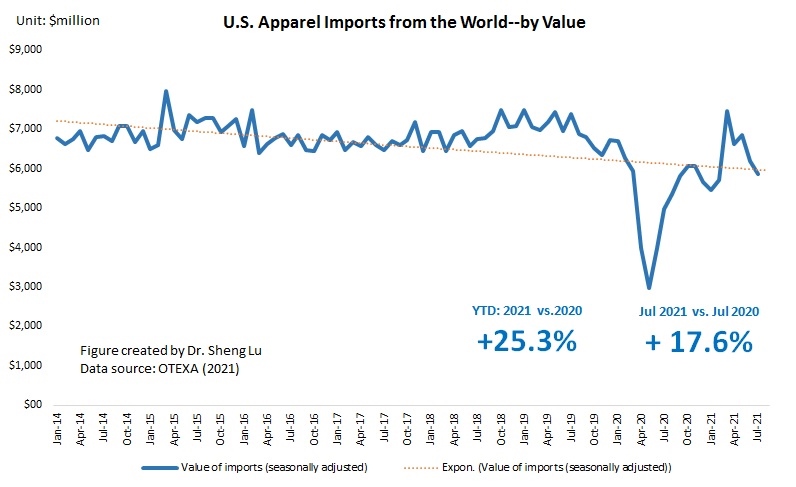
First, US apparel imports continue to rebound in November 2021 as companies build the inventory for the holiday season. Thanks to US consumers’ strong demand and the upcoming holidays, the value of US apparel imports went up by 15.7% in November 2021 from a month ago (seasonally adjusted) and increased by as much as 39.7% from 2020. However, before the pandemic, the value of US apparel imports always peaked in October and then gradually slipped in November and December. The unusual surge of imports in November 2021 could be the combined effects of price inflation and the late arrival of goods due to the shipping crisis.

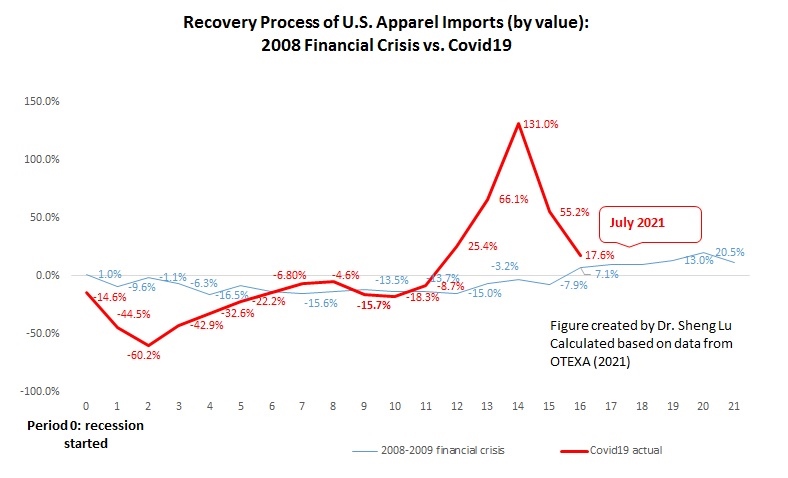
Meanwhile, US apparel imports so far in 2021 have been far more volatile than in the past few years because of uncertainties and disruptions caused by COVID-19 and the shipping crisis. For example, the year-over-year (YoY) growth rate ranged from 131% in May to 17.6% in July, causing fashion companies additional inventory planning and supply chain management challenges. Unfortunately, the new omicron variant could worsen the market uncertainty and volatility.

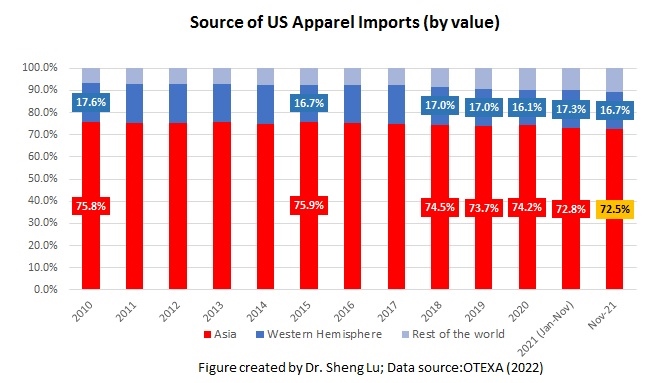
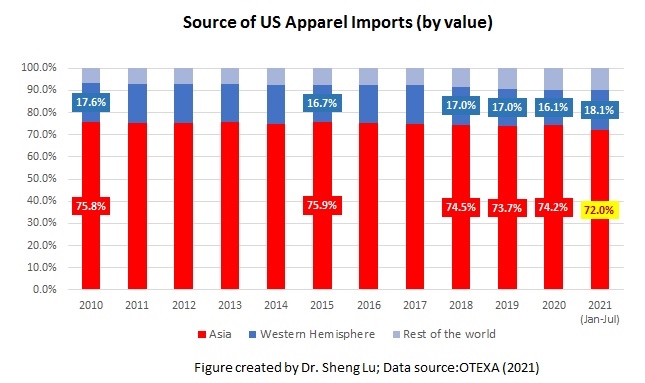
Second, Asian countries remain the dominant sourcing base for US fashion companies as the production capacity elsewhere is limited. Asian countries’ market shares fell from 74.2% in 2020 to 71.3% in July 2021, primarily because of the COVID lockdowns in Vietnam and Bangladesh. US apparel imports came from Asian countries rebounded to 74.8% and 72.5% in October and November 2021, respectively. This result suggests a lack of alternative sourcing destinations outside Asia, especially for large volume items. Meanwhile, the worsening shipping crisis affecting the route from Asia to North America could explain why Asian suppliers’ market shares in November were somewhat lower than a month ago.

Third, US companies continue to treat China as one of their essential sourcing bases in the current business environment. However, companies are NOT reversing their long-term strategy of reducing “China exposure.”  China stays the largest supplier for the US market in November 2021, accounting for 41.5% of total US apparel imports in quantity and 25.8% in value. Due to the seasonal factor, China’s market shares typically peak from June to September and then drop from October until March-April.

Both industry sources and the export product diversification index also consistently show that China supplied the most variety of products to the US market with no near competitors. In comparison, US apparel imports from Bangladesh, Mexico, and CAFTA-DR members concentrate more on specific product categories.

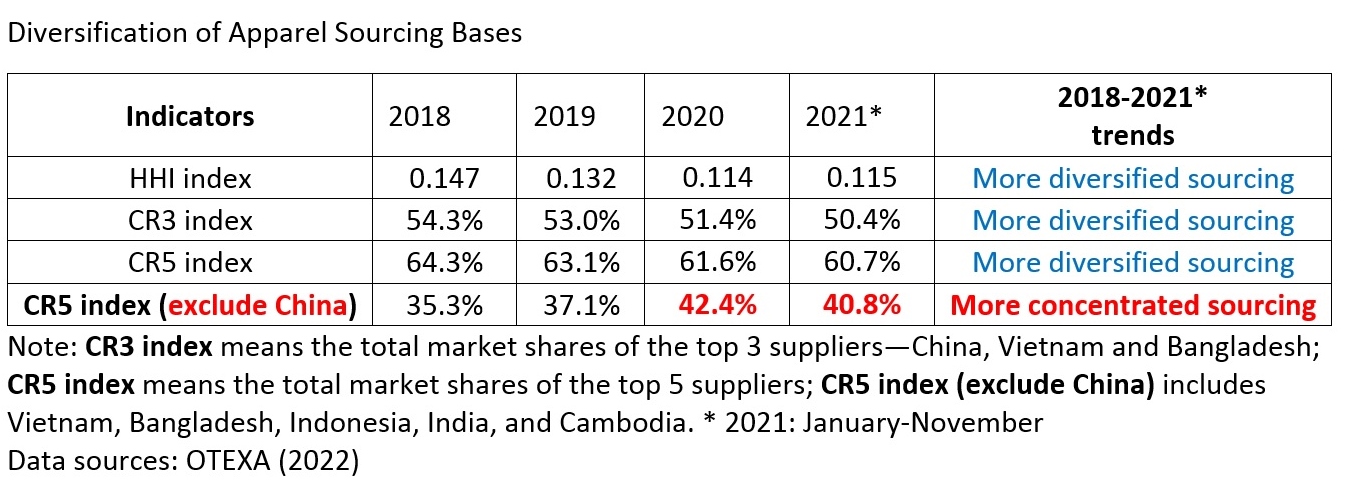
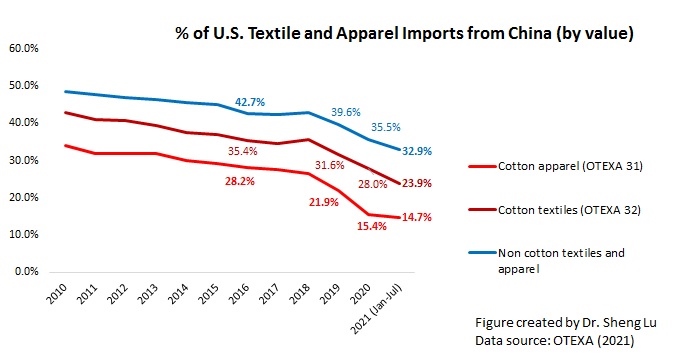
Nevertheless, the HHI index and market concentration ratios (CR3 and CR5) calculated based on the latest data suggest that US fashion companies continue to move their apparel sourcing orders from China to other Asian countries overall. For example, only around 15% of US cotton apparel comes from China, compared with about 27% in 2018. My latest studies also indicate that it has become ever more common to see a fashion company places only around 10% of its total sourcing value or volume from China compared to over 30% in the past. Furthermore, with the growing tensions of the US-China relations and the newly enacted Uyghur Forced Labor Prevention Act, fashion companies could take another look at their China sourcing strategy to avoid potential high-impact disruptions.

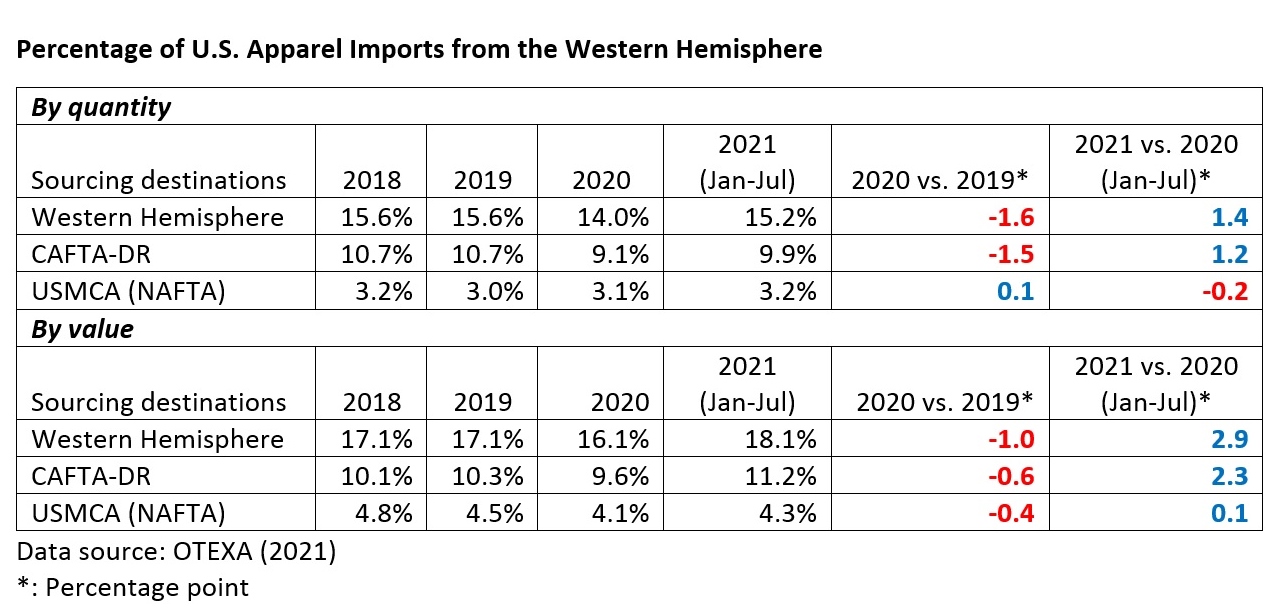
Fourth, near sourcing from the Western Hemisphere, especially CAFTA-DR members, continue to gain popularity. Specifically, 17.3% of US apparel imports came from the Western Hemisphere year-to-date (YTD) in 2021 (January-November), higher than 16.1% in 2020. Notably, CAFTA-DR members’ market shares increased to 10.6% in 2021 (January to November) from 9.6% in 2020. The value of US apparel imports from CAFTA-DR also enjoyed a 41.7% growth in 2021 (January—November) from a year ago, one of the highest among all sourcing destinations. The imports from El Salvador (up 42.6%), Honduras (up 47.1%), and Guatemala (36.6%) had grown particularly fast so far in 2021. However, the political instability in some Central American countries could make fashion companies feel hesitant to permanently switch their sourcing orders to the region or make long-term investments.

Additionally, the latest trade data suggests a notable increase in the price of US apparel imports. Notably, the unit price of US apparel imports from almost all leading sources went up by more than 10% from January 2021 to November 2021. As worldwide inflation continues, the rising sourcing cost pressure won’t ease anytime soon.

by Sheng Lu

[The comment is closed]

Shipping Crisis and Supply Chain Disruptions: Impacts on Apparel Sourcing and Trade (updated December 2021)

Interview with Lululemon CEO
Impact on cotton price and cotton apparel

For FASH455: Please feel free to share any thoughts or propose discussion questions based on the three short videos above.

COVID-19 and US Apparel Imports: Key Trends (Updated: September 2021)

First, the shipping crisis and new wave of COVID cases start to affect US apparel imports negatively. While US consumers’ demand for clothing overall remains strong, for the second month in a row, the value of US apparel imports (seasonally adjusted) in July 2021 decreased by 5.5% from a month ago and down 9.7% from May to June. The absolute value of US apparel imports year to date (YTD) in 2021 (January—July) was 25.3% higher than in 2020 and around 87% of the pre-COVID level (benchmark: January-July, 2019). However, the year-over-year growth in July 2021 was only 15.4%, compared with 60.0% in May 2021 and 29.1% in June 2021. Overall, the results remind us that the market environment is far from stable yet as the COVID situation in the US and other parts of the world continues to evolve.

Second, Asian countries lost market shares as some leading apparel supplying countries, including Vietnam and Bangladesh, struggled with new COVID lockdowns. While Asia as a whole remains the single largest apparel sourcing base for US companies, Asian countries’ market shares fell from 74.2% in 2020 to 71.3% in July 2021, the lowest since 2010.  The new COVID lockdowns in Vietnam and Bangladesh, the No. 2 and No. 3 top suppliers for the US market, post significant challenges to US fashion companies trying to build inventory for the upcoming holiday season. Notably, US companies source many high-volume products from these two countries, and there is a lack of alternative sourcing destinations in the short run.

Third, US companies continue to treat China as an essential sourcing base during the current challenging time. However, there is no clear sign that companies are reversing their long-term strategy of reducing “China exposure.”  China stays the largest supplier for the US market in July 2021, accounting for 41.3% of total US apparel imports in quantity and 26.0% in value. The export product diversification index also suggests that China supplied the most variety of products to the US market. US apparel imports from Bangladesh, Mexico, and CAFTA-DR members are more concentrated on specific product categories. In other words, should China were under lockdowns, the negative impacts on US companies’ inventory management could be even worse.

Nevertheless, the HHI index and market concentration ratios (CR3 and CR5) calculated based on the latest data suggest that US fashion companies continue to move their apparel sourcing orders from China to other Asian countries overall.  For example, only 14.7% of US cotton apparel imports came from China in 2021 (January—July), a new record low in the past ten years. Further, as US apparel imports from China typically peak from June to September because of seasonal factors, China’s market shares are likely to drop in the next few months. Additionally, the fundamental concerns about sourcing from China are NOT gone. On the contrary, new US actions against alleged forced labor in Xinjiang are likely in the coming months and affect imports from China beyond cotton products.

Fourth, US apparel sourcing from the Western Hemisphere, especially CAFTA-DR members, gains new momentum. Specifically, 18.1% of US apparel imports came from the Western Hemisphere YTD in 2021 (January-July), higher than 16.1% in 2020 and 17.1% before the pandemic. Notably, CAFTA-DR members’ market shares increased to 11.2% in 2021 (January to July) from 9.6% in 2020. The value of US apparel imports from CAFTA-DR also enjoyed a 58.4% growth in 2021 (January—July) from a year ago, one of the highest among all sourcing destinations. The imports from El Salvador (up 75.2%), Honduras (up 74.6%), Dominican Republic (45.1%), and Guatemala (40.6%) had grown particularly fast so far in 2021.

Meanwhile, US apparel imports from USMCA members stayed stable (i.e., no significant change in market shares). CAFTA-DR and USMCA members currently account for around 60% and 25% of US apparel imports from the Western Hemisphere. They are also the single largest export market for US textile products (about 70%).

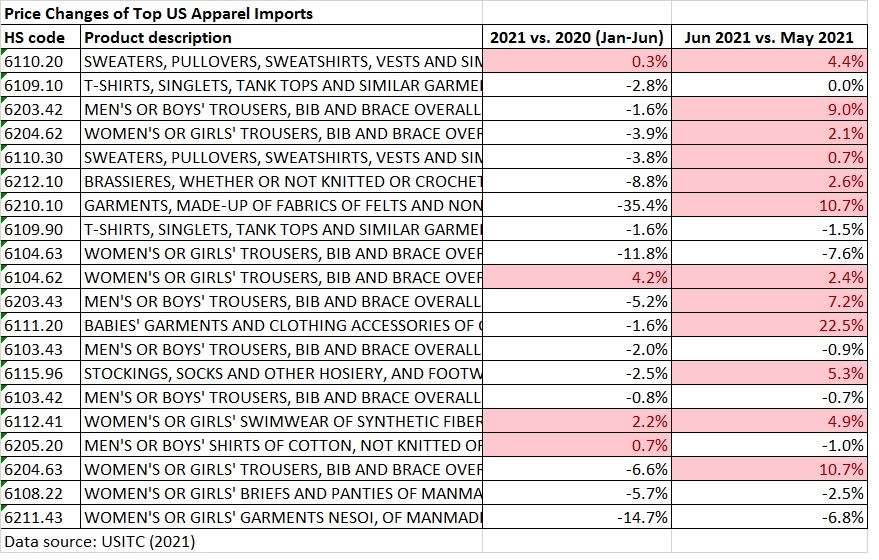
Fifth, US apparel imports start to see a notable price increase. While an across-the-board price increase was not a big concern at the beginning of 2021, the increase has become more noticeable since June 2021. For example, of the top 20 US apparel imports (HS chapters 61-62) at the 6-digit HS code level based on import value, the price of thirteen products increased from May to June 2021. The price increase at the country level is even more significant. From May to July 2021, the average unit price of US apparel imports from leading sources all went up substantially, including China (7%), Vietnam (13%), Bangladesh (13.9%), and India (15.6%).

As almost everything is becoming more expensive, from raw material, shipping to labor, the August and September trade data (to be released in October and November) could suggest an even more significant price increase.

by Sheng Lu

Which Apparel Sourcing Factors Matter?

Key findings:

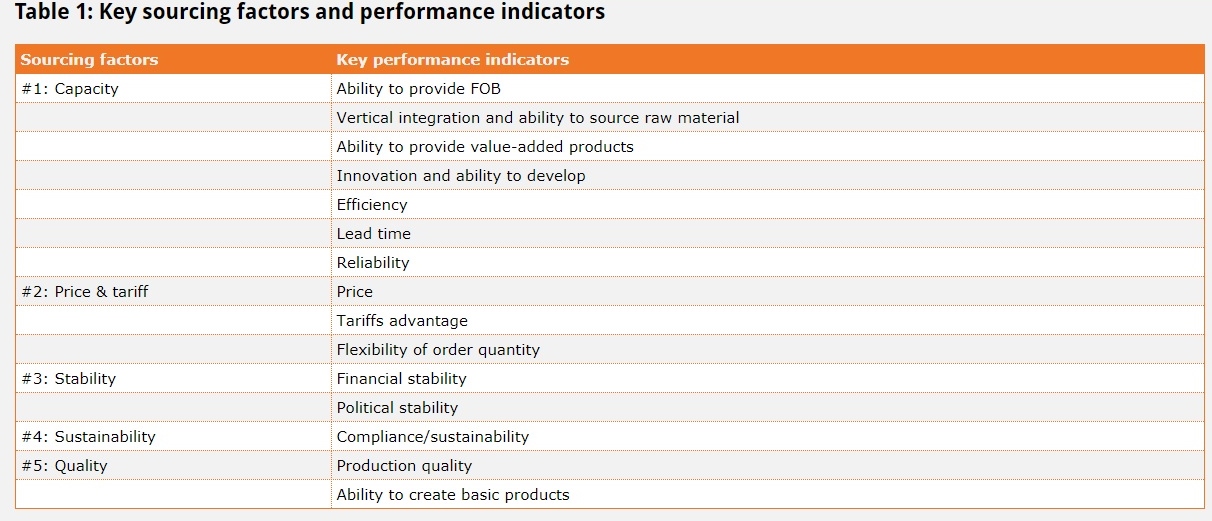
The apparel sourcing formula is getting ever more sophisticated today. US fashion brands and retailers consider a wide range of factors when deciding where to source their products. The long list of sourcing factors includes #1 Capacity, #2 Price & tariff, #3 Stability, #4 Sustainability, and #5 Quality (see the table below).

When evaluating the world’s top 27 largest apparel supplying countries’ performance,  no souring destination appears to be perfect. In general, fashion brands and retailers have many choices for sourcing destinations that can meet their demand for production capacity, price point, and quality. However, fashion companies face much more limited options when seeking an apparel sourcing destination with a stable financial and political environment and a strong sustainability record.

When we compare the trade volume and the performance against the five primary sourcing factors:

  • Apparel sourcing today is no longer a “winner takes all” game. Notably, the factor “Capacity” is suggested to have limited impacts on the value of apparel imports from a particular sourcing destination.
  • Apparel sourcing is not merely about “competing on price” either--the impact of the factor “Price & tariff” on the pattern of apparel imports statistically is not significant.
  • Improving financial and political stability as well as product quality can help a country enhance its attractiveness as an apparel sourcing base. In particular, American and Asia-based fashion companies seem to give substantial weight to the factors of “Stability” and “Product quality” in their sourcing decisions.
  • Fashion companies’ current sourcing model does not always provide strong financial rewards for sustainability. Interestingly, the result indicates that a higher score for the factor “sustainability” does NOT result in more sourcing orders at the country level. Behind the result, fashion companies today likely consider sustainability and compliance at the vendor level rather than at the country level in their sourcing decisions. It is also likely that sustainability and compliance are treated more as pre-requisite or “bottom-line” criteria instead of a factor to determine the volume of the sourcing orders. 

In conclusion, fashion companies’ sourcing decisions seem to be more complicated and subtle than what is often described in public.

By Emma Davis and Sheng Lu

Further reading: Emma Davis & Sheng Lu (2021). Which apparel sourcing factors matter the most?. Just-Style.

Demystify the “Made in the USA” Apparel Sourcing Strategy

While the majority of apparel consumed in the United States come from overseas, “Made in the USA” is growing in popularity. According to the 2018 U.S. Fashion Industry Benchmarking Study released by the U.S. Fashion Industry Association (USFIA) in July 2018, around 46 percent of surveyed U.S. fashion brands and apparel retailers report currently sourcing “Made in the USA” products, even though local sourcing typically only account for less than 10 percent of these companies’ total sourcing value or volume.  Likewise, the State of Fashion 2019 report published by Business of Fashion (BOF) and McKinsey & Company in November also forecasts that over 20 percent of U.S. fashion companies’ sourcing volume could be from nearshore by 2025, thanks to automation technology and consumers’ increasing demand for speed to market.

However, the detailed practice of the “Made in the USA” apparel sourcing strategy–including who is sourcing, what products are sourced, and what the typical price range of these products remain largely unknown.

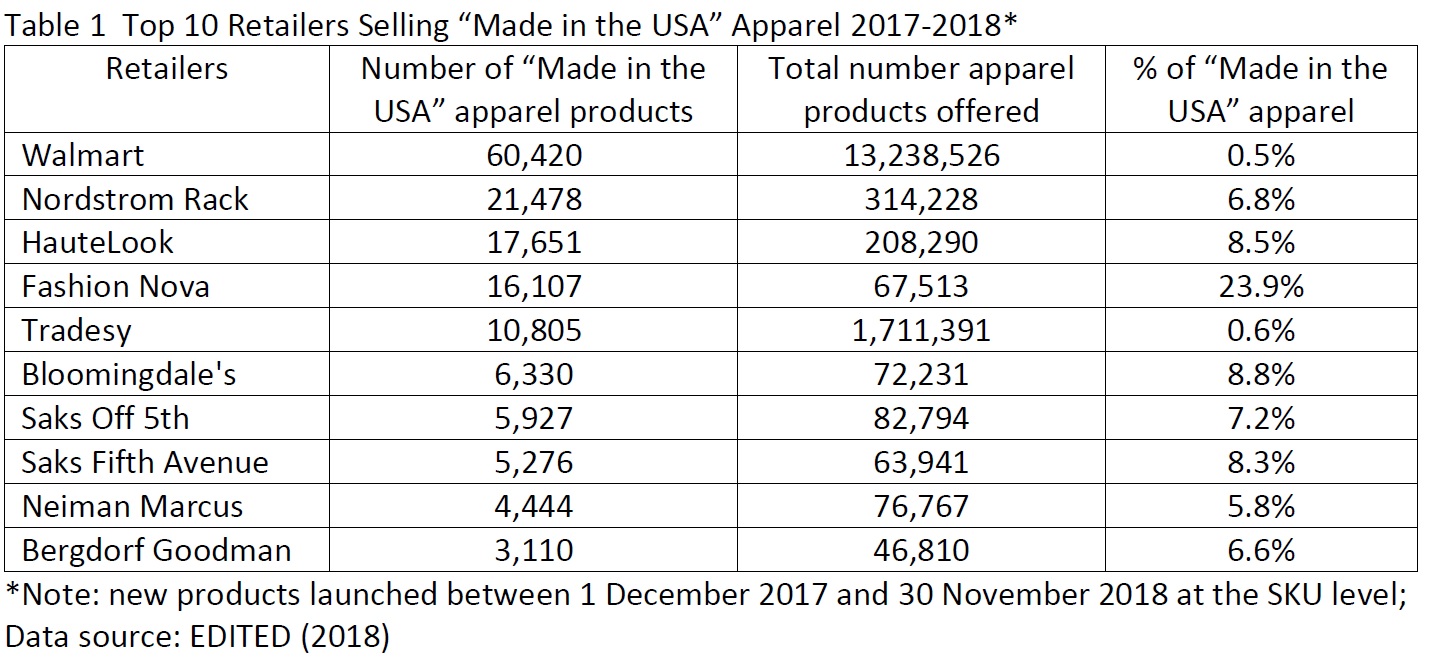
To answer these questions, we recently analyzed the pricing, product assortment and inventory information of over 90,000 fashion retailers and 300,000,000 fashion apparel products at the Stock-Keeping Unit (SKU) level based on EDITED, a big data and business analytics tool developed for the fashion industry. For the research purpose, we selected apparel products newly launched to the U.S. market in the past twelve months (i.e., between 1 December 2017 and 30 November 2018) with “Made in the USA” explicitly mentioned in the product description. Below are the key findings:

First, “Made in the USA” apparel overall are treated as a niche product in U.S. fashion brands and retailers’ sourcing portfolio.

During the 12 months we examined (1 December 2017-30 November 2018), 94 out of the total 348 retailers (or 27 percent) sold “Made in the USA” apparel in the U.S. market. The top 10 sellers list includes BOTH retailers that focus on the value market such as Walmart and relatively high-end department stores such as Bloomingdale and Saks Fifth Avenue. However, even for these top sellers, “Made in the USA” apparel accounted for less than 8 percent of their total product offers on average.

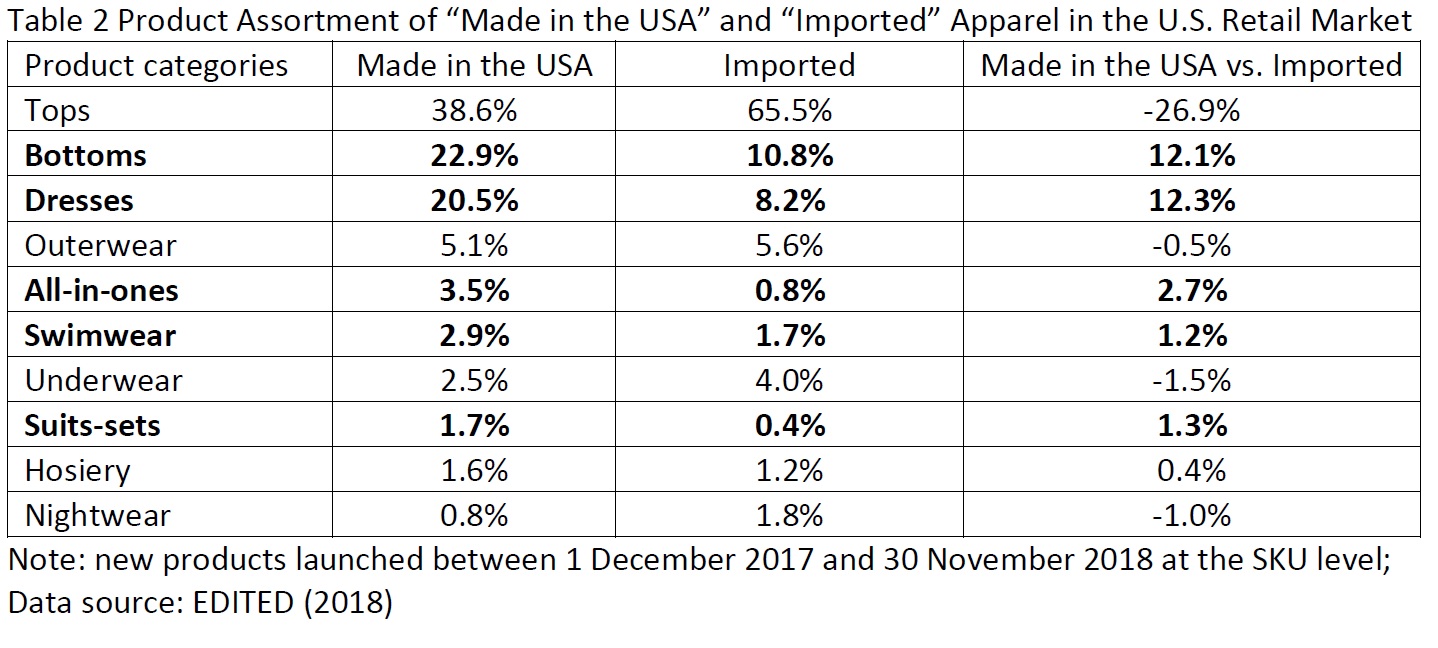
Second, U.S. fashion brands and retailers are most likely to source“Made in the USA” apparel for relatively fashion-oriented items, particularly bottoms (such as skirts, jeans, and trousers), dresses, all-in-ones (such as playsuits and dungarees), swimwear and suits-sets.

The competitive edge for these product categories in the retail market, in general, increasingly depends on unique designs, high product quality, and speed to market, which makes sourcing from the United States commercially beneficial. In comparison, imported products are more concentrated on basic fashion items often competing on price in the U.S. retail market, including tops (such as T-shirt and polo shirt), underwear, and nightwear.

It is also interesting to note that “Made in the USA” apparel were predominately women’s wear (92 percent), whereas imported clothing adopted a more balanced gender combination (63 percent women’s wear and 37 percent men’s wear). Because the fashion trends for women’s wear usually are shorter-lived and harder to predict, this result once again indicates that seeking quick response and shorter lead time for stylish and trendy items could be an important incentive for local sourcing by U.S. fashion brands and retailers.

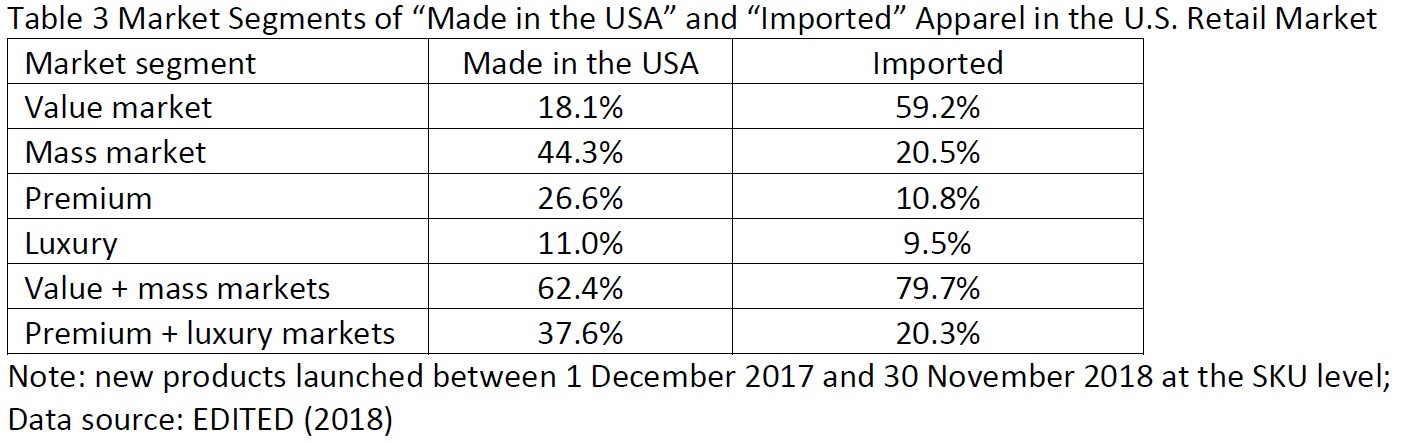
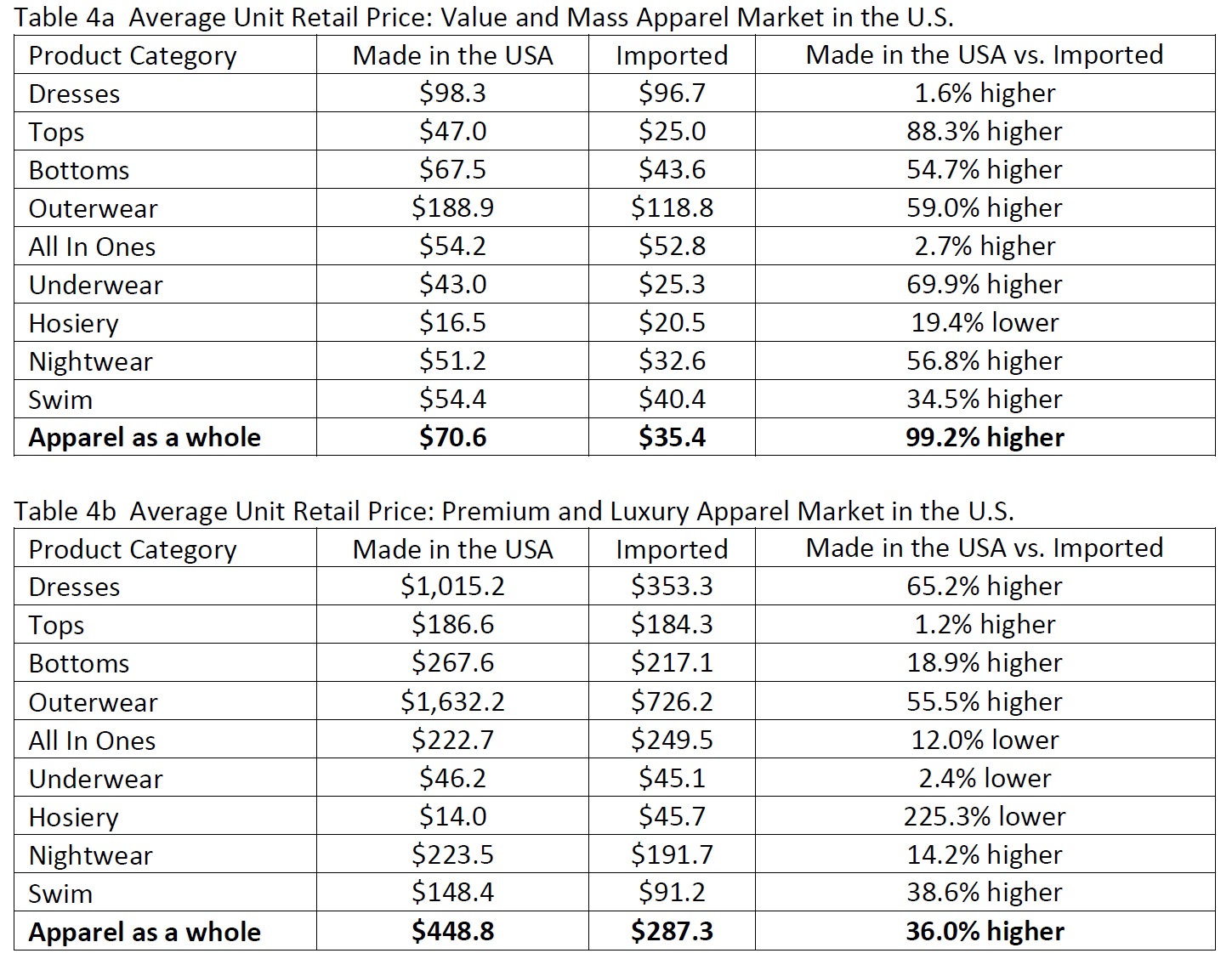
Third, consistent with the common perception, “Made in the USA” apparel overall are pricier than imported ones in the U.S. retail market.

Taking the U.S. apparel retail market as a whole, close to 40 percent of “Made in the USA” offering in the past 12 months targeted the premium or luxury market, compared with only 20 percent of imported products.  In contrast, as few as 18 percent of “Made in the USA” offering were in the value market, which, however, accounted for approximately 60 percent of all imported apparel sold in the U.S. market. In totality, it seems U.S. fashion brands and retailers are purposefully targeting “Made in the USA” apparel for less price-sensitive segments of the market to balance the high domestic production cost.

On the other hand, when examining U.S. fashion brands and retailers’ pricing strategy at the product level, “Made in the USA” clothing was still priced much higher than imported ones for almost all major apparel categories, except hosiery. Notably, in the past 12 months, the average unit retail price of “Made in the USA” clothing was 99.2 percent higher than imported ones in the value and mass market and 36.0 percent higher in the premium and luxury market. This interesting phenomenon supports the arguments that U.S. consumers somehow are willing to pay a premium price for products with the “Made in the USA” label.  

Additionally, during the past 12 months, around 46.3 percent of “Made in the USA” apparel were sold at a discount compared with more than 54.6 percent of imported ones. The advantage of proximity to the market, which makes speedy replenishment for in-season items possible, is an important factor behind the more successful control of markdowns for “Made in the USA” products. For example, data shows that U.S. fashion brands and retailers replenished approximately 12.7 percent of their “Made in the USA” offering in the past 12 months but only 2.8 percent of imported clothing.

In conclusion, the findings of this study concur with the view that “Made in the USA” apparel are still relevant today. Meanwhile, it does not seem to be the case that “Made in the USA” apparel and imported ones are necessarily competing with each other in the U.S. retail market. With apparel sourcing increasingly requiring striking a balance among various factors ranging from cost, flexibility, compliance to speed to market, it is hopeful that “Made in the USA” apparel will continue to have its unique role to play in U.S. fashion brands and retailers’ merchandising and sourcing strategies.

By Sheng Lu

Are Textile and Apparel “Made in China” Losing Competitiveness in the U.S. Market? (updated October 2018)

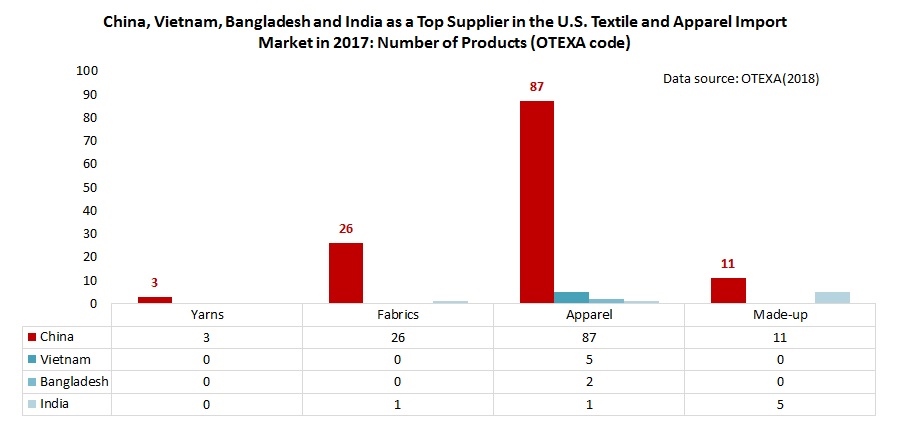
A fact-checking review of trade statistics in 2017 of a total 167 categories of textile and apparel (T&A) products categorized by the Office of Textiles and Apparel (OTEXA) suggests that T&A products  “Made in China” still have no near competitors in the U.S. import market. Specifically, in 2017:

1.jpg

  • Of the total 11 categories of yarn, China was the top supplier for 3 categories (or 27.3%);
  • Of the total 34 categories of fabric, China was the top supplier for 26 categories (or 76.5%);
  • Of the total 106 categories of apparel, China was the top supplier for 87 categories (or 82.1%);
  • Of the total 16 categories of made-up textiles, China was the top supplier for 11 categories (or 68.8%);

In comparison, for those Asian T&A suppliers regarded as China’s top competitors:

  • Vietnam was the top supplier for only 5 categories of apparel (less than 5% of the total);
  • Bangladesh was the top supplier for only 2 categories of apparel (less than 2% of the total)
  • India was the top supplier for 1 category of fabric (2.9% of the total), 1 category of apparel (1% of the total) and 5 categories of made-up textiles (41.7% of the total)

Notably, China not only was the top supplier for many T&A products but also held a lion’s market shares. For example, in 2017:

2.jpg

  • For the 26 categories of fabric that China was the top supplier, China’s average market shares reached 40.5%, 22 percentage points higher than the 2nd top suppliers for these categories
  • For the 87 categories of apparel that China was the top supplier, China’s average market shares reached 52.4%, 36 percentage points higher than the 2nd top suppliers for these categories.
  • For the 11 categories of made-up textiles that China was the top supplier, China’s average market shares reached 58%, 43 percentage points higher than the 2nd top suppliers for these categories.

3.jpg

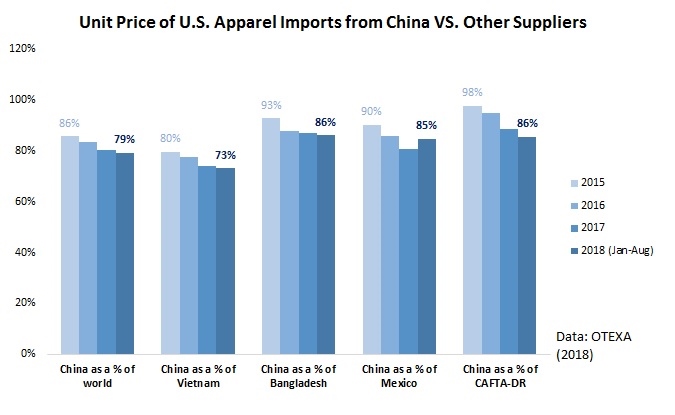
Furthermore, T&A “Made in China” are demonstrating even bigger price competitiveness compared to other suppliers in the U.S. market. For example, in 2017, the unit price of apparel “Made China” was only 74% of the price of “Made in Vietnam” (in 2015 was 80%), 86% of “Made in Bangladesh” (in 2015 was 93%), 85% of “Made in Mexico” (in 2015 was 90%) and 86% of products by members of CAFTA-DR (in 2012 was 98%).

4.jpg

Last but not least, the U.S.-China tariff war apparently has NOT affected China’s textile and apparel exports to the United States significantly. From January to August this year, China’s apparel exports to the U.S. declined by 1% in value and 0.3% in quantity from a year earlier, but China’s textile exports to the U.S. increased by 12.3% in value and 7.2% in quantity.  China’s market shares in the U.S. market also remains overall stable.

Are the results surprising? How to explain China’s increasing price competitiveness despite its reported rising labor cost? What’s your outlook for the future of China as a sourcing destination for U.S. fashion brands and retailers? Please feel free to share your views. 

Suggested citation: Lu, Sheng. (2018). Are Textile and Apparel “Made in China” Losing Competitiveness in the U.S. Market? (updated October 2018). Retrieved from https://shenglufashion.com/2018/10/28/are-textile-and-apparel-made-in-china-losing-competitiveness-in-the-u-s-market-updated-october-2018/