Used Clothing Trade Debate Continues in Kenya (updated March 2025)

A new study by the Changing Markets Foundation suggests severe negative environmental and social, economic impacts of used clothing exports to Kenya. However, the Textile Recycling Association, based in the UK, argues strongly in favor of the benefits of the used clothing trade.

Concerns about the used clothing exports to Kenya (viewpoints from the Changing Markets Foundation)
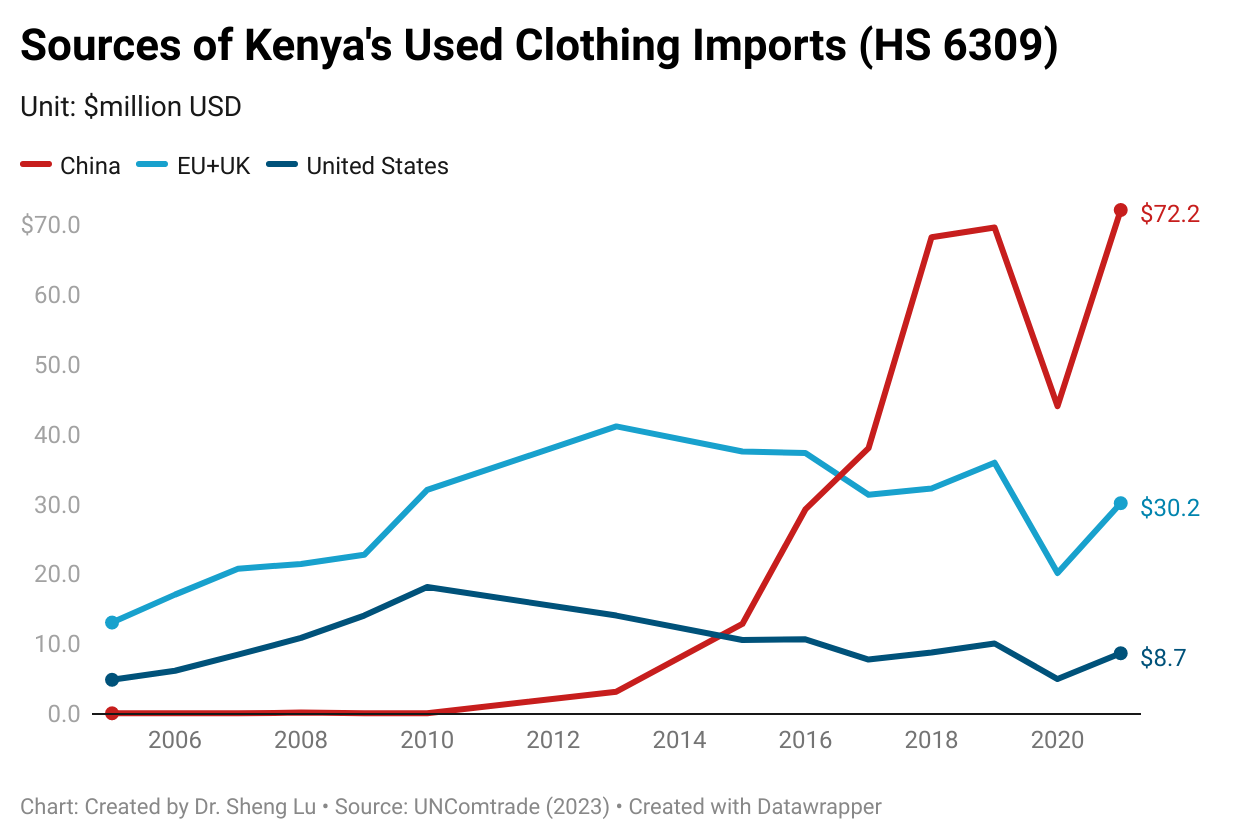
  • Data from the United Nations (UNComtrade) shows that Kenya’s used clothing imports surged by over 500% from 2005 ($27 million) to 2021 ($172 million).
  • An overwhelming volume of used clothing shipped to Kenya is waste synthetic clothing, a toxic influx creating devastating consequences for the environment and communities. It is estimated that over 300 million items of damaged or unsellable clothing made of synthetic or plastic fibers are exported to Kenya each year, where they end up dumped, landfilled, or burned, exacerbating the plastic pollution crisis.
  • Interviews with used clothing traders in Kenya show that 20–50% of the used clothing in bales they purchased was unsellable due to being damaged, too small, unfit for the climate or local styles, and sometimes even with clothing that is covered in vomit, stains or otherwise damaged beyond repair.
  • European sorting companies often skimmed off high-quality used clothing for resale in the local EU market. They exported the lower-quality and lower-graded ones to developing countries like Kenya.
  • It remains challenging to recycle synthetic clothing as it often contains harmful additives or other materials that make the recycling process difficult or impossible. Additionally, the quality of the recycled synthetic fibers is typically lower than that of the original fabric (i.e., using virgin fiber).

Defend the used clothing exports to Kenya (viewpoints from the Textile Recycling Association, TRA)

  • Sorting, trading and selling used clothing “directly employs two million people in Kenya alone , with tens of millions employed globally and supporting many more employment positions in ancillary sectors.”
  • “Used clothing and textiles collected in the UK, should go through a detailed sorting process and can be sorted typically into 130 plus re-use and recycling grades and sometimes this can be more than 200 grades. In the sorting process each garment is picked up and individually assessed by highly trained experts*.  The good quality re-useable products are segregated from the recycling grades.” [*According to Changing Markets Foundation’s report, about 36 million pieces of used clothing were exported from the UK to Kenya in 2021; All EU countries exported about 112 million pieces to Kenya]
  • “It is the buyers in these countries (note: countries like Kenya) that dictate the flows of (used clothing) textiles and which import the goods into their countries.”
  • “TRA members are required to ensure that only good quality re-usable clothing products are sold onto countries in Africa and other non-OECD countries.   Recycling grades and other non-textile/clothing items have to be removed… However, the majority of countries are not subject to the same tight restrictions on trading as the UK..  This is to the extent that some countries allow unsorted used textiles containing a complete mix of re-usable items, recycling grades, and waste to be sold into African countries as a product.” “The qualities of (used clothing) items originating from different countries is likely to vary significantly.”
  • “Kenyan’s buy more than 10 times as much used clothing from China than they do from the UK.”

Discussion questions proposed by FASH455 class:

  • #1 What is your stance on the used clothing trade? Should the government impose more export or import trade restrictions on used clothing?
  • #2 After considering both sides of the debate, what is your decision regarding donating used clothing? What factors influenced your choice?
  • #3 Any other thoughts or comments on the used clothing trade debate?
  • #4 As we learned in class, developing countries like Kenya are supposed to rely on making and exporting labor-intensive garments to develop their economies. Can importing used clothing lead to similar economic growth? Any evidence that can support the argument?
  • #5 What are the ethical issues involved in the used clothing trade? Should government policies play a role in regulating these ethical concerns?
  • #6 Could restricting the used clothing trade discourage fast fashion and reduce textile waste generation? Why or why not?
  • #7 Should developed countries like the U.S. voluntarily restrict used clothing exports to lessen the economic and environmental pressures on developing countries like Kenya? What are the potential benefits and drawbacks of such a policy?
  • #8 Based on the reading, what critical questions remain unanswered, and what further studies could be conducted to gather valuable information for informed decision-making on regulating the used clothing trade?

(Note: For students in FASH455, please answer at least two of the questions above. Be sure to mention the question number in your response, but there is no need to repeat the question.)

Additional reading:

Study: Destinations of Dutch used textiles (February 2024)

The study is available HERE (published by the Government of the Netherlands). Key findings:

Size of used textiles trade:

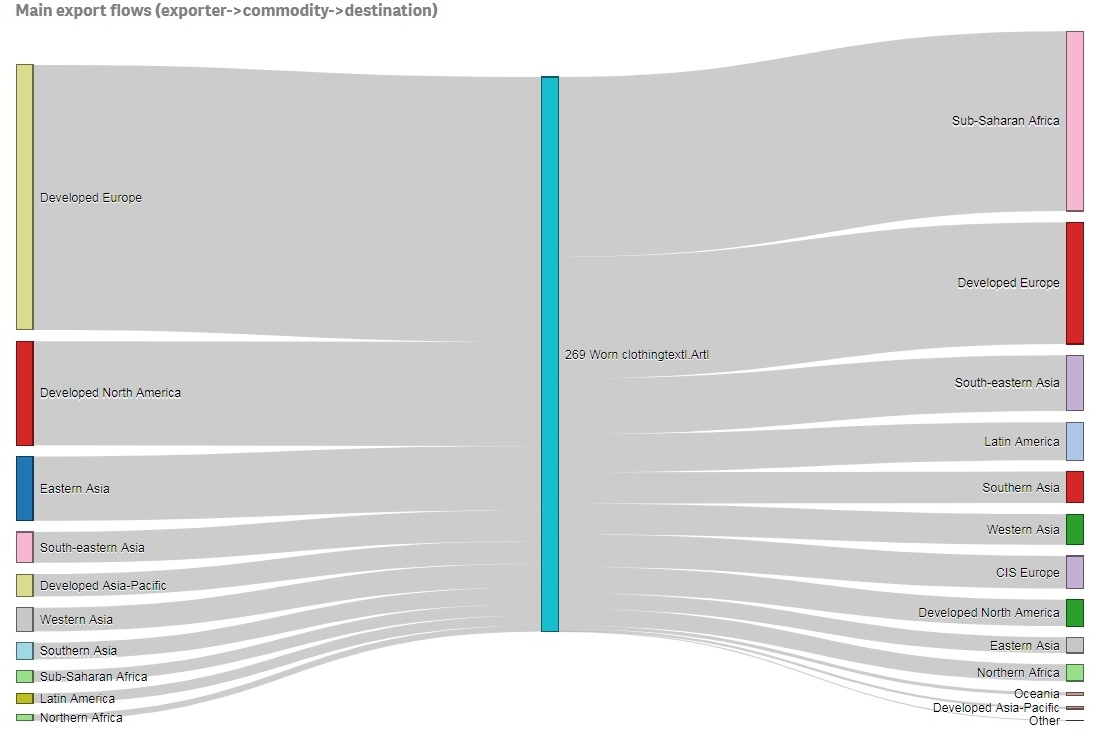
  • In 2022, the Netherlands exported 248,000 tons of used textiles (or over €193 million), the highest in the past five years. This trend aligned with the EU’s broader used clothing exports, which reached 1.7 million tons in 2019. The average European price for used textiles was around €0.76 per kg in 2019.
  • In 2018, 84% of used textiles collected in the Netherlands were exported, with 53% being suitable for re-wearing, 33% recycled, and 14% being nonrecyclable and non-renewable.

Destinations of the used textile exports

Trade data analysis (HS6309 and HS6310 from 2017 to 2022) and interviews revealed several key export destinations for used clothing exports from the Netherlands:

  • Poland and Pakistan as Import-export hubs. The high volumes of HS 6309 (used textiles) exports from the Netherlands to Poland likely reflect the lower labor costs for labor-intensive manual sorting in Poland. For the last five years, Pakistan has also been a top-five destination for Dutch used textile exports (under HS6309). Four of the six Dutch collector-sorters interviewed confirmed that Pakistan is a primary export destination, noting that the lowest quality textiles were usually sent there. However, Pakistan is also the world’s sixth largest used clothing exporter, suggesting Pakistan is unlikely to be the final destination for the Dutch used textile exports but an import-export hub.
  • India is positioned as a significant recycling hub, particularly for HS 6310 (sorted and unsorted used rags and textile scraps) imported from the Netherlands. India also receives a substantial volume of HS 6310 textiles originating from the Netherlands via France. Notably, India enforces trade restrictions requiring textiles under HS 6309 (used textiles) to be imported only through the Kandla Special Economic Zone (KASEZ), with a mandate for at least 50% to be re-exported. Panipat in India is home to numerous spinning companies, ranging from large to small. These companies specialize in cleaning and sorting textile waste to produce recycled yarn, which is then supplied to weaving and manufacturing units in Panipat and beyond. Most of India’s used textiles re-exports went to African countries.
  • Ghana and Kenya were significant recipients of used textiles from the Netherlands, yet their export volumes for HS6309 (used textiles) and HS 6310 (sorted and unsorted used rags and textile scraps) were comparatively low. The high import-to-export ratios underscore these two countries’ role as the reuse and disposal destinations of used textiles from the Netherlands.

Characteristics of the used textile exports

  • The report highlights divergent perspectives on the quality and rewearability of textile exports to African countries. Dutch collectors and sorters assert that all exports from the Netherlands to Africa consist of good-quality rewearables. They distance themselves from the problem of textile waste exported to Africa, attributing it to the unregulated practices of certain parts of the used textiles trade that involve illegal contractors and exports.
  • According to the study, textiles deemed suitable for currently viable closed-loop recycling technologies include those made of pure cotton, pure wool, pure acrylic, and cotton-rich and wool-rich blends exceeding 80%. However, the study noted a concerning decline in the proportion of collected textiles suitable for rewear, coupled with a rise in textiles containing synthetic fibers. Most interviewees explicitly attribute the degradation in the quality of used textiles over time to the influence of “ultra-fast fashion.”

Environmental and social impacts of used textile exports

  • Interviews revealed a significant variation in the perceived environmental impacts of the used clothing trade. For example, participants from import-export hubs like Pakistan and recycling hubs like India emphasized minimal environmental harm, focusing on the positive contributions of used textile imports. In contrast, interviewees from reuse and disposal countries, such as Kenya and Ghana, discussed environmental harms and their localized impacts. Interviewees also expressed concerns that “certain sustainability solutions may be developed in such a way that generates additional problems further away” and benefit actors in Europe and the West only.
  • The study also found that 99% of fashion brands “do not disclose a commitment to ultimately reduce the number of new items they produce,” and only 12% of fashion companies have even disclosed the quantity of products produced annually in 2023, down from 15% in 2022.
  • The involved parties acknowledge the considerable difficulty in completely disassociating any participant in the reverse supply chain from the adverse impacts of textile exports. Despite efforts, achieving complete transparency beyond EU borders is deemed nearly impossible, as highlighted by one used textiles collector.

Job creation

  • The used textiles value chain unambiguously generates a huge amount of employment, particularly for women, in the sorting, recycling, selling, cleaning, repairing, re-styling, and distributing processes.
  • A 2023 International Labour Organization (ILO) study showed that new recycling and reprocessing activities could create over 10 million jobs in Latin America and the Caribbean and around 0.5 million jobs in Europe.
  • However, concerns related to job quality and social risks were also raised in interviews, particularly concerning reuse and disposal countries. Even where waste management systems for used textiles are formalized and managed, they often rely on the “labors of informal actors” for various functions such as distribution, resale, and disposal processes. Gender-based disadvantage may also be a concern. For example, the study found that whereas recycling and sorting enterprises are overwhelmingly owned and operated by men, women perform the majority of lower-wage, non-technical, and manual labor-intensive tasks.

Regulations

  • The Dutch government’s Circular Textiles Policy Programme for 2020–2025 outlines a commitment to enhance the proportion of recycled materials in textiles and apparel products available in the Dutch market, including achieving a 10% reuse and 30% recycling rate of sold textiles and apparel by 2025.
  • The Dutch Extended Producer Responsibility (EPR) for textiles was officially implemented on July 1, 2023. Onwards, producers are responsible for “recycling and reusing of textiles…including an appropriate collection system, recycling and reusing of clothing and household textiles and financing this entire system.”
  • The policy landscape for managing and exporting used textiles in Europe has evolved to align with environmental goals, with key milestones such as the EU Strategy for Sustainable and Circular Textiles in March 2022. While this strategy aims to create a greener and more resilient textiles sector, the report suggests a need for a bolder vision and more international orientation, emphasizing responsibility for socioenvironmental impacts beyond Europe.
  • The EU Waste Framework Directive (WFD) is another crucial instrument to tackle the environmental challenges of high textile consumption. The WFD regulates all aspects of textile waste management, including the specific obligations to ensure separate collection, treatment, and reporting requirements. The directive calls for all EU Member States to establish separate collection systems for used textiles by the beginning of 2025.
Supplementary video: Used clothing from Europe: Trash or treasure for Africa?

What Affects the Patterns of Used Clothing Exports?

Used clothing trade patterns (data source: UNComtrade (2021)

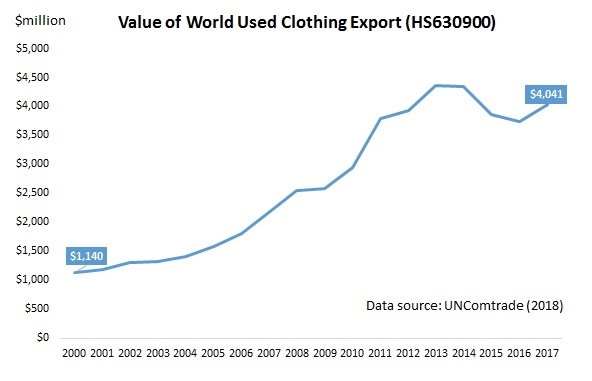
This study intends to explore the key factors that affect the volume of a country’s used clothing exports. Notably, the world’s used clothing exports (defined as the Harmonized System code 6309) substantially increased from only $2.5 billion in 2009 to over $4.2 billion in 2019, or up 63.4% (UNComtrade, 2021). While numerous studies have explored the patterns of used clothing imports and their social-economic impacts on the importing countries, what drives a country’s used clothing exports remains largely unknown.

In the study, we conducted a regression analysis of 37 countries’ used clothing exports in 2019 (or over 90% of the value of the world’s used clothing exports that year) (UNComtrade, 2021). The explanatory factors we considered include new clothing sales (2018-2019), new clothing retail price (2018-2019), population (2019), and country classification (developed or developing in 2019). The results show that:

  • First, there is a strong positive relationship between a country’s new clothing sales and its used clothing exports. On average, a 1% increase in new clothing sales would result in a 0.85% increase in used clothing exports when holding other factors constant.
  • Second, as new clothing gets cheaper in the retail market, a country would export more used clothing and vice versa. Specifically, when the retail price for new clothing decreases by 1%, the value of used clothing export could increase by 1.2% on average when holding other factors constant.
  • Third, when holding other factors constant, used clothing exports from developed countries were 56% higher than in developing economies. Lower-income levels and various other social-economic factors (such as the awareness of sustainability and used clothing collection mechanism) could be the factors behind the phenomenon.
  • Fourth, the size of the population has NO significant impact on a country’s used clothing exports. This explains why a developed economy with a relatively small population (such as the Netherlands and Canada) exported far more used clothing than a populous developing one (such as India and Indonesia) in 2019 (Uncomtrade, 2021).

The study’s findings create new knowledge about the primary factors affecting the patterns of used clothing exports and have several important implications. First, the results suggest that we can do more on the supply side to curb the surge of used clothing exports, given the rising concerns about its controversial impacts on the developing world and the environment. Particularly, encouraging consumers to purchase fewer new clothing and shop more “slowly” can be among the most effective ways to reduce the supply of used clothing. Second, echoing the finding of existing studies, the results confirm the significant price impact on the generation of used clothing exports. Notably, the result reminds us about the enormous social-economic and environmental “cost” of selling new clothing too cheaply. Additionally, the findings suggest that developed countries have a crucial role in addressing the used clothing export problem, even those with a relatively small population.

By Aline Gomes Siqueira and Dr. Sheng Lu

Note: The study will be presented at the 2021 International Textile and Apparel Association (ITAA) Annual Conference in November.

Apparel Industry and Trade as an Economic Development Tool: Discussion Questions from Students in FASH455

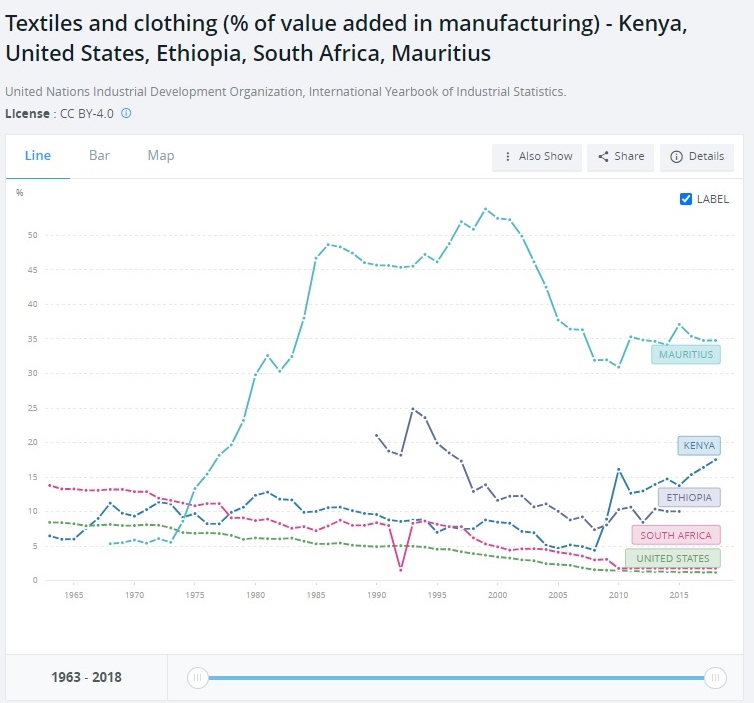
The apparel sector remains a key economic growth engine for many developing countries in the world today. Data source: World Bank (2021)

#1: In history, the garment industry helps many developing countries start the industrialization process. Given the situation described in the case study, why or why not do you think the Eastern African countries are following the same development path? Should they?

#2: Notably, very few used clothing exported from the United States to EAC countries were actually “Made in USA”—they were originally imported from Asian countries such as China, Vietnam, and Bangladesh. Also, most U.S. used clothing exports to EAC were “free giveaways” by U.S. consumers. Is it ethical for SMART to oppose the used clothing import ban so that its own can make a profit? What is your evaluation? If you were the president of SMART, how would you respond to the ethical concerns?

#3: As we are talking about the opportunities associated with the circular economy, why or why not do you think accepting used clothing imports will lead to a sustainable economic development path for EAC countries?

#4: To which extent do you think automation in garment manufacturing will challenge the conclusions of the textile and apparel stages of development theory we discussed in the class?

#5: If automation can only create “factories without workers” in the US and resulting in more garment workers in the developing countries lose their jobs, should we still support the efforts and make it happen? What is your assessment?

(Welcome to our online discussion. For students in FASH455, please address at least two questions and mention the question number (#) in your reply)

Evolving Patterns and Social Economic Impacts of World Textiles and Apparel Trade: Discussions Questions from FASH455


Patterns of world textile and apparel trade

#1 Based on the readings, why or why not do you think Africa is on the right track to become the next hub for apparel sourcing for western fashion brands?

#2 Based on the readings, do you think that any of the countries/regions discussed can become the “next China?” If so, what are the challenges faced by these exporters that have been gaining market shares (such as Vietnam and Bangladesh)?

#3 Why is Asian companies investing the most into the apparel industry in Sub Saharan Africa (SSA) rather than U.S. or EU investors? Notably, the African Growth and Opportunity Act (AGOA) is a trade preference program between the U.S. and SSA countries.

#4 If the punitive tariffs on Chinese goods are removed next year, why or why do you think U.S. retailers will increase apparel sourcing from China again?

#5 To which extent do you think the comparative advantage theory can explain the evolving world textile and apparel trade patterns?

#6 What policies or strategies could the US government use to convince companies to invest in the Sub-Saharan African region instead of countries like China and Vietnam?

Debate on used clothing trade

#7 Did you feel that the United States really explored every and any possible solution before deciding to suspend Rwanda’s eligibility under the AGOA? If not, what more could they have done or done differently?

#8 The US-EAC trade dispute on used clothing import ban is a very multilayered matter, which can be broken down with the help of trade preference programs. How can we improve the effectiveness of these trade preference programs and revolutionize them to become more significant in today’s economy?

#9 EAC countries are having a difficult time developing their local textile and apparel industry due to the large amounts of used clothing being imported and even proposed a high tariff to lower the amount of clothing being imported. Do you believe the ban on used clothing is the only option they have left for economic growth? If not, what are some ideas of ways they can grow their economy?

#10 The EAC countries have shown their unwillingness to used clothing trade. However, the US has presented that they are indifferent to regulate the used clothing trade as they are one of the biggest used clothing exporters. Are there any solutions to achieve the win-win situation on used clothing trade?

#11 The used clothing ban is put in place in order to develop the apparel and textile industry, but there needs to be more education for countries on sustainability. There is a big stigma about used clothing that needs to be abolished as well. An alternative to this ban is allowing used clothing, but also creating new clothing more sustainably so apparel and textile companies can profit. What are some other sustainable alternatives that benefit both sides?

#12 Given the debate on used clothing trade and its impact on East African nations, will you continue to donate used clothing? Why or why not?

[For FASH455: 1) Please mention the question number in your comments; 2) Please address at least TWO questions in your comments]

Why is the used clothing trade such a hot-button issue?

Shannon Brady and Sheng Lu (2018). Why is the used clothing trade such a hot-button issue? Just-Style [full article available]

Key Findings:

First, the world used clothing trade has grown significantly over the past ten years. Statistics from the United Nations show that the value of world used clothing trade (HS code 630900) has quickly increased from $1.8bn in 2006 to $3.7bn in 2016, an increase of 106 percent. Between 2006 and 2016, the value of world used clothing trade enjoyed a 7.6 percent compound annual growth rate (CAGR), which was almost double the pace of 3.4 percent CAGR for new clothing trade (HS chapters 61 and 62) over the same period.

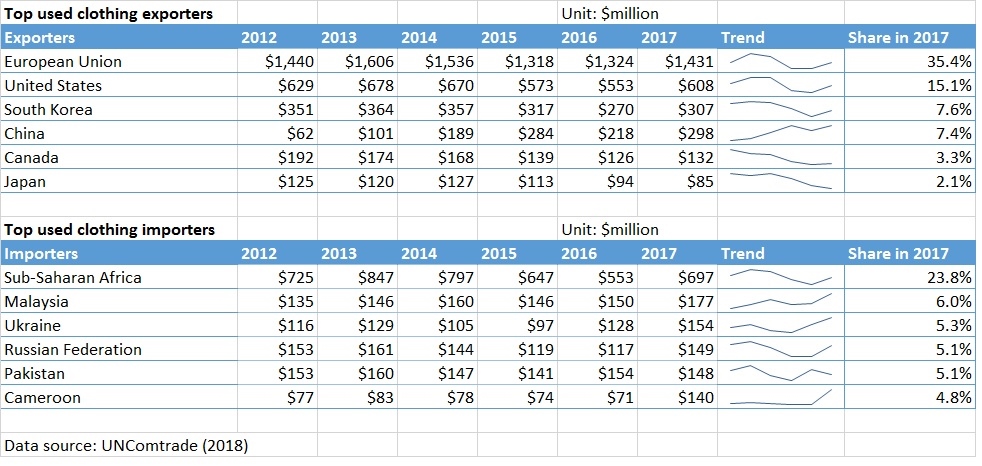
Second, the world used clothing trade flow is highly unbalanced. On the one hand, the developed economies are the dominant suppliers of used clothing to the world. In 2016, nearly 40 percent of the world’s used clothing exports came from three countries alone: the United States (15 percent), the United Kingdom (13 percent) and Germany (11 percent). Data also shows that the European Union and the United States together stably accounted for as much as 65 percent of the value of world clothing exports between 2006 and 2016. The other country worth mentioning is China, which is quickly becoming another leading used clothing exporter in the world. In 2016, China’s used clothing exports totaled US$218m from only US$0.32m in 2006, an increase of more than 684 percent!

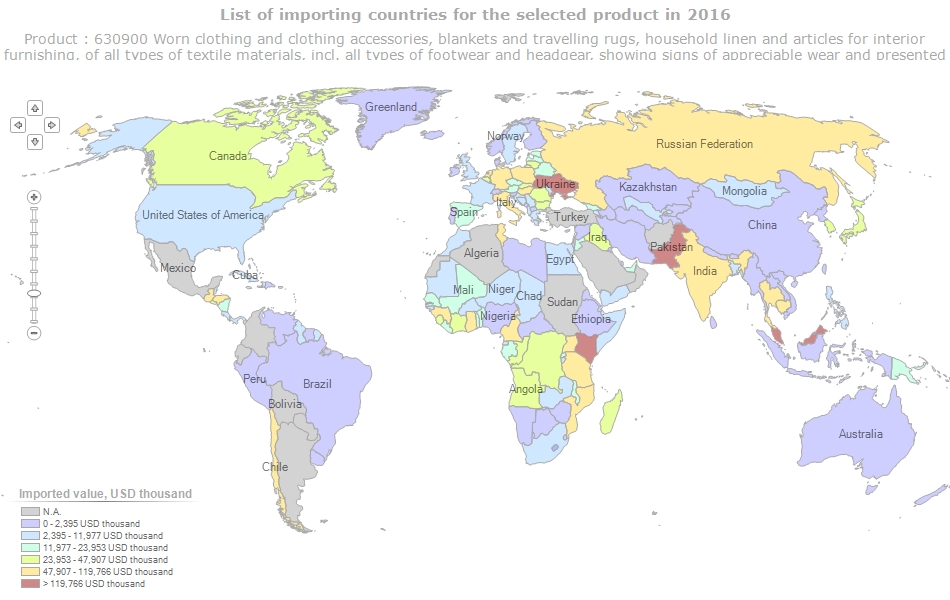
On the other hand, most of the world used clothing exports end up sold in the developing countries, especially the least developed ones. For example, in 2016, Sub-Saharan Africa (SSA) as a whole imported approximately 20 percent of the world’s used clothing, far more than any other regions in the world. By value, the top three individual importers of used clothing in 2016 are all developing countries as well, namely Pakistan (6.0 percent), Malaysia (5.8 percent) and Ukraine (4.9 percent).

Third, trade policies regulating used clothing trade often raise controversies. While trade barriers on new clothing attract much of the public attention, the used clothing trade is facing even heavier and trickier restrictions of various kinds. The World Trade Organization (WTO) data shows that in 2016 the average applied tariff rate for used clothing imports was 19.3 percent, higher than 15.4 percent of new clothing (HS Chapters 61 and 62). Of the total 180 countries covered by the WTO tariff database, 115 (or 64 percent) set an equal or higher tariff rate for used clothing than the new one. Further, it is not rare to see extremely high import tariff rates and other quantitative restrictions applied to used clothing trade. For example, in 2016 the applied most-favored-nation (MFN) ad valorem equivalent tariff rate for used clothing was as high as 356.9 percent in Uzbekistan, 167.3 percent in Zimbabwe, 149.2 percent in South Africa, 116.8 percent in Rwanda and 100 percent in Vietnam.

After all, because of the complicated social, economic and political factors involved, how to regulate and manage used clothing trade remains a key challenge facing the world community.

Social and Economic Impacts of Apparel Trade–Questions from FASH455

Used-clothes-e1501882805445

Debate on Used clothing trade and AGOA

#1 What evidence can support the arguments that cutting off secondhand clothing imports from Africa will allow African nations to build their own textile industry? Likewise, what evidence can support the arguments that African countries overall benefit from importing used clothing from countries like the United States?

#2 Given the debate on used clothing trade on African nations, will you continue to donate used clothing? Why or why not?

#3 China holds a dominant position in textile and apparel production and exports because of their vast amounts of technology, workers, and resources. How do you think least developing countries like Africa will be able to keep up with such steep competition? Why or why not it is a wise decision for the United States to threaten to take away East African countries’ benefits under AGOA?

Social and economic impact of apparel trade

#4 Is factory employment in India a step in the right direction for the country’s gender equality? What effects, positive or negative, could such employment have in regards to gender issues?

#5 We keep arguing that globalization is negative because we are taking jobs away from U.S. workers. But by sending more work to factories in India, we’ve created jobs for these Indian women who, before working in the factories, were sheltered and only sent off into the world for arranged marriage. In this sense, is globalization still negative if we’re creating a sense of freedom and purpose for these women?

#6 As detailed in the article, the working conditions and treatment of workers is extremely unethical in some garment factories.  Can globalization help this issue or hurt it more? 

#7 How do you compare your life to the Indian girls in the article? And please just imagine: ten years later, what will the life of these Indian girls look like? How about yours?

Welcome to our online discussion! Please mention the question # in your comment.

Tariff Remains a Critical Trade Barrier for the Textile and Apparel Sector (Updated December 2017)

textile

clothing

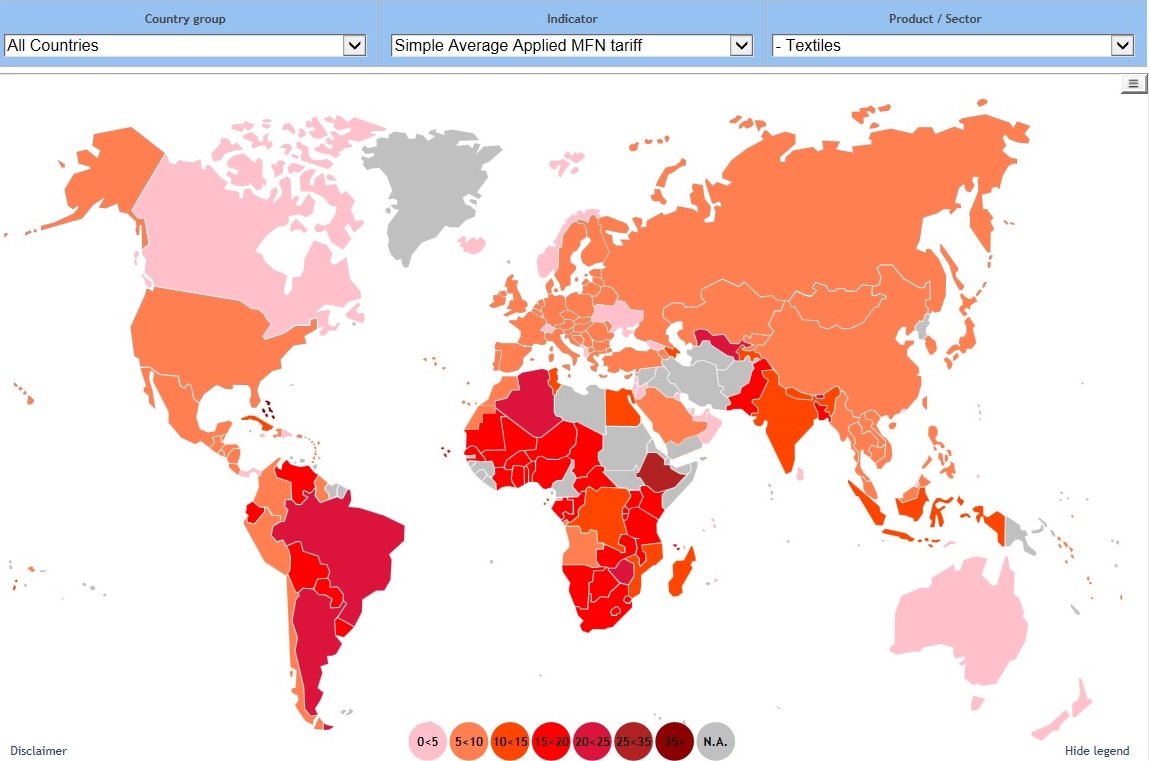
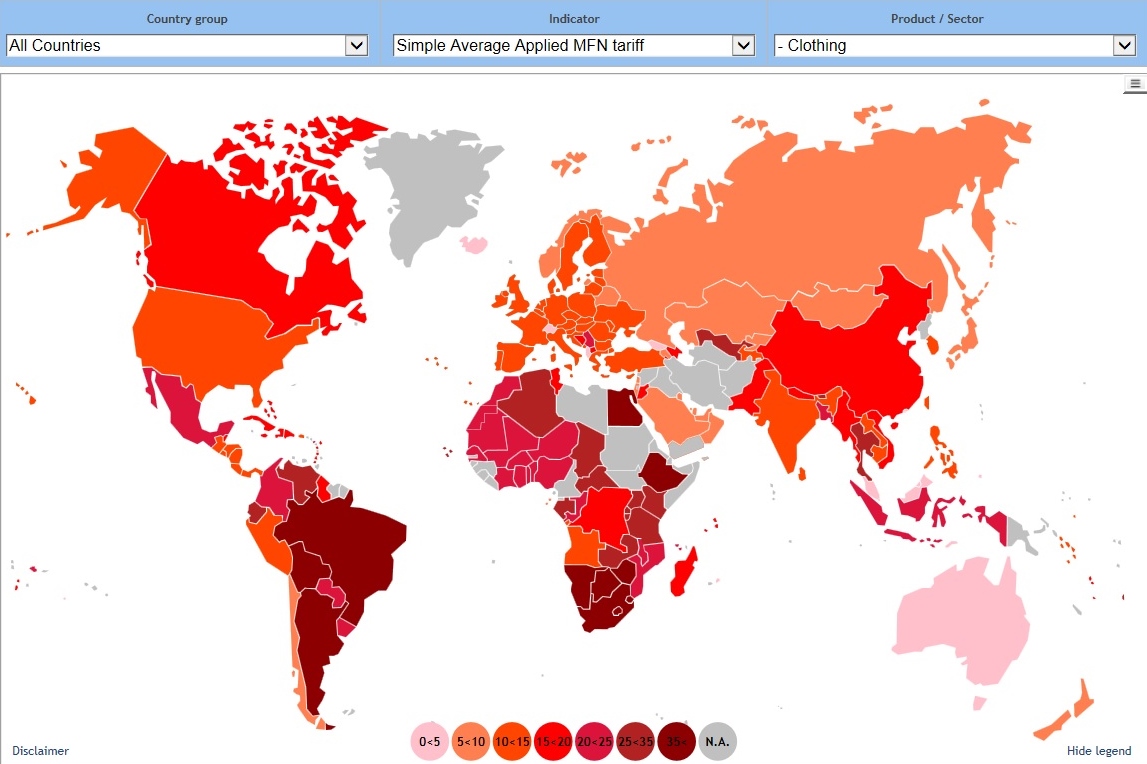
According to latest statistics from the World Trade Organization (WTO), in 2016, the average applied tariff rate remained at 10.5% for textiles and 17.5% for apparel worldwide. Compared with the average tariff rate for all sectors, the tariff rate for textile and apparel is 1.4 percentage points and 8.4 percentage points higher respectively. The result suggests that while tariff may no longer be a critical trade barrier for some sectors, it still significantly matters for the textile and apparel industry.

Least developed countries (LDC) overall set a higher tariff rate for textiles and apparel than other more advanced economies. For many poorest countries in the world, tariff remains the single largest source of tax revenue for the local government. However, it is also true that should these LDCs lower their tariff rate for textile inputs such as yarns and fabrics, it may help apparel manufacturers in these countries lower production cost and improve the price competitiveness of their finished apparel products in the world marketplace.

At the country level, countries with the highest tariff rate for textiles include Bahamas (37.1%), Ethiopia (28.0%), Uzbekistan (24.5%), Algeria (24.0%), Argentina (23.3%), and Brazil (23.3%). Whereas countries with the highest tariff rate for apparel include South Africa (41.0%), Namibia (41.0%), Swaziland (41.0%), Botswana (41.0%), Lesotho (41.0%), Bolivia (40.0%), Egypt (38.4%), Argentina (35.0%), Ethiopia (35.0%) and Brazil (35.0%).

tariff rate

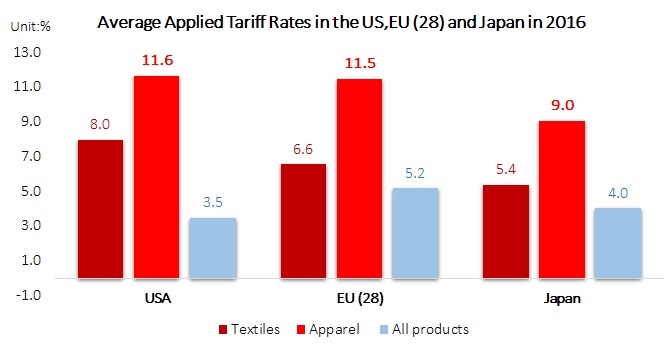
Data also shows that the import tariff rates of the US, EU(28) and Japan, the top three largest textile and apparel importers in the world, stay unchanged over the past three years.

Map_630900_I_

TIC

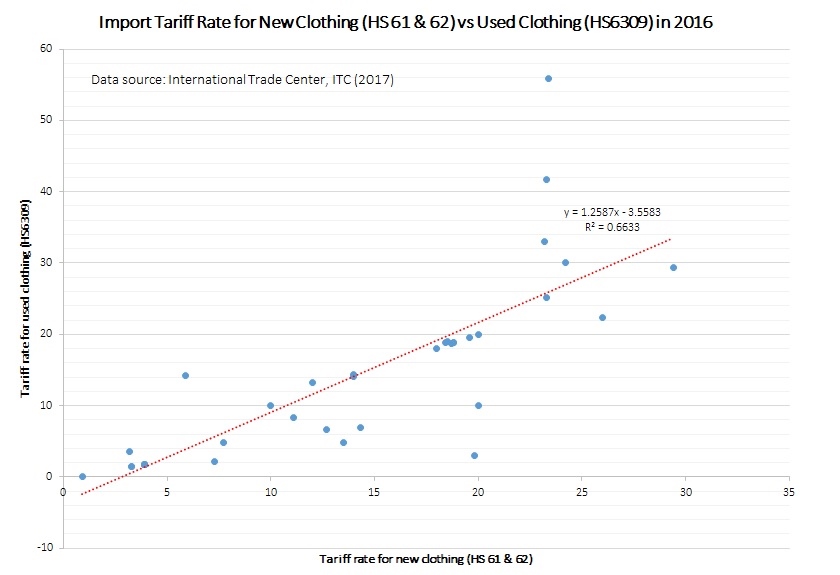
Additionally, there seems to be a positive relationship between a country’s import tariff rate for new clothing (HS 61 & 62) and used clothing (HS 6309). Of the total 180 countries covered by the International Trade Center (ITC) database, about 62.7% set an equal or higher tariff rate for new clothing than used clothing. Some African nations place a particularly high tariff rate for used clothing, including Zimbabwe (167%), South Africa (149%), Rwanda (117%), Namibia (80%), Tanzania (56%), and Uganda (41%).

Detailed tariff rates in Excel can be downloaded from HERE