Trans-Atlantic Trade and Investment Partnership

20130213ustr460x210

From Just Style, March 2013

Textile and clothing industry groups on both sides of the Atlantic have welcomed the news that the EU and the US are to commence talks on the biggest bilateral trade deal ever negotiated.

European Union (EU) clothing and textile industry association Euratex has hailed the launch of talks between the United States and the EU to forge what the European Commission calls the “biggest bilateral trade deal ever,” saying EU exporters will benefit.

A deal, once sealed, could eliminate American duties as high as 19%, says Euratex.

The EU’s textile and clothing industry already has a positive trade balance with the US. “Tariffs are still high in the US” for textile and clothing, Euratex president Alberto Paccanelli has stressed.

And it is worse when it comes to exporting products containing wool where the “duties are generally higher, sometimes above 19%,” Luisa Santos, head of international trade at Euratex, told just-style.

So “we expect to have duty-free access from the entry into force of the agreement and we are willing to give the same benefit to the US,” Ms Santos noted. With exports being highly price-sensitive, an elimination of the duties could “help substantially our competitiveness in the market.”

The EU’s textile and clothing exports to the US have been steadily increasing and are already substantial. In 2009, these exports stood at EUR2.8bn (US$3.7bn) and in 2010, they rose to EUR3.3bn, while they reached EUR3.7bn in 2011.

In negotiations, the EU would have a “forward looking approach” in terms of tariff and duty-free access from day one, according to Santos.

US sees opportunity

There was also optimism from American importers and retailers. Julie Hughes, president of the United States Association of Importers of Textiles & Apparel (USA-ITA), said a free trade agreement “presents a terrific opportunity” to remove duties and resolve regulatory issues that hold back trade between the US and the EU.

“We are especially enthusiastic about the launch of the US-EU trade negotiations,” Hughes told just-style adding: “Many people don’t realise that the EU is actually one of the top destinations for US exports of yarns, fabrics, and apparel” or that US brands import yarns and fabrics from the EU to manufacture ‘Made in the USA’ garments.

However some US groups are concerned because of different tax and regulatory regimes between the two regions.

“We are eagerly watching how the US government is going to engage with the EU,” said David Trumbull, vice president of the USA’s National Textile Association.

He is concerned about the fact that the US does not have the comprehensive sales tax systems in place in Europe, which do not apply for exports. Meanwhile, American producers can pay more through income tax or corporate tax: so US exporters could be placed at a comparative tax disadvantage, also having to pay VAT in Europe.

He said: “We do not want to get subjected to double taxation when exporting to the EU while EU producers get away with paying import duties to the US.”

Other issues to discuss

Meanwhile, back in Europe, the European Commission is compiling an impact study on “which sector benefits how”, said Helene Banner, EU trade spokesperson. The study will be released in two months.

An earlier report from the EU-US High-Level Working Group on Jobs and Growth (HLWG) had, noted Banner, recommended “eliminating all duties on bilateral trade, with a substantial elimination of tariffs upon entry into force, and a phasing out of all but the most sensitive tariffs in a short time frame.”

But there are host of other issues to discuss, notably, labelling, safety and consumer protection, during clothing and textile talks.

One issue is that “the information that has to be included on the label is more extensive in the US than in the EU,” Ms Santos stressed. For instance, the US has mandatory origin labelling – which is currently only a (recent) proposal in the EU.

And when it comes to safety and consumer protection, the US has its own legislation that varies from the EU. – for example requirements in terms of testing.

Santos said it is important to focus on “harmonisation to reduce costs for companies, especially small-and-medium enterprises in both sides of the Atlantic”.

Brussels and Washington aim to conclude the talks “ideally in about two years from now,” said EU trade Commissioner Karel De Gucht: “But more paramount than speed is achieving an ambitious deal.”

The European Commission will present draft negotiating directives to the EU Council of Ministers for approval in March and similar proposals are being sent to the US Congress. “Both sides aim to advance fast once negotiations are started,” added Banner.

2013 U.S. Trade Policy Agenda Hearing

This year’s USTR trade agenda hearing at the senate finance committee is quite interesting. Ron Kirk just stepped down and Demetrios took the testimony as the acting USTR. Demetrios looks both young and smart. I am not sure whether he is among the top candidates to be considered for the USTR position but his congressional working experiences and legal background make him at least a qualified candidate in my view. Nevertheless, USTR usually is a political appointee. More interesting to watch is Sherrod Brown and Rob Portman now serve in the same committee. Sherrod obviously holds a very suspicious view about trade liberalization. As I remember he was the only senator who raised question focusing on import restrictions. Demetrios looked like a student before Rob Portman understandably.  Attending such a hearing should make Portman feel quite special too. “Unfortunately”, now he has to speak more for Ohio than for globalization.  TPA (Trade Promotion Act) turned out to be the No.1 hot topic in today’s hearing.  Japan & TPP raised grave concerns as well. I am not sure whether it is the best timing to accept Japan into the TPP. This unavoidably will make the agriculture & auto related negotiations much more challenging than otherwise.    Something a little surprising to me is China was not targeted very often today.

By Sheng Lu

Global Apparel Sales Push Ahead in 2012

untitled

Minimum Wage and Unemployment

minimum-wage

Although the graph above talks about the U.S. economy, the underlying principle applies to all countries in the world: raising minimum wage may reduce employment. The reason is fairly simple: just like how we purchase clothing given a cerain amount of budget, the higher the price, the less quantity we purchase. Similarily, when labor becomes more expensive, to reach the profit goal, companies also have to reduce hiring people if productivity remains unchanged. 

Moreover, a higher minimum wage makes capital, another production input, relatively cheaper. This is why in many developed countries, more and more machines are being used in production in replace of labor. The choice of labor versus capital is based on their relative cost and abundance. 

With that, it is easier to understand why many developing countries show grave concerns about paying more to their workers. The competition is so fierce in the textile & apparel industry and companies can hardly afford an increase of production cost. The only difference with the case of the U.S. economy is: because developing coutries have no money to capitalize production and apparel manufacturing is labor intensive in nature, therefore, a rising minimum wage will simply result in a shift of production to other places where cheaper labors are available.

Outlook of the U.S. Textile Industry in 2013

The latest industry outlook proposed by the Textile World argues that in 2013 the U.S. textile industry will improve industry strategy and planning in the following areas:

  • increased management emphasis in such areas as sourcing, inventory control
  • use of more flexible and efficient machinery and equipment
  • new and upgraded consumer products,
  • more ecologically friendly offerings
  • more Made-in-USA labels

 Don’t misunderstand/misinterpret these terms. The proposed strategies actually tell us:

1. the U.S. textile industry will become even more capitalized in production (as the result of “using more flexible and efficient machinery and equipment”).

2. the success of the U.S. textile industry relies on import (that’s why “management of sourcing” is suggested to be emphasized), despite the intension to promote “made in USA” label which has more to do with the current “rules of origin” defining the nationality of the products.

3. the softgoods industry (textile, apparel and related retailing) is a highly buyer-driven industry. Even textile mills have realized the importance of understanding and directly reaching the consumers.

4. sustainability is a major factor driving technical reform and upgrading in the textile industry. Other than the environmental concerns, there is another strategy behind the efforts: when the U.S. textile industry is fully ready to “be able to produce in a sustainable way”, it will ask for legislation support to require “everybody”(including imported products) to meet the same environmental standards(professionally, we call it “technical barriers of trade”). Developing countries can compete on price, but definitely cannot compete on technology and capital which are the basis of achieving “sustainability”.  Bu then, you will see sustainability becomes a real game changer.     

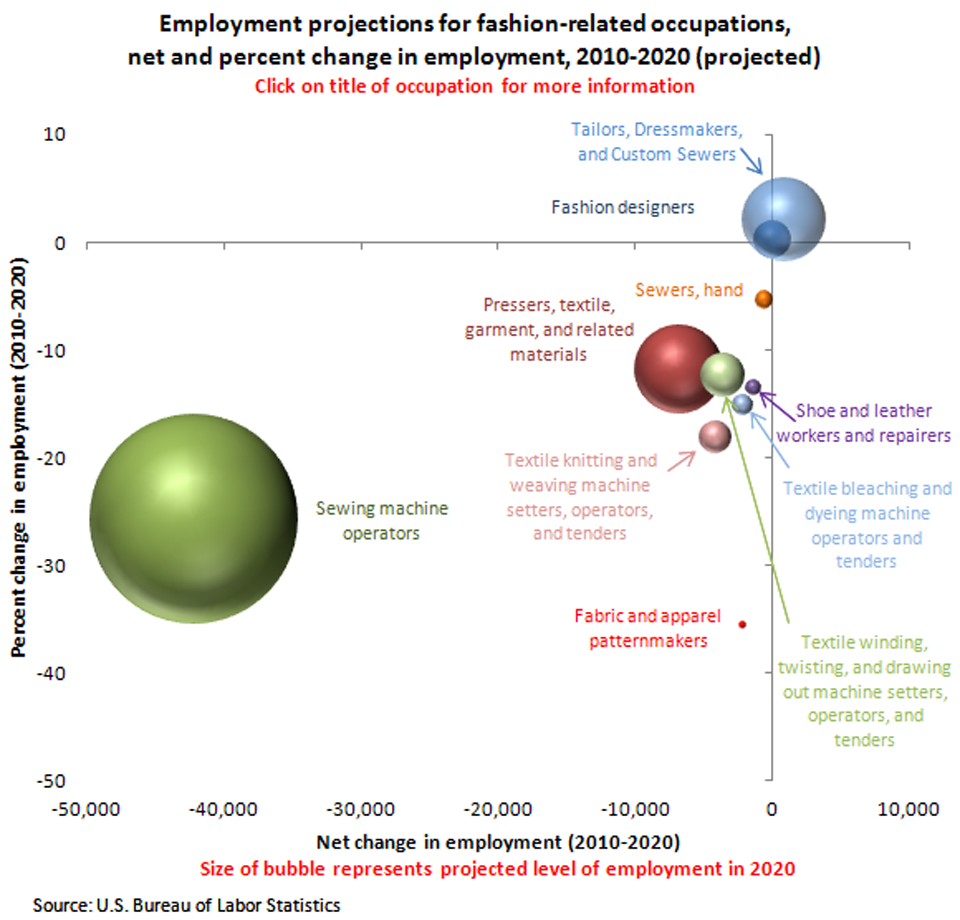
 Another relevant forecast made by the article “But holding these costs down through efficiency gains can also have a negative impact —namely, a smaller industry workforce. In the textile sector, for instance, squeezed by productivity gains, overall employment should drop from 232,000 in 2012 to near 209,000 by 2015.” As we menioned in the class, technology kills jobs too, although new types of jobs will be created at the same time–but with totally different skill requirements.

Patterns of World Textile Trade:2000-2010

The following findings are from:

Lu, S. (2013). Impacts of quota elimination on world textile trade: A reality check from 2000 to 2010, Journal of the Textile Institut, 104(3), 239–250.

         “Findings of this study challenge the practices of previous studies that evaluated the impacts of quota elimination mostly by focusing on the performances of developing countries in the U.S. and EU markets (Nordas, 2004; Curran, 2008). Although such strategy may work for clothing trade, its appropriateness for scrutinizing world textile trade is evidenced to be questionable. Particularly, to manufacture textiles, it places higher requirements on a country’s technology advancement level and capital abundance than clothing production which is more labor intensive in nature and with lower business entry threshold (Dickerson, 1999). Therefore, as shown in the study, it was the developed countries rather than the developing countries that remain dominant and competitive textile exporters in the world today (WTO, 2011).  On the other hand, the developed countries are no longer leading textile importers either because of their dramatic shrinkage of domestic clothing manufacturing capacity (Dicken, 2003). To certain extent, missing such distinct patterns of textile trade may be one reason why findings of many previous studies turned out to be inconsistent with the reality (Ahmad & Diaz, 2008).

       Second, findings of this study call for attention to the new round of structural change of world textile trade that may have unfolded since the outbreak of the world financial crisis in 2008. This is particularly the case for the high-income countries which suddenly saw sharper decline of their textile export from 2008 through 2010 compared with earlier years in the post-quota era. It is unclear whether such phenomenon is a temporary market fluctuation in nature or reflects a more permanent adjustment of economic structure that is undergoing in the developed countries. Whether and how the financial crisis has structurally affected the world textile trade can be further explored in future studies.

       Third, findings of this study reflect the difficulty of achieving upgrading of the textile and clothing sector in the less-developed countries.  Although the development theory proposed by Toyne (1984) and Dickerson (1999) optimistically predicted the gradual evolution of a country’s textile and clothing sector over time, results of this study indicated that this upgrading process turned out to be very slow in progress for the developing world. Particularly, in today’s globalized economy, the division of labor between the developed countries and the less-developed ones is largely value-chain based and different from the case of inter-industry division of labor when the development theory was introduced (Toyne, 1984; Gereffi, 1999).  It seems there lacks a clear mechanism for the less-developed countries to gradually move up their position in the clothing value chain and have the chance to build on capacity of manufacturing and exporting textiles.  However, chances may occur if the high-income countries proactively “give up” textile manufacturing and instead prioritize the development of other emerging sectors regarded as more strategically important in the post-crisis recovery. “


Race against the machine

machinejump3-popup

Remember the four key words I mentioned in the class—globalization, technology, sustainability and leadership?

This is a short but inspiring book to read about technology and its impact on us:

 “When talking about jobs and unemployment, there has been a great deal of attention paid to issues like weak demand, outsourcing and labor mobility, but relatively little attention given to technology’s role. This was a serious omission. “

“Computers are now doing many things that used to be the domain of people only…Our technologies are racing ahead but many of our skills and organizations are lagging behind”

“technological progress does not automatically benefit everyone in a society. In particular, incomes have become more uneven, as have employment opportunities.”

For TMD/TM majors & faculties, it is critical (although sometimes painful) to think about: How technology advancement will affect the job availability and nature of the job in the fashion apparel industry in the years to come? Do we have/are we learning the “right skills” that can help us survive in the race against the machine in the 21st century?

China and the US Economy: Advancing a Winning Trade Agenda

figure 1figure 2figure 4figure 5

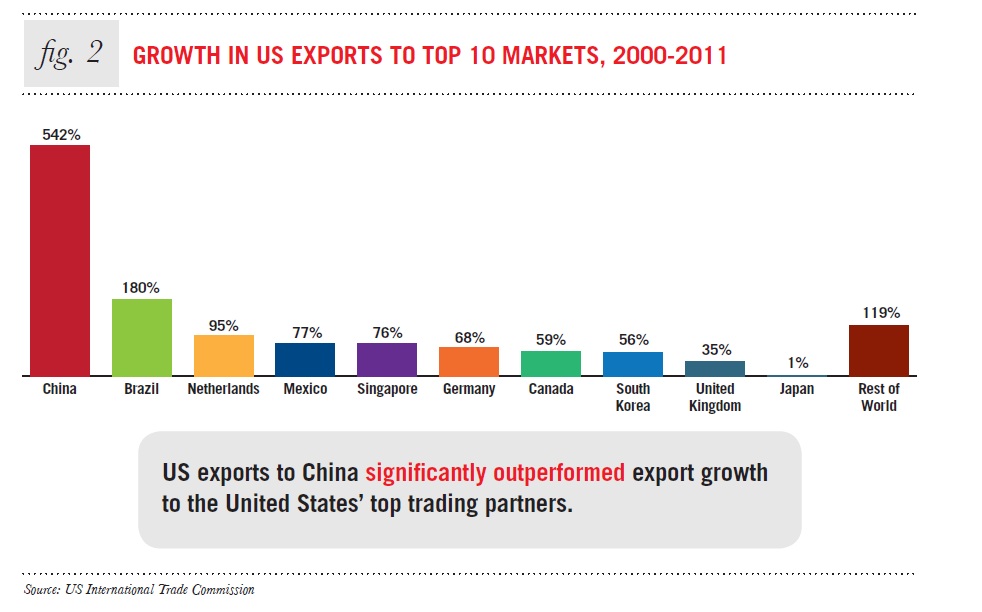
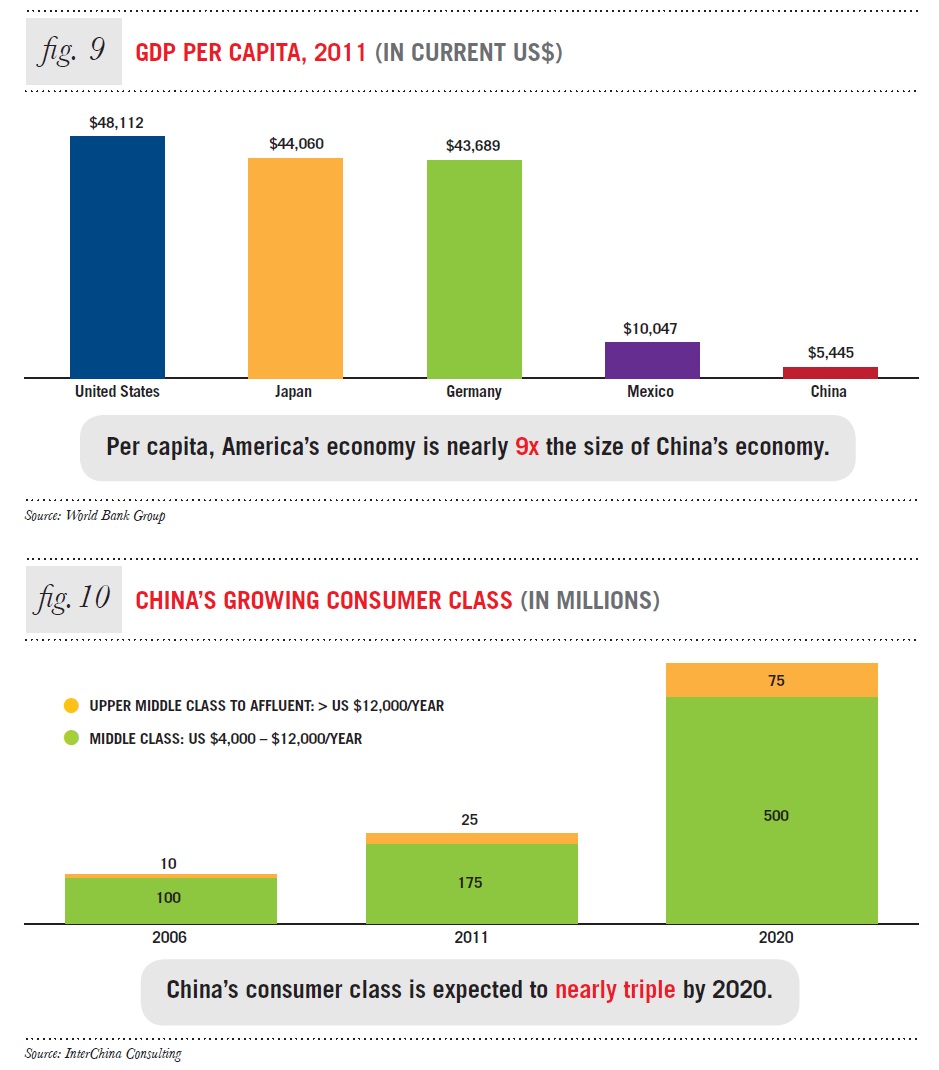
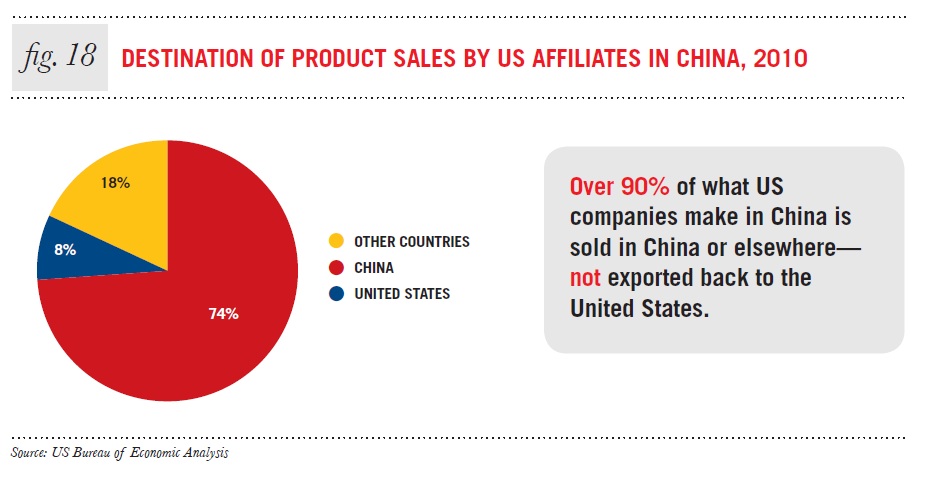
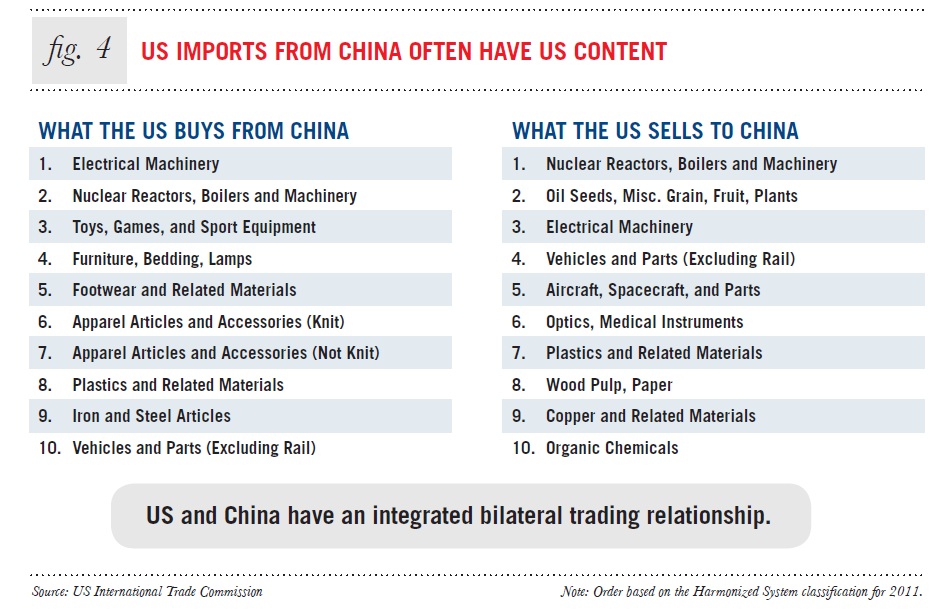
Last week in class, we discussed what globalization means and why international trade happens. This latest research report released by the U.S.-China Business Council (USCBC) on the U.S.-China commercial relationships provides latest evidence showing how the world two largest economies are interdependent with each other and mutually benefit from such a close trade partnership.  The report also highlights several key facts about the U.S.-China trade relationship, which often time is misunderstood by the general public.

Full text of the report is available at:

https://www.uschina.org/info/trade-agenda/2013/uscbc-trade-agenda-report.pdf

Scenarios on the Future of the International Monetary System

Is Textile and Apparel Manufacturing Coming back to the U.S.?

output

output growth rate

employment

employment growth rate

Preliminary Findings:

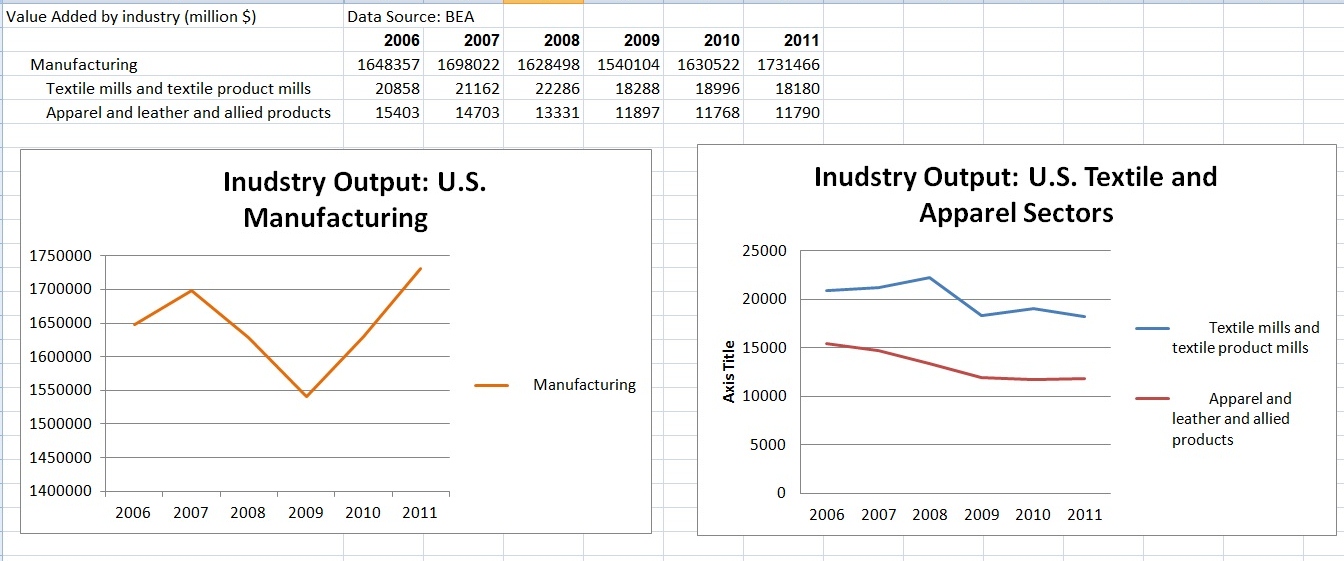
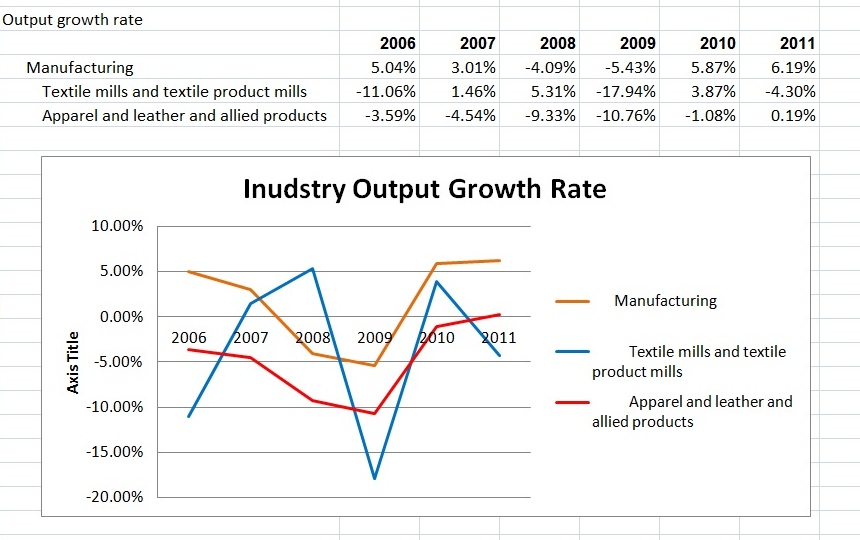
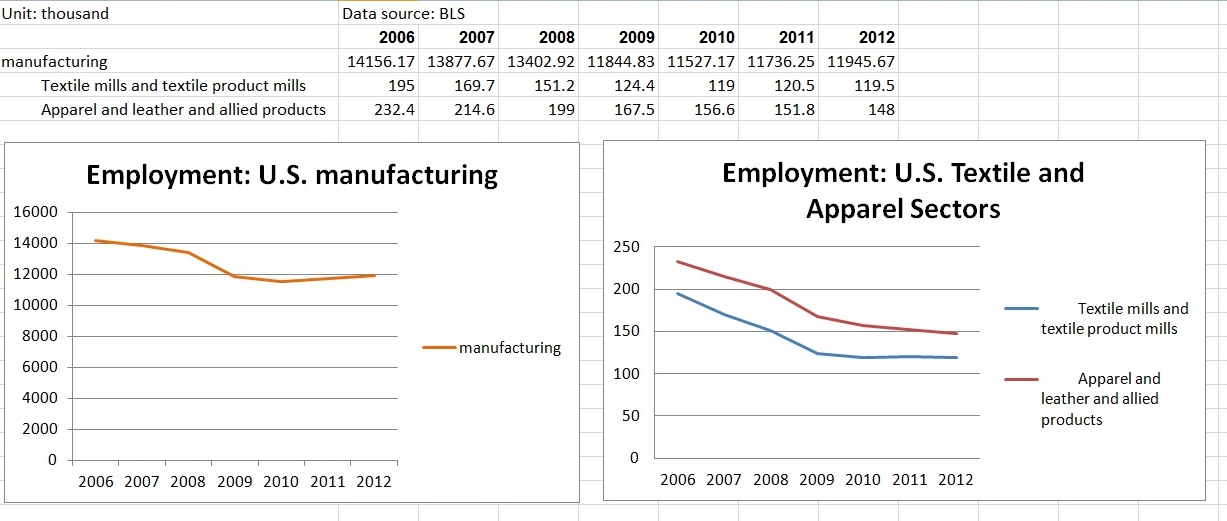
1. As suggested by numerous studies, the U.S. manufacturing sector as a whole demonstrated a robust V-shaped recovery from the 2008 financial crisis in terms of industry output.   Growth rate of the industry output from 2010-2011 was also among the highest in the past 10 years.

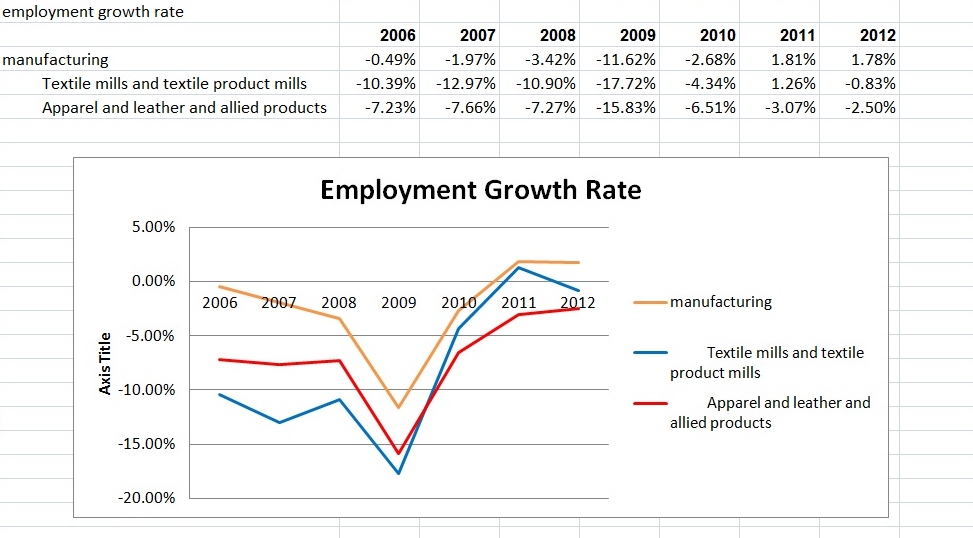
2. There is no sign yet that textile and apparel (T&A) manufacturing is coming back to the U.S, despite suggested popularity of “insourcing” as result of rising labor cost in China. However, the decline rate of apparel manufacturing in the U.S. seemed to be slowing down.

3. Jobless recovery happened both in the U.S. manufacturing sector as a whole and in the T&A manufacturing sectors. Particularly, the U.S. T&A industry respectively lost 21.0% and 25.6% of its manufacturing jobs from 2008-2012 compared with only 10.8% decline of employment in the manufacturing sector over the same period.  Based on the current data, it can be concluded that a sizable return of manufacturing jobs in the U.S. T&A industry would hardly occur at least in the near future.

Sheng Lu

China’s textile and clothing firms expand in Africa

Faced by rising labor cost, China has started thinking about “going globle” for its T&A sector: not product, but capital.

From Just -Style:

“According to William Gumede, a senior research fellow at the University of Witwatersrand’s school of public and development management in South Africa, Chinese domination of Africa’s textile markets and its industry has promoted significant job losses.

“For instance in South Africa, employment in the textile industry dropped from 300,000 workers in 1996 to 120,000 in 2010,” says Gumede when reached for comment by just-style.

And the situation is worse in Nigeria where the country has seen its once burgeoning US$1.3bn spinning industry in disarray, with Chinese cheap fabrics being highlighted as the culprit.

“Since 1995, over 175 textile manufacturing factories have shut down, leaving more than 250,000 workers jobless,” says Jaiyeola Olanrewaju, the director-general of the Nigerian Textiles Manufacturers Association.

And there is concern that some Chinese producers are not playing fair – being accused of mimicking African textile trade marks and unique designs.

“In order to compete favourably, African governments must stop [the] influx of counterfeit and smuggled textiles,” says Dr Walid Jibrin, the chairman of the Northern States Chapter of the Nigerian Textiles Manufacturers Association.

He identifies African prints, shirts, fine wax print textiles, unique Guinea brocades and lace embroideries as examples of African designs and textile trade marks being copied on cheap Asian fabrics and dumped in West Africa.

“The counterfeits have destroyed the handmade traditional textile industry in Nigeria, Ghana, Ivory Coast and Guinea,” says Dele Hunsu, the president of the National Union of Textile Garment and Tailoring Workers of Nigeria.

AGOA’s preferential access
But probably the most devastating effect of the Chinese textile industry on sub-Saharan Africa’s economic growth is its ability to piggy-back on the US’s year 2000 African Growth and Opportunity Act (AGOA).

Chinese firms have benefited from the region’s preferential access to the US by establishing Chinese-owned subsidiaries in the region. AGOA of course creates a trading advantage for sub-Saharan Africa’s textile industries to access the United States market.

According to Ms Ciliaka Millicent Gitau, a lecturer at the University of Nairobi’s School of Economics, its success was rapid but short-lived. By 2005, many Chinese companies had established subsidiaries in countries including Ghana, Kenya, Lesotho, Madagascar, Malawi, Mauritius, Namibia, Nigeria, Tanzania and South Africa.

“The issue is that AGOA did not have rules of origin that would have curbed transhipment of the Chinese textile commodities,” said Gitau who is an expert on the emerging Sino-Africa geo-politics and trade relations.

The result has been local African clothing and textile companies closing, unable to compete with Chinese firms’ aggressive export-oriented tradition, low production costs and technological superiority.

And while AGOA has been extended to 2015, Chinese clothing makers in sub-Saharan Africa will continue exporting more textiles to the US at the expense of African companies.

“In essence, in the last two decades, China has placed itself in a strategic position to reap benefits from sub-Saharan Africa, not only in the textile industry but in other sectors as well,” says Gitau.

New sales opportunities
And Chinese manufacturers are in no mood to pull back. With weakening demand in Europe and the US since the financial crisis, plus continuing disputes at the World Trade Organization (WTO) with key mature market trading partners, China’s clothing and textile industry wants to diversify its sales.

From January to August 2012, China Customs figures show textile and apparel exports to the European Union (EU) dropped 14.4% year-on-year to US$32.02bn, while they rose 12.2% to US$9.82bn to Africa.

“We have got lots of inquiries from clients in Africa recently. They are less demanding, and some of them are happy to accept our private brands,” says a director at a Shanghai clothing manufacturer who so far has been supplying the EU, US and Japanese markets.

“There are many economic communities in Africa, which allows us to enter other African countries easily once we are in one of the community countries. We would like to look into the African market,” she adds.

Other Chinese manufacturers are using Africa as a hassle-free, alternative way to access the US and EU markets.

“In Ethiopia, we rent a plant and hire local workers make clothing for clients in the US and EU,” says a business manager at a Shandong province-based textile firm, who stresses that the African Growth and Opportunity Act offers companies such as his legal opportunities to access the US market.

And Chinese companies continue to see Africa not only as a huge market for export, but also a possible place for massive investment.

For example, in August, China Garments, a Beijing-based former state-run manufacturer, announced it will invest about US$29.7m in Zimbabwe to form a joint venture with the Cotton Company of Zimbabwe. The JV is expected to be a major cotton supplier of China Garments.”

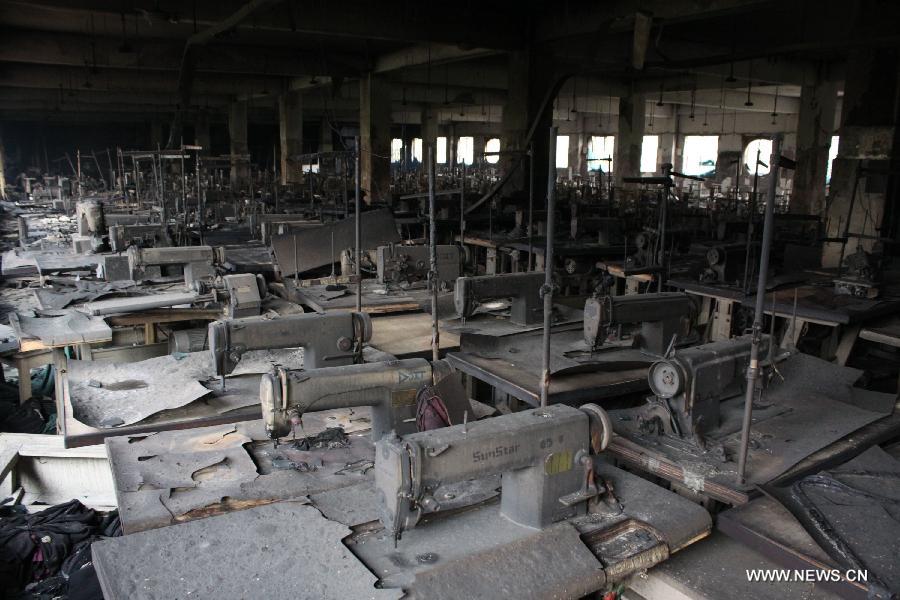
What we shall learn from the Bangladesh fire accident?

131998035_51n

1. Is corporate social responsibility a problem ONLY in developing countries?

How ethical is  clothing “made in UK” or “made in USA”? Suggested reading:

ANALYSIS – How ethical is UK manufacturing? (Textile Month International, 2012)

Sweatshops Are Fashion’s Dirty Little Secret. But They Don’t Exist in L.A. — Do They? (2012)

2. As a consumer, shall we be responsible for something too?

Isn’t that we always want better quality products at lower price and delivered at faster speed? Because clothing retail is such a highly competitive buyer-driven business, in order to meet our “demand”, isn’t companies have to find a way to increase product quality, shorten production time, frequently change design patterns but stick to the old delivery schedule and lower sourcing cost? Can we say the “race to the bottom” CRS practice in clothing factories has nothing to do with us as consumers?

3. Some people suggest: since there are so many ethical problems in developing countries, why not we just move apparel manufacturing back to the US or EU?

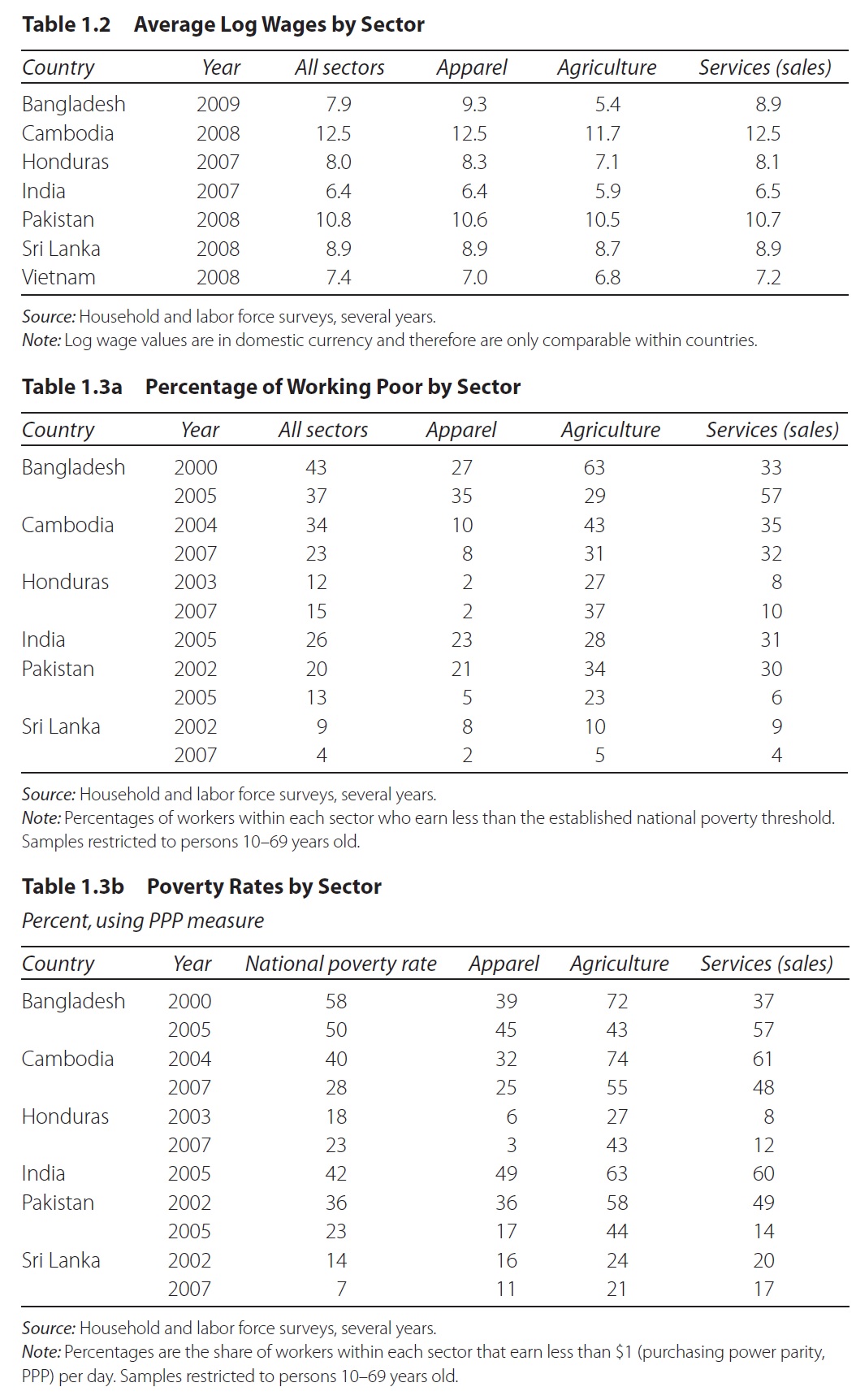
 If you ask these garment workers in Bangladesh, they would tell you that despite the horrible working conditions, they still feel “happy” to work there. Before working for the garment factory, their life was even worse—because of poverty and limited opportunity available to them. For example, for many young females in the least developing countries, if they do not work for garment factories, the other place for them to go is prostitution. We need to think about this question: if the Bangladesh factory was forced to close (Western brands no longer give them the order), what would happen to its workers?

4. Why internationally we still have no official labor standard, despite we have international organizations such as ILO, WTO, World Bank and United Nations out there as well as many international rules in other areas?

The nature of the problem is very similar as the ongoing global climate change negotiation. Countries are at different stages of development and what seems “ethical” may not necessarily fit for another country’s national conditions.

But still, everyone has a role to play to improve the status quo and create a better world, no matter as a consumer, professional working in the T&A industry, scholar or policy maker.

Sheng Lu

How many U.S. consumers are willing to spend $1,300 for a blazer, $170 for a dress shirt, $80 for a tie and $390 for a pair of jeans?

Recently, WSJ wrote a story about apparel “made in USA”. Although apparel manufacturing will never disappear in the U.S. (as the case elsewhere in the world), neither is it likely that those lost labor-intensive manufacturing jobs in the apparel sector will come back in the future. Why? Just ask yourself: Am I willing to spend $1,300 for a blazer, $170 for a dress shirt, $80 for a tie and $390 for a pair of jeans? These are the price tags associated with “Made in USA” for apparel.

Apparel is not a single case. If you’d like to enjoy your iPhone “Made in USA”, please add two “00” to the current price tag. Like it or not?

Similar questions can also be raised to the Europeans, Chinese, Koreans and everyone else in the world. For example, what will happen if China does not import U.S. cotton but totally relies on its domestic supply? What will happen if each country tries to produce their own air plane instead of using Boeing’s aircraft? How about European retailers only accept credit card issued by an European financial service provider and reject Visa or America Express? And how long will it take to deliver a package to Asia if FedEx and UPS are not allowed to operate in these regions? Will these “changes” improve or worsen people’s daily life? The answer is obvious.

Globalization does not mean “Made in China”nor “Made in USA”. Rather, it means “Made in the World” based on each country’s comparative advantage, it means getting access to the world resources and using them more wisely and more efficiently. Why not everyone engages in doing something they are good at doing and then exchange? This is why we go grocery instead of growing vegetables nor raising cows by ourselves today. 

Globalization also means a product now can reach the world market beyond the limited domestic market. But a country can only successfully export when another country is willing to import. This is why we need to support trade liberalization so that every country can export more of those products they are competitive in making. And definitely more jobs will be created domestically. I mean every country that engages in such global “exchange”.

We no longer live in the 15th century when the Mercantilism was born. In the 21st century, export is good and import is equally good for the economy. Embrace globalization and enjoy better life~  

Sheng Lu 

Data source: American  Apparel and Footwear Association (2012)

Data source: U.S.-China Business Council

TPP and the U.S. Textile Manufacturing Industry

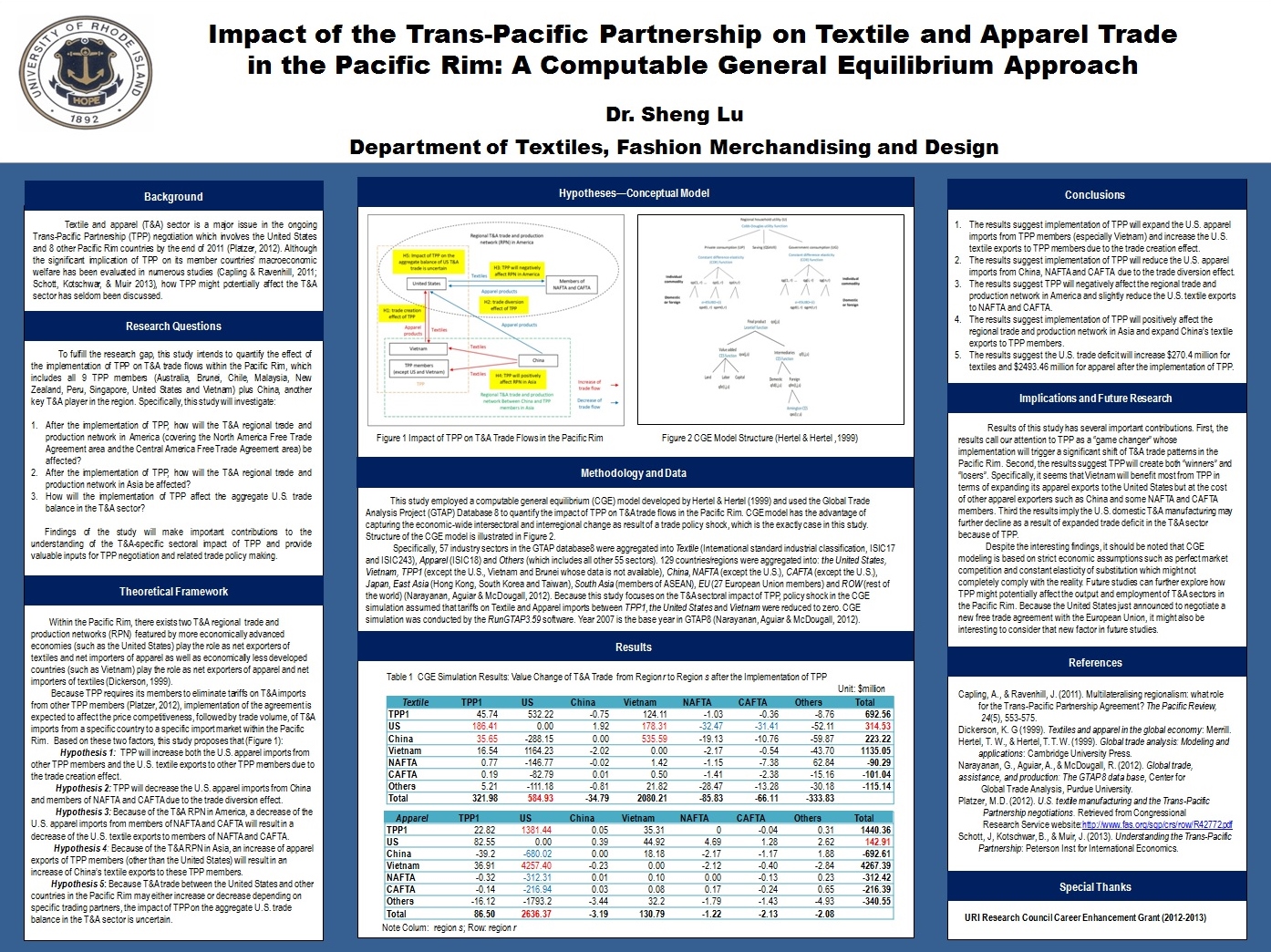
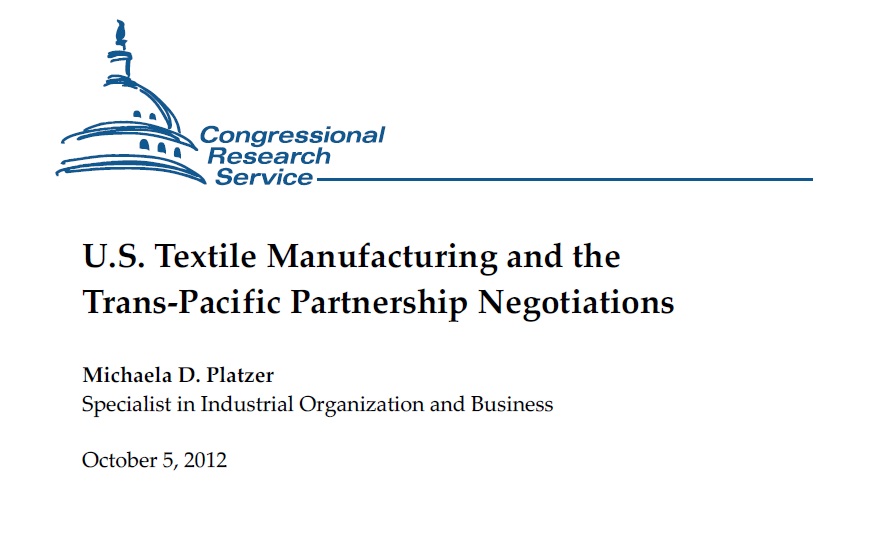
The Congressional Research Service just released its most recent study on the U.S. textile manufacturing industry and the Trans-Pacific Partnership (TPP) Negotiation. This is also one of the limited reference available so far that specifically addresses the sectoral impacts of TPP.

Overall, this report did a good job of compiling latest statistics showing the operation of the regional trade & production network between the United States and those developing countries in central and south America. It also discusses why the U.S. textile industry appears to be very nervous about Vietnam.

However, the study wasn’t able to quantify the impact of TPP, which leaves potential for future studies. On the other hand, although debates over TPP centers upon the rules of origin, we shall not forget about foreign investment–especially when geographically Vietnam is very close to China, Japan and South Korea. Even yarn-forward is adopted, why cannot Chinese factories move their factories to Vietnam? It shall be noted that China’s economy is undergoing structural change and it’s the time for some Chinese factories to “go offshore”. 

Full text of the report can be found here.


OTEXA identifies top export markets for U.S. textile and apparel

The Office of Textiles and Apparel (OTEXA) recently released its 2012 Going Global Report, which identifies 15 top export markets for U.S. made textiles and apparel. The report also includes statistical profile of these 15 countries, including their GDP per capita, GDP growth and bilateral trade with the United States in recent years.

It is interesting to note that the top export markets for textile and for apparel are very different. Wonder why? Please think about the “stages of development theory” we discussed in class.

HS code refers to the “Harmonized tariff schedule” (HS), a classification system for commodities. Textile and apparel are covered by HS code chapter 50-63. Detailed list can be found at http://www.usitc.gov/tata/hts/bychapter/index.htm

The report can be downloaded from here

WTO Public Forum 2012: “Is Multilateralism in crisis?”

For your reference. Many issues are relevant to textile and apparel sectors (for example: global value chain, trade and job, trade facilitation, competition policy, intelletrual property right protection, green economy, pluralism/regionalism as well as trade and development).  

This year’s WTO Public Forum will debate:

  • formulating new approaches to multilateral trade opening in areas such as trade facilitation;
  • addressing 21st-century issues and identifying areas in need of new regulations;
  • looking at the role of non-state actors in strengthening the multilateral trading system

The session will cover the following sessions

  • Global value chain: implications for trade policy
  • Trade and job
  • The multilateral trading system in the 21st century: interaction between trade and competition policy
  • Plurilaterals and Bilaterals: Guardians or Gravediggers of the WTO?

This year’s Ideas Workshops will cover:

  • How to ensure green economy policies are implemented in a co-ordinated manner rather than at cross-purposes?
  • The future of the WTO dispute settlement system.
  • Rethinking trade-related aspects of intellectual property in today’s global economy.

WTO’s first ever Youth Ambassadors, selected by separate video and essay contests, will discuss the topic “How can trade promote development?”

US: Yarn-forward rule row flares up again

polyester-yarn-import-175429_189210

A row has flared up again over the yarn-forward rule of origin in US free trade agreements after The Hosiery Association (THA) called for a knit-to-shape, assembly-only exception for socks and hosiery in the Trans-Pacific Partnership (TPP).

Three textile trade associations have now written to US Trade Representative Ron Kirk expressing their “strong opposition” to the proposal.

The American Manufacturing Trade Action Coalition (AMTAC), National Council of Textile (NCTO) Organizations, and American Fiber Manufacturers Association (AFMA) say any such move “conflicts with the US textile industry’s longstanding support” of a yarn-forward rule of origin for textiles and apparel.

The yarn-forward rule requires all stages of production – from yarn spinning to fabric formation and final garment assembly – to be done either in the United States or in an FTA partner country to qualify for duty-free treatment.

US textile groups say the rule is “long-established” and “logical” because the value of a finished item comes from its components, rather than from its final assembly.

But American retailers, apparel brands, manufacturers and importers argue it is too restrictive, hinders new trade and investment in the sector, and renders most existing trade ineligible for preferential tariff treatment.

The Hosiery Association wants the TPP pact – currently being negotiated by the US, Vietnam, Brunei, Chile, New Zealand, Singapore, Australia, Malaysia and Peru – to allow hosiery producers to source yarns for man-made fibre socks and hosiery outside the TPP region in all instances except in the case of 100% cotton and polyester products.

But “this proposal would be a massive blow to US and other TPP producers who manufacture acrylic, nylon and various other types of man-made fibre yarns,” the textile groups say.

“In short, the THA proposal allows yarns currently made in large quantities in the United States to be sourced from third parties, notably China,” the letter says.

Technology is driving a revolution in manufacturing

A latest comment made by the Economist on Peter Marsh’s book The New Industrial Revolution.

As metioned in our class, globalization does not mean “made in China” or “off-shore production”, but rather a much freeer movement of goods, services, capital and labor around the world, thanks to the economic growth, lowered trade & investment barriers and advancement of technologies.

In today’s global economy, “any firm, anywhere, can hook up to a global supply chain. A product may be designed in one country and assembled in another, using components from dozens more. Even a small local manufacturer can use the best suppliers the world has to offer.”

This concept is associated with the “new international division of labor” concept, which we will discuss this coming Tuesday.

Garment-Factory Fire in Pakistan Kills 300 Trapped Behind Locked Doors

In the class, we just mentioned that the conditions under which our clothing were made significantly vary from country to country. Compared with the vidoes we watched yesterday, the story covered by the news is such a sharp contrast.

However, we may also want to think: despite the far-from pleasant working environment, why pepole in Pakistan are still willing to work there? As a consumer or professional in the US fashion apparel industry, what we can do to help improve the working conditions as shown in the picture? and what role can international trade play in helping developing countries like Pakistan to achieve economic development?

As reported by the New York Times article :

“Textiles are a major source of foreign currency for Pakistan, accounting for 7.4 percent of its gross domestic product in 2011 and employing 38 percent of the manufacturing work force. Pakistani cotton products are highly sought in neighboring India and form the backbone of a burgeoning fashion industry that caters to the elite. President Asif Ali Zardari’s government has often called on the United States to drop tariff barriers to Pakistani textile imports, which it says would be preferable to traditional aid.”

We will gradually touch these critical issues in the later part of the course. Stay tuned.

Apparel Market: Landscape of Change

An article from the Textile World Highlights:

  • The global apparel retail industry grew by 3.4% in 2011 to reach a value of $1,175,353.1 million. In 2016, the global apparel retail industry is forecast to have a value of $1,348,098.8 million, an increase of 14.7% since 2011.  Americas accounts for 36% of the global apparel retail industry value.
  • Technlogy is changing consumers’ shopping behavior as well as preferences (such as redefining value of products). The internet, smartphones and social networking are driving the apparel industry to a greater extent than ever before.
  • “Made in USA” is attracting consumers, however, to be more accurate, it means “source in the Western Hemisphere” rather than moving manufacturing totally back in the U.S.. However, in order to have “near sourcing” happen, addtional trade liberalization is required to remove the so much constraints.  
  • Supply chain transparancy and cooridnation is with growing significance to the success of business in the apparel companies.
  • The only constant in the apparel industry is change (enviorment, business model, product innovation, technology…).

Re-shoring US apparel making tough but not impossible

This recent comment from Just-style argues that re-shoring U.S. apparel manufacturing may become likely given China’s quickly rising labor cost. However, another two points mentioned by the article deserve more attention: one is that in order to make “made-in-USA” apparel competitive, industry leaders believe that tariffs and trade barriers on imported yarns and fabrics need to be much lowered. The question is, how realistic this “goodwill” can become true, considering the attitude of the US textile sector on the matter and their political influences. Second, although there might be some demands for sewing jobs in the U.S., these occupations are very low paid. The article admits that except immigrant, propably few Americans today (even those unemployeed) would like to take them (and have the qualified skills).  Then, does re-shoring really matter for college graduates in the fashion apparel program?  

To read the full article, click here

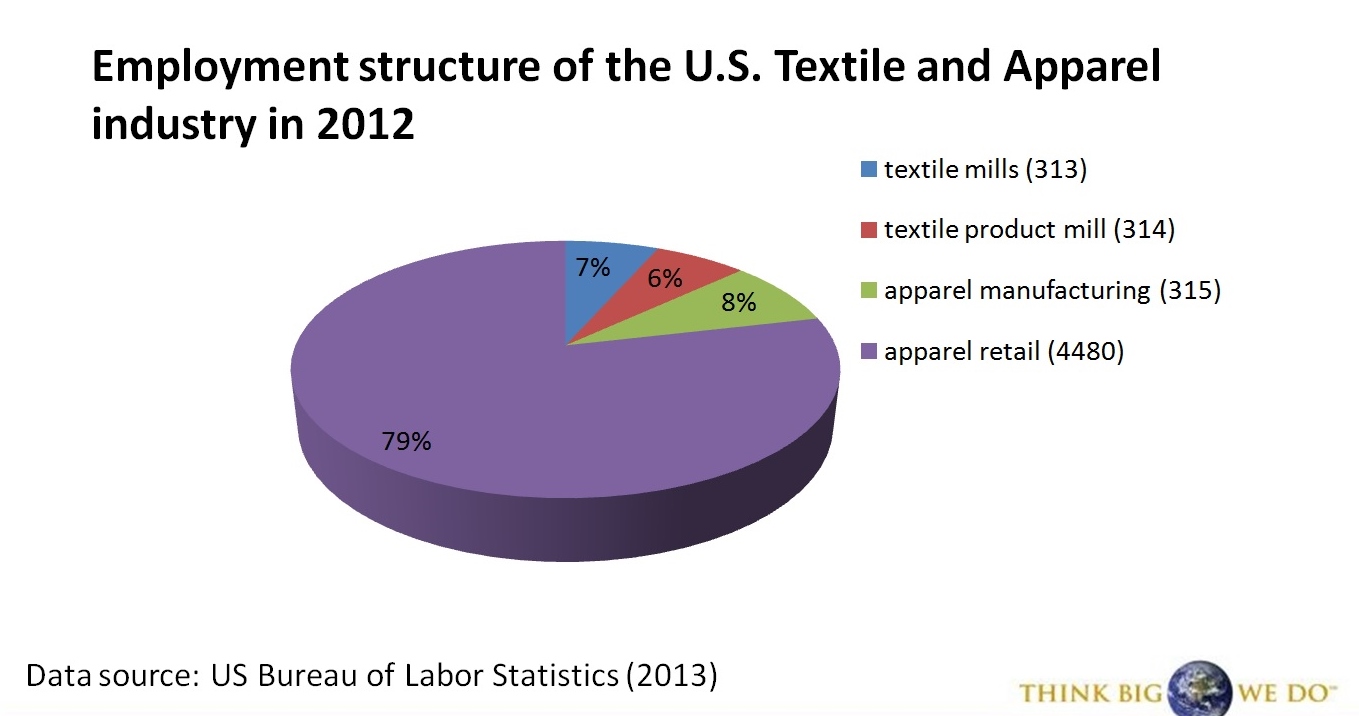
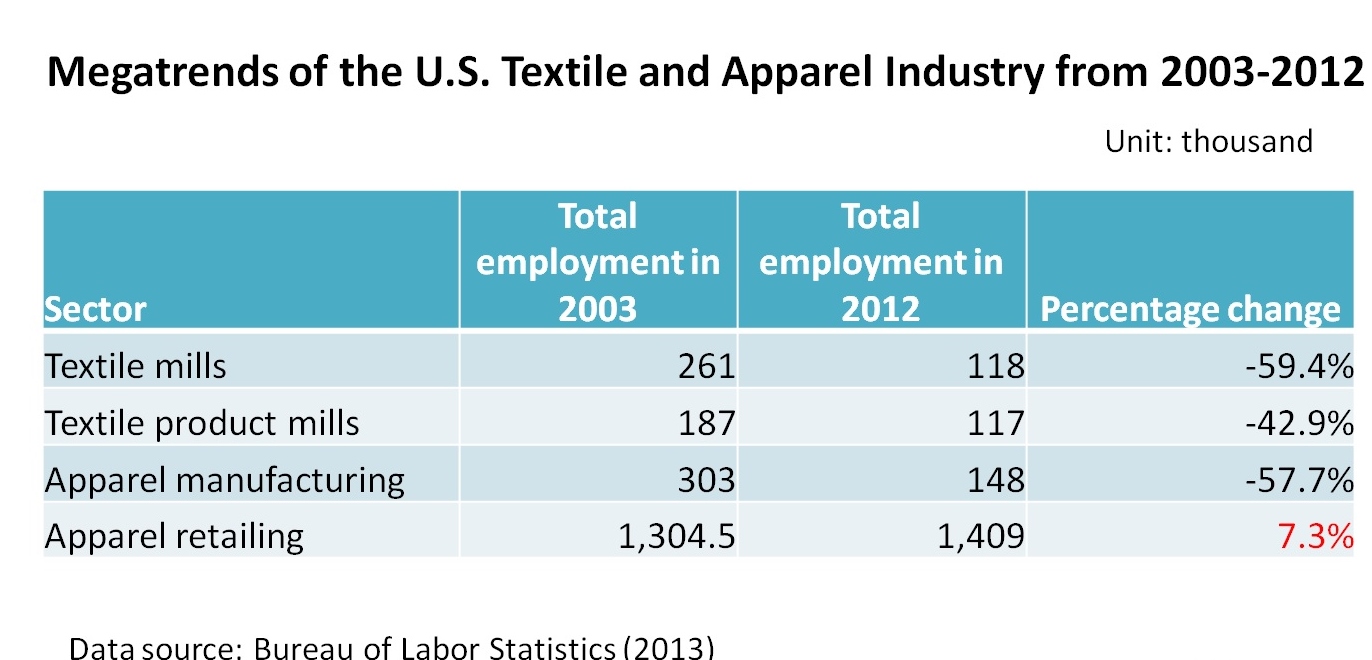
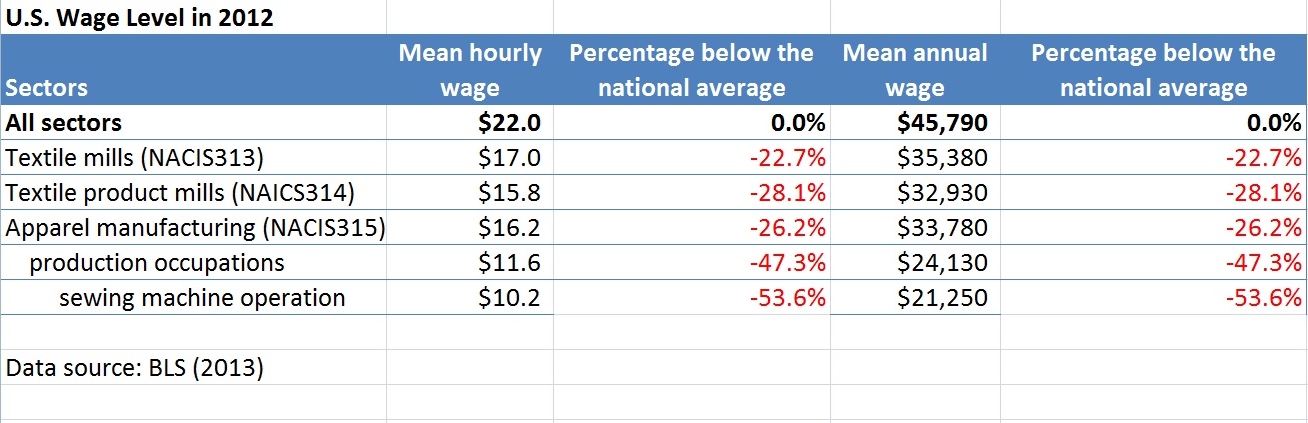
Megatrend in the US textile and apparel sector

(click the picture to enlarge)

Opinion: Apparel imports boost U.S. jobs

Key points:

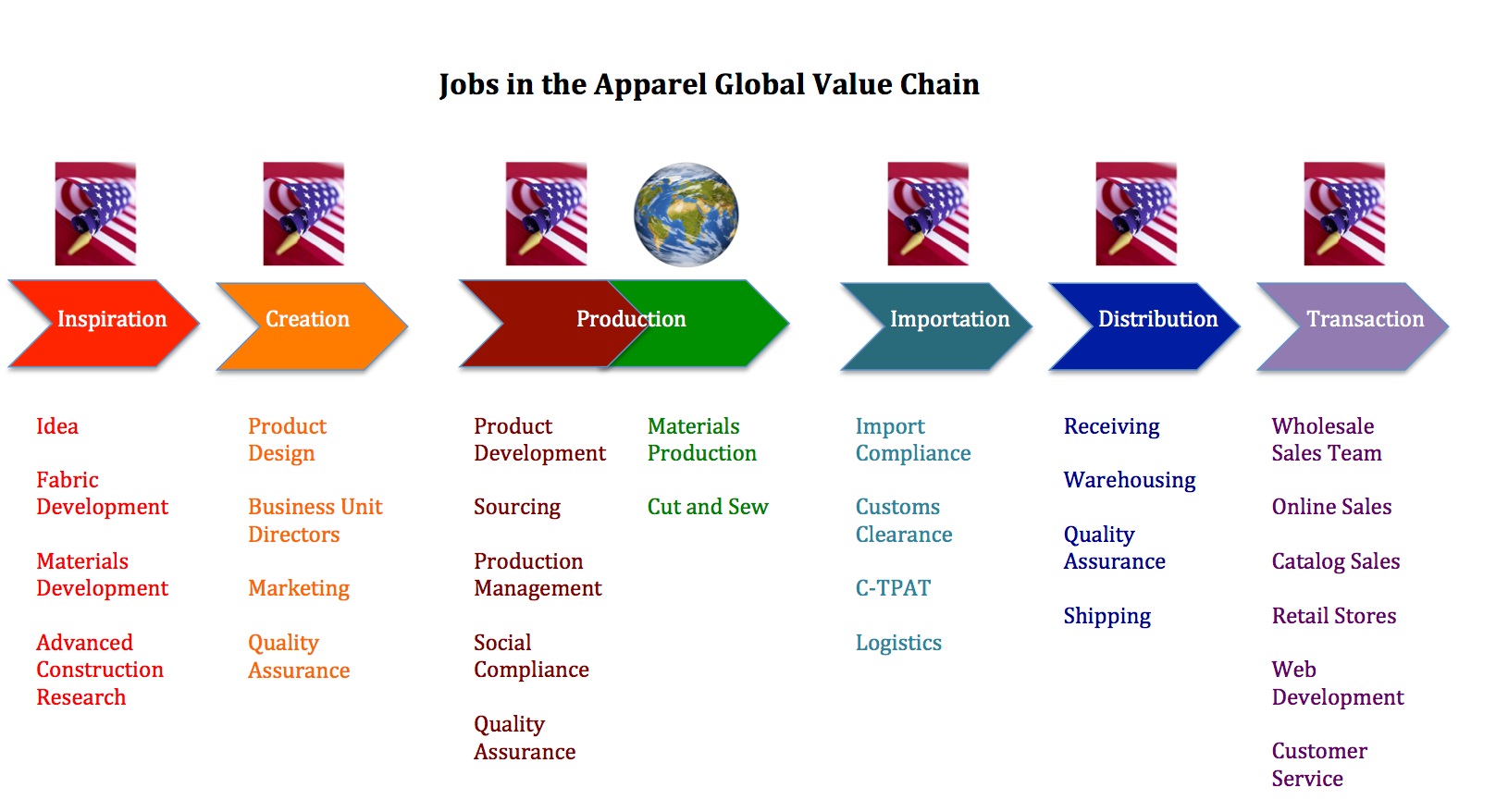
“These four million U.S. workers – seen and unseen – help you get dressed every day. They design shoes and clothes, perform research and development, cut and sew, supervise production, handle customs and logistics, ensure product safety compliance, market and merchandise product, outfit our troops and work on the sales floor. In addition to these four million workers, there are countless U.S. transportation, distribution, warehousing, and logistics workers who depend on our industry for their jobs.”

“about 75 percent of the retail value of most clothing and footwear comes from non-manufacturing activities that happen entirely inside the United States.”
“Supply chain jobs and manufacturing jobs are equally valuable to the overall health of the U.S. economy. It is wrong to foster a public policy agenda that forces these two groups to compete against each other. ”

Written by Kevin Burke. president and chief executive officer of the American Apparel & Footwear Association.

Read more: http://www.politico.com/news/stories/0712/78779.html#ixzz21PNrJzHK

Campain 2012: International Trade

The Relationship Between Import Penetration and Operation of the U.S. Textile and Apparel Industries From 2002 to 2008

Published in Clothing and Textile Research Journal, Vol 30, No. 2, p119-133

The Relationship Between Import Penetration and Operation of the U.S. Textile and Apparel Industries From 2002 to 2008

Sheng Lu and Kitty Dickerson

Abstract

The U.S. textile and apparel (T&A) industries have respectively adopted various restructuring strategies in recent years which fundamentally changed the way the two industries operate and the shifting relationship of each sector with imports. This study empirically tests the relationship between import penetration and the operation of the U.S. T&A industries based on data at 4-digit North American Industry Classification System (NAICS) code level from 2002-2008. Results from the panel data model show that overall the U.S. textile industry formed a weak cooperative relationship with import penetration level in the U.S. market and a neutral relationship was suggested for the U.S. apparel industry with imports. These findings contribute to understanding the global nature of today’s U.S. T&A industries and suggest useful perspectives for the U.S. textile trade policies.

To read the full paper, click here

The Environmental Cost of “Made in China”

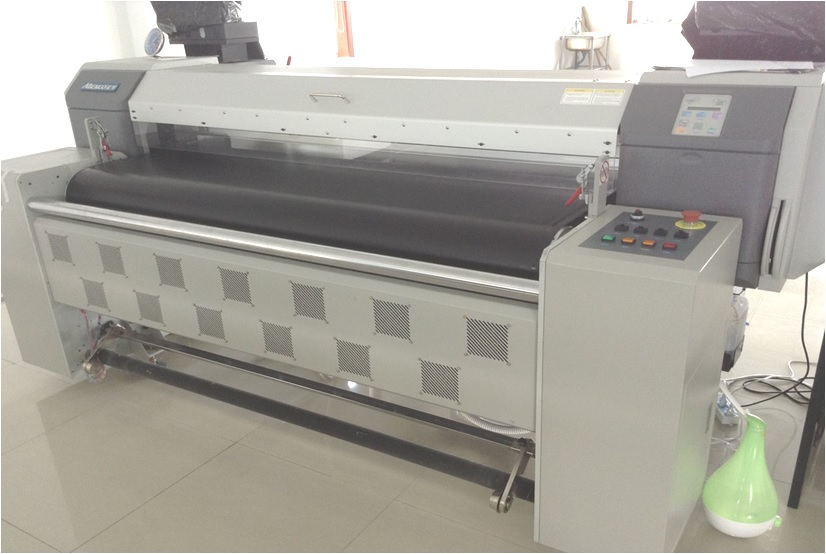
Below, on the right is a textile dyeing mill in Zhejiang Provience, China

The Importance of CAFTA-DR and NAFTA to the U.S. Textile Industry

A recent study of the United States International Trade Commission reaffirms the special roles played by free trade agreements in supporting the regional trade-production network (RTN) for textile and apparel products in America and promoting the export of U.S.-made textile to developing countries in the region in particular. However, also as mentioned in the report, the influence of such RTN has sustantially declined since the full elimination of quota system in 2005. The implementation of the new FTAs established between US and countries in Asia-Pacific pose new uncertanties to the RTN in America, given the trade diversion effect commonly seen in FTAs.

The Great Recession and Trade Protectionism: What Went Right?

A great commentary article on a recent study on trade protectionist measures by Chad Bown, a former professor from Brandeis university and a guru on trade remedy measures. It is interesting to note that the using of trade protectionist measures is much less frequent today than in the past. I agree with the reasons proposed by the article, such as the establishment of the WTO as a monitoring body, global production and emerging markets instead of developed countries becoming leading importers. On the other hand, trade protectionist measures are taking more diversified forms today and the scope has gone far beyond the traditional AD, CVD and safeguard measures. In particuar, measures that intend to promote export potentially could raise new trade disputes among leading exporters.

The full report can be downloaded from here