Fashion and apparel aren’t just about fabric or seams. It is not just about the clothes that you put on your body. Don’t believe me? Well, I am going to show you just how interconnected the fashion industry is to everything around us. My hope is to show you just how important it is to understand the world around us, especially in the industry we are all about to enter. This deep connection between fashion and the world around us is exactly why global organizations like the World Economic Forum matter.
For those of you who don’t know, the World Economic Forum (WEF) is an independent international organization headquartered in Geneva, Switzerland, dedicated to improving the state of the world through public-private cooperation. Recently, the WEF held the 56th Annual Meeting of the World Economic Forum, which brings together stakeholders from government, business, civil society, and the scientific and cultural domains to have real conversations, solve problems together, and highlight new innovations.
I had the opportunity to watch three sessions from this year’s World Economic Forum. As noted in my summary below, although these sessions did not specifically mention fashion, their insights are highly relevant to the fashion industry in today’s global economy.
Summary: The world is changing in ways that feel both risky and promising. While technology, politics, and globalization are creating instability, investments in green energy are driving growth and new opportunities. How countries respond will shape what comes next.
Connection to the Fashion Industry: These global changes directly impact the fashion industry by reshaping how clothes are made, sold, and regulated. AI is changing design, production, and supply chains, while political shifts and new global rules affect sourcing, labor, and trade. At the same time, the push for green energy and sustainability is forcing fashion brands to rethink materials, manufacturing, and long-term social responsibility. As a fashion student, it is critical to understand these changes, as they could shift career paths, redefine job roles, and reshape the industry’s future.
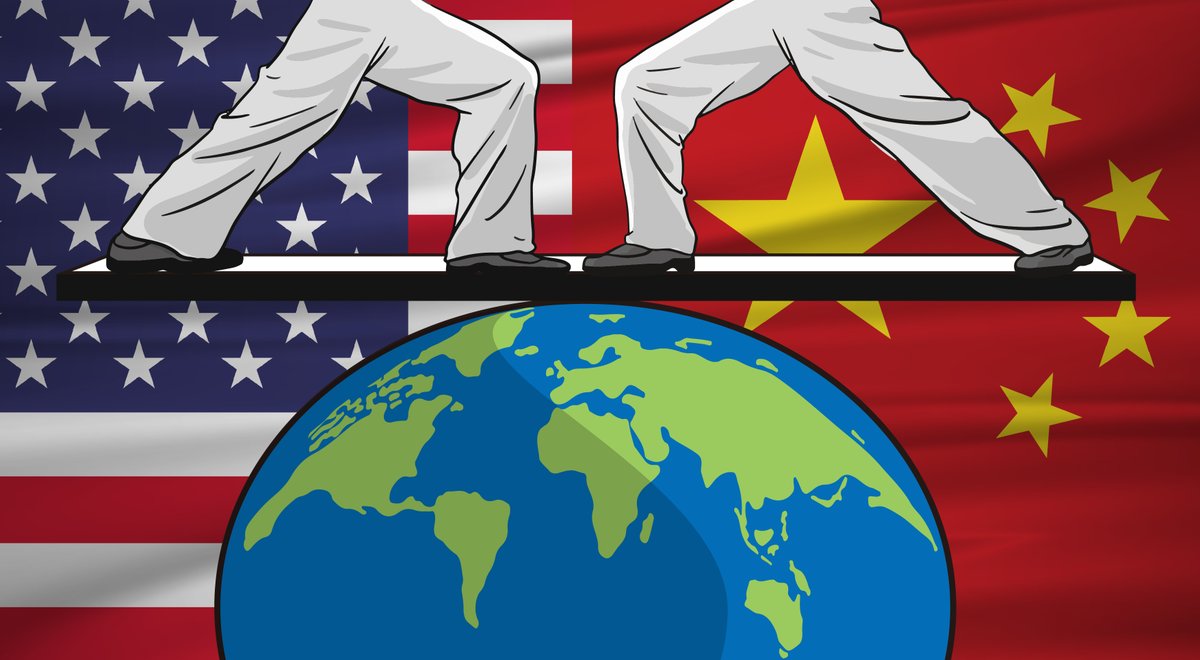
Summary: The U.S. and China are locked in a long-term competition over power, technology, and security, and while neither side wants war, the rivalry creates instability and misunderstanding. Without clear guidelines, consistent trade policies, and a shared framework, especially around AI and emerging technologies, managing this relationship remains difficult and uncertain.
Connection to the Fashion Industry: This relationship affects the fashion industry through tariffs, trade uncertainty, and supply chain disruptions. This is especially true given China’s major role in global apparel manufacturing. This relationship strain makes it more difficult for fashion brands to plan and source their products. As a student of fashion, the relationship between these two countries is an important matter to consider.
Summary: AI is changing from a tool into something that can think, decide, and communicate on its own, challenging human control. This creates urgent questions about how society will manage AI before it reshapes jobs, power, and responsibility on its own.
Connection to the Fashion Industry: Specifically, the fashion industry will be dramatically impacted by AI by changing how clothes are designed, produced, and sold, and by reshaping the roles people play within the industry. As fashion students, it is important to understand both the benefits and drawbacks of AI, especially since our generation will likely be responsible for making these decisions.
In the end, clothing is a direct reflection of the world around us. Global politics, technology, and ethical responsibility all influence how fashion is created and consumed. For those entering the fashion industry, understanding these forces is essential, as fashion does not exist in a vacuum; it evolves alongside the world that shapes it.
About the author: Emilie Delaye is a graduate instructor in Fashion and Apparel Studies at the University of Delaware. She is also a member of the 2025-2026 Fair Labor Association (FLA) Student Committee.
As the fashion industry faces an unprecedented business and trade policy environment, hearing directly from Gen Z fashion majors—the next generation of both consumers and young professionals—has never been more critical.
In a new Just-Style mini series, students from FASH455 and the FASH department at the University of Delaware shared their valuable Gen Z perspectives on several hot-button apparel trade and sourcing issues as well as their vision for the future of the fashion apparel industry. Several findings are noteworthy:
First, like other consumer groups, Gen Z has felt the increasingly noticeable retail price hike driven by higher tariffs, and they are responding by reducing clothing purchases.Compared to a survey conducted in April, nearly all Gen Z consumers now see higher price tags across a broad range of products, including necessities, outerwear, and footwear in the U.S. retail market. Notably, Gen Z consumers feel most strongly about the price hikes at fast fashion retailers—including Shein. Due to the perceived low quality and use of inexpensive textile materials, it is even more challenging for fast fashion brands to justify price increases. Our students who frequently thrift clothing also noted a price increase in the secondhand clothing market. As a warning sign to fashion companies, many surveyed Gen Z students say they plan to spend less this holiday season, or keep shopping “to a minimum” because of price increases. For example,
Gabriella Krug, Fashion Merchandising and Management senior: As a shopper, I’ve adjusted by buying fewer items overall, checking sales racks more often, and using platforms like Depop and Poshmark to sell and buy trendy pieces. For the holidays, I think these price increases will push me, and most shoppers like me, to focus more on quality rather than quantity. I’ll definitely be taking advantage of Black Friday and Cyber Monday deals this year. Ultimately, tariffs could cause people to make more intentional and selective purchases this holiday season.
Cheyenne Weiss, Fashion Design & Product Innovation senior: While the higher tariffs have widespread effects on the fashion industry, I have personally noticed raised prices for outerwear and footwear. I noticed these two categories specifically as they are what I was shopping for going back to school and it is telling of how directly trade policy impacts consumers. The effects of the tariffs are hitting close to home, and I would feel most frustrated to see loungewear and athleisure categories rise in price. While these areas seem to already be feeling the effects of raised tariffs, it would be hard as a consumer to continue purchasing these items if tariffs keep rising, considering these are the fashion categories I buy from the most often. As a shopper, the higher prices discourage me from going out and purchasing new clothing.
Skye Johnson, Fashion Merchandising and Management senior: I have noticed that prices are rising among all types of clothing. In particular, I have heard that Fast Fashion retailers like H&M or even Shein have increased their prices significantly. While I personally do not shop at fast fashion retailers like Shein, I’ve seen the impact through school research projects and conversations with friends. This is frustrating because these fast fashion items are made with very cheap materials like polyester and nylon.
Julia Brady, Graduate Student studying Fashion and Apparel with a focus on Sustainability: I mainly shop using online resale sites, such as Depop, and just enjoy browsing higher-end online consignment stores, like Vestaire and theRealReal, for secondhand designer deals. I have seen fewer deals on the site and more high-priced secondhand designer items… Even on Depop, international listings are higher than normal. The category I would be most frustrated to see prices rise in would be footwear… I also expect to buy holiday gifts from local artisans and local stores, due to higher quality and (hopefully) decreased tariff impact.
Nadia Grosso, Fashion Merchandising and Management senior: I’ve noticed myself becoming even more price-sensitive when shopping because of the rising prices, so I’m always looking to find the best deal to stretch my budget as much as I can. Overall, I think shoppers are trying to limit their spending as much as possible, and being more cognizant of prices when choosing what to purchase and who to purchase from. As a result, come holiday shopping time, I might be more inclined to shop at discount retailers or even decrease how much I purchase compared to previous years.
Second, Gen Z fashion majors view globalization and international trade as generally beneficial for the fashion industry. At the same time, they emphasize the need to enhance sustainability and social responsibility in the global apparel trade. For example, while most survey respondents supported leveraging apparel trade to promote economic development in developing countries, they also stressed that trade volume alone should not define success. Instead, many highlighted the importance of ensuring that garment workers in developing countries directly benefit from trade and Western fashion brands and retailers have a responsibility to help make this happen. For example,
Emilie Delaye, Master’s student in fashion and apparel studies: I believe that it is almost virtually impossible to move manufacturing fully back into the US. Nearshoring could really help sustainability (as fewer emissions would be released), but nearshoring would require investment and savvy trade deals to ensure that many different kinds of products can be produced there. I don’t really think it is that important that the US maintains a “strong” textile and apparel sector. As we know from the innovation or economic development timeline, the textile and apparel sector is an entry point for less developed economies. It could actually be perceived as a positive that we aren’t largely in this market. I think that there are other more critical sectors to focus on for the US. Plus, we simply do not have the skilled labor or machinery needed to do this. I support the leveraging of the clothing trade to support economic development in the countries that need it. I believe that if done sustainably and socially responsibly, the apparel sector could help millions of individuals in these countries.
Abigail Loth, Fashion Merchandising and Management senior: As a consistent consumer in the US fashion industry, I believe that globalization and international trade is vital for our success. Not only does it keep trends fresh, globalization and international trade encourage styles to remain diverse and costs to be cheap… Maintaining a strong domestic textiles and apparel sector in the US is also extremely important. This is because it provides an abundance of jobs/opportunities, innovation and sustainability practices. So, in order to leverage the clothing trade and support workers in developing countries as ethical sourcing and fair labor practices help ensure that globalization benefits more than just corporations.
Ekaterina Forakis, Fashion and apparel studies 4+1 graduate student: Globalization and international trade are crucial aspects of the U.S. fashion industry. It is these that keep the U.S. fashion industry running. Trade theory explains why globalization benefits countries like the U.S. and allows them to focus on textile manufacturing, one of the country’s strong suits. Higher tariffs and import restrictions are not necessary to maintain U.S. manufacturing because the U.S. is already a top textile exporting country and does not specialize in apparel production. The country’s capacity for automation is what makes it reliable in the textile sector. Automation allows for more standardized production of textiles which are necessary for developing countries to produce apparel.
Emma Lombardi, Fashion Design and Product Innovation senior:I view globalization and international trade as a double edged sword for the U.S. fashion industry, because on the one hand, while it doesn’t benefit the creation of jobs in rural areas that many covet, it also shifts the emphasis towards more sophisticated industries in technology development and innovation both in mechanical and textile sectors.
Julia Brady, Graduate Student studying Fashion and Apparel with a focus on Sustainability: I think tariffs and import restrictions are necessary, but not just to protect U.S. domestic manufacturing. Tariffs could help regulate the amount of toxic chemicals along the textile manufacturing value chain. An alternative route for the U.S. to take would be to scale up flax for fibers to be used in domestic textile manufacturing. Perhaps tariffs will force companies and the federal government to invest in agricultural advances in this field…I would never want to advocate taking away work in developing countries; however, for the sake of our environment, we may need to shift the way the fashion supply chain currently operates. It is important to me that the U.S. maintains a strong textiles and apparel sector because we are a big part of the problem. We must take control over the way we consume and dispose of textiles. There could be so many opportunities for economic growth if we shift toward domestic manufacturing, prioritizing the use of materials we already have.
Third, associated with the debate on the future of textiles and apparel “Made in the USA,” most Gen Z fashion majors show little interest in factory jobs. On the one hand, unlike most developing countries, today’s U.S. fashion industry provides Gen Z fashion majors with many exciting and promising non-manufacturing job opportunities, ranging from apparel design, product development, sourcing, trade compliance, and merchandising to marketing. By contrast, factory jobs are often perceived as “low paid,” “repetitive,” and “poor working conditions.” Our Gen Z fashion majors particularly emphasized that their preferred employers should provide both financial and career progress opportunities, and they want to see keywords such as “innovation,” “sustainability,” “room to grow,” and “inclusiveness” associated with their future jobs. In other words, to attract more Gen Z workers to factory jobs, companies need to do more than just offer competitive pay. For example,
Gabriella Krug, Fashion Merchandising and Management senior:At this point in my career, I have not pursued an interest in textile or apparel manufacturing or factory-related jobs. My internships have exposed me to different sides of the industry…That said, I think my generation could see these roles as more appealing if companies focused on innovation, sustainability, and clear opportunities for growth. For example, if factories showcased their role in a circular fashion and created a more modern, flexible work environment, I think more Gen Z talent would be drawn in since we’re motivated by making a positive impact. Personally, I’m most interested in jobs that mix creativity with business—like sales, buying, or trend forecasting. When it comes to an employer, I value opportunities to learn and grow, strong mentorship, and a culture built on collaboration and inclusivity.
Cheyenne Weiss, Fashion Design & Product Innovation senior: I am not personally interested in pursuing a career in textile or apparel manufacturing as I see myself in a more creativity-based position. I feel as though my skills in fashion would be better suited for a role where I’m working directly with design and developing the fit and aesthetics of garments. Factory-related jobs in fashion could become more appealing to my generation if more rising fashion professionals knew about the opportunities that are available… When considering the qualities of an employer that I would want to work for, an important factor for me is a growth mindset. I value being able to learn and adapt as the industry evolves and I would want my employer to share my same persistence to always be learning and bettering the quality of work I can produce.
Skye Johnson, Fashion Merchandising and Management senior: I am not interested in pursuing careers in textile and apparel manufacturing or factory related jobs. However, I completely respect the importance of these roles in our fashion industry. I feel that my skills or career goals do not align with these jobs, but there could definitely be ways to make it more appealing to Gen Z. For example, offering safer working conditions, competitive pay, clear paths for professional growth, etc… When considering an employer, I value a workplace that aligns with my values, offers an inclusive environment, open communication, creative freedom, and room to grow in the company. I want to feel like I belong and am making an actual impact where I work.
Abigail Loth, Fashion Merchandising and Management senior: I personally do not have any interest in pursuing a career in textile or apparel manufacturing and factory-related jobs. These jobs consist of heavy hands on labor, limited creativity and repetitive daily tasks. The job is very cookie-cutter and has limitations for growth and opportunity. In order to make these types of factory jobs more appealing to our generation, the employers should provide safer working conditions, more money, and a sense of change/development in the everyday job. If factory jobs allowed more flexibility for creative thinking and alterations, they would appeal more to Gen Z.
Julia Brady, Graduate Student studying Fashion and Apparel with a focus on Sustainability: I am interested in pursuing a career related to textile and apparel manufacturing. Specifically, I would love to work towards a more socially responsible fashion industry. I could see myself working for a textile recycling plant in the U.S.; I expect more to be popping up over the next decade. If the factories were focused on green engineering and diverting textile waste, this might be another attractive core value of a potential future employer. I would be more inclined to work a factory job if the conditions in the factory were regulated and protective of the workers’ health. Additionally, if the employer was prioritizing the use of natural materials combined with textile recycling outputs, this would be very appealing to me as a prospective employee.
Fourth, Gen Z fashion majors show a high awareness of AI and are open to increasing its use in the fashion industry. Specifically, our Gen Z students believe that AI can be a powerful tool widely adopted by fashion companies, such as supporting apparel sourcing decisions, generating designs, and conducting data analysis and forecasting. Many also envision bold, creative applications of AI, such as optimizing secondhand clothing use or dynamically altering garments’ colors and textures based on weather conditions or consumers’ moods. These findings underscore the growing importance of deliberately integrating AI into fashion education and strengthening collaborations between industry and academia. For example,
Emilie Delaye, Master’s student in fashion and apparel studies: I think that AI could help understand and simplify the complex supply chains we have. Perhaps by incorporating AI into sourcing decisions, it could help determine the most efficient and eco-friendly path for the garment.
Gabriella Krug, Fashion Merchandising and Management senior: If there were no limits in terms of technology or resources, I would love to see AI used to create a truly circular fashion system. Garments would be designed with little to no waste from the very beginning with AI predicting the most sustainable production methods. Also, I think AI should account for each garment’s end-of-life by tracking how items can be reused, recycled, or repurposed.
Skye Johnson, Fashion Merchandising and Management senior: I still feel that AI will not be able to completely take over in the fashion industry, we still need that human touch. That human aspect is what makes the industry go round, especially when it comes to designers…If I could pick a bold AI-driven innovation to see in the fashion industry, I would love to see garments that change color or texture based on your mood or the weather. The AI technology could read your personal style and predict what looks best on you. That would definitely take years to make, but it would further blur the lines between fashion, technology and art.
Abigail Loth, Fashion Merchandising and Management senior: I would love to see AI-driven innovation that would be able to make custom designs depending on preferred colors, style, size, or shape and deliver it based on preferences of style and sustainability.
Nadia Grosso, Fashion Merchandising and Management senior: AI can be a helpful tool to analyze data and make recommendations on how to apply its findings to real-world situations. Especially with the uncertainty surrounding changing prices and geopolitics, AI could be implemented to help fashion companies navigate difficult sourcing decisions and manage their complex supply chains. I would also love to see AI be implemented more to drive sustainability initiatives such as reducing waste within production or even assisting with the discovery and development of more sustainable materials. However, I don’t think AI can fully replace human intelligence and creativity, so it’s important for it to be used as a tool and not as a replacement.
Additionally, the results show that Gen Z fashion majors overwhelmingly support the increased use of recycled textile materials in clothing and view it as an important opportunity to address the textile waste problem. However, as consumers, they still expect such products to remain financially affordable, match the quality of non-sustainable options, and look stylish. Additionally, with greater knowledge and awareness of sustainability, Gen Z consumers expect fashion companies to provide more transparency regarding their recycling practices and price structures (i.e., what they are actually paying for). This requires fashion companies to continue to improve their supply chain mapping and traceability in the era of textile recycling. For example,
Emilie Delaye, Master’s student in fashion and apparel studies:The (recycled) garments currently on the market are very expensive and do not appeal to my personal style…And it is very important for fashion companies to provide clear sustainability information. I think providing information on the cost breakdown would be valuable to see and ensure that the money is distributed more evenly.
Gabriella Krug, Fashion Merchandising and Management senior: Yes, I do care about clothing made from recycled textile materials because it feels like a step in the right direction and it makes me feel like I am making a more thoughtful choice as a consumer…What makes these products most appealing to me is the mix of style and transparency. Especially with Gen Z, the culture is shifting more and more toward eco-conscious consumers, now with the help of Depop, ThredUp, and Poshmark. These platforms give people an easy way to step into the world of sustainable fashion. For me, I want to know that the clothing looks and feels just as high-quality as non-sustainable options, but I also don’t want to feel like I’m overpaying just because it’s labeled as eco-friendly…I want brands to be upfront about what percentage of a garment is actually recycled and how it was made
Skye Johnson, Fashion Merchandising and Management senior:For me, the appeal of recycled or sustainable fashion products comes from a combination of style, price, and brand transparency. I believe it is very important that fashion companies provide clear sustainability information and have the efforts and data to back it up… Obviously, no brand is perfect, but when I see a brand putting in the work to do better, I respect them a ton more.
Nadia Grosso, Fashion Merchandising and Management senior: Fashion brands need to do more to educate their consumers and highlight the importance of sustainability, while also incorporating it as a value into all of their business practices. I think that we can make sustainable and recycled products more appealing to consumers by being transparent and educating them on their importance. Fashion brands are becoming increasingly aware that providing clear sustainability and sourcing information to their consumers is necessary to gain their trust and loyalty, especially as a growing number of consumers are considering these practices as influencing factors to make purchases.
FASH students who contributed to the series include:
Gabriella Krug, Fashion Merchandising and Management senior
Emilie Delaye, Master’s student in fashion and apparel studies
For FASH455 students: Please share your reflections on the video regarding the free trade debate. You can focus on analyzing 1-2 specific debates raised in the video (e.g., comparing the arguments from both sides) and then share your thoughts. Please do not simply state your “opinion,” but use examples, statistics, or trade theories we learned to support your viewpoint.
Speaker: Katherine Tai (U.S. Trade Representative, Office of the U.S. Trade Representative)
Presider: Michael Froman (President, Council on Foreign Relations; Former U.S. Trade Representative, 2013-17)
Excerpt from the conversation
Worker-Centric US trade policy
Question from FROMAN: “Back in the old days, there was a notion that since the U.S. market is relatively open—we don’t have that much protection here, the average applied tariff is about 3 ½ percent—that if we were able to reduce barriers to other countries disproportionately we could export more made by U.S. workers, and that export-related jobs paid more than non-export related jobs, and that we could use access to our market as a way of getting other countries to reform their labor practices and raise their standards, which would create a more level playing field. That theory is sort of out of vogue at the moment. But, tell me, can you envisage what an agreement that is worker-centric looks like that reduces barriers or increases trade?”
Response from TAI: “The percentage of (U.S.) exports to GDP is around 10 percent—maybe 11 or 12 percent. So it’s not very high. Some of our—some of our trading partners have very, very high exports as a proportion of GDP (e.g., 25 percent)…So you just have to put that (trade liberalization) into context. I think you also have to think about the fact of the balance of exports and imports…”
“We’re trying to create and maintain jobs, and good jobs, at home… so then the question becomes not what do I have to pay you to do X, Y, or Z, but how can we put the forces of our cooperation together? What does the deal look like where we are building our middle classes together? And I think that the worker pieces then come in, along with the environment pieces, as something that I shouldn’t have to pay you to do, but as something that you should want to do…”
“Traditionally we’ve kept our scorecard by, you know, how many trade agreements you finished and how many you’ve gotten across the finish line… Our progress lies very much in how the conversation has fundamentally shifted. That the conversation now is very much focused on supply chain resilience, on equity, and how not to leave those within our economies behind further, how not to leave those developing countries behind further.”
Digital trade
Question from FROMAN: “For a long time, the U.S. had a position around the free flow of data across borders, not taxing digital products across borders… given the fact that the U.S. economy is probably—certainly the leader in all things digital, what does it mean for us to move away from defending these principles that have been so core to what we’ve tried to do before?”
Response from TAI: “So in early 2000s that we’re negotiating (digital trade)… It’s called the e-commerce chapter. And it’s the e-commerce chapter in several iterations of FTAs (free trade agreements)…And I think that that makes sense if you think about what the digital economy looked like in the early 2000s. It really was about e-commerce…At the time—thought about e-commerce digital trade provisions as largely facilitative provisions. The flow of data was there, and we wanted to safeguard the flow of data to facilitate traditional trade transactions, the movement of goods across borders, the analogy to services we used also in digital.”
“In 2024, one of the things that you realize is that the flow of data, the decisions around where data needs to be stored, how it needs to be handled, has—on much, much different dimensions because over this period of time, in fact, in the digital economy the data is no longer just about facilitating traditional types of transactions. The data has become the commodity in and of itself. The data is now what has value. The ability to accumulate that data and for vast amounts of data then to be combined with computing power to create things like generative AI and large language models, it starts to give you a sense, just as a normal trade negotiator, that there are much, much bigger equities at stake in what we might be doing in our trade negotiations…It’s not just about facilitating trade, but around how we regulate data and how we regulate the companies that accumulate, harvest, and trade in this data is something that we need to resolve and advance before we can thoughtfully and responsibly engage in trade negotiations to figure out what the limits are in terms of what we should be doing, and what the goals are for what we should be doing with our trading partners… what underlies the digital economy and our digital existences, and just thinking about what the rules should be for how that data is handled, who has rights to that data, and then the international components around trade and prosperity but also trade and national security.”
Tradeoffs in trade policy
Question from FROMAN: “Trade is a great area to talk about tradeoffs. We hate being overly dependent on China for basic goods. We also hate inflation and higher cost of living. The actions taken to deal with the first one will likely exacerbate the second one… How do you talk about that tradeoff with communities around the country? And do you make explicit that, yes, you’re going to pay more at Walmart for this for that, but we’re going to become less dependent on China as a result?”
Response from TAI: “That today, we know that we have critical dependencies and vulnerabilities that are actually bad from a national security and just a geopolitical standpoint. For every sector where we feel that we are critically vulnerable to another country and, say, China in particular, I think that it creates a sense of angst and insecurity that is destabilizing for the world economy and, frankly, for the world… if you look at it from a more holistic, medium-term perspective, supply chain diversity and supply chain resilience is actually a management tool for inflation… “
“For as long as there are concentrated pockets for production and supply—and this is internationally, but this is also the logic behind taking on dominant players in our economy—for as long as you have that kind of dominance, you’re going to have in the hands of certain players the ability to distort the market and to take advantage of that dominance by jacking up prices, whether it’s shrinkflation, or greedflation, or in the international context economic coercion… if you think about the tradeoff as between today and tomorrow, it’s not zero-sum at all. And in fact, these changes are ones that we need to be able to manage, not being faced with the same risks over and over and over again.”
US trading partners
Comment from TAI: “when you talk about some evolution in our (trade policy) approach, I just want to be clear, the evolution in our approach is about what should be in those things, what should be in those agreements, what should be in the exercises and the cooperation that we undertake with our partners. This is not a walking away from those partners, at all…You’ll see how much time I spend in Brussels, how much time I’ve spent in Asia, and the Indo-Pacific over the course of the last three years. And you’ll see that the prioritization of our like-minded partners, our traditional partners if you will, is still very much there.”
Tariffs
Comment from TAI: “What is really important to appreciate about tariffs is that they’re a tool. They’re a tool that can be used in constructive ways… They’re a tool, at least for us, in trade remedies… They are a tool for remedying unfair trade. I actually kind of like the way the Europeans describe these types of tools—dumping, countervail. They call them trade defense instruments.”
“What I also want to reflect is that trade policy and economic policy isn’t just tariffs… we have kept a lot of the tariffs, because we see strategic value in those tariffs in this exercise of building up the middle class and reinvigorating American manufacturing and the American economy… it needs to take the tariffs as a tool, the investments as another tool to help reinforce, policies that support and empower all workers, and to encourage our partners to be supporting and empowering their workers, and then also promoting economic vitality, opportunity through the enforcement of our competition laws…”
Textile industry strategic or not?
Comment from TAI: “You know, there are things that are more strategic, things that maybe we feel like are less strategic or not strategic. But, you know, I think that is actually a really, really important question. And it’s a hard one—what’s strategic and what isn’t? We clearly did not think that surgical masks—surgical, you know, medical-grade gloves and ventilators were that strategic. And so we let that go wherever it was going to go. And in the early days of the pandemic, boy, did that hurt us a lot. So, you know, one of the—one of the stories that came out of the pandemic was all of our—all of our textile manufacturers, you know, were told your industry is not that strategic. They’d been told it for a long time. And yet, we know that it is important. It’s politically important. And USTR has for a very long time had a textiles office and textiles negotiator…it was that textiles industry, what we still have, that was able to repurpose their capabilities and to step up, and to actually start producing some of these things that we were really deficient in during the pandemic, and to save us. So I think that where you draw the lines on strategic and nonstrategic… It’s not necessarily obvious.”
Video discussion questions [For students in FASH455, please address at least two of the following questions in your response]
#1: Tai emphasizes the importance of creating and maintaining good jobs at home and building middle classes together with trading partners. How can the textile and apparel trade contribute to the goal?
#2: Reflecting on the textile industry’s response during the pandemic, Tai raises questions about what industries are considered strategic and the implications of such categorizations. How should policymakers determine which industries are strategic, and what criteria should be used in making these decisions?
#3: How has the role of data evolved in trade discussions, and what are the potential challenges in regulating data in international trade agreements? What are the implications of digital trade governance on today’s fashion business?
#4: Tai discusses the strategic importance of supply chain diversity and resilience. How might diversifying supply chains contribute to national security and economic stability, and what are the challenges in achieving this diversification? Please use the textile and apparel sector as an example.
#5: Any other reflections, thoughts, or feedback on the conversation?
Instructions: In the next few weeks of FASH455, we will learn about many technical aspects of free trade agreements related to apparel sourcing and trade, such as the preferential tariff rates, apparel-specific rules of origin, and trade agreement utilization. However, this presentation takes a different perspective on trade deals– why they are NOT solely about job creation, why trade agreements increasingly focus on “measures behind borders,” and why international institutions like the World Trade Organization (WTO) were established.
Feel free to share your thoughts on the video. You may focus on 1-2 specific points that you find interesting, intriguing, controversial, or debatable and then explain your arguments. You could also propose additional discussion questions for your classmates.
Terminologies mentioned in the video and background notes:
Quota: A quantity restriction on imports. Before 2005, the global textile and apparel trade was subject to 30 years+ quota restrictions. See here for the background information.
Tariff: A tax levied on imports only. Deemed as “import-sensitive,” US still imposes a much higher tariff rate for textile (8.0%) and apparel products (11.6%) than other manufactured goods (2.2%) on average in 2023. See the World Tariff Profile 2023.
Non-tariff barriers (NTB): refers to trade barriers other than tariffs, such as technical barriers of trade (TBT), Sanitary and Phytosanitary (SPS) measures, customs procedures, import licensing, and many others. See more examples here.
GATT and WTO: The General Agreement on Tariffs and Trade (GATT) was a temporary international treaty signed in 1947 by 23 countries (including the United States). GATT aimed to boost trade-led economic recovery after World War II. Since then, GATT members conducted nine major rounds of negotiations to gradually reduce trade barriers, ultimately establishing the World Trade Organization (WTO) in 1995 as the permanent body governing world trade.
Trans-Pacific Partnership (TPP): A trade agreement reached by eleven countries in the Asia-Pacific region (Australia, Brunei, Canada, Chile, Japan, Malaysia, Mexico, New Zealand, Peru, Singapore, and Vietnam) and the United States in 2016. However, the Trump Administration announced the withdrawal of the United States from TPP in January 2017. Afterward, without the US, the other 11 TPP members reached the Comprehensive and Progressive Agreement for Trans-Pacific Partnership (CPTPP), which officially entered into force in December 2018.
Below are selected comments by US Trade Representative Katharine Tai (Tai) and WTO (World Trade Organization) Director-General Dr. Ngozi Okonjo-Iweala (Ngozi).
What kind of global trade do we want today?
“For decades, the United States has been proud to champion the international rules-based order and the multilateral trading system…But the functioning and fairness of this order are now in question and that is why all of us need to adapt to a more challenging era marked by rapid technological change, increasing extreme climate events, vulnerable supply chains, intensifying geopolitical friction, widening inequality” (Tai)
“The United States is writing a new story on trade. We are pursuing fair competition, addressing the climate crisis, promoting our national security, and ensuring the rules-based system helps all economies, not just the biggest ones.” (Tai)
“how can we harness the effectiveness of our trade tools to be promoting not just efficiency and liberalization, but using those tools to promote what we consider certainly today to be higher goals. And those goals are resilience for our economy and the word economy, sustainability, again, for our economy in the world economy, and inclusivity… we started to see where the concentrations in supply and production started to impact this and spike this economic insecurity on a macro level and also for individuals” (Tai)
Trade and climate change
“trade is necessary to disseminate green technologies and through competition and scale efficiencies to drive down the cost of decarbonization. Another reason is that trade amplifies the impact of environmental policy action. Recent research at the WTO demonstrate that just as countries can reap economic gains by focusing on what they are relatively good at, the world can reap environmental gainsif countries focus on what they are relatively green at” (Ngozi)
Is trade diversification the future?
“A fragmented world economy would not just be bad for already-squeezed household budgets. Without trade, it would become harder, even impossible, to meet the big challenges of our time – resilience, socioeconomic inclusion, and climate change… The problems we encountered in the trading system were less about trade per se and more about excessive concentration for some products and supply relationships. The smart response is to deepen, diverse, and deconcentrate production so there are fewer potential bottlenecks” (Ngozi)
“we believe we can solve the problem by diversifying the supply chains not just to ourselves or to friends but to all over the world where the opportunity exists. Business should look at the possibility of not just doing China+1. It means China plus Vietnam or Indonesia. But they can do Bangladesh. They can do Laos. They can do Rwanda. They can do Senegal. They can do Nigeria. I’m just – Morocco” (Ngozi)
Debate the impact of trade
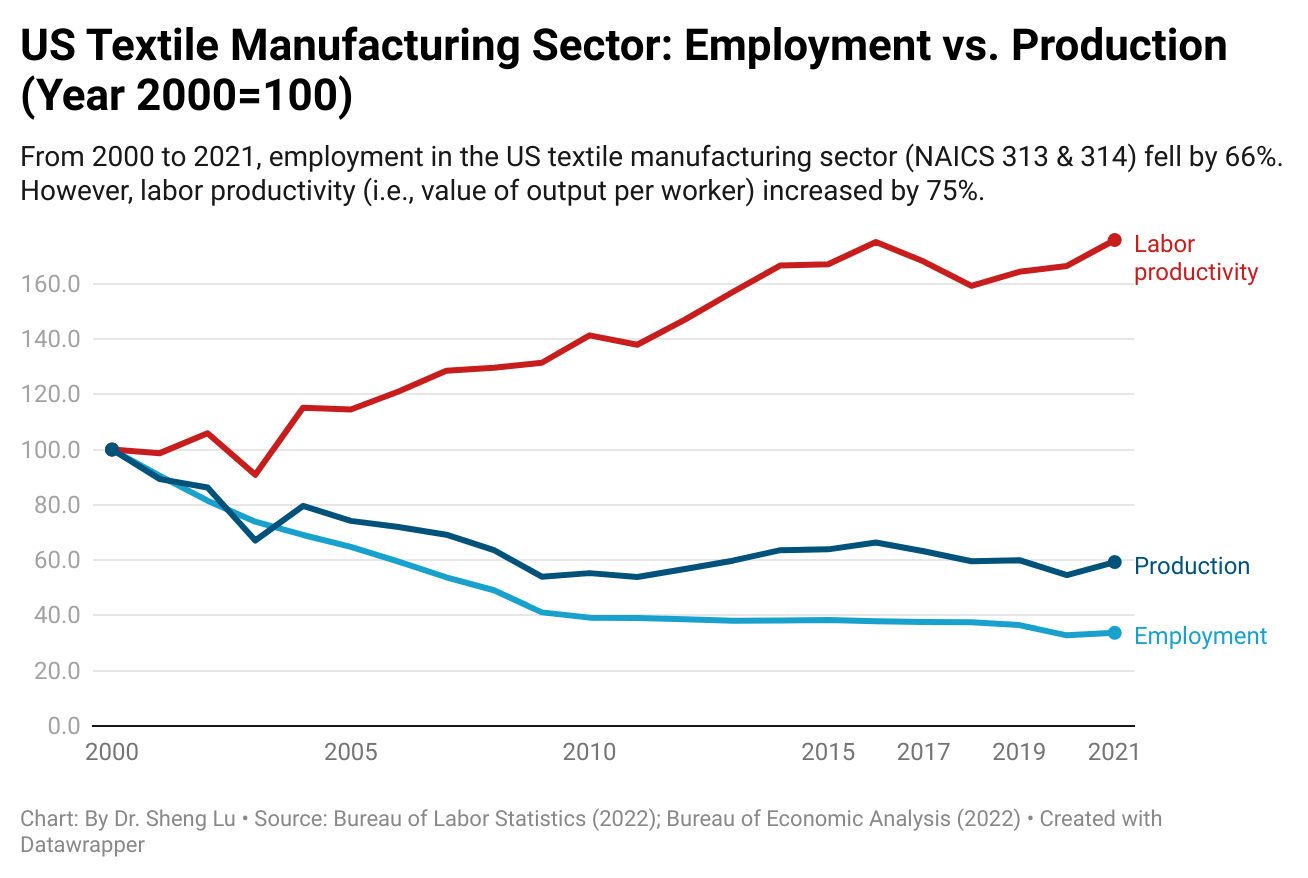
“Technology was generally a big culprit in job losses…U.S. manufacturing output, the volume of products produced here, is about as high as it has ever been. But the sector employs more machines and fewer people than it used to. Nevertheless, import competition was a significant factor and an easier focus, I think, for political anger.” (Ngozi)
“…between 1995 and 2011, while increased goods import from China did eliminate 2 million jobs in the United States, increased exports to China and elsewhere added 6.6 million jobs to the U.S. economy, 4 million of them from higher-services exports…These numbers illustrate the power of trade for job creation. But as we know, those new jobs were not created in the same places. Neither did they go to the same people. That a backlash would result from those left out was perhaps predictable, but it was not inevitable. There are countries that use domestic-policy levers to translate gains from trade into broadly shared growth by providing people security against income loss and support to seize new opportunities.” (Ngozi)
Renew or update the African Growth and Opportunity Act?
“The world is really different from when AGOA was first created…So I think copy-paste is to really lose an important opportunity…we should be practical. Also, we’re on a timeline…The AfCFTA, the African Continental Free Trade Area, that has been concluded, that has that has been brought into being by the countries on the continent. And those continental integration aspirations should absolutely be reflected in our offer to Africa, and something we should try to figure out how to incorporate” (Tai)
“African countries appreciate AGOA. They would like to see an agreement that is, you know, at least a decade out so that they have some predictability. What they’re hearing from investors is that with this up in the air, they can’t make up their minds whether to invest or not because they don’t know what will happen. So I think if we can reform and get it done, and people can have a predictable time horizon for AGOA, it would really help” (Ngozi)
How to reform the World Trade Organization?
“The United States wants a WTO where dispute settlement is fair and effective, and supports a healthy balance of sovereignty, democracy, and economic integration where all members embrace transparency, where we have better rules and tools to tackle non-market policies and practices, and to confront the climate crisis and other pressing issues.” (Tai)
“We must recognize the diversity of developing members. We should have flexibilities in the rules that reflect actual needs. But we cannot have economic and manufacturing powerhouses gaming the system by claiming the same development status and flexibilities intended for less-advantaged members.” (Tai)
“people ask me all the time, oh, are you worried because there are so many [Free trade agreement, FTA]? I’m not. Like I said, 75 percent of trade still goes on WTO terms [MFN tariff rates]. And we can learn from them.” (Ngozi)
“I don’t have enough time and money to waste resources in Geneva on a process that we don’t actually believe in…When President Biden talks about it from the floor of the United Nations General Assembly, if we still have trading partners who want to question our seriousness, then I think the problem is those partners and it’s not us” (Tai) [note: this comment was mentioned by Politico]
Argument: The U.S. textile manufacturing industry has been a winner of globalization
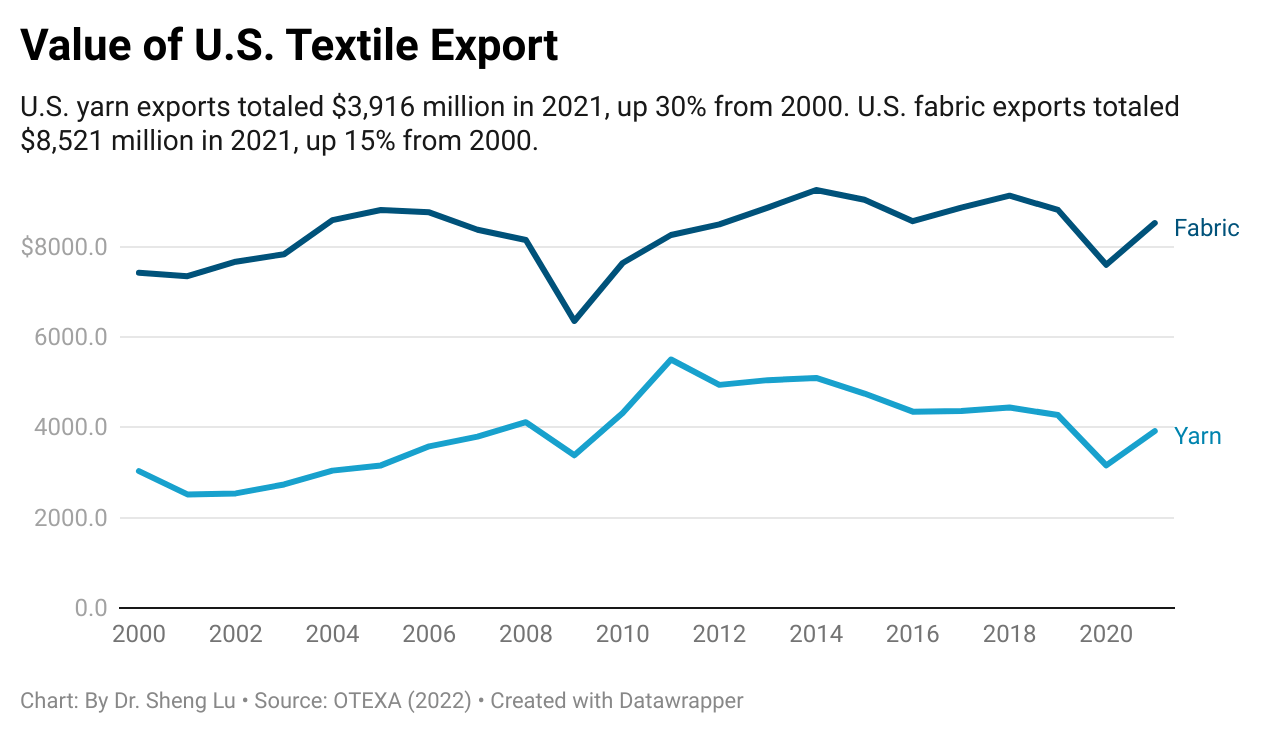
Comment #1: While it is true that many Americans lost their jobs due to the increase in trade, there are more benefits to both importing and exporting rather than the mercantilist view of trade. Increasing trade and globalization, especially during the Clinton administration, was an opportunity to develop strong relationships with other nations. The value of U.S. textile exports since 2000 has risen by 30% for yarn and 15% for fabric, after the establishment of agreements such as NAFTA. Additionally, one of the U.S. apparel manufacturers in the video used machinery for their production from Sweden. Without globalization and trade, they would not be able to use this high-tech equipment. All in all, U.S. textile manufacturing sector benefits from both importing and exporting goods.
Comment #2: Deeper down, the US textile sector seems to be winning in the long run. The squeeze that globalization has placed on them has allowed for innovation within the industry as they fight to stay relevant and compete with overseas goods. Operational slack such as high turnover jobs have been eliminated with automation, and US manufacturers gained a new branding niche that overseas companies do not: a US “personal touch.” Consumers may now be more willing to pay more for a garment just because it says it is made in the USA. USA-made clothing may now be perceived as higher quality and more scarce. The sentiment towards US-made goods and their quality could enact change to reduce overseas reliance, which is a win for US manufacturing in the long run. Additionally, globalization expands the export market for the US textile manufacturing sector.
Comment #3: As discussed in the video, there is a growing trend of reshoring and regionalization in some manufacturing sectors, including textiles. Some U.S. textile manufacturers have seized this opportunity to bring production back to the United States, capitalizing on the advantages of local supply chains, quality control, and speed to market. The video also shows how technology and automation can help streamline production processes and make manufacturing more competitive, even in higher-cost regions like the United States. US textile manufacturers have invested in innovation and automation, making them competitive in producing textiles with advanced features and properties in today’s global economy. It is globalization that is pushing the US textile industry to adopt these new technologies and continue improving its international competitiveness.”
Argument: the U.S. textile manufacturing industry has been a loser of globalization
Comment #4: One of the biggest arguments for globalization is the lower prices & affordability for the consumer. From this perspective, it seemed that the United States was a winner of globalization as a whole. However, when beginning to look at the consequences of moving production overseas, we not only see the textile manufacturing sector being affected, but we also see this impact disperse to the communities in America as well. When brands offshore and outsource production overseas for lower prices & labor, our very own US textile manufacturing industry is losing out on this business. It also forces this industry into a highly competitive environment that does not have equal “playing fields” and does not have insurance/protection in case environmental factors ruin crops. The US has clear labor laws and human rights policies (as well as increasing environmental policies), whereas their cotton-growing competitors, for instance, do not have to follow the same rules. This allows labor exploitation to decrease costs and makes US companies seem unappealing or less competitive.
Comment #5: Over the past few decades, the number of manufacturing jobs in the US textile industry has plummeted after companies began moving production overseas, specifically to countries like China, which have preferential treatment. These foreign facilities can produce things much faster and cheaper because the standards and regulations are completely different than those of the United States. Free trade does not consider these differences in labor and environmental laws, making it much less “free” than it claims. As countries overseas– specifically China and regions like Xinjiang– continue to not play by the rules, the US is forced to keep up by implementing things like the Toyota System…Americans want to be the best in manufacturing and globalization often gets in the way of this. With near-shoring, the US can reclaim high-quality, American-made garments while helping with job security and sustainability.
Comment #6: Overall, I believe that the U.S. textile manufacturing industry is a loser of globalization and international trade, mostly due to the competition from overseas. This competition includes more manufacturers from other countries, but also the competition of pricing since other oversea manufacturers are able to sell their cotton/textile materials at a lower price. Since the U.S. struggles to compete with these lower prices, they are forced to look for another way to have a competitive advantage in the textile manufacturing sector, such as lean manufacturing and technology improvements. At Carolina Cotton Works, Bryan Ashby shares how they have increased efficiency and use high-quality machines (note: imported) for their products. Although this sounds great, this also means that there are fewer workers.
Comment #7: Globalization creates a trade dependence on imports. It’s important we don’t depend on things for when things happen that we can’t predict like the pandemic where we can’t import anymore. Since there was a lack of local textile manufacturing and sourcing in the United States compared to what was being imported, there was less of a chance for technological advances and improvement in the United States textile manufacturing sector. Post Globalization, however, may be the chance for the United States to bring back the textile manufacturing sector momentum. I think this because the United States has seen the result of heavily relying on other countries for their cheap labor/sources, and this could add extra motivation for companies to want to figure out better alternatives in manufacturing in their own country.
Comment #8: I think currently the US is a loser to globalization only because brands want to get the product for cheap. I think brands think that would create more profit that way. However, I do believe we could get to a future where more things would be created in the US and wouldn’t have to pay that much in tariffs and other external prices. I think it would help boost people to work more. I think people are worried about making things in our country because of the relations we have with other countries.
Discussion questions:
Do you agree or disagree with any particular argument above? Any follow-up comments on the impact of globalization on the US textile manufacturing sector? What should government do with trade given the debates? Please feel free to share any additional thoughts.
#1 What are the examples of globalization in the above two videos about Temu?
#2 Based on the videos, who are the winners and losers of globalization and why?
#3 What role does international trade play in Temu’s business model?
#4 Some suggest ending the “de minimis rule.” Based on the videos, what is your view and recommendation for US policymakers?
#5 Anything you find interesting/surprising/intriguing in the video and why?
(Note: Anyone is welcome to join the discussion. For students in FASH455, please address at least two questions. Please mention the question number in your response, but there is no need to repeat the question).
Note: About “de minimis rule.”: Under US customs law, specifically the Trade Facilitation and Trade Enforcement Act of 2015, import duties are generally waived for goods valued at $800 or less per person per day. Therefore, Temu’s shipping from China to US consumers is likely to be eligible for the benefits.
#1. Are classic trade theories (e.g., comparative advantage) still relevant or outdated in the 21st century? Why? Please share your thoughts based on the video and the figures.
#2. Based on the video and the figures above, is the US textile manufacturing sector a winner or loser of globalization and international trade? Why?
#3. Take the following poll (anonymous) and share your reflections.
#4. Should the government’s trade policy consider non-economic factors such as national security and geopolitics? What should be the line between promoting “fair trade” and “trade protectionism”? What’s your view?
#5. Is there anything else you find interesting/intriguing/thought-provoking in the video? Why?
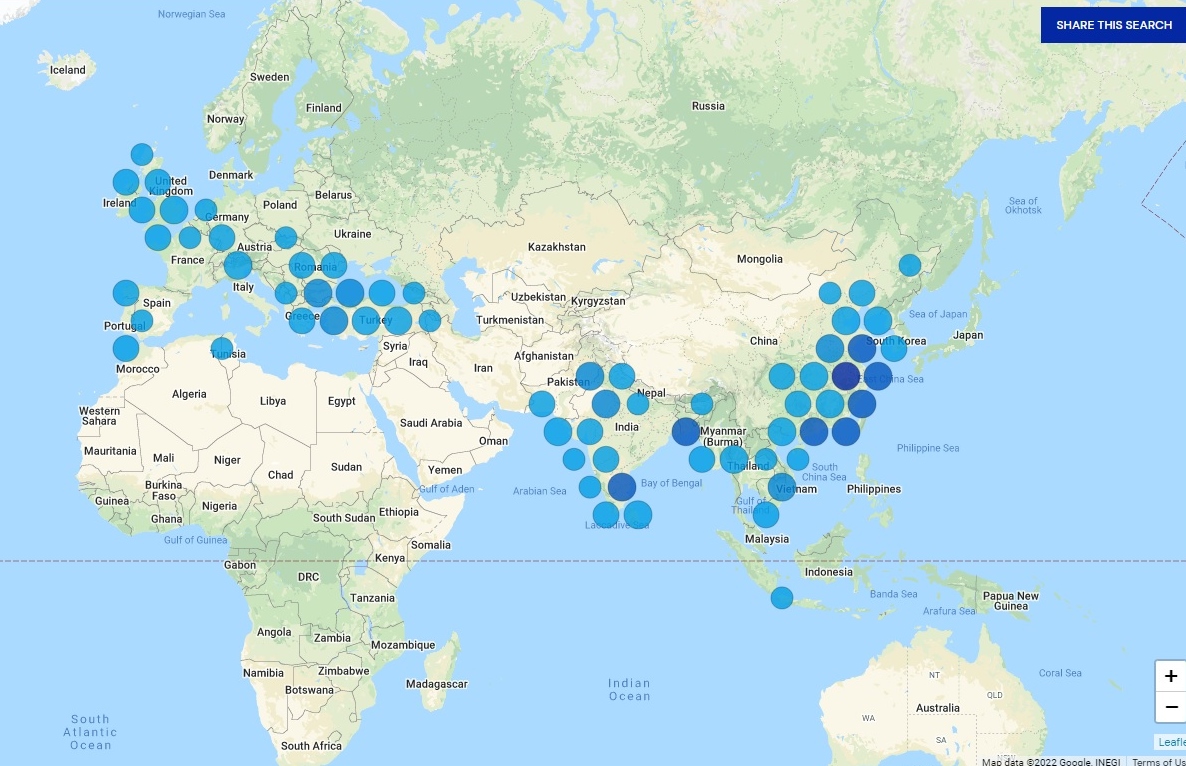
Question #2: Primark sources from 28 countries work with around 928 contracted factories. What are the pros and cons of using such a diverse sourcing base?
Question #3: Near-shoring, meaning bringing manufacturing closer to home, is growing in popularity. Does it mean globalization is “in retreat”? What is your view?
Question #4: In the current state of the fashion industry, ethical labor laws are really important, especially to consumers. For example, activists are protesting Pretty Little Thing in London to protest the low wages paid to garment workers at the factories that Pretty Little Thing sources from. With this in mind, do you think that it would be wise for Primark to look for sourcing opportunities outside of Asia? Or do you believe Primark’s Ethical Trade and Environmental Sustainability team is sufficient to ensure ethical and sustainable sourcing?
Question #5: As of May 2021, Primark has the most workers in its Asian factories. Should we still call Primark an EU company? Does a company’s national identity still matter in today’s globalized world?
(Welcome to our online discussion. For students in FASH455, please address at least two questions and mention the question number (#) in your reply)
#1: Is the sole benefit of globalization helping us get cheaper products? How to convince US garment workers who lost their jobs because of increased import competition that they benefit from globalization also?
#2 How to explain the phenomenon that US apparel imports from China continue to rise despite the tariff war? Do you think the tariff war is a wrong strategy or a good strategy implemented at the wrong time given COVID?
#2: In the class, we mentioned that major driving forces of globalization include economic growth, lowered trade and investment barriers, and technology advancement. What will be the primary driving forces of globalization or deglobalization in the post-COVID world, and why?
#3: Based on the reading “U.S.-China Trade War Still Hurting Ohio Family-Owned Business,” what results of the US-China tariff war are expected and unexpected? What is your recommendation for the Biden administration regarding the Section 301 tariff exclusion process and why?
#4: We say textile and apparel is a global sector. How does the US-China tariff war affect textile and apparel producers and companies in other parts of the world? Why?
#5: From this week’s readings, why do we say textile and apparel trade and sourcing involve economic, social, and political factors and implications? Please provide 1-2 specific examples from the articles to support your viewpoints.
(Welcome to our online discussion. For students in FASH455, please address at least two questions and mention the question number (#) in your reply)
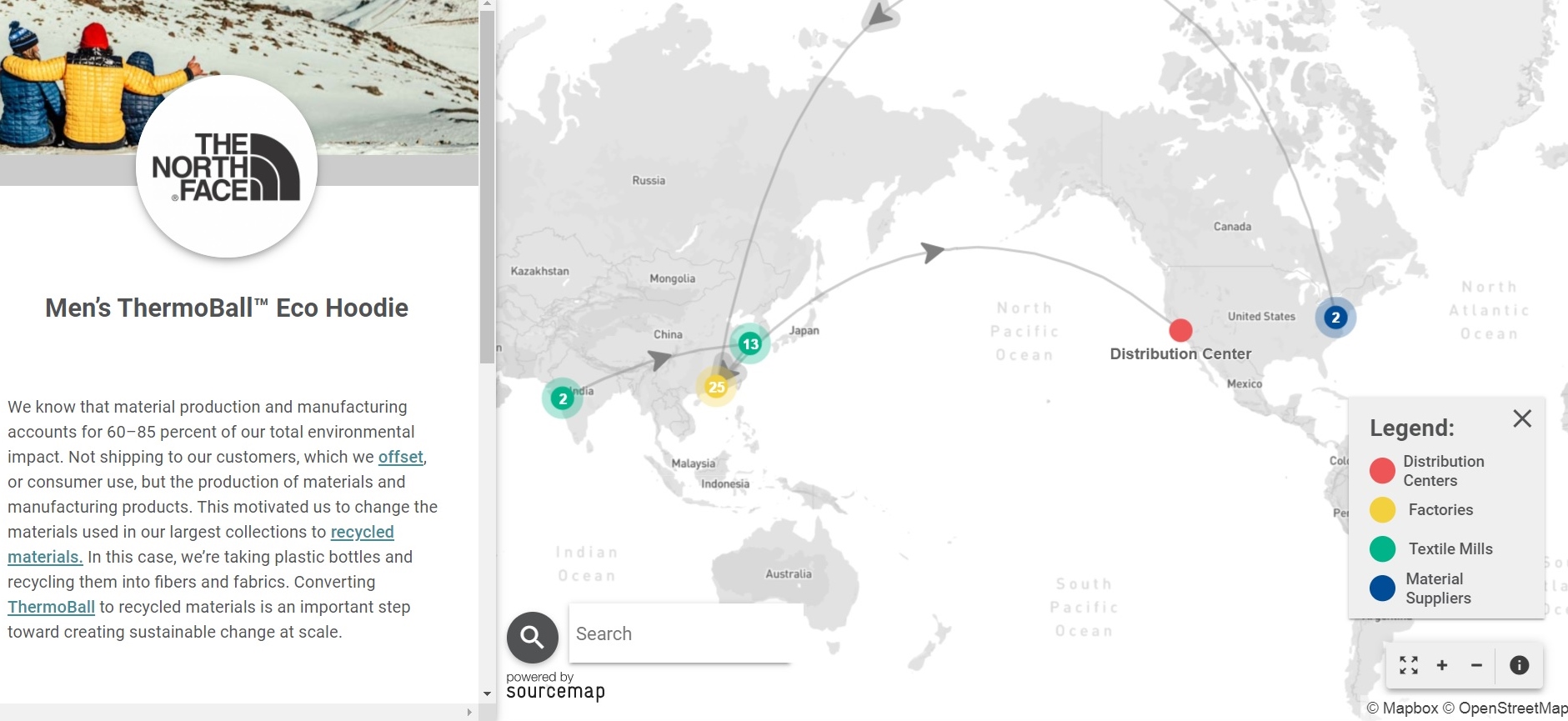
Sourcing map: North Face–Men’s Thermoball Eco Hoodie
#1 Why or why not do you think VF Corporation should de-globalize its supply chain—for example, bringing more sourcing and production back to the United States?
#2 Given such a globalized operation, should we still call VF Corporation an American company? Also, does the label “Made in ___” still matter today?
#3 Is the sole benefit of globalization helping us get cheaper products? How to convince US garment workers who lost their jobs because of increased import competition that they benefit from globalization also?
#4 How has COVID-19 changed your understanding of the benefits, costs, and debates on globalization? Do we still need globalization in a post-COVID world? Why?
#5 Throughout history, globalization has been viewed as a two-sided debate with social groups weighing its benefits and negative costs. With the emergence of COVID-19, how do you think certain social groups’ opinions towards globalization will change?
(Welcome to our online discussion. For students in FASH455, please address at least two questions and mention the question number (#) in your reply)
#1 To which extent should globalization be responsible for Brexit? Does Brexit imply globalization is in retreat? Why or why not?
#2 Why do you think the fashion industry is a stakeholder of “Brexit”? It is said that “some of the world’s poorest countries may end up the victims of Brexit.” Why is that?
#3 The article mentioned the possibility of London losing its reputation as a global fashion capital because of Brexit. What is your evaluation?
#4 Should the UK fashion industry vote for Brexit? Why or why not?
#5 Overall, from the case of Brexit, how do you understand that textile and apparel is a global sector?
[For FASH455: 1) Please mention the question number in your comments; 2) Please address at least TWO questions in your comments]
A group of eminent panelists will bring their experience on how digital technologies are changing international trade and how international trade cooperation can help governments reap the benefits and address the challenges of digital trade.
Speakers/Panalists:
Roberto Azevêdo, Director-General, World Trade Organization
“Globotics” or Globalization + Artificial intelligence (AI) is changing the world. Globotics means globalization mixed with new kinds of robotics, from artificial intelligence to technologies that make it easier to outsource services jobs. Particularly, globotics is injecting pressure into our socio-politico-economic system (via job displacement) faster than our system can absorb it (via job replacement). Overall, AI and robots will take jobs — but make the world better.
Past globalization and automation were mostly about goods— making them and shipping them. However, the era of globotics is about service-sector automation—driven by information and data.
The competition from software robots and telemigrants will seem monstrously unfair to white collar works who lost their jobs. When white-collar workers start sharing the same pain [as blue-collar workers], some sort of backlash is inevitable.
As technologies reduce the need for face-to-face contact, some developing nations stand to benefit. For example, India, with its sizeable English-speaking population and armies of techies, could become a hub for services outsourcing, just as China was for manufacturing.
Future jobs (that are left) will be more human and involve more face-to-face contact since software robots and tele-migrants will do everything else. In other words, the future economy will be more local and more human.
The problem is the short-term. In the era of globotics, it is important to make the rapid job displacement politically acceptable to a majority of voters. Governments may set the policy goal to protect workers, not jobs.
Do you think the U.S. trade deficit is a problem or not? Please feel free to share your thoughts based on our lectures, the video above as well as a recent op-ed written by Peter Navarro (Director of the White House National Trade Council) for the Wall Street Journal.





 FASH455 Global Apparel & Textile Trade and Sourcing