
Background
On August 22, 2026, the United States began imposing an additional 50% tariff on specified imports from Canada under Section 338 of the Tariff Act of 1930. The tariffs apply to approximately $27.6 billion of Canadian goods, including certain textile and apparel products. Notably, coverage is determined by the specific HTSUS tariff lines in the Annexes, not by the broad product category. The scope of Canadian products subject to the additional tariffs was subsequently modified effective September 15, 2026. Furthermore, for products subject to the 50% Section 338 tariffs, the rate would apply regardless of whether the products qualify for preferential treatment under the US-Mexico-Canada Agreement (USMCA).
Meanwhile, as part of its retaliation, Canada imposed additional tariffs on selected U.S. products beginning September 8, 2026, including HS codes associated with textile and apparel products. The Canadian counter-tariffs include rates of 15%, 25%, and 50%, depending on the product.
Sourcing patterns
#1 Data from the Office of Textiles and Apparel (OTEXA) indicate that Canada is a relatively minor sourcing base for U.S. fashion companies, accounting for only 0.6% of imports by value and 0.2% by quantity in the first seven months of 2026.
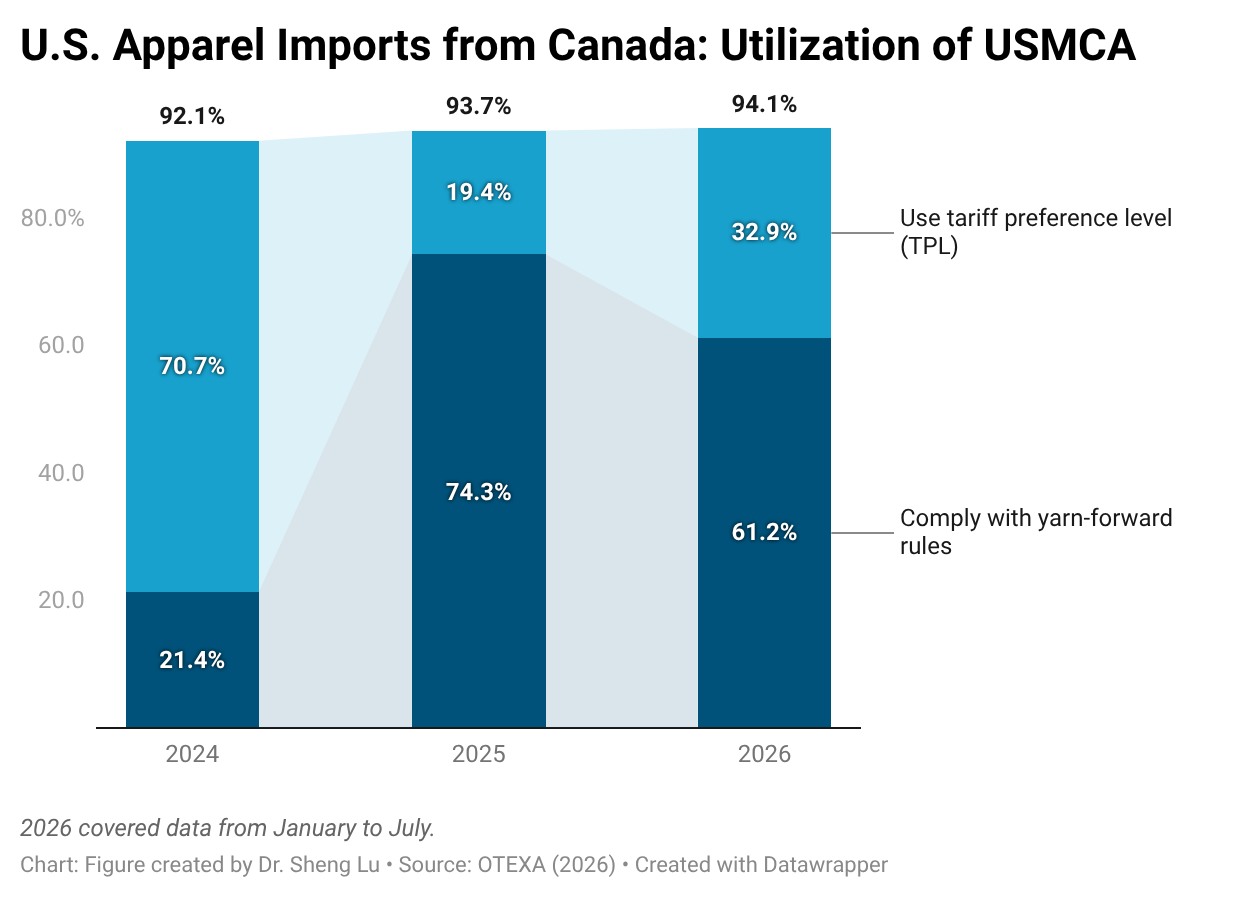
#2 Meanwhile, in the first seven months of 2026, about 94.1% of U.S. apparel imports from Canada claimed the duty-free benefits under USMCA, higher than 92.1% in 2024 and 93.7% in 2025. Also, according to OTEXA’s data, since 2025, a much higher percentage of U.S. apparel from Canada has complied with the yarn-forward rules of origin, and far fewer have used the tariff preference level (TPL) mechanism, particularly those using cotton and Man-made fiber (MMF). [See detailed data HERE]
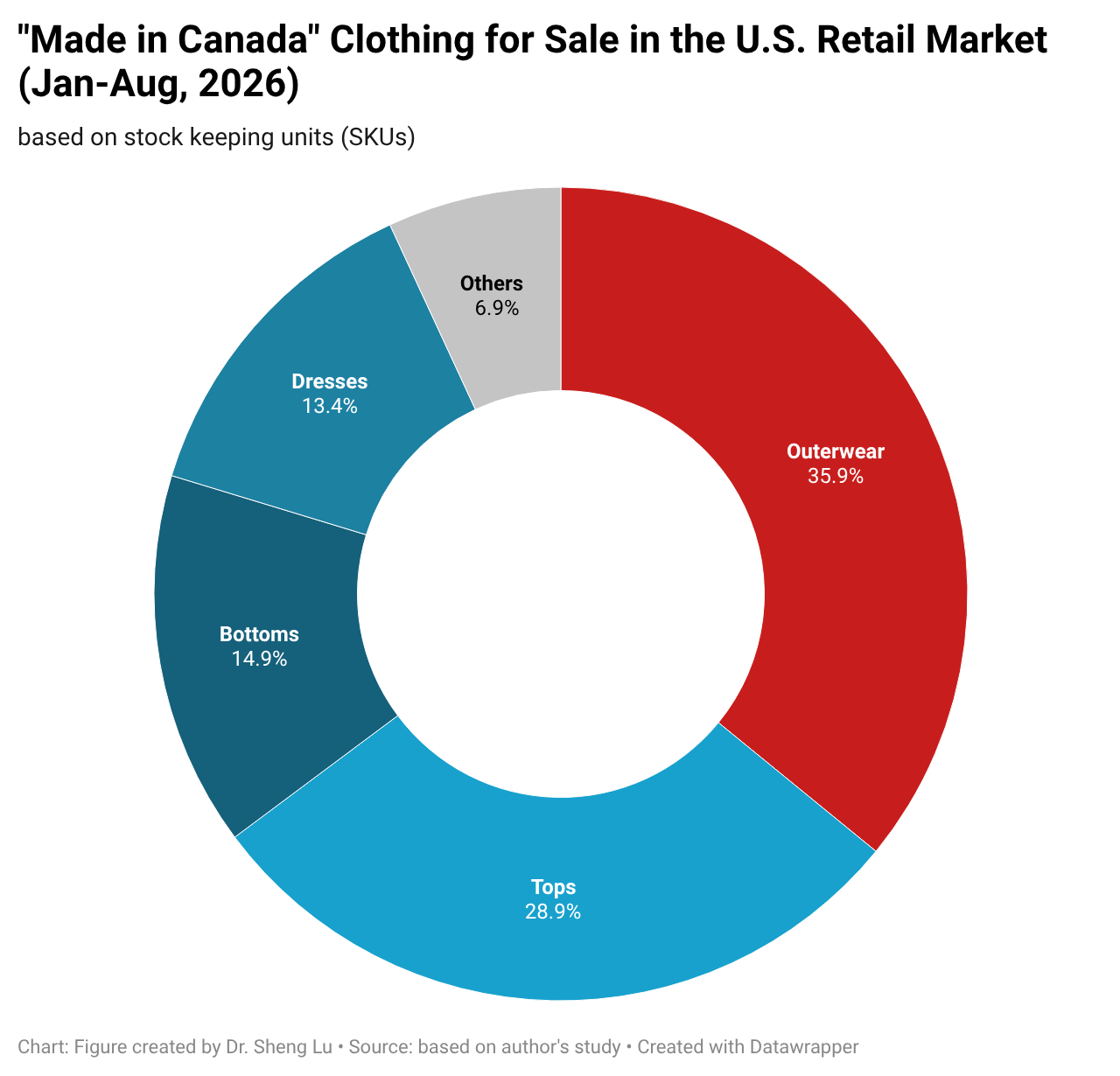
#3 Tracking apparel products for sale in the U.S. retail market from January 1 to September 1, 2026 identified approximately 5,990 stock-keeping units (SKUs) of clothing items labeled “Made in Canada.” Of these products, outerwear was the largest category, accounting for 35.9%. Most outerwear was jackets (16.5%) and coats (15.5%).
For these outerwear products, the most used fibers included polyester (73.6%), nylon (33.5%), cotton (30%), and wool (13.2%). This relatively diverse fiber mix and Canada’s limited local fabric manufacturing capacity help explain why TPL has been important for U.S. apparel imports from Canada. Because Canadian apparel manufacturers may rely on imported textile materials, without TPL, it could be challenging for these products to meet the restrictive yarn-forward rules of origin under USMCA.
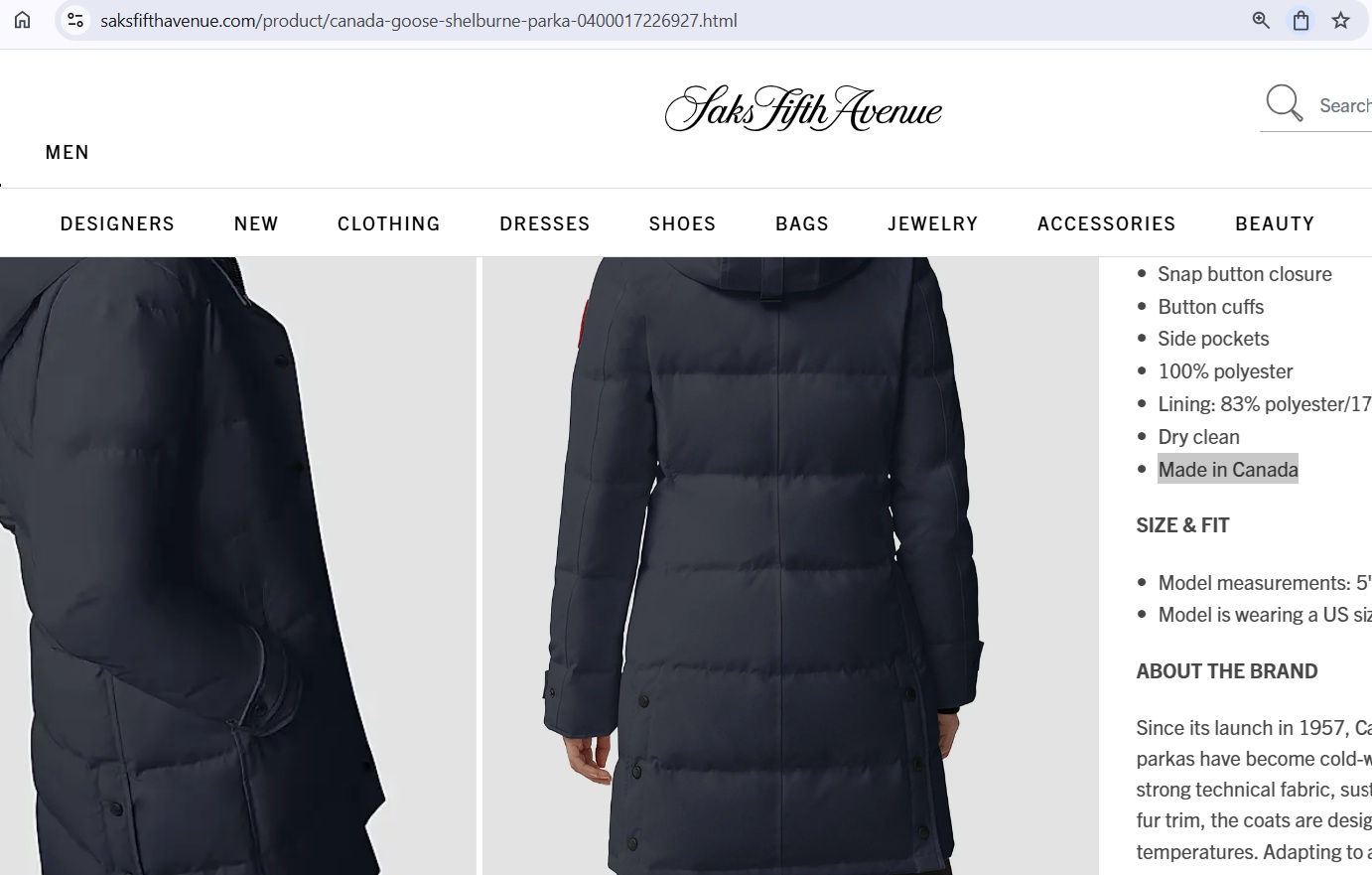
Furthermore, 71% of “Made in Canada” outerwear for sale in the U.S. market was in the luxury and premium segments, with an average unit selling price of $1,050 for coats and $695 for jackets from January 1 to September 1, 2026. The relatively high value of these products also suggests that tariff increases could have a more significant impact on their sourcing costs and, potentially, retail prices. This is because tariffs are generally calculated as a percentage of customs value, meaning that a tariff increase would translate into a larger dollar cost for higher-value garments, which could, in turn, increase the pressure on retailers to raise prices or absorb higher costs.
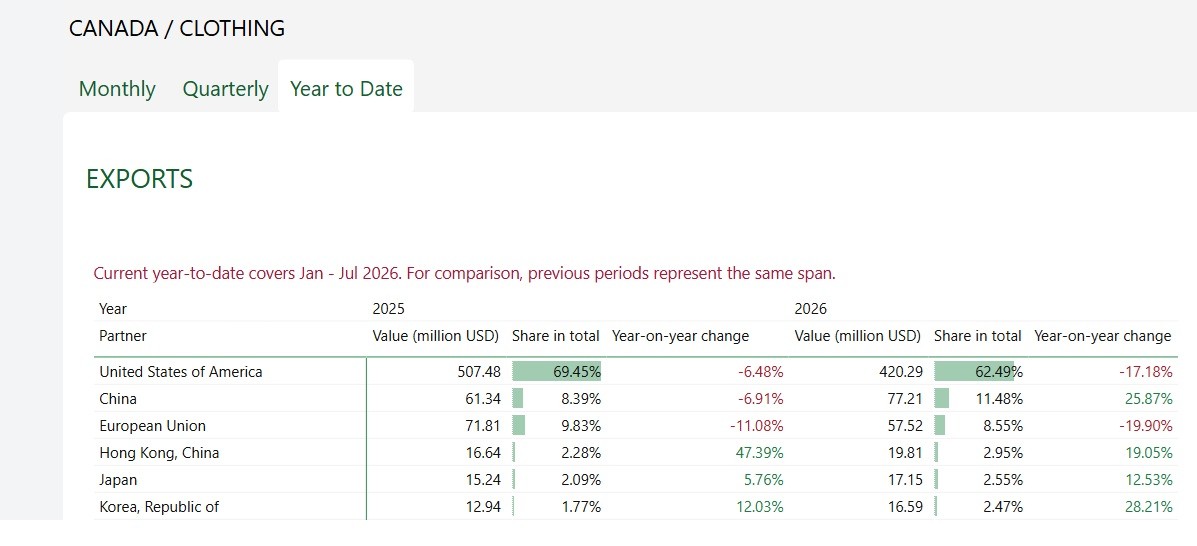
#4 Additionally, the United States is the single largest export market for Canadian-made clothing. For example, data from the World Trade Organization shows that so far in 2026 (January to July), about 62.5% of Canada’s apparel exports were destined for the United States. As a result, Canadian clothing producers and exporters would find it challenging to identify alternative export markets in the short to medium term. For well-known brands like Canada Goose, because its unique competitive advantage is “Made in Canada,” common tariff-mitigation strategies, such as shifting production to lower-tariff countries, may be even harder without compromising an important element of its brand identity.
By Sheng Lu
Additional reading:

