Textiles and apparel today are produced through a global supply chain. For clothing labeled as “Made in Vietnam,” it is likely that the textile raw materials, such as yarns, fabrics, and trims, are sourced from elsewhere.
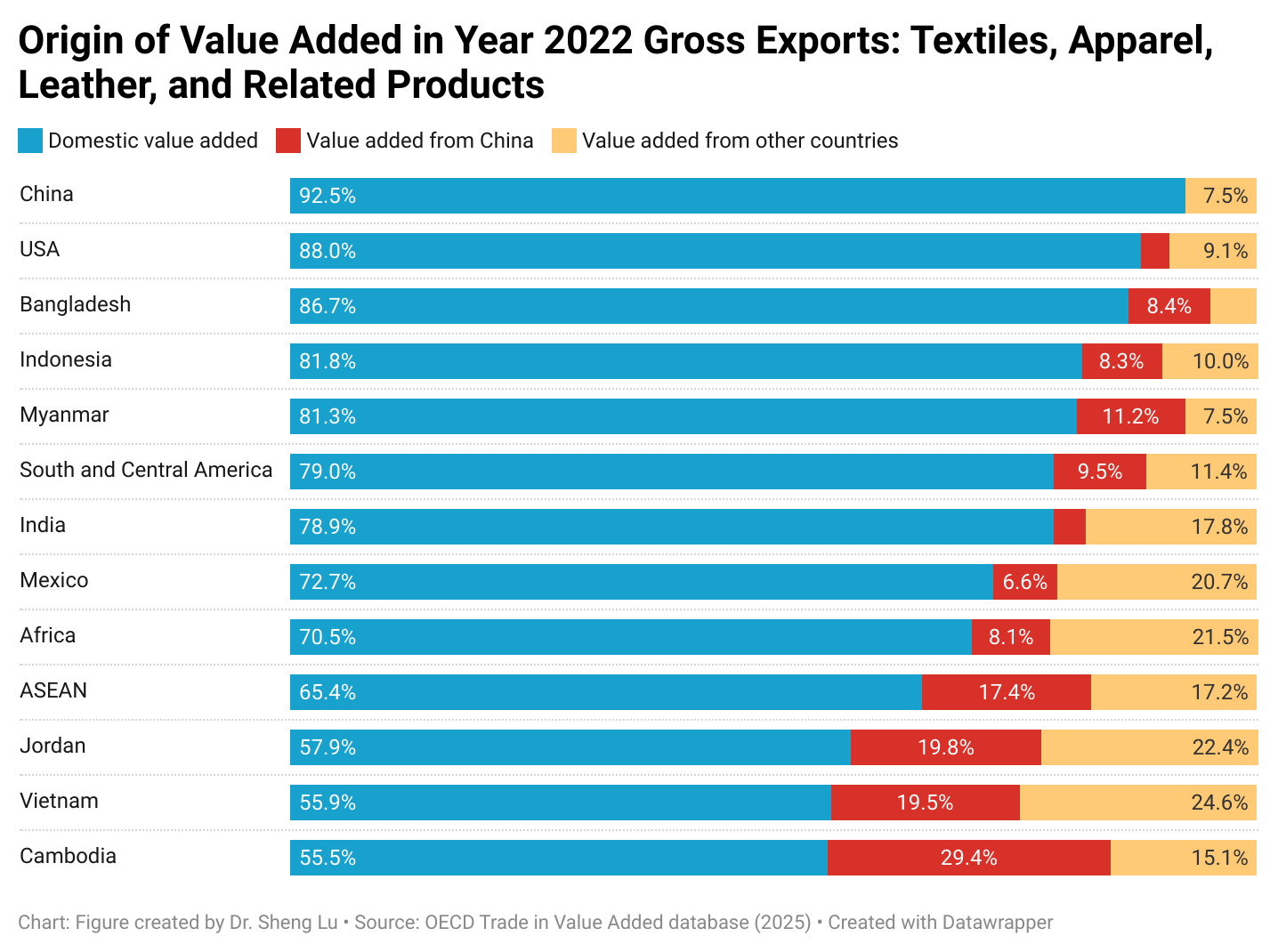
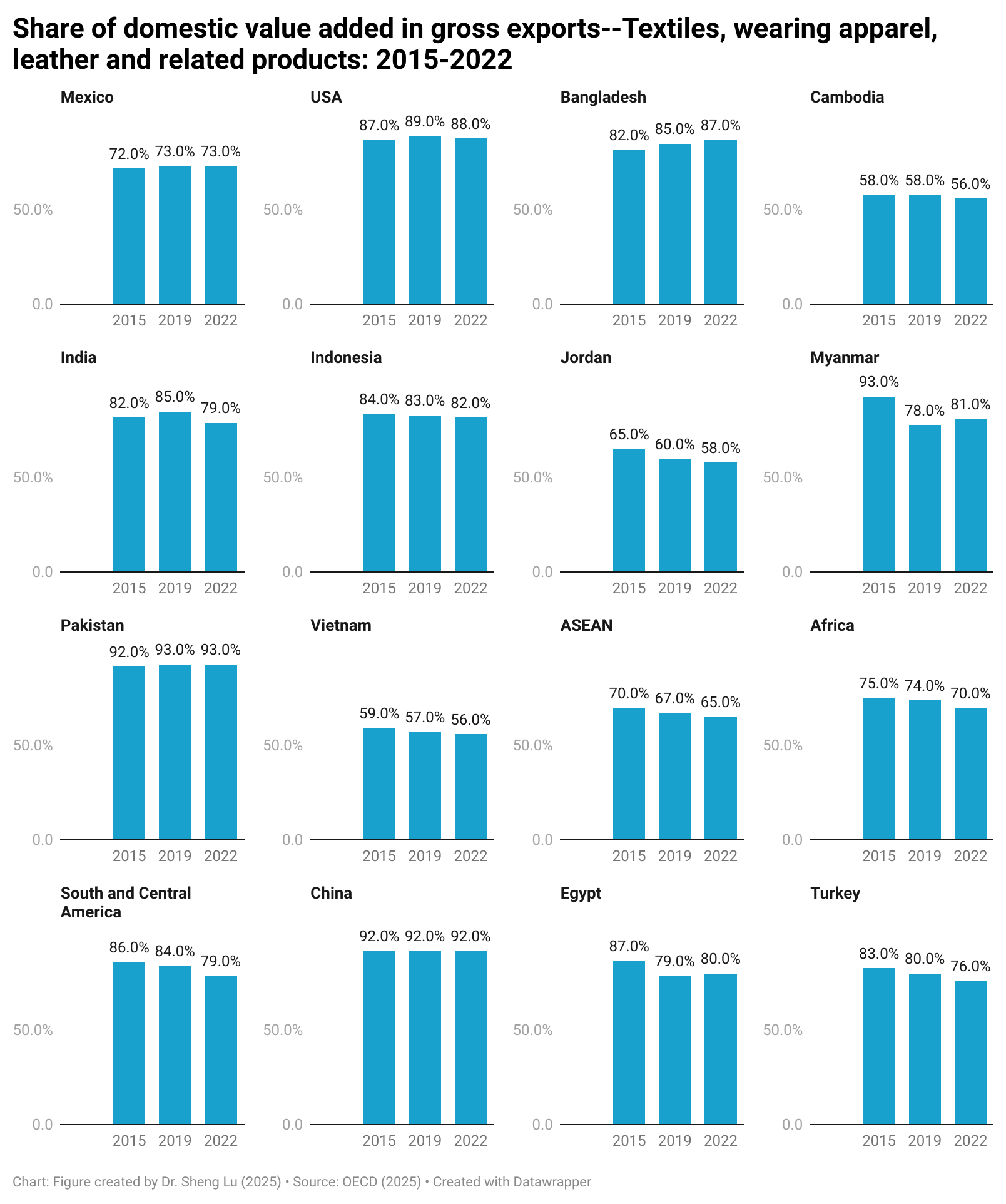
According to the newly released 2025 OECD trade in value added estimation, as of 2022, a country’s apparel exports commonly contain value added created in another country due to the use of imported textile materials and other inputs. This is the case for exports from leading apparel exporting countries in Asia, such as Vietnam (44% foreign value added), ASEAN members (35% foreign value added), Cambodia (45% foreign value added), India (21% foreign value added), and Jordan (42% foreign value added). Other emerging apparel sourcing destinations in North, South, and Central America, as well as the EU, also used substantial imported inputs for their apparel exports, such as Mexico (27.3% foreign value added), Türkiye (23.9% foreign value added), and Egypt (19.7% foreign value added). [See detailed data here]
Notably, among the sixteen countries and regions examined, they mostly increased the use of non-domestic value added in textile and apparel exports between 2015 and 2022 (note: paired T-test result was statistically significant at the 99% confidence level). This suggests that co-production through regional or global supply chains, rather than 100% domestic production, has become a more prominent phenomenon in the textiles and apparel industry. [See detailed data here]
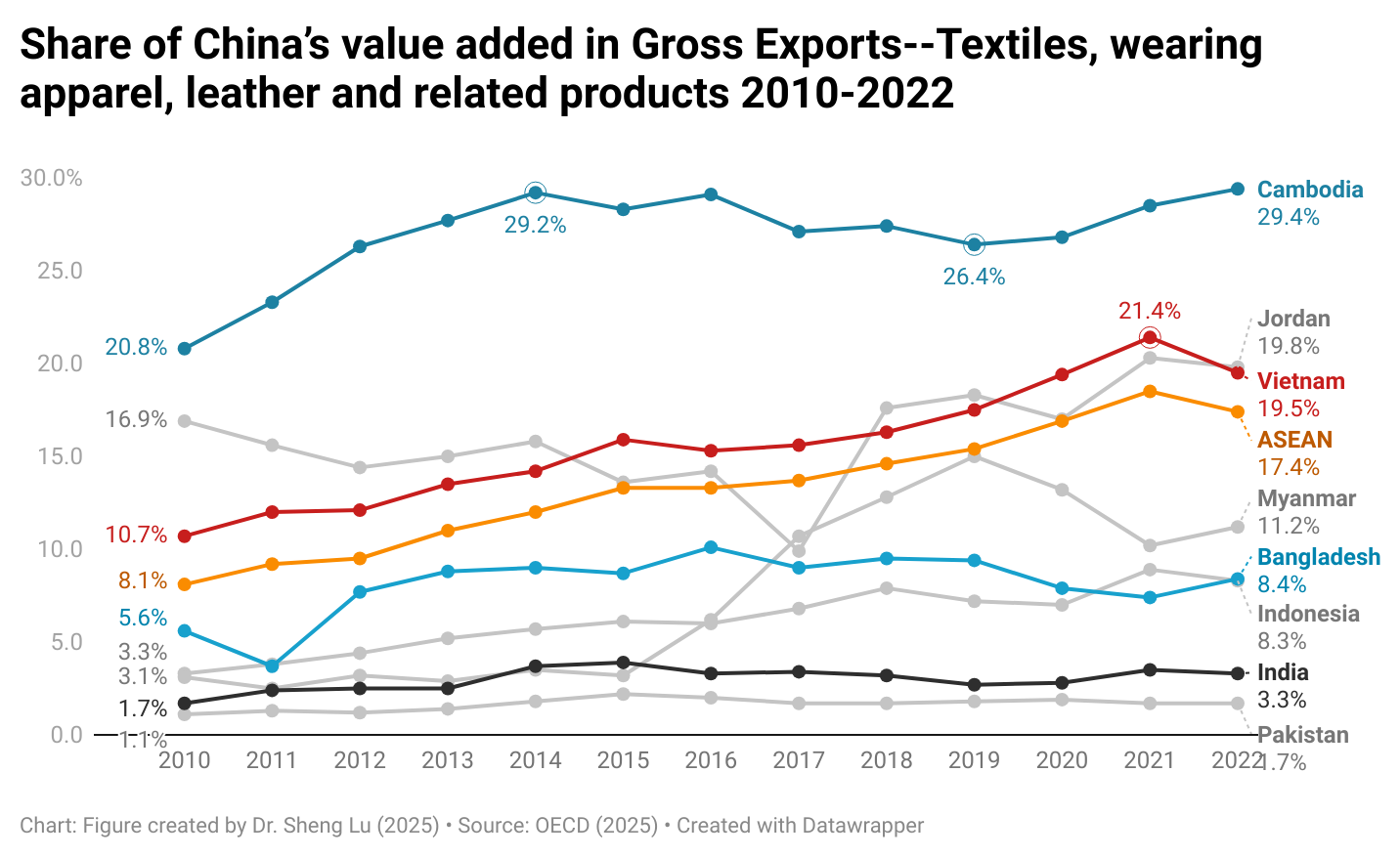
Furthermore, the value added from China appears to be increasing in the textile and apparel exports of many countries. Specifically, between 2015 and 2022, textile and apparel exports from several countries contained a higher percentage of value added from China, including not only Asian countries such as Vietnam (up 6 percentage points), ASEAN (up 4.1 percentage points) and Jordan (up 6.1 percentage points), but also those in other regions such as Egypt (up 3.3 percentage points), Mexico (up 1.7 percentage points), and South & Central America as a whole (up 4.7 percentage points). [See detailed data here] This result reflected China’s deliberate effort to expand its global economic presence through foreign direct investment, Belt and Road initiatives, and new trade agreements in recent years.
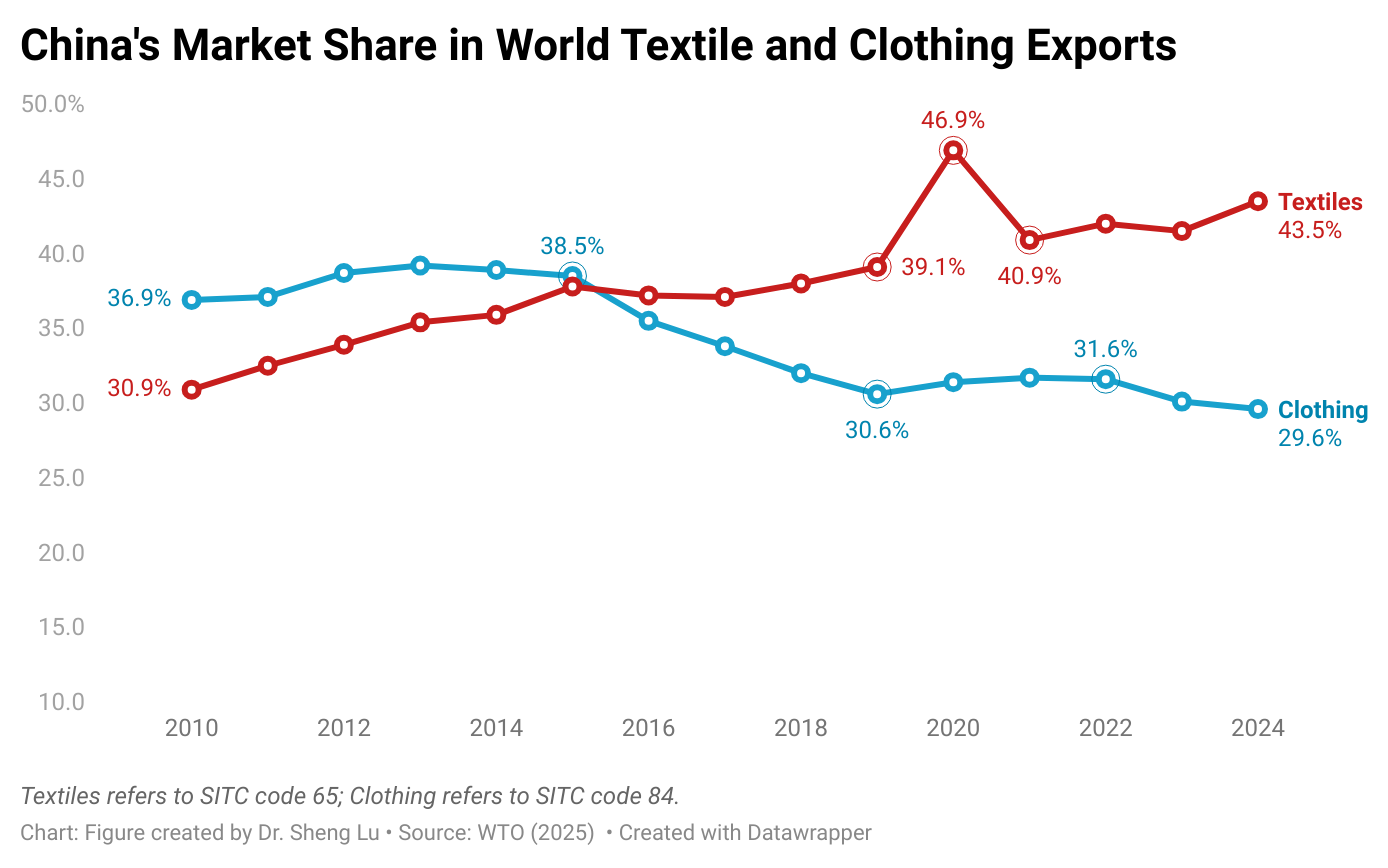
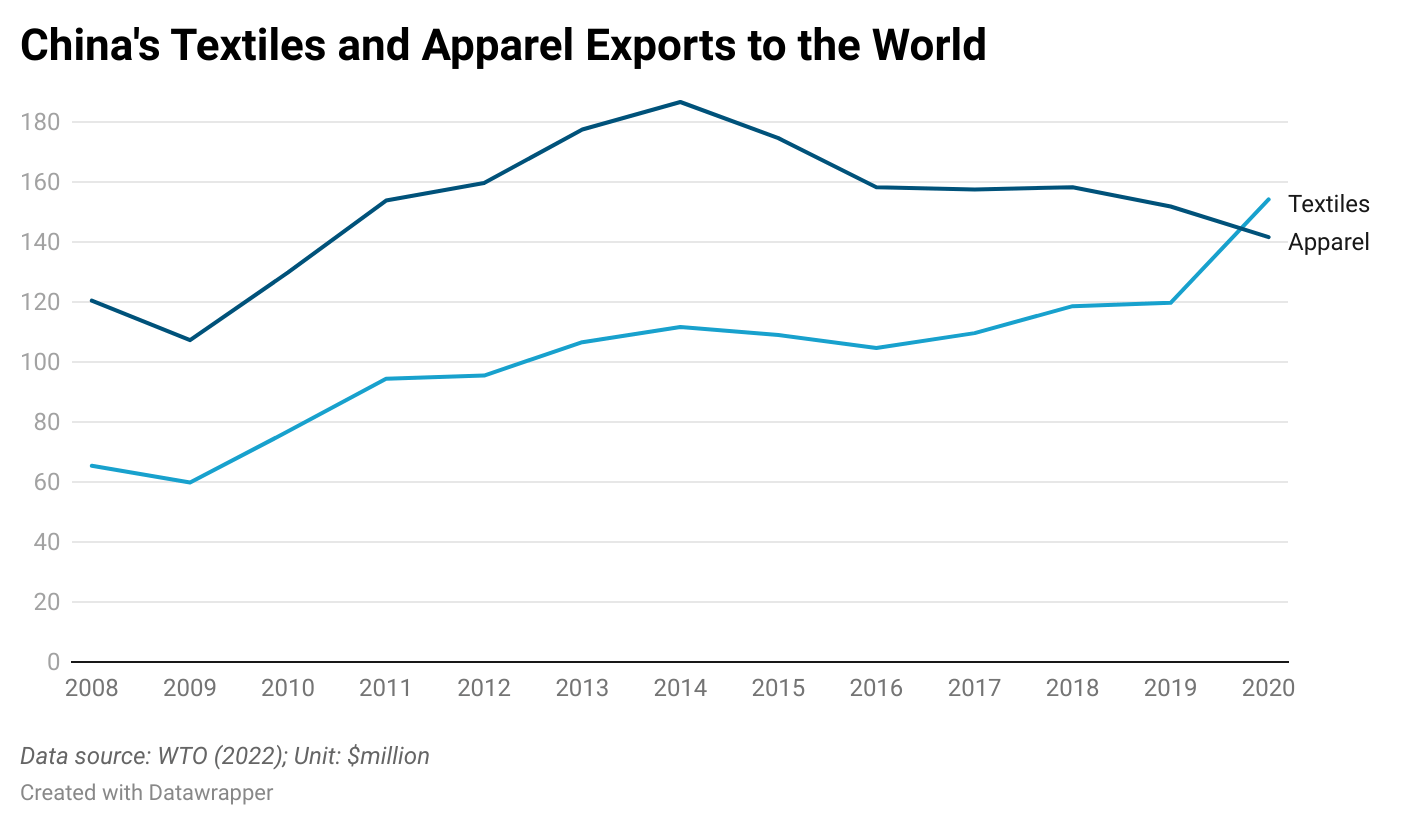
The latest data from the World Trade Organization (WTO) also shows that while China’s market share in the world clothing exports fell to 29.6% in 2024—the lowest level since 2010—China’s market share in textile exports increased to 43.3% in 2024, up from 41.5% a year earlier. In other words, consistent with the stage of development theory, China’s role as a major textile supplier to other apparel-exporting countries continues to grow, despite a decline in its finished garment exports. [See detailed data here]
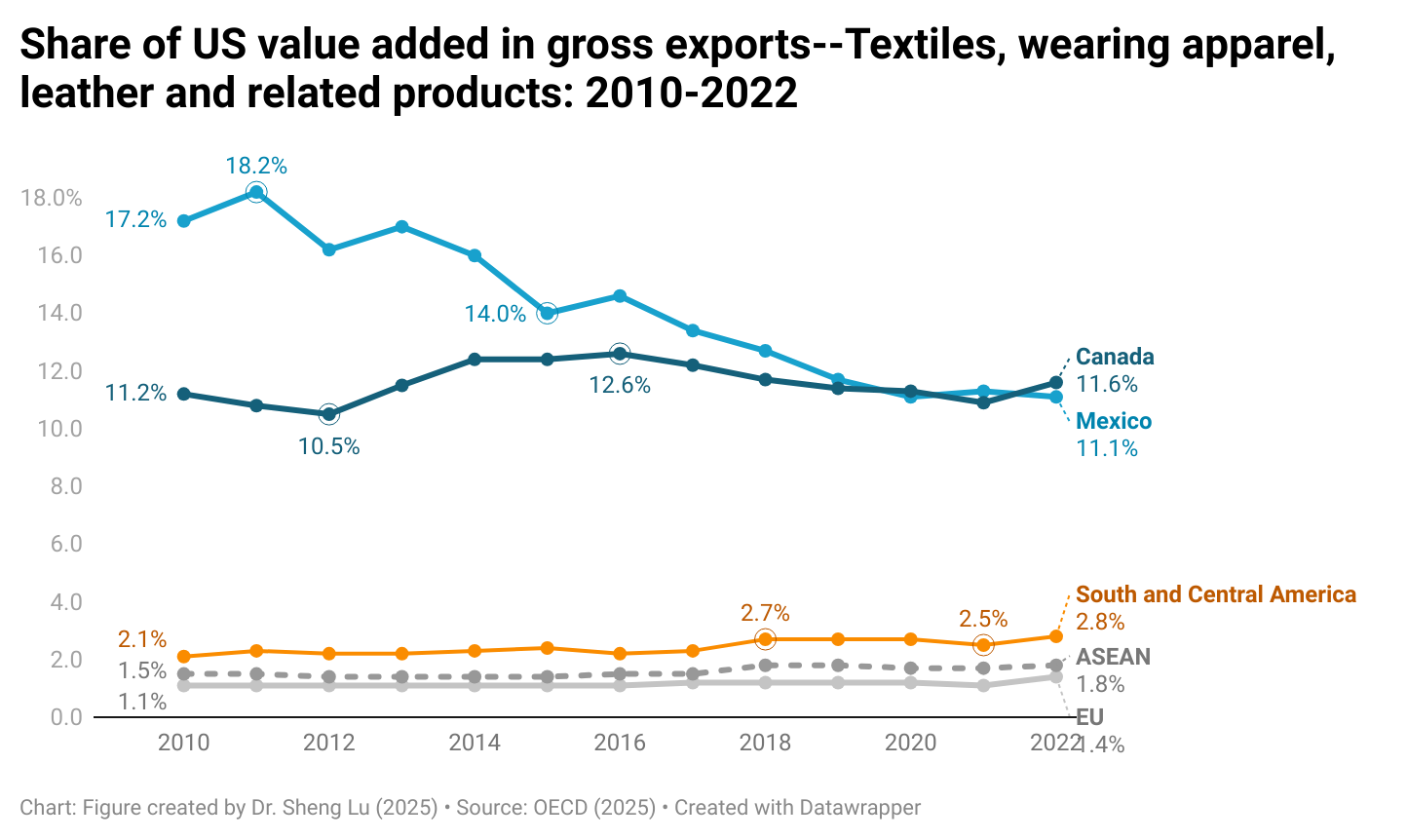
In comparison, while the United States remained an important contributor to the value added of textile and apparel exports from Mexico and Canada, its contribution slightly declined between 2015 and 2022 (i.e., from about 12%-14% to 11%). As the USMCA undergoes its mandated six-year review, it is critical to strengthen, rather than weaken, this North American co-production supply chain, which has a significant impact on the economic interests of the U.S. textile and apparel industry. This is particularly important given that supply chain collaboration between the U.S. and Asian or EU countries for textile and apparel production has been limited, with little indication of growth: According to OECD data, the U.S. value added in Asian and EU countries’ textile and apparel exports remained only around 1.5% [See detailed data here].
by Sheng Lu
(This post is not open for discussion due to its technical nature)
Discussion questions [Please address at least two questions in your comment]
#1: Based on the video and our class discussion, what would be the advantages and disadvantages for Nike to make Converse shoes leveraging a global supply chain?
#2: Assume you are an experienced U.S. shoe worker. What arguments would you present to Nike’s sourcing executives to produce Converse in the United States?
#3: In your opinion, are protective tariffs worth the economic and foreign policy consequences? Why or why not?
#4: The “hidden costs” of global trade (e.g., emissions, labor conditions) are often obscured from consumers. How can brands like Converse address these “hidden costs” while maintaining market competitiveness? What specific policies or regulatory measures should governments implement to promote responsible sourcing and enhance supply chain transparency?
About the interview: Fashion is possible because of international trade. Each year, the global fashion industry generates more than $4 trillion USD and provides families with affordable clothing options. However, as fast fashion continues to grow, so does awareness of pressing issues such as labor standards and environmental sustainability. How are the United States and China involved in the global fashion industry? How can they collaborate on the issues facing the global fast fashion industry, from production to consumption?
Sheng Lu joins the National Committee to discuss how fast fashion is a global phenomenon and how the United States and China can address common areas of concern.
The event was hosted by the Washington International Trade Association on October 9, 2024
Panelists
Ralph Carter, Staff Vice President, Regulatory Affairs, FedEx
Kim Glas, President & CEO, National Council of Textile Organizations; Commissioner, U.S.-China Economic and Security Review Commission
Melissa Irmen, Director of Advocacy, NAFTZ-National Association of Foreign-Trade Zones
John Pickel, Senior Director, International Supply Chain Policy, National Foreign Trade Council
Felicia Pullam, Executive Director, Office of Trade Relations, U.S. Customs and Border Protection
Ana Swanson, Trade and International Economics Reporter, The New York Times (Moderator)
Event summary: Competing views about de minims and its reform
Arguments supporting De Minimis: Proponents like Ralph from FedEx argue that de minimis reduces trade friction, drives international supply chain efficiency, and allows U.S. companies to offer competitive pricing through free returns and streamlined customs processes. Meanwhile, they argue that the de minimis supports low-income U.S. consumers and enables small U.S. businesses to remain competitive.
Criticism of De Minimis: Critics, including Kim Glas from the National Council of Textile Organizations (NCTO), argue that it undercuts U.S. manufacturers, especially in industries like textiles, by allowing cheap imports from countries like China, often bypassing tariffs and safety regulations. They also say that de minimis was unfair to U.S. retailers that pay millions of dollars of tariff duties. Additionally, there are significant concerns about the safety risks posed by counterfeit goods and dangerous products (e.g., fentanyl) entering under de minimis exemptions.
Challenges of dealing with de Minimis: Felicia from the U.S. Customs and Border Protection (CBP) emphasizes the strain on the agency’s resources due to the sheer volume of de minimis shipments—it surged from about 2.8 million shipments per day in fiscal year 2023 to close to 4 million shipments per day in fiscal year 2024. She highlighted challenges such as the often unreliable information the de minimis imports submitted and the outdated authorities that hinder CBP’s enforcement.
Equal treatment for U.S. Foreign Trade Zones: U.S. Foreign Trade Zones (FTZs) are designated areas within the United States that are considered outside U.S. customs territory for import duties. They allow businesses to import, store, assemble, manufacture, or process goods with deferred or reduced customs duties, which are only paid when goods leave the FTZ and enter U.S. commerce. Currently, U.S. FTZs do not benefit from the de minimis exemption, meaning goods imported directly into the U.S. from overseas warehouses can qualify for de minimis, but goods entering through U.S. FTZs do not.
Melissa Irmen from NAFTZ-National Association of Foreign-Trade Zones advocates for U.S. foreign trade zones to be given the same de minimis privileges as foreign warehouses, arguing that this would ensure better oversight and security while maintaining trade efficiency. Critics, however, say that expanding de minimis in this way would exacerbate the problem rather than fix it.
Reforming the De minimis: There is a push for comprehensive reform of the De minimis system, with proposals ranging from raising duties on certain products to eliminating the exemption altogether for specific categories of goods (e.g., textiles, products subject to Section 301 tariffs).
Particularly, in a face sheet released in September 2024, the Biden Administration announced it would address “the significant increased abuse of the de minimis exemption, in particular China-founded e-commerce platforms.” The announcement said the Biden Administration would issue a Notice of Proposed Rulemaking that would exclude from the de minimis exemption all shipments containing products covered by tariffs imposed under Sections 201 or 301 of the Trade Act of 1974, or Section 232 of the Trade Expansion Act of 1962. The announcement also called for Congress to pass new legislation to reform the de minimis rule comprehensively.
FASH455 Learning activity: After watching the two video above, please explore the following topics with the assistance of ChatGPT or other generative AI tools:
The significance and complexity of container shipping for U.S. fashion brands and retailers
Current issues related to container shipping for U.S. fashion brands and retailers
In your response, please include the following elements:
Questions: list at least three questions you asked ChatGPT or other AI tools that helped generate the most information and insights.
Summary and reflections: summarize the key points from the answers you received from the AI tool and share your reflections (e.g., were there any surprising insights? the outlook for the issues discussed)
Further Reading: Suggest 1-2 additional articles from national or international press that offer deeper insights into the topics. The readings need to be published after 2024. Please share the article link and briefly explain why you recommend them.
Speaker: Dr. Deborah Elms, Founder and Executive Director of the Asian Trade Centre and the President of the Asia Business Trade Association. The clip was part of the webinar “Asia’s Noodle Bowl Of Trade” (March 2023).
Background
The Asia-Pacific region includes several mega free trade agreements:
ASEAN (Association of Southeast Asian Nations) is a regional intergovernmental organization comprising ten countries in Southeast Asia (Brunei, Cambodia, Indonesia, Laos, Malaysia, Myanmar, the Philippines, Singapore, Thailand, and Vietnam). In 2022, ASEAN members have a combined nominal GDP of $3.6 trillion and a population of 671.6 million.
CPTPP (Comprehensive and Progressive Agreement for Trans-Pacific Partnership) is a free trade agreement signed by 11 countries in the Asia-Pacific region, including Japan, Malaysia, Vietnam, Australia, Singapore, Brunei, New Zealand, Canada, Mexico, Peru, and Chile. The CPTPP covers a market of 495 million people with a combined GDP of $13.5 trillion in 2021. The United States was originally a participant in the Trans-Pacific Partnership (TPP) negotiations, but in January 2017, former US President Trump withdrew the US from the agreement. The Biden administration has indicated no interest in rejoining CPTPP. Additionally, China is actively seeking to join CPTPP (as of March 2024).
RCEP (Regional Comprehensive Economic Partnership) is a free trade agreement signed by 15 countries in the Asia-Pacific region, including China, Japan, South Korea, Australia, New Zealand, Brunei, Cambodia, Indonesia, Laos, Malaysia, Myanmar, the Philippines, Singapore, Thailand, Vietnam. In 2021, RCEP members collectively represented a market of 2.3 billion people with a combined GDP of $26.3 trillion. India was an RCEP member but withdrew from the agreement due to concerns about import competition with China.
IPEF (Indo-Pacific Economic Framework for Prosperity) is a US-led economic cooperation framework that aims to “link major economies and emerging ones to tackle 21st-century challenges and promote fair and resilient trade for years to come.” IPEF is NOT a traditional free trade agreement, and it does not address market access issues like tariff cuts. Instead, IPEF includes four pillars: trade, supply chains, clean economy, and fair economy. IPEF members in the Asia-Pacific region include the United States, Japan, Australia, New Zealand, South Korea, India, Fiji, Brunei, Indonesia, Malaysia, the Philippines, Singapore, Thailand, and Vietnam. The IPEF is designed to be flexible, meaning that IPEF partners are not required to join all four pillars. For example, India chooses not to join the trade pillar of the framework. In 2021, IPEF countries collectively represented a market of 2.1 billion people with a combined GDP of $23.3 trillion. The potential economic impact of IPEF remains too early to tell.
Notably, ASEAN, CPTPP, RCEP, and IPEF members play significant roles in the world textile and apparel trade. Specifically:
ASEAN and RCEP members have established a highly integrated regional textile and apparel supply chain. For example, a substantial portion of ASEAN and RECP members’ textile imports came from within the region.
ASEAN and RCEP members’ supply chain connection with China has substantially strengthened over the past decade. In contrast, the US barely participated in Asia-based textile and apparel supply chains. For example, other than CPTPP, the US accounted for less than 2% of ASEAN, RCEP, and IPEF members’ textile imports in 2022.
ASEAN and RCEP members also hold significant market shares in the world textile and apparel exports (over 50%). Meanwhile, the US and EU are indispensable export markets for ASEAN and RCEP members.
Because of the inclusion of the United States, IPEF represented one of the world’s largest apparel import markets (i.e., 33.7% in 2021, measured in value). Similarly, in 2022, about 26% of US apparel imports came from current IPEF members. Should IPEF address market access issues, it could offer significant duty-saving opportunities for textile and apparel products.
Additionally, the UK’s membership in CPTPP may have a limited direct impact on the textile and apparel sector, at least in the short to medium terms. For example, current CPTPP members only accounted for about 6% of the UK’s apparel imports in 2022.
The new study released by Mckinsey & Co. was based on a survey of chief procurement officers (CPOs) from “apparel companies that collectively spend about $110 billion annually on sourcing” and follow-up in-depth interviews with 25 CPOs conducted in late 2023. Key findings:
#1 Fashion companies face increasingly challenging sourcing scenarios complicated by “ongoing supply disruptions caused by shifting demand, material price volatility, geopolitics, global trade issues, rising competition, and regulatory changes.” Compared to many other sectors, the apparel supply chain is particularly volatile, and disruptions can have amplified ripple effects throughout the supply chain. For example, an 11% decline in yarn exports could lead to a 30% drop in the production utilization rate of fabric mills.
#2 Fashion companies further prioritized “end-to-end” process efficiency in response to the shifting sourcing environment. For example, nearly 70 percent of respondents expect to “improve sourcing cost in the near term,” they plan to “improve efficiency across all facets of sourcing, including lower product costs, reduced sourcing expenses, and accelerated go-to-market processes.” Other practices to control sourcing costs include “using analytics to examine product cost breakdowns and identifying opportunities to improve fabric unit costs and material consumption,” “using digital platforms and data-driven insights to inform sourcing decisions and collaborating with suppliers to pinpoint cost savings opportunities.”
#3 Strengthening relationships with key suppliers remains critical. About 71 percent of surveyed brands consider “consolidating the supplier base” a medium to high priority for their strategy in the next five years. Surveyed fashion companies also indicate that deeper relationships, including “long-term volume commitments, shared strategic three- to five-year plans, and collaboration partnerships,” accounted for 43 percent of their total apparel supplier base in 2023, up from 26 percent in 2019. In comparison, suppliers based on “transactional relationships” only accounted for 3% of the total in 2023, a substantial decrease from 22% in 2019.
As the report noted, building strategic partnerships with core suppliers and “innovative niche suppliers” based on trust and transparency “resulted in a more robust, resilient, and agile supplier base” for fashion companies. More importantly, deeper importer-supplier partnerships extend beyond cost-saving measures but increasingly emphasize “sustained value creation.”
#4 Fashion companies continue to diversify their sourcingbasegeographically and pursue nearshoring to “improve speed, cost, and agility.” Specifically, between 2019 and 2023, respondents reduced their sourcing value from China (down from 30% to 22%) and sourced more from South Asia (up from 23% to 34%). At the country level, more than 40 percent of respondents plan to further increase sourcing from Bangladesh, India, and Vietnam. That being said, the report found that nearshoring remains “flat” in sourcing value in the US (about 17%) and in the EU (about 25%) from 2019 to 2023.
#5 To expand apparel nearshoring, several bottlenecks remain to be solved: 1) lower labor productivity in the region resulting in higher “total landed costs,” 2) challenges with yarn and fabric availability, and 3) the supplier bases in nearshoring countries can manufacture a more limited array of products.
The report also noted that “both local suppliers and Asian companies with a presence in Central America and Mexico have invested in improving their productivity and building local capacity for making yarns and fabrics,” which is helpful in addressing the challenges.
#6 Sustainability will continue to affect fashion companies’ sourcing decisions. For example, 80 percent of respondents said that “environmental, social, and governance certifications; transparency and traceability; and sustainable material usage have become prerequisitesin supplier selection.” Fashion companies commonly used scorecards (92 percent) and third-party audits (78 percent) to ensure suppliers’ compliance with sustainability requirements. There is also an increasing need for data transparency on sustainability. However, “data is important, but organizations must understand how to use it to create value.”
Further, 86 percent and 70 percent of respondents said they would use recycled polyester and recycled cotton in their apparel products over the next five years.
#7 Digital innovation will deepen further in the sourcing and product development area. Popular tools include 3D modeling and digital sampling, Fabric libraries, and Product Lifecycle Management (PLM) system. However, prioritizing process redesign, data quality enhancement, and the integration of systems are essential to enable efficient operations. For example, one company developed a single material ID library with more than 30,000 materials from approximately 300 suppliers, allowing the company to aggregate more than 6,000 cost sheets in less than a minute.
Megan Dawson-Elli graduated from the University of Delaware (UD) in 2016 with a degree in Fashion Merchandising. During her time at UD, she was the winner of the Fashion Scholarship Fund case study, a highly competitive national competition. Early in her academic career, she identified her interest in environmental sustainability within the fashion industry. This inspired Megan to study abroad in Hong Kong in 2014, where she was a Sourcing & Sustainability intern for Under Armour. After graduation, Megan worked in merchandising and sourcing before starting her career in environmental sustainability at PVH in 2018. Presently, Megan holds the position of Product Sustainability Manager at Tapestry, where she leads their work on product impact, environmentally preferred materials, and circularity.
In her free time, Megan enjoys reading, running, and traveling. She lives in NYC with her fiancé, also a UD graduate, and likes spending her weekends in Central Park.
Disclaimer: The views expressed in this interview are those of Megan Dawson-Elli and do not reflect the views or positions of her employer or any affiliated organizations.
Sheng: What does a Product Sustainability Manager do? Can you walk us through your typical day at Tapestry? Also, what makes you love your job?
Megan: As a Product Sustainability Manager, I work as an internal consultant to our brands to support their progress towards our Environmental, Social and Governance (ESG) goals and their desire to market and evaluate the environmentally preferred attributes of our products. Many initiatives fall under Product Sustainability, but I would bucket most of the work into several categories: marketing claims substantiation, environmentally preferred materials, product impact, circularity, and packaging. Every day can look different in this role, which keeps it exciting! One day I will be working with teams to craft a marketing claim about a product and the next I will be collecting data from suppliers for a life cycle assessment. My work is very dynamic, with some projects lasting days versus months. I love my job because I get to work with teams across the company that are passionate about sustainability, and even though I no longer work to create products, it’s still the focus of my work.
Sheng: Consumers today, especially our Gen Z students, want to see more “sustainable” fashion products in the market. What does “sustainable product” mean in practice? Can “sustainability” be objectively measured?
Megan: The term “sustainable” has become difficult to define as many initiatives can fit under it, like environmentally preferred materials, responsible sourcing, circularity, etc. It can also be seen as a yes/no question, while sustainability is a journey where progress should grow as new innovations become available. At a product level, the most visible sustainability initiatives that can be seen are environmentally preferred materials or social impact claims being made about the item. There are plenty of initiatives that companies are doing across their supply chain and their operations. Checking out a company’s annual Corporate Responsibility report will show a greater picture of its efforts, commitments, and progress.
Sheng: How can sourcing contribute to a fashion company’s sustainability efforts and make more sustainable products available to consumers?
Megan: At Tapestry, we follow an internal framework known as “Style, Performance and Impact.” This ensures all products meet our high standards of craftsmanship. The framework also guides our decision-making around environmentally preferred materials and material innovation investments.
Style: Does it meet design needs or the intended design function of the product?
Performance: Does it meet expectations of quality and cost?
Impact: Does the material or decision have a measurable reduction in environmental impact?
Additionally, suppliers play a critical role in helping companies realize their environmental and social ambitions. We consistently partner with stakeholders across our value chain to work toward more responsible practices that their businesses can incorporate, especially through increased implementation of environmentally preferred manufacturing practices and using preferred materials.
Sheng: Related to sustainability are the buzzwords “supply chain transparency” and “traceability.” What progress has been made, and what are the key steps for fashion companies in achieving greater transparency and traceability in their supply chains and sourcing?
Megan: To ensure a more responsible and transparent supply chain, it is critical to map supply chains and the relationships between suppliers. At Tapestry, we have begun the process of onboarding suppliers to join TrusTrace, a cloud-based web platform for sustainability, where we intend to conduct more upstream supply chain mapping and the collection of documentation to establish material and product traceability. We envision the platform will help us meet enterprise-wide sustainability commitments and goals, and help us align with upcoming regulatory requirements and industry best practices.
We have also improved downstream traceability by launching a digital product passport program, most notably through Coachtopia products. Customers can hold their smartphones against the cloud emblem on their Coachtopia product until the pop-up appears and then learn the total environmental impact of the product, along with all the potential avenues to extend its useful life under the sub-brand’s circular principles.
Sheng: As legislation related to fashion companies’ sustainability practices continues to be newly implemented or is on the horizon, are there any specific regulations you would recommend our students closely monitor?
Megan: There are many emerging ESG regulations, especially in Europe. Below are some that would be interesting to review.
Sheng: Any reflections on your experiences at UD and FASH? What advice would you offer to current students preparing for a career in fashion sustainability after graduation?
Megan: My “lightbulb moment” for wanting to pursue a career in sustainability happened while I was at UD, specifically from taking the ethics and sustainability in the fashion industry class. After identifying environmental sustainability as my focus and passion, I found ways to include it in every project, case study, and internship during school. The great thing about sustainability is that every department in a company can be part of the collective efforts, so even if you aren’t on an ESG (Environmental, Social, Governance) team, you can make an impact. If you are specifically interested in pursuing a role on an ESG team, I recommend networking with people in the industry that have those roles to learn more about what the job looks like and staying up to date on the latest news, innovations and regulations in the space. Also, there are plenty of college courses and industry certifications in sustainability that can be a great learning resource.
Students in FASH455 have proposed the following discussion questions based on the videos about the state of textile and apparel in Asia. Everyone is welcome to join the online discussion. For FASH455 students, please address at least two questions and mention the question number (#) in your reply.
#1 We have seen all the improvements and “upgrading” Vietnam has made toward the fashion industry. What can the garment industry in other countries take away from Vietnam’s experiences?
#2 Is Asia’s highly integrated apparel supply chain unique to the region? Can the Western Hemisphere “copy” Asia’s model?
#3 How can Asia’s textile and apparel industry balance the growing demand for sustainability and the need to remain cost-competitive? What innovative strategies can be adopted to achieve this balance?
#4 As Asian textiles and apparel factories continue to improve their efficiency and expand product offers, will it be beneficial for the US to reach a trade agreement with Asian countries? Or do you believe such an agreement might contradict the goals we try to achieve from CAFTA-DR?
#5 Will Vietnam eventually become the next China, or could its labor shortages be a significant barrier preventing its textile and apparel industry from advancing to the next level?
#6 Should textile and garment factories in Asia make more efforts to appeal to the younger generation (e.g., Gen Z)? Or is automation the solution?
#7 To what extent do you think Asian apparel exporting countries (e.g., Bangladesh, Vietnam and Cambodia) will reduce their dependence on textile raw materials supply from China due to the Uyghur Forced Labor Prevention Act (UFLPA)? Or, instead, do you think Asian apparel-exporting countries other than China benefit from UFLPA?
#8 The video shows that Asian countries have begun to invest heavily in new production capacities for textile recycling. Do you believe the region will continue to dominate textile and apparel production in the era of fashion circularity? Or will the emergence of textile recycling shift the world textile and apparel trade patterns in the long run?
Julia K. Hughes is President of the United States Fashion Industry Association (USFIA), which represents brands, retailers, importers, and wholesalers based in the United States and doing business globally. She represents the industry in front of the U.S. government as well as international governments and stakeholders, explaining how fashion companies create high quality jobs in the United States and economic opportunities around the world.
An expert on textile and apparel trade issues, Julie has testified before Congress and the Executive Branch. She frequently speaks at international conferences including the China & Asia Textile Forum, Fashion Institute of Technology (FIT), Harvard University’s Bangladesh Development Conference, MAGIC, Prime Source Forum, Vietnam Textile Summit, and others.
Julie served as the first President and is one of the founders of the Washington Chapter of Women in International Trade (WIIT) and is one of the founders of the WIIT Charitable Trust. She also was the first President of the Organization of Women in International Trade (OWIT). In 1992, she received the Outstanding Woman in International Trade award and in 2008, the WIIT Lifetime Achievement Award. She also is a member of the International Women’s Forum.
Julia has an M.A. in International Studies from the Johns Hopkins School of Advanced International Studies and a B.S. in Foreign Service from Georgetown University.
The interview was conducted by Leah Marsh, a graduate student in the Department of Fashion and Apparel Studies at the University of Delaware. Leah’s research focused on exploring EU retailers’ sourcing strategies for clothing made from recycled textile materials and fashion companies’ supply chain and sourcing strategies.
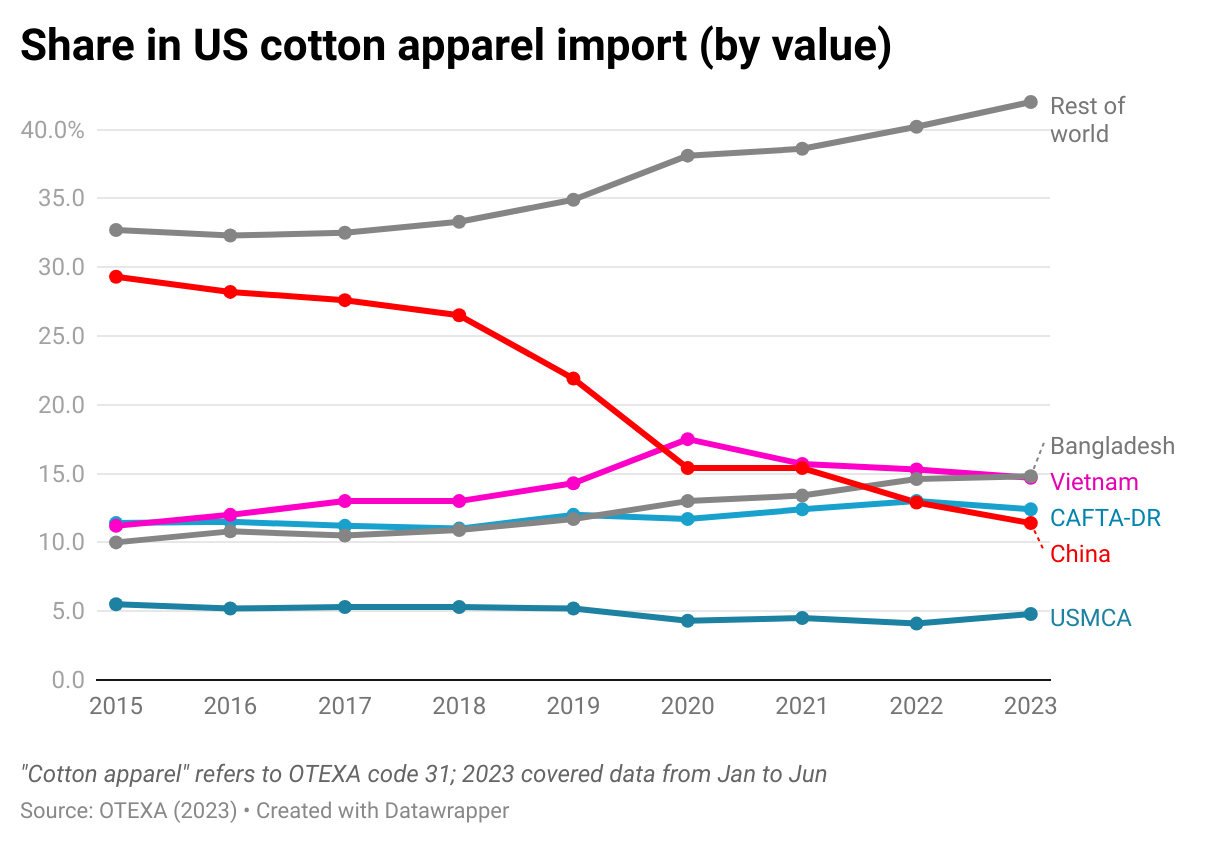
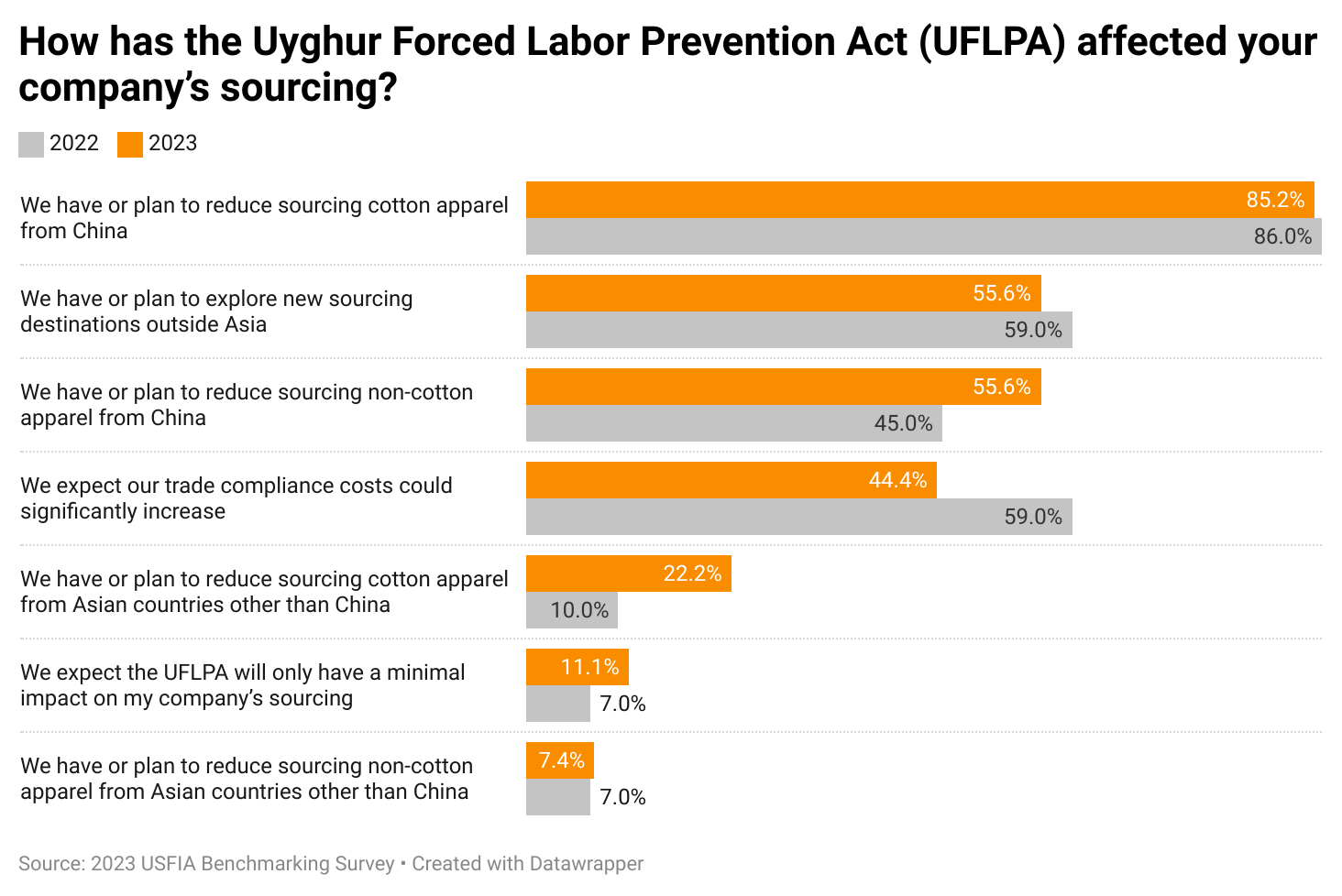
Discussion questions: What factors contribute to the complexity of eliminating banned Xinjiang cotton from the apparel supply chain? How can the current efforts be enhanced to better address the situation and by whom? Feel free to share any other reflections on the video and the graphs.
#1 What are the examples of globalization in the above two videos about Temu?
#2 Based on the videos, who are the winners and losers of globalization and why?
#3 What role does international trade play in Temu’s business model?
#4 Some suggest ending the “de minimis rule.” Based on the videos, what is your view and recommendation for US policymakers?
#5 Anything you find interesting/surprising/intriguing in the video and why?
(Note: Anyone is welcome to join the discussion. For students in FASH455, please address at least two questions. Please mention the question number in your response, but there is no need to repeat the question).
Note: About “de minimis rule.”: Under US customs law, specifically the Trade Facilitation and Trade Enforcement Act of 2015, import duties are generally waived for goods valued at $800 or less per person per day. Therefore, Temu’s shipping from China to US consumers is likely to be eligible for the benefits.
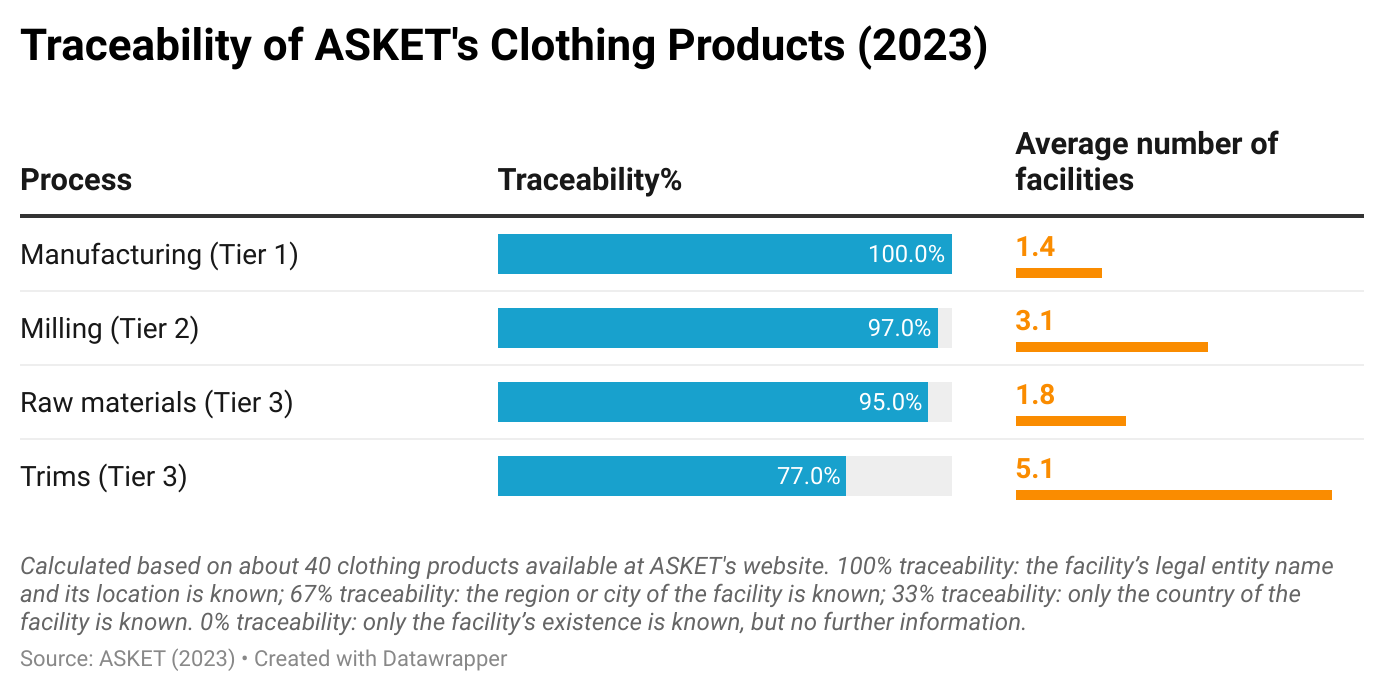
ASKET is a prominent online retailer based in Sweden that commits to complete supply chain transparency. Based on analyzing nearly 40 unique products and their detailed supply chain information posted on ASKET’s website as of May 2023, the article aims to shed light on the company’s supply chain traceability progress and the remaining challenges it faces.
First, while ASKET achieved full traceability for Tier 1 suppliers, tracking Tier 2 and Tier 3 suppliers was more difficult. For example, compared with its perfect traceability score for Tier 1 suppliers (i.e., garment factories), ASKET’s average traceability for Tier 2 Milling factories (i.e., yarn and fabric producers) was at around 97%, and the score fell to only 77% for trims suppliers in Tier 3.
As one critical contributing factor to the phenomenon, Tier 2 and Tier 3 suppliers had far more players than Tier 1, which presented a more significant challenge inobtaining detailed information about all the factories involved. For example, ASKET’s garment cutting and sewing operations predominantly occurred within a single facility. In contrast, making yarns, fabrics, and trims EACH usually involve multiple facilities in different parts of the world.
Second, a comprehensive understanding of the sub-supply chains associated with apparel components is pivotal in enhancing a fashion company’s overall traceability. Notably, the apparel supply chain is far more complicated than the commonly known four stages—fiber, yarn, fabric, and garment manufacturing. Rather, apparel components like yarns, fabrics, sewing threads, buttons, and zippers have complex and intricate sub-supply chains. For instance, for ASKET’s shirts or polo shirts:
Cotton was “farmed in New Mexico, Arizona, California and Texas, USA, ginned in Anqing, China.”
Yarn was “spun and twisted in Hyderabad, India,” and “dyed in Varese, Italy.”
Fabric was “woven in Letohrad, Czech Republic, dyed and finished in Prato, Italy.”
Sewing thread was “produced in Breisgau, Germany, wound and packed in St. Maria de Palautordera, Spain”
Button was produced in Saccolongon, Italy, with corozo farmed in Manabi, Ecuador.
Third, using recycled textile materials in apparel products could make it trickier to map the supply chain.
ASKET reported no problem tracking recycled textile materials derived from natural fibers, especially recycled wool products.
ASKET’s capability of tracing recycled man-made fiber textiles yielded mixed results. For example, ASKET was still investigating the Tier 3 raw material suppliers for one fabric made with “100% pre-consumer recycled nylon.” Likewise, for one body fabric derived from “plastic waste collected from Spanish Mediterranean and French Atlantic oceans and coastlines,” pinpointing the precise origin of the raw fiber posed a challenge.
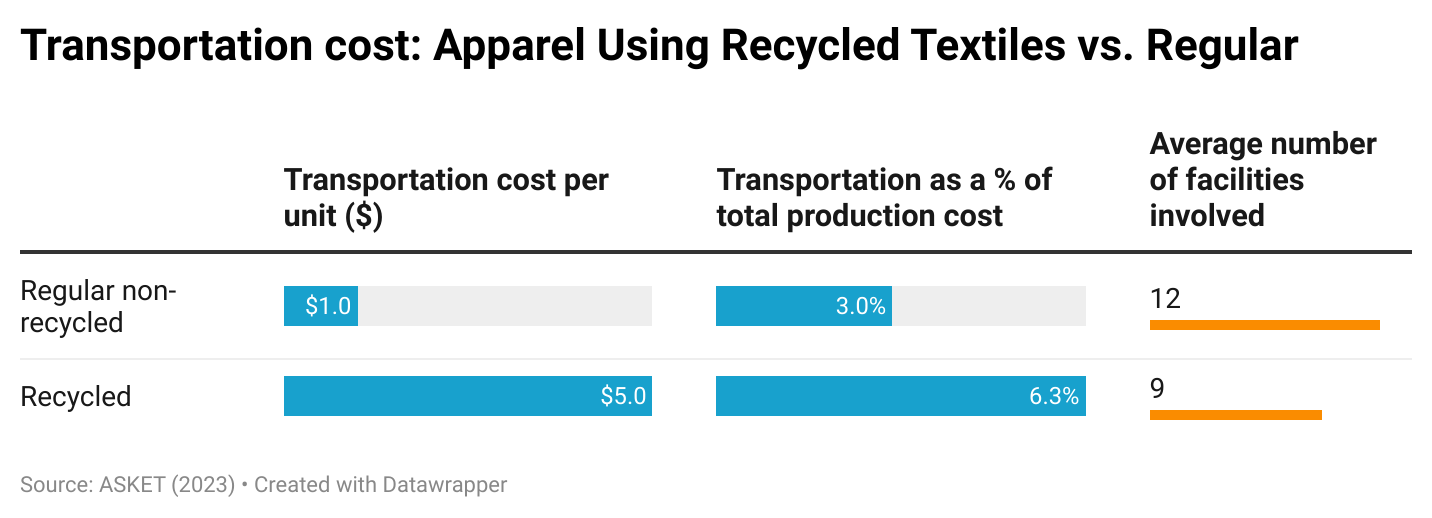
Fourth, ASKET’s data shows that using recycled textiles in apparel products could incur higher transportation costs. For example, the average transportation cost for an ASKET garment using recycled textiles would reach $5 per unit (or 6.3% of the total production costs), much higher than regular clothing using non-recycled materials ($1 per unit or 3% of the total production). However, on average, making a garment using recycled textile materials could involve fewer facilities(e.g., 9 vs. 12). This result suggests that the higher transportation cost associated with clothing made from recycled textiles may not be attributed to a longer supply chain but rather to a more tedious and expensive recycled fiber collection process.
Additionally, ASKET’s data indicates a strong correlation between its retail price and sourcing costs. Specifically, ASKET’s applied a gross margin% ranging from 71%–81%. This implies that a $2 increase in sourcing costs could potentially lead to a retail price increase of $10-$20. Thus, controlling and managing sourcing costs will always be a priority for a fashion company.
Background: What sets Shein and Temu’s sourcing strategies apart from other US fashion brands?
Leading US fashion companies have increasingly turned to sourcing diversification to reduce supply chain risks and market uncertainties. For example, industry surveys and firm-level analyses consistently found that prominent US fashion brands and retailers typically source from more than 10-20 countries. Notably, “reducing China exposure” is a growing trend among US fashion companies, given the concerns about the rising US-China trade tensions and geopolitics.
Instead, Temu and Shein are notable for their reliance on Chinese suppliers, with Temu primarily shipping products directly from China rather than US-based distribution centers. This business model may be explained by two factors.
One is to leverage China’s strengths in making apparel products with greater varieties and smaller quantities. In other words, while countries like Bangladesh and Cambodia may be better suited for sourcing large orders, “Made in China” can remain overall price competitive for a wide range of products requiring a smaller minimum order quantity. In this way, China can offer greater flexibility to Temu, which intends to manufacture various products while controlling costs.
Another possible reason is to take advantage of the “de minimis rule.” Under US customs law, specifically the Trade Facilitation and Trade Enforcement Act of 2015, import duties are generally waived for goods with a value of $800 or less per person per day. Therefore, Temu’s shipping from China to US consumers is likely to be eligible for the benefits.
Discussion question: What shall we do about Shein?
In March 2023, the Office of the United States Trade Representative (USTR) released its 2024 Fiscal Year Budget report, outlining six major goals and objectives for FY2024. USTR’s FY2024 goals and objectives for textile and apparel are similar to FY2023, but keywords such as “near-shoring” are newly emphasized.
Goal 1: Open Foreign Markets and Combat Unfair Trade
Provide policy guidance and support for international negotiations or initiatives affecting the textile and apparel sector to ensure that the interests of U.S. industry and workers are taken into account and, where possible, to provide new or enhanced export opportunities for U.S. industry. (Note: no change from FY2023)
Conduct reviews of commercial availability petitions regarding textile and apparel products and negotiate corresponding FTA rules of origin changes, where appropriate, in a manner that takes into account market conditions while preserving export opportunities for U.S. producers and employment opportunities for U.S. workers. (Note: no change from FY2023)
Engage relevant trade partners to address regulatory issues potentially affecting the U.S. textile and apparel industry’s market access opportunities. (Note: no change from FY2023)
Continue to engage with CAFTA-DR partner countries to address trade-related issues to optimize inclusive economic opportunities; strengthen trade rules and transparency and address non-tariff trade impediments; provide capacity building in areas such as textile and apparel trade-related regulation and practice on customs, border and market access issues, including agricultural and sanitary and phytosanitary regulations, to avoid barriers to trade. (note: newly mentioned “transparency”)
Continue to engage CAFTA-DR partners and stakeholders to identify and develop means to increase two-way trade in textiles and apparel and strengthen the North American supply chain and near-shoring to enhance formal job creation. (note: newly emphasized “Near-shoring”)
Provide policy guidance and support for international negotiations or initiatives affecting the textile and apparel sector to ensure that the interests of U.S. industry and workers are taken into account and, where possible, to provide new or enhanced export opportunities for U.S. industry. (Note: no change from FY2023)
Conduct reviews of commercial availability petitions regarding textile and apparel products and negotiate corresponding FTA rules of origin changes, where appropriate, in a manner that takes into account market conditions while preserving export opportunities for U.S. producers and employment opportunities for U.S. workers (note: no change from FY2023)
Engage relevant trade partners to address regulatory issues potentially affecting the U.S. textile and apparel industry’s market access opportunities. (note: no change from FY2023)
Goal 2: Fully Enforce U.S. Trade Laws, Monitor Compliance with Agreements, and Use All Available Tools to Hold Other Countries Accountable
Closely collaborate with industry and other offices and Departments to monitor trade actions taken by partner countries on textiles and apparel to ensure that such actions are consistent with trade agreement obligations and do not impede U.S. export opportunities. (note: no change from FY2023)
Research and monitor policy support measures for the textile sector, in particular in the PRC, India, and other large textile producing and exporting countries, to ensure compliance with international agreements. (note: no change from FY2023)
Continue to work with the U.S. textile and apparel industry to promote exports and other opportunities under our free trade agreements and preference programs, by actively engaging with stakeholders and industry associations and participating, as appropriate, in industry trade shows. (note: no change from FY2023)
Goal 4: Develop Equitable Trade Policy Through Inclusive Processes
Take the lead in providing policy advice and assistance in support of any Congressional initiatives to reform or re-examine preference programs that have an impact on the textile and apparel sector. (note: no change from FY2023)
Other Priorities for USTR in FY2024:
#1 “Advancing a Worker-Centered Trade Policy.” For example, given “communities of color and lower socio-economic backgrounds were more negatively affected by free trade policies that have reduced tariffs and distributed supply chains across the globe,” USTR will develop “a new strategic approach to trade relationships that is not built on traditional free trade agreements…USTR is embarking on trade engagements with allies and like-minded economies, like Taiwan and Kenya and [through] multinational economic frameworks that focus on clean energy and supply chains rather than tariffs.”
#2 Address forced labor. For example, USTR developed the first-ever focused trade strategy to combat forced labor. Paired with the implementation of the Uyghur Forced Labor Prevention Act, and the Memorandum of Cooperation (MOC) launching of a Task Force on the Promotion of Human Rights and International Labor Standards in Supply Chains under the U.S.-Japan Partnership on Trade. And USTR will “use every tool available to block the importation of goods made partially or entirely with forced labor.”
#3 Re-Aligning the U.S. – Beijing Trade Relationship. “USTR continues to keep the door open to conversations with the PRC, including on its Phase One commitments. However, USTR acknowledges the Agreement’s limitations. USTR’s strategy is expand beyond only pressing Beijing for change and includes vigorously defending our values and economic interests from the negative impacts of the PRC’s unfair economic policies and practices.”
#4 Strengthen enforcement of US trade policy. For example, USTR sees enforcement “a key component of our worker-centered trade policy.” USTR is “upholding the eligibility requirements in preference programs,” such as the African Growth and Opportunity Act (AGOA). As many enforcement tools were “were crafted decades ago,” USTR will be “reviewing our existing trade tools and working with Congress to develop new tools as needed.”
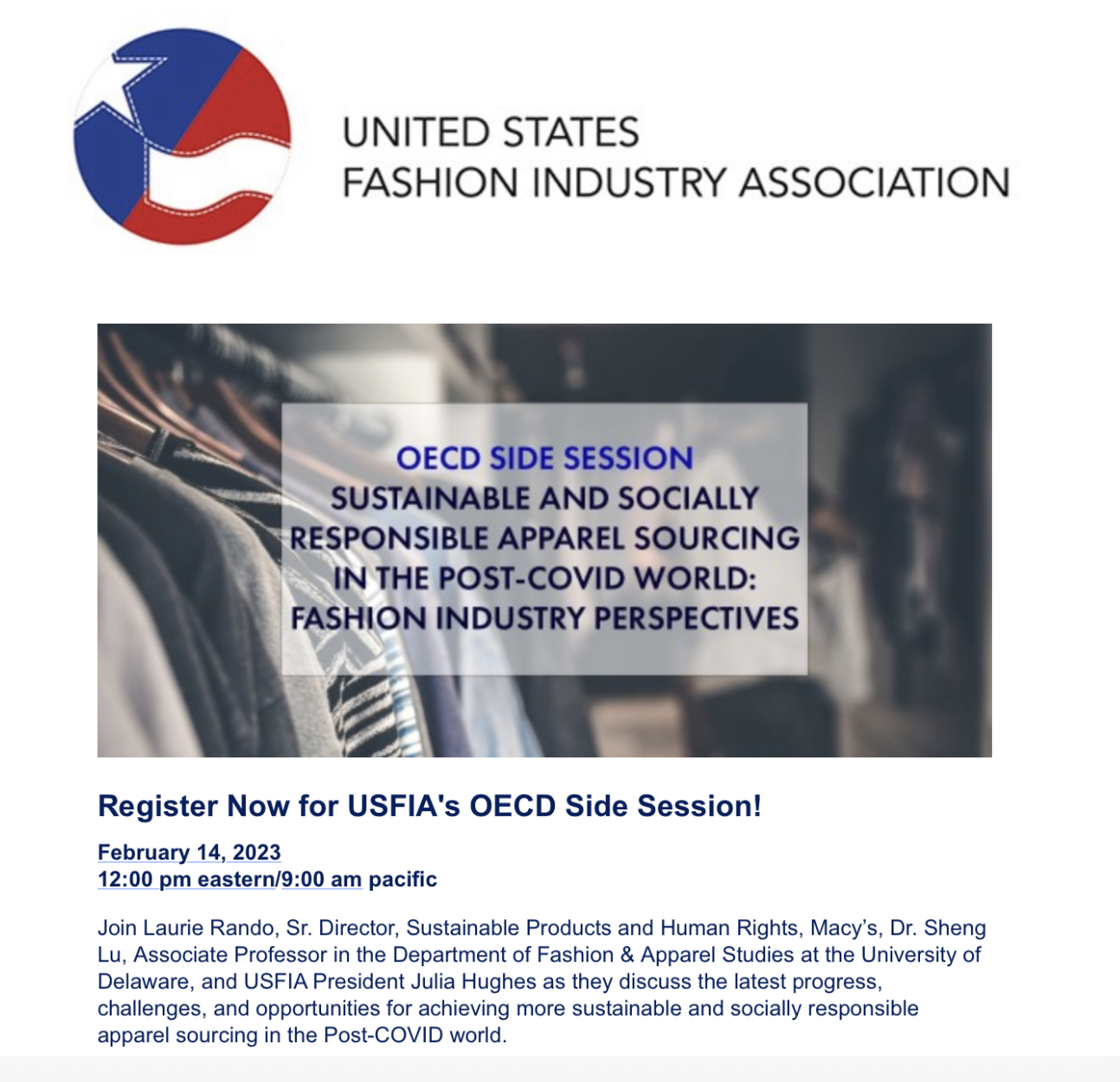
The session intends to facilitate constructive dialogue regarding the latest progress, challenges, and opportunities for achieving more sustainable and socially responsible apparel sourcing in the Post-COVID world. The session will offer a unique opportunity to hear directly from leading fashion brands and retailers regarding 1) fashion companies’ latest sourcing practices against the evolving business environment and their impacts on due diligence; 2) fashion companies’ new efforts and innovative projects to achieve more sustainable and socially responsible apparel sourcing; 3) opportunities and challenges to further improve sustainability and social responsibility in apparel sourcing in the post-COVID world. In addition, the session will be highly relevant and informative to all stakeholders in the fashion apparel business community, civil society, international organizations, academia, and policymakers.
This study aims to understand western fashion brands and retailers’ latest China apparel sourcing strategies against the evolving business environment. We conducted a content analysis of about 30 leading fashion companies’ public corporate filings (i.e., annual or quarterly financial reports and earnings call transcripts) submitted from June 1, 2022 to December 31, 2022.
The results suggest several themes:
First, China remains one of the most frequently used apparel sourcing destinations. For example:
Express says, “The top five countries from which we sourced our merchandise in 2021 were Vietnam, China, Indonesia, Bangladesh and the Philippines, based on total cost of merchandise purchased.”
According to TJX, “a significant amount of merchandise we offer for sale is made in China.”
Children’s Place says, “We source from a diversified network of vendors, purchasing primarily from Vietnam, Cambodia, Indonesia, Ethiopia, Bangladesh, and China.“
Ralph Lauren adds, “In Fiscal 2022, approximately 97% of our products (by dollar value) were produced outside of the US, primarily in Asia, Europe, and Latin America, with approximately 19% of our products sourced from China and another 19% from Vietnam.
However, many fashion companies have significantly cut their apparel sourcing volume from China. More often, China is no longer the No.1 apparel sourcing destination, overtaken by China’s competitors in Asia, such as Vietnam.
According to Lululemon, “During 2021, approximately 40% of our products were manufactured in Vietnam, 17% in Cambodia, 11% in Sri Lanka, 7% in China (PRC), including 2% in Taiwan, and the remainder in other regions… From a sourcing perspective, when looking at finished goods for the upcoming 2022 fall season, Mainland China represents only 4% to 6% of our total unit volume.”
Levi’s says, “The good thing about our supply chain is we’ve got truly a global footprint. We don’t manufacture a whole lot in China anymore. We’ve been slowly divesting manufacturing out of China, if you will, and kind of playing our chips elsewhere on the global map… Less than 1% of what we’re bringing into this country, into the US, less than 1% of it is coming from China.”
Adidas says, “In 2021, we sourced 91% of the total apparel volume from Asia (2020: 93%). Cambodia is the largest sourcing country, representing 21% of the produced volume (2020: 22%), followed by China with 20% (2020: 20%) and Vietnam with 15% (2020: 21%).”
Victoria’s Secret says, “On China, China is a single-digit percentage of our total inflow of merchandise. We’re not particularly dependent on China at all.”
Nike: “As of May 31, 2022, we were supplied by 279 finished goods apparel contract factories located in 33 countries. For fiscal 2022, contract factories in Vietnam, China and Cambodia manufactured approximately 26%, 20% and 16% of total NIKE Brand apparel, respectively“
Meanwhile, fashion companies still heavily use China as a sourcing base for textile raw materials (such as fabrics). For example:
Columbia Sportswear says it sources most of its finished products from Vietnam, but “a large portion of the raw materials used in our products is sourced by our contract manufacturers in China.”
Likewise, Puma says, “90% of our recycled polyester comes from Vietnam, China, Taiwan (China) and Korea.”
Guess says, “During fiscal 2022, we sourced most of our finished products with partners and suppliers outside the U.S. and we continued to design and purchase fabrics globally, with most coming from China.”
Lulumemon says, “Approximately 48% of the fabric used in our products originated from Taiwan, 19% from China Mainland, 11% from Sri Lanka, and the remainder from other regions.”
Second, Western fashion companies unanimously ranked the COVID situation as one of their top concerns for China. Many companies reported significant sales revenue and profits loss due to China’s draconian “zero-COVID” policy and lockdown measures. For example,
Tapestry says, “For Greater China, sales declined 11% due to lockdowns and business disruption… as a result, we have tempered our fiscal year 2023 outlook based on the expectation for a delayed recovery in China.”
Adidas says, “With Great China… we continue to see several market-specific challenges that are affecting our entire industry. The strict zero COVID-19 policy with nationwide restrictions remains in place amid more than 2000 daily new COVID-19 cases in November. As a consequence, offline traffic is subdued due to the imminent risk of new lockdowns.
Under Armour says, “Ongoing impacts of the COVID-19 pandemic and related preventative and protective actions in China…have negatively impacted consumer traffic and demand and may continue to negatively impact our financial results.”
VF Corporation says, “The performance in Greater China…continues to be impacted by widespread rolling COVID lockdowns and restrictions as well as lower consumer spending.”
Puma says, “COVID-19-related restrictions are still impacting business in Greater China, and higher freight rates and raw material prices continue to put pressure on margins.”
Notably, despite China’s most recent COVID policy U-turn, most fashion companies expect market uncertainties to stay in China, at least in the short run, given the surging COVID cases and policy unpredictability. For example:
PVH says, “While we remain optimistic about our business in China, it continues to be a challenging environment as restrictions have once again intensified in the fourth quarter of 2022.”
Nike says, “So we’ve taken a very cautious approach in our guidance to China, given the short-term uncertainties that are there.”
Abercrombie & Fitch also listed China’s COVID situation as one of their top risk factors, “risks and uncertainty related to the ongoing COVID-19 pandemic, including lockdowns in China, and any other adverse public health developments.”
Third, fashion companies report the negative impacts of US-China trade tensions on their businesses. Also, as the US-China relationship sours, fashion bands and retailers have been actively watching the potential effect of geopolitics. For example,
Express says, “recent geopolitical conditions, including impacts from the ongoing conflict between Russia and Ukraine and increased tensions between China and Taiwan, have all contributed to disruptions and rising costs to global supply chains.”
When assessing the market risk factors, Chico’s FAS says, “our reliance on sourcing from foreign suppliers and significant adverse economic, labor, political or other shifts (including adverse changes in tariffs, taxes or other import regulations, particularly with respect to China, or legislation prohibiting certain imports from China)”
Adidas holds the same view, “In addition, the challenging market environment in China had an adverse impact on the company’s business activities… Additional challenges included the geopolitical situation in China and extended lockdown measures.”
Macy’s adds, “At this time, it is unknown how long US tariffs on Chinese goods will remain in effect or whether additional tariffs will be imposed. Depending upon their duration and implementation, as well as our ability to mitigate their impact, these changes in foreign trade policy and any recently enacted, proposed and future tariffs on products imported by us from China could negatively impact our business, results of operations and liquidity if they seriously disrupt the movement of products through our supply chain or increase their cost.”
Gap Inc. says, “Trade matters may disrupt our supply chain. For example, the current political landscape, including with respect to U.S.-China relations, and recent tariffs and bans imposed by the United States and other countries (such as the Uyghur Forced Labor Prevention Act) has introduced greater uncertainty with respect to future tax and trade regulations.”
QVC says, “The imposition of any new US tariffs or other restrictions on Chinese imports or the taking of other actions against China in the future, and any responses by China, could impair our ability to meet customer demand and could result in lost sales or an increase in our cost of merchandise, which would have a material adverse impact on our business and results of operations.”
Additionally,NO evidence shows that fashion companies are decoupling with China. Instead, Western fashion companies, especially those with a global presence, still hold an optimistic view of China as a long-term business opportunity. For example:
Inditex, which owns Zara, says, “we remain absolutely confident about our opportunities there (in China) in the medium to long term. Fashion demand continues to be strong in China. For sure it will remain a core market for us for Inditex.”
Ralph Lauren says, “China provides not only the successful blueprint for our elevated ecosystem strategy globally, it also represents one of several geographic long-term opportunities for our brand…We continue to see near and long term brand opportunities in China.”
Lululemon says, “On China, we remain very excited…we remain very, very excited about the potential and the role that will play in quadrupling our international business with Mainland China.”
Nike says, “We have remained committed to investing in Greater China for the long term.”
Adidas says, “On China, clearly, we believe in as a midterm opportunity in China… And then when the market opens up (from COVID), we believe, the western brand is well-positioned in China again, and we can start growing significant in China again.”
Meanwhile, Western fashion companies plan to make more efforts to localize their product offer and cater to the specific needs of Chinese consumers, especially the young generation. The “Made in China for China” strategy could become more popular among Western fashion companies. For example,
PVH says, “So, I think in general, our production in China is heavily oriented to China for China production. I think for us generally speaking, the biggest impact of the shutdowns that we’ve seen across Shanghai and Beijing has really been focused on the impact to our China market.”
Likewise, Levi’s says, “We’re manufacturing somewhere in the neighborhood of 5% of our global production is in China, and most of it staying in China.“
Hanesbrands says, “we’re committed to opening new stores, and that’s continues to go well, despite, the challenges that are there. Looking specifically at Champion, we continued our expansion in China adding new stores in the quarter through our partners.”
H&M says, “we still see China as an important market for us.”
According to Hugo Boss, “Thanks to overall robust local demand, revenues in China in 2021 grew 24% as compared to 2019.”
VF Corporation adds, “China is a significant opportunity…(We are) really pushing decision-making into the regions and providing more and more latitude for local-for-local decision-makings around product, around storytelling, certainly staying within the confines or the framework of the brand strategy, but really giving more freedom and more empowerment to the regions.”
This article provided a comprehensive review of the world textiles and clothing trade patterns in 2021 based on the newly released data from the World Trade Statistical Review 2022 and the United Nations (UNComtrade). Affected by the ongoing pandemic and companies’ evolving production and sourcing strategies in response to the shifting business environment, the world textiles and clothing trade patterns in 2021 included both continuities and new trends. Specifically:
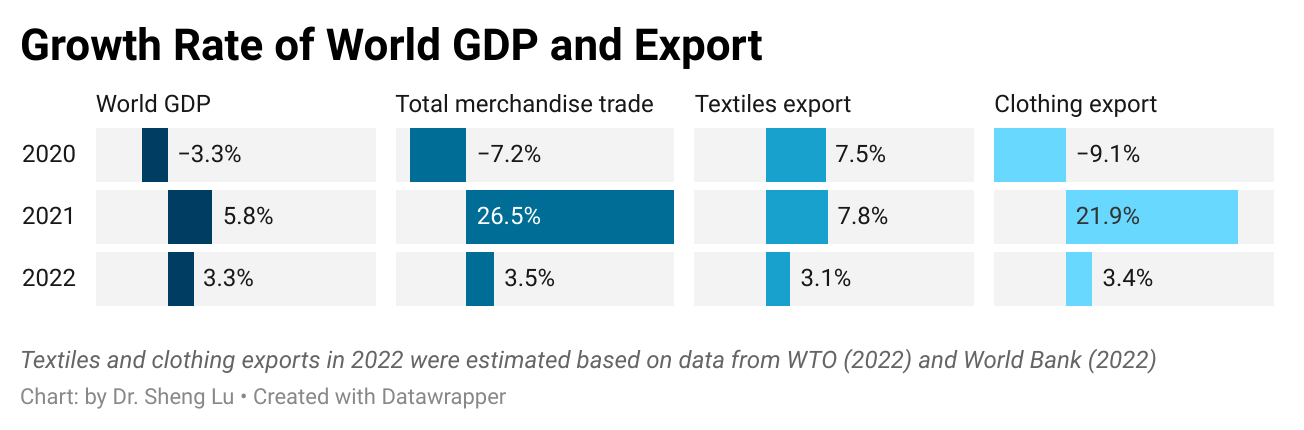
Pattern #1: As the world economy recovered from COVID, the world clothing export boomed in 2021, while the world textile exports grew much slower due to a high trade volume the year before. Specifically, thanks to consumers’ strong demand, world clothing exports in 2021 fully bounced back to the pre-COVID level and exceeded $548.8bn, a substantial increase of 21.9% from 2020. The apparel sector is not alone. With economic activities mostly resumed, the world merchandise trade in 2021 also jumped 26.5% from a year ago, the fastest growth in decades.
In comparison, the value of world textiles exports grew slower at 7.8% in 2021 (i.e., reached $354.2bn), lagging behind most sectors. However, such a pattern was understandable as the textile trade maintained a high level in 2020, driven by high demand for personal protective equipment (PPE) during the pandemic.
Nevertheless, the world textiles and clothing trade could face strong headwinds down the road due to a slowing world economy and consumers’ weakened demand. Notably, amid hiking inflation, high energy costs, and retrenchment of global supply chains, leading international economic agencies, from the World Bank to the International Monetary Fund (IMF), unanimously predict a slowing economy worldwide. Likewise, the World Trade Organization (WTO) forecasts that the growth of world merchandise trade will be cut to 3.5% in 2022 and down further to only 1% in 2023. As a result, the world textiles and clothing trade will likely struggle with stagnant growth or a modest decline over the next two years.
Pattern #2: COVID did NOT fundamentally shift the competitive landscape of textile exports but affected the export product structure. Meanwhile, some long-term structural changes in world textile exports continued in 2021.
Specifically, China, the European Union (EU), and India remained the world’s three largest textile exporters in 2021, a pattern that has stayed stable for over a decade. Together, these top three accounted for 68% of the world’s textile exports in 2021, similar to 66.9% before the pandemic (2018-2019). Other textile exporters that made it to the top ten list in 2021 were also the same as a year ago and before the pandemic (2018-2019).
Meanwhile, the growth rate of the top ten textile exporters varied significantly in 2021, ranging from -5.5% (China) to 47.8% (India). The demand shift from PPE to apparel-related yarns and fabrics was a critical contributing factor behind the phenomenon. For example, China’s PPE-related textile exports decreased by more than $33bn (or down 43%) in 2021. In contrast, the world knit fabric exports (SITC code 655) surged by more than 30% in 2021, led by India (up 74%) and Pakistan (up 72%). Nevertheless, as consumers’ lifestyles almost reached a “new normal,” we could expect the textile export product structure to stabilize soon.
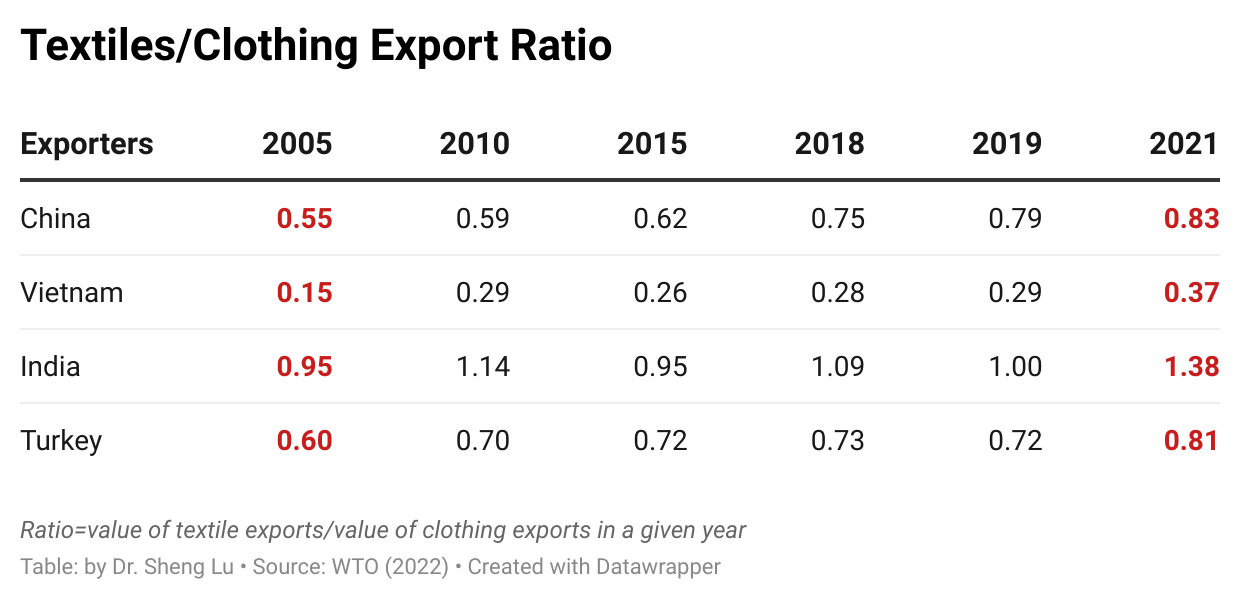
On the other hand, as a trend already emerged before the pandemic, middle-income developing countries continued to play a more significant role in textile exports, whereas developed countries lost market shares. For example, the United States, Germany, and Italy led the world’s textile exports in the 2000s, accounting for more than 20% of the market shares. However, these three countries’ shares fell to 12.8% in 2019 and hit a new low of 11.3% in 2021. In comparison, middle-income developing countries like China, Vietnam, Turkey, and India have entered the development stage of expanding textile manufacturing. As a result, their market share in the world’s textile exports rose steadily. These countries also achieved a more balanced textiles/clothing export ratio over the years, meaning more textile raw materials like yarns and fabrics can be locally produced instead of relying on imports. For example, Vietnam, known for its competitive clothing products, achieved a new high of $11.5bn in textile exports in 2021 and ranked sixth globally. Vietnam’s textiles/clothing ratio also doubled from 0.15 in 2005 to 0.37 in 2021. It is not unlikely that Vietnam’s textile exports may surpass the United States over the next few years.
Pattern #3: Countries with large-scale production capacity stood out in world clothing exports in 2021. Meanwhile, clothing exporters compete to become China’s alternatives, but there seems to be no clear winner yet.
Consumers’ surging demand and COVID-related supply chain disruptions significantly impacted the world’s clothing export patterns in 2021. As fashion brands and retailers were eager to find sourcing capacity, countries with large-scale production capacity and relatively stable supply enjoyed the fastest growth in clothing exports. For example, except for Vietnam, which suffered several months of COVID lockdowns, all other top five clothing exporters enjoyed a more than 20% growth of their exports in 2021, such as China (up 24%), Bangladesh (up 30%), Turkey (up 22%), and India (up 24%).
As another critical trend, many international fashion brands and retailers have been trying to reduce their apparel sourcing from China, driven by various economic and non-economic factors, from cost considerations and trade tensions to geopolitics. Notably, despite its strong performance in 2021, China accounted for only 23.1% of US apparel imports in 2022 (January to September), much lower than 36.2% in 2015. Likewise, China’s market shares in the EU, Japanese, and Canadian clothing import markets also fell over the same period, suggesting this was a worldwide phenomenon.
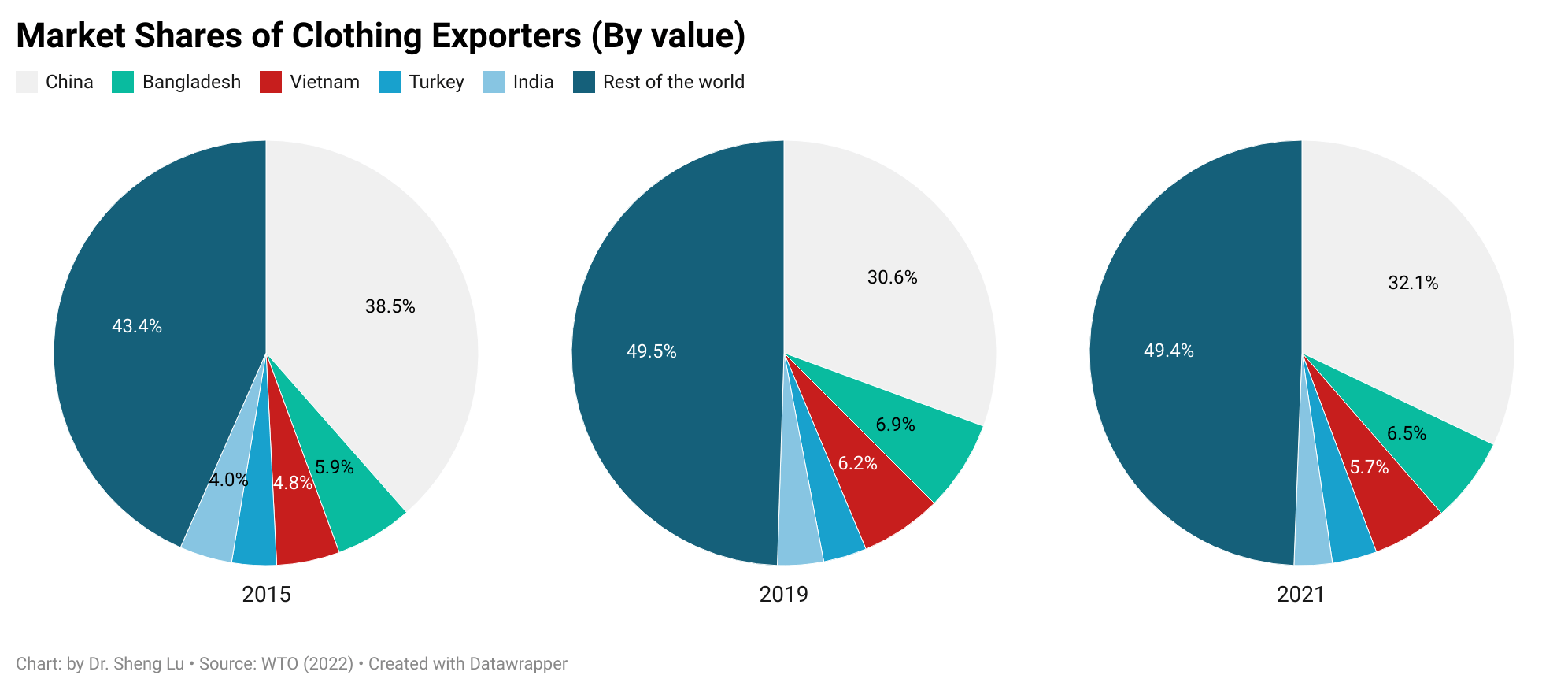
With reduced apparel sourcing from China, fashion companies have actively sought alternative sourcing destinations, but the latest trade data suggests no clear winner yet. For example, Vietnam and Bangladesh, the two most popular candidates for “Next China,” accounted for 6.5% and 5.7% shares in the world’s clothing export in 2021, still far behind China (32.1%). Interestingly, from 2015 to 2021, the world’s top four largest clothing exporters next to China (i.e., Bangladesh, Vietnam, Turkey, and India) did not substantially gain new market shares. Instead, China’s lost market was filled by “the rest of the world.”
Additionally, recent studies show that many fashion companies have switched back to the sourcing diversification strategy in 2022 as managing risks and improving sourcing flexibility become more urgent priorities. In other words, the world’s clothing export market could turn more “crowded” and competitive in the coming years.
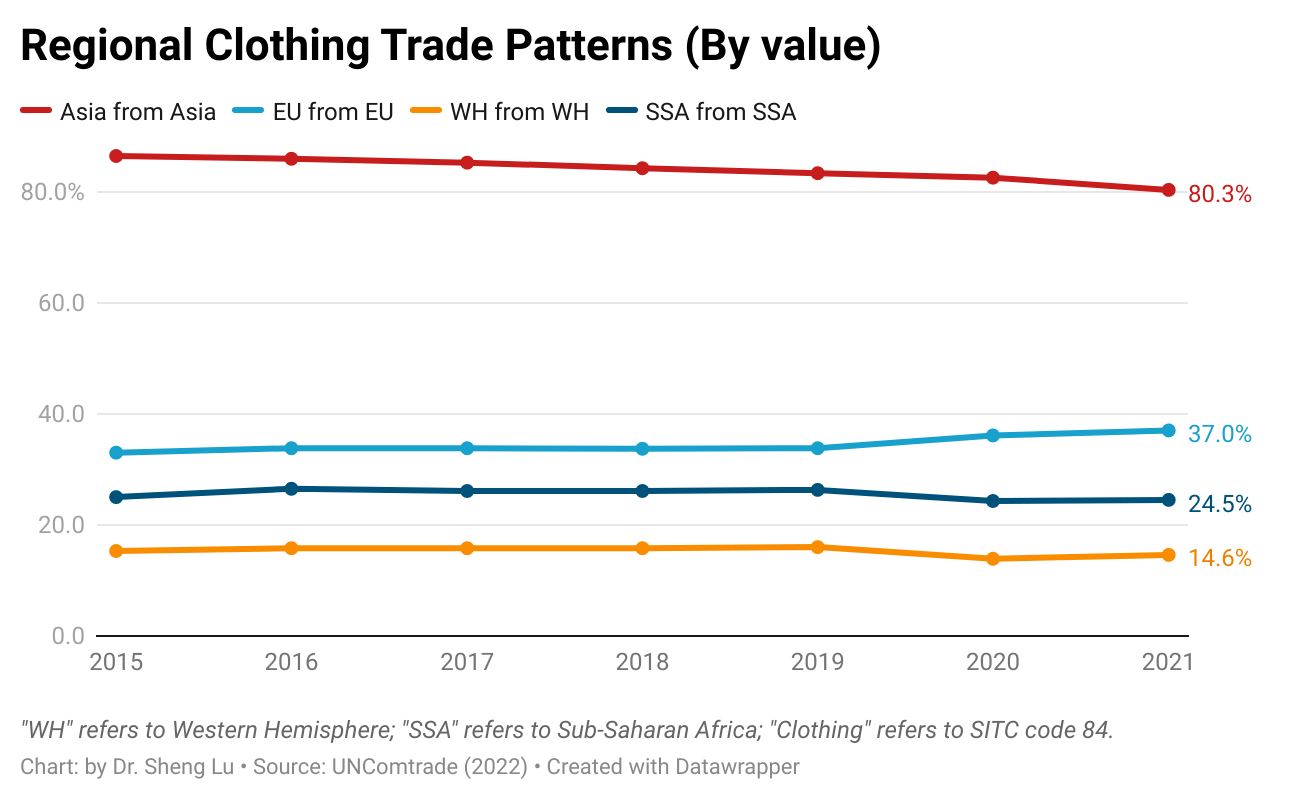
Pattern #4: Regional supply chains remain critical features of the world textiles and clothing trade. Several factors support and shape the regional textiles and clothing trade patterns. First, as clothing production often needs to be close to where textile materials are available, many developing clothing-producing countries rely heavily on imported textile materials, primarily from more advanced economies in the same region. Second, through lowered trade barriers, regional free trade agreements also financially encouraged garment producers, particularly in Asia, the EU, and Western Hemisphere (WH), to use locally or regionally made textile materials. Further, fashion companies’ interest in “near-shoring” supported the regional supply chain, and related textiles and clothing trade flows between neighboring countries.
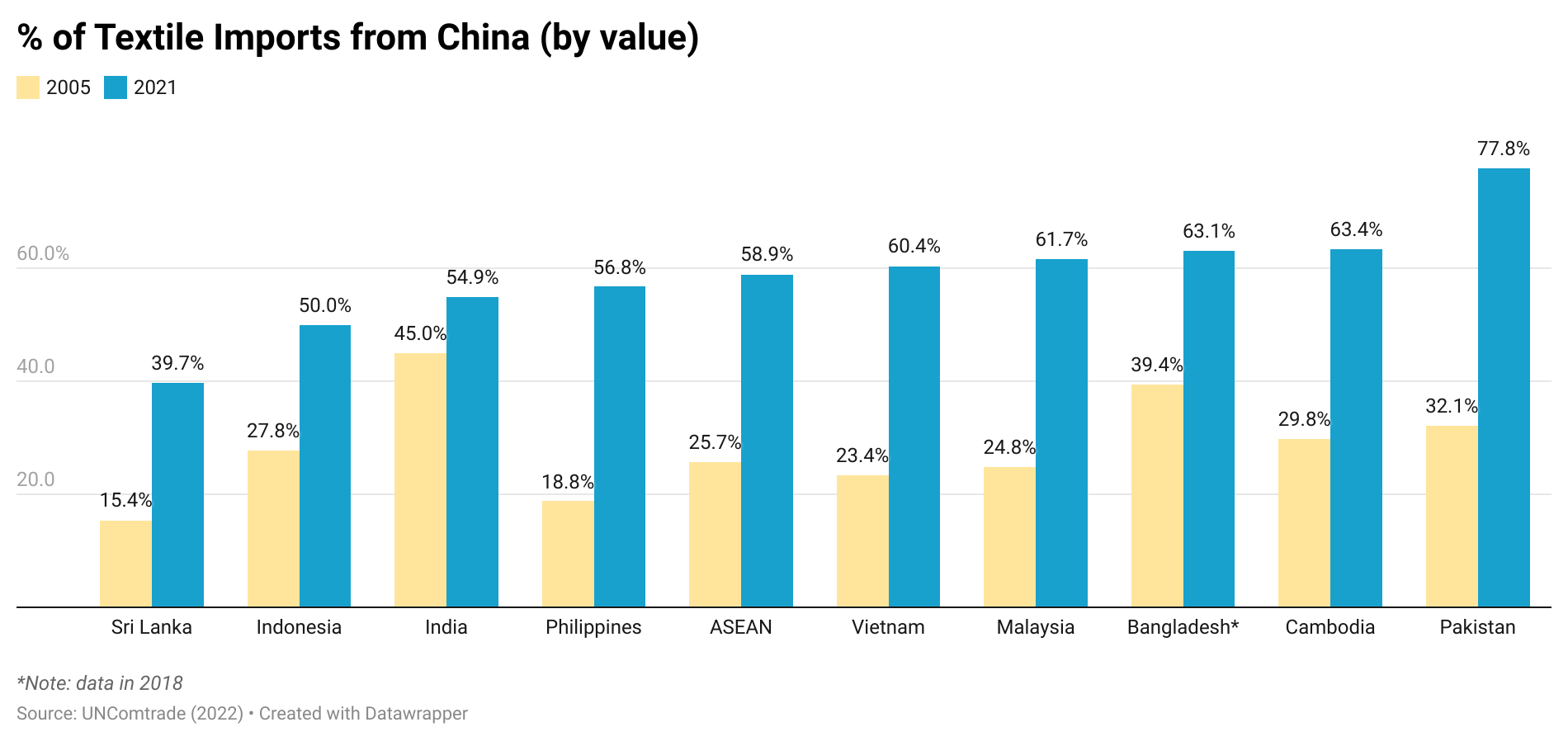
The latest trade data indicated that Asia’s regional textiles and clothing trade patterns strengthened further despite supply chain chaos during the pandemic. Specifically, in 2021, as many as 82% of Asian countries’ textile imports came from within Asia, up from 80% in 2015. China, in particular, has played a more prominent role as a leading textile supplier for other Asian clothing-exporting countries. For example, more than 60% of Vietnam’s textile imports came from China in 2021, a substantial increase from 23% in 2005. The same pattern applied to Pakistan, Cambodia, Bangladesh, and the Association of Southeast Asian Nations (ASEAN) members.
In January 2022, the Regional Comprehensive Economic Partnership (RCEP), a mega free trade agreement involving all major economies in Asia, entered into force. The tariff cut and very liberal rules of origin of the agreement will hopefully drive Asia’s booming regional textiles and clothing trade and further deepen its regional economic integration.
Besides Asia, the regional textiles and clothing trade pattern in the EU (or the so-called Intra-EU trade) was also in good shape. In 2021, 50.8% of EU countries’ textile imports and 37% of clothing imports came from other EU members. This pattern has changed little over the past decade, thanks to many EU countries’ commitment to maintaining local textiles and clothing production rather than outsourcing.
In comparison, the Western Hemisphere (WH) textile and apparel supply chain (e.g., clothing made in Mexico or Central America using US or regionally made textiles) seemed to struggle in recent years. As of 2021, only 20% of WH countries’ textile imports came from within WH, down from 26% in 2015. Likewise, WH countries (mainly the US and Canada) just imported 14.6% of clothing from WH in 2021, down from 15.3% in 2015 and much lower than their EU counterparts (37% in 2021). It will be interesting to see whether US and Canadian fashion companies’ expressed interest in expanding near-shoring may reverse the course.
Furthermore, the regional textiles and clothing trade patterns in Sub-Saharan Africa (SSA) are also worth watching. Compared with Asia and the EU, SSA clothing producers used much fewer locally-made textiles (i.e., stagnant at around 11% only from 2011 to 2021), reflecting the region’s lack of textile manufacturing capability. Most trade programs with SSA countries, such as the US-led African Growth and Opportunity Act (AGOA) and EU’s Everything But Arms (EBA) program, adopt liberal rules of origin for clothing products, allowing third-party textile input to be used. It can be studied whether such liberal rules of origin somehow disincentivize building SSA’s own textile manufacturing sector or are still essential given the reality of SSA’s limited textile production capacity.
The full interview, conducted by Modaes’ Editor-in-Chief, Iria P. Gestal, is available HERE (in Spanish). Below is an abridged translation.
Question: Fashion brands have reduced their exposure to China markedly in recent years. What has been the turning point?
Sheng: We could interpret fashion companies’ decisions in the context of their overall sourcing diversification strategy. Many companies want to diversify their sourcing base because of the ever-uncertain business environment, ranging from the continuation of the supply chain disruptions, and the Russia-Ukraine war, to the rising geopolitical tensions. As China is one of the largest sourcing bases for many fashion companies, reducing “China exposure” is unavoidable.
Question: Isn’t there a specific concern about sourcing from China?
Sheng: Definitely! The Uyghur Forced Labor Prevention Act (UFLPA), officially implemented in the summer of 2022, is a big deal. For example, back in 2017, around 30% of US cotton apparel came from China. However, because of the new law and concerns about the risk of forced labor, China’s market shares fell to only 10% as of August 2022. One well-known US brand selling jean products cut their sourcing from China to just 1% of the total.
Question: Is it possible that the apparel sector as a whole reaches that point?
Sheng: Whether we like it or not, it is still unlikely to get rid of China from the supply chain entirely in the short to medium terms. Notably, China continues to play a significant role as a supplier of raw textile materials, particularly for leading apparel-exporting countries in Asia like Vietnam, Bangladesh, and Cambodia. Diversifying textile raw materials sourcing will be a longer and more complicated process.
Question: Is the “China Plus One” strategy no longer enough?
Sheng: The “China Plus One” strategy does not necessarily mean companies only source from “two” countries. Instead, the phrase refers to companies’ sourcing diversification strategy, trying to avoid “putting all eggs in one basket.” However, neither is the case that fashion companies blindly source from more countries today. Notably, many companies attempt to leverage a stronger relationship with key vendors to mitigate sourcing risks and achieve more sourcing flexibility and agility. For example, fashion companies increasingly tend to work with the so-called “super vendors,” i.e., those with multiple country presence and vertical manufacturing capabilities.
Question: Some politicians have said that the war in Russia has been the “geopolitical awakening” of Europe. Has the same thing happened in fashion?
Sheng: Indeed! We say fashion is a “global sector” because companies “produce anywhere in the world and SELL anywhere in the world.” However, many fashion brands and retailers have had to leave Russia due to the war and geopolitics. The same could apply to China—for example, China’s zero-COVID policy has posed a dilemma for western fashion companies operating there—whether to stay or leave the country, which used to be regarded as one of the fastest-growing emerging consumer markets. Likewise, more and more fashion companies have chosen to develop “dual supply chains” in response to the geopolitical tensions between China and the West—“made in China for China” and “made elsewhere for the rest of the world/Western market.” However, we must admit that this is not an ideal way to optimize the global supply chain.
Question: Has the apparel sector been “naïve” until now, ignoring these risks?
Sheng: I do not think so. In fact, most fashion companies and their leaders closely watch world affairs. As I recall, some visionary companies started evaluating geopolitics’ supply chain implications last year. Indeed, a peaceful world with few trade barriers is an ideal business environment for fashion companies. Unfortunately, there are too many “black swans” to worry about these days. As another example, “friend-shoring,” meaning only trading with allies or “like-minded” countries, becomes increasingly popular today. This phenomenon is also the result of geopolitics. With the looming of a new cold war (or the winter is already here), fashion companies may need to use imagination and prepare for the “worst scenarios” to come.
Question: Is a textile and apparel supply without China a more expensive one?
Sheng: It depends on how to look at it. The most challenging part of “reducing China exposure” is the textile raw materials. But we could think outside the box. For example, my recent studies show that China is NOT the top supplier of clothing made from recycled textile materials. Instead, fashion companies are more likely to source such products locally from the US or EU, or Africa—like Jordan, Tunisia, and Morocco, because of the unique supply chain composition. In other words, sourcing more clothing made from recycled textile materials may help fashion companies achieve several long-awaited goals, such as diversifying sourcing base, expanding nearshoring, and reducing sourcing costs.
U.S. fashion companies report significant challenges coming from the macro-economy in 2022, particularly inflation and rising cost pressures. However, most respondents still feel optimistic about the next five years.
Respondents rated “increasing production or sourcing costs” and “inflation and outlook of the U.S. economy” as their 1st and 3rd top business challenges in 2022.
As a new record, 100 percent of respondents expect their sourcing costs to increase in 2022, including nearly 40 percent expecting a substantial cost increase from a year ago. Further, almost everything has become more expensive this year, from textile raw materials, shipping, and labor to the costs associated with compliance with trade regulations.
Over 90 percent of respondents expect their sourcing value or volume to grow in 2022, but more modest than last year.
Despite the short-term challenges, most respondents (77 percent) feel optimistic or somewhat optimistic about the next five years. Reflecting companies’ confidence in their businesses, nearly ALL respondents (97 percent) plan to increase hiring over the next five years.
U.S. fashion companies adopt a more diverse sourcing base in response to supply chain disruptions and the need to mitigate growing sourcing risks.
Asia remains the dominant sourcing base for U.S. fashion companies—eight of the top ten most utilized sourcing destinations are Asia-based, led by China, Vietnam, Bangladesh, and India.
More than half of respondents (53 percent) report sourcing apparel from over ten countries in 2022, compared with only 37 percent in 2021.
Reducing “China exposure” is one crucial driver of U.S. fashion companies’ sourcing diversification strategy. One-third of respondents report sourcing less than 10% of their apparel products from China this year. In addition, a new record of 50 percent of respondents sources MORE from Vietnam than China in 2022.
Nearly 40 percent of respondents plan to “source from more countries and work with more suppliers” over the next two years, up from only 17 percent last year.
Managing the risk of forced labor in the supply chain is a top priority for U.S. fashion companies in 2022, especially with the new implementation of the Uyghur Forced Labor Prevention Act (UFLPA).
Over 95 percent of respondents expect UFLPA’s implementation to affect their company’s sourcing. Notably, more than 85 percent of respondents plan to cut their cotton-apparel imports from China, and another 45 percent to further reduce non-cotton apparel imports from the country.
Most respondents (over 92 percent) do NOT plan to reduce apparel sourcing from Asian countries other than China. However, nearly 60 percent of respondents also would “explore new sourcing destinations outside Asia” in response to UFLPA.
Mapping and understanding the supply chain is a critical strategy adopted by U.S. fashion companies to address the forced labor risks in the supply chain. Almost all respondents currently track Tier 1 and 2 suppliers. With the help of new traceability technologies, 53 percent of respondents have started tracking Tier 3 suppliers this year (i.e., those manufacturing yarn, threads, and trimmings), a substantial increase from 25-36 percent in the past.
There is considerable new excitement about increasing apparel sourcing from members of the Dominican Republic-Central America Free Trade Agreement (CAFTA-DR). Respondents also call for more textile raw sourcing flexibility to encourage apparel sourcing from the CAFTA-DR region.
CAFTA-DR plays a more significant role as a sourcing base. About 20 percent of respondents place more than 10% of their sourcing orders from the region, doubling from 2021.
Over the next two years, more than 60 percent of respondents plan to increase apparel sourcing from CAFTA-DR members as part of their sourcing diversification strategy.
CAFTA-DR is critical in promoting U.S. apparel sourcing from the region. Around 80 percent of respondents took advantage of the agreement’s duty-free benefits when sourcing apparel from the region this year, up from 50—60 percent in the past.
Respondents say the exceptions to the “yarn-forward” rules of origin, such as the “short supply” and “cumulation” mechanisms, provide essential flexibility that encourages more apparel sourcing from CAFTA-DR members.
Respondents say improving textile raw material supply is critical to encouraging more U.S. apparel sourcing from CAFTA-DR members. Particularly, “allowing more flexibility in souring fabrics from outside CAFTA-DR” and “improving yarn production capacity and variety within CAFTA-DR” are the top two priorities.
U.S. fashion companies strongly support another ten-year renewal of the African Growth and Opportunity Act (AGOA). Meanwhile, Ethiopia’s loss of AGOA eligibility discourages U.S. apparel sourcing from the ENTIRE AGOA region.
As much as 75 percent of respondents say another ten-year AGOA renewal will encourage more apparel sourcing from the region and making investment commitments.
However, despite the tariff benefits and the liberal rules of origin, respondents express explicit concerns about the region’s lack of competitiveness in speed to market, political instability, and having an integrated regional supply chain.
Ethiopia’s loss of AGOA benefits had a notable negative impact on sourcing from the country AND the entire AGOA region. Notably, no respondent plans to move sourcing orders from Ethiopia to other AGOA beneficiaries.
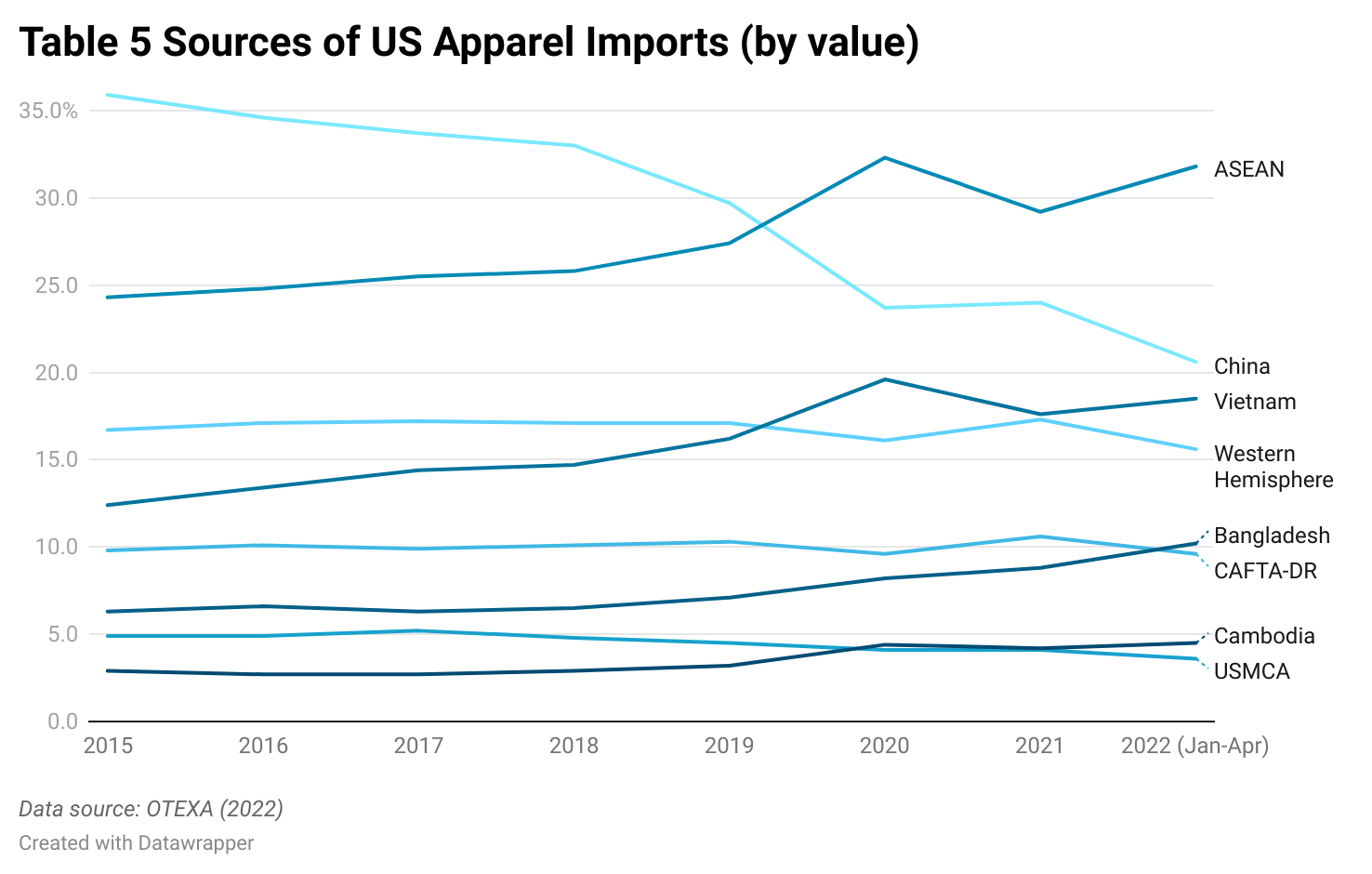
The latest trade data shows that in the first four months of 2022, US apparel imports increased by 40.6% in value and 25.9% in quantity from a year ago. However, the seemingly robust import expansion is shadowed by the rising market uncertainties.
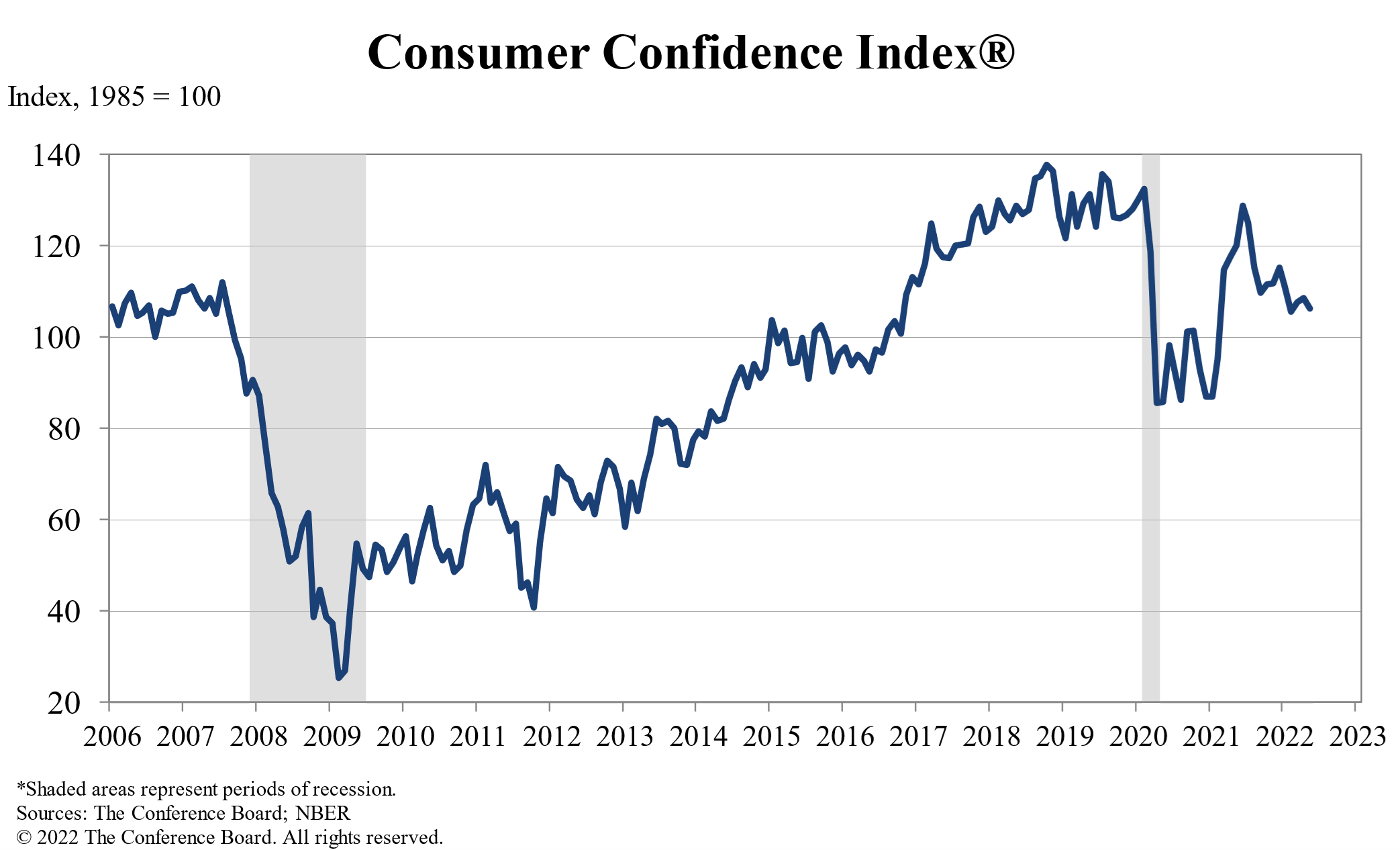
Uncertainty 1: US economy. As the US economic growth slows down, consumers have turned more cautious about discretionary spending on clothing to prioritize other necessities. Notably, in the first quarter of 2022, clothing accounted for only 3.9% of US consumers’ total expenditure, down from 4.3% in 2019 before the pandemic. Likewise, according to the Conference Board, US consumers’ confidence index (CCI) dropped to 106.4 (1985=100) in May 2022 from 113.8 in January 2022, confirming consumers’ increasing anxiety about their household’s financial outlook.
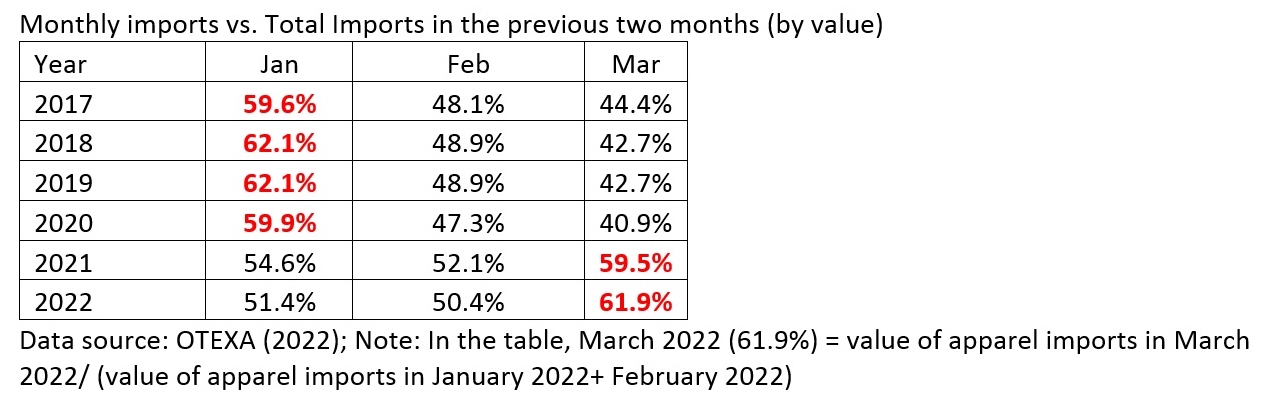
Removing the seasonal factor, US apparel imports in April 2022 went up 2.8% in quantity and 3.0% in value from March 2022, much lower than 9.3% and 11.9% a month ago (i.e., March 2022 vs. February 2022). The notable slowed import growth reflects the negative impact of inflation on US consumers’ clothing spending. According to the Census, the value of US clothing store sales marginally went up by 0.8% in April 2022 from a month ago, also the lowest so far in 2022.
Apparel import price index
Uncertainty 2: Worldwide inflation. Data from the Bureau of Economic Analysis shows that the price index of US apparel imports reached 103.1 in May 2022 (May 2020=100), up from 100.3 one year ago (i.e., a 2.8% price increase). At the product level (i.e., 6-digit HS Code, HS Chapters 61-62), over 60% of US apparel imports from leading sources such as China, Vietnam, Bangladesh, and CAFTA-DR experienced a price increase in the first quarter of 2022 compared with a year ago. The price surge of nearly 40% of products exceeded 10 percent. As almost everything, from shipping, textile raw materials, and labor to energy, continues to soar, the rising sourcing costs facing US fashion companies are not likely to ease anytime soon.
The deteriorating inflation also heats up the debate on whether to continue the US Section 301 tariff action against imports from China. Since implementing the punitive tariffs, US fashion companies have to pay around $1 billion in extra import duties every year, resulting in the average applied import tariff rate for dutiable apparel items reaching almost 19%. Although some e-commerce businesses took advantage of the so-called “de minimis” rule (i.e., imports valued at $800 or less by one person on a day are not required to pay tariffs), over 99.8% of dutiable US apparel imports still pay duties.
Uncertainty 3: “Made in China.” US apparel imports from China in April 2022 significantly dropped by 26.7% in quantity and 24.6% in value from March 2022 (seasonally adjusted). China’s market shares also fell to a new record low of 26.3% in quantity and 16.8% in value in April 2022. The zero-COVID policy and new lockdown undoubtedly was a critical factor contributing to the decline. Fashion companies’ concerns about the trajectory of the US-China relations and the upcoming implementation of the new Uyghur Forced Labor Prevention Act (UFLPA) are also relevant factors. For example, only 10.5% of US cotton apparel imports came from China in April 2022, a further decline from about 15% at the beginning of the year. Given the expected challenges of meeting the rebuttable presumption requirements in UFLPA and the high compliance costs, it is not unlikely that US fashion companies may continue to reduce their China exposure.
As US fashion companies source less from China, they primarily move their sourcing orders to China’s competitors in Asia. Measured in value, about 74.8% of US apparel imports came from Asia so far in 2022 (January-April), up from 72.8% a year ago. In comparison, there is no clear sign that more sourcing orders have been permanently moved to the Western Hemisphere. For example, in April 2022, CAFTA-DR members accounted for 9.3% of US apparel imports in quantity (was 10.8% in April 2021) and 10.2% in value (was 11.4% in April 2021).
Uncertainty 4: Shipping delays. Data suggests we are not out of the woods yet for shipping delays and supply chain disruptions. For example, as Table 2 shows, the seasonable pattern of US apparel imports in March 2022 is similar to January before the pandemic (2017-2020). In other words, many US fashion companies still face about 1.5-2 months of shipping delays. Additionally, several of China’s major ports were under strict COVID lockdowns starting in late March, including Shanghai, the world’s largest. Thus, the worsened supply chain disruptions could negatively affect the US apparel import volumes in the coming months.
Event summary by Mariel Abano (FASH455 student, Spring 2022)
COVID-19 and other external shocks such as the Ukraine-Russia war shifted the fashion supply chain from its conventional low-cost model. In response to the changes, brands and companies focus on flexibility, strengthening their relationships with suppliers, and sustainability.
Regarding the pandemic’s impacts on the apparel supply chain, fashion brands need to be more future-oriented to better prepare for unexpected market shocks that may come up in the fluctuating world. Flexibility within their merchandising teams allowed Neiman Marcus to pivot during the pandemic and market differently within the context of the pandemic. The company explored new ways to connect with its consumers via digital platforms as many physical stores closed. However, fashion companies need to be flexible enough to respond to the increasing demand from its growing e-commerce platform. This is not always easy to happen.
Likewise, Reformation tries its best to predict demand, build supply chain capacity, and manage lead time during COVID-19. Their manufacturing chains within the U.S. and vertical integration helped them respond quickly to supply chain disruptions. As a result, the company pivoted quickly to athleisure even though its brand is typically known for its event-wear dresses.
Meanwhile, when evaluating their supply chain, Amanda Martin explains that Neiman Marcusprioritizes labor, speed, and cost. With this, there is a balance between investment of capital and resources and mitigating costs like surging fuel prices.
The relationship with vendors also matters during the pandemic. For example, Neiman Marcus’s relationships with its vendors built over the years allowed the company to move more quickly from ocean to air shipping during the pandemic. In the discussion, Amanda Martin explained why the relationship between retailers/brands and manufacturers needs to help both sides grow and benefit. Likewise, Reformation also focuses on people and their relationships with their suppliers during the pandemic. Kathleen Talbot emphasizes that brand-supplier relationships are evolving. Fostering two-way conversations is key to moving away from the previous model that prioritized the needs and wants of the brand over the manufacturer.
Sustainability is NOT ignored during the pandemic. For example, fashion companies increasingly use technology and process management to take accountability for supply chains and improve traceability. In terms of environmental impact, there are more applications within sourcing emphasizing recycled and renewable materials. For example, Reformation recently launched a new circularity initiative that focuses on extending a product’s lifetime and then recycling that back into the system. When creating new styles, the company started from sustainable fibers. Further, they hope to shift transportation from air to other means to minimize their carbon footprint.
Question #2: Primark sources from 28 countries work with around 928 contracted factories. What are the pros and cons of using such a diverse sourcing base?
Question #3: Near-shoring, meaning bringing manufacturing closer to home, is growing in popularity. Does it mean globalization is “in retreat”? What is your view?
Question #4: In the current state of the fashion industry, ethical labor laws are really important, especially to consumers. For example, activists are protesting Pretty Little Thing in London to protest the low wages paid to garment workers at the factories that Pretty Little Thing sources from. With this in mind, do you think that it would be wise for Primark to look for sourcing opportunities outside of Asia? Or do you believe Primark’s Ethical Trade and Environmental Sustainability team is sufficient to ensure ethical and sustainable sourcing?
Question #5: As of May 2021, Primark has the most workers in its Asian factories. Should we still call Primark an EU company? Does a company’s national identity still matter in today’s globalized world?
(Welcome to our online discussion. For students in FASH455, please address at least two questions and mention the question number (#) in your reply)
According to the video, how has the supply chain for apparel and footwear changed over the past decade?
What are the pros and cons of moving from a global supply chain to a regional one for fashion companies?
For fashion companies interested in “near-shoring” and “re-shoring”, what factors should they consider? Why?
Anything else you find interesting/intriguing/thought-provoking/debatable in the video? Why?
Note: Everyone is welcome to join our online discussion. For students in FASH455, please address at least two questions. Please mention the question number # (no need to repeat the question) in your comment.
In December 2021, Just-Style consulted a panel of industry leaders and scholars in its Outlook 2022–what’s next for apparel sourcing briefing. Below is my contribution to the report. All comments and suggestions are more than welcome!
What next for apparel sourcing?
As “COVID sets the agenda” and the trajectory of several critical market and non-market forces hard to predict (for example, global inflation, and geopolitics), fashion companies may still have to deal with a highly volatile and uncertain market environment in 2022. That being said, it is still hopeful that fashion companies’ toughest sourcing challenges in 2021 will start to gradually ease at some point in the new year, including the hiking shipping costs, COVID-related lockdowns, and supply chain disruptions.
In response to the “new normal,” fashion companies may find several sourcing strategies essential:
One is to maintain a relatively diverse apparel sourcing base. The latest trade data suggests that US, EU, and Japan-based fashion companies have been steadily sourcing from a more diverse group of countries since 2018, and such a trend continues during the pandemic. Echoing the pattern, in the latest annual benchmarking study I conducted in collaboration with the United States Fashion Industry Association (USFIA), we find that “China plus Vietnam plus many” remains the most popular sourcing model among respondents. This strategy means China and Vietnam combined now typically account for 20-40 percent of a fashion company’s total sourcing value or volume, a notable down from 40-60 percent in the past few years. Fashion companies diversify their sourcing away from “China plus Vietnam” to avoid placing “all eggs in one basket” and mitigate various sourcing risks. In addition, more than 85 percent of surveyed fashion companies say they will actively explore new sourcing opportunities through 2023, particularly those that could serve as alternatives to sourcing from China.
The second strategy is to strengthen the relationship with key vendors further. As apparel is a buyer-driven industry, fashion brands and retailers fully understand the importance of catering to consumers’ needs. However, the supply chain disruptions caused by COVID-19 remind fashion companies that building a close and partner-based relationship with capable suppliers also matters. For example, working with vendors that have a presence in multiple countries (or known as “super-vendors”) offers fashion companies a critical competitive edge to achieve more flexibility and agility in sourcing. Sourcing from vendors with a vertical manufacturing capability also allows fashion companies to be more resilient toward supply chain disruptions like the shortage of textile raw materials, a significant problem during the pandemic.
Further, we could see fashion companies pay even closer attention to textile raw material sourcing in the year ahead. On the one hand, given the growing concerns about various social and environmental compliance issues like forced labor, fashion brands and retailers are making more significant efforts to better understand their entire supply chain. For example, in addition to tracking who made the clothing or the fabrics (i.e., tier 1 & 2 suppliers), more companies have begun to release information about the sources of their fibers, yarns, threads, and trimmings (i.e., tier 3 & tier 4 suppliers). On the other hand, many fashion brands and retailers intend to diversify their textile material sourcing from Asia, particularly China, against the current business environment. Compared with cutting and sewing garments, much fewer countries can make textiles locally, and it takes time to build textile production capacity. Thus, fashion companies interested in taking more control of their textile raw material sourcing need to take concrete actions such as shifting their sourcing model and making long-term investments intentionally.
Apparel industry challenges and opportunities
One key issue we need to watch closely is the US-China relations. China currently remains the single largest source of apparel globally, with no near alternative. China also plays an increasingly significant role as a textile supplier for many leading apparel exporting countries in Asia. However, as the US-China relations become more concerning and confrontational, we could anticipate new trade restrictions targeting Chinese products and products from any sources that contain components made in China. Notably, with strong bipartisan support, President Biden signed into law the Uyghur Forced Labor Prevention Act on December 23, 2021. The new law is a game-changer! Depending on the detailed implementation guideline to be developed by the Customs and Border Protection (CBP), US fashion companies may find it not operationally viable to source many textiles and apparel products from China. In response, China may retaliate against well-known western fashion brands, disrupting their sales expansion in the growing Chinese consumer market. Further, as China faces many daunting domestic economic and political challenges, a legitimate question for fashion companies to think about is what an unstable China means for their sourcing from the Asia-Pacific region and what the contingency plan will be.
Another critical issue to watch is the regional textile and apparel supply chains and related free trade agreements. While apparel is a global sector, apparel trade remains largely regional-based, i.e., countries import and export products with partners in the same region. Data shows that from 2019 to 2020, around 80% of Asian countries’ textile and apparel imports came from within Asia and about 50% for EU countries. Over the same period, over 87% of Western Hemisphere (WH) countries’ textile and apparel exports went to other WH countries and about 75% for EU countries.
Notably, the reaching and implementation of new free trade agreements will continue to alter and shape new regional textile and apparel supply chains in 2022 and beyond. For example, the world’s largest free trade agreement, the Regional Comprehensive Economic Partnership (RCEP), officially entered into force on January 1, 2022. The tariff reduction and the very liberal rules of origin in the agreement could strengthen Japan, South Korea, and China as the primary textile suppliers for the Asia-based regional supply chain and enlarge the role of ASEAN as the leading apparel producer. RCEP could also accelerate other trade agreements in the Asia-Pacific region, such as the China-South Korea-Japan Free Trade Agreement currently under negotiation.
As one of RCEP’s ripple effects, we can highly anticipate the Biden administration to announce its new Indo-pacific economic framework soon to counterbalance China’s influences in the region. The Biden administration also intends to leverage trade programs such as the Dominican Republic-Central America Free Trade Agreement (CAFTA-DR) to boost textile and apparel production, trade, and investment in the Western Hemisphere and address the root causes of migration. These trade initiatives will be highly relevant to fashion companies that could use the opportunity to expand near sourcing, take advantage of import duty-saving benefits and explore new supply chains.
Additionally, fashion companies need to be more vigilant toward political instability in their major sourcing destinations. We have already seen quite a turmoil recently, from Myanmar’s military coup, Ethiopia’s loss of the African Growth and Opportunity Act (AGOA) benefits, concerns about Haiti and Nicaragua’s human rights, and the alleged forced labor in China’s Xinjiang region. Whereas fashion brands and retailers have limited or no impact on changing a country’s broader human rights situation, the reputational risks could be very high. Having a dedicated trade compliance team monitoring the geopolitical situation routinely and ensuring full compliance with various government regulations will become mainstream among fashion companies.
And indeed, sustainability, due diligence, recycling, digitalization, and data analytics will remain buzzwords for the apparel industry in the year ahead.
Note: The video provides a great overview of Amazon’s supply chain strategies in response to the current shipping crisis and their broad industry implications. You will also learn how international shipping and logistics work today, including processes, technologies, innovations, and remaining challenges.
The latest industry estimates show that Amazon’s apparel and footwear sales in the U.S. grew by roughly 15% in 2020 to more than $41 billion, more than Walmart did. This represents a highly impressive 11%-12% share of all apparel sold in the U.S. and 34%-35% share of all apparel sold online. Amazon achieved early success by offering a wide range of basics, but it has since expanded its fashion business. It now features a growing slate of name brands. The company also launched online luxury fashion shops in the fall of 2019.
Discussion questions:
What are the unique features of Amazon’s supply chain strategies in response to the current shipping crisis? Do these strategies work well? What is your evaluation?
To what extent can other retailers emulate what Amazon is doing? Should they?
Should conventional fashion companies (such as Macy’s and Gap Inc) see Amazon as a competitor or a potential collaborator? Why?
Is there anything else you find interesting/intriguing/thought-provoking in the video? Why?
Shipping & logistics terms mentioned in the video:
TEU (Twenty-foot Equivalent Unit): TEU is a measure of volume in units of twenty-foot long containers. For example, large container ships are able to transport more than 18,000 TEU (a few can even carry more than 21,000 TEU). One 20-foot container equals one TEU.
FEU (Forty-foot Equivalent Unit): Two TEUs equal one FEU.
FCL (Full Container Load): This means that a shipment occupies the entire space of a container without having to share it with other shippers. In an FCL cargo, the complete goods in the container are owned by one shipper.
LCL (Less than Container Load): LCL describes the transportation of small ocean-freight shipments, which do not require the full capacity of a container.
ULD (Unit Load Device): A container used for baggage, cargo and mail on wide-body and narrow-body aircraft.
Freight Forwarder: An agency that receives freight from a shipper and arranges for transportation with one or more carriers to the final destination. While the forwarder does not always handle the freight itself, it contracts with other carriers to move goods via road, rail, ocean and air.
In December 2021, McKinsey & Co’ and Business of Fashion (BOF) released its annual State of Fashion report. Below are the key points in the report regarding the sourcing trends in the year ahead:
#1 The logistics challenges could intensify in 2022, with 87% of respondents expecting supply chain disruptions to continue to affect their profit margins in the year ahead negatively. The global surges in demand create additional and unpredictable pressures on freight services, ports, and terminals. As a result, fashion companies may need to “plan for a permanently more expensive logistical future.”
#2 It will be critical for fashion companies to keep sourcing flexible, build resilience into the supply chain, and work closely with vendors. As one respondent commented, “[crises like] pandemics do happen.”
#3 The interest in nearshoring and reshoring will continue in 2022. Over 70% of respondents plan to increase the share of nearshoring close to company headquarters, and about 25% intend to reshore sourcing to their headquarters’ country. Notably, some EU-based companies have been moving textile manufacturing from China to Turkey to minimize delays.
#4 One crucial free trade agreement to watch is the Regional Comprehensive Economic Partnership (RCEP), to take effect on January 1, 2022. It’s the largest free trade agreement in history, involving nearly 30% of the world’s population. RCEP “has the potential to be at the core of the reconstruction of the global supply chain. RCEP is possibly the only trading block with both production capacity and consumer demand,” meaning it could dramatically facilitate regional trade and investment within Asia.
#5 There is a “significant opportunities in creating a hyperdigital supply chain.” Some companies are leveraging technology to find“competitive advantages in a supply-chain context when it comes to speed, agility, cost efficiency, and price.” However, fashion companies admit, it will remain challenging to plan inventory flow with much precision, which won’t change any time soon.
Other interesting comments from the report:
“One mega trend…in the sector is the importance of breaking down the traditional boundaries of what’s in the company and [what is done externally]; what can be accomplished together as a network — whether it’s creativity, sustainability, and supply chain, or technology.”
“As fashion brands look to pursue closed-loop recycling solutions, it is increasingly important to engage with suppliers who can help them move toward sourcingcircular materials.” “Cost is certainly a factor; recycled fibres are typically more expensive than their virgin counterparts.”
“In the longer term, fashion brands will need to balance the desire to enhance speed to market with the need to alleviate supply chain pressure…That may mean streamlining production, logistics planning, and booking capabilities, as well as putting in place contingency plans and alternative suppliers while remaining as agile and flexible as possible.”
Regarding Levi’s “new normal” for apparel sourcing and supply chain management, what is Harmit Singh’s vision? Why or why not do you agree with him?
How could Levi’s digital transformation plans affect its sourcing practices?
What is your evaluation of Levi’s “tailor shop” program?
What is the rationale behind Levi’s “buy better and wear better” initiative?
What is a chief financial officer (CFO)’s role in helping Levi’s achieve its sustainability goals?
Anything else you find interesting/intriguing/new/inspiring from the video and why?
About Levi’s
Levi’s supplier map (source: Open Apparel Registry)
Levi Strauss & Co is a global apparel company rooted in the jeans category. Its brand portfolio consists of Levi’s brand, Levi’s Signature, Dockers, and Denizen. In 2020, Levi’s global sales exceeded $7.1 billion. The United States is Levi’s largest market, accounting for about 41% of its sales in 2020, followed by Mexico. As of June 2021, Levi’s sources its apparel products from around 350 factories located in about 30 countries.
Years before the pandemic, Levi Strauss has begun to reduce its reliance on wholesalers and instead expand its direct-to-consumer (DTC) business. In response to COVID-19, Levi Strauss has increased flexibility and resilience through diversification across geographies, categories, genders, and distribution channels. Levi’s is also well-known as a leader in sustainability, particularly reducing chemical and water use in products.
US fashion brands and apparel retailers face the challenge of running out of inventory amid the holiday season and the ongoing shipping crisis. Based on consultation with industry insiders and resources, we take a detailed look at which apparel products are more likely to be out of stock in the US retail market. Several patterns are noteworthy:
First, clothing products targeting the premium and mass market face more significant shortages than luxury or value apparel items in the US. Take clothing items in the premium market, for example. Of those apparel products newly launched to the US retail market from August 1 to November 1, 2021, nearly half of them were already out of stock as of November 10, 2021 (note: measured by SKUs). The increased demand from middle-class US consumers could be among the primary contributing factors.
Second, seasonal products and stable fashion items are more likely to be out of stock. For example, as we are already in the winter season, it is not surprising to see many swimwear products run out of stock. Meanwhile, it is interesting to see stable fashion products like hosiery and underwear also report a relatively high percentage of inventory shortage. The result could be the combined effects of consumers’ robust demand and the shipping delay.
Third, apparel products locally sourced from the US seem to have the lowest out-of-stock rate. Reflecting the shipping crisis, clothing items sourced from Bangladesh and India report a much higher out-of-stock rate. However, a substantial percentage of “made in the USA” apparel was in the category of “T-shirt”, implying switching to domestic sourcing often is not a viable option for US fashion brands and retailers.
Additionally, fast fashion retailers overall report a much lower out-of-stock rate than department stores and specialty clothing stores. This result showcases fast fashion retailers’ competitive advantages in supply chain management, which payoffs in the current challenging business environment.
On the other hand, the latest trade data suggests a notable increase in the price of US apparel imports. Notably, the unit price of US apparel imports from almost all leading sources went up by more than 10% from January 2021 to September 2021.