Part I
Part II
Part III
FASH455 Global Apparel & Textile Trade and Sourcing
Copyright© 2012-2026 Dr. Sheng Lu, Professor, Department of Fashion & Apparel Studies, University of Delaware
Part I
Part II
Part III
Note: The following update can be used as additional reference material for our case study 1 on the Bangladesh fire accident.
The export-oriented apparel sector has been the main source of growth in exports and formal employment for the past three decades in Bangladesh. The industry directly employs 3.1 million people, comprising 40 percent of manufacturing employment; indirectly more than 10 million people are dependent on the apparel sector.
According to the World Trade Organization (WTO, 2013), in 2012, Bangladesh’s apparel exports to the world reached $19.9 billion (4.7%), among which $10.6 billion (or 53.3%) went to the European Union (27) and $4.6 billion (or 22.4%) went to the United States. Cotton trousers, cotton shirts, cotton sweaters and cotton T-shirt [HS 620342, HS620462, HS620520, HS611010 and HS610910]account for around 75% of Bangladesh’s total apparel exports in 2009 (World Bank, 2012).
The unit prices of Bangladesh’s main apparel exports are much lower than the world average and even lower than the unit values of apparel exports from China, India and Sri Lanka. From 2004 to 2007, the average price of Bangladesh’s apparel exports to the world fell from $2.60 to $2.31 per unit, representing a decline of 11 percent over three years. More specifically, average unit prices for woven apparel fell from $3.26 to $2.92 (10% drop in price) and for knit apparel from $1.95 to $1.90 (3% drop in price) over the same period.
Bangladesh’s Local sources are able to meet about 80 percent of the domestic apparel industry’s demand for apparel accessories such as thread, buttons, labels, bags, tapes, shirt board, and cartons. But Bangladesh’s apparel sector relies on imported fabric and yarn inputs because the local textile industry is unable to supply its requirement in terms of quality, quantity, and variety.
Bangladesh’s main competitive advantage is low labor costs, one of the lowest among main apparel exporter countries in the world. Average apparel labor costs per hour in 2008 were $0.22; in comparison, rates in India were more than twice as high and four times higher in China. However, low wages are accompanied by relatively low levels of labor productivity. Average annual value addition per worker in Bangladesh was estimated at $2,500 compared to nearly $7,000 for a group of similar Chinese factories in 2005, according to a World Bank study.
Reference: Sewing Success? Employment, Wages and Poverty following the End of the Multi-Fiber Arrangement (World Bank, 2012). International Trade Statistics (World Trade Organization, 2013).
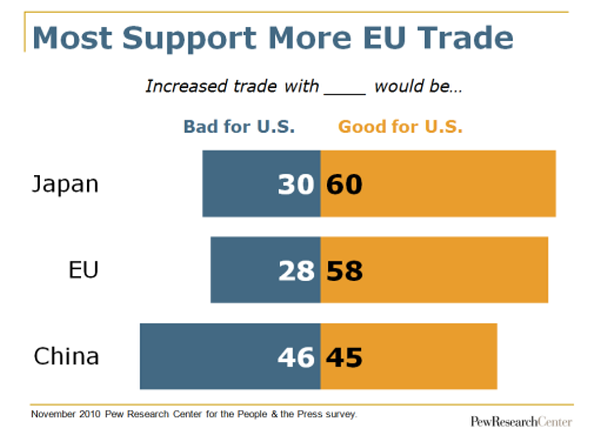
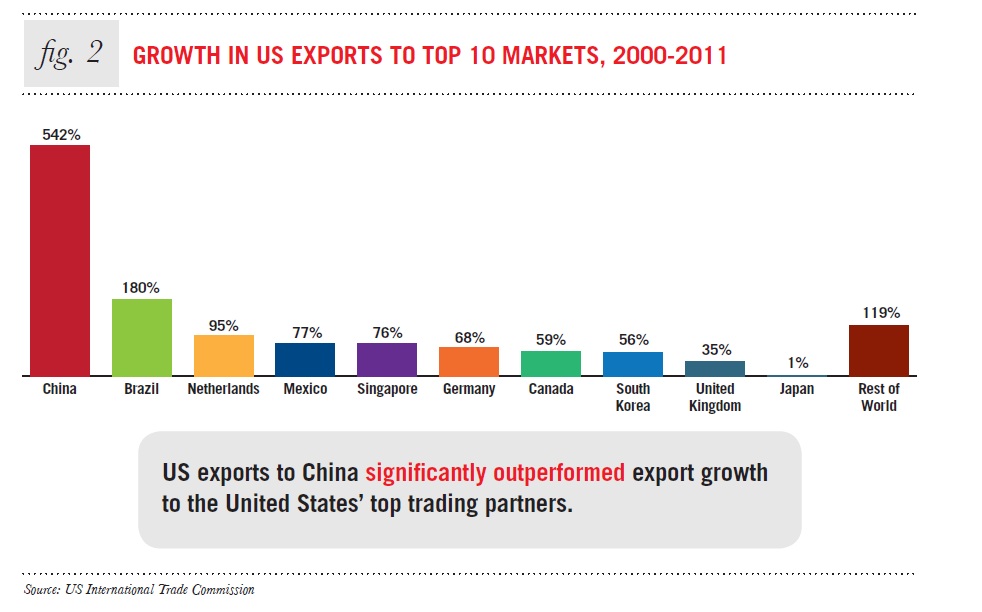
Yesterday in class, we’ve discussed how differently people see the impact of international trade. Here is one more example showing the controversy of the topic: according to a survey conducted by PewResearch in late 2010, 58% of sampled Americans said more trade with European nations would be good for the United States, 60% said increased trade with Japan would be good for the U.S. but only 45% favored increased trade with China. However, statistical data shows that US exports to China outpaced nearly all of the top ten export markets (including Japan and EU) from 2003 to 2012(source: USCBC).
Why would the general public favor a particular trading partner but disfavor another? Should they? By which standard the general public may assume more trade with a particular trading partner would be good or bad for the United States? In your view, is trade beneficial for the US overall? Can we use any trade theories learnt from the class to explain the above phenomenon? Look forward to hearing your thoughts!

In the year ahead, the following issues are suggested to watch for the apparel industry according to the latest just style management briefing:
Responsible sourcing: a variety of different themes inclusive of sustainability, compliance, chemical safety and product safety. In the past, the apparel industry has been very reactive in these areas, and efforts have accelerated to move to a more proactive model in 2014.
Demand for greater supply chain visibility: a higher level focus and a lot more time will be required to look at the supply chains from end to end, especially for tier 2 and 3 component suppliers. Apparel industry needs to be focused on preparing to be more transparent on what goes into making its products and the carbon and water footprint it leaves behind. There will also be a stronger emphasis on quality, and more intelligence and agility in the supply chain, including how to achieve global flexibility in supply to maximize advantages and benefits offered by different regions.
Adjust to the industry “new normal”: speed, efficiency and cost management. ‘Quick response’ or ‘fast fashion’ is no longer a catch phrase, it’s a business reality. Speed is king. Retailers have learned to manage with smaller inventories and to quickly react to consumer needs. Additionally, there are no more low cost countries (with capability and capacity) to tap into, which requires more efficient cost control through supply chain design and management.
Internet and omni-channel retailing. The internet continues to upend the apparel industry. Brick and mortar companies are still struggling to figure out how to harness the power of the internet – and struggling to figure out how big of a threat pure-play internet companies are. Meanwhile, the proliferation of internet-only companies continues, increasing the competitive pressure on everyone (including the older internet-only companies!). All of this will end up resulting in a much stronger industry overall – but in the meantime there will be a lot of hand-wringing and heartache.
Economic outlook. Overall, 2014 will be a year better off than 2013. The US economy continues to improve, the Eurozone recession has stabilised and there is the huge opportunity Asia offers.
Country risk. Whatever happens in the real economy, political tensions throughout developing countries (except possibly China and Vietnam) are growing. They are about more than working conditions in garment factories – and we cannot expect the garment industry to remain immune from them.
International market expansion. Global vertical retailers and brands need to balance the efficiency of global assortments with being able to cater to a broad range of consumer purchasing preferences across cultural groups. Winners manage to preserve their brand identity while offering attractive choices to this diverse customer group.
Trade policy and trade politics. 2014 is an election year for US Congress. It will only be tougher to find bipartisan consensus. Things to watch include whether the Obama Administration is going to finalize the Trans-Pacific Partnership (TPP) during 2014, whether the Trade Promotion Authority (TPA) can get passed as well as the renewal of the Generalized system of Preferences (GSP) and African Growth and Opportunity Act (AGOA).
China’s role in the global apparel supply chain. China’s productivity miracle has been the single major influence on global sourcing over the past five years. While this cannot go on forever it is hard to see a significant change in its share in 2014. China’s dominance of upstream textile production (spinning, weaving and knitting) is under greater threat. Its main operators are making substantial overseas investment, and while the timing of major upstream projects means this will have little impact on fabric and yarn manufacture in 2014, the subject will preoccupy observers. Onshore garment development in Japan, Germany, the UK and US will continue to create much publicity, but limited amounts of garments. Nearshoring continued to lose market share in the EU and US during 2013, though many buyers express growing interest, and there are signs of growth in some categories. It will be surprising if it shows any significant increase in 2014.
(This study was presented at the 2013 International Textile and Apparel Association Annual Conference)
By
Sheng Lu (University of Rhode Island) and Jessica Ridgeway (University of Missouri)
China’s soaring labor cost in recent years has triggered heated discussions on the future of “made in China” and its implication for U.S. consumers who rely heavily on “made in China” products (Rein, 2012). This is particularly the case in the U.S. apparel retail market, where over 98% of consumptions are supplied by imports and nearly 40% of them come from China in value (AAFA, 2012). Although numerous studies have been conducted to evaluate the relationship between imports and the U.S. domestic apparel production or employment (Martin, 2007), the direct linkage between the price of imports and the U.S. apparel retail price has seldom been explored. Because such a price linkage is the key to understand the implication of a more expensive “Made in China” for U.S. consumers, this study tries to fulfill the research gap and specifically investigate to which extent the U.S. apparel retail price is influenced by the price of U.S. apparel imports from China.
Through investigating the impact of the average unit price of U.S. apparel imports from China, the average unit price of U.S. apparel imports from sources other than China and the annual U.S. apparel retail sales on the annual U.S. consumer price index from 2001 to 2011 based on a revised Armington model, this study finds that:
First, for menswear, more expensive “made in China” will result in a higher retail price in the U.S. market. Specifically, the U.S. retail price is suggested to change by 0.137% in the same direction given a 1% change of the price of U.S. imports from China. Second, for womenswear, there is no evidence showing that the price of U.S. imports from China has statistically significant impact on the U.S. retail price Third, the U.S. apparel imports from China and from rest of the world are suggested to constitute higher degree of price elasticity of substitution for womenswear than for menswear.
Findings of this study contribute to the understanding of the direct price linkage between the U.S. apparel import market and the U.S. apparel retail market and have several important implications:
First, the results imply that when “made in China” becomes more expensive, U.S. consumers may not have to pay more, largely because of increased substitution supply from other apparel exporters. Second, the results suggest that the U.S. apparel market is highly competitive and suppliers may not own much market power in price determination despite their large market shares.Third, the results imply that although “made in China” may lose market share in the U.S. market when it becomes more expensive, the magnitude could vary by product categories.
References:
It has become a commonly held view that apparel workers in many developing countries are unfairly treated because they are much lower paid compared with their counterparts in the developed countries. For example, American Apparel, a company that insists all of its products made in USA, claims itself to be sweatshop-free on the basis that it pays workers an hourly wage of $12. However, does an hourly wage of $12 in the USA necessarily mean more “ethical” than an hourly wage of several cents in a poor developing country like Bangladesh?
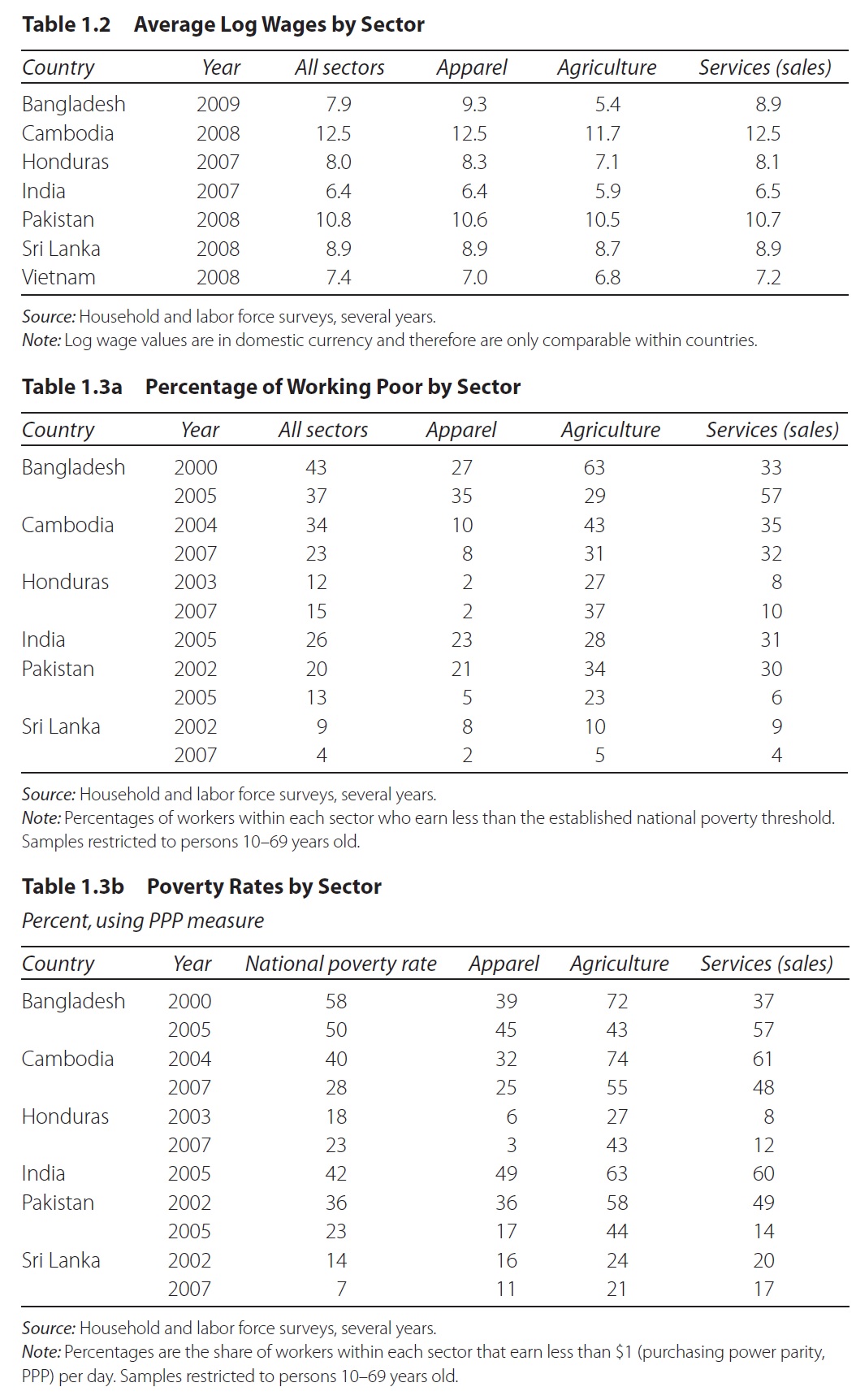
An often ignored fact is that in many developing countries, jobs in the apparel sector are better paid than positions in other sectors. For example, according to a recent study conducted by the World Bank, in Bangladesh, wage level in its apparel sector is 17.7% higher than the average level of all sectors, 72.2% higher than the wage level in the agriculture sector and 4.5% higher than the wage level in the service sector. This is not surprising, because in many developing countries, “moving from agriculture and low-end services into apparel jobs is a channel for social upgrading” (Lopez-Acevedo & Robertson, 2012).
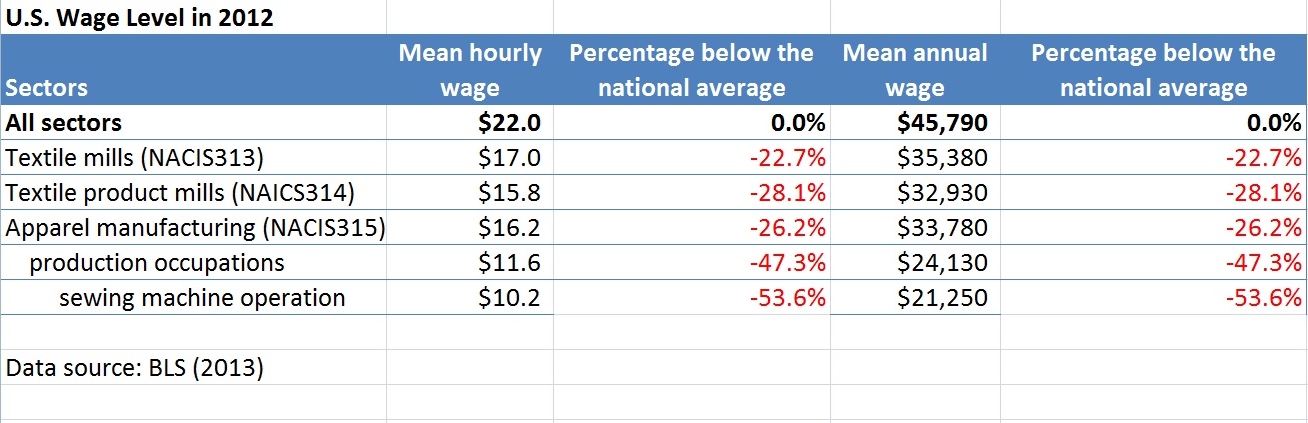
Then, what does an hourly wage of $12 mean in a developed country like the United States? Data from the Bureau of Labor Statistics show that, in 2012, average wage level in the U.S. apparel manufacturing sector (NAICS 315) is 26.2% below the average wage level of all sectors. More specifically, the average wage level for the production occupations is 47.3% below the national average level and 53.6% below the national average level for sewing machine operators, the exact type of job that the hourly wage of $12 refers to.
The point to make here after the comparison is that it is misleading to define “ethical” or comment on “corporate social responsibility” without putting the matter in the context of the stage of development and the nature of the economy. Wage level is not determined by good will, but by the principle of economics 101.
By Sheng Lu
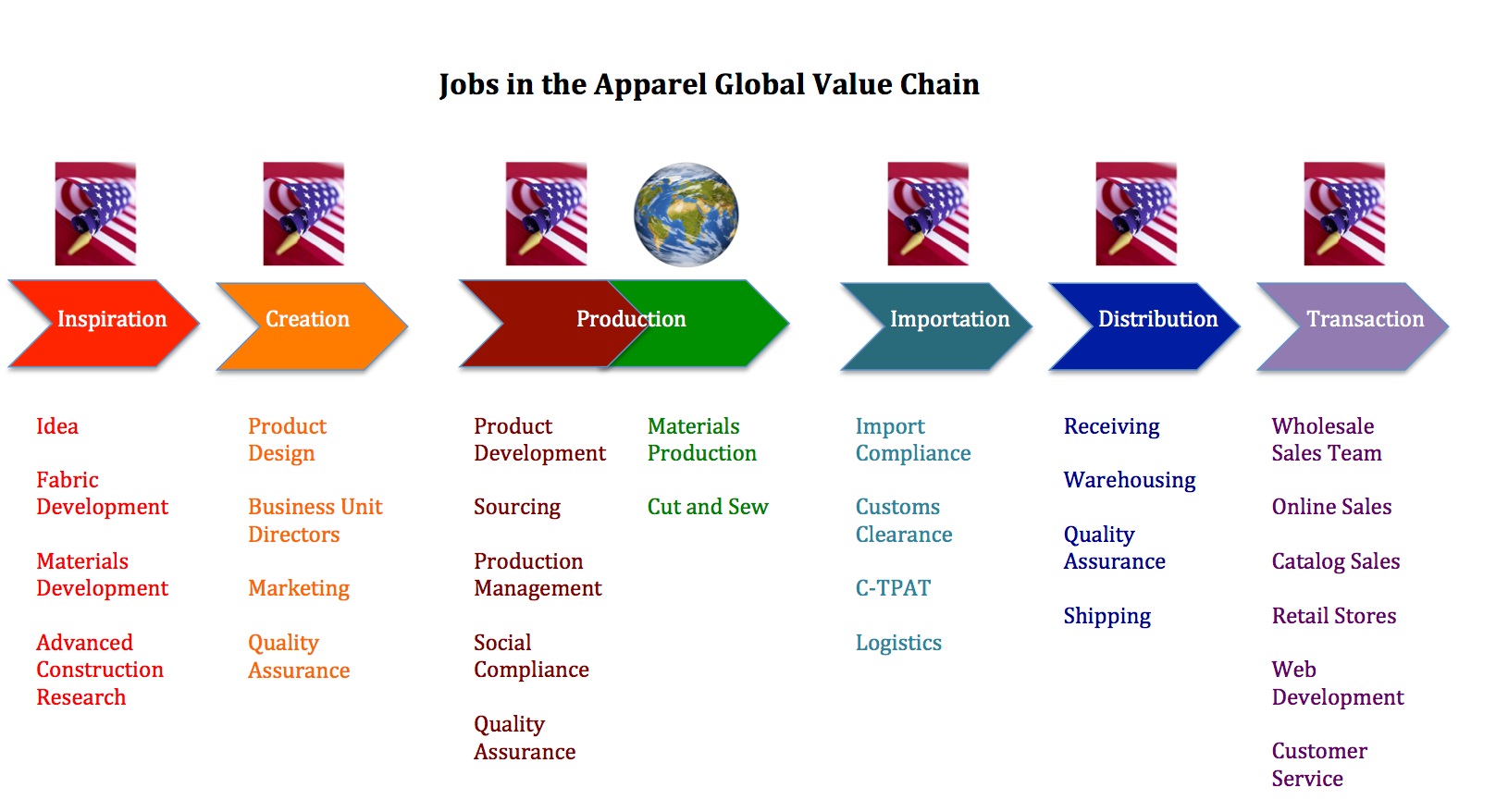
(Note: the functions & jobs below the U.S. flag mean they are based in the United States; Remember, apparel are “made in the world”–just like iphone and ipad. Even imports contain U.S. added value.)
Source: Moongate Association (2012). Analyzing the Value Chain for Apparel Designed in the United States and Manufactured Overseas
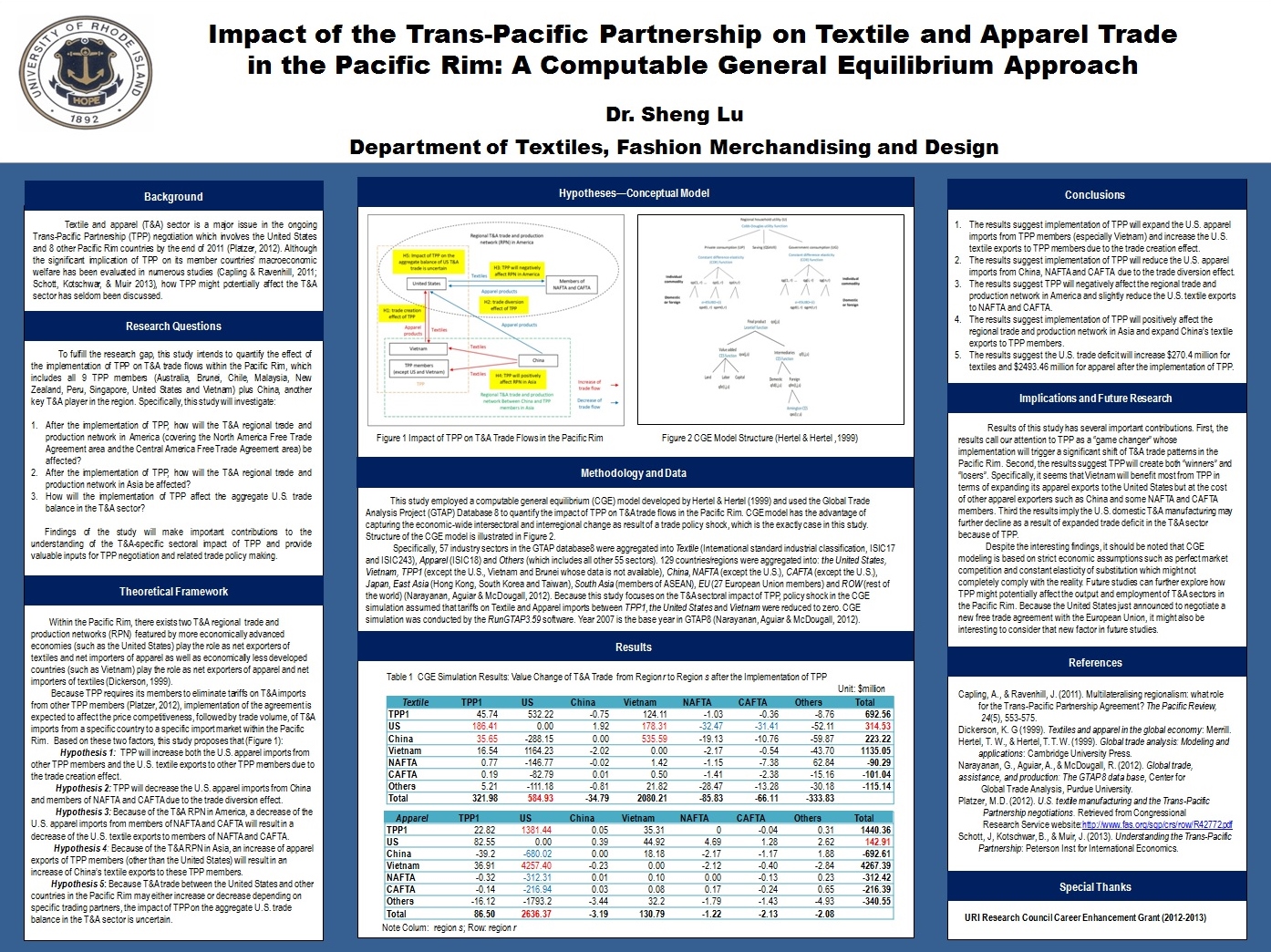
Citation: Lu, S. (2013). Impact of the Trans-Pacific Partnership on textile and apparel trade in the Pacific Rim. World Trade Organization Focus, 20(5), 67-77.
For questions, please contact the author: shenglu@mail.uri.edu
The following findings are from:
Lu, S. (2013). Impacts of quota elimination on world textile trade: A reality check from 2000 to 2010, Journal of the Textile Institut, 104(3), 239–250.
“Findings of this study challenge the practices of previous studies that evaluated the impacts of quota elimination mostly by focusing on the performances of developing countries in the U.S. and EU markets (Nordas, 2004; Curran, 2008). Although such strategy may work for clothing trade, its appropriateness for scrutinizing world textile trade is evidenced to be questionable. Particularly, to manufacture textiles, it places higher requirements on a country’s technology advancement level and capital abundance than clothing production which is more labor intensive in nature and with lower business entry threshold (Dickerson, 1999). Therefore, as shown in the study, it was the developed countries rather than the developing countries that remain dominant and competitive textile exporters in the world today (WTO, 2011). On the other hand, the developed countries are no longer leading textile importers either because of their dramatic shrinkage of domestic clothing manufacturing capacity (Dicken, 2003). To certain extent, missing such distinct patterns of textile trade may be one reason why findings of many previous studies turned out to be inconsistent with the reality (Ahmad & Diaz, 2008).
Second, findings of this study call for attention to the new round of structural change of world textile trade that may have unfolded since the outbreak of the world financial crisis in 2008. This is particularly the case for the high-income countries which suddenly saw sharper decline of their textile export from 2008 through 2010 compared with earlier years in the post-quota era. It is unclear whether such phenomenon is a temporary market fluctuation in nature or reflects a more permanent adjustment of economic structure that is undergoing in the developed countries. Whether and how the financial crisis has structurally affected the world textile trade can be further explored in future studies.
Third, findings of this study reflect the difficulty of achieving upgrading of the textile and clothing sector in the less-developed countries. Although the development theory proposed by Toyne (1984) and Dickerson (1999) optimistically predicted the gradual evolution of a country’s textile and clothing sector over time, results of this study indicated that this upgrading process turned out to be very slow in progress for the developing world. Particularly, in today’s globalized economy, the division of labor between the developed countries and the less-developed ones is largely value-chain based and different from the case of inter-industry division of labor when the development theory was introduced (Toyne, 1984; Gereffi, 1999). It seems there lacks a clear mechanism for the less-developed countries to gradually move up their position in the clothing value chain and have the chance to build on capacity of manufacturing and exporting textiles. However, chances may occur if the high-income countries proactively “give up” textile manufacturing and instead prioritize the development of other emerging sectors regarded as more strategically important in the post-crisis recovery. “
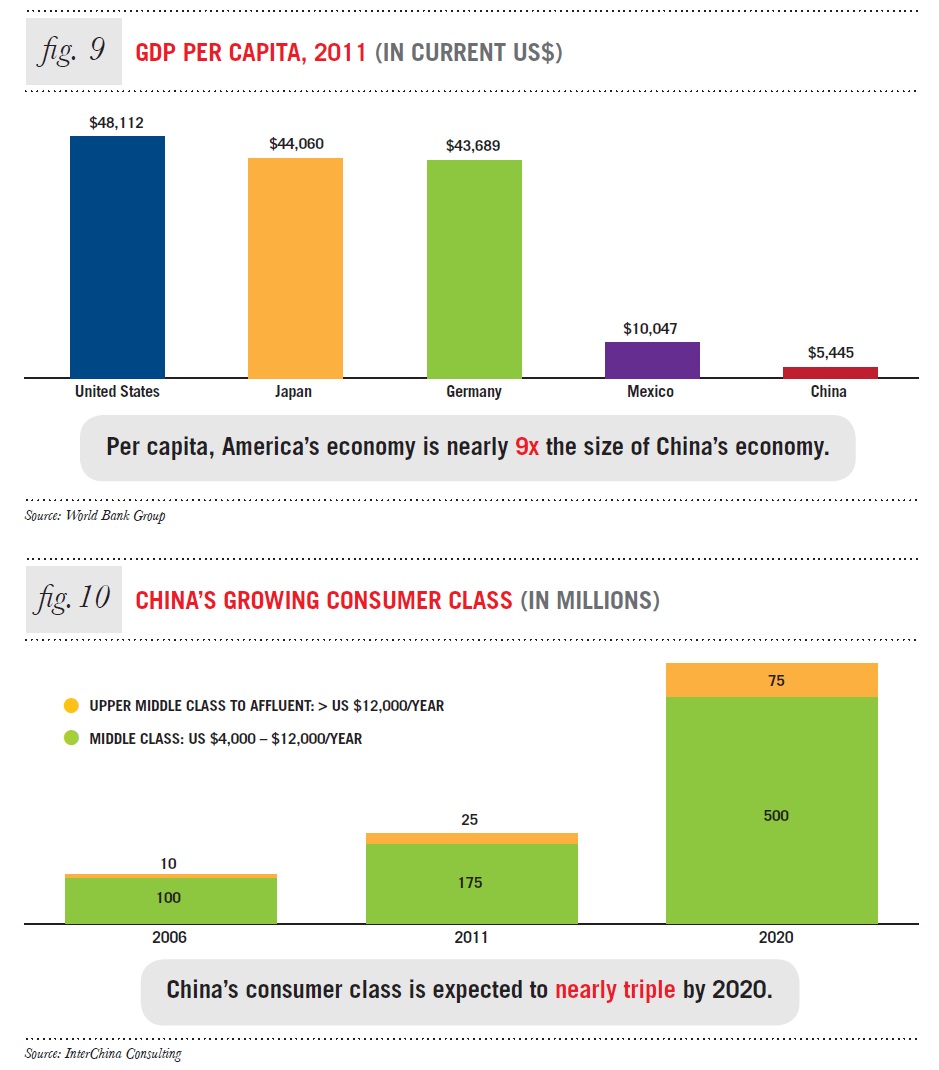
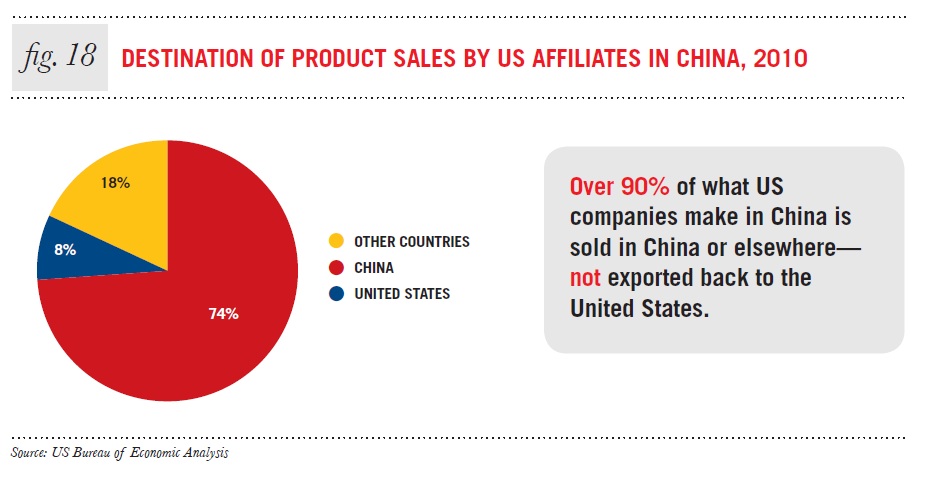
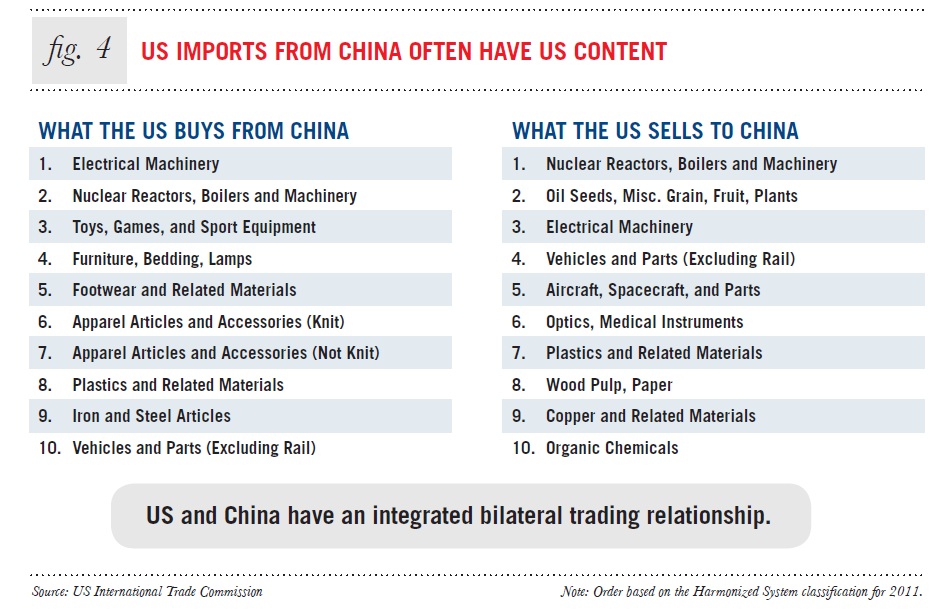
Last week in class, we discussed what globalization means and why international trade happens. This latest research report released by the U.S.-China Business Council (USCBC) on the U.S.-China commercial relationships provides latest evidence showing how the world two largest economies are interdependent with each other and mutually benefit from such a close trade partnership. The report also highlights several key facts about the U.S.-China trade relationship, which often time is misunderstood by the general public.
Full text of the report is available at:
https://www.uschina.org/info/trade-agenda/2013/uscbc-trade-agenda-report.pdf
Preliminary Findings:
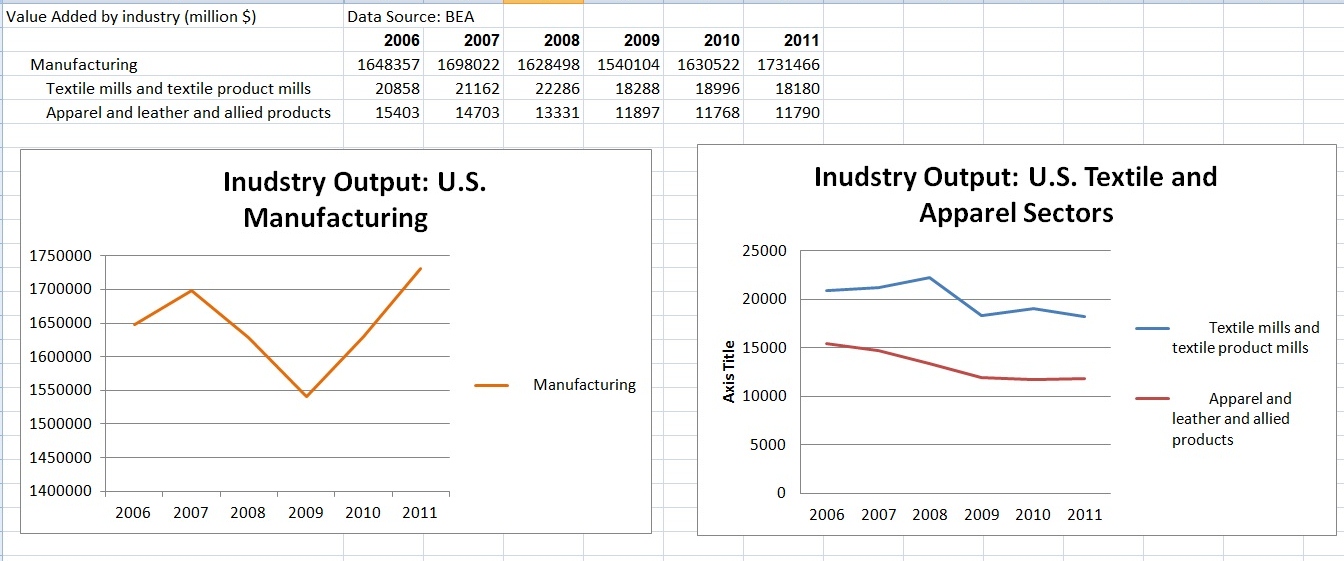
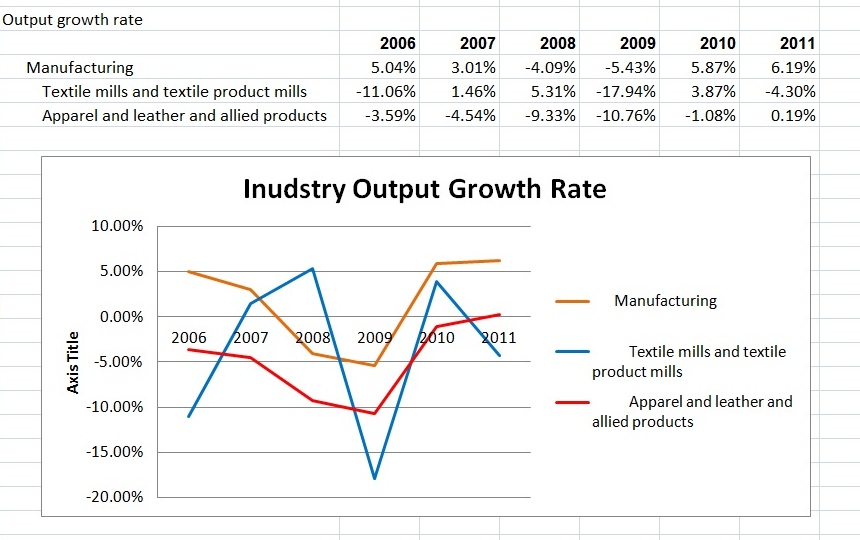
1. As suggested by numerous studies, the U.S. manufacturing sector as a whole demonstrated a robust V-shaped recovery from the 2008 financial crisis in terms of industry output. Growth rate of the industry output from 2010-2011 was also among the highest in the past 10 years.
2. There is no sign yet that textile and apparel (T&A) manufacturing is coming back to the U.S, despite suggested popularity of “insourcing” as result of rising labor cost in China. However, the decline rate of apparel manufacturing in the U.S. seemed to be slowing down.
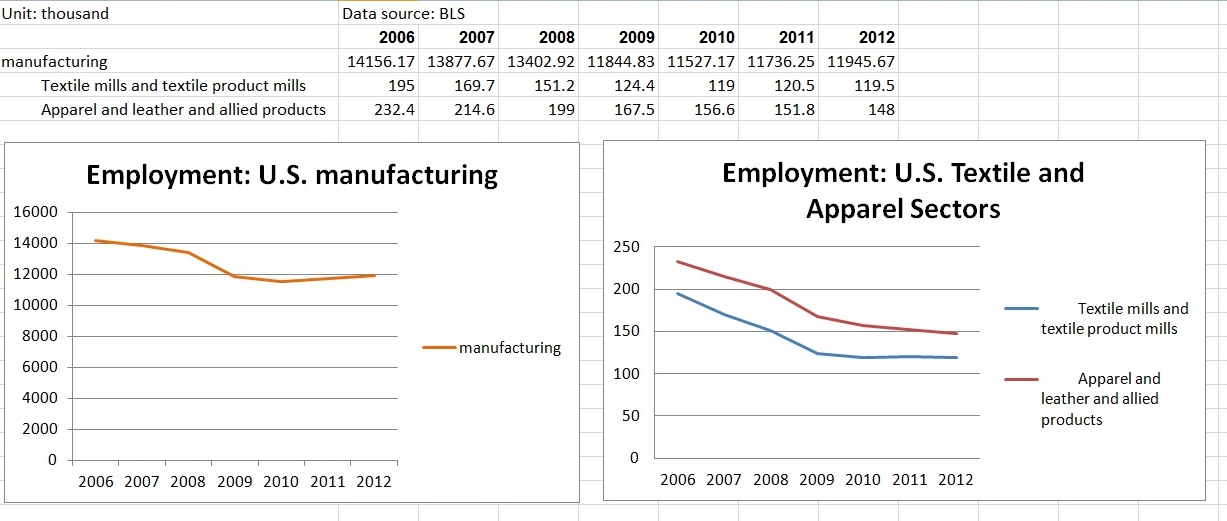
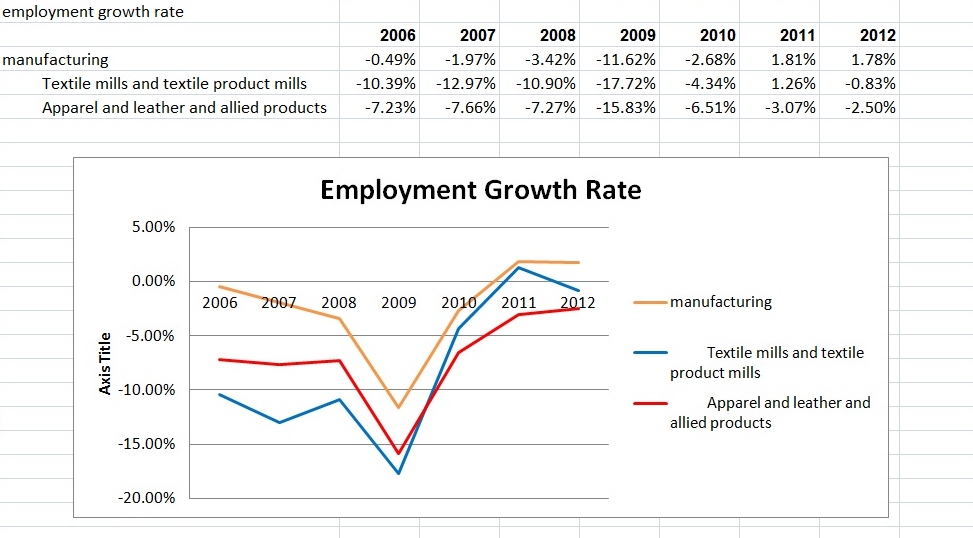
3. Jobless recovery happened both in the U.S. manufacturing sector as a whole and in the T&A manufacturing sectors. Particularly, the U.S. T&A industry respectively lost 21.0% and 25.6% of its manufacturing jobs from 2008-2012 compared with only 10.8% decline of employment in the manufacturing sector over the same period. Based on the current data, it can be concluded that a sizable return of manufacturing jobs in the U.S. T&A industry would hardly occur at least in the near future.
Sheng Lu
For your reference. Many issues are relevant to textile and apparel sectors (for example: global value chain, trade and job, trade facilitation, competition policy, intelletrual property right protection, green economy, pluralism/regionalism as well as trade and development).
This year’s WTO Public Forum will debate:
The session will cover the following sessions
This year’s Ideas Workshops will cover:
WTO’s first ever Youth Ambassadors, selected by separate video and essay contests, will discuss the topic “How can trade promote development?”
Published in Clothing and Textile Research Journal, Vol 30, No. 2, p119-133
The Relationship Between Import Penetration and Operation of the U.S. Textile and Apparel Industries From 2002 to 2008
Sheng Lu and Kitty Dickerson
Abstract
The U.S. textile and apparel (T&A) industries have respectively adopted various restructuring strategies in recent years which fundamentally changed the way the two industries operate and the shifting relationship of each sector with imports. This study empirically tests the relationship between import penetration and the operation of the U.S. T&A industries based on data at 4-digit North American Industry Classification System (NAICS) code level from 2002-2008. Results from the panel data model show that overall the U.S. textile industry formed a weak cooperative relationship with import penetration level in the U.S. market and a neutral relationship was suggested for the U.S. apparel industry with imports. These findings contribute to understanding the global nature of today’s U.S. T&A industries and suggest useful perspectives for the U.S. textile trade policies.
To read the full paper, click here
A recent study of the United States International Trade Commission reaffirms the special roles played by free trade agreements in supporting the regional trade-production network (RTN) for textile and apparel products in America and promoting the export of U.S.-made textile to developing countries in the region in particular. However, also as mentioned in the report, the influence of such RTN has sustantially declined since the full elimination of quota system in 2005. The implementation of the new FTAs established between US and countries in Asia-Pacific pose new uncertanties to the RTN in America, given the trade diversion effect commonly seen in FTAs.
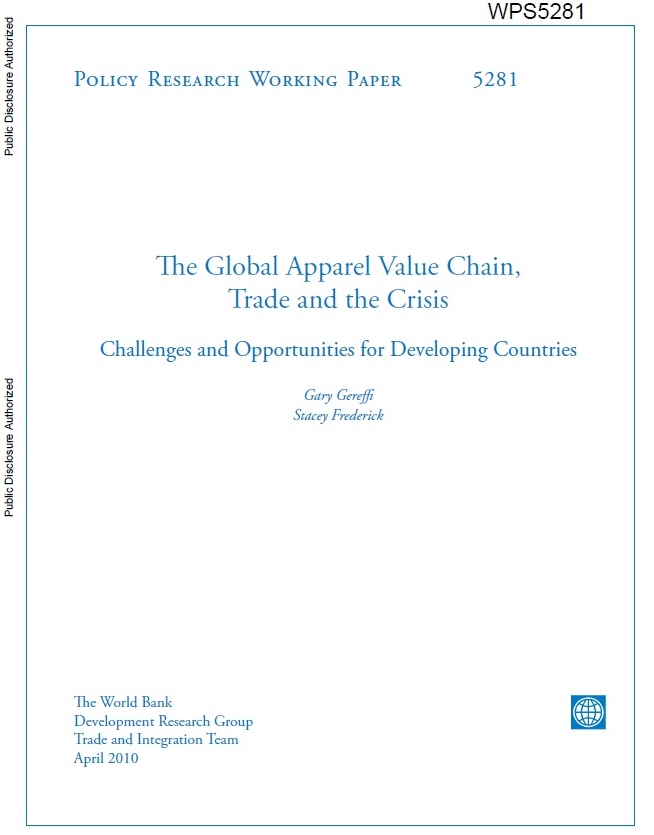
Gereffi, G. & Frederick, S. (2010). The Global Apparel Value Chain, Trade and the Crisis: Challenges and Opportunities for Developing Countries. The World Bank.: Washington DC
One recent work of Dr. Gary Gereffi, a well-known expert on value chain studies, on the impacts of the financial crisis on the global apparel industry. It is suggested that the developing countries will gradually move up in the value chain and undertake more value-added functions such as design and product development. This is a two-edge sword to T&A industries in the developed countries. It could mean more resources to take advantage of and more intensified compeitition at the same time. Although Dr. Gary uses the concepts of OEM, ODM and OBM to describe evolution of the apparel chain, the major conlusions are compatable with the famous stages of development theory suggested by Toney (1986).
To read the fulltext, click here
The Sixth Anniversary of Post-quota Era:
New Patterns of World Textile and Clothing Trade and Critical Trade Policy Issues
By Sheng Lu
Keywords: Post-quota era, world textile and clothing trade, trade policy
Impact of the elimination of the 40-year textile and clothing (T&C) quota system on January 1, 2005 has always been a research interest to scholars in the field. Shifting from a highly-distorted trading environment to a much more market-based competition, reshuffle of the world T&C trade in the post-quota era is widely believed to be unavoidable and will have ripple effects on the future landscape of the global T&C industry (Dickerson, 1999; Nordas, 2004).
After six years of transition, medium and long-term effects of quota elimination have begun to display, attributed to adjustment of business practices of T&A firms in response to the new “rules of the game” (UNIDO, 2009). By taking advantage of such great timing, this study scrutinizes patterns of world T&C trade that have been newly emerged so far in the post-quota era. Capturing these new trends of development at the macro-industry level can both deepen understanding about the 40-year quota system itself and raise awareness of emerging research agendas for world T&C trade.
Three specific post-quota patterns of world T&C trade are discussed in the study:
First, non-dominant position of China in world T&C export. At first glance, China increased its market share in world T&C export by roughly 10 percentage points from 2005 to 2008, suggesting China was one of the biggest winners of quota elimination (WTO, 2010). However, a closer look will find: (1) China gained its market share at a decelerating rate over that period, implying China’s export surge at the very beginning of quota elimination was mainly due to the temporary transition effect; (2) At the disaggregated 6-digit HS code level, China’s export performance varied greatly from product to product, implying other exporters was still able to compete with China in the post-quota era by focusing on certain T&C product categories; (3) A number of Asian and European countries other than China also enjoyed robust growth in T&C export since 2005, suggesting China was one of the beneficiaries rather than the only winner of the post-quota era. Last but not least, the emergence of the “China+1” sourcing strategy indicated that T&C importers already started selecting other possible substitution sourcing destination as China’s back-up. In particular, importers were cautions about China’s rising manufacturing cost and the business risks associated with placing “too many eggs in one basket”.
Second, geographic concentration of T&C trade and increasing dependence on textile manufacturing capacity for clothing export. This new pattern is closely associated with changes of buyers’ sourcing practices. Specifically: (1) Market concentration rate (Herfindahl index) in major T&C importing countries, such as the United States, Europe and Japan, quickly went up since 2005 because of buyers’ consolidation of their sourcing channels. Traditional trade patterns such as “triangle manufacturing” and “outward processing trade” which were artificially created by the quota system can no longer justify their rationality of existence when quota restriction were removed. (2) The traditional “Cut, Make and Trim” (CMT) sourcing practice was gradually replaced by full-package sourcing. This shift was largely caused by the upgrading of global T&C value chain, including the transition of branded manufacturers into marketers and retailers’ more active involvement in direct sourcing; (3) Compared to CMT, qualified destination for full package sourcing needs to have the capacity of locally manufacturing textiles. This requirement poses big challenges to many developing countries which haven’t established a sound textile industry yet due to their overall lagged behind economic development. Impacts of full package sourcing on many aspects of the global T&C industry can be further studied.
Third, widening gap of intra-region trade patterns between America and Europe. As one format of vertical division of labor formed by countries in the same region but at different development stages, intra-region trade was a special feature of the world T&C trade, especially in America and Europe (Dickerson, 1999). However, statistics showed that intra-region trade in America quickly dropped from 69% to 55.7% for textiles and 48.5% to 26.9% for clothing from 2004 to 2008 (WTO, 2010). The decline occurred despite the new passage of several free-trade agreements which deliberately include clauses encouraging the using of U.S.-made textile products by neighboring developing countries. Accompanied with lowering share of intra-region T&C trade, imports from Asia keep constant rising in America over the same period. In contrast, share of intra-region trade in Europe remained stable, stood at around 75% for textiles and 82% for clothing. More studies can be done to explore the causes of such widening gap between America and Europe in terms of intra-region trade patterns.
This study also calls for awareness of “unexpected” negative effects of some trade policies on developing countries’ T&C export in the post-quota era. These trade policies include although not limited to: (1) WTO Doha Development Agenda (DDA). The DDA negotiation set the goal to cut import tariff for T&C product worldwide. However, reduced tariff rate will also wear down the real benefits of preferential duty-free treatment enjoyed by some least developed countries when competing with T&C export giants such as China and India; (2) Rule of origin (ROO) provisions in free-trade agreements. ROO originally was developed to ensure preferential treatments be enjoyed only by eligible FTA members. However, as ROO is specific to each FTA, the complexity and inconsistency made many preferential treatments seldom be taken advantage of. ROO further reduces the incentives for developing countries to develop their own textile industry. This put developing countries at a special disadvantage position when buyers are shifting to full package sourcing as discussed above. (3) Generalized System of Preferences (GSP). Aimed at promoting economic growth in the developing world, developed countries allow preferential duty-free entry of imports from eligible developing countries through the GSP program. Ironically, although T&C account for 50%-90% of total exports for many developing countries (WTO, 2010), most T&C importers including the United States and the European Union still reject including T&C in their GSP programs due to opposition from political forceful domestic industries with concerns about import competition. It is a challenge for policy makers in the post-quota era to design a set of fair and rational trading rules under which developing countries can enjoy the benefits of quota elimination and have more opportunities participating in world T&C trade. Academia has its key role to play in this endeavor.
References
Dickerson, K. G. (1999). Textiles and apparel in the global economy. N.J.: Merrill
Nordas, H. K. (2004). The global textile and clothing industry post the agreement on textiles and clothing. WTO discussion papers, 5. Geneva: WTO Publications
United Nations Industrial Development Organization, UNIDO (2009). The Impact of Institutions on Structural Change in Manufacturing: the Case of International Trade Regime in Textiles and Clothing. Vienna: Austria
World Trade Organization, WTO. (2010). World Trade Statistics, Geneva: Switzerland