
Background:
The Uyghur Forced Labor Prevention Act (UFLPA) was signed into law by President Biden on December 23, 2021. UFLPA officially entered into force on June 21, 2022.
UFLPA establishes a rebuttable presumption that “any goods, wares, articles, and merchandise mined, produced, or manufactured wholly or in part in the Xinjiang Uyghur Autonomous Region (XUAR) of the People’s Republic of China, or produced by certain entities,” are not allowed to enter the United States based on Section 307 of the Tariff Act of 1930. In other words, generally, importers have to provide evidence demonstrating that the factories or entities involved in the production of their imported products have no connection to XUAR or are not involved in any forced labor practices in XUAR.
UFLPA affects not only US imports directly from China but also products from other countries. Notably, China is a critical textile raw material supplier for many leading apparel exporting countries in Asia, and over 90% of cotton “made in China” comes from XUAR.
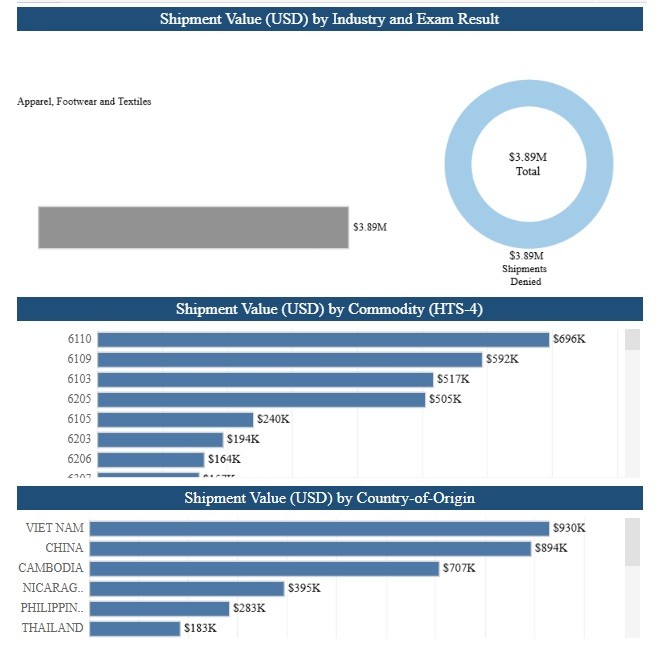
According to the U.S. Customs and Border Protection (CBP), from 2025 to September 2026, about $3.89 million in U.S. imports of textiles, apparel, and footwear products were denied entry under the UFLPA. Of these products, only approximately 23% were labeled “Made in China,” and the rest were shipped from Vietnam, Cambodia, Nicaragua, the Philippines, Thailand, and a dozen other countries
Discussion questions:
- Question 1: Based on the video, why is forced labor a supply chain issue rather than a factory-level social responsibility issue? Why might a US fashion company struggle to determine whether its imported products are linked to forced labor? What does the video reveal about the limitations of monitoring only a US fashion company’s direct suppliers?
- Question 2: Based on the video, why is sourcing apparel from countries other than China’s Xinjiang region not necessarily sufficient to avoid forced labor risks or ensure compliance with the Uyghur Forced Labor Prevention Act (UFLPA)?
- Question 3: After watching the video, how would you describe the complexity of ensuring that apparel products are free from forced labor? Given these challenges, which stakeholders should U.S. fashion companies work closely with as key partners to identify, prevent, and address forced labor risks across their supply chains? Why are these partnerships important?
Additional reading
- White House Executive Order (June 2026): Strengthening Customs Enforcement
- FASH455 Exclusive Interview with the Office of Trade at U.S. Customs and Border Protection (CBP)


