FASH455 Exclusive Interview with Mikayla DuBreuil about Technical Apparel Design and Sourcing

About Mikayla DuBreuil

Hello, my name is Mikayla DuBreuil, and my passion is to bring designers’ creative visions to life. I have a diverse background in apparel design, from intimates and compression wear to dresses and jeans, and everything in between! My resume consists of technical design positions at Under Armour, Marena, Anthropologie (URBN), Lee & Wrangler, and, most recently, SPIRIT HALLOWEEN.

Above all, my joy in apparel design lies in pattern-making. Designers are the artists, and pattern makers are the engineers who bring their designs to life. I love problem-solving to create fantastical designs and reduce physical sampling. Most of my work is in CAD 3D software, specifically CLO 3D. I am also a certified super user in the 3D CAD software, Vstitcher, and experienced in the 2D CAD patterning software, Accumark and Optitex.

Note: Mikayla Dubreuil graduated from the University of Delaware (UD) with a Master of Science in Fashion and Apparel Studies. She also graduated from UD with a Bachelor’s Science in Apparel Design in 2018. She received the International Textiles and Apparel (ITAA) Sara Douglas Fellowship for Professional Promise-Masters in 2019. Mikayla’s master’s thesis Traditional vs. big-data fashion trend forecasting: An examination using WGSN and EDITED was published in the International Journal of Fashion Design, Technology and Education and have been cited by more than 100 other scholarly papers.  

Sheng: What are your main responsibilities as a technical designer? Can you walk us through your typical day? Also, what makes you love your job?

Mikayla: A technical designer’s job is to ensure the proper execution of fit and construction of a garment to meet the designer’s & buyers’ expectations whilst keeping cost in mind.

This involves creating detailed tech packs with key measurements, i.e., specs like waist, front neck drop, across shoulder, sweep, and front length from high point shoulder, measuring garments, conducting fittings on a live fit model, and submitting fit comments. A common technical design goal is to approve a design with as few physical samples as possible.

Some technical designers’ responsibilities are more rooted in construction and creating tech packs, whilst others focus on fit.

However, in my opinion, the best technical designers have a strong pattern-making and construction background. By having a strong pattern-making and construction background, technical designers (TDs) can communicate to designers what silhouettes and constructions are feasible. In this manner, TDs can find creative solutions to execute the designer’s vision and improve fit.

As an Associate 3D Technical designer, my typical day consists of taking design set-ups/hand-offs, pattern making the designs in CLO 3D, and attending buyer review meetings.

I love my job at Spirit Halloween because I can build garments in 3D, both bringing the designer’s vision to life and improving sustainability by reducing sampling. I also have an incredible manager, which is very important.

Sheng: How does a technical designer collaborate with the sourcing department, and in what ways does your work influence sourcing decisions?

Mikayla: To preface, the sourcing department is responsible for deciding what fabrics and trims will go into the garment.

Technical designers collaborate with the sourcing department or buyers by recommending ideal fabrics to achieve the desired look of a garment. For example, for a bodysuit, technical design would recommend a stretch knit fabrication. TDs affect sourcing decisions by providing knowledge on how the garment will execute in the desired fabric.

Ultimately, it is often sourcing/design/buying’s decision—the call varies from company to company—to choose the fabric. Ultimately, technical design commonly doesn’t make the call on what fabric is used.

This impacts our work because technical designers will base their specs and patterns on the fabric and desired silhouette. For example, a stretch denim pant would have smaller specs than a non-stretch denim pant since the stretch denim has more ease.

Further, the sourcing department affects our TDs’ work because it determines which vendor is making the garment. As a result, this affects our decision on whether to make the pattern internally or externally, based on the vendor’s expertise & capabilities.

Sheng: Our students are particularly interested in fabric sourcing. From your experience, what factors do fashion companies weigh most heavily when selecting fabrics, and how do these influence design and production decisions?

Mikayla: Cost. Cost and fabric drape.

However, designers and technical designers can push back if a lower-cost option is executing poorly. Buyers can make the decision to increase the retail price to meet initial markup goals to accommodate higher fabric costs.

Alternatively, the team may choose to use the low-cost fabric option in a less high-profile area of the garment and spend more on a high-quality fabric in a statement area of the garment.

On a separate note, if there is liability fabric, i.e., extra fabric that is not being used, buyers often reallocate the fabric to a different or new silhouette.

Sustainability is also at the forefront of mind, especially at denim brands. There is a shift to move towards recycled cotton.

Sheng: Many fashion companies are incorporating “preferred sustainable fibers” such as recycled, organic, or regenerative materials. From your perspective, what are the opportunities and challenges in integrating these fibers into apparel?

Mikayla:Cost and fit are both challenges in integrating these fibers into apparel. For example, many consumers want stretch in denim jeans, but it can be difficult to achieve that effect when switching to certain “preferred sustainable fibers”.

Additionally, it’s difficult to source a “sustainable” faux fur for a teddy bear costume. The plush material is so specific, resulting in a lack of sustainable choices.

One opportunity is using fabrics that are composed of a single fiber. Fabrics with fiber blends are much more difficult to recycle. A lot of opportunities are available to the consumer! Buy fewer and higher-quality items. Wear clothes more than once before washing.

Sheng: Looking ahead, what industry trends will you be keeping a close eye on in the next 1-2 years, and why?

Mikayla: Tariffs!! Tariffs impact our ability to source and distribute our garments. Also, pop culture matters, since many want to dress up as the latest phenoms!

Sheng: Reflecting on your time at UD and in FASH, what experiences helped prepare you for your career? What advice would you give to current students as they plan their career paths?

Mikayla:Think about what you want and your goals. I am so glad that I attended the FASH Grad program, which gave me exposure to CLO 3D and ultimately led to my current role. While I was at UD, I was proactive by working with professors on projects that gave me industry visibility. For example, I worked on an Optitex project that allowed me to attend a training at the Under Armour HQ, which helped me earn a spot as a technical design intern and catapult my career.

–The End–

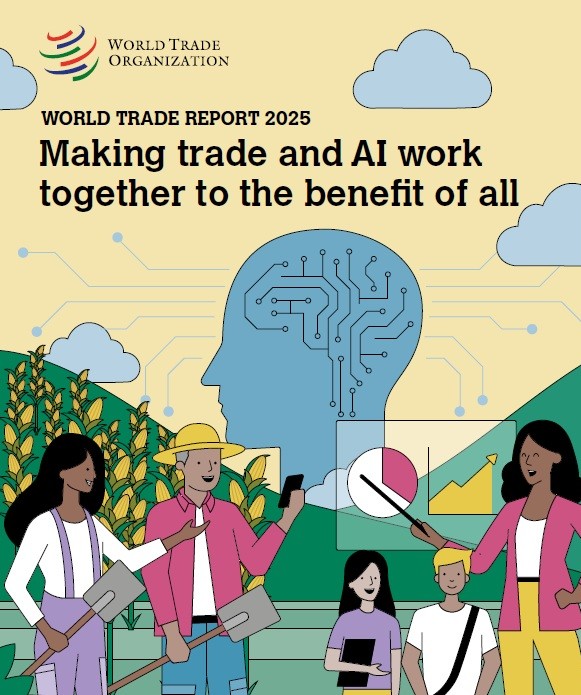
2025 World Trade Report: Making Trade and AI Work Together to the Benefit of All

The World Trade Organization (WTO) recently released its 2025 World Trade Report, which explored the complex and fast-evolving relationship between artificial intelligence (AI) and international trade.

Below are the findings most relevant to the textiles and fashion apparel sector:

First, AI has the potential to boost global trade. However, the impact on different sectors varies. According to the report, AI is expected to significantly boost global trade by 34-37% between 2025 and 2040, with larger increases in digitally deliverable services (around 40% growth), followed by other services (around 30%). In comparison, the AI-driven growth of global trade in the manufacturing sector (22-24%) and the primary input sector (9.5-9.9%) will be much smaller.

Second, AI is helping to reduce trade costs through multiple channels. For example, as the report noted, AI can help reduce trade costs through “optimizing trade logistics, streamlining regulatory compliance and contract enforcement, reducing language barriers, enhancing international communication, and improving search and matching processes between suppliers and buyers.” As another example, the report noted that, “in retail, AI-supported scenario planning has helped firms to diversify suppliers and adjust sourcing calendars to align with changing tariff regimes.” All of these AI applications could be used in apparel sourcing and trade.

In a March 2025 survey conducted by the WTO and the International Chamber of Commerce (ICC) among firms currently using AI, 90 percent reported tangible benefits in trade-related activities, and 56 percent reported that AI enhanced their ability to manage trade risks. The survey also found that “Larger firms primarily use AI for compliance with trade regulations, contract analysis, and trade finance. Smaller firms, in contrast, tend to focus on market intelligence and improving communication.”

Third, AI’s impact on jobs seems to be complicated.  For example, the report suggests that AI will have limited impacts on low-skilled apparel manufacturing jobs, but could replace middle-skilled and high-skilled jobs (such as those in apparel wholesaling and retailing). According to the report, “The task substitution from human labor to AI is more pronounced for medium-skilled and high-skilled occupations than for low-skilled ones.”

Meanwhile, the report categorized textiles and apparel manufacturing (ISIC code 13-15) as a “low” AI-intensity sector, and wholesale and retail (ISIC code 45-47) as “medium” AI-intensive. Nonetheless, the report estimates only a modest share of tasks to be replaced by AI—about 3% for low-skilled and 7–9% for medium- and high-skilled workers.

Fourth, the report calls for “deliberate efforts” by policymakers to broaden AI access and ensure the gains from AI will be evenly distributed globally. In other words, without targeted, proactive policymaking, AI could worsen global inequalities rather than reduce them.

For example, the report suggests that AI could act as an equalizer by increasing the productivity of medium- and low-skilled workers in developing economies. Combined with lower trade costs for cross-border services, these improvements could create more opportunities for companies and professionals in developing economies to engage more actively in global markets.

However, the report also warned thatAI may shift comparative advantages in ways that reinforce inequality.” Notably, “AI adoption is not uniform, as it tends to cluster in large, urban, digitally connected firms in high-income economies… AI technology favors capital- and data-intensive production, which could erode the competitiveness of economies that rely on low-skilled and low-cost labor.”

Additionally, the report noted that trade barriers remain an issue for international trade in the AI era. For example, AI-enabling goods are increasingly affected by technical barriers to trade (TBT). Also, AI-intensive services still face significant restrictions on trade as countries have only made modest commitments under the WTO’s General Agreement on Trade in Services (GATS). Furthermore, regulations on cross-border data flows are still largely fragmented. This explains why the WTO could still play a vital role in supporting AI development, from promoting open markets in AI-related goods and services, to supporting AI innovation and diffusion through intellectual property rights protection, and to encouraging greater regulatory consistency on trade-related aspects of AI.

Summary by Sheng Lu

New Report: Reimagining the Apparel Value Chain amid Volatility

The new study released by Mckinsey & Co. was based on a survey of chief procurement officers (CPOs) from “apparel companies that collectively spend about $110 billion annually on sourcing” and follow-up in-depth interviews with 25 CPOs conducted in late 2023. Key findings:

#1 Fashion companies face increasingly challenging sourcing scenarios complicated by “ongoing supply disruptions caused by shifting demand, material price volatility, geopolitics, global trade issues, rising competition, and regulatory changes.” Compared to many other sectors, the apparel supply chain is particularly volatile, and disruptions can have amplified ripple effects throughout the supply chain. For example, an 11% decline in yarn exports could lead to a 30% drop in the production utilization rate of fabric mills.

#2 Fashion companies further prioritized “end-to-end” process efficiency in response to the shifting sourcing environment. For example, nearly 70 percent of respondents expect to “improve sourcing cost in the near term,” they plan to “improve efficiency across all facets of sourcing, including lower product costs, reduced sourcing expenses, and accelerated go-to-market processes.” Other practices to control sourcing costs include “using analytics to examine product cost breakdowns and identifying opportunities to improve fabric unit costs and material consumption,” “using digital platforms and data-driven insights to inform sourcing decisions and collaborating with suppliers to pinpoint cost savings opportunities.”

#3 Strengthening relationships with key suppliers remains critical. About 71 percent of surveyed brands consider “consolidating the supplier base” a medium to high priority for their strategy in the next five years. Surveyed fashion companies also indicate that deeper relationships, including “long-term volume commitments, shared strategic three- to five-year plans, and collaboration partnerships,” accounted for 43 percent of their total apparel supplier base in 2023, up from 26 percent in 2019. In comparison, suppliers based on “transactional relationships” only accounted for 3% of the total in 2023, a substantial decrease from 22% in 2019.

As the report noted, building strategic partnerships with core suppliers and “innovative niche suppliers” based on trust and transparency “resulted in a more robust, resilient, and agile supplier base” for fashion companies. More importantly, deeper importer-supplier partnerships extend beyond cost-saving measures but increasingly emphasize “sustained value creation.”

#4 Fashion companies continue to diversify their sourcing base geographically and pursue nearshoring to “improve speed, cost, and agility.” Specifically, between 2019 and 2023, respondents reduced their sourcing value from China (down from 30% to 22%) and sourced more from South Asia (up from 23% to 34%). At the country level, more than 40 percent of respondents plan to further increase sourcing from Bangladesh, India, and Vietnam. That being said, the report found that nearshoring remains “flat” in sourcing value in the US (about 17%) and in the EU (about 25%) from 2019 to 2023.

#5 To expand apparel nearshoring, several bottlenecks remain to be solved: 1) lower labor productivity in the region resulting in higher “total landed costs,” 2) challenges with yarn and fabric availability, and 3) the supplier bases in nearshoring countries can manufacture a more limited array of products.

The report also noted that “both local suppliers and Asian companies with a presence in Central America and Mexico have invested in improving their productivity and building local capacity for making yarns and fabrics,” which is helpful in addressing the challenges.

#6 Sustainability will continue to affect fashion companies’ sourcing decisions. For example, 80 percent of respondents said that “environmental, social, and governance certifications; transparency and traceability; and sustainable material usage have become prerequisites in supplier selection.” Fashion companies commonly used scorecards (92 percent) and third-party audits (78 percent) to ensure suppliers’ compliance with sustainability requirements. There is also an increasing need for data transparency on sustainability. However, “data is important, but organizations must understand how to use it to create value.”

Further, 86 percent and 70 percent of respondents said they would use recycled polyester and recycled cotton in their apparel products over the next five years.

#7 Digital innovation will deepen further in the sourcing and product development area. Popular tools include 3D modeling and digital sampling, Fabric libraries, and Product Lifecycle Management (PLM) system. However, prioritizing process redesign, data quality enhancement, and the integration of systems are essential to enable efficient operations. For example, one company developed a single material ID library with more than 30,000 materials from approximately 300 suppliers, allowing the company to aggregate more than 6,000 cost sheets in less than a minute.

FASH455 Exclusive Interview with Tricia Carey, Chief Commercial Officer of Renewcell, about Textile Recycling and Implications for Apparel Sourcing and Supply Chain

About Tricia Carey

Throughout her career, Tricia believes in ‘progress over perfection’.  As an advocate for innovation and circularity in the textile and apparel industry, she recently joined Renewcell to accelerate the commercial development of CIRCULOSE®, making fashion circular. With a vast global network, as well as experience in brand building, storytelling, and business development, she is an invaluable partner to close the loop and optimize the benefits of CIRCULOSE®.

For more than twenty years, Tricia held various commercial management positions at Lenzing Fibers to establish the TENCEL™ brand, build mill partners, and set retailer specifications.  Her roles comprised marketing, Americas business development, and global denim segment expansion, including the creation of the Carved in Blue platform and numerous collaborative collections with mills and brands.

Tricia holds a bachelor’s degree in Fashion Merchandising from The Fashion Institute of Technology, as well as certificates in Digital Marketing and Strategy from Cornell University and MIT.

Tricia serves on the board of Accelerating Circularity, as well as the Transformers Foundation and the Fashion Impact Fund.  She was Vice Chair at Textile Exchange from 2014-2018.  In 2020 she was nominated as B2B Content Marketer of the Year by Content Marketing Institute, as well as top 100 Denim Legends by WeAr Magazine.  In 2019 Tricia was awarded the RIVET 50 for influential denim industry leaders.  She has been a speaker at various industry events, including the Conscious Fashion and Lifestyle Network at the United Nations, Transformers, Kingpins Show, Southern Textile Association, Texworld, Premiere Vision, Wear Conference, and more.

Tracia lives in New York City and can be seen dashing on the Peloton leaderboard.  The best way to connect with Tricia is through LinkedIn.

The interview was moderated by Emilie Delaye, UD’s entrepreneurship major and fashion management minor. Emilie has been involved in several research projects on the textile and apparel trade, sourcing, and sustainability issues, including authoring a paper on US fashion companies’ evolving sourcing strateiges published in Just-Style. Emilie is also the recipient of the 2024 Warner and Taylor Awards for Outstanding Seniors, the highest recognition for UD’s graduating seniors.

Event recording: AI and trade: Will ChatGPT handle your supply chains? (March 2024)

Panel

  • Cecilia Malmström, Nonresident Senior Fellow, Peterson Institute for International Economics (PIIE)
  • Eva Maydell, Member, European Parliament; Rapporteur for the European Union’s AI Act
  • Joshua P. Meltzer, Senior Fellow, Global Economy and Development Program, Brookings Institution

Key points

  • AI has the potential to optimize supply chains, analyze shipping routes, forecast demand, and enhance risk assessment and fraud detection.
  • AI could potentially offer better market intelligence to help businesses make better-informed decisions and improve forecasting accuracy.
  • AI could reduce barriers to trade in services and technical barriers of trade (TBT) and empower small and medium-sized enterprises (e.g., translation services)
  • While trade in goods has peaked, services trade continues to grow substantially, even during COVID-19, with digital services and professional services being the main drivers. AI could further facilitate the expansion of service trade.
  • AI is already affecting the nature of jobs and the services trade.
  • Policymakers need to focus on creating an environment that supports the development and deployment of AI, particularly by balancing the need to provide regulatory guardrails and the need to encourage business innovation.
  • AI regulation is currently fragmented worldwide. However, there is significant potential for establishing international standards and regulatory coherence, offering a common approach to regulating AI.
  • Building more societal trust among the business community, policymakers, and civil society is necessary to address concerns about AI and related challenges.

[This blog post is not open for comment]

Technical Design and Apparel Sourcing: FASH455 Exclusive Interview with Emma Zuckerman (UD & FASH BS16), Technical Designer at Nike

About Emma Zuckerman

Emma Zuckerman, a New Jersey native, graduated from the University of Delaware in 2016 with a degree in Apparel Design. During her time at UD, she actively participated in the FASH program and engaged in extracurricular activities related to her major. Emma conducted research on functional fashion with Dr. Martha Hall and held positions on the executive board, eventually becoming the President of Synergy Fashion Group in her senior year. She also founded a club dedicated to creating adaptive garments for children with disabilities. After graduation, Emma commenced her career in technical design with Under Armour (UA), accumulating six years of experience across various apparel categories and fabrications. She began in youth basketball, then transitioned through a range of products, from underwear to seamless leggings, woven jackets, and pants. In her later years at Under Armour, she played a significant role in the launch of Curry Brand and the introduction of UA’s first inline women’s basketball apparel line (non-uniform). Presently, Emma holds the position of Senior Technical Designer at Nike, where she contributes to the development of ACG and Nike SB product lines.

In her free time, Emma loves working on personal sewing, patterning, and draping projects. She also loves hiking, skateboarding, baking, swimming, and painting!

Disclaimer: The views expressed in this interview are those of Emma Zuckerman and do not reflect the views or positions of her employer or any affiliated organizations.

Sheng: What does a technical designer do? Can you walk us through your typical day as a technical designer? Also, what makes you love your job?

Emma: Technical designers work on developing clothing – we work with factory partners to take a style from a conceptual sketch to bulk production. For each style, we start by working with our design partners to understand their vision. We create detailed construction sketches, measurement charts, and sometimes original patterns, then compile those into a tech pack along with our designer’s garment sketch and a Bill of Materials outlining all garment components. A factory partner uses the information in that tech pack to make a sample to send back to us. We fit that sample with our team, cutting and pinning until we achieve the desired fit and aesthetic. The factory uses our feedback to create a second sample, and this process repeats until the style is finalized and approved for production. Throughout the process, we keep the tech pack up-to-date and ensure it accurately reflects the style we’re developing.

There are so many things I love about my job! The subjects of fitting and patterning are fascinating to me, and there will always be so much to learn about them. I love that throughout my career, there will be no limit to how much I can learn and how much my skills can grow. I exercise my creativity while also exercising the mathematical side of my brain, so my job is constantly challenging me in really interesting ways. I get to work with people around the world, learn about other cultures, backgrounds, and communication styles, and collaborate with amazingly talented teammates.

Sheng: How does a technical designer get involved in a fashion company’s sourcing process?

Emma: A technical designer’s level of involvement in the sourcing process varies from company to company, but it is always extremely helpful to work closely with our sourcing team. Since both technical designers and the sourcing team communicate with factories, we often check in with each other to make sure the information we’re sending is consistent. We (technical designers) can help provide feedback on factory capabilities and sample quality. Understanding the sourcing process helps us gain insight into why our sourcing partners allocate certain styles to specific factories (for example, a factory might have expertise with woven fabrics, outerwear, or embroidery; a style might qualify for a lower duty rate if sourced from a specific region; some factories may reach their maximum capacity for new styles more quickly than others).

Technical designers work most closely with our sourcing partners during costing conversations. Factories send cost sheets for every style at several key points during development. These cost sheets break down every element that contributes to the final cost of making the garment, from materials to trims, to time spent.  One major role of a sourcing partner (or, at some companies, a product developer) is to process these cost sheets and advise the rest of the team on how much cost needs to be saved, and/or what steps can be taken to save cost, to ensure the style is profitable. Technical designers can use our garment construction and patterning expertise to effectively contribute to these conversations (which leads nicely into the next question)!

Sheng: We know production cost is a critical sourcing factor for fashion brands and retailers. From a technical designer’s perspective, what factors affect garment production and its sourcing costs? What strategies can be employed to manage these costs, beyond labor wages?

Emma: So many factors affect production cost – at the top of my mind are material cost (for fabric yardage and individual trims like zippers) and cut/make time (which includes labor cost and factory overhead). Material usage and cut/make time are both factors that technical designers can heavily influence during costing conversations with our design and sourcing teams. 

Material usage: Marker efficiency refers to the amount of fabric used per garment compared to the amount wasted. The more closely pattern pieces can fit together, the less space for fabric scraps between them and the more efficient a marker will be. A technical designer can use their patterning experience to advise pattern shapes that will contribute to marker efficiency. For example, adding or removing a seam may allow pattern pieces to fit more closely together. Choosing where and when to engineer print placements – for example, matching stripes across a seam – will also impact the way pattern pieces can be arranged and, therefore, how efficient a marker can be. An efficient marker will both save cost and minimize fabric waste.

More on material usage, and cut/make time: Each construction choice contributes to the final cost of making the garment. For example, when it comes to finishing seam allowances, binding a seam allowance will take longer and use more material than an overlock stitch. For that reason, binding a seam allowance will also be more expensive. As garment construction experts, we lead conversations about style details, the time it will take to construct them, and other options that could potentially save time and material. This helps our team make informed choices that consider both cost and aesthetics.

Sheng: What are your thoughts on the trend of fashion companies using more sustainable materials like recycled cotton in their products?

Emma: I support fashion companies making an effort toward more sustainable & ethical production, and using recycled materials is an important step. Fabric with recycled fiber content can be more expensive and more difficult to source than traditional fabric, which may discourage some companies from moving in that direction. I’m hopeful that this trend will continue and that as it gains popularity, fabric with recycled fiber content will become easier to source over time.

Speaking of ethical production, I also would like to see fashion industry brands take additional steps toward a more earth-positive and people-positive existence, including:

  • Considering local labor laws, worker wages, and working conditions when selecting factories
  • Implementing garment repair programs to extend the lifecycle of their styles
  • Improving accuracy of demand planning to reduce excess inventory and/or considering donation or upcycling of excess inventory
  • Expanding size ranges and accurately grading sizes to fit well on plus-sized consumers
  • Moving away from gendering clothing as “men’s” or “women’s;” during sample development, checking that samples fit well on lots of body types (including individuals who have had gender-affirming care, individuals who haven’t, individuals who may be wearing gender affirming garments like binders)
  • Diversifying the company workforce at every level, from entry-level to leadership to c-suite
  • Expanding representation in advertising campaigns to reflect the diversity of global consumers
  • Supporting nonprofit agencies whose work aligns with company values

Some companies are doing a great job of fulfilling some, most, or all of the items on my above wish list, but we know that the fashion industry has a long way to go when it comes to impacting our earth and our societies positively. I think it’s our job as newer fashion industry professionals to speak up about all of this and start to push our industry in a better direction.

Sheng: What other key industry trends will you closely monitor in 2023?

Emma: I am so interested in the increased use of 2D and 3D patterning software. Programs such as Gerber, Optitex, Clo, and Browzwear are already changing the design and development process in fascinating ways. Experience in any of these programs has already become a very valuable asset for job applicants. I’m curious whether garments will ever be sold to consumers based only on 3D renderings, and if body scanning will become a more mainstream part of the shopping process.

I’m also curious how the increased use of 2D and 3D patterning software will impact more traditional design processes, like paper patterns and draping. Will these arts be preserved? Are there types of apparel that will always need to be draped or patterned physically? Will students 20 years from now still learn to pattern and drape the way we did, or will these skills be fully computer-based?

Sheng: Any reflections on your experiences at UD and FASH? what advice would you offer current students preparing for a career in fashion after graduation?

Emma: I feel so lucky to have had the experience that I did at UD and within the FASH program. I learned so much in my patterning, draping, collections, textiles, and sourcing classes (big shoutout to Dr. Lu!) that has stayed with me and helped me find success in my current job.

I have so much advice! If you’re looking for a career in technical design, practice any patterning software you can access as much as you can. As you begin applying to jobs, try to reach out to contacts at the companies you’re applying to (even if it means sending a random LinkedIn message to a fellow UD grad, or asking a professor/another student to help connect you with someone). Start your career with curiosity and an open mind – you will learn so much on the job that isn’t covered in school. Try to find a mentor, or several mentors, who’ve had work experiences similar to yours. A mentor who you can trust and rely on for advice makes a huge difference when work gets challenging. Speaking of which – work does get challenging, and that’s okay! Work on learning to identify situations that you can work through and learn from (which are hugely beneficial to your personal growth and career development), compared to work environments that are more consistently unhealthy or not providing what you need (which are an indication that it’s time to make a change). If you have coworkers you trust, sharing salary information openly is a great way to make sure everyone’s skills and contributions are being valued appropriately.

Enjoy your time in college and in the FASH program. I miss it!

–The END–

State of Fashion 2022 Report by McKinsey & Co & BOF

In December 2021, McKinsey & Co’ and Business of Fashion (BOF) released its annual State of Fashion report. Below are the key points in the report regarding the sourcing trends in the year ahead:

#1 The logistics challenges could intensify in 2022, with 87% of respondents expecting supply chain disruptions to continue to affect their profit margins in the year ahead negatively.  The global surges in demand create additional and unpredictable pressures on freight services, ports, and terminals. As a result, fashion companies may need to “plan for a permanently more expensive logistical future.”

#2 It will be critical for fashion companies to keep sourcing flexible, build resilience into the supply chain, and work closely with vendors. As one respondent commented, “[crises like] pandemics do happen.”

#3 The interest in nearshoring and reshoring will continue in 2022. Over 70% of respondents plan to increase the share of nearshoring close to company headquarters, and about 25% intend to reshore sourcing to their headquarters’ country. Notably, some EU-based companies have been moving textile manufacturing from China to Turkey to minimize delays.

#4 One crucial free trade agreement to watch is the Regional Comprehensive Economic Partnership (RCEP), to take effect on January 1, 2022. It’s the largest free trade agreement in history, involving nearly 30% of the world’s population. RCEP “has the potential to be at the core of the reconstruction of the global supply chain. RCEP is possibly the only trading block with both production capacity and consumer demand,” meaning it could dramatically facilitate regional trade and investment within Asia.

#5 There is a “significant opportunities in creating a hyperdigital supply chain.” Some companies are leveraging technology to find“competitive advantages in a supply-chain context when it comes to speed, agility, cost efficiency, and price.” However, fashion companies admit, it will remain challenging to plan inventory flow with much precision, which won’t change any time soon.

Other interesting comments from the report:

 “One mega trend…in the sector is the importance of breaking down the traditional boundaries of what’s in the company and [what is done externally]; what can be accomplished together as a network — whether it’s creativity, sustainability, and supply chain, or technology.”

“As fashion brands look to pursue closed-loop recycling solutions, it is increasingly important to engage with suppliers who can help them move toward sourcing circular materials.” “Cost is certainly a factor; recycled fibres are typically more expensive than their virgin counterparts.”

“In the longer term, fashion brands will need to balance the desire to enhance speed to market with the need to alleviate supply chain pressure…That may mean streamlining production, logistics planning, and booking capabilities, as well as putting in place contingency plans and alternative suppliers while remaining as agile and flexible as possible.”

The Globotics Upheaval: Globalization, Robotics, and the Future of Work

Key points

  • “Globotics” or Globalization + Artificial intelligence (AI) is changing the world. Globotics means globalization mixed with new kinds of robotics, from artificial intelligence to technologies that make it easier to outsource services jobs. Particularly, globotics is injecting pressure into our socio-politico-economic system (via job displacement) faster than our system can absorb it (via job replacement). Overall, AI and robots will take jobs — but make the world better.
  • Past globalization and automation were mostly about goods— making them and shipping them. However, the era of globotics is about service-sector automation—driven by information and data.
  • The competition from software robots and telemigrants will seem monstrously unfair to white collar works who lost their jobs. When white-collar workers start sharing the same pain [as blue-collar workers], some sort of backlash is inevitable.
  • As technologies reduce the need for face-to-face contact, some developing nations stand to benefit. For example, India, with its sizeable English-speaking population and armies of techies, could become a hub for services outsourcing, just as China was for manufacturing.
  • Future jobs (that are left) will be more human and involve more face-to-face contact since software robots and tele-migrants will do everything else. In other words, the future economy will be more local and more human.
  • The problem is the short-term. In the era of globotics, it is important to make the rapid job displacement politically acceptable to a majority of voters. Governments may set the policy goal to protect workers, not jobs.

Outlook 2019: Apparel Industry Issues in the Year Ahead

In January 2019, Just-Style consulted a panel of industry leaders and scholars in its Outlook 2019–Apparel Industry Issues in the Year Ahead management briefing. Below is my contribution to the report. Any comments and suggestions are more than welcome!

1: What do you see as the biggest challenges – and opportunities – facing the apparel industry in 2019, and why?

In my view, uncertainty will remain the single biggest challenge facing the apparel industry in 2019, ranging from a more volatile global economy, the unpredictable outlook of the U.S.-China trade talks to the various possible scenarios of Brexit. While uncertainty creates exciting new research opportunities for scholars like me, it could be a big headache for companies seeking a foreseeable market environment to guide their future business plan and investments. 

Meanwhile, the increasing digitalization of the apparel supply chain based on big-data tools and artificial intelligence (AI) technologies means a huge opportunity for fashion companies. Indeed, the apparel industry is quickly changing in nature—becoming ever more globalized, supply-chain based, technology-intensive and data-driven. Take talent recruitment as an example. In the 2018 US Fashion Industry Benchmarking Study, which I conducted in collaboration with the US Fashion Industry Association (USFIA), as much as 68 percent of surveyed leading U.S. fashion brands and apparel retailers say they plan to increase hiring of data scientists in the next five years. Googling “apparel industry” together with terms such as “big data” and “data science” also returns much more results than in the past. It is hopeful that the advancement of digital technologies and the smarter use of data will enable apparel companies to overcome market uncertainties better and improve many aspects of their businesses such as speed to market, operational efficiency and even sustainability.

2: What’s happening with sourcing? How is the sourcing landscape likely to shift in 2019, and what can apparel firms and their suppliers do to stay ahead?

Based on my research, I have three observations regarding apparel companies’ sourcing trends and the overall sourcing landscape in 2019:

First, apparel companies overall will continue to maintain a diverse sourcing base. For example, in a recent study, we examined the detailed sourcing portfolios of the 50 largest U.S.-based apparel companies ranked by the Apparel Magazine. Notably, on average these companies sourced from over 20 different countries or regions using more than 200 vendors in 2017. Similarly, in the 2018 US Fashion Industry Benchmarking Study, which I conducted in collaboration with the US Fashion Industry Association (USFIA), we also found companies with more than 1,000 employees typically source from more than ten different countries and regions. Since no sourcing destination is perfect, maintaining a relatively diverse sourcing base allows apparel companies to strike a balance among various sourcing factors ranging from cost, speed, flexibility, to risk management.

Second, while apparel companies are actively seeking new sourcing bases, many of them are reducing either the number of countries they source from or the number of vendors they work with. According to our study, some apparel companies have been strategically reducing the number of sourcing facilities with the purpose of ensuring closer collaborations with their suppliers on social and environmental compliance issues. Some other companies are consolidating their sourcing base within certain regions to improve efficiency and maximize productivity in the supply chain. Related to this trend, it is interesting to note that approximately half of the 50 largest U.S. apparel companies report allocating more sourcing orders to their largest vendor in 2017 than three years ago.

Third, nearshoring or onshoring will become more visible. Take “Made in the USA” apparel for example. According to the 2018 U.S. Fashion Industry Benchmarking Study, around 46 percent of surveyed U.S. fashion brands and apparel retailers report currently sourcing “Made in the USA” products, even though local sourcing typically only account for less than 10 percent of these companies’ total sourcing value or volume. In a recent study, we find that 94 out of the total 348 retailers (or 27 percent) sold “Made in the USA” apparel in the U.S. market between December 2017 and November 2018. These “Made in the USA” apparel items, in general, focus on fashion-oriented women’s wear, particularly in the categories of bottoms (such as skirts, jeans, and trousers), dresses, all-in-ones (such as playsuits and dungarees), swimwear and suits-sets. The advantage of proximity to the market, which makes speedy replenishment for in-season items possible, also allows retailers to price “Made in the USA” apparel substantially higher than imported ones and avoid offering deep discounts. Looking ahead, thanks to automation technology and consumers’ increasing demand for speed to market, I think nearshoring or onshoring, including ”Made in the USA” apparel, will continue to have its unique role to play in fashion brands and retailers’ merchandising and sourcing strategies.

3: What should apparel firms and their suppliers be doing now if they want to remain competitive further into the future? What will separate the winners from the losers?

2019 will be a year to test apparel companies’ resources, particularly in the sourcing area. For example, winners will be those companies that have built a sophisticated but nimble global sourcing network that can handle market uncertainties effectively. Likewise, companies that understand and leverage the evolving “rules of the game”, such as the apparel-specific rules of origin and tariff phase-out schedules of existing or newly-reached free trade agreements, will be able to control sourcing cost better and achieve higher profit margins. Given the heavy involvement of trade policy in apparel sourcing this year, companies with solid government relations should also enjoy unique competitive advantages. 

On the other hand, as apparel business is changing in nature, to stay competitive, apparel companies need to start investing the future. This includes but not limited to exploring new sourcing destinations, studying the changing consumer demographics, recruiting new talents with expertise in emerging areas, and adopting new technologies fitting for the digital age. 

4: What keeps you awake at night? Is there anything else you think the apparel industry should be keeping a close eye on in the year ahead? Do you expect 2019 to be better than 2018, and why?

Two things are at the top of my watchlist:

First, what is the future of China as an apparel sourcing base? While external factors such as the U.S.-China tariff war have attracted most of the public attention, the genuine evolution of China’s textile and apparel industry is something even more critical to watch in the long run. From my observation, China is playing an increasingly important role as a textile supplier for apparel-exporting countries in Asia. For example, measured by value, 47 percent of Bangladesh’s textile imports came from China in 2017, up from 39 percent in 2005. Similar trends are seen in Cambodia (up from 30 percent to 65 percent), Vietnam (up from 23 percent to 50 percent), Pakistan (up from 32 percent to 71 percent), Malaysia (up from 25 percent to 54 percent), Indonesia (up from 28 percent to 46 percent), Philippines (up from 19 percent to 41 percent) and Sri Lanka (up from 15 percent to 39 percent) over the same time frame. A key question in my mind is how quickly China’s textile and apparel industry will continue to evolve and upgrade by following the paths of most other advanced economies in history.

Second, how will the implementation of several newly-reached free trade agreements (FTAs) affect the big landscape of apparel sourcing and the existing regional apparel supply chains? For example:

  • The newly-reached U.S.-Mexico-Canada Free Trade Agreement (USMCA or commonly called NAFTA2.0) includes several interesting changes to the textile and apparel specific rules of origin provisions, such as the adjustment of the tariff-preference level (TPL) mechanism. Whether these changes will boost textile and apparel production in the Western-Hemisphere and attract more sourcing from the region will be something interesting to watch.
  • The implementation of the Comprehensive and Progressive Agreement of the Trans-Pacific Partnership (CPTPP) and the EU-Vietnam Free Trade Agreement (EVFTA) will allow Vietnam to get access to nearly 40% of the world apparel import market (i.e., EU + Japan) duty-free. However, restrained by the country’s relatively small population, the apparel industry is increasingly facing the challenge of competing for labor with other export-oriented sectors in Vietnam. Realistically, what is the growth potential of apparel “Made in Vietnam” after the implementation of CPTPP and EVFTA?
  • In 2017, close to 80% of Asian countries’ textile imports came from other Asian countries, up from around 70% in the 2000s. Similarly, in 2017, 85.6% of Asian countries’ apparel imports also came from within the region. The negotiation of the Regional Comprehensive and Economic Partnership (RCEP) is likely to conclude in 2019, whose membership includes member states of the Association of Southeast Asian Nations (ASEAN) and other six economies in the Asia-Pacific region (Australia, China, India, Japan, South Korea and New Zealand). Will RCEP result in an ever more integrated Asia-based textile and apparel supply chain and make the Asia region even more competitive as an apparel sourcing destination?  

(comment for this post is closed)

Automation Comes to Fashion

Video Discussion Questions:

#1 Why do you agree or disagree with the video that automation will post a significant challenge to garment workers in developing countries such as Bangladesh? How should policymakers react to the challenges?

#2 Can automation be a permanent solution to the social responsibility problem in the garment industry?

#3 In your view, how will automation affect the big landscape of apparel sourcing and the patterns of world textile and apparel trade?

#4 Why or why not do you anticipate a sizable return of apparel manufacturing to the United States if apparel production can be largely automated?

Additional reading: The robots are coming for garment workers. (WSJ, 2018)

Please feel free to share your views and join our online discussion!

Outlook 2018: Apparel Industry Issues in the Year Ahead

Outlook 2019: Apparel Industry Issues in the Year Ahead is available 

th.jpg

In January 2018, Just-Style consulted a panel of industry leaders and scholars in its Outlook 2018–Apparel Industry Issues in the Year Ahead management briefing. Below is my contribution to the report. All suggestions and comments are most welcome!

1. What do you see as the biggest challenges – and opportunities – facing the apparel industry in 2018, and why?

One of the biggest opportunities facing the apparel industry in 2018 could be the faster growth of the world economy. According to the International Monetary Fund (IMF), the global growth forecast for 2018 is expected to reach 3.7 percent, about 0.1 percent points higher than 2017 and 0.6 percent points higher than 2016. Notably, the upward economic growth will be broad-based, including the United States, the Euro area, Japan, China, emerging Europe and Russia. Hopefully, the improved growth of the world economy will translate into increased consumer demand for clothing in 2018.

Nevertheless, from the macroeconomic perspective, oversupply will remain a significant challenge facing the apparel industry in 2018. Data from the World Bank and the World Trade Organization (WTO) shows that, while the world population increased by 21.6 percent between 2000 and 2016, the value of clothing exports (inflation-adjusted) surged by 123.5 percent over the same period. Similarly, between 2000 and 2016, the total U.S. population increased by 14.5 percent and the GDP per capita increased by 22.2 percent, but the supply of apparel to the U.S. retail market surged by over 67.8 percent during the same time frame. The problem of oversupply is the root of many challenges faced by apparel companies today, from the intense market competition, pressure of controlling production and sourcing cost, struggling with excessive inventory and deep discounts to balancing sustainability and business growth.

2: What’s happening with sourcing? How is the sourcing landscape likely to shift in 2018, and what can apparel firms and their suppliers do to stay ahead?

The 2017 US Fashion Industry Benchmarking Study, which I conducted in collaboration with the US Fashion Industry Association (USFIA) earlier this year, provides some interesting insights into companies’ latest sourcing strategies and trends. Based on a survey of 34 executives at the leading U.S. fashion companies, we find that:

First, most surveyed companies continue to maintain a relatively diversified sourcing base, with 57.6 percent currently sourcing from 10+ different countries or regions, up from 51.8 percent last year. Larger companies, in general, continue to have a more diversified sourcing base than smaller companies. Further, around 54 percent of respondents expect their sourcing base will become more diversified in the next two years, up from 44 percent in 2016; over 60 percent of those expecting to diversify currently source from more than 10 different countries or regions already. Given the uncertainties in the market and the regulatory environment (such as the Trump Administration’s trade policy agenda), companies may use diversification to mitigate potential market risks and supply chain disruptions due to protectionism.

Second, although U.S. fashion companies continue to seek alternatives to “Made in China” actively, China’s position as top sourcing destination remains unshakable. Many respondents attribute China’s competitiveness to its enormous manufacturing capacity and overall supply chain efficiency. Meanwhile, it is interesting to note that the most common sourcing model is shifting from “China Plus Many” to “China Plus Vietnam Plus Many” (i.e. China typically accounts for 30-50 percent of total sourcing value or volume, 11-30 percent for Vietnam and less than 10 percent for other sourcing destinations). I think this sourcing model will likely to continue in 2018.

Third, social responsibility and sustainability continue to grow in importance in sourcing decisions. In the study, we find that nearly 90 percent of respondents give more weight to sustainability when choosing where to source now than in the past. Around 90 percent of respondents also say they map their supply chains, i.e., keeping records of name, location, and function of suppliers. Notably, more than half of respondents track not only Tier 1 suppliers, suppliers they contract with directly, but also Tier 2 suppliers, i.e., supplier’s suppliers. However, the result also suggests that a more diversified sourcing base makes it more difficult to monitor supply chains closely. Making the apparel supply chain more socially responsible, sustainable and transparent will continue to be a hot topic in 2018.

3: What should apparel firms and their suppliers be doing now if they want to remain competitive further into the future? What will separate the winners from the losers?

I assume many experts will suggest what apparel firms should change to stay competitive into the future. However, the question in my mind is what should companies keep doing regardless of the external business environment? First, I think companies should always strive to understand and impress consumers and control their supply chains. Despite the growing popularity of e-commerce and the adoption of transformative new technologies, the fundamental nature of apparel as a buyer-driven business will remain the same. Second, companies should always leverage their resources and stay “unique,” no matter it means offering differentiated products or value-added services, maintaining exclusive distribution channels or keeping the leadership position in a particular niche market. Third, apparel firms should always follow the principle of “comparative advantage” and smartly define the scope of their core business functions instead of trying to do everything. Additionally, winners will always be those companies that can take advantage of the mega-development trends of the industry and be willing to make long-term and visionary investments, both physical and intangible (such as human talents).

4: What keeps you awake at night? Is there anything else you think the apparel industry should be keeping a close eye on in the year ahead? Do you expect 2018 to be better than 2017, and why?

I think the apparel industry should keep a close eye on the following issues in 2018:

  • The destiny of the North American Free Trade Agreement (NAFTA): The potential policy change to NAFTA means so much to the U.S. textile and apparel industry as well as suppliers in other parts of the world. Notably, through a regional textile and apparel supply chain facilitated by the agreement over the past 23 years, the NAFTA region has grown into the single largest export market for U.S. textile and apparel products as well as a major apparel sourcing base for U.S. fashion brands and retailers. In 2016, as much as half of U.S. textile and apparel exports went to the NAFTA region, totaling US$11billion, and U.S. apparel imports from Mexico and Canada exceeded US$3.9billion. Understandably, if NAFTA no longer exists, sweeping changes in the trade rules, such as import duties, could significantly affect the sourcing and manufacturing behaviors of U.S. textile and apparel companies and consequentially alter the current textile and apparel trade patterns in the NAFTA region. For example, Mexico’s focus on basic apparel items suggests that U.S. importers could quickly source from elsewhere if duty savings under NAFTA are eliminated.
  • The possible reaching of the Regional Comprehensive Economic Partnership (RCEP): Even though RCEP is less well-known than the Trans-Pacific Partnership (TPP), we should not ignore the potential impact of the agreement on the future landscape of textile and apparel supply chain in the Asia-Pacific region. One recent study of mine shows that the RCEP will lead to a more integrated textile and apparel supply chain among its members but make it even harder for non-RCEP members to get involved in the regional T&A supply chain in the Asia-Pacific. This conclusion is backed by the latest data from the World Trade Organization (WTO): In 2016, around 91 percent of Asian countries’ textile imports came from other Asian countries, up from 86 percent in 2006. The more efficient regional supply chain as a result of RCEP will further help improve the price competitiveness of apparel made by “factory Asia” in the world marketplace. Particularly in the past few years, textile and apparel exports from Asia have already posted substantial pressures on the operation of the textile and apparel regional supply chain in the Western Hemisphere.
  • Automation of apparel manufacturing and its impact on the job market: Recall my observations at the MAGIC this August, several vendors showcased their latest technologies which have the potential to automate the cut and sew process entirely or substantially reduce the labor inputs in garment making. The impact of automation on the future of jobs is not a new topic, but the apparel industry presents a unique situation. Globally, over 120 million people remain directly employed in the textile and apparel industries today, a good proportion of whom are females living in poor rural areas. According to the World Trade Organization (WTO), for quite a few low-income and lower-middle income countries such as Bangladesh, Gambia, Pakistan, Madagascar, Sri Lanka, and Cambodia, as much as over 70 percent of their total merchandise exports were textile and apparel products in 2016. Should these labor-intensive garment sewing jobs in the developing countries were replaced by machines, the social and economic impacts will be consequential. I think it is the time to start thinking about the possible scenarios and the appropriate policy responses.

The State of the Apparel Supply Chain

  • What is the biggest hurdle to “speed to market”?
  • What’s more important these days? Dollars or days?
  • Is mass customization a nice to have or a need to have?
  • How are companies fostering better partnerships with vendors?
  • How much has your company been impacted by the “Trump effect”?
  • Industry buzzwords: Amazon, sustainability, digitalization, transparency, on-demand manufacturing, data analytics.
  • How well are companies executing on their data?
  • 2017 is the year of _________? And What will 2018 be known for?

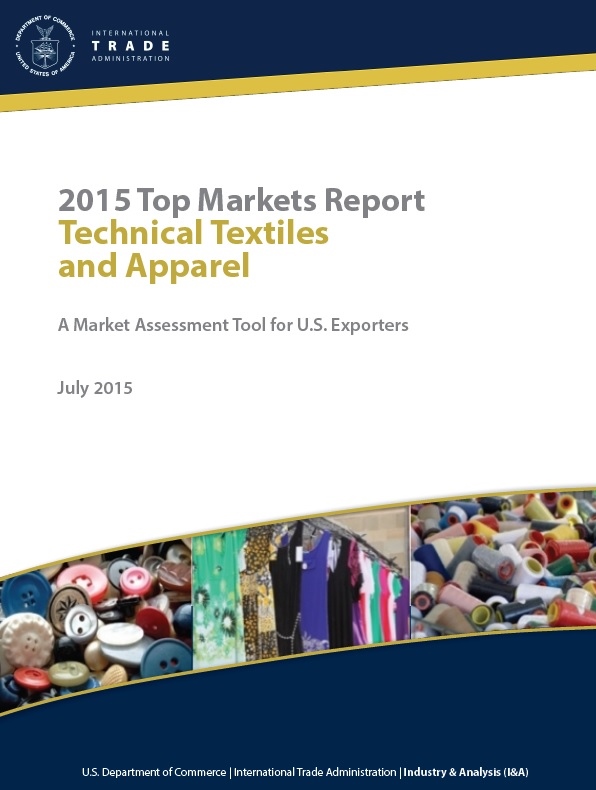
2015 Top Markets Report for Technical Textiles and Apparel Released

technical textiles

The U.S. Department of Commerce recently released its first-ever market report for technical textile and apparel, covering product categories including: non-wovens, specialty and industrial fabrics, medical textiles and protective apparel. According to the report:

  • The U.S. exports of technical textiles totaled $8.5 billion or 46% of U.S. textile mill product exports in 2014.
  • By size, the top 10 export markets for U.S. technical textiles from 2015 to 2016 include: Mexico, Canada, China, Germany, Japan, Hong Kong, United Kingdom, Belgium, Brazil and Honduras.
  • North America is the largest regional consumer of technical textiles due to the presence of the majority of end-use industries. Europe and Asia Pacific follow North America in terms of current consumption; however, development in emerging markets including India, China, Japan, Korea and Taiwan is expected to increase overall technical textile demand. Among the best prospect in the emerging markets for U.S. companies are Vietnam, India, Taiwan and Brazil.
  • Major challenges facing U.S. technical textile exports include: 1) trade protection such as high tariffs and non-tariff barriers, such as import license requirements; 2) foreign competition and continual investment in research and development in many developing countries; and 3) lack of transparency by foreign customs agencies which could slow the flow of trade and lead to processing delays.

Eight country studies are provided by the report, including: Brazil, Canada, China, India, Korea, Mexico, Taiwan and Vietnam.

The full report can be downloaded from HERE.

Lectra Report: The Need for Transformation-An Analysis of the Fashion and Apparel Industry’s Evolution

Lectra

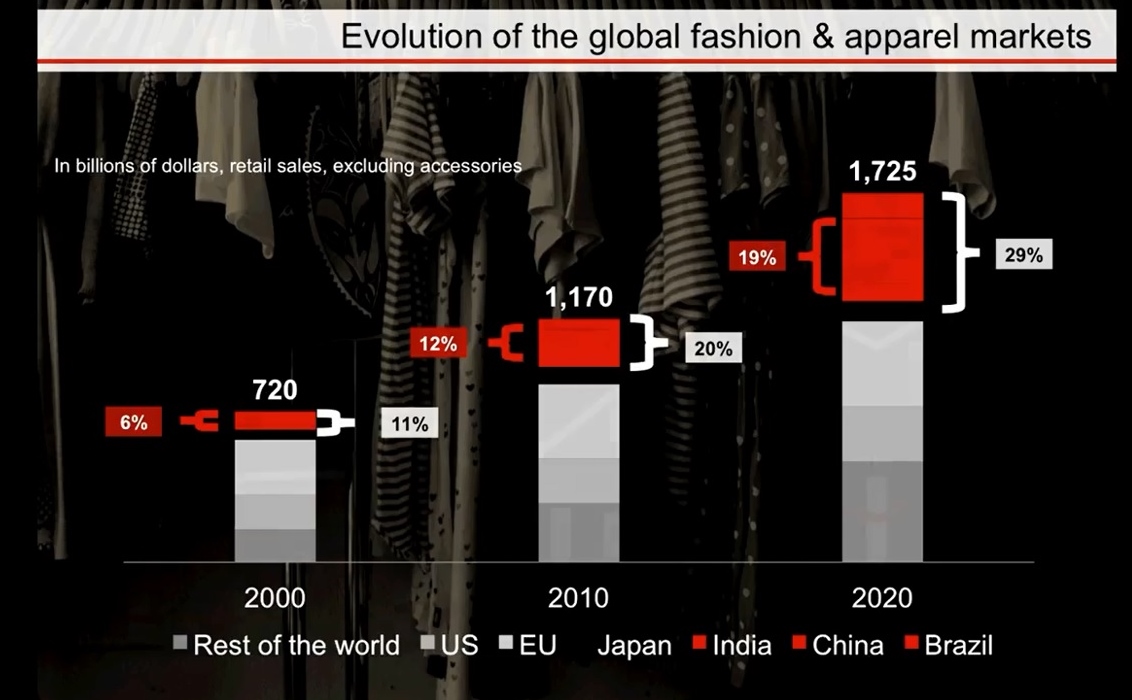
As the saying goes, change is the only constant in the fashion apparel industry. According to a newly released market report by Lectra*, “the pace of fashion has never been faster and neither has the pace of change”.

Lectra’s report highlights a few factors driving the changes in the fashion apparel industry:

1. Consumers

Consumers has much more control than in the past, implying the fashion industry can no longer define what to make and sell without taking consumers’ inputs into consideration. Some companies have alter their business models to be completely demand-driven, i.e. allowing integrating all their resources to meet the customized needs of all consumers.

Social and economic changes like internet access and growing prosperity, have also spurred the growth of new fashion markets in emerging countries that had typically been only supplier region, creating new opportunities for western fashion brands and retailers to expand business.

1

2. Globalization

Historically, local brands dominate local market. However, because of the strategies of geographic expansion and international growth of many fashion brands, in more and more markets, local brands have to face competition from foreign brands. (for example: the Australian fashion industry is worried about the competition from H&M).

But globalization does not reduce diversity and localized consumer preferences. On the contrary, increased internationalization means that populations are more heterogeneous than in the past and retailers have to bring a localized response to individual markets.

3. Technology

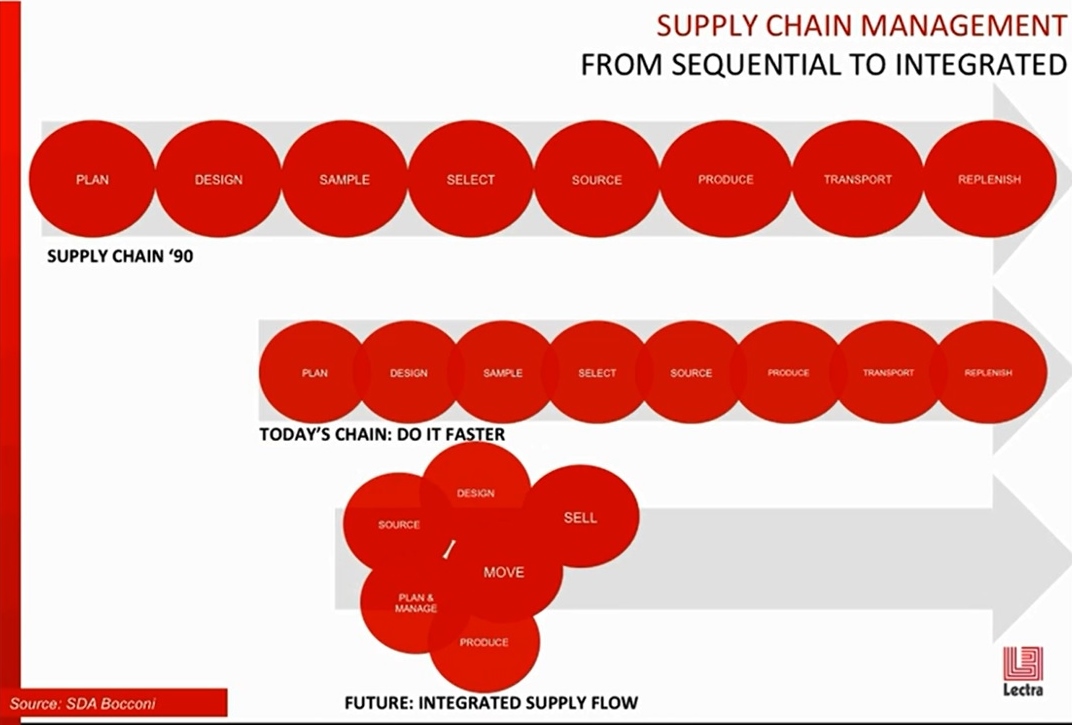
New social media and mobile technologies have given consumers the power of instantaneous sharing and buying without restriction of time, place and in many cases, price. The availability of new technologies such as RFID, product life cycle management (PLM) and many other supply chain management tools have also enabled brands, retailers and manufacturers to reduce product development cycle, improve efficiency and better collaborate across the global process.

For example, digital prototyping gives companies the agility they need to adapt to changes in the market and test new products before they start to incur real production costs. PLM facilities the collaboration between design and development departments and breaks the silo mentality that has reigned for so long in the fashion and apparel industry, eliminating bottle- necks that resulted from outdated linear processes and increasing decision making power earlier on in product development.

4. Change of Business models**

In response to the application of new technologies and consumers’ updated demand, companies start to seriously reconsider their business models, especially the process of design, product development, production and distribution. As noted in the report, fashion brands, which have traditionally gone through retailers who sell on their behalf, have developed retail operations with the purpose of capturing a higher percentage of the final sale price and achieving complete control over the presentation, distribution and final price of their merchandise. Many retailers, however, also start to offer more and more private brands and exclusive products that can more effectively segment market and attract targeted consumers.

The traditional manufacturers are also looking for ways to cut costs and increase efficiency because of the pressure from retailers/brands. Manufacturers also have realized that selling directly to the end consumers is the most powerful way to protect revenue. As quoted by the report, roughly 60% of Chinese apparel manufacturers have launched their own brands. Armed with all that know-how, a growing number of Chinese manufacturers are now turning their efforts toward developing an offer for the domestic market and some are even setting their sights abroad. (recall the topic of “upgrading” in our lecture)

2

*: Lectra is a company which provides fashion-focused technology solutions such as the CAD system and the product life-cycle management (PLM) system.

What does Vietnam’s Textile Factory Actually Look Like?

Vietnam attracts a lot of attention these days in the textile and apparel world. But what does Vietnam’s textile and apparel factory actually look like? 

This video features PPC (Phong Phu Corporation), one of the largest textile mills in Vietnam. It is said that PPC accounts for over 50% of Vietnam’s total textile exports.

  • Anything in the video interests you or surprises you?
  • How is PPC different from textile mills in the US?( You may think about the video we watched in class about the textile mills in NC. For example, are there any differences in working environment, the facility, what it is producing, required labor skills, efficiency and productivity?)
  • How should the US textile industry treat Vietnam? A competitor? A threat? A potential partner? or a great opportunity for investment?

Please feel free to share your thoughts.

[Please leave no more comment for this post unless you have NEW ideas to share]

EU Commission: Skills for Jobs in the EU Textile and Clothing Industry to Evolve

In a recent analysis report, the EU Commission foresees that skills needed by jobs in the EU textile and clothing industry will continue to evolve from 2013 to 2025. Specifically, the report argues that:

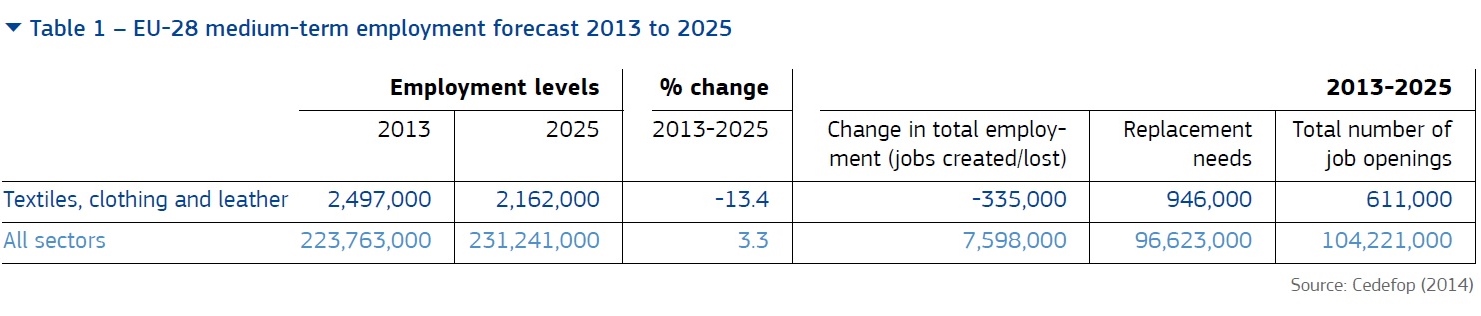
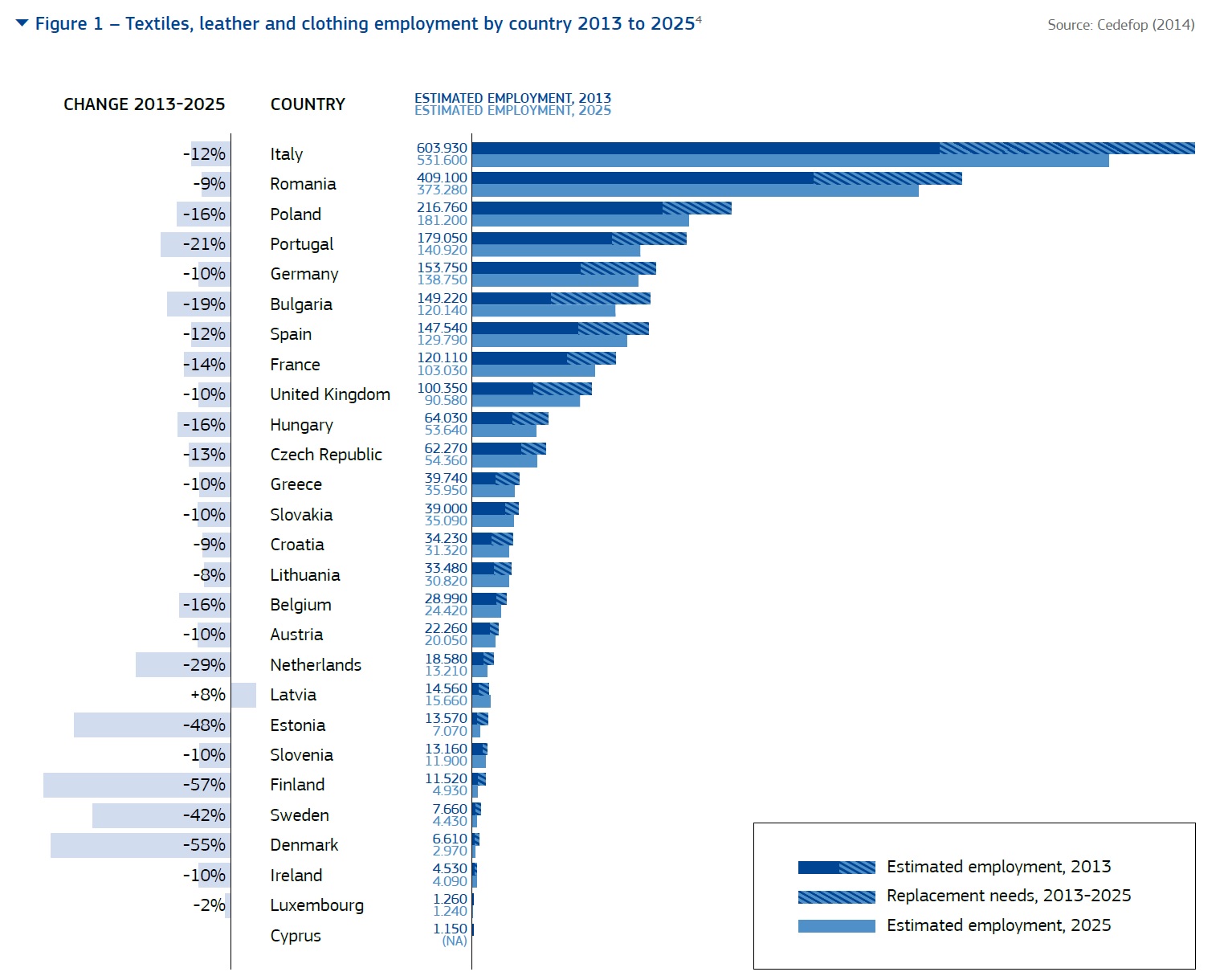
First, employment in the EU textile and clothing sector is forecast to decline by 13.4% from 2.5 million in 2013 to 2.1million in 2025. Even with shrinking employment levels, because of the need to replace nearly 1 million workers forecast to retire or leave the sector, about 611,000 job openings are anticipated from 2013 to 2025.

Second, employment in the EU textile and clothing sector is no just declined, but also evolved. From 2013 to 2025, demand for “crafted and related occupations” as well as “plant and machine operators and assemblers” will decline 34% and 13% respectively, whereas job openings for “technician and associated professional occupations” are estimated to grow at a modest rate. Among the estimated 611,000 job openings, 93% will require high or medium level qualifications.

Third, in terms of specific skills needed by the EU textile and clothing sector based on where the sector might progress towards 2020:

1) Technical production competencies will remain central to recruitment with increased focus on the demand for versatile staffs that can operate across different workstations.

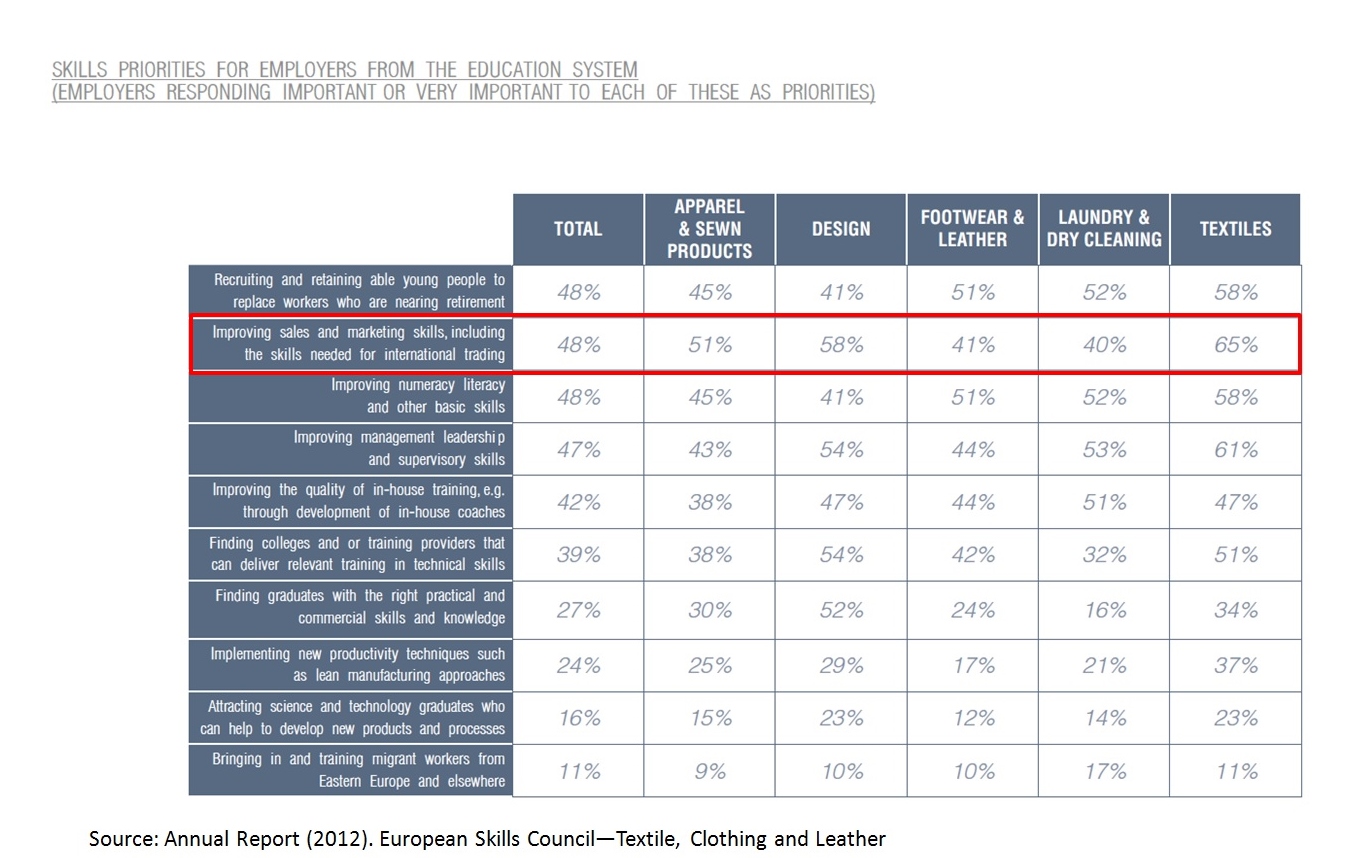
2) Supply chain management, business, sales and marketing skills (including the skills in international trade) are growing in importance. For many EU textile and clothing companies, “trade has taken place of production”.

3) The EU textile and clothing industry is further expecting skills on technology, innovation and sustainability. Leading technology-led areas include mass customization, 3D body measurement, advanced CAD and eCommerce technologies, internet infrastructures for custom-tailored clothing and business-to-consumer eCommerce among retailers.

2

3

1

The Next Black – A film about the Future of Clothing


‘The Next Black’ is a documentary film that explores the future of clothing. Watch as we meet with some of the most innovative companies on the planet to get their opinion on clothing and its future, including: heroes of sustainability, Patagonia; tech-clothing giants, Studio XO; sportswear icon, adidas; and Biocouture, a consultancy exploring living organisms to grow clothing and accessories.

Digital Economy and the Fashion Industry: A Macroview

Part I

Part II

Part III

3D Printing and the Future of the Fashion Industry

How do you think 3D printing might shape the future landscape of the fashion industry (eg: impact on consumers’ shopping behavior, structure of the supply chain, demand for talents and fashion companies’ business models?)

[Comment for this post is closed]

Expanding Global Trade through Innovation and the Digital Economy


This is the introductory video of this year’s World Trade Organization (WTO) Public Forum hosted from Oct 1 to Oct 3. The WTO Public Forum is an annual event that provides a platform for public debate across a wide range of WTO issues and trade topics. The Public Forum is also an opportunity for us in the WTO to listen and exchange views with non-government organizations (NGOs), academia, the private sector, with those of you who are increasingly participating in shaping the world’s economic and political environment. This year’s Public Forum looks at the future of trade in an era of innovation and digitalization.

As put it by Michael Froman, the U.S. Trade Representative :” The global marketplace has experienced a sea change. Combining globalization with new technology and with new business models has dramatically accelerated the pace of change and innovation. The flow of data is as important as the movement of goods. Services are an increasing share of value-added manufacturing. And the market is determining standards at an increasingly rapid pace.”

U.S. Textile Plants Return, With Floors Largely Empty of People

This is a strongly recommended New York Times article which focuses on the current status of the U.S. textile industry.The article reflects many things we’ve discussed in the class.

First, we still live in a world of “specialization”, in which each country produces something but not everything based on their respective comparative advantage. It is important to realize that the reason why textile manufacturing is coming back to the United States is because the manufacturing process has become more “capital and technology intensive” in nature.  Therefore, it makes senses for the United States as a capital and technology abundant country to focus on producing “capital and technology” intensive products. At the same time, with the fast rising labor cost in recent years, some developing countries are gradually losing “comparative advantage” in making labor intensive apparel products. This factor further affects T&A companies’ decision making on where to produce.

Second, textile and apparel industry is NOT disappearing in the U.S., but it evolves constantly in response to globalization and technology advancement.  “Made in America” is starting to mean something again, but not the same as what it used to mean. As the business function of the textile and apparel industry in the US becomes more capital, knowledge and technology intensive, it provides even more promising career options and opportunities for our TMD/TM graduates than in the past.  That’s also why in the classroom, we emphasize creativity, critical thinking, analysis skills, playing with technology, leadership skills and having a big landscape of the industry in mind.

Third, as we discussed in the class, the “made in ___” label can no longer reflect the whole supply chain of finished textile/apparel products in the 21st century.   Instead, we live in a “made in the world” era in which different countries share responsibilities in T&A product development, manufacturing and distribution. Neither is it the case that the U.S. textile and apparel industry is all about “manufacturing” today. Those non-manufacturing functions such as retailing, merchandising, branding and marketing actually contribute much higher added values and result in a U-shape global apparel value chain called “smiling curve”.

3D Printing as a Game Changer for the Global Textile and Apparel Industry


3D printing is an emerging and transformative technology that adopts a fundamentally new approach of “additive manufacturing” to make things. Textile and apparel (T&A) is one major area in which the 3D printing technology is believed can have a wide application.  Companies such as N12 and a few designer-researchers have started the pioneering work of using printer to directly print wearable apparel for consumers.