FASH455 Exclusive Interview with Nicole Bivens Collinson, Managing Principal and Practice Leader of International Trade and Government Relations, Sandler, Travis & Rosenberg, P.A.

About the interview

When learning about apparel sourcing and trade, our students often notice how much they are affected by trade policies and regulations—from tariffs, and something called “de minimis” to UFLPA. These issues are not only critical for fashion companies but can also be quite technical.

We are fortunate to have Nicole Bivens Collinson, Managing Principal and Practice Leader of International Trade and Government Relations of Sandler, Travis & Rosenberg, P.A. (ST&R), a true expert in trade policy and the legal aspects of trade, join us. In the interview, Nicole clarified key U.S. trade rules and provided valuable insights into their apparel sourcing and trade implications, including:

  • What is a tariff, and why is it a big issue for US fashion brands and retailers?
  • Why have the so-called IEEPA “reciprocal tariffs” imposed by the Trump administration so far this year raised so many concerns?
  • What does the term “transshipment” mean in international trade? And why did this issue emerge in the context of higher tariffs this year?
  • What is the “20% US content” rule and its implications for fashion companies?
  • What is “tariff engineering”? Is it legal or illegal? How have fashion companies used it to mitigate the tariff impacts, potentially?
  • What is de minimis? Why was it created, and then became controversial? Since the “de minimis” rule was officially terminated recently, what impacts could we expect now? 
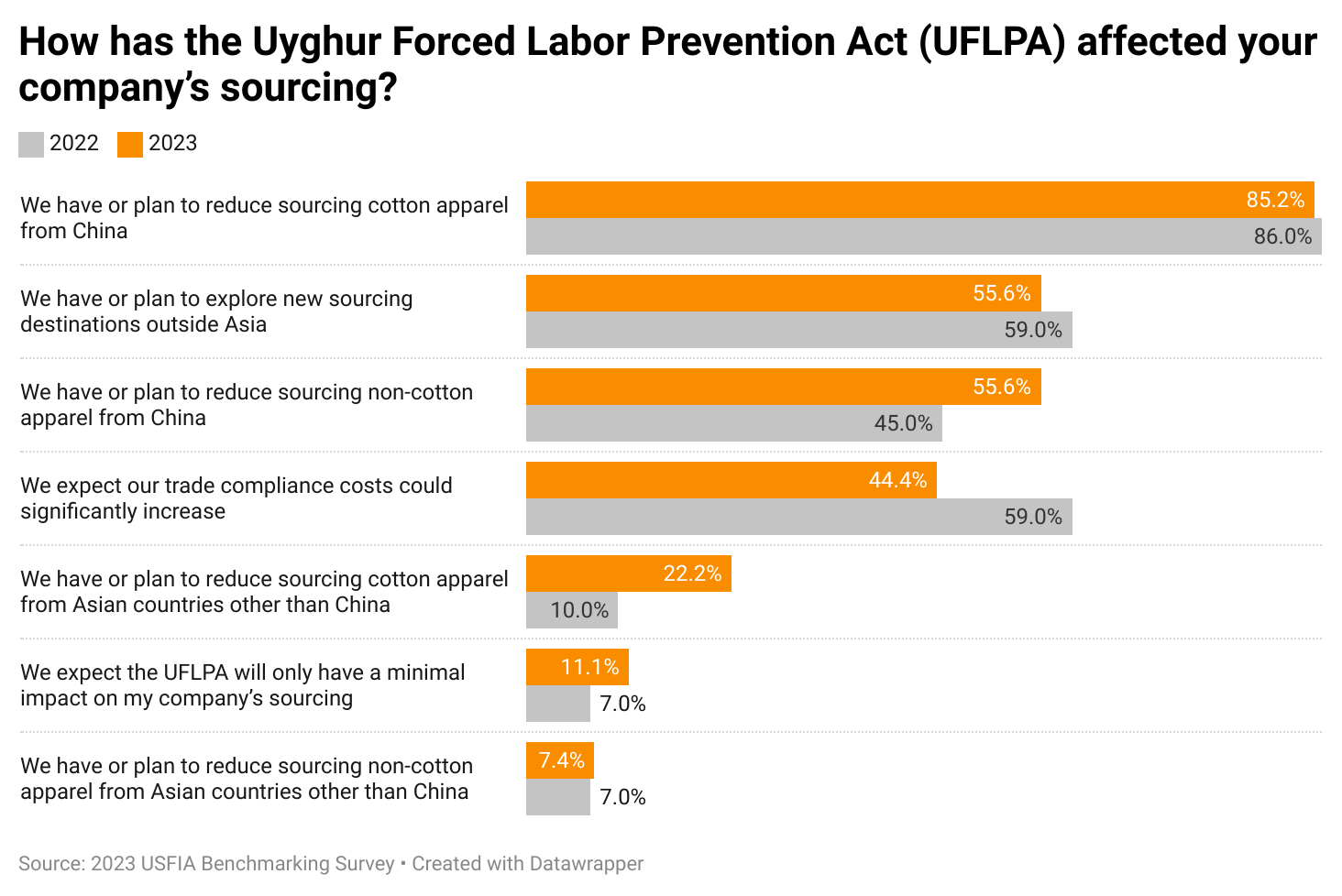
  • What is the Uyghur Forced Labor Prevention Act (UFLPA) and what does it aim to do? How has the implementation of the UFLPA affected U.S. fashion companies’ apparel sourcing?
  • For fashion students interested in working in trade compliance, trade policy, or the legal aspects of the fashion industry, what steps can they take to get started?

About Nicole Bivens Collinson

Nicole Bivens Collinson is the Managing Principal and Practice Leader of International Trade and Government Relations with Sandler, Travis & Rosenberg, P.A. (ST&R). Nicole is a commentator on trade matters on MSNBC, NPR, and BBC the producer of the Two Minutes in Trade podcast.

Nicole has nearly 40 years of experience in government and public affairs and lobbying. She prepares countries, companies, and associations for negotiations with the United States on free trade agreements, trade and investment agreements, labor disputes, and preferential trade programs.

Prior to joining ST&R, Nicole served as assistant chief negotiator for the Office of the U.S. Trade Representative, responsible for the negotiation of bilateral agreements with Latin America, Eastern Europe, Southeast Asia, the Sub-Continent, and Africa. She also served as a country specialist in the International Trade Administration at the Department of Commerce, where she was responsible for the preparation of negotiations on specific topics between the U.S. and Latin America, Eastern Europe, China, and Hong Kong as well as the administration of complex textile agreements.

Nicole holds a master’s degree in international relations from The George Washington University and a triple bachelor’s degree in political science, European studies, and French from Georgetown College. She also studied at the Université de Caen in France.

Nicole is past chair of the Women in International Trade Charitable Trust, past president of Women in International Trade, an advisory board member of America’s TradePolicy.com, treasurer and board member of the Washington International Trade Association, and a member of the Washington International Trade Association Foundation and Women in Government Relations. She serves on the board of trustees for Georgetown College and is the past executive director for the U.S. Hosiery Manufacturers Coalition, the U.S. Apparel Industry Coalition, and the U.S. Sock Distributors Coalition.

About Katie Yasik (moderator)

Katie Yasik is a master’s student & graduate instructor in Fashion and Apparel Studies (FASH) at the University of Delaware (UD). Katie graduated from UD & FASH with a B.S. in Fashion Design and Product Innovation & Sustainable Apparel minor. Driven by her strong passion for sustainability, she interned with the Worldwide Responsible Accredited Production (WRAP) in Spring 2024.

USDA Released 2025 China Cotton Report

The U.S. Department of Agriculture (USDA) recently released its latest annual China cotton report. Below are the key findings most relevant to U.S. apparel sourcing from the country.

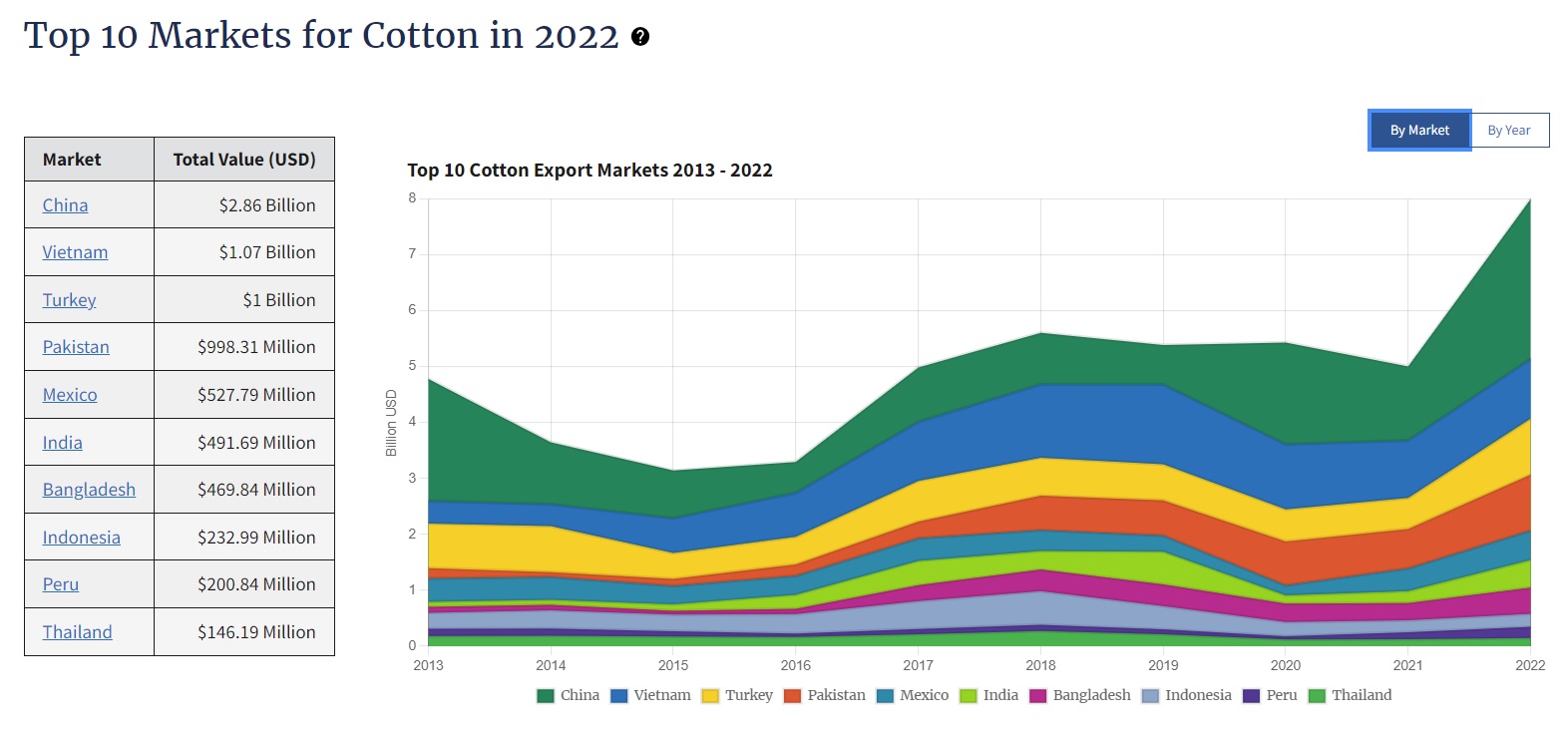
First, China’s retaliatory tariffs could severely impact US cotton exports. Faced with geopolitical tensions and rising competition from other suppliers like Brazil, U.S. cotton exports to China fell sharply by 73% in the first seven months of Marketing Year (MY) 24/25 (i.e., August 2024-February 2025), resulting in a decrease in the U.S. market share to 17.1%, down from 29.6% during the same period in MY 23/24. As noted in the report, “Beijing’s imposition of 140 percent tariffs on U.S. cotton will all but stop further imports from the United States.” Meanwhile, China’s overall demand for raw cotton could fall to a five-year low in MY 24/25, due to insufficient domestic demand and limited growth in textile and apparel exports.

Second, Xinjiang still dominated cotton production in China. Despite the Uyghur Forced Labor Prevention Act (UFLPA), Xinjiang accounted for approximately 92.3% of cotton production in China during MY 24/25 (note: was 90.9% in MY 23/24) and enjoyed an 11.4% year-on-year increase in total production. According to the USDA report, cotton production, yarn spinning, and textile manufacturing in Xinjiang received numerous subsidies from the government, such as support provided to farmers and cotton planting incentives.

The USDA report also noted that, in addition to raw cotton, textile production has experienced substantial growth in Xinjiang. For example, by the end of 2024, Xinjiang’s yarn spinning capacity reached 29.1 million spindles with 62,400 looms in operation, both marking the highest growth rates in history. “The spinning capacity is expected to rise further as the Xinjiang government plans to spin 45 to 50 percent of the Xinjiang cotton by 2028,” according to the USDA.

Third, China’s textile and apparel exports are facing growing headwinds. The USDA report predicted that “With ongoing market turbulences and uncertainties, China’s textile and apparel exports are expected to decrease in the remainder of MY 24/25” due to higher tariffs and the de minimis rule changes. While large-scale textile and apparel companies in China have been relocating some production to Southeast Asia, small-scale companies with limited resources may struggle to adapt. Additionally, according to the USDA, citing industry sources, the profit margin on China’s clothing exports to the US might be 10% or even lower and “the established textile manufacturers will face increased costs and administrative burdens for all import values, potentially disrupting their supply chains and reducing profit margins” due to the recent de minimis rule changes.

Further reading: U.S. and Xinjiang Cotton Are Locked in a Trade War of Their Own (Sourcing Journal)

New Study: Exploring India as an Apparel Sourcing Base for U.S. Fashion Companies

The full article is published in Just-Style and below is the summary:

India’s Textiles and Apparel Production

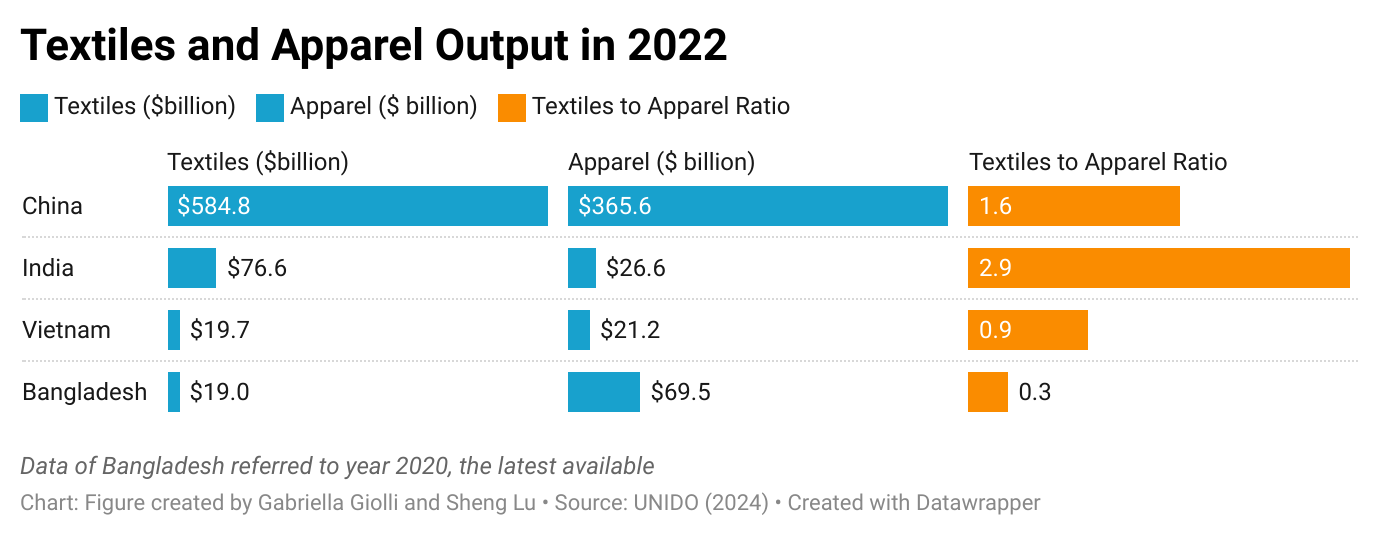
Data from the United Nations Industrial Development Organization (UNIDO) shows that India produced around $76.5 billion in textiles and $26.64 billion in wearing apparel in 2022. Although still smaller than China’s, this production scale has already surpassed that of most other Asian countries, including Vietnam. Behind these numbers were India’s over 4,000 ginning factories, 3,500 textile mills, and around 45 million workers directly employed by the textile and apparel sector.

India is one of the world’s largest textile fiber producers, including regular cotton, organic cotton, silk, polyester, and viscose. India also has more advanced local textile manufacturing capabilities than most other developing apparel-exporting Asian countries, allowing it to benefit from a vertically integrated local textile and apparel supply chain. A recent U.S. International Trade Commission (USITC) study noted that more than 90 percent of India’s textile raw materials needed for its apparel production can be sourced domestically. In comparison, as the World Trade Organization (WTO) global value chain analysis estimated, more than 64 percent of Vietnam’s apparel exports in 2022 contained foreign-made content (i.e., imported yarns and fabrics), 57 percent for Cambodia, 49 percent for Indonesia, and 33 percent for Bangladesh.

India’s Apparel Export

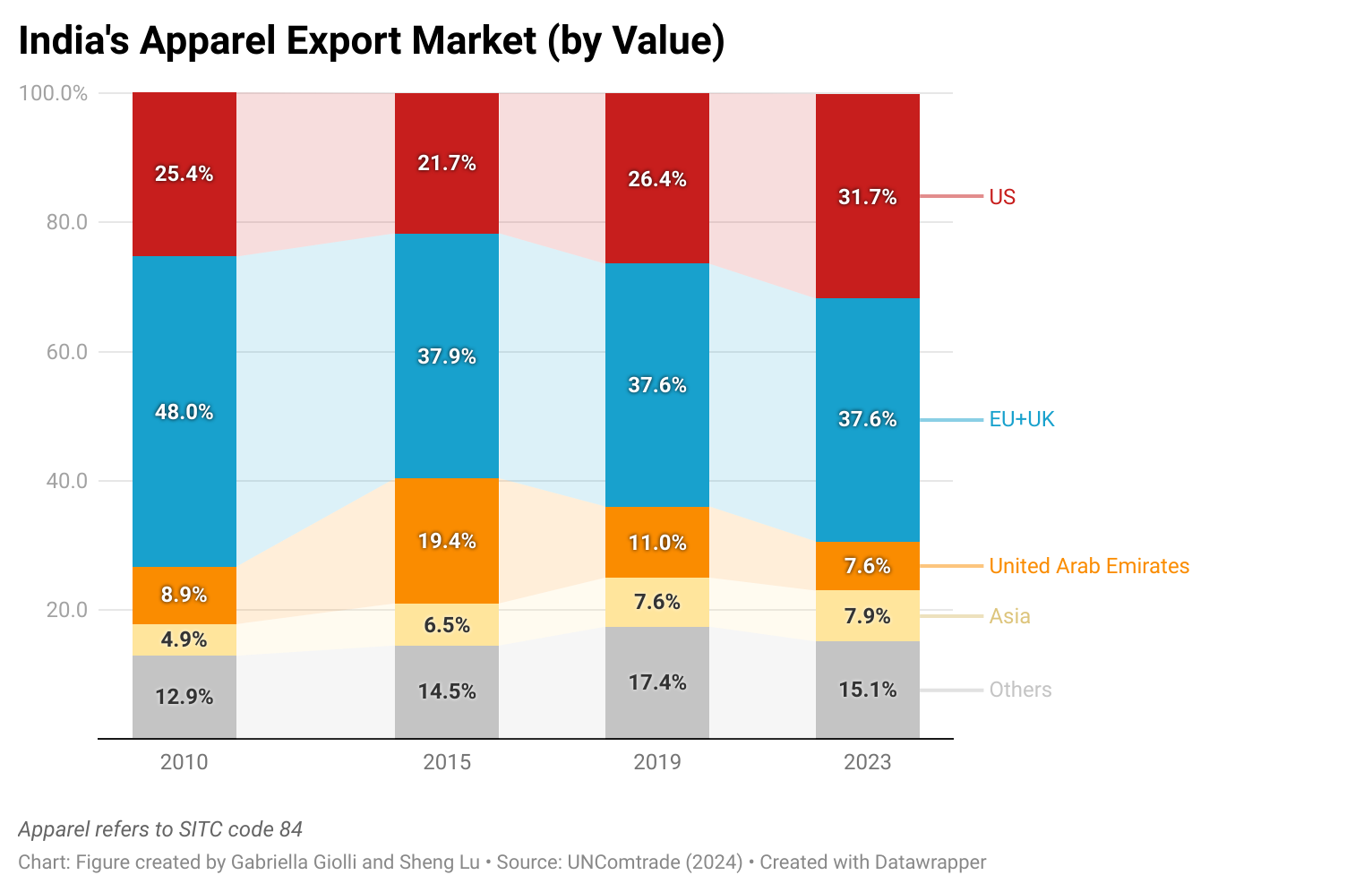
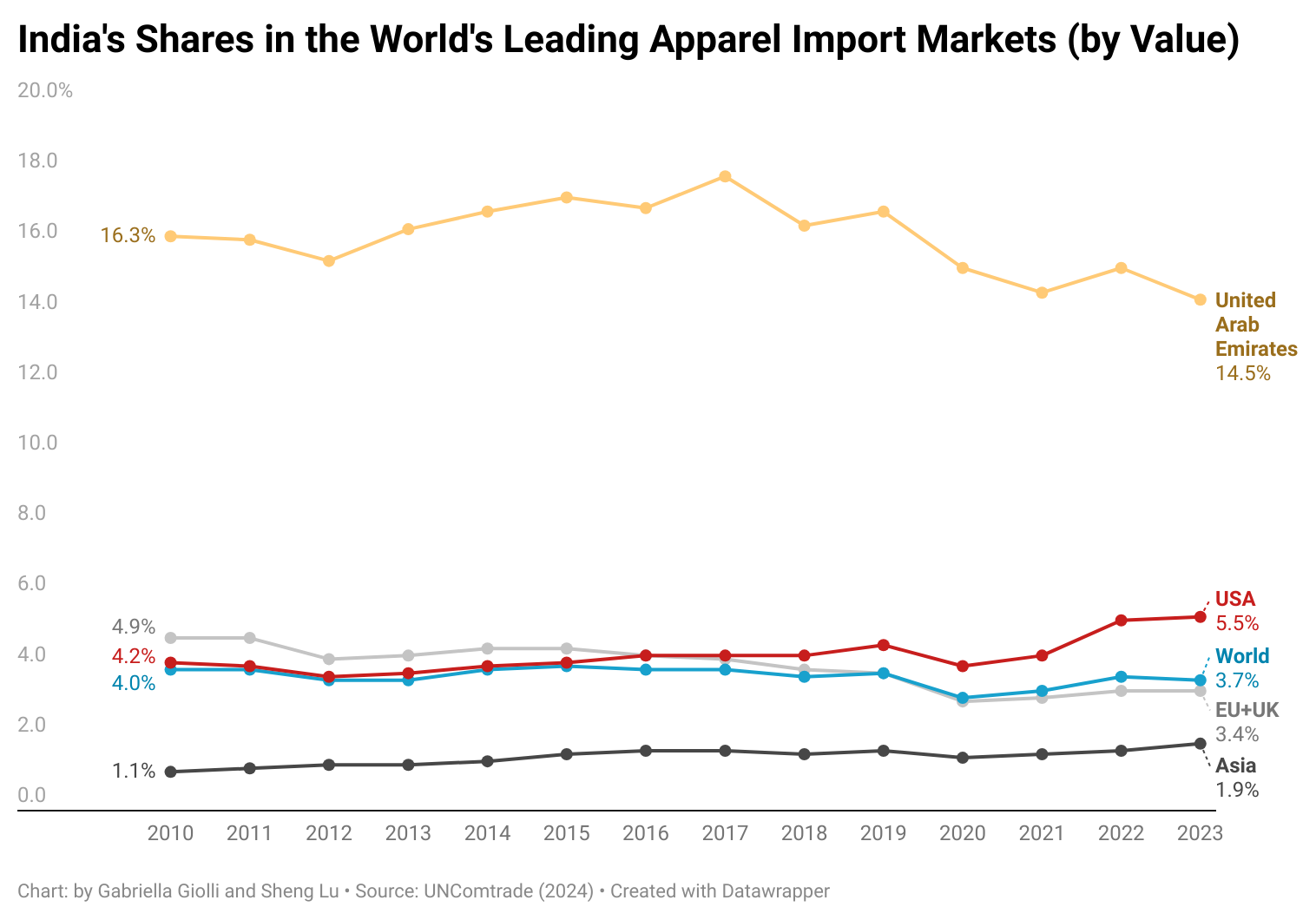
India remained a much smaller apparel exporter than China, Vietnam, and Bangladesh. According to the World Trade Organization (WTO), India exported about $15 billion in apparel in 2023, ranked the world’s sixth largestor 2.8 percent of the global total.  Similarly, in 2023, India accounted for 5.5 percent of U.S. apparel imports and 3.5 percent of the EU, showing its position as a significant supplier but not among the largest. However, unlike most other developing Asian countries, India exports less than half of its apparel output due to its massive domestic market with a population of 1.43 billion. This implies that India’s substantial untapped apparel export potential should not be ignored.

Why Sourcing from India?

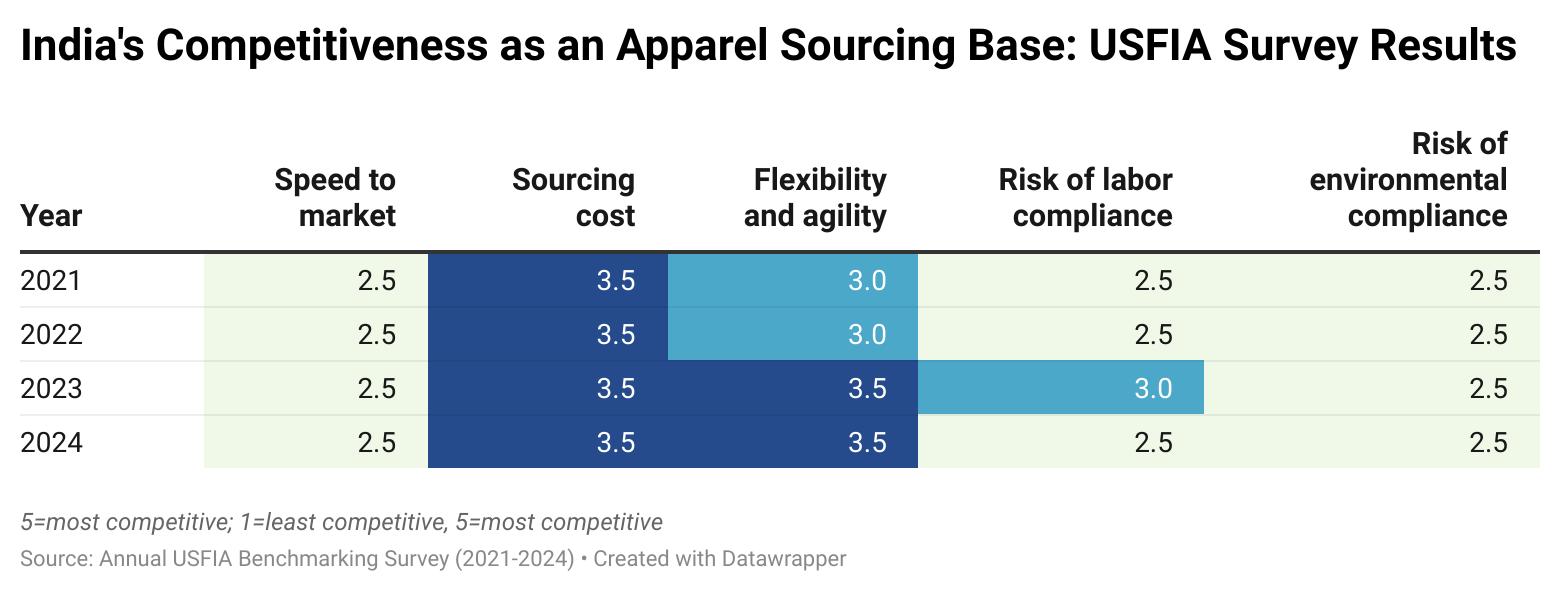
Firstly, aligned with trade statistics, many U.S. fashion companies already source from India, although in a relatively small volume.  For example, the USFIA benchmarking survey respondents consistently ranked India as the 3rd or 4th most utilized apparel sourcing base from 2021 to 2024, after China and Vietnam. However, U.S. fashion companies typically place less than 10 percent of their total sourcing value or volume in India. The recent USITC study also raised concerns that India’s apparel factories were primarily small and medium-sized, which could limit their ability to fulfill large-volume sourcing orders.

Secondly, “Made in India” clothing is not necessarily cheap but could be perceived as “worth the value.” Notably, from January to October 2024, clothing labeled “Made in India” sold in the U.S. retail market was, on average, priced much higher than imports from Bangladesh and Vietnam, particularly in the mass market segment. Meanwhile, in the premium market segment, clothing “Made in India” was, on average, priced relatively lower than “Made in China,” such as dresses, tops, and bottoms. These results suggest that U.S. fashion companies do not typically consider India a preferred sourcing base for basic and price-sensitive items. Instead, India may be seen as a more cost-effective alternative to China for high-quality, value-added clothing.

Thirdly, India has been strengthening its competitiveness in export flexibility and agility, enabling its vendors to quickly adjust the delivery, volume, and product of the sourcing order upon customers’ requests. In the latest 2024 USFIA survey, respondents rated India’s sourcing flexibility and agility second only to China, surpassing Bangladesh, Cambodia, and Central American countries. Likewise, India was regarded as one of the few Asian countries that could fulfill apparel sourcing orders with relatively low “minimum order quantity (MOQ)” requirements.

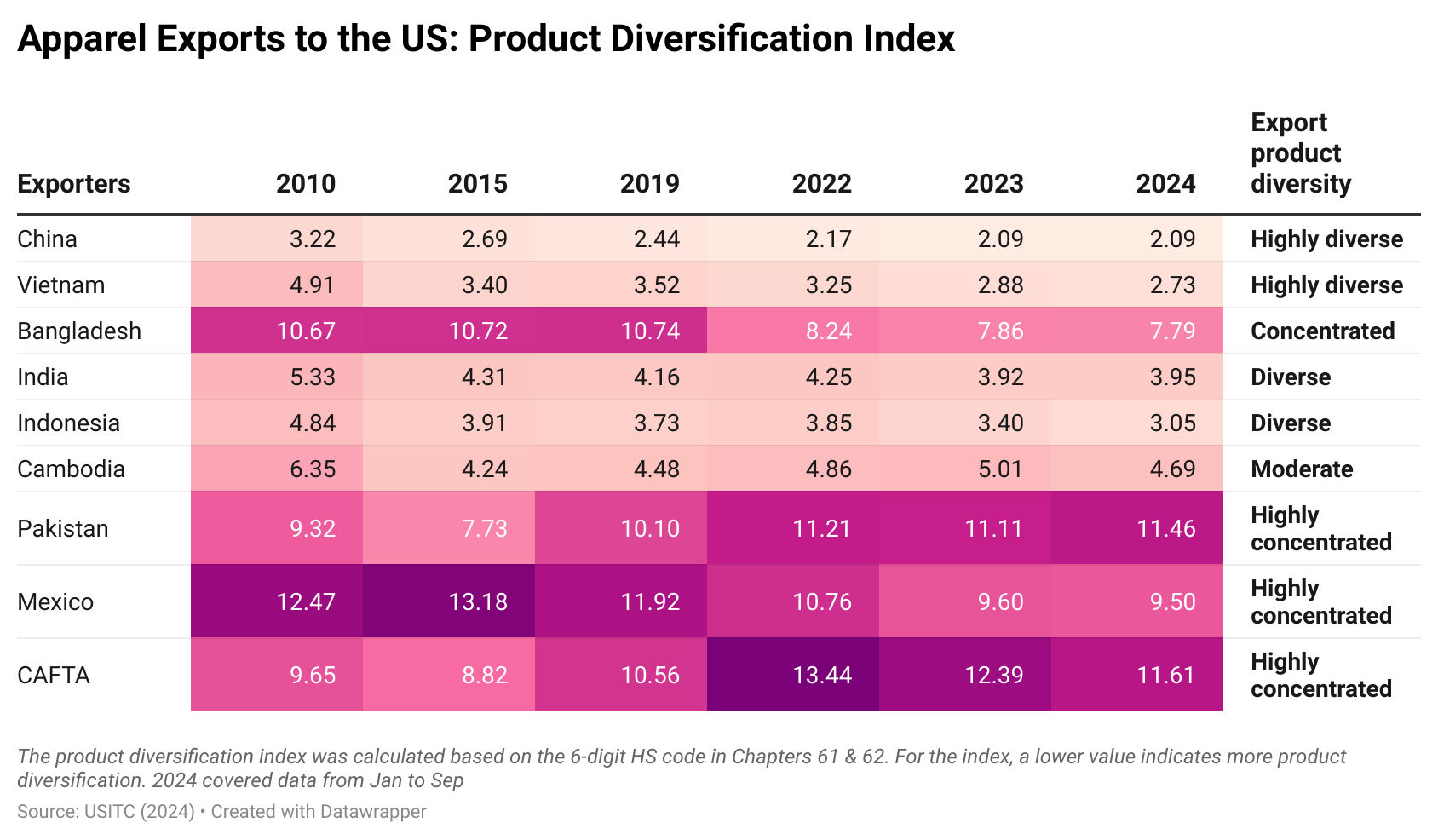
One major factor contributing to India’s perceived advantages in sourcing flexibility and agility is its ability to produce a wide range of apparel products. For example, the Herfindahl-Hirschman Index (HHI) calculated using trade data at the 6-digit HS code level indicates that U.S. apparel imports from India cover more diverse product categories than most Asian countries.

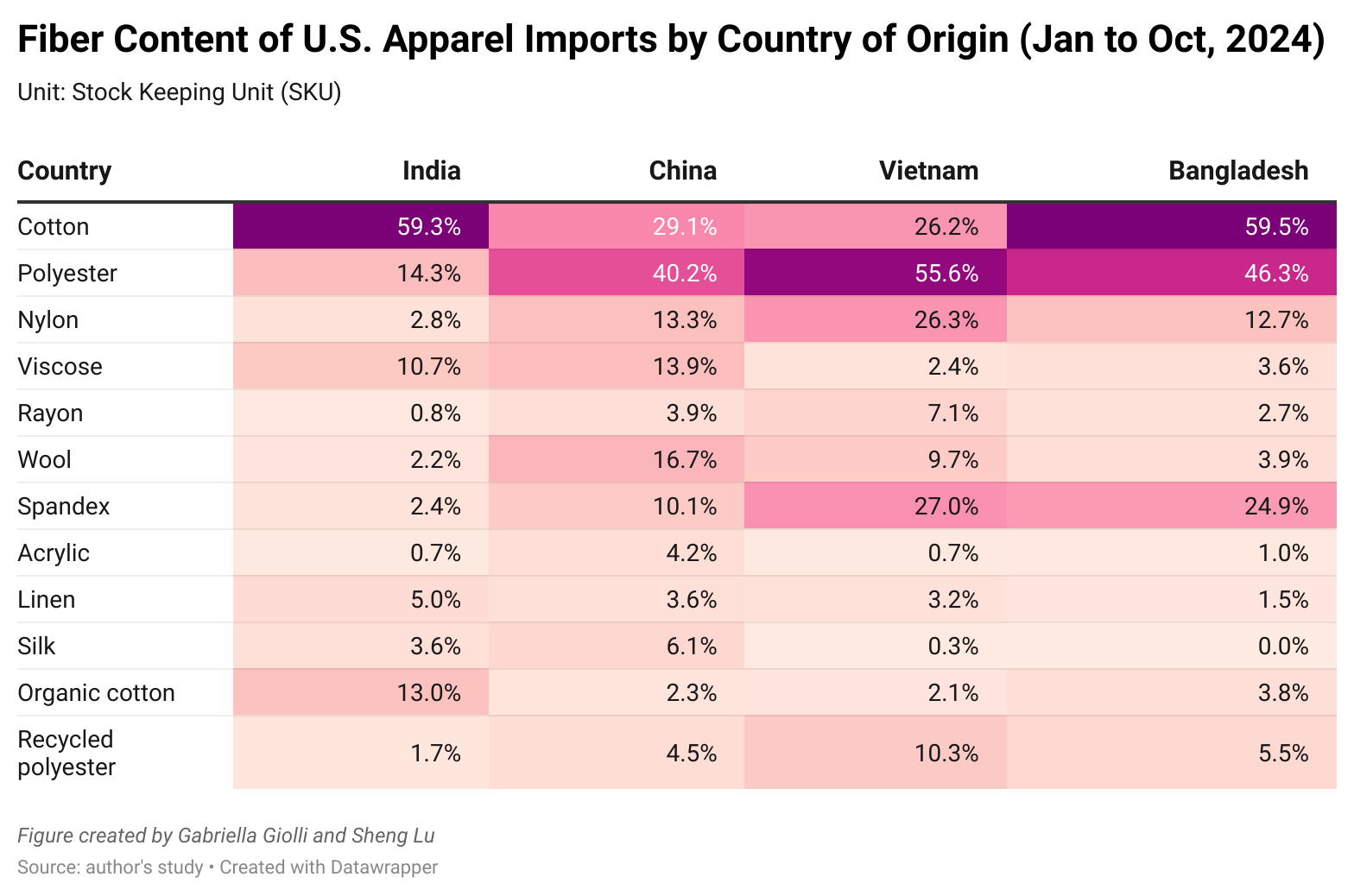
Moreover, due to India’s position as one of the world’s leading cotton producers, in the first ten months of 2024, nearly 60 percent of U.S. apparel imports from India contained cotton fibers, including 13 percent using organic cotton. This percentage was much higher than imports from other Asian suppliers such as China and Vietnam. In comparison, over the same period, U.S. apparel imports from India appear less likely to contain man-made fibers like polyester, nylon, spandex, and recycled polyester. This fiber composition explains why India has yet to become a leading supplier of certain apparel product categories, like outerwear, which more commonly uses man-made fiber than cotton.

Additionally, in the first ten months of 2024, over 45 percent of India’s apparel newly introduced to the U.S. market targeted the luxury and premium segment, closely matching China’s nearly 50 percent and exceeding other Asian suppliers such as Vietnam (20 percent), Bangladesh (13 percent), Cambodia (5 percent), and Indonesia (18 percent). This result explains why U.S. fashion companies increasingly consider India a strategic alternative to sourcing from China, given the similarities in their product offerings.

Reflections

India’s large country size and population, the presence of an already highly integrated and sophisticated textile and apparel supply chain, and its ability to make a great variety of high-quality products suitable for various market segments position it well in the export competition. U.S. fashion companies’ eagerness to reduce sourcing from China due to rising geopolitical concerns and the limited sourcing capacity elsewhere created historical opportunities for India to expand its apparel exports to the U.S. market further.

Nevertheless, it remains a question mark whether India is fully committed to expanding labor-intensive apparel production and exports, given the country’s economy is moving toward more capital and technology-intensive sectors. Notably, in value, apparel only accounted for about 5.6 percent of India’s total merchandise exports in 2023, similar to China’s 5.3 percent but much lower than other lesser-developed Asian countries, including Vietnam (10 percent), Bangladesh (88 percent), and Cambodia (44 percent).

Moreover, while India is not a primary focus for compliance issues like forced labor, sourcing from the country still carries general social and environmental compliance risks similar to those in most developing countries (note: see the 2024 USITC report). It remains to be seen whether India’s textile and apparel mills are technically and financially prepared to meet more stringent social and environmental standards being adopted in the U.S. and can effectively compete in the growing market for “sustainable apparel.”

by Gabriella Giolli (Honors Marketing major & Fashion management minor, University of Delaware) and Sheng Lu

New Study: Exploring the US as a Sourcing Base for Clothing Using Recycled Cotton

The full article is published in Just-Style and below is the summary:

Market Size

Reflecting fashion companies’ interest in carrying more sustainable apparel products to meet consumers’ demand, there has been a notable increase in clothing using recycled cotton in the U.S. retail market since 2022. For example, based on information collected from US apparel retailers’ websites, only about 100 Stock Keeping Units (SKUs) of “Made in the USA” clothing explicitly indicated that they contained recycled cotton in 2022 and 2023, respectively. However, in the first nine months of 2024, this number had already doubled to around 200.

Despite the impressive growth, clothing containing recycled cotton remains a “niche” in the U.S. retail market. As of 2024, the total SKUs of “Made in the USA” clothing containing recycled cotton accounted for only about 0.1% of those made with regular virgin cotton.

Meanwhile, measured by SKU count, 70% of “Made in the USA” clothing containing recycled cotton was sold in the mass and value segments in the U.S. retail market from 2022 to 2024.  In comparison, over the same period, “Made in the USA” clothing made with regular cotton catered to a more diverse consumer base, with a relatively balanced distribution across the mass and value segment (57%) and the luxury and premium segment (43%).

Product Features

There appears to be a notable distinction between the product categories of “Made in the USA” clothing using recycled cotton and those made with regular cotton. Specifically, from 2022 to 2024, by SKU count, “Made in the USA” clothing containing recycled cotton mainly focused on basics such as T-shirts (35.6%), jeans (20.1%), other bottoms (20.7%) and other tops (18.4%). Particularly, jeans appear more likely to contain recycled cotton than any other apparel category.

Using recycled cotton also appears to affect clothing’s design patterns. For example, from 2022 to 2024, nearly 85% of “Made in the USA” clothing containing recycled cotton chose plain design patterns compared to only 65% of those exclusively using regular cotton. These results echo findings from previous studies, suggesting that the shorter fiber length and lower quality of recycled cotton may limit the use of more intricate and complex design details.

Fiber Content

Reflecting the significant limitations of the quality and properties of the fiber, clothing labeled as using “100% recycled cotton” was rarely available in the U.S. retail market from 2022 to 2024, regardless of where the item was made. In most cases, recycled cotton accounted for no more than 30% of the total fiber content in a garment, with typical labels read like “49% cotton, 21% recycled cotton, 17% recycled polyester” (jeans), “Made from 70% cotton and 30% recycled cotton” (T-shirt), and “Made from 70% cotton, 29% recycled cotton, and 1% elastane” (skirt).

Results show that over 95% of “Made in the USA” clothing containing recycled cotton was blended with regular virgin cotton, and 92% of imported clothing did the same. According to textile scientists, this blend helps overcome the physical limitations of recycled cotton and enhances the fabric’s durability and softness. Approximately 14% of “Made in the USA clothing” containing recycled cotton was blended with polyester. This blend was commonly used for jeans and T-shirts to improve durability and flexibility and may also reduce production costs. However, compared with “Made in the USA” clothing made from regular cotton, it was uncommon to see recycled cotton blended with specific fiber types such as nylon, spandex, rayon, and linen. This result again revealed the physical limitations of recycled cotton and explained the narrow range of apparel products currently suited for its use.

Sustainability Claims

In practice, the sustainability claims of “Made in the USA” clothing containing recycled cotton in the U.S. retail market appear to be a “mixed bag.” On the one hand, as anticipated, “Made in the USA” clothing containing recycled cotton seems to be more likely to highlight its sustainability attributes than those using regular cotton only. From 2022 to 2024, by SKU count, more than 23.1% of “Made in the USA” items containing recycled cotton mentioned the word “sustainable” in the product description or label, and another 16.2% mentioned “eco-friendly.” In comparison, less than 2% of “Made in the USA” clothing made from regular cotton included these two terms.  Similarly, a higher percentage of “Made in the USA” clothing using recycled cotton also featured other sustainability-related terms such as “impacts,” “waste,” and “certified,” compared to those made from regular cotton.

On the other hand, however, the sustainability claims of “Made in the USA” clothing containing recycled cotton are not without concerns. For example, in many cases, the product descriptions or labels provide no detailed and verifiable information about the actual “sustainability benefits” of producing and consuming clothing made from recycled cotton aside from vaguely saying the product was “sustainable,” “eco-friendly,” or “certified.”

To complicate the issue further, as clothing made from regular cotton increasingly emphasizes its sustainability benefits as a natural fiber, it somehow diminishes the exclusivity of recycled cotton as a sustainable option. For example, there is no clear evidence indicating that consumers generally perceive clothing using “recycled cotton” as more or less sustainable than those using “organic cotton” or cotton certified by reputable programs such as the “Better Cotton Initiative, BCI” and the “U.S. Cotton Trust Protocol.” In other words, “recycled cotton” faces intense competition as the preferred sustainable fiber among many choices available to fashion companies, including regular cotton. 

Pricing Practices

Results show that “Made in the USA” clothing containing recycled cotton is not always “cheap” for U.S. consumers. For instance, for those targeting the mass market segment, between 2022 and 2024, adding recycled cotton increased the selling price of “Made in the USA” clothing by more than 10% compared to items made with virgin cotton, with jeans being the only exception (i.e., 12% lower).

Price data also show that “Made in the USA” recycled cotton items generally have higher price tags than comparable non-U.S.-made items across both mass and premium markets, particularly in popular categories like T-shirts and bottoms. This trend suggests that higher U.S. domestic production costs, particularly the higher wage level than Asian countries, could contribute to these elevated prices.

Reflections

As the findings highlighted, while visibility is increasing, promoting recycled cotton in clothing still encounters significant challenges. For instance, technical advancements in the quality of recycled cotton fiber are critical to enhancing its competitiveness among other “preferred sustainable fibers,” raising its perceived market value and enabling its use across a broader range of clothing categories beyond T-shirts and jeans.

Notably, due to slow progress in improving the physical properties of recycled cotton, some have seemingly “given up” on using it for clothing and suggest focusing more on repurposing recycled cotton for other categories, such as non-wovens, carpets, packaging, and home textiles. However, as sustainability legislation, such as the Extended Producer Responsibility (EPR) law, increasingly mandates fashion companies to recycle textile waste, not promoting recycled cotton could lead to greater reliance on recycled polyester or other man-made fibers in clothing, which may not serve the long-term business interests of the cotton industry.

by Katherine Yasik (Fashion Design and Product Innovation major & Sustainable apparel minor, Fashion and Apparel Studies, University of Delaware) and Sheng Lu

New Study: How Has the Uyghur Forced Labor Prevention Act (UFLPA) Affected U.S. Apparel Import?

Implemented in June 2022, the Uyghur Forced Labor Prevention Act (UFLPA) prohibits U.S. companies from importing apparel wholly or in part produced in China’s Xinjiang region. UFLPA could significantly alter U.S. apparel import patterns as fashion companies have begun or anticipate adjusting their sourcing base to comply with the law and mitigate the forced labor risks in the supply chain.

This study quantitatively evaluated the impacts of the UFLPA on U.S. apparel imports nearly two years after the law’s implementation. Unlike existing studies primarily focusing on UFLPA’s political or legal aspects, this study’s findings would enhance our understanding of the economic and trade implications of the new law.

A panel regression model was adopted to evaluate the quantitative impact of UFLPA on U.S. apparel imports based on data collected from OTEXA (2024) and USITC (2024), the most authentic government data source. Four countries in three categories were included in the study: 1) China; 2) Vietnam and Bangladesh representing top Asian apparel exporting countries other than China; 3) member countries of the Central America Free Trade Agreement (CAFTA-DR) representing near-shoring sourcing destinations. The annual trade activities of these four countries from 2010 to 2023 (the latest available) were used for the analysis.

The panel regression model suggests several interesting findings*:

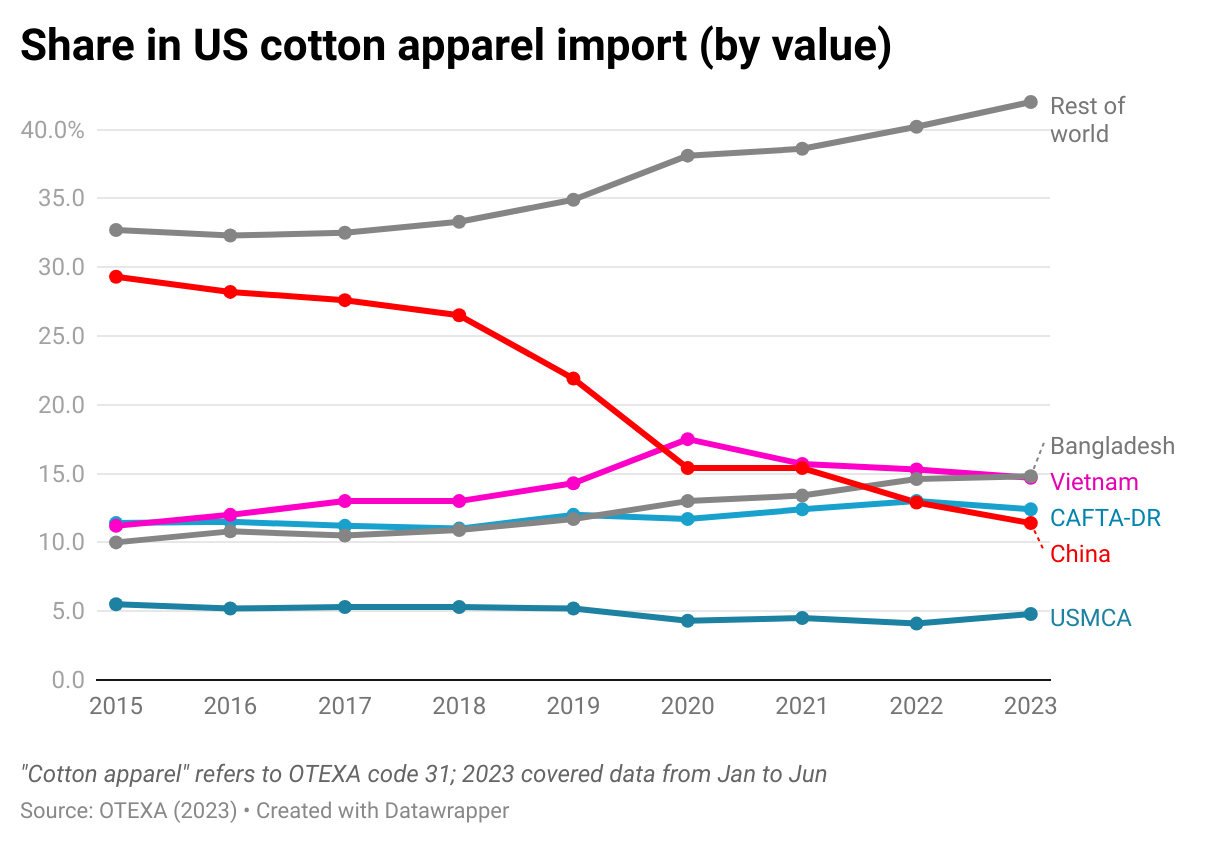
Firstly, the results showed that holding other factors constant, U.S. cotton apparel imports from China decreased significantly by approximately 350 million square meter equivalent (SME) annually following UFLPA’s implementation. In other words, the result confirmed that UFLPA had negatively affected U.S. cotton apparel imports from China. This result is far from surprising as Xinjiang accounted for nearly 90% of China’s cotton production, causing significant forced labor risks associated with importing cotton apparel from China.

Secondly, holding other factors constant, U.S. cotton apparel imports from Vietnam and Bangladesh and CAFTA-DR also respectively decreased by approximately 81 million SME, 51 million SME, and 20 million SME annually after UFLPA’s implementation in 2022. The results revealed U.S. fashion companies’ concerns about UFLPA compliance risks associated with sourcing from countries other than China, particularly Asia, due to their heavy reliance on cotton yarns and fabrics from China through a highly integrated regional supply chain.

Thirdly, the results revealed a more significant positive relationship between U.S. cotton exports to China, Vietnam, Bangladesh, and CAFTA-DR countries and U.S. cotton apparel imports from these countries after UFLPA’s implementation. Related, trade data also showed a declining ratio of U.S. cotton apparel imports from China, Vietnam, Bangladesh, and CAFTA-DR countries relative to these countries’ cotton imports from the U.S. This pattern implies a closer alignment in the trade flow of raw cotton from the U.S. to these countries and the return of finished cotton apparel to the U.S. It could be the case that leading apparel exporting countries increasingly used US cotton after UFLPA to mitigate the forced labor risks.

Additionally, there was a negative relationship between U.S. cotton apparel imports from China, Vietnam, Bangladesh, and CAFTA-DR members and U.S. MMF apparel imports from these countries. In other words, cotton apparel and MMF apparel appear to compete within the total U.S. apparel import market. However, UFLPA’s implementation has not significantly impacted the relationship. Nonetheless, MMF apparel has accounted for a growing share of China’s total apparel exports to the United States after UFLPA’s implementation (down from 46% in 2010 to only 19% in 2023).

The study’s findings revealed a broad trade impact of UFLPA’s implementation that goes far beyond China. Notably, cotton apparel exporters from other Asian countries and those in the Western Hemisphere also appeared to be negatively affected by the new law. Also, unlike theoretical prediction, no clear evidence shows that UFLPA has significantly expanded the near-shoring of U.S. cotton apparel imports from the Western Hemisphere, such as CAFTA-DR members.

Meanwhile, the results call for further investigation of the net impact of UFLPA on U.S. cotton exports. While UFLPA may help U.S. cotton gain more shares in the global marketplace, the reduced U.S. import demand for cotton apparel due to forced labor risk concerns may also unexpectedly “shrink the pie size.”

*:The fixed effects (FE) model was selected for the study based on the likelihood ratio test results (p<.01). The result of the F-test suggests the FE model is statistically significant at the 99% confidence level (p<.01). The value of R2 exceeds 0.90, indicating an overall high goodness-of-fit of the panel regression. All the independent variables were statistically significant at the 99% confidence level (p<.01).

By Sheng Lu and Emilie Delaye

Note: The study will be presented at the 2024 International Textile and Apparel Association (ITAA) annual conference in November 2024.

[This blog post is not open for comment]

FASH455 Discussion: De Minimis Rule and the US Textile and Apparel Industry

Reading material

How the “de minimis” rule (also referred to as Section 321 imports)* might change will be a critical issue to watch in 2024. Under US customs law, specifically the Trade Facilitation and Trade Enforcement Act of 2015, import duties are generally waived for goods valued at $800 or less per person per day, marking an increase from the previous de minimis threshold of $200.

Generally, the reasons for raising the de minimis threshold include: 1) facilitating the clearance of low-value packages and supporting the e-commerce industry (e.g., small-value shipments from online shopping and e-commerce). 2) allowing customs agencies to focus their limited resources on higher-value and higher-risk shipments; 3) lowering compliance and importing costs for importers, especially small businesses.

However, some stakeholders are increasingly concerned about the “de minimis” as a loophole in practice. For example, US textile industry representatives argued that the rule “providing a backdoor to Chinese goods produced with forced labor. The loophole has not only fueled the rise of imports from foreign e-commerce companies and mass distributors, but it has also put our domestic manufacturers and workers at a competitive disadvantage.”

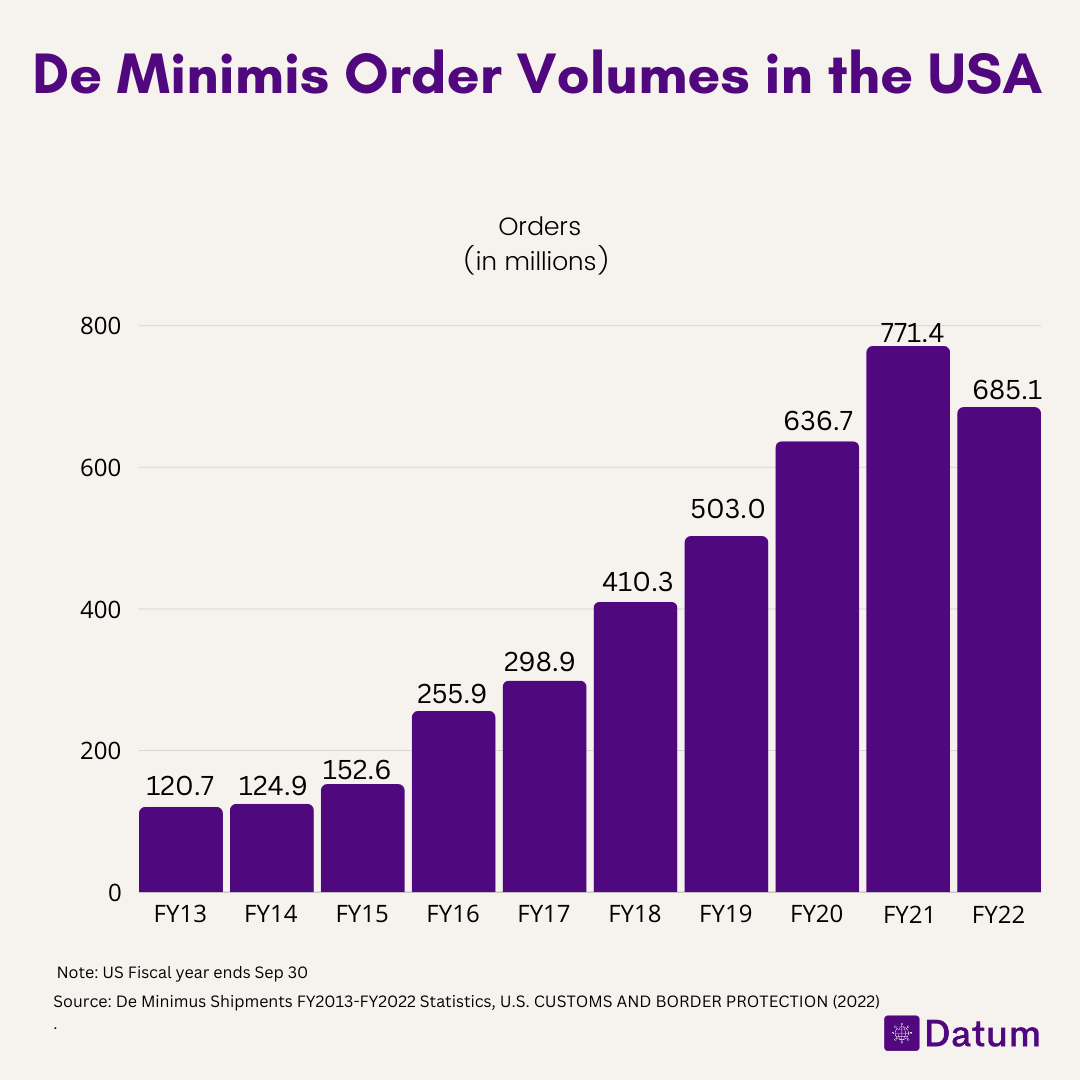
According to CBP’s statistics, the volume and value of U.S. de minimis imports have been surging in recent years, particularly with the booming of e-commerce.

While reforming the “de minimis” rule is likely, its outlook remains uncertain.

  • The “de minimis” rule can only be changed through actions by US Congress. Several bills (e.g., Import Security and Fairness Act and De Minimis Reciprocity Act of 2023) have been introduced recently, calling for lowering the de minimis thresholds or closing the “loophole” to keep shipping from specific countries like China from taking advantage of the benefits. However, the election-year politics, a divided Congress, and their already packed agenda will make the legislative process challenging. That being said, tactically, Congress might include reform of the “de minimis” rule as part of a broader trade package in the future.
  • Not everyone agrees on how to reform the “de minimis.” For example, while some legislation favors lowering the threshold, others prioritize excluding non-market economies like China to benefit from the rule. Furthermore, US e-commerce businesses and influential logistics companies that benefit from the de minimis rule may oppose attempts to revoke the benefits they currently enjoy.
  • As “de minimis” shipments were exempted from CBP review, it also means that policymakers could lack sufficient data to support potential rule changes and evaluate the impacts. For example, while there is suspicion that companies like Shein and Temu exploited the de minimis rule or even that imports containing forced labor did so, it is challenging to present accurate and reliable data to understand their impacts. Thus, data collection “homework”, such as CBP’s section 321 data pilot program, will be necessary for meaningful discussions on reforming the de minimus rule.
  • *Section 321 refers to a part of U.S. law (19 U.S.C. § 1321) that allows duty-free entry of goods valued at $800 or less per shipment, per day, from foreign suppliers to U.S. customers. This is often called the de minimis exemption. Entry Type 86 is one method for filing Section 321 de minimis entries electronically through U.S. Customs and Border Protection (CBP). Entry Type 86 was initially launched as a pilot test by U.S. Customs and Border Protection (CBP) in September 2019.

Discussion questions:

#1: Please assess the arguments presented in the NY Times article regarding the de minimis rule’s impact on US textile and apparel manufacturers. What evidence or examples support their claims?

#2: Consider the defenders of the de minimis rule who argue that it does not harm the competitiveness of the US textile and apparel industry. What counterarguments and supporting evidence could they present?

#3: What additional information can help us better understand the trade impact of de minimis rules?

#4: Do you support eliminating or lowering the de minimis threshold? Why or why not?

[Instructions: For students in FASH455, please address at least two of the questions above. Additionally, feel free to share any other thoughts on the debates and resources you found relevant and informative.]

FASH455 Exclusive Interview with Julia Hughes, President of the United States Fashion Industry Association about the Latest US Apparel Sourcing Trends

About Julia K. Hughes

Julia K. Hughes is President of the United States Fashion Industry Association (USFIA), which represents brands, retailers, importers, and wholesalers based in the United States and doing business globally. She represents the industry in front of the U.S. government as well as international governments and stakeholders, explaining how fashion companies create high quality jobs in the United States and economic opportunities around the world.

An expert on textile and apparel trade issues, Julie has testified before Congress and the Executive Branch. She frequently speaks at international conferences including the China & Asia Textile Forum, Fashion Institute of Technology (FIT), Harvard University’s Bangladesh Development Conference, MAGIC, Prime Source Forum, Vietnam Textile Summit, and others.

Julie served as the first President and is one of the founders of the Washington Chapter of Women in International Trade (WIIT) and is one of the founders of the WIIT Charitable Trust. She also was the first President of the Organization of Women in International Trade (OWIT).  In 1992, she received the Outstanding Woman in International Trade award and in 2008, the WIIT Lifetime Achievement Award. She also is a member of the International Women’s Forum.

Julia has an M.A. in International Studies from the Johns Hopkins School of Advanced International Studies and a B.S. in Foreign Service from Georgetown University.

The interview was conducted by Leah Marsh, a graduate student in the Department of Fashion and Apparel Studies at the University of Delaware. Leah’s research focused on​​ exploring EU retailers’ sourcing strategies for clothing made from recycled textile materials and fashion companies’ supply chain and sourcing strategies.

The interview is part of the 2023 Cotton in the Curriculum program, supported by Cotton Incorporated, to develop open educational resources (OER) for global apparel sourcing classes.

Video Discussion: Why China’s Banned Cotton Keeps Sneaking Into U.S. Supply Chains (WSJ)

Discussion questions: What factors contribute to the complexity of eliminating banned Xinjiang cotton from the apparel supply chain? How can the current efforts be enhanced to better address the situation and by whom? Feel free to share any other reflections on the video and the graphs.

Further reading:

Hinrich Foundation Study: Impact of US anti-forced labor laws on Vietnam’s textile industry

A new study released by the Hinrich Foundation in July 2023 evaluated the impact of the implementation of the Uyghur Forced Labor Prevention Act (UFLPA) on Vietnam’s textile and apparel industry.

The study’s findings were based on interviews with “senior leaders and owners of Vietnam’s garment and textile small and medium-sized enterprises (SMEs).” (Note: However, the study didn’t specify when and how many interviews were conducted.) Below are the summarized key findings:

#1: Vietnam’s textile and apparel industry heavily uses cotton imported from China. As noted in the study, in 2021, China accounted for nearly 30% of Vietnam’s cotton imports (ranked #1, $1.48 billion out of total $4.99 billion imports), surpassing the US ($1.05 billion).

#2: Vietnam’s garment exports may contain Xinjiang cotton. According to the study, “Once the cotton arrives in Vietnam, international intermediary manufacturers create finished garments from semi-finished products to export globally, often using the same materials from banned Chinese suppliers. This results in the ‘laundering’ of Xinjiang cotton.”

#3: Vietnam textile and apparel SMEs report challenges in proving the origin of cotton in fabrics. For example, one respondent says, “Differentiating between cotton products coming from different sources is challenging as they might have been blended while being transported by sea. Suppliers from China, Vietnam, Bangladesh, India, and Pakistan may engage in this practice to falsely label Xinjiang cotton as coming from other locations to circumvent this act.”

#4: Vietnam’s textile and apparel SMEs say the UFLPA implementation has negatively affected their exports to the United States.

  • CBP’s statistics show that (current as of July 1, 2023), since UFLPA’s implementation in June 2022, a more significant amount of Vietnam’s textiles, apparel, and footwear were affected by law enforcement than those from China (e.g., $20 million vs.$16.2 million investigated and $3.53 million vs.$1.04 million denied access).
  • US fashion companies are sourcing LESS from Vietnam due to forced labor concerns. According to one respondent, “My company is producing apparel products for several US-based fashion brands and uses materials from China and exports to the US. Since UFLPA was in place in June 2022, they have ordered less from us. It seems that our partners feel pressure from the regulators, so they are looking for alternative risk-free suppliers.
  • The surveyed SMEs also expect MORE of Vietnam’s textile and apparel exports to be investigated under the UFLPA enforcement down the road. Some SMEs commented that “it would be hard for US firms to rapidly find alternative suppliers in a short time, therefore more checks on Vietnamese cargoes are to be expected.
  • The study acknowledges that “In the worst-case scenario, Vietnamese SMEs may lose market access if their American importers are unable to verify that the supply chain is free from inputs produced via forced labor.”

#5: UFLPA also increased the trade compliance costs of “Made in Vietnam,” a significant challenge to many SMEs. One respondent commented, “Compliance with the UFLPA may pose a challenge for SMEs due to the higher costs associated with providing the necessary documentation of their supply chains. This could be due to the need to conduct additional audits, hire external consultants, or implement new tracking systems.”

Additionally, the report called for Vietnam’s textile and apparel SMEs to 1) diversify the supply chain, especially using more cotton imports from the US, India, Australia, and Brazil. 2) enhance supply chain traceability (note: how to make it happen remains a big question mark); 3) engage in dialogue with US authorities.

Global Apparel Market and Trade—The Modern Cotton Story Podcast

Textiles and Apparel – Being Responsible Stakeholders

Panelists:

  • Anna Ashton– US-China Business Council (USCBC)
  • Amy Lehr – Center for Strategic and International Studies (CSIS)
  • Nate Herman – American Apparel and Footwear Association (AAFA)
  • John Foote – Baker McKenzie

Related readings

Resources for Learning about Cotton: FASH455 Exclusive Interview with Shannon Brady, CottonWorks™ Student Ambassador

IMG_1605

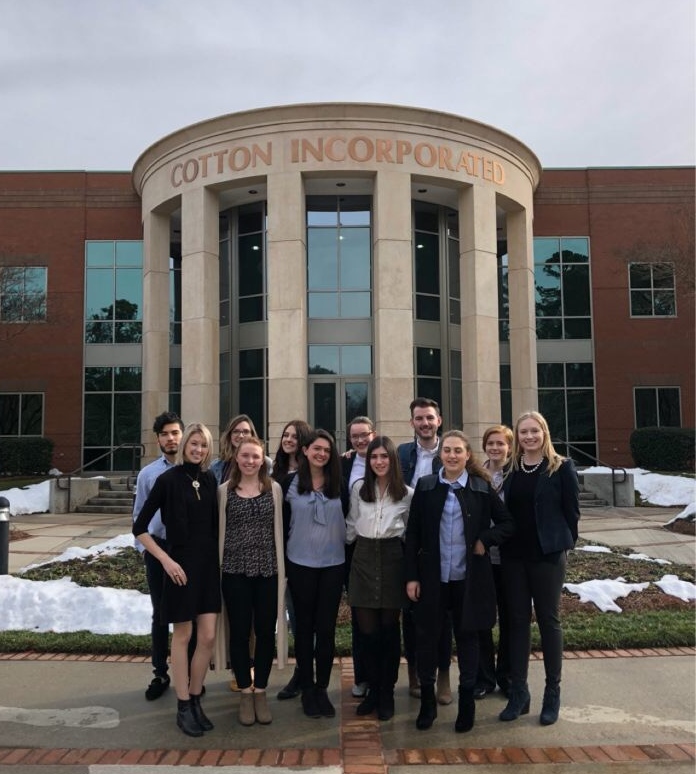
The picture above: Shannon Brady, Junior, UD Fashion Merchandising Major (Fourth one from the left in the front row) visited Cotton Inc together with other Cotton Student Ambassadors.

Question: What is the CottonWorks™ Ambassador program about and what is your role as an ambassador?

The CottonWorks™ ambassador program is a program where students in fashion and apparel related majors get to promote CottonWorks™ on their college campuses. Ambassadors are charged with helping faculty and students understand the resources available through CottonWorks™ as well as promote this resource through social media. This semester there are twelve ambassadors (including myself) from 12 different schools across the country.

My role as an ambassador is to raise awareness about CottonWorks™ on campus as it is a new program here at the University of Delaware. In January of this year, I had the opportunity to visit the Cotton Incorporated Headquarters in Cary, North Carolina. I, along with other CottonWorks™ ambassadors participated in an all-day CottonWorks™ training as well as a tour of the production facilities at Cotton Incorporated. I got to see everything from raw cotton to state-of-the-art laser finished denim. It was a unique experience and such a cool way to see the material I learned about in class come to life. 

Question: Cotton Incorporated recently launched a new CottonWorksTMprogram to help industry professionals and emerging professionals (like our FASH students) know more about cotton. Can you give us an overview of the program, particularly the learning resources related to the sourcing of cotton products?

CottonWorks™ is a free website where students and professionals can access a multitude of resources about cotton and the fashion and apparel industry.  The site offers many learning resources. Detailed guides are offered on topics such as sourcing and manufacturing, retail and marketing, fabric and technology, fashion and trend, and sustainability. These topics really apply to the fashion curriculum at UD. Additionally, the site offers a mobile-friendly textile encyclopedia where students can look up any textile related word anytime, anywhere.

However, the site offers more than just learning resources. CottonWorks™ is a great supplemental learning tool, but the site also offers emerging professionals ways to get engaged with their industry. Free webinars and workshops are offered through the website and are a great way to engage with industry professionals and learn about the issues pressing the industry right now. Their next webinar is on Tuesday 24 April 2018 registration is open on the CottonWorks™ website, and the topic of discussion is Cotton’s Biodegradability in Aquatic Environments.

Particularly regarding learning resources on sourcing cotton products, the sources and manufacturing topic on the website offers dozens of guides all kinds of cotton products, ranging from denim to cotton nonwovens.

Last but not the least, the Executive Cotton Update and Monthly Economic Letter, both posted every month at cottonworks.com/news are great resources for students and industry professionals interested in knowing what is happening in the U.S. and world cotton industry.

Question: Developing a sustainable supply chain is critical for the textile and apparel industry. So how is cotton related to sustainability? What are the facts important to know?

Cotton Incorporated is committed to being at the forefront of cotton sustainability, and the CottonWorks™ site offers many resources on how cotton is related to sustainability, including guides on responsible cotton production and manufacturing because sustainability happens throughout the lifecycle of cotton.

Cotton is a natural fiber, unlike some manmade fibers such as polyester it can biodegrade. If you log on to CottonWorks™ website you can view a recap of their webinar last month that went in depth about cotton’s biodegradability in soil and septic environments.

Additionally, CottonWorks™ has information on campaigns such as Cotton LEADS™ and Blue Jeans Go Green™ to promote the sustainability of cotton. Cotton LEADS™ is a joint program with Australia and the United States that supports a reliable and responsible cotton supply chain through five core principles of sustainability, use of best practices and traceability in the supply chain. Blue Jeans Go Green™ initiative collects denim sent to landfills and recycles it in partnership with Bonded Logic Inc. You can learn more about both these initiatives on the CottonWorks™ site at cottonworks.com/topics/sustainability.

Question: What are the opportunities for our FASH and UD students to get involved with CottonWorks™ and learn more about cotton?

Students can get started today! By registering for a free account on cottonworks.com, they have access to all of the amazing resources I touched on and many more. Additionally, they can follow @cotton_works on Instagram and Twitter to learn more about cotton and get cotton inspiration for their projects. 

I will also be hosting a tabling event where students can learn more about these resources, talk to me, and win free food and prizes on Thursday 19 April 2018 in Perkins! There will be more tabling events in the future that I will be posting about in my social media as well.

This slideshow requires JavaScript.