Blog Articles

Sourcing Strategy of Leading U.S. Fashion Brands and Apparel Retailers (updated in May 2018)

The Section 301 Investigation against China Divides the U.S. Textile Industry and U.S. Fashion Brands and Retailers

FOREIGN201708211603000328832175771

On April 3, 2018, the U.S. Trade Representative Office (USTR) released the proposed list of Chinese products to be subject to the retaliatory tariff under the Section 301 action. The proposed list covers approximately 1,300 separate tariff lines, including textile machinery. However, textile and apparel (HS chapters 50 to 63) were not on the list.

USTR says it will make a final decision on whether to implement the proposed tariff action after a public hearing process scheduled at around May 15, 2018. Most U.S.-based textile and apparel industry associated have submitted their public comments regarding the section 301 investigation. Because of their respective commercial interests, not surprisingly, the U.S. textile industry favors the retaliatory tariffs on imports from China whereas U.S. fashion brands and retailers oppose the action strongly. Specifically:

National Council of Textile Organizations (NCTO)

  • NCTO applauds the Trump Administration’s formal initiation of a Section 301 case designed to address China’s persistent and highly damaging actions in the area of intellectual property theft. NCTO argues that illegal activity on the part of the government of China has gone on for far too long, at the direct expense of U.S. manufacturers and the loss of millions of U.S. manufacturing jobs.
  • The U.S. textile industry is severely disappointed that the retaliation list published by USTR on April 3 does not contain a single textile or apparel product.
  • NCTO argues that China’s illegal IPR activities have damaged the U.S. textile industry and recommend that textile and apparel products be added to the retaliation list.

The United States Fashion Industry Association (USFIA)

  • USFIA opposes adding apparel (items classifiable under chapters 61 and 62 of the HTSUS) and other fashion products (such as footwear, handbags, and luggage) to the retaliation list against China.
  • USFIA argues that tariffs are NOT the appropriate mechanism to redress the activities outlined in USTR’s report to the White House. Imposing tariffs on imports of fashion products would do nothing to solve the concerns about China’s IP policies and practices outlined in USTR’s Section 301 report.
  • USFIA believes that the best way to address concerns about China’s IPR practices is action at the multilateral level that includes other US trading partners.

American Apparel and Footwear Association (AAFA)

  • AAFA strongly opposes the proposed imposition of tariffs on textile, apparel, and footwear equipment and machinery as this will result in increased costs for AAFA members who are making yarns, fabrics, clothes, and shoes in the United States.
  • AAFA believes that a tariff on textile and apparel products would be a hidden tax on U.S. consumers, particularly since China represents such a large source of U.S. imports of these products.
  • AAFA strongly supports the Trump Administration’s efforts to improve the protection of intellectual property rights in China.

New CRS Report: U.S. Trade with Free Trade Agreement (FTA) Partners

3Key findings:

  • Between 1985 and 2011, the United States entered into 14 free trade agreements (FTAs) with 20 countries. Data from the Census shows that U.S. merchandise trade (or trade in goods) with FTA partner countries represents nearly 70% of all U.S. exports in goods and services, and more than 80% of all U.S. imports of goods and services.
  • In 2016, the United States ran a merchandise trade deficit of -$71.3 billion with the 20 FTA partner countries and a services surplus of $68.9 billion. The share of the U.S. trade deficit with FTA partners, however, has fallen by nearly half over the 2007-2017 period, from 18% to only about 10% of the total -$734.4 billion U.S. merchandise trade deficit.

1

  • Regarding the economic impact of FTAs on the United States, a study conducted by the U.S. International Trade Commission suggests that bilateral and regional trade agreements increased U.S. aggregate trade by about 3%, but less than 1% for U.S. employment (or 159,300 full-time equivalent employees). Specifically, the study finds that rising imports, due in part to the Agreement on Textiles and Clothing (ATC), accounted for most of the reduction in U.S. employment in the apparel industry between 1998 and 2014.
  • Current trade data treat exports and imports as though the full value of an export was produced domestically and the full value of an import was produced abroad. However, the rapid growth of global value chains and intra-industry trade (importing and exporting goods in the same industry) has significantly increased the amount of trade in intermediate goods in ways that can blur the distinction between domestic and foreign firms and goods. For example, foreign value added accounts for about 11% of the content of U.S. exports in 2010. As a result of the growth in value chains, traditional methods of measuring trade may obscure the actual sources of goods and services and the allocation of resources that are used in producing those goods and services.

2

  • Trade agreements of the type currently being negotiated by the United States comprise a broad range of issues that could have significant economic effects on trade and commercial relations over the long run between the negotiating parties, particularly for developing and emerging economies. However, the negative effects of international trade and trade agreements, particularly potential job losses and lower wages, often are distributed disproportionately with the effects falling more heavily on some workers and on some firms.

The full report can be downloaded from HERE

Resources for Learning about Cotton: FASH455 Exclusive Interview with Shannon Brady, CottonWorks™ Student Ambassador

IMG_1605

The picture above: Shannon Brady, Junior, UD Fashion Merchandising Major (Fourth one from the left in the front row) visited Cotton Inc together with other Cotton Student Ambassadors.

Question: What is the CottonWorks™ Ambassador program about and what is your role as an ambassador?

The CottonWorks™ ambassador program is a program where students in fashion and apparel related majors get to promote CottonWorks™ on their college campuses. Ambassadors are charged with helping faculty and students understand the resources available through CottonWorks™ as well as promote this resource through social media. This semester there are twelve ambassadors (including myself) from 12 different schools across the country.

My role as an ambassador is to raise awareness about CottonWorks™ on campus as it is a new program here at the University of Delaware. In January of this year, I had the opportunity to visit the Cotton Incorporated Headquarters in Cary, North Carolina. I, along with other CottonWorks™ ambassadors participated in an all-day CottonWorks™ training as well as a tour of the production facilities at Cotton Incorporated. I got to see everything from raw cotton to state-of-the-art laser finished denim. It was a unique experience and such a cool way to see the material I learned about in class come to life. 

Question: Cotton Incorporated recently launched a new CottonWorksTMprogram to help industry professionals and emerging professionals (like our FASH students) know more about cotton. Can you give us an overview of the program, particularly the learning resources related to the sourcing of cotton products?

CottonWorks™ is a free website where students and professionals can access a multitude of resources about cotton and the fashion and apparel industry.  The site offers many learning resources. Detailed guides are offered on topics such as sourcing and manufacturing, retail and marketing, fabric and technology, fashion and trend, and sustainability. These topics really apply to the fashion curriculum at UD. Additionally, the site offers a mobile-friendly textile encyclopedia where students can look up any textile related word anytime, anywhere.

However, the site offers more than just learning resources. CottonWorks™ is a great supplemental learning tool, but the site also offers emerging professionals ways to get engaged with their industry. Free webinars and workshops are offered through the website and are a great way to engage with industry professionals and learn about the issues pressing the industry right now. Their next webinar is on Tuesday 24 April 2018 registration is open on the CottonWorks™ website, and the topic of discussion is Cotton’s Biodegradability in Aquatic Environments.

Particularly regarding learning resources on sourcing cotton products, the sources and manufacturing topic on the website offers dozens of guides all kinds of cotton products, ranging from denim to cotton nonwovens.

Last but not the least, the Executive Cotton Update and Monthly Economic Letter, both posted every month at cottonworks.com/news are great resources for students and industry professionals interested in knowing what is happening in the U.S. and world cotton industry.

Question: Developing a sustainable supply chain is critical for the textile and apparel industry. So how is cotton related to sustainability? What are the facts important to know?

Cotton Incorporated is committed to being at the forefront of cotton sustainability, and the CottonWorks™ site offers many resources on how cotton is related to sustainability, including guides on responsible cotton production and manufacturing because sustainability happens throughout the lifecycle of cotton.

Cotton is a natural fiber, unlike some manmade fibers such as polyester it can biodegrade. If you log on to CottonWorks™ website you can view a recap of their webinar last month that went in depth about cotton’s biodegradability in soil and septic environments.

Additionally, CottonWorks™ has information on campaigns such as Cotton LEADS™ and Blue Jeans Go Green™ to promote the sustainability of cotton. Cotton LEADS™ is a joint program with Australia and the United States that supports a reliable and responsible cotton supply chain through five core principles of sustainability, use of best practices and traceability in the supply chain. Blue Jeans Go Green™ initiative collects denim sent to landfills and recycles it in partnership with Bonded Logic Inc. You can learn more about both these initiatives on the CottonWorks™ site at cottonworks.com/topics/sustainability.

Question: What are the opportunities for our FASH and UD students to get involved with CottonWorks™ and learn more about cotton?

Students can get started today! By registering for a free account on cottonworks.com, they have access to all of the amazing resources I touched on and many more. Additionally, they can follow @cotton_works on Instagram and Twitter to learn more about cotton and get cotton inspiration for their projects. 

I will also be hosting a tabling event where students can learn more about these resources, talk to me, and win free food and prizes on Thursday 19 April 2018 in Perkins! There will be more tabling events in the future that I will be posting about in my social media as well.

This slideshow requires JavaScript.

Regional Textile and Apparel Supply Chains–Questions from FASH455

References and tables_Page_1

NAFTA and Textile and Apparel Rules of Origin

#1 How do rules of origin (RoO) and free trade agreement (FTA) regulations affect speed to market in apparel sourcing? Do countries who are part of an FTA find it to be easier to get to market in a shorter amount of time if they are working with other FTA members? Or could RoO slow down the production process because producers have to be more careful about compliance with the complicated RoO?

#2 Why or why not the “yarn forward” rules of origin remains an effective way to promote textile and apparel production in the Western-Hemisphere?  What other options are available to improve the competitiveness of the Western-Hemisphere textile and apparel supply chain?

#3 What would happen to the Western-Hemisphere textile and apparel supply chain should NAFTA no longer exist?

#4 Should NAFTA be responsible for the loss of US apparel manufacturing jobs? Any hard evidence?

#5 If you were U.S. trade negotiators, what would you do with TPL in NAFTA given the competing views from the U.S. textile industry and U.S. fashion brands and retailers?

The Outlook of “Factory-Asia”

#6 From the perspective of the U.S. textile and apparel industry, is it a good idea for the United States to reach free trade agreement (FTA) with Asian countries? If so, what countries should be included in the new FTA? If not, why?

#7 How can U.S. companies get involved in the Asia-based textile and apparel supply chain?

#8 Why or why not is the “Flying geese model” unique to Asia? Can the model be replicated in America too?

(Welcome to join our online discussion. Please mention the question number in your reply)

Competition in the U.S. Apparel Import Market (Updated March 2018)

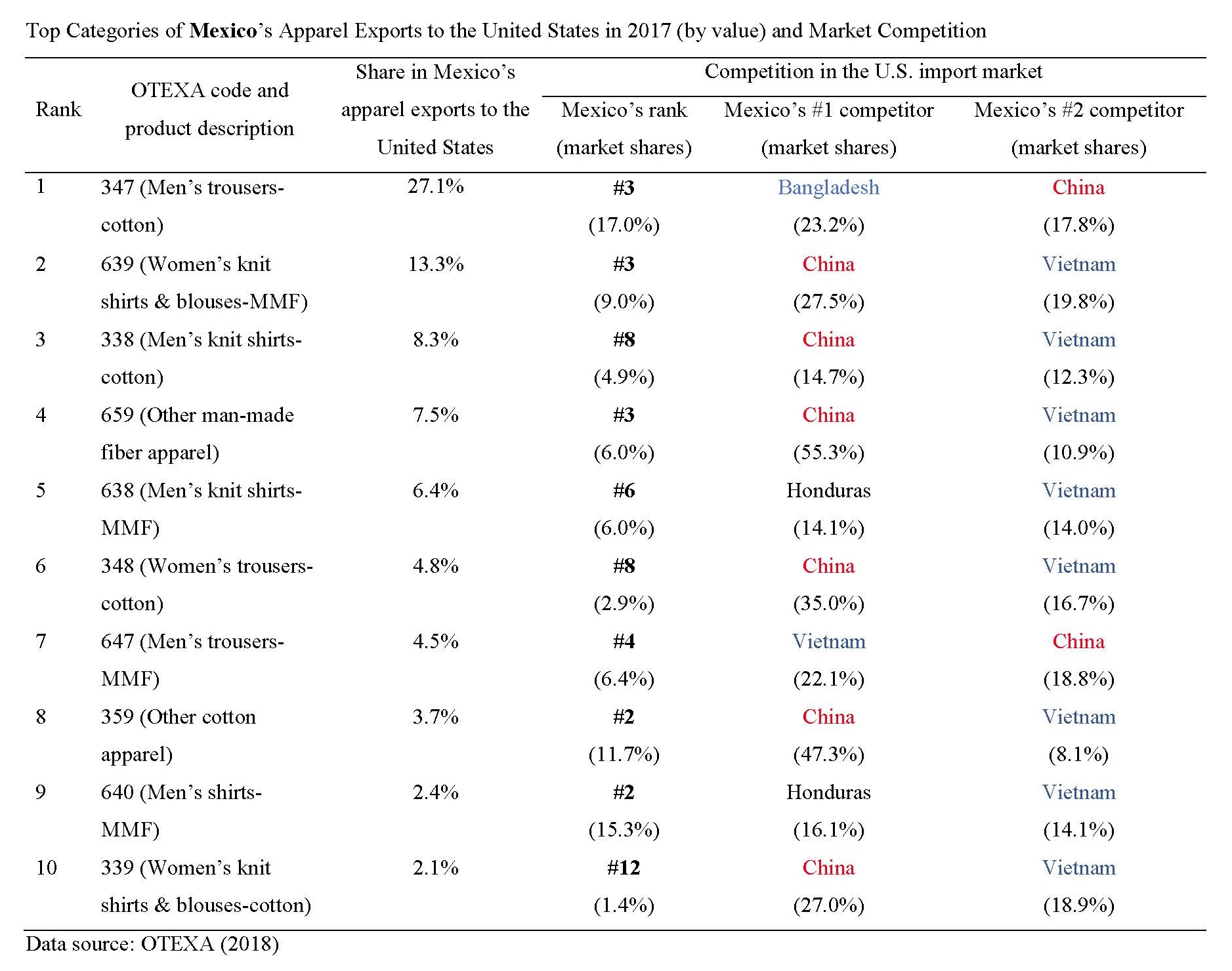
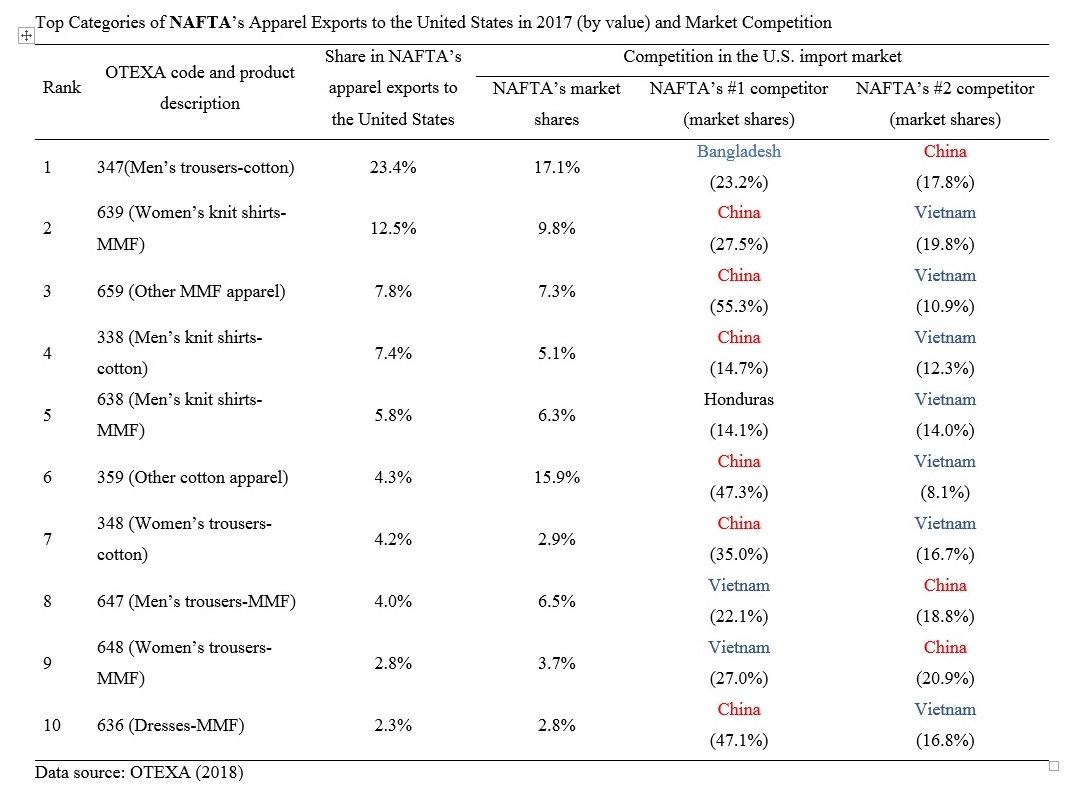
market shares in the US (2017)_Page_2market shares in the US (2017)_Page_3CAFTA-DRNAFTA

CPTPP Tariff Phaseout Schedule for Textiles and Apparel

The Comprehensive and Progressive Agreement for Trans-Pacific Partnership (CPTPP),  signed on March 8, 2018, is a new free trade agreement between Australia, Brunei, Canada, Chile, Japan, Malaysia, Mexico, New Zealand, Peru, Singapore, and Vietnam. Once the CPTPP enters into force, it will be one of the largest free trade agreements in the world and will provide enhanced market access to key Asian markets. Below is the detailed tariff phaseout schedule for textile and apparel products by CPTPP members:

CPTPP

This slideshow requires JavaScript.

by Sheng Lu

Wage Level for Garment Workers in the World (updated in 2017)

wage2

wage1

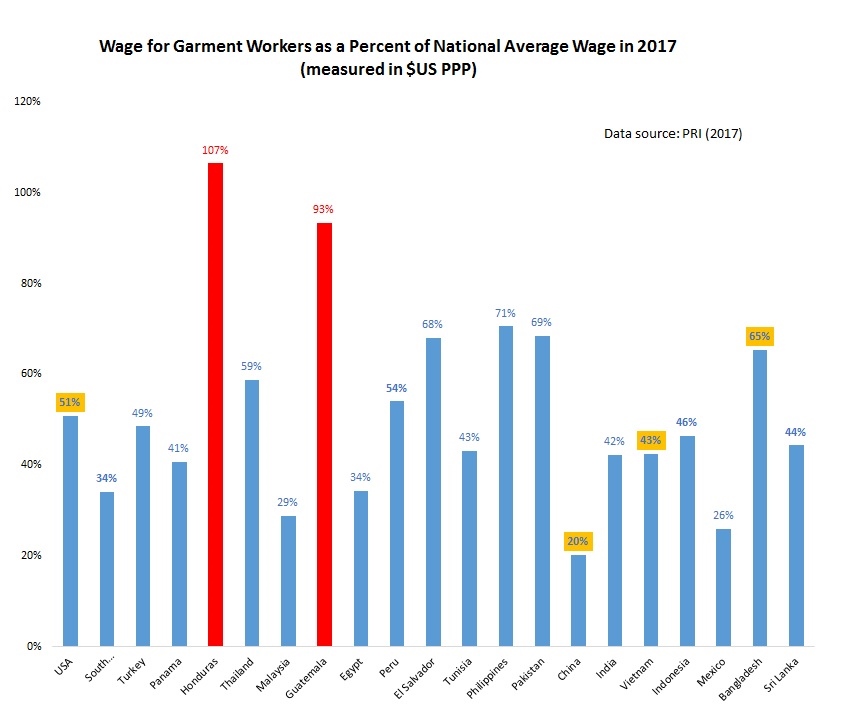
Statistics from the Public Radio International (PRI) show that garment workers in many parts of the world earn much less than the national average. Of the twenty-one countries investigated by PRI, the monthly wage for garment workers range widely from $1,864 (USA) to $194 (Sri Lanka).

However, a higher wage level in absolute term does not necessarily mean a more decent pay. For example, while garment workers in the US apparently earn much more than their peers in other parts of the world, the wage level nevertheless was only 51 percent of the U.S. national average wage. Likewise, while garment workers in Honduras earn only $650 each month, this amount was approximately 107 percent of the national average wage in the country.

For more information about the wage level for garment workers around the world, please explore the Fair-fashion Quiz created by PRI.

Please also see Minimum Wage Level for Garment Workers in the World (Updated in December 2020)

Social and Economic Impacts of Apparel Trade–Questions from FASH455

Used-clothes-e1501882805445

Debate on Used clothing trade and AGOA

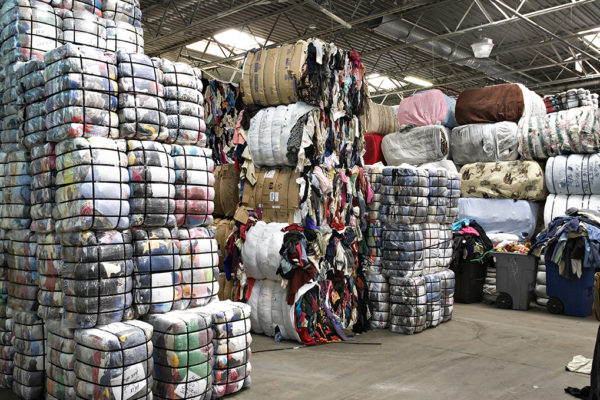
#1 What evidence can support the arguments that cutting off secondhand clothing imports from Africa will allow African nations to build their own textile industry? Likewise, what evidence can support the arguments that African countries overall benefit from importing used clothing from countries like the United States?

#2 Given the debate on used clothing trade on African nations, will you continue to donate used clothing? Why or why not?

#3 China holds a dominant position in textile and apparel production and exports because of their vast amounts of technology, workers, and resources. How do you think least developing countries like Africa will be able to keep up with such steep competition? Why or why not it is a wise decision for the United States to threaten to take away East African countries’ benefits under AGOA?

Social and economic impact of apparel trade

#4 Is factory employment in India a step in the right direction for the country’s gender equality? What effects, positive or negative, could such employment have in regards to gender issues?

#5 We keep arguing that globalization is negative because we are taking jobs away from U.S. workers. But by sending more work to factories in India, we’ve created jobs for these Indian women who, before working in the factories, were sheltered and only sent off into the world for arranged marriage. In this sense, is globalization still negative if we’re creating a sense of freedom and purpose for these women?

#6 As detailed in the article, the working conditions and treatment of workers is extremely unethical in some garment factories.  Can globalization help this issue or hurt it more? 

#7 How do you compare your life to the Indian girls in the article? And please just imagine: ten years later, what will the life of these Indian girls look like? How about yours?

Welcome to our online discussion! Please mention the question # in your comment.

Automation Comes to Fashion

Video Discussion Questions:

#1 Why do you agree or disagree with the video that automation will post a significant challenge to garment workers in developing countries such as Bangladesh? How should policymakers react to the challenges?

#2 Can automation be a permanent solution to the social responsibility problem in the garment industry?

#3 In your view, how will automation affect the big landscape of apparel sourcing and the patterns of world textile and apparel trade?

#4 Why or why not do you anticipate a sizable return of apparel manufacturing to the United States if apparel production can be largely automated?

Additional reading: The robots are coming for garment workers. (WSJ, 2018)

Please feel free to share your views and join our online discussion!

US Continues to Lose Textile and Apparel Manufacturing Jobs in 2017

textile

apparel

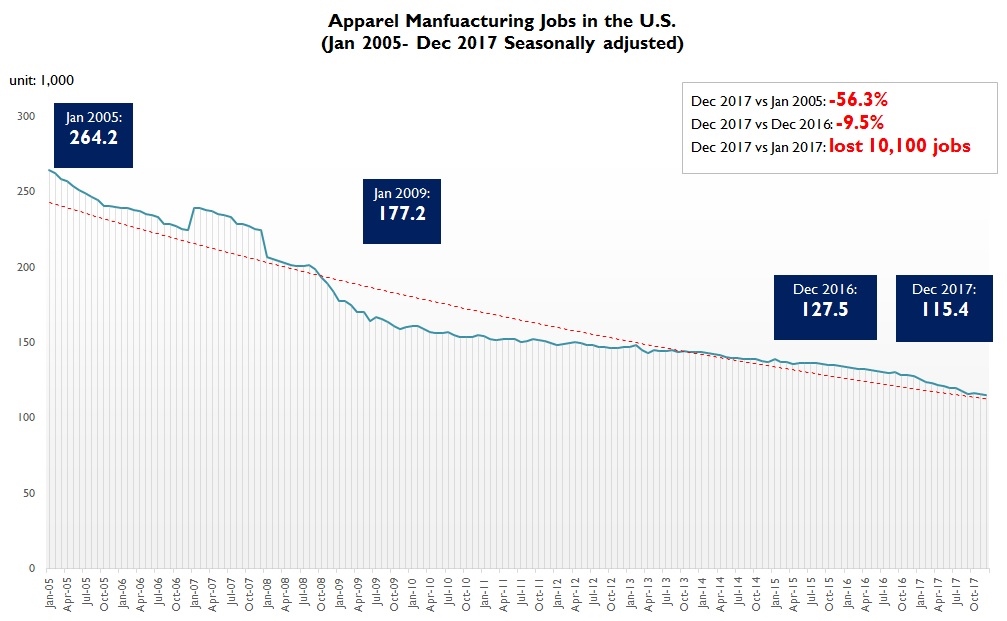
It may disappoint those who are hoping a return of textile and apparel manufacturing jobs in the United States. But according to latest statistics from the Bureau of Labor Statistics (BLS), the U.S. textile industry (NAICS 313 and 314) and apparel industry (NAICS 315) respectively lost another 4,100 and 10,100 jobs in 2017.  Between January 2005 and December 2017, 44.2% and 56.3% of jobs in the U.S. textile and apparel sectors were gone.  

From the academic perspective, a sizable return of textile and apparel manufacturing job in the United States seems to be extremely unlikely given the nature of the U.S. and the global economy in the 21st century.

Notably, the rising import is found NOT a significant factor leading to the decline in employment in the U.S. textile industry (NAICS 313). As estimated by a US International Trade Commission study in 2016, imports were found only contributed 0.4 percent of the total 7.6 percent annual employment decline in the U.S. textile industry between 1998 and 2014. Instead, more job losses in the sector were caused by: 1) the improved productivity as a result of capitalization and automation (around 4.6 percent annually); and (2) the shrinkage of domestic demand for the U.S. made textiles (around 3.5 percent annually).

And consistent with the prediction of classic trade theories, as capital and technology abundant developed country, the United States, not surprisingly, continues to lose its comparative advantage in making labor-intensive apparel. Hypothetically, apparel “Made in the USA” may come back if apparel manufacturing can be substantially automated like textile manufacturing. However, net job creation in the sector as a result of automation is hard to tell. Additionally, most U.S. apparel companies heavily rely on global sourcing and non-manufacturing activities such as branding, marketing, and design today. Few companies still regard “manufacturing” a key competitive advantage or an area of strategic importance to invest in the future.

Related reading: Creating High-Quality Jobs in the U.S. Textile and Apparel Industry (UD Biden Institute)

Is It Necessary to Cut Trade Deficit and Achieve Trade Balance?

2

1.jpg

While the Trump Administration is seeking to reduce the U.S. trade deficit and achieve a more “balanced trade” with its trading partners, a newly-released World Economic Forum (WEC) paper questions the necessity and economic rationale of doing so. As argued by the paper:

First, a country’s trade balance is NOT a measurement of its international commercial success. Neither is the case that “imports are bad and exports are good. “Instead, the paper says that “it is more accurate to think of imports as the benefits of trade, and exports as the cost that needs to be paid to obtain these benefits.”

Second, it is a misconception that “trade deficits cause a reduction in employment and production and trade surplus increase them.” Rather, imports could  increase because of an increase in domestic income thereby increasing the aggregate demand. Empirical studies also overwhelmingly find that rapid economic growth and larger trade deficit are associated with faster employment growth in the United States in history (see the graphs above).

Third, as the supply chain goes global, a tax on imported inputs can reduce rather than promote a country’s exports, particularly manufacturing goods (for example high tariffs on imported fabrics will reduce the price competitiveness of clothing exports). Likewise, trade barriers could disrupt production and reduce domestic employment in both the “protected” industries and those downstream sectors that use their outputs.  

Fourth, primarily trade balance is a function of a country’s national saving and investments, not of trade policies. In other words, trade policies, such as higher tariffs and quantitative restrictions, will have no impact on a country’s trade balance. Interesting enough, countries like Singapore which maintain fairly low trade barriers, run a trade surplus equal to as high as 20% of its GDP. In comparison, India was one of the most highly protected economies in the early 1990s when it experienced unsustainable large trade deficits. Further, there is a dynamic balance between a country’s trade balance and exchange rate: in an open economy, reducing a country’s imports could lead to an appreciation of its currency and eventually hurt its exports as well.     

What is your view on the trade deficit and trade balance? Why do you agree or disagree with the arguments of the WEC paper? Do you find any evidence that challenges the findings of the paper? Please feel free to leave your comments.

Outlook 2018: Apparel Industry Issues in the Year Ahead

Outlook 2019: Apparel Industry Issues in the Year Ahead is available 

th.jpg

In January 2018, Just-Style consulted a panel of industry leaders and scholars in its Outlook 2018–Apparel Industry Issues in the Year Ahead management briefing. Below is my contribution to the report. All suggestions and comments are most welcome!

1. What do you see as the biggest challenges – and opportunities – facing the apparel industry in 2018, and why?

One of the biggest opportunities facing the apparel industry in 2018 could be the faster growth of the world economy. According to the International Monetary Fund (IMF), the global growth forecast for 2018 is expected to reach 3.7 percent, about 0.1 percent points higher than 2017 and 0.6 percent points higher than 2016. Notably, the upward economic growth will be broad-based, including the United States, the Euro area, Japan, China, emerging Europe and Russia. Hopefully, the improved growth of the world economy will translate into increased consumer demand for clothing in 2018.

Nevertheless, from the macroeconomic perspective, oversupply will remain a significant challenge facing the apparel industry in 2018. Data from the World Bank and the World Trade Organization (WTO) shows that, while the world population increased by 21.6 percent between 2000 and 2016, the value of clothing exports (inflation-adjusted) surged by 123.5 percent over the same period. Similarly, between 2000 and 2016, the total U.S. population increased by 14.5 percent and the GDP per capita increased by 22.2 percent, but the supply of apparel to the U.S. retail market surged by over 67.8 percent during the same time frame. The problem of oversupply is the root of many challenges faced by apparel companies today, from the intense market competition, pressure of controlling production and sourcing cost, struggling with excessive inventory and deep discounts to balancing sustainability and business growth.

2: What’s happening with sourcing? How is the sourcing landscape likely to shift in 2018, and what can apparel firms and their suppliers do to stay ahead?

The 2017 US Fashion Industry Benchmarking Study, which I conducted in collaboration with the US Fashion Industry Association (USFIA) earlier this year, provides some interesting insights into companies’ latest sourcing strategies and trends. Based on a survey of 34 executives at the leading U.S. fashion companies, we find that:

First, most surveyed companies continue to maintain a relatively diversified sourcing base, with 57.6 percent currently sourcing from 10+ different countries or regions, up from 51.8 percent last year. Larger companies, in general, continue to have a more diversified sourcing base than smaller companies. Further, around 54 percent of respondents expect their sourcing base will become more diversified in the next two years, up from 44 percent in 2016; over 60 percent of those expecting to diversify currently source from more than 10 different countries or regions already. Given the uncertainties in the market and the regulatory environment (such as the Trump Administration’s trade policy agenda), companies may use diversification to mitigate potential market risks and supply chain disruptions due to protectionism.

Second, although U.S. fashion companies continue to seek alternatives to “Made in China” actively, China’s position as top sourcing destination remains unshakable. Many respondents attribute China’s competitiveness to its enormous manufacturing capacity and overall supply chain efficiency. Meanwhile, it is interesting to note that the most common sourcing model is shifting from “China Plus Many” to “China Plus Vietnam Plus Many” (i.e. China typically accounts for 30-50 percent of total sourcing value or volume, 11-30 percent for Vietnam and less than 10 percent for other sourcing destinations). I think this sourcing model will likely to continue in 2018.

Third, social responsibility and sustainability continue to grow in importance in sourcing decisions. In the study, we find that nearly 90 percent of respondents give more weight to sustainability when choosing where to source now than in the past. Around 90 percent of respondents also say they map their supply chains, i.e., keeping records of name, location, and function of suppliers. Notably, more than half of respondents track not only Tier 1 suppliers, suppliers they contract with directly, but also Tier 2 suppliers, i.e., supplier’s suppliers. However, the result also suggests that a more diversified sourcing base makes it more difficult to monitor supply chains closely. Making the apparel supply chain more socially responsible, sustainable and transparent will continue to be a hot topic in 2018.

3: What should apparel firms and their suppliers be doing now if they want to remain competitive further into the future? What will separate the winners from the losers?

I assume many experts will suggest what apparel firms should change to stay competitive into the future. However, the question in my mind is what should companies keep doing regardless of the external business environment? First, I think companies should always strive to understand and impress consumers and control their supply chains. Despite the growing popularity of e-commerce and the adoption of transformative new technologies, the fundamental nature of apparel as a buyer-driven business will remain the same. Second, companies should always leverage their resources and stay “unique,” no matter it means offering differentiated products or value-added services, maintaining exclusive distribution channels or keeping the leadership position in a particular niche market. Third, apparel firms should always follow the principle of “comparative advantage” and smartly define the scope of their core business functions instead of trying to do everything. Additionally, winners will always be those companies that can take advantage of the mega-development trends of the industry and be willing to make long-term and visionary investments, both physical and intangible (such as human talents).

4: What keeps you awake at night? Is there anything else you think the apparel industry should be keeping a close eye on in the year ahead? Do you expect 2018 to be better than 2017, and why?

I think the apparel industry should keep a close eye on the following issues in 2018:

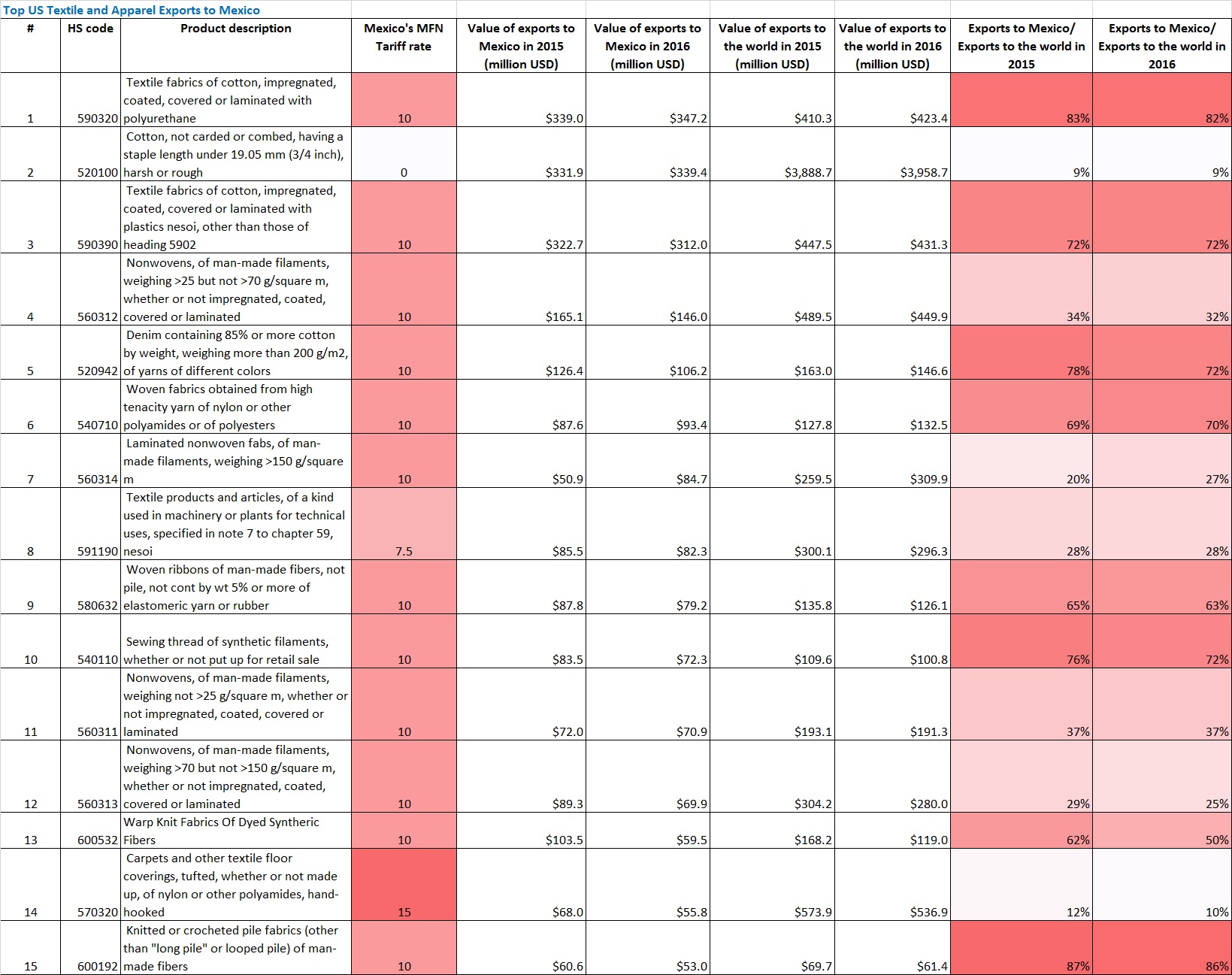
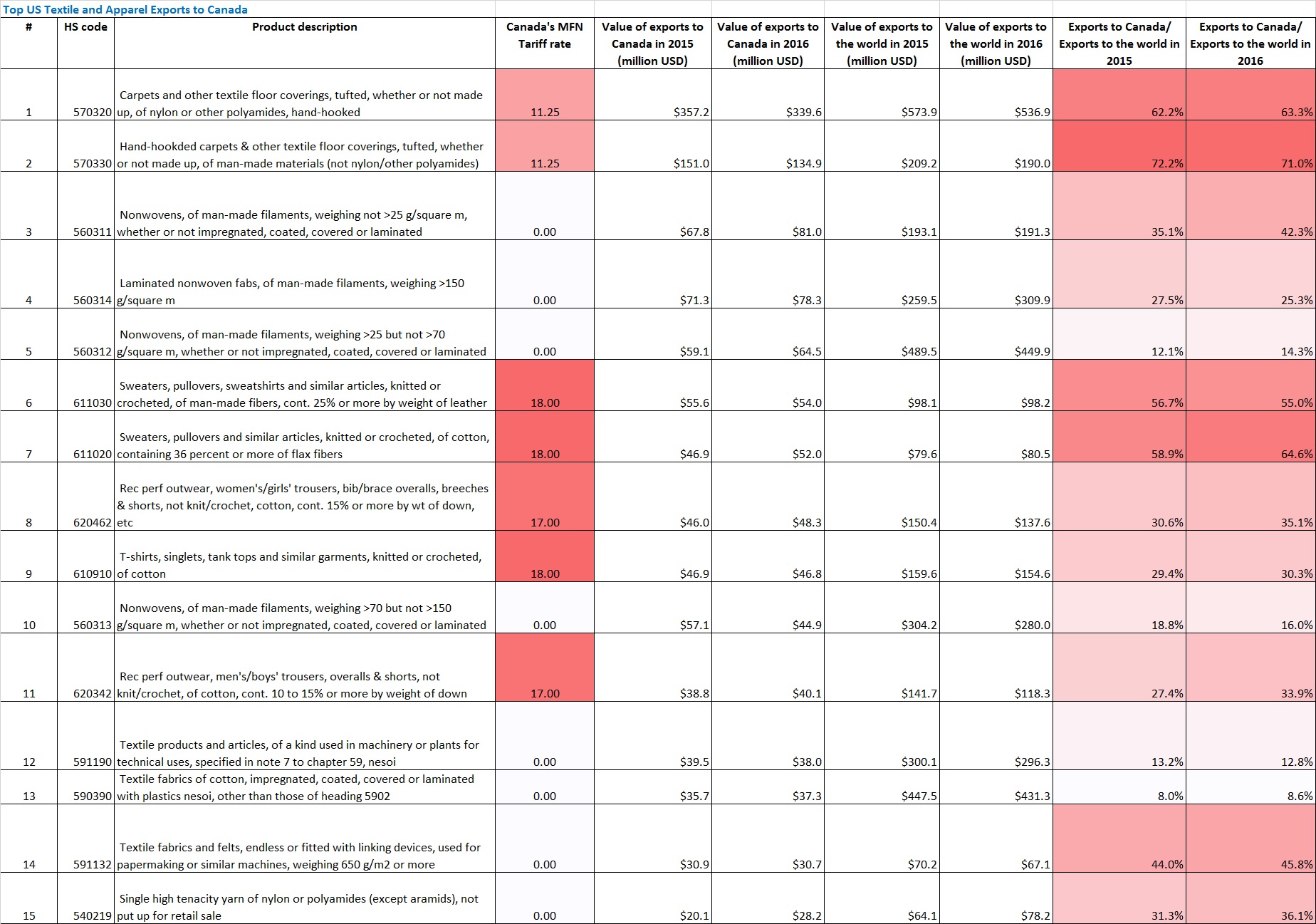
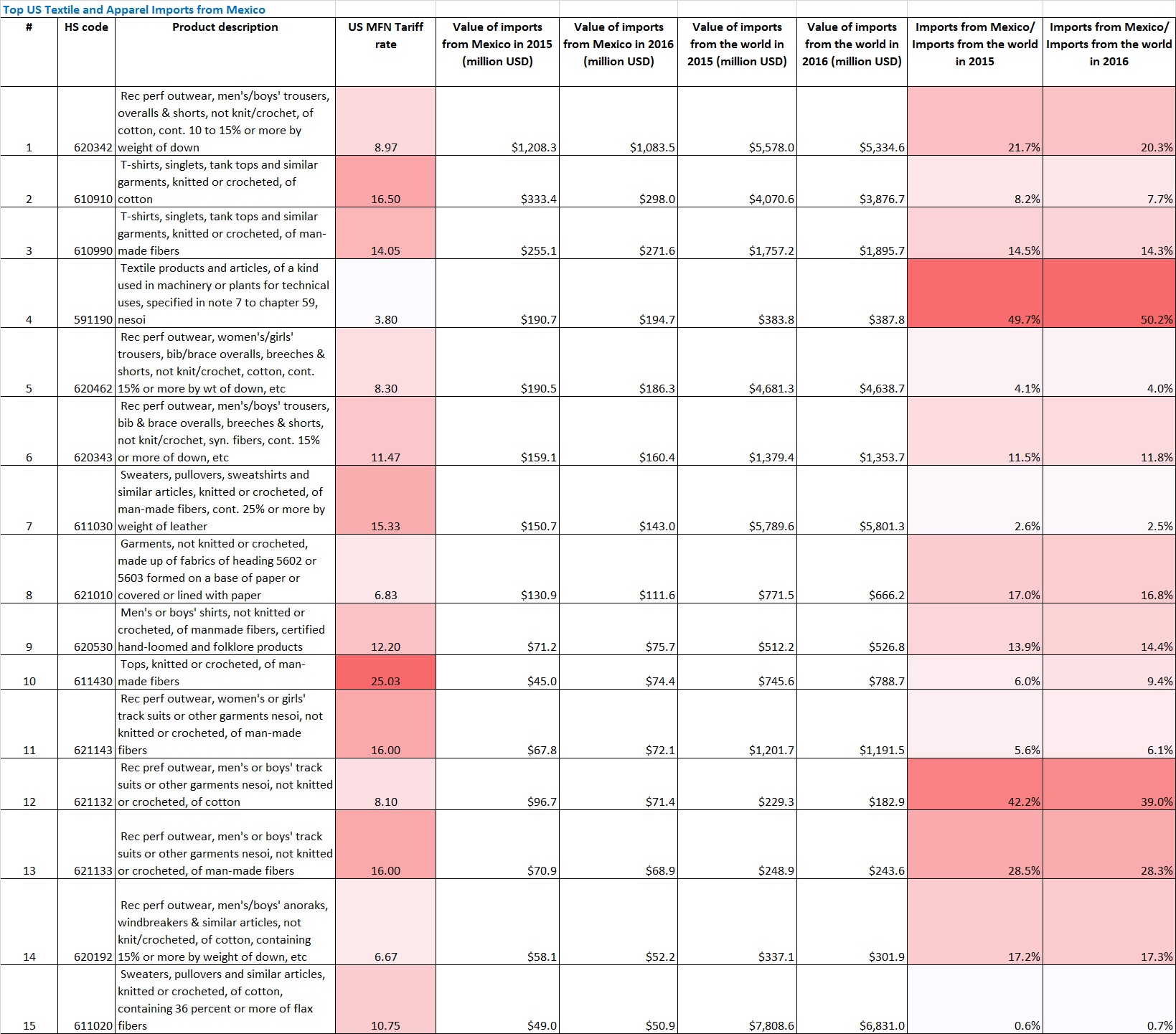
  • The destiny of the North American Free Trade Agreement (NAFTA): The potential policy change to NAFTA means so much to the U.S. textile and apparel industry as well as suppliers in other parts of the world. Notably, through a regional textile and apparel supply chain facilitated by the agreement over the past 23 years, the NAFTA region has grown into the single largest export market for U.S. textile and apparel products as well as a major apparel sourcing base for U.S. fashion brands and retailers. In 2016, as much as half of U.S. textile and apparel exports went to the NAFTA region, totaling US$11billion, and U.S. apparel imports from Mexico and Canada exceeded US$3.9billion. Understandably, if NAFTA no longer exists, sweeping changes in the trade rules, such as import duties, could significantly affect the sourcing and manufacturing behaviors of U.S. textile and apparel companies and consequentially alter the current textile and apparel trade patterns in the NAFTA region. For example, Mexico’s focus on basic apparel items suggests that U.S. importers could quickly source from elsewhere if duty savings under NAFTA are eliminated.
  • The possible reaching of the Regional Comprehensive Economic Partnership (RCEP): Even though RCEP is less well-known than the Trans-Pacific Partnership (TPP), we should not ignore the potential impact of the agreement on the future landscape of textile and apparel supply chain in the Asia-Pacific region. One recent study of mine shows that the RCEP will lead to a more integrated textile and apparel supply chain among its members but make it even harder for non-RCEP members to get involved in the regional T&A supply chain in the Asia-Pacific. This conclusion is backed by the latest data from the World Trade Organization (WTO): In 2016, around 91 percent of Asian countries’ textile imports came from other Asian countries, up from 86 percent in 2006. The more efficient regional supply chain as a result of RCEP will further help improve the price competitiveness of apparel made by “factory Asia” in the world marketplace. Particularly in the past few years, textile and apparel exports from Asia have already posted substantial pressures on the operation of the textile and apparel regional supply chain in the Western Hemisphere.
  • Automation of apparel manufacturing and its impact on the job market: Recall my observations at the MAGIC this August, several vendors showcased their latest technologies which have the potential to automate the cut and sew process entirely or substantially reduce the labor inputs in garment making. The impact of automation on the future of jobs is not a new topic, but the apparel industry presents a unique situation. Globally, over 120 million people remain directly employed in the textile and apparel industries today, a good proportion of whom are females living in poor rural areas. According to the World Trade Organization (WTO), for quite a few low-income and lower-middle income countries such as Bangladesh, Gambia, Pakistan, Madagascar, Sri Lanka, and Cambodia, as much as over 70 percent of their total merchandise exports were textile and apparel products in 2016. Should these labor-intensive garment sewing jobs in the developing countries were replaced by machines, the social and economic impacts will be consequential. I think it is the time to start thinking about the possible scenarios and the appropriate policy responses.

Apparel Sourcing in 2018: Results from the Just-Style State of Sourcing Survey

The latest Just-Style State of Sourcing Survey suggests a few trends of apparel sourcing in 2018:

First, apparel companies are attaching greater importance to speed-to-market in their sourcing decisions. According to the result, the need for a faster, more responsive supply chain is being driven by consumers’ increasing demands for immediacy and constant newness, as well as the speed with which social media can spread new trends.

Second, respondents say the rising sourcing and production cost remains one of their top business challenges in the New Year. Key drivers of cost increase include wage of production workers, raw material price and the social and environmental compliance cost. Notably, almost half expect their sourcing budget to go up, with 15.3% seeing an increase of more than 5%, and 32.8% anticipating a rise of between 1% and 5%. A further 32.1% see their budgets staying the same in the year ahead.

Third, the survey result confirms that China’s dominance of global apparel manufacturing is unlikely to change anytime soon. Asked about their China sourcing plans in 2018, 21.1% of respondents said they would buy more here over the next 12 months, some 30.5% expect their China sourcing to remain roughly the same year-on-year, and 28.9% expect to source less. Respondents say that “no other country can match China regarding the size of its supply base, its range of skills, its quality levels, its product variety and the completeness of its supply chain. The country also continues to lead the way when it comes to efficiency and infrastructure.” Meanwhile, Bangladesh and Vietnam continue to be seen as the two sourcing markets most likely to grow in importance in the next five years.

Fourth, respondents also expressed concerns about uncertainty over trade agreements (64.5%), particularly how the Trump Administration may do with the North American Free Trade Agreement (NAFTA). However, the impact of uncertainty created by Brexit seems to be limited.

The State of the Apparel Supply Chain

  • What is the biggest hurdle to “speed to market”?
  • What’s more important these days? Dollars or days?
  • Is mass customization a nice to have or a need to have?
  • How are companies fostering better partnerships with vendors?
  • How much has your company been impacted by the “Trump effect”?
  • Industry buzzwords: Amazon, sustainability, digitalization, transparency, on-demand manufacturing, data analytics.
  • How well are companies executing on their data?
  • 2017 is the year of _________? And What will 2018 be known for?

Tariff Remains a Critical Trade Barrier for the Textile and Apparel Sector (Updated December 2017)

textile

clothing

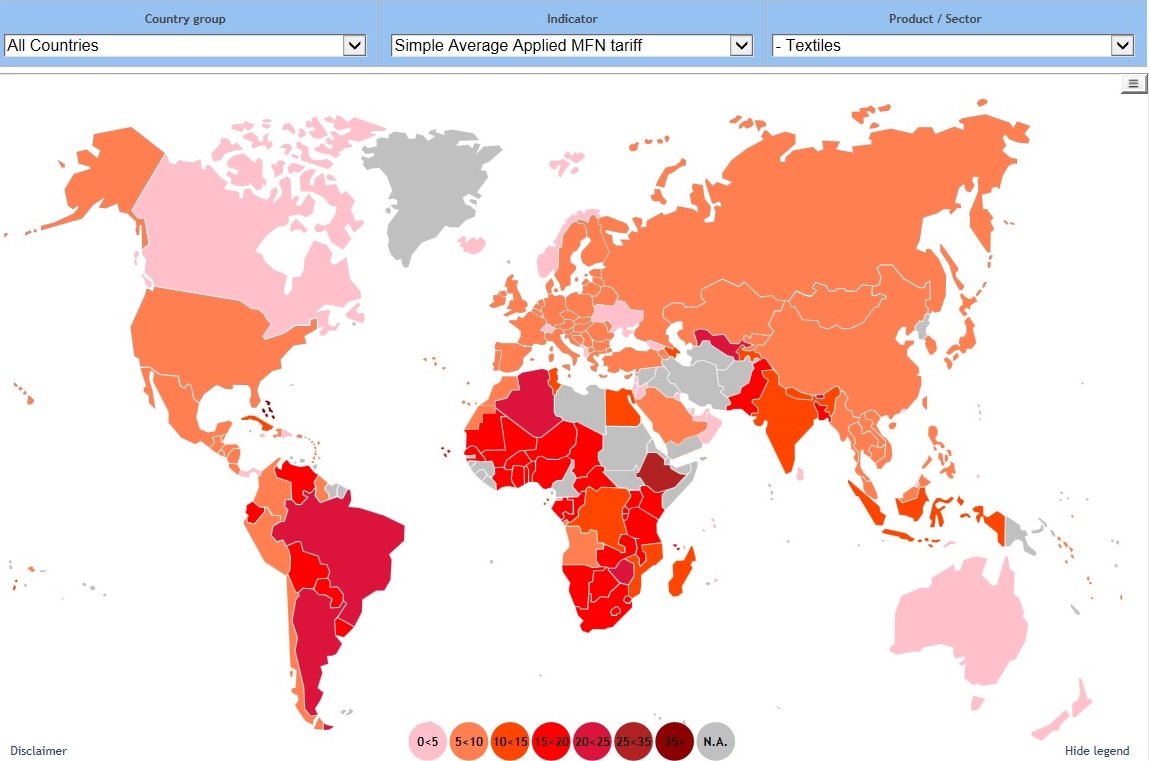
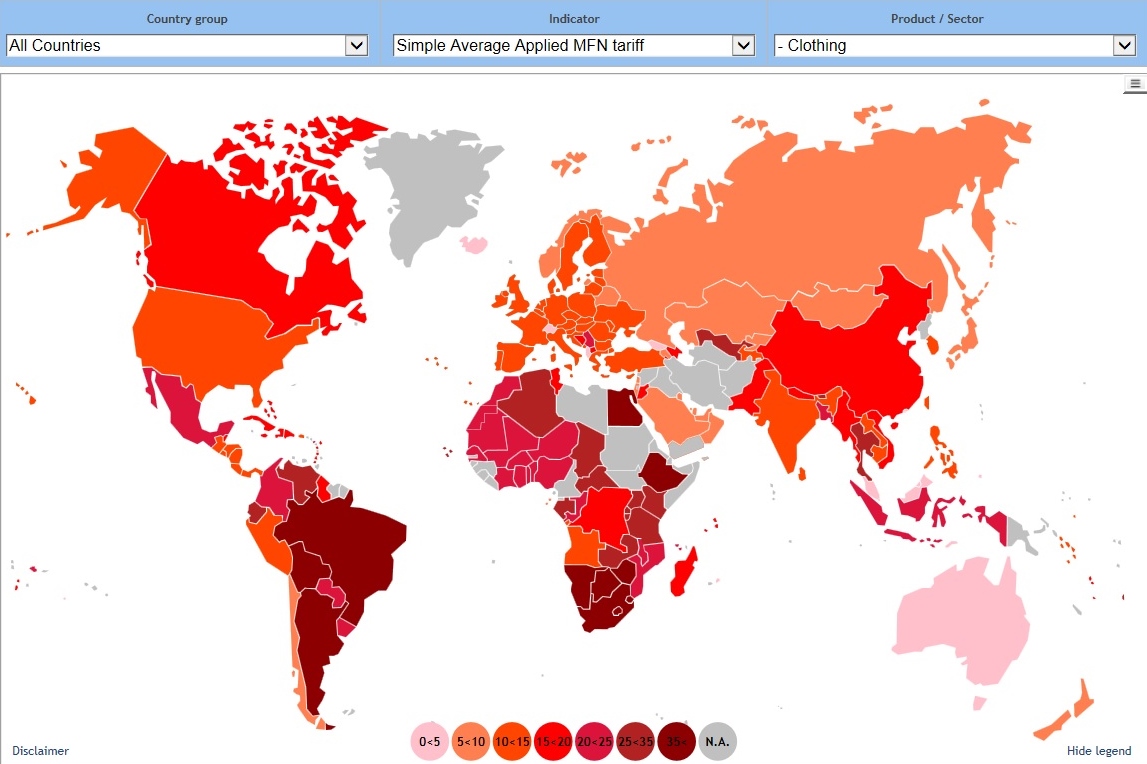
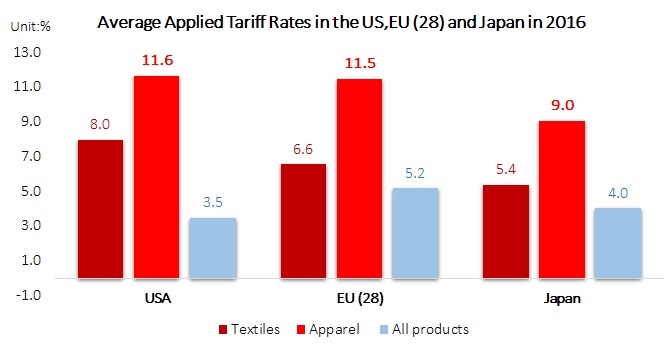
According to latest statistics from the World Trade Organization (WTO), in 2016, the average applied tariff rate remained at 10.5% for textiles and 17.5% for apparel worldwide. Compared with the average tariff rate for all sectors, the tariff rate for textile and apparel is 1.4 percentage points and 8.4 percentage points higher respectively. The result suggests that while tariff may no longer be a critical trade barrier for some sectors, it still significantly matters for the textile and apparel industry.

Least developed countries (LDC) overall set a higher tariff rate for textiles and apparel than other more advanced economies. For many poorest countries in the world, tariff remains the single largest source of tax revenue for the local government. However, it is also true that should these LDCs lower their tariff rate for textile inputs such as yarns and fabrics, it may help apparel manufacturers in these countries lower production cost and improve the price competitiveness of their finished apparel products in the world marketplace.

At the country level, countries with the highest tariff rate for textiles include Bahamas (37.1%), Ethiopia (28.0%), Uzbekistan (24.5%), Algeria (24.0%), Argentina (23.3%), and Brazil (23.3%). Whereas countries with the highest tariff rate for apparel include South Africa (41.0%), Namibia (41.0%), Swaziland (41.0%), Botswana (41.0%), Lesotho (41.0%), Bolivia (40.0%), Egypt (38.4%), Argentina (35.0%), Ethiopia (35.0%) and Brazil (35.0%).

tariff rate

Data also shows that the import tariff rates of the US, EU(28) and Japan, the top three largest textile and apparel importers in the world, stay unchanged over the past three years.

Map_630900_I_

TIC

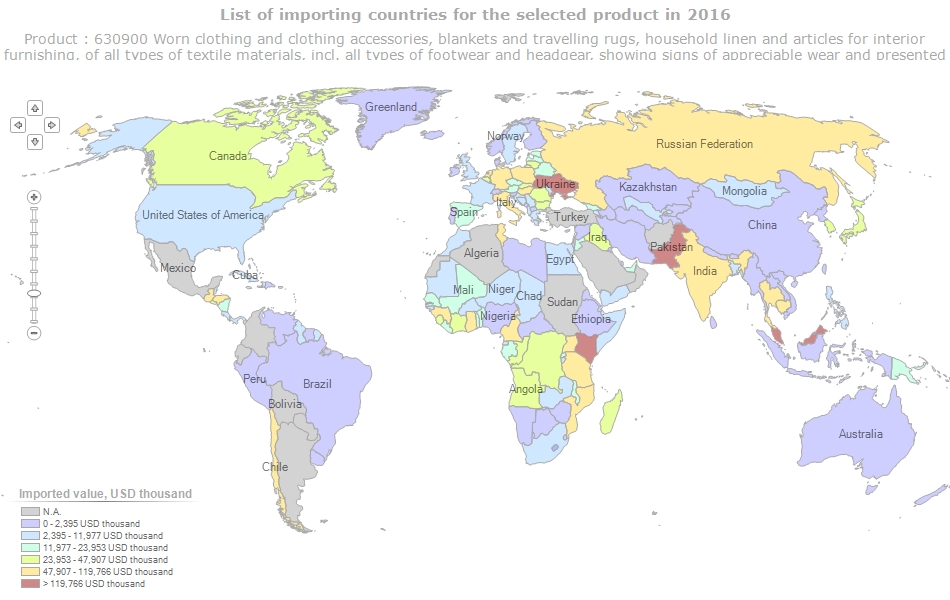
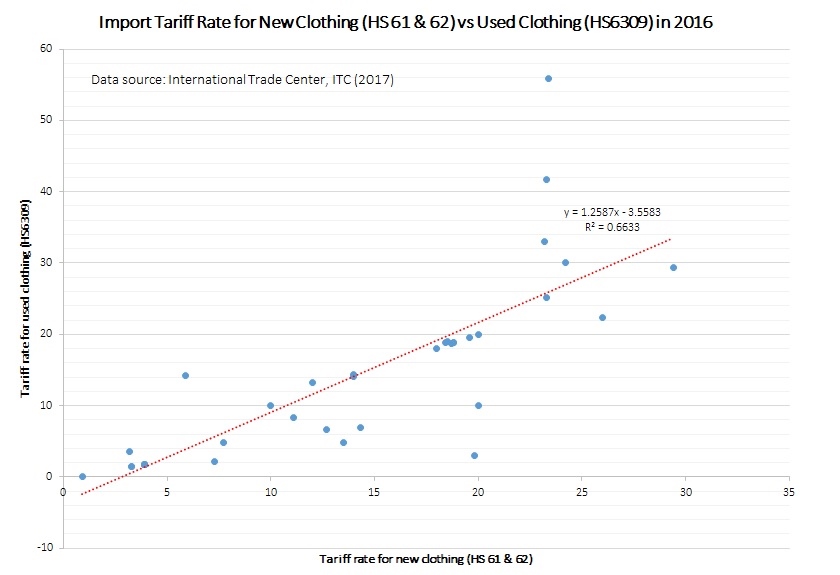
Additionally, there seems to be a positive relationship between a country’s import tariff rate for new clothing (HS 61 & 62) and used clothing (HS 6309). Of the total 180 countries covered by the International Trade Center (ITC) database, about 62.7% set an equal or higher tariff rate for new clothing than used clothing. Some African nations place a particularly high tariff rate for used clothing, including Zimbabwe (167%), South Africa (149%), Rwanda (117%), Namibia (80%), Tanzania (56%), and Uganda (41%).

Detailed tariff rates in Excel can be downloaded from HERE

Regional Supply Chain Remains an Important Feature of Global Textile and Apparel Trade (Updated: November 2017)

Regional supply chain (or production-trade network, RPTN) or refers to a vertical industry collaboration system between countries that are geographically close to each other. Within a regional supply chain, each country specialized in certain portions of production or value-added activities based on their respective comparative advantages to maximize the efficiency of the whole supply chain.

There are three primary textile and apparel (T&A) regional supply chains in the world today:1

4

Asia: within this regional T&A supply chain, more economically advanced Asian countries (such as Japan, South Korea, and China) supply textile raw material to the less economically developed countries in the region (such as Myanmar, Cambodia, and Vietnam). Based on relatively lower wages, the less developed countries typically undertake the most labor-intensive processes of apparel manufacturing and then export finished apparel to major consumption markets around the world.

2

5

Europe: within this regional T&A supply chain, developed countries in Southern and Western Europe such as Italy and Germany serve as the primary textile suppliers. Regarding apparel manufacturing in the European Union,  products for the mass markets are typically produced by developing countries in Southern and Eastern Europe such as Poland and Romania, whereas high-end luxury products are mostly produced by Southern and Western European countries such as Italy and France. Furthermore, a high portion of finished apparel is shipped to developed EU members such as UK, Germany, France, and Italy for consumption.

3

6

America: within the region, the United States serves as the leading textile supplier, whereas developing countries in North, Central and South America (such as Mexico and countries in the Caribbean region) assemble imported textiles from the United States or elsewhere into apparel. The majority of clothing produced in the area is eventually exported to the United States for consumption.

Data from the World Trade Organization (WTO) shows that regional supply chain remains an essential feature of today’s global textile and apparel trade.  Notably, three trade flows are worth watching:

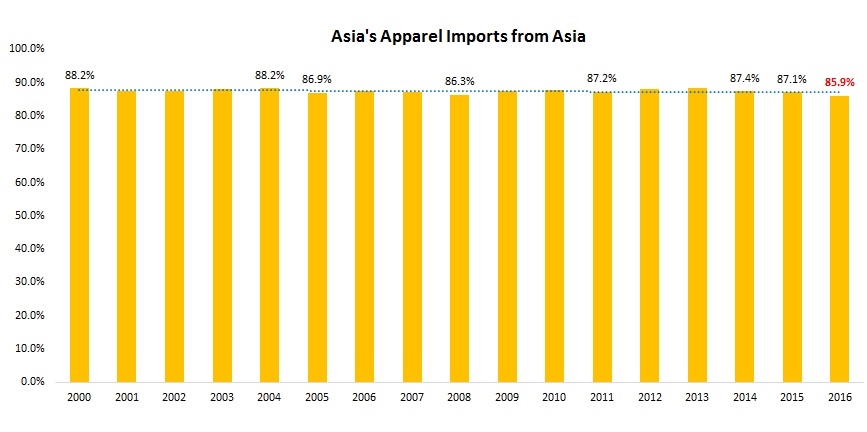
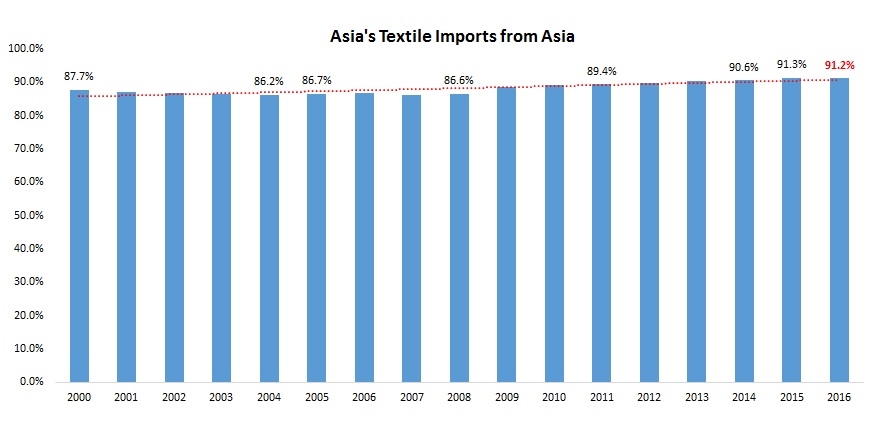
First, Asian countries are increasingly importing more textiles from within the region. In 2016, around 91.2% of Asian countries’ textile imports came from other Asian countries, up from 86.8% in 2006. This change reflects the formation of a more integrated T&A supply-chain in Asia. The more efficient regional supply chain also helps improve the price competitiveness of apparel made by “factory Asia” in the world marketplace. Particularly in the past few years, T&A exports from Asia is posting substantial pressures on the operation of the T&A regional supply chains in the Western Hemisphere.

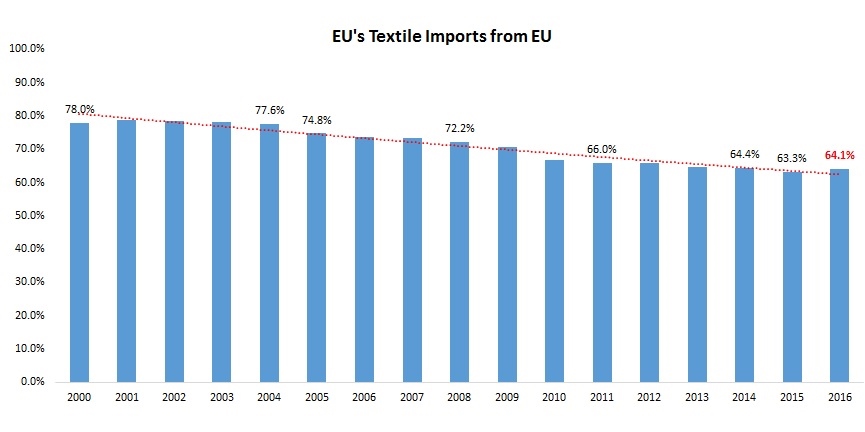
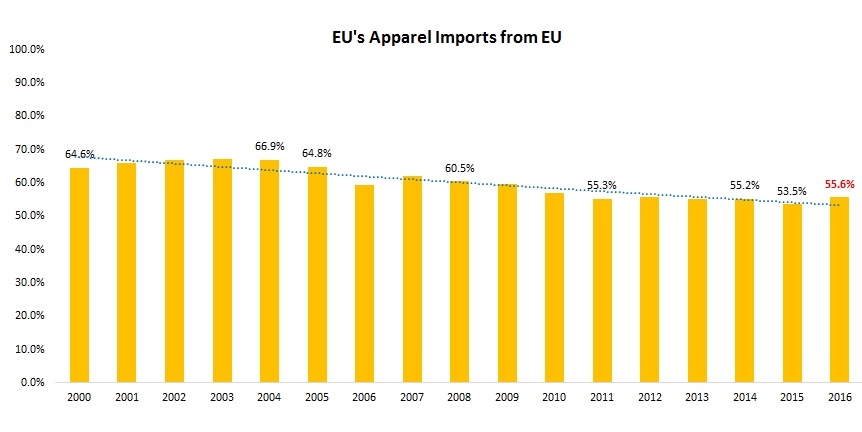
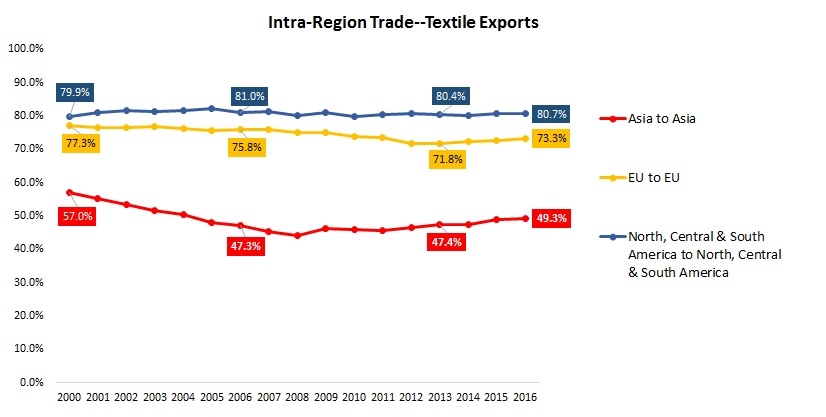
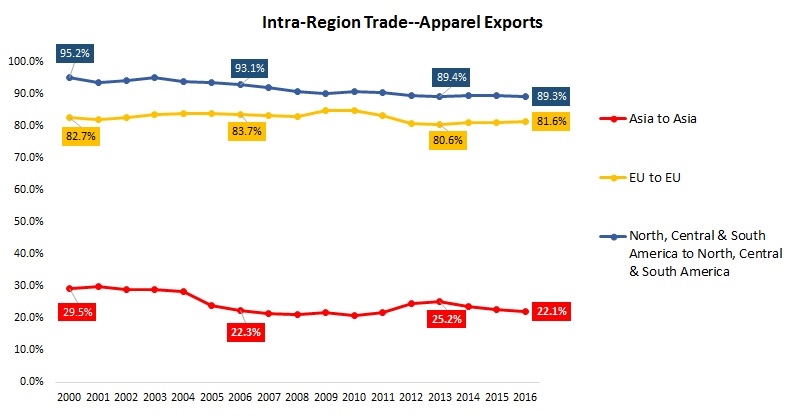
Second, the intra-region T&A trade in EU remains stable. In 2016, 64.1% of EU countries’ textile imports and 55.6% of EU countries’ apparel imports came from within the EU region. Over the same period, 73.3% of EU countries’ textile exports and 81.6 % of their apparel exports also went to other EU countries.

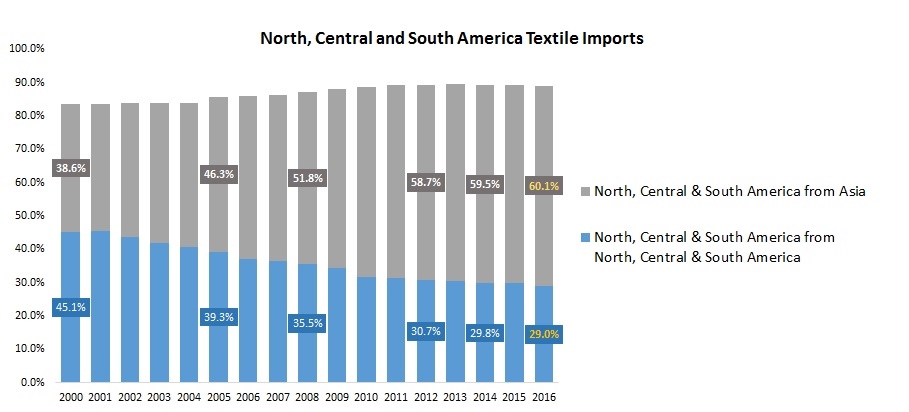
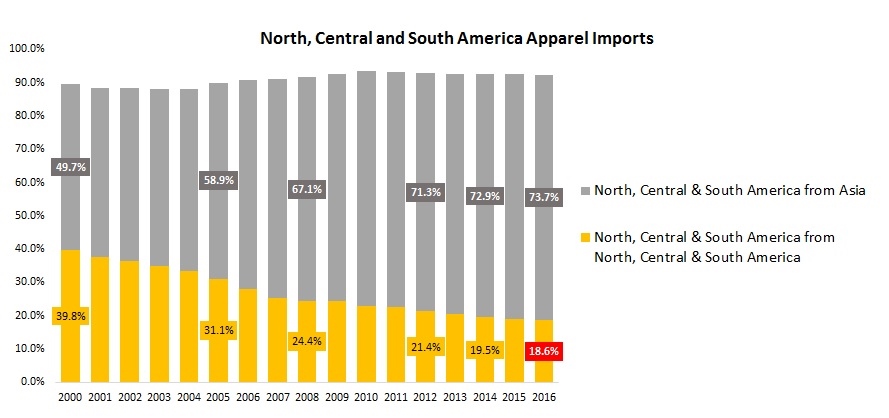
Third, the Western-Hemisphere T&A supply chain, which involves countries in North, South and Central America, is facing substantial challenges from the increasing competition from Asian T&A exporters. In 2016, only 29.0% of North, South and Central American countries’ textile imports and 18.6% of their apparel imports came from within the region, a record low in the past ten years. Meanwhile, in 2016 Asian countries supplied 60.1% of textiles and 73.7% of clothing imported by countries in the Western Hemisphere, a record high in history. Understandably, if regional free trade agreements, such as NAFTA and CAFTA-DR, no longer exist, it would be even more difficult for the Western-Hemisphere T&A supply chain to survive. The potential losers of the collapse of the Western-Hemisphere T&A supply chain will include not only US textile exporters but also apparel exporters in North, South and Central America. Notably, in 2016, 89.3% of apparel exported by countries in the Western Hemisphere were destined for the region.  

78

Data Source: World Trade Organization (2017)

by Sheng Lu

Apparel Sourcing in U.S. Trade Preference Program Countries

Speakers:

  • Tarek Kabil – Egyptian Ministry of Trade & Industry
  • Ashraf Rabiey – QIZ Minister of Egypt
  • Gabi Bar – QIZ Minister of Israel
  • Mark D’Sa – Special Project Director for Haiti
  • Moderator: Gail Strickler – former Assistant US Trade Representative for Textiles

Discussion questions:

  1. What are the financial incentives for US brands and retailers to source apparel in preference program countries? Why do U.S. apparel imports from members of AGOA, QIZs and HELP overall remain at a fairly low level despite the trade preference programs? How to improve the situation?

  2. Overall, why or why not should the US keep the trade preference programs or any critical reforms are needed?
  3. Any other interesting points you learned from the video or questions you may have?

Interview with Dr. Marsha Dickson, Co-founder of Better Buying

 Dr. Marsha Dickson, Irma Ayers Professor, Department of Fashion and Apparel Studies at the University of Delaware discusses her co-founded Better Buying project(http://www.betterbuying.org), a meaningful effort to improve the social responsibility practices in the global apparel industry. The video is produced by Mallory Metzner, reporter of channel 49 of the University of Delaware.
CRS Releases Report on NAFTA Renegotiation and US Textile Manufacturing

23120124_10155817882672812_4644791366056415981_oKey findings:

U.S. textile and apparel trade with NAFTA members

  • The United States maintains a bilateral trade surplus in yarns and fabrics ($4.1 billion in 2016) as well as made-up textiles ($720 million in 2016) with NAFTA members.
  • Regarding apparel, the United States had a trade surplus with Canada of $1.4 billion and a trade deficit with Mexico of $2.7 billion in 2016.

Impact of NAFTA on employment and production in the U.S. textile and apparel industry

  • The effects of NAFTA are NOT straightforward, and the drop in U.S. domestic textile and apparel production and jobs cannot be blamed solely on NAFTA.
  • The U.S. International Trade Commission (USITC) concluded that imports of textiles had a tiny effect on U.S. textile industry employment (a 0.4% decline) from 1998 to 2014, which covers most of the period since NAFTA’s enactment. However, the collapse of the U.S. domestic apparel industry and changing clothing tastes may have had a more significant impact on domestic textile production.
  • There is little evidence that NAFTA was the decisive factor for the loss of jobs in the U.S. apparel manufacturing sector, given that the major growth in apparel manufacturing for the U.S. market has occurred in Asian countries that receive no preferences under NAFTA.

Impact of the Tariff Preference Level (TPL) in NAFTA

  • In nearly every year since 2010, Mexico has come close to exporting the maximum allowable amount of cotton and man-made fiber apparel with duty-free foreign content. Canada’s TPL fill rates are typically highest for cotton and man-made fiber fabric and made-up products but are not usually fully filled.
  • It is not clear that eliminating the TPL program would result in a substantial return of textile production or jobs to the United States; if it were to raise the cost of Mexican apparel production, it could instead result in imports from other countries displacing imports from Mexico.
  • Other than U.S. fashion brands and retailers, Mexico and Canada reportedly oppose the elimination of the NAFTA TPL program too.

 Possible Effects of Potential NAFTA Modification

  • Mexico’s focus on basic apparel items suggests that S. importers could quickly source from elsewhere if duty savings under NAFTA are eliminated. However, even now, some U.S. fashion companies say the duty savings are not worth the time and resources required to comply with the NAFTA rules of origin and documentation requirements. In 2016, roughly 16% of qualifying textile and apparel imports from NAFTA failed to take advantage of the duty-free benefits and instead paid applicable tariffs.
  • Whatever the outcome of the NAFTA renegotiation, in the medium and long run, the profitability of the North American textile and apparel industry will likely depend less on NAFTA preferences such as yarn forward and more on the capacity of producers in the region to innovate to remain globally competitive.
  • One change in NAFTA proposed by the United States would require motor vehicles to have 85% North American content and 50% U.S. content to qualify for tariff-free treatment. If auto manufacturers were to import more passenger cars from outside the NAFTA region and pay the 2.5% U.S. import duty rather than complying with stricter domestic content requirements, automotive demand for U.S.-made technical textiles could be adversely affected.
  • If the TPP-11 countries strike a trade deal, one possible effect is that Canada and Mexico may import more textile and apparel products from other TPP countries, including Vietnam. This could ultimately be a disadvantage for U.S.-based producers. How the inclusion of Canada and Mexico in a fresh TPP-11 arrangement would affect their participation in NAFTA is unknown.

The full report can be downloaded from HERE

NAFTA Members’ Applied MFN Tariff Rates for Textile and Apparel in 2017

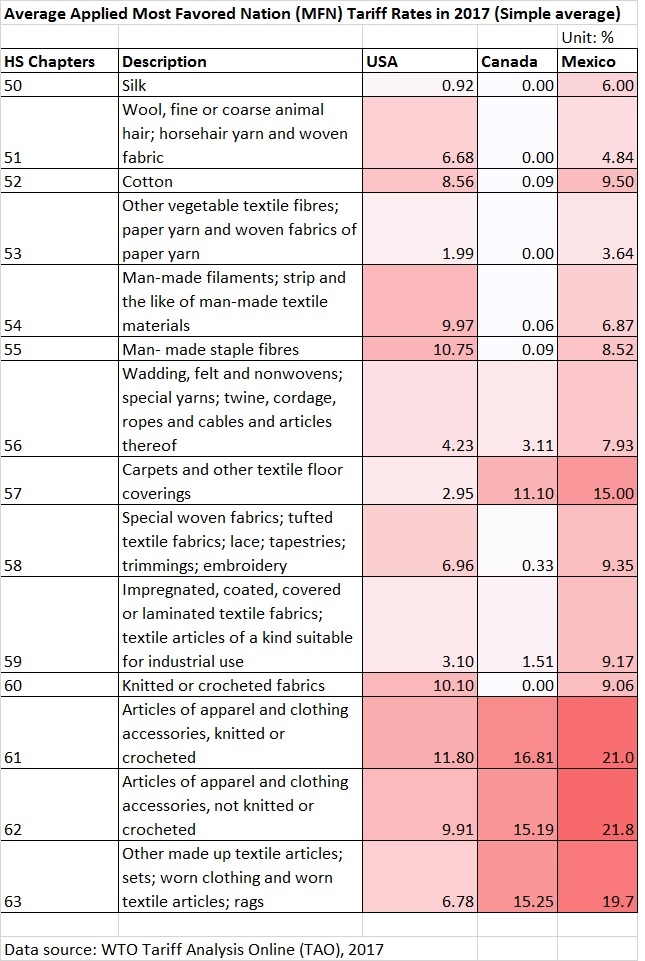
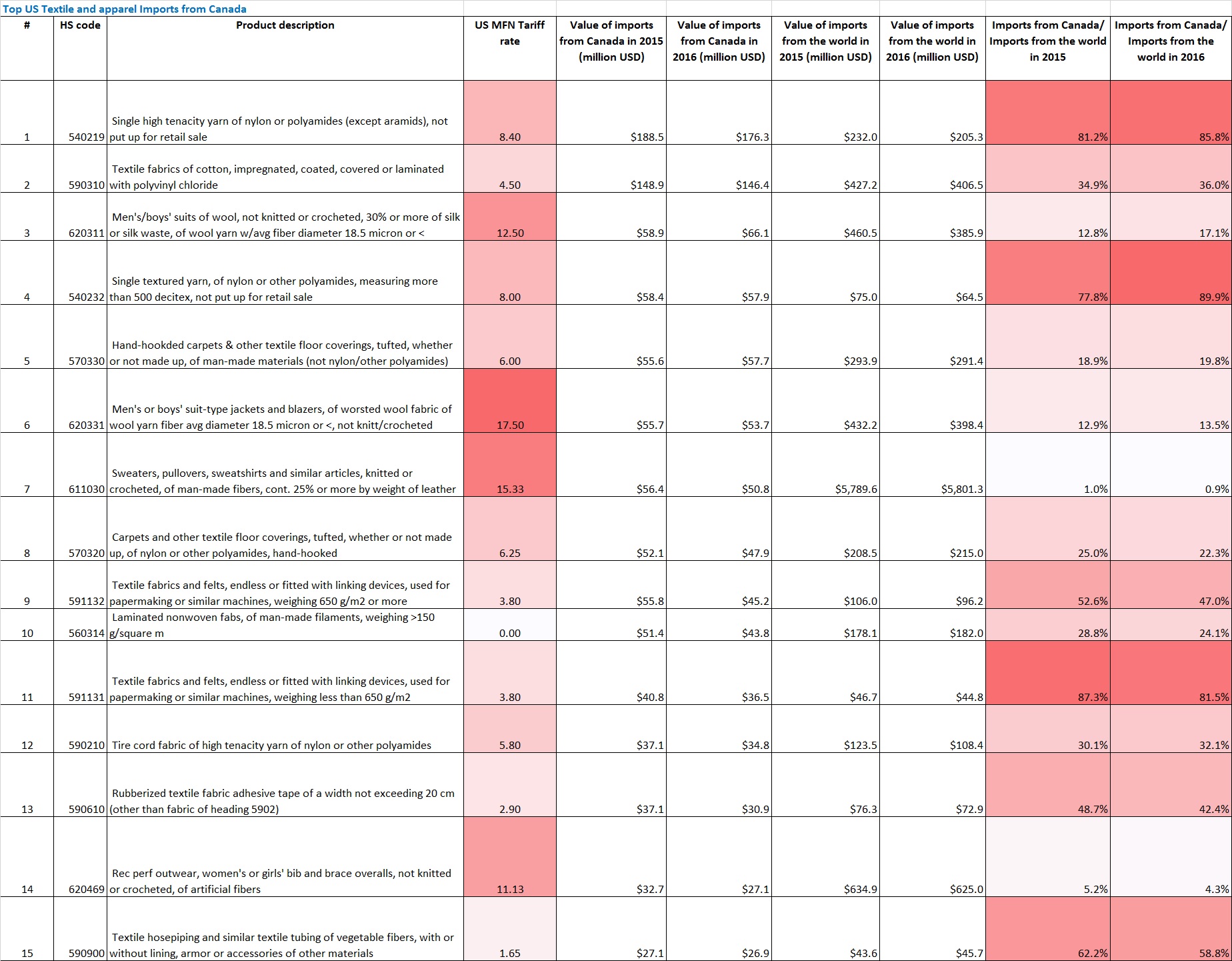
If the North American Free Trade Agreement (NAFTA) is terminated by President Trump, the immediate impact will be an increase in tariff rate for textile and apparel (T&A) products traded between the three NAFTA members from zero to the most-favored-nation (MFN) rates applied for regular trading partners. In 2017, the average applied MFN tariff rates for textile and apparel were 7.9% and 11.6% respectively in the United States, 2.3% and 16.5% in Canada and 9.8% and 21.2% in Mexico (WTO Tariff Profile, 2017).

Below is NAFTA members’ average applied MFN tariff rate in 2017 for chapters 50-63, which cover T&A products:

tariff

US export to mexico

US export to canada

US import from Mexico

US import from Canada

Data source: World Trade Organization (2017); US International Trade Commission (2017)

by Sheng Lu

Related article: What Will Happen to the U.S. Textile and Apparel Industry if NAFTA Is Gone?

WTO Reports World Textile and Apparel Trade in 2016

[The 2017 statistics are available, see WTO Reports World Textile and Apparel Trade in 2017

textile

clothing.jpg

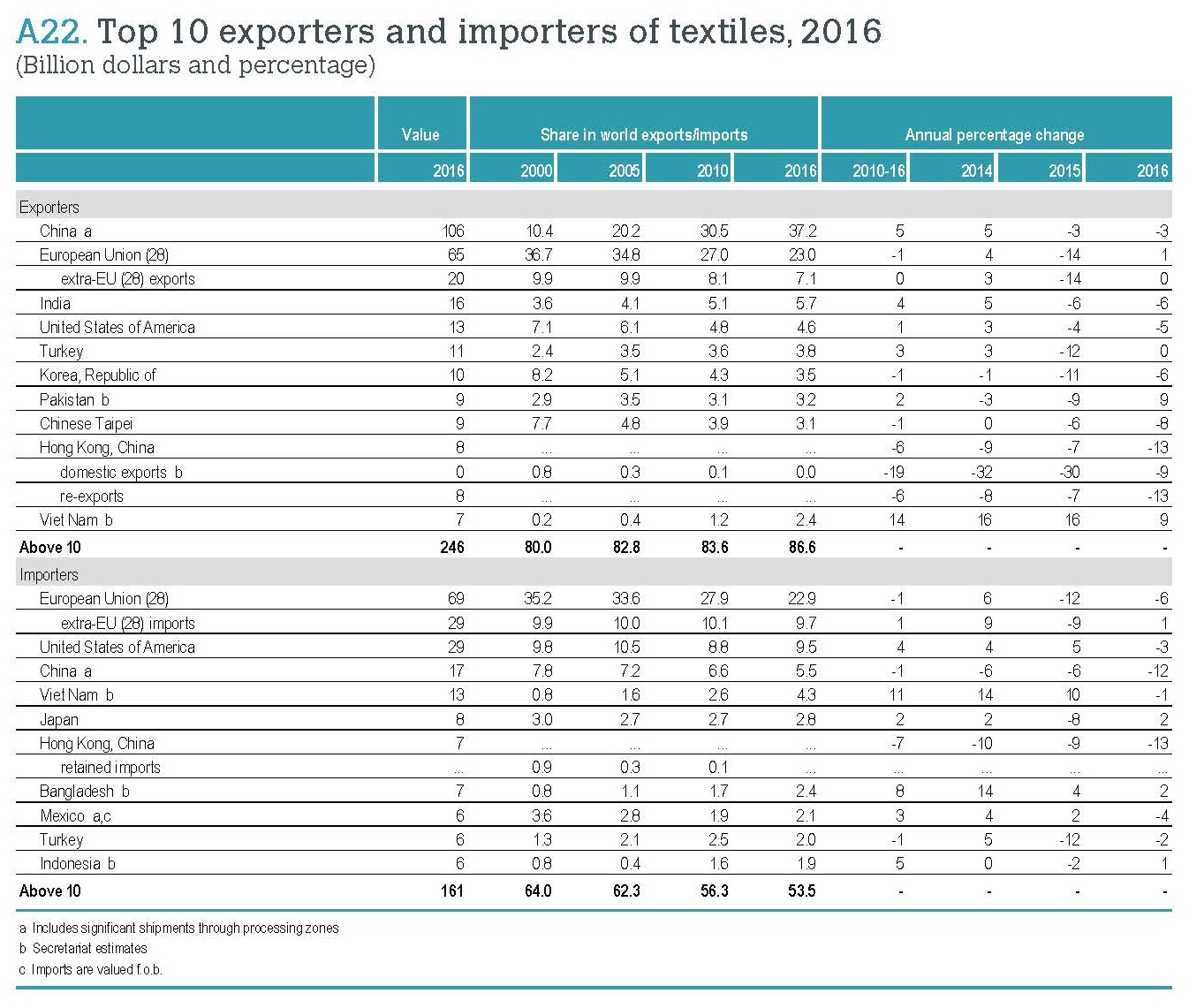
According to the newly released World Trade Statistical Review 2017 by the World Trade Organization (WTO), the current dollar value of world textiles (SITC 65) and apparel (SITC 84) exports totaled $284 billion and $443 billion respectively in 2016, marginally decreased by 2.3 percent and 0.4 percent respectively from a year earlier. This is the second year in a roll since 2015 that the value of world textiles and apparel exports grew negatively.

However, textiles and apparel are not alone. The current dollar value of world merchandise exports also declined by 3 percent in 2015, to $11.2 trillion, mostly caused by the strong decline in exports of fuels and mining products (-14 percent). On the other hand, as noted by the WTO, the steep drop in commodity prices recorded in 2015 mostly halted in 2016, except energy prices.

Textile and apparel exports

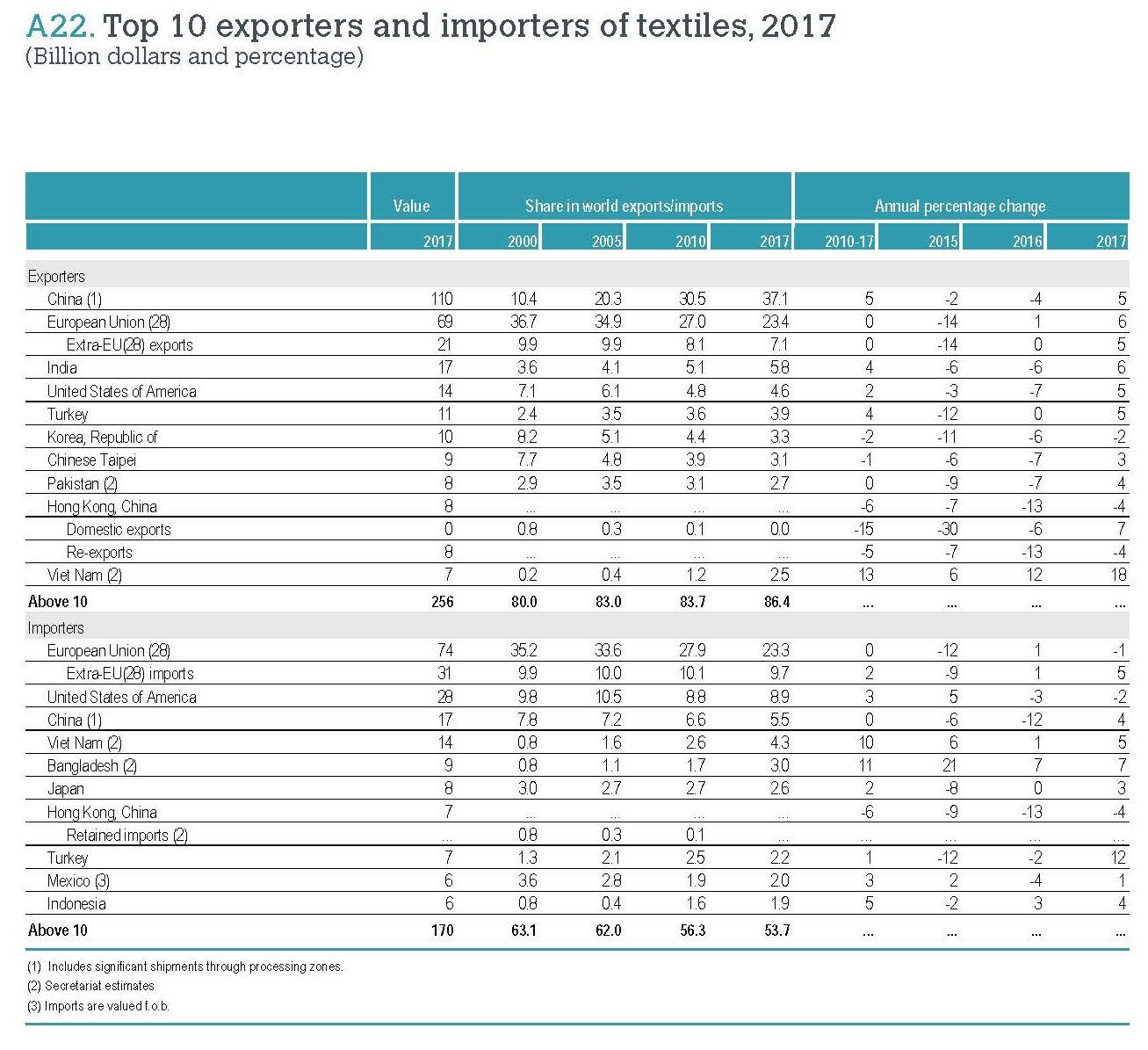
Measured in value, China, European Union, and India remained the top three exporters of textiles in 2016. Altogether, these top three accounted for 65.9 percent of world exports in 2016, slightly down from 66.5 percent in 2015, which is mostly due to India’s shrinking market shares.

The United States remained the fourth top textile exporter in 2016, accounting for 4.6 percent of the shares (down from 4.8 percent in 2015). Over half of the top ten exporters experienced a decline in the value of their exports in 2016, with the highest declines seen in Hong Kong (-13 percent), Taiwan (-8 percent), South Korea (-6 percent) and the United States (-6 percent). Notably, Vietnam entered the world’s top ten textile exporters for the first time (2 percent market shares, 9 percent growth rate from 2015).

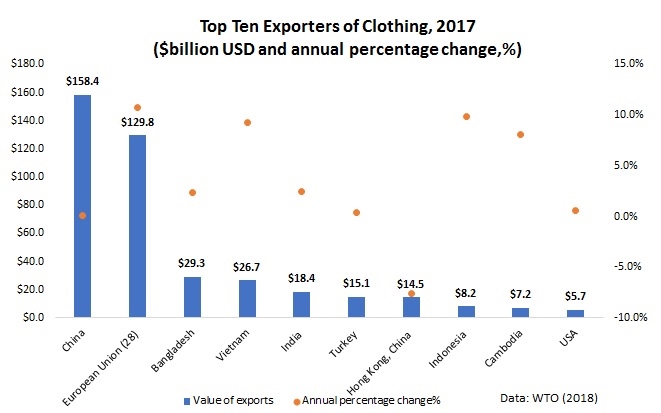
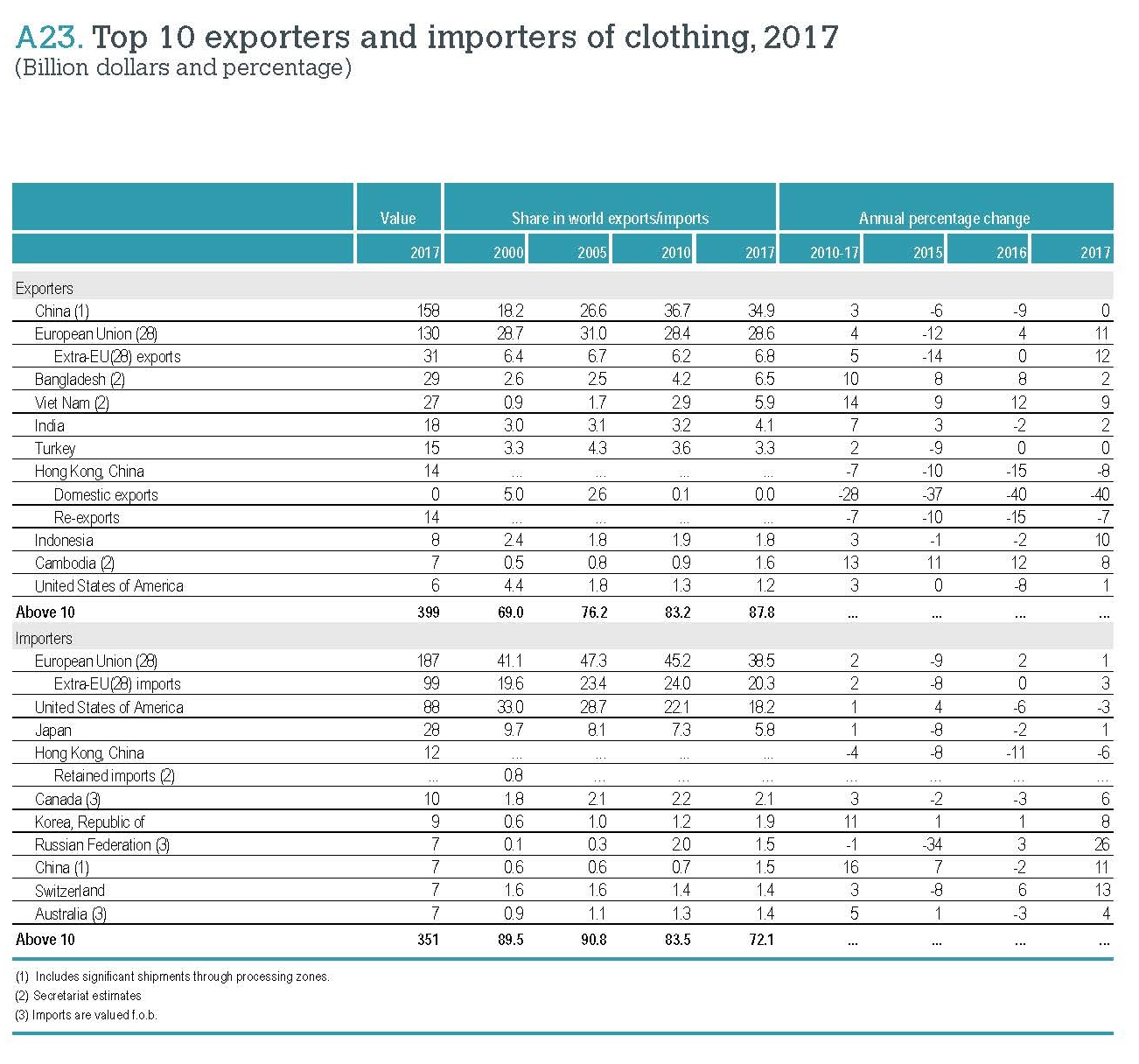
Top three exporters of apparel include China, the European Union, and Bangladesh. Altogether, they accounted for 69.1 percent of world exports, close to 70.3 percent in 2015. Among the top ten exporters of apparel, increases in export values were recorded by Cambodia (+6 percent), Bangladesh (+6 percent), Vietnam (+5 percent), and European Union (+4 percent). Other leading exporters saw stagnation in their export values (such as Turkey) or recorded a decline (such as China, India, and Indonesia).

Could be negatively affected by the rising labor and production cost, China’s shares in the world textile exports dropped from 37.4 percent in 2015 to 37.2 percent in 2016, and the shares in the world apparel exports fell from 39.2 percent in 2015 to 36.4 percent in 2016—a record low since 2010.

Textile and apparel imports

Measured in value, the European Union, the United States, and China were the top three importers of textiles in 2016. These top three altogether accounted for 38 percent of world textile imports, slightly up from 37 percent in 2015, but remains much lower than over 53 percent back in 2000. Notably, over the past decade, apparel manufacturing continues to shift from developed to developing countries and many developing countries heavily rely on imported textile inputs due to the lack of local manufacturing capacity. This explains why more textile exports now go to the developing nations.

On the other hand, affected by consumers’ purchasing power (often measured by GDP per capita) and size of the population, the European Union, the United States, and Japan remained the top three importers of apparel in 2016. Altogether, these top three accounted for 62.9 percent of world apparel imports in 2016, up from 59 percent in 2015. Notably, China is quickly becoming one of the world’s top apparel importers. From 2010 to 2016, China’s apparel imports enjoyed an annual 17 percent growth, much higher than most other countries.

WTO_Chapter_09_tables_e_Page_1

WTO_Chapter_09_tables_e_Page_2.jpg


Mexico’s Apparel Exports Continue to Rely on the U.S. Market Heavily

Mexcio

Mexico’s textile and apparel (T&A) exports totaled USD$6,441 million in 2016, fell by 5.1% from 2015. Around 63% of these exports were apparel (or USD$4,061 million), and 37% (or USD$2,379 million) was textiles.

Could be negatively affected by the appreciation of the Mexican Peso against the U.S. dollar, plus the uncertainty associated with the renegotiation of the North American Free Trade Agreement (NAFTA), Mexico’s apparel exports further went down 7.2% in the first half of 2017 compared to 2016.

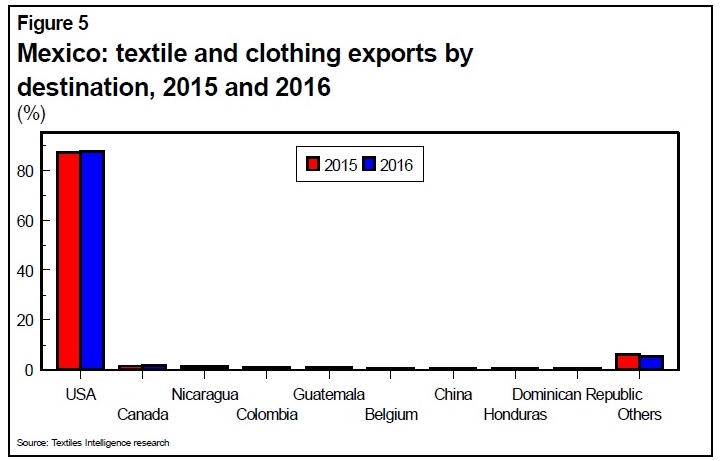
In 2016, the United States remains Mexico’s top T&A export market with an 87.3% share (up from 87.0% in 2015, 86.7% in 2014 and 84.7% in both 2013 and 2012), followed by Canada with a 1.9% share (up from 1.6% in 2015). Overall, Mexico was the sixth largest T&A supplier for the U.S. market, accounting for 4.3% of the market shares measured by value in 2016.

Nevertheless, Mexico’s T&A exports to the United States fell by 4.7% between 2015 and 2016 (from USD$5,902 million to USD$5,625 million). Product categories that suffered the deepest drop include cotton hosiery (down by 57.3%), men’s and boys’ wool suits (down by 35.9%), manmade fiber underwear (down by 29.0%), and men’s and boys’ cotton woven shirts (down by 27.9%).

Overall, Mexican T&A exporters feel relieved that the United States has decided to withdraw from the Trans-Pacific Partnership (TPP). However, without TPP, the Mexican T&A industry is still expected to face an increased competition from Vietnam and China both in the leading export markets (such as the United States and Canada) and the domestic market. Notably, the Mexican government has decided to lower the Most Favored Nation (MFN) import duty rates on the 73 clothing items and seven made-up textile items effective in January 2019.

References: Textile Outlook International (October 2017)

“Made in America”: A New Reality?

Panelists

  • Pete Bauman, Senior VP, Burlington Worldwide / ITG
  • Joann Kim, Director, Johnny’s Fashion Studio
  • Tricia Carey, Business Development Manager, Lenzing USA
  • Michael Penner, CEO, Peds Legwear
  • Moderator: Arthur Friedman, Senior Editor, Textiles and Trade, WWD 

Video Discussion Questions 

  • How does “Made in the USA” fit into US textile and apparel companies’ overall business strategy today?
  • What measures have been taken by US textile and apparel companies to bring more production back to the US? Can any measures be linked to the restructuring strategies we discussed in the class?
  • What are the significant obstacles to bringing textile and apparel manufacturing back to the US?
  • Any other exciting points/buzzwords did you learn from the panel discussion?

US Tables Proposal Aimed at Limiting the Yarn-Forward Exceptions in NAFTA Renegotiation

NAFTA-Article-201708251513

According to Inside US Trade, in the third round the NAFTA renegotiation (September 23-27, 2017), the United States has put forward several possible changes to the existing rules related to textile and apparel in the agreement:

  1. USTR proposes to eliminate the tariff preference level (TPL) in NAFTA. The goal of eliminating TPL is to limit the exceptions to the yarn-forward rules of origin and “incentivize” more production in the NAFTA region as advocated by the U.S. textile industry.
  2. As a potential replacement for TPL, USTR also proses to add a short supply list mechanism to NAFTA, but details remain unclear (e.g., whether the list will be temporary or permanent; the application process).
  3. USTR further proposes a new chapter devoted to textile and apparel in NAFTA in line with more recent agreements negotiated by the U.S.. The current NAFTA does not include a textile chapter.

USTR’s proposal to remove TPL in NAFTA has met strong opposition from the U.S. apparel industry, fashion retailers, and brands as well as their partners in Mexico and Canada. According to these industry groups:

  • Eliminating TPLs would disrupt supply chains that have been in place for more than two decades.
  • Eliminating TPLs would not move production back to the U.S. but would instead further incentivize sourcing from outside the NAFTA region and put textile and apparel factories in the region out of business. For example, some apparel factories remain production in the NAFTA region largely because TPL allows them to use third-party textile inputs and the finished goods can still be treated as NAFTA originating.
  • Without the TPL, companies would opt to produce textile and apparel products in the least expensive way possible, likely outside the NAFTA region, and ship items into North America despite being hit with most-favored-nation (MFN) tariffs.
  • A short supply list would not ease the supply chain disruptions that would result from the removal of the TPLs because there is no guarantee products formerly subject to the TPL would make it onto a new NAFTA short supply list.

A potential compromise could involve a reduction in Canadian and Mexican TPLs to the U.S. and an increase in the U.S. TPLs to Mexico and Canada, which could boost the U.S. trade surplus in textiles and apparel with its NAFTA partners and throw a bone to the U.S. textile industry by ostensibly incentivizing domestic production.

Untitled

Fact-check about TPL

TPL was included in NAFTA as a compromise for adopting the yarn-forward rules of origin in the agreement. Before NAFTA, the US-Canada trade agreement adopted the less restrictive fabric-forward rules of origin.

The TPL mechanism has played a critical role in facilitating the textile and apparel (T&A) trade and production collaboration between the United States and Canada, in particular, the export of Canada’s wool suits to the United States and the U.S. cotton or man-made fiber apparel to Canada. Statistics from the Office of Textiles and Apparel (OTEXA) show that in 2016 more than 70% of the value of Canada’s apparel exports to the United States under NAFTA utilized the TPL provision, including almost all wool apparel products. Over the same period, the TPL fulfillment rate for U.S. cotton or man-made fiber apparel exports to Canada reached 100%, suggesting a high utilization of the TPL mechanism by U.S. apparel firms too (Global Affairs Canada, 2017). Several studies argue that without the TPL mechanism, the U.S.-Canada bilateral T&A trade volume could be in much smaller scale (USITC, 2016). Notably, garments assembled in the United States and Canada often contained non-NAFTA originating textile inputs, which failed them to meet the “yarn-forward” rules of origin typically required for the preferential duty treatment under NAFTA.

Related articles:


Trade Issues Facing the U.S. Apparel and Retail Industry

Panel:

  • Steve Lamar, Executive VP at the American and Apparel Footwear Association (AAFA)
  • Jon Gold, VP of Supply Chain and Customs Policy at the National Retail Federation (NRF)
  • Robert Antoshak (Host), Managing Director at Olah Inc.

Topic discussed

  • Renegotiation of the North American Free Trade Agreement (NAFTA)
  • Trump’s trade policy agenda
  • What’s going on in the retail market?
  • Technology and the future of apparel supply chain
  • US labeling requirements and a return of Made-in-USA

USTR Lighthizer Discusses Philosophies behind Trump Administration’s Trade Policy

At an event hosted by the Center for Strategic and International Studies (CSIS) on September 18, U.S. Trade Representative Robert Lighthizer addressed the U.S. trade policy in the Trump Administration, particularly Trump’s beliefs on trade:

Philosophy 1: The reason why some Americans oppose free trade is NOT that they were “ill-informed.” Rather, it is because the U.S. trade policy for decades has failed to create a “level playing field.” The Trump Administration will proactively use all instruments to “make it expensive” for U.S. trading partners to engage in the non-economic behavior, convince U.S. trading partners to treat U.S. workers, farmers, and ranchers fairly and demand “reciprocity” both in the home and international markets.

Philosophy2: Trade deficits matter. Although trade policy is not the only cause for the trade deficit, it can be a major contributor, such as high tariffs that deny the market access for U.S. products, not imposing the border adjustment tax and currency manipulation.

Philosophy 3: China is the top challenge. According to Lighthizer, “the sheer scale of China’s coordinated efforts to develop their economy, to subsidize, to create national champions, to force technology transfer, and to distort markets in China and throughout the world is a threat to the world trading system that is unprecedented.”

Philosophy 4: The Trump Administrations will exam all existing trade agreements to make sure they provide “roughly equivalent” measured by trade deficits. “Where there the numbers and other factors indicate a disequilibrium, one should renegotiate.”

During the Q&A session, Lighthizer further shared his views on some cutting-edge trade issues:

  1. Regarding the NAFTA renegotiation, Lightlizher said that the negotiation is “moving at warp speed, but we don’t know whether we’re going to get to a conclusion, that’s the problem.” The consultation process with U.S. Congress is complicated and time-consuming, but it is unavoidable.
  2. The Trump Administration prefers bilateral trade deal over regional and multilateral ones. Given the size of the U.S. economy, Lighthizer believes that bilateral trade agreement will provide more negotiation leverages and ensure better enforcement.
  3. The Trump Administration will still stay very much engaged in Asia.
  4. The WTO Dispute-Settlement mechanism doesn’t work well—it has both imposed new obligations for the U.S. and reduced a lot of U.S. benefits.
  5. Regarding the outlook for the Trans-Atlantic Trade and Investment Partnership (T-TIP) negotiation, Lighthizer stressed the importance of the US-EU trade relations. He said that the series of elections in EU is a reason why the negotiation of the agreement hasn’t moved forward.
  6. Regarding TISA (Trade in services agreement), the U.S. objective is to open markets and eliminate market access barriers for U.S. companies.

North Korea’s Apparel Exports: Four Things to Know

NK1

First, apparel (defined by HS Chapters 61 & 62) is one of the top categories of North Korea’s merchandise exports. Statistics from the International Trade Center (ITC) show that of North Korea’s total US$2,339.9 million merchandise exports in 2016, US$564.7 million (or 19.4%) were apparel.

NK2

Second, apparel is also one of the fastest-growing categories of North Korea’s exports over the past decade. From 2003 to 2016, the value of North Korea’s apparel exports surged by 416%, compared to only 171% increase of other products over the same period.

NK3

NK4.jpg

Third, over 99.4% of North Korea’s apparel exports went to China in 2016. Notably, back in 2003, China only accounted for 49.7% of North Korea’s apparel exports. However, apparel exports from North Korea to China received two substantial boosts just in the past ten years: one in 2009 (the year when UN resolution 1874 was adopted) and another in 2013 (the year when UN resolution 2087 was adopted).

Fourth, interesting enough, North Korea’s apparel exports predominantly concentrate on men and women’s overcoats (HS 6201 and 6202) as well as suits, jackets, and blazers (HS 6203 and 6204). This is a notable difference from most other developing countries, such as Bangladesh, Vietnam, and Cambodia whose apparel exports usually focus on more basic items like shirts and trousers.  

by Sheng Lu

Extended readings:

Disclaimer: All blog posts on this site are for FASH455 educational purposes only and they are nonpolitical and nonpartisan in nature. No blog post has the intention to favor or oppose any particular public policy, nor shall be interpreted in that way.

Outlook of Sourcing from Vietnam (Updated: August 2017)

State of Vietnam’s Textile and Clothing Industry

v1

Vietnam has a substantial textile and clothing industry comprising around 4,000 enterprises, of which the majority were located in the country’s two principal population centers—Ho Chi Minh City and Hanoi. Around 70% of these enterprises were involved in the manufacture of clothing. A further 17% were involved in the fabric sector, 6% in the yarn sector, 4% in the dyeing sector and 3% in the accessories sector.

It is estimated that around 70% of Vietnam’s textile and clothing production is dependent on the cut and trims operations, using imported textiles and other inputs predominantly from China. This problem is not limited to a single category as the country needs to import man-made fibers, yarns, fabrics, and accessories as well as raw cotton.

The dyeing and finishing segments of the supply chain remain fairly underdeveloped. In the past, the Vietnamese government has issued tightly controlled permits for these operations. Also, there has been a deficiency of investment in these segments because of unclear regulations, and this has resulted in a bottleneck in the supply chain.

Similarly, high added-value design and “downstream” activities rely on the input of foreign companies are also underdeveloped. Consequently, in carrying out these activities, the industry relies heavily on the help or participation of foreign companies.

State of Vietnam’s Textile and Apparel Export

v2

Vietnamese textile and clothing exports began to gain momentum in 2001 when trading relationships were established with Western countries (e.g., the US-Vietnam Textile Agreement). The industry’s exports received a further boost after Vietnam joined the World Trade Organization (WTO) at the start of 2007, and the quotas which had been restricting imports of Vietnamese goods in the US market were eliminated.

In 2016, Vietnam’s textile and clothing exports totaled $28 billion (84% were clothing), which represented 16.0% of Vietnam’s total merchandise exports. Globally, Vietnam was the world’s third largest apparel exporter in 2015, after China and Bangladesh (WTO, 2016).

The Vietnam Textile & Apparel Association (VITAS) expects Vietnam’s textile and clothing exports to enjoy an average 15% annual growth in the next four years and exceed $50 billion USD by 2020.

v3

Vietnam’s textile and clothing exports went to around 180 countries. The United States is Vietnam’s top export market (around 40%), followed by the EU (around 12.5%), Japan (10.3%) and South Korea (8.1%).

Outlook of Sourcing from Vietnam by US Fashion Companies

v4

According to the 2017 US Fashion Industry Benchmarking Study, Vietnam is the 2nd most used sourcing destination by respondents. Particularly, the most commonly adopted sourcing model is shifting from “China Plus Many” to “China Plus Vietnam Plus Many”:

  • China typically accounts for 30-50 percent of respondents’ total sourcing value or volume. 
  • Vietnam typically accounts for 11-30 percent of companies’ total sourcing value or volume. 
  • For the “many” part, each additional country (such as US, NAFTA members and CAFTA members, EU countries and members of AGOA) typically accounts for less than 10 percent of respondents’ total sourcing value or volume.

v5

Respondents also see Vietnam overall a balanced sourcing destination, regarding “speed to market”, “sourcing cost” and “compliance risk”.

v6

Additionally, U.S. fashion companies intend to source more from Vietnam through 2019, but imports may grow at a relatively slow pace, possibly due to the United States’ withdrawal from the Trans-Pacific Partnership (TPP) and the increasing labor costs in the country.

References:Textile Outlook International (2017); WTO (2017); UN Comtrade (2017)