US Fashion and Apparel Industry Releases Position Paper on the Transatlantic Trade and Investment Partnership (T-TIP)

p0111400002h

The American Apparel and Footwear Association (AAFA) and the US Fashion Industry Association (USFIA) , the two leading industry organizations representing the US fashion and apparel industry, jointly released a position paper this week on the Transatlantic Trade and Investment Partnership (T-TIP), which is currently under negotiation between the United States and the European Union.

The position paper spells out a few priorities deemed by the US fashion apparel industry for the T-TIP:

  • Full, immediate and reciprocal elimination of tariffs, meaning import duties on all apparel products shall be eliminated on day one without phrase-out periods.
  • Flexible rules of origin, meaning restrictive rules of origin such as “yarn-forward” which requires companies to use textile inputs from certain regions so as to enjoy the duty free market access shall be abandoned and replaced by simpler and more flexible ones.
  • Regulatory coherence, such as harmonization on labeling regulations, harmonization of product safety and test method regulations, and establishing of a harmonized list of prohibited substances.
  • Emphasis on facilitative customs provisions, meaning improving predictability, simplicity and uniformity in border procedures.  

The European Branded Clothing Alliance is also a party of the joint statement; however, the European Textile and Apparel Confederation (Euratex) is not involved.

On the other hand, in May 2014, the National Council of Textile Organizations (NCTO), which represents the interests of the US textile industry, announced its priorities for the T-TIP negation, including:

  • Adopt the “yarn-forward” rules of origin in T-TIP
  • Set phrase-out periods for sensitive textile and apparel products
  • Protect the Berry Amendment (which requires all US military uniforms have to be 100% made in USA)

Discussion: The People’s Republic of Capitalism

koppel_china_02_web08

  • What does the documentary impress you most or surprise you most?
  • How do you compare your life with any characters in the documentary? (the Missourian lady, her boss who moved factories to China, the Mexicans who worked on US cotton farms, the Chinese girl working on the production line, the Chinese high school student who comes from a poor rural area and her mother….)
  • How do you see the dilemma of globalization and international trade from the documentary?
  • What arguments in the video do you disagree or have different viewpoints?
  • Do you have any discussion questions to ask your classmates about the documentary?

Please feel free to share your thoughtful comments and I look forward to exciting discussions with you all.

[Discussion for this post has ended, please post no more comment]

Why People Think Differently about International Trade?

This week we looked at a critical activity closely associated with the textile and apparel industry in the 21st century: International Trade.  Among the fundamental questions we examined, whether trade is beneficial or not is a one that all of us care much about but also has raised many debates. 

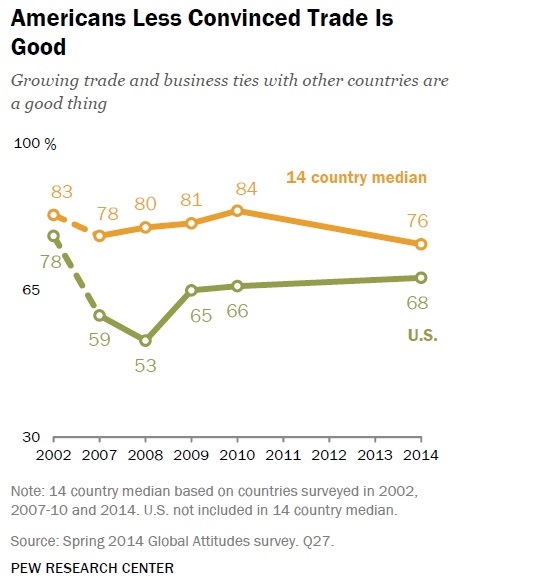
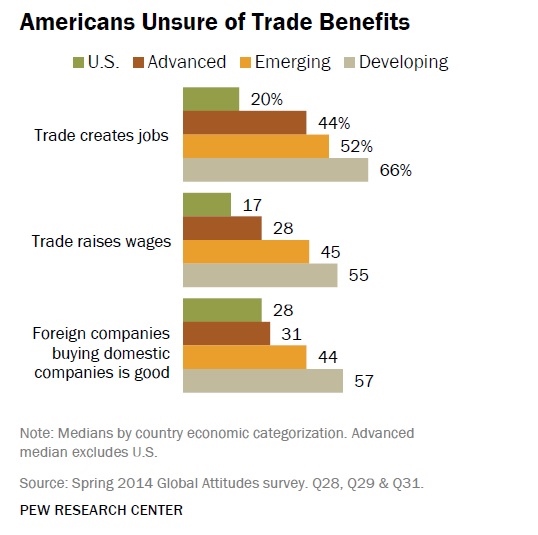
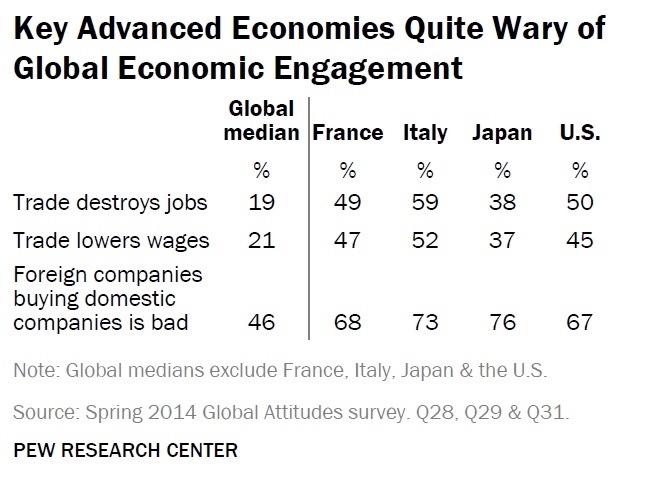
Just this week, the Pew Research Center released its latest survey findings about the public opinion on growing trade and business ties between countries and views about the impact of trade on jobs, wages and prices. The results show that not only Americans, but also people in other countries, including those developing ones, are divided about international trade. Anyhow, the highest level of public skepticism about trade and foreign investment is found in the United States.  

1

2

Job and wage are among the top concerns about trade among the general public. In Italy, nearly 59 percent survey respondents believed that trade destroy jobs and 52 percent believed trade lower wages. These two figures are 50 and 45 among US respondents.

 3

5

After our discussion on various trade theories, which school of thought do you agree more: mercantilism or comparative advantage theory? Are these theories proposed hundreds years ago still working today? Do you think deepened globalization will reduce the gap or even widen the gap of people’s divided view on international trade? How do you think international trade affects your daily life and your future career opportunities? Last but not least, is trade beneficial for the US textile and apparel industry in the 21st century? Please feel free to share your views!

World Textile and Apparel Trade (Update: August 2014)

The following analysis is conducted based on the statistics released by the World Trade Organization on August 5, 2014.

1. Asia continues to dominate the world textile and apparel exports from 2012 to 2013.

0

12

2. Despite concerns about its rising labor cost, China continues to gain more market shares in world textile and apparel exports from 2012 to 2013.

22

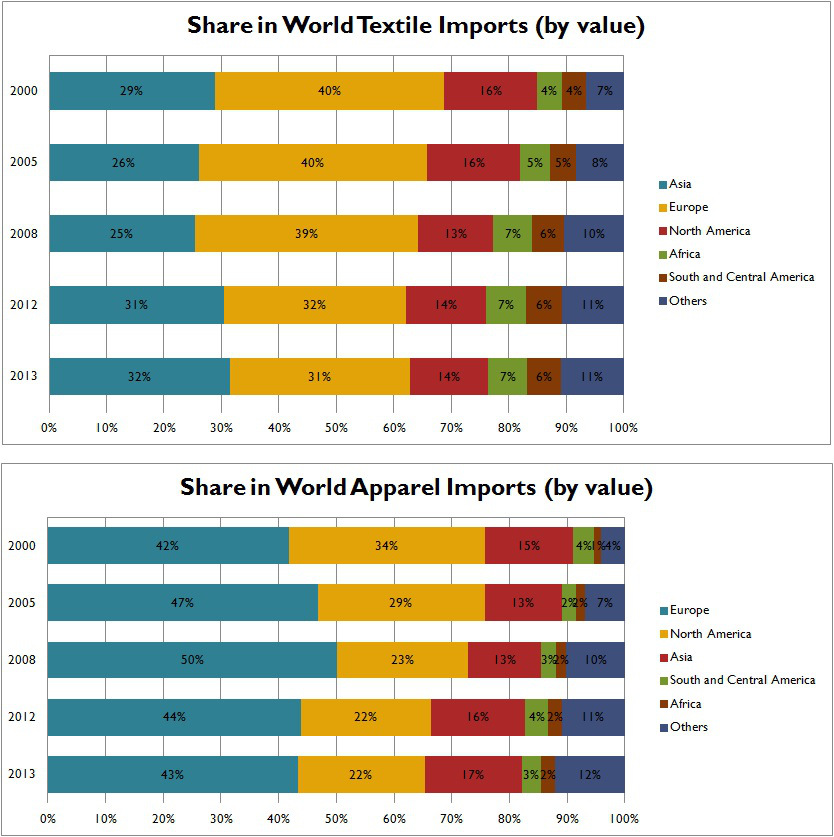
3. World market for textiles remains relatively stable from 2000 to 2013; world market for apparel is gradually shifting and diversifying. Although Europe and North America still account for lion’s shares in world apparel imports (due to their higher GDP per capita), Asia is the fast growing market.

32

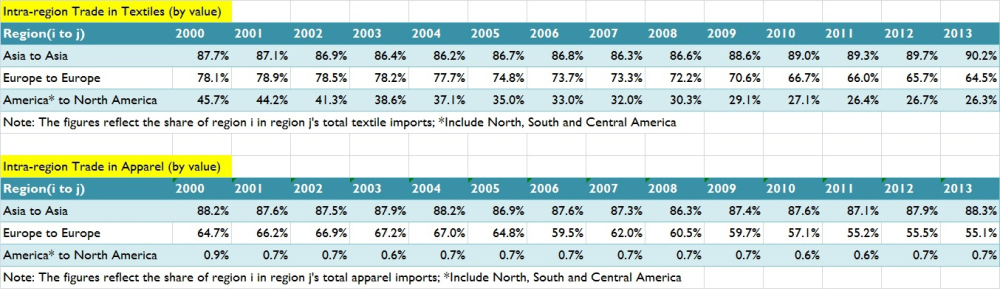
4. Intra-region trade remains a distinct pattern in world T&A trade, particularly in Asia, Europe and America. However, the pattern has become substantially weakened in Europe and America from 2000 to 2013, which could be the results of increasing number of FTAs in these regions.

41

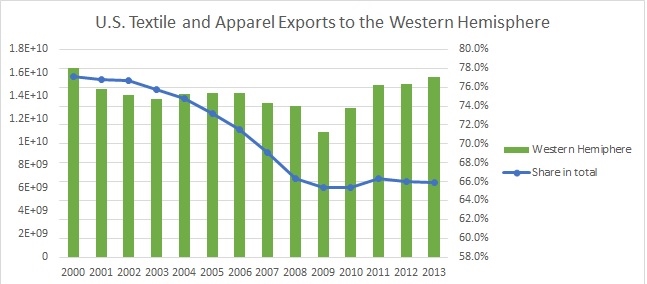
5. US textile and apparel exports increased 3.3% and 4.4% respectively from 2012 to 2013. North America remains the single largest T&A export market for the United States.

51

by Sheng Lu

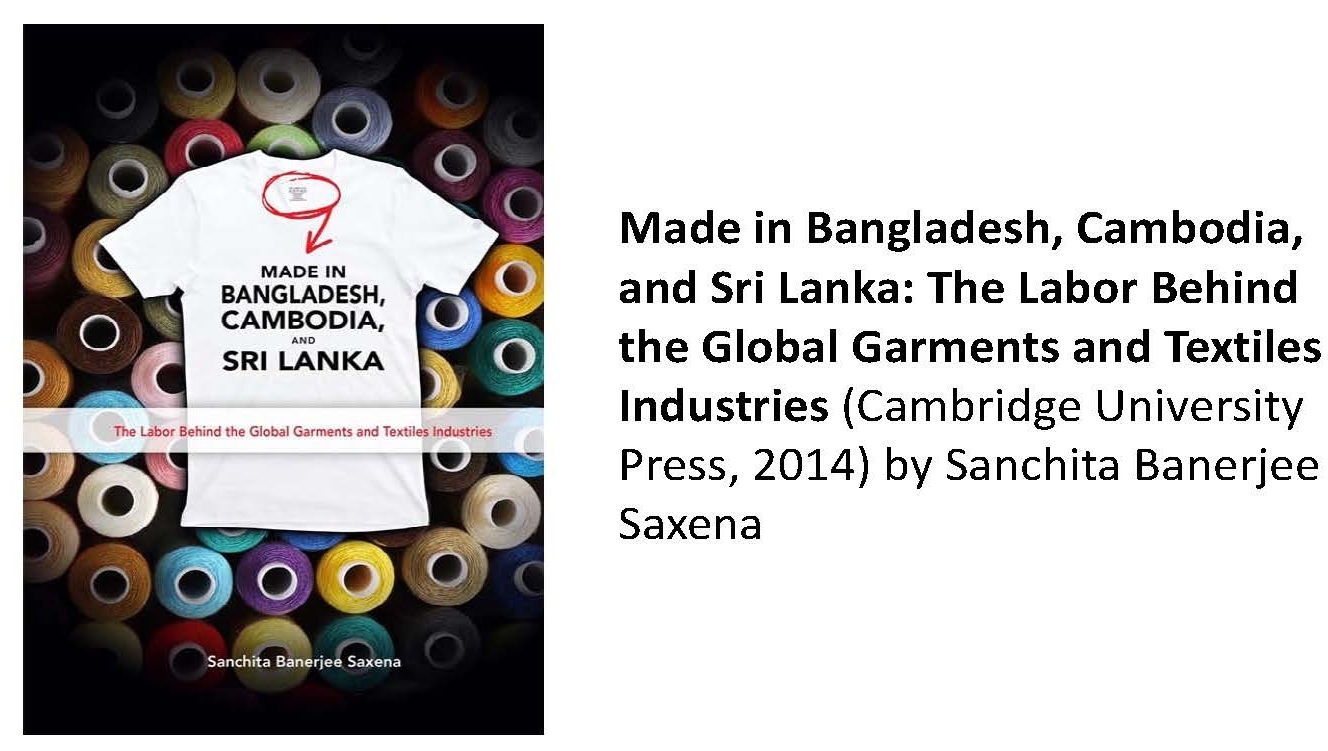
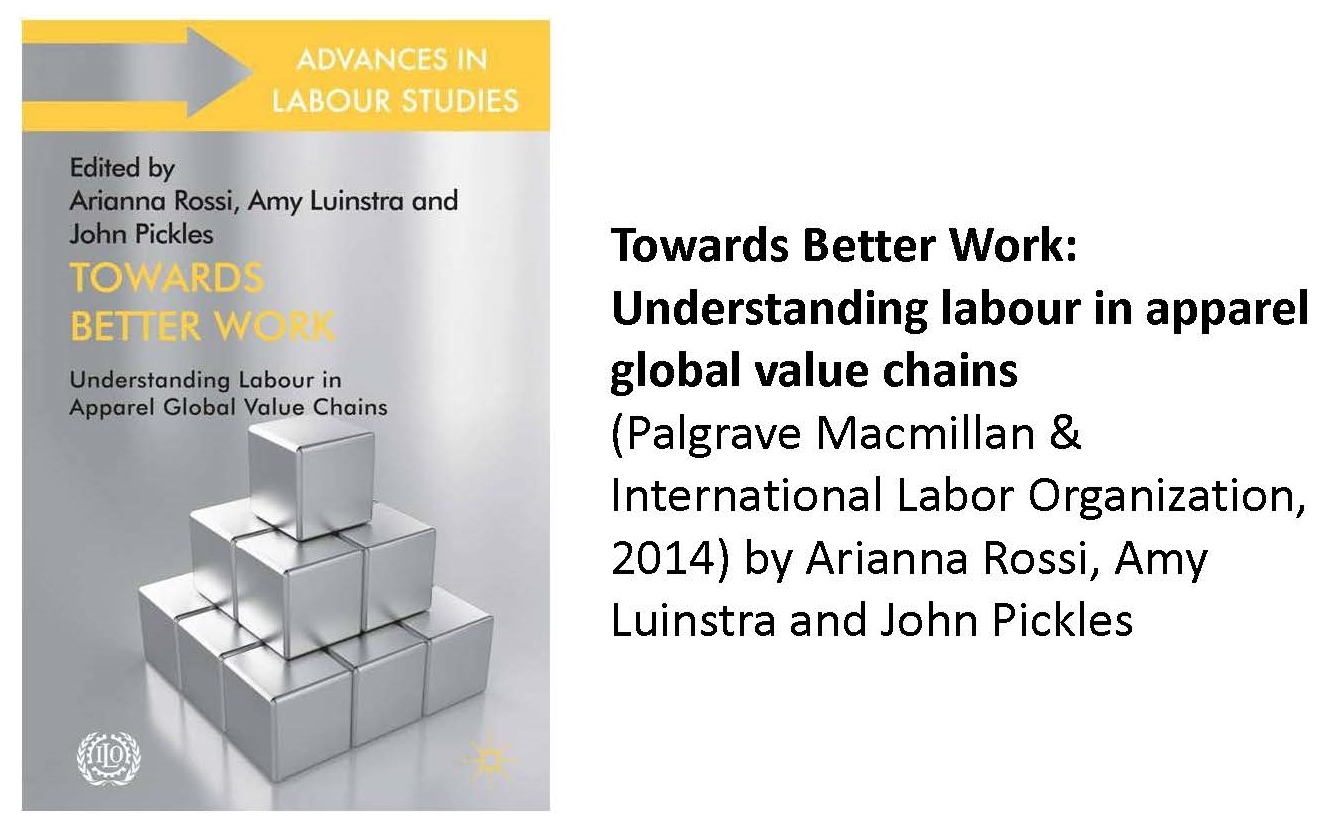
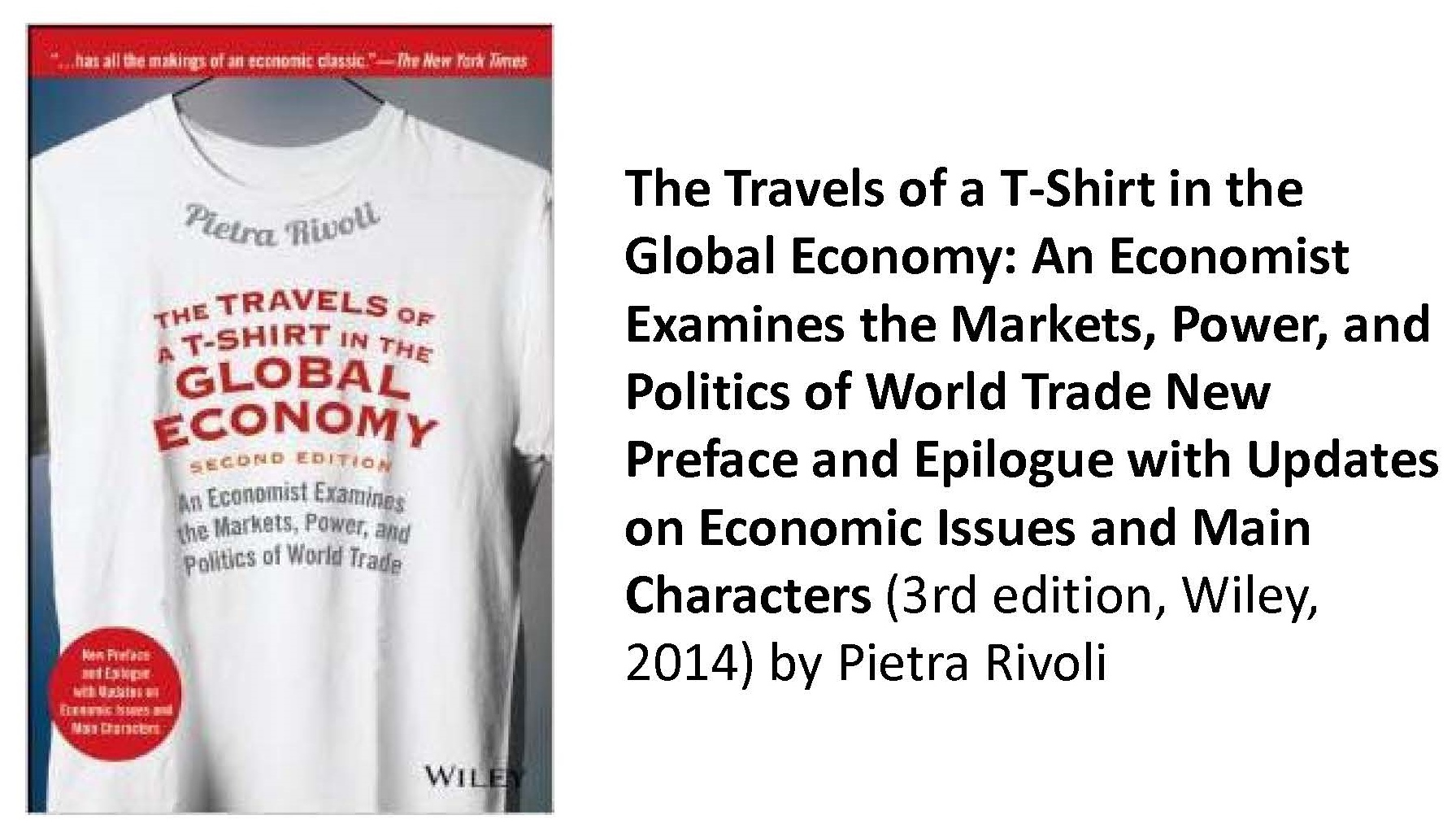
Recent Scholarly Books about the Global Textile and Apparel Industry (Update: Aug 2014)

4 3 2 1


Why does the US Textile Industry Want Yarn-forward Rule of Origin (RoO) in TPP?

textile

My personal understanding: the US textile industry insists yarn-forward RoO in TPP is not because they expect a substantial increase of textile exports to Vietnam as the case of NAFTA and CAFTA which help capture the export markets in Mexico and Central America. But rather it is because:

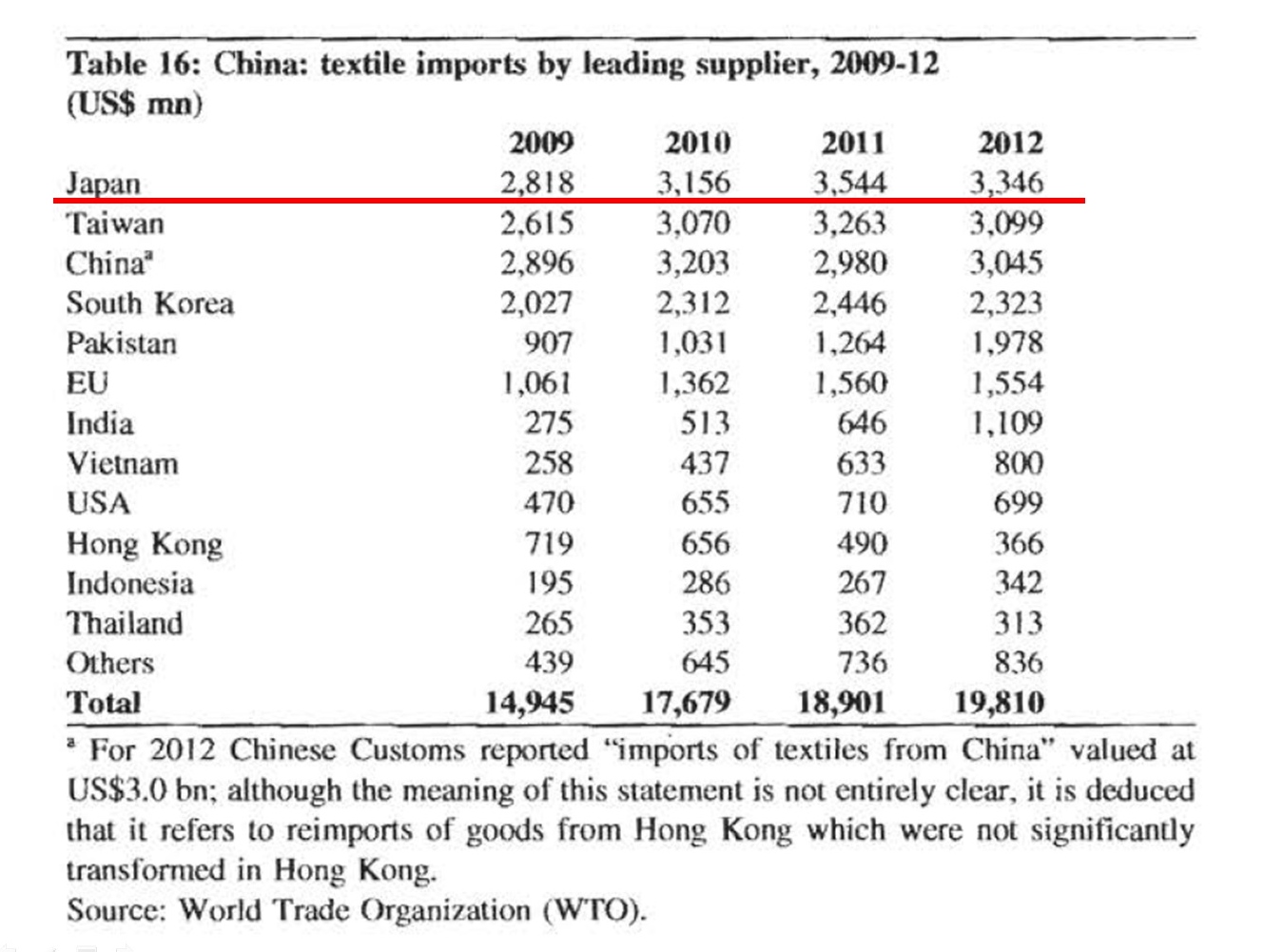
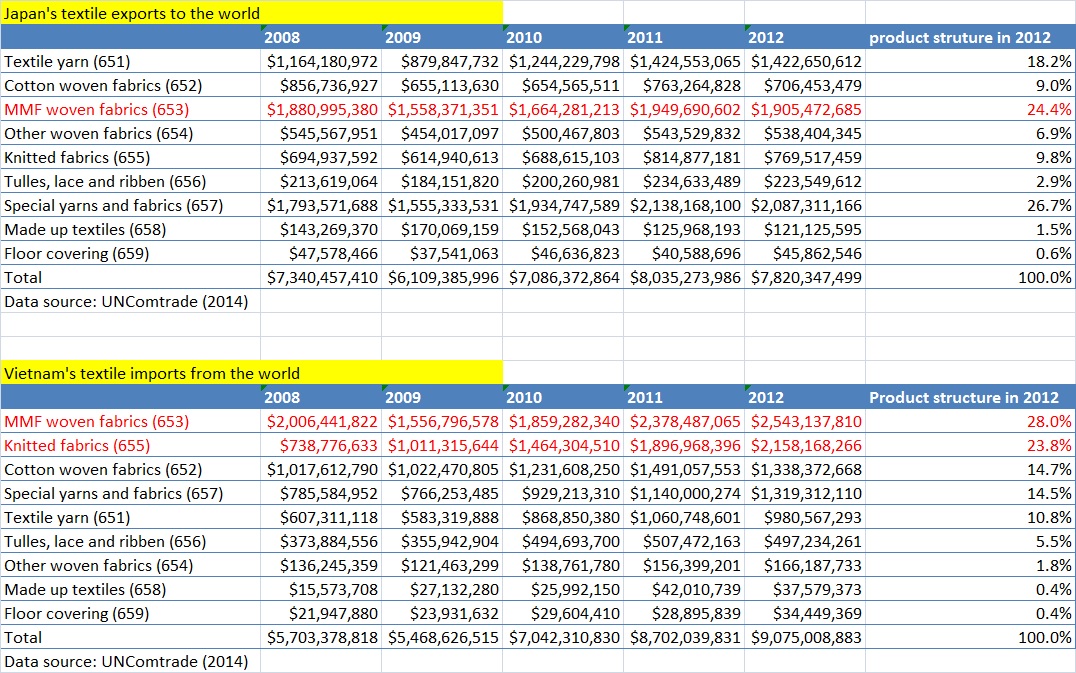
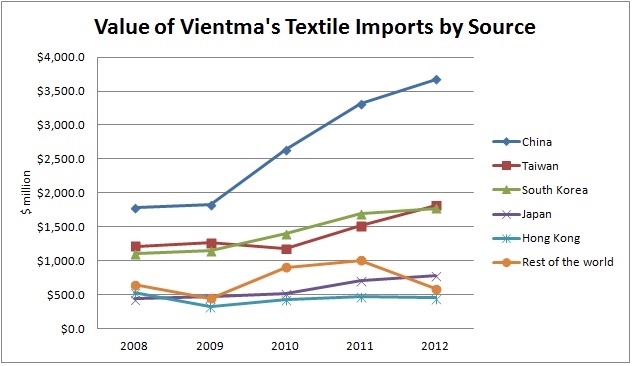
1) Without yarn-forward, situation will get even worse. Particularly, a less restrictive RoO will make Vietnam’s apparel exports which contain textiles made in China, Taiwan or South Korea qualified for duty free access to the US market. Definitely this will be a more imminent and bigger threat to the US textile industry than simply facing competition from Vietnam’s apparel which contains Japanese made textiles. And still many US textile companies don’t treat the Japanese textile industry very seriously, although I think they should. Remember, Japan currently is the fourth largest textile supplier to Vietnam and the NO.1 textile supplier to China.

1

2

2) With yarn-forward RoO in place, at least US textile companies can invest in Vietnam (remember, globalization is about movement of capital as well. Many apparel companies in Mexico and Central America actually are invested by US companies). Without yarn-forward RoO however, Vietnam can simply rely on imported textiles as the case mentioned in (1) and there will be no incentive for US textile companies to move factories to Vietnam (meaning, capital holders will lose).  

So overall yarn-forward RoO may win a few more years for the US textile industry. But in the long run, it is my view that the US textile production and its exports to the Western Hemisphere countries may still inevitably decline (especially those output to be used for apparel assembly purposes) after the implementation of TPP. In the 21st century, the nature of competition is supply chain v.s. supply chain. 

The future of the US textile industry is those high-end markets, particularly technical & industrial textiles.  

Sheng Lu 

Additional Reading: The potential impact of TPP on the US textile industry

Textile and Apparel Sector in the TPP Negotiation: An Update

TPP_map

USTR objectives
Officially, USTR has announced the following objectives in the TPP for textile and apparel:

  • Elimination of tariffs on textile and apparel exports to TPP countries;
  • A “yarn forward” rule of origin, which requires that textile and apparel products be made using U.S. or other TPP country yarns and fabrics to qualify for the benefits of the agreement, so as to ensure that non-qualifying textiles and apparel from non-TPP countries do not enjoy the benefits reserved for TPP countries;
  • A carefully crafted “short supply” list, which would allow fabrics, yarns, and fibers that are not commercially available in the United States or other TPP countries to be sourced from non-TPP countries and used in the production of apparel in the TPP region without losing duty preference;
  • Strict enforcement provisions and customs cooperation commitments that will provide for verification of claims of origin or preferential treatment, and denial of preferential treatment or entry for suspect goods if claims cannot be verified; and
  • A textile specific safeguard mechanism that will allow the United States and other TPP countries to re-impose tariffs on certain goods if a surge in imports causes or threatens to cause serious damage to domestic producers.

X-basket
According to the National Council of Textile Organizations, with regard to the market access offer to Vietnam, textile and apparel products are categories into different groups based on their “sensitivity” to the domestic industry producing the like products. Among the three major categories, the so called “X-basket” will include textile and apparel items that are deemed most sensitive to the United States. Specific items to be included in the X-basket however are unclear and details of the phrase-out formula are still under discussion. It is said that items in the “X-basket” may be subject to an initial tariff cut ranging from 35 to 50 percent.

Vietnam’s top apparel exports to the United States are basic apparel items like shirts, sweaters and pants.  Many of them are the same types of items that were subject to the U.S. safeguard measures against China back in 2005. The U.S. textile industry hopes that the longer phrase-out period for items in the “X-basket” would provide needed time for the industry to adjust. However, for the Vietnam side, if duties on most of its apparel exports to the United States stay in place after the implementation of the TPP, the value of participating in the agreement would substantially be compromised.

Short-supply list
The short-supply list is a roster of fabrics and other textile inputs that are determined to not be readily available in the TPP region in commercial quantities on a timely basis and can therefore be imported from third countries. Items on the short-supply list would be exempt from the general “yarn-forward” rule of origin that the U.S. has proposed in the textiles and apparel talks. USTR is pushing for a short-supply list that would have permanent items as well as temporary items that will be removed after three years. Previous U.S. free trade agreements, including CAFTA, have included a short supply process to add additional products to the list once the agreement enters into force. But the U.S. has rejected the notion that the short-supply list could be modified after the TPP enters into force.

Mexico has consistently sought to limit the scope of the short-supply list, arguing that it actually makes some of the products that the U.S. had originally proposed for inclusion in the short-supply list. Mexico was also pushing for roughly 70 items proposed for the short supply to be included only on a temporary basis, rather than a permanent one.

Other TPP members’ positions
According to the Inside US Trade, Malaysia’s textile and apparel industry is supporting U.S. calls for a “yarn-forward” rule of origin in TPP, but is also pushing for a range of exceptions such as cut-and-sew allowances and a short supply list that would be periodically reviewed. Among the items the Malaysian industry would like to see on the short supply list are shirting fabrics such as woven cotton fabric that weighs not more than 250 grams because this type of fabric is said not made in the U.S. nor Malaysia.

Related reading
Lu, S. (2014). Does Japan’s accession to the Trans-Pacific Partnership an opportunity or a threat to the U.S. textile industry: A quantitative analysis. Journal of the Textile Institute. (ahead of print version) 


EU Commission: Skills for Jobs in the EU Textile and Clothing Industry to Evolve

In a recent analysis report, the EU Commission foresees that skills needed by jobs in the EU textile and clothing industry will continue to evolve from 2013 to 2025. Specifically, the report argues that:

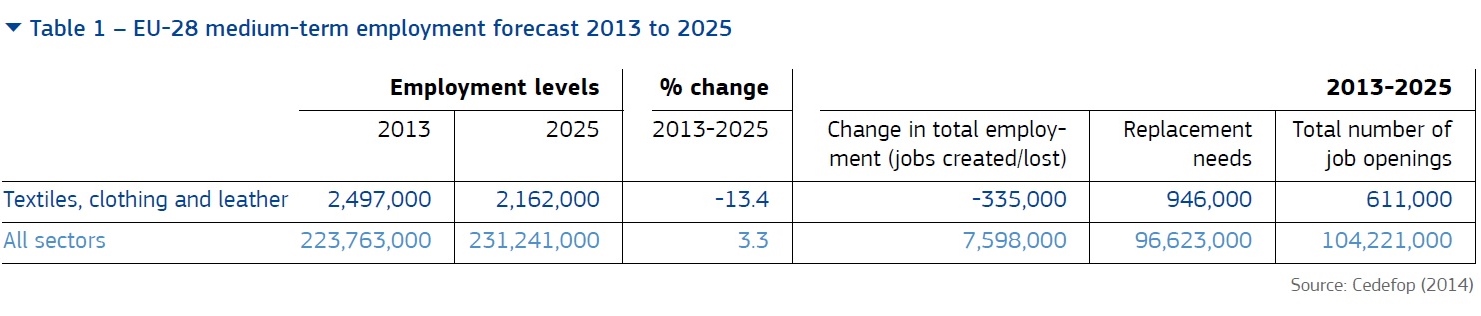
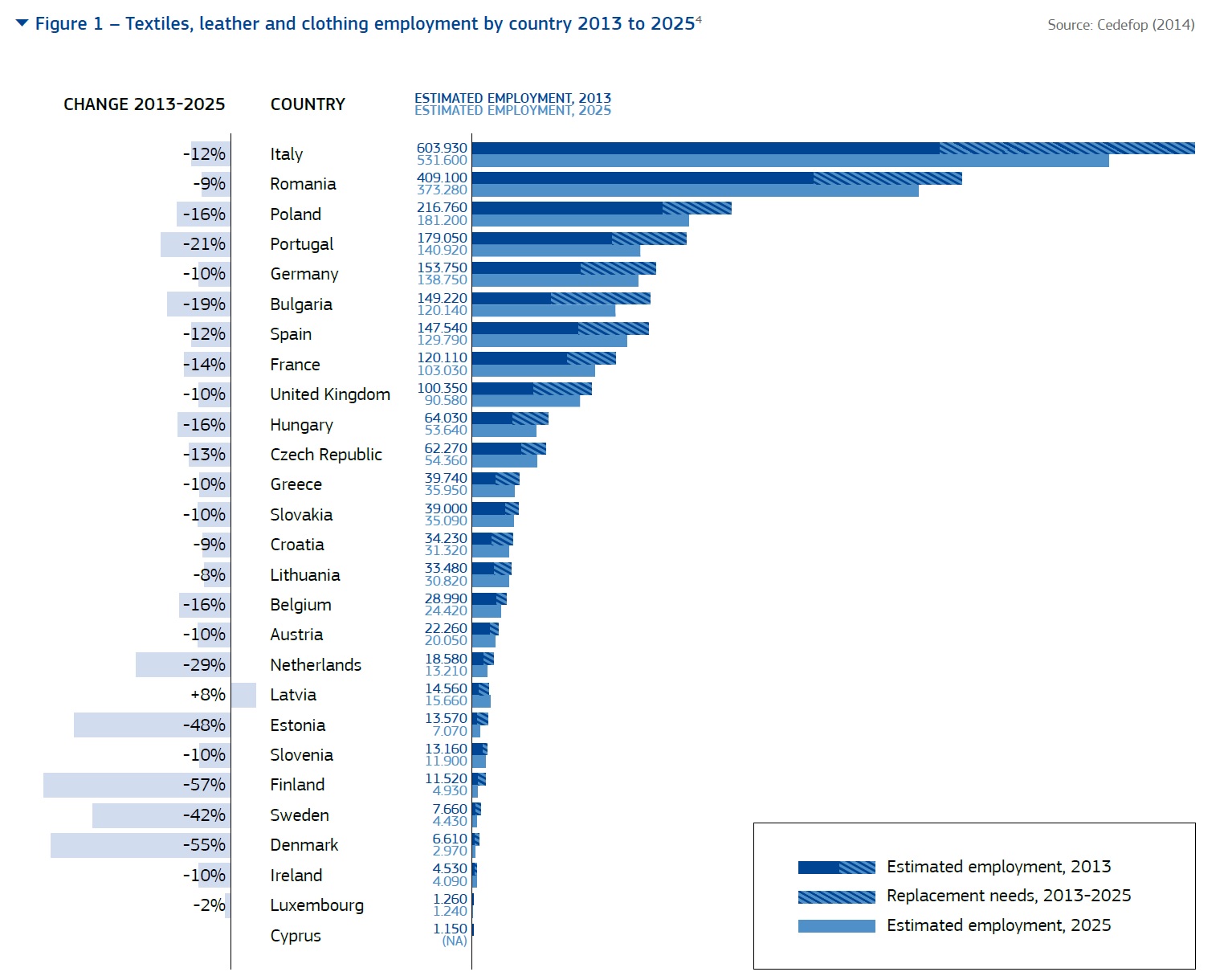
First, employment in the EU textile and clothing sector is forecast to decline by 13.4% from 2.5 million in 2013 to 2.1million in 2025. Even with shrinking employment levels, because of the need to replace nearly 1 million workers forecast to retire or leave the sector, about 611,000 job openings are anticipated from 2013 to 2025.

Second, employment in the EU textile and clothing sector is no just declined, but also evolved. From 2013 to 2025, demand for “crafted and related occupations” as well as “plant and machine operators and assemblers” will decline 34% and 13% respectively, whereas job openings for “technician and associated professional occupations” are estimated to grow at a modest rate. Among the estimated 611,000 job openings, 93% will require high or medium level qualifications.

Third, in terms of specific skills needed by the EU textile and clothing sector based on where the sector might progress towards 2020:

1) Technical production competencies will remain central to recruitment with increased focus on the demand for versatile staffs that can operate across different workstations.

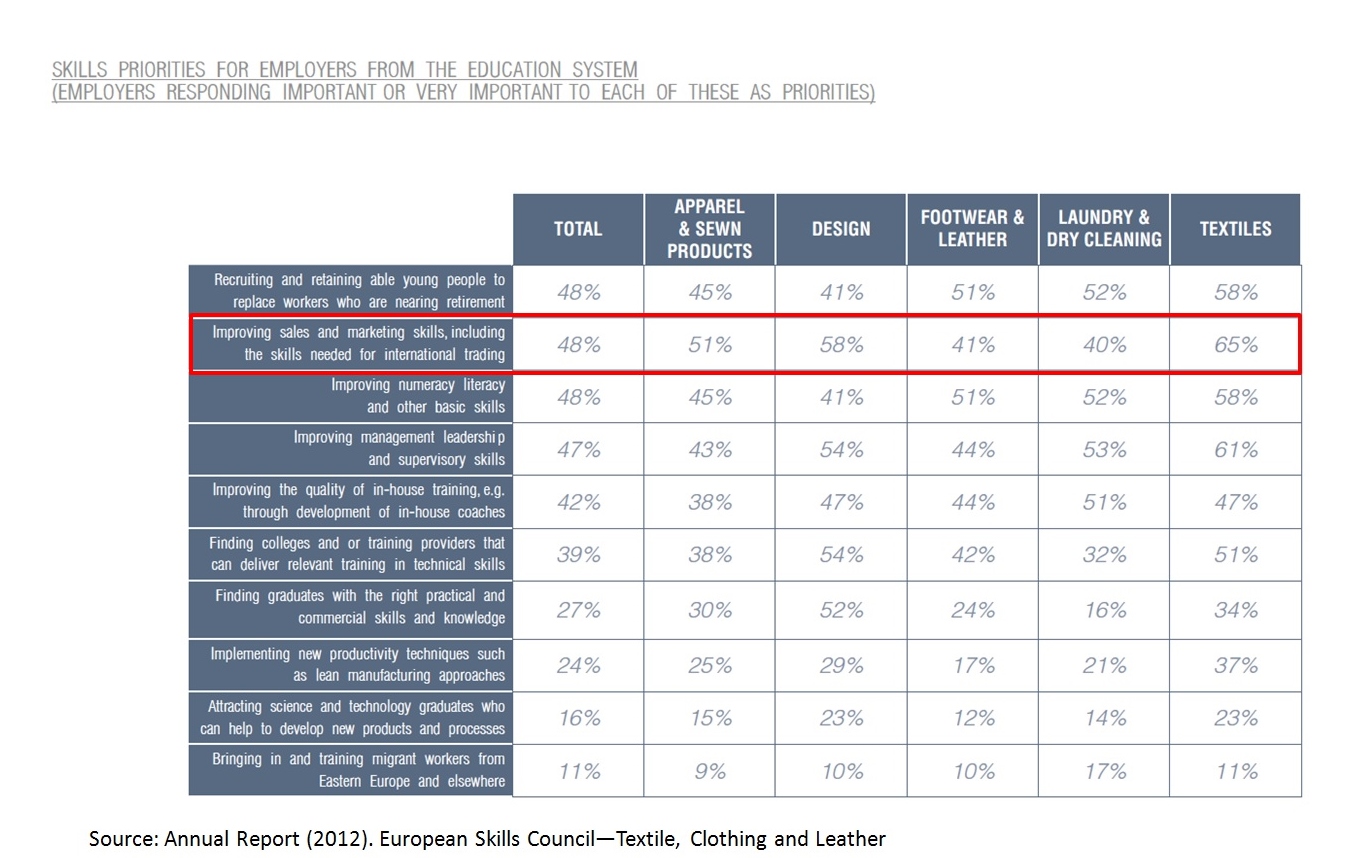
2) Supply chain management, business, sales and marketing skills (including the skills in international trade) are growing in importance. For many EU textile and clothing companies, “trade has taken place of production”.

3) The EU textile and clothing industry is further expecting skills on technology, innovation and sustainability. Leading technology-led areas include mass customization, 3D body measurement, advanced CAD and eCommerce technologies, internet infrastructures for custom-tailored clothing and business-to-consumer eCommerce among retailers.

2

3

1

UNCTAD: Sharp Rise of Greenfield FDI in the Textile and Apparel Industry Worldwide from 2012 to 2013

According to the 2014 World Investment Report released this week by the United Nation Conference on Trade and Development (UNCTAD), a sharp rise in greenfield foreign direct investment (FDI)* activity was observed in the textile and apparel (T&A) industry worldwide from 2012 to 2013, with the value of announced investment projects totaling more than $24 billion, more than doubled than the level a year earlier.

Although detailed country-level data is not available, the UNCTAD report shows that the developed countries as a whole attracted $13.7 billion inflows of greenfield FDI and invested $18.7 billion greenfield FDI overseas in the T&A industry from 2012 to 2013. The report further says that Cambodia and Myanmar, the two least developed countries in South-East Asia, have recently emerged as attractive locations for investment in textiles, garments and footwear.

FDI is another critical format of market access in addition to international trade.

*Note: Greenfield FDI means a foreign company opens a new physical facility from which to conduct business.

Untitled

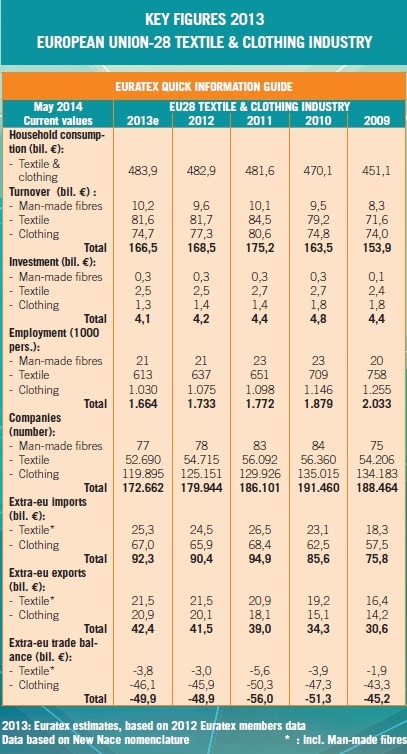
Euratex Releases Key Indicators of the EU Textile and Apparel Industry in 2013

In its annual release, the European Apparel and Textile Federation (Euratex) provides a skeletal statistical profile of the EU textile and apparel (T&A) in 2013. Most statistics cited in the report comes from the Eurostat.

Production
In 2013, T&A production in EU overall remains stable. Output of Man-made fiber (MMF) enjoyed a 6.8 percent growth from a year earlier, although production of textile (yarns, fabrics and made-ups) and apparel respectively declined 0.1 percent and 4.2 percent.  Accumulatively, from 2010 to 2013, production of MMF, textile and apparel in EU has down 15.2 percent, 8.1 percent and 13.3 percent respectively.

Employment
Employment in the EU T&A industry continues to move downward in size, shrinking from 1.73 million in 2012 to 1.64 million in 2013. The most significant drop happened in the apparel subsector, which suffered a 4 percent job loss from 2012 to 2013. The number of employment in the textile and MMF subsectors goes down 3.7 percent and 1 percent respectively.

Consumption
Affected by the slow economic recovery in the region, EU consumers seem still hesitant in expending more money on T&A products in 2013. Value of T&A consumption in EU (28) stood at €483.9 billion in 2013, only a slight increase of 0.2 percent from 2012.

Trade
The two-way EU T&A trade enjoyed a modest growth from 2012 to 2013. Particularly, despite reported decline in production, value of EU apparel exports in 2013 increased 4 percent, reflecting the growing demand for “made in EU” apparel products in other parts of the world. In terms of import, consistent with the pattern of consumption, EU apparel imports slightly increased 1.7 percent from 2012 to 2013. It should be noted that China is gradually losing market share in the EU apparel import market. From 2012 to 2013, value of China’s apparel exports to the EU declined 4 percent, compared with 10 percent growth of Bangladesh.

EU1

EU2

EU Commission Releases Negotiating Positions for Textile and Apparel in T-TIP

EUUSbridgeShutte

The EU Commission released its negotiating positions for the textile and apparel sector in the Trans-Atlantic Trade and Investment Partnership (T-TIP) on May 14, 2014.  The position paper outlines a few areas that the EU Commission says it would include in the T-TIP negotiation with the United States:

  • Labeling requirements for textile & apparel and footwear products
  • convergence and/or harmonization of approaches to guarantee product safety and consumer protection
  • standards approximation

Earlier this year, USTR also released its negotiating objectives for the T-TIP. Specifically for the textile and apparel sector, USTR will “seek to obtain fully reciprocal access to the EU market for U.S. textile and apparel products, supported by effective and efficient customs cooperation and other rules to facilitate U.S.-EU trade in textiles and apparel.” USTR holds the positive view that “eliminating the remaining duties on our exports will create new opportunities for integration into European supply chains and to sell high-quality “made-in-USA” garments to European consumers.  Enhanced U.S.-EU customs cooperation will also help ensure that non-qualifying textiles and apparel from third countries are not being imported into the United States under T-TIP.

However, T-TIP negotiation somehow is under the shadow of the Trans-Pacific Partnership (TPP), another free trade agreement currently under negotiation among the United States and other eleven countries in the Asia Pacific region. As reported by the Inside US Trade, the National Council of Textile Organizations (NCTO) holds the view that TTP and T-TIP negotiation should be dealt with “sequentially”. NCTO would like to avoid a situation where the US makes a concession on textiles and apparel to the EU in T-TIP that goes beyond the US offer to Vietnam in TPP, causing Vietnam to demand the same concession in the TPP talks.

One of the most difficult issues on textiles and apparel in T-TIP will be the rule of origin, given that the U.S. and EU have taken vastly different approaches on this issue in their existing preferential trade agreements. The EU rule of origin for apparel essentially consists of two different rules — one that applies generally and one that can be used as an exception. Under the general rule, an apparel item qualifies as originating if it has undergone at least two “substantial processes” in the EU. In general, weaving the yarn into fabric and finishing the fabric are considered substantial operations. Under this scheme, EU manufacturers can use non-originating yarn to make qualifying apparel as long as that yarn is woven into fabric in the EU and also finished there. As a result, this part of the EU rule is sometimes referred to in the United States as the equivalent of a “fabric-forward” rule, since it usually requires all components of the item, starting with the fabric, to be made in the region.

The second part of the EU rule — which functions as an exception — essentially applies a more liberal rule for certain apparel and textile items. These items can qualify for tariff benefits even if only the printing or other downstream operations occur in the EU. Specifically, under this exception, a textile or apparel item that is made from non-originating fabric but for which the printing occurs in the EU can qualify for tariff benefits if the non-originating part of the item is no more than 47.5 percent of the value of the final product. EU manufacturers of printed bed sheets often take advantage of this printing exception (Inside US Trade).

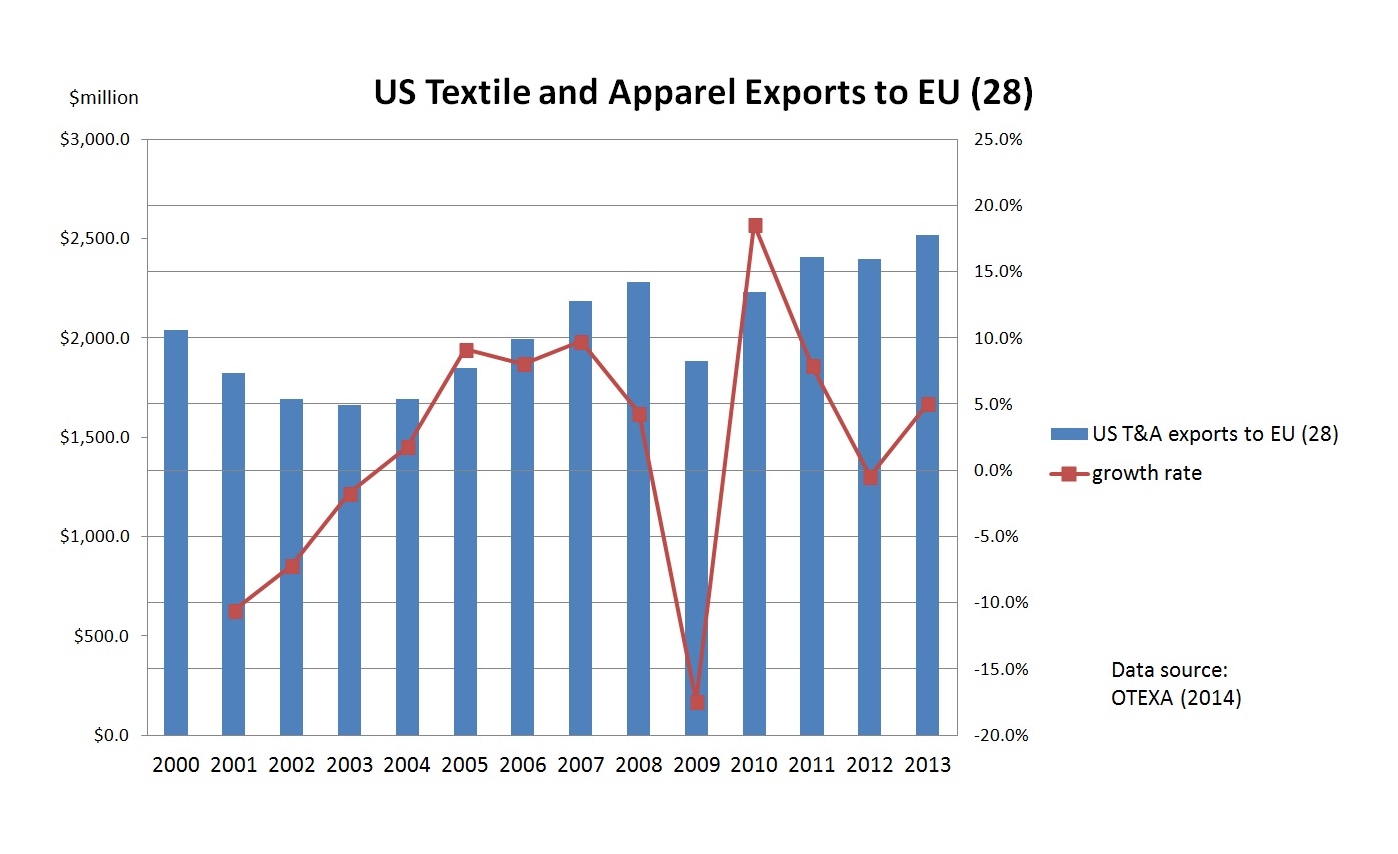
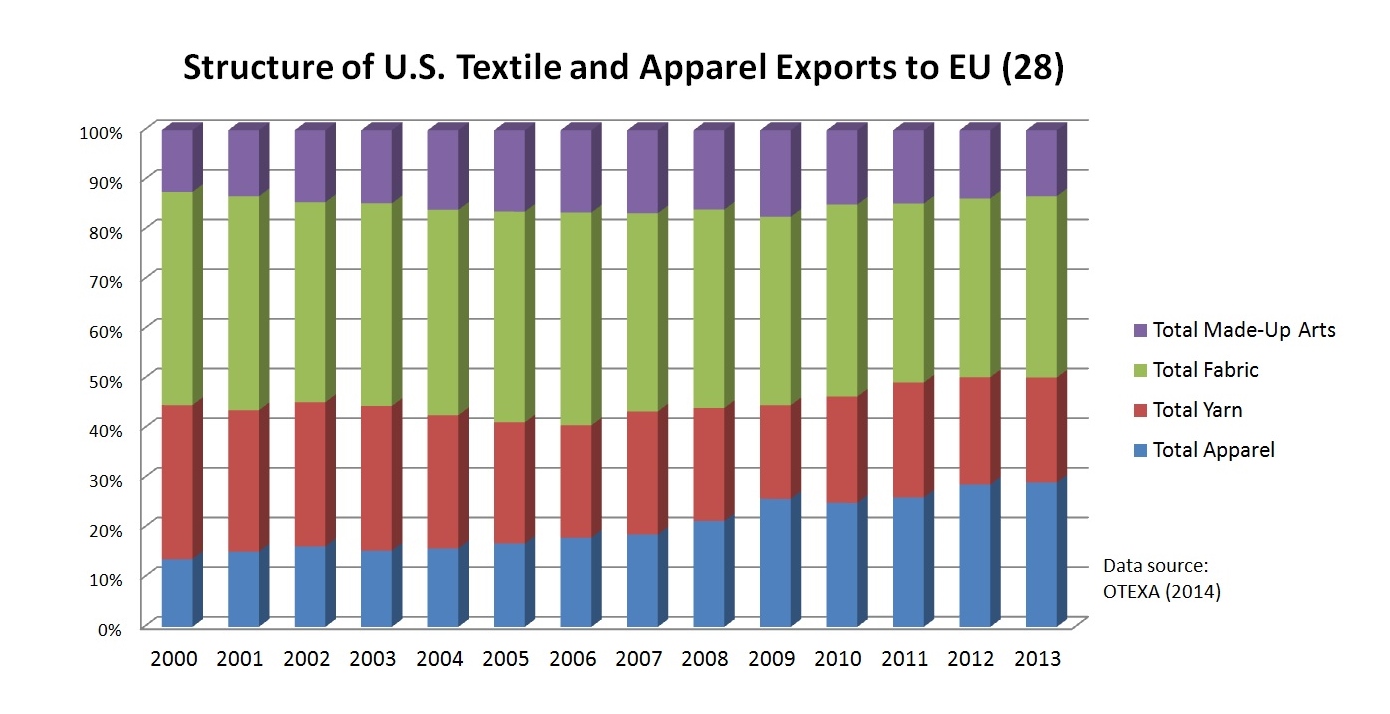
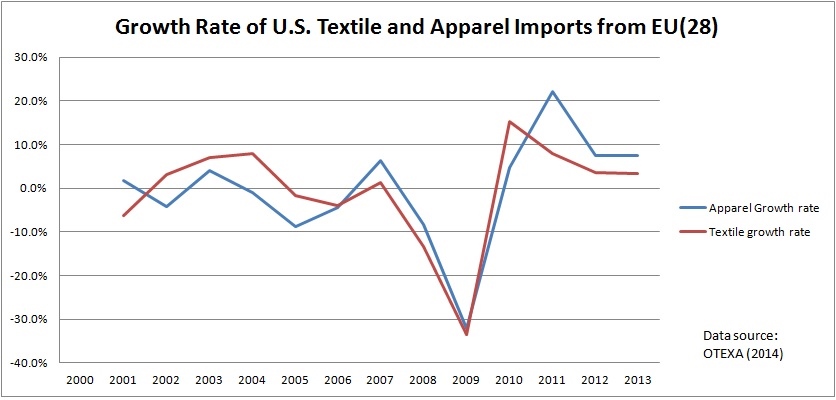
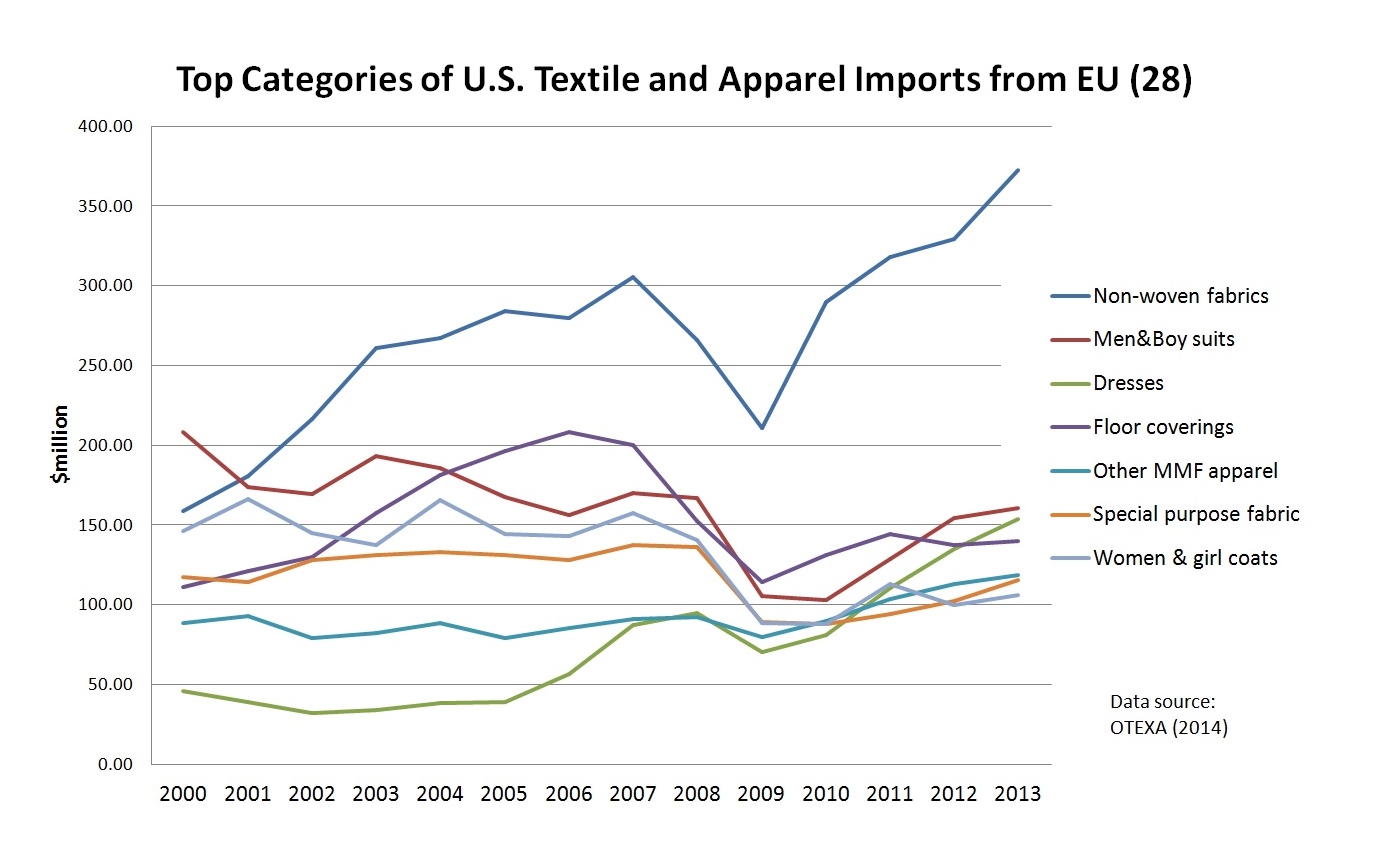
Latest data from OTEXA shows that in 2013, U.S. textile and apparel imports from EU(28) totaled $4 billion, among which 52% were apparel products and 48% were textiles. Top product categories of U.S. textile and apparel imports from EU include non-woven fabrics, men&boys’ suits, dresses, floor coverings, other man-made fiber apparel, special purpose fabrics and women & girls’ coats. In comparison, U.S. textile and apparel exports to EU(28) reached $2.5 billion in 2013, among which only 29% were apparel products and 71% were textiles. Top product categories of U.S. textile and apparel exports to EU include specialty & industrial fabrics, felts & other non-woven fabrics, filament yarns, other made-up textile articles, waste & tow staples, women & girls slacks, shorts and pants as well as spun yarns & thread.

1

2

3 4

 5

7

Vietnam Announces Ambitious Plan to Develop its Textile Industry

Reported by the Sourcing Journal, Vietnam’s Ministry of Industry and Trade recently approved its textile and garment sector development plan up to year 2030. Under the new plan, Vietnam sets an ambitious goal to achieve a 55% local content ratio for exported apparel by 2015 and will further increase the ratio to around 70% by 2030. As estimated, the plan will bring about an annual textile production growth rate of 12 to 13 percent between 2013 and 2030 in Vietnam.

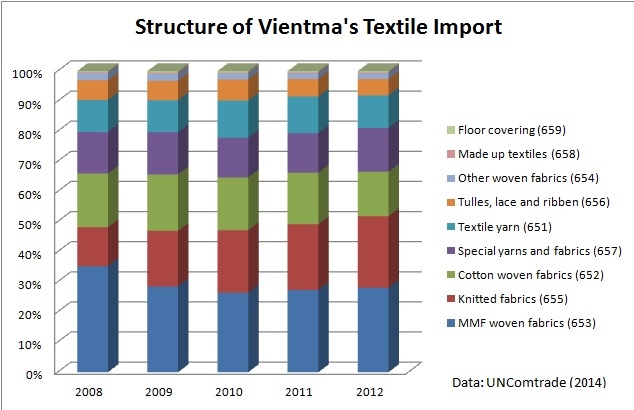
Numerous studies have suggested that Vietnam could substantially expand its apparel exports to the world after the implementation of the Trans-Pacific Partnership (TPP), a free trade agreement under negotiation by twelve countries in the Asia-Pacific region, including the United States and Vietnam. However, restrained by its stage of development, about 70—80% of Vietnam’s demand for textile inputs currently is imported (Lopez-Acevedo & Robertson, 2012). Based on 23 interviews, Goto (2007) further finds that apparel suppliers in Vietnam on average produced 67% CMT and 33% FOB based on value and 95% CMT and 5% FOB based on quantity.

But with the help of foreign investment from South Korea, Taiwan and Japan, Vietnam is quickly building up its textile manufacturing capacity (note: this is very different from the case in Mexico). According to the General Statistics Office of Vietnam, the number of textile firms in Vietnam had quickly increased from 408 in 2000 to 1,577 in 2008. Lopez-Acevdeo & Robertson (2012) further suggest that Vietnam’s annual production of cotton fiber has reached 10,000 tons; 50,000 tons of man-made fiber; 260,000 tons of short-staple fiber and yarn; 15,000 tons of knitted fabric; and 680 million meters of woven fabric. Around 38% of Vietnam’s textile output came from foreign invested companies in 2009.

Vietnam’s ambition to expand its domestic textile manufacturing capacity will have huge implications for the US-based textile industry. Although Vietnam seldom uses US-made textile inputs, Vietnam’s apparel exports to the United States directly compete with those exported from Mexico and countries in the Caribbean Basin regions which is the largest export market for U.S. made textiles (Lu & Dickerson, 2012).  An expanded local textile manufacturing capacity will not only reduce Vietnam’s demand for imported textile inputs, but also will help improve the price competitiveness of Vietnam’s apparel exports in the global marketplace. If China increasingly moves its textile factories to Vietnam (unless the conflict between Vietnam and China over the South China Sea complicates the situation), Vietnam may further becomes a net textile exporter in the long run.

1

2


Untitled


3

4

Is Wal-Mart’s $250 billion “Made in the USA” Program Another “Crafted with Pride Campaign”? (I)

walmart

crafted-with-pride-hangtags

Earlier this year, Wal-Mart Store Inc. announced its commitment to buy $250 billion “Made in the USA” products (including textiles and apparel) over the next 10 years ($50 billion annually) with the hope to “help spark a revitalization of U.S.-based manufacturing” and “create jobs in America”. According to the Hoover’s, Wal-Mart’s cost of goods (i.e. sourcing cost for merchandise sold) totaled $358 billion in fiscal year 2013, suggesting $50 billion will account for around 10-14% of its total sourcing portfolio.               

Wal-Mart’s campaign has received positive feedback from the US textile and apparel industry. As reported by the WWD, the U.S. textile industry sees Wal-Mart’s movement an encouraging and “sincere commitment”. Bill Jasper, the outgoing chairman of the National Council of Textile Organizations (NCTO) and CEO of Unifi Inc believed that “manufacturing in general across the United States is in a more favorable position than we’ve seen for some time” and “this is an environment for growth in U.S. textile manufacturing”. As an example, Unifi Inc has spent millions of dollars upgrading its equipment and expanding the company’s US-based cloth mill. However, Bill also realizes the market risks involved in the investment decision, which may not happen without Wal-Mart’s “assurance” through the $250 billion program.

However, to fully take advantage of Wal-Mart’s program is not without obstacle. On top of them, Walmart requires qualified apparel for the program has to be “100 percent made in the United States”. However, the reality is there is more apparel being made in the Western Hemisphere by countries such as Mexico and those in the Caribbean Basin Regions than there is in the United States. As put by Bill, “We’re seeing more of a resurgence of ‘made in the region’ as opposed to Made in USA…If you at look the growth we see in apparel, much of that is in Central America and to a lesser extent Mexico. It does drive growth in yarn and fabrics here in the U.S., which are feed for those garments.”

It is also interesting to compare Wal-Mart’s $250 billion “Made in USA” program with its role in the “Crafted with Pride Campaign” launched in the 1980s (our case study 3). During that campaign, Wal-Mart initially pledged that “our entire management and merchandising staff is committed to Buy American program” and it did cut imports by 20% and purchased $197.3 million of merchandise from domestic suppliers in 1985 (Minchin, 2012). However, for the commercial reasons,  later on Wal-Mart more and more relied on imports to support its global expansion and “everyday low price” business model. The “betrayal” of Wal-Mart largely contributed to the eventual failure of the campaign.

What will be the destiny of the 21st century version of the “Crafted with Pride Campaign”? Is Wal-Mart really committed to “Made in USA” or rather the more price competitive “Made in USA” today attracts the attention of Wal-Mart? If implementation of new free trade agreements such as TPP and TTIP switches the cost balance of domestic sourcing versus global sourcing again, will War-Mart repeat its record in history? Maybe only time will tell…

Sheng Lu

The Ways and Means Hearing Shows Divided Views on US Trade Policy for Textiles and Apparel

ways&means

US Trade Representative Michael Froman testified on Obama’s 2014 trade policy agenda before the House Ways and Means Committee on April 3. Issues concerning the textile, apparel and the footwear industry were raised three times during the 3-hour hearing. However, it seems the Congress is much divided on how to deal with the T&A sector deemed as “sensitive” in the FTA talks.

(1h:42’)Mike Thompson (D-CA) asked Froman to reevaluate the value of including the “yarn-forward” rules of origin (RoO) in the TPP. Thompson suggested that this rule only affects a small proportion of the US apparel imports nowadays (Note: according to Froman, it was $13 billion annually or 17% of the total US apparel imports) and no longer meets the needs of the US outdoor apparel industry which demands more flexible RoO in supporting of their business model. In response, Forman said that “the USTR’s approach to T&A is always being to ensure to strike a balance that helps the domestic producers continue to produce while allowing importers to import products that serve customers…”

(2h:06’) Earl Blumenauer (D-OR) asked Froman to reduce the trade barriers (tariff and NTB) on footwear imports, arguing that less than 1% of the footwear consumed in the US nowadays is domestically produced. He said that the high tariff rates both retard the ability of the US footwear industry to concentrate on those parts of the value chain that it enjoys competitive advantages and hurt the interests of the US consumers. In response, Forman said that footwear has been a sensitive and key issue to the US and among other TPP members. According to Forman, USTR has been working both with the domestic producers and the importers to develop an approach hoping to achieve the right balance that the domestic producers can continue to compete and also the importers can bring in high quality products (from overseas) for the US consumers. Additionally, Forman referred to the footwear industry an “outstanding area” in the TPP negotiation and said that discussion among all partners will continue.

Last but not least, (2h:30’) Bill Pascrell(D-NJ), also the chair of the house textile caucus, reiterated the importance of the yarn-forward RoO to the US textile industry and asked Froman to ensure that the USTR will “seek the longest possible duty phrase out for the most sensitive textile items” in the TPP negotiation. In his reply to Pascrell, Forman said that his team will work with all stakeholders of the US T&A industry to fully understand what these “sensitive textile items” are and will use tools like the “phrase out period” and “short supply list” to strike a right balance. Pascrell also expressed the concerns of the US textile industry about Vietnam’s wanting of immediate access to the US apparel market after the implementation of the TPP. However, Forman declined to give any concrete promise, just saying the USTR commits to create the “maximum number of jobs in the US” through the trade talks[Note: textile industry jobs? Apparel retail jobs?].

In addition to the T&A, other issues mentioned in the hearing include TPA, GSP, TAA, IPR, SPS & TBT, TTIP, SOE, TiSA, ITA and WTO.

Full hearing can be viewed here

Sheng Lu

National Export Initiative Priority Markets

95% of the consumers live outside the US, implying huge market opportunities for the US textile and apparel industry. Among the leading emerging markets for U.S. companies are China, Vietnam, India, Indonesia, Taiwan and Thailand. From watching the short videos below (prepared by the US Commerce Department), how do you see the importance of these markets? And what are the unique local business environment and culture in your view?

China

Vietnam

Thailand

India

Indonesia

Taiwan

Digital Economy and the Fashion Industry: A Macroview

Part I

Part II

Part III

Exclusive Interview with Nate Herman, Vice President of the American Apparel and Footwear Association

NateHerman (Photo: Courtesy of the AAFA)

Nate Herman is the Vice President of the American Apparel and Footwear Association (AAFA). Mr. Herman manages AAFA’s regulatory and legislative affairs activities, advocating on behalf of, and providing information to, the industry on international trade and corporate social responsibility issues. Mr. Herman also handles product safety, customs, transportation and other technical (slip resistance, safety toe, etc.) issues as well as labeling matters for AAFA’s footwear members as co-leader of AAFA’s Footwear Team.  In addition, Mr. Herman develops all apparel and footwear industry data and statistics as AAFA’s resident economist.  Prior to joining AAFA, Mr. Herman worked for six years at the U.S. Department of Commerce’s International Trade Administration (ITA) assisting U.S. firms in entering the global market. Mr. Herman spent the last two years as the Department’s industry analyst for the footwear and travel goods industries.

Interview Part

Sheng Lu: First of all, would you please make a brief introduction of AAFA to our students, including your history, your current members, your key missions and main functions?

Nate Herman: Representing more than 1,000 world famous name brands, the American Apparel & Footwear Association (AAFA) is the trusted public policy and political voice of the apparel and footwear industry, its management and shareholders, its four million U.S. workers, and its contribution of $350 billion in annual U.S. retail sales.  AAFA was formed in 2001 following a merger of the American Apparel Manufacturers Association and Footwear Industries of America.

AAFA stands at the forefront as a leader of positive change for the apparel and footwear industry.  With integrity and purpose, AAFA delivers a unified voice on key legislative and regulatory issues.  AAFA enables a collaborative forum to promote best practices and innovation.  AAFA’s comprehensive work ensures the continued success and growth of the apparel and footwear industry, its suppliers, and its customers.

We achieve these goals through aggressive advocacy on Capitol Hill and before the Administration on the issues most important to the U.S. apparel and footwear industry. AAFA also hosts more than 50 conferences, seminars, workshops, and webinars both in the United States and around the world to ensure the industry is able to comply with growing state, federal, and international regulations.

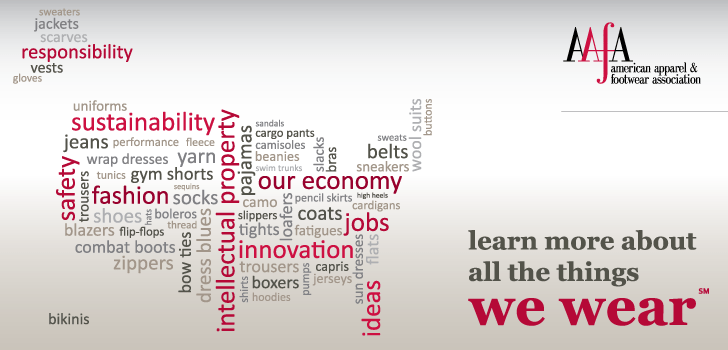
Sheng Lu: AAFA recently released a video clip “What do we wear”, which is very encouraging and eye-opening to our students. What makes AAFA create this video and what specific information you would like to deliver to the audiences?

Nate Herman: A few years ago, we were asked a question during a meeting with a top-ranking senator.  “What is the economic impact of your industry?”  We didn’t have an answer, which didn’t help policy makers see the important jobs within our industry and our significant contribution to the U.S. economy.  That led to the launch of our “We Wear” brand.

You see, when we get dressed each day, we wear more than clothes and shoes.  We wear four million U.S. jobs.  We wear intellectual property.  We wear social responsibility.  Our new video is a visual reminder of our important mission and economic impact.  We use it to educate policy makers, administration officials, the industry, and consumers about our industry and how vital we are to the overall health of the U.S. economy.

Sheng Lu: One phrase often used by AAFA is your member companies “produce globally and sell globally”. How should our students understand the global nature of today’s apparel industry?

Nate Herman: The apparel and footwear industry is on the frontlines of globalization.  In fact, our industry’s supply chain is the most global supply chain in the history of commerce.

Simply put: We are a nation of 330 million importers. In 2012, 97.5 percent of the apparel and 98 percent of the footwear sold in the United States was produced internationally. This model allows families to spend less of their family budgets on clothing and shoes while still getting more bang for their buck.

Sourcing is made possible through strong and positive trade relationships with a variety of countries, including China, Mexico, Vietnam, Indonesia, Bangladesh, Colombia, Honduras, the Dominican Republic, Nicaragua, and more.  Companies even source product from the United States.  Sourcing decisions are often made through serious processes that evaluate a country’s trade programs, environmental record, social responsibility standards, intellectual property protections, material and labor costs, shipping time, and reliability of sourcing partners.

At the same time, don’t ignore the rest of the world.  The United States only represents just five percent of the world’s population.  So when a company sources from China or Vietnam, they are sending products all over the world through a complex supply chain.  One of our goals at AAFA is to help ensure the entire world has access to world famous U.S. name brands.

Sheng Lu: The Trans-Pacific Partnership (TPP) and the Trans-Atlantic Trade and Investment Partnership (TTIP) are two buzzwords nowadays. From the perspective of AAFA, why should the US apparel industry care about these two agreements? 

Nate Herman: Trade agreements like the Trans-Pacific Partnership (TPP) and the Trans-Atlantic Trade and Investment Partnership (TTIP) offer U.S. name brands direct market access to new sourcing and retail markets.  For example, the United States and the European Union, under TTIP, accounts for more than 40 percent of global clothes and shoes retail sales.

Trade agreements also provide opportunities to harmonize regulations to make it easier to do business in the global market.  For instance, the United States maintains strict product safety standards.  Through trade agreements, we can make regulations consistent to ensure if a shirt is safe in one country it’s safe in another.  This prevents redundant testing costs, which ultimately makes clothes and shoes cheaper for consumers.

Sheng Lu: Last year, several tragedies happened in the Bangladesh garment factories raised the public awareness of the corporate social responsibility issues in the apparel sector. How has the tragedy changed the business practices in the apparel sector from your observation?

Nate Herman: Over the past year, the U.S. apparel and footwear industry has rallied together to address significant social responsibility challenges, including worker safety.  In fact, we’ve never seen the industry come together so fully in a spirit of collaboration.  Safety inspections, training, and fire safety prevention have been or are now part of many companies’ compliance programs.  AAFA supported the creation of the Alliance for Bangladesh Worker Safety, an industry-led effort to prevent future tragedies in Bangladesh.  While all these positive steps encourage us, we know our social responsibility and environmental work will never be finished.  We can always do better.

Sheng Lu:  Look ahead in 2014, what top issues in the apparel industry you would suggest our students to watch?

Nate Herman: 2014 is already shaping up to be a busy year for the U.S. apparel and footwear industry.  One major trend we are watching is the continued growth of e-commerce and Omni-channel retail.  You see, the point of sale is just the starting point of a long – and global – supply chain.  We will see sourcing patterns and business models change as retail shifts away from brick-and-mortar shopping to online e-commerce.  We are now beginning to focus on new ideas like online privacy and data security, terms the industry didn’t have to focus on 10 years ago.
learnmorewewearmain

Export Growth Expected from Turkey in 2014

MDGF Textiles_0

According to just-style, Turkey is aiming for increased export growth in 2014, mainly to EU markets. Although the cost of sourcing apparel from Turkey averages 30-40% higher than countries such as China and India, quicker lead times as well as Turkey’s ability to offer shorter runs are proving to be beneficial for European retailers. Despite increasing pressure on price from European retailers, Turkey’s clothing industry is still expected to grow during the upcoming year. Another factor Turkish apparel manufacturers benefit from is the depreciation of the country’s currency, the Lira. Depreciation of the Lira could potentially act as an advantage for Turkish apparel manufacturers, making apparel sourcing from Turkey more price competitive for European retailers.

By MacKenzie Cahoone

Source:Dyson, Jonathan. “Turkey looks to strong clothing export growth in 2014.” just-style Global News. 15 February 2014. http://0-www.lexisnexis.com.helin.uri.edu/hottopics/lnacademic/?verb=sr&csi=343994.

Global Textile and Apparel Trade Patterns (2002 vs 2012)

Based on our lectures, can you explain the pattern of global textile and trade as shown below? Please feel free to respond to any questions and share with your thoughts.

1

2

3

4

5 7 8 9

Bangladesh Apparel Industry: An Update

Note: The following update can be used as additional reference material for our case study 1 on the Bangladesh fire accident.

The export-oriented apparel sector has been the main source of growth in exports and formal employment for the past three decades in Bangladesh. The industry directly employs 3.1 million people, comprising 40 percent of manufacturing employment; indirectly more than 10 million people are dependent on the apparel sector.

According to the World Trade Organization (WTO, 2013), in 2012, Bangladesh’s apparel exports to the world reached $19.9 billion (4.7%), among which $10.6 billion (or 53.3%) went to the European Union (27) and $4.6 billion (or 22.4%) went to the United States. Cotton trousers, cotton shirts, cotton sweaters and cotton T-shirt [HS 620342, HS620462, HS620520, HS611010 and HS610910]account for around 75% of Bangladesh’s total apparel exports in 2009 (World Bank, 2012).

The unit prices of Bangladesh’s main apparel exports are much lower than the world average and even lower than the unit values of apparel exports from China, India and Sri Lanka. From 2004 to 2007, the average price of Bangladesh’s apparel exports to the world fell from $2.60 to $2.31 per unit, representing a decline of 11 percent over three years. More specifically, average unit prices for woven  apparel fell from $3.26 to $2.92 (10% drop in price) and for knit apparel from $1.95 to $1.90 (3% drop in price) over the same period.

Bangladesh’s Local sources are able to meet about 80 percent of the domestic apparel industry’s demand for apparel accessories such as thread, buttons, labels, bags, tapes, shirt board, and cartons. But Bangladesh’s apparel sector relies on imported fabric and yarn inputs because the local textile industry is unable to supply its requirement in terms of quality, quantity, and variety.

Bangladesh’s main competitive advantage is low labor costs, one of the lowest among main apparel exporter countries in the world. Average apparel labor costs per hour in 2008 were $0.22; in comparison, rates in India were more than twice as high and four times higher in China. However, low wages are accompanied by relatively low levels of labor productivity. Average annual value addition per worker in Bangladesh was estimated at $2,500 compared to nearly $7,000 for a group of similar Chinese factories in 2005, according to a World Bank study.

1

2

3

4

5

6

Reference: Sewing Success? Employment, Wages and Poverty following the End of the Multi-Fiber Arrangement (World Bank, 2012). International Trade Statistics (World Trade Organization, 2013).

Exclusive Interview with Kim Glas, Deputy Assistant Secretary for Textiles and Apparel, US Department of Commerce

kim-glas

(source of photo: WWD)

Kim  Glas is the Deputy Assistant Secretary for Textiles, Consumer Goods, and  Materials at the U.S. Department of Commerce. She oversees programs and strategies to improve the domestic and  international competitiveness of the broad product range of U.S. textiles,  apparel, consumer goods, metals and mining forest products, and chemicals and  plastics manufacturing sectors and industries.   Ms. Glas also serves as Chairman of the Committee for the Implementation  of Textile Agreements (CITA), which supervises the negotiation and  implementation of textile and apparel agreements.

Prior  to joining the Department of Commerce, Kim Glas served more than 10 years as a  professional staff member in the U.S. House of Representatives.  As Deputy Chief of Staff and Legislative  Director for Representative Michael Michaud of Maine for over seven years, Ms.  Glas managed the Congressman’s legislative agenda and was the key advisor on  international trade and labor issues.  In  addition, Ms. Glas worked for Representative John LaFalce of New York during  her tenure on Capitol Hill, advising on trade and labor issues.

Interview Part

Sheng Lu: Because almost all clothing consumed in the United States nowadays is imported, some people wonder if there is still a textile and apparel industry in this country.  What is the reality? What does the general public should know about the US textile and apparel industry today?

Kim Glas: While imports still dominate U.S. consumption of textiles and apparel, we can expect to see a new trend going forward.  Currently, the textiles and apparel industry in the country is experiencing a different manufacturing paradigm than 10 years ago.  In 2012, textiles and apparel exports were $22.7 billion, up 37% from just 3 years earlier. This is indicative of a reassessment by American companies about manufacturing in the United States. Cost, time benefits, and international economic challenges have closed the international manufacturing gap making it more attractive to source at home. More and more U.S. companies are considering and many have moved production or part of their production back to the U.S.  This return of manufacturing to the U.S. is expected to continue into the future. This means consumers can expect to find more quality and more affordable Made in USA textiles and apparel in the market in the years to come.

The United States has a strong and diverse textile industry, manufacturing a range of high quality products including fibers, yarn, fabric, and apparel.  It is the fourth largest single country exporter of yarns and fabrics, with $13.6 billion in exports in 2012.  The United States is also home to one of the largest providers of spun yarn in the world, Parkdale, Inc., with 29 manufacturing plants in the United States, Central America, Mexico, and South America.

Sheng Lu: From your view, what role does the OTEXA play in enhancing the competitiveness of the US textile and apparel industry in the 21st century global competition?

Kim Glas: OTEXA administers and enforces agreements and preference programs concerning the textile, apparel, footwear and travel goods industries and works to ensure fair trade and a level playing field for these industries to enhance their competitiveness in international markets.  The office has an active Export Promotion Program that assists small- and medium-sized U.S. textile and apparel firms to develop and expand their export markets helping job retention and creation in this and related sectors.

Sheng Lu: There have been many discussions recently about manufacturing coming back to the United States given the rising labor cost in China. Yet, statistics from the US Bureau of Labor statistics show a continuous decline of employment in the manufacturing aspect of the US textile and apparel sector (i.e. NAICS 313, NAICS 314 and NAICS 315). What is your view on the future of textile and apparel “made in USA” as well as related job opportunities?

Kim Glas: The U.S. textiles and apparel industry employs over 380,000 people nationwide.  Declining employment in this sector has been an ongoing trend for the past four decades, a development related mainly to productivity improvements and international competition.  The adoption of new technologies has boosted productivity in this sector.

Advances in technology and manufacturing capabilities by capital-intensive U.S. textile and apparel firms have contributed towards competitiveness and productivity, increasing output and lowering labor costs.

The apparel industry has retained more skilled and higher-paying jobs in such areas as computer-aided design and manufacturing, marketing, and product development.  Lower-skilled apparel production jobs have moved offshore, in support of our production-sharing operations in Mexico, Central America, and the Caribbean Basin, as well as to other countries with lower labor costs.

The continued upswing of re-shoring sentiments and companies moving textiles and apparel production back to the U.S., combined with increasing consumer demands for Made in USA products will help foster more U.S. production hence increasing high-skilled job opportunities in these sectors for the foreseeable future.

Sheng Lu: This year marks the 20th anniversary of the North American Free Trade Agreement (NAFTA), which has been both lauded and attacked in the United States. In your view, does the US textile and apparel industry a beneficiary of the agreement? What critical changes has the NAFTA brought to the US textile and apparel industry over the past 20 years, if any?

Kim Glas:The United States exported a total of $22.7 billion in textiles and apparel in 2012, including $5.3 billion to Mexico and $5.2 billion to Canada.  Together, our NAFTA partners account for 46% of total U.S. exports of textiles and apparel.

The United States imported more than $113 billion in textile and apparel products in 2012, including $2.2 billion from Canada and $5.7 billion from Mexico.  U.S. imports from our NAFTA partners have a high U.S. content and therefore help to preserve U.S. jobs and increase sales opportunities for U.S. producers.

U.S. textile and apparel firms have benefited from NAFTA provisions including the “yarn forward” rule of origin and Mexican production-sharing arrangements.  This has allowed them to optimize production and manufacturing.  U.S. investment in Canada and Mexico has increased by 57% since NAFTA was implemented, reaching $592 million in 2012. The United States remains the largest single-country supplier of textiles and apparel to Mexico.

Sheng Lu: Both the ongoing Trans-Pacific Partnership (TPP) and the Trans-Atlantic Partnership (TTIP) negotiations include a chapter specifically dealing with textile and apparel. What makes textile and apparel always a unique and sensitive sector in the free trade agreement negotiation? And what does the US textile and apparel industry can expect from the TPP and TTIP?

Kim Glas: The U.S. approach to free trade agreements (FTAs) has been to provide for specific rules that apply only to the textile and apparel sectors in several areas, including rules of origin and related matters, safeguards and anti-circumvention Customs cooperation commitments.  Treating textiles and apparel in a separate chapter of an FTA provides more clarity and transparency, and therefore makes it easier for industries and traders in our FTA partner countries to make maximum use of the opportunities of the agreement while improving compliance.

As the largest market for imported textiles and apparel, and as one of the world’s largest markets for imported textiles and apparel, trade negotiations for this sector require experts with specialized knowledge.  Textile issues have been addressed in a textile negotiating group in all of our major FTAs, past and pending, with full coordination with other relevant negotiating groups.

Sheng Lu: looking ahead in 2014, what are the key industry development trends and trade policy issues we shall watch?

Kim Glas: The turnaround in U.S. manufacturing of textiles and apparel is expected to continue to reshape the manufacturing landscape of this industry with improved industry strategies and planning.   U.S. companies will be increasingly active in their efforts to innovate and improve to keep and stay viable in today’s highly competitive global market place.  In addition to keeping up with innovations, we can expect to see improvements in companies’ sourcing, supply chain management, and development of niche product and improved quality. Moving forward, we can expect to see U.S. companies to be to be more lean, efficient and flexible with consumer and market demands.

Global Textile and Apparel Market Overview

1

2

4

5

6

7

Data source: TechnoPak (2013)

Trade with EU and Japan is good for the US and Trade with China is bad?

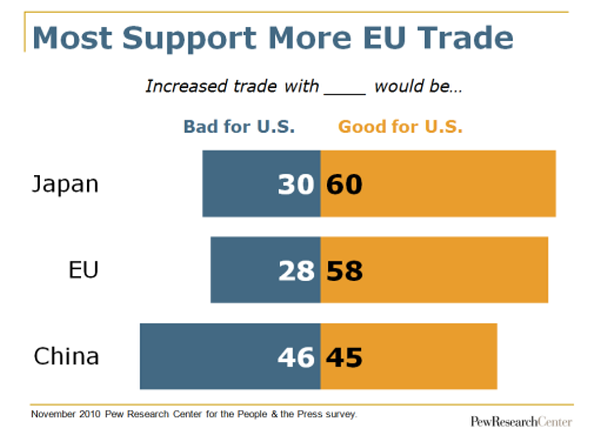
Yesterday in class, we’ve discussed how differently people see the impact of international trade. Here is one more example showing the controversy of the topic: according to a survey conducted by PewResearch in late 2010, 58% of sampled Americans said more trade with European nations would be good for the United States, 60% said increased trade with Japan would be good for the U.S. but only 45% favored increased trade with China. However, statistical data shows that US exports to China outpaced nearly all of the top ten export markets (including Japan and EU) from 2003 to 2012(source: USCBC).  

Why would the general public favor a particular trading partner but disfavor another? Should they? By which standard the general public may assume more trade with a particular trading partner would be good or bad for the United States? In your view, is trade beneficial for the US overall? Can we use any trade theories learnt from the class to explain the above phenomenon? Look forward to hearing your thoughts!

DN_EU-TRADE_2-15-13

Untitled

Re-shoring, Jobs and Globalization–Perspectives from David Cameron


  • How to make a success of globalization and ensure our businesses, our peoples and our societies can benefit from the next phases of globalization?
  • What are the opportunities of re-shoring for the West and how to seize them?
  • How to secure sustainable and well-paid jobs and give people pride in using their skills?
  • Is re-shoring going to bring back all the jobs that were off-shored in the first place?
  • What are the factors that are driving re-shoring?
  • Does reshoring mean the West wins and the East loses?
  • Is there a chance for Britain and US to become the “Re-shore Nations”?

If you care about the questions above, please enjoy the speech given by David Cameron, Prime Minister of the United Kingdom at the 2014 World Economic Forum in Davos. The speech is a great supplement to our discussions this week on globalization.

The international aspect of the US economic policy: why and how we are all connected?


From 0:24′: Please enjoy an enlightening and inspiring dialogue with Penny Pritzker, US Secretary of Commerce and Michael Froman, US Trade Representative, on the international aspect of the US economic policy at the 2014 World Economic Forum in Davos.  The dialogue covers many interesting topics closely connected with our class lectures this & next week, for example:

  • Do we need more globalization? What is the impact of globalization on jobs and income inequality?
  • Why export matters to the US economy?
  • What will free trade agreements such as the Trans-Pacific Partnership (TPP) bring to the US?
  • Why foreign investment in the US is good for the US economy and job creation?
  • What is the connection between “global supply chain” and “made in USA”?

The Apparel Industry on Both Sides of the Atlantic Push for Regulatory Coherence in the TTIP negotiation

TTIP

The European Apparel and Textile Confederation (EURATEX) and the American Apparel and Footwear Association (AAFA), the two leading trade associations representing the apparel industry in the EU and US respectively, released their joint comment on the Trans-Atlantic Trade and Investment Partnership (TTIP) on December 13, pushing negotiators of the agreement to address the regulatory challenges that affect the apparel business across the Atlantic.  Specifically, the diverse labeling and product safety requirements between EU and US are identified as the two leading regulatory hurdles for the apparel business. Other issues of concern to the EURATEX and AAFA include conflict minerals reporting requirements, customs procedures and chemical management regimes.

TTIP, launched in June 2013, is one of the most important and economically influential free trade agreements currently under negotiation. If implemented, the agreement is expected to create additional $65 billion and $86 billion GDP to the US and the EU respectively.

It is argued that because the implementing tariff rate in the EU and US on average is already quite low, harmonizing regulatory differences rather than eliminating tariffs will be the key to the TTIP negotiation.* However, the very different and rigid legislative procedures in the EU and US may complicate the negotiation on regulatory coherence. Particularly, both the EU and US may want to convince the other side that their current regulations/standards are the better ones. And the political implication will be bad if trade negotiators of either side leave the impression domestically that the TTIP would lower down their current standards for sensitive topics such as “product safety” and “environmental protection” .  

Note*: as one of the few exceptions, the tariff rates for T&A are still relatively high: 6.6% for textiles and 11.5% for apparel in the EU as well as 7.9% for textiles and 11.6% for apparel in the US according to the World Trade Organization.

import

export

b2

by Sheng Lu

International Trade and Global Supply Chain

Questions to think about:

Why supply chain matters in the 21st century global economy?

What benefits a global supply chain can bring to us?

 What unique risks are involved in a global supply chain?

What role the government and policies can play in facilitating the global supply chain?

Are you prepared to embrace the concept of “made in the world”?

Exclusive Interview with Julia K. Hughes, President of the United States Fashion Industry Association

Julia

(Photo above: Julia Hughes presented at the 25th Annual Textile and Apparel Importer Conference. Courtesy of the United States Fashion Industry Association)

Julia K. Hughes is the President of the United States Fashion Industry Association (USFIA). USFIA represents all segments of the fashion industry, from apparel brands to retailers to service companies.  Ms. Hughes represents the interests of textile and apparel importers on trade policy issues to government officials, both in the United States and overseas. She has testified before Congress and the Executive Branch on textile trade issues. Ms. Hughes is also recognized as an expert in textile and apparel issues and is a frequent speaker at international conferences including the Apparel Sourcing Show, MAGIC, Foreign Service Institute, National Association of Manufacturers, Cotton Sourcing Summit, USIA’s Worldnet, the International Textiles and Clothing Bureau, Young Presidents’ Organization, World Trade Organization Beijing International Forum and others.

Julia Hughes is also well known to students enrolled in TMD433. She is featured in the book Travels of a T-shirt in the Global Economy, which highlights the global nature of the textile and apparel industry in the 21st century and those complicated economic, social and political factors associated with this important sector.

Interview Part

Sheng Lu: Would you please briefly introduce the current status of the U.S. fashion industry which your organization represents? For example, how large is the industry, how important is it to the US and the global economy, and what types of companies are involved as well as their business functions?

Julia Hughes: The phrase “the fashion industry” may call to mind images of Fashion Week and photo shoots. In this era of global trade, however, the high-fashion runways are just one part of the broader textile and apparel industry that ranges from high-end luxury brands to fast-fashion retailers—and the thousands of companies in between that produce and sell clothing, shoes, and other textile products.

United States Fashion Industry Association members and affiliates include companies across the value chain, which support our mission to remove barriers to textile and apparel trade. These companies include:

  • Brands, retailers, importers, and wholesalers of textiles and apparel.
  • Service providers, including consultants, customs brokers, freight forwarders, law firms, logistics providers, steamship lines, and testing and certification companies that help those brands, retailers, importers, and wholesalers.
  • Manufacturers and suppliers of finished products and inputs for finished products, as well as supplier associations, business councils, and promotional groups.
  • Agencies that promote the industry from a specific region, country, city, or other geographic entity.
  • Academic institutions.

This industry includes companies and professionals across the value chain, working in roles ranging from design and development, to sourcing and logistics, to trade policy and compliance, to retail and marketing. USFIA members include all of these types of companies and individuals…

Sheng Lu: The United States Association of Importers of Textiles & Apparel (USA-ITA) has been a big name in the industry for 25 years. What leads your organization to change the name and rebrand yourself? Particularly, how will the USFIA distinguish itself with the American Apparel and Footwear Association (AAFA), whose members also include many US-based apparel companies and retailers?

Julia Hughes: The United States Association of Importers of Textiles & Apparel (USA-ITA), founded in January 1989 by nine U.S. importers, was instrumental in eliminating the global apparel quota system. At that time, it seemed like an almost insurmountable task to change the political dynamic enough so that the special protection for textiles and apparel would finally end.

On January 1, 2005, the quotas were officially eliminated, and since then, the industry has increasingly globalized. As a result, new challenges arise every day for apparel brands, retailers, and importers, ranging from challenges with compliance at the factories to challenges with transportation at the ports of entry. Over the years, the association has evolved with our members to address these new challenges—but our brand, including our name, logo, and official mission statement, had not changed in over two decades.

Accordingly, our major project in 2013 was rebranding the association to more clearly communicate our purpose and our direction for the future. It’s important to note that this project was not about changing our purpose or direction, but about ensuring that our brand accurately reflects the reality of the industry and the work we had already been doing for our members. The new brand—the United States Fashion Industry Association—was developed over 10 months with input from members and our trusted network across the value chain who participated in comprehensive overviews.

Why did we choose this name? First, our members are no longer just “importers.” While importing will be a critical aspect of our members’ sourcing plans for the foreseeable future, many of our members are truly global brands—for instance, designing product in the United States, producing that product in Asia, and then selling that product in Europe or Australia. Additionally, many of our members are also making product in the United States from U.S. and/or imported inputs. As we told WWD, “We are very supportive of Made in USA, and we sponsored some of the very first programs about Made in USA at MAGIC. It is a very important element, but it is one part of sourcing decision making.” Considering these realities, the phrase “Importers of Textiles and Apparel” no longer accurately described the industry or our members, so we needed to update it. (It was also a mouthful!) We settled on this exact name because “the fashion industry” is the phrase that companies, government, and the media uses most commonly to describe the wide variety of companies and professionals across the value chain—it best describes our association in 2013 and moving forward.

We spoke to our members and some trusted partners in our network about who we are and what sets us apart. From those conversations, we developed five values that we keep in mind with every decision we make. They are:

1.      Integrity: Our members tell us that we listen to them, support them, and defend them—while our government partners tell us that we work with them to find creative solutions.

2.      Substance: We maintain and articulate a deep understanding of the industry and challenges most important to our members—the sourcing and compliance executives who make tough decisions every day on how to address these challenges.

3.      Focus: We keep a laser focus on our mission, which allows us to be agile and quickly seize upon opportunities to move the needle.

4.      Collaboration: Our members collaborate to share best practices and amplify the industry’s voice on the critical issues, putting aside marketplace competition to work together toward common goals.

5.      Foresight: We keep our members informed not only about the regulatory challenges today, but also the regulatory challenges of tomorrow—and as our industry globalizes, we likewise expand our reach.

Sheng Lu: As mentioned in your mission statement, the USFIA is dedicated to the removal of barriers that impede the free movement of textile and apparel products to the United States and international markets. What are the top trade policy and market access concerns for the USFIA right now?

Julia Hughes: For 25 years, the United States Fashion Industry Association (USFIA)–formerly the United States Association of Importers of Textiles & Apparel (USA-ITA)–worked to eliminate barriers that impede the free movement of textile and apparel products to the United States and international markets. We participate in advocacy activities on a number of issues related to our mission in order to eliminate the tariff and non-tariff barriers that impede the industry’s ability to trade freely and create economic opportunities in the United States and abroad. Our top issues include:

Sheng Lu: You are featured in the well-known book Travels of T-shirt in the Global Economy. Interestingly enough, your counterpart in the book—Mr. Auggie Tantillo, now taps to lead the National Council of Textile Organizations (NCTO) which represents the US textile industry.  In the T-shirt book, you two held very different views on whether the U.S. should restrict apparel imports from China. Now almost 8 years later, do you (and the USFIA) still debate often with Auggie (and the NCTO) on textile and apparel trade policy issues? If so, what are you mainly debating about?

Julia Hughes: Today, Auggie and I still disagree on some of the basic trade policy issues–especially the negotiations for new free trade agreements. NCTO is trying to hold onto the same textile rules of origin that were negotiated in the 1990s, the yarn-forward rule of origin. USFIA and our members continue to encourage the U.S. textile industry to take a fresh look at the global industry.  But, so far, we remain far apart.

Nonetheless, we also have some areas where we can work together. Both our organizations support efforts to promote Made in the USA activities, as well as manufacturing in the Western Hemisphere. And, just this week I asked Auggie to help us with information about U.S.-based fabric mills. We also have collaborated on some proposals with Customs and Border Protection that build on the “trusted trader” concept and would focus enforcement measures on the companies who are not already proven to be compliant. And if I had to make a prediction, I would predict that in the next few years, we will find other areas where we can worth together productively.

Sheng Lu: Most of our students in the Textiles, Fashion Merchandising and Design (TMD) department will become professionals working for the US fashion industry after graduation. Does the USFIA have any resources available to our college students or have any future plans to expand the collaboration with the textile and apparel educational programs/academic institutions?

Julia Hughes: Yes! We welcome participation from universities, educators, and students in the fashion industry.

First, our website is a wonderful resource for information about the industry and our key issues. In addition to our issue pages, you’ll also find resources including recaps of past seminars, recordings of past webinars, our member publications, and more. (Some of this information is locked to USFIA members, but in the spirit of helping to grow our industry and future members, we’re always happy to help you access specific information you need! Just ask us!) We continue to build on the website, and in 2014, we will be launching a Value Chain Directory, which will provide comprehensive information on service providers and sourcing opportunities around the world.

Additionally, we host a number of events throughout the year, including our annual conference. We’re happy to work with educators and students to make attendance affordable, and we even have opportunities for universities to exhibit and students to volunteer.

We also encourage current and former students to visit our Career Center, which contains job opportunities at USFIA member companies. Even if you’re not looking for a job at the moment, it may be helpful to see what types of candidates these companies are seeking.

We’re always happy to work with universities, educators, and students to ensure that we educate the next generation of fashion industry leaders and professionals—future USFIA members!

USAITA to USFIA

China as an Apparel Importer: A Big Picture View

China is well-known as the single largest apparel exporter in the world. However, with the critical changes of the world economy as well as the evolution of the global textile & apparel sector over the past decade, it is the time to seriously study China as a fast-growing apparel import market.

First and foremost, it is a wrong perception that Chinese consumers only consume clothing “made in China”.  On the contrary, as put it by a 2011 ITC consulting report on the Chinese market for Clothing:  “in Zara’s stores in Shanghai, over 90% of stock-keeping units (SKUs) are imported, with Bangladesh, Egypt, Morocco, Portugal, Spain, Turkey, and Viet Nam and being the main import sources. Bangladesh, Cambodia, India and Indonesia are also important procurement target countries. Shoes made in Viet Nam and Spain account for a high proportion in Zara. New H&M stores in Shanghai attracted thousands of consumers when they opened in April 2007 Of H&M’s SKUs, 75% are imported, with Bangladesh, Cambodia, India, Indonesia and Turkey being the main source countries.”

However, like any other countries in the world, the apparel import market in China also has its unique features & patterns. For example, woven men’s wear accounted for almost 1/3 of China’s total apparel imports. Actually, the aggregate import demand for men’s wear was 17%-20% larger than the import demand for women’s wear in China from 2008 to 2012. As another important feature: in 2012, 83% and 13% of China’s apparel imports came from Asia and Europe respectively, leaving only 4% market share for the rest of the world. This pattern implies that China’s apparel import demand could be rather polarized: either extremely price competitive products (even cheaper than “made in China”) or very high-end luxury goods (such as those made in Germany, Italy, UK and France).

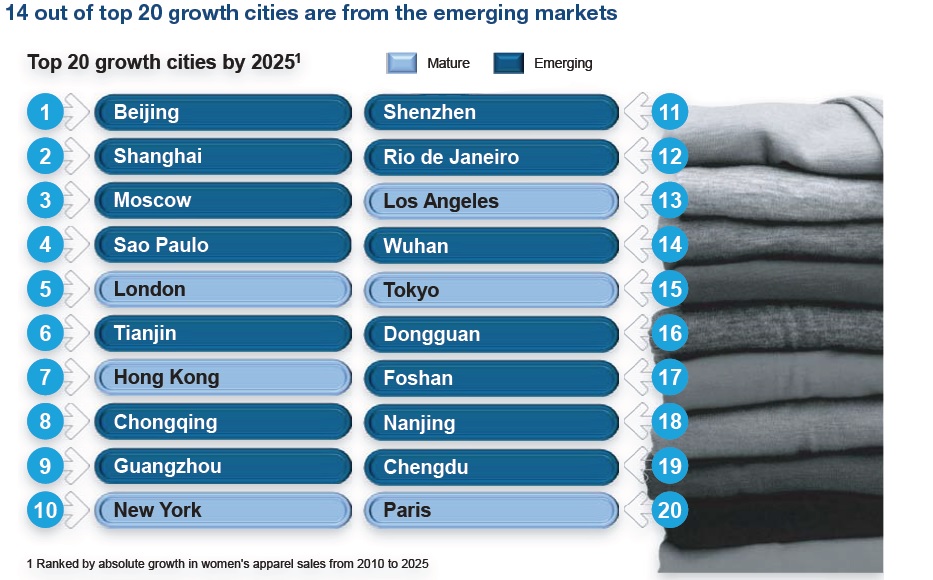
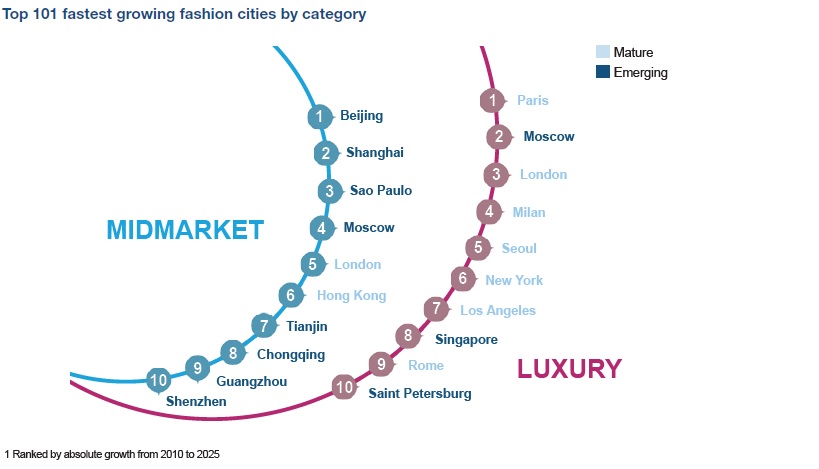
Additionally, it should be highly noted that  “China is not a single unified market but a collection of local markets, each with different market demands, consumer behaviors, competition levels, and market access conditions.” (More reading: Understand China’s retail market)  This feature is particularly important for those Western-based apparel retailers interested in entering China’s retail market. In general, Eastern coastline cities are the wealthiest part of China, where a high concentration of apparel stores can be found. Many famous international brands set up mainly in first-tier cities and then establish their presence in affluent second-tier cities. Currently, the tendency is for famous brands to penetrate into more second-tier cities. Among the first-tier cities, Shanghai plays a significant role in setting fashion trends on the mainland. Therefore, many foreign and domestic apparel suppliers choose to first establish a foothold in Shanghai before seeking further expansion.

1 2

When Apparel “Made in China” Become More Expensive, Will U.S. Consumers Have to Pay More?

(This study was presented at the 2013 International Textile and Apparel Association Annual Conference)

By

Sheng Lu (University of Rhode Island) and Jessica Ridgeway (University of Missouri)

China’s soaring labor cost in recent years has triggered heated discussions on the future of “made in China” and its implication for U.S. consumers who rely heavily on “made in China” products (Rein, 2012). This is particularly the case in the U.S. apparel retail market, where over 98% of consumptions are supplied by imports and nearly 40% of them come from China in value (AAFA, 2012). Although numerous studies have been conducted to evaluate the relationship between imports and the U.S. domestic apparel production or employment (Martin, 2007), the direct linkage between the price of imports and the U.S. apparel retail price has seldom been explored. Because such a price linkage is the key to understand the implication of a more expensive “Made in China” for U.S. consumers, this study tries to fulfill the research gap and specifically investigate to which extent the U.S. apparel retail price is influenced by the price of U.S. apparel imports from China.

Through investigating the impact of the average unit price of U.S. apparel imports from China, the average unit price of U.S. apparel imports from sources other than China and the annual U.S. apparel retail sales on the annual U.S. consumer price index from 2001 to 2011 based on a revised Armington model, this study finds that:

First, for menswear, more expensive “made in China” will result in a higher retail price in the U.S. market. Specifically, the U.S. retail price is suggested to change by 0.137% in the same direction given a 1% change of the price of U.S. imports from China. Second, for womenswear, there is no evidence showing that the price of U.S. imports from China has statistically significant impact on the U.S. retail price Third, the U.S. apparel imports from China and from rest of the world are suggested to constitute higher degree of price elasticity of substitution for womenswear than for menswear.

Findings of this study contribute to the understanding of the direct price linkage between the U.S. apparel import market and the U.S. apparel retail market and have several important implications:

First, the results imply that when “made in China” becomes more expensive, U.S. consumers may not have to pay more, largely because of increased substitution supply from other apparel exporters. Second, the results suggest that the U.S. apparel market is highly competitive and suppliers may not own much market power in price determination despite their large market shares.Third, the results imply that although “made in China” may lose market share in the U.S. market when it becomes more expensive, the magnitude could vary by product categories.

References:

  1. American Apparel and Footwear Association, AAFA (2012).Apparelstats 2012. Retrieved from https://www.wewear.org/industry-resources/publications-and-statistics/
  2. Armington, P.S. (1969). A theory of demand for products distinguished by place of production. International Monetary Fund Staff Papers,16(1), 159-178.
  3. Martin, M. (2007). U.S. clothing and textile trade with China and the world: Trends since the end of quotas. Congressional Research Services, RL 34106, Washington, D.C..
  4. Office of Textiles and Apparel, OTEXA (2013). U.S. imports and exports of textiles and apparel. Retrieved from http://www.otexa.ita.doc.gov/msrpoint.htm
  5. Rodrigo, P. (2012). Re-shoring US apparel making tough but not impossible. Just Style. Retrieve from http://www.just-style.com/analysis/re-shoring-us-apparel-making-tough-but-not-impossible_id115455.aspx
  6. Rein, S. (2012). The end of cheap China: Economic and cultural trends that will disrupt the world: Wiley.
  7. U.S. Bureau of Labor Statistics, BLS. (2013). Consumer Price Index.  Retrieved from http://www.bls.gov/cpi/
  8. U.S. Census Bureau, Census. (2013). Monthly and annual retail trade. Retrieved from http://www.census.gov/retail/