Outsoucing and “Made in USA” An Ongoing Debate

Slide1

The following questions are proposed by students enrolled in FASH455 Spring 2016. Please feel free to leave your comment and engage in our online discussion.

L.L Bean: A Business Model for “Made in USA”?

L.L. Bean has been a strong business for hundreds of years, yet recently their sales of Bean Boots have skyrocketed because they are now seen as trendy. Even though L.L. Bean’s orders and demand has gone up, they still somehow manage to have their products being handmade, sourced locally, and all in the US.

#1: Can L.L. Bean become a model for other businesses looking to manufacture in the US? How has L.L. Bean managed to keep this business model up for so many years and why have they not changed or decided to outsource? 

#2: Why doesn’t L.L Bean look into other American cities for manufacturing options so they do not lose productivity by being exclusively made in Maine?

#3: Do you think it would be beneficial for L.L. Bean to outsource to foreign companies for their manufacturing? Would there still be as high of a demand if these boots were manufactured abroad?

Outsourcing v.s. “Made in USA”

#4: It is said that one reason why American brands choose to offshore their manufacturing is because there isn’t as many cutting edge machines readily available in the States as in other countries. Is it realistic for the American manufacturing market to invest in these machines for domestic manufacturing? If so, how can America make sure to stay relevant with these technologies and not fall behind as we have currently?

#5: One aspect commonly mentioned throughout these readings was the lack of skilled labor in the US in the fashion industry. Is the decrease in skilled areas, such as shoemaking and needle trade, due to the increase in skilled labor overseas? Are these professions considered outdated for young Americans to be learning? How can we jumpstart a desire for young people to take up these skills once again?

#6: One major problem the US has been facing regarding keeping production domestic has been the lack of skilled workers to work in factories. Is the cost of providing training to interested workers too high? Should it be required that all fashion majors should take a sewing class? Where does the decision to train apparel workers begin?

#7: Many American manufacturers refrain from manufacturing in the United States because it is too expensive because more people are formally educated and are not willing to work for a low wage, but only 15% of respondents actually are working towards that. Is it realistic to reach out to homeless communities looking to get back onto their feet to see if they would work in factories? Would this help promote American manufacturing and decrease importing?

#8: In today’s fast paced fashion world, trends come and go rather quickly. The striking disadvantage of manufacturing overseas is the slow turnaround time which could be up to 3-5 months. By manufacturing domestically, turnaround can be as quick as 2 weeks. Why do the majority of fashion companies still choose to manufacture overseas when there is a possibility the trend could be over by time they reach store shelves (Thus, a lack in profit)? When will trend pressures become too much for overseas production?

#9: Is it even worth it to bring manufacturing back to America if it is not benefitting the workers and creating jobs? If manufacturing in the US is simply machine based, what is the point of doing so when it could be cheaper elsewhere and benefit countries that need the jobs?

[Discussion is closed for this post].

Made in USA: A New Reality?

Video 1: Panel discussion on “Made in USA”

Recording of a seminar on “Made in USA” hosted by the Texworld USA in January 2015. Panelists include:

  • Pete Bauman, Senior VP, Burlington Worldwide / ITG
  • Joann Kim, Director, Johnny’s Fashion Studio
  • Tricia Carey, Business Development Manager, Lenzing USA
  • Michael Penner, CEO, Peds Legwear
  • Moderator: Arthur Friedman, Senior Editor, Textiles and Trade, WWD

Video 2: Standing Still-The real story of the North Carolina textile industry

It may also be interesting to link this video with the article How a U.S. textile maker came to embrace free trade from page 3 to 9 in the reading packet.

Video 3: Panel discussion on apparel “Made in NYC”

The video is a recorded panel discussion hosted by the Texworld USA in July 2015 on the topic of apparel “Made in NYC”. Most panelists have years of experiences working in NYC as a fashion designer, including:

  • Eric Johnson, Director, Fashion & Arts Teams Center for Economic Transformation, NYC Economic Development Corporation
  • Erin Kent, Manager of Programs at The Council of Fashion Designers of America (CFDA)
  • Michelle Feinberg, NY Embroidery Studio
  • (The event was moderated by Arthur Friedman, Senior Editor, Textiles and Trade, WWD)

What’s your view on the future of textile and apparel “Made in USA”?

[Discussion is closed for this post]

Textile and Apparel Sector in the 2016 U.S. Trade Policy Agenda

2

In the recently released 2016 President’s Trade Agenda, the textile and apparel (T&A) sector was mentioned four times (up from only once in 2015*):

1.Trade enforcement

“THE OBAMA ADMINISTRATION has a record of trade enforcement victories that have helped to level the playing field for American workers, businesses, farmers, and ranchers. In 2016, we will continue to aggressively pursue a robust trade enforcement agenda, including by using new and stronger tools under the bipartisan Trade Enforcement Act of 2015 to hold our trading partners accountable.

Ongoing disputes include challenges to:

  • China’s far-reaching export subsidy program extending across sectors and dozens of sub-sectors, including textiles, industrial and agricultural products.”

2.Trade preference programs

“Haitian Hemispheric Opportunity through Partnership Encouragement Act (HOPE) pro­gram, which supports nearly $900 million in garment imports from Haiti, is an essen­tial support for Haiti’s long-term economic growth and industrial development. HOPE supports thousands of jobs in Haiti’s textile and gar­ment sectors, while providing important pro­tections to workers. Early extension of this program will provide the necessary stability and continuity for companies to continue in­vesting in Haiti’s future.”

3.Benefits of trade to the American people

“More recent trends are similar, with families steadily gaining purchasing power as the price of traded goods, such as smart phones, apparel, and toys, falls. While all households benefit, the gains from trade have predominantly benefited lower-income Americans, who spend a greater portion of their incomes on highly-traded staples like food, shoes, and clothing.”

4.Trade and labor

Our engagement has produced an Imple­mentation Plan Related to Working and Liv­ing Conditions of Workers that is helping to address concerns about workers’ rights and working conditions in Jordan’s garment sec­tor, particularly with respect to foreign work­ers. Jordan has issued new standards for dormitory inspections, submitted new labor legislation to its parliament and hired new labor inspectors. USTR and Department of Labor continue to work with Jordan on the issues under the Plan.

Overall, it seems:1) Reflecting the global nature of the sector, T&A is a topic that involves multiple trading parties for the United States; 2) Economic development and foreign aid are important elements in the U.S. trade policy for T&A. 3) Social responsibility and labor practices in the T&A sector remain a grave concern and need further improvement through international collaborations. 4) The T&A sector is involved in some topics with divisive public opinions, such as the impact of imports.

* Textile and apparel mentioned in the 2015 U.S. Trade Policy Agenda:

Our engagement has produced an Implementation Plan Related to Working and Living Conditions of Workers that is helping to address concerns about workers’ rights and working conditions in Jordan’s garment sector, particularly with respect to foreign workers. Jordan has issued new standards for dormitory inspections, submitted new labor legislation to its parliament and hired new labor inspectors.

[Discussion is closed for this post]

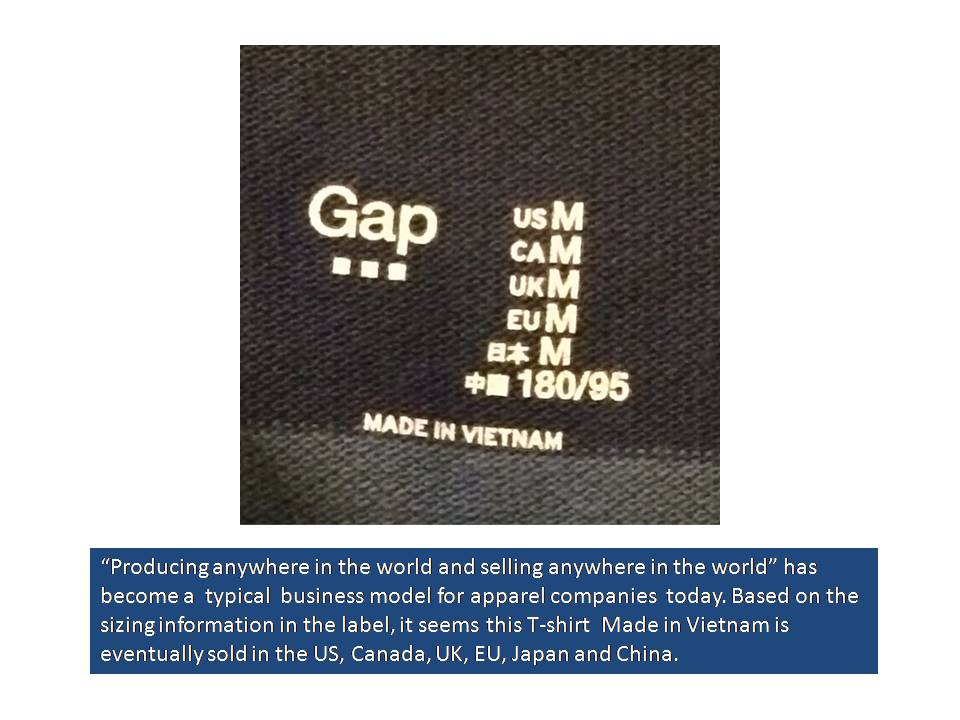
Clothing Label Reveals the Global Nature of the Textile and Apparel Industry

Presentation1

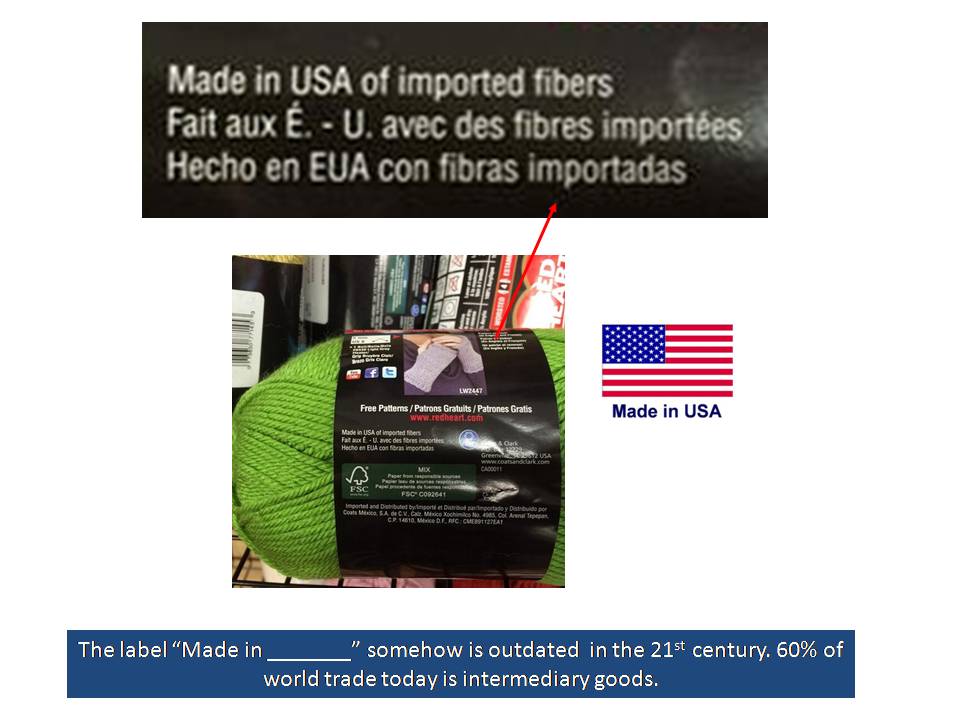
While shopping in SoHo (NYC), Nicole Farese, a student from FASH455, found the label of a Splendid sweater reads “Made of Italian Yarn” and “Made in China”. Splendid is a casual wear store which is known for their high-quality clothing sold at a premium price.

幻灯片1幻灯片2.JPG幻灯片3.JPG

幻灯片4

Do you find any example of globalization from your clothing label or closet? Please feel free to leave your comment or send your pictures to shenglu@udel.edu (selected pictures will be shared through the blog).

Changes in the Final Text of TPP Regarding Textile and Apparel Rules of Origin

tpp

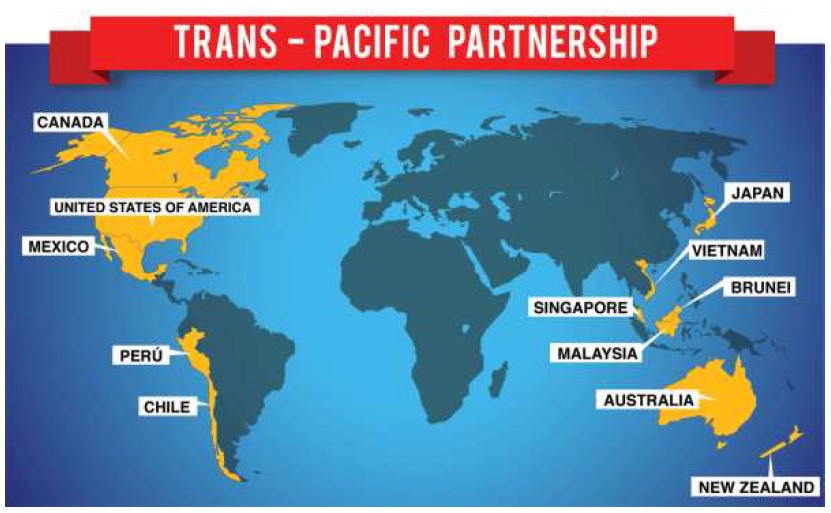
The final text of the Trans-Pacific Partnership (TPP) released by the New Zealand Foreign Affairs & Trade in January 2016 has made a few changes to the textiles and apparel specific rules of origin compared with the USTR version released in November 2015:

  1. “5407.94” is replaced by “5403.49”
  2. “or heading 54.08″ is replaced by ” or heading 54.04 through 54.08″
  3. Minor wording changes are made regarding 55.03 and 55.06-55.11
  4. TPP originating input of “54.04 through 54.07” is now required for 54.08 (Woven fabrics of artificial filament yarn, including woven fabrics obtained from materials of heading 5405)
  5. Rules of origin for HS96.19 (Sanitary towels (pads) and tampons, diapers and diaper liners for babies and similar articles, of any material are newly added.

Details of the changes can be downloaded from HERE

State of China’s Textile and Apparel (T&A) Industry (Updated in January 2016)

Textile-factory-in-China-007

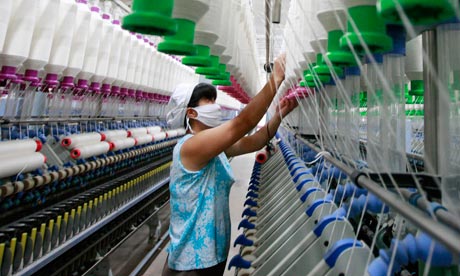
How to deal with China as a sourcing destination remains a tough and controversial issue facing U.S. apparel retailers and fashion brands in 2016. Although companies are of grave concerns about China’s continuous rising production cost (especially labor cost), few other lower-wage countries can beat China in terms of industry integration, supply chain efficiency, and reliability.This blog post intends to add to the discussion by taking a look at the supply side, i.e. what is happening in the China textile and apparel (T&A) industry.

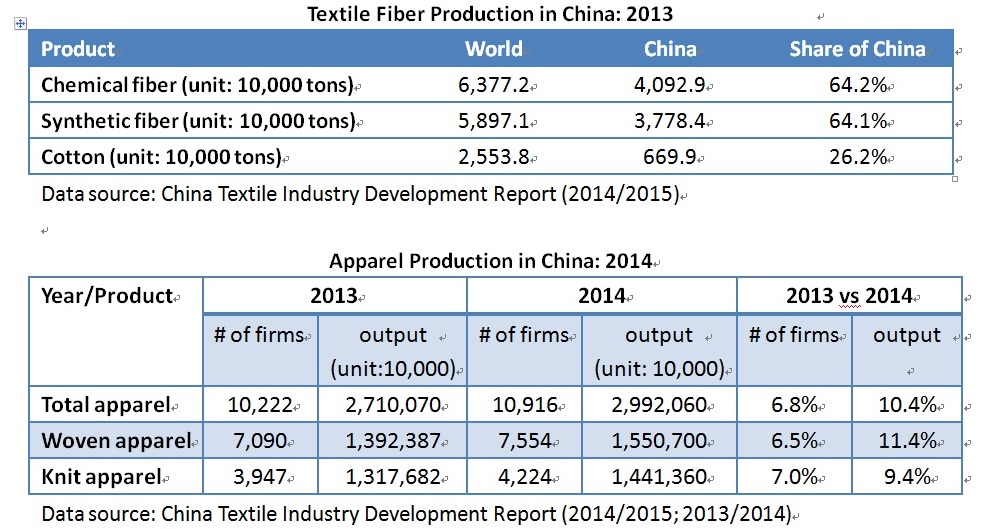
First, China’s production capacity remains unparalleled in the world. In 2014, the latest statistics available, textile fiber production in China exceeded 50 million tons, accounting for 54.36 percent of world share. By 2013, as much as 64.2 percent of the world’s chemical fibers, 64.1 percent of synthetic fibers and 26.2 percent of cotton were produced in China (see the table blew). On the other hand, apparel production in China reached 29.9 billion units in 2014, up 10.4 percent from 2013. Given China’s vast production capacity, very likely it will remain the top apparel sourcing destination for most EU and US fashion apparel companies for many years to come. For example, Vietnam’s apparel production in 2015 totaled 2.85 billion units, which was only around 10 percentage of China’s production scale in 2014.

1

Second, China’s T&A industry is growing slower. Specifically, output of China’s T&A industry (measured by value added) grew only 7.0 percent between 2013-2014, a significant drop from 10.3 percent between 2009-2010. Other major economic indicators in the industry, from sales revenue, net profit to investment, followed a similar pattern (see the figure below). Additionally, for the first time since the 2008 financial crisis, China’s T&A exports suffered a 3.9 percent decline in 2015 (-1.3% for textiles and -5.4% for apparel). Given the downward pressure on China’s economy and uncertainties in the world marketplace, such a slow-growth pattern is likely to continue in the years ahead.

2

investment

Third, China’s T&A industry is undergoing important structural adjustment. Within the total industry output, the ratio of apparel, home textiles and industrial textiles has turned from 51:29:20 in 2010 to 46.8: 28.6: 24.6 in 2014, reflecting China’s efforts to move towards making more value-added and technology-intensive textile products. This ratio is expected to become 40:27:33 by the end of 2020 (i.e. the end of China’s 13th five-year plan). In order to overcome the pressure of rising labor and production cost, China’s T&A manufacturing base is gradually moving from the east coast to the western and central part of the country (accounting for 22.5 percent of China’s T&A production in 2014, up from 16.8 percent in 2010; this share may further increase to 28 percent by 2020). Additionally, T&A companies in China are encouraged to increase spending on research and development (R&D), which on average had accounted for 0.47 percent of T&A companies’ sales revenue in 2013, up from 0.43 percent in 2011.

Fourth, T&A companies in China are actively seeking business opportunities in the domestic retail market. Apparel retail sales in China reached 893.6 billion yuan in 2014 (around $137.5 billion), among which 30.77 percent were sold online (up from 14.54 percent in 2011). Apparel retail price on average rose 2.6 percent between 2013-2014, compared with 2.0 percent increase of China’s overall CPI over that period. However, it shall be noted that apparel retail sales in China’s tier 1 and tier 2 cities achieved almost zero growth in 2014, partially reflecting the negative impact of retail price increase on consumers’ demand. In comparison, apparel retail sales in China’s tier 3 & 4 cities as well as rural areas remain robust and strong. Additionally, financial performance of T&A companies in China is becoming more polarized. Companies that follow the traditional business model of manufacturing and exporting are facing their most difficult time since the 2008 financial crisis. However, there are also many success stories of apparel companies that focus on function upgrading, i.e. moving from simply “manufacturing” products to “serving” the market needs.

Sheng Lu

Recommended reading: China’s 13th five-year plan for its textile and apparel industry: Key numbers

Top 10 Most Read FASH455 Blog Posts in 2015

top 10


1. Potential Impact of TPP on the Textile and Apparel Sector: A Summary of Recent Studies

2. 2014 World Textile Industry Labor Cost Comparison

3. Global Trade of Used Clothing (Updated: October 2015)

4. Market Size of the Global Textile and Apparel Industry: 2014 to 2018

5. When Will TPP Take Effect? Let’s look at the History

6. China to Become the World’s Largest Apparel Market in 2019

7. Are US Textile and Apparel Imports Using Free Trade Agreements?

8. 2015 US Fashion Industry Benchmarking Study Released

9. Exclusive Interview with Erin Ennis, Vice President, US-China Business Council

10. US Tariff Phaseout Schedule for Textile and Apparel in TPP by OTEXA Code

U.S. Department of Commerce Releases Factsheet on TPP and the U.S. Textile and Apparel Industry

textile_Page_1

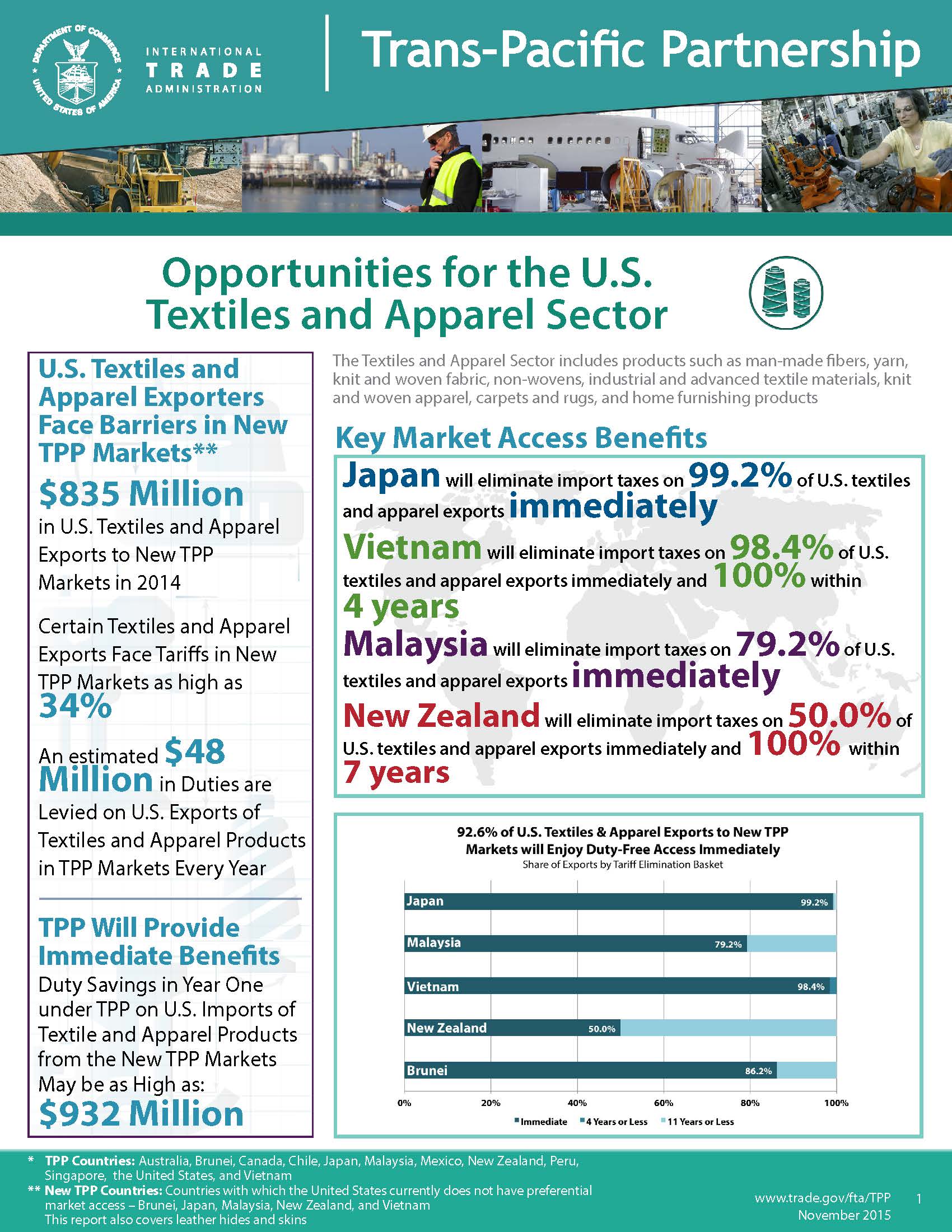
According to the factsheet released by the U.S. Department of Commerce, the Trans-Pacific Partnership (TPP) will create exciting new export opportunities for the U.S. textile and apparel (T&A) industry. The report highlights Vietnam and Japan as two promising markets in TPP for certain T&A products “Made in USA”, including:

Vietnam:

  • Cotton fiber, yarn, and Cotton woven Fabric (U.S. exported $394 million in 2014 with 16% market share only after China; tariff will be cut from 12% to zero on day one)
  • Non-woven fabrics (U.S. exported $23million in 2014, up 951% from 2009; tariff will be cut from 12% to zero on day one)

Japan

  • Synthetic fiber, yarn, and fabric (U.S. exported $61 million in 2014, up 61% from 2009; tariff will be cut from 2.7%-10% to zero on day one)
  • Industrial and advanced textile fabrics (U.S. exported $91 million in 2014, the fourth largest supplier after China, Taiwan, South Korea; tariff will be cut from 8.2% to zero on day one)
  • Men’s and boy’s apparel (U.S. exported $32.6milion in 2014, up 30.9% from 2009; tariff will be cut from 9.8% to zero on day one)

The factsheet also argues that TPP is a “balanced” deal for the U.S. T&A industry: long U.S. tariff phaseout schedule, strict “yarn-forward” rules of origin and textile safeguard mechanism in TPP will serve the interests of those stakeholders that seek protection of U.S. domestic T&A manufacturing, whereas duty savings from import tariff cut and the short supply list will create greater market access opportunities for U.S. fashion brands and retailers.

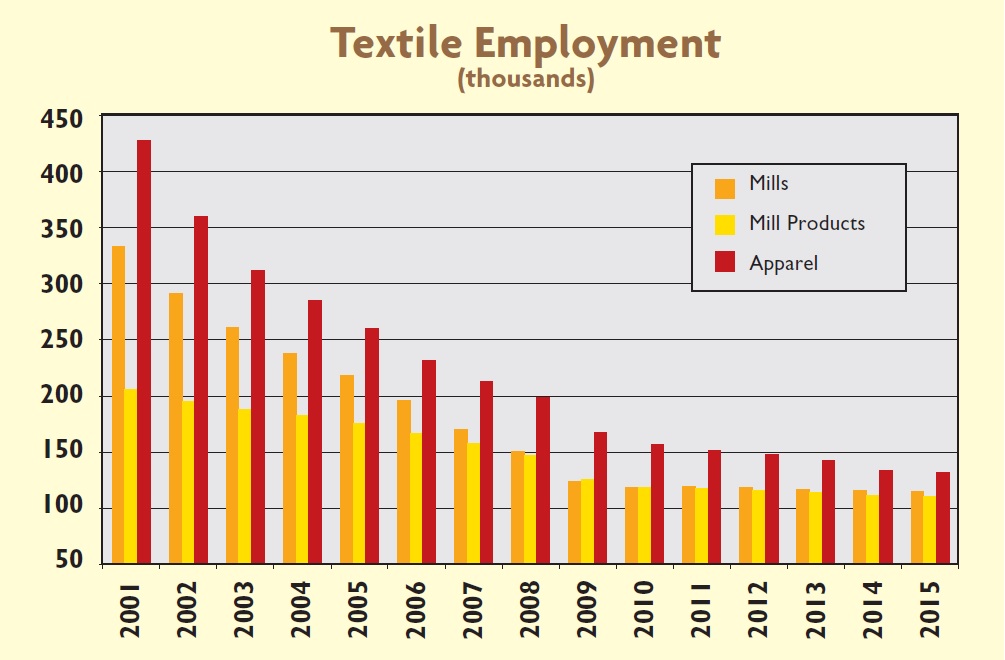
According to the report, the United States is the fourth largest textile exporter in the world. 54% of total U.S. T&A exports went to TPP markets in 2014. The United States is also the single largest importer of T&A in the world. 372,300 T&A manufacturing jobs remained in the United States in 2014.

US Tariff Phaseout Schedule for Textile and Apparel in TPP by OTEXA Code

[This post is updated on July 1, 2016]

Please also read:TPP tariff phase-out can steer Vietnam sourcing plans

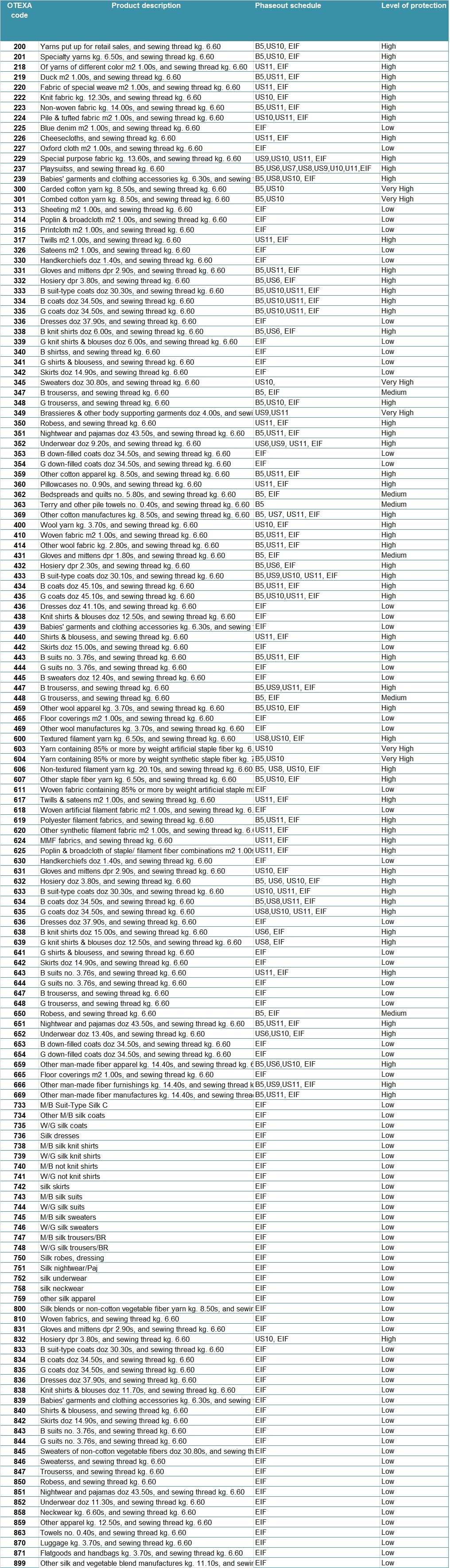
The United States includes as many as 38 different types of phaseout schedule in TPP and 8 of them apply to the textile and apparel (T&A) sector.

phaseout category

In general, T&A products with lower base tariff rate seem to be given more generous phaseout treatment than T&A that are subject to higher base tariff rate. For example, although T&A products under category EIF can immediately enjoy duty-free treatment once TPP takes into force, their base tariff rate is also the lowest (7.9% on average). In comparison, whereas T&A products under category US6, US7, US8 and US9 are subject to the highest base tariff rate, they are given the least generous tariff cut (i.e. 35%) once TPP takes into effect. This will makes average tariff rate applied to these products remain the highest almost throughout the whole phaseout period. It should be noted that even though US11 apparently seems to be the most restrictive phaseout category (i.e. 50% cut on day 1 and the resulting rate will remain unchanged until the end of year 12), its average tariff rate actually will be lower than phaseout category US6, US7, US8 and US9.

tariff

In the following table, the U.S. phaseout schedule for T&A in the released TPP text based on the 8-digit Harmonized System (HS) code is matched with the Office of Textiles and Apparel (OTEXA) product category. Results show that products equivalent to around 37.5% of the value of U.S. textile and apparel imports from Vietnam in 2015 will enjoy immediate duty-free treatment once TPP takes into force (i.e. EIF), approximately 4% will be subject to medium-level protection (i.e. EIF+B5) and 58.6% are under high (i.e. EIF+ any of the followings: US6, US7, US8, US9, US10, US11) or very high level of protection (i.e. any of the followings: US6, US7, US8, US9, US10, US11).

phaseout by OTEXA code

phaseout by trade data

Note: “Level of protection” in the above table is defined as the following: 1) Low level of protection: EIF only; 2) Medium level of protection: EIF+B5; 3) High level of protection: EIF+any of the followings: US6, US7, US8, US9, US10, US11; 4) Very high level of protection: any of the followings: US6, US7, US8, US9, US10, US11 only.

Sheng Lu


Potential Impact of the Trans-Atlantic Trade and Investment Partnership (T-TIP) on Related Textile and Apparel Trade Flows

The presentation was delivered at the 2015 International Textile and Apparel Association (ITAA) Conference in Santa Fe, New Mexico on November 13, 2015. Welcome for any suggestions and feedback.

Tariff Remains a Critical Trade Barrier Worldwide for the Textile and Apparel Sector

1

tariff rate

According to data from the World Trade Organization:

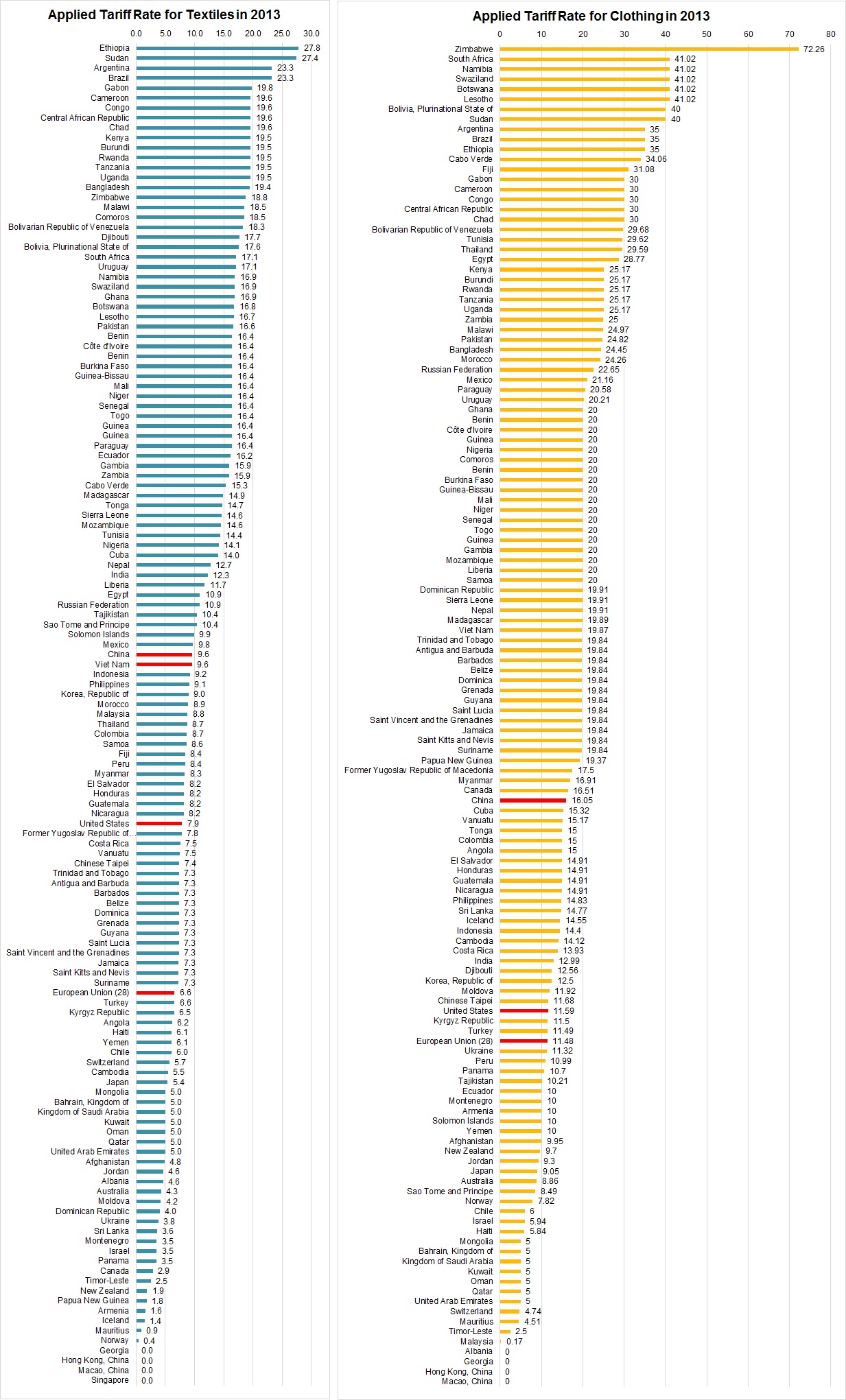
  1. In 2013, average applied tariff rate remained at 10.73% for textiles and 18.25% for apparel worldwide. Compared with the average tariff rate for all sectors, the rate for textiles on average is 1.4 percentage points higher and the rate for apparel is 8.9 percentage points higher. This implies that although tariff may not be a critical trade barrier for some sectors anymore, it still significantly matters for the textile and apparel sector.
  2. Least developed countries (LDC) overall set a higher tariff rate for textiles and apparel than the world average level. Ironically, many LDCs heavily rely on imports for textile supply. Should these LDCs lower their tariff rate for textiles, it may help apparel manufacturers there save sourcing cost for yarns and fabrics and improve the price competitiveness of finished apparel products.
  3. At the country level, countries with the highest tariff rate for textiles include Ethiopia (27.8%), Sudan (27.4%), Argentina (23.3%, Brazil (23.3%), Gabon (19.8%), Cameroon (19.6%), Chad (19.6%) and Congo (19.6%). And countries with the highest tariff rate for apparel include Zimbabwe (72.26%), South Africa (41.02%), Namibia (41.02%), Swaziland (41.02%), Botswana (41.02%), Lesotho (41.02%), Bolivia (40.0%), Sudan (40.0%), Argentina (35.0%), Ethiopia (35.0%) and Brazil (35.0%). Interesting enough, many of these countries are members of the African Growth and Opportunity Act (AGOA) which are eligible for the third country fabric provision.

Sheng Lu

USTR Michael Froman Comments on the Textile and Apparel Chapter under TPP

Trans-Pacific-Partnership-1

In an event hosted by the Council on Foreign Relations on October 15, 2015, U.S. Trade Reprehensive Michael Froman left a comment on the textile and apparel chapter (T&A) under TPP. He said that:”

“You know, we worked very hard to find solutions that could address the broad range of stakeholder interests here, even when we had conflicting interests here in the U.S. I’ll take textile as an example. You know, we have a domestic textiles industry that’s been investing in more production in the U.S., growing their employment in the U.S. And obviously we have a strong sector of our economy that brings in apparel from other countries, apparel importers and retailers. We worked very closely with both groups of stakeholders to come up with a solution, to come up with an outcome that we think both will be comfortable with and both will be supportive of. And that’s been very important to us to try and address the broad range of U.S. stakeholder interests, whether it’s labor, environment, importers, exporters, to make sure we’re covering everybody’s interests well.”

In the remarks, Forman also ruled out the possibility that TPP would be renegotiated. He said that:

“So this isn’t one of those agreements where, you know, you can, you know, reopen an issue or renegotiate a provision. This is one where, you know, every issue is tied to every other issue and every country’s outcome is balanced against every other country’s outcome. And so that’s the agreement that we’ll be putting forward under TPA for a vote by Congress.”

According to Inside U.S. Trade (October 9, 2015), the final TPP reflects some of the key priorities of the U.S. textile industry by allowing limited exceptions from the prevailing yarn-forward rules of origin and by including tariff phaseouts for “sensitive apparel items” of 10 to 12 years.

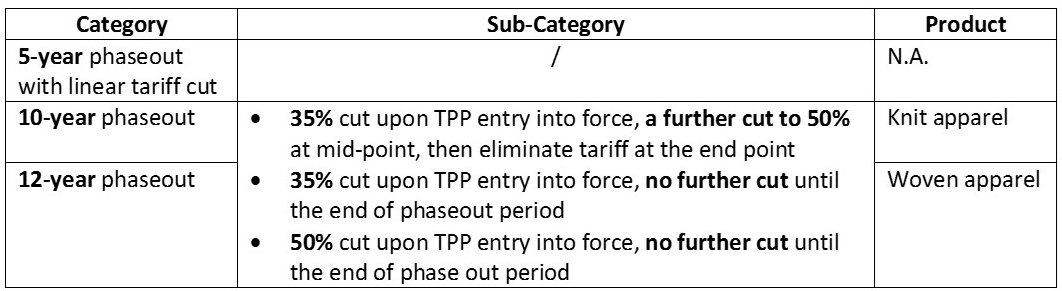
Besides the basket of goods that will become duty-free upon entry into force (which include cotton shirts and cotton sweaters), TPP sets up three other categories for tariff reductions on apparel:

TPP apparel

Major exceptions other than the “short supply list” mechanism under TPP include:

  • An “earned import allowance program for cotton pants made in Vietnam from third-country fabric by importing a specified amount of U.S. cotton pants fabric. This would allow cotton pants from Vietnam would enter the U.S. duty-free as soon as the agreement is implemented. It is said the ratio for the program is “close” to 1:1. However, for men’s cotton pants, there could be a 15 million square meter equivalents (SMEs) annual cap until year 10, after which it will increase to 20 million. There is no quantitative limit for the other types of cotton pants that can be shipped under the program, such as women’s, girls’ and boys’ pants.
  • A limited list of cut-and-sew items that Vietnam and other TPP countries can ship to the U.S. under the preferential TPP duty rate. These include synthetic baby clothes, travel goods including handbags, and bras.

Potential Impact of TPP on the Textile and Apparel Sector: A Summary of Recent Studies

Screenshot 2015-10-06 08.13.16

(Picture credit: Lu, S. (2015) Does Japan’s accession to the Trans-Pacific Partnership mean an opportunity or a threat to the U.S. textile industry? A quantitative evaluation, Journal of the Textile Institute, 106(5), 536-549.)

With the conclusion of the Trans-Pacific Partnership (TPP) negotiation on Oct 5, 2015, it is time to think about its potential impact. Specifically for the textile and apparel (T&A) industry, the followings studies may offer some hints (to read more, you can click each title):

Trade Statistics

Statistics show the 12 TPP partners altogether imported $65 billion worth of textiles and $154 billion worth of apparel in 2013, which accounted for a world import share of 20 percent and 32 percent, respectively (WTO, 2015). In 2014, around 55 percent of U.S. textile and apparel exports (or $13.3 billion) went to the other 11 TPP partners, and 17 percent of U.S. textile and apparel imports (or $17.8 billion) came from the TPP region (OTEXA, 2015).

Impact of TPP on U.S. Textile and Apparel Manufacturing: A Preliminary Estimation

TPP overall will have a negative impact on U.S. domestic textile and apparel manufacturing. In all simulated scenarios, the annual manufacturing output in the United States will decline by $846 million–$3,780 million for textile and $1,154 million–$1,828 million for apparel than otherwise.

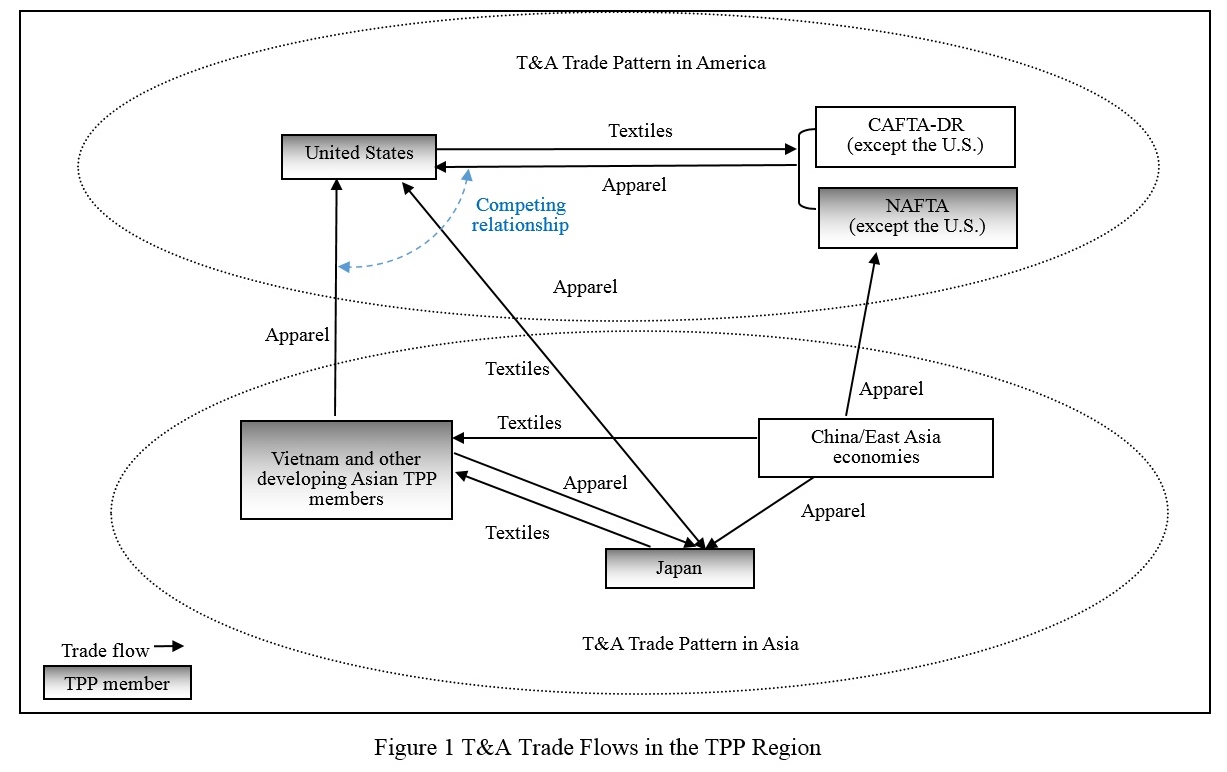
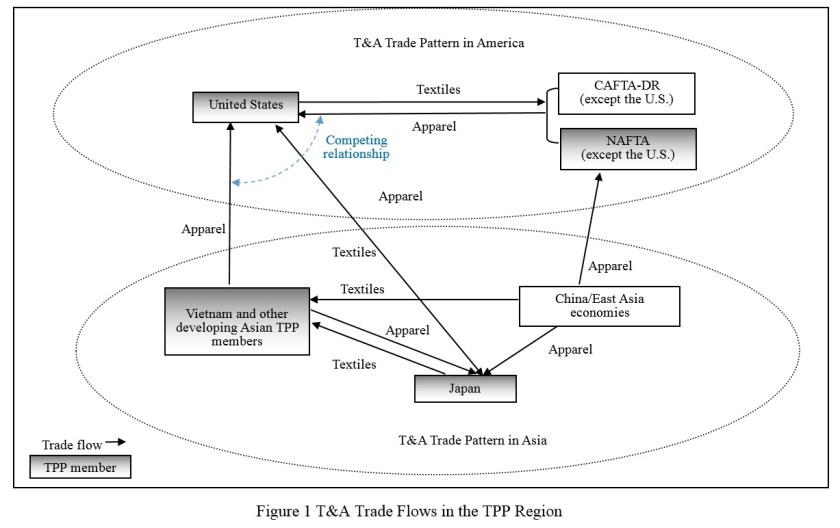
2.The “yarn-forward” rule may not substantially benefit U.S. domestic textile and apparel manufacturing as some people had suggested, for two reasons: 1) results show that Vietnam is more likely to use Japanese textiles than U.S. textiles when yarn-forward rule is in place. 2) U.S. apparel imports from Vietnam directly compete with those imported from NAFTA and CAFTA regions, the largest export market for U.S.-made yarns and fabrics. When NAFTA and CAFTA’s market share in the U.S. apparel import market is taken away by Vietnam, U.S. textile exports to NAFTA and CAFTA will decline anyway, regardless of whether Vietnam uses U.S.-made textiles.

3.Results suggest that compared with the “yarn-forward” rule, development of Vietnam’s local textile industry will have an even larger impact on the future of U.S. domestic textile and apparel manufacturing. Particularly, when Vietnam becomes more capable of making textile inputs by its own, not only Vietnam’s overall demand for imported textiles will decline, but also Vietnam’s apparel exports will become even more price-competitive in the U.S. as well as the world marketplace.

“Import Sensitive” Clothing and the TPP X-basket : What might include

1

Based on examining three recent trade programs, including: U.S. International Trade Commission (USITC) monitoring program on T&A imports from China based on the U.S.-China Textile Memorandum of Understanding (MOU) (2008—present), Office of Textiles and Apparel (OTEXA) monitoring program on U.S. T&A imports from Vietnam (2007-2008) and U.S. textile safeguard measures against China (2003-2005), it seems “import sensitive” T&A in the United States mostly refer to cotton and man-made fiber apparel and fabrics. OTEXA product Code 338, 339, 340, 345, 347, 348, 352, 447, 638, 639, 640, 645, 646, 647, 648 and 652 are most likely to be included in the TPP X-basket.

Because Vietnam’s T&A exports to the United States heavily concentrate on these “import sensitive” T&A categories, the X-basket has the potential to substantially affect the actual trade liberalization that can be enjoyed by the T&A sector under TPP:

  • By the most conservative estimation, i.e. the X-basket only covers Category A “import sensitive” apparel products, it will affect about 41.6 percent of U.S. apparel imports from Vietnam (or 38.7 percent of total U.S. T&A imports from Vietnam) if trade pattern remains the same as in 2014.
  • In the worst case, i.e. the X-basket covers all “import sensitive” T&A products identified by this study, it will affect about 70.0 percent of total U.S. T&A imports from Vietnam, if trade patterns remains the same as in 2014.

2015 US Fashion Industry Benchmarking Study

3

The survey results show that TPP matters for the U.S. fashion industry, with as many as 79 percent of respondents saying implementation of the agreement will impact their business practices. Specifically:

  • 72 percent expect to source more textiles and apparel from TPP partners, suggesting the imminent impact of TPP for the U.S. fashion industry could be trade creation.
  • Fewer than 10 percent expect to source less from non-TPP members after the implementation of the agreement, suggesting the trade diversion effect of TPP could be limited.
  • 48 percent expect to strategically adjust or redesign their supply chain based on TPP, implying TPP could be a game changer and has the potential to shape new patterns of textile and apparel trade in the Asia-Pacific region in the long term.
  • However, as few as 7 percent expect to export more products to TPP partners, while only 10 percent expect to invest more in TPP partners (building factories, operating retail stores and e-commerce operations) after implementation of the agreement. It seems the U.S. fashion industry hasn’t focused much on TPP’s potential to promote exports and achieve greater market access.
  • Additionally, 45 percent say the TPP Short-Supply List should be expanded, and comments indicate the proposed “yarn-forward” Rule of Origin is a major hurdle to the industry realizing real benefits from the agreement. In fact, as many as 83 percent support or strongly support abandoning the strict “yarn-forward” Rule of Origin and adopting a more flexible one in future FTAs (Figure 21). This suggests that the benefit of TPP for the U.S. fashion industry and the utilization of the agreement will largely depend on the Rule of Origin. In particular, there is a strong call among U.S. fashion companies to make the textile and apparel Rule of Origin less restrictive and more flexible in TPP.

Why does the US Textile Industry Want Yan-forward Rule of Origin (RoO) in TPP?

The US textile industry insists yarn-forward RoO in TPP is not because they expect a substantial increase of textile exports to Vietnam as the case of NAFTA and CAFTA which help capture the export markets in Mexico and Central America. But rather it is because:

1) Without yarn-forward, situation will get even worse. Particularly, a less restrictive RoO will make Vietnam’s apparel exports which contain textiles made in China, Taiwan or South Korea qualified for duty free access to the US market. Definitely this will be a more imminent and bigger threat to the US textile industry than simply facing competition from Vietnam’s apparel which contains Japanese made textiles. And still many US textile companies don’t treat the Japanese textile industry very seriously, although I think they should. Remember, Japan currently is the fourth largest textile supplier to Vietnam and the NO.1 textile supplier to China.

2) With yarn-forward RoO in place, at least US textile companies can invest in Vietnam (remember, globalization is about movement of capital as well. Many apparel companies in Mexico and Central America actually are invested by US companies). Without yarn-forward RoO however, Vietnam can simply rely on imported textiles as the case mentioned in (1) and there will be no incentive for US textile companies to move factories to Vietnam (meaning, capital holders will lose).

So overall yarn-forward RoO may win a few more years for the US textile industry. But in the long run, it is my view that the US textile production and its exports to the Western Hemisphere countries may still inevitably decline (especially those output to be used for apparel assembly purposes) after the implementation of TPP. In the 21st century, the nature of competition is supply chain v.s. supply chain.

Regional Production-Trade Network Remains an Important Feature of Global Textile and Apparel Trade

Regional production-trade network (RPTN) refers to a vertical industry collaboration system between countries that are geographically close to each other. Within a RPTN, each country specialized in certain portions of supply chain activities based on its respective comparative advantages so as to maximize the efficiency of the whole supply chain.

There are three major textile and apparel (T&A) RPTNs in the world today:

  • Asia: more economically advanced countries/regions such as Japan, South Korea, Taiwan, Hong Kong and China supply textiles to the less economically developed countries such as Vietnam, Bangladesh and Sri Lanka for apparel manufacturing, where the wage level was much lower. On the other hand, Japan is a leading apparel importer and consumption market in Asia.
  • Europe: among EU members, textile inputs can be supplied by developed countries in Southern and Western Europe such as Italy and Germany. In terms of apparel manufacturing in the European Union, low and medium-priced products can be undertaken by developing countries in Southern and Eastern Europe such as Poland and Romania, whereas high-end luxury products can be produced by Southern and Western European countries such as Italy and France. Furthermore, finished apparel can be shipped to developed EU members such as UK, Germany, France and Italy.
  • America: within the region, the United States as a developed country supplies textile materials to developing countries in North, Central and South America (such as Mexico and countries in the Caribbean region), which assemble imported textiles into apparel by taking advantage of the local low labor cost. The finished apparel articles are eventually exported to the United States for consumption.
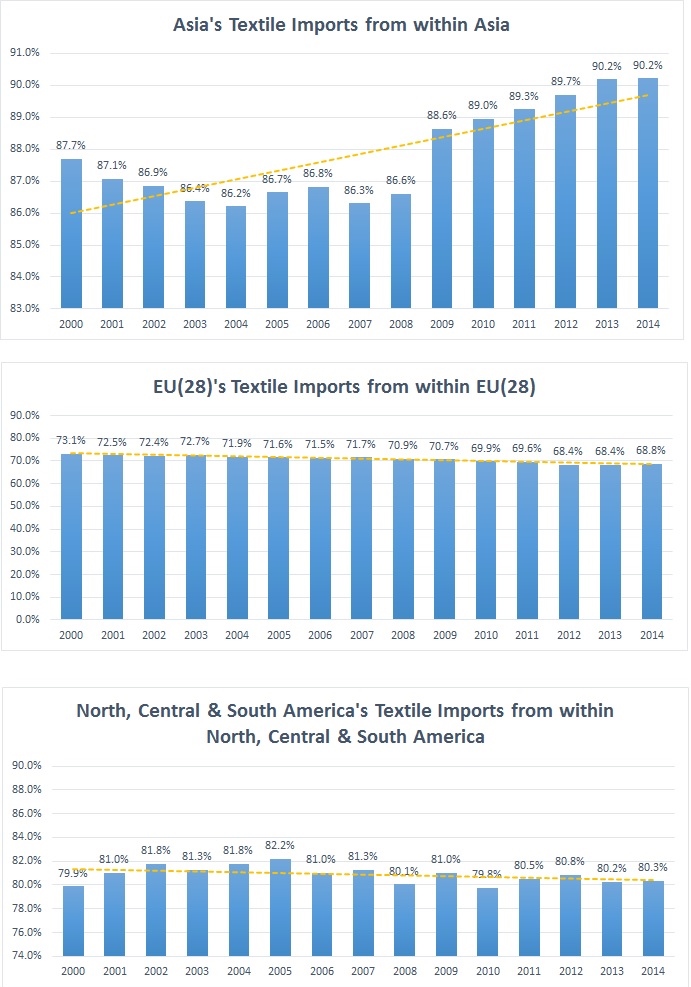
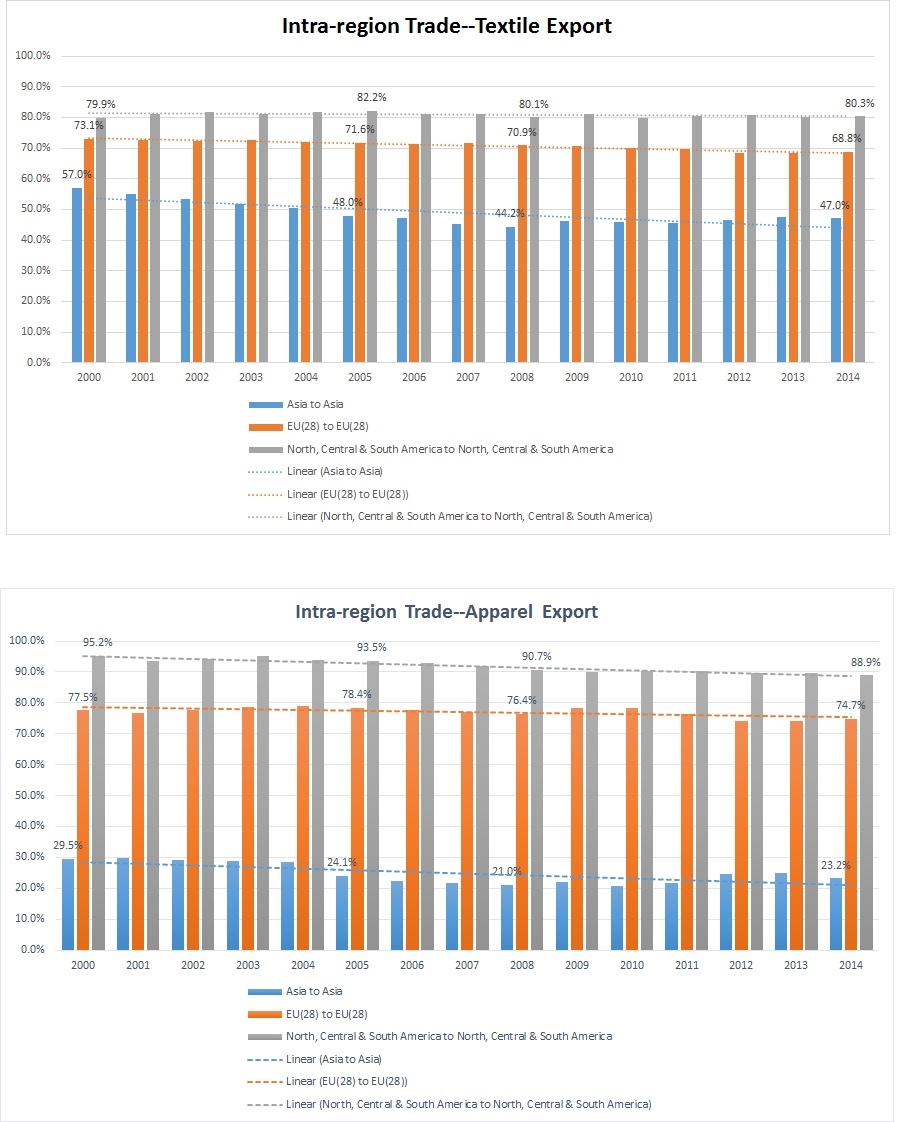
Latest data from the World Trade Organization (WTO) shows that RPTN in the above three regions remain an important feature of today’s global T&A trade as the graphs shown below:

123

4

(Note: Data comes from the World Trade Organization)

Particularly, three specific trade flows are worth watching:

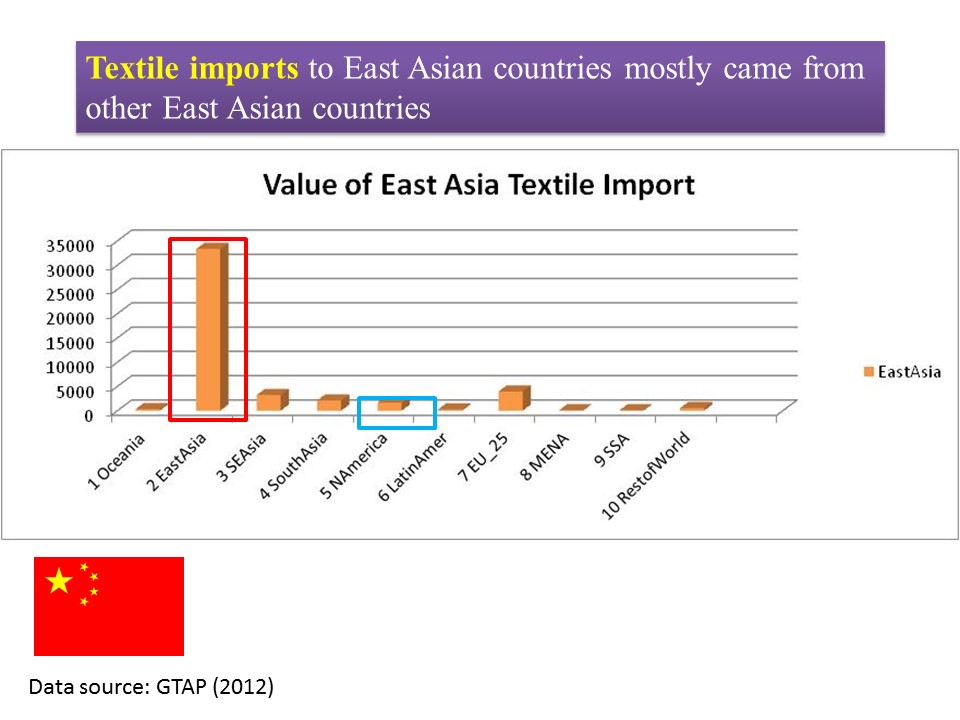
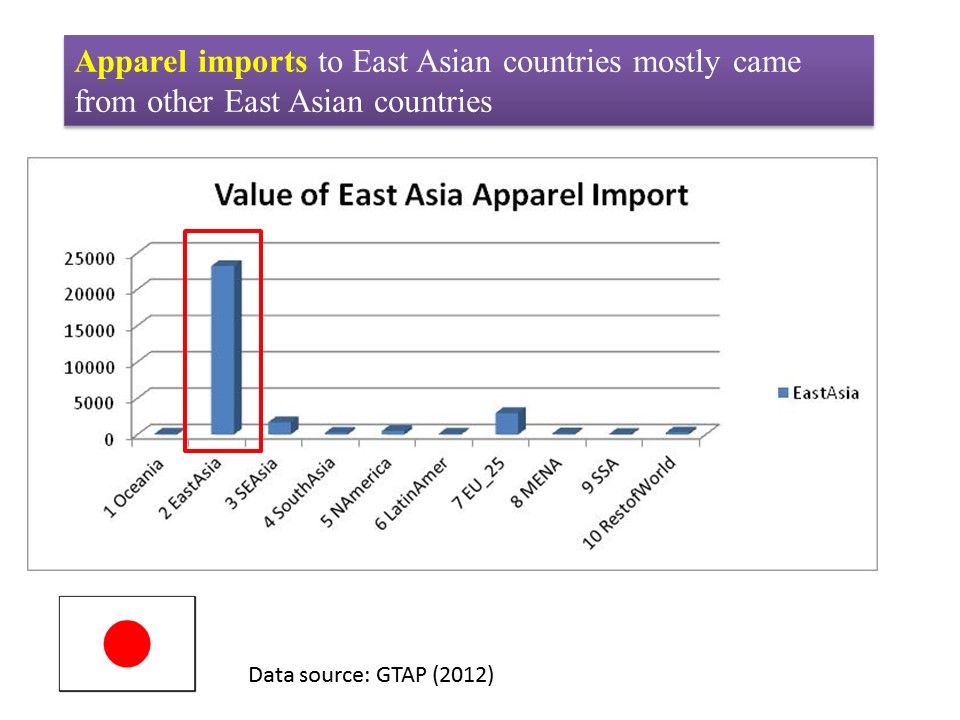
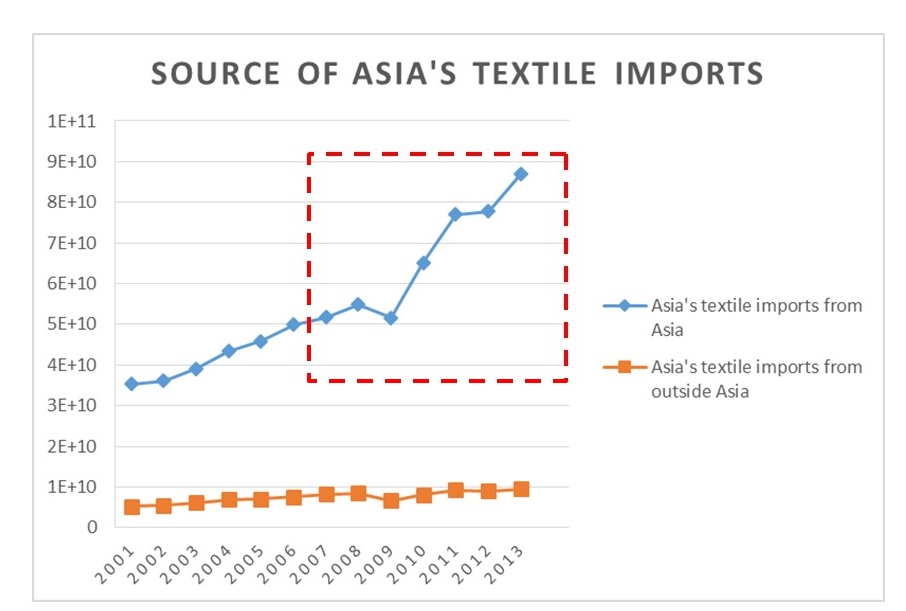
One is Asian countries’ growing dependence on textile supply from within the region, which rose to 90.2% in 2014 from 87.7% in 2000. This is a reflection of a growing integrated T&A supply-chain in Asia. As a result, apparel “Made in Asia” is becoming even more price-competitive in the world marketplace today and this has posted pressures on the operation of the T&A RPTNs in EU and America.

Second one is the stable intra-region trade pattern both for textile and apparel in EU. In 2014, 58.8% of EU’s (28 members) textile imports and 46.2% of apparel imports came from other EU members; at the same time, 68.8% of EU’s (28 members) textile exports and 74.7% of apparel exports also went to other EU members.

Additionally, developing countries in North, Central and South America still heavily rely on regional supply of textile inputs; at the same time, their finished apparel are also mostly consumed within the region. Data show that 80.3% of American countries’ textile imports still came from within the region in 2014; at the same time, 88.9% of American countries’ apparel exports were also shipped to the region, mostly the United States and Canada as the final consumption market.
Sheng Lu

USTR Adjusts Language of TPP Negotiation Objectives for Textile and Apparel

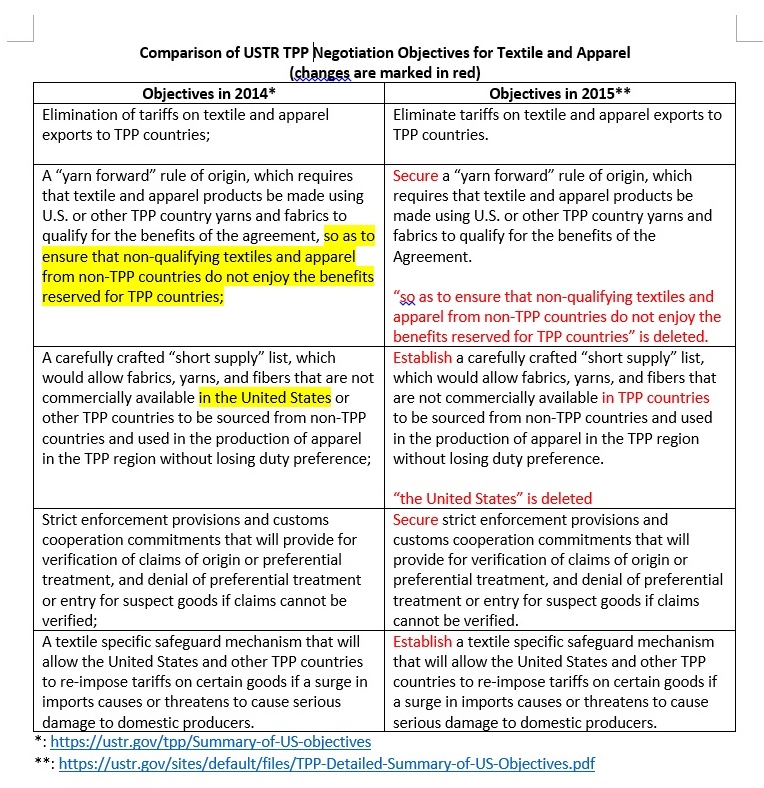
On September 22, the U.S. Trade Representative Office (USTR) releases a detailed summary of its latest TPP negotiation objectives. Specifically for the textile and apparel chapter, compared with the negotiation objectives released in 2014, some wording changes are made this time:

UntitledDoes the change imply that the U.S. side has agreed to allow more exceptions to the “yarn-forward” rules of origin in TPP, but in the format other than “short supply list”? For example, will it be “earned import allowance” or tariff preference level (TPL)?

On the other hand, does the change imply that the “short supply list” under TPP will be stricter than previously expected? (in the 2014 version of the negotiation objectives, it read like the “short supply list” may include those products that are not commercially available in the US but are commercially available in other TPP members. However, in the 2015 version, only those products that are absolutely not commercially available in the whole TPP region are eligible for the “short supply list”.)

Sheng Lu

Does AGOA’s “third country fabric” provision discourage the development of Africa’s local textile industry?

African-textilesThe following Q&A is adapted from the 2015 AGOA Forum Preview (15m:44s)

Question: What is the principal obstacle to the development of a local yarn industry in an apparel exporting country such as Kenya? Does AGOA’s “third country fabric” provision in place for 13 years act as a disincentive to such a development?

Florizelle Liser, Assistant US Trade Representative for Africa: That’s a really good question, but the answer is no. What we know is that African producers of apparel, like producers of apparel all around the world, need to have the flexibility to source their input from wherever of those can be produced most effectively, cost effectively for the products that they are sewing. So we want through the “third country fabric” provision to give the African producers of apparel that flexibility. We do know in terms of establishing textiles business on the ground producing those inputs right there in Africa and that more of that indeed is going to happen. The reason is that as U.S. buyers of apparel and this is an enormous market for apparel… as U.S. buyers of apparel source more of their apparel from Africa, then investors in textile mills, which are very expensive, will be incentivized and are being incentivized to actually establish those fabric mills right there in Africa, and then be able to save time, in terms of getting those inputs that are needed for the clothing that is being produced. So we see that happening already: it’s happening in Kenya, it’s happening in Ethiopia and around the continent. And that is what we need to have more of as we go forward in this ten-year extension of AGOA.

What do you think?

2015 Top Markets Report for Technical Textiles and Apparel Released

technical textiles

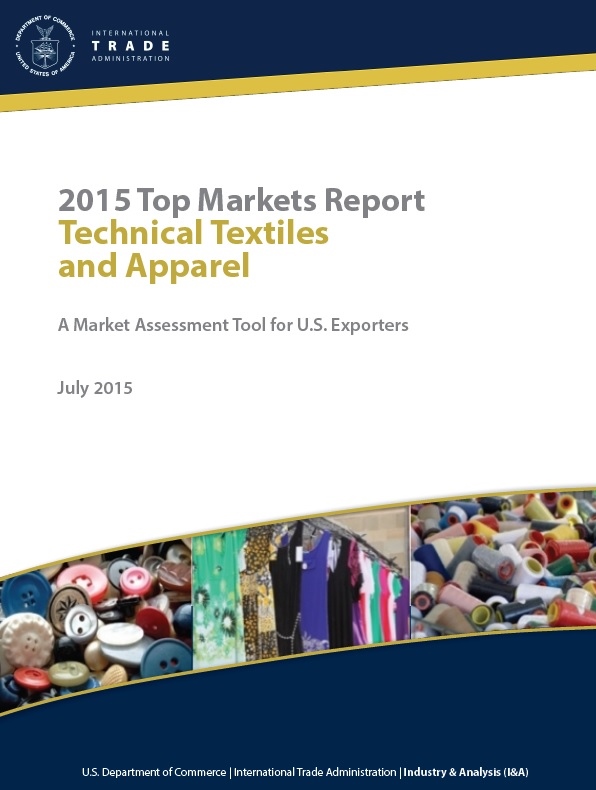
The U.S. Department of Commerce recently released its first-ever market report for technical textile and apparel, covering product categories including: non-wovens, specialty and industrial fabrics, medical textiles and protective apparel. According to the report:

  • The U.S. exports of technical textiles totaled $8.5 billion or 46% of U.S. textile mill product exports in 2014.
  • By size, the top 10 export markets for U.S. technical textiles from 2015 to 2016 include: Mexico, Canada, China, Germany, Japan, Hong Kong, United Kingdom, Belgium, Brazil and Honduras.
  • North America is the largest regional consumer of technical textiles due to the presence of the majority of end-use industries. Europe and Asia Pacific follow North America in terms of current consumption; however, development in emerging markets including India, China, Japan, Korea and Taiwan is expected to increase overall technical textile demand. Among the best prospect in the emerging markets for U.S. companies are Vietnam, India, Taiwan and Brazil.
  • Major challenges facing U.S. technical textile exports include: 1) trade protection such as high tariffs and non-tariff barriers, such as import license requirements; 2) foreign competition and continual investment in research and development in many developing countries; and 3) lack of transparency by foreign customs agencies which could slow the flow of trade and lead to processing delays.

Eight country studies are provided by the report, including: Brazil, Canada, China, India, Korea, Mexico, Taiwan and Vietnam.

The full report can be downloaded from HERE.

Euratex Releases Key Indicators of the EU Textile and Apparel Industry in 2014

In its annual release, the European Apparel and Textile Federation (Euratex) provides a skeletal statistical profile of the EU textile and apparel (T&A) in 2014. Most statistics cited in the report comes from the Eurostat.

Production

eu1

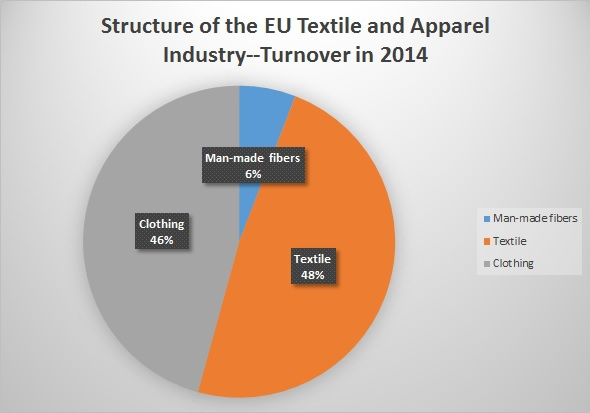
In 2014, T&A production in EU enjoyed a slight growth. Output of Man-made fiber (MMF), textile (yarns, fabrics and made-ups) and apparel went up by 2.8 percent, 2.8 percent and 1.9 percent respectively from a year earlier. In 2014, about 48 percent of T&A industry output was contributed by the textile sector, followed by the apparel sector (46 percent) and the MMF sector (6%).

Employment and productivity

eu2

eu3

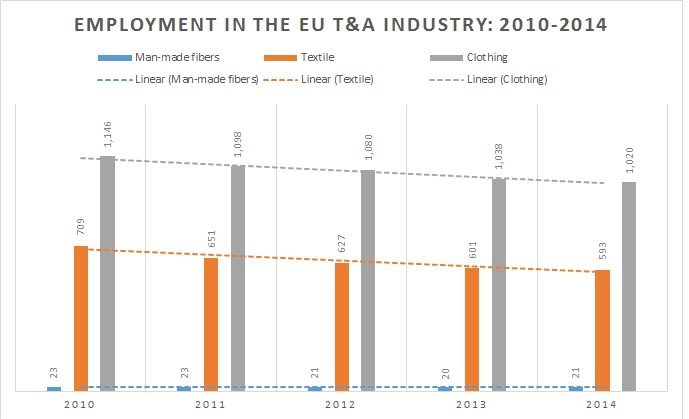
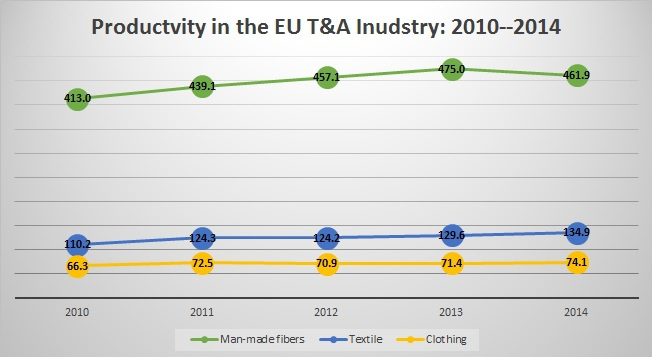
Employment in the EU T&A industry continues to move downward in size, shrinking from 1.66 million in 2013 to 1.63 million in 2014. The most significant drop happened in the apparel sector (-1.7%) and the textile sector (-1.3%), whereas employment in the MMF sector increased by 5 percent. As one important factor contributing to the job decline, productivity (measured by the value of output per person) in the EU T&A industry has constantly improved since 2010, especially in the textile sector (+22%).

Consumption
Consumption data in 2014 is not available yet. Value of T&A consumption in EU (28) stood at €483.9 billion in 2013, a slight increase of 0.2 percent from 2012.

Trade

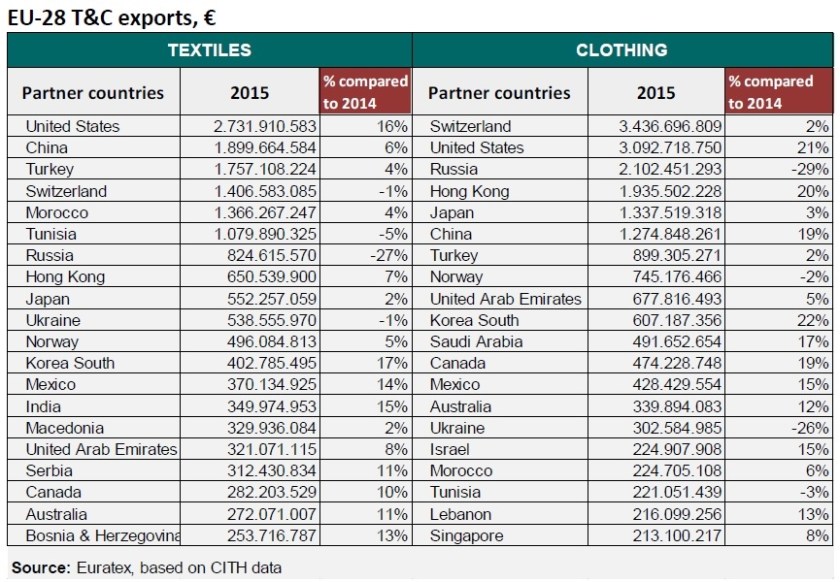
eu 28 2014

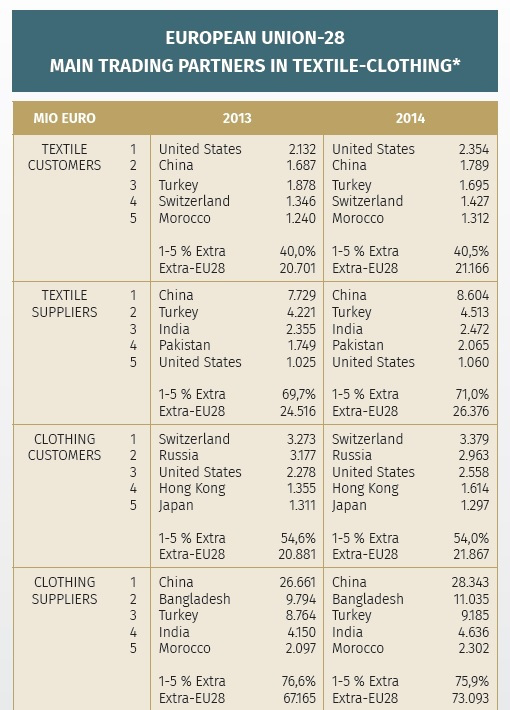
The two-way EU T&A trade enjoyed a robust growth from 2013 to 2014. Specifically, EU T&A exports increased by 3.5 percent (+2.2% for textile and +4.7% for apparel), which may attribute to the depreciation of euros against major currencies around the world. Interesting enough, EU’s T&A imports went up even faster in 2014—an overall 8.5 percent increase from 2013 (+7.6% for textile and +8.8% for apparel). With regard to EU’s key trading partners:

  • China remained THE dominant external T&A supplier for EU in 2014. However. China’s market share in the EU apparel import market declined from 39.7 percent in 2013 to 38.8 in 2014, whereas China’s share in the EU textile import market went up from 31.5 percent to 32.6 percent. It seems China is gradually shifting towards more textile exports and less for apparel along with its industry adjustment in recent years.
  • The United States remained the largest textile export market (11.1%) and the 5th largest apparel export market (11.7%) for EU in 2014. In the meanwhile, the United States is the 5th largest supplier of textiles to EU (however, U.S. market share declined from 4.0% in 2013 to 4.2% in 2014).
  • Bangladesh’s apparel exports to EU increased by 12.7 percent from 2013 to 2014, which helped Bangladesh gained 15.1% market share, up from 14.6% a year earlier.


From Trade Protection to Going global: the Changing Nature of the U.S. Textile Industry

MIL-06

Last week, Milliken & Company, one of the largest U.S. textile manufacturers founded in 1865, was featured in a Wall Street Journal article on the changing position of the U.S. textile industry on international trade. As you may remember in our case study, it was Roger Milliken, the chairman of the Milliken & Company, that founded the Crafted with Pride in the U.S.A. campaign in the 1980s. The campaign not only encouraged U.S. consumers to purchase more “Made in USA” products, but also intended to raise the public awareness of “import threat”. However, titled “free trade gains a convert”, the WSJ article argues that Milliken & Company today has “dropped protectionist stance as business went global”.

The article is a great reminder of the changing nature of the U.S. textile industry in the 21st century. One of them is going global. According to the Hoover’s Academics (2015). Milliken & Company today operates about 40 manufacturing plants in the US, Belgium, China, France, and the UK, as well as sales and services offices worldwide. In particular, as mentioned in the WSJ article, China nowadays is seen as Milliken & Company’s future. The company opened an industrial-carpet factory near Shanghai in 2007 and also moved its Asia headquarters from Tokyo to Shanghai in 2012. And rather than using Chinese labor to make goods for export back to the United States, most Milliken & Company’s products made in China target the local market. As estimated by GlobalData, urbanization and an increase in house ownership in developing countries like China, India, Vietnam, Thailand and Indonesia have led to an annual 7.9% growth of carpets and rug sales in the region.

It is also important to recognize that Milliken & Company’s business model is no longer based on manufacturing basic yarn or fabrics used for apparel. Instead, the company mostly produces highly tech-driven and capital intensive industrial textiles as well as chemicals and colorants that offer more than 100 applications including infusing washable markers and liquid laundry detergent, killing bacteria, melting ice, and blocking UV rays. In many industry sources, Milliken & Comopany is even counted as a chemical company that directly competes with industry giants such as DuPont, Dow Chemical and Shaw industries. Overall, it is product and business innovation that drive this hundred-old company moving forward.

Additionally, we shall not misread title of the WSJ article—i.e. the U.S. textile industry 100% supports free trade with no condition. As a matter of fact, the rules regulating global textile and apparel trade are still very complicated and restrictive in nature. For example, the U.S. textile industry still insists strict yarn-forward rules of origin to be adopted in the Trans-Pacific Partnership (TPP) and the Trans-Atlantic Trade and Investment Partnership (T-TIP). However, many U.S. apparel companies and fashion brands see the restrictive yarn-forward rule of origin outdated and incompatible with the 21st century global apparel supply chain.

No matter how, it is a noticeable change that the U.S. textile companies like Milliken start to shift their position on international trade, even just in a subtle way. Globalization has demonstrated its impact on shaping the new landscape of the U.S. textile industry and will continue to do so in the years to come.

What Does “Factory Asia” Mean for the U.S. Textile and Apparel Industry?

Slide37

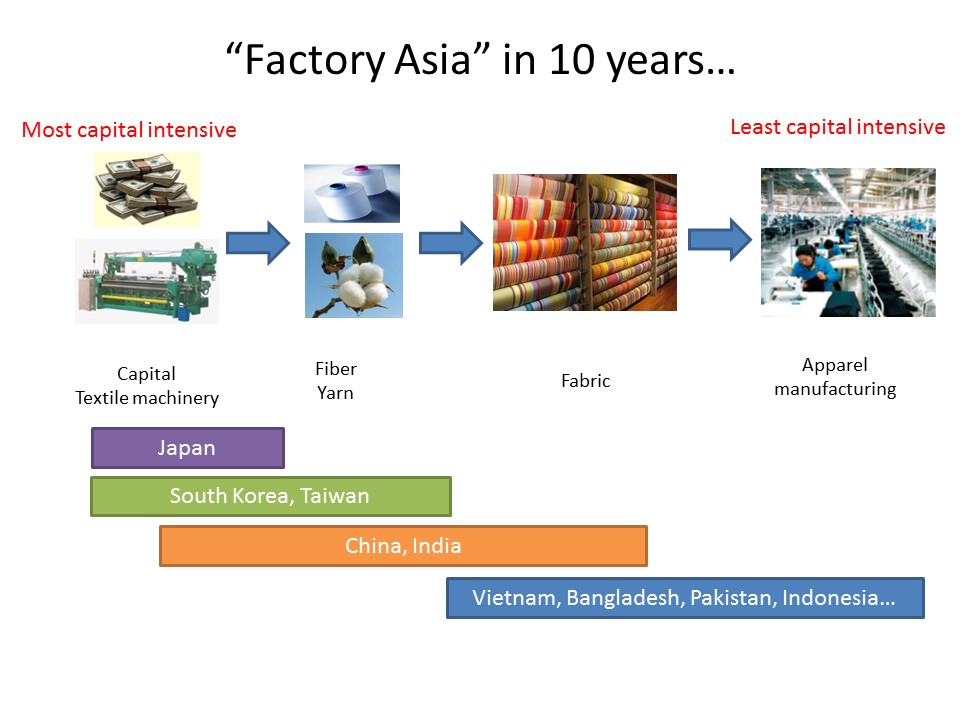
Slide38As we discussed in class, following the “flying geese pattern”, countries in Asia form a dynamic division of labor in textile and apparel (T&A) manufacturing. Although China may gradually lose its comparative advantage in labor-intensive apparel manufacturing, it will continue playing a critical role in “Factory Asia” (i.e. Asia-based T&A supply chain). As results, Asia will remain a giant player in T&A production and export in the years to come.

1 (1)

1 (2)

1 (3)

Slide35

Another important feature of “Factory Asia” is regional integration–Asian countries tend to use more and more T&A inputs from within Asia rather than from outside the region. This may improve the internal efficiency of “Factory Asia”, but also may make it harder for T&A companies outside Asia to get access to the Asian market.

Slide54

So, what is your view on “Factory Asia”? What are the implications of “Factory Asia” for the U.S. T&A industry? Can the Trans-Pacific Partnership potentially shape new T&A supply chain in the Asia-Pacific region? What market opportunities does the Asia-Pacific region present to the US T&A industry? Please feel free to share your view and any other questions in your mind about the Asia-Pacific region. 

[Comment for this post is closed]

TPP Textile Negotiation Updates (March 2015)

trans-pacific-trade-agreement_issuebanner

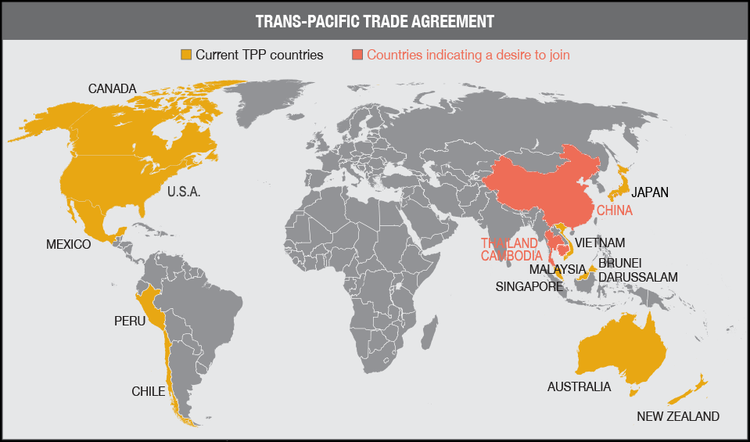
According to Inside US Trade, negotiators continued their work on the technical details of the textile chapter under the Trans-Pacific Partnership (TPP) during the latest round of negotiation in Hawaii. Although progress has been achieved, key issues remain unsolved.   Exceptions to Yarn-Forward Rule of Origin Since the 807A program under the Caribbean Basin Imitative (CBI) enacted in 1998, the so called “yarn-forward” rule of origin has been adopted in almost all free trade agreement (FTA) and trade preference program (TPA) reached between the United States and its trading partners. “Yarn forward” rule requires that each step of apparel production from spinning of the yarn must take place in one of the FTA countries. At the same time, FTA/TPA often adopt exceptions in addition to “yarn-forward” rule so as to provide flexibility to importers, especially in the case when certain textile and apparel products are not available in commercial quantities from the FTA/TPA region. It is almost certain at this point that TPP will continue to adopt the “yarn forward” rules of origin. However, what kind of exceptions to the yarn forward rule will be allowed in TPP remain unclear: 1) How long will be the “short supply” list in TPP? Short supply list is a mechanism which allows fibers, yarns, and fabrics determined not to be available in commercial quantities in a timely manner from within the FTA partner countries to be sourced from outside the countries for use in qualifying textile and apparel products. According to Inside US Trade, some TPP countries want to declare the short-supply list complete as soon as possible so that they can shift the discussion to other possible exceptions to the yarn-forward rule. However, others doubt that the U.S. would be willing to contemplate additional exceptions and therefore believe that the best approach is to keep the short-supply list open and try to add as many products as possible. 2) Whether there will be other exception mechanisms in TPP in addition to the “short supply” list? According to Inside US Trade, there were some discussions on creating a separate mechanism such as the tariff-preference levels (TPL) in TPP. TPL allows for a certain quantity of textile and apparel goods (usually yarns, fabrics and cut pieces) from a third-country (a country who is not a party to the agreement) to qualify for the FTA benefits. Additionally, it is more than just Vietnam that is seeking more exceptions to the “yarn forward” rule in TPP. For example, Australia and New Zealand are also doing so, which may be in large part for tactical reasons — essentially holding up the textile talks as leverage to secure acceptable outcomes in other areas that are more important to them, for instance, agricultural market access or intellectual property. Tariff Phrase-out Mechanism Inside US Trade says that U.S. is sticking to the framework that it laid out in its initial tariff offer, which put products into three categories subject to different phrase-out schedule:

  • X-basket, which covers the most sensitive products that would be subject to an initial cut upon entry into force, but then remain in place until they are eliminated in the tenth year for knit apparel and fifteenth year for woven apparel
  • B-basket, which consists of slightly more sensitive apparel items that would be subject to a linear tariff phase-out over five years
  • A-basket, which consists of least sensitive items whose tariff rate would go to zero immediately upon TPP entries into force

Key questions remain as to which items the United States will place into what basket. Other issues in the textile chapter The TPP textile chapter may also include languages on the following two issues: 1) a special safeguard mechanism under which the importing country can raise tariffs up to the most-favored nation (MFN) level in the case of an import surge; 2) customs language on the inspection mechanism.

Mexican New Import Rules on Textiles and Apparel Raise Concerns

mexicanclothes

In January 2015, Mexico announced a set of new measures aimed at combating “unfair” trade practices in T&A imports and enhancing the competitiveness of domestic T&A sector in the face of increasing foreign competition.

The proposed measures will particularly target those imports considered to be “undervalued” by the Mexican government. According to Inside US Trade and Sourcing Journal Online, one of these measures is to establish a minimum reference price for imported T&A products. If shipments enter at below that price, they would be subject to an investigation by the Mexican government that could lead to the imposition of additional duties and taxes. To be noted, the proposed new measures will be taken separately from traditional trade remedy measures such as anti-dumping, countervailing duty and safeguard.

Other proposed measures intend to strengthen custom enforcement, including:

  • Mexico will required a mandatory registry for T&A imports. A similar registry system has been required for footwear;
  • Mexico will postpone the import duty reduction that was expected to be implemented at the beginning of 2016 on 73 apparel items and seven textile made-ups. Originally slated to enter into force on January. 1, 2013, the duty reduction from 25 percent to 20 percent has been twice postponed for one-year periods and will now be delayed until 2018;
  • Importers will be required to provide advance notice of shipments to the Mexican Economy Secretariat in the future;
  • Mexico will break down the current eight-digit tariff lines for textile and apparel products into 10 digits, which an industry source said would allow tariff rates to be more specific in light of the fact that apparel products have evolved to be more specialized;

Moreover, Mexico will implement a new financing mechanism with total available credit of 450 million pesos (around $30 million USD) over the next 12 months to help the domestic T&A industry (especially small- and medium-sized enterprises) upgrade their machinery and equipment, pursue innovative strategies and develop new products. The Mexican Service Agency for the Commercialization and Development of Agricultural Markets (Aserca) will further support the purchase of cotton from domestic growers by textile manufacturers.

According to WWD, the US T&A industry has three major concerns about Mexican’s proposed measures: one is the potential delay in custom clearance and more complicated documentation requirements; second is the additional tariff rate and increased cost of exporting from the United States or anywhere else in the world to Mexico; third is the lack of policy transparency adding to the potent business risks.

Industry Background

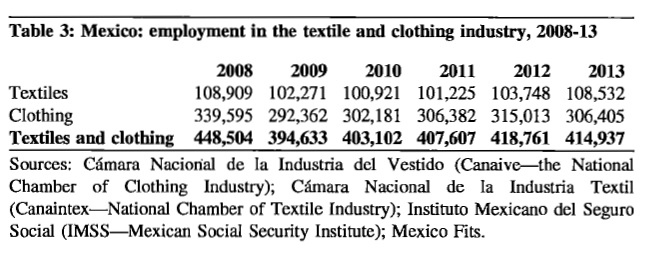
T&A industry accounted for 3.7 percent of Mexico’s GDP in 2013 (1.3 percent for textiles and 2.5 percent for apparel). About 415,000 workers directly employed in the sector in 2013, among which 74 percent worked for the apparel sector.

1

One important feature of Mexico’s T&A industry is the so called “Maquiladora” operation: simple sewing of garments made from imported fabrics and using cheap labor. The “Maquiladora” operation is largely coordinated by US-based apparel brands and retailers. Most of “Maquiladora” factories are located in the free trade zones, in which equipment and imported materials (such as fabrics) can be duty-free. Output of “Maquiladora” are exported, mostly to the United States.

3

Mexico imported $8.6 billion T&A in 2013, among which $2.4 billion were fabrics, followed by made-up textiles ($0.55 billion) and yarns ($0.39 billion). This pattern reveals Mexico’s heavy reliance on imported textiles due to limited domestic textile manufacturing capacity.

At the same time, Mexico’s apparel imports increased from $2.4 billion in 2008 to $2.9 billion in 2013. Particularly, Mexico’s apparel imports from China surged by 558.8 percent between 2008 and 2013. In 2013 alone, apparel imports from China went up by 42.1% to $0.97 billion. It is said that China is the main target of Mexico’s proposed new import measures.

4

 [Comment for the post is closed]

Pattern of U.S. Textile and Apparel Imports (Updated: February 2015)

12

4

Total U.S. textile and apparel imports enjoy steady growth from 2000 to 2014. From 2013 to 2014, value of apparel imports increased 2.5 percent and imports of fabric increased 5.4 percent. However, value of fiber imports declined 1.9 percent over the same period. Almost all fastest growing import categories from 2004 to 2014 are basic apparel.

3

Because the United States is no longer a major apparel manufacturer but one of the largest apparel consumption markets in the world, apparel products accounted for 76.1 percent of total U.S. textile and apparel imports in 2014. Fabrics and yarns accounted for 5.8 percent and 1.3 percent respectively.

75

8

While developing countries dominated apparel supply to the United States in 2014, developed countries remain important suppliers of textiles. For certain industrial textile products such as non-woven textiles, nearly 50 percent of imports still came from European Union (28), Canada and Japan. This pattern reflects different product nature of apparel (labor intensive) and textiles (capital intensive) as well as the respective comparative advantage of developing and developed economies.

6

Overall, pattern of apparel imports is in parallel with apparel retail sales in the U.S. market. This reflects the fact that demand for imports is largely shaped by macro-economic conditions. It should also be noted that despite the heated discussion on “reshoring” apparel manufacturing in the U.S., apparel imports is NOT declining.

9

11

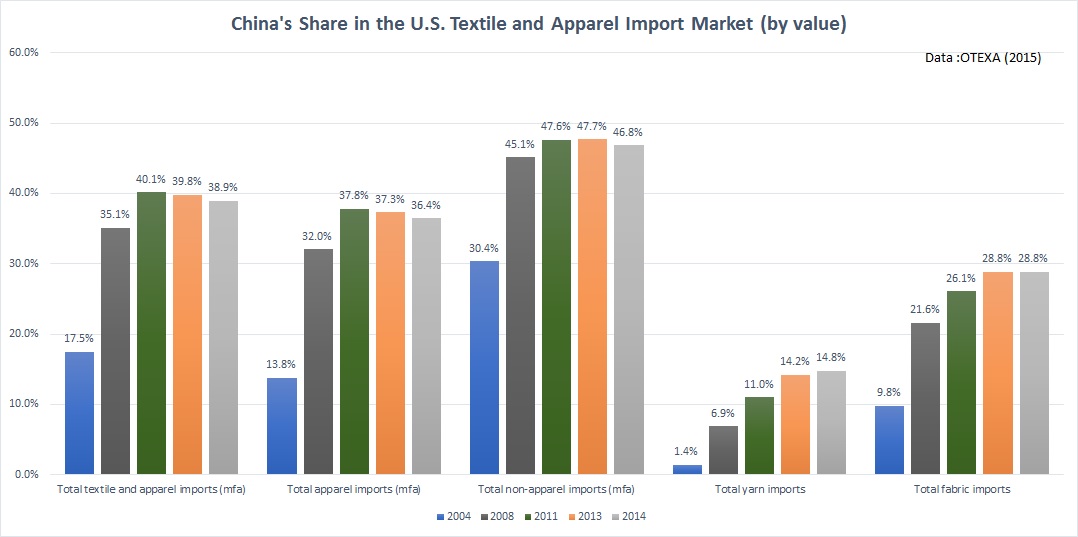
By value, China accounted for 38.9 percent of total U.S. textile and apparel imports in 2014, which was slightly lower than the level of 39.8 percent in 2013. It should be noted that China’s market shares significantly varies by category. Within the total 167 number of textile and apparel product categories complied by the Office of Textiles and Apparel (OTEXA), China enjoyed market share increase for 119 categories and suffered market share losses for 49 categories from 2004 to 2014 (many are sewing thread products).

Outlook for the U.S. Textile Industry in 2015

In its annual industry analysis report, the Textile World (TW) presents another optimistic outlook for the U.S. textile industry in year 2015.

First, the U.S. textile industry is predicted to be in a good shape economically this year. For example, according to TW, shipment of textile mills (NAICS 313 &314) is expected to increase 3-4 percent in 2015 from last year. Value of apparel manufacturing (NAICS 315) may also increase 5 percent. Additionally, market demand for basic mill products (fibers and fabrics), nonwoven fabrics and fabrics designed for activewear could be particularly strong this year.

Second, the U.S. textile industry will continue to bring back “made in USA” through capitalization. As observed by TW, new plant and equipment spending is widespread in the U.S. textile industry in recent years, covering activities ranging from fibers, spinning, nonwovens, composites, technical fibers to textile chemical. TW further estimates that some 2.2 percent of mill shipment dollars will be spent on new investment in 2015, a level much higher than a few years ago.

Third, trade deficit in the U.S. textile industry is gradually shrinking. On one hand, TW estimates that due to China’s decreasing market share, imports of T&A to the United States will down 1 percent in 2015. This trend may continue in the years ahead. On the other hand, TW estimates that the U.S. textile exports will continue to grow for the straight 5th year in 2015. However, TW doesn’t believe textile and apparel manufacturing will have any big near-term shift back to the U.S, nor the total employment in the industry (because increased production is to be made by machines).

Fourth, sustainability and supply chain management will attract even more attention by the industry in 2015. As mentioned by the TW report, consumers nowadays have become more aware of the environmental impact of textile and apparel manufacturing. This pushes companies to make more efforts to address issues such as toxins, waste and the amount of water used for production. On the other hand, supply chain management has started to play even more important roles in controlling cost and increasing profit. For example, quoted by TW, performance of supply chain management may result in 10 percentage point differences in profit margin in the textile industry nowadays.

Fifth, trade policy will continue to have a substantial impact on the the U.S. textile industry.  2015 could be a big year for trade policy in the United States. Things that are on the top watch list in 2015 include details of the Trans-Pacific Partnership negotiation and whether the Trade Promotion Authority (TPA) bill can be passed by Congress.

1

2

3

Textile and Apparel in the 2015 US Trade Policy Agenda

Untitled

Two hearings were held on January 27 where US Trade Representative Michael Froman testified before the Senate Finance Committee and the House Ways & Means Committee on the 2015 US Trade Policy Agenda. During the Senate hearing, two questions were directly related to the textile and apparel (T&A) industry:

Senator Robert Menendez (D-NJ) expressed concerns that inclusion of several concessions requested by Vietnam regarding rule of origin and short supply list for T&A in the Trans-Pacific Partnership (TPP) will result in severe job losses and potentially hurt the T&A industry in the Western Hemisphere. In response, Froman said that:

“We worked in the textile area through the yarn forward rule, the short supply list, rules of origin and customer enforcement and corporation to take these things into consideration. We’ve worked very closely with textile manufacturers in the US who are part of this supply chain with Central America to get the best of our understanding of what are the sensitivities are and take that into account in our negotiations.”

John Isakson (R-GA) raised the question about China’s recent cotton reserve & subsidy policy and its negative impact on the world cotton price which “has declined from 83-85 cents/pound not a long ago to 55-57 cents/pound recently.” Isakson wondered if anything USTR would do to address the problem, such as bringing the case to the World Trade Organization (WTO) Dispute Settlement Body (DSB). In response, Froman said that:

“The whole pattern of agriculture subsidies has changed a lot over the last ten to fifteen years. When (WTO) Doha Round was first started, focus on the subsidy was really the United States and the European Union. But in both of those areas subsidies have come down, while subsidies from China and India in the agriculture area have been increased. By some measures, China is now the largest subsidizer of cotton. We are engaging with them. We have conversations in the last couple of days also about that, about taking a fresh look at where subsidies have been provided, how it distorted the market and how that should play into the global trading negotiations. It is important to update our views on where the subsidies come from and what impact it has. For poor farmers in Africa, it doesn’t matter whether the subsidies come from the US or from China. It matters that the subsidy exists and so we will be engaged with China on this and create some disciplines around us. We are looking at all options out there. We are not yet determined whether there will be a (WTO DSB) case brought in that area.”

Other hot topics covered by the hearing include passing Trade Promotion Authority (TPA) bill, creating jobs through trade, addressing agriculture, digital trade & data flow, State owned enterprises (SOE), currency manipulation, transparency and Intellectual property right (IPR) protection issues in TPP, strengthening trade enforcement, renewing African Growth and Opportunity Act (AGOA), and making further progress of Trade in Service Agreement (TiSA) and Information Technology Agreement (ITA) at WTO.

The followings are some personal comments on the overall atmosphere in the Senate hearing:

  • It doesn’t seem possible to be able to conclude TPP without TPA, for at least two reasons: 1) Congress doesn’t want to give up its authority on trade policy. If TPP negotiation were concluded before the passage of TPA, Congress would feel it had little influence on shaping TPP through the mechanism of TPA trade negotiating objectives. This will add to the difficulty of potentially passing the TPP implementing bill under expedited legislative procedures. 2) Other TPP members, such as Japan, are unlikely to put the final offer on the negotiation table, especially for politically sensitive issues, without having the assurance provided by TPA.
  • There is a growing call for “strong” labor and environmental provisions in TPP. This is not surprising given the fact that the general public is attaching greater importance to labor and environmental impact of international trade. NGOs, such as labor and environmental groups have become more critical players in trade politics nowadays as well. Practically, strong labor and environmental provisions are regarded as important means to create “a level playing field” for US products competing in the world marketplace. These provisions can also be used as leverages to push for better human right practices in some foreign countries. That being said, as noted by many trade experts, trade policy shall not be expected to solve environmental and labor problems.
  • Currency manipulation becomes a hot discussion topic again, but USTR doesn’t seem to be interested in including the currency provision in TPP. Many senators raised the currency issue during the hearing, however, it shall be noted that: 1) Free trade agreement (FTA) and even WTO is not an appropriate venue to deal with currency issues; 2) the business community actually does not see currency as a priority issue to address. They care more about things like market access, IPR protection, national treatment and dealing with SOEs. 3) Currency manipulation provision is not an effective way to solve currency concerns. For example, it would be impossible to determine what shall be the “right” exchange rate–ten economists may give twelve different answers. 4) It will be interesting to see what language the potential TPA bill will use to define currency issue as a  trade negotiating objective.
  • Benefit of trade is still largely misunderstood. During the hearing, almost all support for TPA & TPP came from the export side: “export is good for the US economy”, “export can create higher-paid middle class jobs”, “US runs trade surplus with all FTA partners and all trade deficits came from those non-FTA partners”…However, nobody in the hearing talked about the benefits of imports and the global nature of supply chain in the 21st Mercantilism is still a popular view in Congress.

Sheng Lu

2014 World Textile Industry Labor Cost Comparison

textileindustry_laborcost2014_bars-437br

According to the latest Werner International Labor Cost Comparison Report, labor cost gaps remained huge among textile industries worldwide in 2014. Within the 40 countries covered by the report, labor cost in Switzerland ($51.36/hour), the highest, was 82 times higher than in Bangladesh and Pakistan ($0.62/hour), the lowest, in 2014. Overall, labor cost in Western European countries (such as Italy, France and Germany)+Japan remained the highest in the world, followed by (from high to low):

  • the United States
  • advanced economies in East Asia (South Korea and Taiwan)
  • Eastern European countries (such as Poland)
  • South American countries (such as Brazil and Peru) 
  • developing countries in East and Southeast Asia (such as Bangladesh and Pakistan).

[Note: The report does not cover African countries].

change

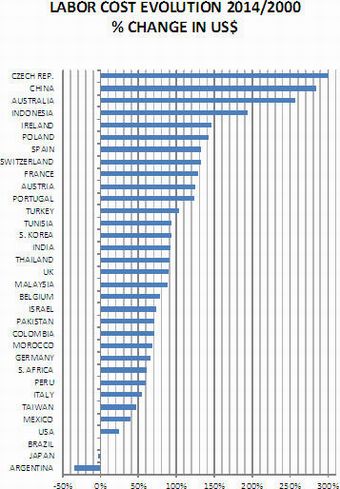
On the other hand, consistent with statistics from other sources, Werner’s report also suggests remarkable labor cost increase in China, which is rapidly approaching the $3 per operator hour (up from $2.1 in 2011 and up from only 0.69 US$ in the year 2000). From 2000 to 2014, labor cost in the U.S. textile industry went up about 25 percent. However, in terms of absolute difference, China’s labor cost was still only 15 percent of the level in the United States in 2014. As noted by the publisher, the labor cost comparison report covers all primary textile industry sectors, consisting of spinning, weaving and dyeing & finishing. Cut & sewing operations are not part of these comparisons. Labor cost in the clothing industry is not covered by the report however.

[Comment for this post is closed]

US Department of Labor: 28 countries were Found Using Child or Forced Labor in Making Textiles and Apparel

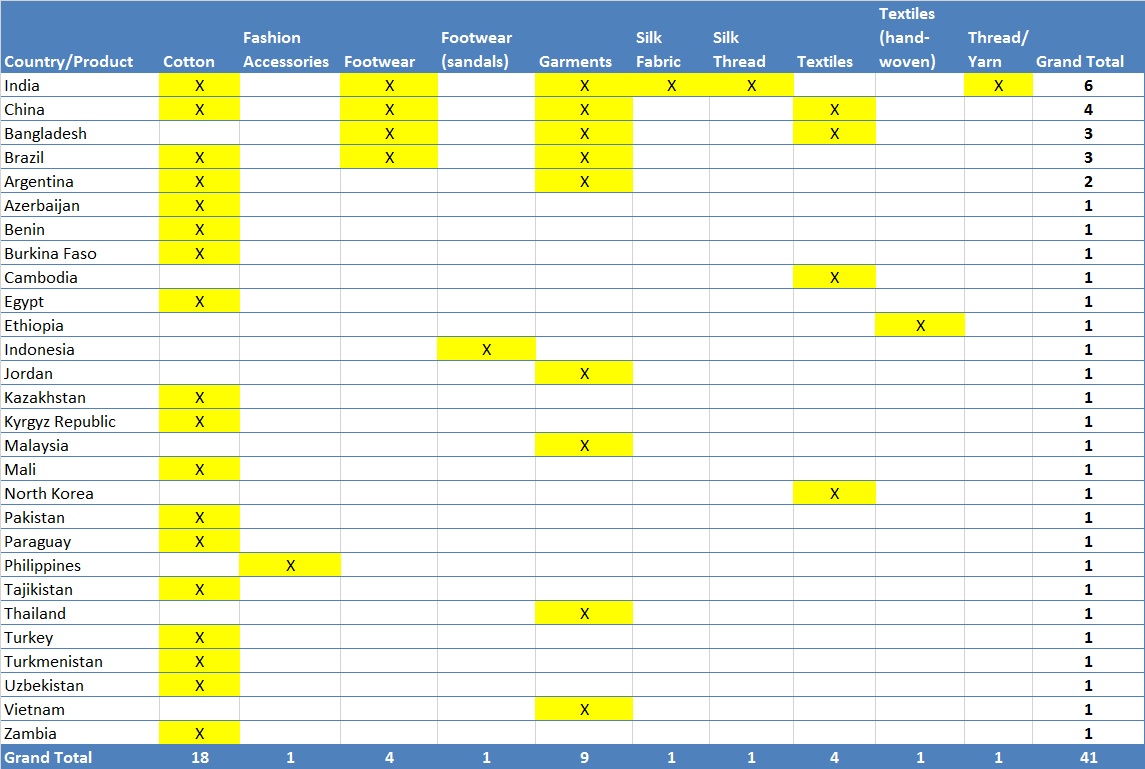
In its updated List of Goods Produced by Child Labor or Forced Labor (ILAB) released on December 1, 2014, the U.S. Department Labor said that at least 28 countries are found using child or forced labor in making textiles and apparel. All countries on the list appear to be developing countries. Particularly, the problem of using child labor or forced labor was found most serious in the cotton sector (18 countries), followed by garment manufacturing (9 countries).

Bangladesh, a focus of corporate social responsibilities practices these days, was found using child labor in making garment according to ILAB.

1

2(Data compiled by Sheng Lu)

Note: * ILAB maintains a list of goods and their source countries which it has reason to believe are produced by child labor or forced labor in violation of international standards. The List is intended to raise public awareness about child labor and forced labor around the world, and to promote and inform efforts to address them. A starting point for action, the List creates opportunities for ILAB to engage and assist foreign governments. It is also a valuable resource for researchers, advocacy organizations and companies wishing to carry out risk assessments and engage in due diligence on labor rights in their supply chains

Follow up:

After the release of the ILAB report, four House Democrats sent a letter to USTR Michael Forman on December 4th, 2014, asking him to provide details on labor provisions in the TPP. As noted by the lawmakers in the letter: “Vietnam, Mexico, Peru, and Malaysia, one-third of the nations included in the TPP, were all cited for labor abuses in the report…”. “We are following up with you because we believe it is important that you take action to ensure that real, meaningfully enforceable labor protections are in the TPP”.

U.S. Textile and Apparel Exports in 2013 (Updated in November 2014)

1

U.S. textile and apparel (T&A) exports increased by $543 million (3 percent) to $19.8 billion in 2013. However, because import increased by $3.2 billion (3 percent) to $97.5 billion, U.S. trade deficit in T&A increased rose to $97.5 billion in 2013. Imports supplied about 98 percent of U.S. consumer demand for T&A in 2013.

2

3

Textiles account for 83 percent of all U.S. T&A exports in 2013. Exports of these textiles products (particularly fabrics and yarns) are used primarily as intermediate inputs for finished products manufactured abroad, which are then imported back into the United States (USITC, 2014). In terms of value, specialty & industrial fabrics, spun yarns & thread, felts & other non-woven textiles and other made-up textile articles altogether account for nearly half of U.S. T&A exports in 2013. Statistics further show that U.S. apparel exports also grow fast in recent years. However, it shall be noted that a good proportion of them might be used clothing.

4

5

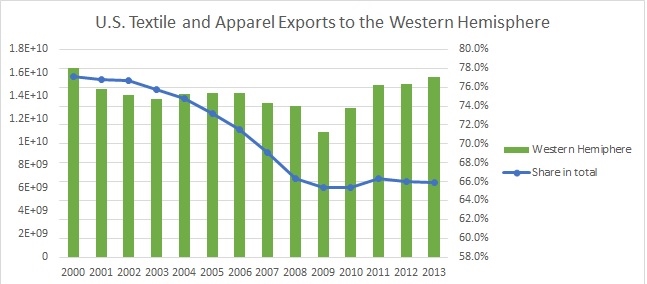
Mexico and Canada remain the top two largest export markets for U.S. T&A in 2013. 66 percent of U.S. T&A exports in 2013 went to the Western Hemisphere (i.e. North America, Central America, South America, and the Caribbean countries). However, this share has declined from 77.6 percent in 2000. Other leading export markets for U.S. T&A include Honduras, China and Japan.

6

Reference:

USITC (2014). Shifts in U.S. Merchandise Trade. http://www.usitc.gov/press_room/news_release/2014/er1112ll232.htm 

OTEXA (2014). U.S. Imports and Exports of Textiles and Apparel. http://otexa.trade.gov/msrpoint.htm

Japan’s Textile Exports to Vietnam Keep Growing Fast

According to a recent report released by the Textile Outlook International, Japan’s textile and apparel (T&A) exports increased by 9.6% to a five-year high in 2013 (¥763,307 million or $8,571 million USD), added by a sharp depreciation in the value of the yen (Note: Yen or “¥” is Japan’s currency) against US dollar. Specifically, Japan’s textile exports increased by 9.8%, from ¥729,761 million in 2012 to ¥801,450 million in 2013. Japan’s apparel exports rose by 3.7%, from ¥33,546 million in 2012 to ¥34,792 million in 2013. Textiles account for a lion’s share of Japan’s total T&A exports– 95.8% in 2013 and 95.6% in 2012 in terms of value.

1

Statistics also show that Vietnam not only is Japan’s second largest T&A export market, but also is one of the fastest growing export markets for Japan. In 2013, 9.1% of Japan’s T&A exports went to Vietnam (mostly were textiles), increased from 8.5% in 2012. In terms of absolute value, Japans’ T&A exports to Vietnam has also kept growing fast in recent years: 17.1% increase in 2013, 9.7% in 2012 and 27.3% in 2011, much higher than the growth rate of Japan’s overall T&A exports over the same period. Additionally, about 26% of Japan’s textile exports to Vietnam in 2013 were man-made fiber fabrics (SITC 653), followed by special yarns and fabrics (SITC 657) which accounted for 21% in terms of value. This product structure well matches with Japan’s overall textile exports to the world.

2 3

On the other hand, Japans’ T&A exports to the US also grew by 8.1% in 2013, following a 3.2% rise in 2012. Fastest growing category of Japan’s T&A exports to the US in 2013 include blue denim fabric, non-textured filament yarn, wool knitted shirts and blouses and miscellaneous manufactured products made from man-made fibers.

However, the solid performance of Japan’s T&A exports in 2013 “failed to reinvigorate domestic production”. According to the report, Japan’s total T&A exports declined by 2.0% from 2012 to 2013, following a 2.3% fall a year earlier. However, production of miscellaneous textile products in Japan went up 0.6% in 2013.

Questions for discussion:

  • Will Japan further strengthen its ties with Vietnam in T&A production and trade because of TPP?
  • Should the US textile industry care about Japan in the TPP?

Welcome for any comments and suggestions.

Related reading
Lu, S. (2014). Does Japan’s accession to the Trans-Pacific Partnership an opportunity or a threat to the U.S. textile industry: A quantitative analysis. Journal of the Textile Institute. (ahead of print version) 

What does Vietnam’s Textile Factory Actually Look Like?

Vietnam attracts a lot of attention these days in the textile and apparel world. But what does Vietnam’s textile and apparel factory actually look like? 

This video features PPC (Phong Phu Corporation), one of the largest textile mills in Vietnam. It is said that PPC accounts for over 50% of Vietnam’s total textile exports.

  • Anything in the video interests you or surprises you?
  • How is PPC different from textile mills in the US?( You may think about the video we watched in class about the textile mills in NC. For example, are there any differences in working environment, the facility, what it is producing, required labor skills, efficiency and productivity?)
  • How should the US textile industry treat Vietnam? A competitor? A threat? A potential partner? or a great opportunity for investment?

Please feel free to share your thoughts.

[Please leave no more comment for this post unless you have NEW ideas to share]