Global Apparel Market and Trade—The Modern Cotton Story Podcast
FASH455 Global Apparel & Textile Trade and Sourcing
Copyright© 2012-2026 Dr. Sheng Lu, Professor, Department of Fashion & Apparel Studies, University of Delaware

Speaker: Linda Ollmann, Director – Sourcing Operations, ModCloth
Event summary
ModCloth is a womenswear company that strives to empower women along every step of their manufacturing process. The customer loves the clothing and the pieces can be utilized in many different ways throughout many different seasons.
As of right now, ModCloth does most of their sourcing partnerships with vendors in China, largely because vendors in China were able to give ModCloth the most efficient price point at the shortest lead time. However, ModCloth did start to look for vendors outside of China in countries such as Vietnam, Sri Lanka, and India, but they found that the lead times were still the shortest when they sourced with vendors in China.
While ModCloth wants to continue having short lead times to satisfy their customer, they have some new sourcing strategies that they are going to be implementing in the near future. One thing they are going to do is find the best suppliers possible to get their fabric from so that their customers are happy and can even possibly love the company even more than they already do. In addition to this, ModCloth is dedicated to pursuing sustainable practices and this includes within the factories that they partner with. They also want to find a way to continue having a shorter lead time from the time customers order a garment to the time it gets delivered at their doorstep, all while having a low carbon footprint and being as environmentally conscious as possible.
Just like every other company in the world, ModCloth was impacted by COVID-19. However, since ModCloth started out as an entirely ecommerce brand they were able to adapt to the new virtual norm very well. They decided that with the pandemic slowing everything down, it was important that they focus on improving the company from the inside out. This helped them become more stable internally so they could inevitably build the brand up again on the outside. People have been primarily shopping online due to the closure of brick and mortar stores, so ModCloth did not see too much of a dip in their sales.
ModCloth is very interested in what their customers want and need. Their customers have expressed a need for more sustainable clothing and fabrics and this is exactly what ModCloth wants to give to them. It was mentioned in the webinar that it is easy to put information about the sustainability of a garment in the product description on their website which helps the customer really understand where the piece of clothing they are about to purchase is coming from. This will help customers remain faithful in the brand as well as help the customer feel connected to the brand
Summarized by Lexi Dembo (FASH455 spring 2021)
#1: How to explain the phenomenon that US fashion companies are diversifying apparel sourcing from China, but not so much from the Asia region? For example, as of 2020, still, around 75% of US apparel imports came from Asian countries.
#2: From the readings and your observation, to which extent will automation challenge the conclusions of the “flying geese model” and the evolution pattern of Asian countries’ textile and apparel industry over the past decades?
#3: It could be a crazy idea, but given the current business environment, what would the textile and apparel supply chain in Asia look like without “Made in China”? What would be the implications for US fashion companies sourcing strategies?
#4: RCEP members are with a diverse competitiveness in textile and apparel production and exports. Several leading Asian apparel-exporting countries are not RCEP members (such as Bangladesh). Is it unavoidable that RCEP will create BOTH winners and losers for textile and apparel trade? How so?
#5: Is the growth model and development path of Asian countries’ textile and apparel industry an exception—meaning it is challenging to apply it to the rest of the world, such as the Western Hemisphere and Africa? What is your view?
#6: What is your outlook of Asia as a textile and apparel-sourcing base in the post-Covid world? Why?
(Welcome to our online discussion. For students in FASH455, please address at least two questions and mention the question number (#) in your reply)
Related readings

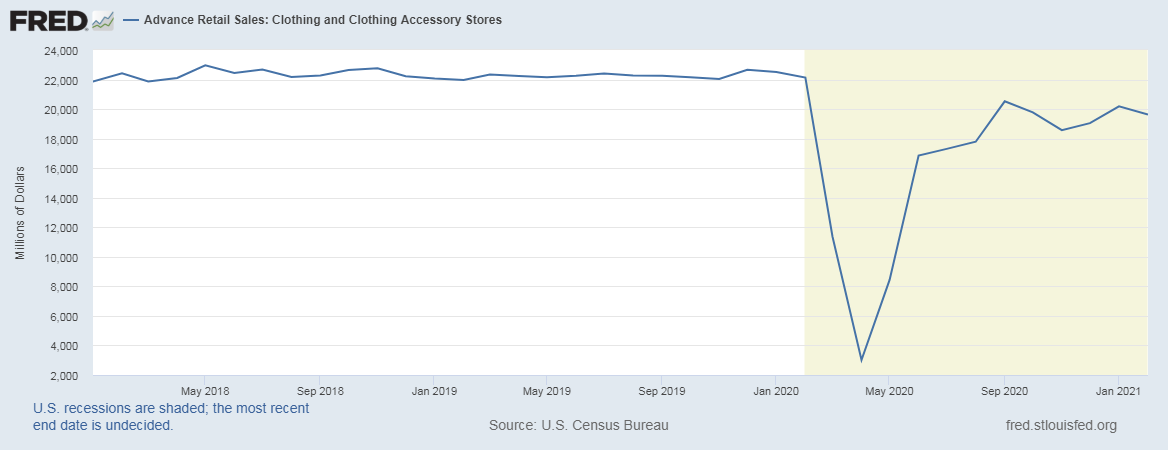
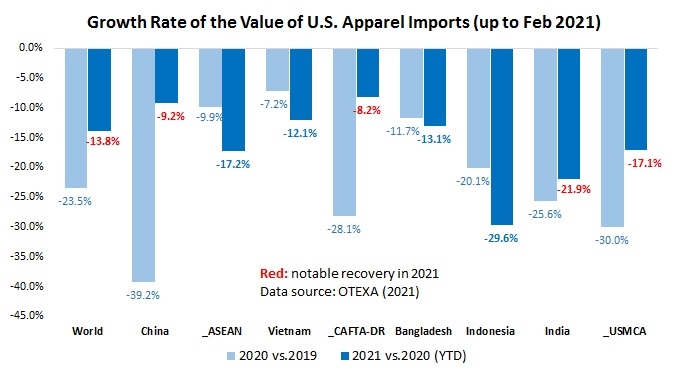
First, thanks to consumers’ resumed demand and a more optimistic outlook for the U.S. economy, US apparel imports went back to the robust recovery trajectory in February 2021. Specifically, the value of U.S. apparel imports in February 2021 went up by 4.5% from January 2021 (seasonally adjusted) after a straight three-month drop. Even though the absolute value of U.S. apparel imports in February 2021 was still 8.7% lower than last year, it was the best performance since December 2020.

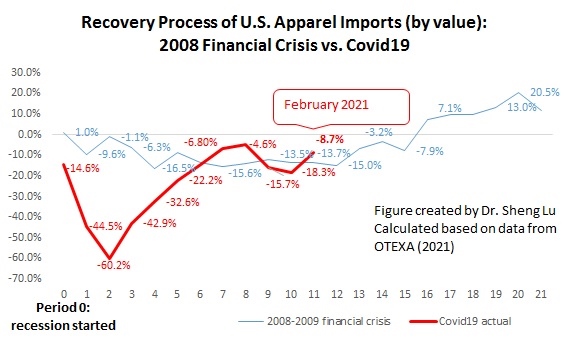
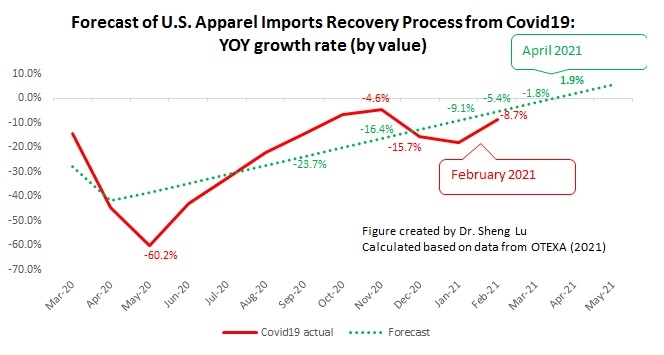
The Auto Regressive Integrated Moving Average (ARIMA) model forecasts that at the current speed of recovery, the value of U.S. apparel imports (seasonally adjusted) may start to enjoy a positive year over year (YoY) growth by April 2021. Euromonitor also forecasts that U.S. apparel retail sales in 2021 may enjoy a 3.6%-6.7% growth from 2020 (in value).

Second, data indicates that China remains the top apparel supplier for the U.S. market both in quantity (36%) and value (22.5%) in 2021 (Jan-Feb). Meanwhile, U.S. fashion brands and retailers continue to reduce their “China exposure” amid the pandemic. For example, both the HHI index and market concentration ratios (CR3 and CR5) suggest that apparel sourcing orders are gradually moving from China to other Asian countries.

The constant market share (CMS) model also shows that before the tariff war and COVID-19, the competitiveness of apparel “Made in China” has weakened in the U.S. market. While the increased U.S. import demand partially mitigated the impact of negative factors (such as the tariff war) on China’s apparel exports to the U.S. market from 2018 to 2019, the demand collapsed during the pandemic. On the other side, while China gained an additional $202 million in exports by adjusting its apparel export product structure during the pandemic, it continued to lose market shares in many regular product categories (especially cotton and wool products).


Further, the latest data confirms that some non-economic factors negatively affect China’s prospect as an apparel sourcing destination. For example, the alleged forced labor issue related to Xinjiang, China, and a series of actions taken by the U.S. government (such as the CBP withhold release orders) have significantly affected U.S. cotton apparel imports from China. Measured by value, only 15.4% of U.S. cotton apparel came from China in 2020 (and 15.6% in the most recent 12 months), a significant drop from 27% back in 2018. While China’s total textile and apparel exports to the US decreased by 26% in the most recent 12 months (i.e., March 2020-February 2021), China’s cotton textiles and cotton apparel exports to the US went down by over 40%.

Third, Asia as a whole remains the single largest source of apparel for the U.S. market amid the pandemic, stably accounting for around 75% of the import value. Other than China, Vietnam, ASEAN, Bangladesh, and Cambodia ALL gain additional market shares both from 2019 to 2020 and during the most recent 12 months (i.e., March 2020-February 2021 vs. March 2019-February 2020).

Fourth, while U.S. apparel imports from the Western Hemisphere stay stable overall, sourcing from CAFTA-DR members seems to gain new momentum. For example, 16.5% of U.S. apparel imports came from the Western Hemisphere in 2021 (Jan-Feb), slightly up from 15.9% in 2020 (Jan-Feb). Notably, CAFTA-DR members’ market shares increased to 10.1% in 2021 (Jan-Feb) from 9.5% in 2020 (Jan-Feb), compared with USMCA members’ loss of 0.2% market shares over the same period. CAFTA-DR and USMCA members currently account for around 60% and 25% of U.S. apparel imports from the Western Hemisphere. They are also the single largest export market for U.S. textile products (around 70% in value). Strengthening the western hemisphere textile and apparel production will remain a hot topic in the Biden administration.
by Sheng Lu
Speaker: Nicole Bivens Collinson, President, International Trade and Government Relations for Sandler, Travis and Rosenberg
Key findings:
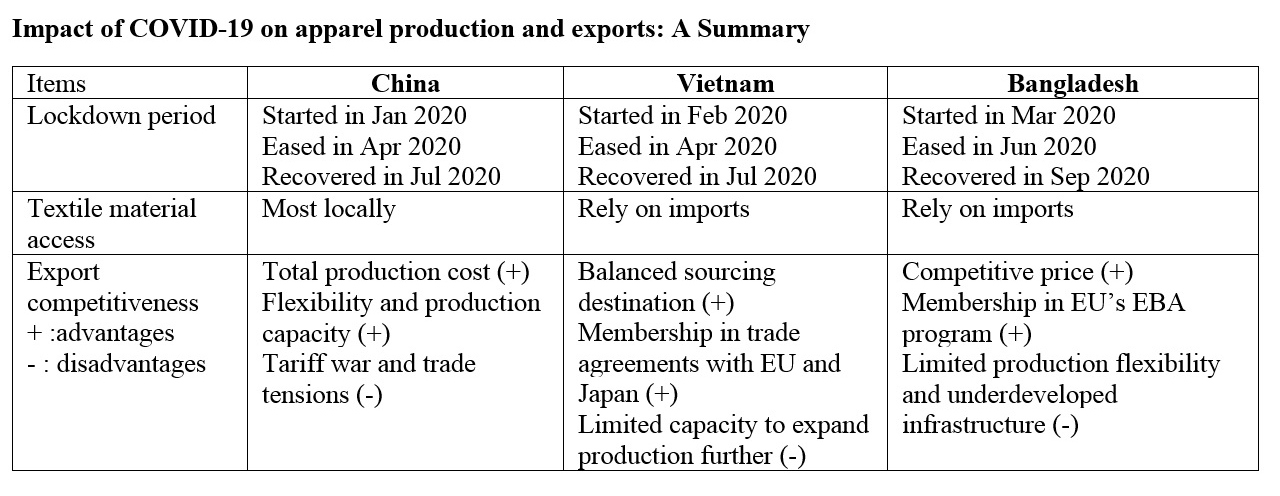
During the pandemic, three factors are most relevant to a country’s apparel export performance: government lockdown measures, textile raw material access, and comprehensive export competitiveness. Against these three factors, apparel producers and exporters in China, Vietnam, and Bangladesh face common but differentiated business challenges and opportunities during the pandemic (see the table above).
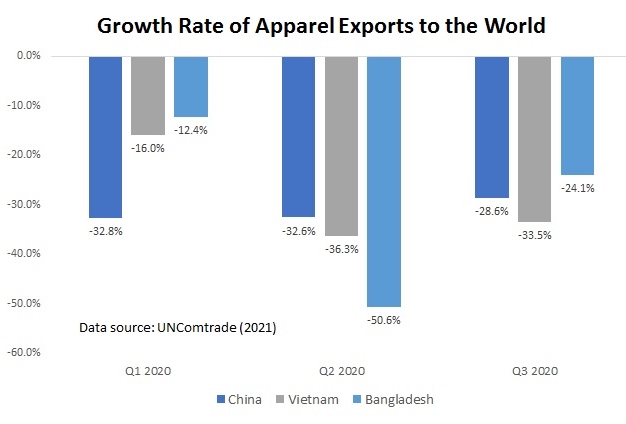
China, Vietnam, and Bangladesh all suffered an unprecedented (nearly 30% year over year) drop in their apparel exports to the world in 2020 (Q1-Q3) due to COVID-19. This result mirrored the reduced import demand in the world’s major apparel consumer markets, where the local economies were also hit hard by the pandemic, including the US (down 2.3%), the EU (down 4.3%), and Japan (down 4.8%).
However, the three countries’ export performance is most different in the US market—China’s apparel exports dropped by 31.6%, much steeper than Vietnam (down 6.9%) and Bangladesh (down 12.6%). It seems that even though COVID-19 may favor China as an apparel sourcing base from an economic perspective, US fashion companies have given more weight to non-economic factors, such as the outlook of the trade war, in their sourcing decisions involving China.
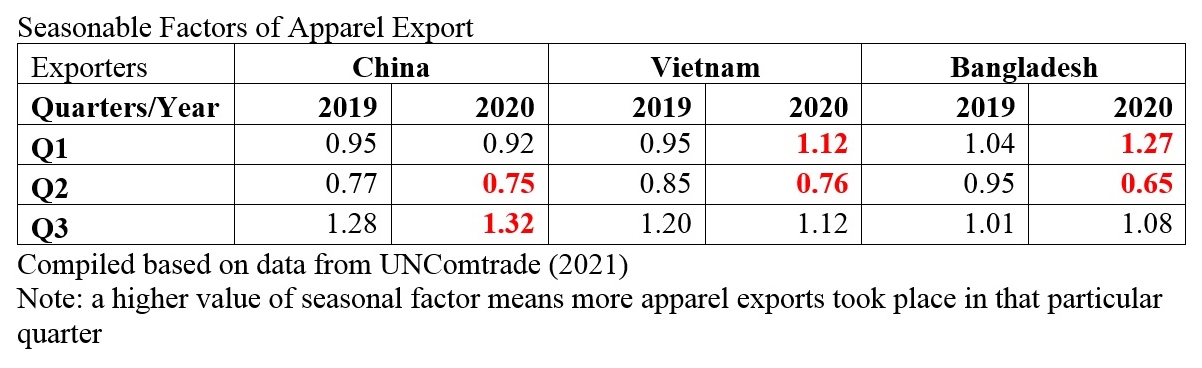
COVID-19 had disrupted apparel exporters’ regular production and export schedule in 2020. The lockdown measures in these three countries seem to affect their export seasonal pattern most significantly. For example, as the first country hit by COVID-19, China’s apparel exports were at the bottom from February to April 2020; however, China’s apparel exports recovered quickly since May 2020 when factories resumed production. In comparison, apparel exports from Vietnam and Bangladesh were at their lowest level from April to May and May to June 2020, respectively, when their factories had to close.
Additionally, Bangladesh’s apparel export seasonality had experienced a more dramatic change in 2020 than in China and Vietnam. A possible reason behind the phenomenon is the export product structure. Notably, China and Vietnam export a more diverse range of products, whereas apparel exports from Bangladesh concentrate on basic fashion items.
Industry sources also indicate that between February 2020 and February 2021, US apparel imports from China and Vietnam see a significant structural change—they include more COVID-popular items such as sweaters, smock dresses, and sweatpants, and fewer dresses, shirts, and suits. However, over the same period, the product structure of US apparel imports from Bangladesh barely changed, and they also included few COVID-popular categories mentioned above. In other words, despite order cancellations, garment factories in China and Vietnam seem more likely to receive new sourcing orders than their counterparts in Bangladesh because of advantages in production flexibility and agility.
Further, China, Vietnam, and Bangladesh all turned less diversified in their apparel export market during the pandemic. Notably, the US, EU, and Japan have become more critical export markets ever. Compared with fashion companies’ efforts in sourcing diversification, it could be more challenging for garment-producing countries to diversify their export market during the pandemic.
Further reading: Victoria Langro and Sheng Lu (2021). Sourcing’s new order – Covid’s impact on world’s top three apparel exporters. Just-Style.
[for FASH455 in spring 2022: If you comment on this blog post, please respond to this question: as we are 2 years into the pandemic, why or why not do you think the study’s findings are still valid?]
About Lora Merryman
Lora Merryman is a Master of Science student in Fashion and Apparel Studies at the University of Delaware (class of 2021). She also graduated from the UD with a Bachelor’s Science in Fashion Merchandising in 2020. She currently works for QVC as a global sourcing intern.
Lora was selected as a 2020 University of Delaware summer scholar. She also served as a graduate teaching assistant for FASH455 in Fall 2020 and Winter 2021. Lora is the author of a recent research publication on data science education for fashion majors, featured by Just-Style and several other industry news outlets.
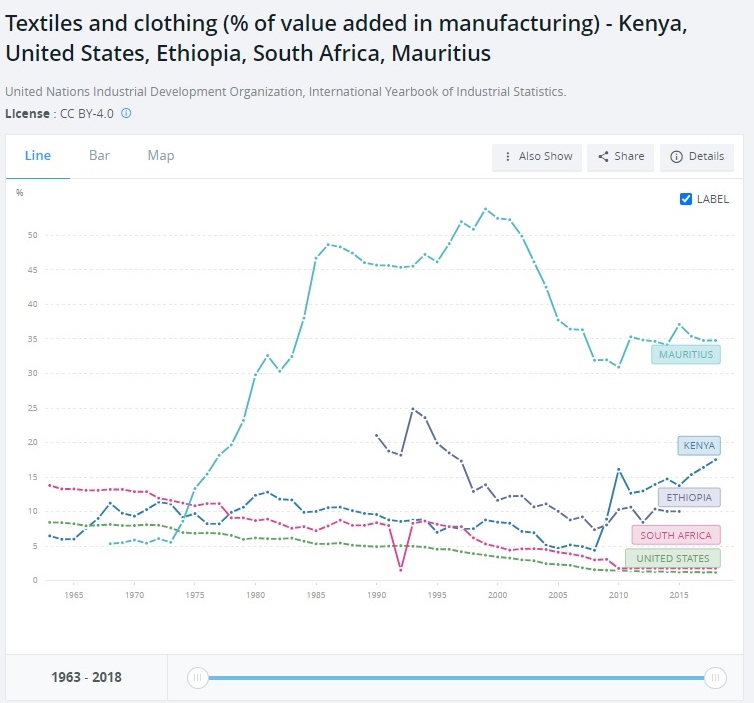
#1: In history, the garment industry helps many developing countries start the industrialization process. Given the situation described in the case study, why or why not do you think the Eastern African countries are following the same development path? Should they?
#2: Notably, very few used clothing exported from the United States to EAC countries were actually “Made in USA”—they were originally imported from Asian countries such as China, Vietnam, and Bangladesh. Also, most U.S. used clothing exports to EAC were “free giveaways” by U.S. consumers. Is it ethical for SMART to oppose the used clothing import ban so that its own can make a profit? What is your evaluation? If you were the president of SMART, how would you respond to the ethical concerns?
#3: As we are talking about the opportunities associated with the circular economy, why or why not do you think accepting used clothing imports will lead to a sustainable economic development path for EAC countries?
#4: To which extent do you think automation in garment manufacturing will challenge the conclusions of the textile and apparel stages of development theory we discussed in the class?
#5: If automation can only create “factories without workers” in the US and resulting in more garment workers in the developing countries lose their jobs, should we still support the efforts and make it happen? What is your assessment?
(Welcome to our online discussion. For students in FASH455, please address at least two questions and mention the question number (#) in your reply)
#1 Studies show that the Section 301 punitive tariff on imports from China hurts both US fashion retailers and ordinary consumers. But why doesn’t President Biden announce to remove the tariffs and stop the trade war?
#2 It doesn’t seem the tariff war with China has brought more apparel manufacturing back to the US. Is this result expected or surprising? How does the outcome of the trade war support or challenge the trade theories we learned in the class (e.g., mercantilism, absolute advantage, comparative advantage, and factor proportion theories)?
#3 The U.S.-China tariff war continues during the pandemic, resulting in higher sourcing costs for US fashion brands and retailers, which have been struggling hard financially. In such a case, if you were the CEO of a leading US fashion brand, why or why not would you pass the tariff burden to consumers, i.e., ask consumers to pay a higher price?
#4 Why or why not do you think the tariff war with China has fundamentally shifted US fashion companies’ sourcing strategy?
#5 What’s your take on “tariff engineering” adopted by fashion companies? A smart idea? Loophole? Controversial? Need to be encouraged/discouraged? And Why?
#6 Any reflections on the video discussion (above) regarding the US apparel industry’s view on the impact of the tariff war during the pandemic?
(Welcome to our online discussion. For students in FASH455, please address at least two questions and mention the question number (#) in your reply)
[Discussion is closed]
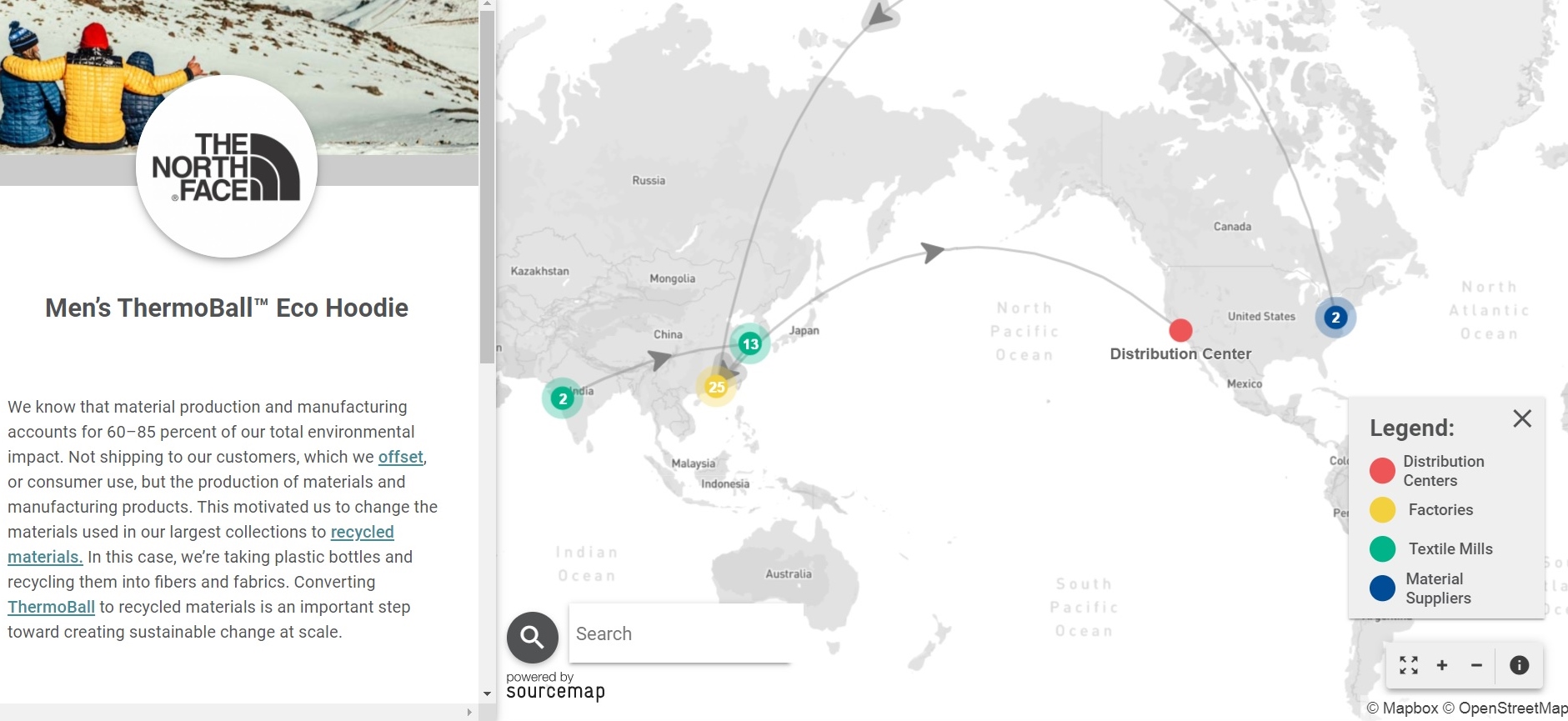
#1 Why or why not do you think VF Corporation should de-globalize its supply chain—for example, bringing more sourcing and production back to the United States?
#2 Given such a globalized operation, should we still call VF Corporation an American company? Also, does the label “Made in ___” still matter today?
#3 Is the sole benefit of globalization helping us get cheaper products? How to convince US garment workers who lost their jobs because of increased import competition that they benefit from globalization also?
#4 How has COVID-19 changed your understanding of the benefits, costs, and debates on globalization? Do we still need globalization in a post-COVID world? Why?
#5 Throughout history, globalization has been viewed as a two-sided debate with social groups weighing its benefits and negative costs. With the emergence of COVID-19, how do you think certain social groups’ opinions towards globalization will change?
(Welcome to our online discussion. For students in FASH455, please address at least two questions and mention the question number (#) in your reply)
Key findings:
The apparel sourcing formula is getting ever more sophisticated today. US fashion brands and retailers consider a wide range of factors when deciding where to source their products. The long list of sourcing factors includes #1 Capacity, #2 Price & tariff, #3 Stability, #4 Sustainability, and #5 Quality (see the table below).
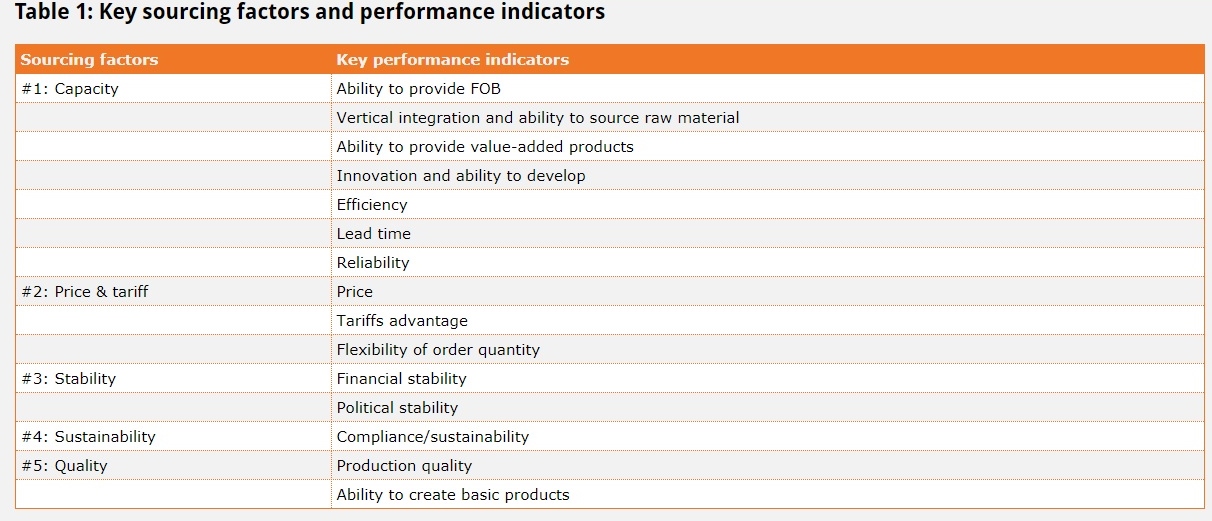
When evaluating the world’s top 27 largest apparel supplying countries’ performance, no souring destination appears to be perfect. In general, fashion brands and retailers have many choices for sourcing destinations that can meet their demand for production capacity, price point, and quality. However, fashion companies face much more limited options when seeking an apparel sourcing destination with a stable financial and political environment and a strong sustainability record.
When we compare the trade volume and the performance against the five primary sourcing factors:
In conclusion, fashion companies’ sourcing decisions seem to be more complicated and subtle than what is often described in public.
By Emma Davis and Sheng Lu
Further reading: Emma Davis & Sheng Lu (2021). Which apparel sourcing factors matter the most?. Just-Style.


While textile and apparel is well-known as a global sector, the latest statistics show that world textile and apparel trade patterns remain largely regional-based. Three particular regional textile and apparel trade flows are critical to watch:
First, Asian countries are increasingly sourcing textile raw material from within the region. As much as 85% of Asian countries’ textile imports came from other Asian countries in 2019, a substantial increase from only 70% in the 2000s. This result reflects the formation of an ever more integrated regional textile and apparel supply chain in Asia. However, as Asian countries become more economically integrated, textile and apparel producers in other parts of the world could find it more challenging to get involved in the region. With the recent reaching of several mega free trade agreements among countries in the Asia-Pacific region, such as the Regional Comprehensive Economic Partnership (RCEP), the pattern of “Made in Asia for Asia” is likely to strengthen further.
Second, the EU intra-region trade pattern for textile and apparel stays relatively strong and stable. Intra-region trade refers to trade flows between EU members. Statistics show that 54.6% of EU(27) members’ textile imports and 37.4% of their apparel imports came from within the EU(27) region in 2019. This pattern only slightly changed over the past decade. In other words, despite the reported increasing competition from Asian suppliers, many of which even enjoy duty-free market access to the EU market (such as through the EU Everything But Arms program), a substantial share of apparel sold in the EU markets are still locally made.
EU consumers’ preferences for “slow fashion” (i.e., purchasing less but for more durable products with higher quality) may contribute to the stable EU intra-region trade pattern. Many EU consumers also see textile and apparel as cultural products and do NOT shop simply for the price. This explains why Western EU countries such as Italy, Germany, and France rank the top apparel producers and exporters in the EU region despite their high wage and production costs.
Third, the Western Hemisphere (WH) supply chain faces significant challenges despite the seemingly growing popularity of “near-sourcing.” On the one hand, textile and apparel exporters in the Western-Hemisphere still rely heavily on the regional market. In 2019, respectively, as much as 79% of textiles and 86% of apparel exports from countries in the Western Hemisphere went to the same region.
However, on the other hand, the Western-Hemisphere supply chain is facing increasing competition from Asian suppliers. For example, in 2019, only 22% of North, South, and Central American countries’ textile imports and 15% of their apparel imports came from within the Western Hemisphere, a new record low in ten years. Similarly, in the first eleven months of 2020, only 15.7% of US apparel imports came from the Western Hemisphere, down from 17.1% in 2019 before the pandemic. The limited local textile production capacity and the high production cost are the two notable factors that discourage US fashion brands and retailers from committing to more “near-sourcing” from the Western Hemisphere.
In comparison, Asian countries supplied a new record high of 62.2% of textiles and 75% apparel to countries in the Western Hemisphere in 2019, up from 49.1% and 71.1% ten years ago. This trend suggests that as the competitiveness of “Factory Asia” continues to improve, even regional trade agreements (such as USMCA and CAFTA-DR) and their restrictive “yarn-forward” rules of origin have limits to protect the Western Hemisphere supply chain.
In comparison, Asian countries supplied a new record high of 62.2% of textiles and 75% apparel to countries in the Western Hemisphere in 2019, up from 49.1% and 71.1% ten years ago. This trend suggests that as the competitiveness of “Factory Asia” continues to improve, even regional trade agreements (such as USMCA and CAFTA-DR) and their restrictive “yarn-forward” rules of origin have limits to protect the Western Hemisphere supply chain.
Additionally, many say that the reaching of RCEP creates new pressure for the new Biden administration to consider joining the CPTPP and strengthening economic ties with countries in the Asia-Pacific region. Notably, several USMCA and CAFTA-DR members, such as Mexico, also have RCEP or CPTPP membership. Apparel producers in these Western Hemisphere countries may find it more rewarding to access the cheaper textile raw material from Asia through CPTPP or RCEP rather than claiming the duty-saving benefits for finished garments under USMCA or CAFTA-DR. Like it or not, the Biden administration’s inaction will also have consequences.
by Sheng Lu
Further reading: Lu, Sheng. (2021). Regional supply chains still shape textile and apparel trade. Just-Style
Key points:


First, affected by the surge of COVID cases and consumers’ slowed spending, the value of U.S. apparel imports decreased by 15.7% in December 2020, the worst performance since September 2020. Specifically, the value of U.S. apparel imports in December 2020 shrank by 6.4% from November 2020 (seasonally adjusted), compared with an 8.8% growth from Aug to September, a 4.6% growth from September to October (seasonally adjusted), and a slight 0.3% decline from October to November (seasonally adjusted).

The substantial drop of U.S. apparel imports in December 2020 also altered the recovery trajectory. Overall, the outlook of US apparel imports in 2021 is hopeful but remains far from uncertain.


Second, supporting the findings of some recent studies, data suggests that U.S. fashion brands and retailers continue to reduce their “China exposure” in 2020. For example, both the HHI index and market concentration ratios (CR3 and CR5) suggest that apparel sourcing orders are gradually moving from China to other Asian countries. Measured by value, only 23.7% of U.S. apparel imports came from China in 2020, a new record low in the past ten years (was 29.7% in 2019 and 33% in 2018).

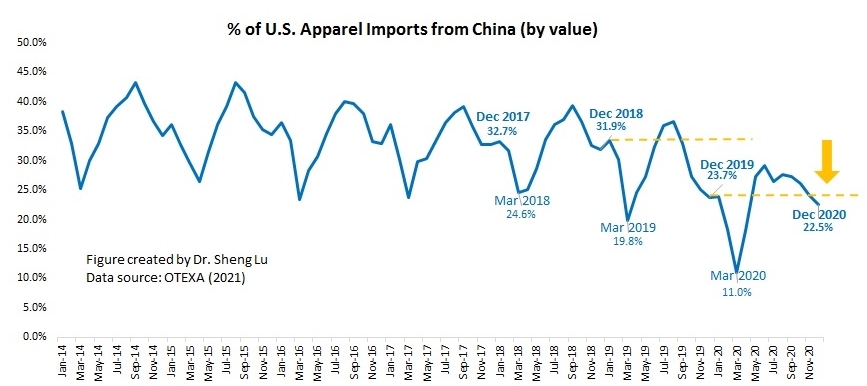
However, China’s apparel exports to the US lost more market shares from 2018-2019 than 2019-2020–it seems the impact of the trade war is more significant than the COVID.

The latest data confirms the concerns that some non-economic factors negatively affect China’s prospect as an apparel sourcing destination. For example, the reported forced labor issue related to Xinjiang, China, and a series of actions taken by the U.S. government (such as the CBP withhold release orders) have significantly affected U.S. cotton apparel imports from China. Measured by value, only 15.4% of U.S. cotton apparel came from China in 2020, compared with 22.2% in 2019 and 28% back in 2017. While China’s total textile and apparel exports to the US dropped by 30.7% in 2020, China’s cotton textiles and cotton apparel exports to the US went down more sharply by nearly 40%.
Third, despite Covid-19, Asia as a whole remains the single largest source of apparel for the U.S. market. Other than China, Vietnam (19.6% in 2020 vs. 16.2% in 2019), ASEAN (32.3% in 2020 and vs. 27.4% in 2019), Bangladesh (8.2% in 2020 vs.7.1% in 2019), and Cambodia (4.4% in 2020 vs. 3.2% in 2019) all gain additional market shares in 2020 from a year ago.

Fourth, due to seasonal factors, around 21% of U.S. apparel imports came from the Western Hemisphere in December 2020. Notably, to fulfill consumers’ last-minute holiday orders, which require faster speed to market, U.S. fashion companies typically do relatively more near-sourcing from September to December. In comparison, U.S. fashion companies place more sourcing orders with Asian suppliers from June to late September/early October.

However, no clear evidence suggests that U.S. fashion brands and retailers have been giving more apparel sourcing orders to suppliers from the Western Hemisphere because of COVID-19 and the U.S.-China tariff war. In 2020, 9.6% of U.S. apparel imports came from CAFTA-DR members (down from 10.3% in 2019) and 4.1% from USMCA members (down from 4.5% in 2019).
by Sheng Lu
See updated data: What’s Happening with Myanmar’s Apparel Exports (Updated August 2022)
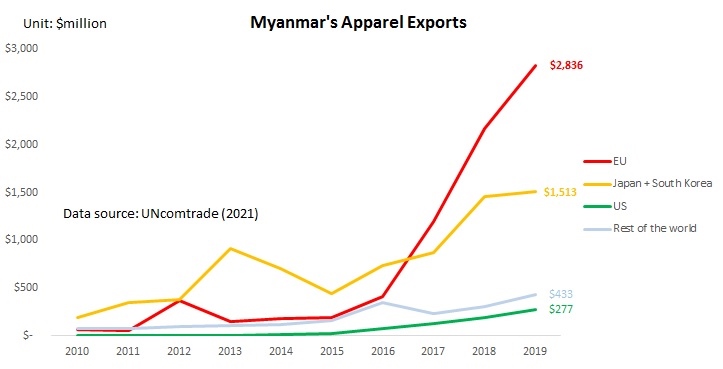
First, the textile and apparel industry plays a significant role in Myanmar’s economy, particularly the export sector. Data from the UNComtrade shows that textile and apparel accounted for nearly 30% of Myanmar’s total merchandise exports in 2019, followed by footwear and luggage. Industry data also indicates that the textile, apparel, and footwear industry employed more than 1.1 million workers in Myanmar in 2018, up from only 0.3 million in 2016.

On the other hand, as a developing country, Myanmar highly depends on the imported textile raw material. As of 2019, nearly 83% of Myanmar’s textile imports came from China.
Second, since the United States lifted the import ban on Myanmar and the EU reinstated the Everything But Arms (EBA) trade preferences for the country in 2013, Myanmar has been one of the most popular emerging apparel sourcing bases among fashion companies. From 2015 to 2019, Myanmar’s apparel exports to the world enjoyed an impressive 57% annual growth. Myanmar’s apparel exports to the EU (97% annual growth) and the United States (78% annual growth) have been growing particularly fast.
From 2019 to 2020, some of the top fashion brands that carry apparel items “Made in Myanmar” include United Colors of Benetton, Next, Only, Guess, Jack & Jones, and Mango.
Second, the reasons why fashion companies source apparel from Myanmar are multiple:
However, Myanmar still accounts for a tiny share in fashion companies’ total sourcing portfolio because of the size effect. For example, as of 2019, less than 0.1% of US and EU countries’ apparel imports came from Myanmar.
Third, western fashion brands could reevaluate their sourcing strategy from Myanmar because of its recent coup. Notably, in a new study, we find that apparel sourcing is not merely about “competing on price.” Instead, fashion companies give substantial weight to the factors of “political stability” and “financial stability” in their sourcing decisions—reputation risk matters. The country’s latest political instability will hurt Myanmar’s attractiveness as an apparel sourcing base, given many other alternatives out there.
Further, the international community, including the US and the EU, is considering new sanctions against Myanmar. Should Myanmar lose its EU’s EBA eligibility or no longer enjoy duty-free access to its key apparel export markets, the country’s apparel exports could be among the biggest losers. Notably, it could be challenging for Myanmar to find an alternative apparel export market during the pandemic. (for example, only 1.3% of Myanmar’s apparel exports went to China in 2019).
By Sheng Lu
Further reading:
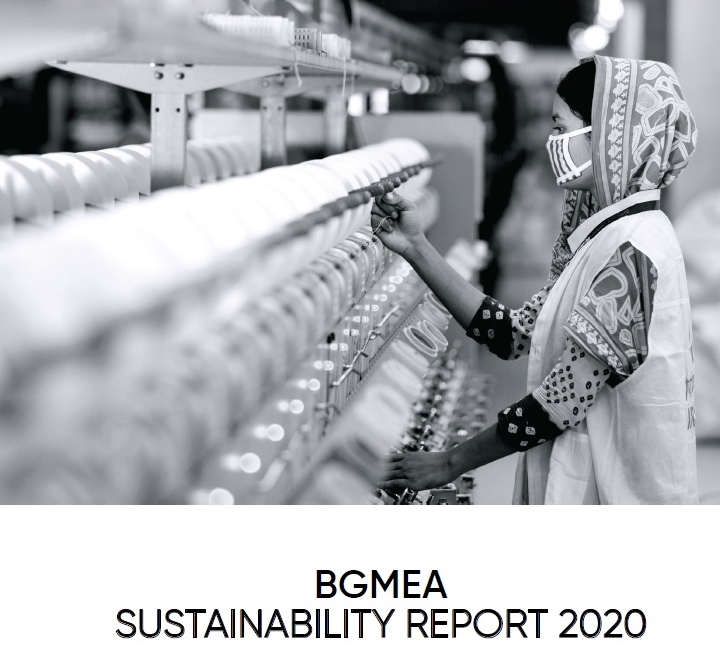
The full report is available HERE
Key findings:
The ready-made garment industry (RMG) is critical to Bangladesh economically. In 2018, RMG accounted for 84% of the country’s total exports and 11% of Bangladesh’s gross domestic product (GDP). The RMG industry supports about 4.1 million workers (including 65% female) in Bangladesh directly and additional 40 million workers through backward and forward linkage industries. North America and Europe are the two major destinations of RMG exports from Bangladesh.
Led by BGMEA, the Bangladeshi RMG industry has made efforts to improve in its social responsibility and environmental sustainability practices.
The Bangladeshi RMG industry still faces several major challenges that need to be addressed. For example:
Summarzied by Hailey Levin
Panelists
About the session
The Regional Comprehensive Economic Partnership (RCEP), signed in November 2020, is the world’s largest free trade agreement. Nearly half of the world’s textile and apparel exports currently come from the fifteen RCEP members. How will the new “rules of the game” in RCEP shape the future landscape of the textile and apparel supply chain in Asia? Who are the winners and losers of the agreement? Why US fashion brands and retailers also need to care about RCEP? The panel will interpret the key textile and apparel provisions in RCEP and share insights about the agreement’s broad implications on the textile and apparel sector.

In January 2021, Just-Style consulted a panel of industry leaders and scholars in its Outlook 2021–Key Issues to Shape Apparel Sourcing Management Briefing. Below is my contribution to the report. All comments and suggestions are more than welcome!
What do you see as the biggest challenges – and opportunities – facing the apparel industry in 2021?
I see COVID-19 and market uncertainties caused by the contentious US-China relations as the two most significant challenges facing the apparel industry in 2021.
The difficulties imposed by COVID-19 on fashion businesses are twofold. First, with the resurgence of COVID cases worldwide, when and how quickly apparel consumption can rebound to the pre-COVID level remain hard to tell, particularly in leading consumption markets, including the United States and Europe. As the apparel business is buyer-driven, the industry’s full recovery is impossible without a strong return of consumers’ demand. Numerous studies also show that switching to making and selling PPE won’t be sufficient to make up for losses from regular businesses for most fashion companies.
Second, COVID-19 will also continue to post tremendous pressures on the supply side. In the 2020 Fashion Industry Benchmarking Study, which I conducted in collaboration with the US Fashion Industry Association (USFIA), the surveyed sourcing executives reported severe supply chain disruption during the pandemic. These disruptions come from multiple aspects, ranging from a labor shortage, a lack of textile raw materials, and a substantial cost increase in shipping and logistics. Even more concerning, many small and medium-sized (SME) vendors, particularly in the developing countries, are near the tipping point of bankruptcy after months of struggle with the order cancellation, mandatory lockdown measures, and a lack of financial support. The post-covid recovery of the apparel business relies on a capable, stable, and efficient textile and apparel supply chain, in which these SME vendors play a critical role.
In 2021, fashion companies also have to continue to deal with the ramifications of contentious US-China relations. On the one hand, the chance is slim that the punitive tariffs imposed on Chinese products, which affect most textiles and apparel, will soon go away. On the other hand, we cannot rule out the possibility that the US-China commercial relationship will deteriorate further in 2021, as more sensitive, complicated, and structural issues began to get involved, such as national security, forced labor, and human rights. Compared with President Trump’s unilateral trade actions, the new Biden administration may adopt a multilateral approach to pressure China. However, it also means more countries could be “dragged into” the US-China trade tensions, making it even more challenging for fashion companies to mitigate the trade war’s supply chain impacts.
Meanwhile, I see digitalization as a big opportunity for the apparel industry, not only in 2021 but also in the years to come. Fashion brands and retailers will increasingly find digitalization ubiquitous to their businesses—like air and electricity. In 2021, I expect fashion companies will make more efforts to creatively use digital technologies to interact with consumers, make transactions, develop products, and improve consumers’ online shopping experiences. Thanks to the adoption of digital tools, apparel companies may also find new opportunities to improve sustainability, better understand their customers through leveraging data science, and develop a more agile and nimble supply chain.
What’s happening with supply chains? How is the sourcing landscape likely to shift in 2021, and what can apparel firms and their suppliers do to stay ahead, remain competitive and build resilience for the future?
Apparel companies’ sourcing and supply chain strategies will continue to evolve in response to consumers’ shifting demand, COVID-19, and the new policy environment. Several trends are worth watching in 2021:
First, fashion companies’ sourcing bases at the country level will stay relatively stable in 2021 overall. For example, although it sounds a little contradictory, fashion companies will continue to treat China as an essential sourcing base and reduce their “China exposure” further, a process that has started years before the tariff war. Most apparel sourcing orders left China will go to China’s competitors in Asia, such as Vietnam, Bangladesh, and Cambodia. This also means that Asia, as a whole, will remain the single largest source of apparel imports, particularly for US and Asia-based fashion companies. In comparison, still, “near-sourcing” is NOT likely to happen on a large scale, mainly because “near-sourcing” requires enormous new investments to rebuild the supply chain, and most fashion companies do not have the resources to do so during the pandemic.
Second, sourcing diversification is slowing down at the firm level, and more apparel companies are switching to consolidate their existing sourcing base. For example, as the 2020 USFIA benchmarking study found, close to half of the respondents say they plan to “source from the same number of countries, but work with fewer vendors” through 2022. Another 20 percent of respondents say they would “source from fewer countries and work with fewer vendors.” The results are understandable– competition in the apparel industry is becoming supply chain-based. Building a strategic partnership with high-quality vendors will play an ever more critical role in supporting fashion brands and retailers’ efforts to achieve speed to market, flexibility and agility, sourcing cost control, and low compliance risk. Thus, apparel companies find it more urgent and rewarding to consolidate the existing sourcing base and resources and strengthen their key vendors’ relations.
Third, apparel sourcing executives still need to keep a close watch on trade policy in 2021. However, we may see fewer news headlines about trade and more “behind the door” advocacy and diplomacy. Specifically:
by Sheng Lu
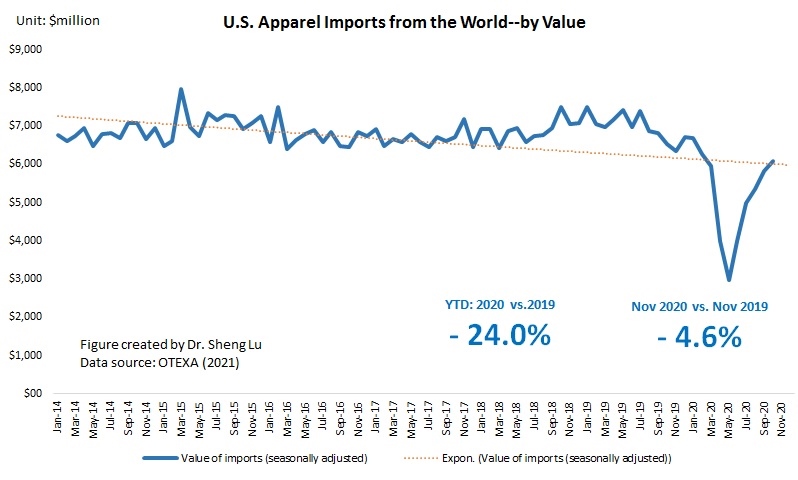

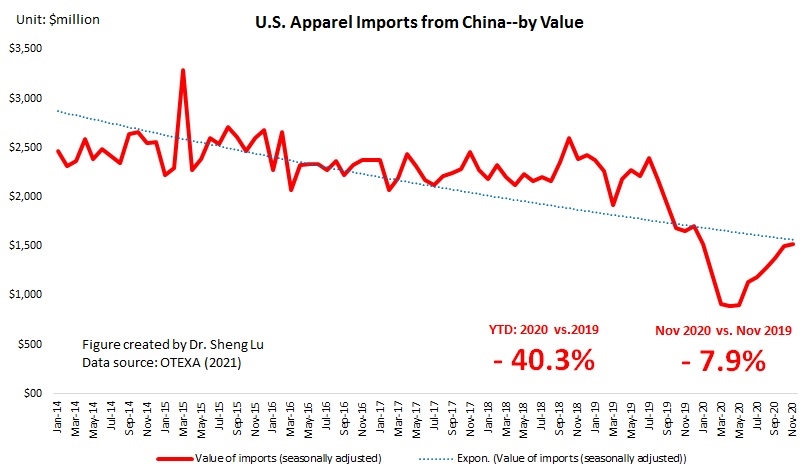
First, U.S. apparel imports continue to rebound thanks to consumers’ robust demand. However, the speed of recovery slowed. Specifically, The value of U.S. apparel imports in November 2020 marginally went down by 0.3% from October 2020 (seasonally adjusted), compared with an 8.8% growth from Aug to September and a 4.6% growth from September to October (seasonally adjusted).
As of November 2020, the volume of U.S. apparel imports has recovered to around 85-90% of the pre-coronavirus level. This result echoes the trend of U.S. apparel retail sales (NAICS 4481), which also indicates a “V-shape” rebound since May 2020.


Data further shows that compared with the 2008 world financial crisis, Covid-19 has caused a more significant drop in the value of U.S. apparel imports. However, it seems the post-Covid recovery process has been more robust than the 2009 financial crisis. The Auto Regressive Integrated Moving Average (ARIMA) model forecasts that at the current speed of recovery, the value of U.S. apparel imports (seasonally adjusted) could start to enjoy a positive year over year (YoY) growth by February 2021 (or around 11 months after the outbreak of Covid-19 in March 2020). In comparison, when recovering from the 2008 world financial crisis, it took almost 15 months to turn the YoY growth rate from negative to positive).
With the new lockdown measures taken in response to the resurgence of the Covid cases, the outlook of US apparel imports remains uncertain. It should also be noted that the period from December to April usually is the light season for apparel imports.


Second, supporting the findings of some recent studies, data suggests that U.S. fashion brands and retailers continue to reduce their “China exposure” in 2020. For example, both the HHI index and market concentration ratios (CR3 and CR5) suggest that apparel sourcing orders are gradually moving from China to other Asian countries. Related, since August 2020, China’s market shares in total U.S. apparel imports have been sliding both in quantity and in value.
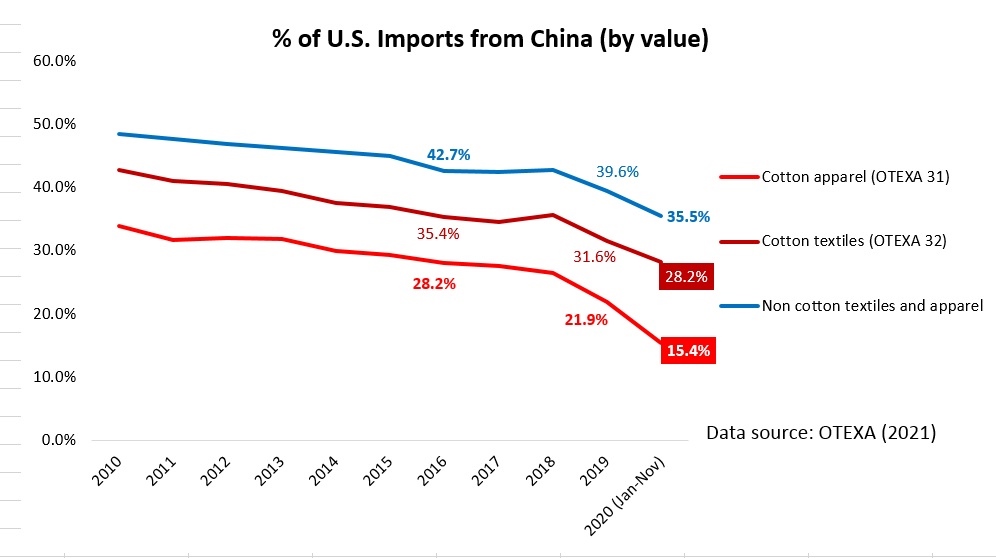
We should NOT ignore the impact of non-economic factors on China’s prospect as an apparel sourcing destination. For example, the reported forced labor issue related to Xinjiang, China, and a series of actions taken by the U.S. government (such as the CBP withhold release orders) have significantly affected U.S. cotton apparel imports from China. Measured by value, from January to November 2020, only 15.4% of U.S. cotton apparel came from China, compared with 22.2% in 2019 and 28% back in 2017. While China’s total textile and apparel exports to the US dropped by 32% in 2020 (Jan to Nov), China’s cotton textiles and cotton apparel exports to the US went down more sharply by 41.1% and 47.2%, respectively.

Third, despite Covid-19, Asia as a whole remains the single largest source of apparel for the U.S. market. Other than China, Vietnam (19.8% YTD in 2020 vs. 16.2% in 2019), ASEAN (32.6% YTD in 2020 and vs. 27.4% in 2019), Bangladesh (8.2% YTD in 2020 vs.7.1% in 2019), and Cambodia (4.4% YTD in 2020 vs. 3.2% in 2019) all gain additional market shares in 2020 (Jan to Nov) from a year ago.

Fourth, still, no clear evidence suggests that U.S. fashion brands and retailers have been giving more apparel sourcing orders to suppliers from the Western Hemisphere because of COVID-19 and the U.S.-China tariff war. In the first eleven months of 2020, 9.4% of U.S. apparel imports came from CAFTA-DR members (down from 10.3% in 2019) and 4.4% from USMCA members (down from 4.5% in 2019). The limited local textile production capacity and the high production cost are the two notable disadvantages of sourcing from the region.
by Sheng Lu
This blog post is also available in PDF
Suggested citation: Lu, Sheng. (2020). Textile and Apparel Products Covered by the U.S.-China Tariff War Reference List (updated December 2020). Retrieved from http://www.shenglufashion.com


by Sheng Lu
Interview with Dr. Douglas A. Irwin on the historical benefits of trade
Minute 1’53s: What’s wrong with the view that trade is a zero-sum game.
Minute 4’50s: A review of the concept of comparative advantage by using the textile and apparel industry as an example.
Minute 7’30s: What is trade protectionism?
Minute 9’02s: Why did the United States brace the idea of free trade after WWII and push forward the establishment of the multilateral trading system GATT?
Minute 10’30s: what drives the U.S. trade deficit from the economic perspective?
Minute 15’57s: international trade and U.S. apparel manufacturing jobs
About TAL Apparel
TAL Apparel is one of the world’s largest apparel companies, with over 70 years of history. Owned by Hong-Kong based TAL group, TAL Apparel employs about 26,000 garment workers in 10 factories globally, producing roughly 50 million pieces of apparel each year, including men’s chinos, polo tees, outerwear, and dress shirts. TAL Apparel claims it makes one in six dress shirts sold in the United States, including for well-known U.S. fashion brands such as Brooks Brothers, Bonobos, and LL Bean.
Other than owning factories in Asian countries such as Vietnam, China, Malaysia, Indonesia, and Thailand, TAL Apparel opened its first garment factory in Ethiopia in 2018 – based at the country’s flagship Hawassa Industrial Park. Among the reasons behind the decision is Ethiopia’s duty-free access to the US under the African Growth and Opportunity Act (AGOA), and to Europe under the Everything But Arms (EBA) initiative.
Discussion questions [Anyone is more than welcome to join our online discussions; For FASH455, please address at least two questions in your comment; please also mention the question number in your comment.]

The latest data collected from industry sources show that the monthly minimum wages for garment workers vary significantly in the world, ranging from as low as USD $26 in Ethiopia to USD $1,764 in Belgium in 2019. The world average stood at USD $470/month that year.
These figures echo the findings of a 2017 study by Public Radio International, which also shows a significant variation of the minimum wage level among garment workers worldwide. Meanwhile, there was no clear evidence that the minimum wage level in 2019 was notably higher than in 2017 in many countries we examined.

On the other hand, we need to interpret the minimum wage level in the context of the local living wage. According to the International Labor Organization (ILO), a living wage is defined as the theoretical income level that an individual must earn to pay for basic essentials such as shelter, food, and water in the country where a person resides. As shown in the figure above, a high minimum wage in absolute terms does not always guarantee a high standard of living and vice versa. For example, while the United States offers one of the world’s highest minimum wages for garment workers (USD $1,160/month), that minimum wage level was only about 70% of the living wage (USD $1,660/month) 2018-2019. In comparison, garment workers in Indonesia earned a much lower nominal minimum wage of USD $181/month. That wage level, however, was much higher than the reported USD $103/month living wage over the same period.
Additionally, the results suggest that fashion companies’ sourcing decision today is far more than just about “chasing the lowest wage or price.” For example, while China and Vietnam are the two largest apparel suppliers for the U.S. market, the minimum wage level for garment workers in the two countries have exceeded most of their competitors in Asia.
By Emma Davis (Research Assistant, Fashion and Apparel Studies, University of Delaware) and Dr. Sheng Lu
The panel discussion is part of the 2020 Virtual Apparel and Textile Sourcing Show. Topics covered by the session include:

“Hugo Boss’s sourcing strategies are relatively different from fashion brands and retailers in the US. Hugo Boss’s self-owned production facilities are all located in Europe, and they follow the general trend of Eastern Europe being responsible for mass production items and Western Europe being responsible for more of the fine craftsmanship/made-to-measure items. Hugo Boss’s production distribution, which is 53% in Europe, 40% occurs in Asia, 6% in Africa, and 1% in the Americas, is much more diverse than the production distribution of the United States’ T&A industry, which heavily relies on Asian suppliers. It is indicative of a strong regional supply chain in Europe, and because the regional supply chain in the Americas is not as strong due to complicated trade agreements and lack of production capacity, many fashion brands and retailers heavily depend on overseas production from Asian countries. “
“I think that EU’s sourcing strategies are different from the U.S.’s sourcing strategy in the sense that it is kept within Europe. In the U.S., they are currently trying to bring the sourcing supply chain back to the Western Hemisphere, but it is very difficult for fashion brands to concede when sourcing is cheaper in Asia, and there is not enough labor who are trained for the work that they need. Over at the EU, with everything kept within the organization, it is a lot easier to find factories within different countries without reducing GDP since it is kept within the organization.”
“I think that one of the biggest differences between EU and US fashion brand’s sourcing strategies is the fact that there is a much higher luxury or high-end apparel market in the EU. Since they produce mostly luxury apparel products, they naturally place a lot more emphasis on the quality of their products being made rather than the quantity and speed of production. Since the US is more fast-fashion heavy, we do a lot more outsourcing of production so retailer’s are able to produce as many clothes as possible within a short period of time at a very low cost which is simply not achievable in many US clothing factories.”
“Hugo Boss pays close attention to where they are sourcing from and where each of their products should be made within their 4 production facilities. This stuck out to me because I don’t know how many US fashion brands have their own production facilities. I know a lot of brands outsource to countries like China and Bangladesh to factories who are also making clothing for many different brands.”
“EU has developed countries as well as developing countries, unlike the US. Western EU countries like Italy, France, UK and Germany are developed and focus more so on textile production. Whereas developing countries in the EU like Poland and Hungary focus more heavily on apparel manufacturing. In addition, unlike the US, the developed countries in EU also produce apparel exports, of high level, luxury goods.”
“It seems that in the EU the main focus is quality and social standards for these fashion brands and production. In the US, promoting local economic growth seems to be more of the focus of the free trade agreements. Sourcing for HUGO BOSS at least has strategically chosen factories where they can ensure quality checks and know how to conditions are. In the US, outside of the region, it seems that there are a lot of brands who do not know their secondary producers…”
“As the EU is more focused on production in high end markets than is the US, they (EU fashion companies) source more high-end quality fabrics. Progress has been made through technological advances, as the HUGO BOSS group developed the “smart factory” to further improve the quality of their fabrics and recognize any potential flaws before production. This stood out to me as a major difference, considering the US focuses on producing more fast-fashion goods and prioritizes high productivity overall quality garments. Also, they are more careful in their selection of suppliers and strive to build more long-term relationships with their suppliers. In comparision, most US fashion companies just try to produce as cheap and fast as possible through a short-term transctional-based importer-vendor relationship.”
“I think the sourcing strategies are similar to the U.S. in the fact that they source from various countries, creating this sense of “Made in the World.” However, there are differences as well. HUGO BOSS uses their own production facilities in addition to sourcing from other countries which is something we do not see often in the US. In fact, most brands and retailers in the US do not have their own production facilities or vertical supply chain, but instead source from overseas. Additionally, HUGO BOSS carefully selects their suppliers and immediately focus on social responsibility. US sourcing strategies seem to emphsis more on finding a factory with the lowest labor costs. EU brands and retailers, on the other hand, test their suppliers with test orders before selecting them as a supplier for the brand, and immediately develop social responsibility practices, such as trainings and building relationships. In the US, brands and retailers tend to focus on social responsibility in response to bad press and typically do so by a top-down approach.”
“The sourcing strategy in the Europe cares more about social impact. Retailers and brands there promote and educate their suppliers to be sustainable and take over their social responsibility. Another one is the European fashion retailers and brands are more likely to locate their product facilities within the Europe. Since the Europe does have a relatively stable and complete supply chain, the retailers and brands are able to saving transportation cost and expand the lead time. Third, the technology becomes an important factors for retailers and brands to consider. They are attempting to utilize technology to enhance the performance and their production process. “
“Hugo Boss strives to be the most desirable fashion and lifestyle brand in the premium sector. This shows in their emphasis on design, comfort, fit, and durability, as well as being mindful of their social and environmental impacts. They maintain long term relationships with a careful selection of suppliers, demand social compliance, and stay up to date with their “smart factory” aka AIs to speed up production and quality. They also source heavily from Asia, but also developed countries such as Italy and Germany. These values and practices are manifested in American brands, however, I believe we aren’t as extensive with sourcing from developed countries (such as Italy). From what I have learned thus far, it seems we source from countries close by and/or developing, but not so much mingling with luxury known countries, such as France or Italy (and if we do, the prices are expensive, and American customers don’t want to pay higher prices). We (US), too, source heavily from Asia, because it is cheap, and still focus internally on our own country when it comes to being more competitive in technological advancements. American and EU consumers alike value transparency in the clothing brands they buy from, and American brands are mindful of this, too. I would say we are more alike than different.”
[Please feel free to critique the comments above and join our online discussion]
Related readings


First, U.S. apparel imports continue to rebound thanks to consumers’ robust demand. The value of U.S. apparel imports in September 2020 went up by 8.8% from August 2020 (seasonally adjusted), a new record high since March 2020 when COVID-19 broke out in the States. As of September 2020, the volume of U.S. apparel imports has recovered to around 84-85% of the pre-coronavirus level. This result echoes the trend of U.S. apparel retail sales (NAICS 4481), which also indicates a “V-shape” rebound since May 2020. As fashion brands and retailers typically build their inventory for holiday sales (such as back to school, Thanksgiving, and Christmas) from July to October, the upward trend of U.S. apparel imports hopefully will last for another 1-2 months.


Data also shows that compared with the 2008 world financial crisis, Covid-19 has caused a more significant drop in the value of U.S. apparel imports. However, it seems the post-Covid recovery process has been more robust than the 2008 financial crisis. Notably, the Auto Regressive Integrated Moving Average (ARIMA) model forecasts that at the current speed of recovery, the value of U.S. apparel imports (seasonally adjusted) could start to enjoy a positive year over year (YoY) growth by February 2021 (or around 11 months after the outbreak of Covid-19 in March 2020). In comparison, when recovering from the 2008 world financial crisis, it took almost 15 months to turn the YoY growth rate from negative to positive.
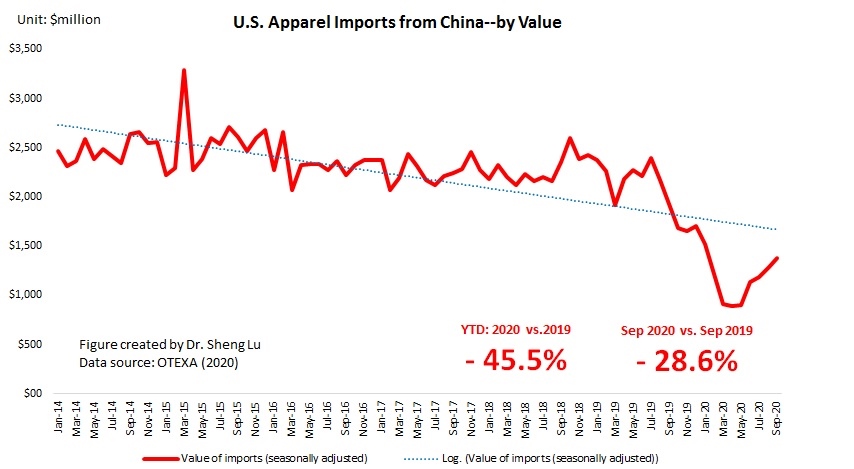

Second, still, no evidence suggests that U.S. fashion companies are giving up China as one of their essential apparel-sourcing bases. Notably, since May 2020, China had quickly regained its position as the top apparel supplier to the U.S. market. From June to September 2020, China’s market shares have stably stayed at around 27-28% in value and 40-42% in quantity.
According to the media, some sourcing orders are returning to China as China’s competitors in Asia are struggling with more limited production capacity, shortage of raw material and supply chain disruption caused by Covid-19.

That being said, trade data suggests that U.S. fashion companies continue to reduce their “China exposure” overall. For example, both the HHI index and the market concentration ratios (CR3–total market shares of top 3 suppliers and CR5–total market shares of top 5 suppliers) indicate that apparel sourcing orders are gradually moving from China to other Asian countries–it is interesting to see HHI, CR3 and CR5 all suggest a more diversified apparel sourcing base in 2020 (Jan-Sep) than in 2018 and 2019; however, the value of CR5 (exclude China) reached a new record high in 2020 (Jan-Sep).
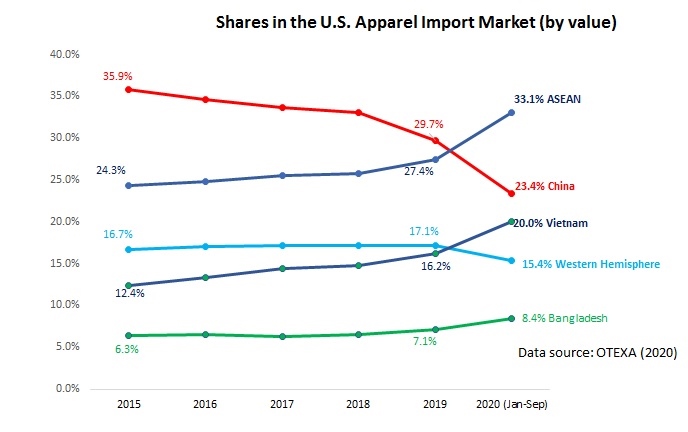
Third, related to the point above, despite Covid-19, Asia as a whole remains the single largest source of apparel for the U.S. market. Other than China, Vietnam (20.0% YTD in 2020 vs. 16.2% in 2019), ASEAN (33.1% YTD in 2020 and vs. 27.4% in 2019), Bangladesh (8.4% YTD in 2020 vs.7.1% in 2019), and Cambodia (4.4% YTD in 2020 vs. 3.2% in 2019) all gain additional market shares in 2020 from a year ago.
Fourth, still, no clear evidence suggests that U.S. fashion brands and retailers have been giving more apparel sourcing orders to suppliers from the Western Hemisphere because of COVID-19 and the trade war. In the first nine months of 2020, only 9.1% of U.S. apparel imports came from CAFTA-DR members (down from 10.3% in 2019) and 4.4% from USMCA members (down from 4.5% in 2019). Confirming the trend, in the first nine months of 2020, the value of U.S. yarns and fabrics exports to USMCA and CAFTA-DR members also suffered a 26% decline from a year ago. The heavy reliance on textile supply from the U.S. (implying more vulnerability to the Covid-19 supply chain disruptions) and the price disadvantage could be among the major contributing factors.
Just an anecdote–according to some industry insiders, the booming of E-commerce during the pandemic may also possibly explain why “near sourcing” is not reflected in trade data despite its reported growing popularity. Specifically, US fashion retailers would:1) import products from Asia and stock them in the bonded warehouses in Mexico (note: bonded warehouse means dutiable goods may be stored, manipulated, or undergo manufacturing operations without payment of duty). 2) When US consumers place orders, the retailer will ship products directly from these bonded warehouses in Mexico to the final destination. Most importantly, retailers could take advantage of the US de minimis rule (i.e., goods valued at $800 or less could enter the U.S. duty-free one person one day) and avoid paying tariffs– even though these products are counted as imports from Asian countries that do not have a free trade agreement with the United States. In other words, these products are not officially treated as imports from Mexico even though they are shipped from bonded warehouse in Mexico.
by Sheng Lu
Speaker: Wilson Zhu, the Chief Operating Officer of Li & Fung
Event summary:
(summarized by Andrea Attinello)
From findings of the 2020 USFIA Fashion Industry Benchmarking Study :
The surveyed U.S. fashion companies demonstrate more readiness and interest in using the US-Mexico-Canada Trade Agreement (USMCA) for apparel sourcing purposes in 2020 than a year ago:
For companies that were already using NAFTA for sourcing, the vast majority (77.8 percent) say they are “ready to achieve any USMCA benefits immediately,” up more than 31 percent from 2019.
Even for respondents who were not using NAFTA or sourcing from the region, about half of them this year say they may “consider North American sourcing in the future” and explore the USMCA benefits.
Nevertheless, when asked about the potential impact of USMCA on companies’ apparel sourcing practices, some respondents expressed concerns about the rules of origin changes. These worries seem to concentrate on denim products in particular. For example, one respondent says, “USMCA changes negatively affects our denim jeans sourcing particularly with the new pocketing rules of origin.” Another adds, “Denim pocketing ROO change is a concern but manageable.”
It also remains to be seen whether USMCA will boost “Made in the USA” fibers, yarns, and fabrics by limiting the use of non-USMCA textile inputs. For example, while the new agreement expands the Tariff Preference Level (TPL) for U.S. cotton/man-made fiber apparel exports to Canada (typically with a 100 percent utilization rate), these apparel products are NOT required to use U.S.-made yarns and fabrics.
Related readings:
The full report is available HERE. Key findings:
1. The garment industry in the Asia-Pacific region is particularly vulnerable to the adverse impact of COVID-19 because of the size of the industry present and the high stakes involved. Notably, garment workers (over 60 million in total, including 35 million women) accounted for 21.1% of the manufacturing employment in the region as of 2019. Over 60% of the world’s apparel exports currently come from the Asia-Pacific region.
2. The cumulative impacts of COVID-19 on garment supply chains have been both far-reaching and complex: 1) As of September 9, 2020, more than 31 million garment workers in the Asia Pacific region were still affected by factory closure (i.e., mandatory closures of non-essential workplaces). 2) The drop in consumer demand and the decline in retail sales in the primary apparel consumption markets across the world have affected garment workers in the Asia-Pacific region negatively. As of September 9, 2020, 49% of all jobs in the Asia-Pacific garment supply chains (29 million) were dependent on demand for garments from consumers living in countries with the most stringent lockdown measures in place. Another 31 million jobs (51%) depended on consumer demand that is based in countries with a medium level of lockdown measures in place. 3) COVID-19 has further caused supply chain disruptions and prevented imported inputs into garment production from arriving in time. The heavy reliance on textile raw material supply from China makes many apparel producing countries in South-East Asian countries highly vulnerable to shortages of inputs.
3. The world apparel trade has fallen in the first half of 2020 sharply. This includes a 26% YoY drop in the US, a 25% drop in the EU, and a 17% drop in Japan. However, the timing and magnitude of these import declines vary significantly — China’s exports started to drop first at the beginning of the year,2020. Then, the exports from Vietnam, Bangladesh, Indonesia, and India began to decrease also since February (a joint effect of the shortage of raw material + decreased import demand). Data further shows that the drop in world apparel trade has been more significant than other products in the first half of 2020.
4. Apparel suppliers in the Asia Pacific region have been struggling with order cancellations AND longer payment terms insisted on by Western fashion brands and retailers. Garment factories say that they don’t have the leverage to ‘push back’ against these changes to contract terms and buyer policies.
5. Thousands of garment factories in the Asia-Pacific region closed at least temporarily because of COVID-19, some of them indefinitely. For example, In Cambodia, approximately 15-25% of factories had no orders at the end of the June 2020. Likewise, around 60% of garment factories in Bangladesh reported closing for more than 3 weeks. Related, layoffs have been widespread. For example, according to Indonesia’s Ministry of Industry, approximately 30% of their apparel and footwear workforce had been laid-off by July 2020 (812,254 in total). In Cambodia, approximately 15% of their garment workers (more than 150,000 workers) were reported to have lost their jobs during the pandemic. Further, garment factories have been operating at reduced capacity during the pandemic. For example, in Bangladesh, as of July 2020, the proportion of workers returning to work after re-opening was only 57% of the pre-pandemic level. Similarly, in Vietnam, as of July 2020, the proportion of workers returning to work after re-opening was also just around 50% of the pre-pandemic level.
Related reading:
 FASH455 Global Apparel & Textile Trade and Sourcing