North American Apparel Market Leaders Talk

Panelists:

  • Julia Hughes, President, United States Fashion Industry Association (USFIA)
  • Bob Kirke, Executive Director, Canadian Apparel Federation (CAF)

Topics covered:

  • Textile and apparel trade policy updates
  • Impact of COVID-19 on the apparel sector and fashion companies’ responses
  • U.S.-Mexico-Canada  Trade Agreement (USMCA)
  • Forced labor and related compliance issues

COVID-19 and U.S. Apparel Imports (Updated: May 2020)

3

2

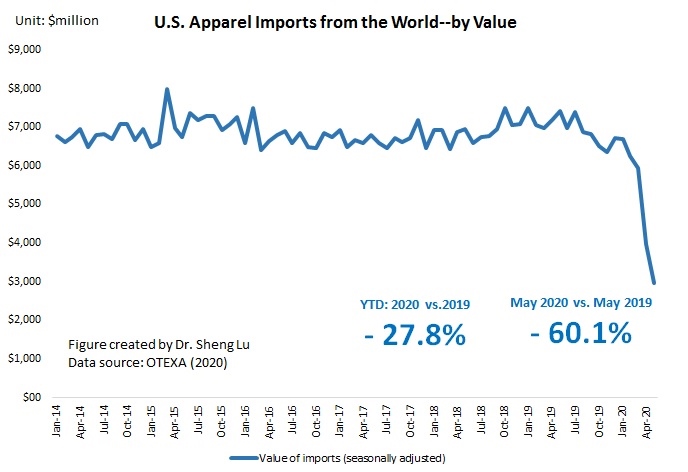
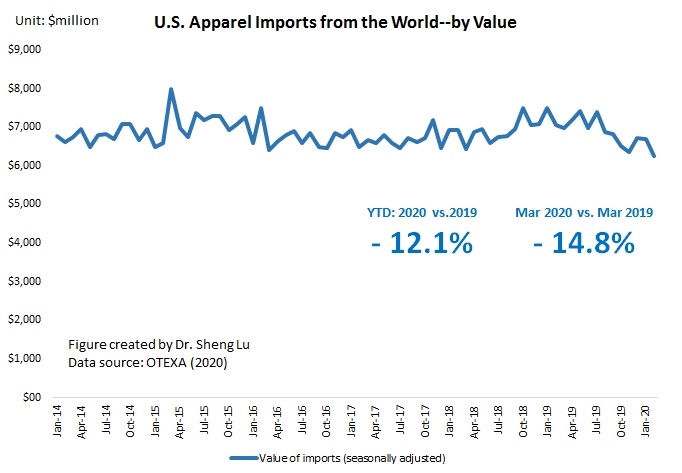
The latest statistics from the Office of Textiles and Apparel (OTEXA) show that the negative impact of COVID-19 on U.S. apparel imports deepened in March 2020. Specifically:

  • The value of U.S. apparel imports sharply decreased by 14.8% in March 2020 from a year ago. Between January and March 2020, the value of U.S. apparel imports decreased by 12.1% year over year, which has been worse than the performance during the 2008-2009 global financial crisis (down 11.8%).
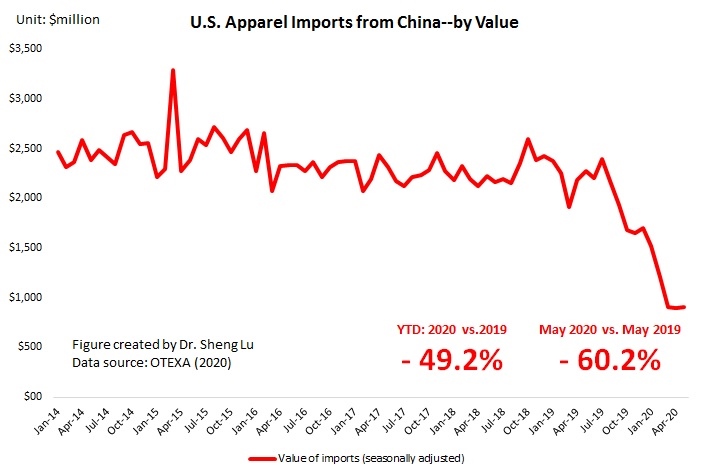
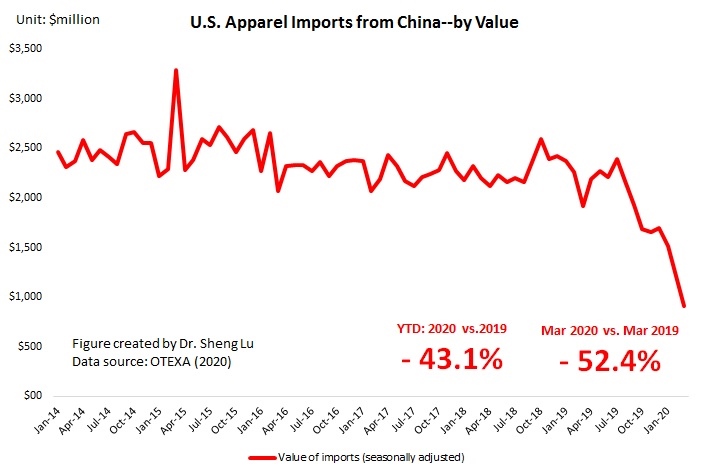
  • As the first country took a hit by COVID-19, China’s apparel exports to the United States continue to deteriorate—its value decreased by as much as 52.4% in March 2020 compared with a year ago (and -43.1% drop year to date in 2020). This result is also worse than the official Chinese statistics, which reported an overall 20.6% drop in China’s apparel exports in the first quarter of 2020.

Marh1

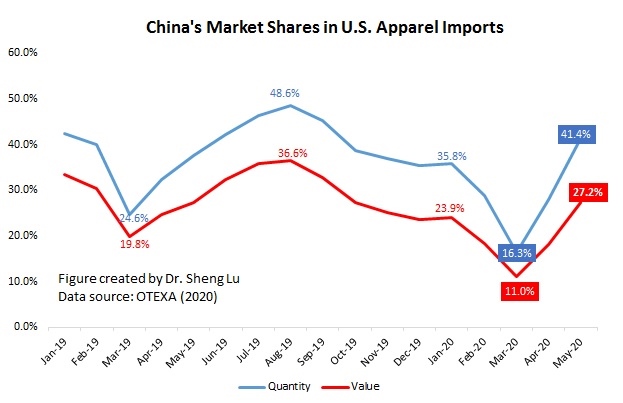
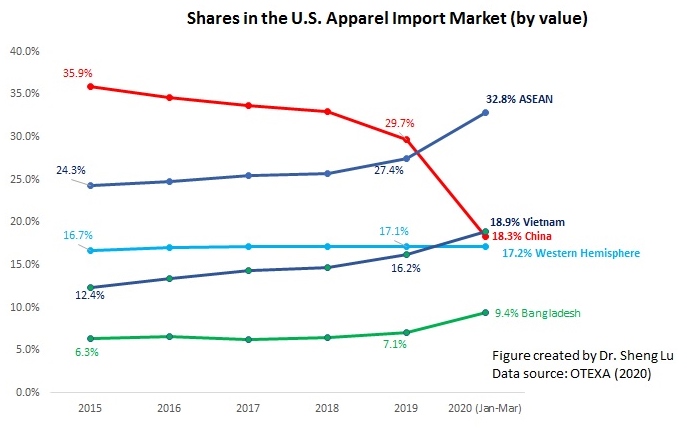
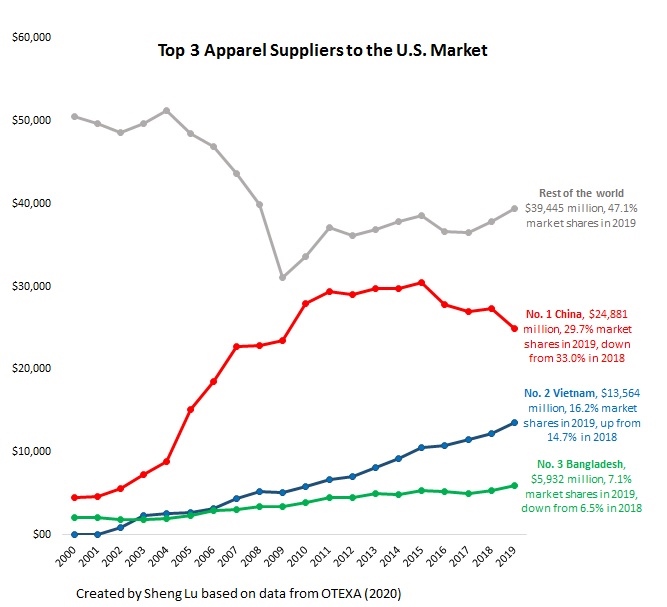
  • For the first time in history, Vietnam surpassed China and became the top apparel supplier to the U.S. market in March 2020. Notably, China’s market shares in the U.S. apparel import market dropped to only 11% in March 2020 (and 18.3% year to date in 2020), a new record low in history (was 30% in 2019). However, it should be noted that long before COVID-19, U.S. fashion brands and retailers have begun to reduce their exposure to sourcing from China, especially since October 2019 due to concerns about the US-China tariff war.

7

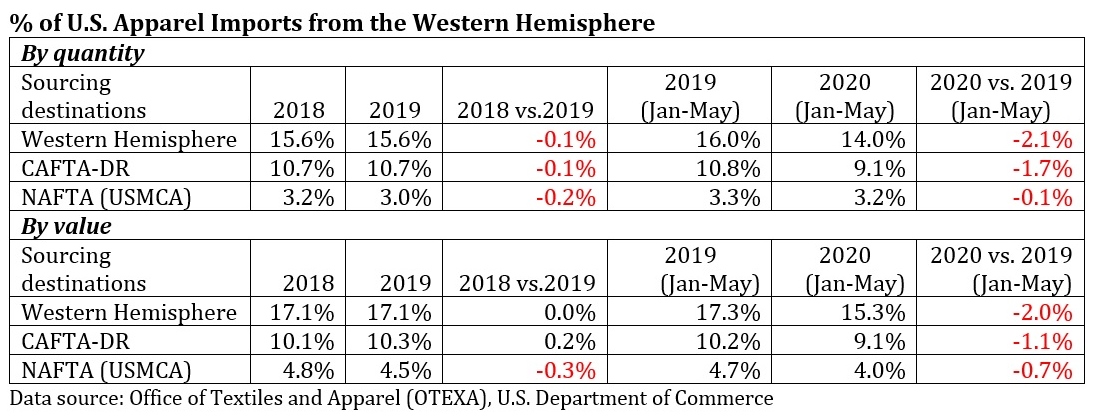
  • China’s lost market shares have been picked up mostly by other Asian suppliers, particularly Vietnam (18.9% YTD in 2020 vs. 16.2% in 2019) and Bangladesh (9.4% YTD in 2020 vs.7.1% in 2019). However, no clear evidence has suggested that U.S. fashion brands and retailers are giving more apparel sourcing orders to suppliers from the Western Hemisphere. In the first three months of 2020, still, only 10.3% of U.S. apparel imports came from CAFTA-DR members (no change from 2019) and 4.4% from NAFTA members (down from 4.5% in 2019).

8

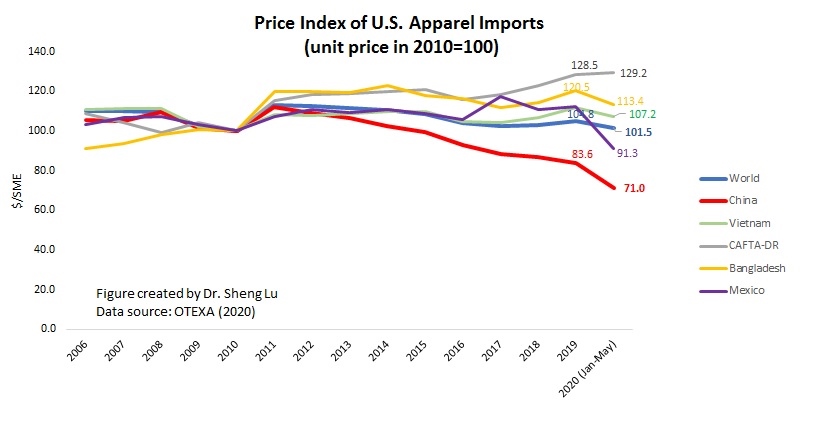
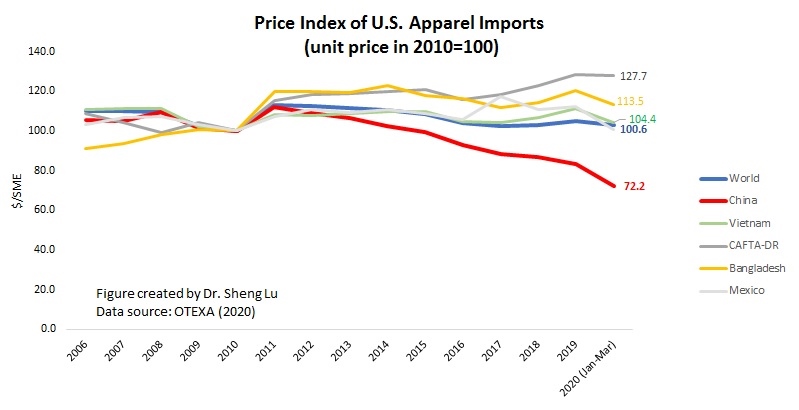
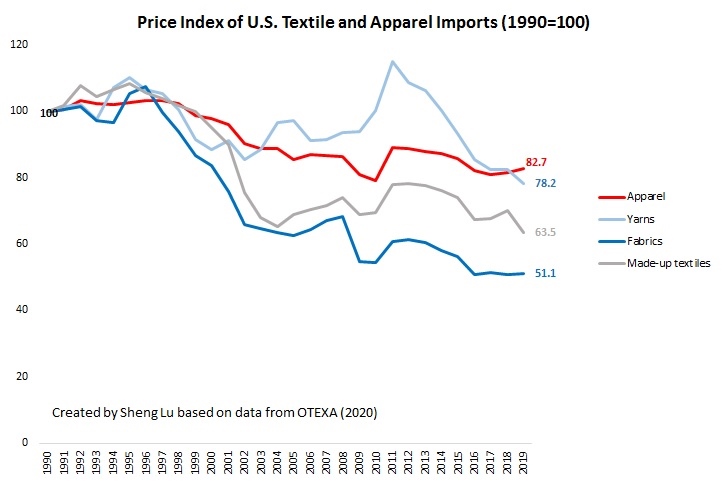
  • The unit price of U.S. apparel imports remains relatively stable. The price index (2010=100) in the first three months of 2020 was 103 compared with 104.7 in 2019. However, as a reflection of weak demand, the price index of U.S. apparel imports from China substantially dropped to 72.2 Year to Date in 2020 compared with 83.5 in 2019.

The discussion is closed for this post.

How Might Covid-19 Affect Apparel Sourcing and Trade

The top challenge facing apparel sourcing and trade in the shadow of Covid-19 has quickly shifted from a lack of textile raw material to order cancellation. In major apparel consumption markets such as the EU and US, clothing stores are locked down, making retailers have no choice but to postpone or even cancel sourcing orders.

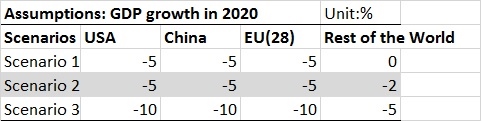
Based on the Global Trade Analysis Project Recursive Dynamic (GTAP-RD) Model and its latest database, we estimated the trade impact of Covid-19 in three possible scenarios, as summarized in the table below. All these three scenarios are pretty bad but likely situations we may have to face this year. (Note: Because China, US, and EU are the epic-centers of Covid-19, in the study, we assume these three countries/regions’ economies will be hit harder than the rest of the world.)

Untitled

There are four preliminary findings:

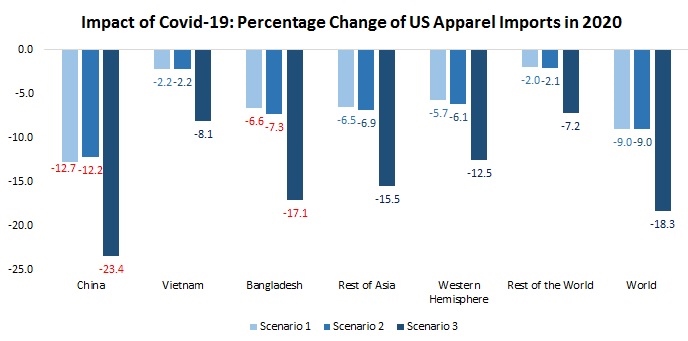
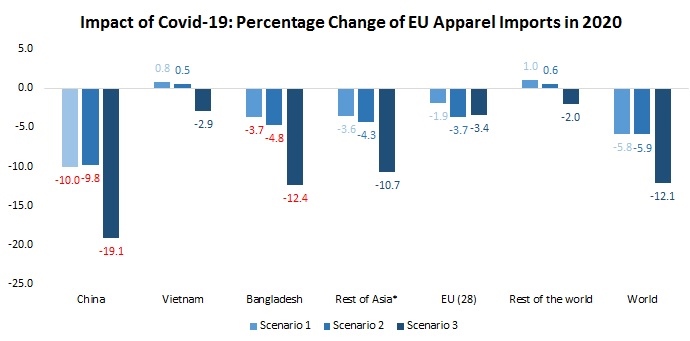
First, the volume of the world apparel trade will be hit hard by Covid-19. As clothing stores are forced to shut down and consumers are losing jobs and struggling financially, the demand for apparel consumption in the EU and US, the world’s top two apparel consumption markets, is expected to drop sharply. As shown in the figures below, every 1% decline in the US and EU Gross Domestic Product (GDP) in 2020 could lead to at least a 2-3% drop in the value of their apparel imports.  Notably, during the 2008 financial crisis, the value of world apparel imports also decreased by as much as 11.5% when the EU and US GDP suffered a 2.5-3% negative growth.

1

2

Second, with a sharp decline in U.S. and EU apparel imports this year, China could be hit the hardest. In all the three scenarios we estimated, China will suffer the most significant drop in its apparel exports to the US and EU markets. The reasons are threefold: The first factor is the size effect—as the largest source of US and EU apparel imports and with its unparalleled production capacity, China is often used to fulfill large-volume sourcing orders. In the current situation, however, retailers are most likely to cancel these large-quantity orders, resulting in a disproportional loss of China’s apparel exports. Secondly, the US and EU apparel imports from China currently cover almost all major categories, which also makes China the most exposed to order cancellation. Furthermore, jointly affected by last year’s US-China trade war and the outbreak of Covid-19 in China earlier this year, many US and EU fashion brands and retailers have been shifting sourcing orders from China to other Asian countries, such as Bangladesh and Vietnam. To prioritize their limited resources, US and EU retailers are most likely to accelerate this process in the current difficult time.

Other than China, apparel factories in Bangladesh also could suffer severe export decline. Similar to the case of China, Bangladesh serves as a leading apparel supplier for BOTH the EU and US markets, making it more exposed to order cancellation than other countries. Notably, as a beneficiary of the EU Everything But Arms (EBA) program, around 60% of Bangladesh’s apparel currently go to the EU. In comparison, with a more diversified export market, apparel factories in Vietnam are in a better position and have more flexibility to mitigate the impact of a declined import demand from the EU and the US. In 2018, around 40% of Vietnam’s apparel exports went to other markets in the world.

Third, the decreased US and EU apparel imports will have a notable impact on employment in many apparel exporting countries. In history, a 10% change in the value of apparel exports typically results in a 4%-9% change in garment employment. This means, should the US and EU apparel imports drop by 10% in 2020, leading apparel exporting countries such as Bangladesh, Vietnam, Cambodia and India may have to cut 4%-9% of their jobs in the garment sector accordingly.  Notably, in developing countries such as Bangladesh and Cambodia, the apparel sector remains the single largest job creator for the local economy, especially for women. The social and economic impact of job losses in the apparel sector due to Covid-19 is very concerning.

Fourth, the economic performance in the US, EU, and China will largely shape the pattern of apparel trade this year. The results in scenarios 1 and 2 overall are pretty close, suggesting the economic cloud of these three countries and regions altogether far exceed the rest of the world.

Last but not least, the global apparel supply chain could continue to face a turbulent time in the next 1-2 years, even if Covid-19 gradually gets under control in the second half of 2020. In history, affected by the 2008 global financial crisis, the value of world apparel exports dropped by 12.8% in 2009. However, the growth rate quickly rebounded to 11.5% the following year. Likewise, should the EU and US apparel imports were able to recover to its normal level in 2021, both importers and garment factories may have to deal with a new round of labor shortage, the price increase of raw material and a lack of production capacity.

by Sheng Lu

Additional reading:

COVID-19 and U.S. Apparel Imports (Updated: March 2020)

Untitled

3

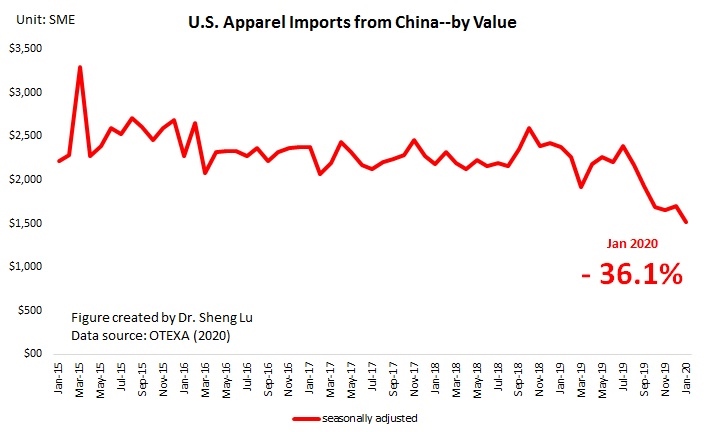
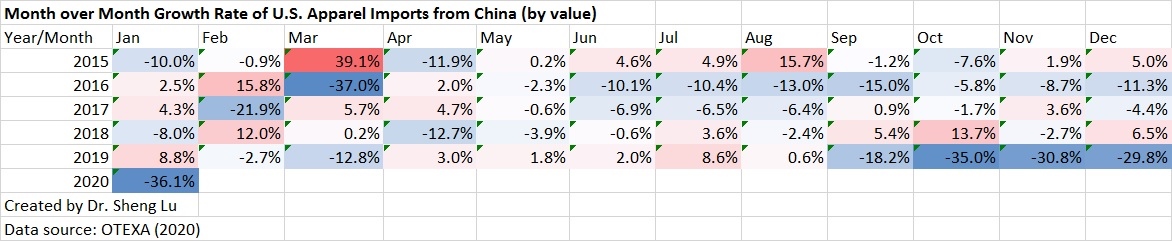
Jointly affected by the U.S.-China tariff war and the spread of the coronavirus, the value of U.S. apparel imports from China see a significant drop in January 2020.

Specifically, the value of U.S. apparel imports from China went down by as much as 36.1% month over month in January 2020. As a result, China’s market shares also dropped from nearly 30% in 2019 to a new record low of 23.9% in January 2020. However, it is important to note that such a downward trend started in October 2019, as U.S. fashion brands and retailers were eager to reduce their exposure to sourcing from China.

6

China’s lost market shares have been picked up mostly by other Asian suppliers, particularly Vietnam and Bangladesh. However, there is no evidence showing that U.S. fashion brands and retailers are giving more apparel sourcing orders to suppliers from the Western Hemisphere. In January 2020, only 8.1% of U.S. apparel imports came from CAFTA-DR members (down from 10.3% in 2019) and 3.7% from NAFTA members (down from 4.5% in 2019). Recent studies show that there’s more divergence in the products imported into the US  from Asian countries and the western hemisphere.

Meanwhile, according to the latest statistics from China’s Customs, the value of China’s apparel exports in the first two months of 2020 dropped by nearly 20% from a year earlier.

Survey Results: Garment Factories in China Slowly Resume Production amid the Fight against the Coronavirus Outbreak

960x0

A recent survey of 294 apparel companies and 20 apparel industry clusters* in China was conducted by the China Garment Association between February 19 and 20, 2020, aiming to understand the impact of the coronavirus (2019-nCoV) on China’s garment industry and production. The respondents of the survey include both garment factories (63.3%) and apparel brands (36.7%). Around 83.4% surveyed companies reported over RMB20 million (or $2.85million) sales revenues.  Below are the key findings:

State of Production

  • 68.4% of surveyed companies say they have gradually resumed production. Of these companies, about 45.6% of their workers in need have returned. The surveyed companies also expect their production output to reach 50% of its normal level by March and could fully recover by April, should the situation stabilized.
  • However, still, as many as 31.6% of surveyed companies say they have not resumed production because of a mix of factors ranging from the need to prevent coronavirus, government restrictions, to the difficulty in recruiting workers. Further, for apparel companies from areas most affected by the coronavirus, they report no plan for reopening anytime soon.
  • Around 87.2% surveyed “large companies” have resumed production, much higher than “medium-sized” (65.4%) and “small-sized” (34.7%) enterprises. [Note: according to China’s Bureau of Statistics, for manufacturers, “large companies” typically refer to those with over 1,000 employees and over RMB400 million (or $57million) annual sales revenue; “small or mini-sized companies” are those with employees less than 200 and less than RMB3million (or $0.43million) annual sales revenues. “medium-sized companies” are those in between].
  • Further, around 74.3% of surveyed apparel brands have resumed business operations, higher than 64.9% of garment factories. Meanwhile, some apparel brands say only their management team have resumed work or those positions that can be done through work from home; however, their plants remain closed.
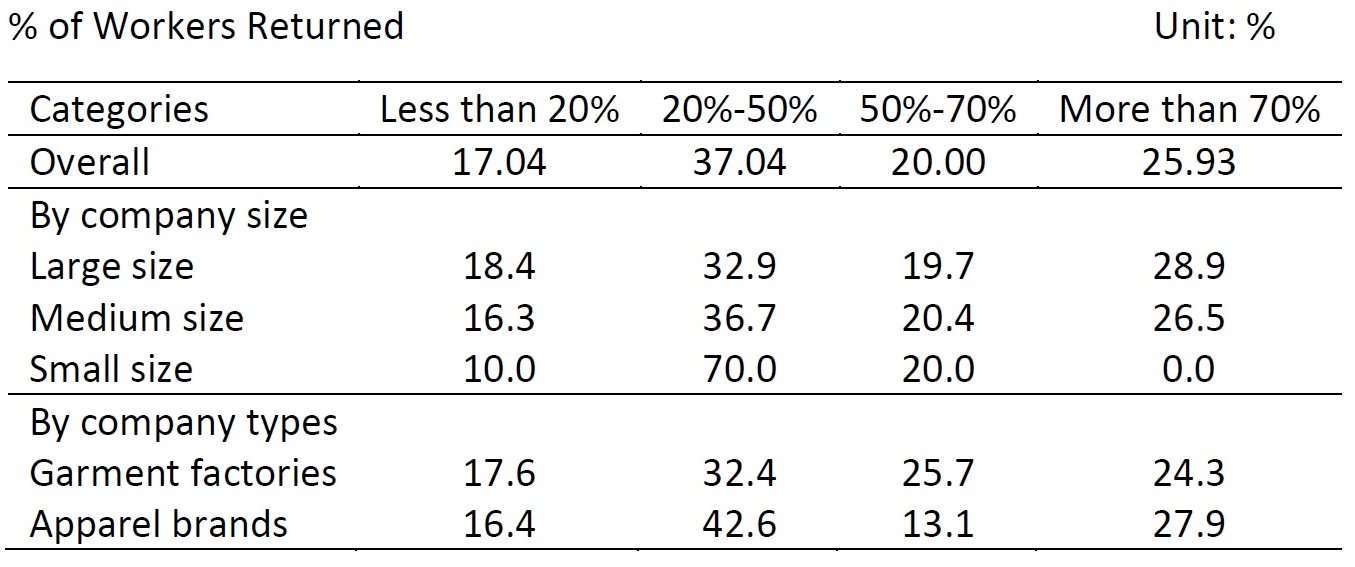
  • Over half of the surveyed companies (54.08%) say less than 50% of their workers have returned. The lack of workers is a more pressing issue for small-sized companies, with over 80% having less than 50% of workers returned.

1

Key challenges facing the surveyed companies:

  • #1: Lack of workers, especially to have those workers from other parts of China return to the factory due to travel restrictions (68.7%)
  • #2: Production cost increase and a lack of supply of raw material from the upstream sector (29.9%)
  • #3: Slow and stagnant sales, overstock of finished products due to delayed orders and tight with cash flows (20.6%)
  • #4: Weak market demand and cancellation of orders (19.2%)
  • #4: Disrupted logistics and transportation (19.2%)
  • #6: Hard to procure protective equipment for staffs and workers (such as facial masks) (16.8%)
  • #7: Cancellation of exhibitions, harder to explore markets and more financial burdens (8.4%)

(*Note: apparel industry clusters refer to geographic concentrations of interconnected factories that manufacture a particular type of apparel product)

Related reading: Apparel Sourcing in the Shadow of Coronavirus (updated February 2020)

Patterns of U.S. Textile and Apparel Imports (updated February 2020)

1

4

The value of U.S. textile imports totaled $27,461 million in 2019, down 2.3 percent from 2018. This is the first time since 2016 that U.S. textile imports incurred a negative growth, which could be related to the slowed U.S. domestic textile and apparel production. Meanwhile, the value of U.S. apparel imports reached $83,822 million in 2019, up 1.2 percent from a year earlier but was substantially lower than a 3.4% growth between 2017 and 2018. Despite the trade uncertainties, the U.S. apparel imports overall still mirror the trend of apparel retail sales in the U.S. market.

Looking ahead, while the reaching of the “phase one” U.S.-China trade deal was a relief to U.S. fashion companies, the unexpected outbreak of the coronavirus in China since January and its fast spread had cast a new shadow on the outlook of the world economy. U.S. Fed Chairman Jerome Powell recently cited the prospect of a hit to tourism, exports and financial markets as ways the coronavirus could dent U.S. economic growth. As a consequence, the value of U.S. textile and apparel imports in 2020 could grow at a more modest rate than previously expected.

2

Because the United States is no longer a major apparel manufacturer but one of the largest apparel consumption markets in the world, apparel products accounted for 75.3 percent of total U.S. textile and apparel imports in 2019, followed by made-up textiles (17.9 percent), fabrics (5.6 percent) and yarns (1.2 percent). This structure has remained quite stable over the past decade.

1

The U.S. imported apparel from more than 150 countries in 2019. Meanwhile, the Herfindahl index declined from 0.269 in 2010 to 0.253 in 2019, suggesting that overall the U.S. apparel import market is becoming less concentrated. This result is consistent with some recent studies, which show that U.S. fashion brands and retailers continue to diversify their sourcing bases gradually. Reducing the dependence on sourcing from China, catering to the increasing demand for speed to market and fulfilling the market expansion needs were among the top-cited reasons for companies’ sourcing diversification strategy.

Specifically, all top apparel suppliers to the United States in 2019 (by value) were developing countries and most of them were located in Asia, including China (29.7%, down from 33.0% in 2018), Vietnam (16.2%, up from 14.7% in 2018), Bangladesh (7.1%, up from 6.5%), Indonesia (5.3%, down from 5.4% in 2018), India (4.8%, up from 4.6% in 2018) and Mexico (3.7%, down from 4.0% in 2018).

6

Except for China, the average unit price of U.S. apparel imports from other major sources all went up in 2019, including Vietnam (up 4.6%), Bangladesh (up 5.6%), Indonesia (up 2.1%), India (up 3.1%), Cambodia (up 7.5%) and CAFTA-DR members (up 4.4%). The results suggest that U.S. fashion brands and retailers had to pay a higher price when they move their sourcing orders from China to other alternatives, due to much smaller production capacity and more costly raw material supply there.

Additional reading: US apparel Sourcing Patterns are Changing. Here is How (by Sheng Lu, on just-style). Key findings:

  • Consumption demand remains the most significant factor in shaping the volume of U.S. apparel imports. Between 2010 and 2019, the value of U.S. apparel retail sales always stayed at around three times as much as the value of U.S. apparel imports. Over the same period, the amount of U.S. apparel retail sales and apparel imports also changed in the same direction, and both enjoyed a roughly 3.0% annual growth on average. Such a synchronized move reminds us about the buyer-driven nature of the apparel business today and explains why this industry is so sensitive towards the health of the national economy.
  • The U.S.-China tariff war had resulted in a change of the seasonal patterns for apparel sourcing and shipment. While July to October used to be the busiest time for U.S. fashion brands and retailers to receive their sourcing orders from China, in 2019 the peak season started earlier in June and ended in September–mostly because U.S. fashion companies tried to avoid the hit of the proposed 15% Section 301 punitive tariffs on Tranche 4A products, which covered most apparel items. For the same reason, U.S. apparel imports from China in November and December 2019 were much lighter than usual.
  • U.S. fashion brands and retailers continue to diversify their sourcing base, yet the options available remain limited. The lack of qualified alternatives to “Made in China” is one big challenge. Despite the hundreds of apparel exporting countries in the world, only nine of them met the following two criteria: 1) enjoyed a 5% or higher growth of their apparel exports to the U.S. for two consecutive years since 2017; 2) achieved a minimum 1% market share as of 2019. Of these nine countries, only Vietnam, Bangladesh, and Cambodia ranked the top 10 apparel suppliers for the U.S. market in 2019.
  • U.S. fashion brands and apparel retailers increasingly source both from Asia and the Western Hemisphere, but for different purposes. Notably, the value of export similarity index (ESI) between China and the Western Hemisphere was as low as 40.8 in 2015 and went down further to only 39.6 in 2019, suggesting their export product structure had turned even more heterogeneous. In contrast, between 2015 and 2019, China, ASEAN (whose members include leading apparel exporting countries such as Vietnam, Indonesia, Cambodia, Malaysia, and Thailand) and Bangladesh appear to export increasingly similar products to the United States. This explained why Asian suppliers rather than NAFTA and CAFTA-DR members saw their apparel exports to the United States increased in 2019 as a result of the U.S.-China tariff war.

Apparel Sourcing in the Shadow of Coronavirus (updated February 2020)

[The situation has been quickly evolving. Please check the updated analysis: How Might Covid-19 Affect Apparel Sourcing and Trade ]

  • The real impact of the coronavirus is yet to come. Western fashion brands and retailers know that sourcing from China is always slow in January and early February because of the Chinese New Year (CNY). Instead, the immediate economic impact of the coronavirus right now is on China’s domestic retail market, as many stores (including well-known clothing and footwear brands) have been closed.
  • As the disease continues to spread quickly, the concerns about the outlook of sourcing from China are growing. Even though factories in China are scheduled to reopen on February 3, according to the latest government announcement, over dozens of major cities in the country have been locked down (encircling roughly 50 million people so far), making it impossible for many workers to return to their job. Further, it is hard to predict how long such an unprecedented large-scale lockdown will last.

1

2

  • Many Western fashion companies are in the status of “wait and see what is going to happen.” Some delays in the arrival of their orders seem unavoidable. However, shifting sourcing orders to other countries does not seem to be a quick solution at this point either for three reasons: 1) China remains the single largest textile and apparel supplier with no alternatives (see the table above); 2) other apparel exporting countries (especially those in Asia) rely heavily on textile raw material, such as yarns and fabrics made in China. 3) for apparel factories in Asia and Africa, it is not rare to see their management team is from China. However, starting from the end of January, countries around the world have begun to impose travel restrictions targeting Chinese travelers.
  • While last year’s tariff war had already pushed Western fashion brands to source less from China, the coronavirus could accelerate companies’ sourcing diversification strategy further. Western fashion brands and retailers may also see their overall sourcing cost to go up as it requires additional resources to move products around and build new supply chains.

Interview with Modaes.es on the Latest Trends of Apparel Sourcing and Trade

The original interview (in Spanish) is available HERE. Below is the translated version.

Question: Is there a reversal in the globalization of fashion?

Sheng Lu: The fashion industry is becoming more global AND regional — the making and selling of a garment “travel” through more and more countries. Just look at the label of a Gap sweatshirt: it is an American clothing brand, but the product is “Made in Vietnam,” and the label includes the size standards in six different countries. The business model of the fashion industry today is “making anywhere in the world and selling anywhere in the world.”

Q .: What do you mean the industry is becoming more “regional”?

Sheng Lu: The trade flows of textiles and apparel today are heavily influenced by regional free trade agreements (FTAs). For example, while China is known as the world’s largest apparel producer and exporter, nearly 50% of the clothing consumed by European consumers are still produced by EU countries themselves. Notably, consumers have different expectations for clothing: many are price-sensitive, but others prefer more trendy items, which requires “near sourcing”—this explains why fashion companies have to adopt a more balanced sourcing portfolio.

Q .: Is the price still the most important factor in fashion companies’ sourcing decisions?

Sheng Lu: Sourcing is far more than just about chasing for the lowest cost. Sourcing decisions today have to consider a mix of factors, ranging from flexibility, speed to market, sustainability, to compliance risks. In fact, few companies “put all eggs in one basket.” My recent studies show that both in the United States and the EU, fashion companies with more than 1,000 employees, typically sourced from more than twenty different countries—sometimes even exceed forty. Behind such a diversified sourcing practice is the necessity to strike a balance between so many different sourcing factors.

Q .: Is apparel sourcing becoming more diversified today than a decade ago?

Sheng Lu: From my observations, fashion companies are souring from more countries and regions than a decade ago, but not in terms of producers. Especially in the last two or three years, I see some large companies are consolidating their supplier base to build a closer relationship with key vendors. The reason is the same as mentioned earlier: a very competitive price is not enough for apparel sourcing today.

Q .: How has the tariff war between the United States and China affected apparel sourcing?

Sheng Lu: The trade war between the United States and China is having big impacts on apparel sourcing that go beyond the two countries. Notably, American fashion brands and retailers are moving sourcing orders from China to other Asian countries such as Vietnam and Bangladesh. However, finding China’s alternatives is anything but easy. Despite the tariff war, China remains a competitive player in apparel sourcing. The unparalleled production capacity that can fulfill orders nearly for any products in any quantity, and the ability to comply with complex sustainability and social responsibility regulations are among China’s unique competitive advantages. Understandably, companies are not giving up sourcing from China, as there are few other “balanced” sourcing destinations in the world. That being said, it is important to recognize that the big landscape of apparel sourcing is evolving. Even in Europe, which is not having a trade war with China, apparel “Made in China” is seeing a notable decline in its market share.

Q .: How is China adapting?

Sheng Lu: The textile and apparel industry in China is undergoing a structural change. Partially caused by the tariff war, apparel producers in China are increasingly moving their factories to nearby Asian countries (especially for big-volume and/or relatively low value-added product categories). Meanwhile, China itself is changing from an apparel producer to become a leading textile supplier for other apparel-exporting countries in Asia. This is NOT a temporary move, but a permanent transition, which has happened in many industrialized economies in history. Somehow, the tariff war has accelerated the adjustment process, however.

Q .: Will Africa be the next hub for apparel sourcing in the near future?

Sheng Lu: As textile and clothing trade is turning more regional-based, Africa is facing significant challenges to become an attractive tier-1 sourcing base for Western fashion brands and apparel retailers.

Q .: Why is that?

Sheng Lu: In general, there are three primary apparel import markets in the world: the United States, the European Union, and Japan—as of 2018, these three regions altogether still accounted for as many as 70% of the world apparel imports. Surely, Asian countries are important apparel suppliers for all these three regions. However, each of these three markets also has its respective regional suppliers—Mexico and Central & South American countries for the United States, China, and a few Southeast Asian countries for Japan and Eastern European countries for the EU market. Other than geographic proximity, often, these regional suppliers also enjoy preferential market access to the US, EU, and Japan provided by regional free trade agreements.

Africa, on the other hand, is not close to any of these three major apparel import markets geographically. Why would fashion companies in the United States, Japan, or the EU have to source from Africa when there are so many other options available?

Q .: For price?

Sheng Lu: Several trade preference programs currently offer apparel exporters in African countries preferential or duty-free market access to the United States, the EU, and Japan (such as the African Growth Opportunity Act and the EU and Japan Generalized System of Preferences programs). However, sourcing from Africa will entail other extra costs—for example, the raw material cost will be higher as yarns and fabrics have to be imported from Asia first, and the transportation bill could be costly due to the poor infrastructure. Further, not like their counterpart in Asia, the apparel industry is not regarded as a development priority in many African countries, which continue to rely heavily on the export of raw materials instead. Manufacturing for the local market is also complicated—apparel producers in Africa are struggling with both the cheap clothing imported from Asia and the mounting used clothing sent from the West.

Q .: It is said that fashion might be the most regulated sector in international trade other than agriculture. How to explain this?

Sheng Lu:  I think we need some changes here. For example, in 2018, textiles and apparel accounted for only 5% of the total U.S. merchandise imports but contributed nearly 40% of the tariff revenue collected. This phenomenon, which makes no sense economically, is the result of the industry lobby—trying to protect domestic manufacturers from import competition.

As another example, around 15%-17% of Mexico’s clothing exports to the United States do not claim the duty-free benefits provided by the North American Free Trade Agreement (NAFTA), as the NAFTA rules of origin strictly require the using of regional yarns and fabrics for qualified apparel items. In the end, companies prefer bigger savings on the raw material cost than claiming the NAFTA duty-saving benefits. We should think about how to modernize these trade rules and make them more supply-chain friendly in the 21st century.

Meanwhile, policymakers are developing new regulations to address some emerging areas in international trade, such as E-commerce, labor standards and environmental protection. Increasingly, trade policy is moving from “measures at the border” to “measures behind the borders.”

How Has the Tariff War Affected the Competitiveness of China’s Textile and Apparel Exports to the U.S.? (December 2019)

yarns.jpg

fabric.jpg

apparel.jpg

made up textiles.jpg

This study intends to explore how has the U.S.-China trade tension since 2017 affected the competitiveness of China’s textile and apparel (T&A) exports to the U.S. market. The findings of the study will shed new light on the mega-trend of T&A sourcing from China in the medium term, and support T&A companies’ sourcing decision making in the current uncertain business environment.

Data for the analysis were collected from the Office of Textiles and Apparel (OTEXA) under the U.S. Department of Commerce, including the value of U.S. imports from China between 2016 (i.e., the year before the U.S. launched the section 301 investigation against China) and October 2019 (the latest data available) for a total of 167 categories of T&A products.

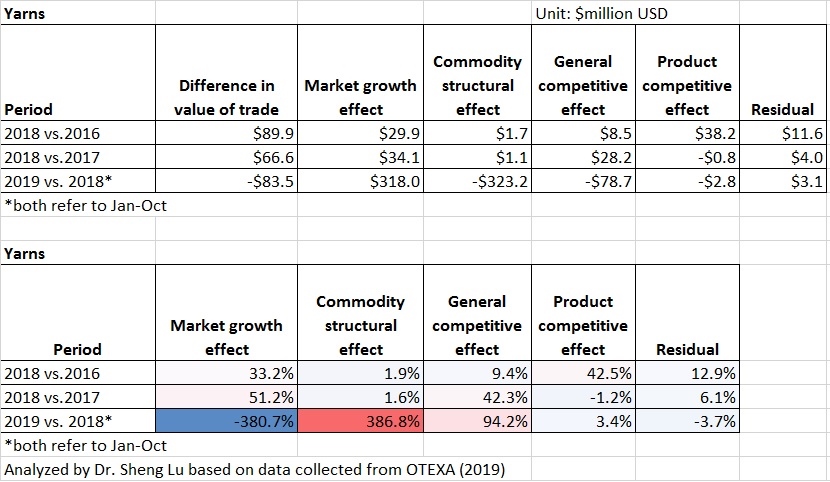
Specifically, based on the constant market share (CMS) model, a commonly adopted international trade analysis tool, this study decomposed the value of U.S. T&A imports from China into the following four factors:

  • Market growth effect: changes in China’s T&A exports to the U.S. due to the growth of total U.S. import demand for T&A
  • Commodity structural effect: changes in China’s T&A exports to the U.S. due to the shifting product structure of China’s T&A exports
  • General competitive effect: changes in China’s T&A exports to the U.S. due to the shifting competitiveness of Chinese T&A products in the U.S. market (measured by China’s market shares)
  • Product competitive effect: changes in China’s T&A exports to the U.S. due to the joint effect of the product structure of China’s T&A exports and the shifting competitiveness of Chinese T&A products in the U.S. market (measured by China’s market shares)

Four findings are of note:

First, the U.S.-China trade tension has affected China’s T&A exports to the U.S. negatively. Even though Section 301 tariffs on the majority of apparel products didn’t start until September 2019, China’s T&A exports to the U.S. had suffered a significant drop. This result, however, was at odds with the overall trend of China’s T&A exports to the U.S. in recent years. Notably, except apparel, China’s yarns, fabrics and made-up textile exports to the U.S. all enjoyed a steady and positive growth between 2016 and 2018. The impact of the tariff war is real.

Second, the increased U.S. import demand has partially mitigated the negative impact of trade tension on China’s T&A exports to the U.S. market. Results of the CMS model indicate that expanded total U.S. import demand for T&A driven by the booming U.S. economy had avoided an even worse decline of U.S. T&A imports from China. In other words, without such a market growth, China’s T&A exports to the U.S. would have been $2,065 million less in 2018 (including $528 million for apparel) and $878 million less (including $613 million for apparel) in the first ten months of 2019 than their current level.

Third, China’s export competitiveness is shifting from apparel to textiles. Results of the CMS model show that even before the tariff war, the competitiveness of China’s apparel exports has been weakening steadily, which was the most significant contributing factor to the decline of $530 million U.S. apparel imports from China between 2016 and 2018. In comparison, China is exporting more yarns and fabrics to the U.S. in recent years. Data from OTEXA shows that between 2016 and 2018, China’s yarn and fabric exports to the U.S. enjoyed a 13.1% and 2.6% compound annual growth, respectively, compared with a 0.6% decline of apparel. The CMS model further suggests that China’s improved export competitiveness can explain the majority of these increased exports.

Fourth, China is adjusting its T&A export structure to mitigate the negative impact of the tariff war. As estimated, through targeting those product categories with higher growth in import demand, China was able to achieve an additional $36.7 million apparel export to the U.S. in the first ten months of 2019.  Likewise, the commodity structural effect also favored China’s made-up textile exports to the U.S. market in 2019, resulting in $148.7 million more exports than otherwise.

By Sheng Lu

The Changing Face of Textile and Apparel “Made in Asia”

Video 1: How one Chinese shirt-maker uses automation to safeguard its future

Video 2: Chinese investors move clothing factory to Bangladesh

Video 3: Can Vietnam become the next China?

Discussion questions (for FASH455: Please finish watching ALL the three short videos above before sharing your viewpoints)

  1. How are textile and apparel “Made in Asia” changing its face? What are the driving forces of these changes?
  2. What are the examples of the “flying geese model” from the videos? Overall, why or why not do you think this model is still valid today?
  3. Why or why not do you think the U.S.-China tariff war has fundamentally changed the patterns of textile and apparel production and trade in Asia?

U.S.-China Tariff War Escalates–Impact on Apparel and Footwear

Background: In response to China’s decision to impose 5%–10% retaliatory tariffs on $75 billion U.S. products, on August 23, 2019, the Trump administration announced to raise the Section 301 tariffs from 25% to 30% for around $250 billion Chinese products (tranche 1, 2 and 3), effective October 1, 2019. The scheduled Section 301 tariffs on $300 billion Chinese products (tranche 4) to take into effect on September 1, 2019 and December 15, 2019 will also be increased from 10% to 15%.

IMG_0998
Trump lashes out at China, sending markets reeling

U.S. fashion brands and retailers are deeply concerned about the negative impacts of the tariff war on their businesses. According to the 2019 U.S. Fashion Industry Benchmarking Study released by the U.S. Fashion Industry Association, even without considering the upcoming 10-15% tariffs to be imposed on around $35.7 billion Chinese textiles and apparel covered by tranche 4:

  • The trade diversion effect of Section 301 has accelerated U.S. fashion companies’ pace of reducing sourcing from China. About 83 percent of respondents expect to decrease sourcing from China over the next two years, up further from 67 percent in 2018.
  • The Section 301 action is pushing up the price of U.S. apparel imports across the board, making “increasing production and sourcing cost” the top business challenge for respondents in 2019. As much as 63 percent of respondents explicitly say the U.S. Section 301 tariff action against China “increased my companies’ sourcing cost” in 2019. As companies are moving sourcing orders to Bangladesh, Vietnam, and India, the average price of U.S. apparel imports from these countries – the main alternatives to China — have all gone up very quickly.
  • No evidence shows that Section 301 has benefited near-sourcing from the Western Hemisphere and reshoring from the United States significantly. Instead, respondents say Section 301 has increased the production costs of textiles and apparel “Made in the USA.”
  • Respondents say they are reluctant but may have to increase their retail prices, should the U.S.-China tariff war escalate further.

Related reading:

When ‘Made in Vietnam’ Products Are Actually From China

As described in the video, transshipment is one form of illegal import activities and occurs when false country-of-origin information is provided for imported goods in order to evade U.S. customs duties. Transshipment was a major issue in textile and apparel trade back in days when the quota system was still in place.

According to the media, because of the escalating U.S.-China tariff war, customs fraud such as transshipment is thriving again. Some fashion companies are also using tariff engineering to avoid paying the punitive tariffs in a legal way. Indeed, how to label “Made in ___” can be much more complicated, technical and subtle than we realize.

Related reading:

U.S. Textile and Apparel Industry is NOT Immune to the U.S.-China Tariff War

The full article is available HERE

This article tries to evaluate the potential impact of the U.S.-China tariff war on the U.S. textile and apparel (T&A) industry, including manufacturing and related trade activities.

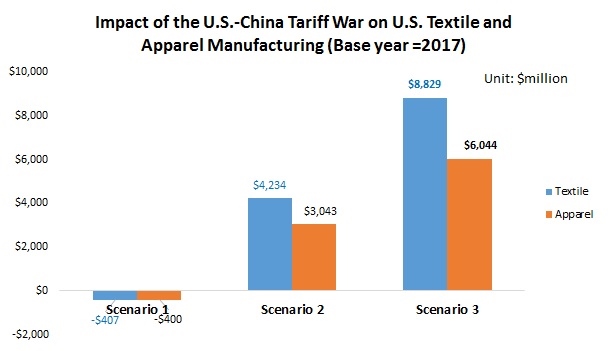
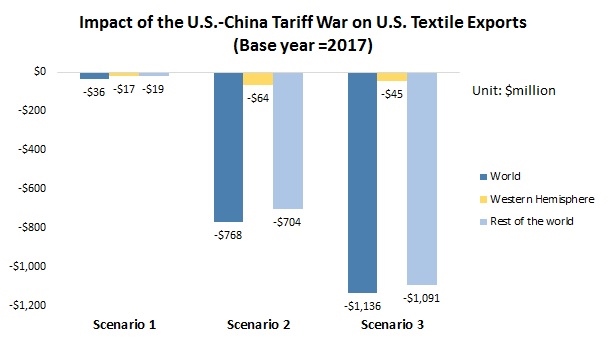
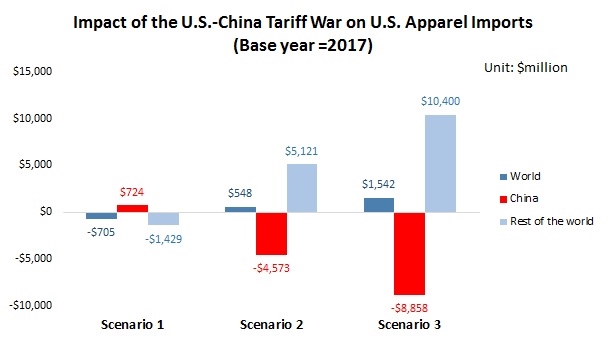
The quantitative evaluation conducted is based on the Global Trade Analysis Project (GTAP) model. Data came from the latest GTAP9 database, which covers trade, employment and production in 57 sectors in 140 countries. In correspondence to the recent development of the U.S.-China tariff war, the analysis focuses on the following three scenarios:

  • Scenario 1: 10% punitive tariff + base year tariff rate in 2017 applied to products traded between the U.S. and China, except textiles and apparel
  • Scenario 2: 10% punitive tariff + base year tariff rate in 2017 applied to products traded between the U.S. and China, including textiles and apparel
  • Scenario 3: 25% punitive tariff + base year tariff rate in 2017 applied to products traded between the U.S. and China, including textiles and apparel

Three findings are of note:

First, the tariff war with China will increase the market price for T&A in the United States and consequentially incentivize more production of T&A “Made in the USA.” As shown in Figure 1, the annual U.S. T&A production will increase when the punitive tariff is imposed on textile and apparel imports from China. The most significant increase will happen in scenario 3 (textile output expands by US$8,829 million and apparel output expands by US$6,044 million) when a 25 percent punitive tariff is imposed and the market price of T&A in the U.S. also correspondingly goes up by nearly 1.5% compared with the base year level in 2017.

Second, the tariff war with China will hurt U.S. textile exports. The results show that the tariff war will increase the production cost of “Made in the USA,” and result in a decline of U.S. textile exports due to reduced price competitiveness. This is the case even in scenario 1 when the tariff war does not target T&A directly, but nevertheless, raises the price of intermediaries for producing textiles in the United States. The results further show that the annual U.S. textile exports will suffer the most significant decline in scenario 3 (down US$1,136 million), especially to China and other Asian countries where U.S. textile products are facing intense competition from local suppliers. In comparison, U.S. textile exports to the Western Hemisphere will suffer a loss as well in the tariff war, but to a much less extent due to the strong supply-chain relationship with the region.

Third, the trade diversion effect of the tariff war will bring in more apparel imports to the U.S. market from Asian suppliers other than China. As shown in the figure above, when the punitive tariff imposed on textile and apparel products, the value of U.S. apparel imports from China will decline ranging from US$4,573 million (10 percent punitive tariff imposed) to US$8,858 million (25 percent punitive tariff imposed) annually compared with the base year level in 2017. This result reflects U.S. apparel importers and retailers’ mounting concerns about sourcing cost in the setting of the tariff war. However, apparently, the tariff war will do little to help U.S. domestic apparel manufacturers reduce the competitive pressure with imports. Particularly, in scenario 3, U.S. apparel imports from suppliers other than China will increase as much as US$10,400 million, worsening the U.S. trade deficit in the apparel sector further.

by Sheng Lu

U.S. Apparel Retailers’ Shifting Sourcing Strategy for “Made in China” under the Shadow of the Tariff War

The full article is available HERE

Key findings:

First, U.S. fashion brands and retailers are sourcing less from China, particularly in quantity. Notably, the number of “Made in China” apparel newly launched to the market had significantly dropped from 26,758 SKUs in the first quarter of 2018 to only 8,352 SKUs in the first quarter of 2019 . Nevertheless, consistent with the macro-level trade statistics, China remains the single largest apparel supplier to the U.S. retail market.

Second, apparel “Made in China” are becoming more expensive in the U.S. retail market, yet remain price-competitive overall. Notably, apparel “Made in Vietnam” is becoming more expensive in the U.S. retail market too—an indication that as more production is moving from China to Vietnam, apparel producers and exporters in Vietnam are facing growing cost pressures.

Third, U.S. fashion retailers are shifting what apparel products they source from China. U.S. apparel retailers have been sourcing less lower value-added basic fashion items (such as tops, and underwear), but more sophisticated and higher value-added apparel categories (such as dresses and outerwear) from China since 2018. The shifting product structure could also be a factor that contributed to the rising average retail price of “Made in China” in the U.S. market.

On the other hand, U.S. retailers adopt a very different product assortment strategy for apparel sourced from China versus other regions of the world. There seems to be much fewer alternative sourcing destinations for more sophisticated product categories, such as accessories and outerwear. Somehow ironically, moving to source more sophisticated and higher value-added products from China could make U.S. fashion brands and retailers even MORE vulnerable to the tariff war because of fewer alternative sourcing destinations.

In conclusion, the results imply that China will remain a critical sourcing destination for U.S. fashion brands and retailers in the near future, regardless of the scenario of the U.S.-China tariff war. Meanwhile, we should expect U.S. fashion companies continue to adjust their sourcing strategy for apparel “Made in China” in response to the escalation of the tariff war.

Related reading: Trade war to hit high-end US fashion brands dependent on specialized Chinese manufacturing

Outlook 2019: Apparel Industry Issues in the Year Ahead

In January 2019, Just-Style consulted a panel of industry leaders and scholars in its Outlook 2019–Apparel Industry Issues in the Year Ahead management briefing. Below is my contribution to the report. Any comments and suggestions are more than welcome!

1: What do you see as the biggest challenges – and opportunities – facing the apparel industry in 2019, and why?

In my view, uncertainty will remain the single biggest challenge facing the apparel industry in 2019, ranging from a more volatile global economy, the unpredictable outlook of the U.S.-China trade talks to the various possible scenarios of Brexit. While uncertainty creates exciting new research opportunities for scholars like me, it could be a big headache for companies seeking a foreseeable market environment to guide their future business plan and investments. 

Meanwhile, the increasing digitalization of the apparel supply chain based on big-data tools and artificial intelligence (AI) technologies means a huge opportunity for fashion companies. Indeed, the apparel industry is quickly changing in nature—becoming ever more globalized, supply-chain based, technology-intensive and data-driven. Take talent recruitment as an example. In the 2018 US Fashion Industry Benchmarking Study, which I conducted in collaboration with the US Fashion Industry Association (USFIA), as much as 68 percent of surveyed leading U.S. fashion brands and apparel retailers say they plan to increase hiring of data scientists in the next five years. Googling “apparel industry” together with terms such as “big data” and “data science” also returns much more results than in the past. It is hopeful that the advancement of digital technologies and the smarter use of data will enable apparel companies to overcome market uncertainties better and improve many aspects of their businesses such as speed to market, operational efficiency and even sustainability.

2: What’s happening with sourcing? How is the sourcing landscape likely to shift in 2019, and what can apparel firms and their suppliers do to stay ahead?

Based on my research, I have three observations regarding apparel companies’ sourcing trends and the overall sourcing landscape in 2019:

First, apparel companies overall will continue to maintain a diverse sourcing base. For example, in a recent study, we examined the detailed sourcing portfolios of the 50 largest U.S.-based apparel companies ranked by the Apparel Magazine. Notably, on average these companies sourced from over 20 different countries or regions using more than 200 vendors in 2017. Similarly, in the 2018 US Fashion Industry Benchmarking Study, which I conducted in collaboration with the US Fashion Industry Association (USFIA), we also found companies with more than 1,000 employees typically source from more than ten different countries and regions. Since no sourcing destination is perfect, maintaining a relatively diverse sourcing base allows apparel companies to strike a balance among various sourcing factors ranging from cost, speed, flexibility, to risk management.

Second, while apparel companies are actively seeking new sourcing bases, many of them are reducing either the number of countries they source from or the number of vendors they work with. According to our study, some apparel companies have been strategically reducing the number of sourcing facilities with the purpose of ensuring closer collaborations with their suppliers on social and environmental compliance issues. Some other companies are consolidating their sourcing base within certain regions to improve efficiency and maximize productivity in the supply chain. Related to this trend, it is interesting to note that approximately half of the 50 largest U.S. apparel companies report allocating more sourcing orders to their largest vendor in 2017 than three years ago.

Third, nearshoring or onshoring will become more visible. Take “Made in the USA” apparel for example. According to the 2018 U.S. Fashion Industry Benchmarking Study, around 46 percent of surveyed U.S. fashion brands and apparel retailers report currently sourcing “Made in the USA” products, even though local sourcing typically only account for less than 10 percent of these companies’ total sourcing value or volume. In a recent study, we find that 94 out of the total 348 retailers (or 27 percent) sold “Made in the USA” apparel in the U.S. market between December 2017 and November 2018. These “Made in the USA” apparel items, in general, focus on fashion-oriented women’s wear, particularly in the categories of bottoms (such as skirts, jeans, and trousers), dresses, all-in-ones (such as playsuits and dungarees), swimwear and suits-sets. The advantage of proximity to the market, which makes speedy replenishment for in-season items possible, also allows retailers to price “Made in the USA” apparel substantially higher than imported ones and avoid offering deep discounts. Looking ahead, thanks to automation technology and consumers’ increasing demand for speed to market, I think nearshoring or onshoring, including ”Made in the USA” apparel, will continue to have its unique role to play in fashion brands and retailers’ merchandising and sourcing strategies.

3: What should apparel firms and their suppliers be doing now if they want to remain competitive further into the future? What will separate the winners from the losers?

2019 will be a year to test apparel companies’ resources, particularly in the sourcing area. For example, winners will be those companies that have built a sophisticated but nimble global sourcing network that can handle market uncertainties effectively. Likewise, companies that understand and leverage the evolving “rules of the game”, such as the apparel-specific rules of origin and tariff phase-out schedules of existing or newly-reached free trade agreements, will be able to control sourcing cost better and achieve higher profit margins. Given the heavy involvement of trade policy in apparel sourcing this year, companies with solid government relations should also enjoy unique competitive advantages. 

On the other hand, as apparel business is changing in nature, to stay competitive, apparel companies need to start investing the future. This includes but not limited to exploring new sourcing destinations, studying the changing consumer demographics, recruiting new talents with expertise in emerging areas, and adopting new technologies fitting for the digital age. 

4: What keeps you awake at night? Is there anything else you think the apparel industry should be keeping a close eye on in the year ahead? Do you expect 2019 to be better than 2018, and why?

Two things are at the top of my watchlist:

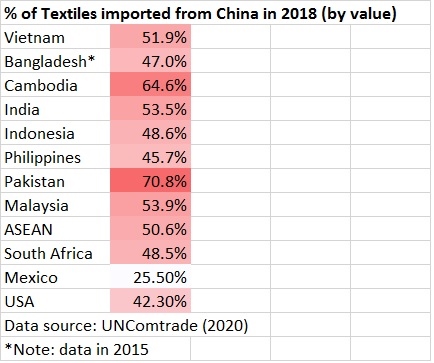
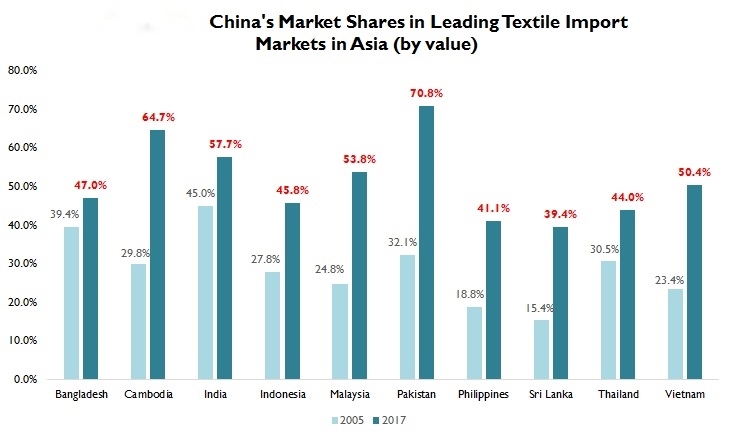
First, what is the future of China as an apparel sourcing base? While external factors such as the U.S.-China tariff war have attracted most of the public attention, the genuine evolution of China’s textile and apparel industry is something even more critical to watch in the long run. From my observation, China is playing an increasingly important role as a textile supplier for apparel-exporting countries in Asia. For example, measured by value, 47 percent of Bangladesh’s textile imports came from China in 2017, up from 39 percent in 2005. Similar trends are seen in Cambodia (up from 30 percent to 65 percent), Vietnam (up from 23 percent to 50 percent), Pakistan (up from 32 percent to 71 percent), Malaysia (up from 25 percent to 54 percent), Indonesia (up from 28 percent to 46 percent), Philippines (up from 19 percent to 41 percent) and Sri Lanka (up from 15 percent to 39 percent) over the same time frame. A key question in my mind is how quickly China’s textile and apparel industry will continue to evolve and upgrade by following the paths of most other advanced economies in history.

Second, how will the implementation of several newly-reached free trade agreements (FTAs) affect the big landscape of apparel sourcing and the existing regional apparel supply chains? For example:

  • The newly-reached U.S.-Mexico-Canada Free Trade Agreement (USMCA or commonly called NAFTA2.0) includes several interesting changes to the textile and apparel specific rules of origin provisions, such as the adjustment of the tariff-preference level (TPL) mechanism. Whether these changes will boost textile and apparel production in the Western-Hemisphere and attract more sourcing from the region will be something interesting to watch.
  • The implementation of the Comprehensive and Progressive Agreement of the Trans-Pacific Partnership (CPTPP) and the EU-Vietnam Free Trade Agreement (EVFTA) will allow Vietnam to get access to nearly 40% of the world apparel import market (i.e., EU + Japan) duty-free. However, restrained by the country’s relatively small population, the apparel industry is increasingly facing the challenge of competing for labor with other export-oriented sectors in Vietnam. Realistically, what is the growth potential of apparel “Made in Vietnam” after the implementation of CPTPP and EVFTA?
  • In 2017, close to 80% of Asian countries’ textile imports came from other Asian countries, up from around 70% in the 2000s. Similarly, in 2017, 85.6% of Asian countries’ apparel imports also came from within the region. The negotiation of the Regional Comprehensive and Economic Partnership (RCEP) is likely to conclude in 2019, whose membership includes member states of the Association of Southeast Asian Nations (ASEAN) and other six economies in the Asia-Pacific region (Australia, China, India, Japan, South Korea and New Zealand). Will RCEP result in an ever more integrated Asia-based textile and apparel supply chain and make the Asia region even more competitive as an apparel sourcing destination?  

(comment for this post is closed)

How Has the Apparel Trade Flow Reacted to the Section 301 Tariff Action against China? (updated November 2018)

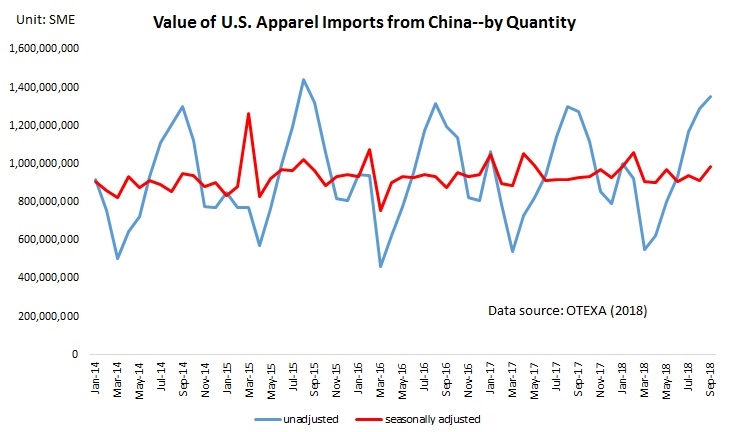
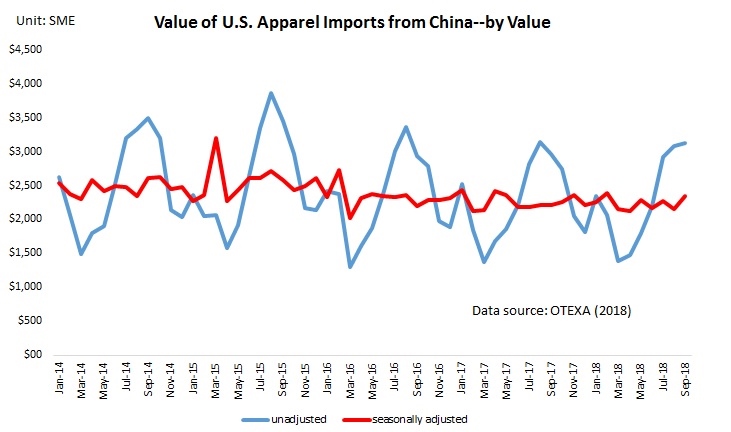
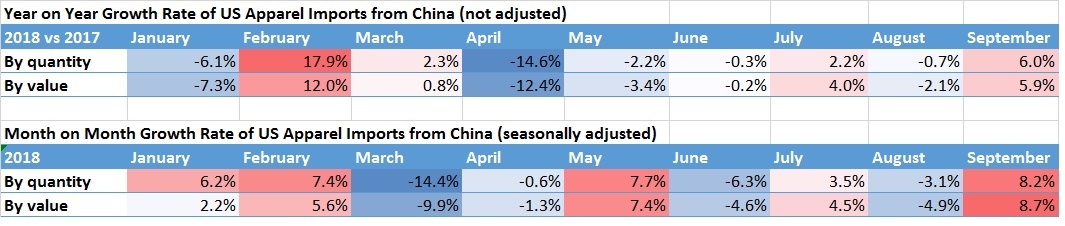
While apparel products are not subject to the Section 301 tariff yet, the trade action nevertheless has created huge market uncertainties for U.S. fashion brands and apparel retailers. Here is how the monthly trade flow of U.S. apparel imports has reflected the impacts of the U.S.-China tariff war:

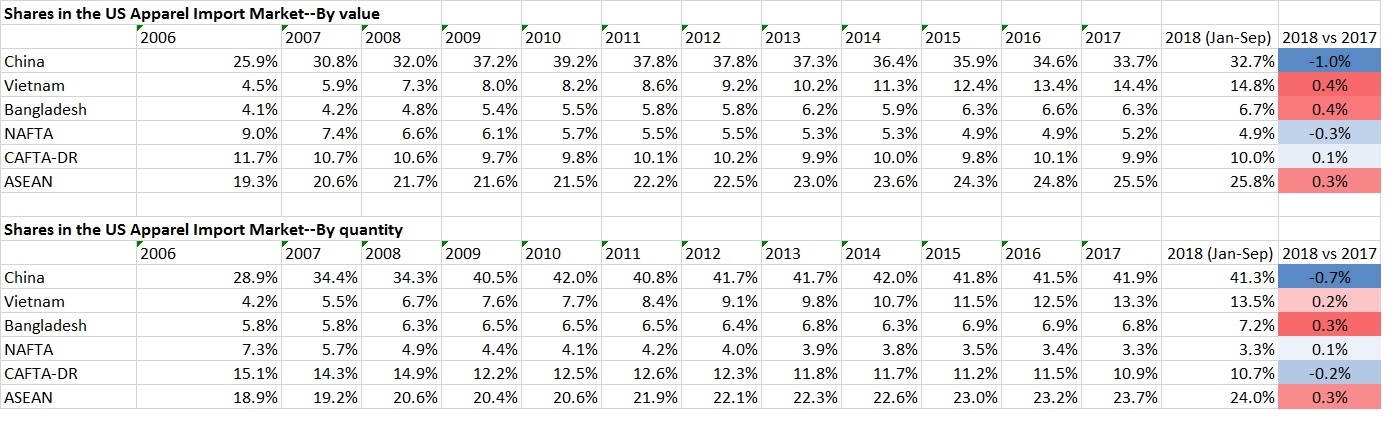
First, U.S. companies did NOT stop importing from China. Seasonally adjusted data shows that between January and September 2018, the value of U.S. apparel imports from China decreased by 0.6 percent in volume and 0.05 percent in value year on year. Despite the decline, China remained the No.1 apparel supplier for the U.S. market in the first nine months of 2018, accounting for 32.3 percent market share in value and 41.3 percent shares in quantity, only marginally dropped by 1 and 0.7 percentage points from a year earlier respectively .

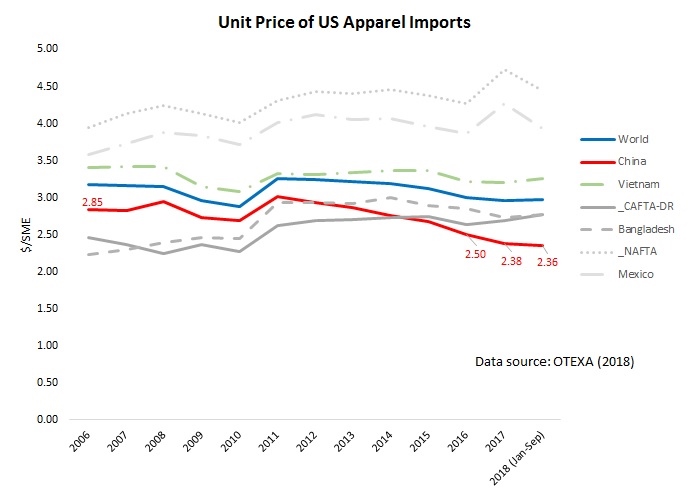
Second, apparel “Made in China” are becoming even cheaper. Notably, the average unit price of U.S. apparel imports from China dropped from $2.5/SME in 2016,$2.38/SME in 2017 to $2.36/SME in the first nine months of 2018. On the one hand, this result suggests that cost concern is not the most influential factor that drives U.S. companies to source less from China. However, it is also likely that Chinese exporters are intentionally reducing their price to keep their orders and overcome the challenges caused by the Section 301.

Third, there is no perfect replacement for “Made in China”. In response to the market uncertainty created by the Section 301 trade action, U.S. apparel importers are diversifying their sourcing base. That being said, it is difficult to identify a single largest beneficiary–notably, the market shares of apparel exports from Vietnam, Bangladesh, NAFTA, and CAFTA regions only marginally increased in the first nine months of 2018 compared with a year ago.

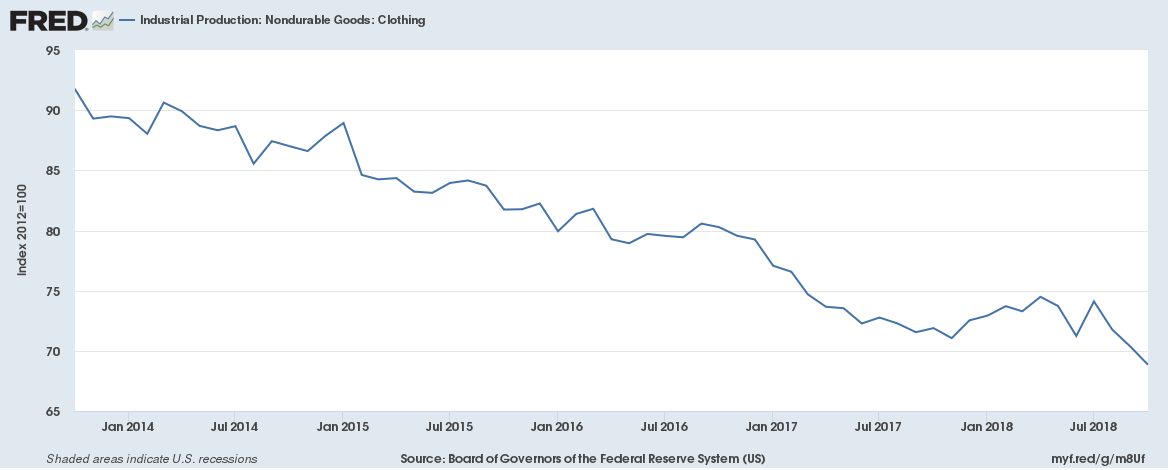
Additionally, it remains unclear whether the section 301 trade action has benefited U.S. textile and apparel manufacturing. Data shows that in the first ten months of 2018, the production index (2012=100) of textile manufacturing in the United States slightly increased from 92.8 in 2017to 94.3. However, over the same period, the index of apparel manufacturing decreased from 73.6 to 72.4.

Looking ahead, the volume of US textile and apparel imports from China is likely to increase in the short run since U.S. importers are eager to complete their sourcing orders before the new tariff hit.  Usually, companies place sourcing orders several months ahead of the selling season. However, it will be interesting to see if the trade data in the first half of 2019 will reveal the negative impact of the Section 301 action on China’s apparel exports to the U.S. market.

Data source: Office of Textiles and Apparel (OTEXA), US Department of Commerce

by Sheng Lu

China’s Changing Role in the World Textile and Apparel Supply Chain (updated October 2018)

china market share

Untitled

Following the steps of many countries in history, China is gradually shifting its role in the world textile and apparel supply chain. While China unshakably remains the world’s largest apparel exporter, its market shares measured by value fell from 38.6 percent in 2015 to 33.7 percent in 2017.  China’s market shares in the world’s top three largest apparel import markets, namely the United States, EU, and Japan, also indicate a clear downward trend in the past five years. This result is consistent with several recent survey studies, which find that fashion brands and retailers are actively seeking alternative apparel sourcing bases to China. Indeed, no country, including China, can forever keep its comparative advantage in making labor-intensive garments when its economy becomes more industrialized and advanced.

However, it is also important to recognize that China is playing an increasingly important role as a textile supplier for apparel-exporting countries in Asia. For example, measured by value, 47 percent of Bangladesh’s textile imports came from China in 2017, up from 39 percent in 2005. We observe similar trends in Cambodia (up from 30 percent to 65 percent), Vietnam (up from 23 percent to 50 percent), Pakistan (up from 32 percent to 71 percent), Malaysia (up from 25 percent to 54 percent), Indonesia (up from 28 percent to 46 percent), Philippines (up from 19 percent to 41 percent) and Sri Lanka (up from 15 percent to 39 percent) over the same time frame. 

So maybe the right question to ask in the future is: how much value of “Made in China” actually contains in Asian countries’ apparel exports to the world?

China’s Textile and Apparel Factories Today

This slideshow requires JavaScript.

Related readings: 

Are Textile and Apparel “Made in China” Losing Competitiveness in the U.S. Market? (updated October 2018)

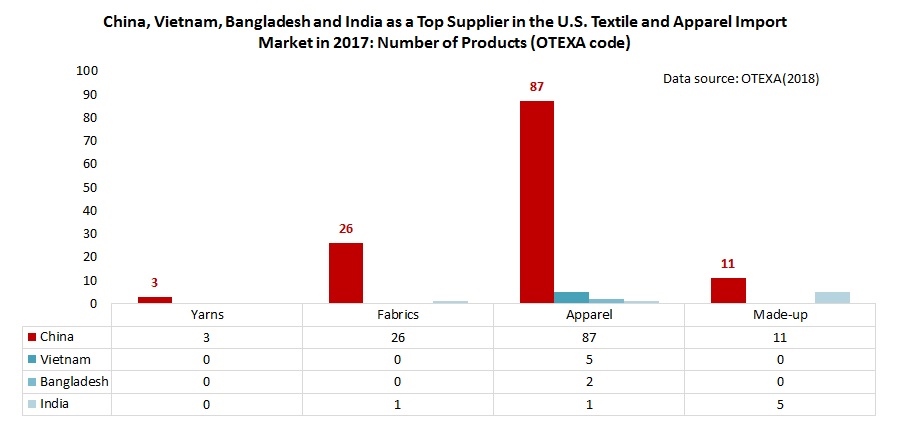
A fact-checking review of trade statistics in 2017 of a total 167 categories of textile and apparel (T&A) products categorized by the Office of Textiles and Apparel (OTEXA) suggests that T&A products  “Made in China” still have no near competitors in the U.S. import market. Specifically, in 2017:

1.jpg

  • Of the total 11 categories of yarn, China was the top supplier for 3 categories (or 27.3%);
  • Of the total 34 categories of fabric, China was the top supplier for 26 categories (or 76.5%);
  • Of the total 106 categories of apparel, China was the top supplier for 87 categories (or 82.1%);
  • Of the total 16 categories of made-up textiles, China was the top supplier for 11 categories (or 68.8%);

In comparison, for those Asian T&A suppliers regarded as China’s top competitors:

  • Vietnam was the top supplier for only 5 categories of apparel (less than 5% of the total);
  • Bangladesh was the top supplier for only 2 categories of apparel (less than 2% of the total)
  • India was the top supplier for 1 category of fabric (2.9% of the total), 1 category of apparel (1% of the total) and 5 categories of made-up textiles (41.7% of the total)

Notably, China not only was the top supplier for many T&A products but also held a lion’s market shares. For example, in 2017:

2.jpg

  • For the 26 categories of fabric that China was the top supplier, China’s average market shares reached 40.5%, 22 percentage points higher than the 2nd top suppliers for these categories
  • For the 87 categories of apparel that China was the top supplier, China’s average market shares reached 52.4%, 36 percentage points higher than the 2nd top suppliers for these categories.
  • For the 11 categories of made-up textiles that China was the top supplier, China’s average market shares reached 58%, 43 percentage points higher than the 2nd top suppliers for these categories.

3.jpg

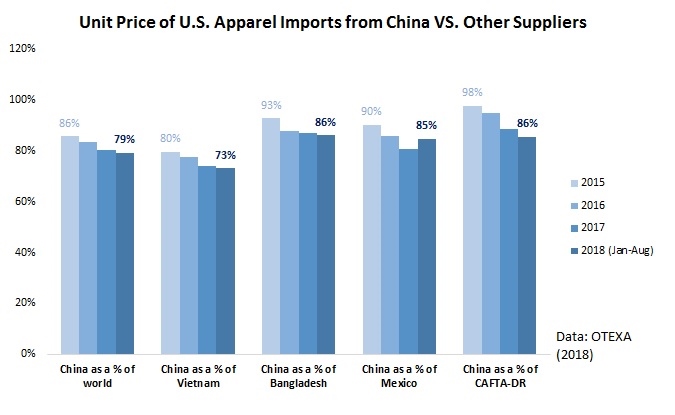
Furthermore, T&A “Made in China” are demonstrating even bigger price competitiveness compared to other suppliers in the U.S. market. For example, in 2017, the unit price of apparel “Made China” was only 74% of the price of “Made in Vietnam” (in 2015 was 80%), 86% of “Made in Bangladesh” (in 2015 was 93%), 85% of “Made in Mexico” (in 2015 was 90%) and 86% of products by members of CAFTA-DR (in 2012 was 98%).

4.jpg

Last but not least, the U.S.-China tariff war apparently has NOT affected China’s textile and apparel exports to the United States significantly. From January to August this year, China’s apparel exports to the U.S. declined by 1% in value and 0.3% in quantity from a year earlier, but China’s textile exports to the U.S. increased by 12.3% in value and 7.2% in quantity.  China’s market shares in the U.S. market also remains overall stable.

Are the results surprising? How to explain China’s increasing price competitiveness despite its reported rising labor cost? What’s your outlook for the future of China as a sourcing destination for U.S. fashion brands and retailers? Please feel free to share your views. 

Suggested citation: Lu, Sheng. (2018). Are Textile and Apparel “Made in China” Losing Competitiveness in the U.S. Market? (updated October 2018). Retrieved from https://shenglufashion.com/2018/10/28/are-textile-and-apparel-made-in-china-losing-competitiveness-in-the-u-s-market-updated-october-2018/ 

Textile and Apparel Items Removed from USTR’s Original Proposed Product List for the Section 301 Action (September 2018)

On September 17, 2018, President Trump formerly announced to take the Section 301 action against another $200 billion worth of imports from China. The additional tariffs will be effective starting September 24, 2018, and initially will be in the amount of 10 percent.  Starting January 1, 2019, the level of the additional tariffs will increase to 25 percent.

The $200 billion imports from China targeted include 5,745 full or partial lines of the original 6,031 tariff lines that were on a proposed list of Chinese imports announced on July 10, 2018. Included among the products removed from the original proposed list are certain consumer electronics products such as smart watches and Bluetooth devices; certain chemical inputs for manufactured goods, textiles and agriculture; certain health and safety products such as bicycle helmets, and child safety furniture such as car seats and playpens.

Below are the textile and apparel related products removed from the original proposed list:

section 301

Data source: CCCT (2018) 

However, the final $200 billion product list still covers several textile and apparel-related products such as backpacks, handbags, purses, wallets, baseball gloves, hats and leather, and fur apparel, as well as textiles and machinery that are used for domestic manufacturing. In general, the final $200 billion product list includes about 20% consumer products (v.s. only 1% in the $50 billion already subject to the 25% additional tariff), 50% intermediary goods and 30% capital goods.

WTO Reports World Textile and Apparel Trade in 2017

Statistical review of world textile and apparel trade in 2018 is now available

Figure 1Figure 2

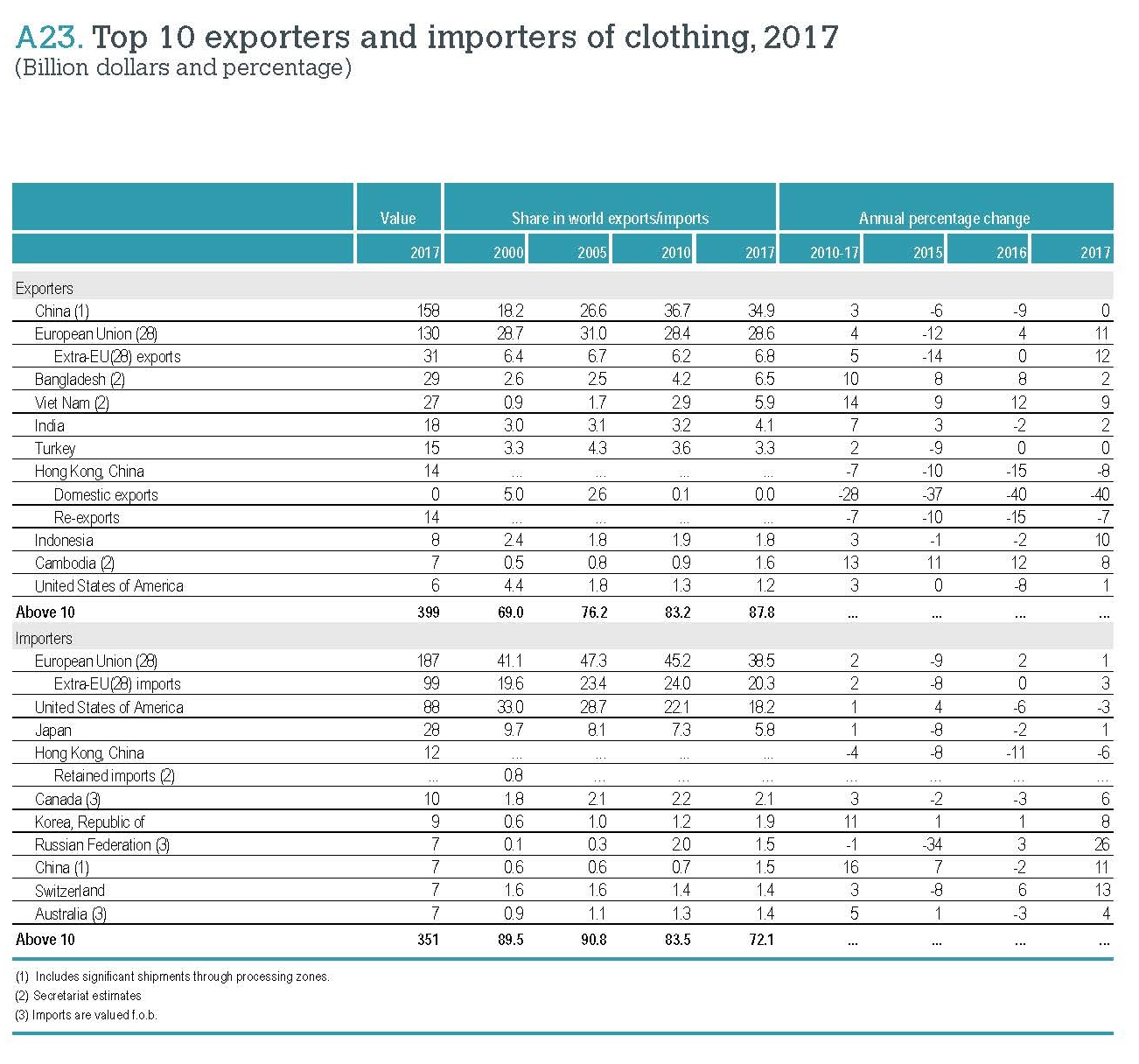
According to the newly released World Trade Statistical Review 2018 by the World Trade Organization (WTO), the current dollar value of world textiles (SITC 65) and apparel (SITC 84) exports totaled $296.1bn and $454.5bn respectively in 2017, increased by 4.2% and 2.8% from a year earlier. This is the first time since 2015 that the value of world textile and apparel exports enjoyed a growth.

Textiles and apparel are not alone. Driven by rising demand for imports globally, the current dollar value of world merchandise exports also grew by 4.7% in 2017–its most robust growth in six years, to reach $17.43 trillion. Particularly, the ratio of trade growth to GDP growth finally returned to its historic average of 1.5, compared to the much lower 1.0 ratio recorded in the years following the 2008 financial crisis.

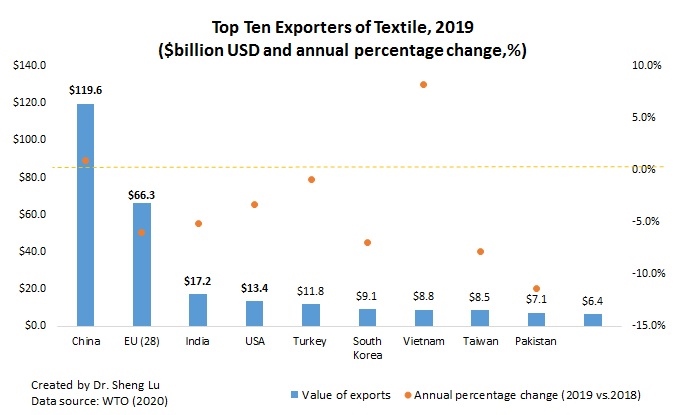
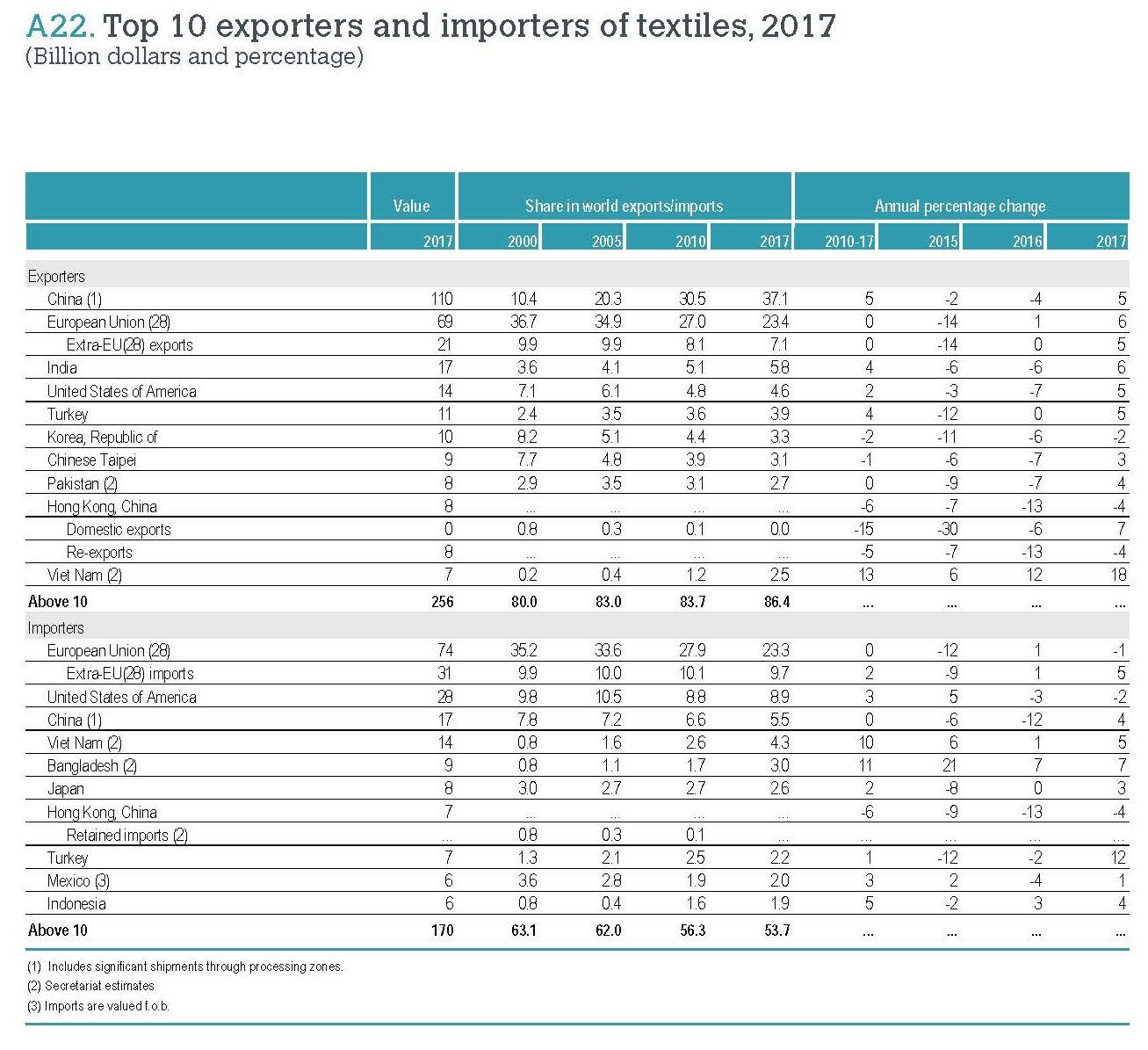
China, European Union (EU28), and India remained the world’s top three exporters of textiles in 2017. Altogether, these top three accounted for 66.3% of world textile exports in 2017, up from 65.9% in 2016. All the top three also enjoyed a faster-than-average export growth in 2017, including 5.0% of China, 5.8% of EU(28) and 5.9% of India. The United States remained the world’s fourth top textile exporter in 2017, accounting for 4.6 percent of the shares, the same as a year earlier.

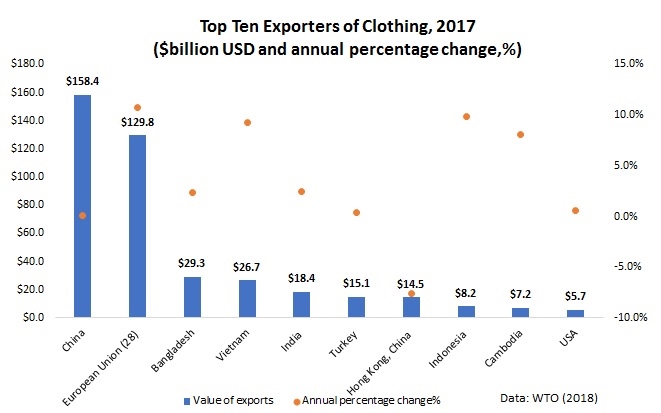
Regarding apparel, China, the European Union (EU28), Bangladesh and Vietnam unshakably remained the world’s top four largest exporters in 2017. Altogether, these top four accounted for as much as 75.8% of world market shares in 2017, which was higher than 74.3% a year earlier and a substantial increase from 68.3% back in 2007.

Continuing with the emerging trend in recent years, China is exporting less apparel and more textiles to the world. Notably, China’s market shares in world apparel exports fell from its peak—38.8% in 2014 to a record low of 34.9% in 2017. Meanwhile, China accounted for 37.1% of world textile exports in 2017, which was a new record high. It is important to recognize that China is playing an increasingly critical role as a textile supplier for many apparel-exporting countries in Asia. Measured by value, 47% of Bangladesh’s textile imports came from China in 2017, up from 39% in 2005. We observe similar trends in Cambodia (up from 30% to 65 %), Vietnam (up from 23 % to 50 %), Pakistan (up from 32 % to 71 %), Malaysia (up from 25 % to 54 %), Indonesia (up from 28 % to 46 %), Philippines (up from 19 % to 41 %) and Sri Lanka (up from 15 % to 39 %) over the same period.

Figure 3

Figure 4

Additional readings: 
Lu, S. (2018). Changing trends in world textile and apparel trade. Just-Style.
Lu, S. (2018). How regional supply chains are shaping world textile and apparel trade. Just-Style.

U.S. Textile and Apparel Industry Responds to Trump’s Tariff Announcement against China

FOREIGN201708211521000183597989940

On June 15, 2018, the Trump Administration announced to impose a 25% punitive tariff on a list of Chinese goods based on the results of its Section 301 investigation, which targeted against China’s unfair trade practices related to the forced transfer of American technology and intellectual property. The additional duty will first apply to 818 lines of products on July 6, 2018, which cover approximately $34 billion worth of imports from China. Office of the U.S. Trade Representative (USTR) said it would issue a final determination on the second set of 284 proposed tariff lines, which cover approximately $16 billion worth of imports from China shortly. The total 1,102 tariff lines targeted by USTR generally focuses on products from industrial sectors that contribute to or benefit from the “Made in China 2025” industrial policy, which include industries such as aerospace, information and communications technology, robotics, industrial machinery, new materials, and automobiles.

In response to the U.S. action, China’s Ministry of Commerce (MOFCOM) quickly announced its proposed countermeasures, including a 25% punitive tariff on approximately $34 billion worth of U.S. soybean, autos, and fruits effective July 6, 2018. China is also ready to impose the punitive tariff on another list of products, which cover approximately $16 billion worth of medical device, chemicals and energy imports from the United States.

The U.S. textile and apparel industry keeps a close watch on the U.S.-China trade dispute since as much as 36% of U.S. textile and apparel imports come from China. In an announcement released on June 16, 2018, the American Apparel and Footwear Association (AAFA) called a victory that no textile and apparel products are subject to the punitive tariff proposed by USTR. The June 15 USTR list also removes the majority of the textile machinery initially on the retaliation product list back in April 2018. However, U.S. fashion brands and apparel retailers remain deeply concerned about Trump’s tariff action and its potential negative economic impacts on the apparel sector.

In contrast, the U.S. textile industry, represented by the National Council of Textile Organizations (NCTO) praised the Trump administration’s tariff announcement. NCTO also called on the Trump administration to include finished textile and apparel products on any future lists of imports from China to be made subject to Section 301 tariffs.  Not surprisingly, NCTO’s proposal is opposed strongly by AAFA and the U.S. Fashion Industry Association, representing U.S. fashion brands and apparel retailers. As argued by USFIA, the U.S. tariff rates on apparel and fashion products are already the highest among manufactured goods, reaching 32 percent for man-made fiber apparel and 67 percent for footwear. Any additional tariff would constitute a huge, regressive tax increase and have a negative impact on the American jobs.

Appendix: Timeline of U.S. Section 301 Investigation against China

June 15, 2018: The Trump Administration announced to impose a 25% punitive tariff on a list of Chinese goods based on the results of its section 301 investigation

June 4, 2018: Secretary of Commerce Wilbur Ross concluded his two-day trade negotiation with China in Beijing. A White House statement said “the meetings focused on reducing the United States’ trade deficit by facilitating the supply of agricultural and energy products to meet China’s growing consumption needs, which will help support growth and employment in the United States. The United States officials conveyed President Donald J. Trump’s clear goal for achieving a fair trading relationship with China.” While the announcement didn’t mention the next round, it says that the delegation will “receive guidance on the path forward.”

May 29, 2018: President Trump suddenly announced that the United States will impose a 25 percent tariff on $50 billion of goods imported from China containing industrially significant technology, including those related to the “Made in China 2025” program.  The final list of covered imports will be announced by June 15, 2018. The announcement also said that the U.S. Trade Representative Office (USTR) will continue WTO dispute settlement against China originally initiated in March to address China’s discriminatory technology licensing requirements. Additionally, the United States will implement specific investment restrictions and enhanced export controls for Chinese persons and entities related to the acquisition of industrially significant technology. The list of restrictions and controls will be announced by June 30, 2018.

May 19, 2018: A joint statement released by the White House said that the United States and China had led to an agreement for China to buy more goods and services, including “meaningful increases in U.S. agriculture and energy exports.” The statement also said that both sides attach importance to intellectual property protections, agreed to encourage two-way investment and to strive to create a fair, level playing field for competition, and agreed to engage at high levels on trade and investment issues. Additionally, the statement said that the United States would send a team to China to work out the details of the agreement. However, the statement did not contain a specific target for reducing the $375 billion trade deficits.

April 5, 2018: President Trump announced that he has instructed the Office of the U.S. Trade Representative (USTR) to consider $100 billion additional retaliatory tariffs on China, in response to China’s own retaliation against the Section 301 tariffs announced in late March. In a statement released the next day, USTR confirms the proposed new measures. USTR also says that any additional tariffs proposed will be subject to a similar public comment process as the proposed tariffs announced on April 3, 2018. No tariffs will go into effect until the respective process is complete. 

April 3, 2018: USTR released the proposed list of Chinese products to be subject to the retaliatory tariff under the Section 301 action. The proposed list covers approximately 1,300 separate tariff lines and will undergo further review in a public notice and comment process, including a hearing (scheduled at around May 15, 2018). The USTR statement says it will make a final decision on whether to implement the proposed tariff action after the whole process. 

March 26, 2018: USTR filed a WTO case against China’s discriminatory technology licensing requirements (DS542). The US claimed that China’s measures appear to be inconsistent with Articles 3, 28.1(a) and (b) and 28.2 of the Trade-Related Intellectual Property Rights Agreement (TRIPS). As of April 8, 2018, the European Union, Japan, Ukraine and Saudi Arabia have requested to join the dispute as third parties. According to the WTO rule, China shall enter into consultation with the US no later than April 26, 2018. If the dispute is not resolved by May 25, 2018 (i.e., 60 days after the request for consultation), the United States may request a WTO panel. As of June 17, 2018, the case is still in consultations.

March 22, 2018: President Trump announced his decisions on the actions the Administration will take in response to China’s unfair trade practices covered in the USTR Section 301 investigation of China’s Acts, Policies, and Practices Related to Technology Transfer, Intellectual Property, and Innovation. U.S. Trade Representative Robert Lighthizer initiated the investigation in August 2017 at the direction of President Trump. In the Memorandum he signed, President Trump directed the US Trade Representative to level tariffs on about $50 billion worth of Chinese imports. 

January 2018: the U.S. Trade Representative Office submitted its annual report on China’s WTO Compliance to U.S. Congress. The report says that “It seems clear that the United States erred in supporting China’s entry into the WTO on terms that have proven to be ineffective in securing China’s embrace of an open, market-orientated trade regime.”

August 14, 2017: President Trump issued a memorandum directing the USTR to determine if China’s policies regarding IPR theft and forced technology requirements “may be harming American intellectual property rights, innovation, or technology development,” and thus warrant USTR action under Section 301of the 1974 Trade Act.

Related reading: The Section 301 Investigation against China Divides the U.S. Textile Industry and U.S. Fashion Brands and Retailers

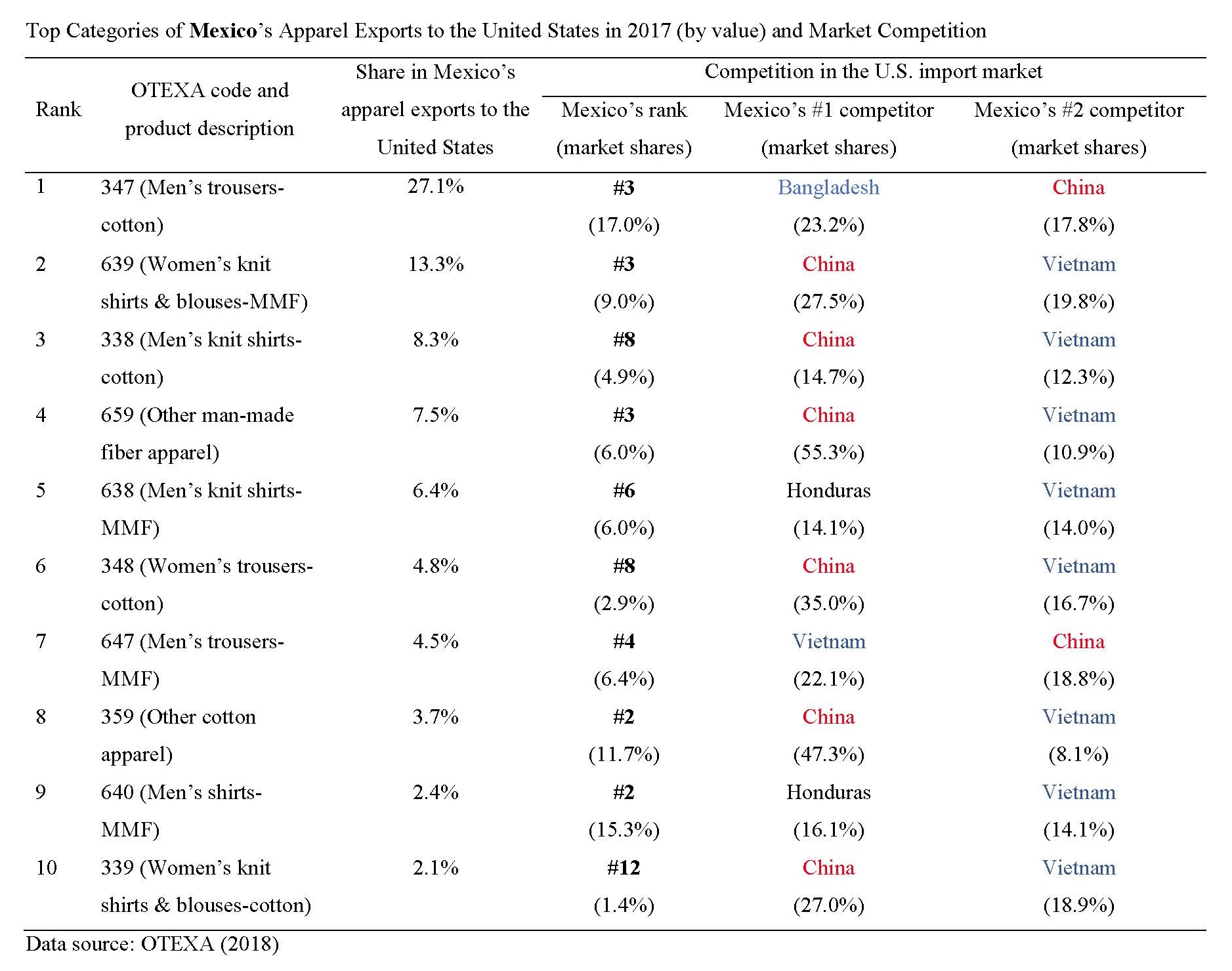
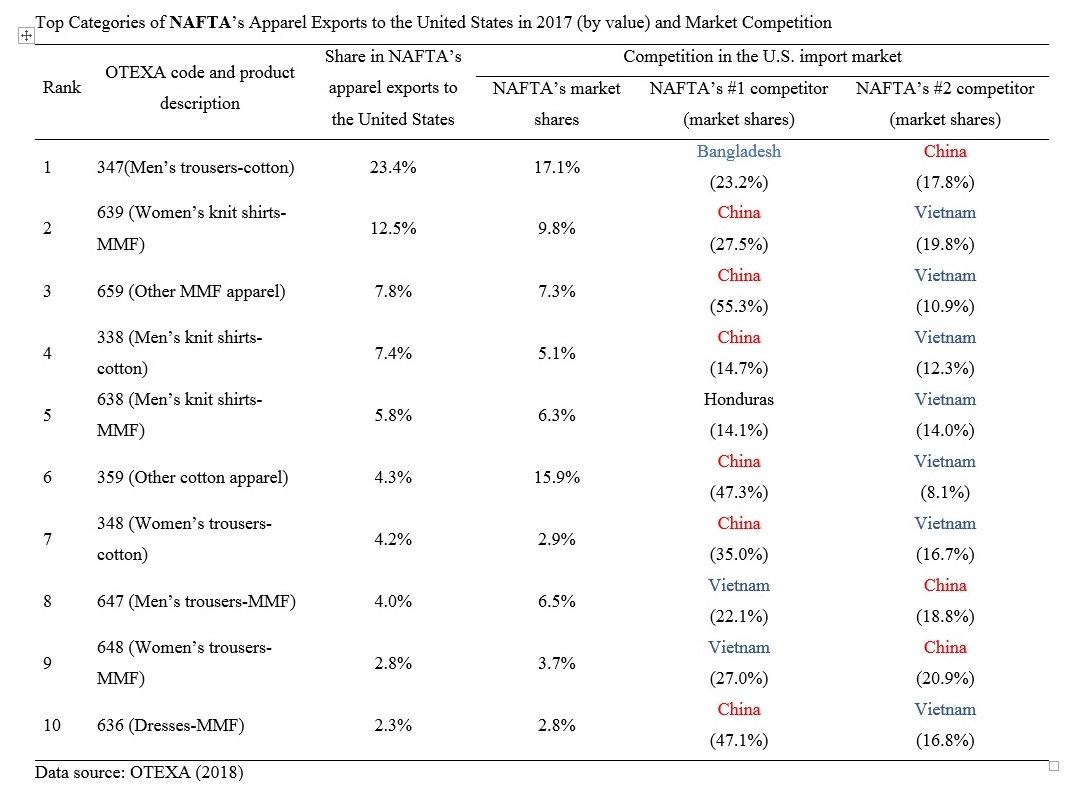
Competition in the U.S. Apparel Import Market (Updated March 2018)

market shares in the US (2017)_Page_2market shares in the US (2017)_Page_3CAFTA-DRNAFTA

Trade Issues Facing the U.S. Apparel and Retail Industry

Panel:

  • Steve Lamar, Executive VP at the American and Apparel Footwear Association (AAFA)
  • Jon Gold, VP of Supply Chain and Customs Policy at the National Retail Federation (NRF)
  • Robert Antoshak (Host), Managing Director at Olah Inc.

Topic discussed

  • Renegotiation of the North American Free Trade Agreement (NAFTA)
  • Trump’s trade policy agenda
  • What’s going on in the retail market?
  • Technology and the future of apparel supply chain
  • US labeling requirements and a return of Made-in-USA

USTR Lighthizer Discusses Philosophies behind Trump Administration’s Trade Policy

At an event hosted by the Center for Strategic and International Studies (CSIS) on September 18, U.S. Trade Representative Robert Lighthizer addressed the U.S. trade policy in the Trump Administration, particularly Trump’s beliefs on trade:

Philosophy 1: The reason why some Americans oppose free trade is NOT that they were “ill-informed.” Rather, it is because the U.S. trade policy for decades has failed to create a “level playing field.” The Trump Administration will proactively use all instruments to “make it expensive” for U.S. trading partners to engage in the non-economic behavior, convince U.S. trading partners to treat U.S. workers, farmers, and ranchers fairly and demand “reciprocity” both in the home and international markets.

Philosophy2: Trade deficits matter. Although trade policy is not the only cause for the trade deficit, it can be a major contributor, such as high tariffs that deny the market access for U.S. products, not imposing the border adjustment tax and currency manipulation.

Philosophy 3: China is the top challenge. According to Lighthizer, “the sheer scale of China’s coordinated efforts to develop their economy, to subsidize, to create national champions, to force technology transfer, and to distort markets in China and throughout the world is a threat to the world trading system that is unprecedented.”

Philosophy 4: The Trump Administrations will exam all existing trade agreements to make sure they provide “roughly equivalent” measured by trade deficits. “Where there the numbers and other factors indicate a disequilibrium, one should renegotiate.”

During the Q&A session, Lighthizer further shared his views on some cutting-edge trade issues:

  1. Regarding the NAFTA renegotiation, Lightlizher said that the negotiation is “moving at warp speed, but we don’t know whether we’re going to get to a conclusion, that’s the problem.” The consultation process with U.S. Congress is complicated and time-consuming, but it is unavoidable.
  2. The Trump Administration prefers bilateral trade deal over regional and multilateral ones. Given the size of the U.S. economy, Lighthizer believes that bilateral trade agreement will provide more negotiation leverages and ensure better enforcement.
  3. The Trump Administration will still stay very much engaged in Asia.
  4. The WTO Dispute-Settlement mechanism doesn’t work well—it has both imposed new obligations for the U.S. and reduced a lot of U.S. benefits.
  5. Regarding the outlook for the Trans-Atlantic Trade and Investment Partnership (T-TIP) negotiation, Lighthizer stressed the importance of the US-EU trade relations. He said that the series of elections in EU is a reason why the negotiation of the agreement hasn’t moved forward.
  6. Regarding TISA (Trade in services agreement), the U.S. objective is to open markets and eliminate market access barriers for U.S. companies.

North Korea’s Apparel Exports: Four Things to Know

NK1

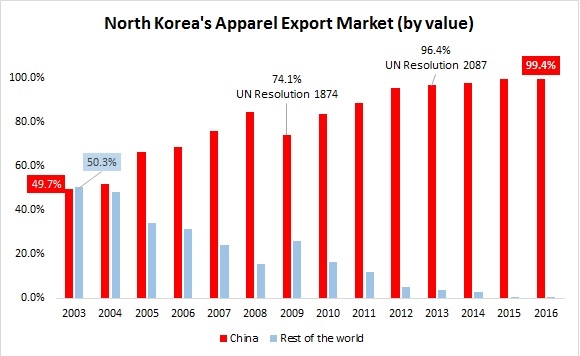
First, apparel (defined by HS Chapters 61 & 62) is one of the top categories of North Korea’s merchandise exports. Statistics from the International Trade Center (ITC) show that of North Korea’s total US$2,339.9 million merchandise exports in 2016, US$564.7 million (or 19.4%) were apparel.

NK2

Second, apparel is also one of the fastest-growing categories of North Korea’s exports over the past decade. From 2003 to 2016, the value of North Korea’s apparel exports surged by 416%, compared to only 171% increase of other products over the same period.

NK3

NK4.jpg

Third, over 99.4% of North Korea’s apparel exports went to China in 2016. Notably, back in 2003, China only accounted for 49.7% of North Korea’s apparel exports. However, apparel exports from North Korea to China received two substantial boosts just in the past ten years: one in 2009 (the year when UN resolution 1874 was adopted) and another in 2013 (the year when UN resolution 2087 was adopted).

Fourth, interesting enough, North Korea’s apparel exports predominantly concentrate on men and women’s overcoats (HS 6201 and 6202) as well as suits, jackets, and blazers (HS 6203 and 6204). This is a notable difference from most other developing countries, such as Bangladesh, Vietnam, and Cambodia whose apparel exports usually focus on more basic items like shirts and trousers.  

by Sheng Lu

Extended readings:

Disclaimer: All blog posts on this site are for FASH455 educational purposes only and they are nonpolitical and nonpartisan in nature. No blog post has the intention to favor or oppose any particular public policy, nor shall be interpreted in that way.

2017 U.S. Fashion Industry Benchmarking Study Released

The 2018 U.S. Fashion Industry Benchmarking Study is now availablecover

The report can be downloaded from HERE

Key findings of the study:

While the majority of respondents remain confident about the five-year outlook for the U.S. fashion industry, the percentage of those who are “optimistic” or “somewhat optimistic” dropped to a record low since we began conducting this study in 2014. This change could be due to concerns about the “protectionist trade policy agenda in the United States” and “market competition in the United States from e-commerce,” the top two concerns this year.

  • The percentage of those who are “optimistic” or “somewhat optimistic” fell from 92.3 percent in 2016 to 71.0 percent in 2017, a record low since we began conducting this study in 2014. As many as 12.9 percent of respondents are “somewhat pessimistic” about the next five years, mostly large-scale retailers with more than 3,000 employees.
  • Despite the challenges, demand for human talent in the industry overall remains robust. This year, around 80 percent of respondents plan to hire more employees in the next five years, especially supply chain specialists, data scientists, sourcing specialists, and marketing analysts.
  • Cost is no longer one of the top concerns; respondents are less stressed about “increasing production or sourcing cost,” which slipped from #2 challenge in 2016 to #7 challenge in 2017. Only 34 percent rate the issue among their top five challenges this year, significantly lower than 50 percent in 2016 and 76 percent in 2015. Labor cost remains the top factor driving up sourcing cost in 2017.

Although U.S. fashion companies continue to seek alternatives to “Made in China,” China’s position as the top sourcing destination remains unshakable. Meanwhile, sourcing from Vietnam and Bangladesh may continue to grow over the next two years, but at a relatively slow pace.

  • 91 percent of respondents source from China; while 100 percent sourced from China in our past three studies, China is still the top-ranked sourcing destination this year, and the percentage of those expecting to decrease sourcing from the country fell from 60 percent in 2016 to 46 percent this year—and many more expect to maintain their current sourcing value or volume from the country in the next two years.
  • Likely reflecting the United States’ withdrawal from the Trans-Pacific Partnership (TPP) and the expectation of increasing labor costs, only 36 percent of respondents expect to increase sourcing from Vietnam in the next two years, much lower than 53 percent who said the same in 2016.
  • Respondents are cautious about expanding sourcing from Bangladesh in the next two years, with only 32 percent expecting to somewhat increase sourcing While “Made in Bangladesh” enjoys a prominent price advantage over many other Asian suppliers, respondents view Bangladesh as the having the highest risk for compliance.

U.S. fashion companies continue to maintain truly global supply chains.

  • Respondents source from 51 countries or regions in 2017, close to the 56 in last year’s study.
  • 57.6 percent source from 10+ different countries or regions in 2017, up from 51.8 percent in last year’s survey. In general, larger companies have a more diversified sourcing base than smaller companies. Additionally, retailers maintain a more diversified sourcing base than brands, importers/wholesalers, and manufacturers.
  • Around 54 percent expect their sourcing base will become more diversified in the next two years, up from 44 percent in 2016; among these respondents, over 60 percent currently source from more than 10 different countries or regions.
  • The most common sourcing model is shifting from “China Plus Many” to “China Plus Vietnam Plus Many.” The typical sourcing portfolio today is 30-50 percent from China, 11-30 percent from Vietnam, and the rest from other countries.
  • While Asia as a whole remains the dominant sourcing region for U.S. fashion companies, the Western Hemisphere is growing in popularity. This year, we see a noticeable increase in sourcing from the United States (70 percent, up from 52 percent in 2016) and countries in North, South, and Central Americas, which offer a shorter lead time and relatively lower risk of compliance.

Today, ethical sourcing and sustainability are given more weight in U.S. fashion companies’ sourcing decisions. Respondents also see unmet compliance (factory, social and/or environmental) standards as the top supply chain risk.

  • 5 percent of respondents say ethical sourcing and sustainability have become more important in their company’s sourcing decisions in 2017 compared to five years ago.
  • 100 percent of respondents currently audit their suppliers, including how suppliers treat their workers, suppliers’ fire safety, and suppliers’ building safety. The majority (93 percent) use third-party certification programs to audit, with a mix of announced and unannounced audits.
  • As many as 90 percent of respondents map their supply chains, i.e., keep records of name, location, and function of suppliers. More than half track not only Tier 1 suppliers, suppliers they contract with directly, but also Tier 2 suppliers, i.e. supplier’s suppliers. It is less common for U.S. fashion companies to map Tier 3 and Tier 4 suppliers though, which could be because of the difficulty of getting access to related information with such a globalized and highly fragmented supply chain.

Free trade agreements (FTAs) and trade preference programs remain underutilized, and several FTAs, including CAFTA-DR, are utilized even less this year than in previous years.

  •  Of the 19 FTAs/preference programs we examined this year, only NAFTA is used by more than 50 percent of respondents for import purposes.
  • Even more concerning, some U.S. fashion companies source from countries/regions with FTAs/preference programs but, for whatever reason, do not claim the benefits. For example, as many as 38 percent and 6 percent of respondents, respectively, do not use CAFTA-DR and NAFTA when they source from these two regions.

Respondents unanimously oppose the U.S. border adjustment tax (BAT) proposal and call for the further removal of trade barriers, including restrictive rules of origin and high tariffs.

  • 100 percent of respondents oppose a border adjustment tax; 84 percent “strongly oppose” it.
  • Respondents support initiatives to eliminate trade barriers of all kinds, from high tariffs to overcomplicated documentation requirements, to the restrictive yarn-forward rules of origin in NAFTA and future free trade agreements.
  • Respondents say the “complex standards on labeling and testing”, “complex rules for the valuation of goods at customs” and “administrative and bureaucratic delays at the border” are the top non-tariff barriers they face when sourcing today.

The benchmarking studies from 2014 to 2016 can be downloaded from https://www.usfashionindustry.com/resources/industry-benchmarking-study 

Cheaper to Make Textiles in the United States than in China: Reality or Myth?

NY times

A New York Times article back in August 2015 suggests that “yarn production costs in China are now 30 percent higher than in the United States” because of savings in raw and auxiliary material. The article believes the cost difference is why some Chinese textile companies are coming to build factories in the United States, such as Keer Group’s cotton mill in South Carolina.

cost

However, in a recent interview with China Textile News, Chairman of the Cixi Jiangnan Chemical Fiber Co (Cixi) provides a different cost sheet (above). In September 2013, Cixi invested a $45million polyester staple fiber mill in South Carolina. Because nearly 80% of Cixi’s outputs are sold outside of China, and the United States is its single largest export market, the investment intends to help the company maintain its presence in the U.S. market and substantially save transportation cost.

According to Cixi, it is a misunderstanding that making textiles in the United States is cheaper than in China. Although moving factories to the United States may help Chinese companies save money in land, electricity, natural gas, and logistics, it will significantly increase the costs in purchasing manufacturing equipment, building factories and managing daily operation of the company.  Additionally, culture and language barriers, as well as labor policy in the United States, could also become critical challenges facing Chinese investors. Cixi admits that to keep its U.S. factory running smoothly, members of its management team all come from China.

Are Textile and Apparel “Made in China” Losing Competitiveness in the U.S. Market?

The updated version is available HERE

The following analysis is from the latest Just-Style Op-ed Is China Losing Its Edge as a US Apparel Supplier.

A fact-checking review of trade statistics in 2016 of a total 167 categories of T&A products categorized by the Office of Textiles and Apparel (OTEXA) suggests that textile and apparel (T&A) “Made in China” have no near competitors in the U.S. import market. Specifically, in 2016:

2

  • Of the total 11 categories of yarn, China was the top supplier for 2 categories (or 18%);
  • Of the total 34 categories of fabric, China was the top supplier for 25 categories (or 74%);
  • Of the total 106 categories of apparel, China was the top supplier for 88 categories (or 83%);
  • Of the total 16 categories of made-up textiles, China was the top supplier for 12 categories (or 68%);

In comparison, for those Asian T&A suppliers regarded as China’s top competitors:

  • Vietnam was the top supplier for only 5 categories of apparel (less than 5% of the total);
  • Bangladesh was the top supplier for only 2 categories of apparel (less than 2% of the total)
  • India was the top supplier for 2 categories of fabric (9% of the total), one category of apparel (1% of the total) and 5 categories of made-up textiles (41.7% of the total)

part II

Notably, China not only was the top supplier for many T&A products but also held a lion’s market shares. For example, in 2016:

  • For the 34 categories of fabric that China was the top supplier, China’s average market shares reached 41%, 23 percentage points higher than the 2nd top suppliers for these categories
  • For the 88 categories of apparel that China was the top supplier, China’s average market shares reached 53%, 38 percentage points higher than the 2nd top suppliers for these categories.
  • For the 16 categories of made-up textiles that China was the top supplier, China’s average market shares reached 57%, 40 percentage points higher than the 2nd top suppliers for these categories.

It is also interesting to see that despite the reported rising labor cost, T&A “Made in China” are NOT becoming more expensive. On the contrary, the unit price of U.S. T&A imports from China in 2016 was 6.8% lower than a year earlier, whereas over the same period the unit price for U.S. T&A imports from rest of the world only declined by 2.9%.

3

Furthermore, T&A “Made in China” are demonstrating even bigger price competitiveness compared with other suppliers to the U.S. market. For example, in 2016, the unit price of “Made China” was only 78% of the price of “Made in Vietnam” (in 2012 was 89%), 88% of “Made in Bangladesh” (in 2012 was 100%), 86% of “Made in Mexico” (in 2012 was 103%) and 72% of “Made in India” (in 2012 was 81%).

Are the results surprising? How to explain China’s demonstrated price competitiveness despite its reported rising labor cost? What’s your outlook for the future of China as a sourcing destination for U.S. fashion brands and retailers? Please feel free to share your views.

New USCBC Study Suggests Overall Positive Impacts of China on the US economy

oe-cover_0

Although the trade relationship with China is often blamed for causing job losses in the United States, a new study prepared for the U.S.-China Business Council (USCBC) by Oxford Economics suggests overall positive impacts of China on the US economy. According to the study:

  • China has grown to become the third-largest destination for American goods and services, only after Mexico and Canada. China purchased $165 billion in goods and services from the United States in 2015, representing 7.3 percent of all US exports and about 1 percent of total US economic output. By 2030, US exports to China are projected to rise to more than $520 billion annually.
  • The US-China trade relationship supports roughly 2.6 million jobs in the United States. Specifically, US exports to China directly and indirectly supported 8 million new jobs in 2015.
  • The reported gross US trade deficit with China is overstated and somehow misleading. As China has become an integral part of the global manufacturing supply chain, much of its exports are comprised of foreign-produced components delivered for final assembly in China. If the value of these imported components is subtracted from China’s exports, the US trade deficit with China is reduced by half, to about 1 percent of GDP—about the same as the US trade deficit with the European Union.
  • Additionally, “Made in China” lowered prices in the United States for consumer goods. As estimated, US consumer prices are 1 percent – 1.5 percent lower because of Chinese imports–trade with China saved each American household up to $850 in 2015. Given the fact that hourly labor costs in the textile industry were $2.65 in China in 2014 compared with $17.71 in the United States, the report argues that replacing Chinese imports of textiles and clothing with US manufactured products would significantly raise US consumer prices.

uscbcjob2017.jpg

uscbcjob20172

In terms of the textile and apparel (T&A) sector, the report suggests that:

  • The rising U.S. import from China mostly represents China’s displacement of imports from other countries and regions: China has been squeezing out traditional apparel manufacturers such as Mexico, Hong Kong, and Taiwan.
  • Meanwhile, textile and apparel manufacturing is one of the very few sectors that observe a paralleled pattern of rising imports from China and declining gross value added in the United States since 2000. In comparison, over the same period other sectors that experienced the most rapid growth in Chinese imports are also the sectors where US businesses have seen the strongest growth.

The report can be downloaded from HERE.

Outlook for Trade Policy in the Trump Administration and Impact on the Textile and Apparel Industry: A Summary of Views from Experts

bn-qb709_1001tr_m_20161002000431

TPP is in trouble, but NOT dead

David Spooner, Partner at Barnes & Thornburg LLP, Former Chief Textile & Apparel Negotiator at the Office of the U.S. Trade Representative, and Former Assistant Secretary of Commerce for Import Administration: “it will be a tough road to pass it (the Trans-Pacific Partnership, TPP) during the Trump Administration…However, there may be opportunities for the (fashion) industry if Trump brings new faces to the Office of the U.S. Trade Representative (USTR) and takes a fresh look at trade agreements.” Source: https://www.usfashionindustry.com/news/off-the-cuff-newsletter/2803-recap-28th-apparel-importers-trade-transportation-conference

Jeffrey J. Schott, Senior Fellow of the Peterson Institute for International Economics: “What’s the future for TPP? Most likely, Trump will simply not implement it. Without US participation, the pact cannot definitively enter into force. It’s death by malign neglect.” “But the 11 other TPP countries may not sit idly on the sidelines waiting for US ratification. Instead, they could agree among themselves to extend the TPP benefits to each other on a provisional basis, leaving the door open for US participation in the future. If the United States subsequently ratifies the TPP, the pact would then enter into force on a permanent basis.” Source: https://piie.com/blogs/trade-investment-policy-watch/tpp-could-go-forward-without-united-states

Steve Warner, President/CEO BeaverLake6 Group LLC, former President and CEO of the Industrial Fabrics Association International (IFAI): “TPP was dead going forward. TPP isn’t actually bad for the technical textiles industry except in a few instances. The real bad culprit, though, is the passage of the Trade Promotion Authority (TPA), which I opposed when it was being hotly debated in 2015. TPA gave no wiggle room for lawmakers to make even slight changes in the TPP when it was presented by the Obama administration that could at least mollify a representative’s constituents. You couldn’t just like parts of the agreement; you had to like all of it. Thus, you were either with it entirely or have to go against it. It proved to be safer to go against it. As for T-TIP, it was going to be a tough deal to conclude when the European Union insisted a primary objective for them was the elimination of the Berry Amendment protection for US domestic manufacturers” Source: http://www.beaverlake6.com/in-my-opinion/

Face uncertainties but with hope

Michael Singer, vice president of customs compliance at Macy’s and chairman of the U.S. Fashion Industry Association (USFIA): “I do see some opportunities believe it or not, and I had to struggle really hard to come up with something positive. From the regulatory basis, there may be an opportunity for some easing of government laws and mandates.” “One of the key issues we now face is how the administration and Congress will handle trade issues in 2017… We all know how important trade and the access to world markets is in our ability to provide our customers the choices and products they expected, and yet there is no doubt the protectionist sentiment in our country is at historic levels. USFIA will be doing our best to make sure that this remains a top priority and we clearly communicate the importance and benefit of trade to U.S. consumers and the U.S. economy.” Source: http://wwd.com/business-news/government-trade/donald-trump-on-trade-taxes-and-regulations-10702130/

 Julia Hughes, President of the U.S. Fashion Industry Association (USFIA): “A lot of folks were surprised by the (election) outcome… We can see we have our work cut out for us…We’re going to be dealing with a lot of unknowns even with the continuation of a Republican Congress.” Source: http://www.just-style.com/analysis/tpp-is-not-going-to-happen-in-a-trump-administration_id129272.aspx

Daniel J. Ikenson, director of Cato’s Herbert A. Stiefel Center for Trade Policy Studies: “If he (Trump) is able to expand and diversify the pool of people advising him, there is a reasonable chance that President Trump’s actions will be less bellicose than his rhetoric has been. After all, as someone who wants to make America “great again,” President-elect Trump will want the policies implemented by his administration to help grow the economy. Trade agreements have succeeded in that regard and, in addition to the TPP, there are plenty of countries and regions willing to partner, including the European Union and the United Kingdom (separately), and plenty of alternative negotiating platforms for accomplishing trade and investment liberalization. ” Source: https://www.cato.org/blog/shifting-gears-contemplate-trumps-trade-policies

David Spooner, Partner at Barnes & Thornburg LLP, Former Chief Textile & Apparel Negotiator at the Office of the U.S. Trade Representative, and Former Assistant Secretary of Commerce for Import Administration: “I think there’s some opportunity in a Trump administration…Assuming chaos provides opportunities, and if Trump brings in new faces to USTR, it might give us an opportunity to do new things in trade. We’ve been screwed by the yarn-forward rule for decades. Maybe there’s an opportunity to do things, even if it’s around the margins.” Source: https://sourcingjournalonline.com/tpp-ttip-wont-happen-trump-administration/

Robert Antoshak, managing director at Olah Inc.: “First, (Trump) he’ll let TPP, the Trans-Pacific Partnership) just wither on the vine. It’s pretty easy to kill TPP by doing nothing; Congress hasn’t voted on it yet. Next, he may activate the escape clause in NAFTA (the North American Free Trade Agreement with Canada and Mexico), which gives signatories a six-month window to exit the agreement. During that time, he could use an exit for political gain in the media – imagine the headlines about the US pulling out of NAFTA – but in reality, he could use the time to renegotiate portions of the agreement. And then there’s T-TIP, the Transatlantic Trade and Investment Partnership free trade deal with the EU. Personally, I’m going to keep a close eye on relations between the White House and 10 Downing Street. The commonalities between the forces supporting Brexit and Trump are all too similar. Why negotiate with all of the EU, when it may be more politically expedient for Trump to negotiate a separate economic-trade deal with Theresa May?” “I am confident that he (Trump) will attempt to alter the global hierarchy. One way of changing the system will be to focus on trade. He can make tactical adjustments to trade policy that will not only give him the front-page news he craves, but will enact the kind of systemic change upon which he ran for president.” Source: http://www.just-style.com/comment/trump-trade-policy-who-knows-what-hell-do_id129295.aspx

US-China Trade War? Keep a close watch

Augustine Tantillo, president and chief executive officer of the National Council of Textile Organizations (NCTO): “(I) would be surprised if Trump does not take some steps to crack down on currency devaluation, particularly as it relates to China.” Source: http://wwd.com/business-news/government-trade/donald-trump-on-trade-taxes-and-regulations-10702130/

 Chad Bown, Senior Fellow of the Peterson Institute for International Economics: “What he (Trump) has said is that they (China) manipulate their currency and he has threatened to impose tariffs upwards of 45%. The concerns with doing that is that we (USA) do have a trade agreement with 163 other economies of the world, the WTO. China is a part of that and by doing that (imposing tariffs upwards of 45%) unilaterally, would be violating our commitments, legal commitments to our trading partners under that deal and China would be authorized and probably would retaliate and strike back and probably do the same thing against the United States which would mean U.S. companies and exporters that make goods and agricultural products, and send those to China would suffer as a retaliatory response.” Source: https://www.c-span.org/video/?417891-3/washington-journal-chad-bown-trade-policy-trump-administration

Textile and apparel industry needs NAFTA 

Steve Lamar, executive vice president for the American Apparel & Footwear Association(AAFA): “It is well established that CAFTA and NAFTA are critical for the U.S. textile and apparel industry. The things we have continued to argue is how to find ways to make it better… NAFTA was negotiated when there were no other free-trade agreements and the world was surrounded by quotas and rules of origin that catered to the United States. But the industry has evolved.” “Trump will renegotiate NAFTA and is only threatening to abrogate the free-trade accord… Trump likes to build up leverage to get the best possible deal, and he can view trade with that same lens.” Source: https://www.apparelnews.net/news/2016/nov/17/how-would-end-nafta-affect-la-apparel-industry/

Augustine Tantillo, president and chief executive officer of the National Council of Textile Organizations (NCTO): “there will be a ‘level of caution,’ when it comes to renegotiating NAFTA. This agreement has been in place for a while and it would be clearly disruptive to simply walk away from it at this point.” Source: http://wwd.com/business-news/government-trade/donald-trump-on-trade-taxes-and-regulations-10702130/

Leonie Barrie, Managing editor of Just-Style: “Will a Trump administration revisit NAFTA? Such a prospect is a concerning one because NAFTA’s free trade framework with Mexico has been at the heart of many sourcing strategies in North America. The US exported $6.5bn of apparel and textiles to Mexico last year and, in turn, Mexico shipped $4.2bn to the US. Earlier this year executives told just-style that if Trump went ahead with threats to build a 3,200-kilometre fence on the Mexican-American border to stem immigration, it could cut $2.2bn or 20% of the $11bn in US-Mexican textiles and apparel trade in its first year.” Source: http://www.just-style.com/comment/what-might-a-trump-presidency-mean-for-apparel_id129260.aspx

Please feel free to respond to any comments above or leave your thoughts.