The EU region as a whole remains one of the world’s leading producers of textile and apparel (T&A). The EU’s T&A production value totaled EUR135.6 bn in 2019, down around 6% from a year ago (Note: Statistical Classification of Economic Activities or NACE, sectors C13, and C14). The EU’s T&A output value was divided almost equally between textile manufacturing (EUR69.4bn) and apparel manufacturing (EUR66.2bn).
Regarding textile production, Southern and Western EU, where most developed EU members are located, such as Germany, France, and Italy, accounted for nearly 60% of EU’s textile manufacturing in 2020. Further, of EU countries’ total textile output, the share of non-woven and other technical textile products (NACE sectors C1395 and C1396) has increased from 20.2% in 2011 to 23.2% in 2019, which reflects the ongoing structural change of the sector.
Apparel manufacturing in the EU includes two primary segments: one is the medium-priced products for consumption in the mass market, which are produced primarily by developing countries in Eastern and Southern Europe, such as Poland, Hungary, and Romania, where cheap labor is relatively abundant. The other category is the high-end luxury apparel produced by developed Western EU countries, such as Italy, UK, France, and Germany.
It is also interesting to note that in Western EU countries, labor only accounted for 20.3% of the total apparel production cost in 2019, which was substantially lower than 30.1% back in 2006. This change suggests that apparel manufacturing is becoming capital and technology-intensive in some developed Western EU countries—as companies are actively adopting automation technology in garment production.
Because of their relatively high GDP per capita and the size of the population, Germany, Italy, the UK, France, and Spain accounted for nearly 60% of total apparel retail sales in the EU in 2021. Such a market structure has stayed stable over the past decade. Also, reflecting local consumers’ preference, EU apparel brands overall outperform non-EU brands in the EU retail market.
Intra-region trade is an essential feature of the EU’s textile and apparel industry. Despite the increasing pressure from cost-competitive Asian suppliers, statistics from UNComtrade show that of the EU region’s total textile imports in 2019, as much as 53.8% were in the category of intra-region trade. However, it could result from increased PPE imports from Asia, EU countries’ Intra-region trade% for textiles dropped to 40% in 2020.
Meanwhile, about one-third of EU countries’ apparel imports came from other EU members during 2019-2020. In comparison, close to 98% of apparel consumed in the United States was imported over the same period, of which more than 75% came from Asia (Eurostat, 2022; UNComtrade, 2022).
Regarding EU countries’ textile and apparel trade with non-EU members (i.e., extra-region trade), the United States remained one of the EU’s top export markets and a vital textile supplier (mainly for technical and industrial textiles). Meanwhile, Asian countries, led by China, and Bangladesh, served as the dominant apparel sourcing base outside the EU region for EU fashion brands and retailers. Turkey was another important apparel sourcing base for EU fashion companies. There is no sign that COVID-19 has shifted the trade pattern.
Additionally, Vietnam was EU’s sixth-largest extra-region apparel supplier in 2020 (after China, Bangladesh, Turkey, India, and Cambodia), accounting for 4% in value. The EU-Vietnam Free Trade Agreement which took effect in August 2020, could encourage more EU apparel sourcing from the country in the long run.
According to the European Apparel and Textile Federation (Euratex), the EU textile and apparel industry continued to recover from COVID-19. For example, the value of textile and apparel output has already reached its pre-pandemic level by the end of 2022. However, Euratex warns that the EU textile and apparel industry still faces significant challenges from a slowed economy, hiking energy costs as a result of the Russia-Ukraine war, and high inflation.
Video 3: Vietnam’s textile and apparel industry amid the pandemic
Video 4: How H&M’s Recycling Machines Make New Clothes From Used Apparel in Hong Kong
Discussion questions:
How are textiles and apparel “Made in Asia” changing their face? What are the driving forces of these changes?
Based on the video, why or why not do you think the “flying geese model” is still valid today?
How to understand COVID-19’s impact on Asia’s textile and apparel industry? What strategies have been adopted by garment factories in Asia to survive the pandemic? What challenges do they still face?
What is your evaluation of Asia’s competitiveness as a textile and apparel production and sourcing hub over the next five years? Why? What factors could be relevant?
Anything else you find interesting/intriguing/thought-provoking/debatable in the video? Why?
Note: Everyone is welcome to join our online discussion. For students in FASH455, please address at least two questions. Please mention the question number # (no need to repeat the question) in your comment.
Question: What does a typical day look like during your AAFA internship?
Ally: I would arrive at American Apparel and Footwear Association (AAFA)’s beautiful DC office, take the elevator up to the third floor, greet the two other interns, and make my way over to my desk. For the policy interns, our typical day consisted of working on individual projects and attending committee meetings, such as the weekly Social Responsibility Committee call with member companies, environmental and product safety meetings, trade policy meetings, and others. We also took notes on hearings and events and paid particular attention to topics related to the apparel sector. For example, I listened in and took notes on Hill hearings, workshops hosted by the World Trade Organization (WTO), and International Labour Organization (ILO) meetings. Some additional internship projects included updating country sourcing profiles for AAFA member companies to use in their factory selection process and analyzing trade data.
A very exciting and beneficial component of the AAFA internship experience was being able to attend special industry events such as the Washington International Trade Association (WITA) dinner and AAFA’s Annual Traceability and Sustainability Conference in Pittsburgh, PA. The WITA dinner is often referred to as “Trade Prom” and is packed with a ‘Who’s Who of trade policy professionals–over 500 attendees each year. Volunteering at this event with the other AAFA and WITA interns was incredible. The AAFA 2022 Traceability and Sustainability Conference in Pittsburgh, PA was another highlight of my internship experience. The conference took place at the American Eagle corporate headquarters, which was very exciting to tour. I spent three days in Pittsburgh with the AAFA team and heard presentations from top leaders in the fashion sustainability space, which was a dream! Member retailers spoke about what their companies are working on, what key challenges the industry faces, and how brands can collectively make a difference. It was a truly inspiring event and a phenomenal networking opportunity. This was an experience I will never forget!
Question: Any major projects did you work on during your internship? What did you learn from the experiences?
Ally:One of the main projects I worked on during my internship was updating AAFA’s Sourcing Profiles for their member companies. These country-specific sourcing profiles include essential information relevant to apparel companies’ sourcing decisions, such as a country’s political situation, minimum wage, membership in trade agreements, and economic outlook. Updating these sourcing profiles allowed me to understand why fashion brands and apparel retailers choose to source from particular countries over others. Having this solid background knowledge of leading apparel-sourcing destinations helps me tremendously, especially given that I am very interested in pursuing a career in sourcing. Some other projects I worked on include analyzing the latest US import patterns for travel goods and creating a “Corporate Social Responsibility Checklist” for AAFA members.
Question: What insights did you learn about the fashion apparel industry from the internship? For example, the key issues the industry cares about or the challenges it faces.
Ally: Through this highly valuable internship with AAFA, I saw the fashion industry through a unique policy and “DC” perspective. A key issue the industry cares about is sustainability. For example, fashion companies are increasingly implementing more and more environmentally and socially responsible business practices. Many leading US apparel brands shared their perspectives on building a more sustainable and transparent fashion supply chain at AAFA’s Traceability and Sustainability Conference. Fashion companies are also investing in innovative new technologies to work toward a closed-loop, circular economy.
Another challenge the fashion industry faces today is improving the supply chain’s transparency. For example, the alleged forced labor in China’s Xinjiang region is a huge concern to US apparel companies. With the recent implementation of the Uyghur Forced Labor Prevention Act (UFLPA) in June 2022, many US fashion brands and retailers are seeking advice on how to comply with this new law and minimize potential sourcing disruptions. Now, more than ever, apparel companies need to ensure they can map their supply chains all the way back to the very beginning, such as where they source their raw cotton.
There is also much interest among fashion companies in finding new sourcing destinations outside of China. For example, Sri Lanka sees this as an opportunity, as well as other developing countries such as Vietnam and Cambodia. We could see some notable shifts in US fashion companies’ sourcing patterns in the coming years.
Further, this Fall, I have been interning virtually at Worldwide Responsible Accredited Production (WRAP). WRAP is a non-profit organization headquartered in Arlington VA, with staff worldwide. WRAP certifies factories in the apparel, footwear, and sewn-products sector regarding their social responsibility performance. WRAP helps factories achieve this certification by conducting audits and working with factories directly to improve working conditions. AAFA and WRAP work closely with one another on numerous projects and industry events, and it has been wonderful to connect these two internship experiences. For example, I read and studied factory audit reports at WRAP. This allowed me to see fashion companies’ and auditors’ respective perspectives when examining a factory’s social compliance. Something that I took away from both internships is that garment factories could use auditing as an opportunity rather than a burden. By investing time and energy into improving factory working conditions and getting certified by a third-party organization, such as WRAP, a factory can attract more retailers, gain more business, and provide a better working environment for its workers.
Question: How do your learning experiences at FASH help with your internship? Any specific knowledge or skillsets do you find most critical?
Ally:My learning experiences in the UD’s FASH department were what influenced and inspired me to pursue the internship with AAFA and now with WRAP. FASH455 (Global apparel trade and sourcing), specifically, is what sparked my interest in apparel sourcing, supply chain, and trade. Before taking this class, I certainly had not thought about how free trade agreements affect the fashion industry. I found all the sourcing rules of origin such as “yarn-forward” and “fabric-forward” to be interesting and intriguing and I was eager to learn more. That is part of what led me to seek out these fashion opportunities in DC.
What I’ve learned through my time in the FASH department is that there are so many career directions a fashion merchandising degree can take you. Fashion is not all about runway shows and magazines- although those elements are very exciting. Many people often do not think about so many other aspects of the industry, like sourcing and trade. The fashion department at UD does a great job in providing students with a well-rounded education and improving students’ critical thinking skills, writing skills, data analytic skills, as well as other skills useful in preparing us for our future careers.
Being selected as a UD Summer Scholar during the Summer of 2021 was another fascinating and unique learning experience, which allowed me to begin researching an area of the fashion industry that I am most interested in–sustainability. Specifically, working with Dr. Lu, I researched US fashion retailers’ merchandising and marketing strategies for clothing made from recycled materials. I expanded the Summer Scholar’s research project into my master’s thesis which was recently published in the Journal of Fashion Design, Technology and Education. This is super exciting!
Choosing the University of Delaware and its fashion department for my education was the best choice I could have made. I have such positive memories such as my first business of fashion class with Professor Ciotti, my assortment planning and buying class with Professor Shaeffer, where we simulated working for a department store, and Dr. Cao’s sustainability and textile courses. Being Co-President of the Sustainable Fashion Club was also a highlight of my time in the FASH department. All of my coursework and experiences in the FASH department gave me the confidence needed to succeed in my internship and work experiences.
Question: What’s your plan after graduation?
Ally: I am currently nearing graduation from my Master’s program. I am on track to receive my Master’s degree in Spring 2023 (or earlier!). I am looking for full-time job opportunities in the realm of fashion sourcing, sustainability, and supply chain. I am hoping to live in either New York or DC after graduation, depending on what job opportunities become available. I am also keeping an open mind to other locations/job prospects. I am eager and excited to start my career in an industry that I am so passionate about, and I look forward to seeing where the future takes me!
The full interview, conducted by Modaes’ Editor-in-Chief, Iria P. Gestal, is available HERE (in Spanish). Below is an abridged translation.
Question: Fashion brands have reduced their exposure to China markedly in recent years. What has been the turning point?
Sheng: We could interpret fashion companies’ decisions in the context of their overall sourcing diversification strategy. Many companies want to diversify their sourcing base because of the ever-uncertain business environment, ranging from the continuation of the supply chain disruptions, and the Russia-Ukraine war, to the rising geopolitical tensions. As China is one of the largest sourcing bases for many fashion companies, reducing “China exposure” is unavoidable.
Question: Isn’t there a specific concern about sourcing from China?
Sheng: Definitely! The Uyghur Forced Labor Prevention Act (UFLPA), officially implemented in the summer of 2022, is a big deal. For example, back in 2017, around 30% of US cotton apparel came from China. However, because of the new law and concerns about the risk of forced labor, China’s market shares fell to only 10% as of August 2022. One well-known US brand selling jean products cut their sourcing from China to just 1% of the total.
Question: Is it possible that the apparel sector as a whole reaches that point?
Sheng: Whether we like it or not, it is still unlikely to get rid of China from the supply chain entirely in the short to medium terms. Notably, China continues to play a significant role as a supplier of raw textile materials, particularly for leading apparel-exporting countries in Asia like Vietnam, Bangladesh, and Cambodia. Diversifying textile raw materials sourcing will be a longer and more complicated process.
Question: Is the “China Plus One” strategy no longer enough?
Sheng: The “China Plus One” strategy does not necessarily mean companies only source from “two” countries. Instead, the phrase refers to companies’ sourcing diversification strategy, trying to avoid “putting all eggs in one basket.” However, neither is the case that fashion companies blindly source from more countries today. Notably, many companies attempt to leverage a stronger relationship with key vendors to mitigate sourcing risks and achieve more sourcing flexibility and agility. For example, fashion companies increasingly tend to work with the so-called “super vendors,” i.e., those with multiple country presence and vertical manufacturing capabilities.
Question: Some politicians have said that the war in Russia has been the “geopolitical awakening” of Europe. Has the same thing happened in fashion?
Sheng: Indeed! We say fashion is a “global sector” because companies “produce anywhere in the world and SELL anywhere in the world.” However, many fashion brands and retailers have had to leave Russia due to the war and geopolitics. The same could apply to China—for example, China’s zero-COVID policy has posed a dilemma for western fashion companies operating there—whether to stay or leave the country, which used to be regarded as one of the fastest-growing emerging consumer markets. Likewise, more and more fashion companies have chosen to develop “dual supply chains” in response to the geopolitical tensions between China and the West—“made in China for China” and “made elsewhere for the rest of the world/Western market.” However, we must admit that this is not an ideal way to optimize the global supply chain.
Question: Has the apparel sector been “naïve” until now, ignoring these risks?
Sheng: I do not think so. In fact, most fashion companies and their leaders closely watch world affairs. As I recall, some visionary companies started evaluating geopolitics’ supply chain implications last year. Indeed, a peaceful world with few trade barriers is an ideal business environment for fashion companies. Unfortunately, there are too many “black swans” to worry about these days. As another example, “friend-shoring,” meaning only trading with allies or “like-minded” countries, becomes increasingly popular today. This phenomenon is also the result of geopolitics. With the looming of a new cold war (or the winter is already here), fashion companies may need to use imagination and prepare for the “worst scenarios” to come.
Question: Is a textile and apparel supply without China a more expensive one?
Sheng: It depends on how to look at it. The most challenging part of “reducing China exposure” is the textile raw materials. But we could think outside the box. For example, my recent studies show that China is NOT the top supplier of clothing made from recycled textile materials. Instead, fashion companies are more likely to source such products locally from the US or EU, or Africa—like Jordan, Tunisia, and Morocco, because of the unique supply chain composition. In other words, sourcing more clothing made from recycled textile materials may help fashion companies achieve several long-awaited goals, such as diversifying sourcing base, expanding nearshoring, and reducing sourcing costs.
This study offers valuable input and practical policy recommendations from U.S. apparel companies’ perspectives regarding expanding U.S. apparel sourcing from CAFTA-DR members. For the study, we consulted executives at 27 leading U.S.-based apparel companies (note: 85% report having annual revenues exceeding $500 million; over 95% have been sourcing apparel from the CAFTA-DR region for more than ten years).
The results confirm that expanding U.S. apparel sourcing from CAFTA-DR could be the best chance to effectively create more jobs in Central America and solve the root causes of migration there. To achieve this goal, we need to focus on four areas:
First, improve CAFTA-DR’s apparel production capacity and diversify its product offers.
As many as 92 percent of respondents report currently sourcing apparel from CAFTA-DR members.
Highly consistent with the macro trade statistics, the vast majority of respondents (i.e., 60 percent) place less than 10 percent of their company’s total sourcing orders with CAFTA-DR members.
Whereas respondents rate CAFTA-DR members overall competitive in terms of “speed to market,” they express concerns about CAFTA-DR countries’ limited production capacity in making various products. As a result, U.S. companies primarily source basic fashion items like T-shirts and sweaters from the region. These products also face growing price competition with many alternative sourcing destinations.
Improving CAFTA-DR’s production capacity and diversifying product offers would encourage U.S. apparel companies to move more sourcing orders from Asia to the region permanently.
Second, practically solve the bottleneck of limited textile raw material supply within CAFTA-DR and do NOT worsen the problem.
The limited textile raw material supply within CAFTA-DR is a primary contributing factor behind the region’s stagnated apparel export volume and a lack of product diversification.
Notably, respondents say for their apparel imports from CAFTA-DR members, only 42.9% of fabrics, 40.0% of sewing threads, and 23.8% of accessories (such as trims and labels) can be sourced from within the CAFTA-DR area (including the United States). CAFTA-DR’s textile raw material supply problem could worsen as the U.S. textile industry switches to making more technical textiles and less so for apparel-related fabrics and textile accessories.
Maintaining the status quo or simply calling for making the CAFTA-DR apparel supply chain more “vertical” will NOT automatically increase the sourcing volume. Instead, allowing CAFTA-DR garment producers to access needed textile raw materials at a competitive price will be essential to encourage more U.S. apparel sourcing from the region.
Third, encourage more utilization of CAFTA-DR for apparel sourcing.
CAFTA-DR plays a critical role in promoting U.S. apparel sourcing from the region. Nearly 90 percent of respondents say the duty-free benefits provided by CAFTA-DR encourage their apparel sourcing from the region.
The limited textile supply within CAFTA-DR, especially fabrics and textile accessories, often makes it impossible for U.S. companies to source apparel from the region while fully complying with the strict “yarn-forward” rules of origin. As a result, consistent with the official trade statistics, around 31 percent of respondents say they sometimes have to forgo the CAFTA-DR duty-free benefits when sourcing from the region.
Respondents say the exceptions to the “yarn-forward” rules of origin, including “short supply,” “cumulation,” and “cut and assemble” rules, provide necessary flexibilities supporting respondents’ apparel sourcing from CAFTA-DR members. Around one-third of respondents utilize at least one of these three exceptions when sourcing from CAFTA-DR members when the products are short of meeting the strict “yarn-forward” rules of origin. It is misleading to call these exceptions “loopholes.”
Fourth, leverage expanded apparel sourcing to incentivize more investments in the CAFTA-DR region’s production and infrastructure.
U.S. apparel companies are interested in investing in CAFTA-DR to strengthen the region’s sourcing and production capacity. Nearly half of respondents explicitly say they will make investments, including “building factories or expanding sourcing or manufacturing capacities” in the CAFTA-DR region through 2026.
CAFTA-DR will be better positioned to attract long-term investments in its textile and apparel industry with a sound and expanded apparel sourcing volume.
U.S. fashion companies report significant challenges coming from the macro-economy in 2022, particularly inflation and rising cost pressures. However, most respondents still feel optimistic about the next five years.
Respondents rated “increasing production or sourcing costs” and “inflation and outlook of the U.S. economy” as their 1st and 3rd top business challenges in 2022.
As a new record, 100 percent of respondents expect their sourcing costs to increase in 2022, including nearly 40 percent expecting a substantial cost increase from a year ago. Further, almost everything has become more expensive this year, from textile raw materials, shipping, and labor to the costs associated with compliance with trade regulations.
Over 90 percent of respondents expect their sourcing value or volume to grow in 2022, but more modest than last year.
Despite the short-term challenges, most respondents (77 percent) feel optimistic or somewhat optimistic about the next five years. Reflecting companies’ confidence in their businesses, nearly ALL respondents (97 percent) plan to increase hiring over the next five years.
U.S. fashion companies adopt a more diverse sourcing base in response to supply chain disruptions and the need to mitigate growing sourcing risks.
Asia remains the dominant sourcing base for U.S. fashion companies—eight of the top ten most utilized sourcing destinations are Asia-based, led by China, Vietnam, Bangladesh, and India.
More than half of respondents (53 percent) report sourcing apparel from over ten countries in 2022, compared with only 37 percent in 2021.
Reducing “China exposure” is one crucial driver of U.S. fashion companies’ sourcing diversification strategy. One-third of respondents report sourcing less than 10% of their apparel products from China this year. In addition, a new record of 50 percent of respondents sources MORE from Vietnam than China in 2022.
Nearly 40 percent of respondents plan to “source from more countries and work with more suppliers” over the next two years, up from only 17 percent last year.
Managing the risk of forced labor in the supply chain is a top priority for U.S. fashion companies in 2022, especially with the new implementation of the Uyghur Forced Labor Prevention Act (UFLPA).
Over 95 percent of respondents expect UFLPA’s implementation to affect their company’s sourcing. Notably, more than 85 percent of respondents plan to cut their cotton-apparel imports from China, and another 45 percent to further reduce non-cotton apparel imports from the country.
Most respondents (over 92 percent) do NOT plan to reduce apparel sourcing from Asian countries other than China. However, nearly 60 percent of respondents also would “explore new sourcing destinations outside Asia” in response to UFLPA.
Mapping and understanding the supply chain is a critical strategy adopted by U.S. fashion companies to address the forced labor risks in the supply chain. Almost all respondents currently track Tier 1 and 2 suppliers. With the help of new traceability technologies, 53 percent of respondents have started tracking Tier 3 suppliers this year (i.e., those manufacturing yarn, threads, and trimmings), a substantial increase from 25-36 percent in the past.
There is considerable new excitement about increasing apparel sourcing from members of the Dominican Republic-Central America Free Trade Agreement (CAFTA-DR). Respondents also call for more textile raw sourcing flexibility to encourage apparel sourcing from the CAFTA-DR region.
CAFTA-DR plays a more significant role as a sourcing base. About 20 percent of respondents place more than 10% of their sourcing orders from the region, doubling from 2021.
Over the next two years, more than 60 percent of respondents plan to increase apparel sourcing from CAFTA-DR members as part of their sourcing diversification strategy.
CAFTA-DR is critical in promoting U.S. apparel sourcing from the region. Around 80 percent of respondents took advantage of the agreement’s duty-free benefits when sourcing apparel from the region this year, up from 50—60 percent in the past.
Respondents say the exceptions to the “yarn-forward” rules of origin, such as the “short supply” and “cumulation” mechanisms, provide essential flexibility that encourages more apparel sourcing from CAFTA-DR members.
Respondents say improving textile raw material supply is critical to encouraging more U.S. apparel sourcing from CAFTA-DR members. Particularly, “allowing more flexibility in souring fabrics from outside CAFTA-DR” and “improving yarn production capacity and variety within CAFTA-DR” are the top two priorities.
U.S. fashion companies strongly support another ten-year renewal of the African Growth and Opportunity Act (AGOA). Meanwhile, Ethiopia’s loss of AGOA eligibility discourages U.S. apparel sourcing from the ENTIRE AGOA region.
As much as 75 percent of respondents say another ten-year AGOA renewal will encourage more apparel sourcing from the region and making investment commitments.
However, despite the tariff benefits and the liberal rules of origin, respondents express explicit concerns about the region’s lack of competitiveness in speed to market, political instability, and having an integrated regional supply chain.
Ethiopia’s loss of AGOA benefits had a notable negative impact on sourcing from the country AND the entire AGOA region. Notably, no respondent plans to move sourcing orders from Ethiopia to other AGOA beneficiaries.
The latest trade data shows that in the first four months of 2022, US apparel imports increased by 40.6% in value and 25.9% in quantity from a year ago. However, the seemingly robust import expansion is shadowed by the rising market uncertainties.
Uncertainty 1: US economy. As the US economic growth slows down, consumers have turned more cautious about discretionary spending on clothing to prioritize other necessities. Notably, in the first quarter of 2022, clothing accounted for only 3.9% of US consumers’ total expenditure, down from 4.3% in 2019 before the pandemic. Likewise, according to the Conference Board, US consumers’ confidence index (CCI) dropped to 106.4 (1985=100) in May 2022 from 113.8 in January 2022, confirming consumers’ increasing anxiety about their household’s financial outlook.
Removing the seasonal factor, US apparel imports in April 2022 went up 2.8% in quantity and 3.0% in value from March 2022, much lower than 9.3% and 11.9% a month ago (i.e., March 2022 vs. February 2022). The notable slowed import growth reflects the negative impact of inflation on US consumers’ clothing spending. According to the Census, the value of US clothing store sales marginally went up by 0.8% in April 2022 from a month ago, also the lowest so far in 2022.
Apparel import price index
Uncertainty 2: Worldwide inflation. Data from the Bureau of Economic Analysis shows that the price index of US apparel imports reached 103.1 in May 2022 (May 2020=100), up from 100.3 one year ago (i.e., a 2.8% price increase). At the product level (i.e., 6-digit HS Code, HS Chapters 61-62), over 60% of US apparel imports from leading sources such as China, Vietnam, Bangladesh, and CAFTA-DR experienced a price increase in the first quarter of 2022 compared with a year ago. The price surge of nearly 40% of products exceeded 10 percent. As almost everything, from shipping, textile raw materials, and labor to energy, continues to soar, the rising sourcing costs facing US fashion companies are not likely to ease anytime soon.
The deteriorating inflation also heats up the debate on whether to continue the US Section 301 tariff action against imports from China. Since implementing the punitive tariffs, US fashion companies have to pay around $1 billion in extra import duties every year, resulting in the average applied import tariff rate for dutiable apparel items reaching almost 19%. Although some e-commerce businesses took advantage of the so-called “de minimis” rule (i.e., imports valued at $800 or less by one person on a day are not required to pay tariffs), over 99.8% of dutiable US apparel imports still pay duties.
Uncertainty 3: “Made in China.” US apparel imports from China in April 2022 significantly dropped by 26.7% in quantity and 24.6% in value from March 2022 (seasonally adjusted). China’s market shares also fell to a new record low of 26.3% in quantity and 16.8% in value in April 2022. The zero-COVID policy and new lockdown undoubtedly was a critical factor contributing to the decline. Fashion companies’ concerns about the trajectory of the US-China relations and the upcoming implementation of the new Uyghur Forced Labor Prevention Act (UFLPA) are also relevant factors. For example, only 10.5% of US cotton apparel imports came from China in April 2022, a further decline from about 15% at the beginning of the year. Given the expected challenges of meeting the rebuttable presumption requirements in UFLPA and the high compliance costs, it is not unlikely that US fashion companies may continue to reduce their China exposure.
As US fashion companies source less from China, they primarily move their sourcing orders to China’s competitors in Asia. Measured in value, about 74.8% of US apparel imports came from Asia so far in 2022 (January-April), up from 72.8% a year ago. In comparison, there is no clear sign that more sourcing orders have been permanently moved to the Western Hemisphere. For example, in April 2022, CAFTA-DR members accounted for 9.3% of US apparel imports in quantity (was 10.8% in April 2021) and 10.2% in value (was 11.4% in April 2021).
Uncertainty 4: Shipping delays. Data suggests we are not out of the woods yet for shipping delays and supply chain disruptions. For example, as Table 2 shows, the seasonable pattern of US apparel imports in March 2022 is similar to January before the pandemic (2017-2020). In other words, many US fashion companies still face about 1.5-2 months of shipping delays. Additionally, several of China’s major ports were under strict COVID lockdowns starting in late March, including Shanghai, the world’s largest. Thus, the worsened supply chain disruptions could negatively affect the US apparel import volumes in the coming months.
Kekeli Ahiableis a private sector development Advisor with the Tony Blair Institute’s Industrialisation Practice. Working with industry leaders over the past 10 years, she has facilitated business and job creation opportunities in the trade infrastructure, supply chain, and manufacturing sectors across four continents.
In her current technical support role at TBI, she manages the Institute’s regional textile and apparel (T&A) project which aims to support the development of a best in class, sustainable, and circular cotton-to-apparel manufacturing hub across five West African countries.
She holds a Master of Public Policy (MPP) from the University of Oxford, with a focus on trade policy and economic development.
Interview Part:
Sheng: Thank you so much for speaking with us, Kekeli. First of all, would you please tell us a little about the Tony Blair Institute for Global Change (TBI) and your involvement with the textile and apparel (T&A) industry in West Africa?
Kekeli: Sure! The Tony Blair Institute for Global Change (TBI) is a not-for-profit organization that offers strategic advice and practical support to political leaders and governments so they can deliver reforms that raise standards and transform lives. Our work includes advising on a range of sectors including industrialization, energy, and technology. We currently work in 17 African countries.
Since 2019, we have been working with several governments in West Africa – specifically Cote d’Ivoire, Ghana, and Togo – to support the development of a best-in-class and sustainable textile and apparel sector that meets the needs of British, European, and North American retailers and consumers.
Our role has centered around supporting our partner governments to:
prepare for doing business; work with them to develop relevant sector strategy & review policy, etc.
design attractive investment incentives
attract interest in the region from relevant fashion trade actors
For instance, we facilitated a week-long investor roadshow to the three countries in 2019, with participation from three of the largest global apparel brands together with their mills and manufacturers (with a combined turnover of over US$ 70 billion). This was co-sponsored under the banner of Amcham Hongkong.
Covid-19 naturally impacted our physical scoping events and so we moved the conversations to virtual roundtable forums. Last December, eight of the UK’s biggest retailers, plus several European retailers, attended a session we organized, led by Rt Hon. Tony Blair. Representatives from the three main governments and other non-governmental groups involved in developing textiles and apparel in the region were also present to engage in discussion with the investors. We have also worked with the American Apparel and Footwear Association (AAFA) and the United States Fashion Industry Association (USFIA) to update US brands and retailers on West Africa’s potential as a nearshore sourcing destination for the North American market.
In summary, TBI is very much to help create top-of-mind awareness about West Africa’s suitability to grow a viable T&A sourcing hub and ultimately facilitate investment into the priority countries.
Sheng: What is the current state of the textile and apparel (T&A) industry in West Africa? What are the key development trends? How about the impact of COVID?
Kekeli: West Africa’s T&A market is rapidly expanding. Although considered nascent when compared to Asia’s more developed markets, its many greenfield opportunities also mean there are fewer legacy challenges to contend with. This offers a ripe opportunity for investors and manufacturers to start from an almost clean slate, which is crucial as the apparel industry makes strides toward a more environmentally sustainable footprint.
The region also has numerous natural and competitive advantages for textiles and apparel manufacturing and has seen increased interest from global actors, brands, manufacturers, infrastructure developers, development finance institutions, etc., over the last few years.
Key development trends
Recognizing shifting patterns in global T&A trade and the immense value in domestic processing of abundantly available raw materials, West African governments are demonstrating an ambition to harness their competitive advantages and expand their T&A sectors.
The governments of Cote d’Ivoire, Ghana, and Togo especially, are walking the talk. Togo’s agile government closed a ground-breaking €200 million investment deal with Arise IIP, in August 2020. The deal included building a 400-hectare eco-industrial park dedicated to textiles and apparel manufacturing. Apart from the park, the Arise group is investing into vertically integrated (fiber to fashion) knit apparel units which will start commercial operations in mid-2023.
Ghana has the most advanced industrial base of the three highlighted countries and hosts DTRT Apparel, which has been running its operation in Ghana for the past 7 years and is currently the largest apparel exporter from West Africa. As a further boost towards vertical integration, in March, they partnered on a co-creation deal with the International Finance Corporation (IFC) to jointly develop setting up a synthetic fabric mill in the region. Meanwhile, Northshore Apparel, another garment actor, recently began constructing a 10,000-worker garment factory in Ghana. To attract more foreign direct investment (FDI), the government is drafting a new T&A sector policy and incentive framework under the UK’s Foreign, Commonwealth & Development Office (FCDO) funded £16 million-pound JET Programme.
In a similar vein, Cote d’Ivoire, Africa’s second-largest cotton seed grower, is carrying out sector reforms and strategy development aimed at facilitating the domestic transformation of at least 50% of their annual cotton output.
Altogether, it is an exciting time to be developing the T&A sector in West Africa. We are excited to contribute towards this vision to create a best in class, vertical and sustainable manufacturing hub in the region, and help to create 500k direct and indirect jobs.
Impact of COVID
Most existing garment manufacturers pivoted to producing PPE for both domestic and international markets. For instance, DTRT is making this a permanent feature of their production, although orders have resumed from their traditional apparel buyers.
We have also witnessed a stronger resolve from governments to support their domestic T&A manufacturing sectors’ growth. The Togo deal, for instance, happened at the height of covid lockdowns. Some countries also offered waivers on value-add tax for their textile and apparel manufacturers and used the time to restructure their labor codes to meet international standards.
Sheng: How to understand West African countries’ competitiveness as an apparel-sourcing base for western fashion companies?
Kekeli: First, there is an immense opportunity to vertically integrate the T&A manufacturing value chain. The region produces around 1.5 million metric tons of cotton annually, which represents about 60% of Africa’s total output and 15% of global exports. The vast majority of this is exported unprocessed. Farming methods feature rain-fed irrigation with harvest done by handpicking, leading to 80% being labeled as preferred, sustainable cotton under Better Cotton Initiative (BCI) and Cotton made in Africa (CmiA) standards.
Secondly, its geographical location means it offers a natural nearshore market to Europe and US markets – literally less than two weeks away from Europe by sea.
Note: transit times are shorter depending on the shipping line. Transit references for the US are New York and Charleston, Antwerp and Hamburg for Europe, and Hangzhou for China/Asia. Source: Freightos, Bollore Africa Logistics interviews
Other benefits include an abundant trainable labor force, cost savings to manufacturers under favorable trade instruments like African Growth and Opportunity Act (AGOA), EU’s Economic Partnership Agreement (EPA)/Everything But Arms (EBA) program, etc., as well as consolidated political stability in all three countries. Moreover, there is strong potential for developing a circular textile economy facilitated by green manufacturing and initiatives like our West Africa Regeneration Zone (WARZ) initiative, on which TBI is collaborating with key brands and figures from the industry.
Apart from the main retail regions, there is a growing online retail market in Africa – estimated to increase to $75 billion by 2025 with projected $3.4 trillion aggregate GDP under African Continental Free Trade Area (AfCFTA). As we have seen with recent moves to the continent by Twitter, Google, and others, there is large scope for fashion retailers to use manufacturing in West Africa as a launchpad into this growing continental market, with free movement of goods and services under AfCFTA.
These are attractive propositions for buyers and manufacturers looking to diversify their supply chains and leave a greener carbon footprint in the process.
Sheng: It is of concern that used clothing exports from developed countries to Africa hurt the local textile and apparel industry. What is your assessment?
Kekeli: That is correct. The reality is that there is strong consumer demand for second-hand clothing, due to the cheap prices and readily available clothing for re-use. This is the main reason why the supply chains are routing the bales to other markets, including Africa. Most consumers in Africa rely heavily on the second-hand clothing markets. In this configuration, it is difficult for local players to compete and attract the same consumers’ appetites.
Moreover, this is quite complex, especially in an era of global value chains and [free] trade pacts that enjoin countries to offer some levels of reciprocity in their trade relations. Governments wishing to partake in international trade cannot simply ban imports of goods to protect their local industries. It is, therefore, crucial to explore practical win-win solutions.
For instance, there is a fast-growing global market for fabrics made from recycled materials as brands and manufacturers are taking steps to make their footprint greener. Receiver countries of second clothes could develop other business opportunities from the materials that arrive, with funding from relevant partners. Take Ghana as an example – its Kantamanto market, arguably the world’s largest reuse, repair, and upcycle market, process hundreds of tons of clothing each week. A large percentage of what comes to the market however ends up as landfilled waste due to various reasons.
One remedy is recycling, which ploughs back the many unsold and non-reusable clothes into the textile manufacturing economy. This not only reduces the need for virgin fibers but with the scale envisioned for the West Africa T&A manufacturing project, it increases the fabric feedstock available for domestic Cut, Make, Trim (CMT) manufacturers thus supporting to differentiate the region as a destination for circular apparel sourcing. Managed properly, we envision this would have positive spillover effects on the domestic market. At TBI, we published a piece on tackling Ghana’s textile waste which can be read here for a deeper dive into the subject.
Sheng: How does the textile and apparel industry in West Africa embrace sustainability?
Kekeli: The strongest aspect is from an environmental perspective. With rain-fed irrigation, around 80% of the region’s cotton is labeled as preferred cotton. Vertically integrating the cotton value chain by processing within one geographical area supports a lower carbon footprint of each final product.
West Africa’s geographical proximity to main buyer markets also increases its environmental sustainability credentials as a nearshore market.
Moreover, circularity is part of the culture in this part of the world – people reuse and pass on clothes to other family relations after use, with very little going to waste. We see an opportunity to scale this with the West Africa regeneration (WARZ) initiative. The WARZ initiative aims to support the development of a sustainable and circular textile and apparel supply base in West Africa where post-consumer textile waste is recycled at scale and becomes feedstock for making new apparel. This would be underpinned by disruptive recycling and traceability technology.
In our role as non-vested convenors and facilitators, we have convened a consortium of international and domestic stakeholders to develop a pilot project in Ghana, which is the world’s number two importer of second-hand clothing. Preliminary scoping puts the entire project size at over US$500 million with the potential to generate over 60K jobs along the value chain over the next 5-10 years. The following image depicts the initial concept for the regeneration zone project:
Relatedly, to demonstrate emerging support at the continental level, the African Development Bank recently approved the establishment of a €4 million Africa Circular Economy Facility to drive integration of the circular economy into African efforts to achieve nationally defined contribution targets.
Sheng: How important are trade preference programs like the African Growth and Opportunity Act (AGOA) to the development of the textile and apparel industry in West Africa? Do you think AGOA should be extended after 2025? Should the agreement keep the liberal “third-country fabric” rules of origin? Why or why not?
Kekeli: Trade preference programs are extremely important to facilitate the growth of Africa’s manufacturing and export capacity. As fundamentals like infrastructure tend to be less developed on the continent, preferential regimes like AGOA serve as a key enabler for manufacturing FDI. The T&A industries in countries like Kenya, Lesotho, and Madagascar have grown tremendously in the past few years thanks to AGOA’s tariff-free concessions. West Africa’s T&A industry is now in the beginning stages of development and needs an extension of AGOA to grow.
I believe in the short-medium term, maintaining third-country fabric rules is also crucial (note: Third-country fabric rules allow for apparel made with fabrics sourced from outside the AfCFTA/Sub-Saharan Africa region to qualify for duty-free access). The simple reason is that West Africa’s cotton value chain needs support to develop. While countries have ambitions for vertical integration by processing cotton within the region, these backward linkages will take time to develop.
A phase-out period may be negotiated to further incentivize accelerating the move towards domestic production of fibers that qualify to be used by CMT manufacturers in the [sub]-region.
Sheng: What does the African Continental Free Trade Area (AfCFTA) mean for the textile and apparel industry in West Africa?
Kekeli: The AfCFTA pact aims to form the world’s largest free trade area by connecting almost 1.3bn people across 54 African countries. The goal is to create a single market for goods and services to deepen the economic integration of Africa, with a combined GDP of around $3.4 trillion.
Historically, the most developed world regions have been those that have figured out and developed strong regional value chains. The EU, which is the world’s largest regional trade agreement (RTA) by value has over 64% of trade taking place within the regional block. Similar cases pertain in the US-Mexico-Canada (USMCA) and the Association of Southeast Asian Nations (ASEAN) free trade areas.
Intra-Africa trade on the contrary is currently under 20%, with strong potential for growth. Trade figures show that when African countries trade with each other, it is mostly intermediate or finished goods, which naturally have more value. The goal is to encourage more of this.
Textiles and apparel development in West Africa has strong potential to become a flagship example of what AfCFTA implementation could practically look like. In the next couple of years, I envision fabrics from Cote d’Ivoire, Benin, being exported to Ghana duty-free to feed apparel factories, designers from Cote d’Ivoire offering their expertise across the sub-region with no restrictions on their movement, textiles from Ghana being traded in Nigeria, etc. The possibilities are truly endless.
Textile and apparel manufacturing in the U.S. has significantly shrunk in size over the past decades due to multiple factors ranging from automation, import competition to the shifting U.S. comparative advantages for related products. However, U.S. textile manufacturing is gradually coming back. The output of U.S. textile manufacturing (measured by value added) totaled $16.59 billion in 2021, up 23.8% from 2009. In comparison, U.S. apparel manufacturing dropped to $9.5 billion in 2019, 4.4% lower than ten years ago (Bureau of Economic Analysis, 2021).
Meanwhile, like many other sectors, U.S. textile and apparel production was hit hard by COVID-19 in the first half of 2020 but started to recover in the 3rd quarter. Notably, as of December 2021, U.S. textile production had returned to its pre-COVID level.
On the other hand, as the U.S. economy is turning more mature and sophisticated, the share of U.S. textile and apparel manufacturing in the U.S. Gross Domestic Product (GDP) dropped to only 0.12% in 2020 from 0.57% in 1998 (Bureau of Economic Analysis, 2021).
The U.S. textile and apparel manufacturing is changing in nature. For example, textile products had accounted for over 66% of the total output of the U.S. textile and apparel industry as of 2019, up from only 58% in 1998 (Bureau of Economic Analysis, 2020). Textiles and apparel “Made in the USA” are growing particularly fast in some product categories that are high-tech driven, such as medical textiles, protective clothing, specialty and industrial fabrics, and non-woven. These products are also becoming the new growth engine of U.S. textile exports. Notably, “special fabrics and yarns” had accounted for more than 34% of U.S. textile exports in 2019, up from only 20% in 2010 (Data source: UNComtrade, 2021).
Compatible with the production patterns, employment in the U.S. textile industry (NAICS 313 and 314) and apparel industry (NAICS 315) fell to the bottom in April-May 2020 due to COVID-19 but started to recover steadily since June 2020. From January 2021 to December 2021, the total employment in the two sectors increased by 4.5% and 4.2%, respectively (Seasonally adjusted). However, the employment level remains much lower than the pre-COVID level (benchmark: December 2019).
To be noted, as production turns more automated and thanks to improved productivity (i.e., the value of output per worker), U.S. textile and apparel factories have been hiring fewer workers even before the pandemic. The downward trend in employment is not changing for the U.S. textile and apparel manufacturing sector. Related, how to attract the new generation of workforce to the factory floor remains a crucial challenge facing the future of textile and apparel “Made in the USA.”
It is not rare to find clothing labeled “made in the USA with imported fabric” or “made in the USA with imported material” in the stores. Statistical analysis shows a strong correlation between the value of U.S. apparel output and U.S. yarn and fabric imports from 1998 to 2019.
Like many other developed economies whose textile and apparel industries had reached the stage of post-maturity, the United States today is a net textile exporter and net apparel importer. COVID-19 has affected U.S. textile and apparel trade in several ways:
Trade volume fell and yet fully recovered: Both affected by the shrinkage of import demand and supply chain disruptions, the value of U.S. textile and apparel imports dropped by as much as 19.3% in 2020 from a year ago, particularly apparel items (down 23.5%). Likewise, the value of U.S. textile and apparel exports in 2020 decreased by 15.6%, including an unprecedented 26% decrease in yarn exports. Further, thanks to consumers’ robust demand, the value of US apparel imports enjoyed a remarkable 27.4% growth in 2021 from a year ago and but was still 2.5% short of the level in 2019.
Trade balance shifted: Before the pandemic, U.S. was a net exporter of fabrics. However, as the import demand for non-woven fabrics (for making PPE purposes) surged during the pandemic, U.S. ran a trade deficit of $502 million for fabrics in 2020; the trade deficit expanded to $975 million in 2021. Meanwhile, as retail sales slowed and imports dropped during the pandemic, the U.S. trade deficit in apparel shrank by 19% in 2020 compared with 2019. However, the shrinkage of the trade deficit did not necessarily boost clothing “Made in the USA” in 2020, reminding us that the trade balance often is not an adequate indicator to measure the economic impact of trade.
No change in export market: More than 70% of U.S. textile and apparel export went to the Western Hemisphere in 2021, a pattern that has stayed stable over the past decades (OTEXA, 2022). More can be done to strengthen the Western Hemisphere supply chain and textile and apparel production in the region by leveraging regional trade agreements like CAFTA-DR and USMCA.
Event summary by Mariel Abano (FASH455 student, Spring 2022)
COVID-19 and other external shocks such as the Ukraine-Russia war shifted the fashion supply chain from its conventional low-cost model. In response to the changes, brands and companies focus on flexibility, strengthening their relationships with suppliers, and sustainability.
Regarding the pandemic’s impacts on the apparel supply chain, fashion brands need to be more future-oriented to better prepare for unexpected market shocks that may come up in the fluctuating world. Flexibility within their merchandising teams allowed Neiman Marcus to pivot during the pandemic and market differently within the context of the pandemic. The company explored new ways to connect with its consumers via digital platforms as many physical stores closed. However, fashion companies need to be flexible enough to respond to the increasing demand from its growing e-commerce platform. This is not always easy to happen.
Likewise, Reformation tries its best to predict demand, build supply chain capacity, and manage lead time during COVID-19. Their manufacturing chains within the U.S. and vertical integration helped them respond quickly to supply chain disruptions. As a result, the company pivoted quickly to athleisure even though its brand is typically known for its event-wear dresses.
Meanwhile, when evaluating their supply chain, Amanda Martin explains that Neiman Marcusprioritizes labor, speed, and cost. With this, there is a balance between investment of capital and resources and mitigating costs like surging fuel prices.
The relationship with vendors also matters during the pandemic. For example, Neiman Marcus’s relationships with its vendors built over the years allowed the company to move more quickly from ocean to air shipping during the pandemic. In the discussion, Amanda Martin explained why the relationship between retailers/brands and manufacturers needs to help both sides grow and benefit. Likewise, Reformation also focuses on people and their relationships with their suppliers during the pandemic. Kathleen Talbot emphasizes that brand-supplier relationships are evolving. Fostering two-way conversations is key to moving away from the previous model that prioritized the needs and wants of the brand over the manufacturer.
Sustainability is NOT ignored during the pandemic. For example, fashion companies increasingly use technology and process management to take accountability for supply chains and improve traceability. In terms of environmental impact, there are more applications within sourcing emphasizing recycled and renewable materials. For example, Reformation recently launched a new circularity initiative that focuses on extending a product’s lifetime and then recycling that back into the system. When creating new styles, the company started from sustainable fibers. Further, they hope to shift transportation from air to other means to minimize their carbon footprint.
Trade and sourcing play a critical role in building a more sustainable fashion apparel supply chain. Below are recent FASH455 blog posts addressing climate change, sustainability, recycling, and transparency issues. Feel free to join our online discussion and share your ideas on improving sustainable, ethical, and more socially responsible sourcing.
Japan has one of the world’s largest apparel consumption markets, with retail sales totaling USD$100bn in 2021, only after the United States (USD$476bn) and China (USD$411bn). Meanwhile, like many other developed economies, most apparel consumed in Japan are imported, making the country a considerable sourcing and market access opportunity for fashion companies and sourcing agents around the globe.
Japanese fashion companies primarily source apparel from Asia. Data shows that Japanese fashion brands and retailers consistently imported more than 90% of clothing from the Asia region, much higher than their peers in the US (about 75%), the EU (50%), and the UK (about 60%). This pattern reflects Japan’s deep involvement in the Asia-based textile and apparel supply chain.
Notably, Japan’s apparel imports from Asia often contain textile raw materials “made in Japan.” Data shows that in 2021, about 65% of Japan’s yarn exports, 75% of woven fabric exports, and 90% of knit fabric exports went to the Asia region, particularly China and ASEAN members. Understandably, in Japan’s apparel retail stores, it is not rare to find clothing labeled “made in China” or “Made in Vietnam” but include phrases like “high-quality luster unique to Japanese fabrics” and “with Japanese yarns” in the product description.
The Global value chain analysis further shows that of Japan’s $5.32 billion gross textile exports in 2017, around 34% (or $1.79 billion) contributed to export production in other economies, mainly China ($496 million), Vietnam ($288 million), South Korea ($98 million), and Taiwan ($92 million).
China remains Japan’s top apparel supplier at the country level. However, Japanese fashion brands and retailers have been diversifying their sourcing base. Since the elimination of the quota system in 2005, China, for a long time, was the single largest apparel supplier for Japan, with an unparalleled market share of more than 80% measured by value. However, as “Made in China” became more expensive, among other factors, China’s market share dropped to 56.4% in 2021. Japanese fashion brands and retailers actively seek China’s alternatives like their US and EU counterparts. Notably, Japan’s apparel imports from Vietnam, Bangladesh, and Indonesia have grown particularly fast, even though their production capacity and market shares are still far behind China’s.
As Japanese fashion companies source from more places, the total market shares of the top 5 apparel suppliers, not surprisingly, had dropped from over 94% back in 2010 to only 82.3% in 2021, measured by value. Similarly, the Herfindahl-Hirschman Index (HHI), commonly used to calculate market concentration, dropped from 0.64 in 2011 to 0.35 in 2021 for Japan’s apparel imports. In other words, Japanese fashion companies’ apparel sourcing bases became ever more diverse.
Fast Retailing Group’s apparel sourcing base (Data source: Open Apparel Registry)
We can observe the same pattern at the company level. For example, the Fast Retailing Group, the largest Japanese apparel retailer which owns Uniqlo, used to source nearly 100% of its products from China. However, as of 2021, the Fast Retailing Group sourced finished apparel from over 550 factories in more than 20 countries. While about half of these factories were in China, the Fast Retailing Group had strategically developed production capacity in Vietnam, Bangladesh, Indonesia, and India. On the other hand, in April 2021, the Fast Retailing Group opened a 3D-knit factory in Shinonome, allowing the company to re-shoring some production back to Japan.
Additionally, Japan is a member of the Regional Comprehensive Economic Partnership (RCEP), the world’s most economically influential free trade agreement. Notably, Japan commits to reducing its apparel import tariffs to zero for RCEP members following a 21-year phaseout schedule. However, as Table 8 shows, Japan’s tariff cut for apparel products is more generous toward ASEAN members and less for China and South Korea due to competition concerns. For example, by 2026, Japan’s average tariff rate will be reduced from 9.1% today to only 1.9% for apparel imports from ASEAN members but will remain above 6% for imports from China. Given the tariff difference, it can be highly expected that ASEAN members such as Vietnam could become more attractive sourcing destinations for Japanese fashion companies.
The full study is available here(need Just-Style subscription)
By leveraging production and trade statistics from government databases, we examined the critical trends of US textile manufacturing and supply. Particularly, we try to understand the strengths and weaknesses of the United States as a textile raw material supplier for domestic garment manufacturers and those in the Western Hemisphere. Below are the key findings:
First, fiber, yarn, and thread manufacturing is a long-time strength in the US, whereas fabric production is much smaller in scale. Specifically, fiber, yarn, and thread (NAICS 31311) accounted for nearly 18% of US textile mills’ total output in 2019. In comparison, less than 13% of the production went to woven fabrics (NAICS 31321) and only about 5% for knit fabrics (NAICS 31324).
Second, the US textile industry shifts to make more technical textiles and less apparel-related yarns, fabrics, and other raw materials. Data shows that from 2015 to 2019, the value of US fiber, yarn, and thread manufacturing (NAICS code 31311) dropped by as much as 16.8 percent. Likewise, US broadwoven fabric manufacturing (NAICS code 31321) and knit fabric (NAICS code 31324) decreased by 2.0 percent and 2.7 percent over the same period. Labor cost, material cost, and capital expenditure are critical factors behind the structural shift of US textile manufacturing.
Third, the structural change of US textile manufacturing directly affects the role of the US serving as a textile supplier for domestic apparel producers and those in the Western Hemisphere.
On the one hand, the US remains a critical yarns and threads supplier in the Western Hemisphere. For example, from 2010 to 2019, the value of US fibers, yarn and threads exports (NAICS31311) increased by 25%, much higher than other textile categories. Likewise, in 2021, fibers, yarns, and threads accounted for about 23.3% of US textile exports, higher than 21.0% in 2010. Additionally, nearly 40% of Mexico and CAFTA-DR members’ yarn imports in 2021 (SITC 651) still came from the US, the single largest source. This trend has stayed stable over the past decade.
On the other hand, the US couldn’t sufficiently supply fabrics and other textile accessories for garment producers in the Western Hemisphere, and the problem seems to worsen. Corresponding to the decline in manufacturing, US broadwoven fabric (NAICS 31321) and knit fabric (NAICS 31324) exports decreased substantially.
The US also plays a declining role as a fabric and textile accessories supplier for garment factories in the Western Hemisphere. Garment producers in Mexico and CAFTA-DR members had to source 60%-80% of woven fabrics and 75-82% of knit fabrics from non-US sources in 2021. Likewise, only 40% and 14.6% of Mexico and CAFTA-DR members’ textile accessories, such as labels and trims, came from the US in 2021.
Likewise, the limited US fabric supply affects the raw material sourcing of domestic apparel manufacturers. For example, according to the “Made in the USA” database managed by the Office of Textiles and Apparel (OTEXA), around 36% of US-based apparel mills explicitly say they use “imported material,” primarily fabrics.
The study’s findings echo some previous studies suggesting that textile raw material supply, especially fabrics and textile accessories, could be the single most significant bottleneck preventing more apparel “Made in the USA” and near-sourcing from the Western Hemisphere.
Meanwhile, how to overcome the bottleneck could trigger heated public policy debate. For example, US policymakers could encourage an expansion of domestic fabric and textile accessories manufacturing as one option. However, to make it happen takes time and requires substantial new investments. Also, economic factors may continue to favor technical textiles production over apparel-related fabrics in the US.
As an alternative, US policymakers could make it easier for garment producers in the Western Hemisphere to access their needed fabrics and textile accessories outside the US, such as improving the rules of origin flexibility in CAFTA-DR or USMCA. But this option is likely to face strong opposition from US yarn producers and be politically challenging to implement.
(About the authors: Dr Sheng Lu is an associate professor in fashion and apparel studies at the University of Delaware; Anna Matteson is a research assistant in fashion and apparel studies at the University of Delaware).
(The following comments are from students in FASH455 based on the readings)
Yes, US fashion companies should continue to diversify their apparel sourcing bases in 2022 because…
“It is said that you never keep all your eggs in one basket. If something happens in one of the countries that brands are sourcing from, whether it’s economically or politically, their business could be in jeopardy because they have no other sourcing bases anywhere else. As we see now with the Russian and Ukraine War, anything can happen at any time, and huge businesses like Mcdonalds and Starbucks have shut down their stores in Russia. Having connections in the business world is what takes a company further and makes them wealthier.
“The demand for sustainability and transparencyis only rising from consumers and this is causing brands to need to take accountability and action for more ethical sourcing. In order for brands to find factories that will work with the stricter regulations and policies, it may require them to find different and new locations and countries to work with.”
“The pandemic proved to be detrimental to brands only sourcing from a few countries. Pandemic lockdowns and government restrictions were harmful to companies that did not have a diverse sourcing base… A diverse sourcing base will allow companies to have the ability to continue to source new products in case of government lockdowns in other sourcing nations.”
“I think that US fashion companies should continue to diversify their sourcing base in 2022 to benefit other developing countries who are looking to build their economy. The majority of apparel sourcing is done out of China and Vietnam. A diverse apparel sourcing base would be a great way to take the heat off of these countries and benefit others.”
“I think fashion companies should continue to diversify their sourcing bases because it can help them remain competitive while stillkeeping costs down. Keeping costs down can also help prevent giant unpredictable spikes. Lastly, the company will have more flexibility if they are diverse because they won’t be relying on a single source and won’t run into issues if that single source fails.”
“I understand the argument that it is easier for smaller companies to produce solely in China seeing as it can be seen as a one-stop-shop. I also understand why some companies are looking to bring their sourcing closer together and closer to home to mitigate some of the sourcing costs. However, I find this view to be short-sighted and will be detrimental to companies in the long run. As we saw with the pandemic, diversification is helpful in the wake of disaster. If one country is suffering from a natural, economic, or political disaster it would be helpful to have production capabilities in other countries. This way if production is shut down in one country, it is not as detrimental to obtaining products because you can lean on the factories in other countries. I personally would rather wait out the incredibly high costs, which will hopefully go down soon, and keep my sourcing base diversified to be better prepared for unforeseen challenges in the future.”
No, US fashion companies should consolidate their apparel sourcing bases in 2022 because…
“US companies need to work on reducing the number of factories to increase sustainability and labor efforts. It would not be beneficial for the industry to continue to expand their sourcing bases, as that allows for less transparency with consumers. By diversifying their sourcing base they are proving to their consumers they only care about costs and how their clothing is affecting the environment.”
“I do not think US fashion companies should continue to diversify their sourcing base in 2022. These fashion companies should rather focus on nearshoring and local-to-local supply chain. Many retailers are interested in nearshoring as it helps eliminate the need to order months ahead, as the merchandise will have a shorter distance to travel. On top of this, many consumers want transparency and fast delivery. By sourcing more locally, fashion companies will be able to provide shorter shipping times as well as be more aware of sustainability in the supply chain and will then be able to relay the information to the consumers.”
“The very diverse sourcing base is exactly why some fashion companies struggled with supply chain disruptions and shipping delays. As the business environment remains highly uncertain, why not cut ties with some high-risk countries and only source products from the most secure and stable sourcing bases?”
“The present sourcing techniques used by US fashion corporations need to be refined and improved. The number of factories used for sourcing has to be reduced in order to improve sustainability and labor efforts. Increasing the number of sourcing bases does not benefit the industry since it reduces customer trust in the supply chain.”
“From trade data, it seems the top apparel suppliers to the US market barely changed—China, Vietnam, Bangladesh, Cambodia, Indonesia, or India. So, realistically, if a company intends to diversify sourcing, where else can they go?”
“During the pandemic, many US companies focused on strengthening their relationships with key vendors to gain a competitive advantage to achieve more flexibility in sourcing. It worked, then why companies should give up this strategy in 2022? Also, I think it would be wise for fashion companies to give MORE rewards to business partners that helped them survive the difficult times, rather than give sourcing orders to “new vendors”…further, using long-term loyalty and fiscal leverage with strategic business partners as an advantage could prove to be a good option for companies looking to obtain high production capacity, low prices, flexibility, and speed to market from their suppliers.”
Discussion questions:
Which side do you agree with or disagree with and why? What is your recommendation for US fashion companies regarding their apparel sourcing diversification strategies in 2022? Please join our online discussion and leave your comments.
Question #2: Primark sources from 28 countries work with around 928 contracted factories. What are the pros and cons of using such a diverse sourcing base?
Question #3: Near-shoring, meaning bringing manufacturing closer to home, is growing in popularity. Does it mean globalization is “in retreat”? What is your view?
Question #4: In the current state of the fashion industry, ethical labor laws are really important, especially to consumers. For example, activists are protesting Pretty Little Thing in London to protest the low wages paid to garment workers at the factories that Pretty Little Thing sources from. With this in mind, do you think that it would be wise for Primark to look for sourcing opportunities outside of Asia? Or do you believe Primark’s Ethical Trade and Environmental Sustainability team is sufficient to ensure ethical and sustainable sourcing?
Question #5: As of May 2021, Primark has the most workers in its Asian factories. Should we still call Primark an EU company? Does a company’s national identity still matter in today’s globalized world?
(Welcome to our online discussion. For students in FASH455, please address at least two questions and mention the question number (#) in your reply)
As US fashion companies diversify their sourcing from Asia, near-sourcing from the Western Hemisphere, particularly members of the Dominican Republic-Central America Free Trade Agreement (CAFTA-DR) seems to benefit. According to the latest trade data from the Office of Textiles and Apparel (OTEXA), US apparel companies placed relatively more sourcing orders with suppliers in the Western Hemisphere in 2021. For example, CAFTA-DR members’ market shares increased by 0.31 percentage points in quantity and nearly one percentage point in value compared with a year ago.
However, it is concerning to see the utilization rate of CAFTA-DR for apparel sourcing fall to a new record low of only 73.7% in 2021. This means that as much as 26.3% of US apparel imports from CAFTA-DR members did NOT claim the duty-free benefits.
The lower free trade agreement (FTA) utilization rate became a problem, particularly among CAFTA-DR members with fast export growth to the US market in 2021. For example, whereas US apparel imports from Honduras enjoyed an impressive 45.6% growth in 2021, only 72.6% of these imports claimed the CAFTA-DR duty benefits, down from 82.3% a year ago. We can observe a similar pattern in El Salvador, Nicaragua, and the Dominican Republic.
The phenomenon is far from surprising, however. For years, US fashion companies have expressed concerns about the limited textile supply within CAFTA-DR, especially fabrics and textile accessories. The lack of textile supply plus the restrictive “yarn-forward” rules of origin in the agreement often creates a dilemma for US fashion companies: either source from Asia entirely or source from CAFTA-DR but forgo the duty-saving benefits.
Likewise, because of a lack of sufficient textile supply within the region, US apparel imports from CAFTA-DR members become increasingly concentrated on basic fashion items, typically facing intense competition with many alternative sourcing destinations. For example, measured in value, over 80% of US apparel imports from CAFTA-DR members in 2021 were shirts, trousers, and underwear. However, US companies import the vast majority (70%-88%) from non-CAFTA-DR sources for these product categories.
Understandably, it will be unlikely to substantially expand US apparel sourcing from CAFTA-DR members without solving the textile supply shortage problem facing the region.
According to the video, how has the supply chain for apparel and footwear changed over the past decade?
What are the pros and cons of moving from a global supply chain to a regional one for fashion companies?
For fashion companies interested in “near-shoring” and “re-shoring”, what factors should they consider? Why?
Anything else you find interesting/intriguing/thought-provoking/debatable in the video? Why?
Note: Everyone is welcome to join our online discussion. For students in FASH455, please address at least two questions. Please mention the question number # (no need to repeat the question) in your comment.
First, US apparel imports continue to rebound in November 2021 as companies build the inventory for the holiday season. Thanks to US consumers’ strong demand and the upcoming holidays, the value of US apparel imports went up by 15.7% in November 2021 from a month ago (seasonally adjusted) and increased by as much as 39.7% from 2020. However, before the pandemic, the value of US apparel imports always peaked in October and then gradually slipped in November and December. The unusual surge of imports in November 2021 could be the combined effects of price inflation and the late arrival of goods due to the shipping crisis.
Meanwhile, US apparel imports so far in 2021 have been far more volatile than in the past few years because of uncertainties and disruptions caused by COVID-19 and the shipping crisis. For example, the year-over-year (YoY) growth rate ranged from 131% in May to 17.6% in July, causing fashion companies additional inventory planning and supply chain management challenges. Unfortunately, the new omicron variant could worsen the market uncertainty and volatility.
Second, Asian countries remain the dominant sourcing base for US fashion companies as the production capacity elsewhere is limited. Asian countries’ market shares fell from 74.2% in 2020 to 71.3% in July 2021, primarily because of the COVID lockdowns in Vietnam and Bangladesh. US apparel imports came from Asian countries rebounded to 74.8% and 72.5% in October and November 2021, respectively. This result suggests a lack of alternative sourcing destinations outside Asia, especially for large volume items. Meanwhile, the worsening shipping crisis affecting the route from Asia to North America could explain why Asian suppliers’ market shares in November were somewhat lower than a month ago.
Third, US companies continue to treat China as one of their essential sourcing bases in the current business environment. However, companies are NOT reversing their long-term strategy of reducing “China exposure.” China stays the largest supplier for the US market in November 2021, accounting for 41.5% of total US apparel imports in quantity and 25.8% in value. Due to the seasonal factor, China’s market shares typically peak from June to September and then drop from October until March-April.
Both industry sources and the export product diversification index also consistently show that China supplied the most variety of products to the US market with no near competitors. In comparison, US apparel imports from Bangladesh, Mexico, and CAFTA-DR members concentrate more on specific product categories.
Nevertheless, the HHI index and market concentration ratios (CR3 and CR5) calculated based on the latest data suggest that US fashion companies continue to move their apparel sourcing orders from China to other Asian countries overall. For example, only around 15% of US cotton apparel comes from China, compared with about 27% in 2018. My latest studies also indicate that it has become ever more common to see a fashion company places only around 10% of its total sourcing value or volume from China compared to over 30% in the past. Furthermore, with the growing tensions of the US-China relations and the newly enacted Uyghur Forced Labor Prevention Act, fashion companies could take another look at their China sourcing strategy to avoid potential high-impact disruptions.
Fourth, near sourcing from the Western Hemisphere, especially CAFTA-DR members, continue to gain popularity. Specifically, 17.3% of US apparel imports came from the Western Hemisphere year-to-date (YTD) in 2021 (January-November), higher than 16.1% in 2020. Notably, CAFTA-DR members’ market shares increased to 10.6% in 2021 (January to November) from 9.6% in 2020. The value of US apparel imports from CAFTA-DR also enjoyed a 41.7% growth in 2021 (January—November) from a year ago, one of the highest among all sourcing destinations. The imports from El Salvador (up 42.6%), Honduras (up 47.1%), and Guatemala (36.6%) had grown particularly fast so far in 2021. However, the political instability in some Central American countries could make fashion companies feel hesitant to permanently switch their sourcing orders to the region or make long-term investments.
Additionally, the latest trade data suggests a notable increase in the price of US apparel imports. Notably, the unit price of US apparel imports from almost all leading sources went up by more than 10% from January 2021 to November 2021. As worldwide inflation continues, the rising sourcing cost pressure won’t ease anytime soon.
In December 2021, Just-Style consulted a panel of industry leaders and scholars in its Outlook 2022–what’s next for apparel sourcing briefing. Below is my contribution to the report. All comments and suggestions are more than welcome!
What next for apparel sourcing?
As “COVID sets the agenda” and the trajectory of several critical market and non-market forces hard to predict (for example, global inflation, and geopolitics), fashion companies may still have to deal with a highly volatile and uncertain market environment in 2022. That being said, it is still hopeful that fashion companies’ toughest sourcing challenges in 2021 will start to gradually ease at some point in the new year, including the hiking shipping costs, COVID-related lockdowns, and supply chain disruptions.
In response to the “new normal,” fashion companies may find several sourcing strategies essential:
One is to maintain a relatively diverse apparel sourcing base. The latest trade data suggests that US, EU, and Japan-based fashion companies have been steadily sourcing from a more diverse group of countries since 2018, and such a trend continues during the pandemic. Echoing the pattern, in the latest annual benchmarking study I conducted in collaboration with the United States Fashion Industry Association (USFIA), we find that “China plus Vietnam plus many” remains the most popular sourcing model among respondents. This strategy means China and Vietnam combined now typically account for 20-40 percent of a fashion company’s total sourcing value or volume, a notable down from 40-60 percent in the past few years. Fashion companies diversify their sourcing away from “China plus Vietnam” to avoid placing “all eggs in one basket” and mitigate various sourcing risks. In addition, more than 85 percent of surveyed fashion companies say they will actively explore new sourcing opportunities through 2023, particularly those that could serve as alternatives to sourcing from China.
The second strategy is to strengthen the relationship with key vendors further. As apparel is a buyer-driven industry, fashion brands and retailers fully understand the importance of catering to consumers’ needs. However, the supply chain disruptions caused by COVID-19 remind fashion companies that building a close and partner-based relationship with capable suppliers also matters. For example, working with vendors that have a presence in multiple countries (or known as “super-vendors”) offers fashion companies a critical competitive edge to achieve more flexibility and agility in sourcing. Sourcing from vendors with a vertical manufacturing capability also allows fashion companies to be more resilient toward supply chain disruptions like the shortage of textile raw materials, a significant problem during the pandemic.
Further, we could see fashion companies pay even closer attention to textile raw material sourcing in the year ahead. On the one hand, given the growing concerns about various social and environmental compliance issues like forced labor, fashion brands and retailers are making more significant efforts to better understand their entire supply chain. For example, in addition to tracking who made the clothing or the fabrics (i.e., tier 1 & 2 suppliers), more companies have begun to release information about the sources of their fibers, yarns, threads, and trimmings (i.e., tier 3 & tier 4 suppliers). On the other hand, many fashion brands and retailers intend to diversify their textile material sourcing from Asia, particularly China, against the current business environment. Compared with cutting and sewing garments, much fewer countries can make textiles locally, and it takes time to build textile production capacity. Thus, fashion companies interested in taking more control of their textile raw material sourcing need to take concrete actions such as shifting their sourcing model and making long-term investments intentionally.
Apparel industry challenges and opportunities
One key issue we need to watch closely is the US-China relations. China currently remains the single largest source of apparel globally, with no near alternative. China also plays an increasingly significant role as a textile supplier for many leading apparel exporting countries in Asia. However, as the US-China relations become more concerning and confrontational, we could anticipate new trade restrictions targeting Chinese products and products from any sources that contain components made in China. Notably, with strong bipartisan support, President Biden signed into law the Uyghur Forced Labor Prevention Act on December 23, 2021. The new law is a game-changer! Depending on the detailed implementation guideline to be developed by the Customs and Border Protection (CBP), US fashion companies may find it not operationally viable to source many textiles and apparel products from China. In response, China may retaliate against well-known western fashion brands, disrupting their sales expansion in the growing Chinese consumer market. Further, as China faces many daunting domestic economic and political challenges, a legitimate question for fashion companies to think about is what an unstable China means for their sourcing from the Asia-Pacific region and what the contingency plan will be.
Another critical issue to watch is the regional textile and apparel supply chains and related free trade agreements. While apparel is a global sector, apparel trade remains largely regional-based, i.e., countries import and export products with partners in the same region. Data shows that from 2019 to 2020, around 80% of Asian countries’ textile and apparel imports came from within Asia and about 50% for EU countries. Over the same period, over 87% of Western Hemisphere (WH) countries’ textile and apparel exports went to other WH countries and about 75% for EU countries.
Notably, the reaching and implementation of new free trade agreements will continue to alter and shape new regional textile and apparel supply chains in 2022 and beyond. For example, the world’s largest free trade agreement, the Regional Comprehensive Economic Partnership (RCEP), officially entered into force on January 1, 2022. The tariff reduction and the very liberal rules of origin in the agreement could strengthen Japan, South Korea, and China as the primary textile suppliers for the Asia-based regional supply chain and enlarge the role of ASEAN as the leading apparel producer. RCEP could also accelerate other trade agreements in the Asia-Pacific region, such as the China-South Korea-Japan Free Trade Agreement currently under negotiation.
As one of RCEP’s ripple effects, we can highly anticipate the Biden administration to announce its new Indo-pacific economic framework soon to counterbalance China’s influences in the region. The Biden administration also intends to leverage trade programs such as the Dominican Republic-Central America Free Trade Agreement (CAFTA-DR) to boost textile and apparel production, trade, and investment in the Western Hemisphere and address the root causes of migration. These trade initiatives will be highly relevant to fashion companies that could use the opportunity to expand near sourcing, take advantage of import duty-saving benefits and explore new supply chains.
Additionally, fashion companies need to be more vigilant toward political instability in their major sourcing destinations. We have already seen quite a turmoil recently, from Myanmar’s military coup, Ethiopia’s loss of the African Growth and Opportunity Act (AGOA) benefits, concerns about Haiti and Nicaragua’s human rights, and the alleged forced labor in China’s Xinjiang region. Whereas fashion brands and retailers have limited or no impact on changing a country’s broader human rights situation, the reputational risks could be very high. Having a dedicated trade compliance team monitoring the geopolitical situation routinely and ensuring full compliance with various government regulations will become mainstream among fashion companies.
And indeed, sustainability, due diligence, recycling, digitalization, and data analytics will remain buzzwords for the apparel industry in the year ahead.
Discussion questions [Anyone is more than welcome to join our online discussions; For FASH455, please address at least two questions in your comment; please also mention the question number (i.e., #1, or #3; no need to repeat the question) in your comment.]
#1: How to understand apparel is a global sector from the video?
#2: How to understand the economic, social, and political implications of apparel sourcing and trade from the video?
#3: What are the top challenges facing Bangladeshi garment factories during COVID-19? Why or why not do think these challenges will go away soon?
#4: How is the big landscape of apparel sourcing changing because of COVID-19? Any apparel trade or sourcing patterns that COVID-19 didn’t change based on the video?
#5: Anything else you find interesting/intriguing/controversial/thought-provoking from the video? Why?
Note: The video provides a great overview of Amazon’s supply chain strategies in response to the current shipping crisis and their broad industry implications. You will also learn how international shipping and logistics work today, including processes, technologies, innovations, and remaining challenges.
The latest industry estimates show that Amazon’s apparel and footwear sales in the U.S. grew by roughly 15% in 2020 to more than $41 billion, more than Walmart did. This represents a highly impressive 11%-12% share of all apparel sold in the U.S. and 34%-35% share of all apparel sold online. Amazon achieved early success by offering a wide range of basics, but it has since expanded its fashion business. It now features a growing slate of name brands. The company also launched online luxury fashion shops in the fall of 2019.
Discussion questions:
What are the unique features of Amazon’s supply chain strategies in response to the current shipping crisis? Do these strategies work well? What is your evaluation?
To what extent can other retailers emulate what Amazon is doing? Should they?
Should conventional fashion companies (such as Macy’s and Gap Inc) see Amazon as a competitor or a potential collaborator? Why?
Is there anything else you find interesting/intriguing/thought-provoking in the video? Why?
Shipping & logistics terms mentioned in the video:
TEU (Twenty-foot Equivalent Unit): TEU is a measure of volume in units of twenty-foot long containers. For example, large container ships are able to transport more than 18,000 TEU (a few can even carry more than 21,000 TEU). One 20-foot container equals one TEU.
FEU (Forty-foot Equivalent Unit): Two TEUs equal one FEU.
FCL (Full Container Load): This means that a shipment occupies the entire space of a container without having to share it with other shippers. In an FCL cargo, the complete goods in the container are owned by one shipper.
LCL (Less than Container Load): LCL describes the transportation of small ocean-freight shipments, which do not require the full capacity of a container.
ULD (Unit Load Device): A container used for baggage, cargo and mail on wide-body and narrow-body aircraft.
Freight Forwarder: An agency that receives freight from a shipper and arranges for transportation with one or more carriers to the final destination. While the forwarder does not always handle the freight itself, it contracts with other carriers to move goods via road, rail, ocean and air.
Regarding Levi’s “new normal” for apparel sourcing and supply chain management, what is Harmit Singh’s vision? Why or why not do you agree with him?
How could Levi’s digital transformation plans affect its sourcing practices?
What is your evaluation of Levi’s “tailor shop” program?
What is the rationale behind Levi’s “buy better and wear better” initiative?
What is a chief financial officer (CFO)’s role in helping Levi’s achieve its sustainability goals?
Anything else you find interesting/intriguing/new/inspiring from the video and why?
About Levi’s
Levi’s supplier map (source: Open Apparel Registry)
Levi Strauss & Co is a global apparel company rooted in the jeans category. Its brand portfolio consists of Levi’s brand, Levi’s Signature, Dockers, and Denizen. In 2020, Levi’s global sales exceeded $7.1 billion. The United States is Levi’s largest market, accounting for about 41% of its sales in 2020, followed by Mexico. As of June 2021, Levi’s sources its apparel products from around 350 factories located in about 30 countries.
Years before the pandemic, Levi Strauss has begun to reduce its reliance on wholesalers and instead expand its direct-to-consumer (DTC) business. In response to COVID-19, Levi Strauss has increased flexibility and resilience through diversification across geographies, categories, genders, and distribution channels. Levi’s is also well-known as a leader in sustainability, particularly reducing chemical and water use in products.
Today, fashion companies consider a long list of factors when deciding where to source their apparel products, ranging from cost, speed to market, flexibility to the risk of social and environmental compliance. While existing studies have identified these major sourcing factors, whether they are treated equally in companies’ apparel sourcing decisions remains mostly unknown. Neither is it clear how fashion companies make a trade-off among these sourcing factors, given no sourcing destination is perfect.
This study aims to quantitatively evaluate the influence of primary sourcing factors on fashion companies’ determination of apparel sourcing destinations. For the study, we collected a detailed evaluation of the world’s 27 largest sourcing destinations in 2019 against 15 specific performance indicators from GlobalData, one of the most popular sourcing analytics tools. The evaluation uses a 5-point rating scale for each performance indicator.
Because some of these 15 performance indicators measure similar items, we first conducted an exploratory factor analysis, which reduced these indicators to five principal sourcing factors based on their correlation matrix scores. These five principal sourcing factors cover the following themes:
Capacity: It covers seven performance indicators that measure a sourcing destination’s capabilities (including flexibility and lead time) of providing apparel products and other value-added services.
Price & Tariff: It covers two performance indicators that measure the financial implications of sourcing from a particular destination, including eligibility for preferential import duties.
Stability: It covers two performance indicators that measure a sourcing destination’s macro-business environment, specifically sourcing-related political and economic climates.
Sustainability: It encompasses all social and environmental compliance issues related to apparel production and sourcing.
Quality: It covers two performance indicators that measure whether a sourcing destination obtains skilled workers and the overall quality of its products.
Next, we calculated the 27 apparel exporting countries’ average scores of these five principal sourcing factors. Based on the results, we further conducted a multiple regression analysis to evaluate the impact of the five principal sourcing factors on the value of these 27 countries’ apparel exports to the U.S., EU, and Asia in 2019, respectively. These three regions combined accounted for more than 80% of world apparel imports that year; however, fashion companies in each area are suggested to have unique sourcing preferences.
First, the result suggests that improving the performance in Stability and Quality can help a country enhance its attractiveness as an apparel sourcing base in the U.S. and Asia markets, but not so much in the EU market.
Second, a higher score for the factor Sustainability does not result in more sourcing orders at the country level in all three markets examined. It seems fashion companies’ current sourcing model does not provide substantial financial rewards encouraging better performance in sustainability. It is also likely that sustainability and compliance are treated more as pre-requisite criteria instead of determining the volume of the sourcing orders.
Third, the impact of Price & Tariff and Capacity on the value of apparel imports is not statistically significant in any of the three markets examined. This result does NOT necessarily mean price and production capacity is irrelevant. Instead, the result implies that fashion companies’ sourcing decision today is not merely about “chasing the lowest price.” Meanwhile, due to concerns about supply chain risks, even the most “economically competitive” sourcing destination won’t receive all the sourcing orders.
The findings of the study suggest that fashion companies’ sourcing decisions today appear to be more complicated and subtle than what is revealed by the existing literature and the public perception. Notably, the findings present different views from previous studies regarding how sourcing cost and sustainability affect fashion companies’ selection of sourcing destinations.
The findings also call our attention to the significant impact of non-economic factors on companies’ sourcing decisions, particularly the perceived political risks. This result explained why fashion companies had quickly reacted to the recent forced labor concerns in Xinjiang, China, and the military coup in Myanmar and halted sourcing from the regions.
The Regional Comprehensive Economic Partnership (RCEP)is a free trade agreement between ten member states of the Association of Southeast Asian Nations (ASEAN)* and five other large economies in the Asia-Pacific region (China, Japan, South Korea, New Zealand, and Australia). RCEP was reached on November 15, 2020, after nearly eight years of tough negotiation. (Note: ASEAN members include Brunei, Cambodia, Indonesia, Laos, Malaysia, Myanmar, the Philippines, Singapore, Thailand, and Vietnam. India was an original RCEP member but decided to quit in late 2019 due to concerns about competing with Chinese products, including textiles and apparel.)
So far, RCEP is the world’s largest trading bloc. As of 2019, RCEP members accounted for nearly 26.2% of world GDP, 29.5% of world merchandise exports, and 25.9% of world merchandise imports.
As of November 1, 2021, Lao, Burnei, Cambodia, Singapore and Thailand (ASEAN members), as well as China, Japan, New Zealand and Australia have ratified the agreement. This has met the minimum criteria for RCEP to enter into force (i.e., six members, including at least three ASEAN members and three non-ASEAN members).
Why RCEP matters to the textile and apparel industry?
RCEP matters significantly for the textile and apparel (T&A) sector. According to statistics from the United Nations, in 2019, the fifteen RCEP members altogether exported US$374 billion worth of T&A (or 50% of the world share) and imported US$139 billion (or 20% of the world share).
In particular, RCEP members serve as critical apparel-sourcing bases for many US and EU fashion brands. For example, in 2019, close to 60% of US apparel imports came from RCEP members, up from 45% in 2005. Likewise, in 2019, 32% of EU apparel imports also came from RCEP members, up from 28.1% in 2005.
Notably, RCEP members have been developing and forming a regional textile and apparel supply chain. More economically advanced RCEP members (such as Japan, South Korea, and China) supply textile raw materials to the less economically developed countries in the region within this regional supply chain. Based on relatively lower wages, the less developed countries typically undertake the most labor-intensive processes of apparel manufacturing and then export finished apparel to major consumption markets worldwide.
As a reflection of an ever more integrated regional supply chain, in 2019, as much as 72.8% of RCEP members’ textile imports came from other RCEP members, a substantial increase from only 57.6% in 2005. Nearly 40% of RCEP members’ textile exports also went to other RCEP members in 2019, up from 31.9% in 2005.
What are the key provisions in RCEP related to textiles and apparel?
First, RCEP members have committed to reducing the tariff rates to zero for most textile and apparel traded between RCEP members on day one after the agreement enters into force. That being said, the detailed tariff phaseout schedule for textile and apparel products under RCEP is very complicated. Each RCEP member sets their own tariff phaseout schedule, which can last more than 20 years (for example, 34 years for South Korea and 21 years for Japan.) Also, different from U.S. or EU-based free trade agreements, the RCEP phaseout schedule is country-specific. For example, South Korea sets different tariff phaseout schedules for textile and apparel products from ASEAN, China, Australia, Japan, and New Zealand. Japan’s tariff cut for apparel products is more generous toward ASEAN members and less so for China and South Korea (see the graph above). Companies interested in taking advantage of the duty-free benefits under RCEP need to study the “rules of the game” in detail.
Second, in general, RCEP adopts very liberal rules of origin for apparel products. It only requires that all non-originating materials used in the production of the good have undergone a tariff shift at the 2-digit HS code level (say a change from any chapters from chapters 50-60 to chapter 61). In other words, RCEP members are allowed to source yarns and fabrics from anywhere in the world, and the finished garments will still qualify for duty-free benefits. Most garment factories in RCEP member countries can immediately enjoy the RCEP benefits without adjusting their current supply chains.
What are the potential economic impacts of RCEP on the textile and apparel sector?
On the one hand, the implementation of RCEP is likely to further strengthen the regional textile and apparel supply chain among RCEP members. Particularly, RCEP will likely strengthen Japan, South Korea, and China as the primary textile suppliers for the regional T&A supply chain. Meanwhile, RCEP will also enlarge the role of ASEAN as the leading apparel producer in the region.
On the other hand, as a trading bloc, RCEP could make it even harder for non-RCEP members to get involved in the regional textile and apparel supply chain formed by RCEP members. Because an entire regional textile and apparel supply chain already exists among RCEP members, plus the factor of speed to market, few incentives are out there for RCEP members to partner with suppliers from outside the region in textile and apparel production. The tariff elimination under the RCEP will put textile and apparel producers that are not members of the agreement at a more significant disadvantage in the competition. Not surprisingly, according to a recent study, measured by value, only around 21.5% of RCEP members’ textile imports will come from outside the area after the implementation of the agreement, down from the base-year level of 29.9% in 2015.
Further, the reaching of RCEP could accelerate the negotiation of other trade agreements in the Asia-Pacific region, such as the China-South Korea-Japan Free Trade Agreement. We might also see growing pressures on the Biden administration to join the Comprehensive and Progressive Agreement of the Trans-Pacific Partnership (CPTPP) to strengthen the US economic ties with countries in the Asia-Pacific region. The economic competition between the United States and China in the area could also intensify as the combined effects of RCEP and CPTPP begin to shape new supply chains and test the impacts of the two countries on the regional trade patterns.
The virus is here to stay. What steps the companies must take to mitigate its impact?
Sheng: Earlier this year, I, together with the US Fashion Industry Association, surveyed about 30 leading US fashion brands and retailers to understand COVID-19’s impact on their sourcing practices. Respondents emphasized two major strategies they adopted in response to the current market environment. One is to strengthen the relationship with key vendors, and the other is to improve flexibility and agility in sourcing. These two strategies are also highly connected. As one respondent told us “We’re adjusting our sourcing model mix (direct vs. indirect) & establishing stronger strategic supplier relationships across entire matrix continue to build flexibility and dual sourcing options.” Many respondents, especially those large-scale fashion brands and retailers, also say they plan to reduce the number of vendors in the next few years to improve operational efficiency and obtain greater leverage in sourcing.
Which are the countries benefitting out of the US-China tariff war and why?
Sheng:The trade war benefits nobody, period. Today, textiles and apparel are produced through a highly integrated supply chain, meaning the US-China tariff war could increase everyone’s production and sourcing costs. Back in 2018, when the tariff war initially started, the unit price of US apparel imports from Vietnam, Bangladesh, and India all experienced a notable increase. Whereas companies tried to switch their sourcing orders, the production capacity was limited outside China. Meanwhile, China plays an increasingly significant role as a leading textile supplier for many apparel exporting countries in Asia. Despite the trade war, removing China from the textile and apparel supply chain is impossible and unrealistic.
How do you compare the African and Asian markets when it comes to sourcing and manufacturing? Which are the advantages both offer?
Sheng: Asia as a whole remains the world’s dominant textile and apparel sourcing base. According to statistics from the United Nations (i.e., UNComtrade), Asian countries as a whole contributed about 65% of the world’s total textile and apparel exports in 2020. In the same year, Asian countries altogether imported around 31% of the world’s textiles and 19% of apparel. Asian countries have also established a highly efficient and integrated regional supply chain by leveraging regional free trade agreements or arrangements. For example, as much as 85% of Asian countries’ textile imports came from other Asian countries in 2019, a substantial increase from only 70% in the 2000s. With the recent reaching of several mega free trade agreements among countries in the Asia-Pacific region, such as the Regional Comprehensive Economic Partnership (RCEP), the pattern of “Made in Asia for Asia” is likely to strengthen further.
In comparison, only about 1% of the world’s apparel imports come from Africa today. And this percentage has barely changed over the past decades. Many western fashion brands and retailers have expressed interest in expanding more apparel sourcing from Africa. However, the tricky part is that these fashion companies are hesitant to invest directly in Africa, without which it is highly challenging to expand African countries’ production and export capacity. Political instability is another primary concern that discourages more investment and sourcing from Africa. For example, because of the recent political turmoil, Ethiopia, one of Africa’s leading apparel sourcing bases, could be suspended for its eligibility for the African Growth and Opportunity Act (AGOA). Without AGOA’s critical support, Ethiopia’s apparel exports to the US market could see a detrimental decline. On the other hand, while these trade preference programs are crucial in supporting Africa’s apparel exports, they haven’t effectively solved the structural issues hindering the long-term development of the textile and apparel industry in the region. More work needs to be done to help African apparel producers improve their genuine export competitiveness.
Another issue is Brexit. Is that having any significant impact on the sourcing scenario of the world or is it just limited to the European nations?
Sheng: Despite Brexit, the trade and business ties between the UK and the rest of the EU for textile and apparel products continue to strengthen. Thanks to the regional supply chain, EU countries remain a critical source of apparel imports for UK fashion brands and apparel retailers. Nearly 35% of the UK’s apparel imports came from the EU region in 2019, a record high since 2010. Meanwhile, the EU region also is the single largest export market for UK fashion companies—about 79% of the UK’s apparel exports went to the EU region in 2019 before the pandemic.
However, trade statistics in the short run may not fully illustrate the impacts of Brexit. For example, some recent studies suggest that Brexit has increased fashion companies’ logistics costs, delayed customs clearance, and made talent-hiring more inconvenient. Meanwhile, Brexit provides more freedom and flexibility for the UK to reach trade deals based on its national interests. For example, the UK recently submitted its application to join the Comprehensive Progressive Agreement of the Trans-Pacific Partnership (CPTPP). The UK is also negotiating a bilateral trade agreement with the United States. The reaching of these new trade agreements, particularly with non-EU countries, could significantly promote the UK’s luxury apparel exports and help the UK diversity its source of imports.
How do you think the power shortages happening across Europe, China, and other nations, are going to impact the apparel supply chains?
Sheng: One of my primary concerns is that the new power shortage could exacerbate inflation further and result in a more severe price hike throughout the entire textile and apparel supply chain. When Chinese factories are forced to cease production because of power shortage, the impact could be far worse than recent COVID-related lockdowns in Vietnam and Bangladesh. As mentioned earlier, more than half of many leading Asian apparel exporting countries’ textile supplies come from China today. Also, no country can still compete with China in terms of the variety of apparel products to offer. In other words, for many western fashion brands and retailers, their stores and shelves could look more empty (i.e., having less variety of products to sell) because of China’s power shortage problem.
Data shows that 15.2% of US apparel imports came from USMCA and CAFTA-DR members YTD in 2021 (January-August), higher than 13.7% in 2020 and about 14.7% before the pandemic (2018-2019). Notably, CAFTA-DR members’ market shares increased to 11% in 2021 (January to Aug) from 9.6% in 2020. The value of US apparel imports from CAFTA-DR also enjoyed a 54% growth in 2021 (January—Aug) from a year ago, faster than 25% of the world’s average.
#2 Sourcing apparel from USCMA and CAFTA-DR members helps US fashion brands and retailers save around $1.6-1.7 billion tariff duties annually. (note: the estimation considers the value of US apparel imports from USMCA and CAFTA-DR members at the 6-digit HTS code level and the applied MFN tariff rates for these products; we didn’t consider the additional Section 301 tariffs US companies paid for imports from China). Official trade statistics also show that measured by value, about 73% of US apparel imports under free trade agreements came through USMCA (25%) and CAFTA-DR (48%) from 2019 to 2020.
#3 US apparel imports from USMCA and CAFTA-DR members do NOT necessarily focus on items subject to a high tariff rate. Measured at the 6-digit HS code level, apparel items subject to a high tariff rate (i.e., applied MFN tariff rate >17%) only accounted for about 8-9% of US apparel imports from USMCA members and 7-8% imports from CAFTA-DR members. In comparison, even having to pay a significant amount of import duties, around 17% of US apparel imports from Vietnam and 10% of imports from China were subject to a high tariff rate (see table below).
The phenomenon suggests that USCMA and CAFTA-DR members still have limited production capacity for many man-made fibers(MMF) clothing categories (such as jackets, swimwear, dresses, and suits), typically facing a higher tariff rate. This result also implies that expanding production capacity and diversifying the export product structure could make USMCA and CAFTA-DR more attractive sourcing destinations.
#4 US apparel imports from USMCA and CAFTA-DR members tend to focus on large-volume items subject to a medium tariff rate. Specifically, from 2017 to 2021 (Jan-Aug), ten products (at the 6-digit HTS code level) typically contributed around half of the US tariff revenues collected from apparel items (HS chapters 61-62). However, the average applied MFN tariff rates for these items were only about 13%. Meanwhile, these top tariff-revenue-contributing apparel items accounted for about 50% of US apparel imports from USMCA members and nearly 64%-69% of imports from CAFTA-DR members.
Likewise, the top ten products (at the 6-digit HTS code level) typically accounted for 65%-68% of US apparel imports from USMCA members and nearly 73-75% of US apparel imports from CAFTA-DR members. These products also had a medium average applied MFN rate at 11-12% for USMCA and 12-13% in the case of CAFTA-DR.
Given the duty-saving incentives, expanding “near-sourcing” from USMCA and CAFTA-DR members could prioritize these large-volume apparel items with a medium tariff rate in short to medium terms. However, in the long run, a shortcoming of this strategy is that many such items are basic fashion clothing that primarily competes on price (such as T-shirts and trousers) and cannot leverage the unique competitive edge of near-sourcing (such as speed to market). When the US reaches new free trade agreements, particularly those involving leading apparel-producing countries in Asia, it could offset the tariff advantages enjoyed by USMCA and CAFTA-DR members and quickly result in trade diversion.


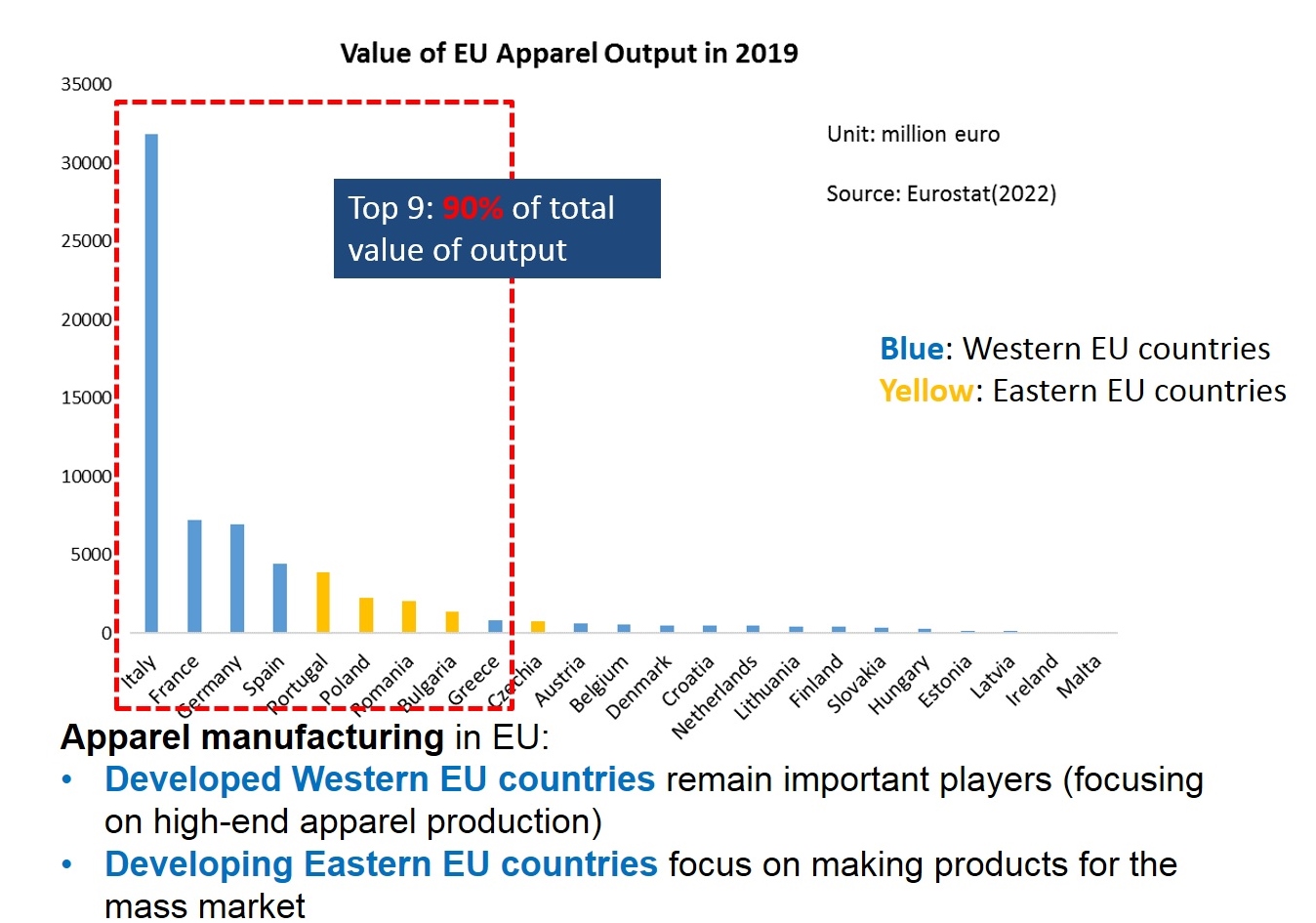
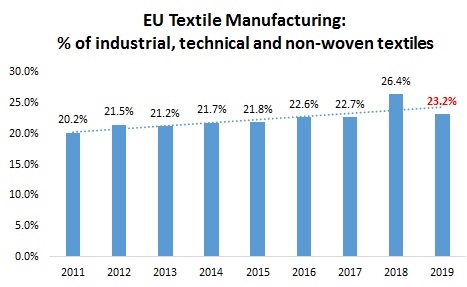

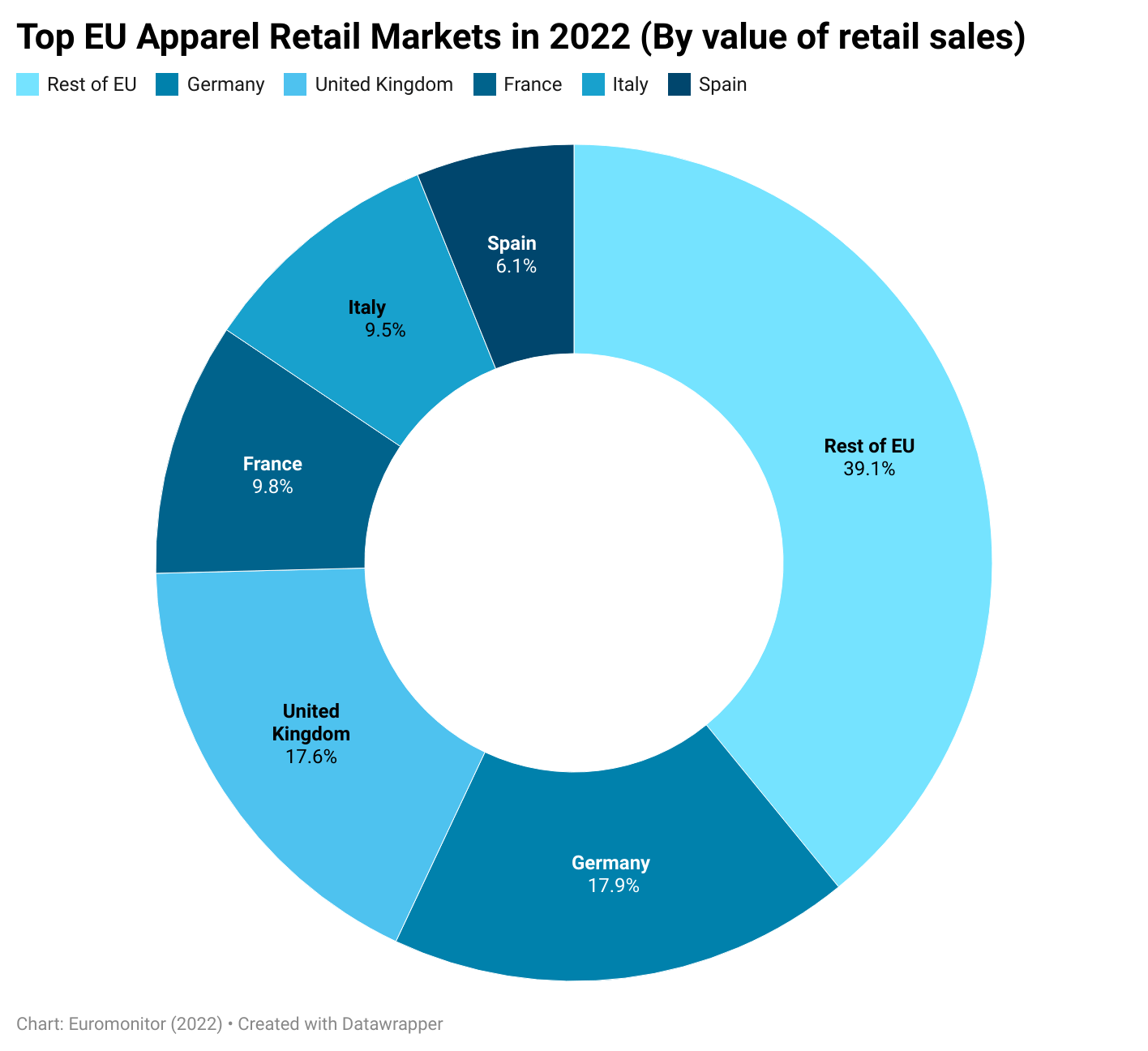
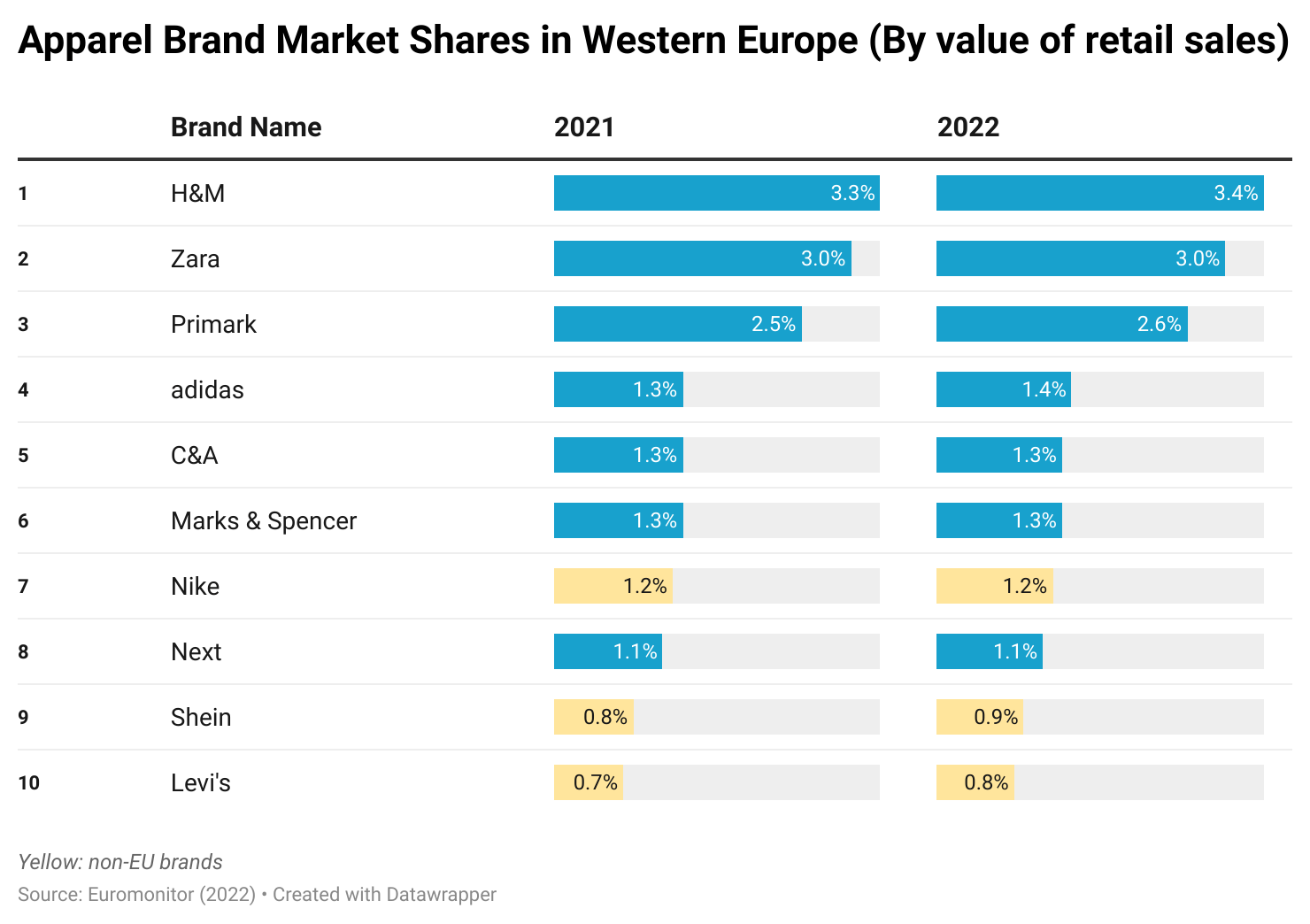

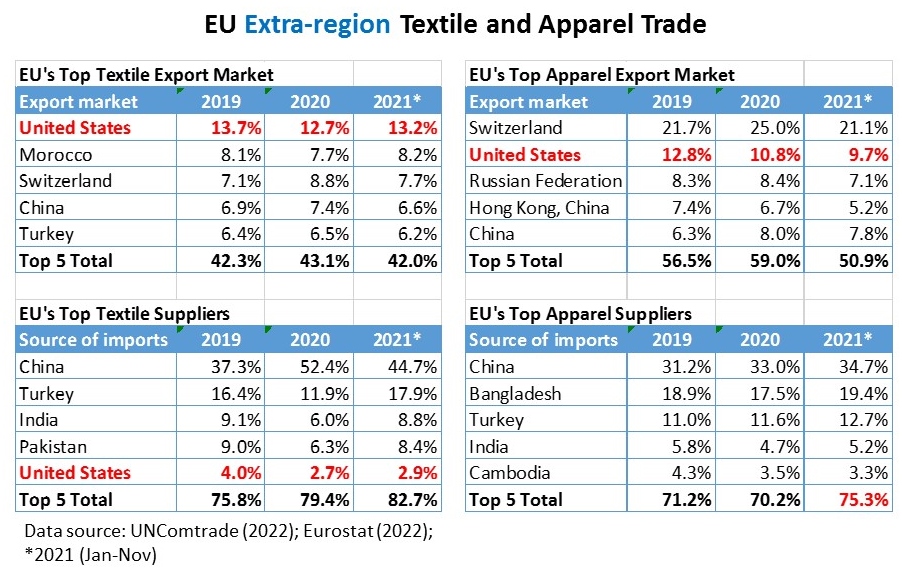
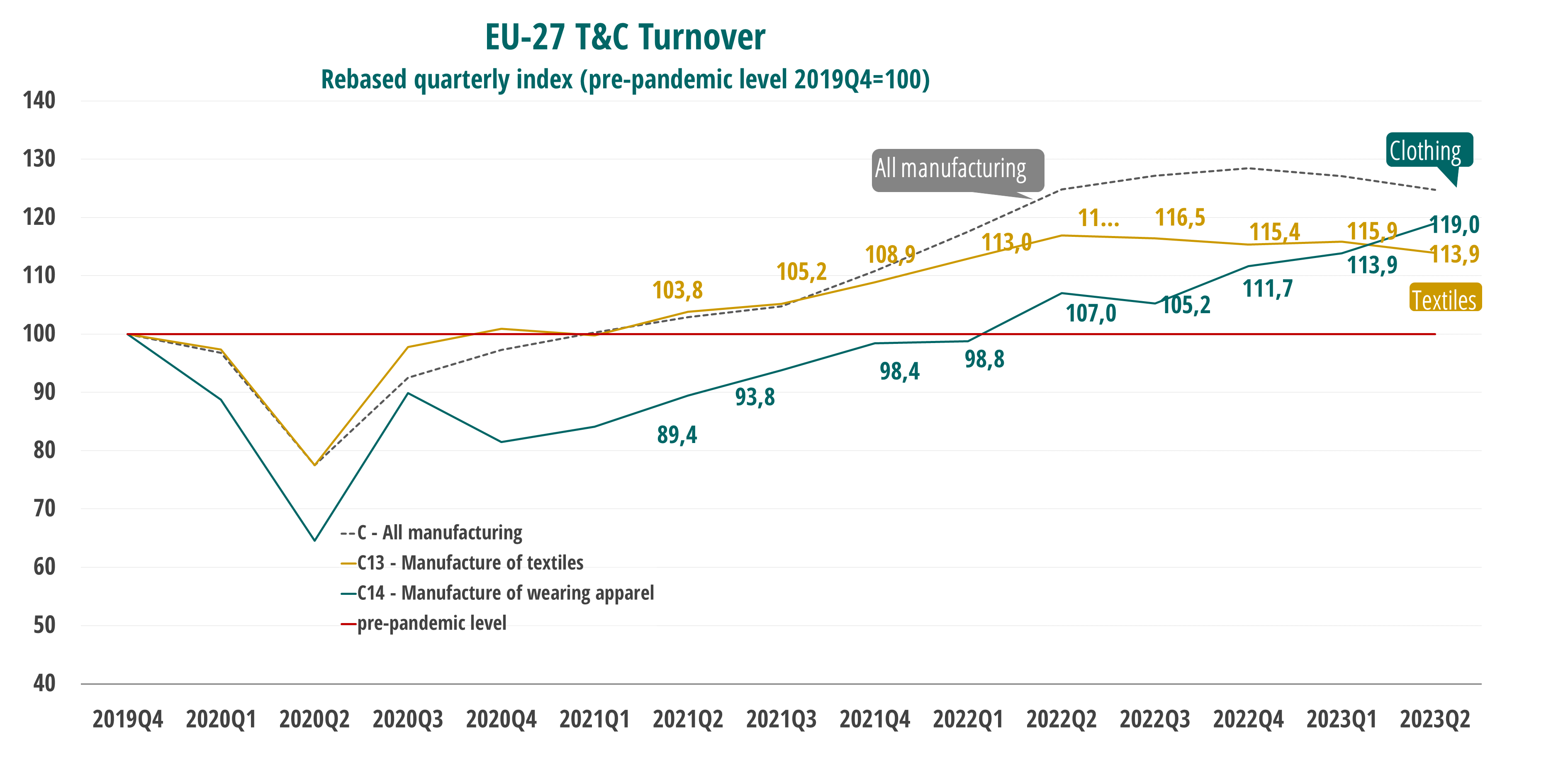


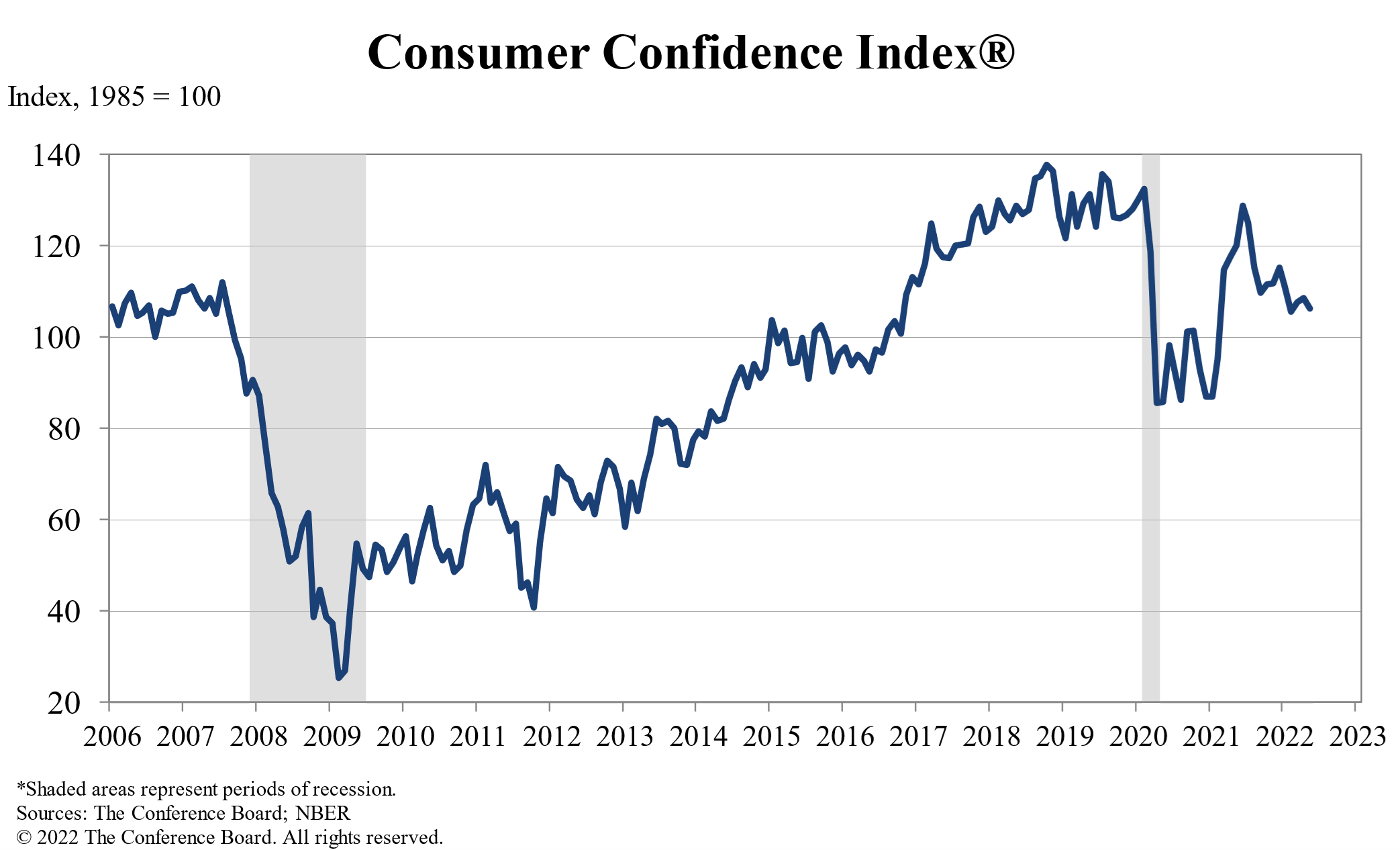


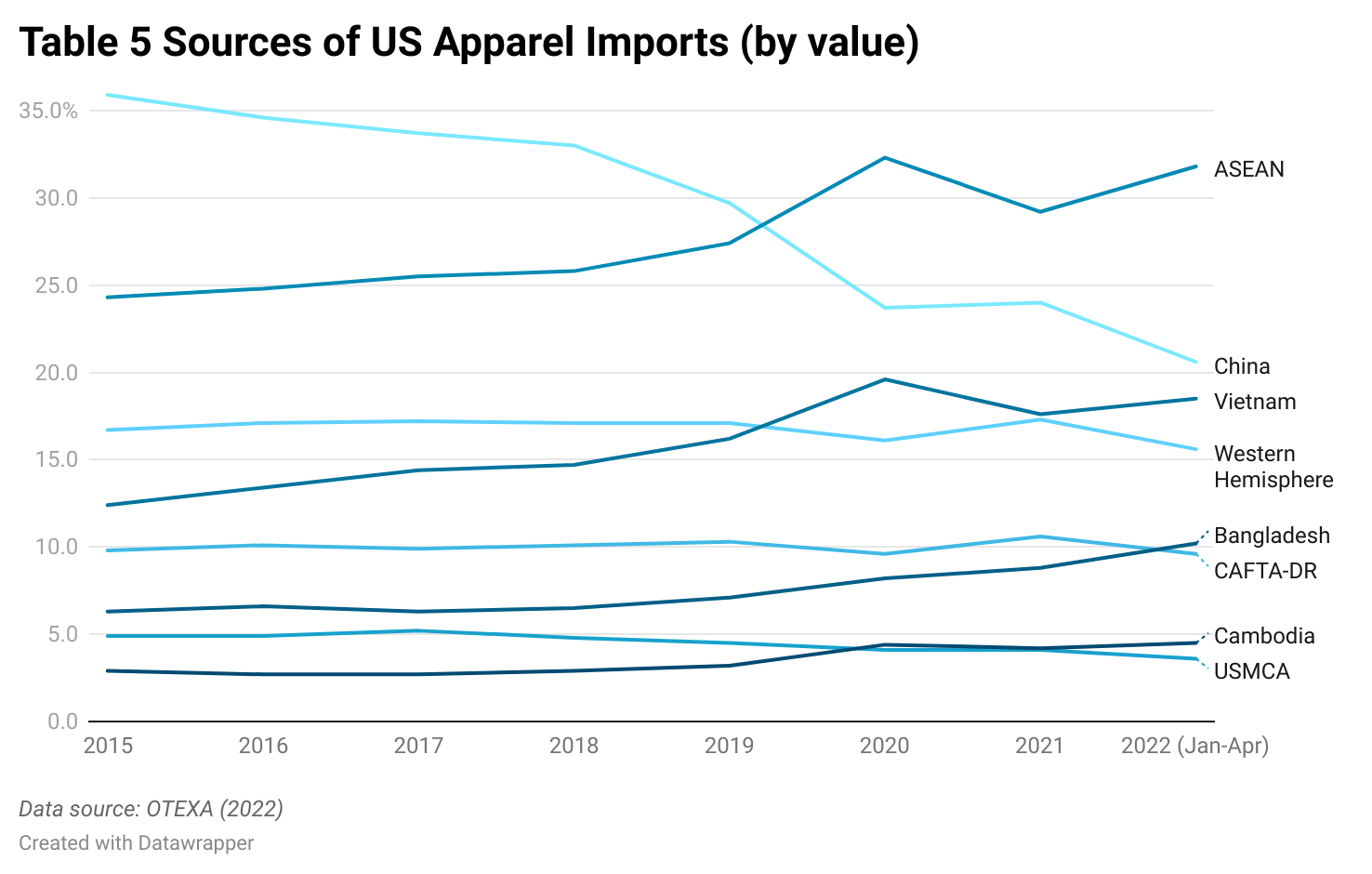
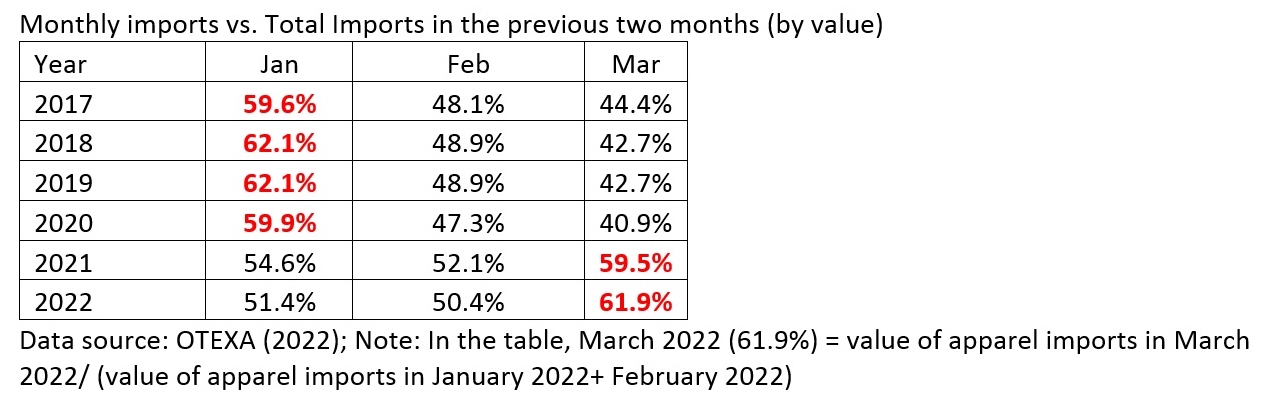



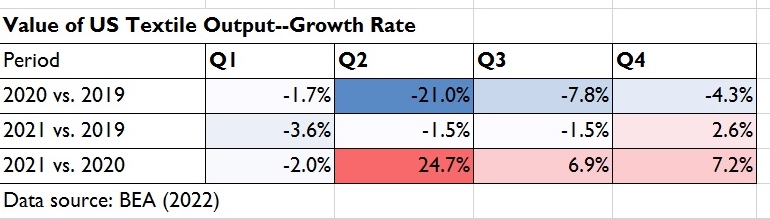
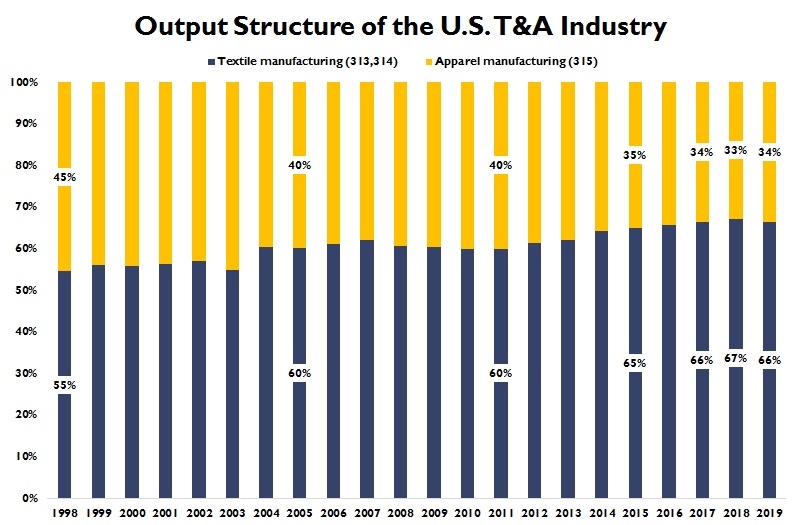
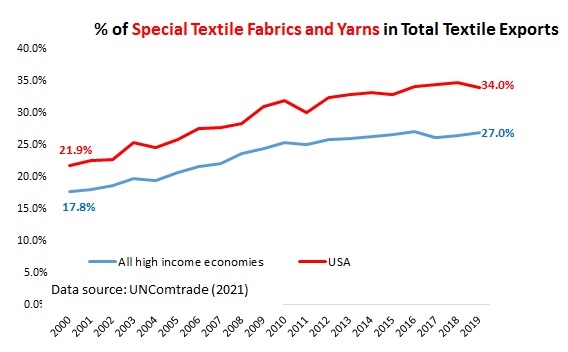
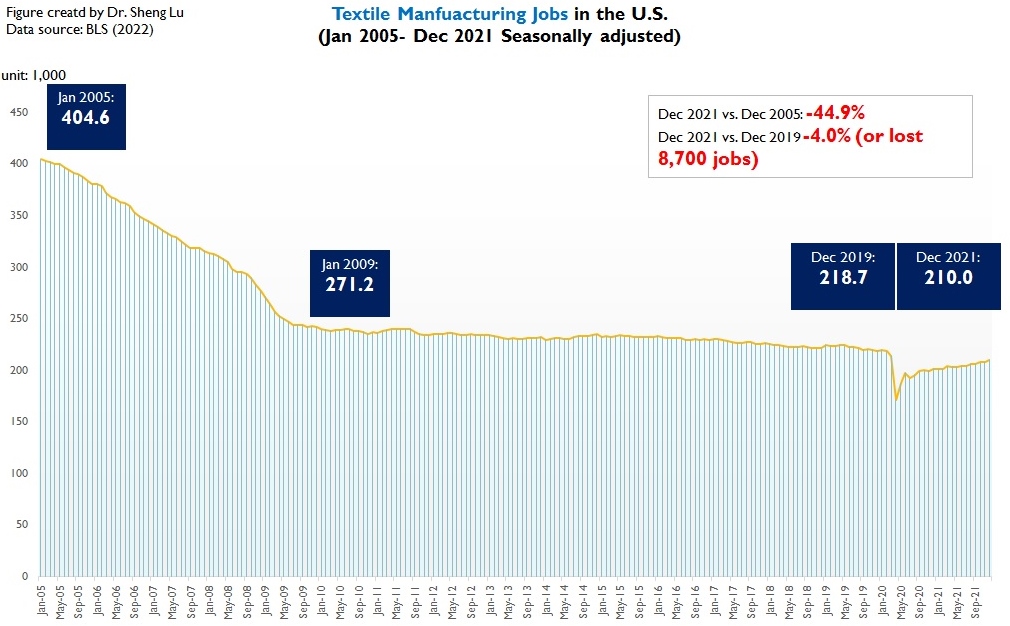


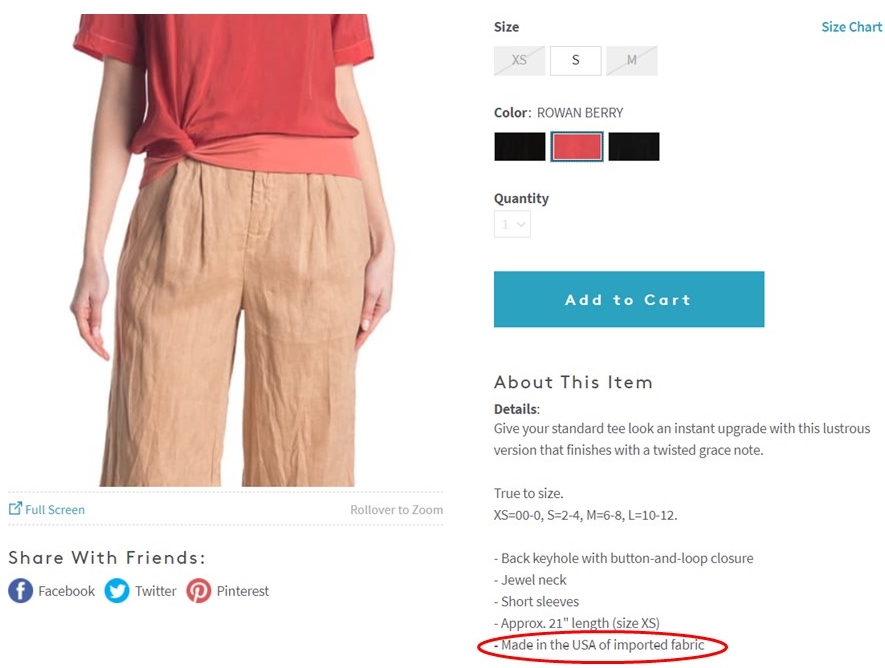


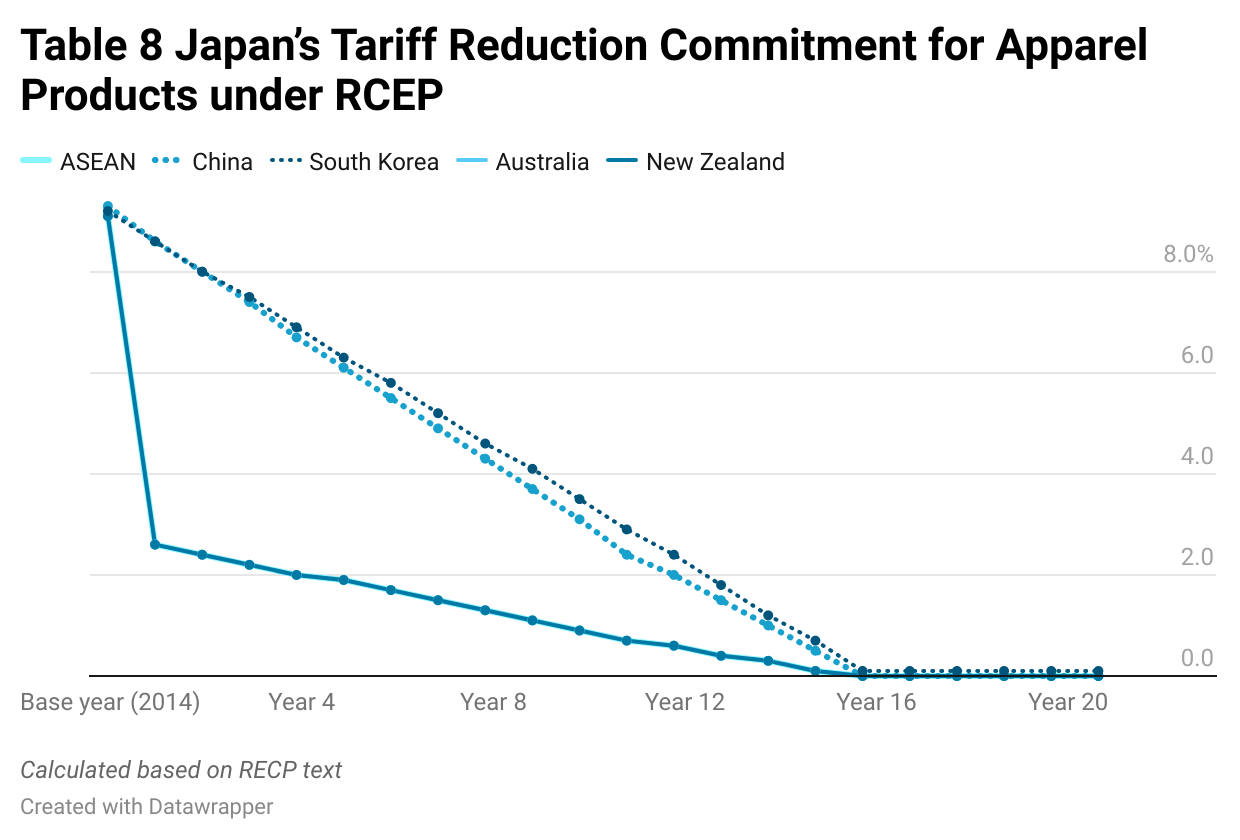
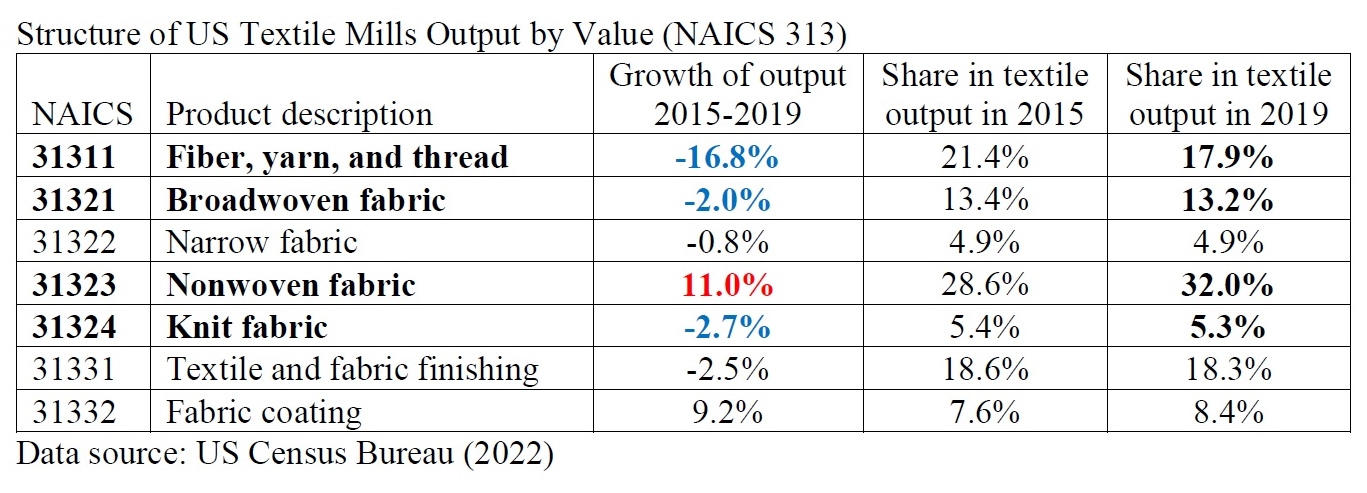


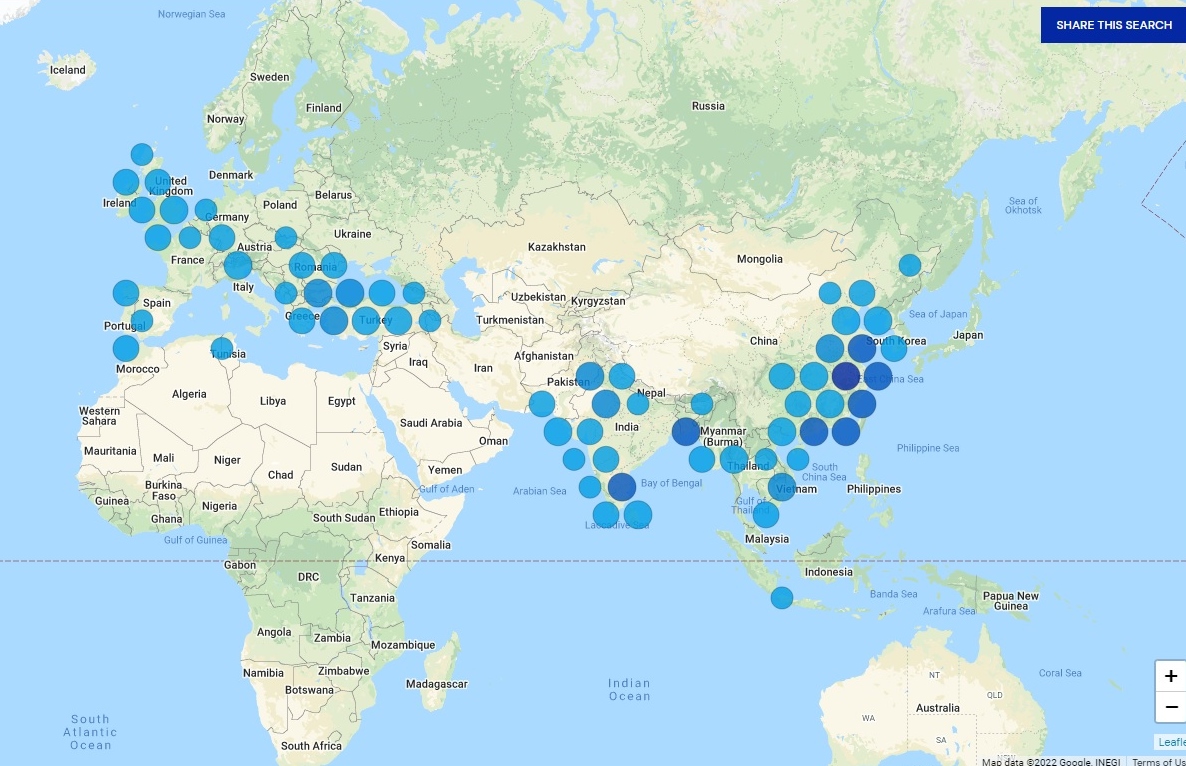

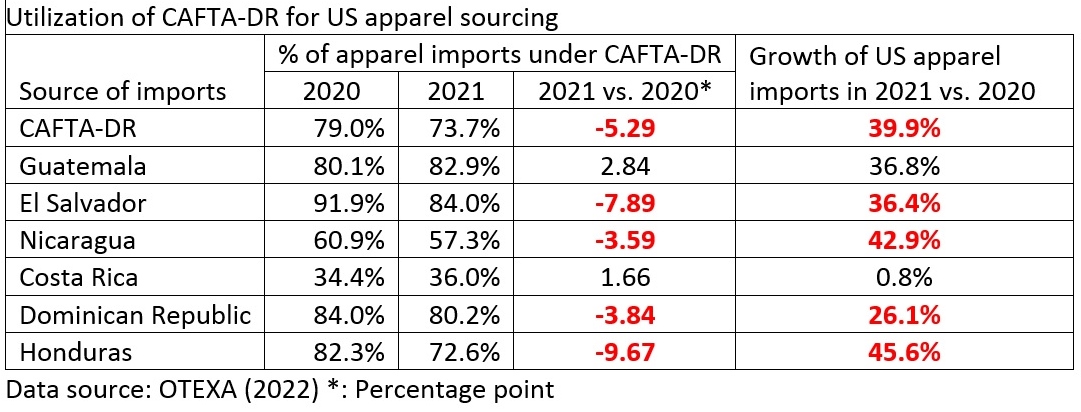

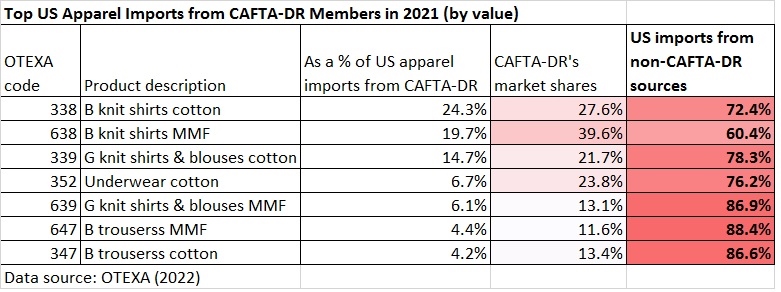

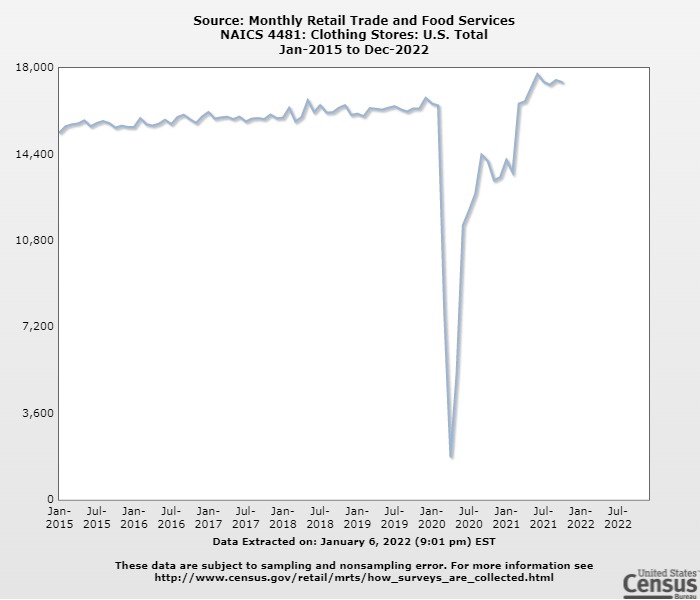
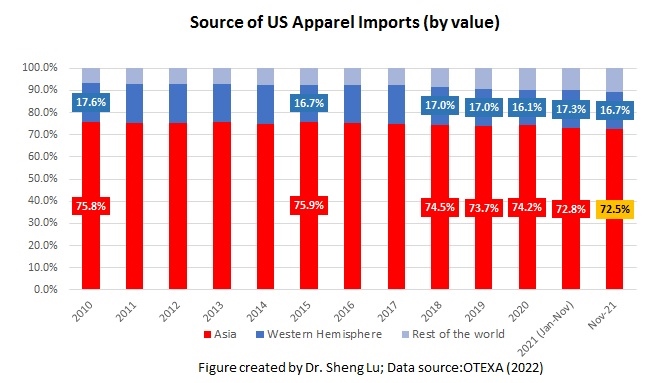


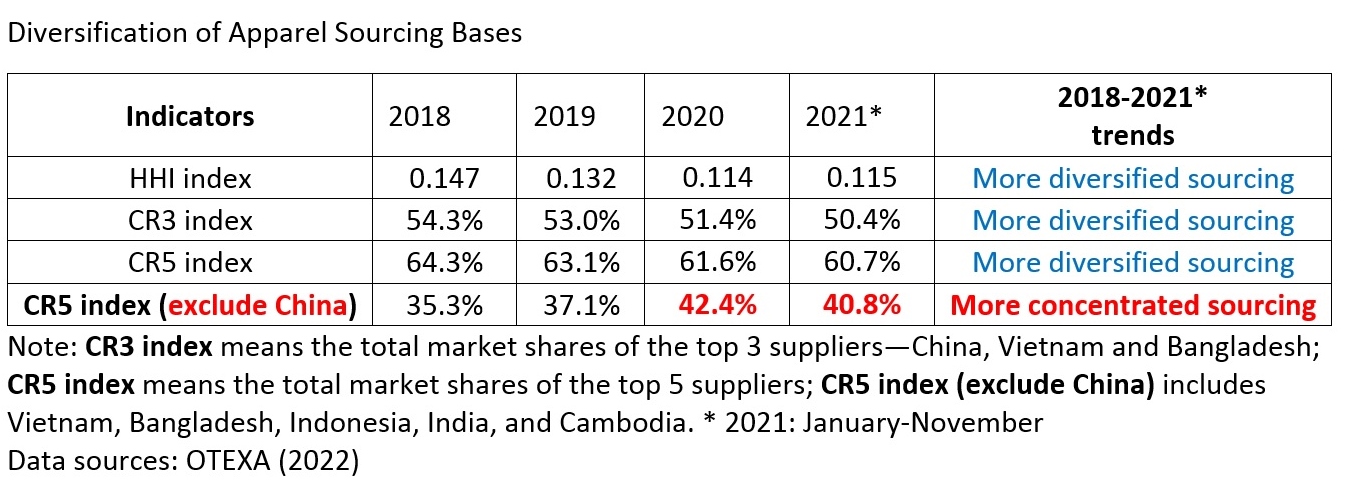





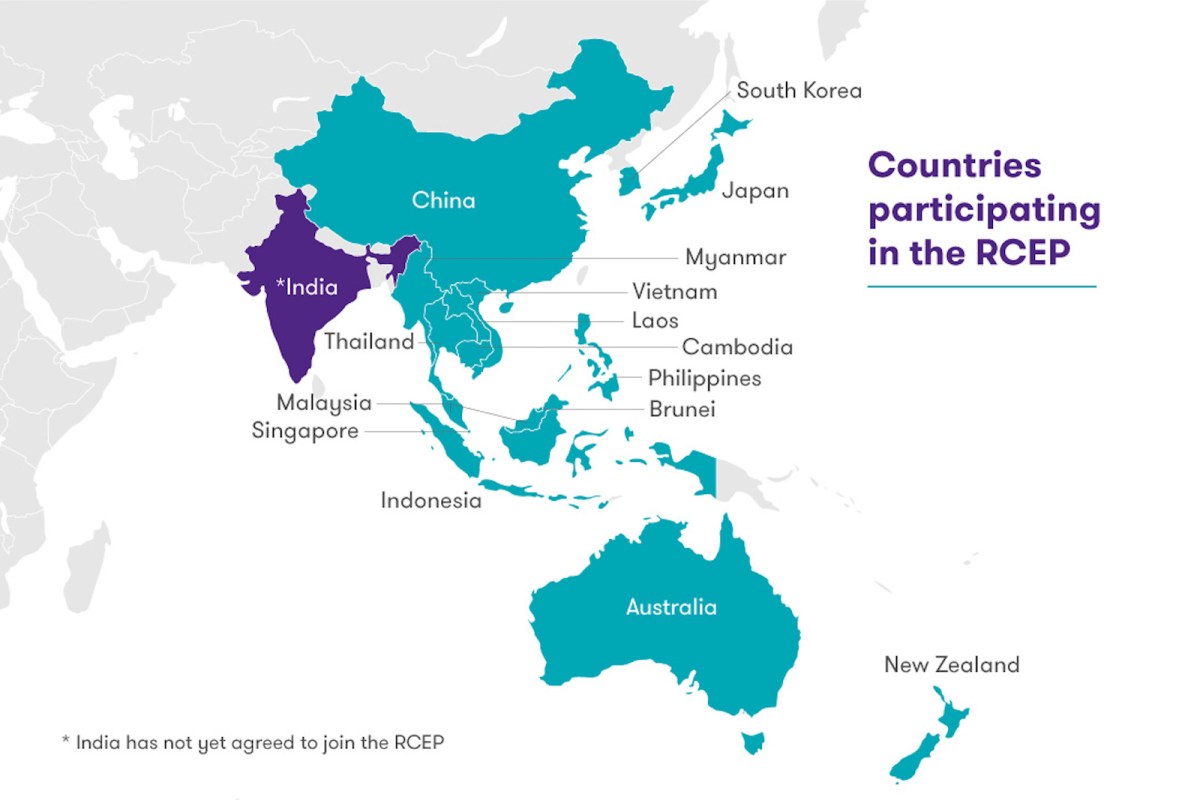

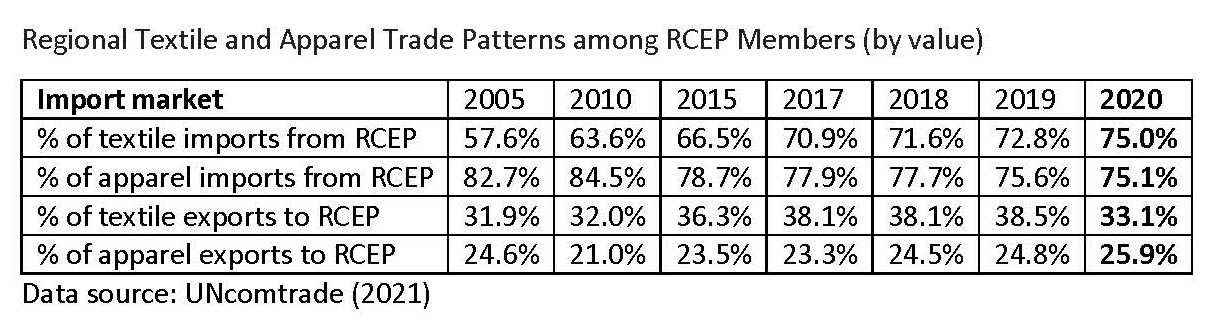
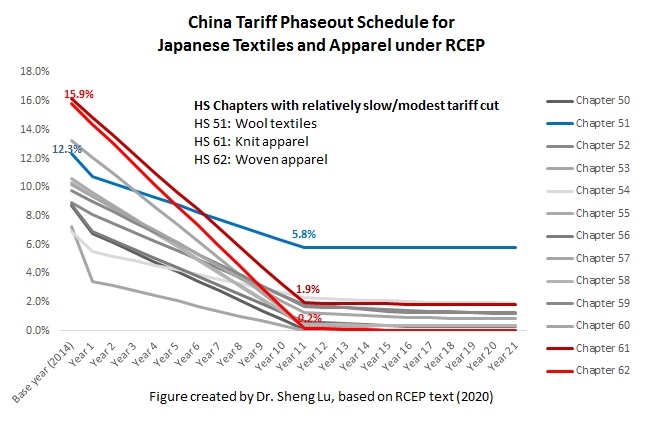
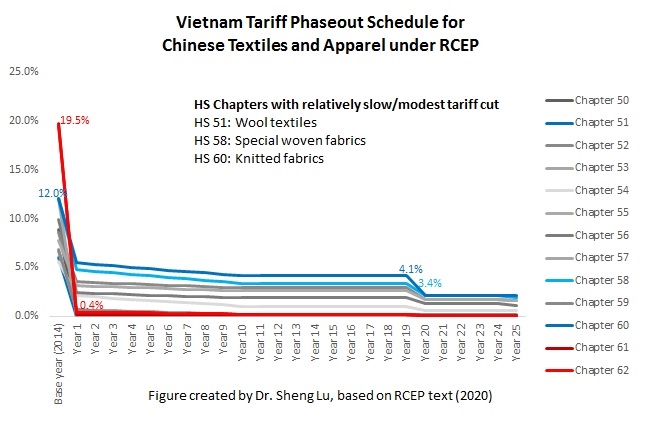




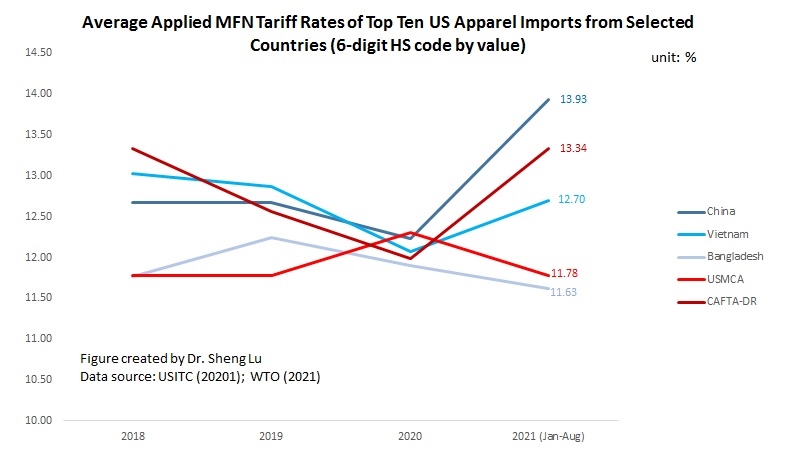


 FASH455 Global Apparel & Textile Trade and Sourcing