
For FASH455: Please feel free to share any thoughts or propose discussion questions based on the three short videos above.
Category: FASH455 course material
Video Discussion: Levi’s CFO Harmit Singh on Bloomberg Chief Future Officer
Discussion questions for FASH455:
- Regarding Levi’s “new normal” for apparel sourcing and supply chain management, what is Harmit Singh’s vision? Why or why not do you agree with him?
- How could Levi’s digital transformation plans affect its sourcing practices?
- What is your evaluation of Levi’s “tailor shop” program?
- What is the rationale behind Levi’s “buy better and wear better” initiative?
- What is a chief financial officer (CFO)’s role in helping Levi’s achieve its sustainability goals?
- Anything else you find interesting/intriguing/new/inspiring from the video and why?
About Levi’s


Levi Strauss & Co is a global apparel company rooted in the jeans category. Its brand portfolio consists of Levi’s brand, Levi’s Signature, Dockers, and Denizen. In 2020, Levi’s global sales exceeded $7.1 billion. The United States is Levi’s largest market, accounting for about 41% of its sales in 2020, followed by Mexico. As of June 2021, Levi’s sources its apparel products from around 350 factories located in about 30 countries.
Years before the pandemic, Levi Strauss has begun to reduce its reliance on wholesalers and instead expand its direct-to-consumer (DTC) business. In response to COVID-19, Levi Strauss has increased flexibility and resilience through diversification across geographies, categories, genders, and distribution channels. Levi’s is also well-known as a leader in sustainability, particularly reducing chemical and water use in products.
Which Apparel Sourcing Factors Matter?
Abstract
Today, fashion companies consider a long list of factors when deciding where to source their apparel products, ranging from cost, speed to market, flexibility to the risk of social and environmental compliance. While existing studies have identified these major sourcing factors, whether they are treated equally in companies’ apparel sourcing decisions remains mostly unknown. Neither is it clear how fashion companies make a trade-off among these sourcing factors, given no sourcing destination is perfect.
This study aims to quantitatively evaluate the influence of primary sourcing factors on fashion companies’ determination of apparel sourcing destinations. For the study, we collected a detailed evaluation of the world’s 27 largest sourcing destinations in 2019 against 15 specific performance indicators from GlobalData, one of the most popular sourcing analytics tools. The evaluation uses a 5-point rating scale for each performance indicator.
Because some of these 15 performance indicators measure similar items, we first conducted an exploratory factor analysis, which reduced these indicators to five principal sourcing factors based on their correlation matrix scores. These five principal sourcing factors cover the following themes:
- Capacity: It covers seven performance indicators that measure a sourcing destination’s capabilities (including flexibility and lead time) of providing apparel products and other value-added services.
- Price & Tariff: It covers two performance indicators that measure the financial implications of sourcing from a particular destination, including eligibility for preferential import duties.
- Stability: It covers two performance indicators that measure a sourcing destination’s macro-business environment, specifically sourcing-related political and economic climates.
- Sustainability: It encompasses all social and environmental compliance issues related to apparel production and sourcing.
- Quality: It covers two performance indicators that measure whether a sourcing destination obtains skilled workers and the overall quality of its products.
Next, we calculated the 27 apparel exporting countries’ average scores of these five principal sourcing factors. Based on the results, we further conducted a multiple regression analysis to evaluate the impact of the five principal sourcing factors on the value of these 27 countries’ apparel exports to the U.S., EU, and Asia in 2019, respectively. These three regions combined accounted for more than 80% of world apparel imports that year; however, fashion companies in each area are suggested to have unique sourcing preferences.
First, the result suggests that improving the performance in Stability and Quality can help a country enhance its attractiveness as an apparel sourcing base in the U.S. and Asia markets, but not so much in the EU market.
Second, a higher score for the factor Sustainability does not result in more sourcing orders at the country level in all three markets examined. It seems fashion companies’ current sourcing model does not provide substantial financial rewards encouraging better performance in sustainability. It is also likely that sustainability and compliance are treated more as pre-requisite criteria instead of determining the volume of the sourcing orders.
Third, the impact of Price & Tariff and Capacity on the value of apparel imports is not statistically significant in any of the three markets examined. This result does NOT necessarily mean price and production capacity is irrelevant. Instead, the result implies that fashion companies’ sourcing decision today is not merely about “chasing the lowest price.” Meanwhile, due to concerns about supply chain risks, even the most “economically competitive” sourcing destination won’t receive all the sourcing orders.
The findings of the study suggest that fashion companies’ sourcing decisions today appear to be more complicated and subtle than what is revealed by the existing literature and the public perception. Notably, the findings present different views from previous studies regarding how sourcing cost and sustainability affect fashion companies’ selection of sourcing destinations.
The findings also call our attention to the significant impact of non-economic factors on companies’ sourcing decisions, particularly the perceived political risks. This result explained why fashion companies had quickly reacted to the recent forced labor concerns in Xinjiang, China, and the military coup in Myanmar and halted sourcing from the regions.
By Dr. Sheng Lu and Emma Davis
The study was presented at the 2021 International Textile and Apparel Association (ITAA) annual conference.
Regional Comprehensive Economic Partnership (RCEP) and Textiles and Apparel (Updated November 2021)
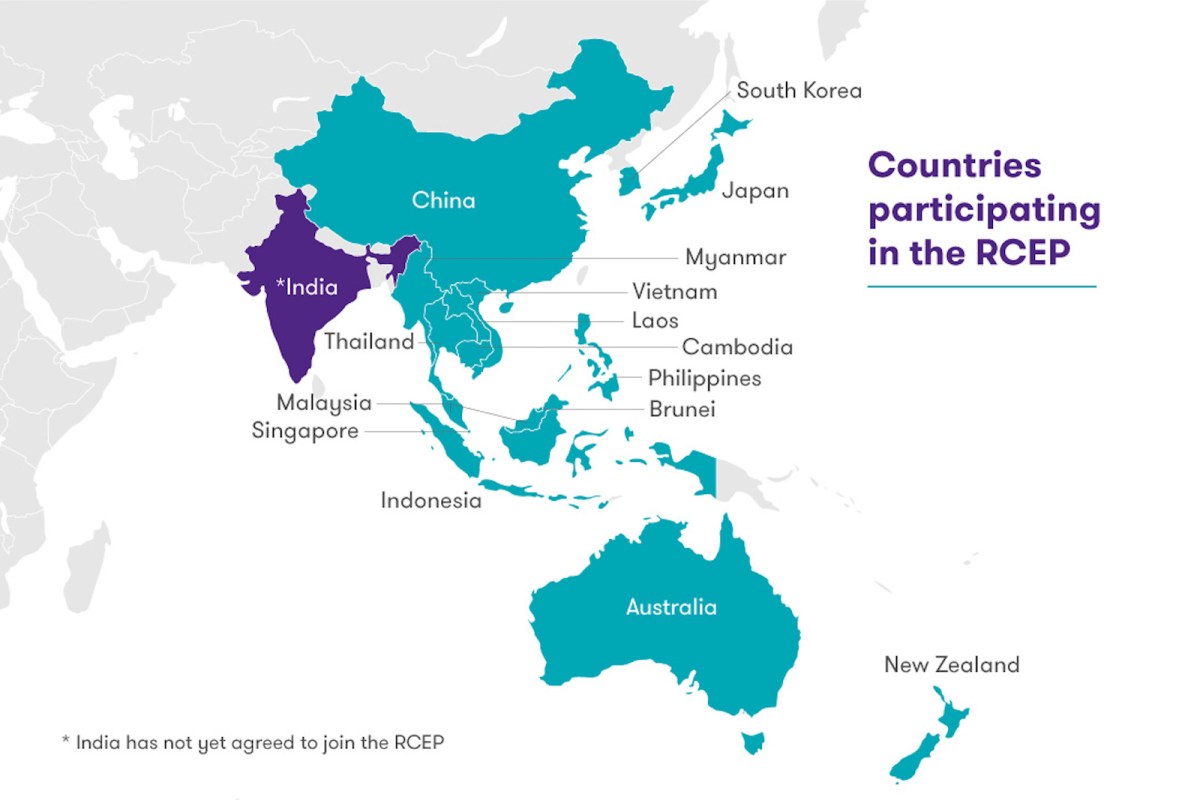
What is RCEP?
The Regional Comprehensive Economic Partnership (RCEP) is a free trade agreement between ten member states of the Association of Southeast Asian Nations (ASEAN)* and five other large economies in the Asia-Pacific region (China, Japan, South Korea, New Zealand, and Australia). RCEP was reached on November 15, 2020, after nearly eight years of tough negotiation. (Note: ASEAN members include Brunei, Cambodia, Indonesia, Laos, Malaysia, Myanmar, the Philippines, Singapore, Thailand, and Vietnam. India was an original RCEP member but decided to quit in late 2019 due to concerns about competing with Chinese products, including textiles and apparel.)
So far, RCEP is the world’s largest trading bloc. As of 2019, RCEP members accounted for nearly 26.2% of world GDP, 29.5% of world merchandise exports, and 25.9% of world merchandise imports.
As of November 1, 2021, Lao, Burnei, Cambodia, Singapore and Thailand (ASEAN members), as well as China, Japan, New Zealand and Australia have ratified the agreement. This has met the minimum criteria for RCEP to enter into force (i.e., six members, including at least three ASEAN members and three non-ASEAN members).
As announced by Australia on November 2, 2021, RCEP will enter into force on January 1, 2022
Why RCEP matters to the textile and apparel industry?
RCEP matters significantly for the textile and apparel (T&A) sector. According to statistics from the United Nations, in 2019, the fifteen RCEP members altogether exported US$374 billion worth of T&A (or 50% of the world share) and imported US$139 billion (or 20% of the world share).

In particular, RCEP members serve as critical apparel-sourcing bases for many US and EU fashion brands. For example, in 2019, close to 60% of US apparel imports came from RCEP members, up from 45% in 2005. Likewise, in 2019, 32% of EU apparel imports also came from RCEP members, up from 28.1% in 2005.
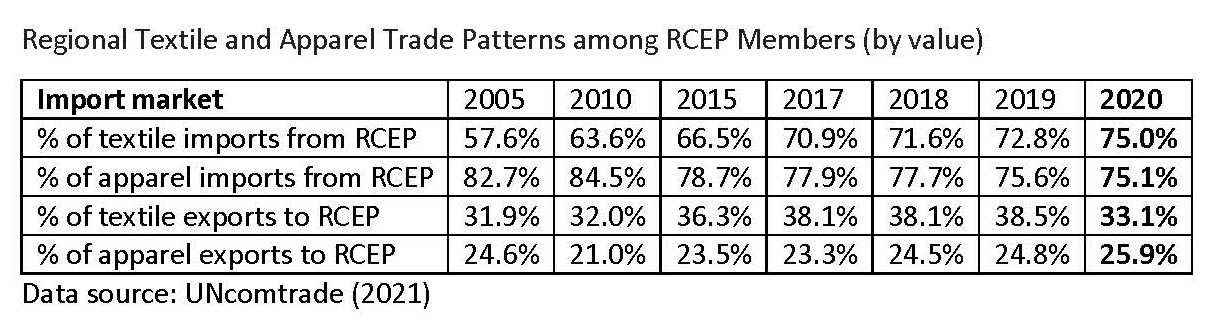
Notably, RCEP members have been developing and forming a regional textile and apparel supply chain. More economically advanced RCEP members (such as Japan, South Korea, and China) supply textile raw materials to the less economically developed countries in the region within this regional supply chain. Based on relatively lower wages, the less developed countries typically undertake the most labor-intensive processes of apparel manufacturing and then export finished apparel to major consumption markets worldwide.
As a reflection of an ever more integrated regional supply chain, in 2019, as much as 72.8% of RCEP members’ textile imports came from other RCEP members, a substantial increase from only 57.6% in 2005. Nearly 40% of RCEP members’ textile exports also went to other RCEP members in 2019, up from 31.9% in 2005.
What are the key provisions in RCEP related to textiles and apparel?
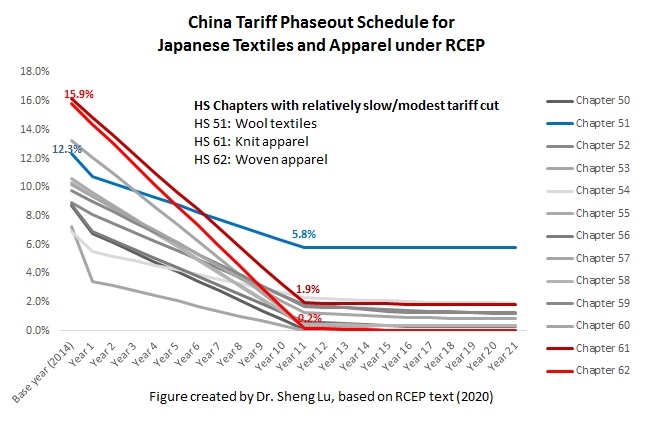
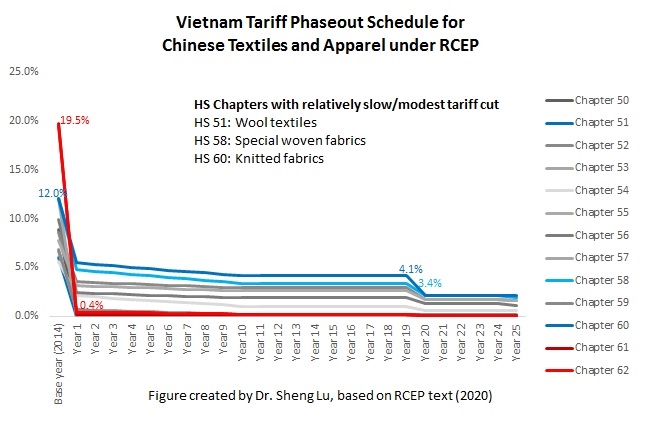


First, RCEP members have committed to reducing the tariff rates to zero for most textile and apparel traded between RCEP members on day one after the agreement enters into force. That being said, the detailed tariff phaseout schedule for textile and apparel products under RCEP is very complicated. Each RCEP member sets their own tariff phaseout schedule, which can last more than 20 years (for example, 34 years for South Korea and 21 years for Japan.) Also, different from U.S. or EU-based free trade agreements, the RCEP phaseout schedule is country-specific. For example, South Korea sets different tariff phaseout schedules for textile and apparel products from ASEAN, China, Australia, Japan, and New Zealand. Japan’s tariff cut for apparel products is more generous toward ASEAN members and less so for China and South Korea (see the graph above). Companies interested in taking advantage of the duty-free benefits under RCEP need to study the “rules of the game” in detail.
Second, in general, RCEP adopts very liberal rules of origin for apparel products. It only requires that all non-originating materials used in the production of the good have undergone a tariff shift at the 2-digit HS code level (say a change from any chapters from chapters 50-60 to chapter 61). In other words, RCEP members are allowed to source yarns and fabrics from anywhere in the world, and the finished garments will still qualify for duty-free benefits. Most garment factories in RCEP member countries can immediately enjoy the RCEP benefits without adjusting their current supply chains.
What are the potential economic impacts of RCEP on the textile and apparel sector?
On the one hand, the implementation of RCEP is likely to further strengthen the regional textile and apparel supply chain among RCEP members. Particularly, RCEP will likely strengthen Japan, South Korea, and China as the primary textile suppliers for the regional T&A supply chain. Meanwhile, RCEP will also enlarge the role of ASEAN as the leading apparel producer in the region.
On the other hand, as a trading bloc, RCEP could make it even harder for non-RCEP members to get involved in the regional textile and apparel supply chain formed by RCEP members. Because an entire regional textile and apparel supply chain already exists among RCEP members, plus the factor of speed to market, few incentives are out there for RCEP members to partner with suppliers from outside the region in textile and apparel production. The tariff elimination under the RCEP will put textile and apparel producers that are not members of the agreement at a more significant disadvantage in the competition. Not surprisingly, according to a recent study, measured by value, only around 21.5% of RCEP members’ textile imports will come from outside the area after the implementation of the agreement, down from the base-year level of 29.9% in 2015.
Further, the reaching of RCEP could accelerate the negotiation of other trade agreements in the Asia-Pacific region, such as the China-South Korea-Japan Free Trade Agreement. We might also see growing pressures on the Biden administration to join the Comprehensive and Progressive Agreement of the Trans-Pacific Partnership (CPTPP) to strengthen the US economic ties with countries in the Asia-Pacific region. The economic competition between the United States and China in the area could also intensify as the combined effects of RCEP and CPTPP begin to shape new supply chains and test the impacts of the two countries on the regional trade patterns.
By Sheng Lu
Further reading
- Regional Comprehensive Economic Partnership (RCEP): What Does it Mean for US Apparel Sourcing from Asia? (2021 TexworldUSA webinar)
- Lu, S. (2021). Why Why does the Regional Comprehensive Economic Partnership matter to apparel?. Just-Style
- Lu, S. (2019). Regional Comprehensive Economic Partnership (RCEP): Impact on the integration of textile and apparel supply chain in the Asia-Pacific region. In Shen, B., Gu, QL., Yang, YX (Eds), Fashion Supply Chain Management in Asia: Concepts, Models and Cases. Springer.
Training Next Gen Sourcing Talents for a More Sustainable Future
Exclusive Interview with FIBRE2FASHION about the Latest World Textile and Apparel Trade Patterns (October 2021)
The full interview is available HERE
Selected interview questions
The virus is here to stay. What steps the companies must take to mitigate its impact?
Sheng: Earlier this year, I, together with the US Fashion Industry Association, surveyed about 30 leading US fashion brands and retailers to understand COVID-19’s impact on their sourcing practices. Respondents emphasized two major strategies they adopted in response to the current market environment. One is to strengthen the relationship with key vendors, and the other is to improve flexibility and agility in sourcing. These two strategies are also highly connected. As one respondent told us “We’re adjusting our sourcing model mix (direct vs. indirect) & establishing stronger strategic supplier relationships across entire matrix continue to build flexibility and dual sourcing options.” Many respondents, especially those large-scale fashion brands and retailers, also say they plan to reduce the number of vendors in the next few years to improve operational efficiency and obtain greater leverage in sourcing.
Which are the countries benefitting out of the US-China tariff war and why?
Sheng: The trade war benefits nobody, period. Today, textiles and apparel are produced through a highly integrated supply chain, meaning the US-China tariff war could increase everyone’s production and sourcing costs. Back in 2018, when the tariff war initially started, the unit price of US apparel imports from Vietnam, Bangladesh, and India all experienced a notable increase. Whereas companies tried to switch their sourcing orders, the production capacity was limited outside China. Meanwhile, China plays an increasingly significant role as a leading textile supplier for many apparel exporting countries in Asia. Despite the trade war, removing China from the textile and apparel supply chain is impossible and unrealistic.
How do you compare the African and Asian markets when it comes to sourcing and manufacturing? Which are the advantages both offer?
Sheng: Asia as a whole remains the world’s dominant textile and apparel sourcing base. According to statistics from the United Nations (i.e., UNComtrade), Asian countries as a whole contributed about 65% of the world’s total textile and apparel exports in 2020. In the same year, Asian countries altogether imported around 31% of the world’s textiles and 19% of apparel. Asian countries have also established a highly efficient and integrated regional supply chain by leveraging regional free trade agreements or arrangements. For example, as much as 85% of Asian countries’ textile imports came from other Asian countries in 2019, a substantial increase from only 70% in the 2000s. With the recent reaching of several mega free trade agreements among countries in the Asia-Pacific region, such as the Regional Comprehensive Economic Partnership (RCEP), the pattern of “Made in Asia for Asia” is likely to strengthen further.
In comparison, only about 1% of the world’s apparel imports come from Africa today. And this percentage has barely changed over the past decades. Many western fashion brands and retailers have expressed interest in expanding more apparel sourcing from Africa. However, the tricky part is that these fashion companies are hesitant to invest directly in Africa, without which it is highly challenging to expand African countries’ production and export capacity. Political instability is another primary concern that discourages more investment and sourcing from Africa. For example, because of the recent political turmoil, Ethiopia, one of Africa’s leading apparel sourcing bases, could be suspended for its eligibility for the African Growth and Opportunity Act (AGOA). Without AGOA’s critical support, Ethiopia’s apparel exports to the US market could see a detrimental decline. On the other hand, while these trade preference programs are crucial in supporting Africa’s apparel exports, they haven’t effectively solved the structural issues hindering the long-term development of the textile and apparel industry in the region. More work needs to be done to help African apparel producers improve their genuine export competitiveness.
Another issue is Brexit. Is that having any significant impact on the sourcing scenario of the world or is it just limited to the European nations?
Sheng: Despite Brexit, the trade and business ties between the UK and the rest of the EU for textile and apparel products continue to strengthen. Thanks to the regional supply chain, EU countries remain a critical source of apparel imports for UK fashion brands and apparel retailers. Nearly 35% of the UK’s apparel imports came from the EU region in 2019, a record high since 2010. Meanwhile, the EU region also is the single largest export market for UK fashion companies—about 79% of the UK’s apparel exports went to the EU region in 2019 before the pandemic.
However, trade statistics in the short run may not fully illustrate the impacts of Brexit. For example, some recent studies suggest that Brexit has increased fashion companies’ logistics costs, delayed customs clearance, and made talent-hiring more inconvenient. Meanwhile, Brexit provides more freedom and flexibility for the UK to reach trade deals based on its national interests. For example, the UK recently submitted its application to join the Comprehensive Progressive Agreement of the Trans-Pacific Partnership (CPTPP). The UK is also negotiating a bilateral trade agreement with the United States. The reaching of these new trade agreements, particularly with non-EU countries, could significantly promote the UK’s luxury apparel exports and help the UK diversity its source of imports.
How do you think the power shortages happening across Europe, China, and other nations, are going to impact the apparel supply chains?
Sheng: One of my primary concerns is that the new power shortage could exacerbate inflation further and result in a more severe price hike throughout the entire textile and apparel supply chain. When Chinese factories are forced to cease production because of power shortage, the impact could be far worse than recent COVID-related lockdowns in Vietnam and Bangladesh. As mentioned earlier, more than half of many leading Asian apparel exporting countries’ textile supplies come from China today. Also, no country can still compete with China in terms of the variety of apparel products to offer. In other words, for many western fashion brands and retailers, their stores and shelves could look more empty (i.e., having less variety of products to sell) because of China’s power shortage problem.
US Apparel Sourcing from USMCA and CAFTA-DR: How Much Import Duties Were Saved and For Which Products?
The following findings were based on an analysis of trade volume and tariff data at the 6-digit HTS code level.
#1 Amid COVID-19, shipping crisis, and US-China tariff war, US fashion brands and retailers demonstrate a new round of interest in expanding “near-sourcing” from member countries of the US-Mexico-Canada Trade Agreement (USMCA, previously NAFTA) and Dominican Republic-Central America Free Trade Agreement (CAFTA-DR).
Data shows that 15.2% of US apparel imports came from USMCA and CAFTA-DR members YTD in 2021 (January-August), higher than 13.7% in 2020 and about 14.7% before the pandemic (2018-2019). Notably, CAFTA-DR members’ market shares increased to 11% in 2021 (January to Aug) from 9.6% in 2020. The value of US apparel imports from CAFTA-DR also enjoyed a 54% growth in 2021 (January—Aug) from a year ago, faster than 25% of the world’s average.

#2 Sourcing apparel from USCMA and CAFTA-DR members helps US fashion brands and retailers save around $1.6-1.7 billion tariff duties annually. (note: the estimation considers the value of US apparel imports from USMCA and CAFTA-DR members at the 6-digit HTS code level and the applied MFN tariff rates for these products; we didn’t consider the additional Section 301 tariffs US companies paid for imports from China). Official trade statistics also show that measured by value, about 73% of US apparel imports under free trade agreements came through USMCA (25%) and CAFTA-DR (48%) from 2019 to 2020.

#3 US apparel imports from USMCA and CAFTA-DR members do NOT necessarily focus on items subject to a high tariff rate. Measured at the 6-digit HS code level, apparel items subject to a high tariff rate (i.e., applied MFN tariff rate >17%) only accounted for about 8-9% of US apparel imports from USMCA members and 7-8% imports from CAFTA-DR members. In comparison, even having to pay a significant amount of import duties, around 17% of US apparel imports from Vietnam and 10% of imports from China were subject to a high tariff rate (see table below).

The phenomenon suggests that USCMA and CAFTA-DR members still have limited production capacity for many man-made fibers (MMF) clothing categories (such as jackets, swimwear, dresses, and suits), typically facing a higher tariff rate. This result also implies that expanding production capacity and diversifying the export product structure could make USMCA and CAFTA-DR more attractive sourcing destinations.

#4 US apparel imports from USMCA and CAFTA-DR members tend to focus on large-volume items subject to a medium tariff rate. Specifically, from 2017 to 2021 (Jan-Aug), ten products (at the 6-digit HTS code level) typically contributed around half of the US tariff revenues collected from apparel items (HS chapters 61-62). However, the average applied MFN tariff rates for these items were only about 13%. Meanwhile, these top tariff-revenue-contributing apparel items accounted for about 50% of US apparel imports from USMCA members and nearly 64%-69% of imports from CAFTA-DR members.
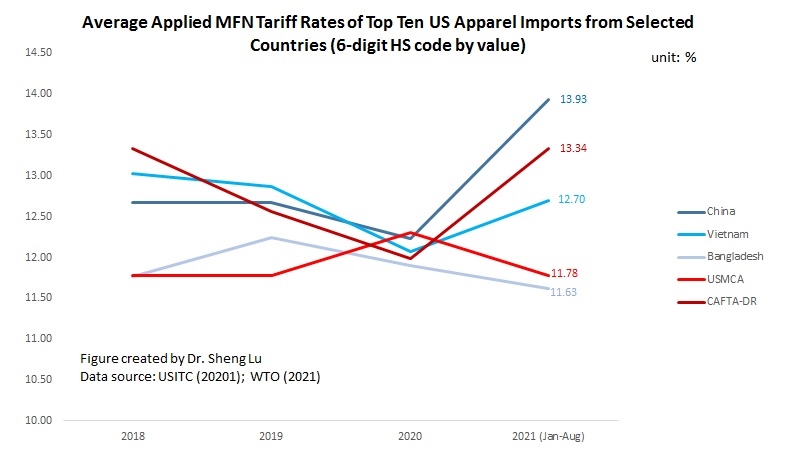
Likewise, the top ten products (at the 6-digit HTS code level) typically accounted for 65%-68% of US apparel imports from USMCA members and nearly 73-75% of US apparel imports from CAFTA-DR members. These products also had a medium average applied MFN rate at 11-12% for USMCA and 12-13% in the case of CAFTA-DR.


Given the duty-saving incentives, expanding “near-sourcing” from USMCA and CAFTA-DR members could prioritize these large-volume apparel items with a medium tariff rate in short to medium terms. However, in the long run, a shortcoming of this strategy is that many such items are basic fashion clothing that primarily competes on price (such as T-shirts and trousers) and cannot leverage the unique competitive edge of near-sourcing (such as speed to market). When the US reaches new free trade agreements, particularly those involving leading apparel-producing countries in Asia, it could offset the tariff advantages enjoyed by USMCA and CAFTA-DR members and quickly result in trade diversion.
by Sheng Lu
More reading:
- Sheng Lu (2021). US apparel sourcing: Understanding import duty savings. Just-Style.
- USTR Roundtable Highlights the United States-Central America Supply Chain for Textiles and Apparel (October 2021)
US Textile and Apparel Manufacturing and Sourcing During COVID-19: Discussion Questions from FASH455
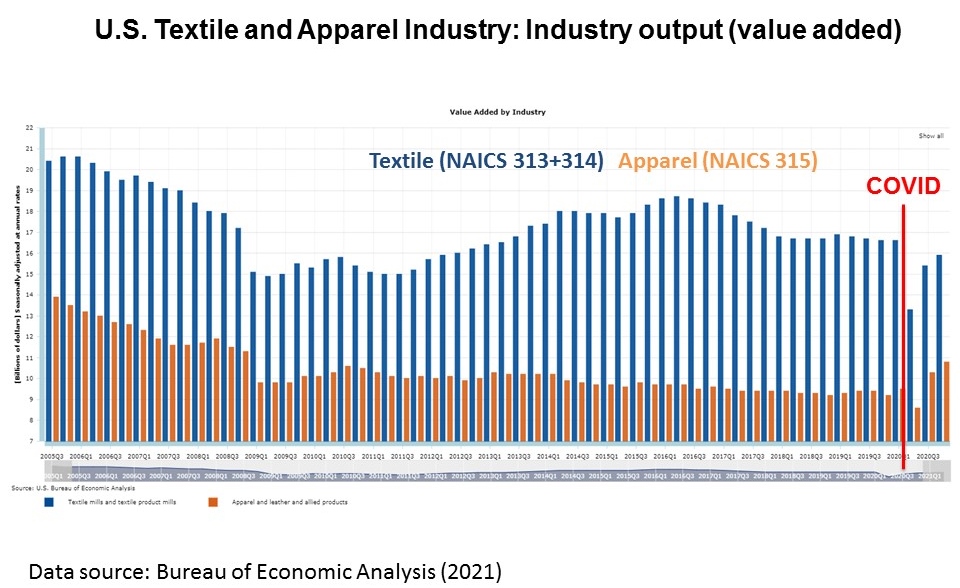
#1: As of June 2021, US textile production had resumed about 98.8% of its production capacity at the pre-COVID level. Based on the readings, why or why not do you think the industry is already “out of the woods”? How to understand the impact of COVID-19 on the international competitiveness of US textile production?
#2: To which extent do you think the state of the US textile and apparel industry and its performance during the pandemic challenge the conclusions of the classic trade and economic development theories we learned in the class (e.g., comparative advantage, factor proportion, the international division of labor, and stage of development theories)? Do you find any trade or production patterns that existing theories cannot fully explain?
#3 Many US fashion companies’ strategies to “consolidate existing sourcing base and strengthen the relationship with key vendors” during the pandemic. What is your evaluation of this strategy—is it a short-term reaction toward COVID-19 or a long-term trend likely to stay? What does this strategy mean for vendors in the apparel supplying countries?
#4: What are the notable changes in fashion companies’ sourcing criteria during the pandemic? How to explain such changes? Who are the winners and losers? Why?
#5: It is of concern that sustainability and social responsibility become a lower priority for the apparel industry during the pandemic, given the unprecedented operational and financial challenges companies face. What is your assessment based on the readings?
#6: What is your vision for the US textile and apparel industry in the post-COVID world? What are the key issues/questions/development trends we shall watch?
(Welcome to our online discussion. For students in FASH455, please address at least two questions and mention the question number (#) in your reply)
What Is the Apparel Industry Doing To Tackle Climate Change? An Analysis of Corporate Filings

By leveraging the GlobalData Apparel Intelligence Center’s “Company Filing Analytics” tool, we took a detailed look at apparel companies’ latest efforts on addressing climate change. Specifically, we conducted a content analysis of annual and quarterly filings (e.g., 10-Q report and corporate annual report) submitted by over a hundred leading apparel companies worldwide from June 2020 to September 2021.
Key findings:
First, addressing climate change has become a more critical topic for apparel companies over the past five years. The percentage of apparel companies that mention “climate change” in their corporate filings nearly doubled from 43% in 2016 to 80% in 2020. Notably, different from the public perception, fast fashion brands like Inditex and H&M were among apparel companies that most frequently mentioned “climate change” in their corporate reports over that period.
Second, many apparel companies see their business risks associated with climate change growing. Results from GlobalData show that apparel companies are particularly concerned about potential supply chain disruption caused by climate change. Apparel companies are also concerned that climate change could increase their sourcing and production costs and hurt financials. As a leading fashion brand noted, “Disasters, climate change…may cause escalating prices or difficulty in procuring the raw materials (such as cotton, cashmere, down, etc.)”. Another added, “In the long term, the broader impacts of climate change may impact the cost and accessibility of materials used to manufacture products or other resources needed to operate business.”
Third, an increasing number of apparel companies have incorporated climate change into their corporate strategies or long-term business visions. Some apparel companies also established a dedicated office or governance structure to address climate change.
Further, apparel companies call for more detailed and transparent regulatory guidelines that can help them combat climate change. As one leading fashion brand commented, “Any assessment of the potential impact of future climate change legislation, regulations or industry standards, as well as any international treaties and accords, is uncertain given the wide scope of potential regulatory change in the countries in which we operate… As a result, the effects of climate change could have a long-term adverse impact on our business and the results of operations.”
In conclusion, addressing climate change is no longer a topic apparel companies can only ignore or treat as a marketing slogan. Instead, we are likely to see companies allocate more dedicated resources to this area in the long run, from human resources to research & development (R&D) spendings. Meanwhile, apparel companies may find it necessary and beneficial to effectively communicate their efforts and needs to address climate change with key stakeholders like consumers and public policymakers.
Full article: Sheng Lu (2021). Apparel supply chains tackling climate change. Just-Style.
(comment is closed for this blog post)
FASH455 Interview Series—Coach Global Trade Compliance Internship (Guest: Victoria Langro)
About Victoria Langro
Victoria Langro is an Honors Marketing & Operations Management Majors and Fashion Management Minor (class of 2022). She is also a 2020 UD Summer Scholar. In summer 2021, Victoria worked with Tapestry, which owns Coach, as a global trade compliance intern.
Victoria is the author of several publications on apparel trade and sourcing, including US-UK Free Trade Agreement: What Does it Mean for the Apparel Industry? and How Has COVID-19 Affected Apparel Exports from China, Vietnam, and Bangladesh?
2021 WTO Public Forum Session 105: Develop a more sustainable and transparent apparel supply chain in the Post-COVID world
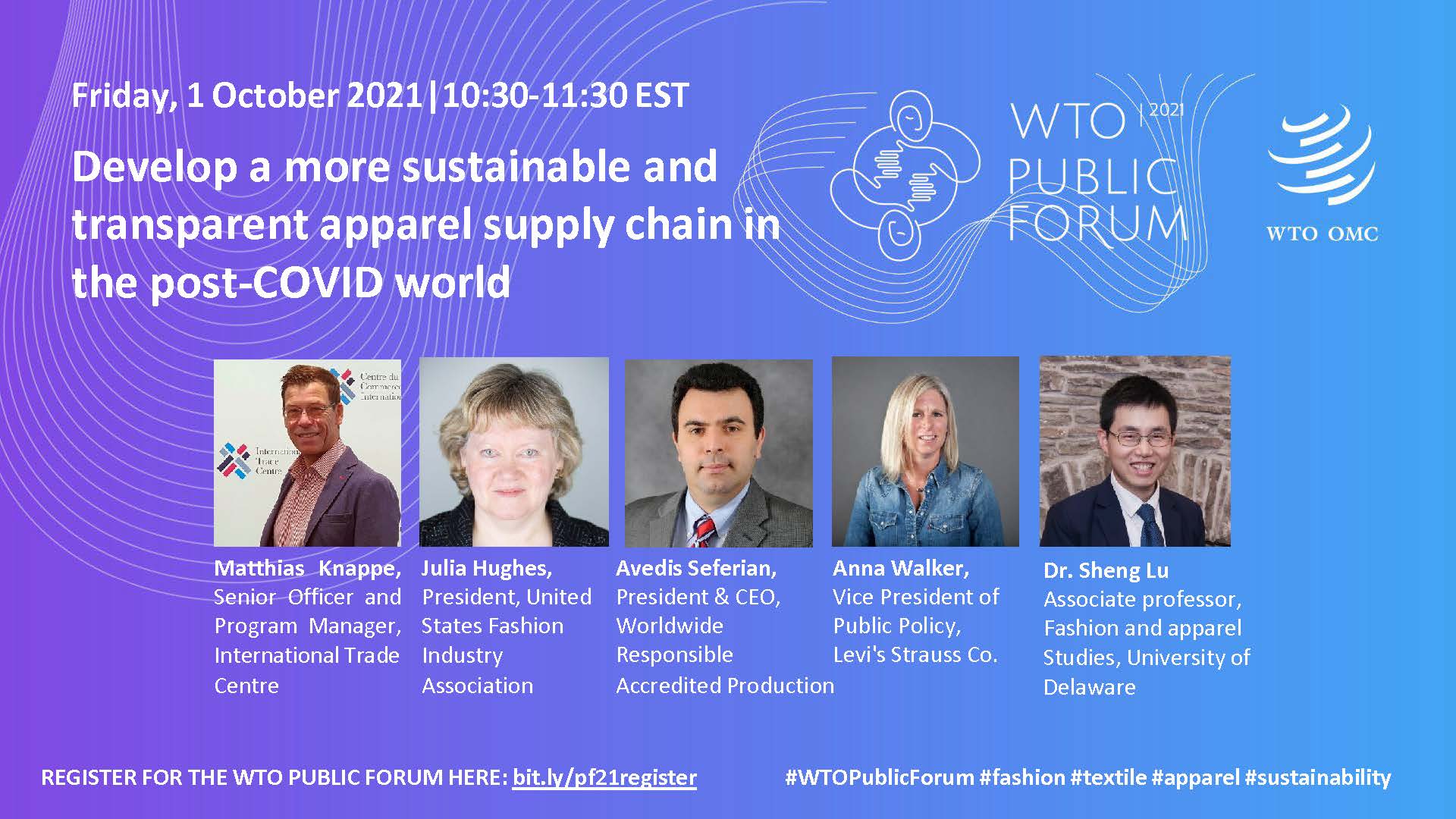
Panelists:
- Julia Hughes, President, United States Fashion Industry Association
- Matthias Knappe, Senior Officer and Program Manager for Cotton, Fibers and Textiles, International Trade Centre
- Avedis Seferian, President & CEO, Worldwide Responsible Accredited Production (WRAP).
- Anna Walker, Vice President of Public Policy, Levi’s Strauss Co.
- Dr. Sheng Lu, Associate Professor, Department of Fashion & Apparel Studies, University of Delaware
Event summary:
Apparel is a $2.5 trillion global business, involving over 120 million workers worldwide and playing a uniquely critical role in the post-COVID economic recovery. The session intends to facilitate constructive dialogue regarding the progress, challenges, and opportunities of building a more sustainable and transparent apparel supply chain in the Post-COVID world, which matters significantly to ALL stakeholders, from fashion brands, garment workers, policymakers to ordinary consumers.
The panel shared their valuable insights about the impacts of COVID on the world apparel trade patterns and how to make the apparel supply chain more sustainable and transparent in the post-COVID world. Specifically:
First, panelists agree that COVID-19 has resulted in unpresented challenges for apparel sourcing and trade, from supply chain disruptions, cost increases to market uncertainties.
Second, despite the mounting challenges and financial pressures caused by COVID-19, the apparel industry as a whole is NOT ignoring sustainability and social responsibility. Some leading fashion brands and retailers allocate more resources to strengthen their relationships with key vendors during the pandemic. The shifting business environment and the adoption of digital technologies also allow apparel companies to explore new business models and achieve more sustainable and socially responsible apparel production and trade.
Third, the apparel industry is attaching greater importance to supply chain transparency. Today, fashion brands and retailers typically track their tier 1 and tier 2 suppliers. A growing number of companies also start to understand who is making the textile raw materials (i.e., fibers and yarns). To improve supply chain transparency further, panelists suggest more traceability technologies, building trust between importers and suppliers and creating a clearer regulatory framework. Trade policy can also have a crucial role to play in the process.
Other 2021 WTO Public Forum sessions: https://www.wto.org/english/forums_e/public_forum21_e/pf21_programme_e.htm
Sourcing at MAGIC 2021: What’s On the Horizon for Trade Policy and Sourcing
About the seminar: A look at apparel sourcing trends and the impact of trade policy decisions on a successful sourcing strategy.
Speakers:
- Julie Hughes, President, US Fashion Industry Association (USFIA)
- Dr. Sheng Lu, Associate Professor, Fashion and Apparel Studies, University of Delaware
California Garment Worker Protection Act (Senate Bill 62) Passed, and Debates Continue
About Senate Bill 62
- The new law bans the long-standing piece-rate system — 5 cents to sew a side seam, for instance, or 10 cents to sew a neck — that often adds up to less than $6 an hour (source: LA times). From now on, garment workers in California will get a minimum wage of $14 per hour for employers with 26 or more employees.
- The new law’s “brand guarantor” provision would extend the liability for wage theft from the factories themselves to the brands and retailers that sell the clothes, as well as any subcontractors in between. In other words, the bill creates new liabilities across California’s clothing supply chain from factory subcontractors to retailers. (source: San Francisco Examiner)
Concerns about Senate Bill 62
According to the American Apparel and Footwear Association (AAFA), the California Garment Worker Protection Act “does not recognize that brands or buyers may have little to no control over how a particular garment factory employer manages their payroll or enterprise finances.” AAFA explains why this new law in actuality could punish good actors:
“Brand Good contracts with Manufacturer Y to manufacture their clothes, paying a good price, more than enough to pay required wages to Manufacturer Y’s employees. However, in an effort to generate more business, Manufacturer Y also takes a low-bid contract from Brand Bad, so low that both Manufacturer Y and Brand Bad know Manufacturer Y will not be able to pay required wages to its employees. Under this bill, Brand Good would be liable for any wage claims resulting from Manufacturer Y’s acceptance of a low-bid contract completely unrelated to its operations.
The legislation would make responsible brands like Brand Good legally liable to pay for wage claims resulting from Manufacturer Y’s and Brand Bad’s unlawful or irresponsible activity. SB 62 will not deter bad actors like Brand Bad from operating in California’s garment manufacturing industry. Instead, it will penalize responsible companies like Brand Good, even though Brand Good did the right thing. As a result, Brand Good, and other responsible brands, will no longer allow their branded garments to be manufactured in California out of fear that they will acquire additional liabilities over activities they don’t control.”

Further reading:
- Support the California Garment Worker Protection Act: California’s Garment Worker Bill Will Fuel The ‘Made In USA’ Comeback. Here’s Why. (Forbes)
- Have concerns about the California Garment Worker Protection Act: California’s New Wage Legislation Disrupts Retail’s Made-In-USA Dream (Forbes)
Discussion question:Based on the video and the readings, what is your view on the California Garment Worker Protection Act? What changes could it bring to the fashion apparel industry and why?
(Disclaimer: All posts on this site are for FASH455 educational and academic research purposes only, and they are nonpolitical and nonpartisan. No blog post intends to either favor or oppose any particular political party/public policy, nor shall be interpreted that way)
China’s Membership in CPTPP and the US Textile Industry
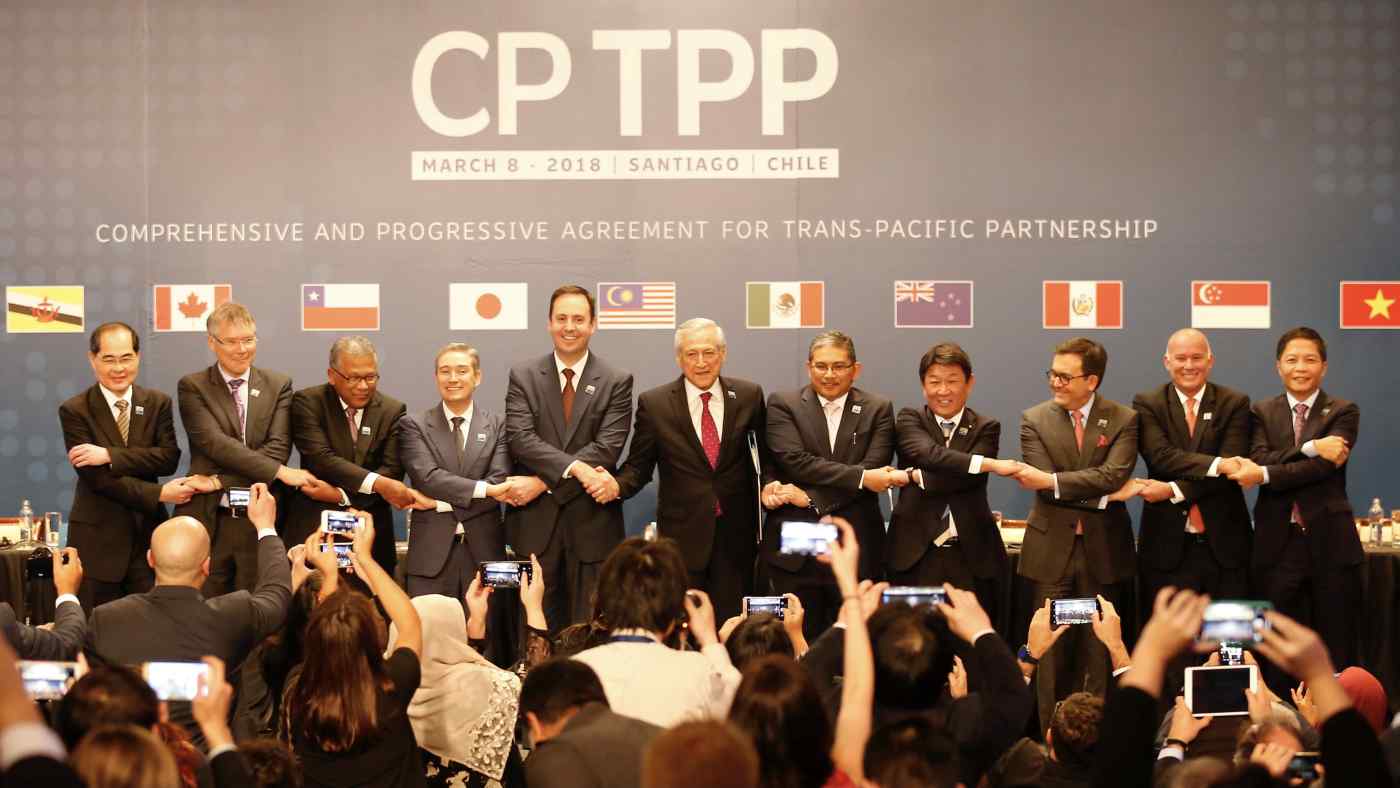
As one breaking news, on 16 September 2021, China officially presented its application to join the 11-member Comprehensive and Progressive Agreement for Trans-Pacific Partnership (CPTPP). While the approval of China’s membership in CPTPP remains a long shot and won’t happen anytime soon, the debate on the potential impact of China’s accession to the trade agreement already starts to heat up.
Like many other sectors, textile and apparel companies are on the alert. Notably, China plus current CPTPP members accounted for nearly half of the world’s textile and apparel exports in 2020. Many non-CPTPP countries are also critical stakeholders of China’s membership in the agreement. In particular, the Western Hemisphere textile and apparel supply chain, which involves the US textile industry, could face unrepresented challenges once China joins CPTPP.
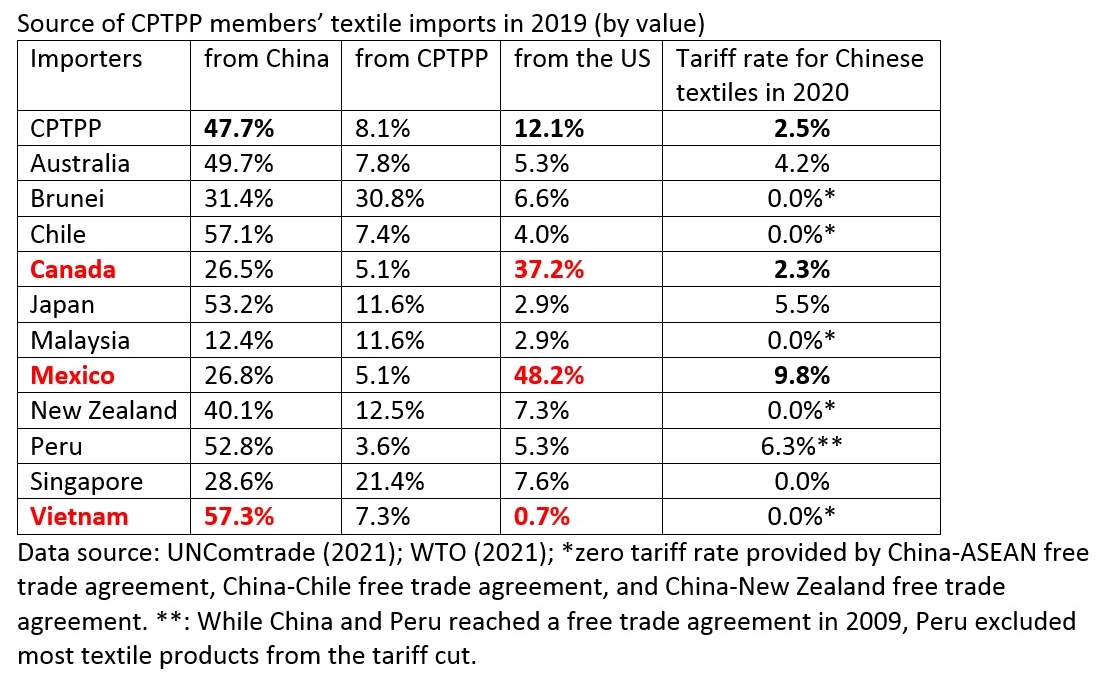
First, once China joins CPTPP, the tariff cut could provide strong financial incentives for Mexico and Canada to use more Chinese textiles. China is already a leading textile supplier for many CPTPP members. In 2019, as much as 47.7% of CPTPP countries’ textile imports (i.e., yarns, fabrics, and accessories) came from China, far more than the United States (12.1%), the other leading textile exporter in the region.
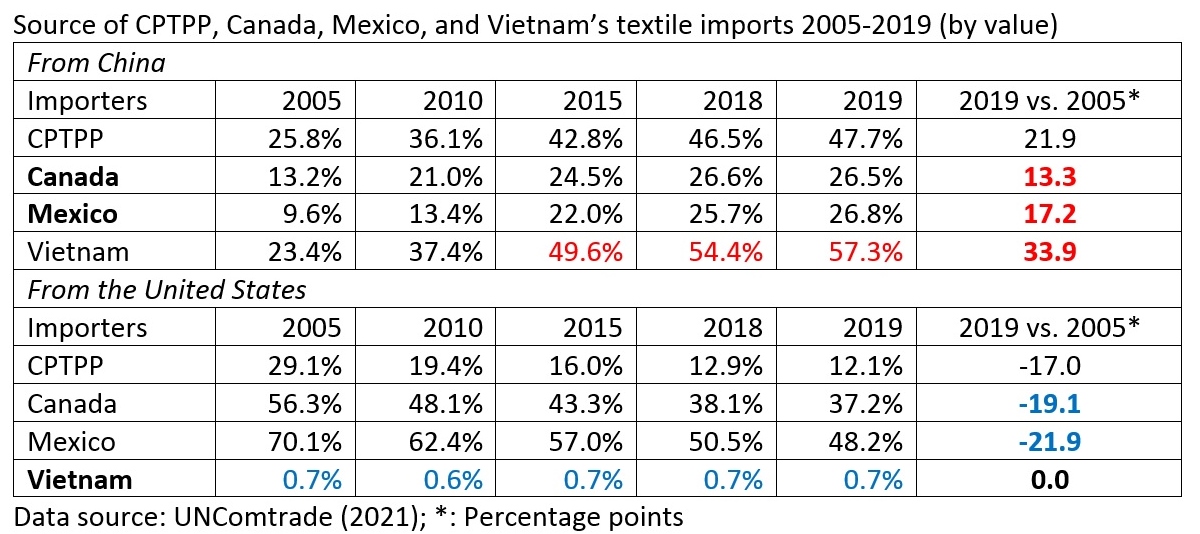
Notably, thanks to the Western Hemisphere supply chain and the US-Mexico-Canada Trade Agreement (USMCA, previously NAFTA), the United States remains the largest textile supplier for Mexico (48.2%) and Canada (37.2%). Mexico and Canada also serve as the largest export market for US textile producers, accounting for as many as 46.4% of total US yarn and fabric exports in 2020.
However, US textile exporters face growing competition from China, offering more choices of textile products at a more competitive price (e.g., knitted fabrics and man-made fiber woven fabrics). From 2005 to 2019, US textile suppliers lost nearly 20 percentage points of market shares in Mexico and Canada, equivalent to what China gained in these two markets over the same period.
Further, China’s membership in CPTPP means its textile exports to Mexico and Canada could eventually enjoy duty-free market access. The significant tariff cut (e.g., from 9.8% to zero in Mexico) could make Chinese textiles even more price-competitive and less so for US products. This also means the US textile industry could lose its most critical export market in Mexico and Canada even if the Biden administration stays away from the agreement.
Second, if both China and the US become CPTPP members, the situation would be even worse for the US textile industry. In such a case, even the most restrictive rules of origin would NOT prevent Mexico and Canada from using more textiles from China and then export the finished garments to the US duty-free. Considering its heavy reliance on exporting to Mexico and Canada, this will be a devastating scenario for the US textile industry.
Even worse, the US textile exports to CAFTA-DR members, another critical export market, would drop significantly when China and the US became CPTPP members. Under the so-called Western-Hemisphere textile and apparel supply chain, how much textiles (i.e., yarns and fabrics) US exports to CAFTA-DR countries depends on how much garments CAFTA-DR members can export to the US. In comparison, US apparel imports from Asia mostly use Asian-made textiles. For example, as a developing country, Vietnam relies on imported yarns and fabrics for its apparel production. However, over 97% of Vietnam’s textile imports come from Asian countries, led by China (57.1%), South Korea, Taiwan, and Japan (about 25%), as opposed to less than 1% from the United States.
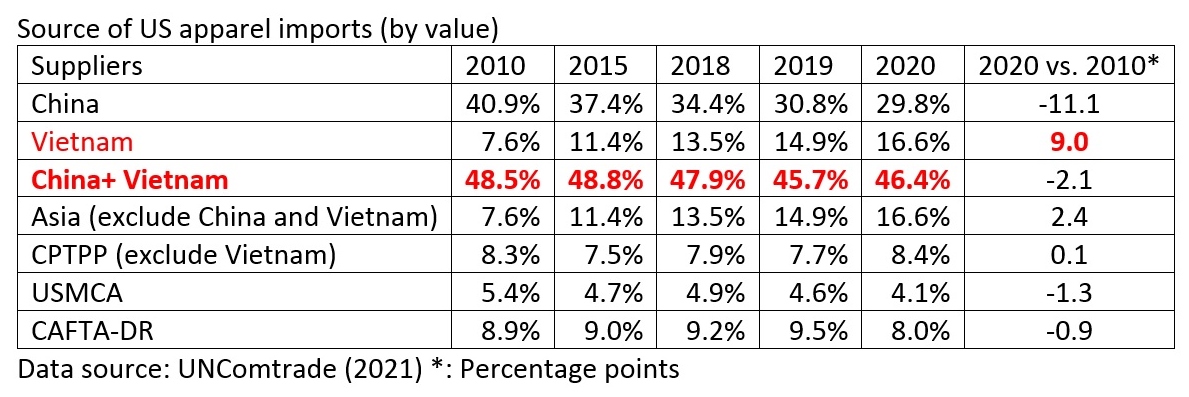
The US textile industry also deeply worries about Vietnam becoming a more competitive apparel exporter with the help of China under CPTPP. Notably, among the CPTPP members, Vietnam is already the second-largest apparel exporter to the United States, next only to China. Despite the high tariff rate, the value of US apparel imports from Vietnam increased by 131% between 2010 and 2020, much higher than 17% of the world average. Vietnam’s US apparel import market shares quickly increased from only 7.6% in 2010 to 16.6% in 2020 (and reached 19.3% in the first half of 2021). The lowered non-tariff and investment barriers provided by CPTPP could encourage more Chinese investments to come to Vietnam and further strengthen Vietnam’s competitiveness in apparel exports.
Understandably, when apparel exports from China and Vietnam became more price-competitive thanks to their CPTPP memberships, more sourcing orders could be moved away from CAFTA-DR countries, resulting in their declined demand for US textiles. Notably, a substantial portion of US apparel imports from CAFTA-DR countries focuses on relatively simple products like T-shirts, polo shirts, and trousers, which primarily compete on price. Losing both the USMCA and CAFTA-DR export markets, which currently account for nearly 70% of total US yarns and fabrics exports, could directly threaten the survival of the US textile industry.
by Sheng Lu
Related readings:
Rethink Globalization amid the Pandemic and the U.S.-China Tariff War–Discussion Questions from Students in FASH455
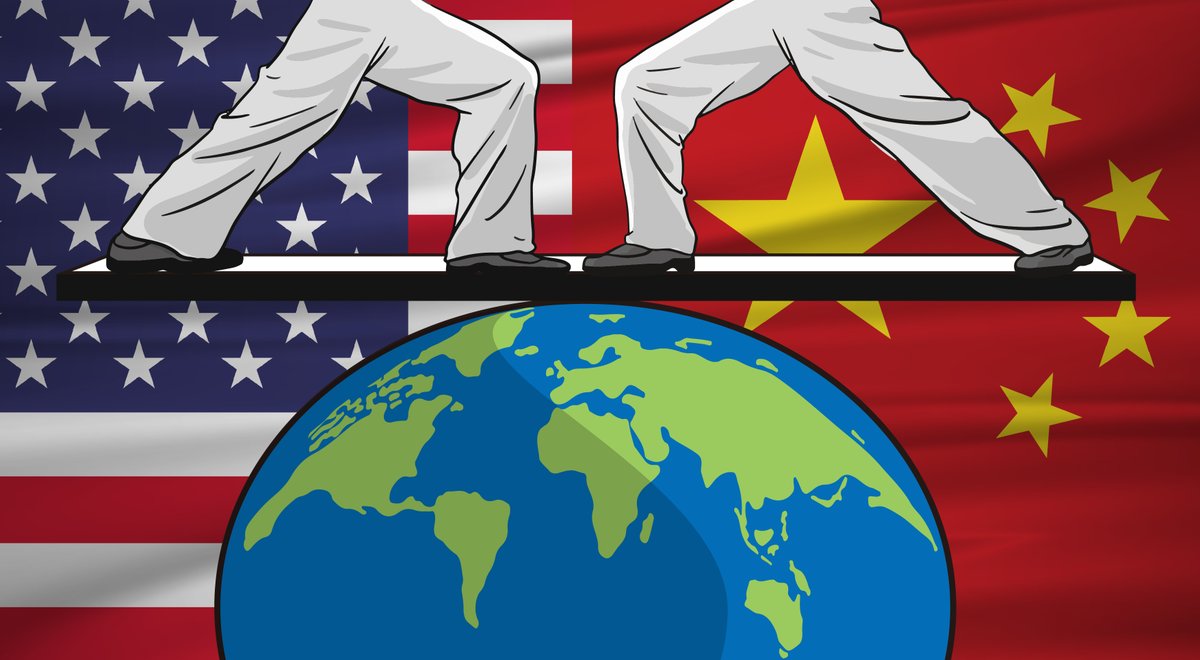
#1: Is the sole benefit of globalization helping us get cheaper products? How to convince US garment workers who lost their jobs because of increased import competition that they benefit from globalization also?
#2 How to explain the phenomenon that US apparel imports from China continue to rise despite the tariff war? Do you think the tariff war is a wrong strategy or a good strategy implemented at the wrong time given COVID?
#2: In the class, we mentioned that major driving forces of globalization include economic growth, lowered trade and investment barriers, and technology advancement. What will be the primary driving forces of globalization or deglobalization in the post-COVID world, and why?
#3: Based on the reading “U.S.-China Trade War Still Hurting Ohio Family-Owned Business,” what results of the US-China tariff war are expected and unexpected? What is your recommendation for the Biden administration regarding the Section 301 tariff exclusion process and why?
#4: We say textile and apparel is a global sector. How does the US-China tariff war affect textile and apparel producers and companies in other parts of the world? Why?
#5: From this week’s readings, why do we say textile and apparel trade and sourcing involve economic, social, and political factors and implications? Please provide 1-2 specific examples from the articles to support your viewpoints.
(Welcome to our online discussion. For students in FASH455, please address at least two questions and mention the question number (#) in your reply)
COVID-19 and US Apparel Imports: Key Trends (Updated: September 2021)
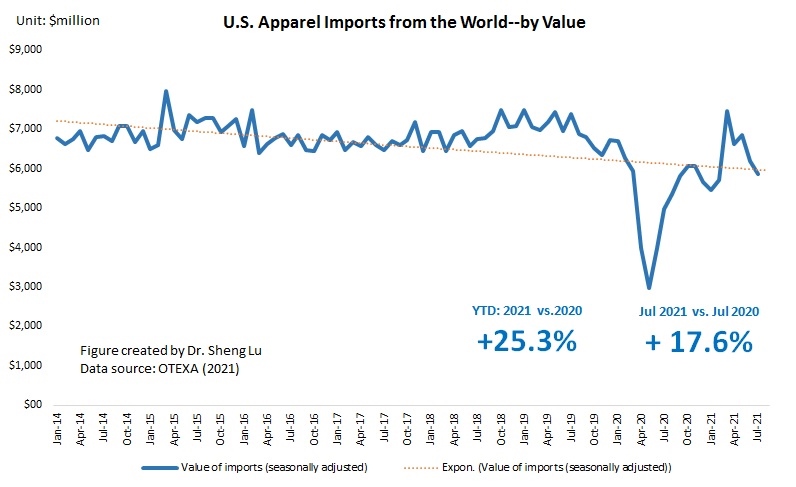
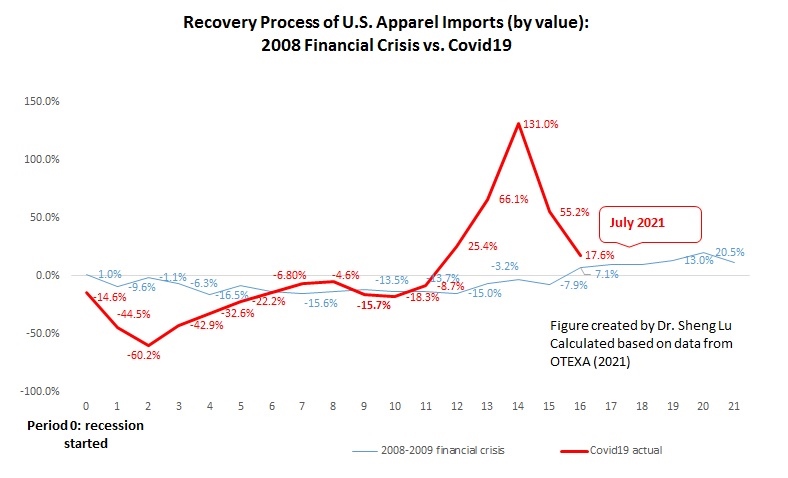
First, the shipping crisis and new wave of COVID cases start to affect US apparel imports negatively. While US consumers’ demand for clothing overall remains strong, for the second month in a row, the value of US apparel imports (seasonally adjusted) in July 2021 decreased by 5.5% from a month ago and down 9.7% from May to June. The absolute value of US apparel imports year to date (YTD) in 2021 (January—July) was 25.3% higher than in 2020 and around 87% of the pre-COVID level (benchmark: January-July, 2019). However, the year-over-year growth in July 2021 was only 15.4%, compared with 60.0% in May 2021 and 29.1% in June 2021. Overall, the results remind us that the market environment is far from stable yet as the COVID situation in the US and other parts of the world continues to evolve.
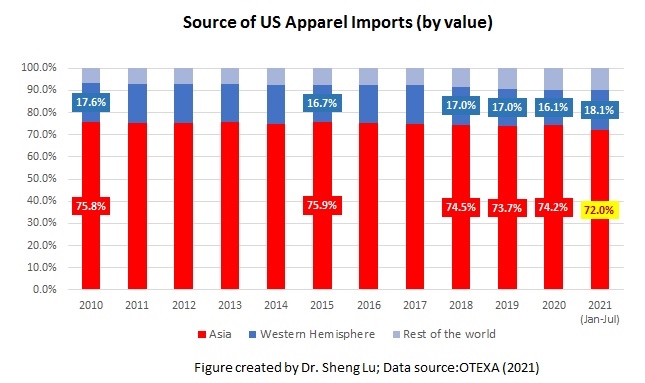
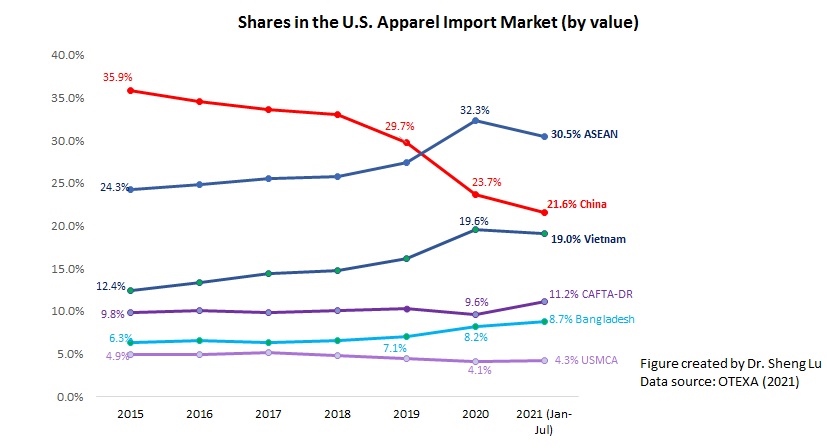
Second, Asian countries lost market shares as some leading apparel supplying countries, including Vietnam and Bangladesh, struggled with new COVID lockdowns. While Asia as a whole remains the single largest apparel sourcing base for US companies, Asian countries’ market shares fell from 74.2% in 2020 to 71.3% in July 2021, the lowest since 2010. The new COVID lockdowns in Vietnam and Bangladesh, the No. 2 and No. 3 top suppliers for the US market, post significant challenges to US fashion companies trying to build inventory for the upcoming holiday season. Notably, US companies source many high-volume products from these two countries, and there is a lack of alternative sourcing destinations in the short run.

Third, US companies continue to treat China as an essential sourcing base during the current challenging time. However, there is no clear sign that companies are reversing their long-term strategy of reducing “China exposure.” China stays the largest supplier for the US market in July 2021, accounting for 41.3% of total US apparel imports in quantity and 26.0% in value. The export product diversification index also suggests that China supplied the most variety of products to the US market. US apparel imports from Bangladesh, Mexico, and CAFTA-DR members are more concentrated on specific product categories. In other words, should China were under lockdowns, the negative impacts on US companies’ inventory management could be even worse.

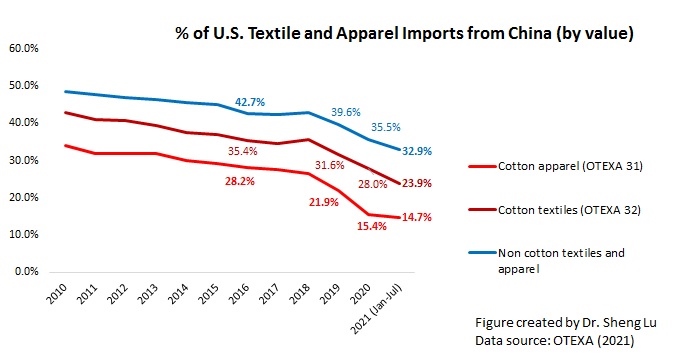
Nevertheless, the HHI index and market concentration ratios (CR3 and CR5) calculated based on the latest data suggest that US fashion companies continue to move their apparel sourcing orders from China to other Asian countries overall. For example, only 14.7% of US cotton apparel imports came from China in 2021 (January—July), a new record low in the past ten years. Further, as US apparel imports from China typically peak from June to September because of seasonal factors, China’s market shares are likely to drop in the next few months. Additionally, the fundamental concerns about sourcing from China are NOT gone. On the contrary, new US actions against alleged forced labor in Xinjiang are likely in the coming months and affect imports from China beyond cotton products.
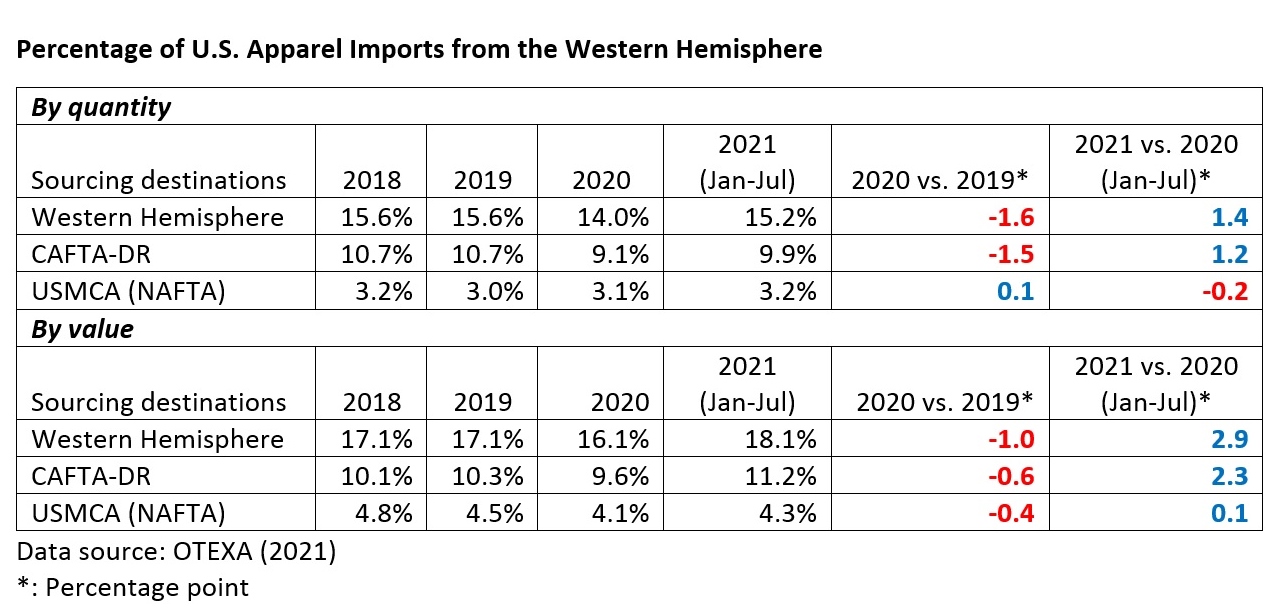
Fourth, US apparel sourcing from the Western Hemisphere, especially CAFTA-DR members, gains new momentum. Specifically, 18.1% of US apparel imports came from the Western Hemisphere YTD in 2021 (January-July), higher than 16.1% in 2020 and 17.1% before the pandemic. Notably, CAFTA-DR members’ market shares increased to 11.2% in 2021 (January to July) from 9.6% in 2020. The value of US apparel imports from CAFTA-DR also enjoyed a 58.4% growth in 2021 (January—July) from a year ago, one of the highest among all sourcing destinations. The imports from El Salvador (up 75.2%), Honduras (up 74.6%), Dominican Republic (45.1%), and Guatemala (40.6%) had grown particularly fast so far in 2021.
Meanwhile, US apparel imports from USMCA members stayed stable (i.e., no significant change in market shares). CAFTA-DR and USMCA members currently account for around 60% and 25% of US apparel imports from the Western Hemisphere. They are also the single largest export market for US textile products (about 70%).
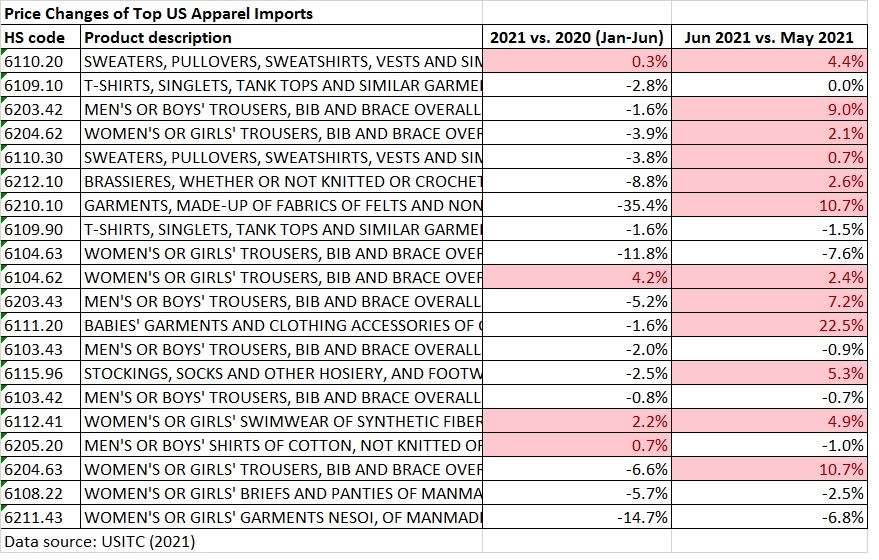
Fifth, US apparel imports start to see a notable price increase. While an across-the-board price increase was not a big concern at the beginning of 2021, the increase has become more noticeable since June 2021. For example, of the top 20 US apparel imports (HS chapters 61-62) at the 6-digit HS code level based on import value, the price of thirteen products increased from May to June 2021. The price increase at the country level is even more significant. From May to July 2021, the average unit price of US apparel imports from leading sources all went up substantially, including China (7%), Vietnam (13%), Bangladesh (13.9%), and India (15.6%).
As almost everything is becoming more expensive, from raw material, shipping to labor, the August and September trade data (to be released in October and November) could suggest an even more significant price increase.
by Sheng Lu
What Does Vietnam’s Lockdown Mean for US Footwear Sourcing?

According to the media, US footwear retailers face a new round of supply chain disruptions as Vietnam, one of the leading supplying countries, is under COVID lockdown. Industry sources say the country-wide lockdown measures in Vietnam could last until mid-September. So, what does Vietnam’s lockdown mean for US footwear sourcing?
First, footwear sourcing is much less diversified than apparel. As manufacturing footwear both requires specialized machines and can be labor-intensive, over 80% of US footwear imports came from three countries only, namely China, Vietnam, and Indonesia. This sourcing pattern is very different from apparel products, for which US companies have far more choices. Other than the top three, US also imports some high-end footwear products from Italy.
Second, while China remains No.1, Vietnam has quickly become the second-largest footwear supplier for the US market. Vietnam’s market shares (by value) reached a new record high of 32.9% in the first six months of 2021, up from 20% in 2017. Especially since the US Section 301 action began to affect footwear imports from China, US retailers have increasingly moved sourcing orders from China to Vietnam to mitigate trade war’s negative impacts [Note: most footwear products are covered by Tranche 4A].
As of June 2021, top US retailers that carry footwear “Made in Vietnam” include Puma, Nike, UGG, Vans, and New Balance.

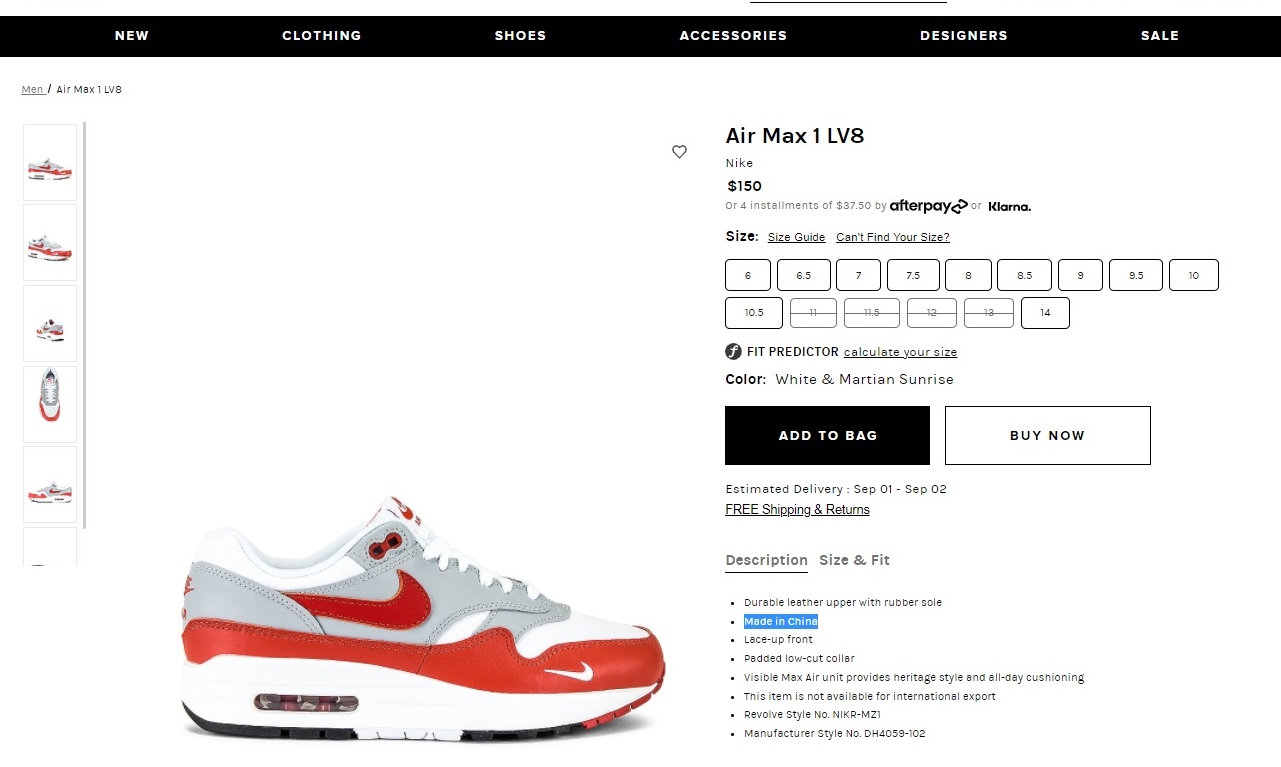
Third, US retailers source from Vietnam primarily for volume items targeting the mass market. Industry sources show that from Aug 2020 to Aug 2021, sneakers/trainer shoes “Made in Vietnam” on average were priced 30%+ cheaper than those “Made in China” in the US retail market.
Meanwhile, Vietnam still lags far behind China in terms of the variety of products it makes. For example, industry sources show that from Aug 2020 to Aug 2021, US retailers imported around 110K different types of footwear (at the SKU level) from China, but only 13K from Vietnam.
Overall, Vietnam’s COVID lockdown will primarily affect medium to lower-priced volume products carried by US footwear retailers. However, the lockdown’s impacts on retailers’ sourcing portfolio and product availability in the market could be modest. In other words, US consumers may still find many footwear products to choose from in the store but with a higher price tag. Notably, from June 2020 to July 2021, the US retail price for footwear went up by over 7.4% already.
Related reading: Delta Variant Outbreaks in Sparsely Vaccinated Asian Countries Disrupt Production (WSJ)
Global Container Shipping Crisis amid COVID-19
Discussion question: How has the container shipping crisis affected the fashion apparel industry? While shopping for clothing, do you observe any market trends related to the shipping crisis (e.g., retail price and product availability)? Why or why not do you think the container shipping crisis will go away anytime soon?
WTO Reports World Textiles and Apparel Trade in 2020
New data available: WTO Reports World Textiles and Clothing Trade in 2021


According to the World Trade Statistical Review 2021 report released by the World Trade Organization (WTO), the textiles and apparel trade patterns in 2020 include both continuities and new trends affected by the pandemic and companies’ evolving production and sourcing strategies in response to the shifting business environment.
Pattern #1: COVID-19 significantly affected the world textile and apparel trade volumes, resulting in substantial growth of textile exports and a declined demand for apparel.
Driven by increased personal protective equipment (PPE) production, global textile exports grew by 16.1% in 2020, reaching $353bn. In comparison, affected by lockdown measures, worsened economy, and consumers’ tighter budget for discretionary spending, global apparel export decreased by nearly 9% in 2020, totaling $448bn, the worst performance in decades. The apparel sector is not alone. The world merchandise trade in 2020 also suffered an unprecedented 8% drop from a year ago, with COVID-19 to blame.
Notably, as economic activities returned in the second half of 2020, the world clothing export quickly rebounded to around 95% of the pre-covid level by the end of 2020. That being said, the unexpected resurgence of COVID cases in summer 2021, especially the delta variant, caused new market uncertainties. Overall, the world textile and apparel trade recovery process from COVID-19 will differ from our experiences during the 2008 global financial crisis.
Pattern #2: COVID-19 did NOT shift the competitive landscape of the world textile exports; Meanwhile, textile exports from China and Vietnam gained new momentum during the pandemic.
China, the European Union (EU), and India remained the world’s three largest textile exporters in 2020. Together, these top three accounted for 65.8% of the world’s textile exports in 2020, similar to 66.9% before the pandemic (2018-2019).
Notably, China and Vietnam enjoyed a substantial increase in their textile exports in 2020, up 28.9% and 10.7% from a year ago, respectively. The complete textile and apparel supply chain and considerable production capability allow these two countries to switch clothing production to PPE manufacturing quickly. In particular, Vietnam exceeded South Korea and ranked the world’s sixth-largest textile exporter in 2020 ($10 bn of exports), the first time in history.
The United States dropped one place and ranked the world’s fifth-largest textile exporter in 2020 (was 4th from 2015 to 2019), accounting for 3.2% of the shares (was 4.4% in 2019). Production disruptions at the beginning of the pandemic and the shift toward PPE production for domestic consumption were the two primary contributing factors behind the decline in U.S. textile exports. Due to the regional trade patterns, around 67% of U.S. textile exports went to the Western Hemisphere in 2020, including 46% for members of the U.S.-Mexico-Canada Trade Agreement (USMCA) and another 17.2% for members of the Dominican Republic-Central America Free Trade Agreement (CAFTA-DR).
Pattern #3: Fashion companies’ efforts to diversify apparel sourcing from China somehow slowed during the pandemic.
China, the European Union, Vietnam, and Bangladesh unshakably remained the world’s four largest apparel exporters in 2020. Altogether, these top four accounted for 72.2% of the world market shares in 2020, higher than 71.4% in 2019.
Notably, while China steadily accounted for declining shares in the world’s total apparel exports since 2015, its market shares rebounded to 31.6% in 2020 from 30.7% in 2019. We can observe a similar pattern in Canada (up from 36.2% to 41.2%) and the EU (31.2% to 31.3%), two of the world’s leading apparel import markets. Even in the U.S. market, where Chinese goods face adverse impacts of the tariff war, the market shares of “Made in China” only marginally decreased from 30.8% in 2019 to 29.8% in 2020, compared with a more significant drop before the pandemic (i.e., fell from 34.4% 2018 to 30.8% in 2019).
Several factors could explain the resilience of China’s apparel exports: 1) fashion brands and retailers’ particular sourcing criteria match China’s competitiveness during the pandemic (e.g., flexibility, agility, and total landed sourcing cost). 2) China has one of the world’s most complete textile and apparel supply chains, allowing garment factories to access textile raw material and accessories locally. 3) Compared with many other apparel exporting countries, China suffered a shorter COVID lockdown period and resumed apparel production earlier and more quickly. Most Chinese textile and apparel factories started to reopen in April 2020, and they resumed an overall 90%-95% operational capacity rate by July 2020.
Nonetheless, fashion companies are NOT reversing their long-term strategies to reduce “China exposure” for apparel sourcing. On the contrary, non-economic factors, particularly the concerns about forced labor in China’s Xinjiang region, push most western fashion brands and retailers to develop apparel sourcing capacities beyond China. Meanwhile, no single country has yet and will likely become the “Next China” because of capacity limits. Instead, from 2015 to 2020, China’s lost market shares in the world apparel exports (around 7.8 percentage points) were picked up jointly by its competitors in Asia, including ASEAN members (up 4.4 percentage points), Bangladesh (up 1.3 percentage points), and Pakistan (up 0.3 percentage point). Such a trend is most likely to continue in the post-COVID world.
Pattern #4: Developed economies led textile PPE imports during the pandemic, whereas the developing countries imported fewer textiles as their apparel exports dropped.
On the one hand, the value of textile imports by developed economies, including EU members, the United States, Japan, and Canada, surged by more than 30 percent in 2020, driven mainly by their demand for PPE. The result also reveals the significant contribution of international trade in supporting the supply and distribution of textile PPE globally. On the other hand, the developing countries engaged in apparel production and export drove the import demand for textile raw materials like yarns and fabrics. However, most of these developing countries’ textile imports fell in 2020, corresponding to their decreased apparel exports during the pandemic.
Pattern #5: Despite COVID-19, the world apparel import market continues to diversify. The import demand increasingly comes from emerging economies with a booming middle class.
Affected by consumers’ purchasing power (often measured by GDP per capita) and the size of the population, the European Union, the United States, and Japan remained the world’s three largest apparel importers in 2020, a stable pattern that has lasted for decades. While these top three still absorbed 56.2% of the world’s apparel imports in 2020, it was a new record low in the past ten years (was 58.1% in 2019 and 61.5% in 2018), and much lower than 84% back in 2005.
Behind the numbers, it is not the case that consumers in the EU, the United States, and Japan necessarily purchase less clothing over the years. Instead, several emerging economies have become fast-growing apparel-consuming markets with robust import demand. For example, despite COVID-19, China’s apparel imports totaled $9.5bn in 2020, up 6.5% from 2019. From 2010 to 2020, China’s apparel imports enjoyed a nearly 15% annual growth, compared with only 0.56% of the traditional top three. Around 30% of China’s apparel imports today are luxury items made in the EU.
By Sheng Lu
Further reading: Lu, S. (2021). World textiles and apparel trade amidst a pandemic – statistical review 2021. Just-Style.
Appendix


USITC Reports the Economic Impacts of U.S. Free Trade Agreements
In June 2021, the U.S. International Trade Commission (USITC) released the 2021 Economic Impact of Trade Agreements Implemented under Trade Authorities Procedures report. By using both qualitative and quantitative methods, USITC assessed the impact of trade agreements on U.S. industries, including workers, since 2016. Below are the key findings related to the textile and apparel sector:
First, free trade agreements enacted in the U.S. have had a small but positive effect on the U.S. economy and trade. As of January 1, 2021, the United States has 14 free trade agreements (FTAs) with 20 countries in force. In the year 2017 (the base year), they led to an estimated increase in U.S. real Gross Domestic Product (GDP) of $88.8 billion (0.5 percent), and in aggregate U.S. employment of 485,000 full-time equivalent (FTE) jobs (0.3 percent). Real wages increased by 0.3 percent. Further, U.S. exports increased by $37.4 billion (1.6 percent), and imports increased by $95.2 billion (3.4 percent) because of these FTAs.
Second, USITC estimates that U.S.-free trade agreements have expanded the U.S. textile industry but hurt U.S. domestic apparel production. Thanks to the North American Free Trade Agreement (NAFTA, now the U.S.-Mexico-Canada Trade Agreement, USMCA) and the Dominican Republic-Central America Free Trade Agreement (CAFTA-DR), the Western Hemisphere has become the single largest export market for U.S. textile producers. However, U.S. apparel manufacturers have to face intensified import competition.

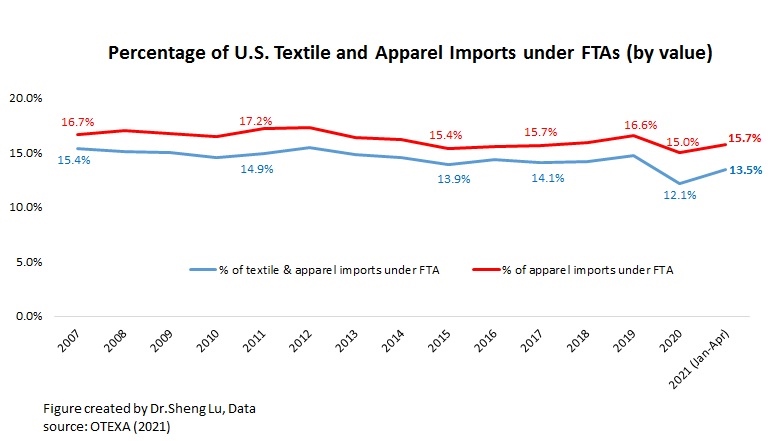
Third, the textile and apparel-specific rules in U.S. free trade agreements are complicated and often hinder the usage of the trade agreements. As noted by USITC, the U.S. duty on imported textile and, especially, apparel goods are among the highest of all product categories. Despite the duty-saving incentives, only 12.1% of U.S. textile and apparel imports came in under FTAs in 2020, even lower than 16.7% in 2007 when fewer FTAs were in force.
The complexity of the textile and apparel-specific rules of origins (ROOs) is a significant cause of the low FTA utilization rate. As USITC noted, “No two FTAs using the tariff shift model contain the same ROOs for apparel goods…for some importers, the strict preference rules of origins (ROOs), along with the record-keeping and documentation requirements the rules entail, make the cost of compliance too great to take full advantage of the duty-free opportunities.” According to the annual USFIA fashion industry benchmarking study, the surveyed U.S. fashion companies consistently expressed the same concerns about the too restrictive ROOs in U.S. FTAs.
Related, the USITC report noted, “some U.S. domestic textile industry representatives state that the existing FTA rules follow a simple template designed to benefit upstream manufacturers in the textile and apparel supply chain.” Having to use more expensive domestic-made fibers and yarns reduces the price competitiveness of U.S. fabrics and home textiles in the export market.
Further, the USITC report explains the history of the “Short supply” and “Tariff-preference level, TPL” mechanisms in U.S. free trade agreements. However, the report does not provide an assessment of their trade impacts.
Trade statistics show that these exceptions to the restrictive “yarn-forward” rules of origin are critical for U.S. apparel sourcing from certain FTA partners. For example, more than 60% of U.S. apparel imports from Canada claimed duty-free benefits by using the TPL mechanism rather than complying with the USMCA/NAFTA “yarn-forward” rules in 2020. Around 8% of U.S. apparel imports from Mexico did the same. Likewise, in 2020, approximately 4% of U.S. apparel imports from CAFTA-DR members used the “short supply” mechanism, and the other 4% used the “cumulation” mechanism.
Apparel Sourcing and Trade: Washington Trade Policy Perspectives
Speaker: Julia Hughes, President, United States Fashion Industry Association (USFIA)
Topics covered:
- US fashion companies’ latest sourcing trends and sourcing strategies during COVID-19
- 2021 US textile and apparel trade policy (e.g., China section 301 and product exclusion extensions, and WROs against forced labor)
- Biden administration’s trade policy agenda (e.g., worker-centered trade policy, climate change, retaliation against DST, GSP, MTB and TPA renewal, potential trade sanctions against Myanmar, promote domestic PPE production, and new FTA negotiation)
The event is part of the Apparel and Textile Sourcing 2021 S/S virtual seminar series
How COVID-19 has shifted US apparel companies’ sourcing strategies?
The article is available HERE (need Just-Style subscription)
Key findings
First, more US apparel companies prioritize consolidating their existing sourcing base than diversification during the pandemic. Nearly half of the top 30 US apparel companies we examined explicitly say they either sourced from fewer countries or worked with fewer vendors in 2020 than 2017-2019 before the pandemic. In comparison, only about one-third of respondents say they were sourcing from more countries in 2020 than two years.
Second, the desire to form a closer relationship with key vendors and ensure social and environmental compliance are the two primary factors behind US apparel companies’ consolidation strategy. In a time of uncertainty like the pandemic, apparel companies are leaning more heavily on suppliers that have proven reliable, capable, and flexible. Working closely with the suppliers and building an efficient and trust-based supply chain also play a central role in US fashion companies’ COVID-mitigation strategies. Meanwhile, with social and environmental compliance becoming increasingly crucial in apparel sourcing today, companies are cutting ties with vendors that are not adhering to government mandates and proprietary codes of conduct. Notably, US apparel companies’ higher expectations for sustainability as well as social and environmental compliance may have resulted in a smaller pool of qualified suppliers.
Third, the desire to steer away from China and reduce sourcing risks are the two main drivers behind US fashion companies’ recent sourcing diversification strategy. US apparel companies mostly moved their sourcing orders from China to China’s competitors in Asia instead of expanding “near-sourcing. On the other hand, it is not uncommon to see US apparel companies keep a relatively diverse sourcing base to control various sourcing risks in the current business setting.
Fourth, the content analysis further reveals that US fashion brands and retailers commit to sourcing and supply chain innovation in response to COVID-19 and the new business environment. Some specific sourcing strategies are noteworthy:
- Work with “super vendors,” i.e., vertically integrated suppliers that can execute multiple steps in the supply chain or those with production facilities in numerous countries.
- Optimize supply chain process to improve speed to market.
- Adjust fabric and textile raw material sourcing base, although the specific strategies vary from company to company.
By Emma Davis and Dr. Sheng Lu
Supply Chain Resiliency and the Role of Small Manufacturers—U.S. Textile Industry’s Perspective
Witness: National Council of Textile Organizations (NCTO) President and CEO Kim Glas; The full testimony is available HERE
Note:
Berry Amendment: Under a provision of 1941 legislation known as the “Berry Amendment” , the Department of Defense (DOD) must buy clothing, fabrics, fibers, yarns, other made-up textiles, boots, and certain other items that are 100% US-made. Notably, the Berry Amendment mandates a much higher level of domestic content than the Buy American Act of 1933, which, in general, only requires 50% of the costs of a product to be manufactured in the United States. DOD spent around $1.6 billion on clothing, textiles, and footwear in FY2020 under the Berry Amendment. The items covered by the Berry Amendment have varied over the years. In the FY2017 NDAA (P.L. 114-328), Congress extended the Berry Amendment by requiring DOD to provide 100% U.S.-made running shoes for recruits entering basic training.
Biden’s “Buy America” policy:
- On January 25, 2021, President Biden issued an Executive Order on Ensuring the Future Is Made in All of America by All of America’s Workers, as part of his “Build Back Better” economic recovery plan. The order created the role of a “director of Made-in-America” within the Office of Management and Budget and increased the threshold and price preferences for domestic goods.
- Related, on February 24, 2021, President Biden released an executive order (EO) and announced to conduct a 100-day supply chains review on several key US industries, including semiconductors, batteries, strategic minerals, and pharmaceuticals. The review will also cover certain critical business sectors, such as national defense, public health, information and communication technology, energy, transportation, and agriculture. Further, the EO explicitly asks the Secretary of Health and Human Services, in consultation with the heads of appropriate agencies, to submit a report identifying risks in the supply chain of personal protective equipment (PPE). PPE includes textile products like facial masks, gowns and gloves. More comprehensive reform and supply chain strategies are likely to follow after the supply chain review requested by the EO.
Is the Western Hemisphere Textile and Apparel Supply Chain in Trouble?
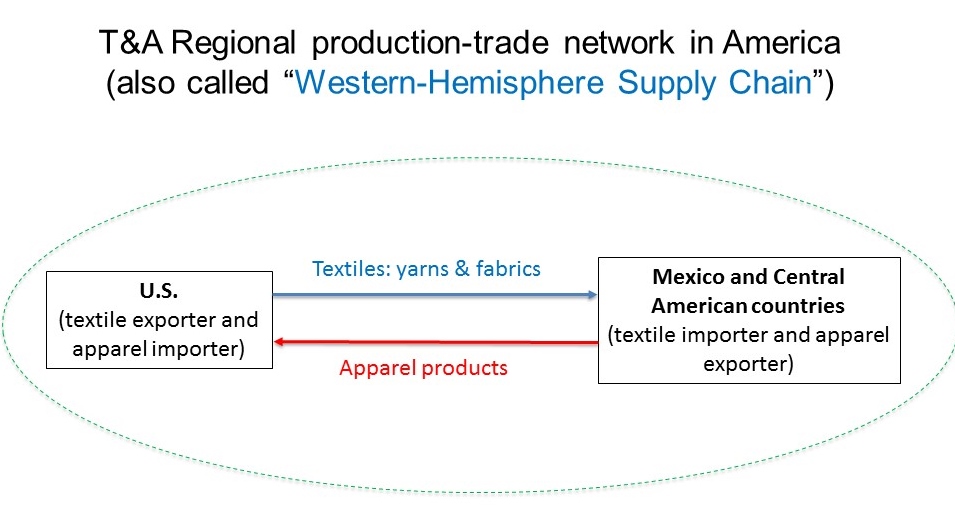
Within the Western-Hemisphere (WH) textile and apparel supply chain, the United States serves as the leading textile supplier, whereas developing countries in North, Central, and South America (such as Mexico and countries in the Caribbean region) assemble imported textiles from the United States or elsewhere into apparel. The majority of clothing produced in the area is eventually exported to the United States or Canada.
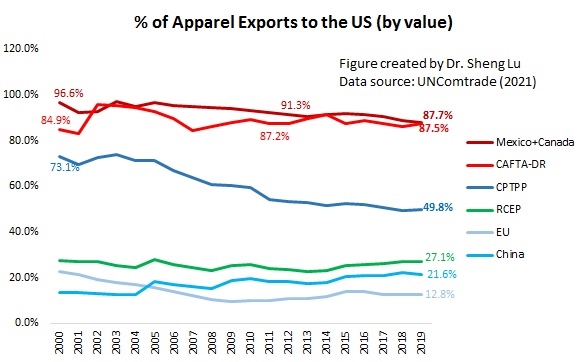
WH countries still form a close supply chain partnership in textile and apparel production. For example, close to 70% of US textile exports went to WH members in 2020, a pattern that has stayed stable over the past decades (OTEXA, 2021). Meanwhile, the United States serves as the single largest export market for most apparel exporting countries in the WH For example, in 2019, close to 89% of apparel exports from CAFTA-DR and USMCA (NAFTA) members went to the US.
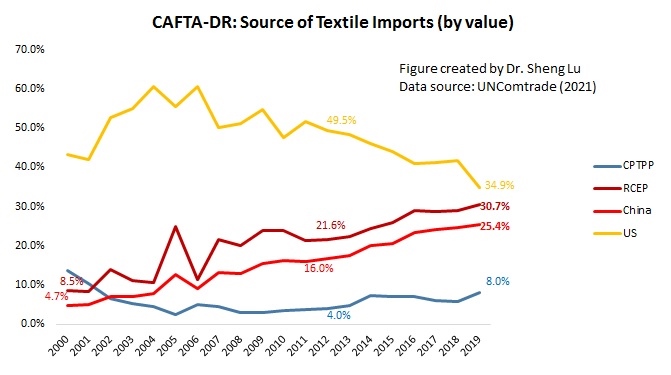
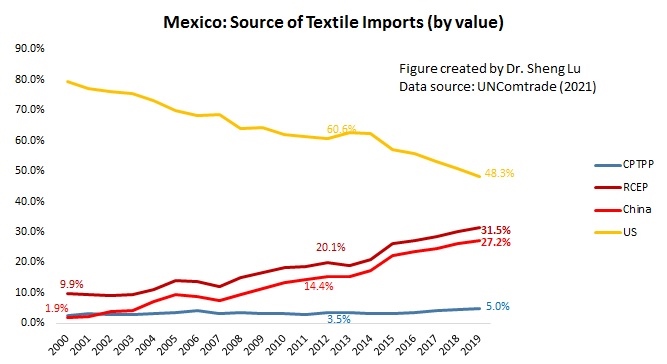
However, the WH textile and apparel supply chain is not without significant challenges. For example, CAFTA-DR and Mexico are increasingly using textiles inputs from outside the WH region, which weakens the US role as a dominant textile supplier. Notably, most of the market shares lost by US textile suppliers are fulfilled by Asian countries, including China and other members of the RCEP (Regional Comprehensive Economic Partnership). Theoretically, using cheaper textile inputs from Asia may help apparel producing countries in the WH improve the price competitiveness of their finished garments and diversify their export markets beyond the US.

Meanwhile, despite the apparent popularity of “near-sourcing”, no evidence suggests that US fashion brands and retailers are sourcing more from WH countries, including CAFTA-DR and USMCA (NAFTA) members. Neither the US-China trade war nor COVID-19 seems to have shifted the trends. Instead, close to 75%-80% of US apparel imports still come from Asian countries (OTEXA, 2021). Studies further show that a vast majority of US apparel imports from WH concentrate on a limited category of products, such as tops and bottoms, which is far from sufficient to meet retailers’ sourcing needs.

On the other hand, technical textiles and industrial textiles account for a growing share in the total US textile exports, and Asia is a particularly fast-growing market. However, there is few US free trade agreement with Asian countries, making it a disadvantage to promote “Made in the USA” products in these markets. It is debatable what should be the priority for the US textile and apparel trade policy: to continue to protect the exports of yarn and fabrics to the WH or open new export markets for technical and industrial textiles outside the WH region?
by Sheng Lu
Relate readings:
- Keough, K., & Lu, S. (2020). Explore the export performance of textiles and apparel “Made in the USA”: A firm-level analysis. Journal of the Textile Institute.
- Lu, S. (2018). What will happen to the U.S. textile and apparel industry if the NAFTA goes? Margin: The Journal of Applied Economic Research, 12(2), 113-137.
- Lu, S. (2021).Regional supply chains still shape textile and apparel trade. Just-Style.
EU Textile and Apparel Industry and Trade Patterns (Updated April 2021)

The EU region as a whole remains one of the world’s leading producers of textile and apparel (T&A). The value of EU’s T&A production totaled EUR137.3 bn in 2019, down around 2% from a year ago (Note: Statistical Classification of Economic Activities or NACE, sectors C13, and C14). The value of EU’s T&A output was divided almost equally between textile manufacturing (EUR68.7bn) and apparel manufacturing (EUR68.6bn).


Regarding textile production, Southern and Western EU, where most developed EU members are located such as Germany, France, and Italy, accounted for nearly 75% of EU’s textile manufacturing in 2019. Further, of EU countries’ total textile output, the share of non-woven and other technical textile products (NACE sectors C1395 and C1396) has increased from 19.2% in 2011 to 23.0% in 2017, which reflects the on-going structural change of the sector.

Apparel manufacturing in the EU includes two primary categories: one is the medium-priced products for consumption in the mass market, which are produced primarily by developing countries in Eastern and Southern Europe, such as Poland, Hungary, and Romania, where cheap labor is relatively abundant. The other category is the high-end luxury apparel produced by developed Western EU countries, such as Italy, UK, France, and Germany.
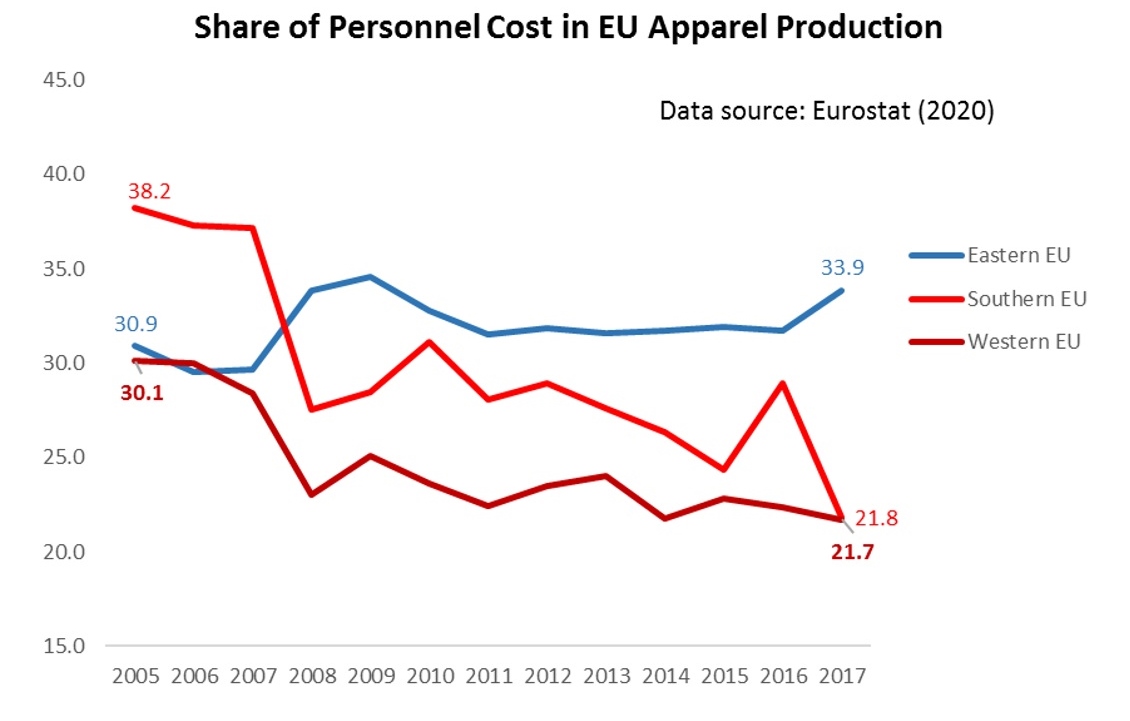
It is also interesting to note that in Western EU countries, labor only accounted for 21.7% of the total apparel production cost in 2017, which was substantially lower than 30.1% back in 2006. This change suggests that apparel manufacturing is becoming capital and technology-intensive in some developed Western EU countries—as companies are actively adopting automation technology in garment production.
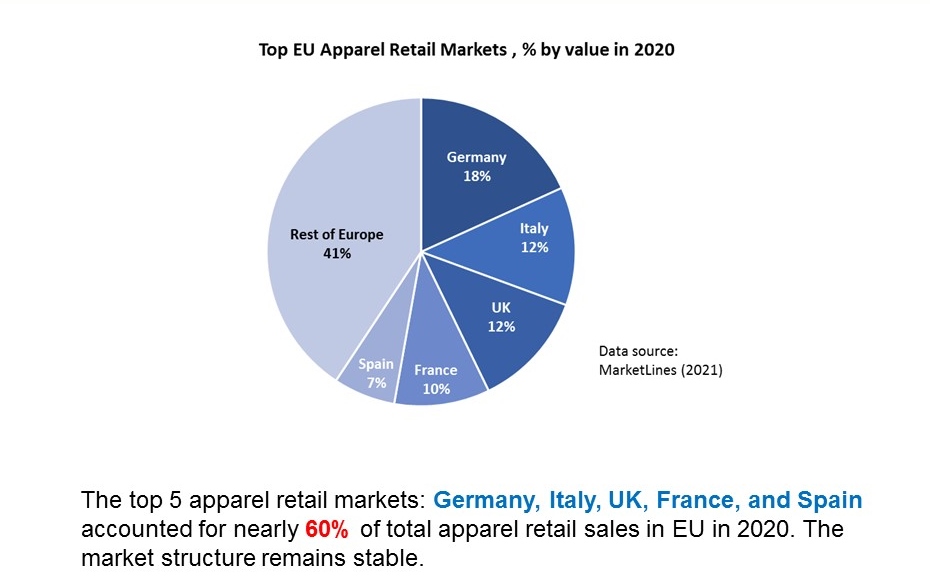
Because of their relatively high GDP per capita and size of the population, Germany, Italy, UK, France, and Spain accounted for nearly 60% of total apparel retail sales in the EU in 2020. Such a market structure has stayed stable over the past decade.

Data source: UNcomtrade (2021)
Intra-region trade is an important feature of the EU’s textile and apparel industry. Despite the increasing pressure from cost-competitive Asian suppliers, statistics from UNComtrade show that of the EU region’s total US$73.8bn textile imports in 2019, as much as 54.6% were in the category of intra-region trade. Similarly, of EU countries’ total US$204.0bn apparel imports in 2019, as much as 37.4% also came from other EU members. In comparison, close to 98% of apparel consumed in the United States are imported in 2019, of which more than 75% came from Asia (Eurostat, 2021; UNComtrade, 2021).

Regarding EU countries’ textile and apparel trade with non-EU members (i.e., extra-region trade), the United States remained one of the EU’s top export markets and a vital textile supplier (mainly for technical and industrial textiles). Meanwhile, Asian countries served as the dominant apparel sourcing base outside the EU region for EU fashion brands and retailers.
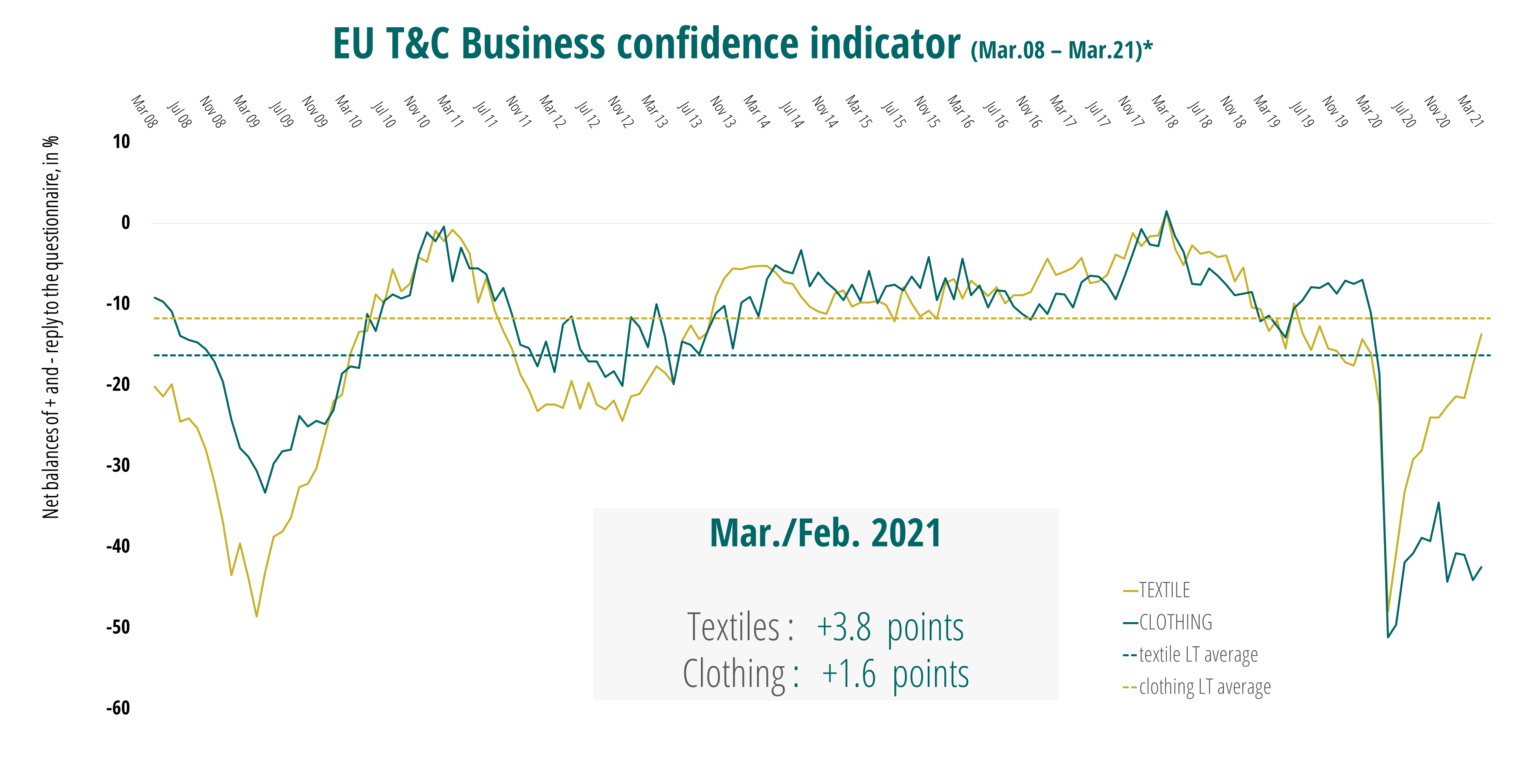
The EU textile and apparel industry is not immune to COVID-19. According to the European Apparel and Textile Federation (Euratex), the EU textile and apparel production feel 9.3% and 17.7% respectively in 2020 from a year ago.
2021 hopefully will be a year of recovery and growth for the EU textile and apparel industry. According to Euratex, the EU Business Confidence indicator of March 2021 gained momentum, with a confirmed upward trend in the textile industry (+3.8 points), and a modest recovery in the clothing industry (+1.6 points). However, Euratex also noted that EU textile and apparel companies still face daunting challenges and uncertainties in 2021, ranging from the rising raw material price, increasing transportation cost, to political instability in some key sourcing destinations (such as China and Myanmar).
by Sheng Lu
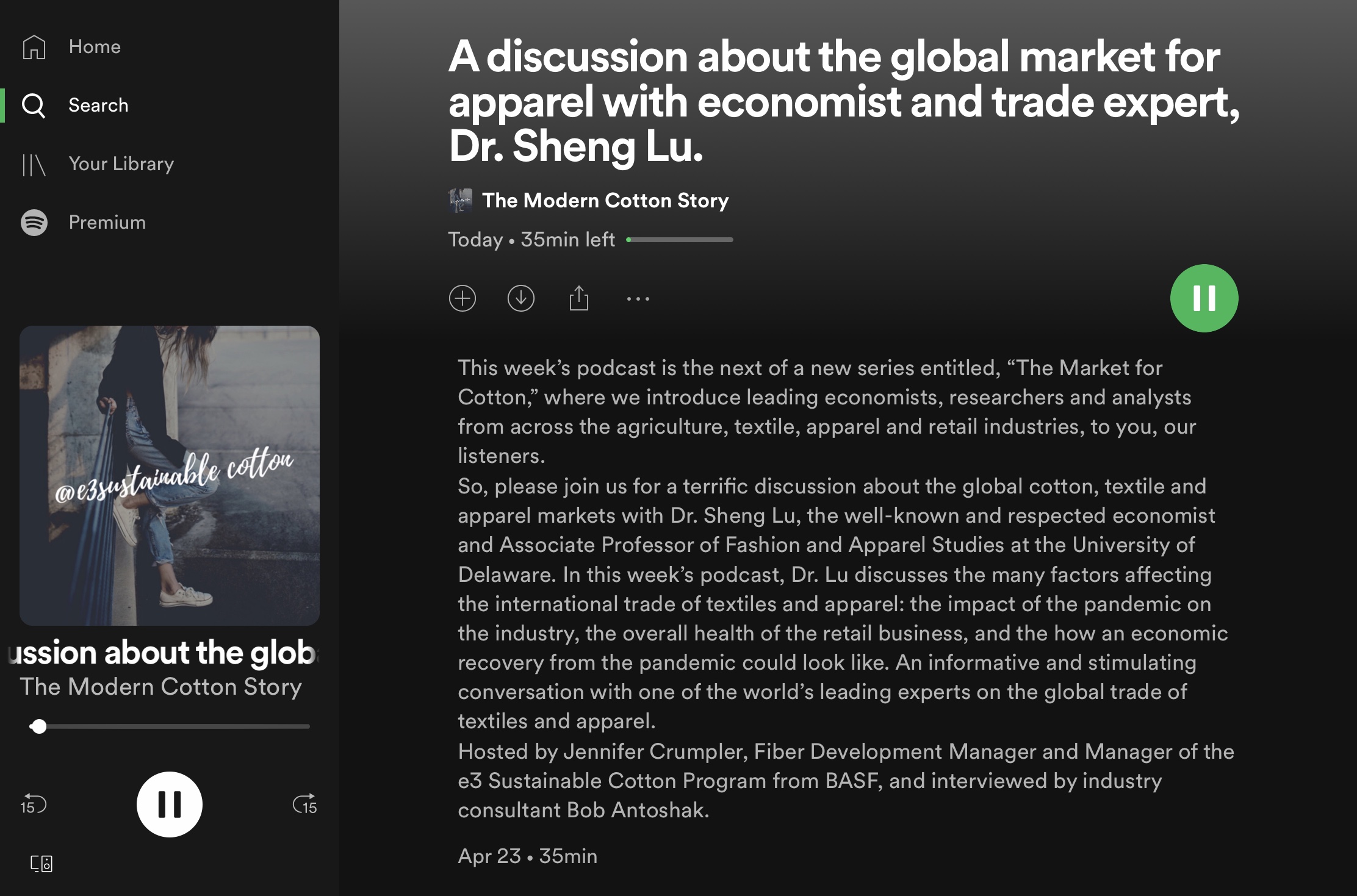
Global Apparel Market and Trade—The Modern Cotton Story Podcast
ModCloth Sourcing and Supply Chain Strategies during the Pandemic
Speaker: Linda Ollmann, Director – Sourcing Operations, ModCloth
Event summary
ModCloth is a womenswear company that strives to empower women along every step of their manufacturing process. The customer loves the clothing and the pieces can be utilized in many different ways throughout many different seasons.
As of right now, ModCloth does most of their sourcing partnerships with vendors in China, largely because vendors in China were able to give ModCloth the most efficient price point at the shortest lead time. However, ModCloth did start to look for vendors outside of China in countries such as Vietnam, Sri Lanka, and India, but they found that the lead times were still the shortest when they sourced with vendors in China.
While ModCloth wants to continue having short lead times to satisfy their customer, they have some new sourcing strategies that they are going to be implementing in the near future. One thing they are going to do is find the best suppliers possible to get their fabric from so that their customers are happy and can even possibly love the company even more than they already do. In addition to this, ModCloth is dedicated to pursuing sustainable practices and this includes within the factories that they partner with. They also want to find a way to continue having a shorter lead time from the time customers order a garment to the time it gets delivered at their doorstep, all while having a low carbon footprint and being as environmentally conscious as possible.
Just like every other company in the world, ModCloth was impacted by COVID-19. However, since ModCloth started out as an entirely ecommerce brand they were able to adapt to the new virtual norm very well. They decided that with the pandemic slowing everything down, it was important that they focus on improving the company from the inside out. This helped them become more stable internally so they could inevitably build the brand up again on the outside. People have been primarily shopping online due to the closure of brick and mortar stores, so ModCloth did not see too much of a dip in their sales.
ModCloth is very interested in what their customers want and need. Their customers have expressed a need for more sustainable clothing and fabrics and this is exactly what ModCloth wants to give to them. It was mentioned in the webinar that it is easy to put information about the sustainability of a garment in the product description on their website which helps the customer really understand where the piece of clothing they are about to purchase is coming from. This will help customers remain faithful in the brand as well as help the customer feel connected to the brand
Summarized by Lexi Dembo (FASH455 spring 2021)
The Future of Asia as a Textile and Apparel Sourcing Base—Discussion Questions from Students in FASH455
#1: How to explain the phenomenon that US fashion companies are diversifying apparel sourcing from China, but not so much from the Asia region? For example, as of 2020, still, around 75% of US apparel imports came from Asian countries.
#2: From the readings and your observation, to which extent will automation challenge the conclusions of the “flying geese model” and the evolution pattern of Asian countries’ textile and apparel industry over the past decades?
#3: It could be a crazy idea, but given the current business environment, what would the textile and apparel supply chain in Asia look like without “Made in China”? What would be the implications for US fashion companies sourcing strategies?
#4: RCEP members are with a diverse competitiveness in textile and apparel production and exports. Several leading Asian apparel-exporting countries are not RCEP members (such as Bangladesh). Is it unavoidable that RCEP will create BOTH winners and losers for textile and apparel trade? How so?
#5: Is the growth model and development path of Asian countries’ textile and apparel industry an exception—meaning it is challenging to apply it to the rest of the world, such as the Western Hemisphere and Africa? What is your view?
#6: What is your outlook of Asia as a textile and apparel-sourcing base in the post-Covid world? Why?
(Welcome to our online discussion. For students in FASH455, please address at least two questions and mention the question number (#) in your reply)
How Is the Pandemic Changing the Global Fashion Industry?
Related readings
FASH455 Interview Series—QVC Global Sourcing Internship (Guest: Lora Merryman)
About Lora Merryman
Lora Merryman is a Master of Science student in Fashion and Apparel Studies at the University of Delaware (class of 2021). She also graduated from the UD with a Bachelor’s Science in Fashion Merchandising in 2020. She currently works for QVC as a global sourcing intern.
Lora was selected as a 2020 University of Delaware summer scholar. She also served as a graduate teaching assistant for FASH455 in Fall 2020 and Winter 2021. Lora is the author of a recent research publication on data science education for fashion majors, featured by Just-Style and several other industry news outlets.


